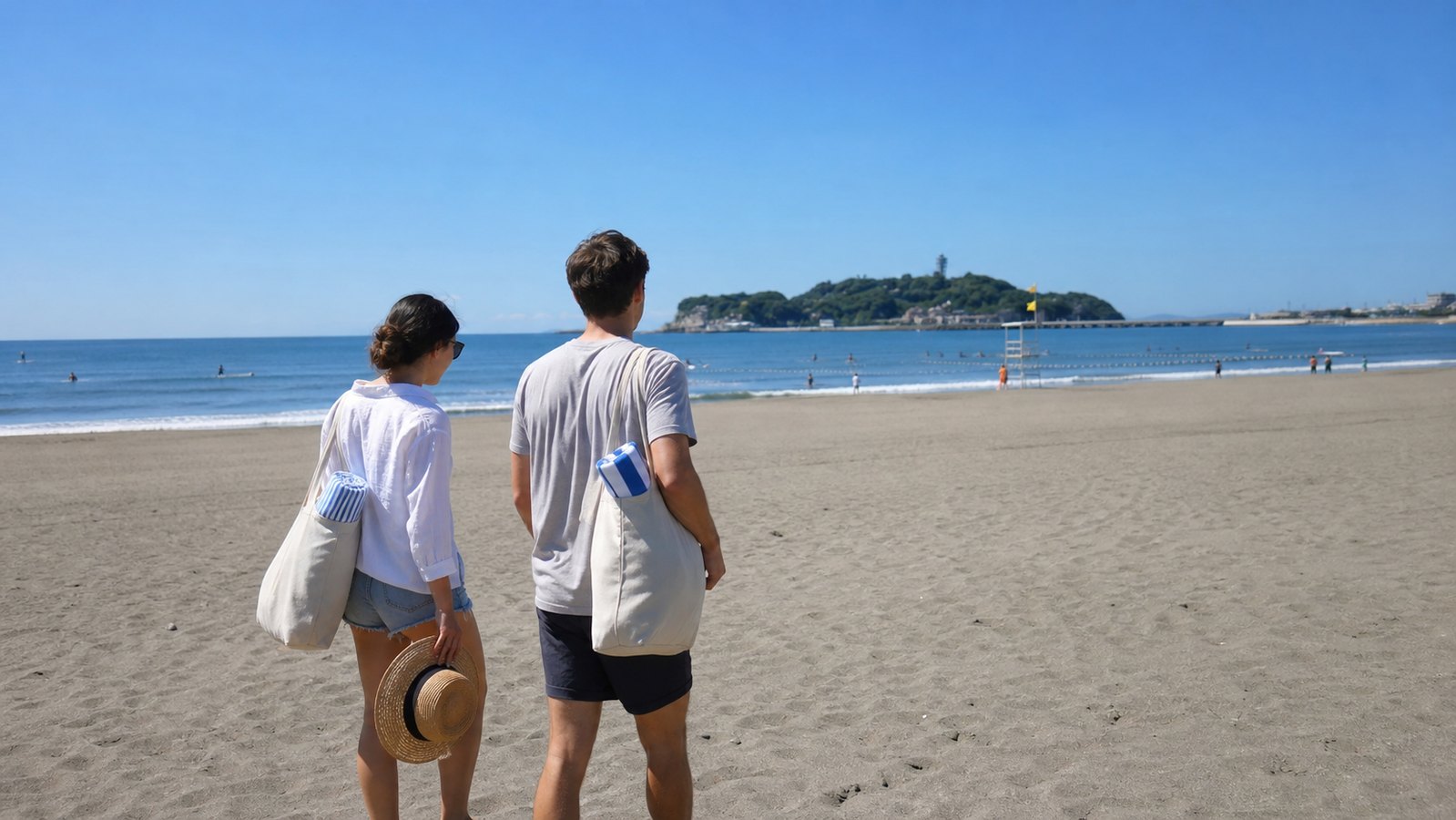
Tokyo has sandy waterfronts, but a beach-shaped place is not automatically a place where you may swim. Odaiba has an 800-meter artificial beach and postcard views, yet swimming is prohibited. Kasai, still inside Tokyo, allows swimming within a designated zone during a limited summer program. For a conventional beach day with lifeguards, marked swimming areas and beach houses, continue south to the Shonan coast in Kanagawa.
This guide helps you make that decision before you pack a swimsuit or spend an hour on a train. It compares Odaiba, Kasai, Kamakura, the Enoshima area and Zushi; explains the 2026 opening periods; and gives you a safe fallback when heat, wind, waves or a red flag changes the plan.
Last checked: July 21, 2026. Beach openings and swimming permission can change because of weather, water conditions or safety decisions. Recheck the linked official page on the morning of your visit.
- Quick answer: where can you actually swim near Tokyo?
- Odaiba: a real sandy beach, but not a swimming beach
- Kasai: the limited swimming choice inside Tokyo
- Shonan: choose this when you want a full beach day
- Which beach should you choose?
- How to plan the trip from Tokyo without losing the swim
- What to bring, what you may have to pay for, and what to leave behind
- Safety: flags, rip currents, alcohol, tattoos and local rules
- Plan B: what to do when you cannot swim
- FAQ
- Can you swim at Odaiba Beach?
- Can you swim at a beach inside Tokyo?
- What is the closest option for a full swimming-beach day from Tokyo?
- When are Kamakura beaches open in 2026?
- When are the Enoshima and Fujisawa beaches open in 2026?
- Is Zushi Beach good for families?
- How can I check locker and shower availability?
- Can I drink alcohol on the beach?
- Are tattoos banned at Shonan beaches?
- What should I do if the red flag is up?
- Official sources checked for this guide
- About the author
Quick answer: where can you actually swim near Tokyo?
Use this as the 30-second decision:
- Odaiba: visit for sand, water-edge play, skyline views and nearby indoor attractions. The park’s official Q&A says swimming is prohibited.
- Kasai: choose it when you want a limited swimming option inside Tokyo. In 2026, the designated West Nagisa swimming zone is scheduled from July 19 to August 30, 10:00 a.m.–4:00 p.m., subject to cancellation for weather or other conditions.
- Shonan: choose Kamakura, the Enoshima/Fujisawa beaches or Zushi when the day is built around swimming. These are municipal summer swimming beaches with published seasons and supervised hours.
| Place | Can you swim? | 2026 supervised or permitted period | Best use | Main trade-off |
|---|---|---|---|---|
| Odaiba Marine Park | No | Swimming prohibited | Short waterfront visit, sunset, photos, sand and nearby indoor activities | It looks swimmable, but it is not a swimming beach |
| Kasai Marine Park, West Nagisa | Yes, only in the designated event zone | July 19–August 30, 10:00–16:00 | A swim without leaving Tokyo | Shorter season and hours; weather can stop the program |
| Kamakura: Zaimokuza, Yuigahama, Koshigoe | Yes, in the managed swimming areas | July 1–August 31, 9:00–17:00 | Beach plus temples, streets or an overnight stay | Busy summer transport and a longer journey from central Tokyo |
| Fujisawa: Katase East, Katase West/Kugenuma, Tsujido | Yes, in the managed swimming areas | Dates vary; see the section below | Beach plus Enoshima, a longer swim season at some sites | The three beaches do not share identical opening dates |
| Zushi | Yes, in the managed swimming area | July 3–September 6, 9:00–17:00 | Family-oriented facilities and a straightforward Tokyo day trip | Local alcohol, barbecue and tattoo-exposure rules need attention |
If you remember one rule, make it this: check the official swimming status, not the appearance of the sand. A beautiful urban beach can still be no-swimming, while a less famous beach may have the lifeguards and marked zone you actually need.
Odaiba: a real sandy beach, but not a swimming beach
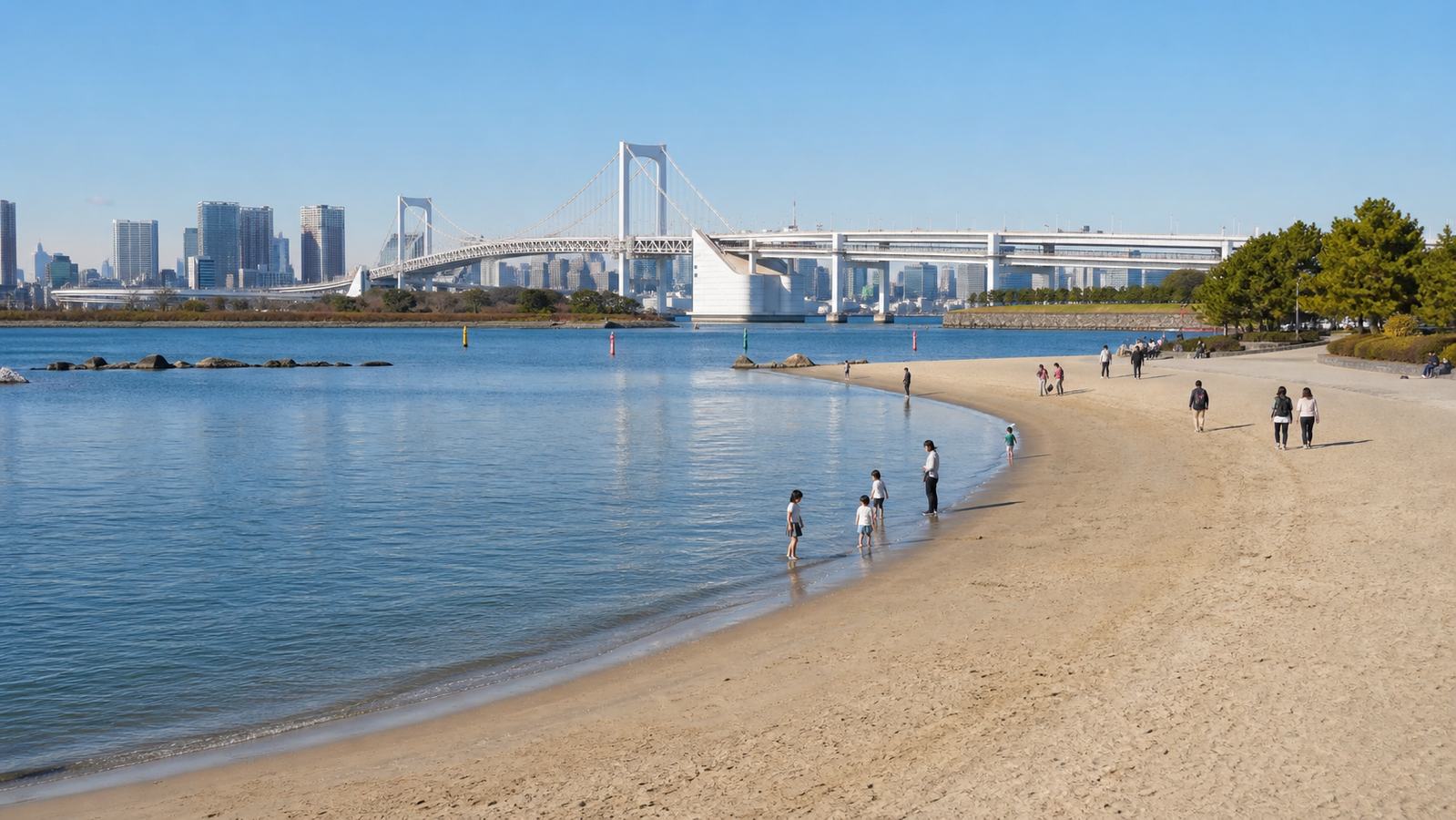
Odaiba Marine Park is the easiest option to fit into an ordinary Tokyo sightseeing day. The official park page describes Odaiba Beach as an approximately 800-meter artificial beach made with sand from Kozushima in the Izu Islands. You can walk along the water, sit on the sand, enjoy the Rainbow Bridge view and combine the waterfront with shopping, museums or other indoor attractions.
The important limit is unambiguous: the park’s official Q&A says swimming is prohibited. Do not interpret people near the waterline, children playing at the edge or marine-sports activity elsewhere in the park as permission to swim from the beach.
The park does provide practical facilities. The Marine House has showers for ¥200 per five minutes and lockers for ¥300 per use, according to the current Q&A. The listed April–September hours are 9:00 a.m.–7:00 p.m., but facility hours can change, so check again before depending on a locker late in the day.
Access is simple compared with a Shonan day trip. The official access page lists Odaiba-kaihinkoen Station and Daiba Station on the Yurikamome as about a three-minute walk, and Tokyo Teleport Station on the Rinkai Line as about a ten-minute walk. Use the station closest to the part of the waterfront you want to visit.
Who should choose Odaiba?
Choose Odaiba if your real goal is one or more of these:
- a waterfront walk rather than a swim
- sunset or Rainbow Bridge photos
- sand time with an easy return to shops and air conditioning
- a short stop before or after another Odaiba attraction
- a weather-flexible day where you can move indoors quickly
Do not choose it if entering the water for a swim is the non-negotiable part of the day. In that case, Kasai during its designated program or a Shonan beach is the better decision.
Kasai: the limited swimming choice inside Tokyo
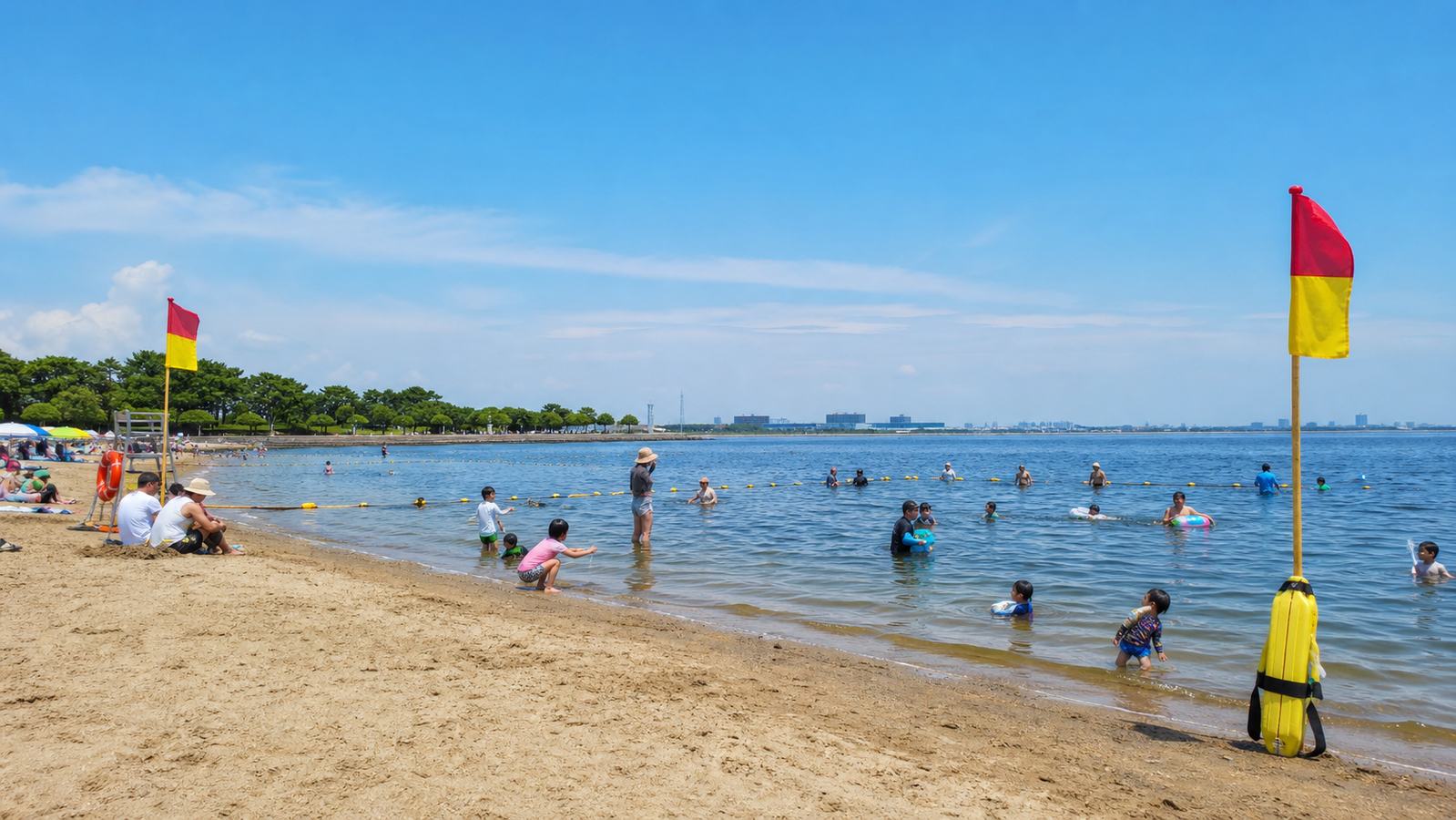
Kasai Marine Park offers the clearest answer for travelers asking, “Can I swim without making a full Kanagawa day trip?” In 2026, Edogawa City’s official event page says swimming is permitted in the designated zone at West Nagisa from Sunday, July 19 through Sunday, August 30. The daily hours are 10:00 a.m.–4:00 p.m., no advance application is required, and participation is free.
This is not year-round permission to enter the water wherever you like. The official wording describes a swimming experience in a specified zone. Stay inside that zone, follow staff instructions and leave the water when the program closes. The city also warns that swimming may be canceled because of weather or other conditions.
That limited format distinguishes Kasai from the Shonan options. Kasai can solve the “swim in Tokyo” problem, but it gives you fewer usable hours and a shorter season. If you arrive after 4:00 p.m., visit outside the July 19–August 30 window, or find the program canceled, the sand does not become an unofficial swimming area.
A practical Kasai plan
Build the day around the opening hours rather than treating them as background information.
- Check the Edogawa City event page and the park’s current notice before leaving your accommodation.
- Navigate to Kasai Rinkai Park, then continue to West Nagisa and the marked swimming zone.
- Arrive early enough to change, listen to instructions and swim without racing the 4:00 p.m. close.
- Bring water, sun protection, a towel and a dry change of clothes.
- Save a nearby non-swimming activity as Plan B in case the zone does not open.
Kasai is a sensible middle option: more commitment than an Odaiba walk, but less travel than Kamakura, Enoshima or Zushi. It works best when the official program is operating and swimming matters more than beach-house atmosphere.
Shonan: choose this when you want a full beach day
“Shonan” is a broad coastal label rather than one beach with one rulebook. For a Tokyo traveler, the most useful choices are Kamakura’s three municipal swimming beaches, Fujisawa’s beaches around Enoshima and Kugenuma, and Zushi Beach. They share the basic pattern of a published summer season and supervised swimming hours, but their dates, facilities and local rules differ.
The trip from central Tokyo is long enough that you should make the beach the anchor of the day. Do not schedule a late-morning cross-city activity, a long lunch and a Shonan swim as if the water will stay supervised into the evening. Most managed hours in this guide end at 5:00 p.m.
Kamakura: beach plus a historic-city day
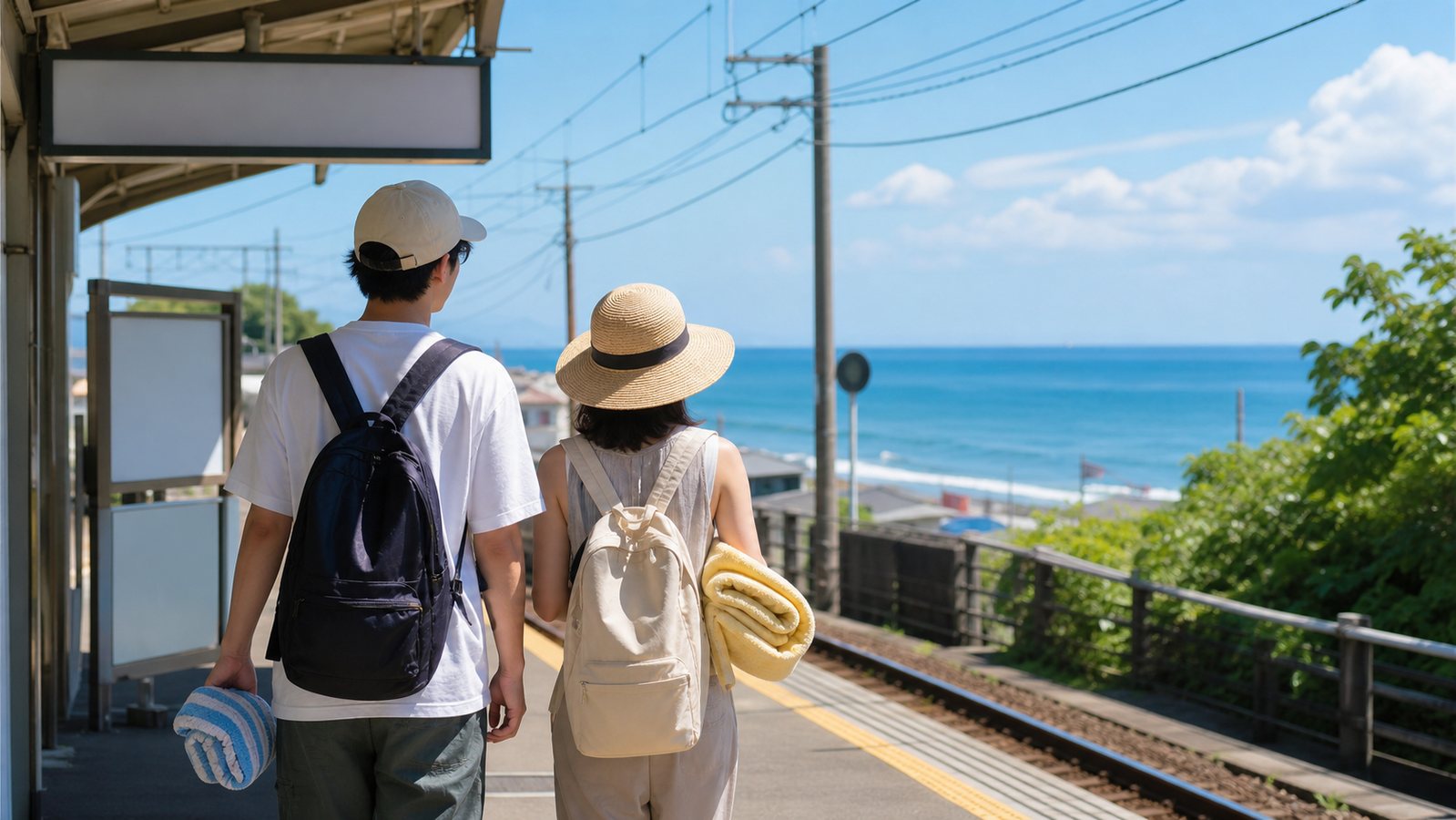
Kamakura City is opening Zaimokuza, Yuigahama and Koshigoe swimming beaches in 2026. The official period is July 1 to August 31, with hours from 9:00 a.m. to 5:00 p.m. The city says the beaches use lifeguard and drone monitoring, and AI cameras for automatic rip-current detection as part of their safety measures.
Yuigahama is the most familiar name for many international visitors and received Blue Flag certification again in 2026. The certification covers environmental education, water quality, environmental management, and safety and services. It is useful evidence of a managed beach, but it does not replace the same-day flag, lifeguard instructions or weather check.
Kamakura also operates soft-board areas. These are not extra swimming zones. The city limits use there to specified soft surfboards, soft nipper boards and bodyboards with fins, used with a leash; general swimming is not permitted inside those areas. At Zaimokuza and Yuigahama, fishing boats also have priority in the relevant area.
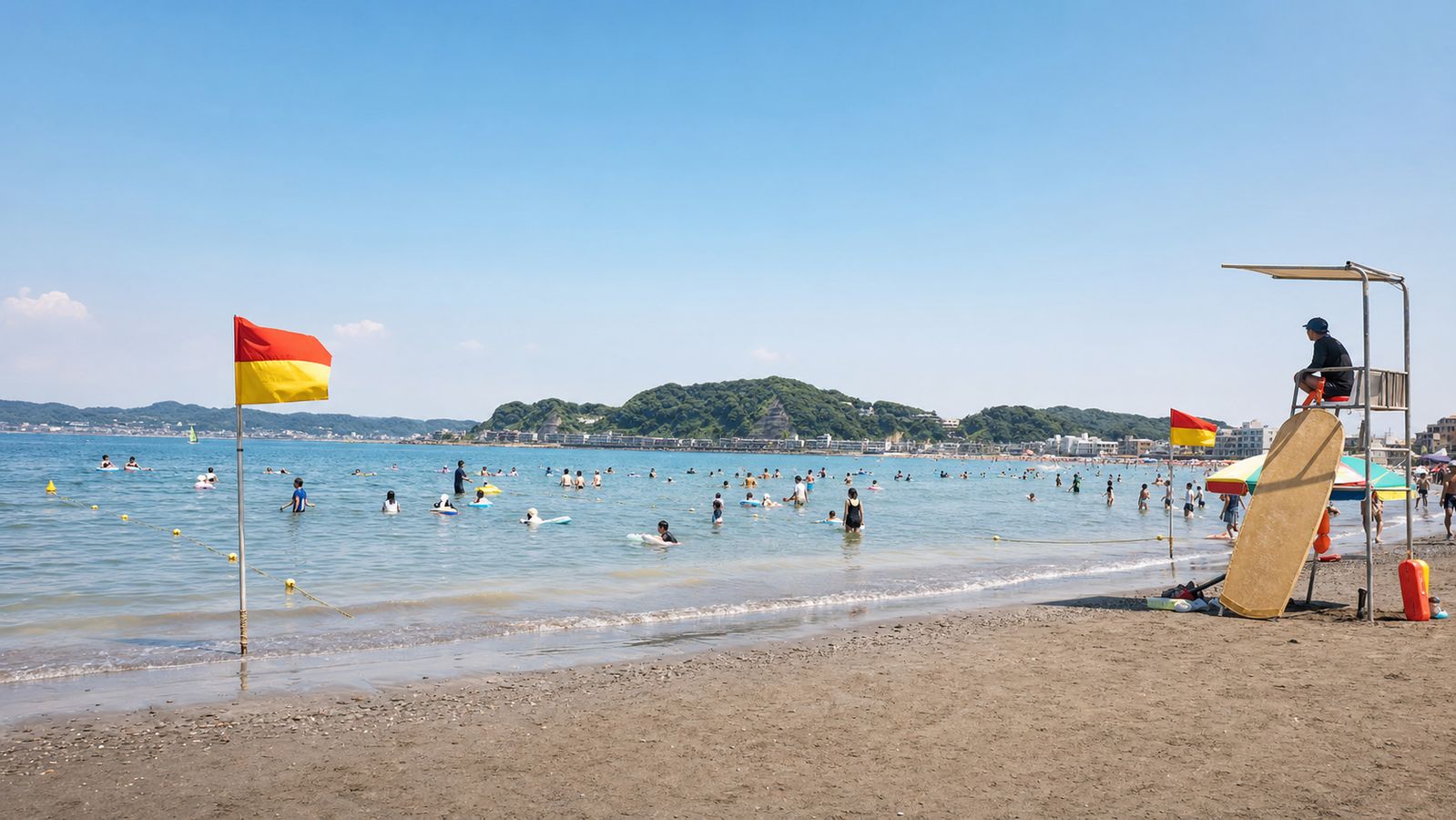
Kamakura is a good choice when your group wants a swim and a recognizable sightseeing area in the same day. Keep the route compact. For example, pair one beach with one nearby neighborhood or temple area instead of trying to “complete” Kamakura, Enoshima and the beach before the lifeguards finish.
Enoshima and Fujisawa: several beaches, several season dates
Fujisawa City has confirmed three managed beach areas for 2026:
- Katase East Beach: July 1–September 6
- Katase West Beach and Kugenuma Beach: July 1–September 13
- Tsujido Beach: July 18–August 31
The common swimming hours are 9:00 a.m.–5:00 p.m. on weekdays and 8:00 a.m.–5:00 p.m. on weekends, public holidays and the designated Obon period. For 2026, the city defines that Obon period as August 8–16, while noting that Tsujido does not use the Obon-period setting.
These dates make the Fujisawa side useful for travelers arriving in early September, when Kamakura’s official season has already ended. The longer calendar does not guarantee suitable water on each date. Follow the local flag, lifeguards and any closure notice.
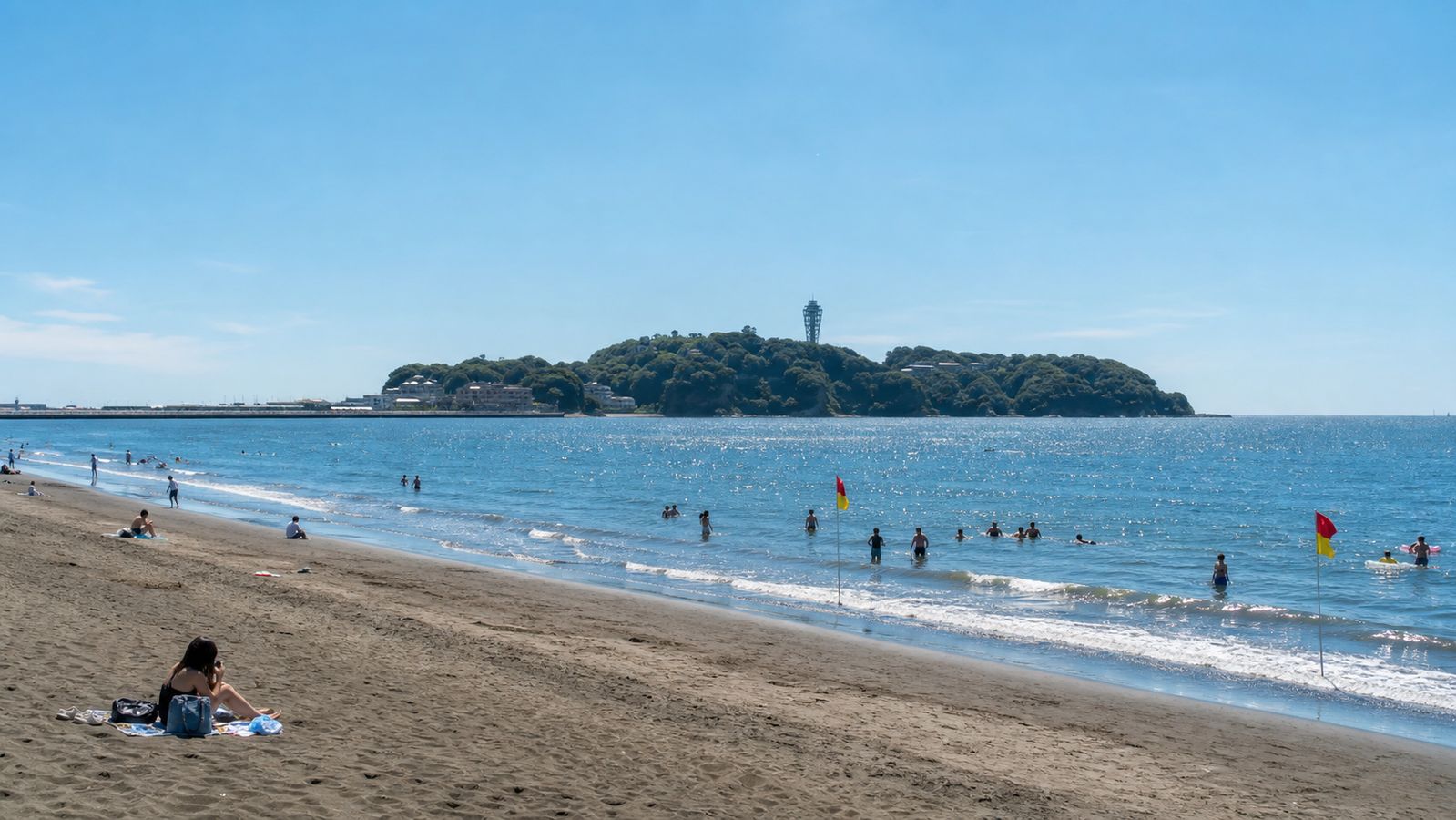
Choose the Enoshima/Fujisawa area if you want a classic Shonan atmosphere and the option to combine the beach with Enoshima. Keep one expectation under control: adding island sightseeing can consume more time and energy than it appears on a map. Swim during supervised hours first if swimming is the priority, then make the island portion flexible.
Zushi: a family-oriented beach with clearly published facilities
Zushi City’s 2026 page gives unusually detailed planning information. The beach is scheduled from July 3 to September 6, with swimming from 9:00 a.m. to 5:00 p.m. Lifesavers and a nurse are stationed at the beach. The city lists three permanent toilets, two temporary toilets and free showers at the monitoring-station and east-toilet areas from 3:00 p.m. to 4:00 p.m.
For families, Zushi lends out about 130 children’s life jackets free of charge during swimming hours. A beach wheelchair is also available free at the central monitoring station. The city describes the swimming area as about 600 meters within a larger sandy beach.
Zushi also publishes a clear beach-house benchmark for 2026: ¥2,000 for adults and ¥1,000 for children, covering luggage storage, a changing room and beach-house use. Food or shower use may have separate charges. Treat those figures as Zushi’s published arrangement, not a Shonan-wide price.
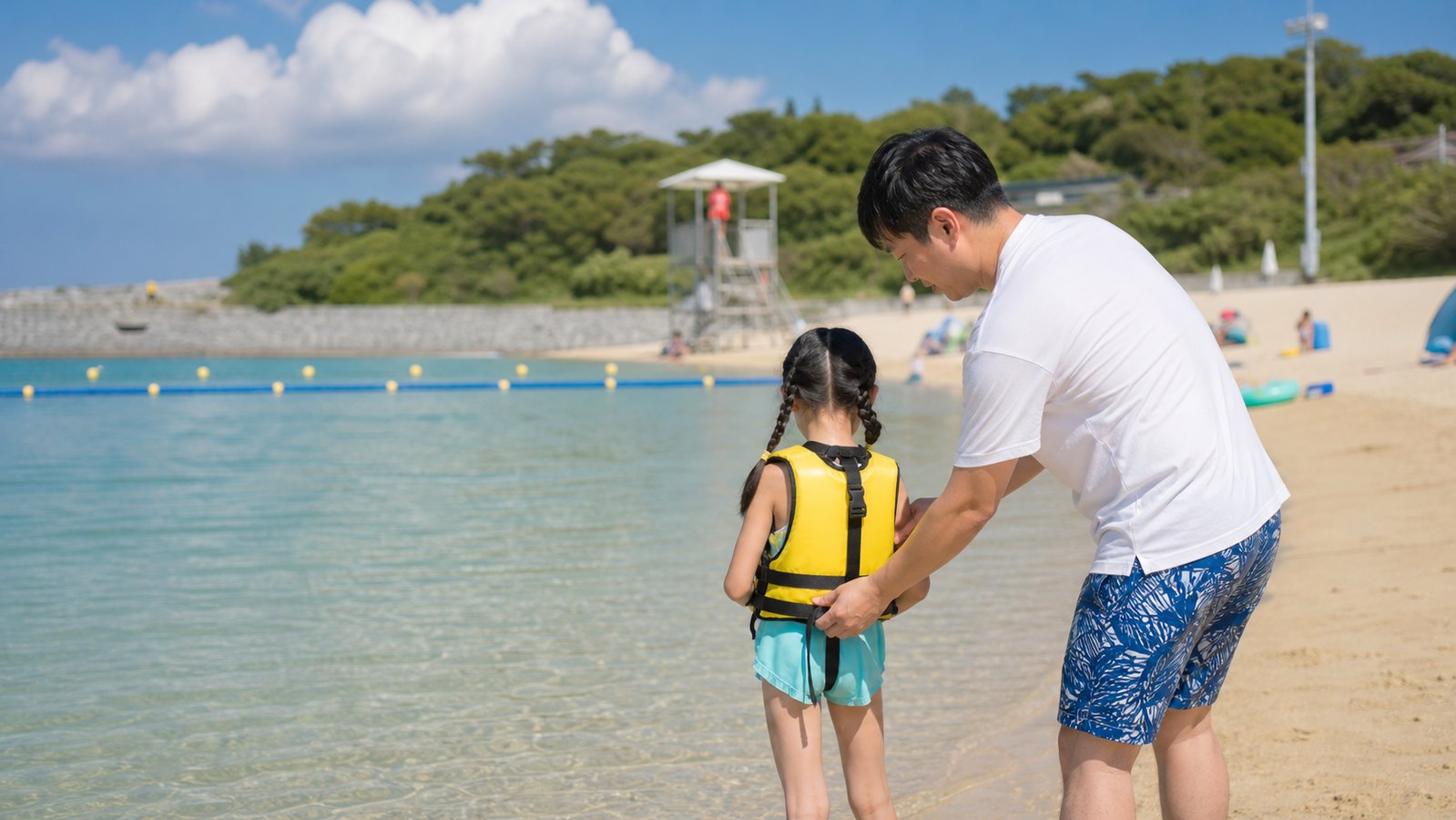
The same official page says JR Zushi Station and Keikyu Zushi-Hayama Station are about a ten-minute walk from the beach. It lists about 60 minutes by JR Yokosuka Line from Tokyo Station and about 59 minutes by Shonan-Shinjuku Line from Shinjuku, before the walk. The city warns of summer road congestion and recommends considering public transport, so rail is the more predictable starting plan.
Which beach should you choose?
Use your actual purpose, not the most famous name.
Choose Odaiba for the easiest waterfront stop
Odaiba wins when the beach is scenery. It is the least disruptive to a Tokyo itinerary, has nearby indoor options and is easy to leave when the heat becomes uncomfortable. The non-negotiable limit is no swimming.
Choose Kasai to swim without leaving Tokyo
Kasai wins on geography during its program. It is the choice for a designated swim inside Tokyo, not for a long beach-house day. Check the event status and arrive within the 10:00 a.m.–4:00 p.m. window.
Choose Kamakura for beach plus historic sightseeing
Kamakura works when different people in the group want different things. One person can care about Yuigahama while another cares about old streets or temples. Protect the swimming block from an overfilled sightseeing plan.
Choose the Enoshima/Fujisawa side for a classic Shonan day
The Fujisawa beaches are the strongest fit when the day is centered on beach time and Enoshima is an optional extra. They also offer later official end dates than Kamakura at Katase East and Katase West/Kugenuma in 2026.
Choose Zushi for published family services
Zushi is the easiest option in this comparison for confirming children’s life jackets, beach-wheelchair availability, supervised hours, beach-house fees and station access on one official page. Read its specific alcohol, barbecue and tattoo-exposure rules before going.
How to plan the trip from Tokyo without losing the swim
A more damaging planning mistake than choosing an imperfect route is leaving too late, stacking too many stops and arriving when supervised swimming is almost finished.
The night before
- Open the municipality or park page for your exact beach.
- Confirm that your date is inside the 2026 season.
- Check the weather, wind and any local closure notice.
- Save the correct station and beach entrance in your map app.
- Decide which part of the day is optional if the journey runs late.
For rail basics, use the Tokyo Trains Guide. For route-app limits and station exits, use Google Maps in Japan. A map app is useful for the route, but the beach operator or municipality remains the source for permission and opening status.
On the morning
Check the official page again. A dated summer schedule is not a promise that the water will be open during high waves, storms or another unsafe condition. Charge your phone, bring a payment backup and take a screenshot of the return route. If your beach depends on a long transfer, check the rail operator’s service status too.
At the beach
Find the monitoring station, identify the swimming-area flags and note the closing time before entering the water. Ask a lifeguard if you do not understand the marked area. Do not use other swimmers as your safety signal: they may be outside the permitted zone or ignoring instructions.
Before the final supervised hour
Leave enough time to rinse, change, collect belongings and walk to the station. A 5:00 p.m. swimming close does not mean a locker, shower, beach house or food counter will remain available for as long as you need.
What to bring, what you may have to pay for, and what to leave behind
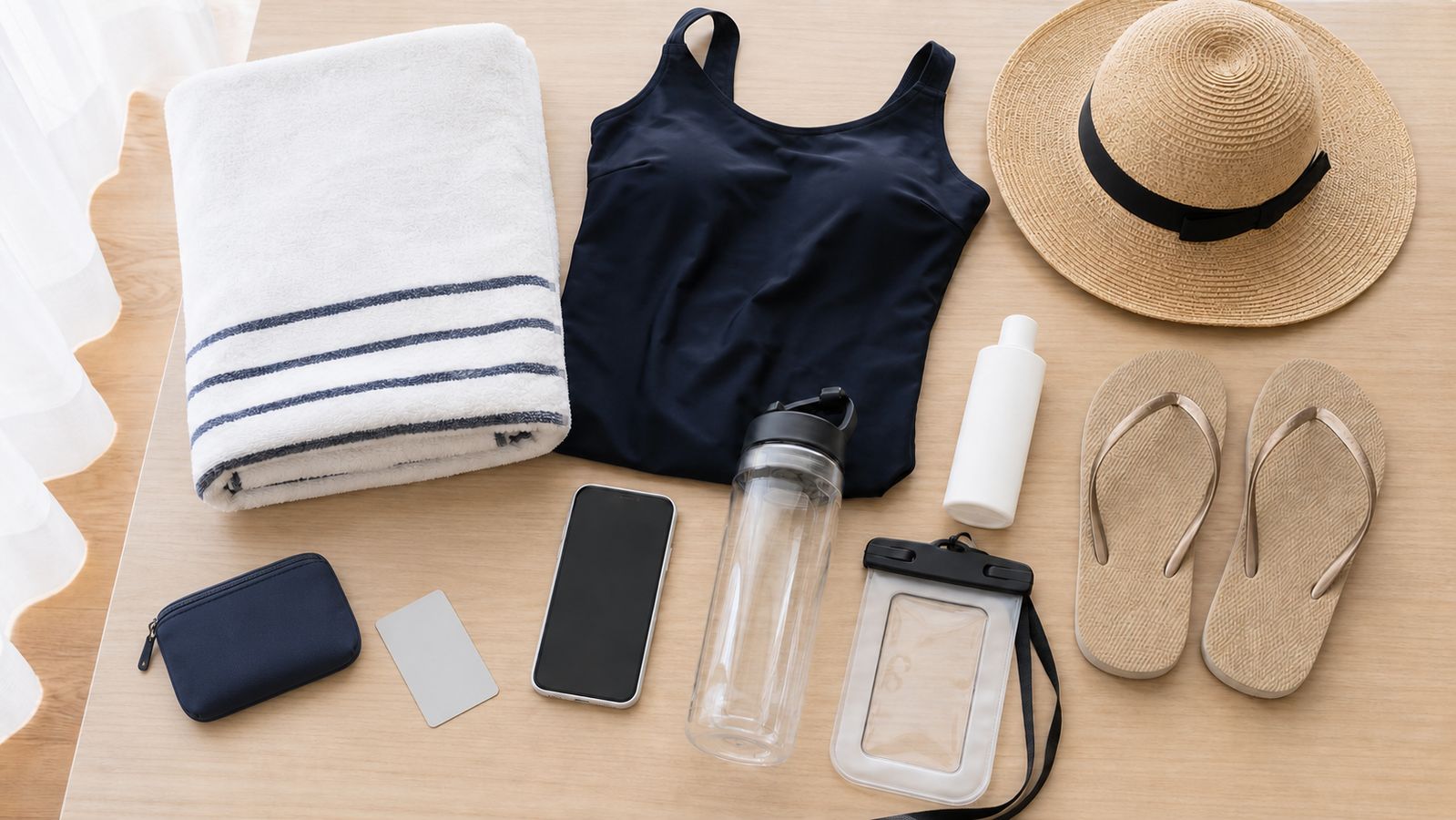
Bring a compact kit rather than a city-size suitcase:
- swimsuit and a full dry change of clothes
- towel and a small bag for wet items
- sandals for the sand plus secure shoes for the train and streets
- hat, sunscreen and a light cover-up
- water and a small amount of food unless local rules restrict it
- phone, power bank and waterproof pouch
- cash plus a card or IC card
- any personal medication
- child’s life jacket if you need a specific size or fit and the beach does not confirm a loan program
Paid services differ. Odaiba publishes shower and locker fees. Kasai’s 2026 swimming program is free. Zushi publishes beach-house fees. Kamakura and Fujisawa facilities are run across multiple beaches and operators, so check the exact beach or beach-house page before relying on a locker, warm shower, rental parasol or cashless payment.
Do not bring valuables you cannot keep with you or secure. Card acceptance differs among seasonal businesses. A small cash reserve and a pre-charged IC card reduce friction on the return journey.
For summer shopping after arrival, see 10 Cooling Items You Can Buy in Japan. For a wider hot-weather day plan, use the Japan Heat Survival Guide.
Safety: flags, rip currents, alcohol, tattoos and local rules
Beach safety information is local and immediate. A schedule written in June cannot overrule the flag flying above the beach today.
Read the flags and stay in the marked area
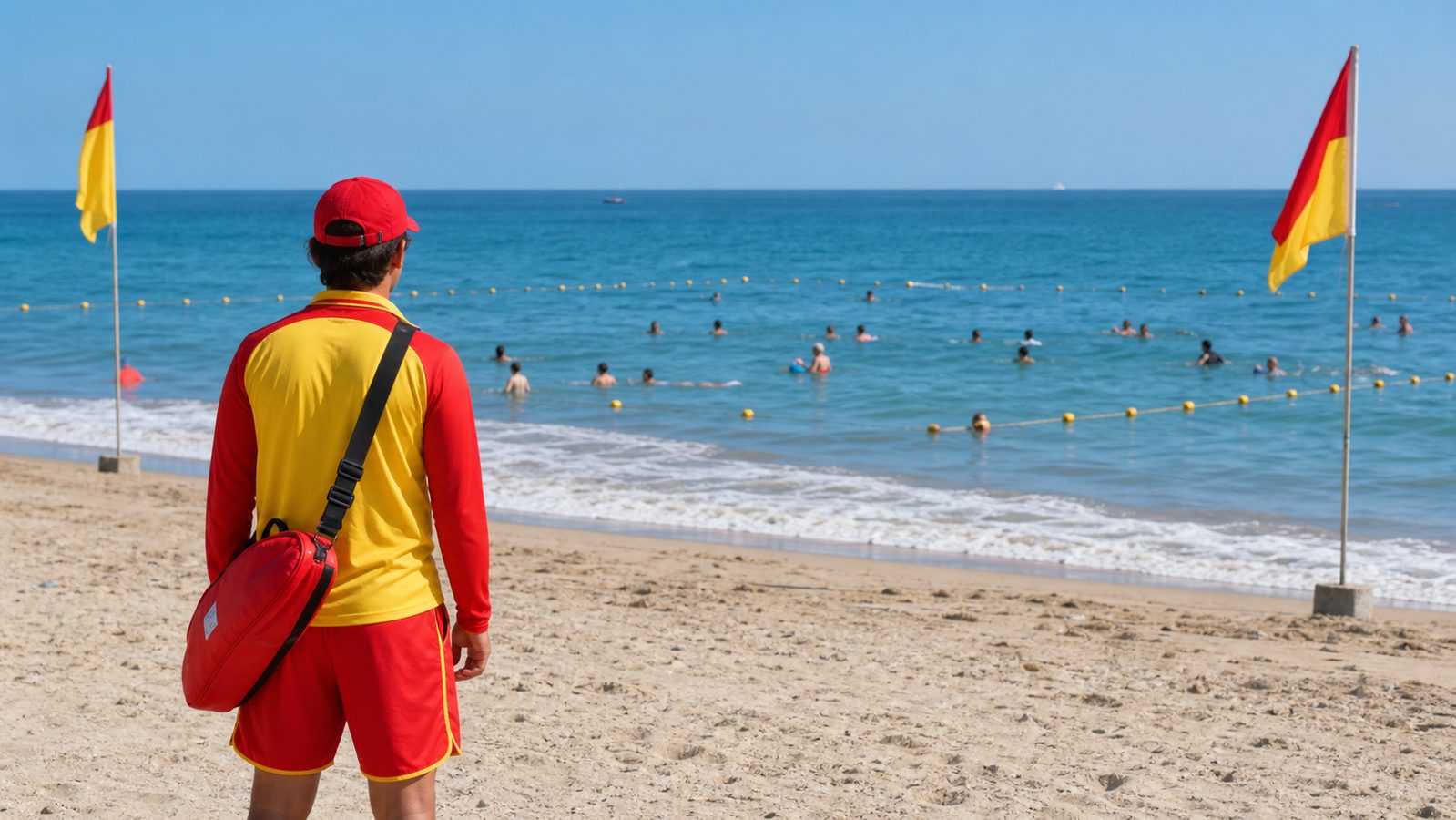
The Japan Lifesaving Association explains that two red-and-yellow flags mark a swimming area; swim between them. A red flag means no swimming. A yellow flag means stronger-than-usual wind, waves or currents and advises staying where you can stand. A blue flag indicates conditions are open for swimming. Flag systems and local instructions can differ, so follow the lifeguards at your beach.
A red-and-white checkered emergency evacuation flag warns people to leave the water for an emergency such as a tsunami. If you see it or receive an evacuation instruction, do not stop to collect nonessential belongings. Leave the water and follow the route toward safe land or higher ground.
Know what a rip current can do
A rip current moves water away from the shore. The Japan Lifesaving Association warns that trying to swim straight back against it can cause exhaustion. Its guidance says a strong swimmer may escape diagonally at about 45 degrees; a tired or less confident swimmer should move parallel to the beach until outside the current, then return toward shore. Raise one arm and wave to signal for help.
Prevention is better: swim in the supervised area, remember the point where you entered and check whether you are drifting along the beach. Avoid entering near structures or an area where waves are not breaking while waves break on both sides. If in doubt, ask the lifeguard before entering.
Alcohol rules vary by beach
Do not drink and swim. Beyond that safety rule, check the local beach rule rather than assuming one Shonan-wide policy.
Zushi specifically prohibits drinking and barbecuing on the sand, including alcohol brought from outside; its official guidance directs those activities to beach houses. That is a Zushi rule. Do not copy it automatically onto Odaiba, Kasai, Kamakura or Fujisawa, and do not copy another beach’s more permissive-looking behavior onto Zushi.
Tattoo wording is also local
Zushi’s rule prohibits exposure of tattoos that intimidate other users and asks visitors to cover them with a towel or shirt. The wording is not a blanket ban on tattooed visitors. Other beaches, beach houses, showers or private facilities may publish different policies. Check the exact place you intend to use, especially when you need a paid changing or bathing facility.
Plan B: what to do when you cannot swim
A failed beach day feels worst when swimming was essential to the plan. Decide your fallback before leaving Tokyo.
If Odaiba was your destination
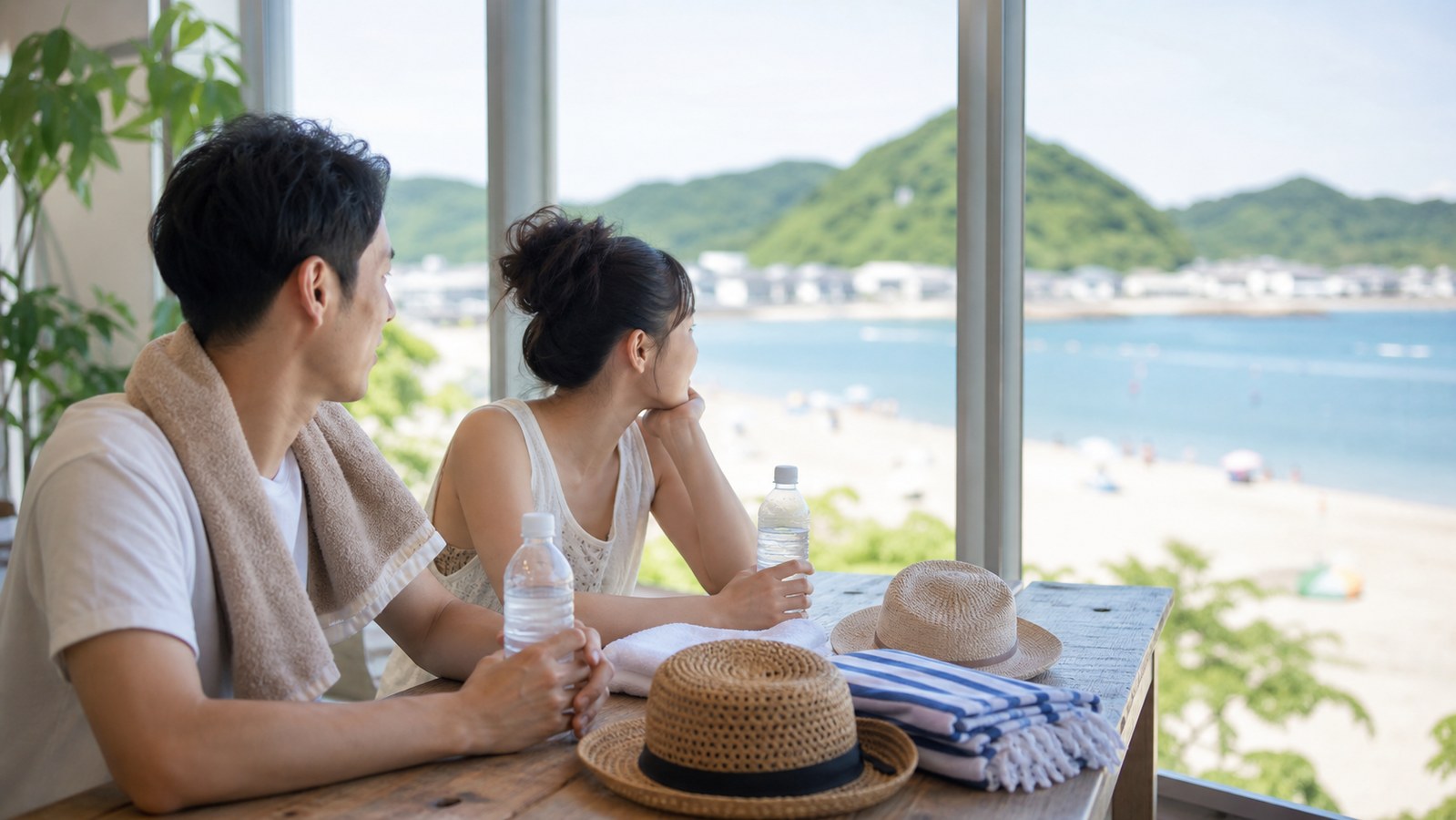
Treat the waterfront as the plan, because swimming is prohibited there. Walk the sand, photograph the bay, take a water-bus trip if operating, or move to an indoor attraction. If the heat becomes uncomfortable, shorten the beach portion instead of trying to justify the journey by staying outside.
If Kasai’s swimming zone is canceled
Do not enter outside the designated zone. Use the park for a walk if conditions are suitable, or switch to an indoor activity. Traveling onward to Shonan on impulse may leave you arriving near the end of supervised hours; check the time before making that decision.
If Shonan shows a red flag
Stay out of the water. Keep the coastal atmosphere with a short walk, meal or café, or move to a sightseeing area. A beach-house payment or long train ride is not a reason to ignore a no-swimming signal.
If heat, lightning, strong wind or a typhoon is the issue
Move indoors and follow official warnings. Beaches expose you to direct sun, reflected heat and limited shade. Lightning and strong wind are reasons to leave open sand, not to wait under a small parasol. Use the Japan Rain and Typhoon Plan for a wider transport and weather decision tree.
The successful next action is small: choose one beach, open its official page, and save one non-swimming alternative in the same area.
FAQ
Can you swim at Odaiba Beach?
No. Odaiba Marine Park’s official Q&A says swimming is prohibited. You can enjoy the sand, water’s edge, views and nearby attractions, but choose Kasai during its designated program or a Shonan beach for swimming.
Can you swim at a beach inside Tokyo?
Yes, during the limited Kasai Marine Park swimming program. In 2026, Edogawa City lists July 19–August 30, 10:00 a.m.–4:00 p.m., in the designated West Nagisa zone, subject to weather cancellation.
What is the closest option for a full swimming-beach day from Tokyo?
Starting points differ. Kamakura, the Enoshima/Fujisawa coast and Zushi are practical rail day trips with managed summer swimming areas. Compare the route from your accommodation and the official season before choosing.
When are Kamakura beaches open in 2026?
Zaimokuza, Yuigahama and Koshigoe are scheduled from July 1 through August 31, with managed swimming hours from 9:00 a.m. to 5:00 p.m.
When are the Enoshima and Fujisawa beaches open in 2026?
Katase East is scheduled July 1–September 6, Katase West/Kugenuma July 1–September 13, and Tsujido July 18–August 31. Common hours are 9:00 a.m.–5:00 p.m. on weekdays and 8:00 a.m.–5:00 p.m. on weekends, holidays and the designated Obon period, with a Tsujido exception noted by the city.
Is Zushi Beach good for families?
Zushi publishes several family-oriented services, including supervised hours, lifesavers, a nurse and free loans of about 130 children’s life jackets. A beach wheelchair is also available free at the central monitoring station.
How can I check locker and shower availability?
Do not assume so. Odaiba lists paid showers and lockers even though swimming is prohibited. Zushi lists free showers during a limited hour and paid beach-house services. Check the exact beach and facility before depending on storage or a shower.
Can I drink alcohol on the beach?
Rules differ. Do not drink and swim. Zushi prohibits drinking on the sand and directs alcohol use to beach houses. Check the official rules for the exact beach instead of applying Zushi’s rule or another beach’s behavior elsewhere.
Are tattoos banned at Shonan beaches?
Do not use a Shonan-wide assumption. Zushi prohibits exposure of tattoos that intimidate other users and asks visitors to cover them. Other beaches and private beach houses may have different wording, so check the exact facility you plan to use.
What should I do if the red flag is up?
Do not swim. Follow the lifeguards and use your non-swimming Plan B. If a red-and-white checkered emergency flag is raised, leave the water and follow evacuation instructions immediately.
Official sources checked for this guide
- Odaiba Marine Park Q&A: swimming, shower and locker rules
- Odaiba Beach and facility overview
- Odaiba Marine Park access
- Edogawa City: Kasai Marine Park swimming experience 2026
- Kamakura City: 2026 swimming beaches
- Fujisawa City: 2026 beach opening periods
- Zushi City: Zushi Beach 2026
- Japan Lifesaving Association: signal flags
- Japan Lifesaving Association: rip currents
About the author
Basabasa is a former sergeant major in the Japan Ground Self-Defense Force who writes Real Japan Guide for first-time foreign visitors. He focuses on practical Japan travel frictions: how to move, pay, ask, queue and recover when a plan changes.
Comments