October often brings comfortable sightseeing weather in Tokyo, but it is not one fixed season. An afternoon early in the month can still feel warm. A late-October evening can call for a jacket. Rain is common enough that a fully outdoor itinerary needs a backup.
This guide turns those uncertainties into simple decisions: what to wear, what to pack, when autumn leaves are realistic, which 2026 dates may affect crowds, and what to do if the weather changes.
Last checked: July 20, 2026. Event dates can change, so confirm the linked official page shortly before visiting.
- Quick answer: what should you expect in Tokyo in October?
- What does October weather actually feel like?
- What to wear in early, mid, and late October
- October packing list for a Tokyo city trip
- Rain, typhoons, and sudden cold: your Plan B
- Will you see autumn leaves in Tokyo in October?
- Confirmed Tokyo events in October 2026
- Crowd planning for weekends, holidays, and event nights
- Three model October day plans
- Your 72-hour, 24-hour, and same-morning checklist
- Frequently asked questions
- Is October 2026 a good month to visit Tokyo?
- Is Tokyo hot in October?
- Do I need a jacket in Tokyo in October?
- Does it rain a lot in Tokyo in October?
- Can a typhoon affect Tokyo in October?
- Will Tokyo have autumn leaves in October 2026?
- Is Tokyo crowded during the October 10–12, 2026 weekend?
- What is the best rainy-day strategy in Tokyo?
- Sources and update policy
Quick answer: what should you expect in Tokyo in October?
Tokyo’s October climate normal is a monthly mean of 18.0°C, based on Japan Meteorological Agency data for 1991–2020. The same official dataset records 234.8 mm of normal monthly precipitation and an average of 10.5 days with at least 1 mm of rain. These are climate normals, not a forecast for your travel dates. See the JMA climate normals and Tokyo precipitation normals.
For travelers unsure what to pack, a practical starting point is:
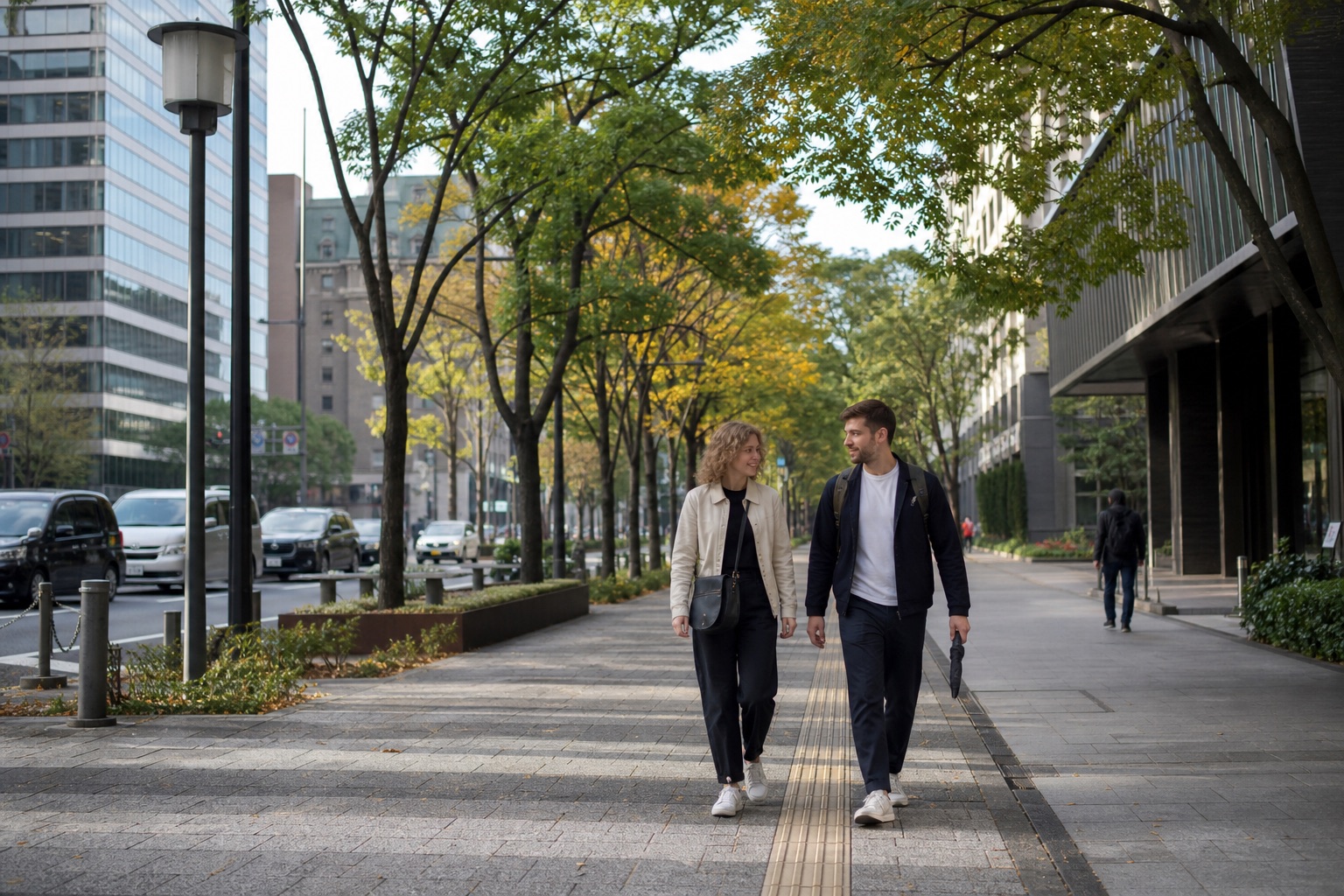
- Early October: a short-sleeve top may work in a warm afternoon, with a light outer layer for morning, evening, air-conditioned spaces, or rain.
- Mid-October: long sleeves plus a light jacket or cardigan are a dependable starting combination.
- Late October: use layers and carry a jacket, especially for evenings, waterfront areas, or trips to western Tokyo.
- For the whole month: bring comfortable closed-toe walking shoes and a compact umbrella or light rain shell.
The official GO TOKYO October guide says conditions become cooler as the month progresses, notes occasional rain and possible typhoon effects, and recommends a light jacket for night. It also warns that the mountainous west of Tokyo can be cooler than the central city. Its temperature examples use 2024 observations rather than a 2026 forecast, so use them as context. Read GO TOKYO’s October guidance.
The best next action is not to finalize the full packing list weeks in advance. Choose a layered base now, then check the official forecast 72 hours before each weather-sensitive day.
What does October weather actually feel like?
Tokyo in October often feels mild while you are moving and cooler when you stop. That difference matters because a normal sightseeing day may include a sunny outdoor walk, a cold train car, a warm restaurant, a breezy observation deck, and a damp evening.
Three factors can change how the same temperature feels:
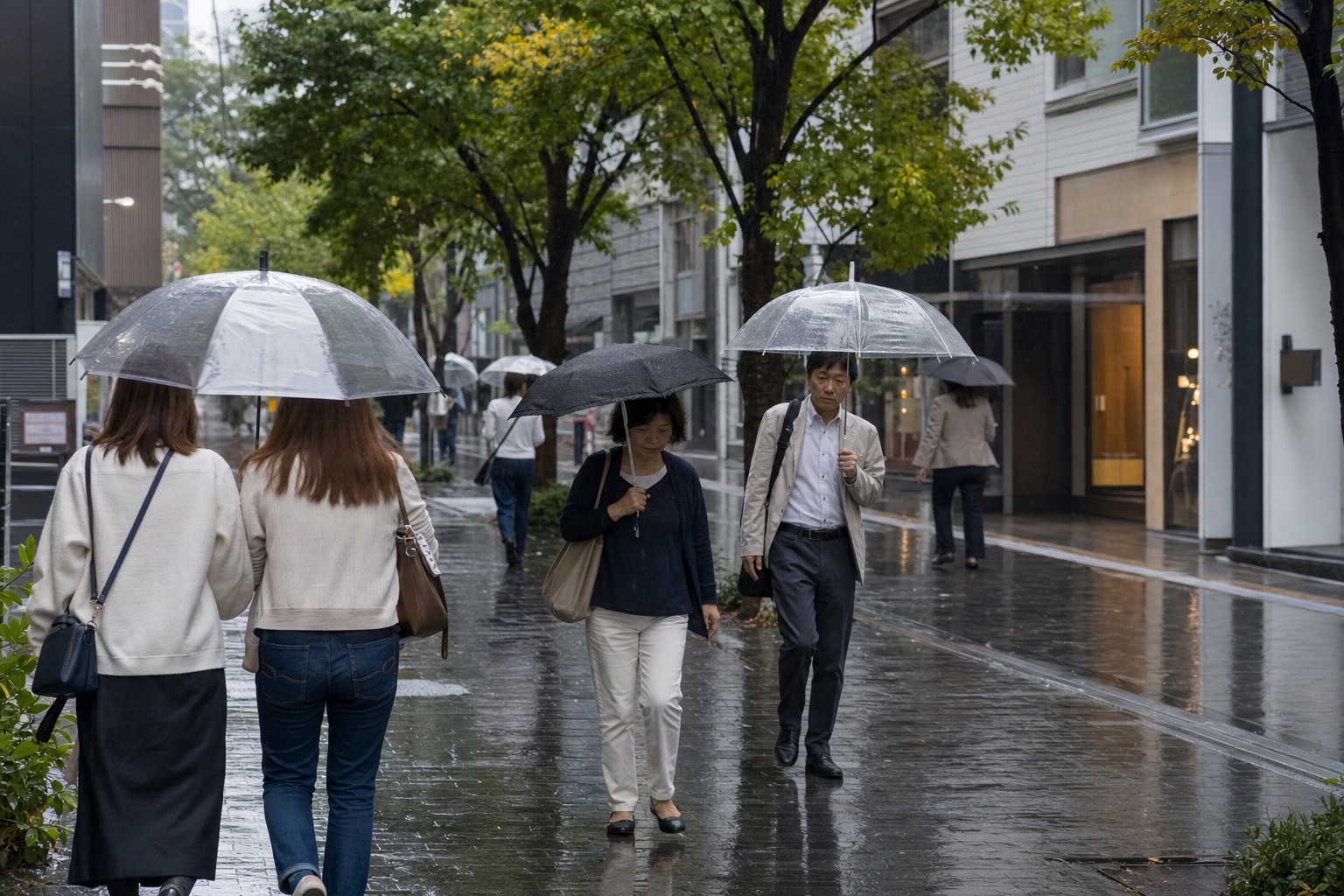
- Humidity and rain: a wet 19°C evening can feel cooler than the number suggests.
- Sun and walking: a bright afternoon with long walks can make a heavier jacket uncomfortable.
- Location: the bayfront, riverside, and elevated viewpoints may feel breezier, while western mountain areas are generally cooler than central neighborhoods.
Climate normals help with the overall shape of the month, but they cannot tell you whether your Tuesday will be sunny. JNTO describes October as generally comfortable after summer heat and notes that the typhoon season is largely over by the end of September. However, its separate typhoon guidance says tropical storms can still form through October. Treat that as a reason to monitor official information, not a reason to expect disruption. See JNTO’s October overview and JNTO’s typhoon guidance.
What to wear in early, mid, and late October
Use this table as a first packing decision, then adjust it to the short-range forecast and your sensitivity to cold.
| Travel period | Practical starting outfit | Useful layer | Main mistake to avoid |
|---|---|---|---|
| October 1–10 | T-shirt or breathable long-sleeve top with light trousers | Thin overshirt, cardigan, or packable jacket | Packing only summer clothes because one afternoon looks warm |
| October 11–20 | Long-sleeve top with trousers or a long skirt | Light jacket or cardigan | Wearing one heavy layer that is awkward indoors |
| October 21–31 | Long sleeves with a light-to-medium jacket | Thin knit or an extra base layer for cool evenings | Assuming central Tokyo and mountain areas feel the same |
Early October: keep one warm-weather option
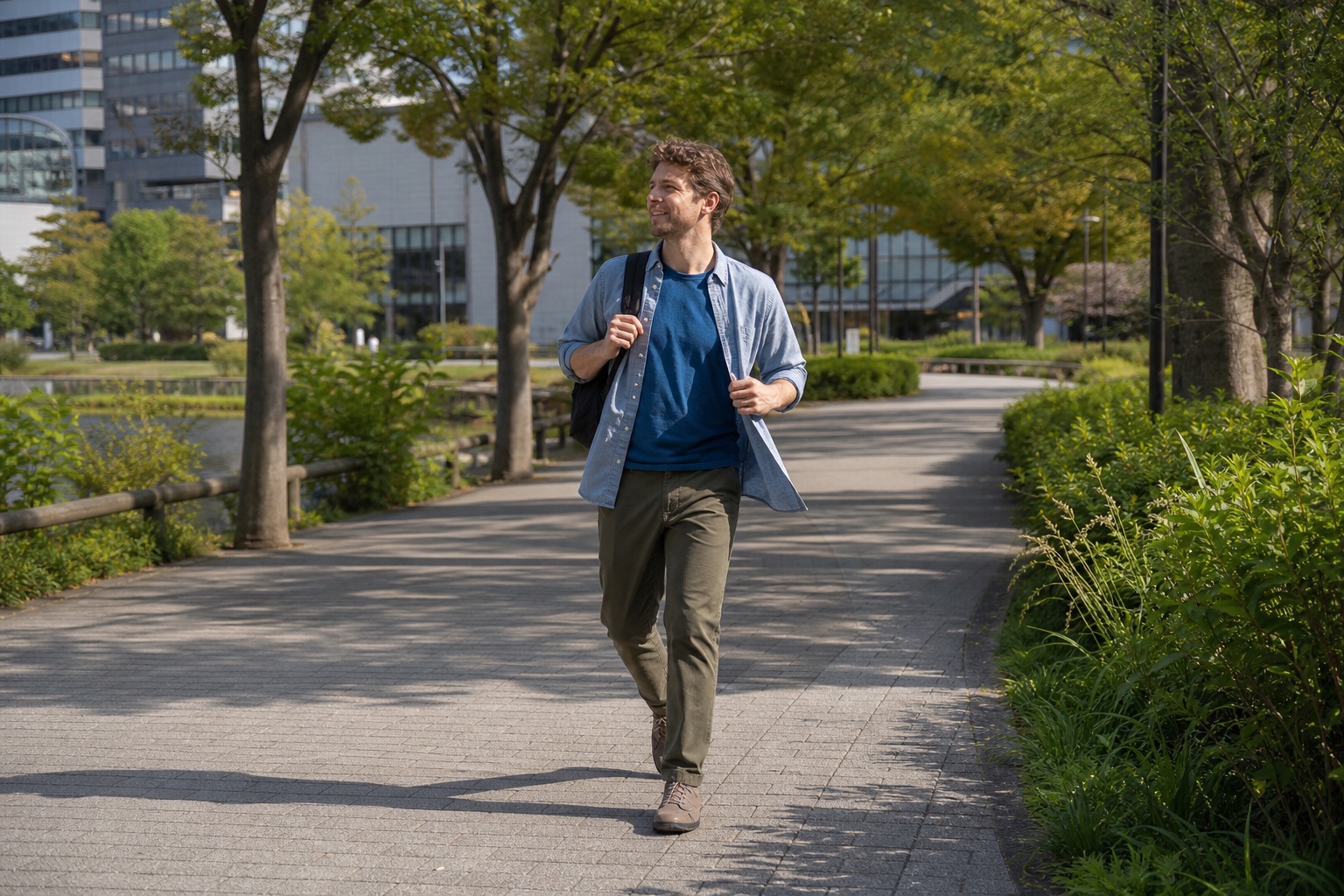
Early October can retain some late-summer warmth, especially in the afternoon. A breathable base layer is useful, but do not leave your accommodation without something light to put over it. A thin overshirt is easier to carry than a bulky coat and works well when moving between outdoor streets and air-conditioned trains.
If your plan includes a fireworks evening, a river, or long periods sitting outside, take the layer even when the afternoon feels warm. You will generate less body heat after sunset than while walking.
Mid-October: build around removable layers
By mid-month, a long-sleeve top and light jacket are a flexible default. The goal is not maximum warmth; it is the ability to remove or add one layer without changing your entire outfit.
This is especially useful on a day that combines a garden, museum, restaurant, and evening event. A cardigan, unlined jacket, or compact wind-resistant shell can cover several conditions. If rain is forecast, choose quick-drying trousers over heavy denim that stays damp.
Late October: plan for the evening as well as midday
Late October is more likely to feel distinctly autumnal, although individual days vary. A jacket becomes more useful, particularly after dark. Travelers going to Mt. Takao or another elevated area should check that location’s forecast separately rather than relying on a central Tokyo reading.
You normally do not need a winter expedition coat in central Tokyo in October. A heavy coat can become inconvenient on trains and inside shops. If you feel cold easily, add a thin thermal base layer or light knit instead of depending on one oversized outer layer.
October packing list for a Tokyo city trip
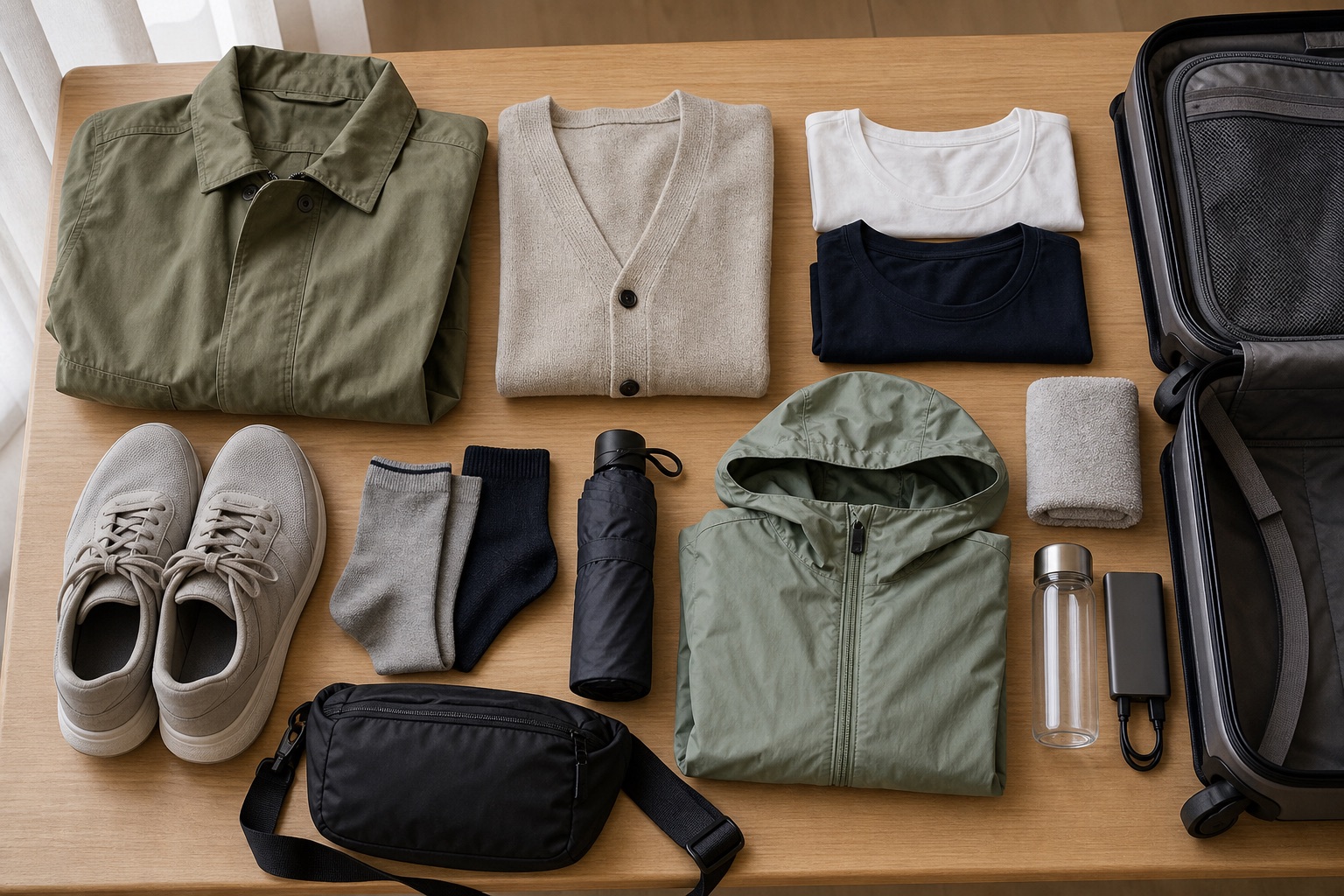
Pack for walking, small weather changes, and crowded public transport. This compact list covers common city-trip needs:
- Two or more breathable base tops, including at least one long-sleeve option
- Light jacket, cardigan, or packable shell
- Comfortable trousers, skirt, or other walking-friendly bottoms
- Broken-in closed-toe walking shoes
- Spare socks, especially if several rainy days are possible
- Compact umbrella or lightweight waterproof shell
- Small towel or handkerchief for rain and humid moments
- Refillable water bottle
- Portable battery for navigation and weather checks
- Small bag that closes securely in crowds
- Any personal medication, plus a copy of essential prescription information
If the forecast shows repeated rain, a second pair of shoes is more useful than several extra outfits. Waterproof footwear is helpful, but new stiff shoes can create a different problem after 20,000 steps. Comfort comes first.
Luggage space is limited? Prioritize a layer you will actually carry. A jacket left in the hotel cannot help during a cool evening. If you need help navigating between neighborhoods, save our Tokyo train guide and Google Maps navigation guide before departure.
Rain, typhoons, and sudden cold: your Plan B
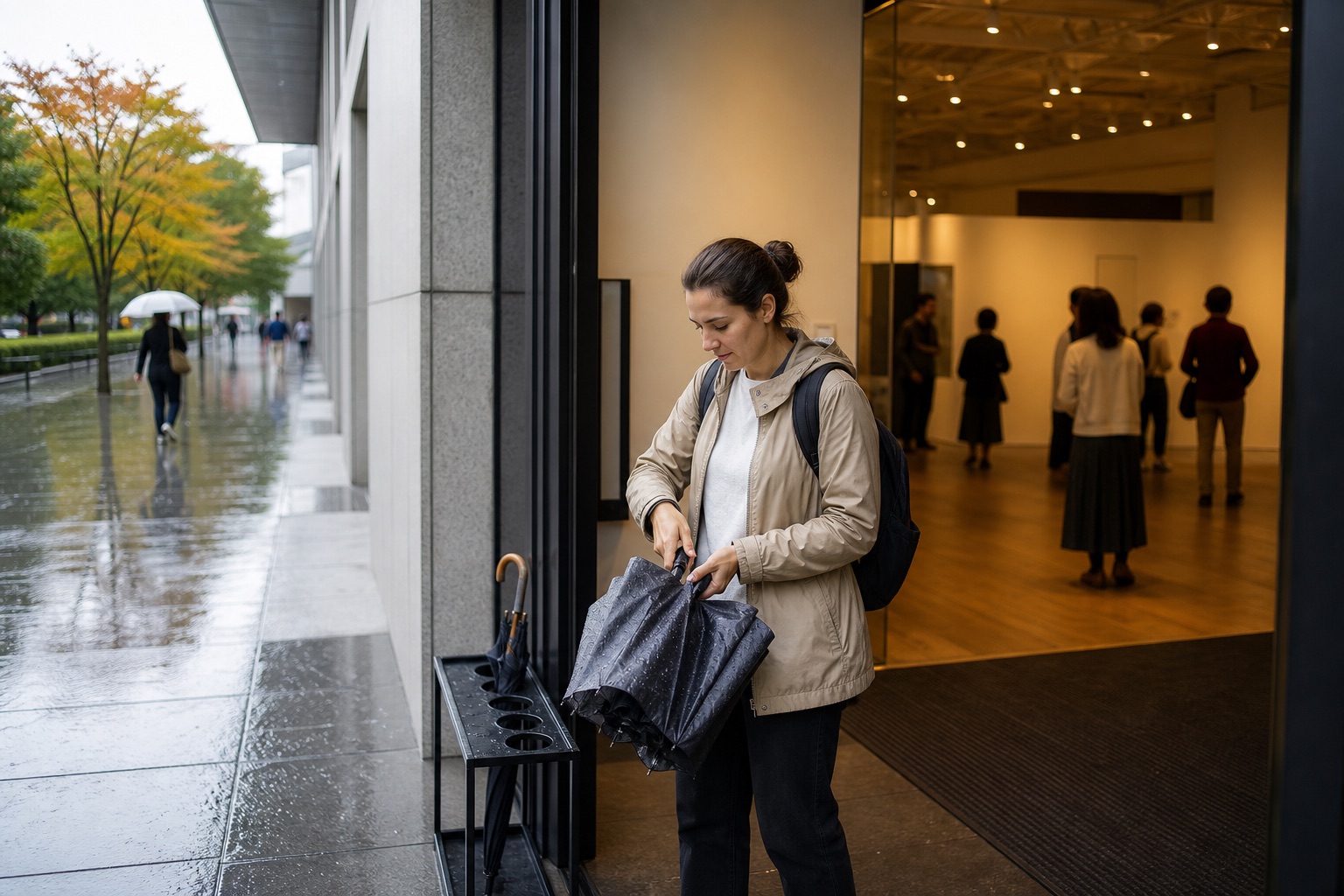
The normal number of rainy days is high enough that a fully outdoor schedule carries avoidable risk. The solution is not to cancel October travel. It is to pair each important outdoor block with an indoor alternative in the same part of the city.
If ordinary rain is forecast
Keep the neighborhood and change the activity. For example:
- Ueno: shorten the park walk and spend more time in a museum.
- Marunouchi: move from an outdoor palace-area walk to indoor galleries, shops, and station-connected spaces.
- Shibuya: replace a long street walk with shopping complexes, cafés, or an indoor viewpoint if visibility is acceptable.
- Odaiba: use indoor museums and shopping areas, but check transport conditions when wind is strong.
Leave extra time for wet station floors, umbrella handling, and slower walking. Avoid scheduling a prepaid activity immediately after a long cross-city transfer.
If a typhoon or severe-weather alert is possible
Do not make the decision from a social-media clip. Check the Japan Meteorological Agency, your rail operator, airline, and venue pages. JNTO’s official Japan Visitor Hotline information is also useful for visitors needing assistance.
When authorities or operators advise against travel, stay indoors and follow those instructions. A museum ticket is replaceable; a risky trip is not. Also remember that the storm center does not have to pass directly over central Tokyo for flights, trains, bridges, or outdoor events to be affected.
If the temperature drops more than expected
Change the sequence rather than abandoning the day. Put the longest outdoor walk near the warmest forecast period, use an indoor lunch as a reset, and keep exposed observation decks or river walks optional. Convenience stores and clothing shops can fill a minor clothing gap, but checking the forecast before leaving is cheaper and easier.
For a fuller decision tree, see our Japan rain and typhoon Plan B.
Will you see autumn leaves in Tokyo in October?
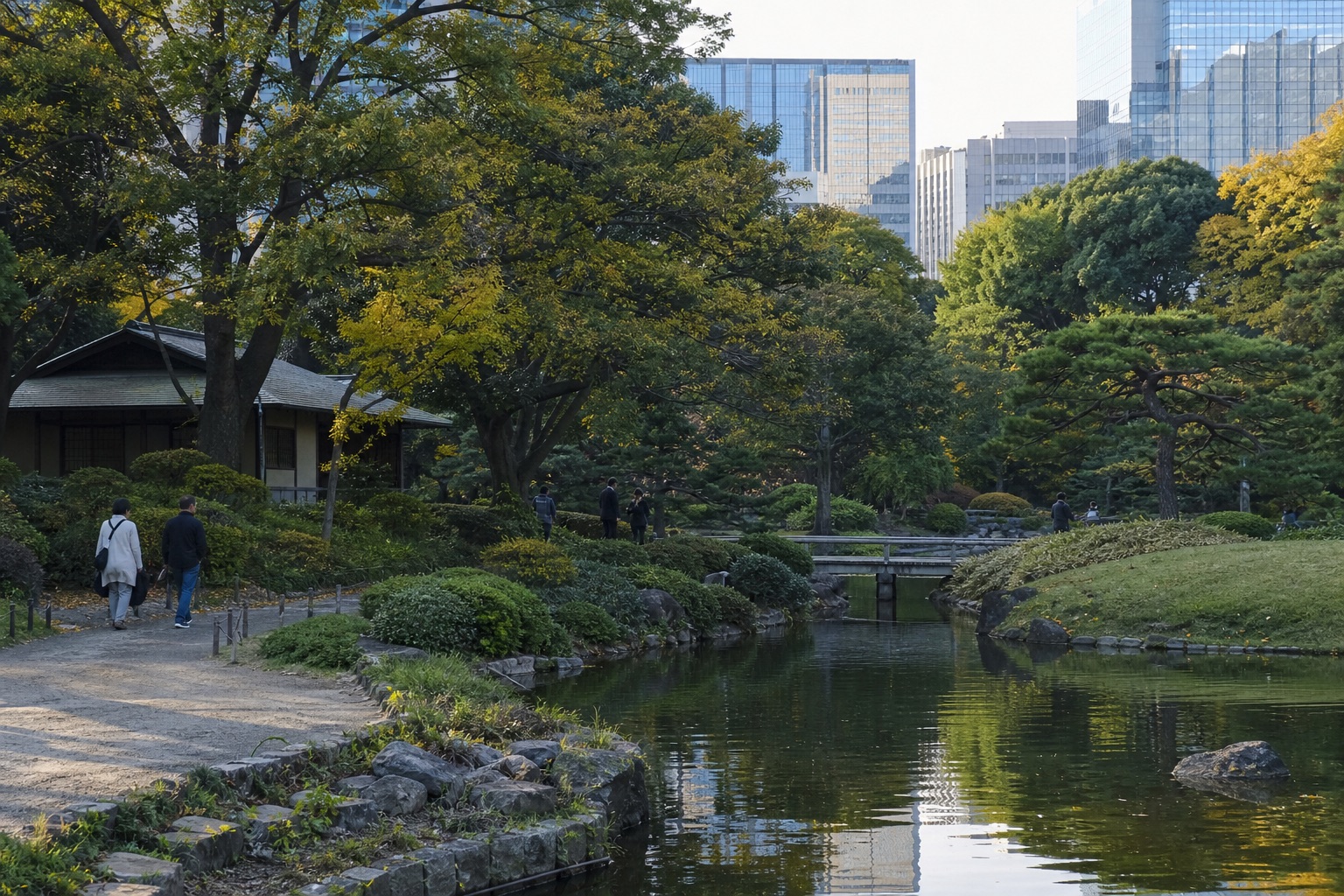
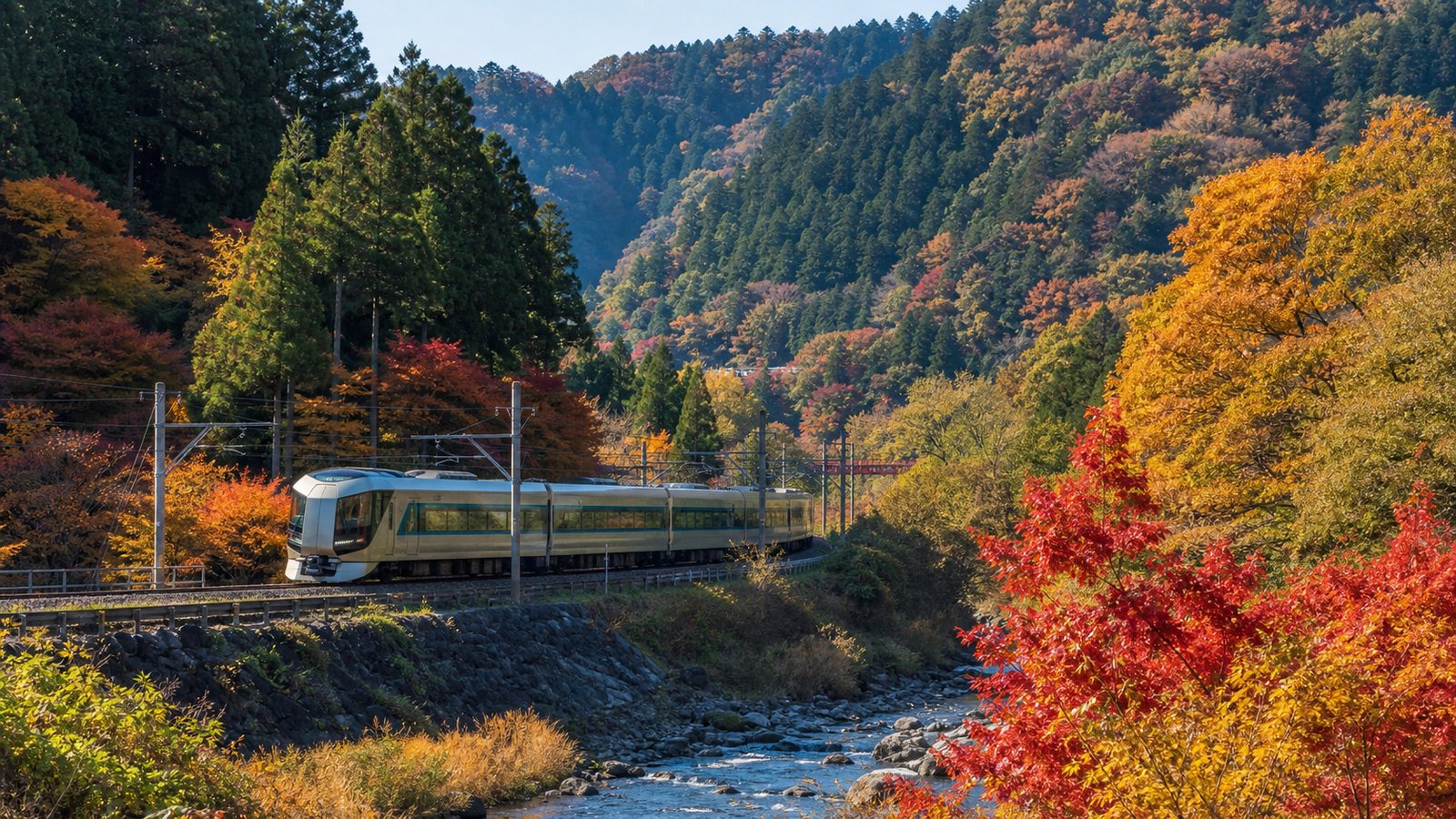
Do not build an October central Tokyo trip around expected peak foliage. GO TOKYO says the best viewing period in central Tokyo is generally mid-November to early December. October is often too early for full color in major central-city gardens. See the official Tokyo autumn leaves forecast guide.
Late October may bring early color in cooler or elevated locations, but timing changes with weather and elevation. If foliage is a priority, check live updates shortly before traveling and consider western Tokyo. Our Mt. Takao autumn leaves guide explains the trade-offs, while the Tokyo autumn leaves guide covers central locations and timing.
A good October mindset is to treat changing leaves as a bonus. Tokyo still offers softer temperatures, seasonal food, festivals, and comfortable neighborhood walks even when trees remain mostly green.
Confirmed Tokyo events in October 2026
The dates below were confirmed on official pages as of July 20, 2026. Recheck before making a non-refundable booking.
| Date | Event | Area | Planning note |
|---|---|---|---|
| October 3 | Setagaya Tamagawa Fireworks Festival | Futako-Tamagawa area | Fireworks are scheduled for 6:00 p.m.; expect concentrated evening demand and follow official access guidance. |
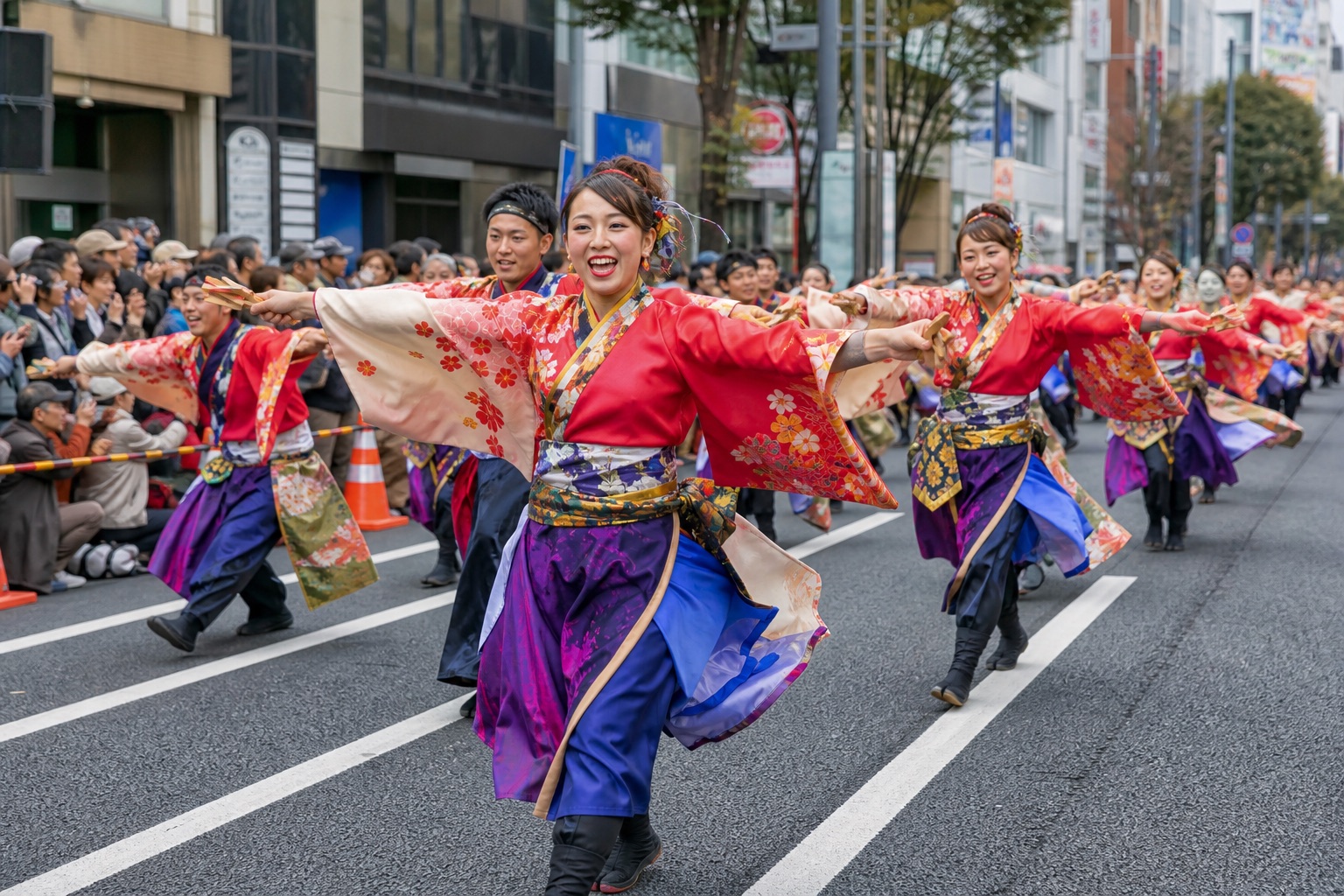
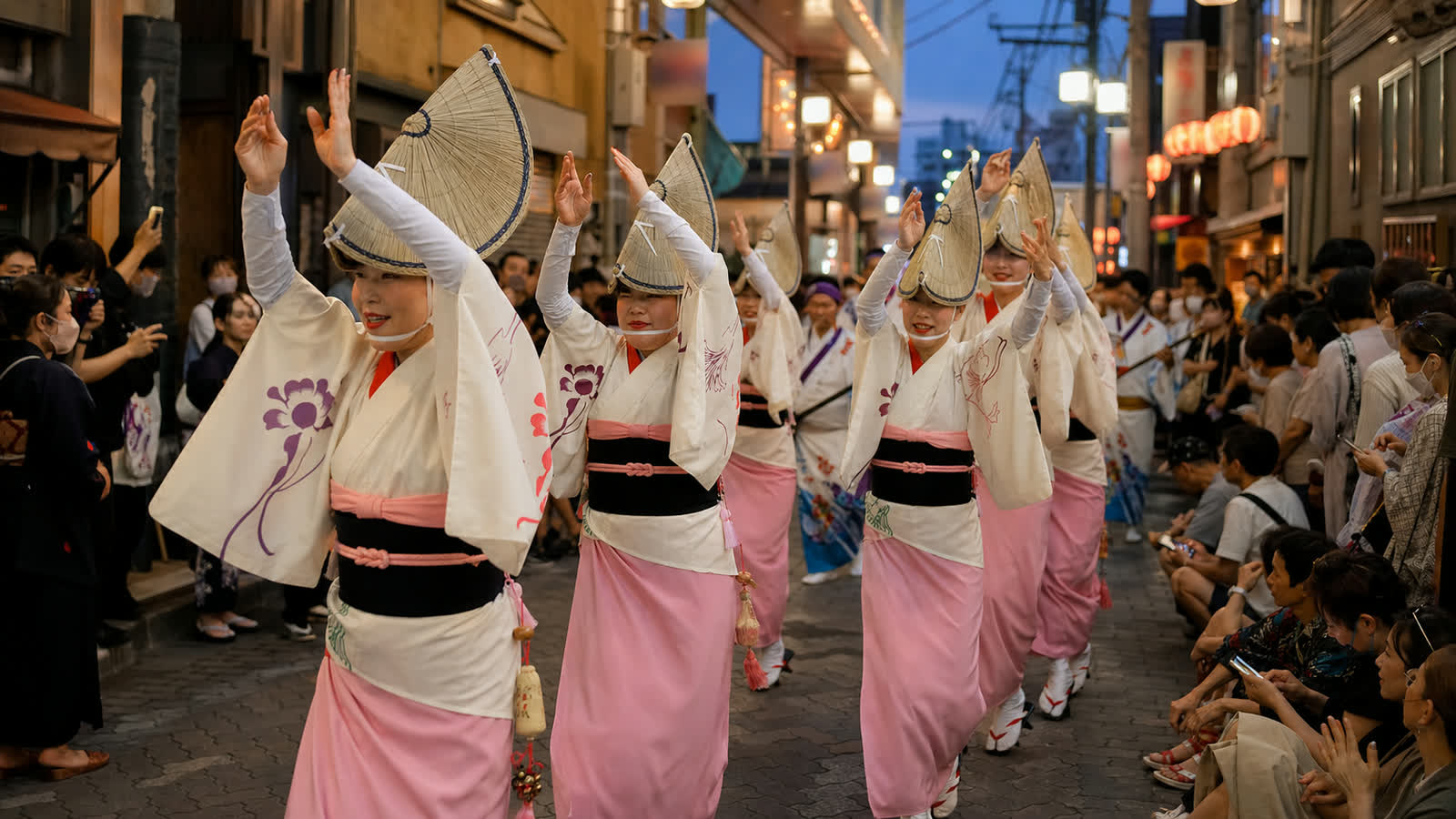
| October 10–11 | Tokyo Yosakoi | Ikebukuro | Dance performances are confirmed for the two days immediately before the national holiday. |
| October 12 | Sports Day national holiday | Nationwide | Monday holiday creates a three-day weekend from October 10–12. |
| October 26–November 4 | 39th Tokyo International Film Festival | Hibiya, Yurakucho, Marunouchi, Ginza | Check the official program and ticket rules when released. |
| October 30–November 3 | Tokyo Ramen Festa 2026 | Komazawa Olympic Park | Entry is listed as free; ramen requires tickets. Check the official page for operating hours and ticket sales. |
What about Halloween on October 31?
Halloween itself is fixed, but do not assume that a large public street party is an officially organized event. Shibuya City’s daily rule prohibits street drinking from 6:00 p.m. to 5:00 a.m. in a defined area around Shibuya Station; the rule has applied since October 1, 2024. Follow the Shibuya City ordinance information and on-site instructions.
The Ikebukuro Halloween Cosplay Festival may also interest visitors, but its official English site was still showing 2025 information when this article was checked. We have therefore not listed unannounced 2026 dates as confirmed. Recheck the official Ikebukuro Halloween site closer to the trip.
For more festival context, use our Tokyo matsuri guide and our detailed Setagaya Tamagawa Fireworks guide.
Crowd planning for weekends, holidays, and event nights
Tokyo is busy year-round, but crowd pressure is local and time-specific. A festival exit, fireworks station, or holiday shopping district can feel much busier than a residential neighborhood twenty minutes away.
Pay special attention to the October 10–12 three-day weekend. Tokyo Yosakoi is scheduled in Ikebukuro on October 10 and 11, followed by Sports Day on Monday, October 12. This combination may increase demand around event zones and popular leisure areas. It does not imply citywide crowding.
Use four simple controls:
- Reserve the scarce item first. Book the timed museum, observation deck, restaurant, or film ticket before filling the day with flexible walks.
- Arrive before the event peak. For fireworks or a parade, follow the organizer’s access instructions and avoid assuming you can arrive at the last minute.
- Choose a different station when officially recommended. Do not invent a shortcut through closed or residential areas.
- Keep dinner flexible after a major event. Station restaurants and convenience stores may be crowded; eating earlier or farther from the venue can reduce stress.
At month-end, the film festival and ramen festival overlap from October 30 into early November, while Halloween falls on October 31. Their venues are in different parts of the city, so plan by neighborhood rather than treating central Tokyo as one event zone.
Three model October day plans
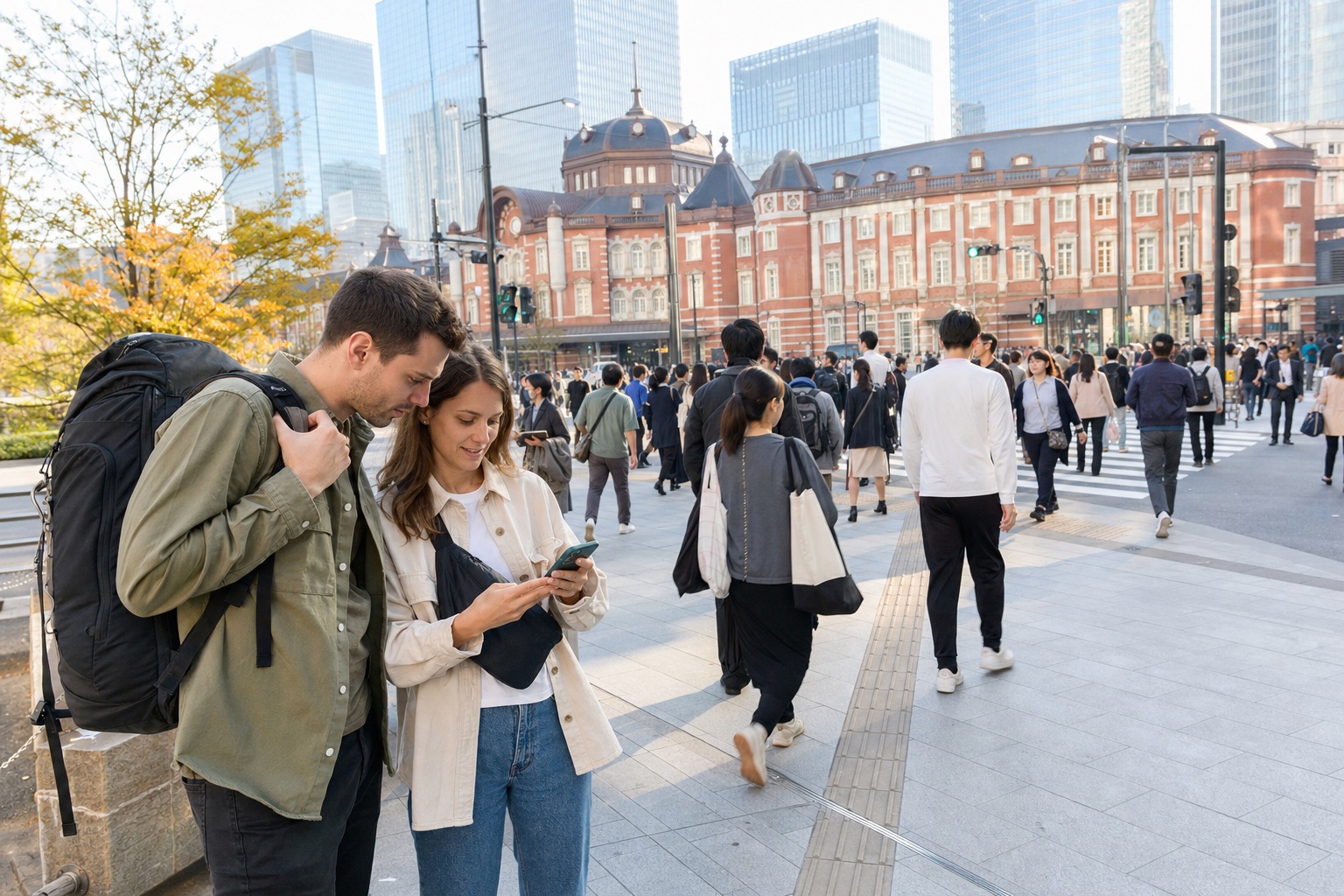
These are decision templates, not rigid itineraries. Replace individual attractions according to opening days, reservations, and your interests.
Plan 1: mild and sunny — garden plus neighborhoods
Morning: Start with an outdoor garden or park soon after opening. Cooler morning air is comfortable for walking, and the schedule stays flexible if the afternoon becomes warmer.
Lunch: Eat in the same district instead of crossing the city for one restaurant.
Afternoon: Explore a nearby shopping street, museum, or historic neighborhood. Carry your light layer rather than returning to the hotel for it.
Evening: Choose an observation point, river area, or event after checking wind, visibility, and the last convenient train connection.
This structure keeps the outdoor priority early while retaining indoor options later.
Plan 2: steady rain — station-connected culture day
Morning: Select one museum or indoor attraction with a clear opening schedule. Avoid building the day around multiple long transfers.
Lunch: Use a station-connected or nearby restaurant. Put wet umbrellas into the bags provided where required and keep floors clear.
Afternoon: Add a gallery, department store, aquarium, or shopping complex in the same broad area.
Evening: Make dinner the final anchor. If rain intensifies or rail service changes, return early rather than forcing an optional stop.
The useful rule is “same area, different activity.” You preserve the day without spending it underground in transit.
Plan 3: late-October event evening — flexible day, fixed night
Morning: Keep the first activity light and reservation-free.
Lunch and afternoon: Move toward the event district, but stop somewhere that gives you seating, toilets, food, and weather protection.
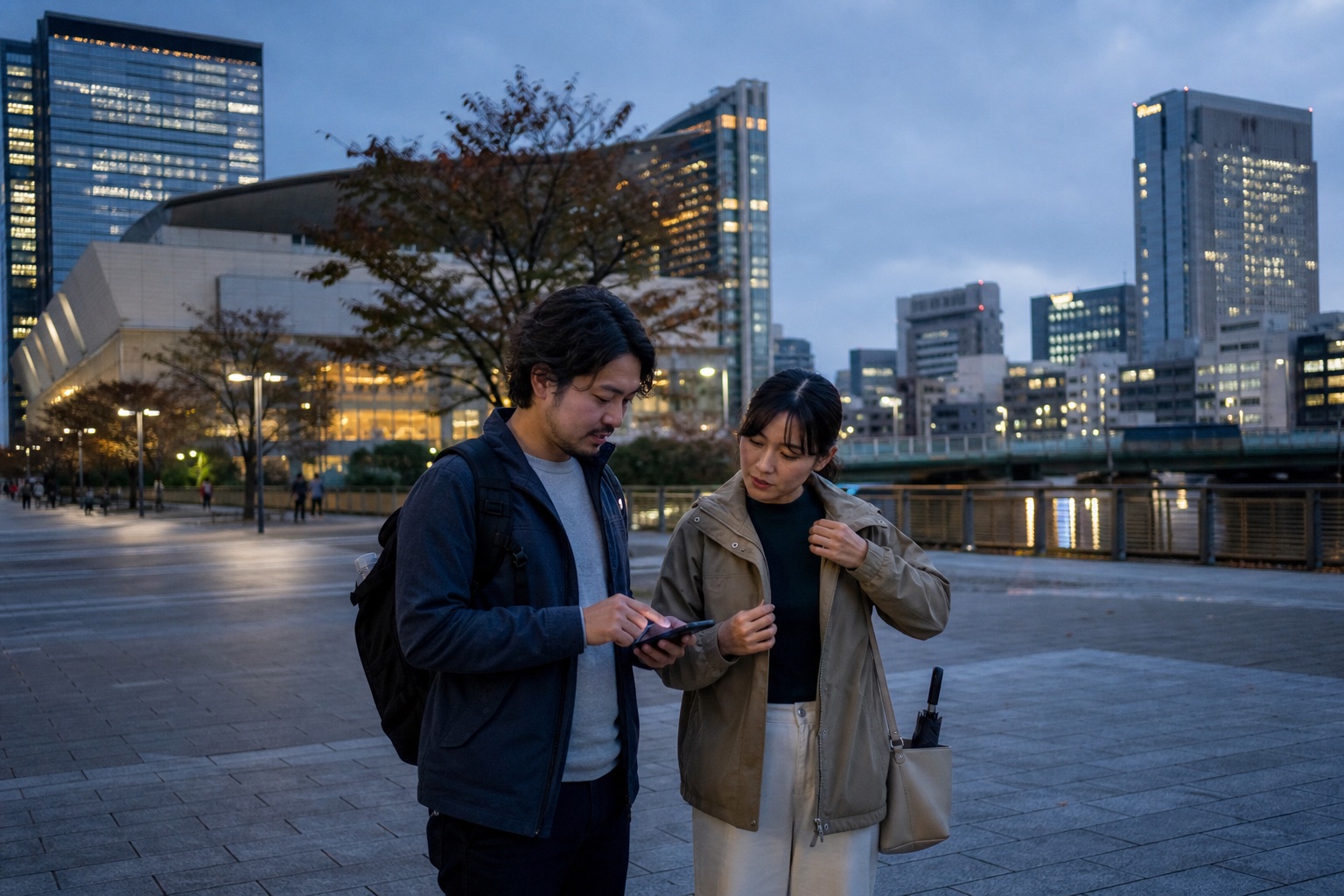
Before the event: Eat, charge your phone, check the official organizer update, and confirm the return route. Add your jacket before you become cold rather than after.
After the event: Follow crowd-control instructions. Do not rely on a tight dinner booking or the final train if the event exit time is uncertain.
Your 72-hour, 24-hour, and same-morning checklist
October planning works best as a short sequence of checks.
72 hours before
- Check the JMA forecast and any severe-weather information.
- Decide which day receives your most weather-sensitive outdoor plan.
- Review cancellation rules for tickets and reservations.
- Confirm whether your day falls on the October 10–12 holiday weekend or an event date.
- Check a separate forecast for Mt. Takao or another mountain destination.
24 hours before
- Recheck the hourly forecast, wind, and expected rain period.
- Confirm the event or venue’s official website and social account.
- Download or screenshot key tickets and addresses.
- Select the exact indoor Plan B in the same neighborhood.
- Charge your phone and portable battery.
The same morning
- Check the forecast once more; do not rely on yesterday’s screenshot.
- Check rail or airline status if weather is unsettled.
- Put the compact umbrella or shell in your day bag.
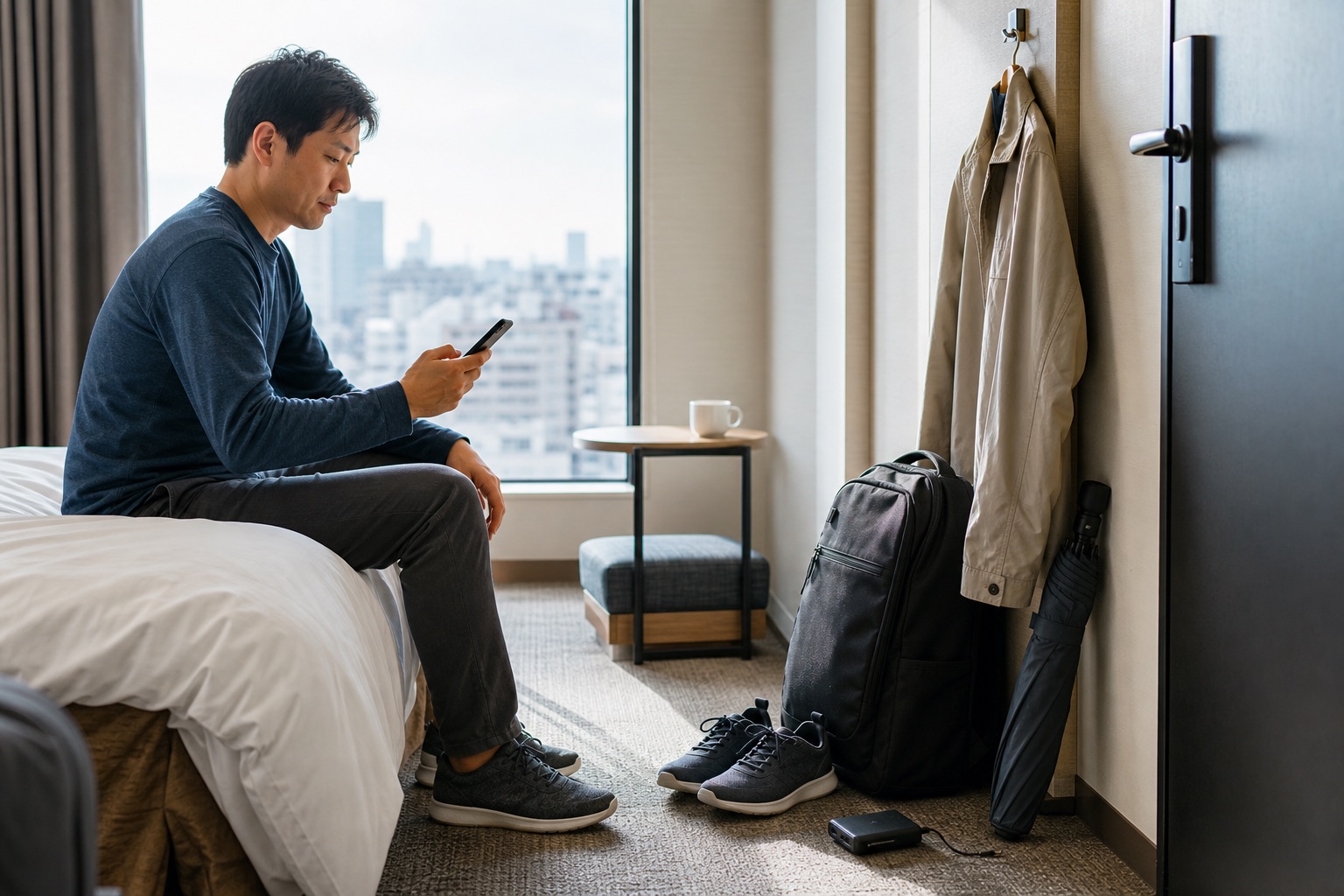
- Carry the evening layer even if the morning feels mild.
- Tell your group which part of the schedule is fixed and which part can change.
Once these checks are complete, stop optimizing the day minute by minute. Tokyo offers enough indoor and outdoor choices that a changed plan can still be a good day.
Frequently asked questions
Is October 2026 a good month to visit Tokyo?
October is often comfortable for city walking, but rain and day-to-day temperature changes remain possible. Pack layers and give important outdoor plans an indoor backup.
Is Tokyo hot in October?
It can feel warm in early-October afternoons, particularly while walking in the sun. Mid- and late October generally call for more layering, especially after dark. Check the short-range forecast for your dates.
Do I need a jacket in Tokyo in October?
Bring a light jacket, cardigan, or packable shell. It is particularly useful at night, in rain, near the water, and during late October. Travelers who feel cold easily can add a thin knit or base layer.
Does it rain a lot in Tokyo in October?
JMA’s 1991–2020 normal for Tokyo is 234.8 mm of October precipitation and 10.5 days with at least 1 mm of rain. That does not predict your dates, but it makes a compact umbrella and indoor Plan B sensible.
Can a typhoon affect Tokyo in October?
Yes. The summer typhoon peak has eased, but tropical storms can still occur in October. Monitor JMA, transport operators, airlines, and venue notices, and follow official safety instructions.
Will Tokyo have autumn leaves in October 2026?
Peak color in central Tokyo is generally later, from mid-November into early December. Late October may show early change, especially in cooler western or elevated areas, but the timing is uncertain.
Is Tokyo crowded during the October 10–12, 2026 weekend?
It may be busier around popular leisure areas and event zones because Sports Day creates a three-day weekend and Tokyo Yosakoi is scheduled in Ikebukuro on October 10–11. Crowding will vary by place and time.
What is the best rainy-day strategy in Tokyo?
Keep your chosen neighborhood but replace the outdoor activity with a nearby museum, gallery, shopping complex, aquarium, or long lunch. This reduces transfers and makes it easy to resume walking if the rain weakens.
Sources and update policy
Weather statements in this guide use climate normals and official travel guidance, not a long-range forecast. Event dates come from organizers or government sources linked in the relevant sections. We will update material changes when confirmed, but travelers should recheck weather, transport, tickets, and event notices shortly before travel.
Comments