Tokyo Trains Complete Guide 2026: JR, Metro, Toei & Private
- Quick Answer
- The 4 Train Operators in Tokyo
- Which Train System Should You Use? (Decision Guide)
- The Yamanote Loop: Tokyo’s Most Important Line
- Tokyo Metro vs Toei: What’s the Difference?
- Private Railways: When You’ll Use Them
- Day Passes Compared (24h / 48h / 72h)
- IC Cards: Suica or PASMO?
- How to Plan Your Route (with Google Maps)
- Common Mistakes Tourists Make
- Step-by-Step: Riding a Tokyo Train for the First Time
- FAQ
- Related Reading
- Sources
- Continue Your Japan Trip
Quick Answer
Tokyo has four kinds of train operators running side by side: JR East, Tokyo Metro, Toei Subway, and several private railway companies. The two simplest tools for any tourist are a Suica or PASMO IC card (or, since March 2026, a contactless credit card), plus Google Maps. A JR Pass is rarely worth it for Tokyo-only stays. For 2–3 days of heavy Metro/Toei subway use, a Tokyo Subway Ticket (¥1,000 / ¥1,500 / ¥2,000 for 24h / 48h / 72h) can save money — but it only covers the Metro and Toei subway lines, not Toei buses, the Toei tram, the Nippori-Toneri Liner, or any private railway. This guide explains who runs what, when each pass beats Suica, and how to ride your first train without panic.
Note (Updated May 2026): JR East raised base fares for the first time in 39 years on March 15, 2026. Tokyo Metro/Toei adjusted day pass prices on March 14, 2026. All prices in this guide reflect the May 2026 rates.
The 4 Train Operators in Tokyo
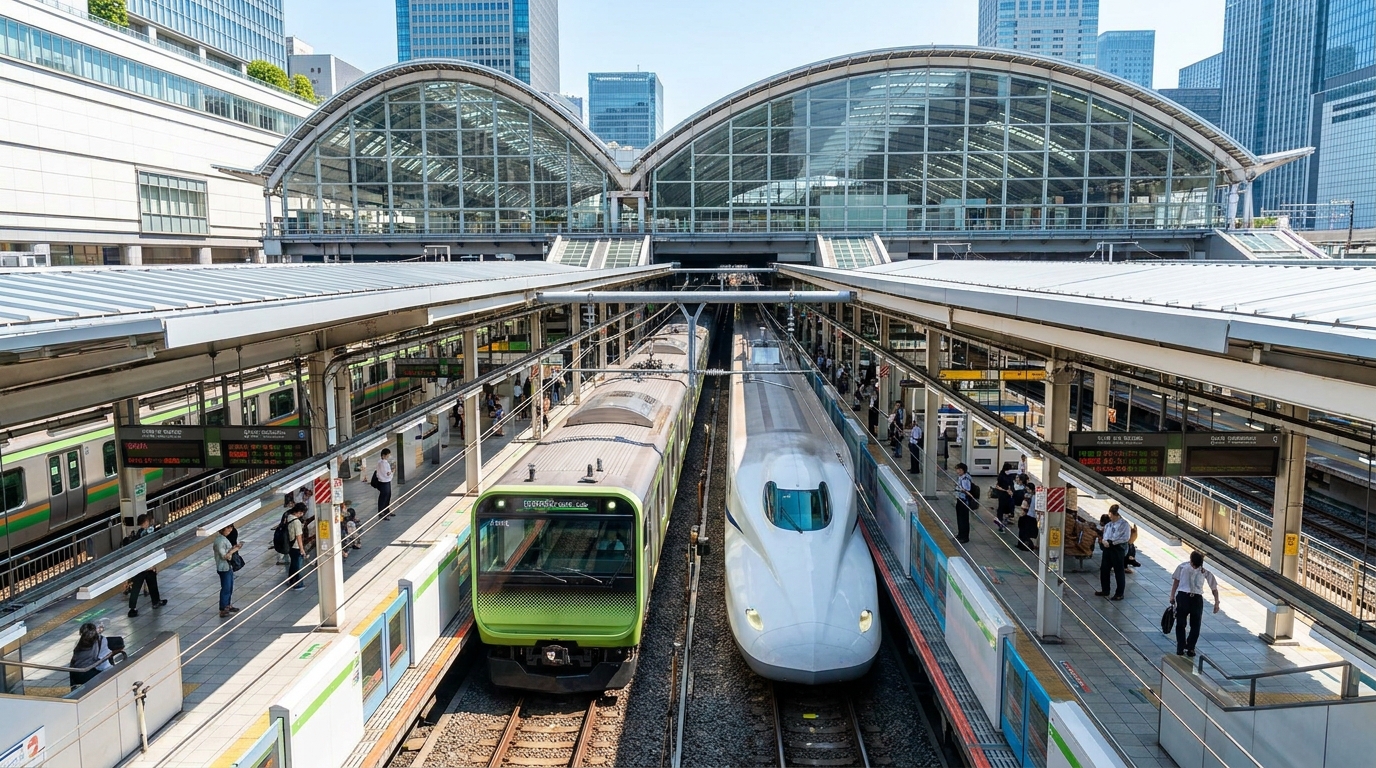
Tokyo’s train network looks chaotic on a map because four different companies share the same city. They each run their own lines, set their own fares, and use their own ticket gates. Knowing which is which makes the rest of this guide much easier to follow.
1. JR East (Japan Railways)
JR East is the regional operator for eastern Japan and one of the six regional companies that make up the nationwide JR Group. JR also runs the Shinkansen and several airport rail links (Narita Express, etc.). In Tokyo, JR Pass coverage is mainly for JR-operated services; it does not cover Tokyo Metro, Toei Subway, or private railways.
JR East lines that run in/through Tokyo:
- Yamanote Line (the central loop)
- Keihin-Tohoku & Negishi Line (Omiya↔Yokohama via Tokyo)
- Chuo Line (Rapid) and Chuo-Sobu Line (Local) (Tokyo↔Mitaka↔Tachikawa)
- Sobu Line (Rapid) (Tokyo↔Chiba)
- Saikyo Line (Osaki↔Omiya, through-running with Rinkai Line)
- Shonan-Shinjuku Line (north-south through Shinjuku/Shibuya)
- Ueno-Tokyo Line (Utsunomiya/Takasaki/Joban lines through Tokyo to Tokaido)
- Tokaido Line, Yokosuka Line, Joban Line (Rapid & Local), Utsunomiya Line, Takasaki Line (lines reaching into central Tokyo)
- Keiyo Line (Tokyo↔Maihama for Tokyo Disney Resort↔Soga)
- Musashino Line (orbital line in suburban Tokyo)
- Yokohama Line (Higashi-Kanagawa↔Hachioji, edge of west Tokyo)
- Nambu Line (Kawasaki↔Tachikawa, edge of southwest Tokyo)
- Tsurumi Line (industrial spur, mostly Yokohama)
- Ome Line (Tachikawa↔Okutama)
- Itsukaichi Line (Haijima↔Musashi-Itsukaichi)
- Hachiko Line (Hachioji↔Komagawa, edge of west Tokyo)
- Narita Line / Narita Express (Tokyo↔Narita Airport)
2. Tokyo Metro
A semi-public operator running 9 subway lines under central Tokyo. Tokyo Metro tends to be the natural choice for reaching interior neighborhoods that JR doesn’t cover well — Asakusa, Ueno, Ginza, Roppongi — while JR is more direct between perimeter hubs like Shinjuku, Shibuya, and Tokyo Station. Most tourists end up using both.
Tokyo Metro lines (all 9): Ginza, Marunouchi (main + Honancho branch), Hibiya, Tozai, Chiyoda (main + Kita-Ayase branch), Yurakucho, Hanzomon, Namboku, Fukutoshin.
3. Toei Subway (and the wider Toei Transportation brand)
Run by the Tokyo Metropolitan Government. It is often confused with Tokyo Metro because both say “subway,” but they are separate companies with separate single-ride fares (Suica/PASMO or a combined day pass eliminate that complexity).
Toei Subway (4 lines): Asakusa, Mita, Shinjuku, Oedo.
Other Toei Transportation modes also operated by the Tokyo Metropolitan Government:
- Tokyo Sakura Tram (Toden Arakawa Line) — the streetcar/tram from Minowabashi to Waseda.
- Nippori-Toneri Liner — automated guideway transit in northern Tokyo.
- Toei Buses — the city bus network.
Important: the popular Tokyo Subway Ticket only covers the 4 Toei Subway lines — it does not cover the tram, liner, or buses. Suica/PASMO and contactless cards do work across all Toei modes.
4. Private Railways
Several private companies run lines that radiate from central Tokyo. The major operators with their full line lists (Tokyo-relevant lines):
- Tokyu Corporation: Toyoko, Den-en-toshi, Oimachi, Ikegami, Tokyu Tamagawa, Meguro, Setagaya (a streetcar from Sangenjaya to Shimo-Takaido), Shin-Yokohama (opened 2023, through-runs into Sotetsu).
- Keio: Keio Line, Keio New Line, Sagamihara Line, Keibajo Line (racecourse spur), Dobutsuen Line (zoo spur), Takao Line, and the Keio Inokashira Line (Shibuya↔Kichijoji).
- Odakyu: Odawara Line, Enoshima Line, Tama Line.
- Tobu: Skytree Line (the Isesaki Line trunk through Asakusa↔Skytree↔Nikko), Kameido Line, Daishi Line, Tojo Line (out of Ikebukuro), Nikko Line, Noda (Urban Park) Line, and several local branches.
- Seibu: Ikebukuro Line, Toshima Line, Sayama Line, Yamaguchi Line, Chichibu Line, Shinjuku Line, Haijima Line, Kokubunji Line, Tamako Line, Tamagawa Line (Seibu’s, separate from Tokyu’s), Seibuen Line.
- Keisei: Main Line, Oshiage Line, Chiba Line, Chihara Line, Kanamachi Line, Narita Sky Access (to Narita Airport).
- Keikyu: Main Line, Airport Line, Daishi Line, Kurihama Line, Zushi Line.
The other private railway tourists may encounter is Tokyu’s Setagaya Line (a small streetcar/light rail in southwest Tokyo). Several smaller third-sector lines connect into these (Hokuso Railway from Keisei, Tokyo Rinkai from JR, etc.).
Tourists meet these in three patterns:
- Inside Tokyo, for short rides: Tokyu Toyoko (Shibuya↔Nakameguro/Daikanyama), Keio Inokashira (Shibuya↔Shimokitazawa), Tobu Skytree (Asakusa↔Tokyo Skytree), Keikyu (Shinagawa↔Yokohama).
- Day trips out of Tokyo: Odakyu to Hakone, Tobu to Nikko, Keio to Mt Takao, Seibu to Chichibu.
- Airport access: Keisei (Ueno↔Narita), Keikyu (Shinagawa↔Haneda).
There is also a quirk worth knowing: many subway and private lines through-run with each other, so a train you board on the Tokyo Metro Fukutoshin Line in Shinjuku may continue past Shibuya as a Tokyu Toyoko train without you ever changing cars. Suica/PASMO handles the fare automatically, but a paper subway-only day pass does not.
A note on “other” transit lines
Several monorails, automated guideways, and third-sector lines don’t fit neatly into the 4 categories above:
- Yurikamome (the driverless line to Odaiba, Shimbashi↔Toyosu)
- Tokyo Monorail (Hamamatsucho↔Haneda Airport)
- Rinkai Line (Tokyo Rinkai Kosoku Tetsudo: Osaki↔Shin-Kiba via Odaiba)
- Tsukuba Express (Akihabara↔Tsukuba, edge-of-Tokyo line)
- Tama Toshi Monorail (Tachikawa-area monorail)
- Hokuso Line (third-sector north of Keisei, used by Sky Access trains)
- Saitama Rapid Railway (continues from Tokyo Metro Namboku into Saitama)
- Tokyo Waterfront Area Rapid Transit / Yurikamome are sometimes packaged with Tokyo Metro/Toei products in tourist passes.
Suica and PASMO work on all of them; Google Maps treats them as standard transit.
Which Train System Should You Use? (Decision Guide)
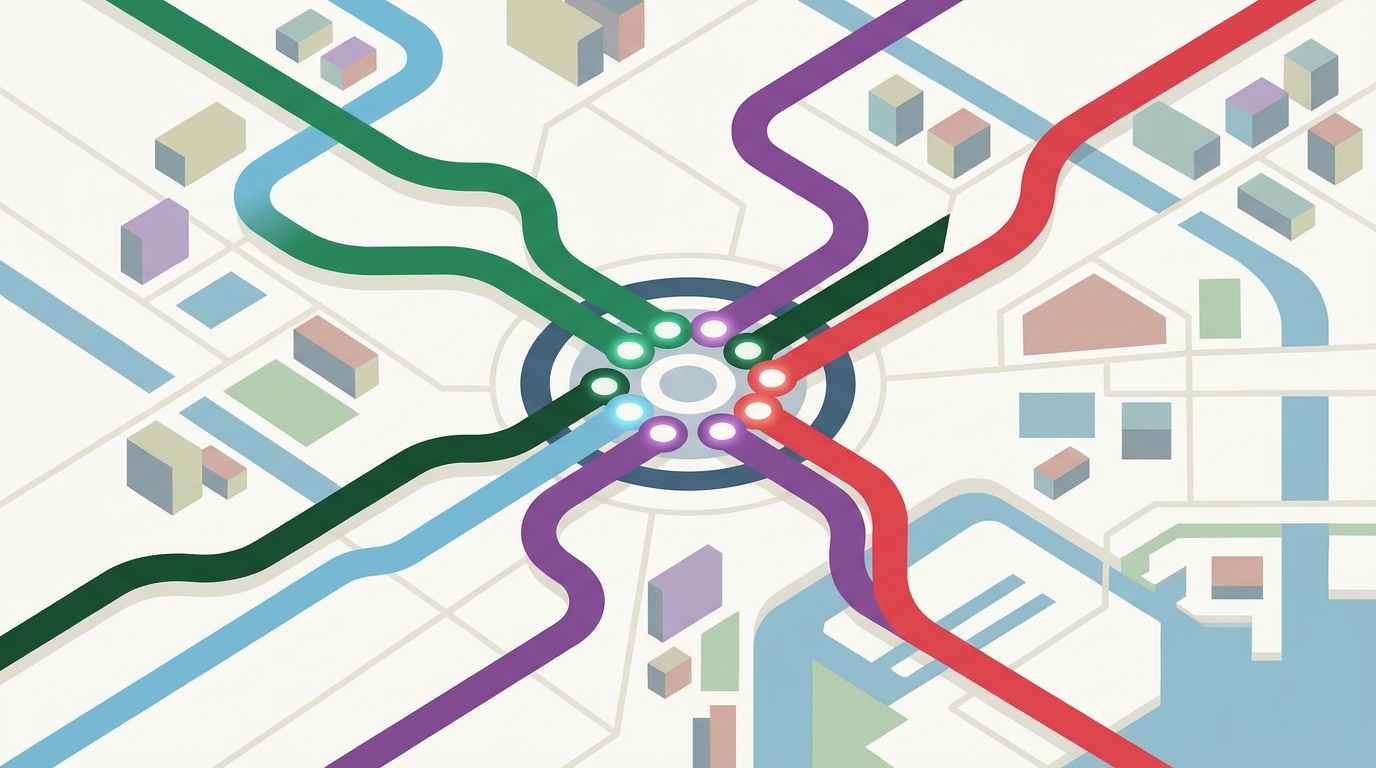
You don’t need to memorize anything. Just answer one question: what does Google Maps tell me?
Understanding the rough geography still helps when you see two similar-looking options and need to pick. The pattern below is a tendency, not a rule — Google Maps may pick a different operator depending on time of day, transfer count, or your specific origin/destination:
| Travel pattern | Operators commonly used |
|---|---|
| Around the perimeter of central Tokyo (Shinjuku ↔ Shibuya ↔ Tokyo Stn ↔ Ueno) | JR East (Yamanote, Keihin-Tohoku) |
| Cutting east-west across the center (e.g. Tokyo ↔ Shinjuku) | JR East (Chuo, Sobu) or Tokyo Metro (Marunouchi) |
| Reaching interior neighborhoods (Asakusa, Ginza, Roppongi, Akasaka, Imperial Palace) | Tokyo Metro or Toei Subway |
| Northern Tokyo districts (Toshima, Adachi) | Toei Subway, Nippori-Toneri Liner, JR |
| To Yokohama, Hakone, Nikko, Mt Takao, Chichibu | Private railways (Tokyu, Odakyu, Tobu, Keio, Seibu) |
| Short rides in inner suburbs (Nakameguro, Shimokitazawa, Tokyo Skytree) | Private railways (Tokyu, Keio, Tobu) |
| Narita ↔ Tokyo | JR (Narita Express) or Keisei (Skyliner) |
| Haneda ↔ Tokyo | Keikyu or Tokyo Monorail |
| Odaiba and Tokyo Bay waterfront | Yurikamome, Rinkai Line |
| Shinkansen (intercity) | JR (any JR Pass = JR only) |
The single biggest mistake first-timers make: assuming “the subway” is one company. Always check on Google Maps which company runs the line before buying a single-ride ticket — because once you tap Suica, PASMO, or a contactless card, the system handles inter-company transfers automatically.
The Yamanote Loop: Tokyo’s Most Important Line
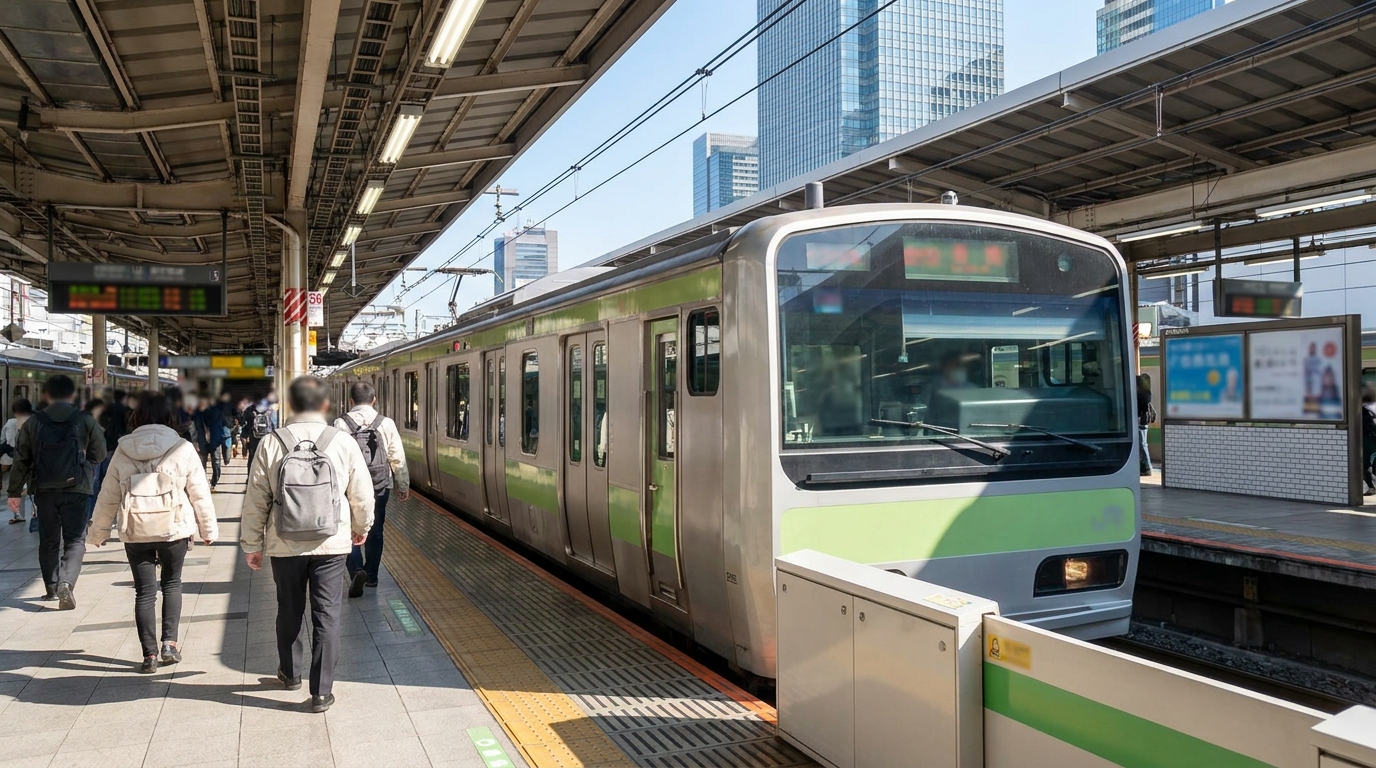
If you remember only one Tokyo train, make it the Yamanote Line. It is a JR loop that takes about 60 minutes to circle once and stops at most of Tokyo’s major commercial mega-hubs: Tokyo Station → Akihabara → Ueno → Nippori → Sugamo → Ikebukuro → Shinjuku → Harajuku → Shibuya → Ebisu → Meguro → Shinagawa → Tokyo Station (and back). Note that several iconic destinations — Asakusa, Tokyo Skytree, Roppongi, Tsukiji, Odaiba — are not on the Yamanote and require a transfer to Metro, Toei, or other lines.
A few practical points:
- Trains run every 2–4 minutes, both directions.
- Two colors of train are used (light green stripe = standard Yamanote; do not board a train with different stripes — that is a different line at the same platform).
- Late at night the loop pauses between 0:30 AM and 1:20 AM (depending on the station) and resumes around 4:26 AM. Last-train timings vary post-pandemic, so check on the night.
- The Yamanote and the Keihin-Tohoku Line share the same tracks during the day, so check the train’s destination, not just the platform.
Tokyo Metro vs Toei: What’s the Difference?
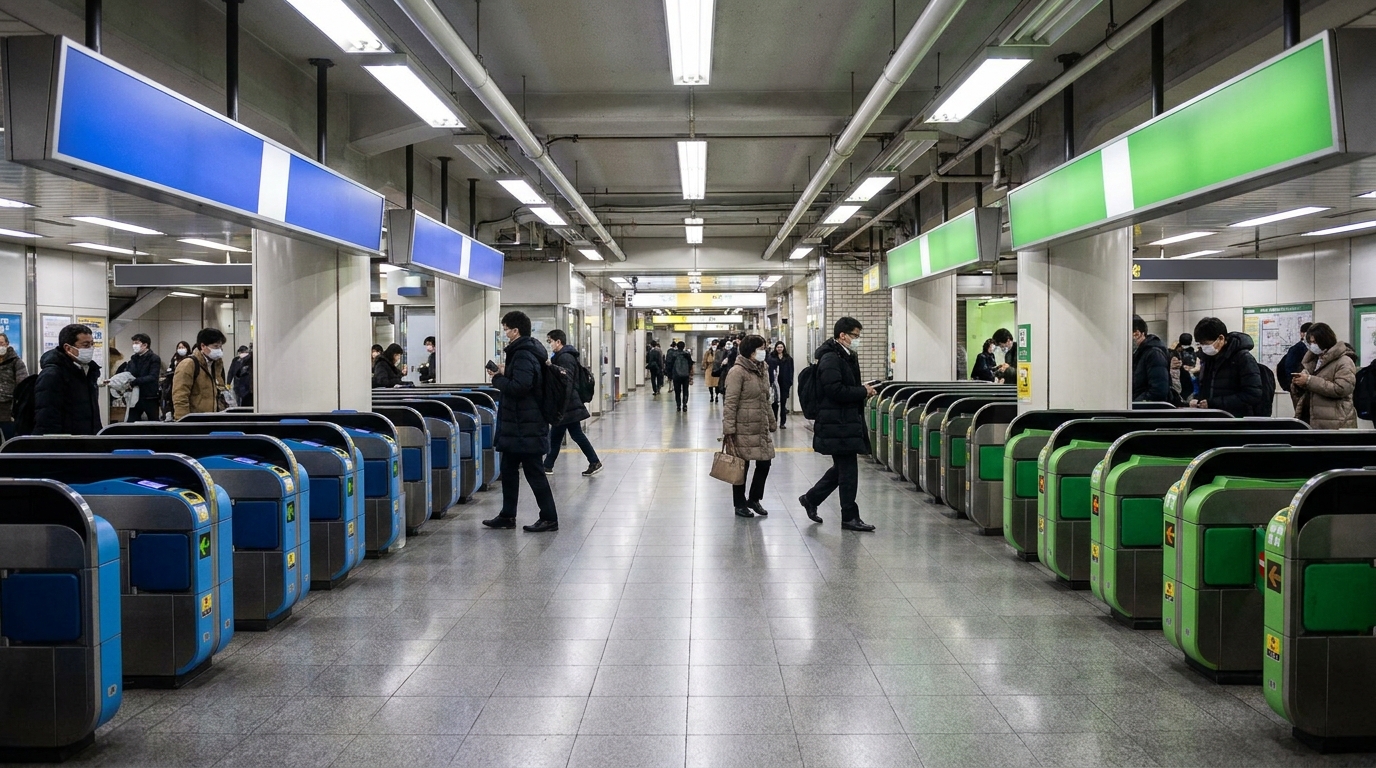
This is the single most confusing thing about the Tokyo subway, and it matters because single-ride tickets between Metro and Toei are sold separately.
| Tokyo Metro | Toei Subway | |
|---|---|---|
| Operator | Metro Co. (semi-public) | Tokyo Metropolitan Government |
| Lines | 9 (Ginza, Marunouchi, Hibiya, Tozai, Chiyoda, Yurakucho, Hanzomon, Namboku, Fukutoshin) | 4 (Asakusa, Mita, Shinjuku, Oedo) |
| Logo | Blue “M” inside a circle | Green ginkgo leaf |
| 24h pass | ¥600 (Metro only) | ¥700 (Toei only) |
| Combined 24h | Tokyo Subway Ticket: ¥1,000 | (covers both) |
| Minimum fare | ¥180 | ¥180 |
| Tourist availability | Yes — kiosks, online, station machines (passport scan), QR mobile tickets | Yes — same options |
If you plan to use both, buy the combined Tokyo Subway Ticket. If you’ll mostly ride Metro, the Metro-only 24h pass is cheaper. With a Suica or PASMO you don’t have to think about this — the IC card handles inter-company transfers automatically (with a small inter-company fee).
Private Railways: When You’ll Use Them
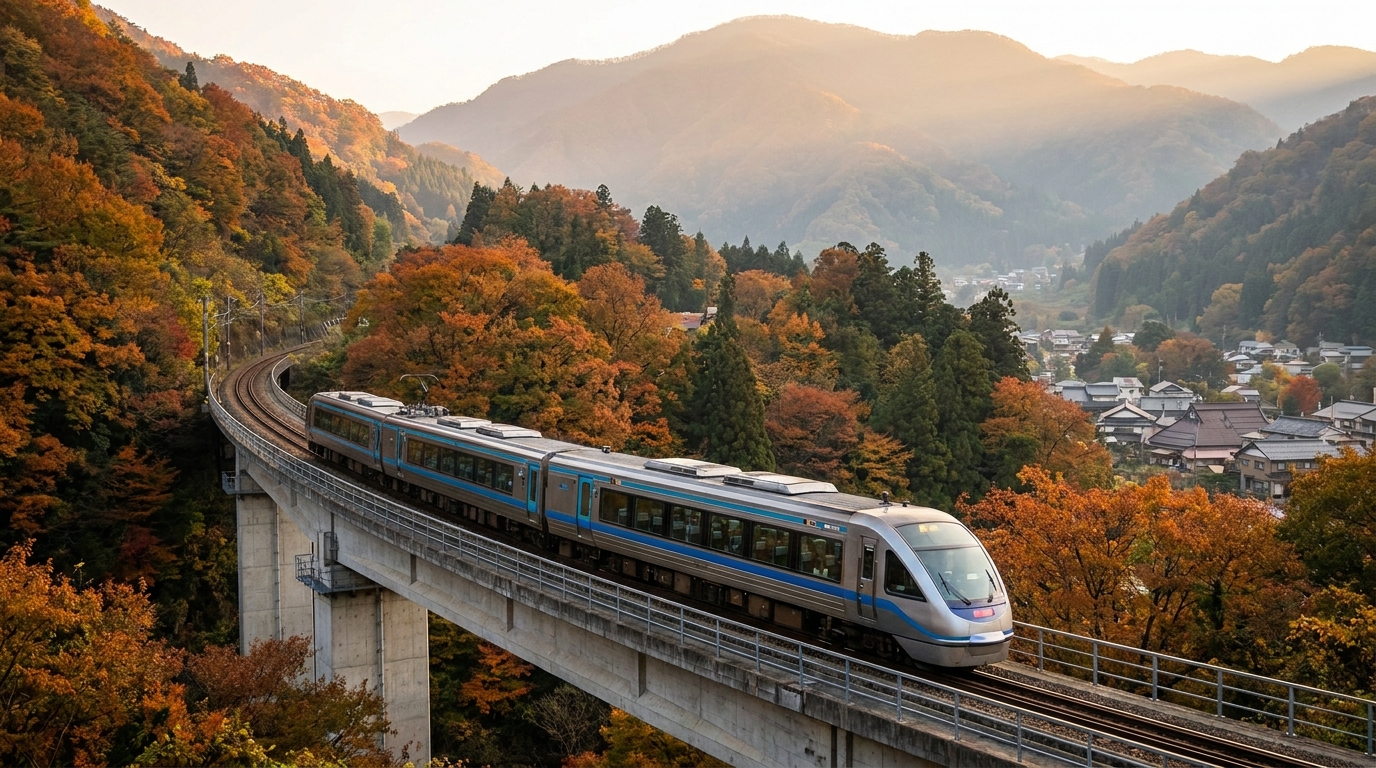
Private railways come up in three patterns, and tourists often use them for the first two without even noticing:
Short rides inside or just outside central Tokyo
- Tokyu Toyoko: Shibuya↔Nakameguro↔Daikanyama↔Jiyugaoka
- Keio Inokashira: Shibuya↔Shimokitazawa↔Kichijoji
- Tobu Skytree Line: Asakusa↔Tokyo Skytree
- Keikyu: Shinagawa↔Yokohama (and through-running into Tokyo Metro Asakusa Line)
- Through-running quirk: A train you board on the Tokyo Metro Fukutoshin Line at Shinjuku may continue past Shibuya as a Tokyu Toyoko train without you ever changing cars. Suica/PASMO handle the fare automatically; subway-only paper passes do not.
Day trips from Tokyo
- Hakone → Odakyu from Shinjuku (Romance Car reservation recommended)
- Nikko → Tobu from Asakusa (Limited Express SPACIA reservation recommended)
- Mt Takao → Keio from Shinjuku
- Yokohama / Kamakura → Tokyu Toyoko or JR Yokosuka
- Chichibu → Seibu from Ikebukuro
Airport access
- Narita → Keisei Skyliner (fastest) or JR Narita Express
- Haneda → Keikyu (cheaper) or Tokyo Monorail (more scenic)
Most private railways offer discount packages for tourist destinations (Hakone Free Pass, Nikko All Area Pass, etc.) that bundle round-trip travel + local buses + admission. For a day trip, check the package first — it usually beats paying separately.
Day Passes Compared (24h / 48h / 72h)
Here is when each pass beats just using Suica or PASMO. Single-ride fares in 2026 start at ¥160 (JR) and ¥180 (Metro/Toei), so the break-even is roughly 5–6 rides per day for the Tokyo Subway Ticket 24h.
| Pass | Price (May 2026) | Covers | Best for |
|---|---|---|---|
| Tokyo Subway Ticket 24h | ¥1,000 | Metro + Toei (all lines) | 5+ subway rides in one day |
| Tokyo Subway Ticket 48h | ¥1,500 | Metro + Toei (all lines) | 2-day heavy subway use |
| Tokyo Subway Ticket 72h | ¥2,000 | Metro + Toei (all lines) | 3-day heavy subway use |
| Tokyo Metro 24h Pass | ¥600 | Metro only (no Toei) | Metro-only days |
| Toei One-Day Pass | ¥700 | Toei only (no Metro) | Toei-only days (rare for tourists) |
| JR Tokunai Pass | ¥870 | JR lines inside the 23 wards | JR-heavy days inside Tokyo |
| Tokyo Combination Ticket | ¥1,720 | JR (23 wards) + Metro + Toei + Toei buses | Mixing all three operators heavily |
Important — what each pass does NOT cover:
- The Tokyo Subway Ticket covers only the Metro and Toei subway lines. It does not cover Toei Buses, the Tokyo Sakura Tram, the Nippori-Toneri Liner, the Yurikamome, the Rinkai Line, JR lines, or any private railway. If your subway train through-runs onto a private line, you’ll be charged for the private-line portion separately.
- The Tokyo Combination Ticket adds JR (within the 23 wards) and Toei buses, but still excludes private railways and the Sakura Tram outside Toei buses.
- Suica, PASMO, and contactless credit cards work across nearly everything, with the system calculating fares and inter-operator surcharges automatically.
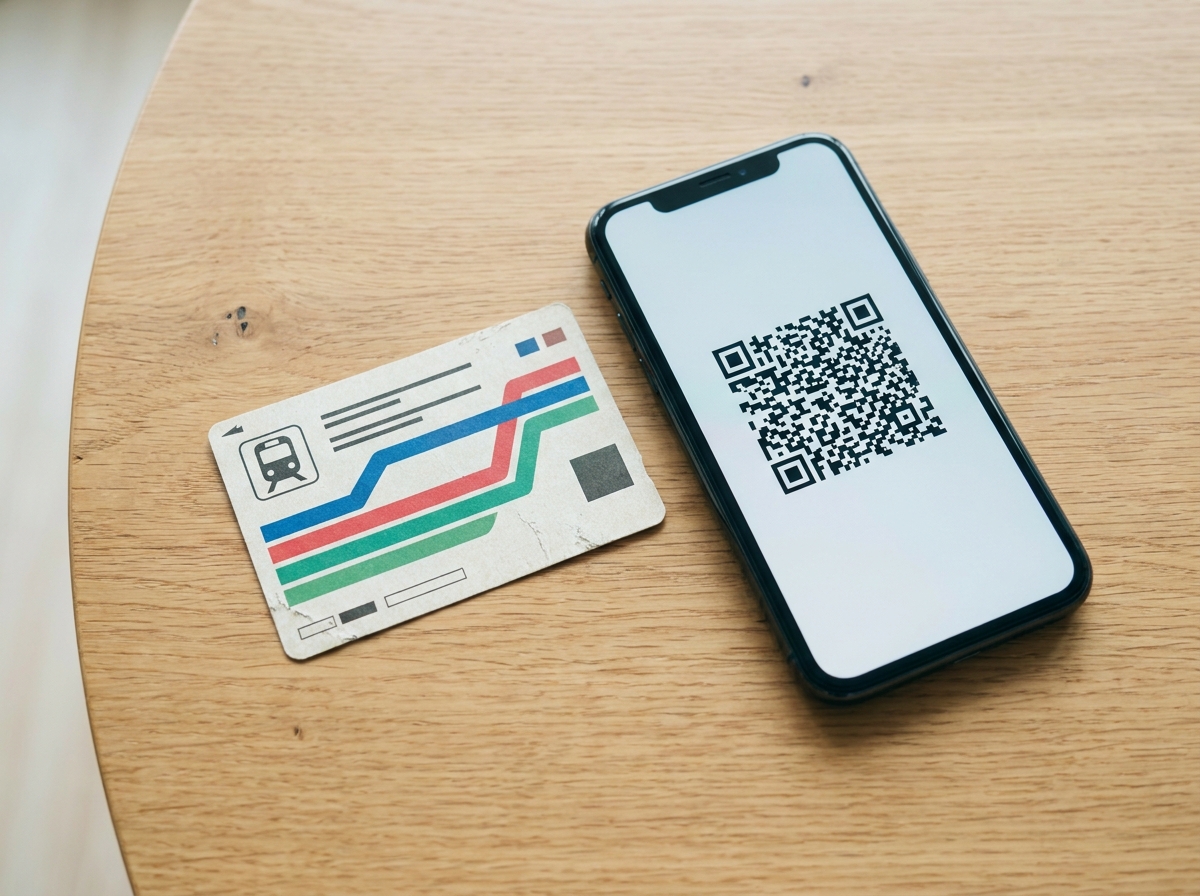
Where to buy the Tokyo Subway Ticket in 2026: (1) at Narita and Haneda airports, (2) at major subway station ticket machines that accept passport scans, and (3) as a QR mobile ticket (introduced March 25, 2026) — buy on your phone, scan at the gate. It is tourist-only (passport required) and not available to Tokyo residents.
Tap-to-Pay: a 2026 alternative to Suica
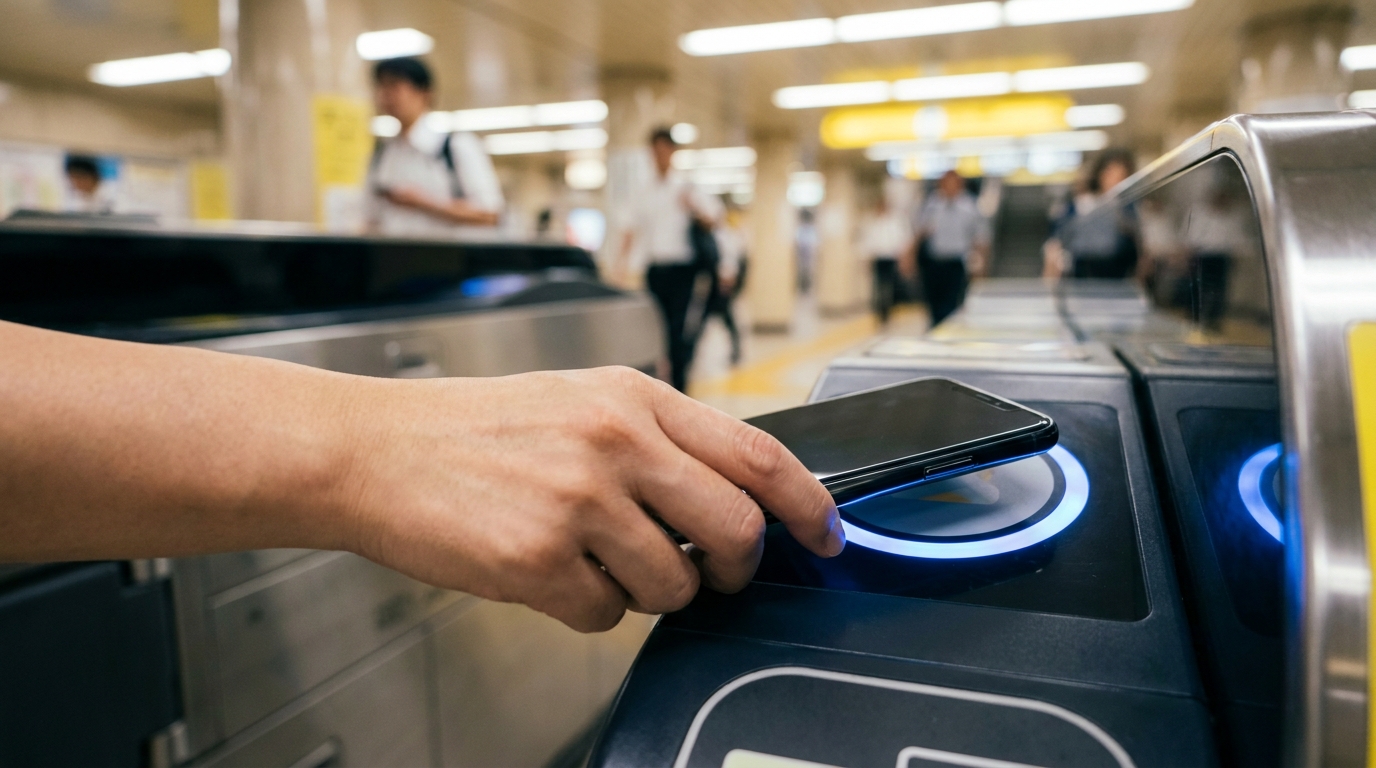
On March 25, 2026, eleven railway operators in the Tokyo area — including Tokyo Metro, Toei, Tokyu, Keio, Seibu, and Tobu — launched interconnected Tap-to-Pay. You can now skip the IC card entirely and tap a contactless Visa, Mastercard, Amex, or JCB at the fare gate reader. JR East trains are mostly outside this rollout for now, so if you ride JR (Yamanote loop, etc.), you still need Suica/PASMO or a paper ticket. For Metro-only or private-railway-only days, contactless cards are the simplest option for tourists who don’t want to deal with IC cards.
IC Cards: Suica or PASMO?
The simplest plan for most tourists: get a Suica or PASMO at the airport on arrival and stop thinking about it. Both cards work on every train, subway, bus, the Tokyo Sakura Tram, the Nippori-Toneri Liner, the Yurikamome, the Rinkai Line, and most convenience stores in Tokyo. The differences are minor (Suica is JR-issued, PASMO is private-issued; functionally identical for tourists).
Mobile Suica notes for 2026:
- iPhone: Apple Wallet supports adding Suica on every iPhone region (iPhone 8 or later) — Japan, US, Canada, UK, Europe, etc. JR East also offers a dedicated Welcome Suica Mobile app for iOS tourists (launched spring 2025).
- Android: Mobile Suica requires Japanese FeliCa / Osaifu-Keitai hardware. Standard Android phones bought outside Japan generally do not support Mobile Suica via Google Pay, with a few exceptions (some global Pixel models). If you’re an Android user from overseas, plan to buy a physical card on arrival.
We have a separate guide that covers the full IC card system, including the new Welcome Suica, mobile Suica on iPhone, and what to do with leftover balances when you leave Japan.
→ Full guide: Suica, Welcome Suica & Japan’s IC Cards: A Traveler’s Guide (2026)
How to Plan Your Route (with Google Maps)
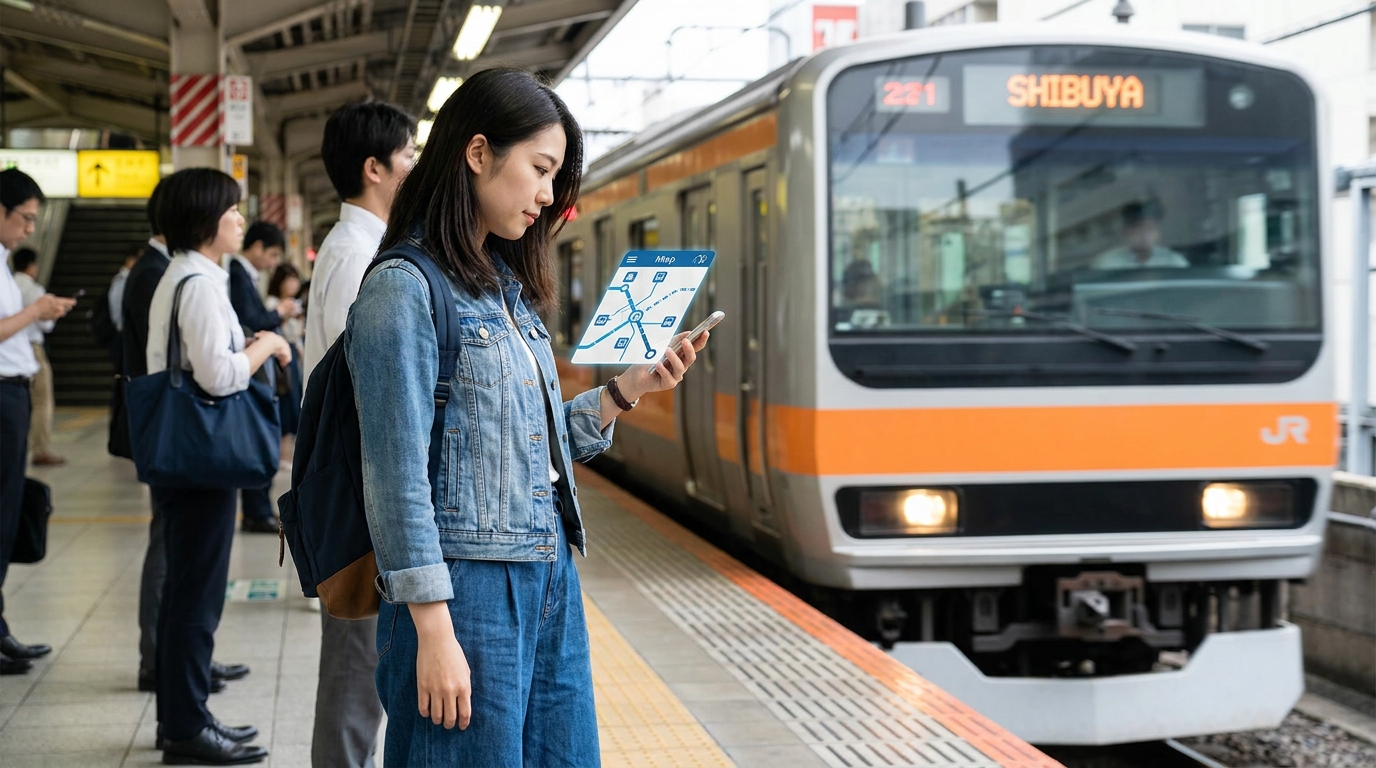
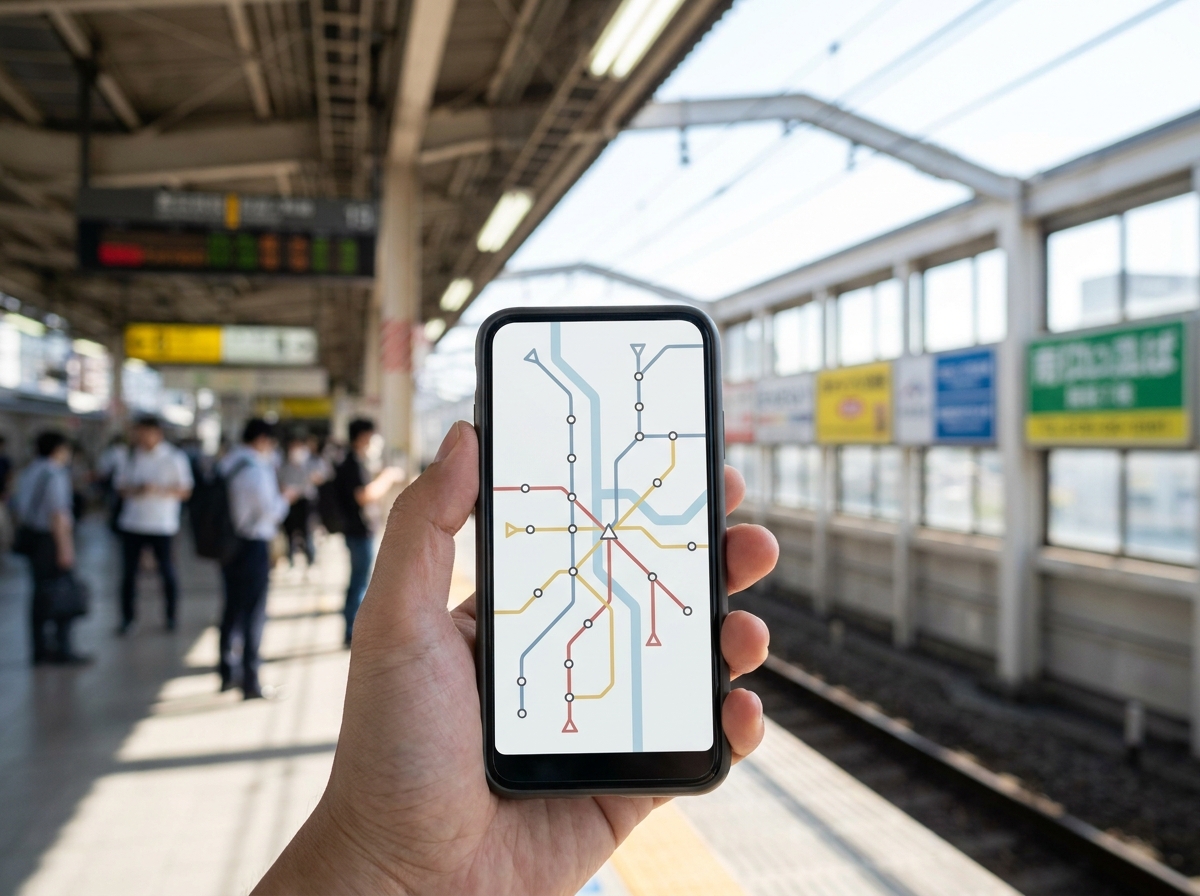
For day-to-day tourist navigation, Google Maps is the most reliable single tool. It handles every operator (JR, Metro, Toei, private, Yurikamome, Rinkai, Sakura Tram), shows correct fares, gives walking time at the stations, and tells you which platform to use.
Three quick tips that surprise first-timers:
- Tap the line color in the route preview — it tells you whether the line is JR, Metro, Toei, or private. Useful when you want to use a specific pass.
- Save your destination’s “exit number” — many subway stations have 6–10 exits and walking to the wrong one can mean a 5-minute detour underground.
- Departure time matters more than route — at peak hours, faster transfers may be packed; Google often suggests slightly slower routes that are easier physically.
→ Full guide: How to Navigate Japan with Google Maps (2026)
Common Mistakes Tourists Make
1. Assuming all subway lines are the same company.
Buying a paper ticket on Metro and trying to use it on Toei = blocked at the gate. Always use IC cards for cross-company rides.
2. Boarding the wrong train at the same platform.
Multiple lines share platforms in Tokyo (Yamanote and Keihin-Tohoku, Hibiya and Tobu Skytree, etc.). Always check the destination on the front of the train.
3. Buying a JR Pass for a Tokyo-only stay.
The 7-day JR Pass costs ¥50,000 in 2026 (a further hike for third-party overseas resellers is scheduled for October 1, 2026). Inside Tokyo you’ll burn through maybe ¥3,000–¥5,000 in local-train transit even after the March 2026 fare hike. Only worth it if you’re also doing Shinkansen trips.
4. Standing on the wrong side of the escalator.
The local habit is stand on the left, walk on the right in Tokyo (and the reverse in Osaka). However, since 2024–2025, station signage and announcements officially ask passengers to stand still on both sides for safety. In practice you’ll see locals continuing the old habit — but if you want to follow the official rule, just stand still on either side. Do not block the right side aggressively if a hurried local is climbing.
5. Talking on the phone in the train.
Phones must be on silent (“manner”) mode and voice/video calls are not allowed in the seating cars. Texting, browsing, and quietly watching videos with headphones are fine.
→ Full guide: Tokyo Train Manners: How to Ride Like a Local (2026)
Step-by-Step: Riding a Tokyo Train for the First Time
- Open Google Maps and search your destination. Pick the route with a train icon.
- Walk to the station shown on the route. Most signs are bilingual.
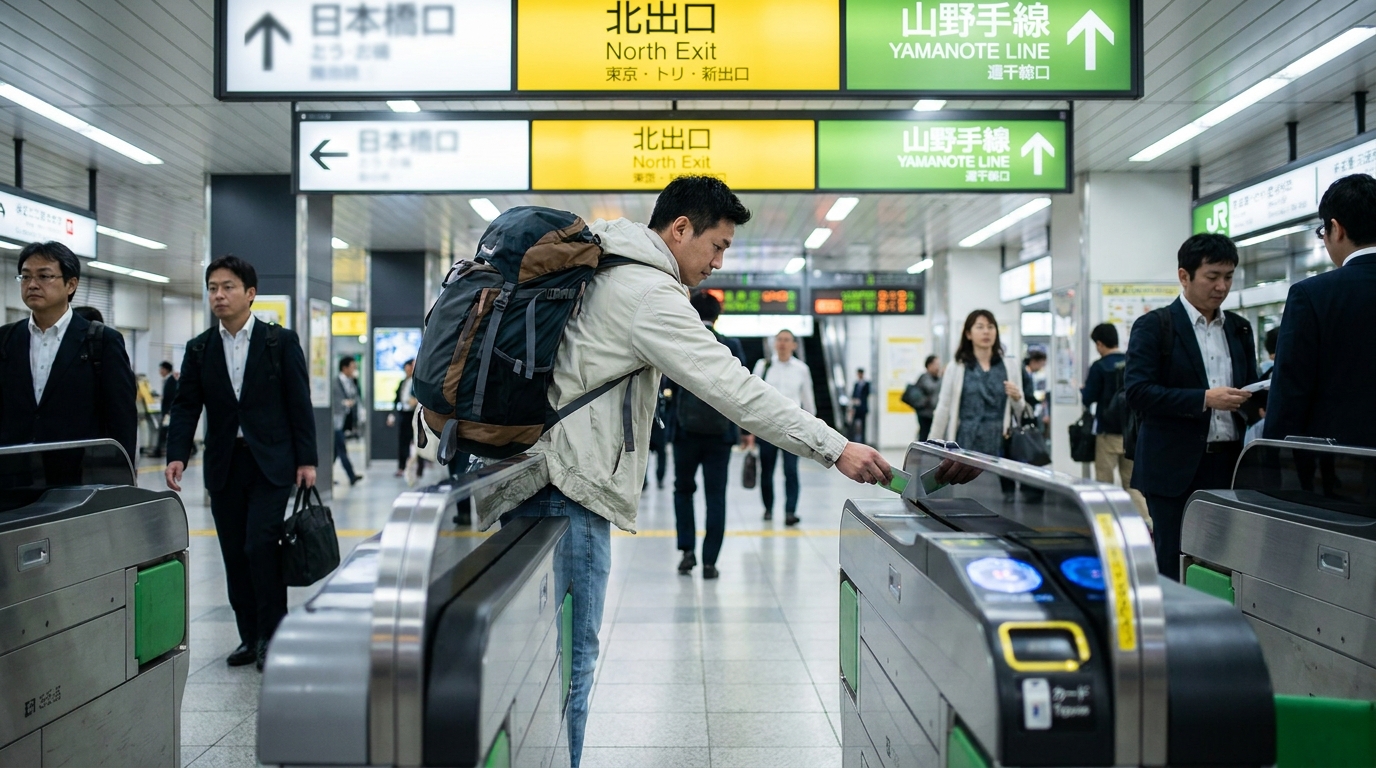
- At the gate, tap your Suica, PASMO, or contactless credit card on the reader. The gate opens. (If you don’t have an IC card or contactless card, buy a single ticket from the machine — switch to English in the top-right.)
- Look at the platform sign for your line and direction. Confirm the train’s final destination matches Google Maps.
- Stand behind the yellow line until the train fully stops.
- Board through any door. Move toward the middle if it’s crowded.
- Listen for the station name in English (most trains in central Tokyo announce in English too). When your stop is announced, get off.
- At the exit gate, tap your IC card again. The fare is automatically deducted.
- Find your exit number from Google Maps and follow the signs.
If you miss your stop: get off at the next station, cross to the opposite platform, and ride back. Inside the gate, this is free.
FAQ
What’s the difference between Tokyo Metro and Toei Subway?
Tokyo Metro is a semi-public operator running 9 lines; Toei is the Tokyo Metropolitan Government’s operator running 4 lines. They use separate ticket systems but the same Suica/PASMO. The Tokyo Subway Ticket (¥1,000/¥1,500/¥2,000 for 24h/48h/72h) covers both.
Do I need a JR Pass for Tokyo trains?
No. A JR Pass is designed for intercity Shinkansen travel. Inside Tokyo, you’ll spend roughly ¥3,000–¥5,000 on local trains over a week — far less than the ¥50,000+ pass.
Can I use Suica on all trains in Tokyo?
Yes. Suica works on every JR, Metro, Toei, and most private railway in the Tokyo area, plus buses and many convenience stores. It also works in Osaka, Kyoto, Sapporo, and most major cities.
What’s the cheapest way to get around Tokyo for 3 days?
If you’re doing 5+ subway rides per day on Metro/Toei, the Tokyo Subway Ticket 72h (¥2,000) is usually cheapest. If you’ll also use JR lines (Yamanote loop especially), use Suica with no pass — you’ll likely spend ¥2,000–¥3,500 over 3 days even at the post-March-2026 fares.
How do I transfer between JR and Metro?
With a Suica or PASMO, just tap out at the JR exit gate and tap in at the Metro entrance gate (or use the in-station transfer gate at major hubs like Otemachi). The system charges each leg separately, with a small inter-company discount applied automatically.
Can I use my phone for tickets like in some other countries?
Yes — every iPhone region (iPhone 8 or later) supports adding Suica to Apple Wallet. Tap your phone instead of a physical card. Android phones bought outside Japan generally cannot use Mobile Suica (FeliCa hardware is required). On top of Suica, since March 25, 2026, eleven Tokyo-area operators including Metro, Toei, Tokyu, Keio, Seibu, and Tobu also accept contactless credit cards (Visa/Mastercard/Amex/JCB) tapped directly at the fare gate — no IC card needed for those operators.
What time do Tokyo trains run?
Most lines run from roughly 5:00 AM to 1:00 AM. There is no 24-hour subway in Tokyo. If you miss the last train, your options are taxi (expensive) or wait until ~4:30 AM.
Are Tokyo trains safe at night?
Yes — generally very safe. Women-only cars operate at different times depending on the operator: Tokyo Metro uses them mainly during morning rush hour (until around 9:30 AM), while some JR East lines (Saikyo, Chuo) and private railways (Keio) also run them in the evening and late at night. Look for the pink markings on the platform.
Where can I buy day passes?
Tokyo Subway Tickets are sold three ways in 2026: (1) at Narita and Haneda airports, (2) at major subway station ticket machines that scan your passport, and (3) as QR mobile tickets purchased on your phone (introduced March 25, 2026) and scanned at the gate. Bring your passport for any in-person purchase — passes are tourist-only.
What if Google Maps shows a route I don’t understand?
Tap on the train icon for that segment. It expands to show the operator, line color, fare, and exit recommendation. If the platform/line still feels wrong, ask a station attendant — most central Tokyo stations have English-capable staff.
Related Reading
- Suica, Welcome Suica & Japan’s IC Cards: A Traveler’s Guide (2026)
- Tokyo Train Manners: How to Ride Like a Local (2026)
- How to Navigate Japan with Google Maps (2026)
- Shinkansen Complete Guide 2026: Routes, Booking & Tips Without Japanese
- JR Pass Price Hike October 2026: How to Buy Before It Rises
Sources
- Tokyo Metro official fare table 2026 (https://www.tokyometro.jp/en/ticket/)
- Toei Subway fare and pass information (https://www.kotsu.metro.tokyo.jp/eng/)
- JR East Tokyo area fare (https://www.jreast.co.jp/multi/en/)
- Tokyo Subway Ticket purchase guide (https://www.tokyometro.jp/en/ticket/value/travel/)
- Google Maps transit routing documentation (https://maps.google.com/)
Continue Your Japan Trip
- Suica or PASMO in 2026? What Tourists Should Buy at Haneda, Narita, Tokyo & Osaka
- Shinkansen for Tourists 2026: Tokyo→Kyoto in 2h17, ¥13,320 — Foreign Visa/Mastercard OK
- Does Google Maps Work in Japan? Yes — 5 Features Tourists Miss (2026)


Comments