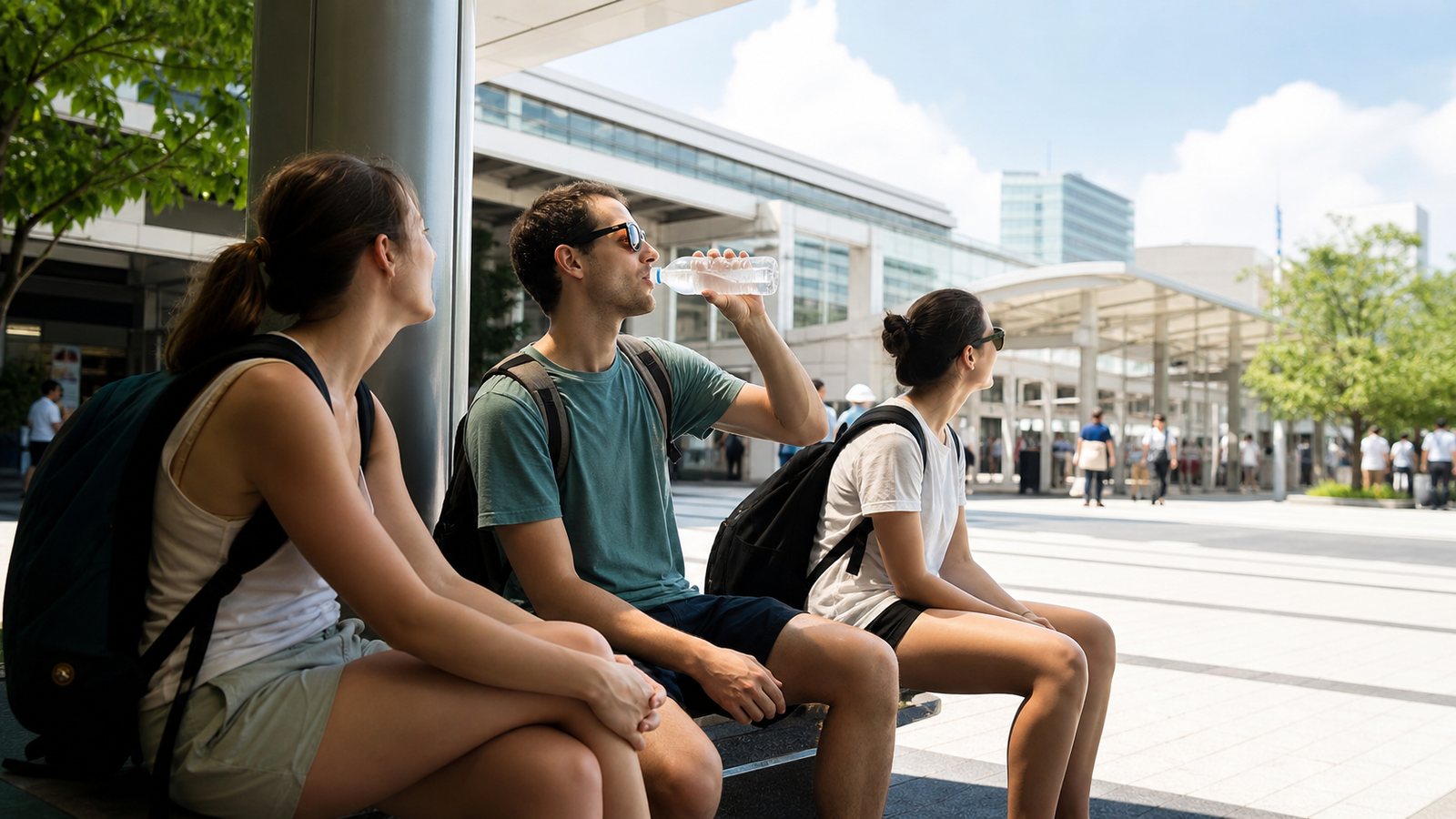
Japan's summer heat can feel heavier than the temperature number suggests. Humidity, direct sun, crowded platforms, long queues, and walking with luggage can turn a normal sightseeing day into a risky one.
This guide is for travelers who are already in Japan and need a practical answer: Should I still go out today, what should I change, and what do I do if someone starts feeling unwell?
Last checked: July 1, 2026.
- Quick Answer
- Why Japan's Summer Heat Feels So Hard
- How to Read Heat Stroke Alerts and WBGT
- The 3-Part Rule for Hot Sightseeing Days
- Morning, Midday, Evening: How to Change the Day
- What to Buy Quickly at a Konbini or Drugstore
- Where to Cool Down Without Making It Awkward
- When to Stop the Itinerary
- When to Call 119
- Useful Emergency and Support Contacts
- Special Caution: Children, Older Adults, and Long Queues
- Tokyo, Kyoto, and Osaka: Heat-Safer Planning Ideas
- What Not to Do
- Simple 1-Day Heat-Safer Itinerary
- FAQ
- Is Japan's summer heat dangerous for tourists?
- What does WBGT mean?
- What should I do when a Heat Stroke Alert is issued?
- Can I still visit temples and shrines on a hot day?
- Is Pocari Sweat or Aquarius enough?
- Should I buy OS-1 in Japan?
- What number do I call for an ambulance in Japan?
- Can I use the JNTO Japan Visitor Hotline for illness?
- Is it rude to sit inside a shop to cool down?
- What is the best Plan B for a very hot day?
- Final Takeaway
- About the Author
Quick Answer
If a Heat Stroke Alert is issued for your area, treat the day as a "reduce outdoor plans" day, not a normal sightseeing day.
Move outdoor sightseeing to early morning or evening, spend the hottest hours indoors, carry drinks before you feel thirsty, and decide your next cool place before walking. If someone becomes confused, collapses, cannot drink, or seems seriously unwell, call 119 or ask a nearby person, station staff, hotel staff, or shop staff to call an ambulance.
Why Japan's Summer Heat Feels So Hard
Japan's summer heat is not just about air temperature. The Ministry of the Environment uses WBGT, a heat stress index that reflects conditions such as humidity and surrounding heat, to show how stressful the environment is on the body.
For travelers, the important point is simple: a day that looks "merely hot" on a normal weather app can still be hard on your body if the humidity is high, the sun is strong, or you are standing outside for long periods.
Tourists often add extra risk without noticing:
- Walking 15,000 to 25,000 steps in a day
- Carrying backpacks, camera gear, shopping bags, or luggage
- Waiting outside at temples, museums, restaurants, festivals, or bus stops
- Drinking less water to avoid looking for bathrooms
- Sleeping badly after a long flight
- Trying to "finish the itinerary" because the trip is short
The safest plan is not to cancel Japan. It is to change the day before the heat makes the decision for you.
How to Read Heat Stroke Alerts and WBGT
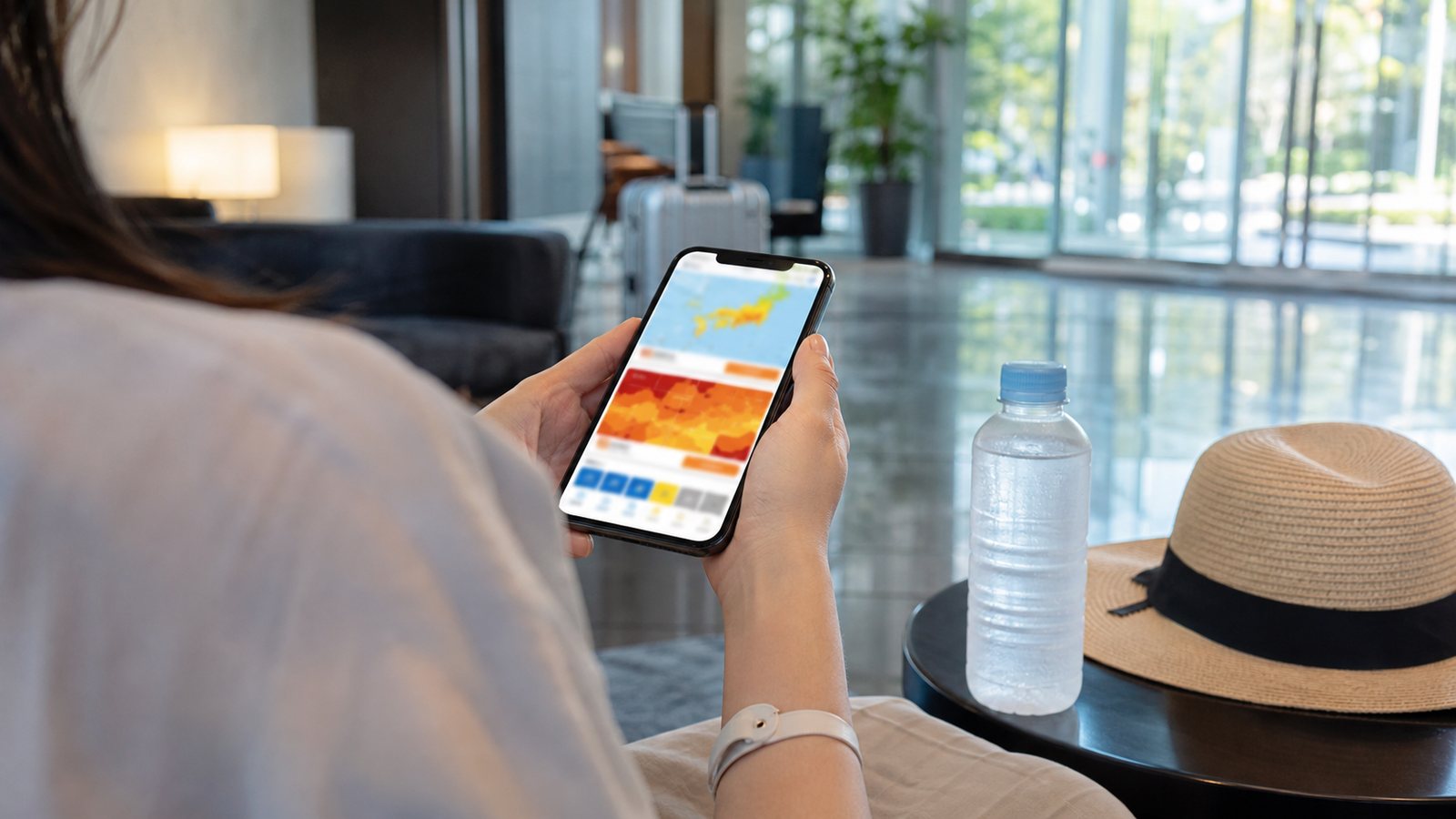
Japan has an official Heat Illness Prevention Information site from the Ministry of the Environment. It shows Heat Stroke Alerts and WBGT levels by area.
Official source: Heat Illness Prevention Information
The Ministry of the Environment explains that a Heat Stroke Alert is issued when the heat illness risk is predicted to be extremely high based on WBGT forecasts. On the official alert page, the normal Heat Stroke Alert standard is WBGT 33 or higher.
Official source: Heat Stroke Alert
For practical travel planning, use this simple reading:
| Official signal | Tourist meaning |
|---|---|
| Heat Stroke Alert | Cut outdoor plans. Do indoor activities during the hottest hours. |
| WBGT 31+ Danger | Do not plan sports, hikes, long outdoor queues, or exposed walking routes. |
| WBGT 28-31 Severe Warning | Shorten outdoor stops and take frequent indoor breaks. |
| WBGT 25-28 Warning | Be careful with long walks, stairs, queues, and children. |
The official WBGT guideline says that at WBGT 31 or above, exercise should be prohibited except in special cases. For tourists, translate that into: do not treat the day like a normal walking-heavy itinerary.
Official source: WBGT Guideline
The 3-Part Rule for Hot Sightseeing Days
Use this rule before leaving your hotel.
1. Keep One Outdoor Highlight
Do not stack outdoor temples, gardens, observatories, street markets, shrine approaches, and night events into one hot day.
Choose one outdoor highlight and protect it:
- Go early if it faces open sun.
- Keep the route from station to entrance short.
- Check whether there is an indoor cafe, museum, station building, or department store nearby.
- If you are already tired before arrival, downgrade it to a photo stop or skip it.
2. Put Indoor Time in the Middle
The hottest part of the day is the wrong time for "just one more stop."
Good midday choices:
- Department stores
- Station buildings
- Underground malls
- Museums
- Aquarium or indoor attractions
- Cafes or family restaurants
- Hotel rest time
- Shopping streets with shade
This is not wasted travel time. In July and August, a planned indoor break can save the rest of your day.
3. Have a Plan B Before You Start Walking
Before a long walk, decide:
- Where is the next air-conditioned place?
- Can I turn back after 10 minutes?
- Is there a taxi option?
- Is there a station exit closer to the destination?
- Can this stop move to tomorrow morning?
If you are already searching for a cool place after symptoms appear, you waited too long.
Morning, Midday, Evening: How to Change the Day
Morning: Do the Outdoor Thing First
If you want a shrine, garden, market, photo spot, or famous street, go early. Bring drinks before the station area gets crowded. A 9:00 a.m. arrival can feel very different from a 1:00 p.m. arrival.
Good morning activities:
- Sensoji and nearby streets
- Shrine or temple walks
- Parks and gardens
- Outdoor photo spots
- Walking-heavy neighborhoods
- Light shopping before crowds build
Midday: Go Indoors on Purpose
From late morning to afternoon, switch to places where you can sit down and cool off.
Good midday activities:
- Lunch inside a restaurant, not food eaten standing outside
- Museums and galleries
- Shopping malls and department stores
- Station buildings
- Hotel rest
- Indoor observation decks or attractions
If you feel guilty about returning to your hotel, remember this: a 90-minute reset can make dinner and evening sightseeing possible.
Evening: Resume, But Stay Careful
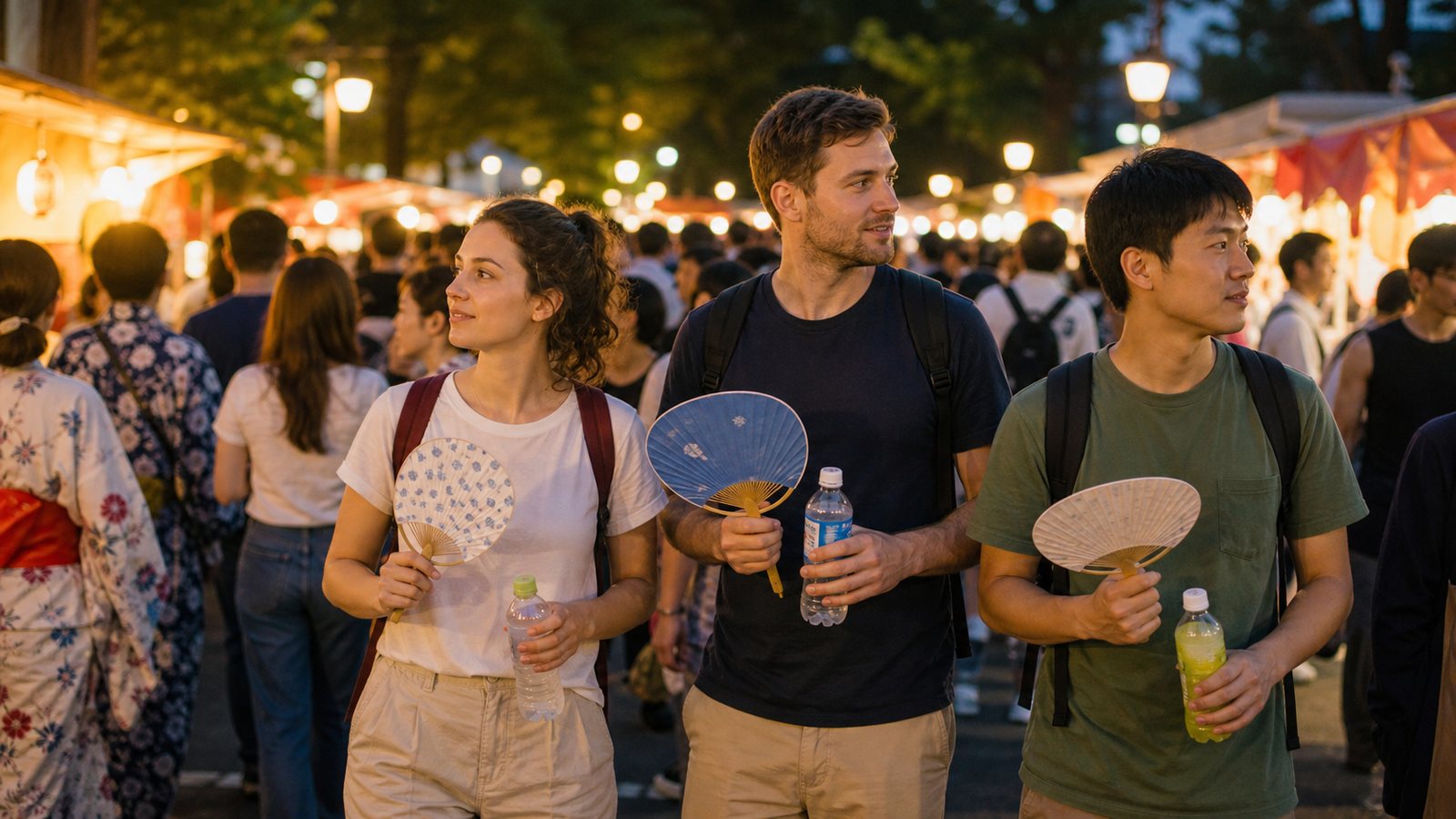
Evening can still be humid. Fireworks, festivals, night markets, and riverside events can keep you outside longer than planned.
Before going to a summer festival or fireworks event, check:
- Can you leave before the crowd peak?
- Is there shade or indoor waiting nearby?
- Do you have a drink before entering the crowd?
- Are you relying on a train station that will become packed?
- Is your group already tired from daytime sightseeing?
Related RJG guides:
What to Buy Quickly at a Konbini or Drugstore
Japan's convenience stores and drugstores are useful on hot days because they are everywhere and air-conditioned.
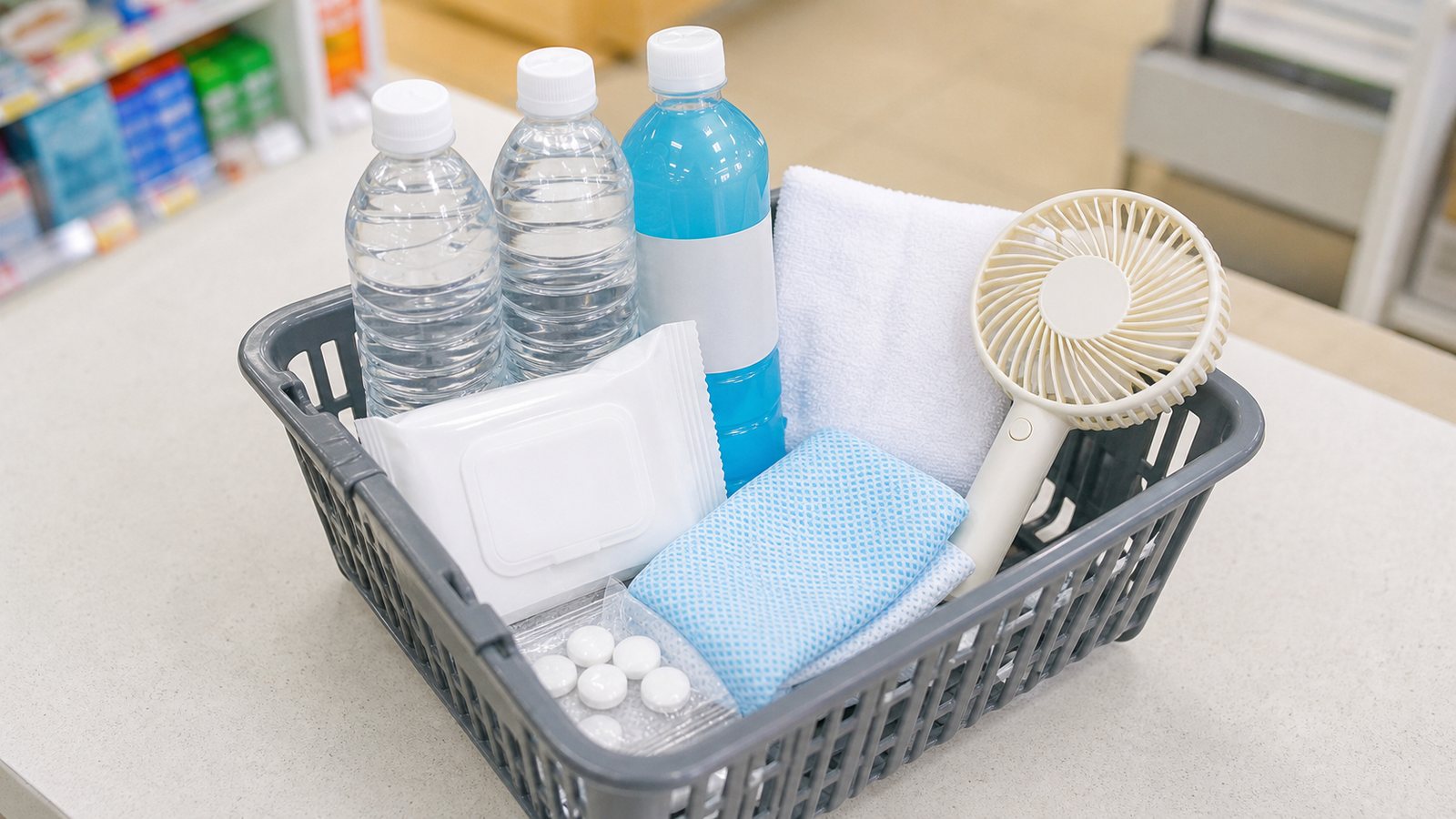
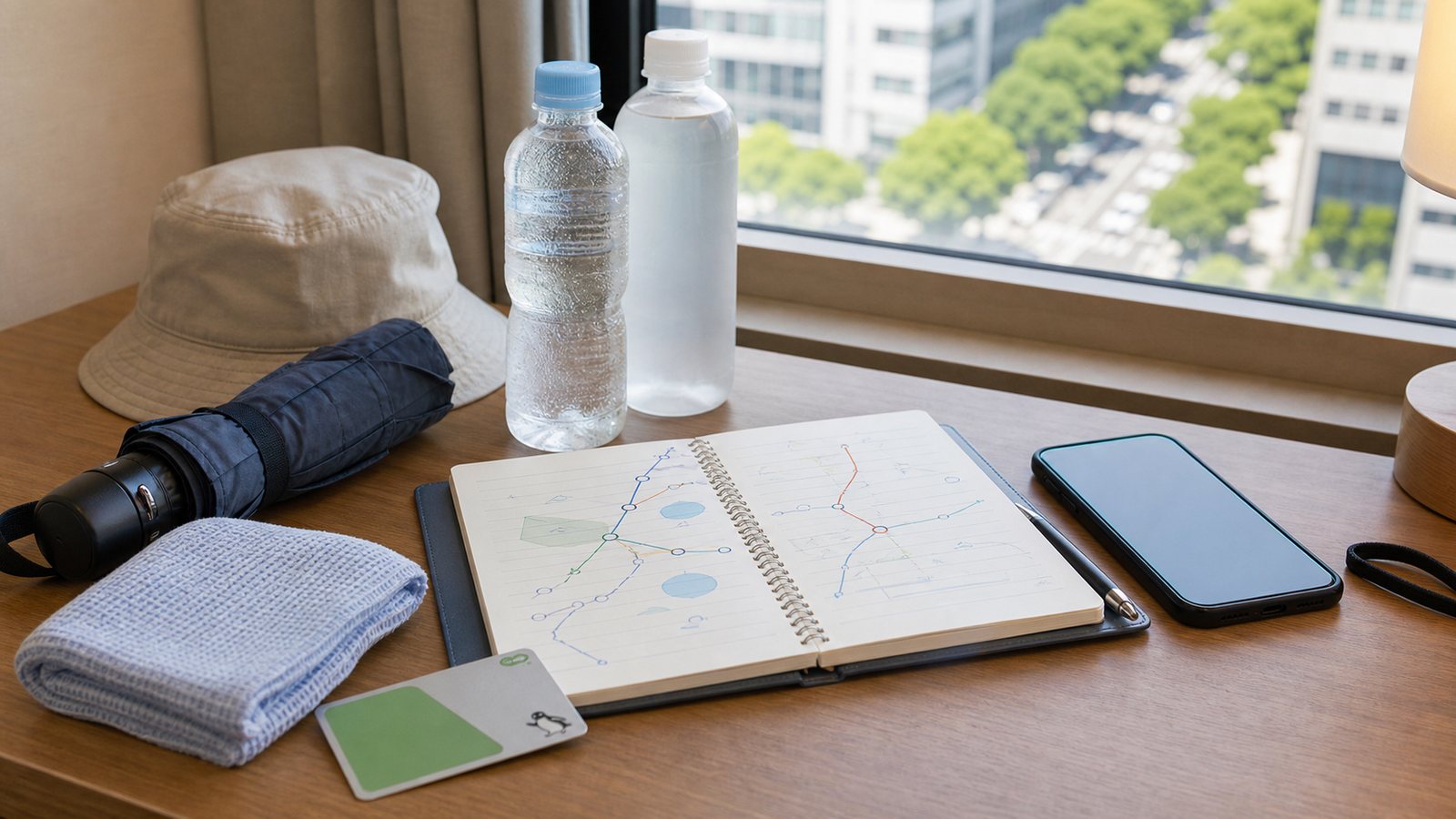
Quick konbini buys:
- Bottled water
- Sports drinks
- Unsweetened tea
- Ice cream or frozen drinks for a short break
- Jelly drinks
- Salt candy or salt tablets
- Cooling wipes or body sheets
- A small towel
Quick drugstore buys:
- Cooling body sheets
- Cooling spray
- Neck cooling items
- Sunscreen
- A compact sun umbrella
- Oral rehydration products, if appropriate for your condition
For medicine or anything related to health conditions, ask the pharmacist or registered sales clerk when available. Japan's official visitor medical guide also points travelers to pharmacies and drugstores for non-emergency cases, and to medical institutions when a doctor is needed.
Official source: Guide for when you are feeling ill
Related RJG guides:
- Stay Cool in Japan: 10 Summer Cooling Items Tourists Can Buy
- Japan Pharmacy & Drugstore Guide
- Japan Konbini Guide 2026
Where to Cool Down Without Making It Awkward
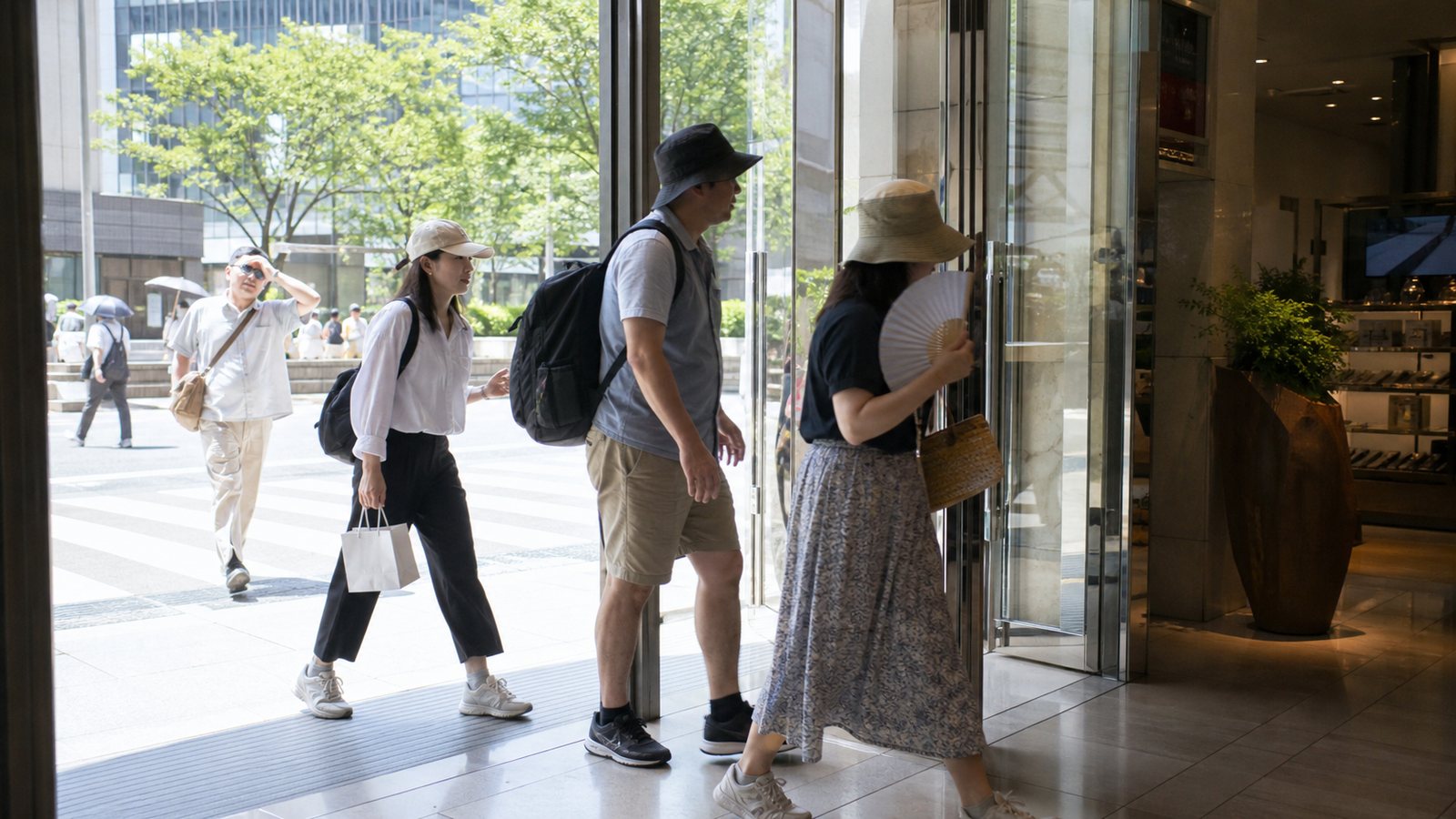
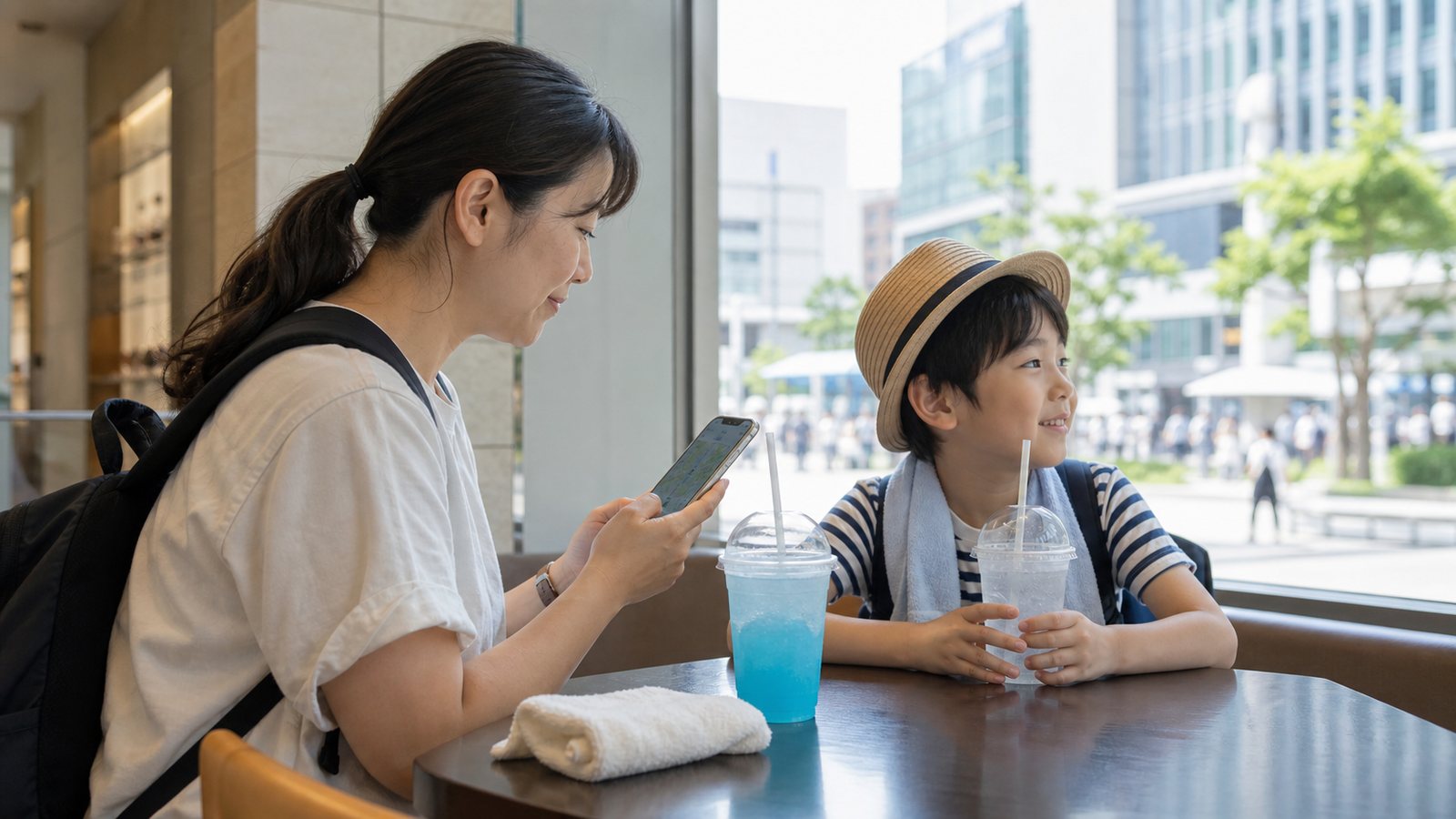
In Japan, you do not need to stand in direct sun to be polite. It is normal to step indoors, buy a drink, sit down, and reset.
Useful cooling places:
- Station buildings
- Department stores
- Underground shopping streets
- Convenience stores for a short purchase
- Cafes
- Family restaurants
- Museums
- Hotel lobbies, if you are a guest
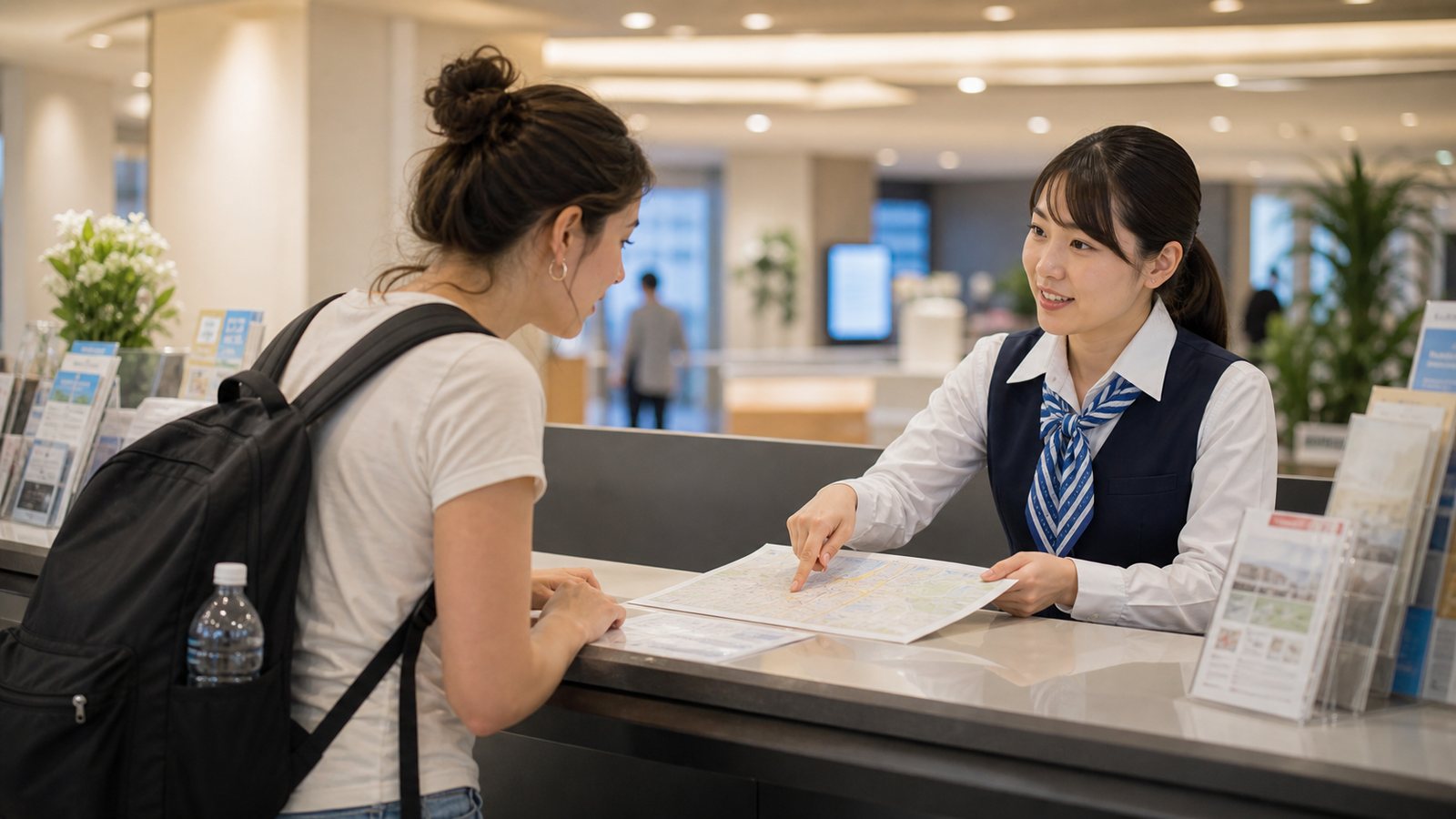
- Tourist information centers
- Public facilities where seating is available
Try not to sit on the floor inside shops, block station corridors, or occupy restaurant seats for a long time after finishing if people are waiting. The practical answer is simple: buy something small, sit where seating is intended, and move before you become a problem for staff or other customers.
When to Stop the Itinerary
This is the hardest part for travelers. You may have one day in Kyoto, one chance to see a festival, or a prepaid ticket. But heat illness can develop quickly, and pushing through can turn a small problem into a serious one.
Stop and cool down if someone has:
- Dizziness
- Headache
- Nausea
- Heavy sweating or suddenly little sweating
- Muscle cramps
- Unusual fatigue
- Trouble walking steadily
- Confusion
- A strong feeling that they cannot continue
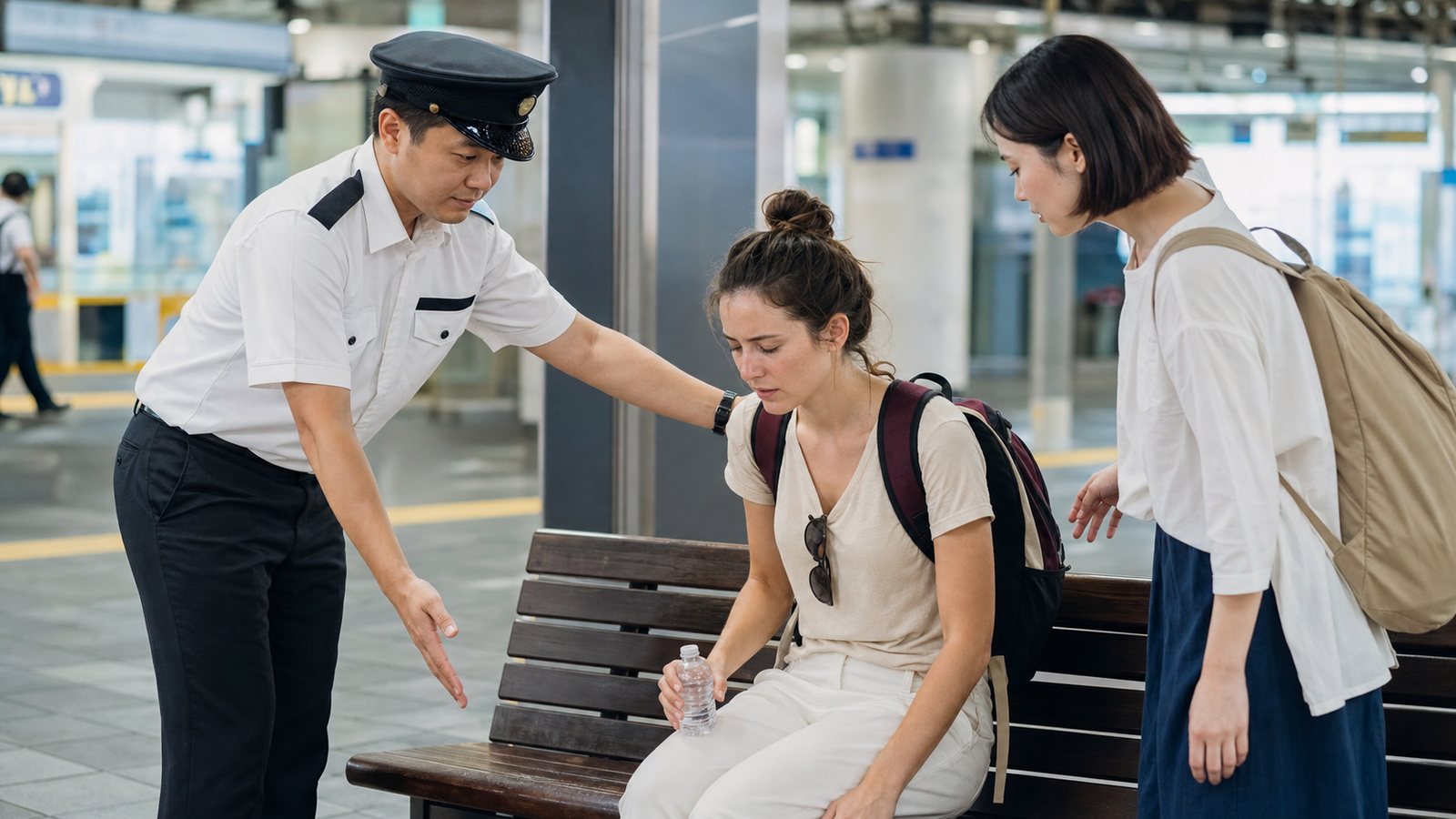
Do not argue with symptoms. Move the person to a cool place, loosen tight clothing if appropriate, offer fluids if they can drink safely, and ask for help.
When to Call 119
Call 119 for ambulance/fire emergency help in Japan.
Call or ask someone to call if the person:
- Collapses
- Is confused or not responding normally
- Cannot drink
- Has repeated vomiting
- Has symptoms that feel severe or are getting worse
- Has a known medical condition that makes the situation concerning
- Is a child, older adult, pregnant traveler, or vulnerable person and you are worried
If you cannot explain in Japanese, show this sentence:
救急車を呼んでください。
It means: Please call an ambulance.
JNTO's medical guide also lists this sentence for travelers who need help asking a nearby Japanese person to call an ambulance.
Official source: Guide for when you are feeling ill
Useful Emergency and Support Contacts
Keep these in your phone before summer sightseeing:
| Situation | Contact |
|---|---|
| Ambulance / fire emergency | 119 |
| Police emergency | 110 |
| Tourist emergency support | JNTO Japan Visitor Hotline: 050-3816-2787 |
| Tourist information | JNTO TIC Call Center: 050-3416-0010 |
JNTO says the Japan Visitor Hotline supports emergency support such as illness and disasters 24 hours daily, with support in English, Chinese, Korean, and Japanese.
Official source: JNTO Staying Safe in Japan
Special Caution: Children, Older Adults, and Long Queues
Children, older adults, people with chronic illnesses, people with disabilities, and people not used to the heat may be more vulnerable. The official Heat Stroke Alert page also names several groups that are more susceptible to heat illness.
For travel groups, the rule is simple: plan for the most heat-sensitive person, not the strongest walker.
Be extra careful with:
- Theme park queues
- Festival crowds
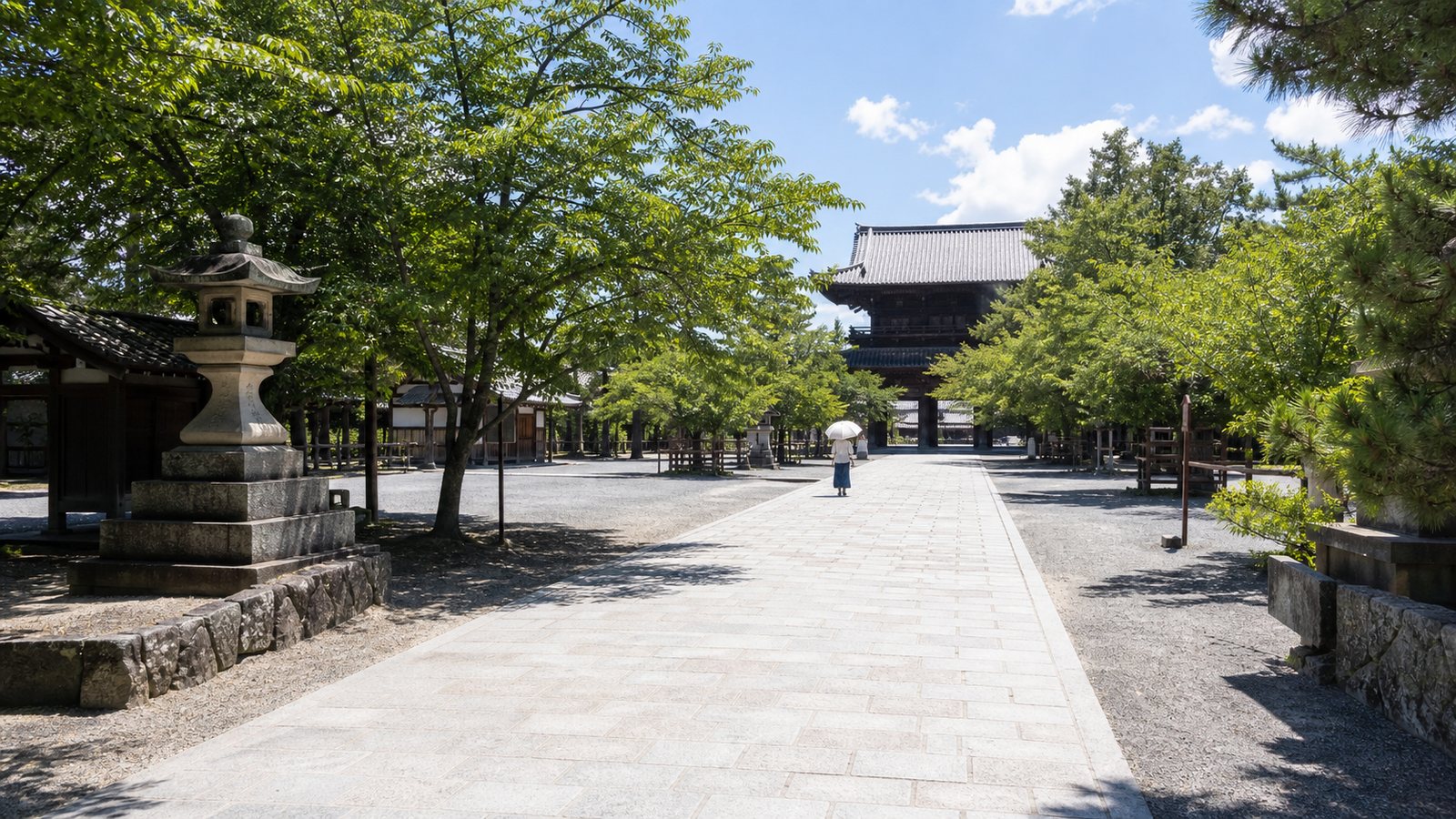
- Outdoor temple and shrine routes
- Long bus waits
- Luggage transfer days
- Kimono or yukata rental days
- Hiking or mountain viewpoints
- Fireworks events with slow crowd movement
If one person starts fading, the whole group changes plans. That is the Japan summer version of good travel leadership.
Tokyo, Kyoto, and Osaka: Heat-Safer Planning Ideas
Tokyo
Tokyo is easier to adjust because it has many station buildings, underground malls, department stores, and indoor attractions.
Heat-safer approach:
- Do outdoor neighborhoods early.
- Use station buildings and underground routes when available.
- Move shopping, museums, and cafes into the afternoon.
- Avoid long exposed walks with luggage.
Kyoto
Kyoto can feel harder because many famous routes involve outdoor walking, slopes, crowds, and older streets with limited shade.
Heat-safer approach:
- Visit famous temples early.
- Do not combine multiple hillside temple areas in one hot afternoon.
- Use taxis more than you planned if the group is fading.
- Keep a cafe or indoor stop near each outdoor route.
Osaka
Osaka has strong indoor options, but food streets and event areas can keep you outside longer than expected.
Heat-safer approach:
- Use malls and underground areas during the afternoon.
- Treat Dotonbori and food walks as evening activities if the day is hot.
- Do not wait outside for a restaurant if your group is already tired.
What Not to Do
Avoid these common tourist mistakes:
- Do not start a long outdoor walk with no drink.
- Do not wait until you are thirsty to drink.
- Do not treat a Heat Stroke Alert as ordinary weather.
- Do not force a child or older traveler to keep up with the fastest walker.
- Do not let a packed itinerary app make the decision for you.
- Do not stand in a sunny queue just because a restaurant is famous.
- Do not be embarrassed to ask staff for help.
Simple 1-Day Heat-Safer Itinerary
Use this pattern in July, August, and unusually hot days in June or September.
7:30-10:30 a.m.
Outdoor highlight: shrine, temple, garden, market, or walking area.
10:30-11:30 a.m.
Indoor coffee, station building, or early lunch.
11:30 a.m.-3:30 p.m.
Indoor activity: museum, shopping, aquarium, department store, hotel rest.
3:30-5:30 p.m.
Short transfer or one low-effort stop.
Evening
Dinner, indoor nightlife, short festival/fireworks visit, or a cooled-down neighborhood walk.
If the heat warning is severe, remove the late afternoon outdoor stop. Save your energy for dinner and getting home safely.
FAQ
Is Japan's summer heat dangerous for tourists?
It can be. Many travelers are fine when they adjust their plans, but heat, humidity, crowds, and long walks can create risk. Use official Heat Stroke Alerts and WBGT information, and reduce outdoor plans on alert days.
What does WBGT mean?
WBGT is a heat stress index used by Japan's Ministry of the Environment. It gives a better sense of heat stress than air temperature alone because it reflects environmental conditions that affect the body.
What should I do when a Heat Stroke Alert is issued?
Reduce outdoor time, avoid heavy activity, stay in cool indoor places during the hottest hours, drink before you feel thirsty, and check on children, older adults, and vulnerable travelers.
Can I still visit temples and shrines on a hot day?
In many cases, yes, but go early, keep the route short, and avoid stacking several outdoor temple areas in one afternoon. If the site involves hills, stairs, or long exposed paths, plan an indoor break nearby.
Is Pocari Sweat or Aquarius enough?
Sports drinks can be useful for many travelers, but they are not a medical treatment. If symptoms are severe, worsening, or unusual, seek help rather than trying to solve everything with drinks.
Should I buy OS-1 in Japan?
OS-1 is an oral rehydration product sold in Japan. It may be useful in some situations, but travelers with medical conditions or dietary restrictions should be cautious and ask a pharmacist or medical professional when unsure.
What number do I call for an ambulance in Japan?
Call 119. If you cannot explain in Japanese, ask staff or a nearby person to call and show: 救急車を呼んでください。It means "Please call an ambulance."
Can I use the JNTO Japan Visitor Hotline for illness?
JNTO lists the Japan Visitor Hotline, 050-3816-2787, for emergency support such as illness and disasters. It is available 24 hours daily and supports English, Chinese, Korean, and Japanese.
Is it rude to sit inside a shop to cool down?
It depends on the place. It is fine to use intended seating in cafes, restaurants, station buildings, public facilities, and shopping centers. In small convenience stores, buy something and avoid blocking aisles or sitting where seating is not provided.
What is the best Plan B for a very hot day?
Do one outdoor highlight early, then move to indoor attractions, shopping, cafes, museums, or hotel rest. A shorter, cooler day is better than finishing the itinerary while someone becomes unwell.
Final Takeaway
In Japan's summer, the best travelers are flexible travelers.
Check the official heat information, protect the morning, stay indoors during the harshest hours, and give your group permission to stop. You came to enjoy Japan, not to win against the weather.
About the Author
Basabasa is a former sergeant major in the Japan Ground Self-Defense Force who writes Real Japan Guide for first-time foreign visitors. He focuses on practical Japan travel frictions: how to order, pay, move, ask, queue, and avoid small mistakes that can make a good trip feel harder than it needs to be.
Comments