Quick answer: Yomiuriland Jewellumination runs from October 29, 2026 to April 4, 2027, with closed days and a special March exception. Buy admission only if you mainly want the lights, or consider an After Pass for eligible rides after 3:00 p.m. The After Pass excludes the Sky-Go-LAND Ferris wheel and the Sky Shuttle gondola. Choose either Keio-yomiuri-land Station or Odakyu’s Yomiuriland-mae Station, then plan the final transfer separately.
A light-park evening can be a good change of pace after a day in central Tokyo. Here, the useful decision is how much amusement-park time you want: a relaxed walk, a few rides, or a longer afternoon. Make that choice before paying for the most inclusive-looking ticket.
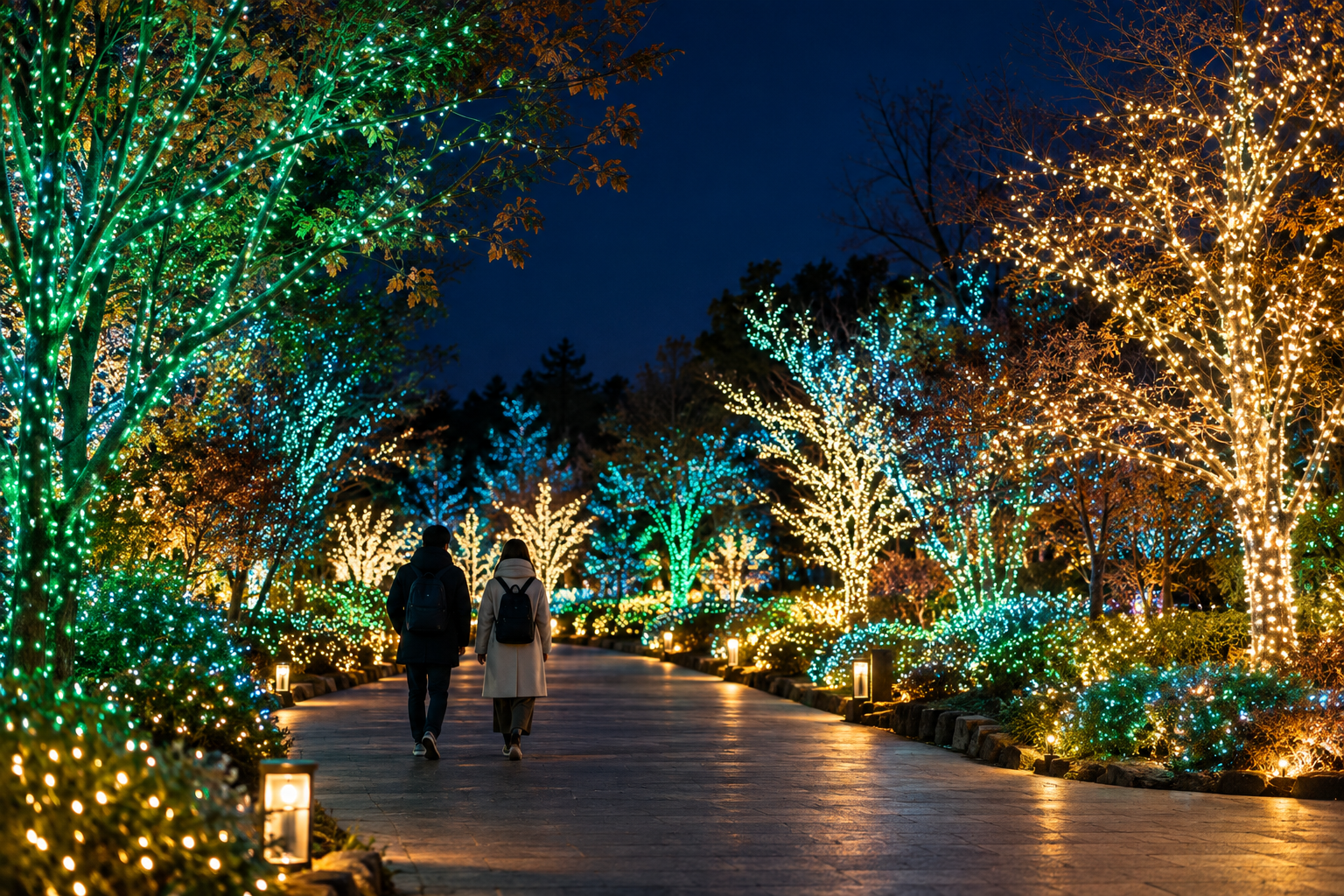
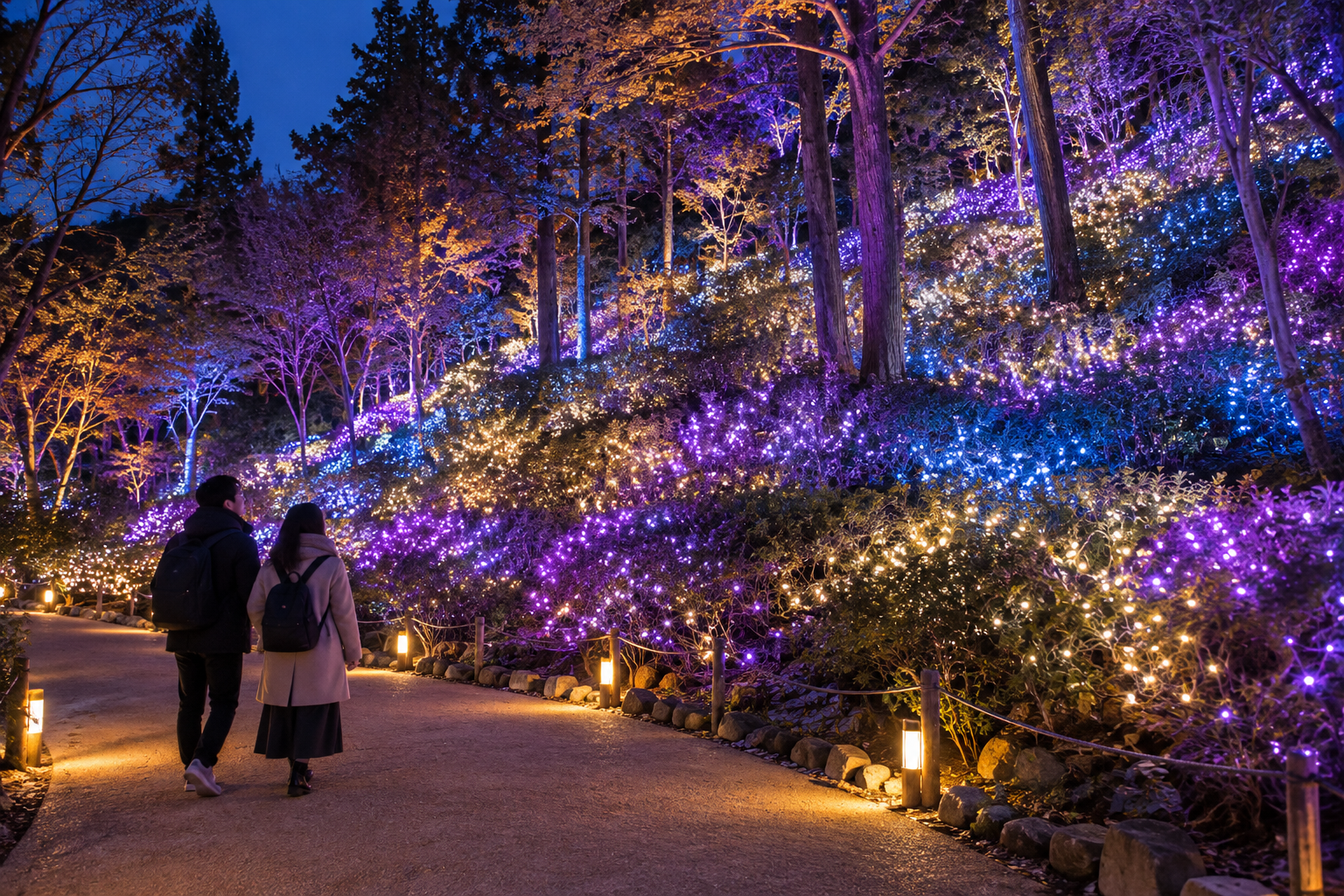
Last checked: October 18, 2026. This is a researched guide; no firsthand visit is claimed. All six images are AI-generated conceptual illustrations, not photographs of the actual park, displays, transport or current conditions.
- Check the evening calendar before choosing a ticket
- Choose admission only, After Pass or One-Day Pass
- Do not confuse the Ferris wheel with the station gondola
- Choose the right station and final transfer
- Build the evening around a few things you want to see
- Plan a warm break and a manageable route
- Choose the return before the last photograph
- Frequently asked questions
- When does the 2026–2027 season begin?
- Are the lights on every weekday in March?
- Do I need an After Pass just to see the lights?
- Does After Pass include the Ferris wheel?
- Is the Sky Shuttle gondola included?
- Are the Keio and Odakyu stations the same place?
- Can I ride until the park closes?
- Does normal admission give priority access to the opening ceremony?
- Are the pictures photographs of this season’s displays?
- Official sources
Check the evening calendar before choosing a ticket
The operator’s 2026 announcement gives the season as October 29–April 4 and the usual light-event hours as 4:00–8:30 p.m., varying by period. It specifically excludes weekday illumination from March 1–12, 2027, when the park has daytime operation only. A season’s end date does not mean the lights operate every day in between.
| Planning question | What to check |
|---|---|
| Is the season open? | October 29, 2026–April 4, 2027, subject to closed days |
| Does an afternoon ticket start with the lights? | No: After Pass entry starts at 3:00 p.m.; usual event hours start later |
| What is the March exception? | No illumination on weekdays March 1–12, 2027 |
| Can I use one closing time all winter? | No: check your date in the current park calendar |
Open the official calendar for your date, read the operating hours and check notices about unavailable rides. Save the page together with your ticket. For a short Tokyo stay, settle this before building dinner or another paid booking around the evening.
October 29 also has a separate opening ceremony, announced for 5:30–7:00 p.m. Its priority viewing area requires a special invitation; ordinary park entry does not grant that space. A free-viewing area is also announced, with park admission still required. If your goal is a simple walk, another operating date may be easier to organize.
Choose admission only, After Pass or One-Day Pass

The official ticket page distinguishes ordinary prices from official online prices. The table below shows its adult category, ages 18–64, as checked on October 18. Recheck the product for your selected date; a general price table is not a completed booking.
| Adult ticket | Ordinary / official online | Best starting point |
|---|---|---|
| Admission only | ¥1,800 / ¥1,600 | Lights and walking; rides cost extra |
| After Pass, from 3:00 p.m. on light-event days | ¥3,100 / ¥2,800 | Afternoon/evening eligible rides plus entry |
| One-Day Pass | ¥5,900 / ¥5,500 | A longer amusement-park day |
For two adults using the listed official online admission price, entry totals ¥3,200. Two online After Passes total ¥5,600, a ¥2,400 difference. These are ticket-only calculations, excluding railway travel, the gondola, excluded rides, food and any other purchases. Compare the extra cost with the eligible rides your group actually wants.
Use each person’s own category when booking. The page separates middle/high-school students, elementary-school children and seniors aged 65+, and preschool children aged three and over. A family’s cost cannot be calculated by applying the adult rate or one generic child rate to everyone.
Start from the official ticket link and read entry instructions, exclusions and cancellation conditions before paying. We have not tested an overseas card or completed checkout. If payment stalls, look for an order or confirmation before trying again; avoid buying a second set simply because a screen has not refreshed.
Do not confuse the Ferris wheel with the station gondola
The names describe different experiences. Sky-Go-LAND is the park’s Ferris wheel; Sky Shuttle connects the Keio station area with the amusement park. The word “rides” on an After Pass does not include either one.
The Sky Shuttle page lists ¥300 one way or ¥500 round trip; the gondola-ticket section of the price page specifies a charge from age three. It marks the gondola as excluded from both One-Day Pass and After Pass. Budget this separately if you choose that approach, and confirm operating status before travel.
The current Seven Ticket After Pass product for October 29–November 30 also excludes Sky-Go-LAND, the gondola and other specified attractions. It says attraction operation ends at 8:00 p.m., with earlier attraction closures possible. Those are conditions of that product, not a promise about every later-season ticket. Park closing, ride closing and the time a queue stops accepting people are separate limits.
If the Ferris wheel is the main reason you are going, confirm its price, availability and queue arrangements before choosing a pass. Paying for more eligible rides does not solve an exclusion. One calm ride and a walk may suit your evening better than trying to recover the cost of a pass.
Choose the right station and final transfer

The park’s access page gives two useful rail approaches. Save the full name, including the railway, rather than searching for “Yomiuriland station” and assuming every result is interchangeable.
| Rail approach | Final transfer described by the operator |
|---|---|
| Keio-yomiuri-land (京王よみうりランド) | Sky Shuttle gondola, or the indicated Odakyu bus to よみうりランド |
| Yomiuriland-mae on Odakyu (読売ランド前) | 読01 bus toward Keio-yomiuri-land; get off at よみうりランド |
| Shin-yurigaoka on Odakyu (新百合ヶ丘) | 新07 bus from south-exit stop 4 toward よみうりランド |
GO TOKYO describes the Keio-station gondola ride as about five to ten minutes and the bus from Yomiuriland-mae as about ten minutes. These are transfer estimates, excluding waiting, queues and the journey from your accommodation.
Search a complete route from your actual starting point. Check where to change trains and whether the final transfer is operating on that date. Keep the station name and the park stop name in Japanese on your phone; they are useful when asking a driver or station employee.
If the gondola is unavailable, use the current bus information linked by the park. A substitute still needs a departure time and the correct direction. Do not assume that a closed gondola automatically means a bus is waiting, or that an unfamiliar hill walk is the easiest alternative.
Build the evening around a few things you want to see
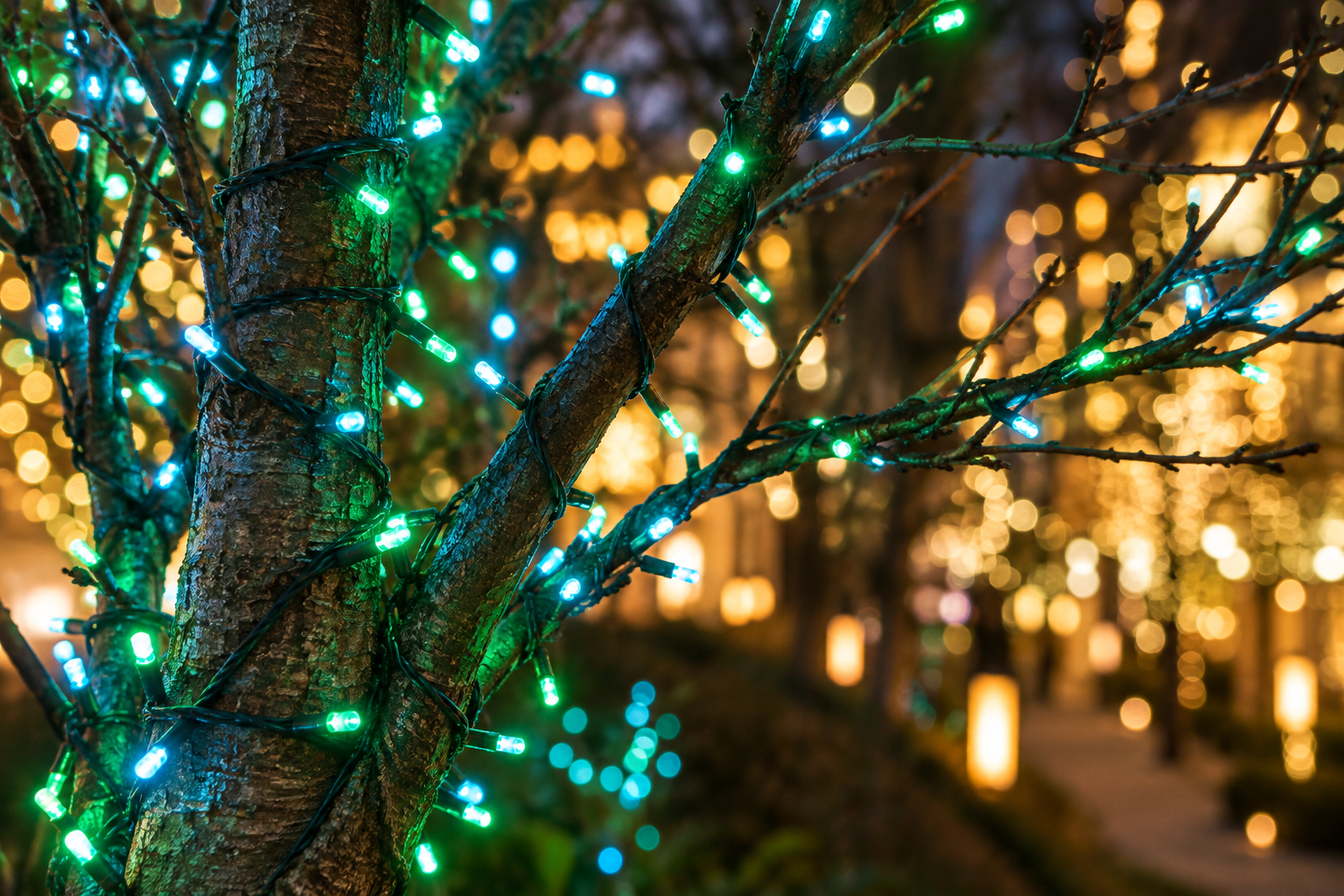
This season’s theme is Growing Light. The official introduction describes green gemstone-inspired colors and the energy of plants growing. Think of it as an evening of designed light and color, rather than a checklist of photographs you must reproduce.
Pick two or three priorities from the current event guide: a walk through the illuminated areas, a fountain performance, or an eligible ride. Check the fountain-show page for your date’s program instead of carrying over a timetable from an older season.
A suggested plan is to arrive during the afternoon, complete entry and get your bearings before dark, then spend the evening on your chosen areas with a food break. Allow roughly two to three hours after arrival as an editorial planning starting point, not an official tour length or a guarantee of completing rides.
When time is short, reduce the number of activities. Choose a light walk and one performance, or a couple of eligible rides with shorter time for photographs. A queue that consumes the evening is a reason to change the plan, rather than rush through every remaining area.
Plan a warm break and a manageable route
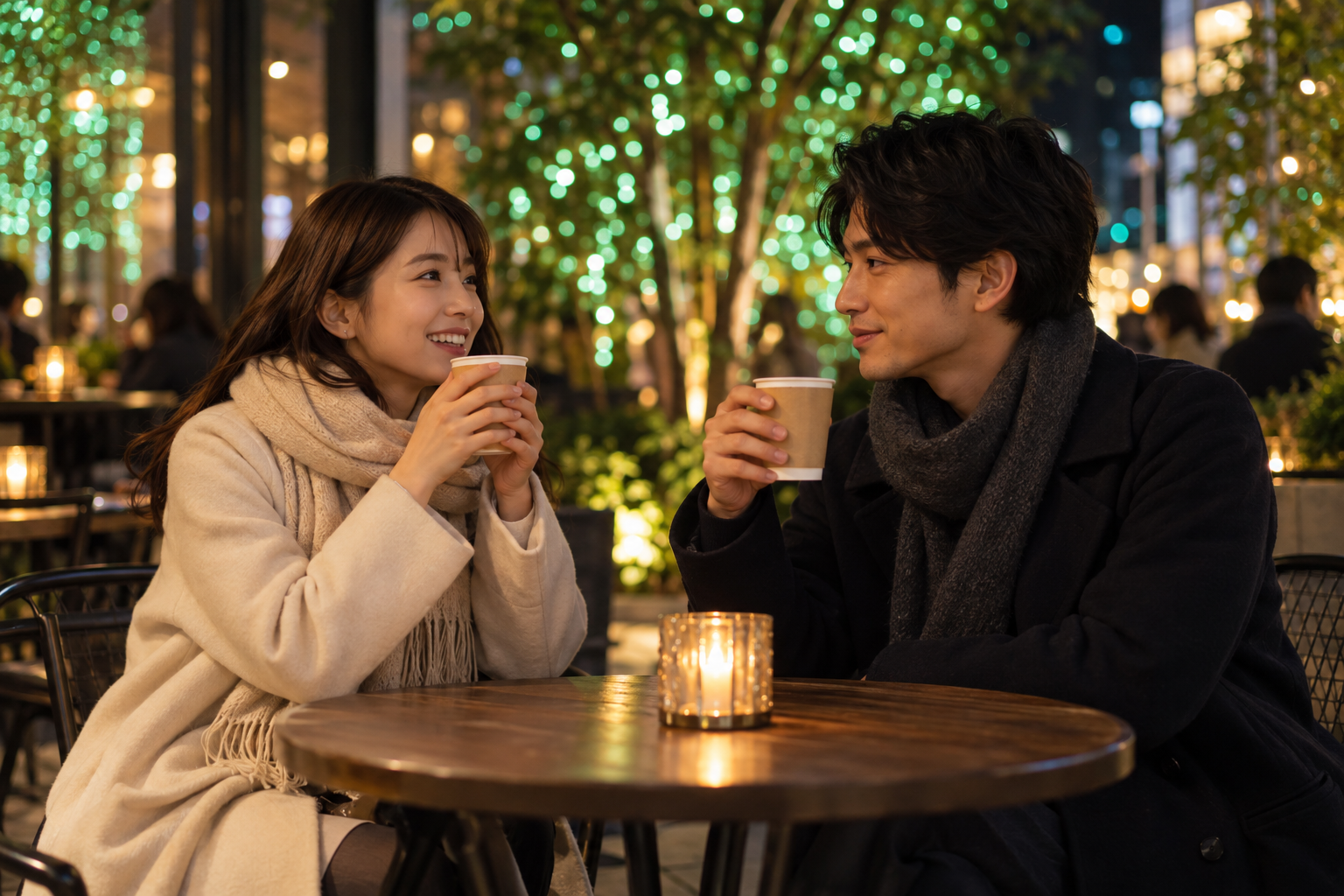
Bring comfortable shoes, layers and enough phone charge for tickets and the return journey. Check the local forecast close to departure. Gloves can make pauses for photographs more comfortable; a compact bag is easier to manage when moving between a station, transfer and park.
The restaurant guide is the starting point for choosing food. Check current opening arrangements and avoid placing your only meal immediately before the transfer you need home. A quick break earlier in the evening gives you more freedom later.
For a stroller, wheelchair or limited walking stamina, ask the park about a suitable arrival and visiting route. The gondola page requires wheelchairs to be folded and gives a door-opening width limit of 48 cm. That does not establish that the gondola suits every traveler or that the whole outing is step-free. Resolve the specific transfer and assistance needs before buying around it.
Choose the return before the last photograph

Save a preferred return from the park and another workable option. Include the gondola or bus, railway changes and the final journey to your accommodation. Work backward from that plan to decide when to leave the light displays, allowing time to reach the transfer and wait.
If someone is tired or a transfer has a long queue, leave earlier and simplify the journey. Park closing is not your hotel’s last-train time. For a different evening, compare our Tokyo Mega Illumination guide; check that venue’s own calendar and access rather than assuming the same ticket rules apply.
Frequently asked questions
When does the 2026–2027 season begin?
October 29, 2026. The announced final date is April 4, 2027, with closed days and non-illumination dates.
Are the lights on every weekday in March?
No. Weekdays from March 1–12, 2027 are announced as daytime park operation only.
Do I need an After Pass just to see the lights?
Admission only is the starting choice for a walk. After Pass adds eligible rides from 3:00 p.m. on light-event days.
Does After Pass include the Ferris wheel?
No. Sky-Go-LAND is excluded. Check its separate conditions if it is a priority.
Is the Sky Shuttle gondola included?
No. The operator lists a separate ¥300 one-way or ¥500 return fare, charged from age three.
Are the Keio and Odakyu stations the same place?
No. Keio-yomiuri-land and Yomiuriland-mae are different stations with different final transfers.
Can I ride until the park closes?
Do not assume so. The current October–November Seven Ticket product says rides end at 8:00 p.m., and attractions may close earlier.
Does normal admission give priority access to the opening ceremony?
No. The priority viewing area has separate invitation arrangements; ordinary admission is still required for entry.
Are the pictures photographs of this season’s displays?
No. They are clearly labeled AI-generated illustrations. Use the official map and current announcements for the actual park.
Official sources
All sources below checked October 18, 2026.
- Yomiuriland Co., Ltd.: 2026 season announcement
- Yomiuriland: Operating calendar
- Yomiuriland: October 29 opening ceremony arrangements
- Yomiuriland: Ticket types, age categories and official online prices
- Yomiuriland: Sky Shuttle fares, pass exclusions and folding restrictions
- Seven Ticket (authorized ticket seller): After Pass valid October29–November30
- Yomiuriland: Rail approaches and final bus transfers
- Tokyo Convention & Visitors Bureau: 2026 Growing Light and access estimates
- Yomiuriland: Growing Light season theme
- Yomiuriland: Current event guide
- Yomiuriland: Current fountain-show program
- Yomiuriland: Restaurants and shops
Comments