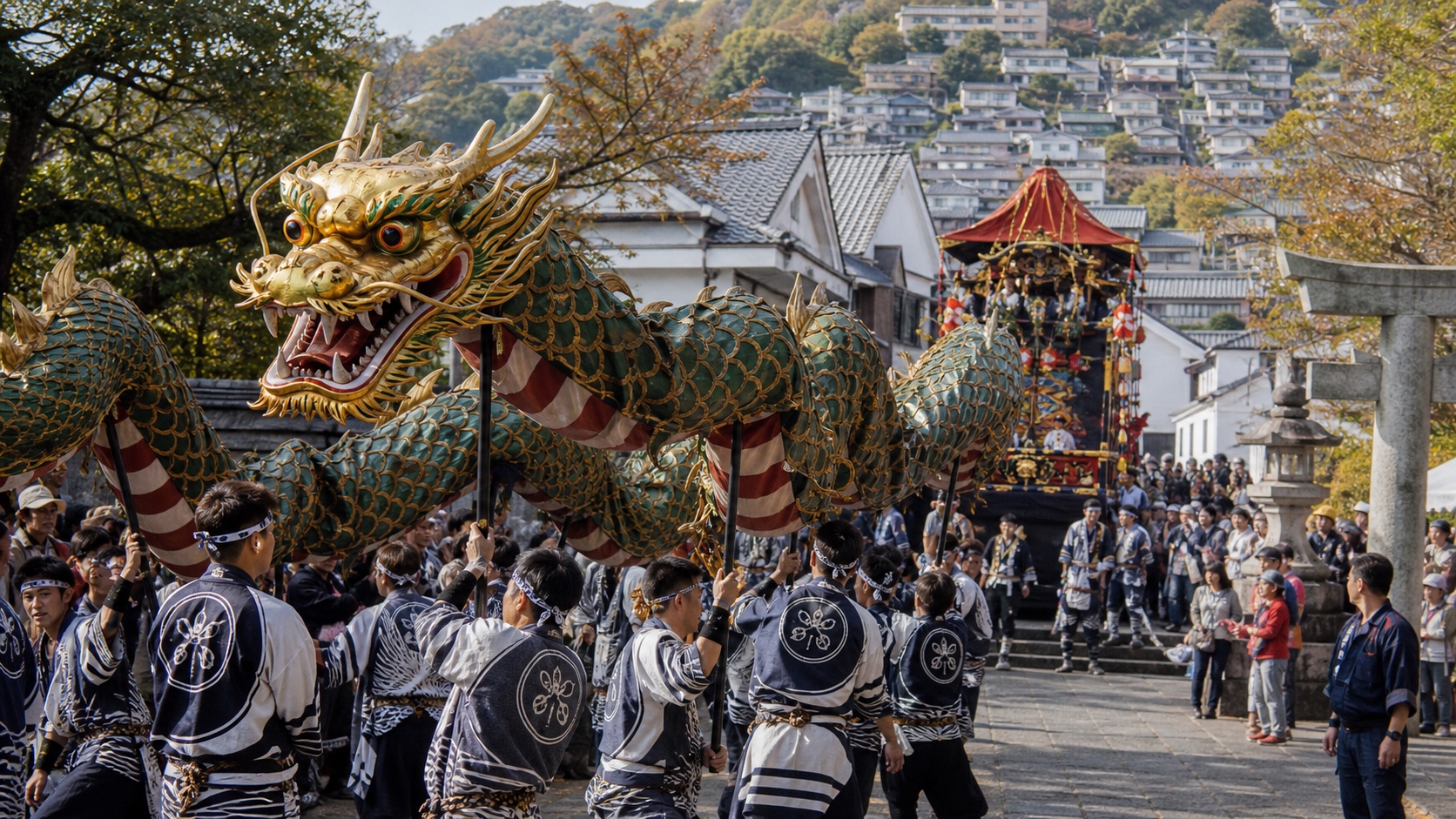
Nagasaki Kunchi is not one performance on one stage. The official three-day program runs October 7–9 annually, but the four paid viewing venues operate independently. They use different dates, seat formats, prices and sales channels. Some accept online reservations, one is mainly phone-based, and an early Chuo Park performance is reserved for invited guests rather than sold publicly.
That makes the real tourist problem more complicated than “Where do I buy a ticket?” You first need to decide which venue works for your date, group size, body and purchase access. Then you need a free-viewing Plan B that does not depend on finding an unannounced performance by chance.
For 2026, the official organizer has confirmed six performing towns and the October 7–9 program. Chuo Park tickets went on sale on August 3. This guide turns the official venue pages into one decision plan without claiming that any category is still available.
- Quick answer: should you buy a paid seat?
- What is confirmed for Nagasaki Kunchi 2026?
- Which paid venue should you choose?
- How should an overseas visitor buy a ticket?
- Free Plan B: Niwasaki Mawari and non-paid viewing
- Getting to the four venues by public transport
- Rain can change your date, time and valid ticket
- Your final booking and day-of checklist
- Frequently asked questions
- When is Nagasaki Kunchi in 2026?
- Do I need a ticket to see Nagasaki Kunchi?
- Which venue is easiest for a solo foreign traveler?
- How much are 2026 Nagasaki Kunchi tickets?
- Can I buy a Nagasaki Kunchi ticket from overseas?
- What can I do if official tickets are sold out?
- What happens if it rains?
- Which tram stop should I use?
Quick answer: should you buy a paid seat?
Buy a paid seat if seeing the six 2026 groups from a fixed place matters to you. Start with Chuo Park if you want individual chair or bench-style pricing and an official online route. Consider Suwa Shrine if the historic shrine setting matters and your group understands box seating. Choose Otabisho or Yasaka Shrine once you confirm that their group-price format and reservation method work for you.
Use a free Plan B if your schedule is flexible or official inventory is gone. The official tourism guide says performances can also be glimpsed in non-paid areas and during Niwasaki Mawari, when groups visit businesses and communities around central Nagasaki. Those places can be crowded, and the 2026 route and times were not yet published when this guide was checked. Wait for the official 2026 map instead of relying on an old route.
| Your situation | Best first move | Main friction | Plan B |
|---|---|---|---|
| Solo traveler who wants a normal chair | Check Chuo Park individual seats | Inventory and fees can change | Follow the official 2026 Niwasaki Mawari map when released |
| Group of four comfortable in a box | Compare Suwa, Otabisho and Yasaka total box prices | Most listed prices are per four-person box | Use Chuo Park individual seats if the box total is poor value for your group |
| Traveler who cannot make a Japanese phone reservation | Start with the official online routes | Online access does not guarantee a foreign card will work | Use a different official venue or the free plan; do not use an opaque proxy |
| Traveler with limited mobility | Confirm Chuo Park wheelchair-pair inventory and the current access route before payment | The published wheelchair option is sold with a caregiver | Contact the venue directly; do not assume all four sites offer the same setup |
| Fixed October 7 morning plan | Do not expect a public Chuo Park ticket for 8:10 | That performance is invitation-only | Compare Suwa or Otabisho, or use the free plan after its schedule is published |
| Rain-sensitive itinerary | Keep October 7–9 flexible and check the official site that morning | Performances may move to another date or time | Activate a weather-safe Nagasaki day and follow only the updated official schedule |
Information checked August 10, 2026. Dates, published prices and sale channels are confirmed; live inventory, the final traffic-regulation map and the 2026 Niwasaki Mawari schedule can still change.
What is confirmed for Nagasaki Kunchi 2026?
The official 2026 announcement lists six dance towns:
| 2026 dance town | Main performance named by the organizer |
|---|---|
| Uwa-machi | Uwamachi Kokkodesho |
| Chikugo-machi | Dragon Dance |
| Moto-Funa-machi | Tosen Matsuri, or Chinese Ship Festival |
| Kajiya-machi | Treasure Ship and Seven Lucky Gods |
| Ima-Kago-machi | Hon-odori traditional dance |
| Aburaya-machi | Kawafune river boat performance |
Each town's offering at a paid venue is planned for about 30 minutes, making the complete six-town program roughly three hours. A ticket is therefore a reserved view of a long program, not just an entrance pass to a street festival.
The official pre-event schedule also lists Niwamise on October 3 and Nin-zoroi on October 4. These are separate cultural events, not replacement dates for the paid October 7–9 performances. Use them when they fit your trip and the organizer keeps the schedule unchanged.
Which paid venue should you choose?
There is no universal “best” venue. The useful question is which venue's date, seat and purchase channel you can actually use.
| Venue | 2026 public performance times | Published price format | Main official sale route | Best fit |
|---|---|---|---|---|
| Suwa Shrine | Oct 7 at 7:00 and 16:00; Oct 9 at 8:20 | Four-person boxes: ¥18,000–¥36,000; B/C split seats listed; standing ¥1,500 sold on the day | Ticket Pia online and Seven-Eleven; phone support also listed | Historic shrine atmosphere; groups comfortable with box seating |
| Chuo Park | Oct 7 at 17:10; Oct 8 at 8:00 | Individual seats: ¥4,500–¥7,000; wheelchair pair ¥14,000 | Ticket Pia online or Seven-Eleven from Aug 3 | Solo travelers, couples and visitors who want individual pricing |
| Otabisho | Oct 7 at 9:10; Oct 9 at 7:00 | Four-person boxes: ¥20,000–¥24,000 | Phone reservation; continuing reception listed for Mon/Wed/Fri while available | A four-person group able to complete the phone process |
| Yasaka Shrine | Oct 8 at 7:00 | Four-person boxes: ¥26,000–¥30,000 | Online reservation, then weekday phone reception while available | A group focused on the second-day morning program |
Prices above are the organizer's published face values. They may not include the complete list of system or issuance fees, and they do not prove current availability. Open the official 2026 ticket page before payment.
Why Chuo Park is the simplest first check
Chuo Park lists prices per person, while the other three venues emphasize four-person box prices. The public performances are October 7 at 17:10 and October 8 at 8:00. Sand-level chair seats are ¥7,000, Stand S is ¥6,500 and Stand A is ¥4,500. The October 7 morning performance at 8:10 is reserved for invited guests and has no public ticket sale.
The 2026 sales guide says Ticket Pia charges a system fee of ¥330 per ticket plus a ¥165 issuance fee for its listed route. Seven-Eleven terminal purchases list a ¥165 issuance fee. Treat the checkout screen as final because fees and delivery choices can change.
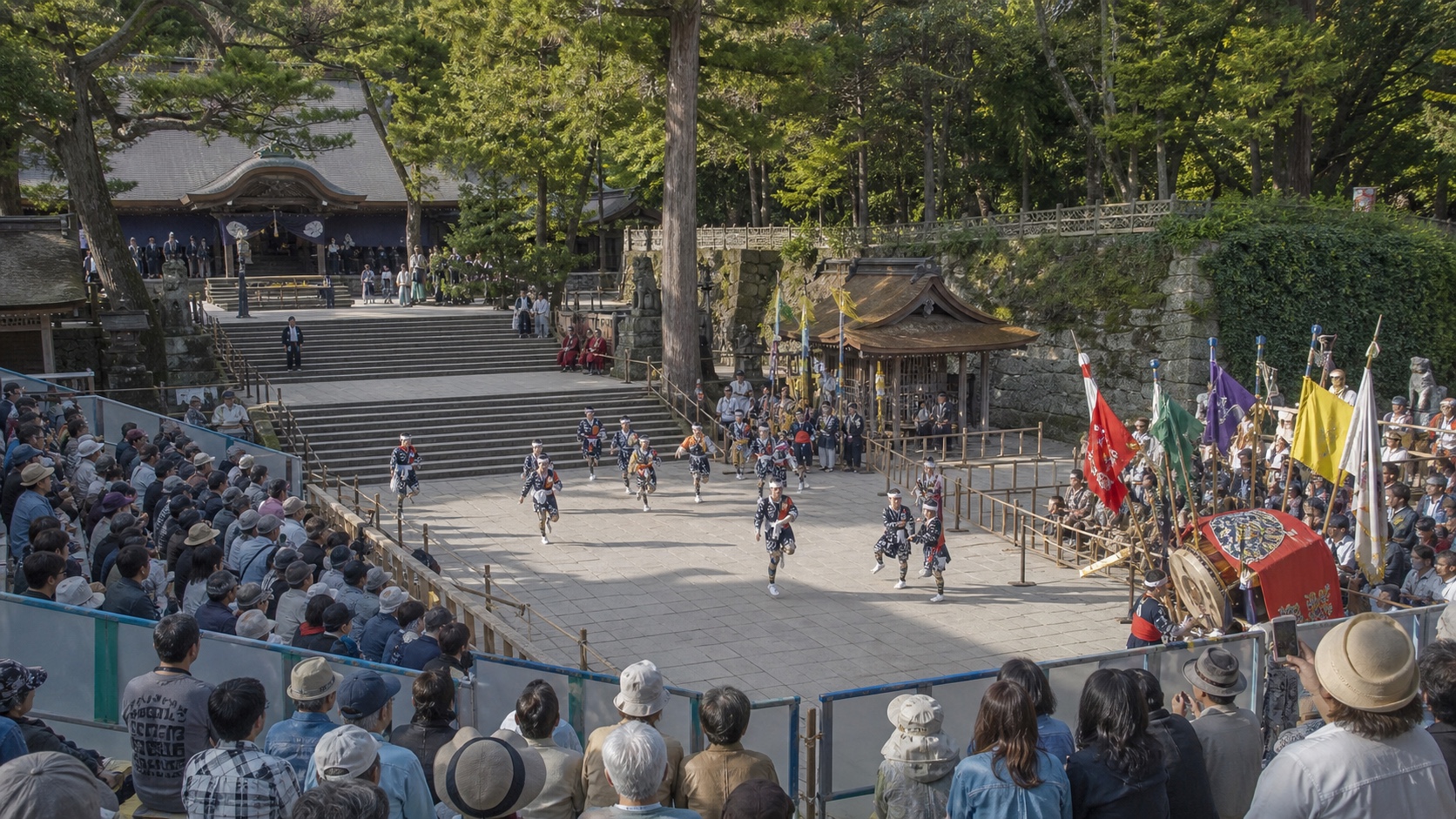
Why box prices need a group calculation
Suwa Shrine, Otabisho and Yasaka Shrine publish most categories as one four-person box. A ¥24,000 box is not automatically a ¥6,000 ticket unless four people will actually use it and the venue permits your intended configuration.
Before choosing a box, write down:
- the total box price;
- the number of people actually attending;
- whether everyone can sit in the stated format for about three hours;
- the reservation channel you can complete;
- your backup venue if the category is gone.
Suwa Shrine currently lists split-seat sales for B and C boxes, but the exact remaining selection can change. Follow the live purchase page instead of assuming a split seat will still appear.
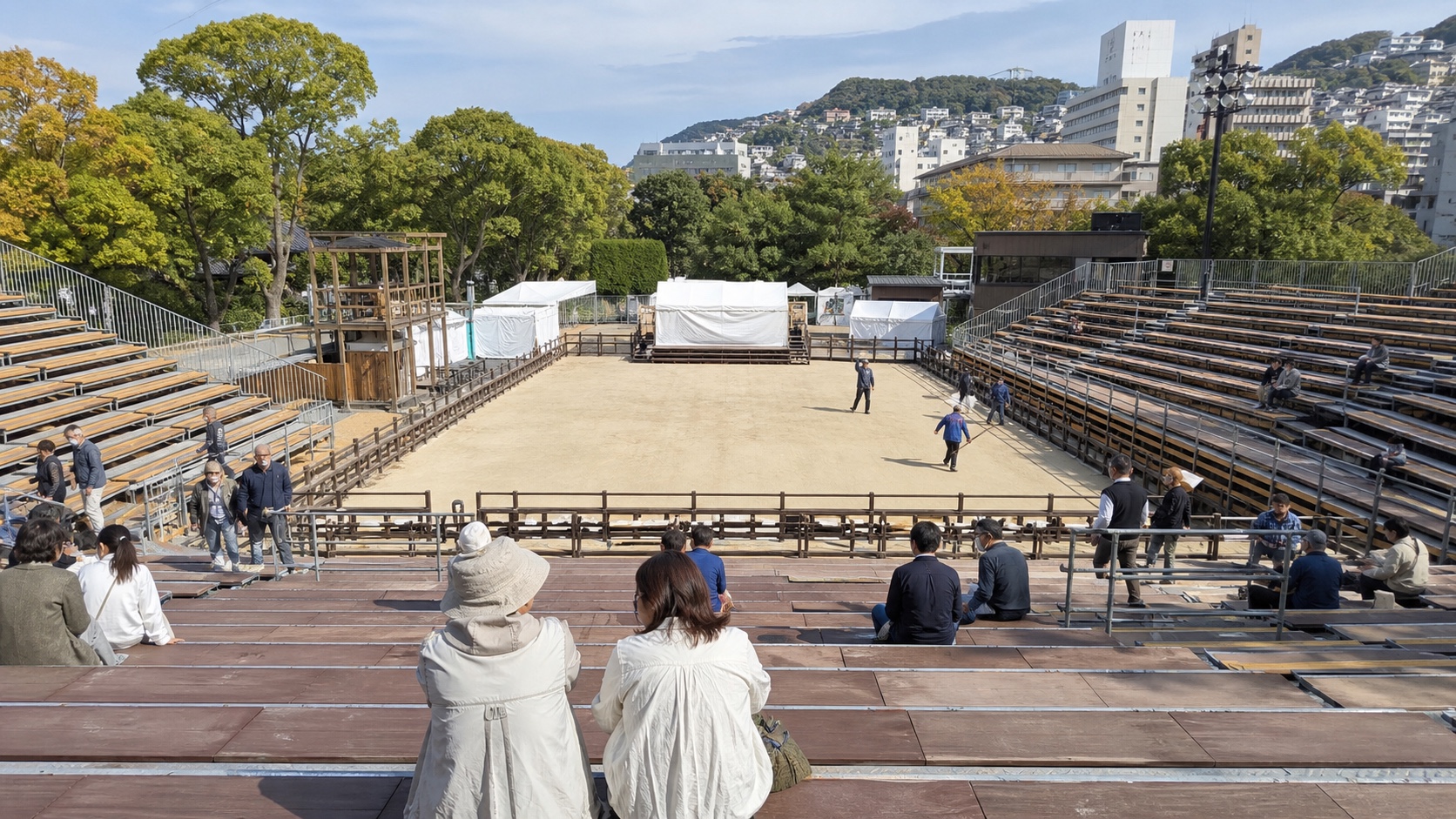
How should an overseas visitor buy a ticket?
Use the organizer's venue links rather than starting with a general search result. The four venues are independently operated, so a purchase rule from one venue does not automatically apply to another.
Chuo Park
The organizer links Ticket Pia as the online route and also lists Seven-Eleven terminals in Japan. The P-code is published on the official page. Ticket Pia and Seven-Eleven are not the same menu: at the store terminal, select Ticket Pia rather than Seven Ticket.
Suwa Shrine
The organizer links a separate Ticket Pia page and lists telephone reception. It also publishes a Seven-Eleven P-code. Check the live Suwa committee page for any ticket-exchange or standing-area procedure before relying on it.
Otabisho
The published route is telephone reservation. The organizer says sales take place after the phone booking and stop when sold out. Do not assume that an email, hotel request or payment proxy substitutes for the official reservation.
Yasaka Shrine
The venue opened online reservations on June 10 and later weekday phone reception. Both stop when the planned number is reached. Use the venue's own reservation page and current contact hours.
The official sources checked for this draft do not confirm universal acceptance of foreign-issued cards, overseas phone numbers or non-Japanese addresses. If the official route cannot accept your details, switch to another official venue or the free plan. Do not hand over passport or card details to an unverified intermediary.
If this is your first Japanese ticket purchase, read RJG's How to Buy Event Tickets in Japan as a Tourist before choosing a venue.

Free Plan B: Niwasaki Mawari and non-paid viewing
The official Nagasaki tourism guide says visitors without paid seats may glimpse performances in non-paid areas, and that the dance towns perform around the city during Niwasaki Mawari. It also warns that free areas can be very crowded.
This is a real Plan B, but it does not promise a front-row performance. The organizer says the three-day Niwasaki Mawari map and schedule are normally published around late September:
- Check the official site from late September and wait for the 2026 Niwasaki Mawari map and schedule.
- Choose one or two published locations rather than chasing each performing group.
- Arrive with a small bag and keep shop entrances, tram stops and emergency routes clear.
- Accept that a group may be delayed or the view may be blocked.
- Do not follow a 2025 map as if it were the 2026 route.
As of August 10, the official 2026 Niwasaki Mawari map had not been published. This guide will not invent its locations or times.
A second Plan B before October 7
If you are already in Nagasaki, the organizer lists Niwamise on October 3 and Nin-zoroi on October 4. They offer a chance to encounter costumes, props and practice-level performances before October 7, but they are separate events with their own weather and schedule risk.
For broader crowd, food and train preparation, use RJG's Japan Festival Survival Guide.
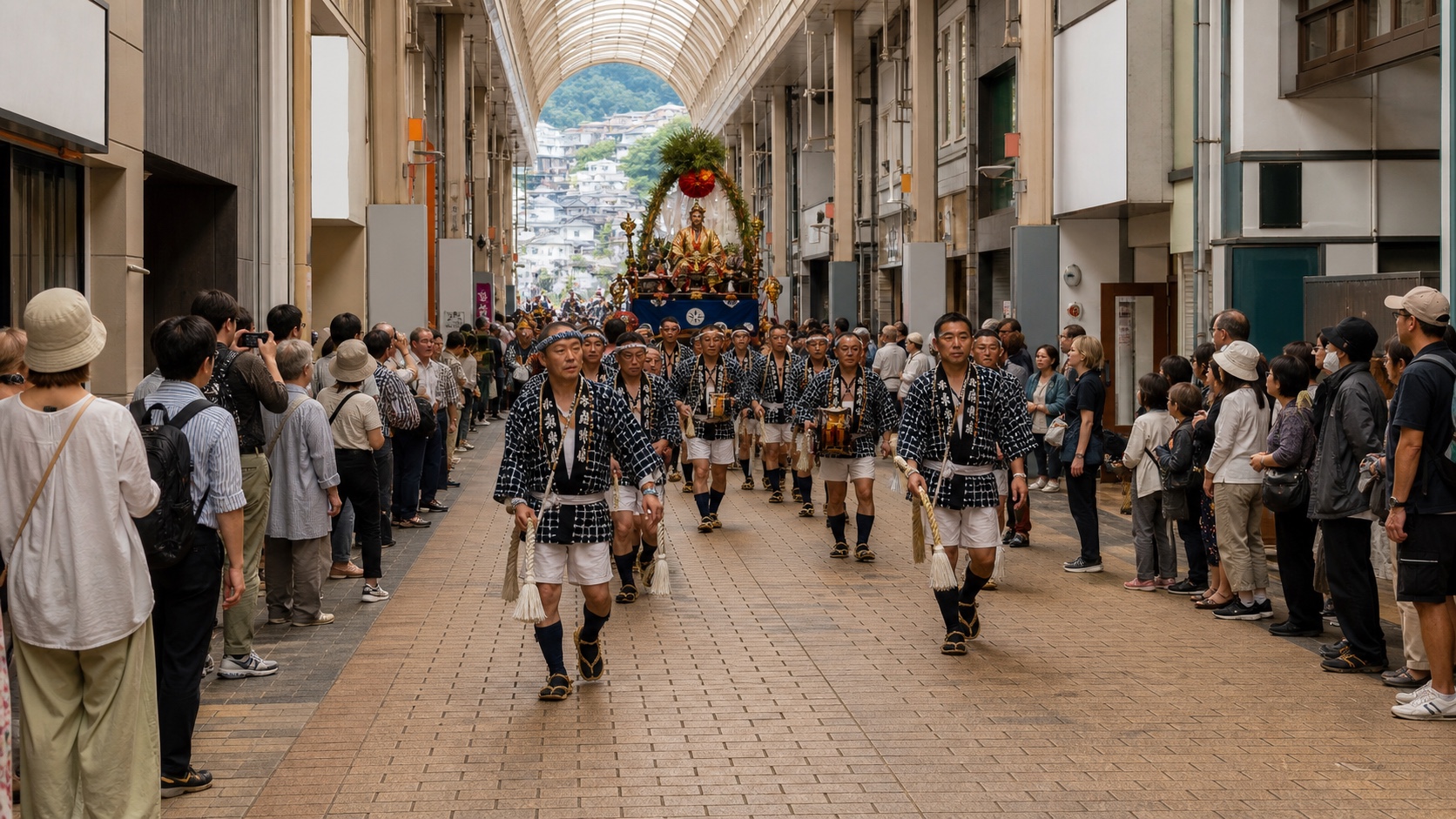
Getting to the four venues by public transport
The organizer expects heavy road congestion and recommends public transport. Its English access page currently says the final traffic-regulation information will be published after the Nagasaki Police announcement.
| Venue | Official public-transport direction |
|---|---|
| Suwa Shrine | Tram toward Hotarujaya; get off at Suwa-jinja Shrine |
| Otabisho | Tram toward Akasako or Sofukuji; get off at Ohato |
| Chuo Park | Transfer at Shinchi Chinatown for a tram toward Hotarujaya; get off at Meganebashi |
| Yasaka Shrine | Tram toward Sofukuji; get off at Sofukuji |
Use these as route identities, not fixed travel times. Festival-day diversions, platform crowding and temporary controls can change the practical trip.
Build your exit before arriving
- Save your venue's tram stop and one walking fallback.
- Keep your accommodation address offline.
- Avoid carrying a full-size suitcase into the festival area.
- Do not schedule a tight train or flight connection immediately after the program.
- Follow staff and police instructions even when a map app suggests a shorter street.
Rain can change your date, time and valid ticket
Nagasaki Kunchi performances are outdoors. The Chuo Park 2026 guide says rain or severe weather can change the schedule and time. Its rules are more complex than a simple cancellation refund.
- A customer-choice cancellation receives no refund.
- If weather changes the performance and you choose not to attend the rescheduled program, Chuo Park describes a half refund of the ticket face value, excluding fees, subject to its procedure and deadline.
- If the October 7 morning performances cannot be held, the whole sequence moves to later dates.
- If the October 7 evening performance alone is postponed, it moves to October 8.
- If the October 8 morning program cannot be held, the sequence moves to October 9, with Chuo Park and Yasaka scheduled after Otabisho and Suwa Shrine.
The organizer also says each venue handles its own tickets and refunds. Do not apply the Chuo Park procedure to Suwa Shrine, Otabisho or Yasaka Shrine without checking that venue.
Your weather decision should be:
- Check the official Nagasaki Kunchi site on the morning of your performance.
- Identify whether your exact venue, date and ticket have moved.
- Save the updated notice before leaving your accommodation.
- If the new time no longer works, contact that venue before the refund deadline.
- Activate a weather-safe Nagasaki plan rather than waiting outside a closed venue.
RJG's Japan Rain & Typhoon Plan explains the alert and transport checks to use when the weather affects more than the festival.
Your final booking and day-of checklist
Before buying:
- Choose one venue and one backup venue.
- Confirm the performance date and start time.
- Compare per-person pricing with four-person box pricing.
- Confirm that your group can use the seat format.
- Open the venue-specific official sales page.
- Check the total after fees.
- Save a free-viewing Plan B without inventing a 2026 route.
Before leaving on the day:
- Check the official weather and schedule notice.
- Check the final traffic-regulation information.
- Save the correct tram stop.
- Carry a compact bag and payment backup.
- Keep your ticket and confirmation accessible.
- Follow staff instructions at crowded streets and stops.
Frequently asked questions
When is Nagasaki Kunchi in 2026?
The official three-day program runs Wednesday, October 7 through Friday, October 9, 2026. The organizer also lists Niwamise on October 3 and Nin-zoroi on October 4 as separate pre-events.
Do I need a ticket to see Nagasaki Kunchi?
You need an advance ticket for reserved performances at Suwa Shrine, Chuo Park, Otabisho and Yasaka Shrine. Non-paid glimpses and Niwasaki Mawari can be possible, but free areas may be crowded and the 2026 route should be confirmed on the official map.
Which venue is easiest for a solo foreign traveler?
Chuo Park is the simplest first check because it publishes individual seat prices and an official Ticket Pia route. Availability and payment acceptance may differ, so confirm the live purchase screen.
How much are 2026 Nagasaki Kunchi tickets?
Chuo Park individual seats are listed at ¥4,500–¥7,000. The other main venues mostly list four-person boxes ranging from ¥18,000 to ¥36,000. Fees and remaining inventory depend on the venue and purchase route.
Can I buy a Nagasaki Kunchi ticket from overseas?
Chuo Park and Suwa Shrine publish online Ticket Pia routes, and Yasaka Shrine lists an online reservation route. Otabisho is phone-based. The official pages do not confirm universal acceptance of foreign cards, phone numbers or addresses.
What can I do if official tickets are sold out?
Wait for the official 2026 Niwasaki Mawari map and choose a published free-viewing location. Do not rely on an old map or an unverified reseller. Niwamise on October 3 and Nin-zoroi on October 4 are separate pre-event options if they fit your trip.
What happens if it rains?
Performances may move to another date or time. Chuo Park publishes specific postponement and partial-refund rules, but each venue operates independently. Check the official notice for your exact venue and contact it before any stated deadline.
Which tram stop should I use?
Use Suwa-jinja Shrine for Suwa Shrine, Ohato for Otabisho, Meganebashi for Chuo Park and Sofukuji for Yasaka Shrine. Check the final traffic and service notice because festival controls can change the practical route.
Comments