- Quick Answer
- What Tokyo's March climate normals mean
- Early, mid, or late March: decision matrix
- What to wear and pack
- Rain: build the day in movable blocks
- Cherry blossoms: do not turn a season into a fixed appointment
- March 21–22, 2027 holiday checkpoint
- A same-area Plan B
- The 7-day, 72-hour, and morning-of routine
- Official sources used
- FAQ
- Is Tokyo cold in March?
- What coat should I wear in Tokyo in March?
- What should I pack for rain in Tokyo in March?
- Is early March different from late March in Tokyo?
- Will cherry blossoms be open in Tokyo in March 2027?
- Is the 2026 cherry blossom date useful for 2027?
- Are March 21 and March 22 holidays in Japan in 2027?
- Should I reserve every March activity in advance?
- What is a good rainy-day Plan B in Tokyo?
- When should I recheck the Tokyo forecast?
Quick Answer
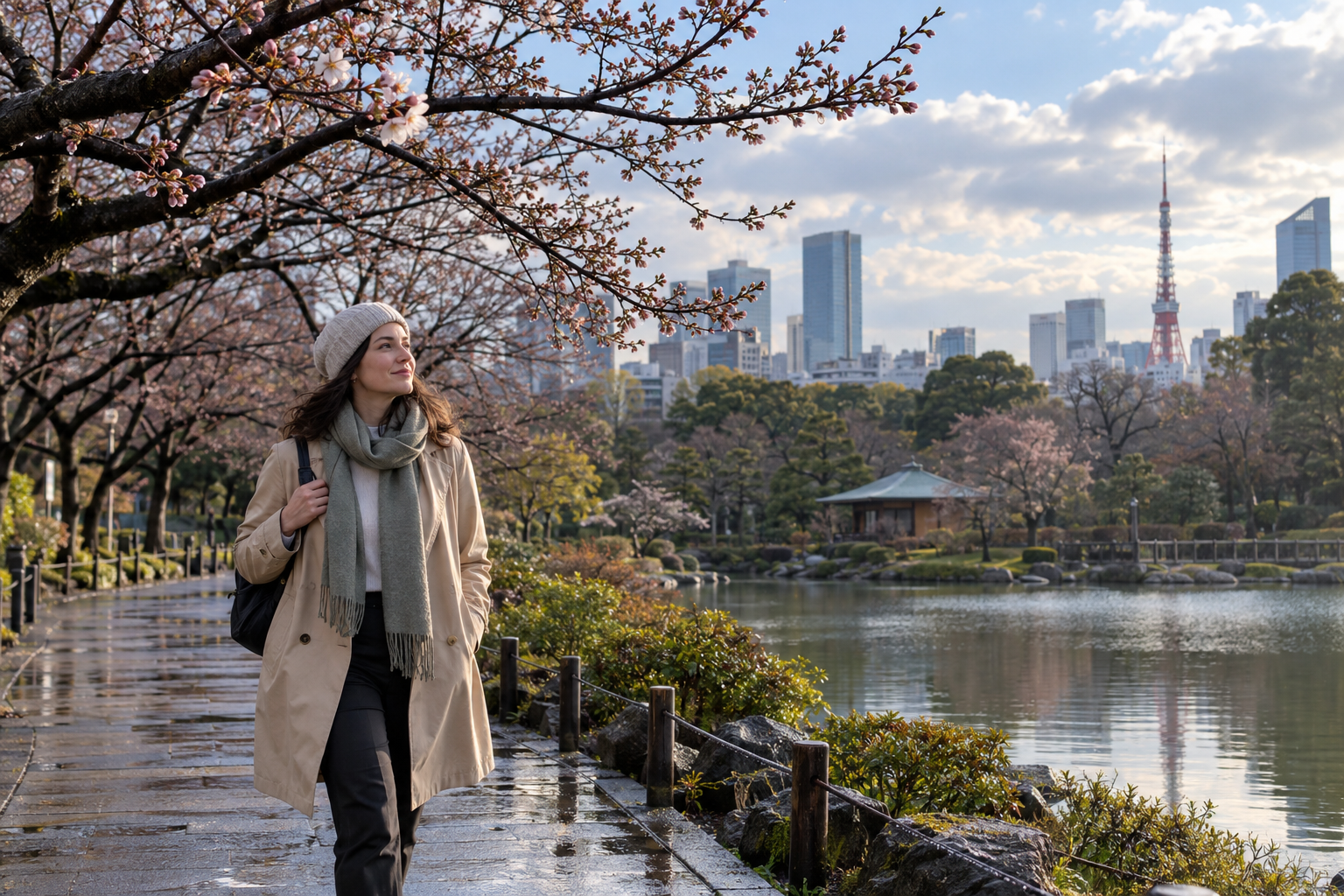
Tokyo in March is a transition month, not reliably warm spring. For broad packing, the Japan Meteorological Agency's 1991–2020 Tokyo normals are 9.4°C (48.9°F) mean, 14.2°C (57.6°F) daily maximum, 5.0°C (41.0°F) daily minimum, and 116.0 mm (4.57 in) monthly precipitation. These are 30-year climate normals, not a forecast for your March 2027 dates.
Pack a base layer, a removable sweater or fleece, and a wind-resistant outer layer. Add a compact umbrella or light rain shell and comfortable closed walking shoes. Early March usually deserves the warmest version of this system. In late March, keep the layers but expect to remove one during a mild afternoon.
Classify your stay as early, mid, or late March, then save one indoor Plan B in the same district as each outdoor priority. Let the live forecast decide which block comes first. If cherry blossoms matter, do not build the entire day around an exact date: as checked on September 28, 2026, the cited JNTO forecast page still showed 2026, not a verified 2027 city-by-city forecast.
What Tokyo's March climate normals mean
| Evidence | What it helps you decide | What it cannot tell you |
|---|---|---|
| JMA 1991–2020 Tokyo normals | Broad packing, footwear, and how much flexibility to keep | Weather on a specific March 2027 date |
| GO TOKYO March page | Current destination guidance and a separate example from 2025 | A 30-year normal or a 2027 forecast |
| JNTO March guide | Broad seasonal change and year-to-year blossom variation | Exact 2027 first bloom or full bloom |
| JNTO blossom forecast page | The issue year and current published forecast when available | A permanent date that cannot change |
| Cabinet Office holiday list | Which dates need extra venue and booking checks | Whether a specific attraction closes or becomes crowded |
| Live JMA forecast and warnings | The final order of outdoor and indoor blocks | A reason to freeze the itinerary months ahead |
JMA calculates climate normals from observed data over a consecutive 30-year period and updates them by decade. The March figures above are therefore a planning baseline. They do not mean every afternoon reaches 14.2°C, every morning begins at 5.0°C, or rain is spread evenly through the month.
JMA also lists 57% relative humidity and 175.3 sunshine hours as Tokyo's March normals. Those values help describe the month, but they do not answer the question a traveler actually faces: will the planned garden, river walk, viewpoint, or outdoor queue be comfortable at that hour? Wind, cloud, shade, pace, and time spent standing still can all change the answer.
GO TOKYO's March page displays a different set of numbers: 10.7°C average, 16.0°C high, 6.2°C low, and 153.0 mm rainfall. The page explicitly says those figures are based on meteorological data for 2025. This guide does not mix them with the JMA 1991–2020 normals and does not turn either dataset into a March 2027 prediction.
The practical conclusion is simple: pack for range and make the day's order movable.
Early, mid, or late March: decision matrix
The date within March changes the planning emphasis, but it does not replace a live forecast. Use this matrix to prepare the shape of the day, then update it close to travel.
| Part of March | Default clothing decision | Recommended use of an outdoor window | Main uncertainty | Plan B trigger and move |
|---|---|---|---|---|
| Early March | Base layer, warm mid-layer, wind-resistant coat; scarf useful for cold-sensitive travelers | Put the longest walk in the mildest, driest part of the day | A spring-looking calendar can still produce a cold-feeling morning, evening, shade, or windy wait | If the live forecast is wet, cold, or windy, start indoors and keep the outdoor block short and close to stations |
| Mid-March | Keep the full layer system but make the mid-layer easy to remove | Use a dry late-morning or afternoon window for the main walk | A mild afternoon can sit between a cold departure and a colder return | Move one indoor activity to the cooler edge of the day; avoid carrying a coat with no room in the day bag |
| Late March | Lighter combinations may work in a mild window, but keep an outer layer for evening and weather changes | Use live weather and current blossom information to choose the day, not an old calendar date | Rain, wind, and bloom timing can all move independently | Keep the Tokyo base and switch to a nearby indoor or non-blossom day instead of chasing an unverified date across the city |
| March 21–22 holiday pair | Follow the same weather logic; the holiday label does not change the temperature | Keep only plans whose dated official hours and admission rules have been checked | Venue schedules, ticket inventory, and domestic leisure demand may differ, but the national list alone proves none of them | Save a nearby flexible option that does not depend on the same timed ticket or opening schedule |
| Any day with rain or strong wind | Water-resistant outer layer, compact umbrella when appropriate, and shoes with grip | Shorten exposed walking and use the least exposed route | A running train does not prove an outdoor deck, garden program, or river activity is comfortable or operating | Move indoors in the same district and recheck both venue and transport notices before a distant transfer |
The labels “early,” “mid,” and “late” are not mini-forecasts. They help you avoid two packing errors: treating all of March like winter, or treating the whole month like settled spring. The final clothing choice still comes from the JMA forecast close to the date and your own cold tolerance.
What to wear and pack
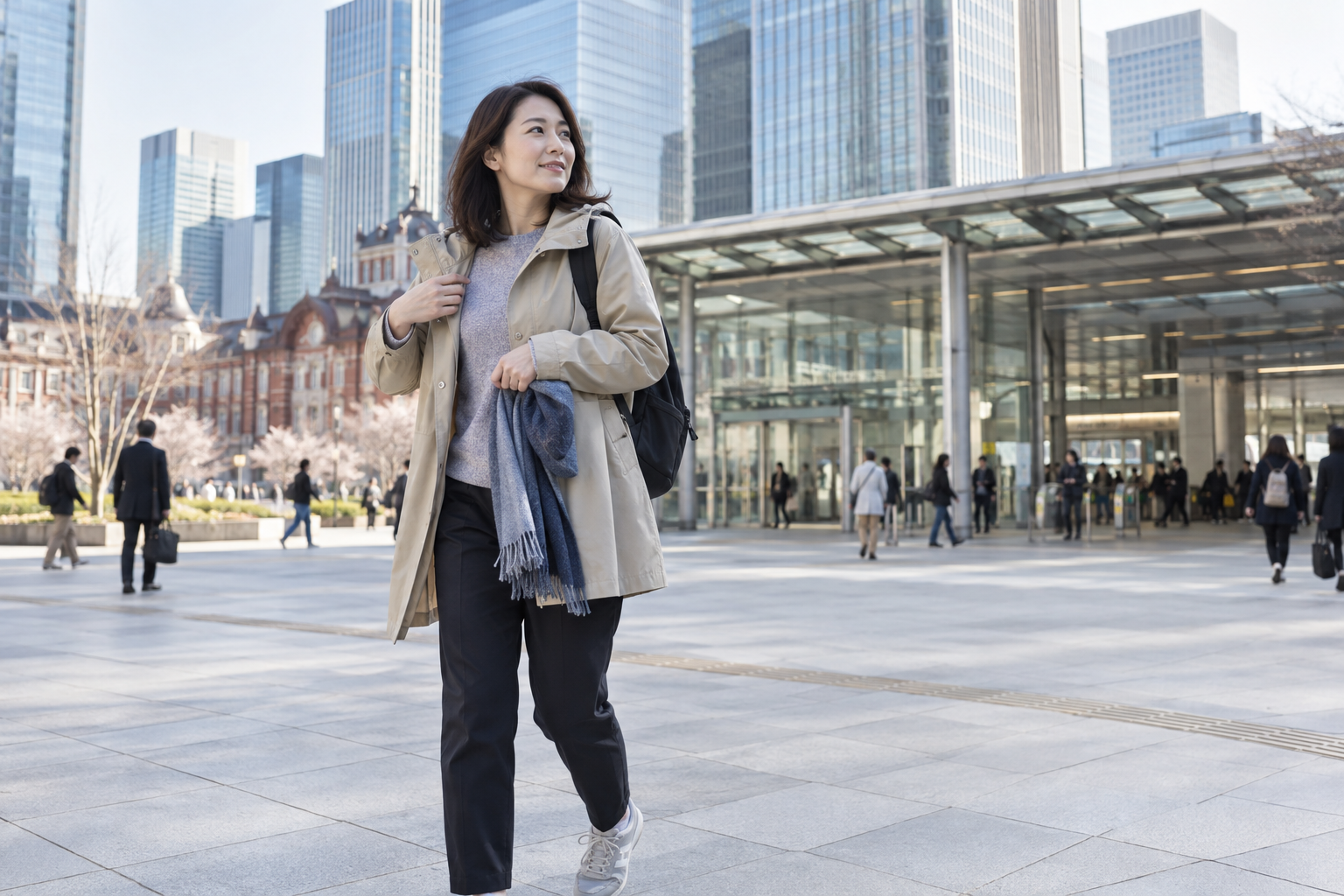
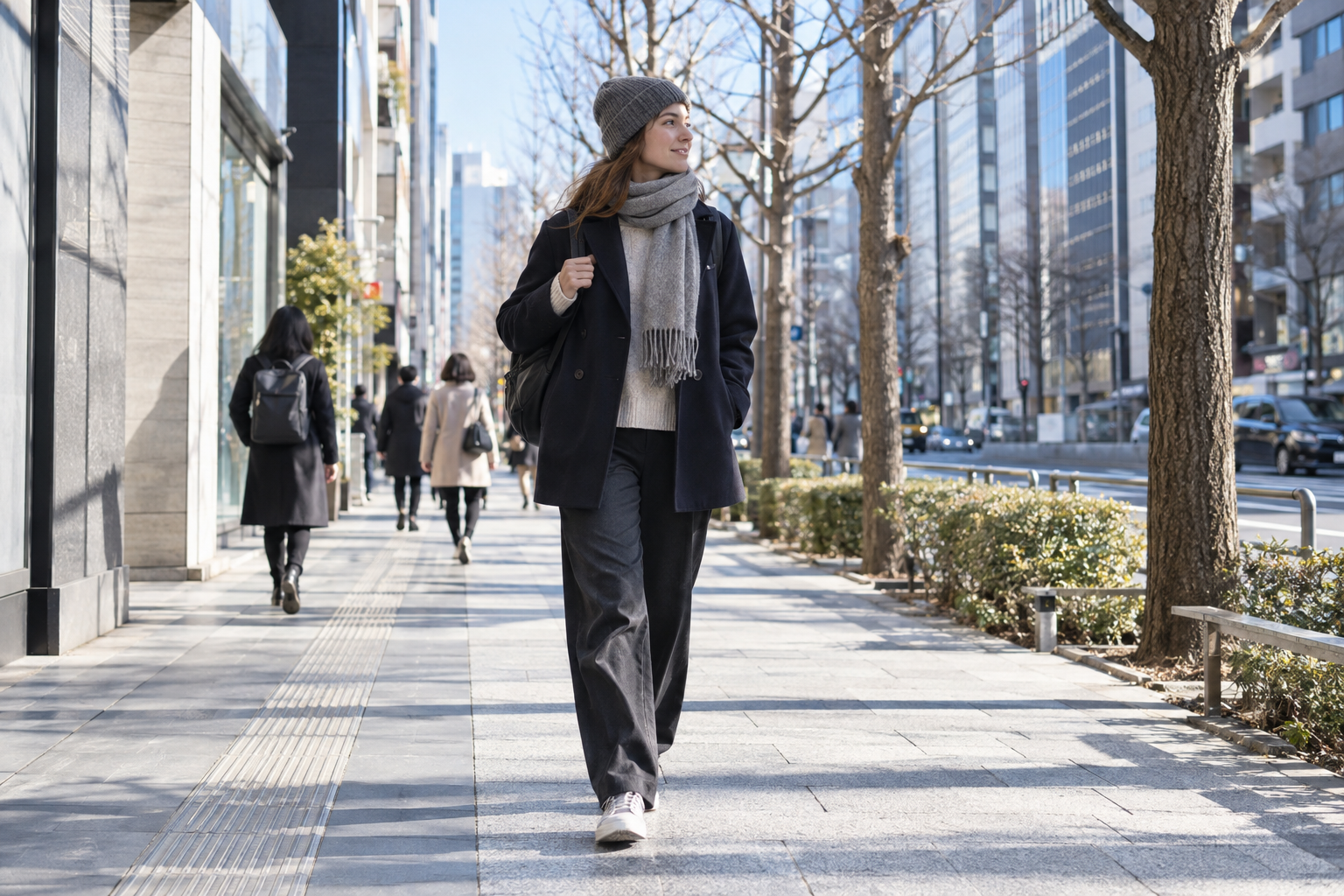
Use a three-part clothing system
- Base: a comfortable top that works inside heated trains, shops, and museums.
- Mid-layer: a sweater, cardigan, or light fleece that can come off without rebuilding the outfit.
- Outer layer: a coat or jacket that cuts wind and can handle the forecast conditions.
GO TOKYO's current weather guidance says early spring is still chilly, recommends a coat or fleece, and notes that temperatures can drop in the morning and evening. It also recommends layers so travelers can adjust between warm sun and a returning chill. That supports a removable system rather than one very heavy piece.
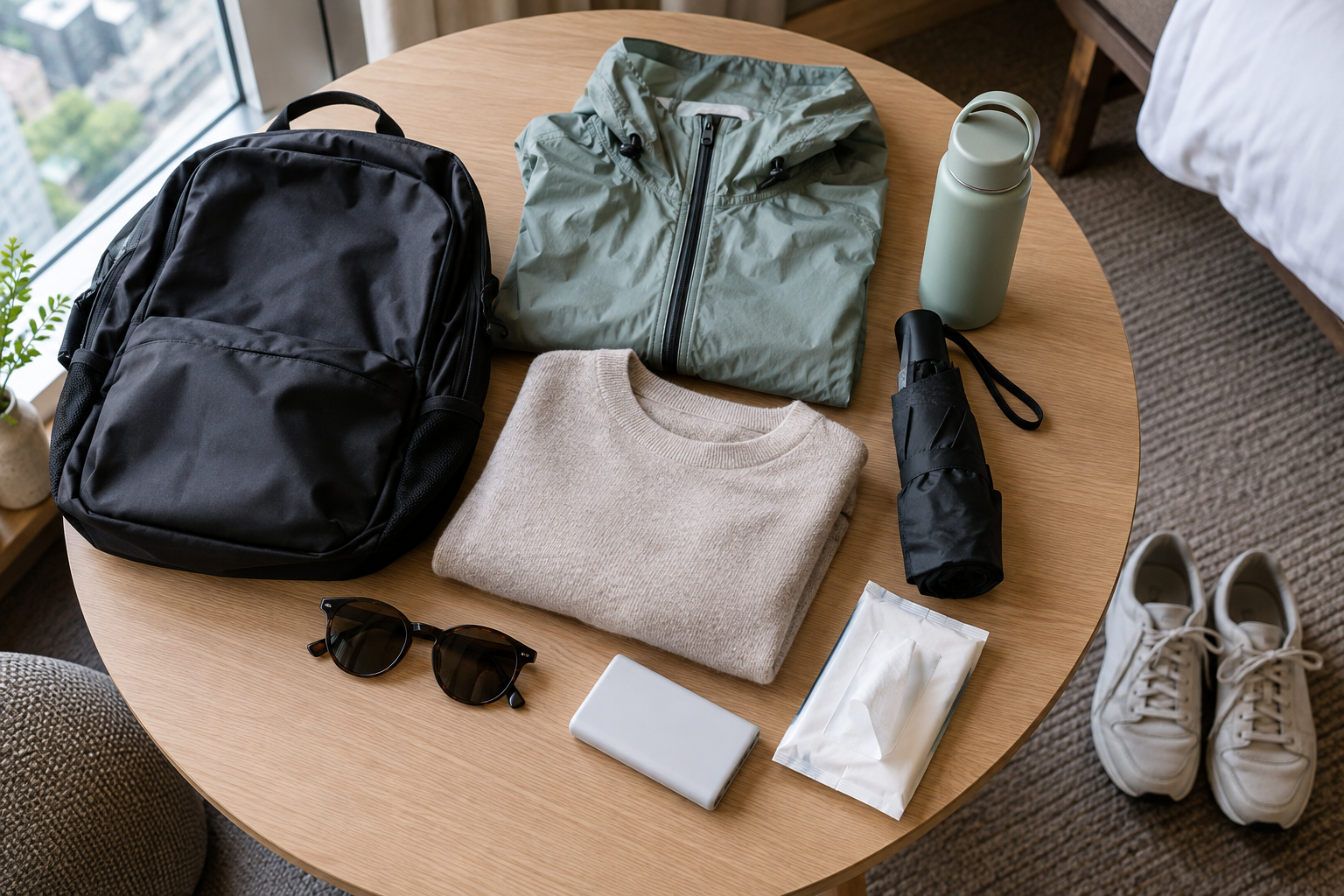
March packing list
- Two or more base tops suitable for repeated walking days
- One warm, removable sweater, cardigan, or light fleece
- One wind-resistant outer layer appropriate to the live forecast
- A scarf or light gloves if you feel cold easily, especially for early March
- Comfortable closed walking shoes with useful grip
- Socks that stay comfortable through a full city day
- A compact umbrella or light rain shell when rain is in the forecast
- A small day bag with room for the mid-layer you remove
- A waterproof pouch for a phone, tickets, and small electronics
- Any personal allergy supplies or medication you normally use, with professional advice where needed
Avoid packing only for the warmest forecast number. A traveler can feel comfortable while walking in sun and cold ten minutes later while waiting in shade. Also avoid packing only for outdoor cold. An outfit that cannot be adjusted may feel too warm on trains or in department stores.
If you plan a higher, more exposed, or inland day trip, run a separate forecast and clothing decision. Central Tokyo's March normals are not a clothing specification for mountains or every destination reachable from Tokyo.
Rain: build the day in movable blocks
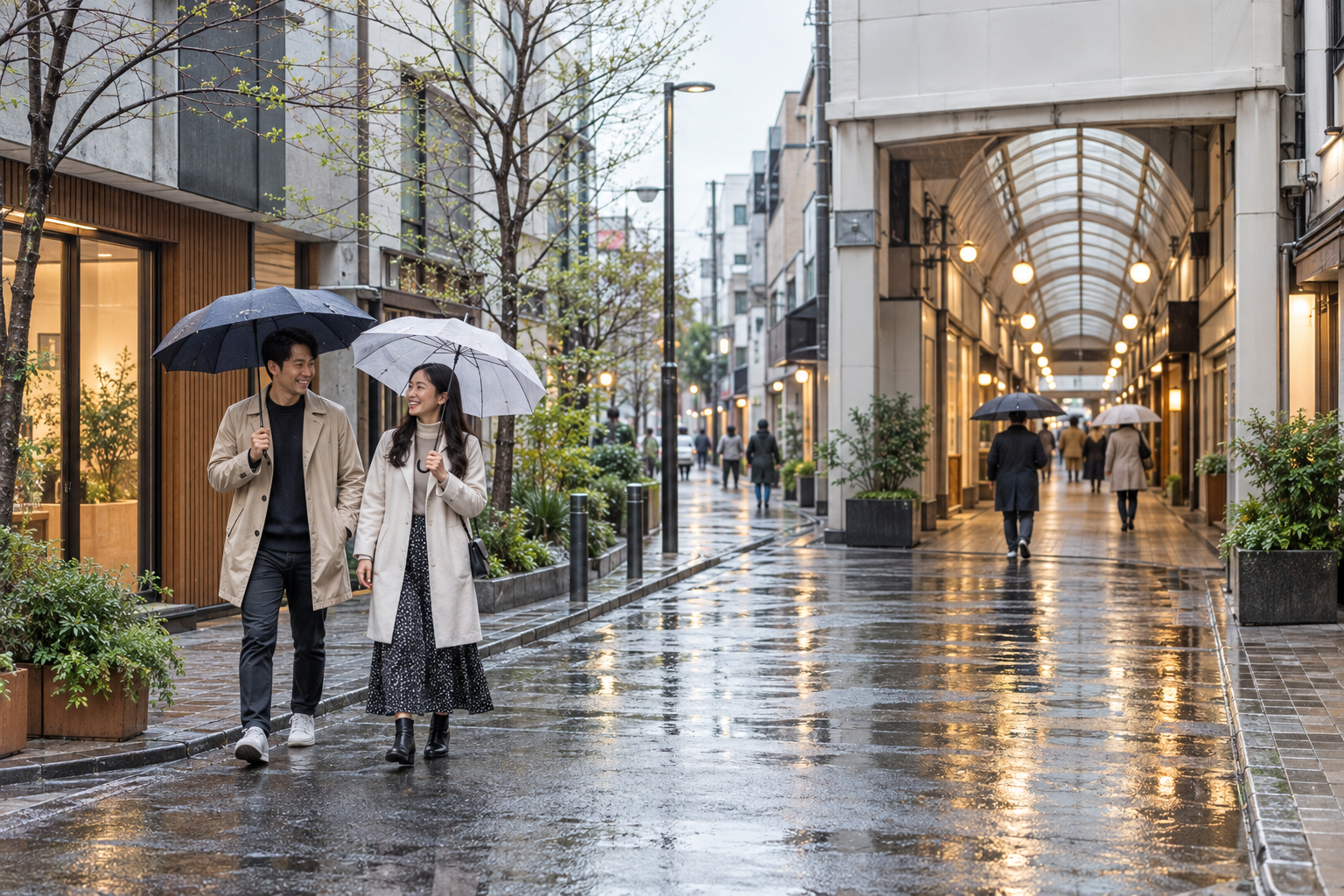
Tokyo's March precipitation normal is 116.0 mm, more than double the February normal in the same JMA table. That comparison does not prove that your March dates will be wet. It does justify a plan that can absorb rain without losing an entire day.
Build each important day from three blocks:
- Weather-sensitive block: a garden, long neighborhood walk, riverside route, outdoor viewpoint, or architecture photography.
- Weather-resistant block: a museum, gallery, shopping complex, indoor cultural attraction, long meal, or another verified indoor activity.
- Connector: a short, simple transfer between them, ideally within the same district or along one straightforward rail corridor.
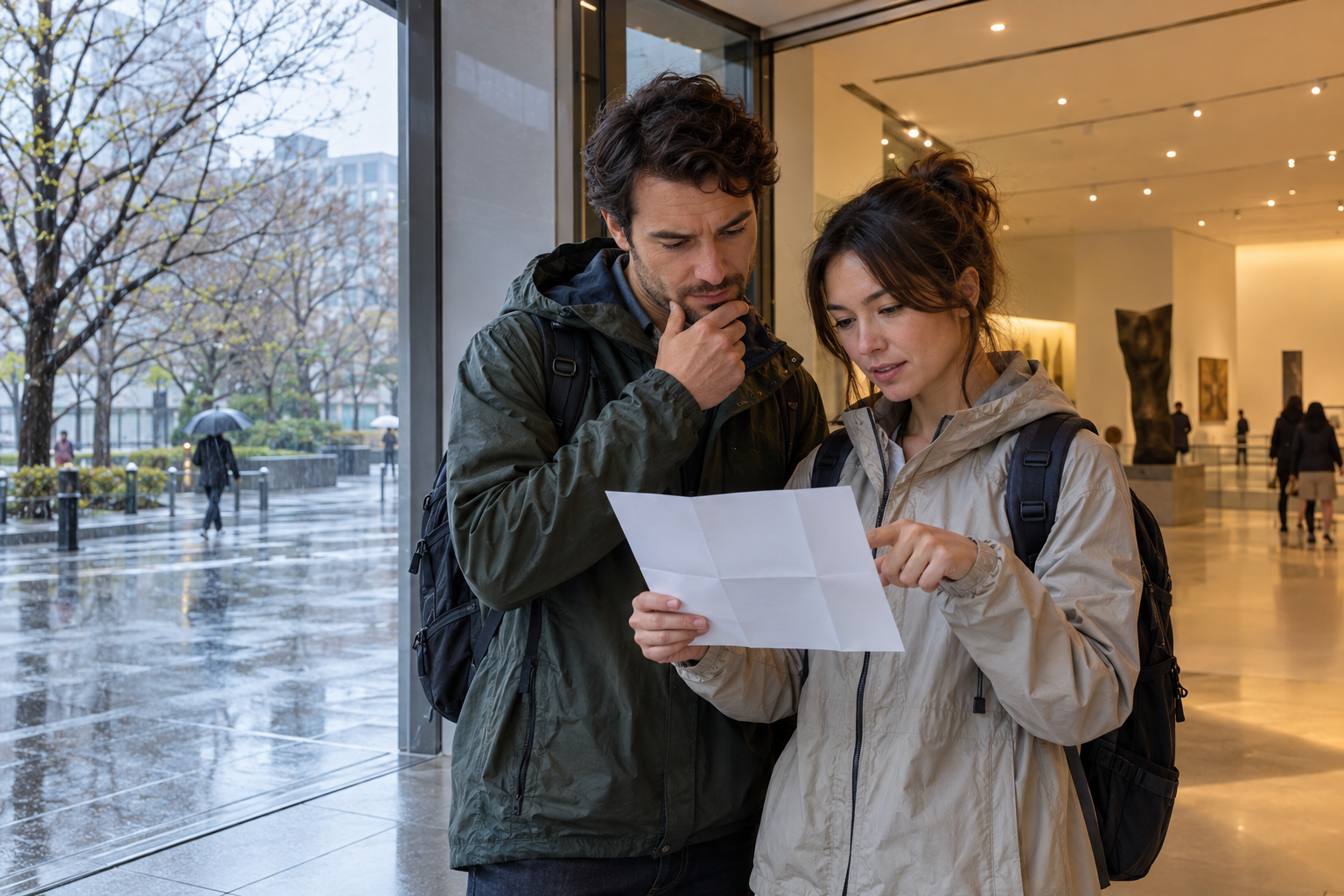
On a dry forecast, use the outdoor block first or during the most suitable light. On a wet forecast, reverse the order or move the outdoor block to another day. This is more resilient than creating one “sunny itinerary” and a completely separate “rainy itinerary” on the other side of Tokyo.
When an umbrella is enough
A compact umbrella may be practical for light city rain when wind is limited and the route stays close to stations. It does not solve wet shoes, exposed queues, or a long garden route. Check the live wind and precipitation forecast, not just a rain icon.
When to use the Plan B immediately
Use the indoor block first when an official warning or advisory, strong wind, persistent rain, or a venue notice makes the outdoor plan poor value. Do not wait until you are already at an exposed site to decide. Recheck the attraction itself as well as transport: normal rail service does not guarantee that every outdoor feature is open.
Keep the backup geographically honest
A backup that requires a long cross-city transfer is a second itinerary. Choose a district with several compatible options and verify the opening day, last entry, reservation method, and temporary notices. The Tokyo Area Guides and Tokyo Area Map can help you keep the day compact; live venue and operator pages still control the final decision.
Cherry blossoms: do not turn a season into a fixed appointment
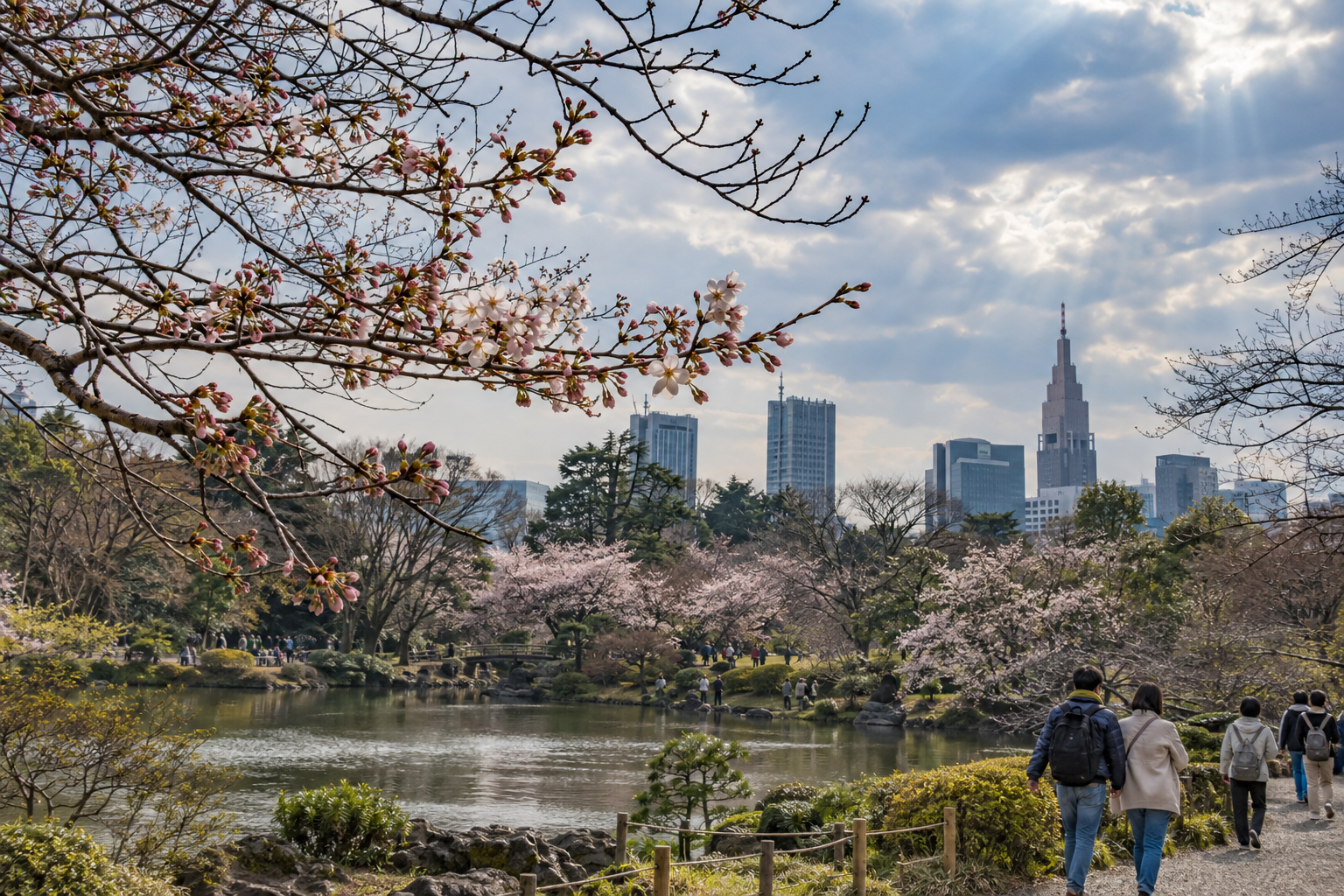
JNTO's March guide says warmer parts of Japan begin to welcome cherry blossoms in late March and that Tokyo can generally see blossoms around the end of the month. The same official page says timing varies from year to year. This is broad seasonal context, not a Tokyo 2027 forecast.
As checked on September 28, 2026, JNTO's live blossom forecast page was titled “Spring in Japan: Cherry Blossom Forecast 2026” and displayed 2026 forecast information. It also stated that forecasts are subject to change because of weather. This guide therefore does not publish a 2027 first-bloom date, full-bloom date, or ideal viewing day.
Use this boundary by part of the month:
- Early March: plan a good Tokyo trip without making ordinary cherry blossoms the condition for success.
- Mid-March: watch for a genuinely dated 2027 forecast, but do not rebuild the route around one early release.
- Late March: use the newest forecast and live local condition reports, then choose the outdoor day close to use.
Do not confuse first bloom with full bloom, and do not assume one observation point describes every park or variety. Rain, wind, temperature, tree variety, and local exposure can produce different conditions across the city.
This article stops at the clothing and day-order decision. For booking strategy, forecast stages, regional fallbacks, and the difference between first bloom and full bloom, use Japan Cherry Blossoms 2027: Booking & Plan B. For an actual viewing day, follow the current official forecast and the dated update from the specific place.
Update label — forecast-dependent: Recheck the issue year, publication date, update date, and whether a number means first bloom or full bloom. A 2026 table is not a 2027 forecast.
March 21–22, 2027 holiday checkpoint
Japan's Cabinet Office lists:
- March 21, 2027: Vernal Equinox Day
- March 22, 2027: a holiday under Article 3, paragraph 2 of the National Holidays Act
March 21 falls on Sunday in 2027, so March 22 is the substitute holiday. Treat the two dates as a planning checkpoint, not as a universal closure or crowd prediction.
For any important venue on March 21 or 22:
- Open the venue's dated official calendar.
- Confirm opening hours, last entry, reservation requirements, and temporary closures.
- Check whether tickets are timed, limited, or changeable.
- Check the actual transport operator used by the route.
- Save one nearby alternative that does not depend on the same ticket or schedule.
Do not infer that every museum closes, every shop opens, or every train uses a special timetable. The national-holiday list proves the dates and legal status. It does not prove how a particular business, attraction, or transport service will operate.
If blossoms are also a priority, keep the holiday question and the bloom question separate. A holiday may affect booking or venue operations. It does not make blossoms open earlier or guarantee better viewing.
A same-area Plan B
The useful Plan B preserves the reason for the day while removing the fragile part.
| Original priority | Keep | Change if the evidence weakens |
|---|---|---|
| Long spring walk | The chosen district and lunch | Shorten the walk; add a verified indoor attraction nearby |
| Garden or blossom stop | The flexible time block | Move it to the most suitable forecast day; use a non-flower activity if live conditions disappoint |
| Outdoor viewpoint | The neighborhood | Use an indoor cultural or shopping stop if wind, visibility, or operations are poor |
| Holiday timed ticket | The district and transport route | Use an unticketed or flexible option if inventory or hours do not fit |
| Photography day | The subject or area | Use covered streets, indoor architecture where photography is allowed, or move the exposed session |
A practical Tokyo day might look like this:
- Start in one district with both outdoor and indoor value.
- Use the most suitable live weather window for the outdoor priority.
- Take lunch indoors and recheck rain, wind, energy, and venue notices.
- Move to the saved indoor option without crossing the city.
- Keep the evening on the same rail corridor.
This structure also helps when blossoms are earlier, later, or less impressive than expected. You are not replacing the whole day. You are replacing one weather- or bloom-dependent block.
Examples of valid triggers
- The JMA forecast shifts the driest window.
- A warning or advisory affects the planned outdoor period.
- The venue posts a closure, shortened schedule, or admission change.
- A dated local update shows the flower condition is not worth a long detour.
- The March 21–22 holiday calendar makes the timed option unavailable.
- Your energy, mobility, or cold tolerance makes the exposed plan a poor choice.
The last trigger matters. A Plan B is not only for official disruption. It is also permission to choose the better day when the original plan no longer serves the traveler.
The 7-day, 72-hour, and morning-of routine
About 7 days before the outdoor priority
- Open the JMA one-week forecast for Tokyo.
- Confirm that any blossom forecast or condition page actually refers to 2027.
- Check the official calendar for the exact venue.
- Save one indoor option in the same district.
- Identify the transport operator for the actual route.
- Review the cancellation or change terms for any dated booking.
About 72 hours before use
- Compare the newer forecast with the original plan.
- Put the longest outdoor block in the most suitable window.
- Check wind as well as temperature and rain.
- Recheck bloom condition only if flowers affect the decision.
- Confirm holiday hours or ticket inventory for March 21–22 plans.
On the morning
- Check current JMA information and any warnings or advisories.
- Check the venue and relevant operator notices.
- Wear the full layer system or put the removable piece in the day bag.
- Carry rain protection when the live forecast supports it.
- Switch blocks early if the official information has changed.
The goal is not to predict March months in advance. It is to make one small decision easy on the day: which block goes first, which layer comes off, and where you go if the outdoor plan loses value.
Official sources used
- JMA climate normals for 1991–2020
- GO TOKYO: Tokyo in March
- GO TOKYO: Weather and geography
- JNTO: Japan in March
- JNTO: Cherry blossom forecast
- Cabinet Office: 2027 national holidays
- JMA forecast services
FAQ
Is Tokyo cold in March?
It can feel cold, especially in the morning, evening, shade, or wind. JMA's 1991–2020 March normals for Tokyo are 9.4°C mean, 14.2°C daily maximum, and 5.0°C daily minimum. Use those for broad packing, then adjust to the live forecast.
What coat should I wear in Tokyo in March?
A wind-resistant coat or jacket over a removable sweater, cardigan, or light fleece is a practical starting point. Early March and cold-sensitive travelers may need the warmer version; a mild late-March afternoon may allow you to remove the mid-layer.
What should I pack for rain in Tokyo in March?
Pack comfortable closed shoes with useful grip and room for a compact umbrella or light rain shell. The March precipitation normal is 116.0 mm, but it cannot tell you which dates will be wet. Follow the live forecast.
Is early March different from late March in Tokyo?
Yes for planning emphasis, but neither period has guaranteed weather. Early March deserves a more winter-ready layer set. Late March may offer milder afternoons, but mornings, evenings, rain, and wind can still require an outer layer.
Will cherry blossoms be open in Tokyo in March 2027?
No exact date is verified here. JNTO gives late March as broad seasonal context for warmer areas including Tokyo and says timing varies by year. Check a dated 2027 forecast and current local conditions closer to travel.
Is the 2026 cherry blossom date useful for 2027?
Only as historical context, not as a 2027 prediction. As checked on September 28, 2026, the cited JNTO forecast page still displayed 2026 information. Confirm the issue year and update date before using any exact number.
Are March 21 and March 22 holidays in Japan in 2027?
Yes. The Cabinet Office lists Vernal Equinox Day on March 21 and a substitute holiday on March 22. Check each venue and transport operator separately because the holiday list does not establish specific hours, closures, or ticket availability.
Should I reserve every March activity in advance?
No. Reserve truly date-critical items after reviewing their change and cancellation terms, but keep at least one flexible half-day. Avoid linking every outdoor or blossom-dependent activity to a non-changeable booking.
What is a good rainy-day Plan B in Tokyo?
Choose a verified indoor attraction, museum, gallery, shopping complex, cultural activity, or long meal in the same district as the outdoor plan. Confirm opening day, hours, admission rules, and temporary notices on the official page.
When should I recheck the Tokyo forecast?
Check the JMA one-week forecast about seven days before the outdoor priority, review it again around 72 hours before use, and check current information and warnings on the morning. Recheck the venue and transport operator at the same time.
Last checked: September 28, 2026 JST. Climate normals and past-year figures are not a March 2027 forecast. General blossom seasons and prior-year tables are not exact 2027 bloom forecasts. Recheck weather, warnings, transport status, venue operations, tickets, and blossom updates before travel. Field evidence status: not applicable; no firsthand visit or observation is claimed.
Comments