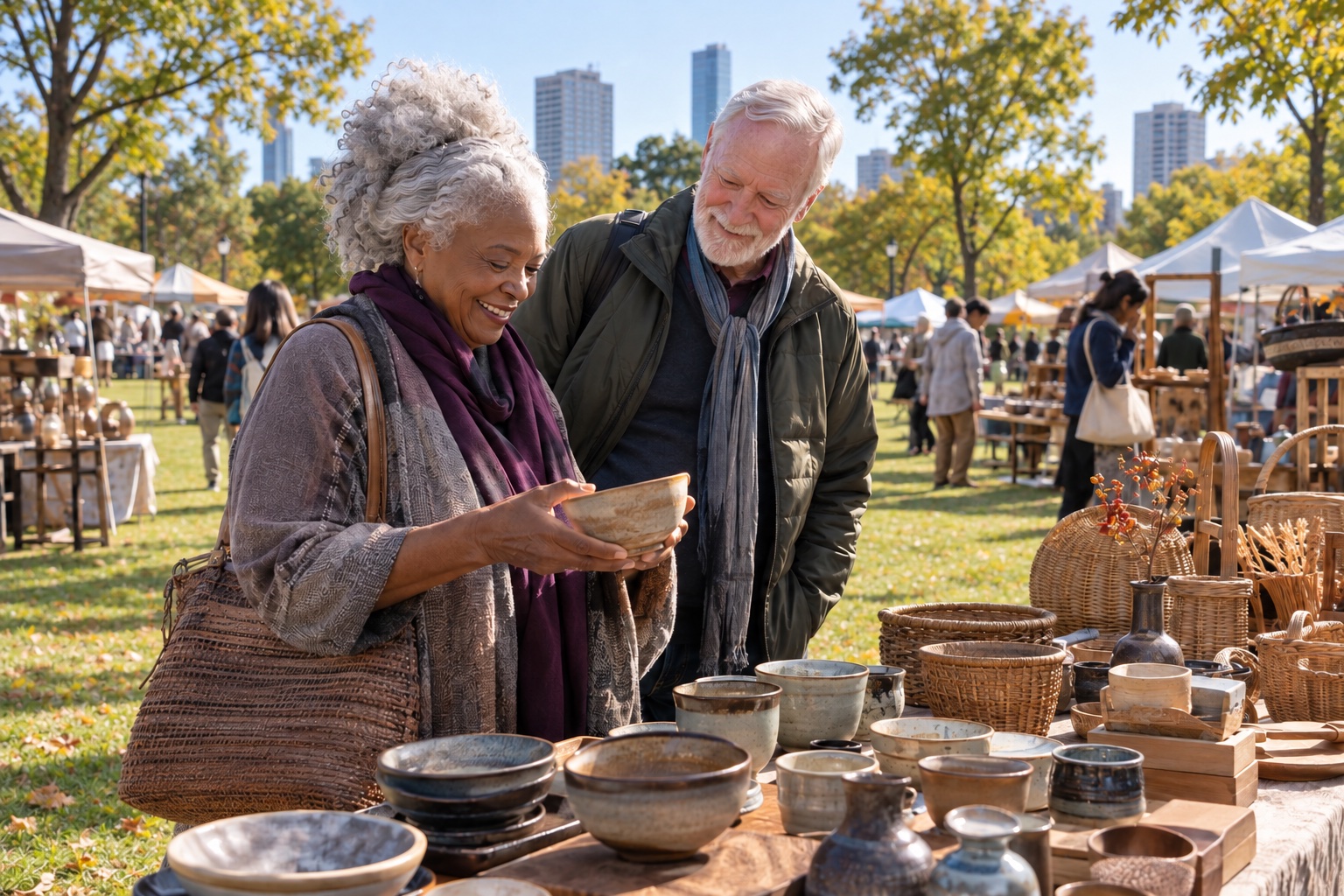
Tokyo Nominoichi Autumn 2026 runs October 31–November 3, from 9:30am to 4:30pm, at Yume Hiroba in Showa Kinen Park, Tachikawa. Choose October 31 or November 1 for Anko Fes (Japanese sweet-bean sweets) and the children’s market; November 2 or 3 for Komugi Fes (bread and baked goods) and the student market. Adult admission is ¥1,800 in advance or ¥2,300 at the gate. Walk from Tachikawa Station’s North Exit toward Akebono Entrance. The market is in the park’s free zone, but the event itself requires admission.
Official information checked October 19, 2026. This is a planning guide based on published sources, not a firsthand visit report. See the linked official pages for changes before travelling.
- Choose your day before buying a ticket
- Tickets: compare the final cost and bring the right ticket
- Find Akebono Entrance, not just “Showa Kinen Park”
- Market admission and park admission are different
- Plan a few stalls, then leave room to browse
- Cash, weather and carrying purchases
- Frequently asked questions
- Official sources
Choose your day before buying a ticket
Searching for a “Tokyo flea market” can leave you with dates, a park name, and little help choosing a day. Tokyo Nominoichi is a specific ticketed event: use the Japanese name 東京蚤の市’26 AUTUMN when checking listings. Its four days share a market setting, while the extra food and young sellers’ sections change halfway through.
| Date | Food event | Young sellers’ market |
|---|---|---|
| Saturday, October 31 | Anko Fes | Children’s market |
| Sunday, November 1 | Anko Fes | Children’s market |
| Monday, November 2 | Komugi Fes | Student market |
| Tuesday, November 3 | Komugi Fes | Student market |
The organizer’s outline and park event notice confirm the October 31–November 3 dates and daily hours. For the children’s and student sections, the organizer’s dedicated announcement confirms the same split. These labels describe the sellers: the children’s market has primary-school stallholders; the student market includes high-school through graduate-level students. They do not mean adults cannot browse.
Our recommendation is to choose by your main interest, then check individual stall dates and the stage program. Monday is a possible fit for a bread-focused itinerary; it is not a promise of short queues. We have no verified waiting-time data for any of the four days.

Tickets: compare the final cost and bring the right ticket
The official ticket page lists these standard options. Food and shopping are separate purchases.
| Option | Listed price | What to prepare |
|---|---|---|
| Advance, via e+ | ¥1,800 | Date-specific paper ticket issued at FamilyMart |
| Same-day, at the venue | ¥2,300 | Cash; sales scheduled from 9:30am |
Check the final purchase total: the organizer lists ¥220 + ¥165 in card-payment fees, which would make ¥1,800 + ¥385 = ¥2,185, and no fee for convenience-store payment. However, the e+ November 1 listing displays “fees ¥0.” The checked pages do not resolve that difference. Budget for fees and confirm the amount in your chosen checkout; ¥2,185 is a calculation from the organizer’s wording, not a verified checkout price.
Print before travelling to the venue. An order email is not the paper ticket described in the event’s instructions. Choose the date carefully: voluntary cancellations and date changes are not accepted. There is no multiday pass. A separate members’ ticket uses Tegamisha membership points; it is not another ¥1,800 cash option.
Travelling with a junior-high-school child? The ticket page and outline’s main price note say junior-high pupils and younger enter free with a guardian. However, the outline’s age FAQ says junior-high pupils and older need tickets. This conflict remains unresolved in the checked pages. Confirm your child’s category with the organizer before purchasing; do not rely on a simple age cutoff in a third-party listing. Primary-school children and younger, accompanied by a guardian, are free under both statements.
If e+ registration does not work overseas
Allow time to try the official purchase flow before your intended day. e+ support identifies overseas telephone numbers among possible reasons phone authentication fails. This does not establish whether your particular account or card will work. An event listing on e+ also does not prove an English-language checkout is available.
If you cannot complete purchase, use the ¥2,300 cash gate ticket as a fallback, subject to availability. Check the organizer’s latest notice before setting out: it warns that same-day sales may be restricted or stopped. A train journey to Tachikawa is not a reservation. Avoid building an unchangeable onward schedule around an unconfirmed ticket.
Find Akebono Entrance, not just “Showa Kinen Park”
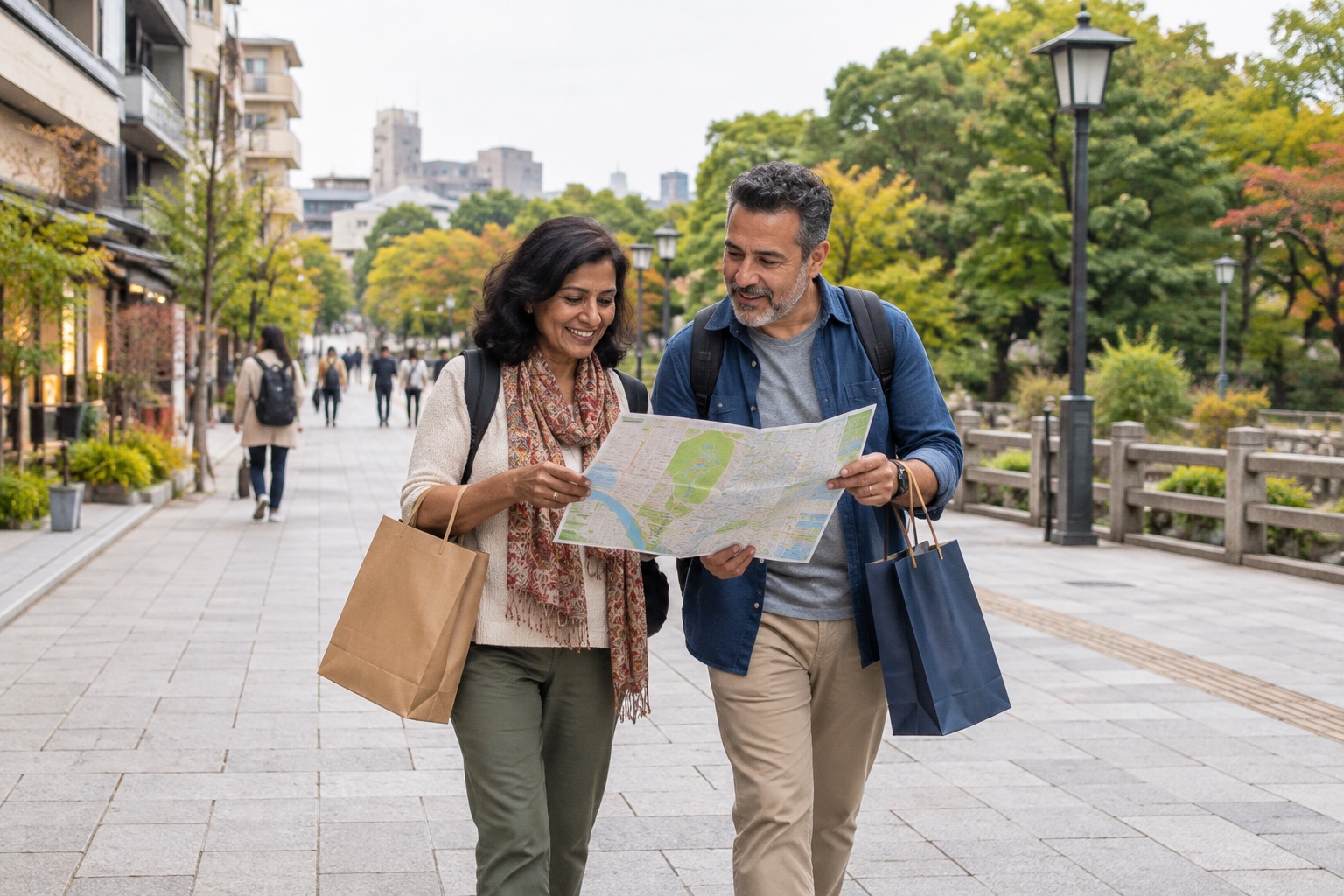
For this event, a generic park search is an incomplete destination. Save みどりの文化ゾーン ゆめひろば and あけぼの口 on your phone. The park’s official access page distinguishes Akebono Entrance from the paid-area gates.
- Take a train to JR Tachikawa Station and follow signs for the North Exit, 北口.
- Set your walking destination to Akebono Entrance, あけぼの口. The park estimates about 10 minutes from Tachikawa’s North Exit.
- Enter the free Midori no Bunka Zone and follow the event’s entrance signs toward Yume Hiroba.
If arriving on the Tama Monorail, the park gives roughly eight minutes from Tachikawa-kita Station’s Park Exit. By comparison, it lists roughly 18 minutes from JR Tachikawa to Tachikawa Gate, and two minutes from Nishi-Tachikawa Station to Nishi-Tachikawa Gate. Those are different gates; the shortest walk to a park gate is not automatically the route to this market.
Use JR East’s Tachikawa station map for your platform-to-exit route, then the park map for the outdoor walk. Keep “North Exit” and “Akebono Entrance” as separate steps. Neither an outdoor walking estimate nor a station map includes your time spent getting off the train, finding companions, or waiting for entry.
The organizer warns that buses from Tachikawa’s North Exit do not stop at Akebono Entrance. If your navigation app suggests a bus, verify the actual stop before boarding. Walking is the organizer’s recommendation for this approach; we have not verified a special event shuttle.
Market admission and park admission are different
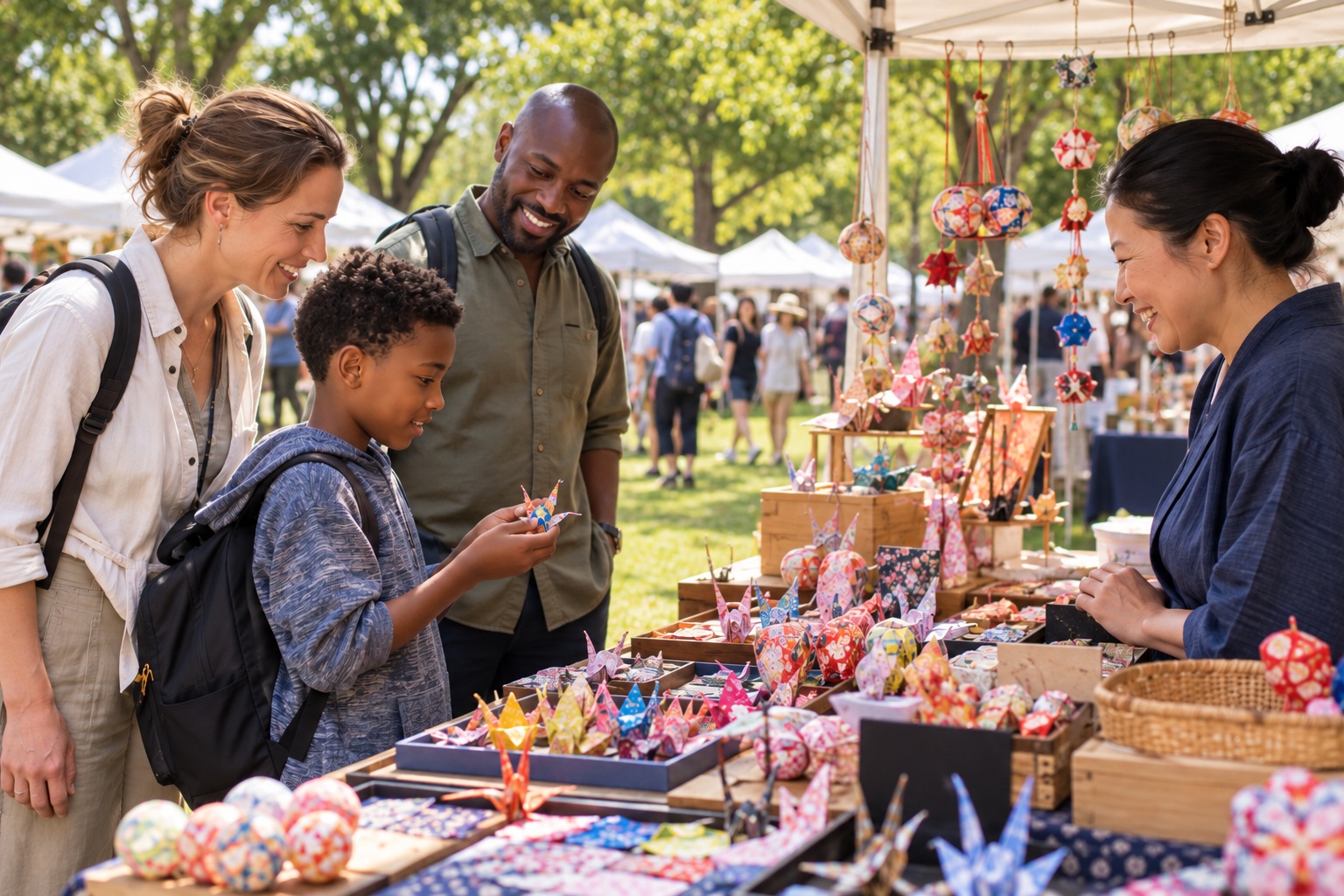
“Free zone” describes the park area, not free access to the ticketed market. You do not need to buy a paid-park ticket simply to reach Yume Hiroba. Conversely, a market ticket does not admit you to the park’s paid area. The official park map helps keep the two areas separate.
If you also want to explore the paid park, its standard admission is ¥450 for high-school students and older, ¥210 for people aged 65 and over, and free for junior-high students and younger. These are park prices. They do not resolve the market’s conflicting junior-high ticket wording, and special programs may have separate conditions.
For an adult paying the regular park rate, the arithmetic is ¥2,300 + ¥450 = ¥2,750 for gate admission to both, before transport, food or shopping. Treat a park visit as an optional second activity rather than buying both tickets automatically. Keep the market and park amounts separate when comparing plans with companions. If you want both, leave the market early: the ordinary paid park closes at 4:30 p.m. in November, the same time as the market. Do not plan that visit after the market ends.
Plan a few stalls, then leave room to browse
The official program includes vintage goods, secondhand books, clothes, paper goods, crafts, food, workshops and music. The October 12 map announcement describes 350 exhibitors and provides a downloadable venue map. That is a useful reason to choose a short list, rather than trying to cover every booth.
Before leaving your accommodation, save the map and mark three priorities: one item category, one food stop, and one performance if it interests you. This is our suggested browsing method, not an official itinerary. Start with the reason you chose that day, then explore nearby booths. Keep the map available offline rather than depending on opening a large file while standing in an aisle.
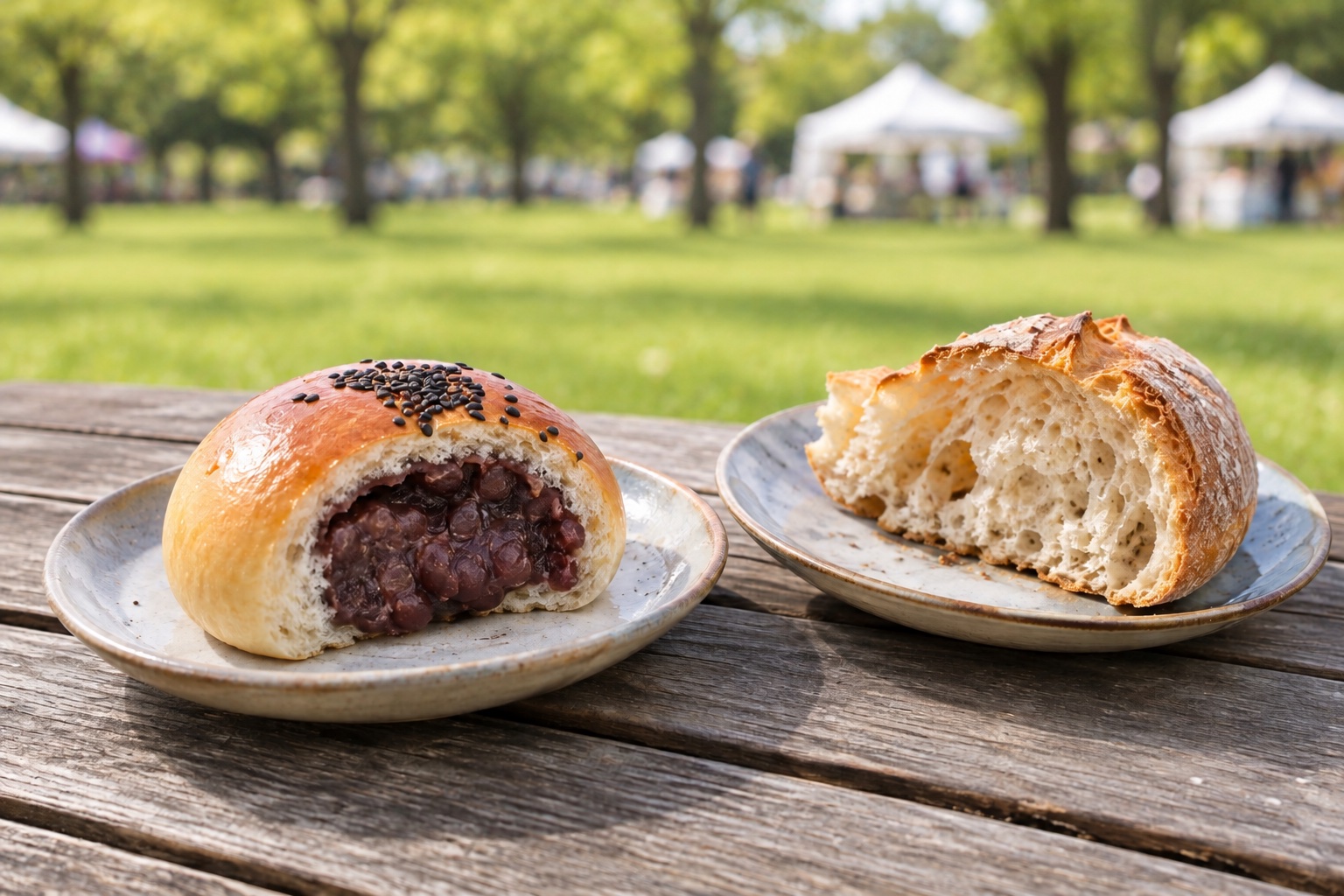
The Anko Fes list, for example, marks Café Irodori for October 31 only and あんこ屋Suzu for November 1 only. In the Komugi bread-and-doughnut list, Compain is marked November 2 only and 薪馬 November 3 only. These examples show why the food-event name alone is not enough to choose a day. Recheck the individual listing; an announced appearance does not guarantee an item will remain in stock.
Cash, weather and carrying purchases
Bring cash for the gate fallback and check each seller’s payment options before ordering. The organizer says payments are handled by individual booths and warns that connectivity may be difficult. A card in your wallet is therefore not a reliable substitute for a cash plan.
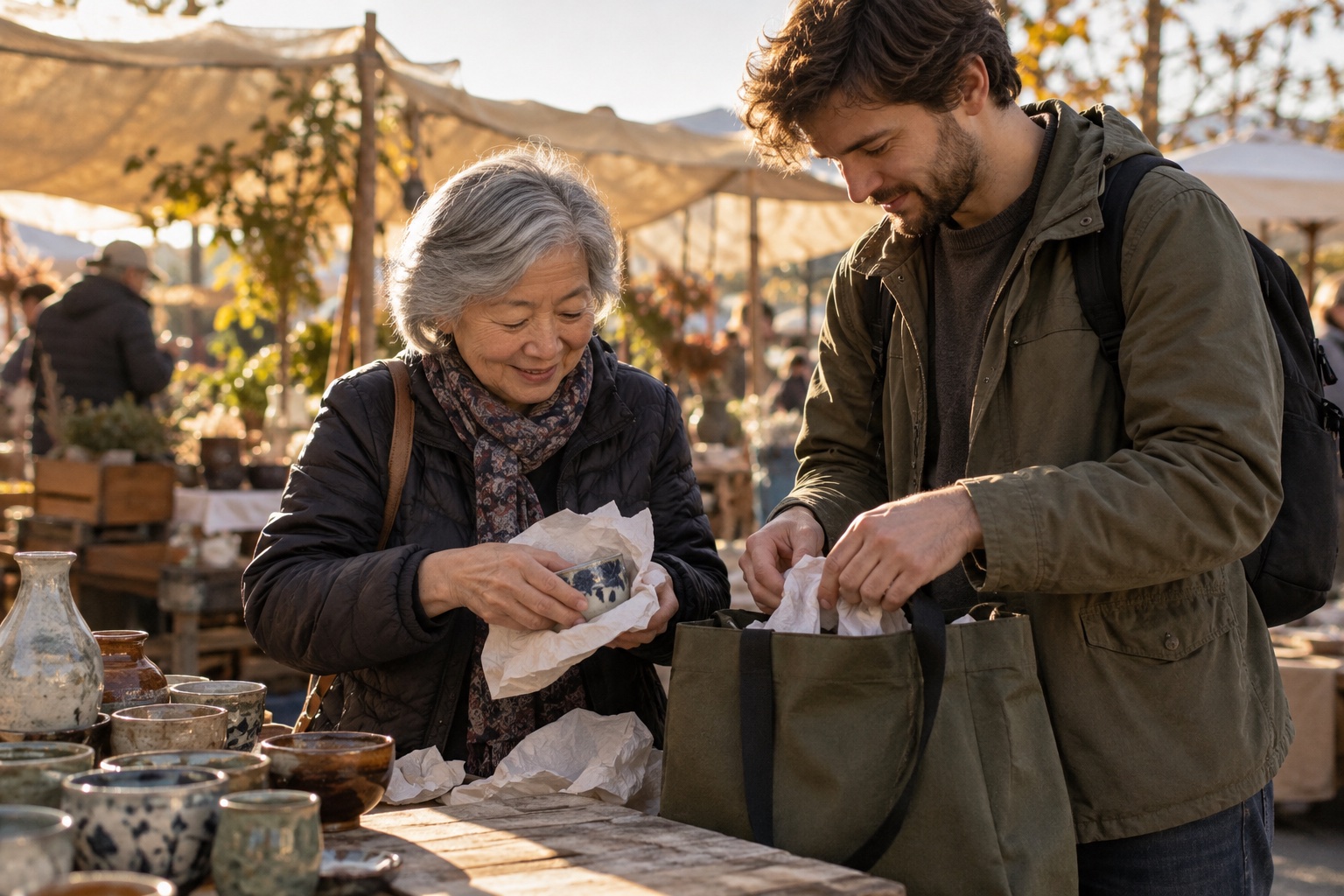
Our packing suggestion is a comfortable bag, protective wrapping for fragile purchases, a charged phone, and weather-appropriate layers and rain gear. Check the forecast shortly before leaving. The event is scheduled to continue in ordinary rain; cancellation notices are to appear on official channels by 7am that day. Do not treat an illustration in this guide as evidence of actual paths, shelters or weather.
Ask about size, condition and packaging before buying something awkward to carry. Although the outline mentions a baggage service, its linked Sagawa service page returned 404 when checked, and the delivery-service category displayed “Coming Soon.” We could not verify storage prices, parcel limits or international shipping. Ask the information desk before relying on any of these services; do not buy furniture on the assumption it can be sent to your overseas home.
For a manageable visit, keep one fixed departure constraint, such as your dinner reservation, and work backwards with a buffer for returning to the station. We have no measured exit-queue times. If you want to add other dated activities, compare them in the RJG Japan Event Calendar before committing to the day.
Frequently asked questions
Is Tokyo Nominoichi the same as any Tokyo flea market?
No. Search the specific event name, 東京蚤の市’26 AUTUMN, to avoid mixing its ticket and venue details with other markets.
Which days have Anko Fes?
October 31 and November 1. Komugi Fes follows on November 2 and 3; check the day-specific seller examples above.
Can overseas visitors use e+?
Check your own purchase flow early. Phone authentication can fail with an overseas number. Gate tickets are a possible cash fallback, with no availability guarantee.
Can I show my advance-ticket email?
The event describes a FamilyMart-issued paper ticket. Complete collection before arriving; do not assume the confirmation email is admission.
Is a junior-high-school child free?
The organizer’s pages conflict. Confirm directly before buying. The park’s own child-admission rule is a separate matter.
Which station exit should I use?
JR Tachikawa’s North Exit, then walk toward Akebono Entrance and Yume Hiroba. Avoid navigating to a different park gate by mistake.
Do I pay the park fee as well?
Only if you separately visit its paid area. The market is within the free park zone, with its own admission.
Can I visit in rain?
Ordinary rain does not automatically cancel the event. Check official updates on the morning and bring rain gear.
Can I arrange overseas shipping there?
We could not verify it. Confirm the service and full cost before purchasing anything you cannot carry yourself.
Official sources
Checked October 19, 2026. All times are Japan Standard Time.
Comments