- Quick Answer: Five Checks Before You Enter
- Where You May—and May Not—Park
- Camera, Flap and Gate Lots Compared
- How to Read the Fee Without Guessing
- How to Pay Correctly
- Payment Methods Vary by Lot
- Vehicle Size and Ground Clearance
- Safe Exit Sequence
- What If the Plate, Bay or Fee Looks Wrong?
- Plan B: When the Signage Is Unclear
- Frequently Asked Questions
- What is coin parking in Japan?
- How do I know whether a lot uses cameras, flaps or gates?
- Does a displayed maximum fee always cover my whole stay?
- Can I pay with a foreign credit card?
- What number do I enter at the payment machine?
- Can I park in a convenience-store or apartment parking lot?
- When is it safe to drive over a parking flap?
- What should I do if I cannot understand the fee or payment screen?
- Official Sources
Quick Answer: Five Checks Before You Enter
Before driving into a parking space in Japan, check five things:
- Is it public time-based parking? Do not use a monthly space, apartment space, or store parking unless the displayed conditions allow your visit.
- Which system is it? Camera lots use your plate, flap lots use the bay number, and gate lots usually use an entry ticket.
- What exactly is the fee? Read the ordinary rate and the wording attached to any maximum charge.
- How can you pay? Cash, cards, e-money, QR payments and phone payment vary by lot.
- Will the vehicle fit? Check height, width, length, weight and ground-clearance limits when shown.
Photograph the tariff board before parking. At exit, pay by the displayed procedure, confirm that the flap or gate is fully clear, and leave promptly. If the wording is not clear enough to estimate the charge, choose another clearly signed public lot or a reserved parking space.
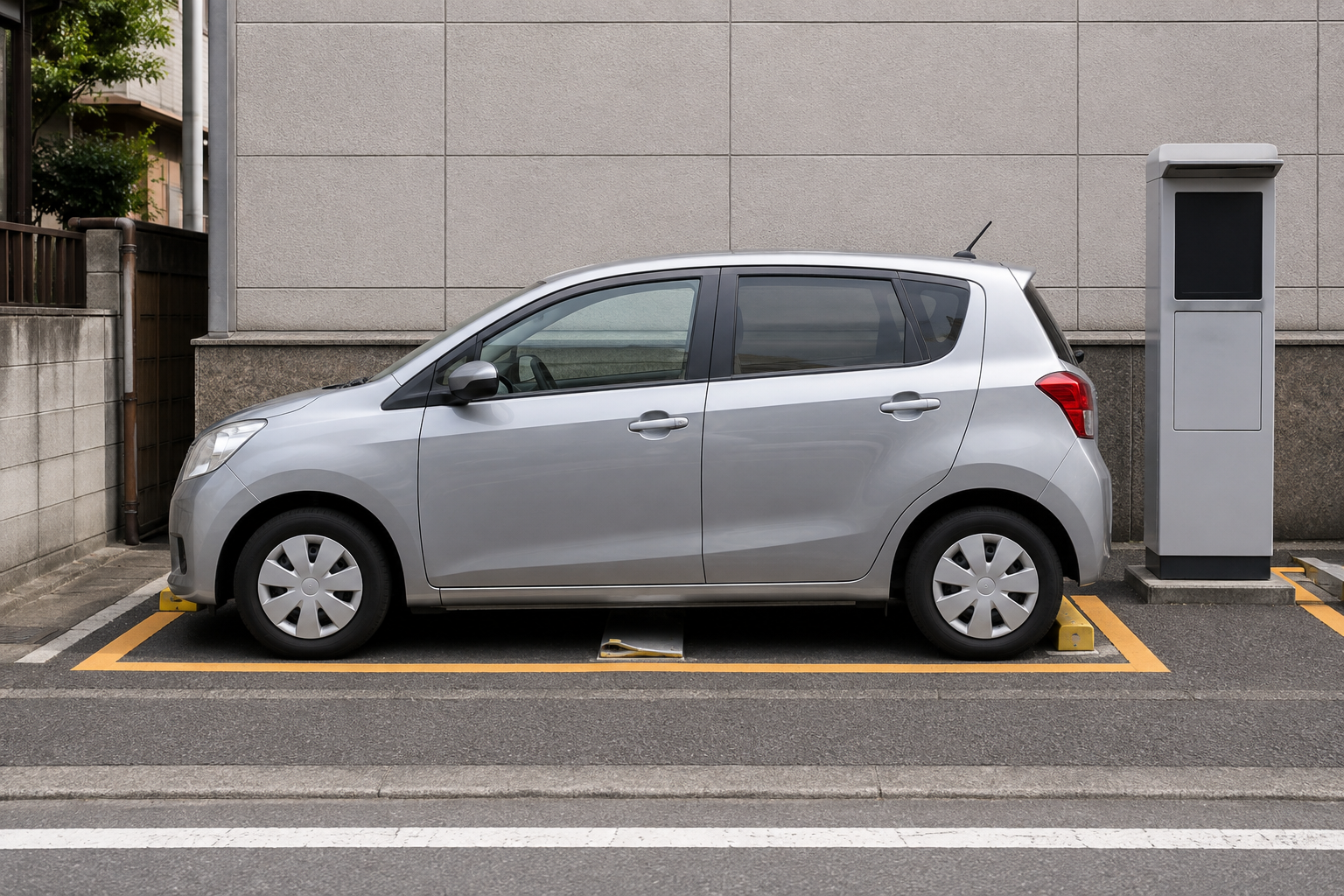
AI-generated illustration: a generic Japanese urban coin-parking lot with an unbranded rental car, lowered flap and payment machine; not a photograph of a specific lot.
Where You May—and May Not—Park
In this guide, coin parking means a time-based public parking lot with a payment system. The name does not mean that every machine accepts only coins. Many machines accept other methods, but the exact options vary.
Toyota Rent a Car's official driving guide distinguishes time-based parking from several spaces that visitors often misread:
- Monthly parking (
月極) is reserved for contracted users. - Apartment or private parking cannot be entered or used without permission.
- Convenience-store parking is for customers while they are using the store; long stays or parking without permission are prohibited.
- Roadside parking meters are a different system with their own marked area and time limit.
Street parking is generally prohibited unless signs, markings or a parking-meter system explicitly allow it. A vacant-looking space is not automatically public parking.
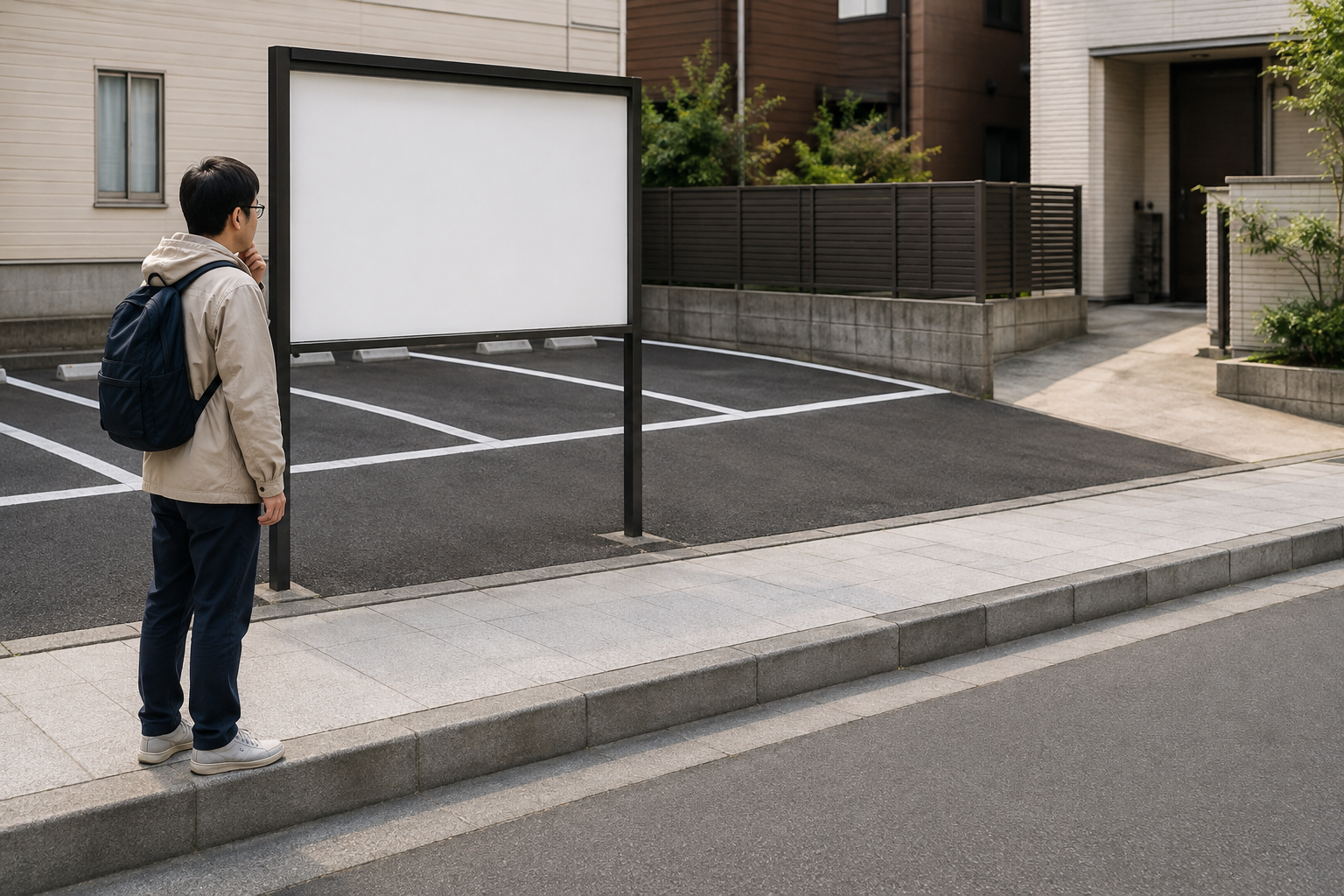
AI-generated illustration: a generic public time-based lot physically separated from a residential driveway; no real operator or location is depicted.
Camera, Flap and Gate Lots Compared
The payment decision becomes much easier once you identify the hardware.
| System | What to save | How time is recorded | Typical exit step |
|---|---|---|---|
| Number-plate camera | Your vehicle plate | Camera records arrival and departure | Select the correct plate at the machine, pay, then drive out |
| Flap or lock plate | Your bay number | Sensor records the car in that bay | Enter the bay number, pay, confirm the flap is down, then leave |
| Gate and ticket | Entry ticket | Ticket records entry; exit machine closes the stay | Insert the ticket, pay, wait for the barrier to rise, then continue forward |
Times' official English guide shows all three systems. Equipment differs between operators and lots, so treat this table as an identification aid, not as a substitute for the instructions at the machine.
Camera lots
A camera records the plate when the vehicle arrives. Before walking away, save the complete plate number. At payment, select the correct plate or vehicle image and check that the displayed parking time makes sense before paying.
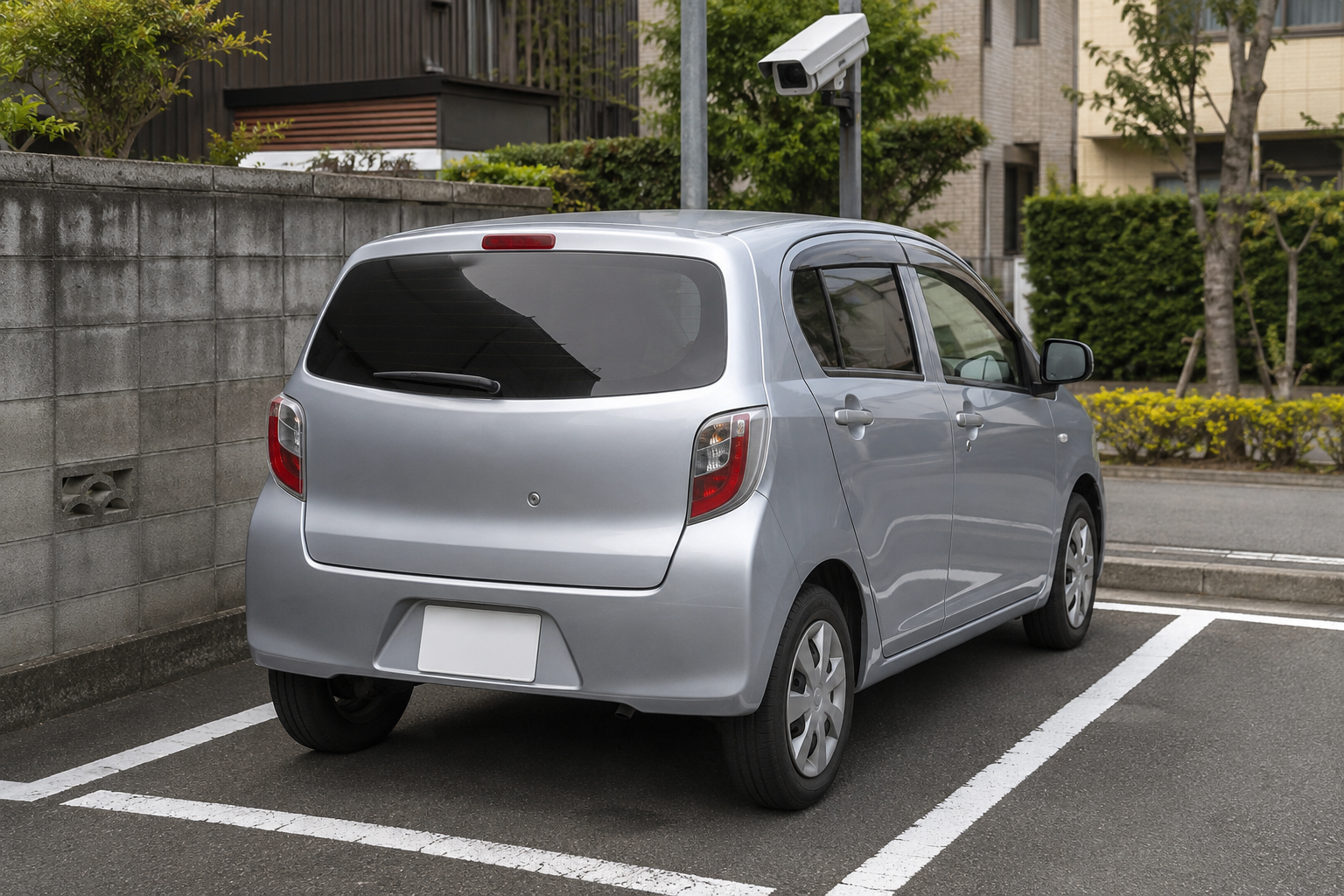
AI-generated illustration: a generic plate-recognition camera above a parked car; plate characters are intentionally obscured.
Flap lots
A flap sits in or near each bay. Times instructs drivers not to enter a bay when its flap is already raised. After the vehicle is parked, the flap rises. At exit, enter the bay number, pay, then physically confirm that the flap is fully down before moving.
Toyota's example adds an important timing warning: after payment, the plate can rise again after a certain period. Finish loading before paying, then leave promptly.
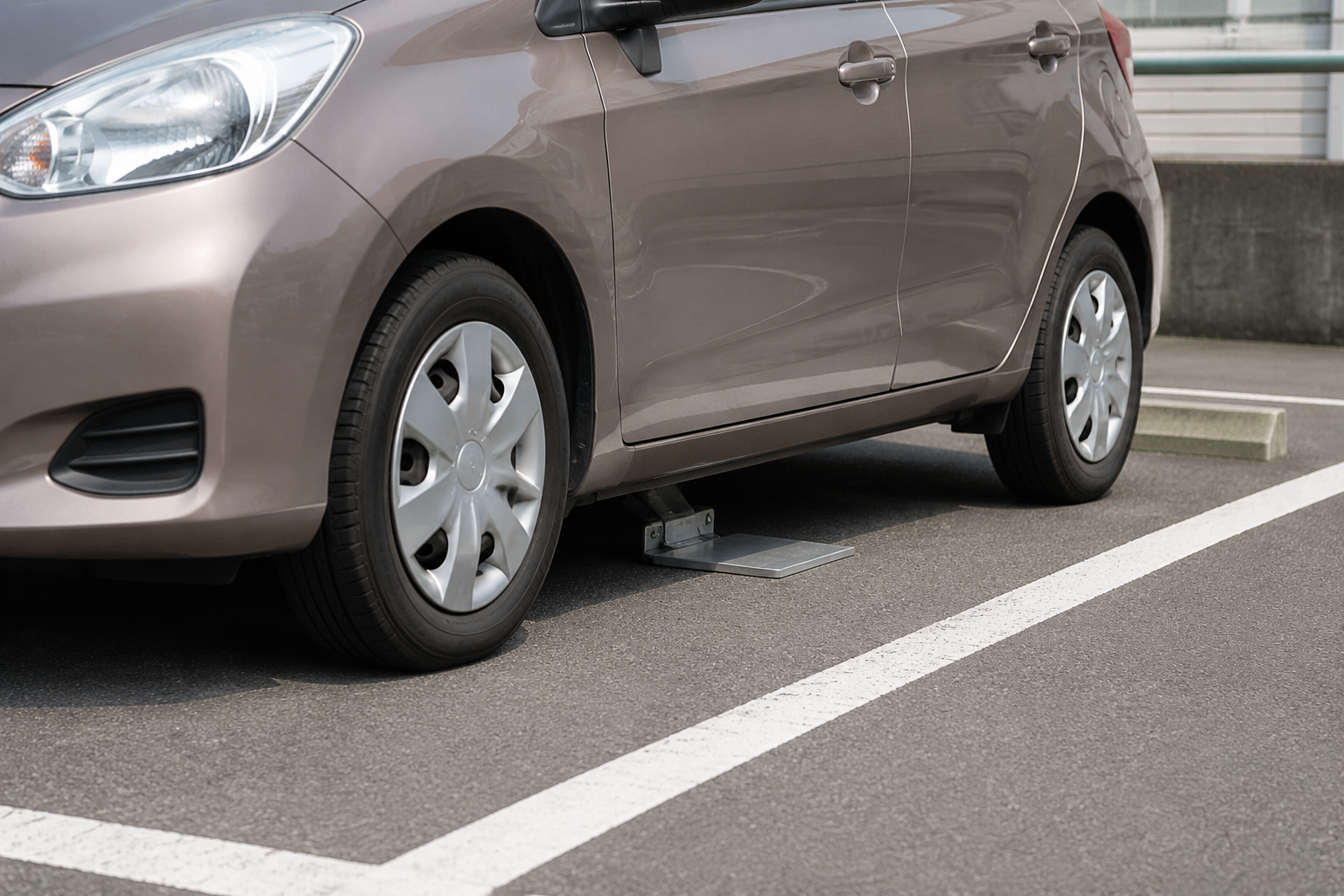
AI-generated illustration: a realistic parking flap fully lowered beneath a marked bay before the car exits.
Gate lots
At a ticketed gate, take the ticket at entry and keep it flat and dry. At exit, insert it into the machine and pay the displayed amount. Times warns drivers not to reverse after payment because the barrier may come down again and prevent exit. Wait until the arm is fully raised, then continue forward.
Some newer gate lots may also use plate recognition. Follow the live instructions rather than assuming that every gate produces a ticket.
How to Read the Fee Without Guessing
The large number on a tariff board can be the maximum charge, the ordinary time rate, a night rate, or a rate limited to certain days. Read the condition attached to it.
Times describes three common maximum-charge patterns:
| Wording pattern | What it usually means | Main mistake to avoid |
|---|---|---|
| Maximum for a fixed number of hours after parking | The cap covers only that stated duration | Staying beyond the duration can start further charging |
| Maximum during a named time band | The cap applies only inside that band | Time outside the band can be charged separately |
| Maximum until 24:00 that day | The cap ends at midnight | Crossing midnight can start a new charge even after a short stay |
Times also states that some lots have no maximum charge. Its maximum-charge policy says maximums repeat, but that is an operator statement: do not transfer it to another company's board. The safest rule is simple—calculate from the exact wording displayed at the lot you are entering.
Before parking, photograph:
- the ordinary rate;
- the maximum-charge amount and its time condition;
- weekday, weekend or holiday differences;
- any event-day or special-rate notice;
- the accepted payment icons;
- the customer-support number and lot ID.
Do not rely on an old map screenshot. Prices, conditions and availability can change.
How to Pay Correctly
Finish loading passengers and luggage before starting payment. Then use the identifier required by the system.
At a camera lot
- Enter or select the vehicle plate.
- Confirm that the displayed vehicle and parking time match your stay.
- Pay by one of the methods shown at that machine.
- Take the receipt when offered.
- Return to the car and leave by the marked exit.
At a flap lot
- Enter the bay number—not the plate number.
- Confirm that the displayed parking time and fee are plausible.
- Pay and take the receipt.
- Return to the correct bay.
- Look underneath and confirm that the flap is completely down.
- Leave promptly without turning over the mechanism.
At a gate lot
- Keep the entry ticket until departure.
- At the exit machine, insert the ticket as shown.
- Pay the displayed fee.
- Wait for the barrier to rise fully.
- Continue forward; do not reverse into the gate cycle.
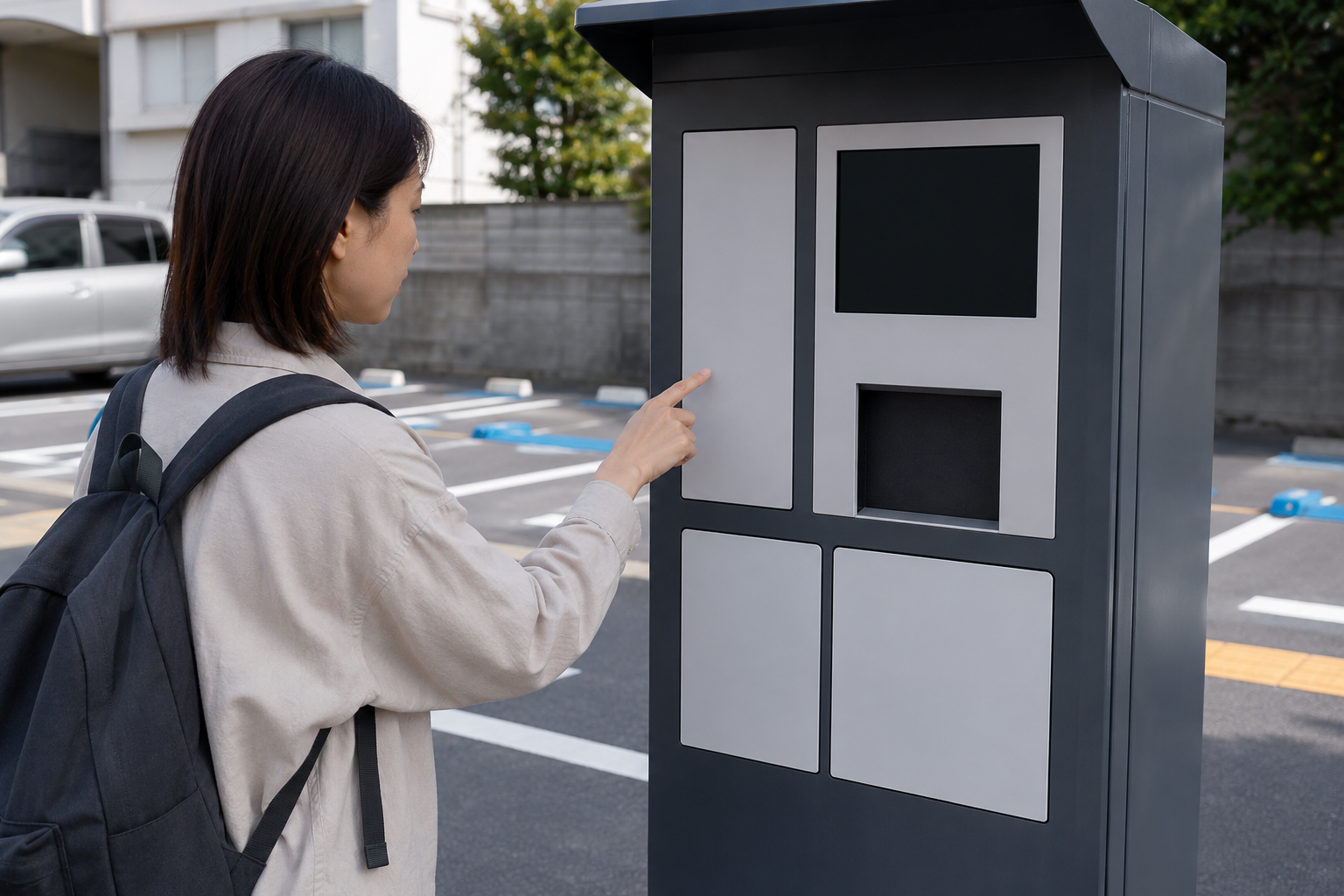
AI-generated illustration: a traveler at a generic payment machine with a deliberately blank screen; it does not reproduce an official interface.
Payment Methods Vary by Lot
Never make one payment method your only exit plan. Times' current payment page lists cards, electronic money, QR payments, smartphone payment and cash, but repeatedly notes that availability varies by parking facility. Toyota's example says some coin-parking machines accept cards; it does not say all do.
Carry Japanese yen and one physical card. Before entering, check the symbols on the actual tariff board or machine. A phone wallet is useful only when that specific lot supports it and your device can complete the transaction.
If the machine will not accept your payment:
- Do not force the car over a raised flap or through a closed barrier.
- Recheck the bay number, plate or ticket.
- Read the machine's payment-method area.
- Use the support number and lot ID photographed at entry.
- Keep any receipt or error slip.
Vehicle Size and Ground Clearance
Compact rental cars fit many surface lots, but vans, roof boxes, modified vehicles and low-clearance cars may not. Mechanical and tower parking can have tighter limits than open surface parking.
Times publishes dimensions in its operator terms, but it also allows lot-specific limits. The numbers at the entrance to your chosen lot control. Check the rental vehicle's height and width before entering a garage or tower; include roof racks and mirrors where the posted instruction requires them.
For flap lots, avoid a bay when the mechanism is already raised. If the vehicle has low bodywork or an attachment that could contact the lock, choose a gate or camera lot with clear vehicle limits instead.
Safe Exit Sequence
Use this short exit card:
- Load people and luggage.
- Confirm the plate, bay or ticket.
- Pay and take proof.
- Check the physical release: flap down or barrier fully up.
- Leave promptly in the marked direction.
The physical check matters even when the machine says payment succeeded. Conversely, equipment that appears open or lowered is not permission to skip payment. Times' terms require the designated payment process regardless of the state of a lock plate, gate or other equipment.
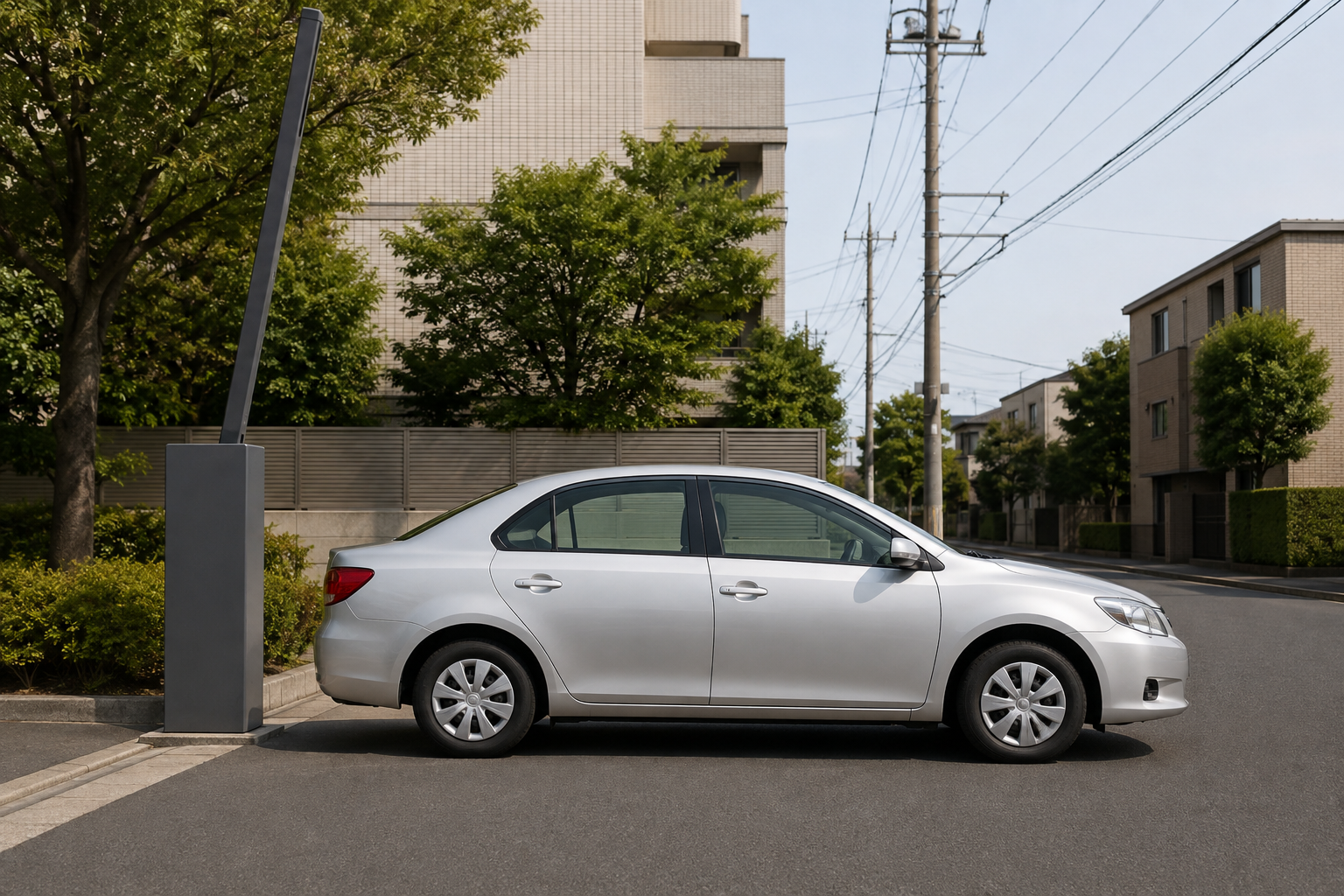
AI-generated illustration: an unbranded rental car leaving only after a generic gate barrier is fully raised; no real lot is shown.
What If the Plate, Bay or Fee Looks Wrong?
Stop before paying if the displayed parking time is impossible, the image is another vehicle, or the fee does not match the photographed conditions.
- At a camera lot, cancel and reselect the complete plate.
- At a flap lot, walk back and verify the bay marking.
- At a gate lot, keep the ticket and use the call button or support number.
- If the board's maximum-charge condition was misunderstood, do not claim that the large number was a universal daily cap; ask the operator to explain the live calculation.
Keep the lot ID, photos and receipt until the rental car is safely returned. Do not move or force parking equipment yourself.
Plan B: When the Signage Is Unclear
If you cannot identify the lot type, calculate the fee, confirm payment, or verify the vehicle limit before entry, keep driving safely and choose another option:
- a clearly signed gate lot;
- a parking facility attached to your hotel, after confirming guest conditions;
- a reserved parking service with the exact address, vehicle limit and booking period;
- public transport for the city-center portion of the trip.
Those extra checks can prevent entry into a private space, an unexpected charge after midnight, or a payment problem at exit.
For the wider driving sequence, use RJG's Driving in Japan guide, expressway toll guide, and gas-station return guide. Use Google Maps in Japan to find candidates, then verify the live entrance and tariff board.
Frequently Asked Questions
What is coin parking in Japan?
In this guide, it means time-based public parking with a payment system. The name does not guarantee coin-only payment; accepted methods vary by lot.
How do I know whether a lot uses cameras, flaps or gates?
Look for a plate camera at the entrance, a lock plate in each bay, or a barrier and ticket machine. Save the identifier that system uses before walking away.
Does a displayed maximum fee always cover my whole stay?
No. It may cover a fixed number of hours, a named time band, or only until midnight, and some lots have no maximum. Read the condition attached to the amount.
Can I pay with a foreign credit card?
Possibly, but do not assume it. Operators state that card and other cashless acceptance varies by lot. Check the actual machine and carry yen.
What number do I enter at the payment machine?
Camera lots usually use the plate, while flap lots use the bay number. Gate lots usually use the entry ticket. Follow the live instructions and verify the displayed stay before paying.
Can I park in a convenience-store or apartment parking lot?
Only under the displayed or owner-authorized conditions. Store parking is generally for customers during their visit; apartment and monthly spaces are not public fallback parking.
When is it safe to drive over a parking flap?
Enter only when the flap is down, and after payment confirm it is fully down before moving. Do not drive over a raised mechanism.
What should I do if I cannot understand the fee or payment screen?
Before entering, choose another clearly signed lot. If already parked, do not force the equipment; recheck the identifier and use the operator's support number with the lot ID.
Official Sources
- Times: How to Use Hourly Parking Facilities
- Times Parking Terms and Conditions
- Times: Maximum Charges
- Times: Charges and Payment Methods
- Toyota Rent a Car: Parking
Last checked: August 27, 2026. Prices, accepted payments, equipment and maximum-charge conditions can change. Confirm the live lot before entering.


Comments