0:00–:–
About this audio
AI-generated English audio summary, reviewed against this article on . The written article is the source of record.
Japan’s summer can feel harder than the thermometer suggests. The air is humid, station transfers can be long, and outdoor lines for fireworks, festivals, theme parks, temples, and train platforms can drain your energy faster than expected.
The good news: Japan sells a lot of small cooling items that are easy for travelers to buy on the same day. You do not need to pack a full survival kit before you fly. A convenience store, drugstore, 100 yen shop, electronics shop, or clothing chain can often help you get through the next few hours more comfortably.
Quick answer:
- If you feel too hot, start with a cold drink, a short indoor break, and shade.
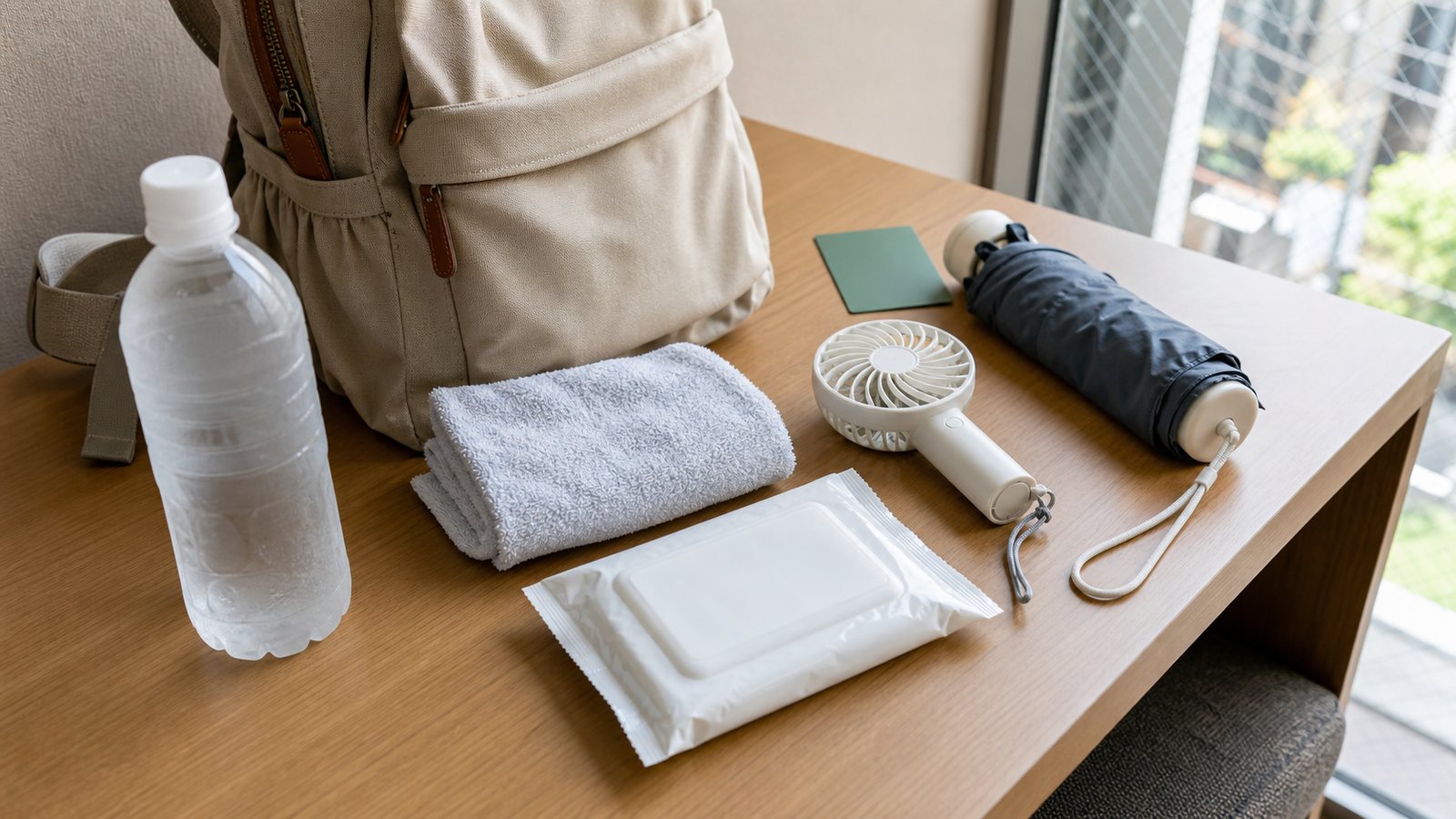
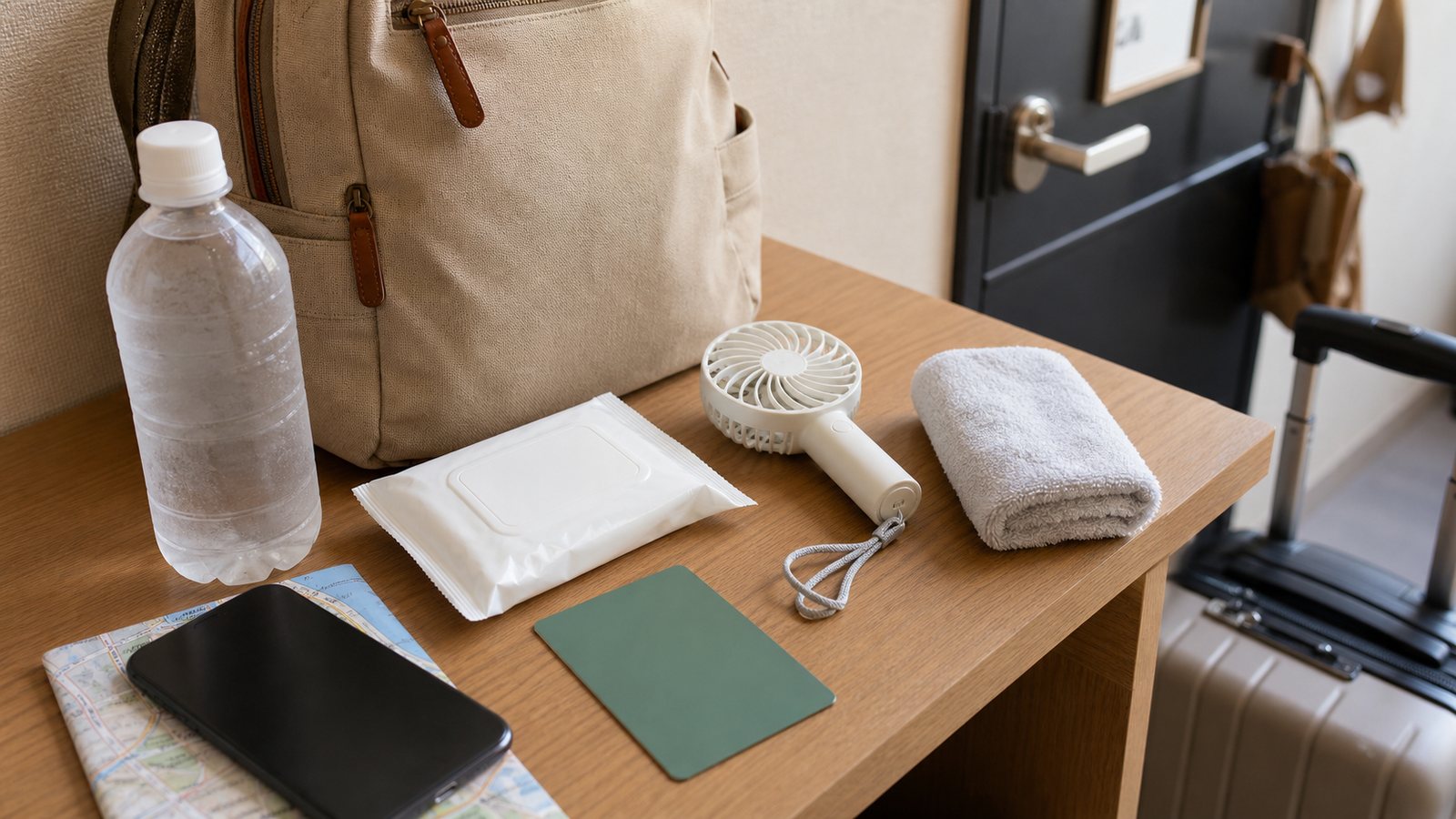
- For a same-day cooling kit, buy body wipes, a small towel, a portable fan, and a sun-protection item.
- Cooling goods help with comfort, but they do not replace rest, water, and getting out of the heat when your body feels wrong.
- Why Japan’s Summer Feels So Hard
- Buy This First: A 15-Minute Cooling Kit
- 1. Cooling Body Wipes
- 2. Cooling Spray or Mist
- 3. Portable Handheld Fan
- 4. Neck Cooling Ring
- 5. Cooling Towel
- 6. UV Umbrella or Compact Sun Umbrella
- 7. Breathable Innerwear or Sweat-Drying Clothing
- 8. Frozen Drinks, Ice Cups, and Vending-Machine Drinks
- 9. Oral Rehydration or Electrolyte Drinks
- 10. Hat, UV Arm Cover, or Light Outer Layer
- Where to Buy Cooling Items in Japan
- Best Cooling Picks by Situation
- Plan Your Place to Return To
- What Not to Rely On
- Heat Safety Notes for Tourists
- Related Reading
- FAQ
- Can I buy cooling wipes at Japanese convenience stores?
- Where should I buy cooling items first?
- Are portable fans normal in Japan?
- Is a sun umbrella normal in Japan?
- What should I buy for summer fireworks?
- Should I buy an electrolyte drink?
- Are cooling rings worth buying?
- Can I use cooling spray on a train?
- What is the cheapest cooling kit?
- What should I do if I feel too hot to continue?
- Sources Checked
- About the Author
Why Japan’s Summer Feels So Hard
Japan’s summer heat is not just about high air temperature. Humidity, direct sun, crowded platforms, underground station transfers, and long walking days can make a normal sightseeing plan feel much heavier.
The Ministry of the Environment’s Heat Illness Prevention Information site uses WBGT, or Wet Bulb Globe Temperature, as a heat stress index. On that site, the guideline labels 25-28 as “Warning,” 28-31 as “Severe Warning,” and 31 or higher as “Danger.” That matters for travelers because your day is often built around movement: stairs, luggage, timed tickets, festivals, restaurant waits, and train transfers.
This guide is not medical advice. It is a practical shopping guide for tourists who want to stay cooler while walking around Japan. If you feel seriously unwell, move to a cooler place and seek help. JNTO’s official Guide for when you are feeling ill is a useful page to bookmark before your trip.
Buy This First: A 15-Minute Cooling Kit
If you have just arrived in Japan and already feel the heat, do not overthink it. Walk into the nearest convenience store or drugstore and build a small kit first.
Buy:
- one cold drink
- one pack of cooling body wipes or body sheets
- one small towel or handkerchief
- one portable fan if you will be outdoors for a while
- one sun item, such as a cap, UV umbrella, or light long-sleeve layer
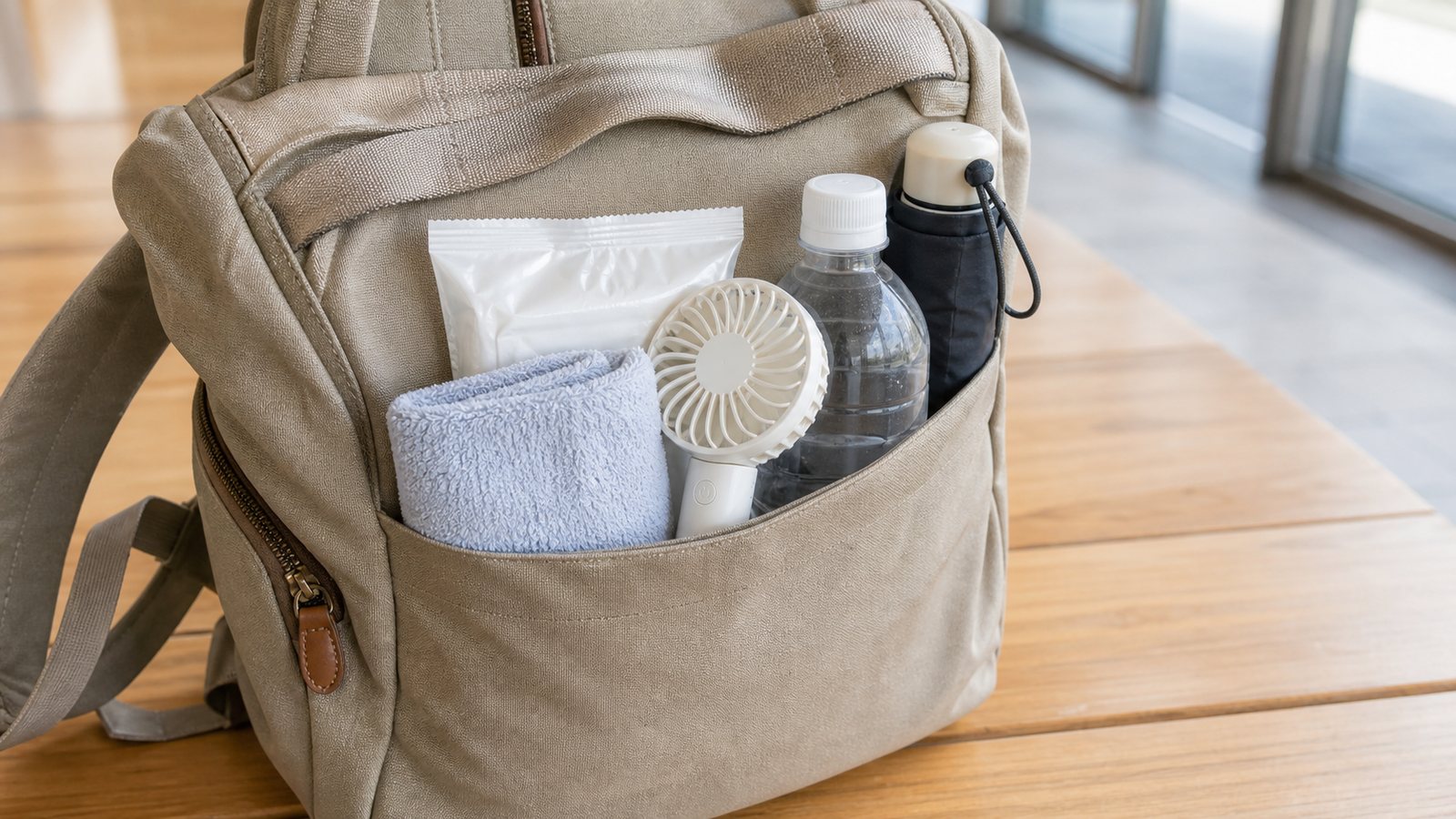
If you are carrying luggage, keep the kit in an outer pocket. A wipe buried at the bottom of a suitcase is not useful when you are sweating on a platform.
For store basics, read our Japan Pharmacy & Drugstore Guide and Japanese Konbini Guide. They explain the kind of stores where these items are easiest to find.
1. Cooling Body Wipes
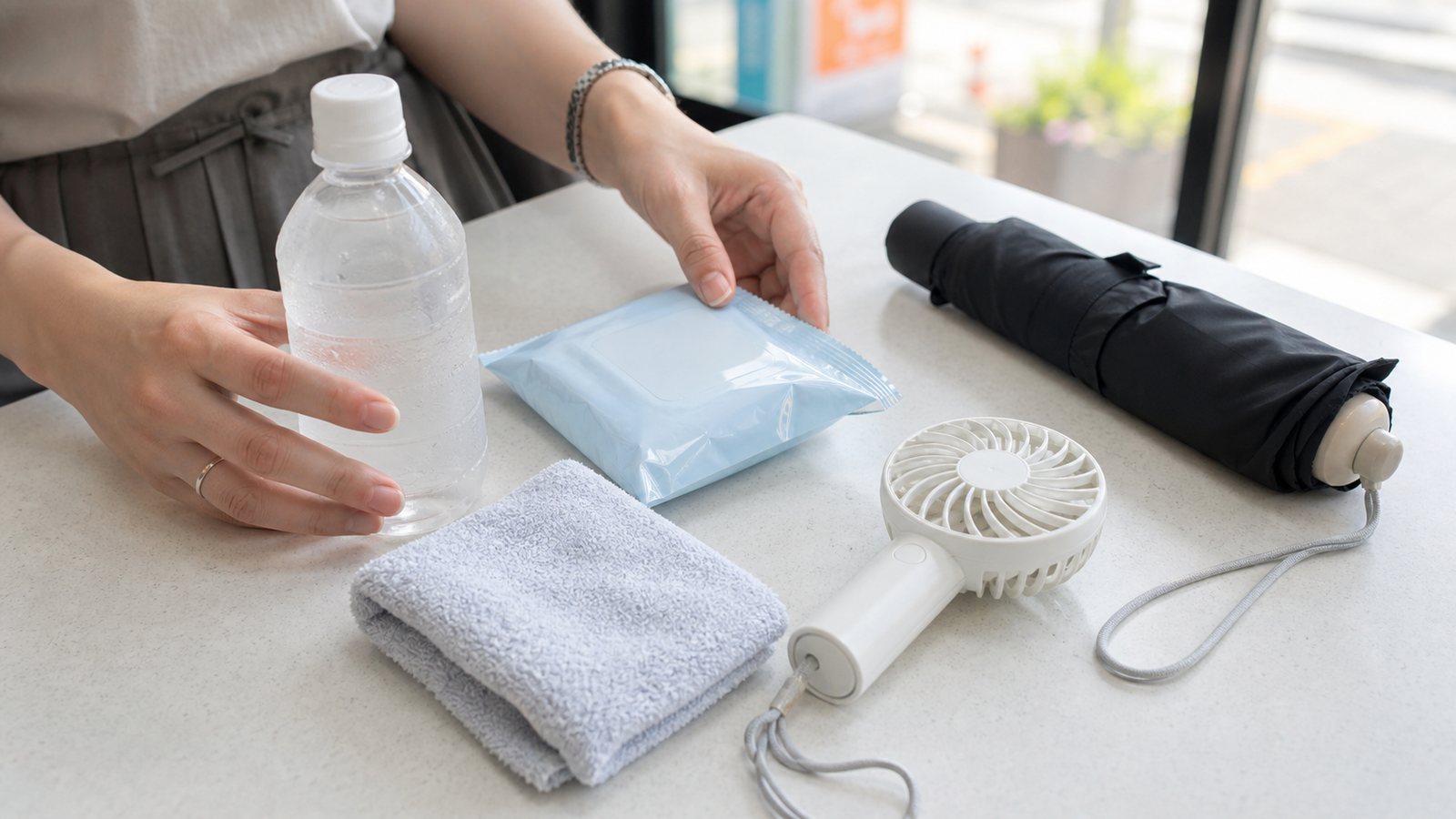
Cooling body wipes are one of the easiest summer items to buy in Japan. They are sold as disposable sheets in small packs. Many are designed to wipe sweat from your neck, arms, chest, and back, and some have a menthol-like cooling feel.
Look for words such as:
- body sheet
- body paper
- cool type
- ice type
- menthol
- sara sara, meaning a dry, smooth feeling
Drugstores are a good first stop when you want a wider selection. Convenience stores may carry a smaller seasonal range. The official GATSBY site, for example, lists Body Paper under its body-care products, which is the kind of product category you may see in Japanese shops.
How to use them:
- Use them on your neck, underarms, arms, and back when you reach a restroom, hotel lobby, station restroom, or quiet corner.
- Avoid wiping your eyes, lips, or irritated skin.
- Put used sheets in a trash bin. If you cannot find one, seal them in a small plastic bag until you return to your hotel or stay.
Best for:
- walking days
- train transfers
- summer festivals
- changing from outdoor heat to indoor air-conditioning
2. Cooling Spray or Mist
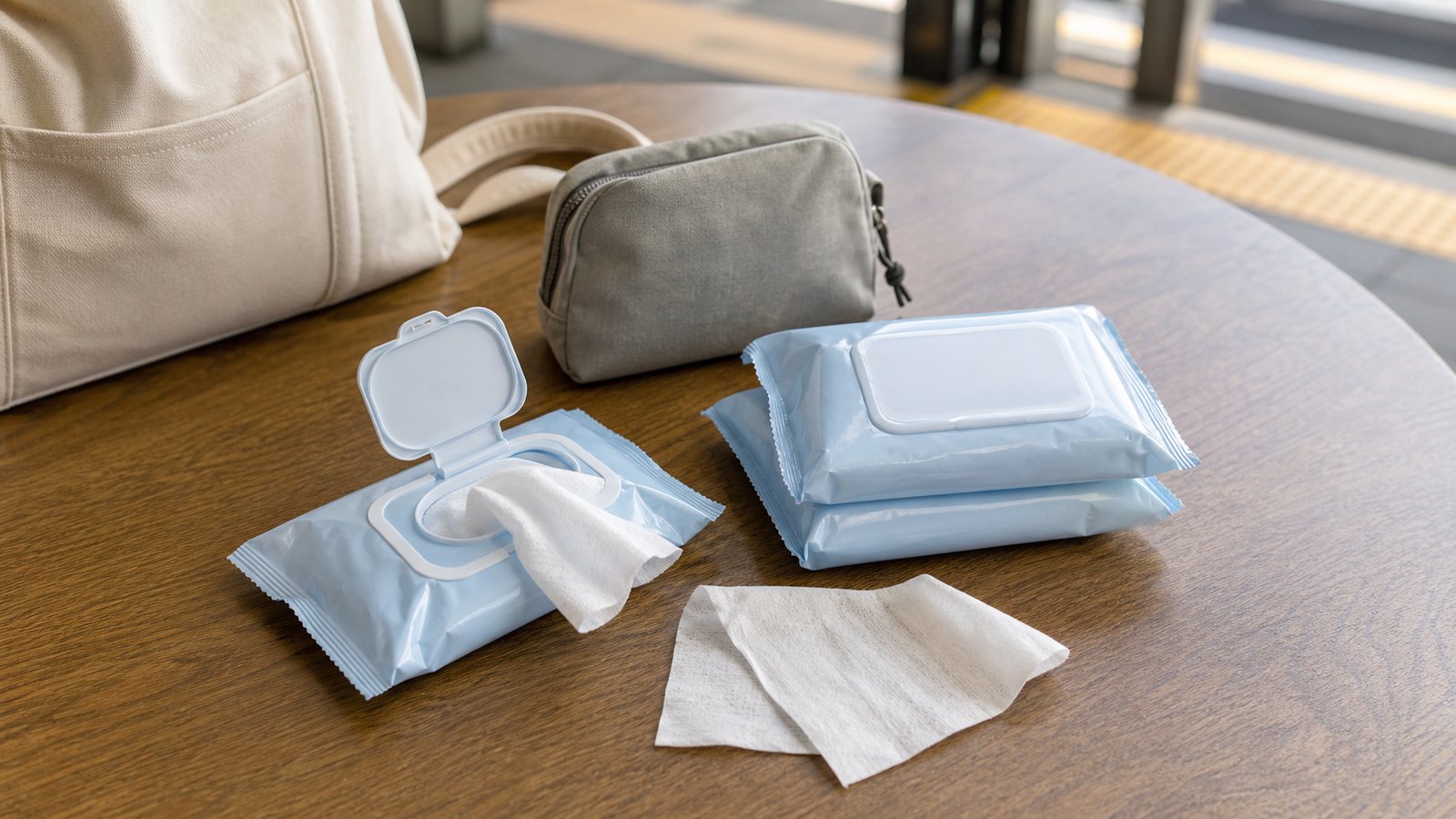
Cooling sprays and body mists are common summer products in drugstores. Some are made for clothes, some for skin, and some for deodorant use. Read the package carefully, because “spray” does not mean one product is safe for any surface or body area.
For tourists, a small body mist can feel good when you have a long outdoor wait. A clothing spray can help before you leave your room, but it is less useful if you are already out and sweating.
Use with manners:
- Do not spray near other people in a train car, restaurant, museum, shrine, or shop.
- Step aside before spraying outdoors.
- Avoid using strong fragrances in crowded spaces.
- Keep sprays away from children unless the product says it is suitable.
Best for:
- before leaving your hotel
- festival or fireworks waiting areas
- outdoor queues
Less useful for:
- packed trains
- places where scent bothers people nearby
- serious heat symptoms
3. Portable Handheld Fan
Portable fans are everywhere in Japan in summer: convenience stores, electronics shops, Don Quijote, variety stores, 100 yen shops, and sometimes even station kiosks. The cheapest types are battery-powered or USB rechargeable. More expensive models may include a stand, neck strap, stronger airflow, or a cooling plate.
A fan helps sweat evaporate and makes standing outdoors more bearable. It is especially useful when there is no wind.
What to check before buying:
- Is it rechargeable by USB-C or micro-USB?
- Does it include a cable?
- Can you charge it with your travel charger?
- Is the fan guard tight enough for your fingers?
- Does it fit in your day bag?
If you plan to spend hours outdoors, bring a small power bank. Fans are helpful, but a dead fan at 4 p.m. is just extra weight.
Pair this with our Japan Power Adapters and Charger Guide if you are unsure whether your charger setup works in Japan.
4. Neck Cooling Ring
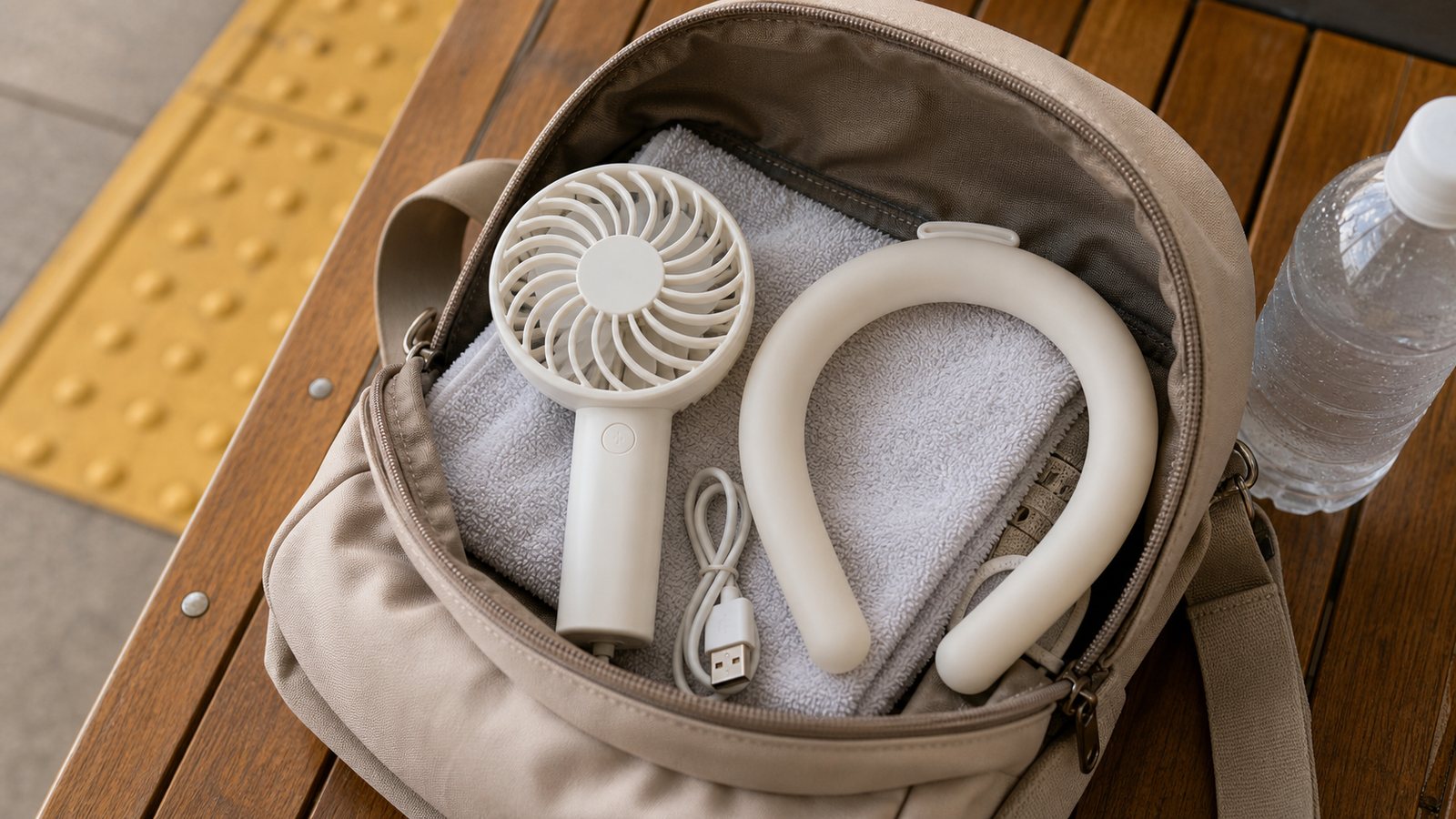
Neck cooling rings became popular because they are simple: wear the ring around your neck and it gives a cool contact feeling. Some products are designed to harden in a refrigerator, freezer, or cool water, depending on the material. The package instructions matter.
They are easy to find in summer at drugstores, Don Quijote, home centers, and variety shops. You may see them near handheld fans, towels, and other seasonal cooling goods.
Good points:
- hands-free
- quiet
- easy to wear while walking
- useful when you cannot hold a fan
Limitations:
- cooling power fades as the material warms up
- it may feel too bulky with collars or necklaces
- you need a way to re-cool it
- it is comfort gear, not a fix for feeling ill
Best for:
- families
- theme parks
- outdoor events
- travelers who dislike holding a fan
5. Cooling Towel
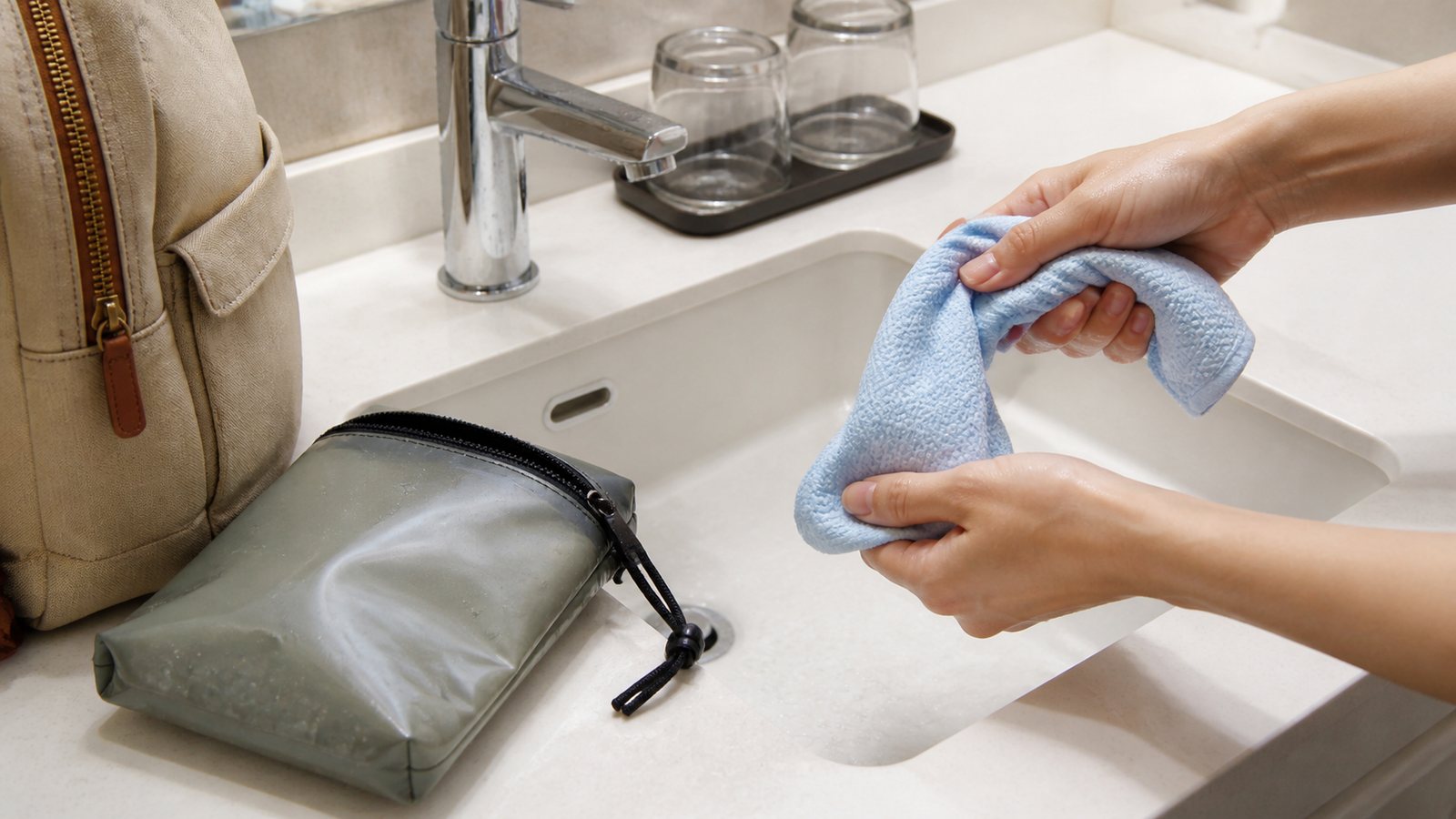
A cooling towel is a small towel designed to feel cooler when wet. To use one, wet it, wring it out, and place it around your neck or wipe your skin. Even a normal towel or tenugui can help if you wet it with cool water, though dedicated cooling towels may dry faster or feel lighter.
Where to buy:
- 100 yen shops
- drugstores
- sporting goods stores
- Don Quijote
- some convenience stores in summer
How to use it without becoming messy:
- Wet it in a restroom sink.
- Wring it out well before putting it around your neck.
- Keep a small plastic pouch in your bag for the damp towel.
- Do not swing or snap it in crowded places.
A towel is also useful for sweat. Japan’s summer can make you feel damp even after a short walk from the station to your hotel.
6. UV Umbrella or Compact Sun Umbrella
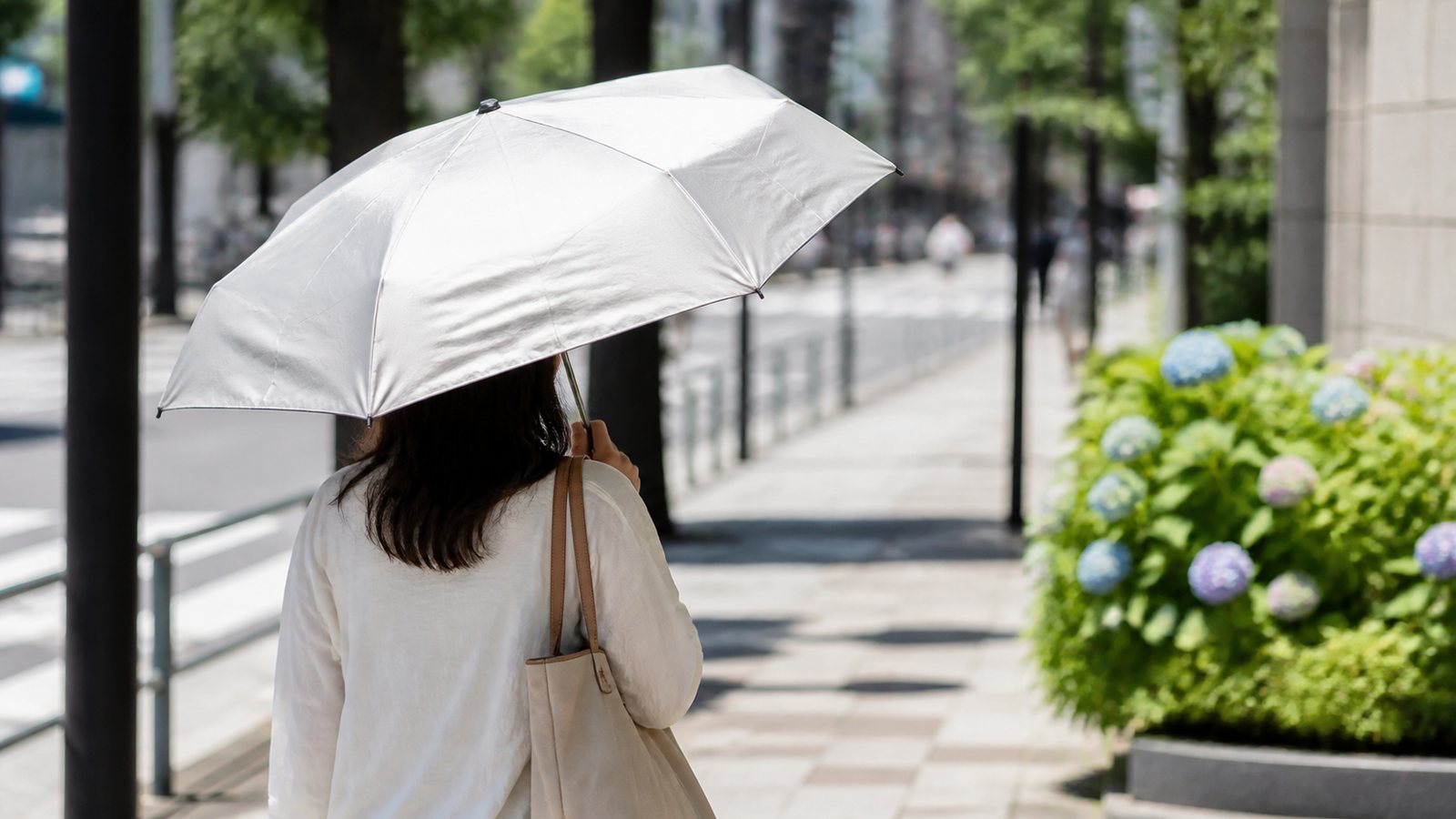
Sun umbrellas are normal in Japan, especially in summer. You may see men and women using them in city streets, temple grounds, festival areas, and station approaches. A compact UV umbrella can reduce direct sun exposure and make walking feel less punishing.
You can buy umbrellas at:
- convenience stores
- drugstores
- department stores
- variety shops
- 100 yen shops
- station shops on rainy days
For summer, look for UV protection or “sun/rain” types rather than a plain transparent rain umbrella. A small folding umbrella is easier for tourists than a long umbrella.
Manners:
- Close it in packed streets if it keeps hitting people.
- Be careful near children’s faces.
- Lower it when entering shops, stations, buses, and trains.
- Do not use it in very crowded festival viewing spots.
Best for:
- temple and shrine walks
- open streets
- family travel
- yukata days
If you plan to wear yukata in hot weather, see our Yukata in Tokyo 2026 guide before you choose a long outdoor route.
7. Breathable Innerwear or Sweat-Drying Clothing
If your clothes are heavy, dark, or slow to dry, small cooling goods will not do as much. Japan sells a lot of summer innerwear designed for hot, humid weather. You may see product lines such as AIRism-style innerwear, mesh undershirts, UV hoodies, light cardigans, and sweat-drying shirts.
Where to buy:
- UNIQLO
- GU
- Workman
- Muji
- department stores
- large shopping malls
For tourists, the easiest upgrade is one breathable undershirt or one light UV layer. This is especially useful if you packed clothes for a dry summer climate and then arrived in Tokyo, Osaka, Kyoto, or Fukuoka during humid weather.
Good use cases:
- long train days
- theme parks
- day trips from Tokyo
- staying outside until fireworks
- walking with a backpack
Do not buy too much on day one. Buy one piece, test it, then add more if it works for your body and itinerary.
8. Frozen Drinks, Ice Cups, and Vending-Machine Drinks
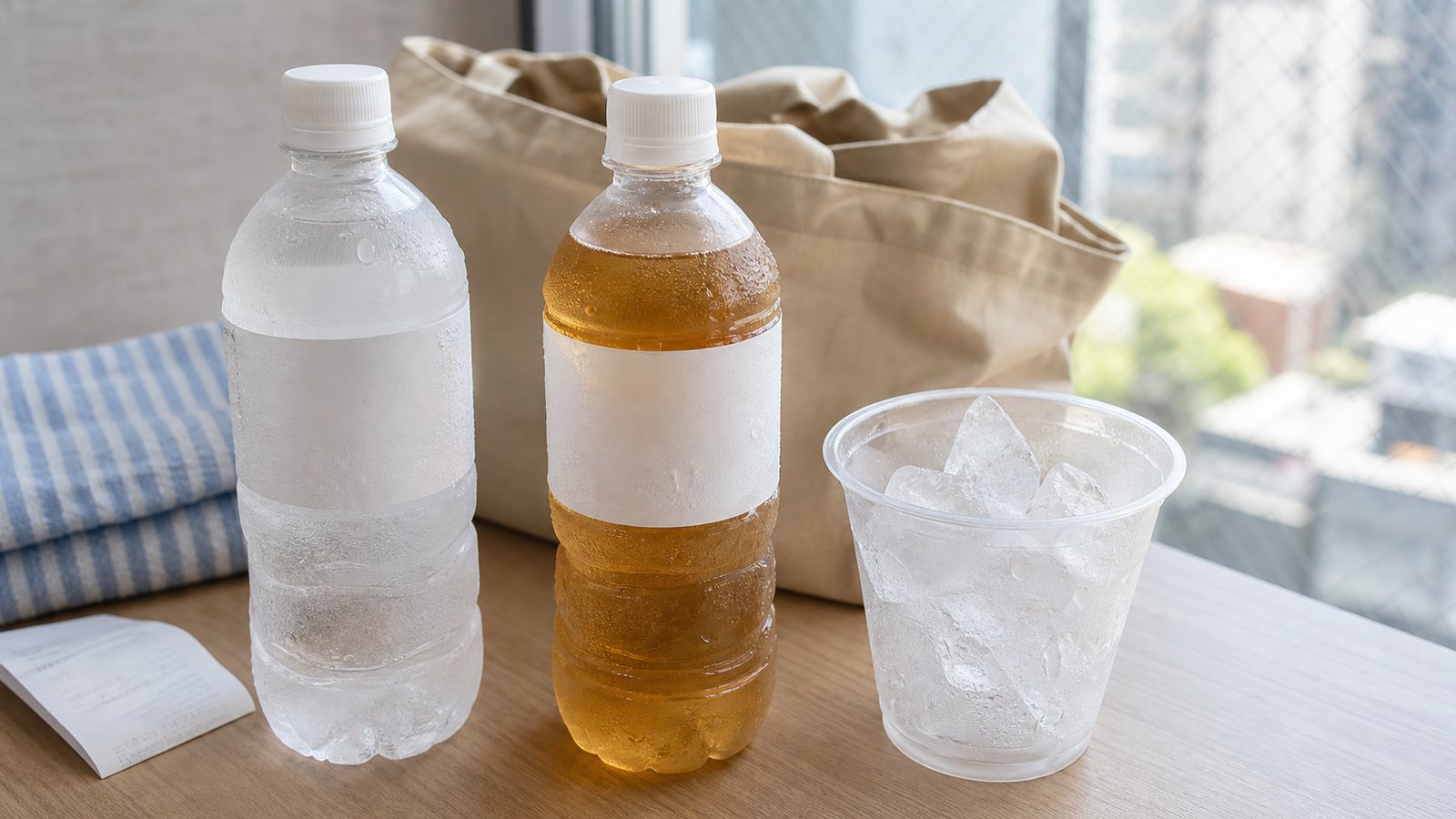
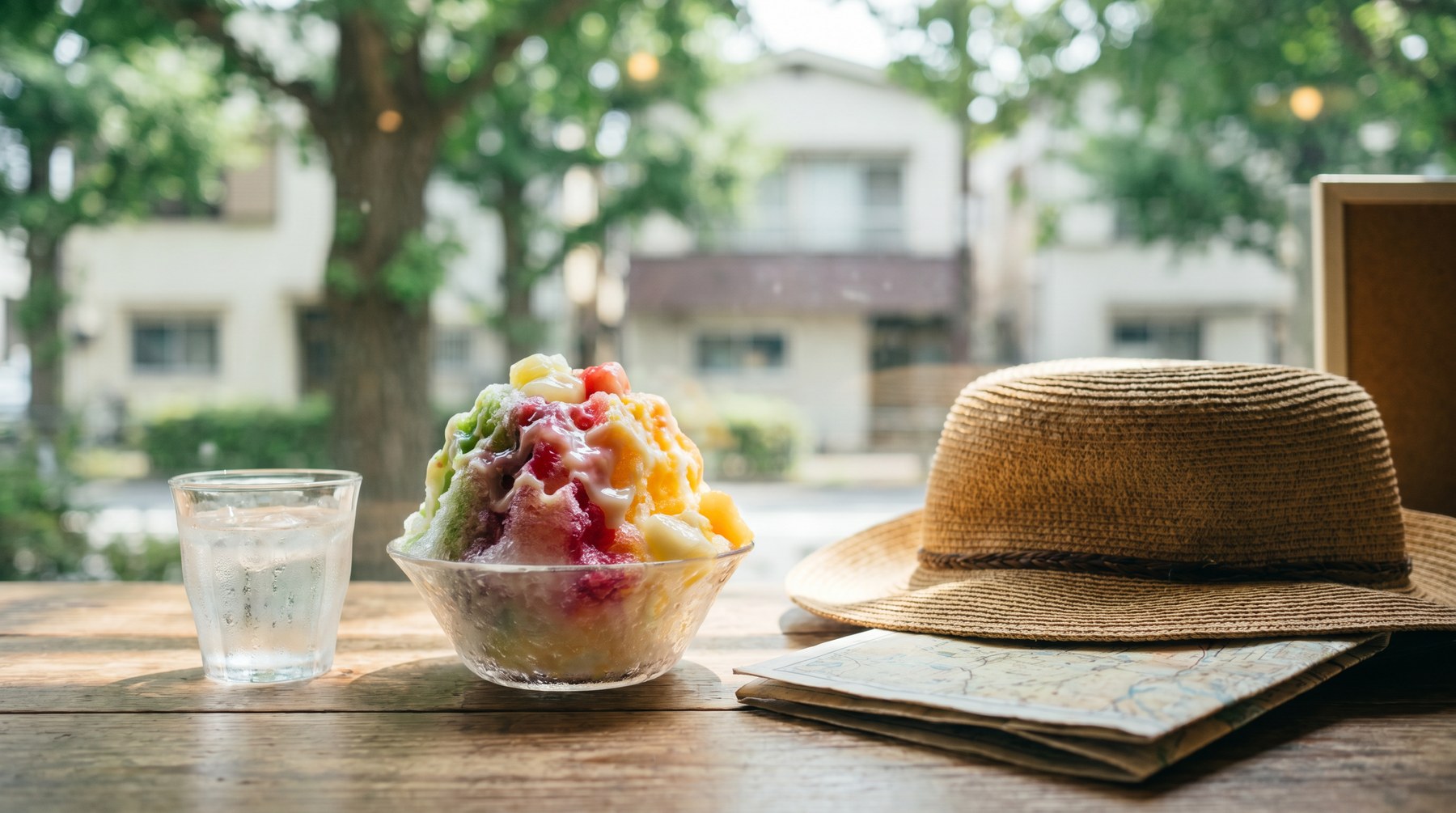
Japan makes it easy to buy cold drinks. Convenience stores sell chilled bottled tea, water, sports drinks, ice cups, frozen desserts, and sometimes frozen bottled drinks in summer. Vending machines are also common in cities and near many stations.
Use them strategically:
- Buy a cold drink before a long transfer, not after you are already desperate.
- Carry water for walking, then use tea or sports drinks as needed.
- Frozen bottles can cool your hand or neck before you drink them.
- Ice cups are useful if you are going back to your room soon.
For vending-machine basics, read our Japan Vending Machines 2026. Vending machines are convenient, but they are not a reason to skip carrying water if you are heading to a park, shrine route, or event area.
9. Oral Rehydration or Electrolyte Drinks
Japan sells sports drinks and oral rehydration products at convenience stores and drugstores. They are useful to know, but write this category in your mind as “when sweating is heavy or you are concerned about hydration,” not as a universal fix.
Common places to check:
- drugstores
- convenience-store drink shelves
- vending machines
- supermarket drink aisles
Careful wording matters here. If you feel faint, confused, unable to cool down, or seriously unwell, do not try to solve it by buying one drink and pushing through your itinerary. Move to a cooler place and ask for help.
If you need medical support, JNTO’s safe travels medical guide explains how visitors can search for medical institutions and what emergency numbers to use.
10. Hat, UV Arm Cover, or Light Outer Layer
Some useful cooling items do not need to feel cold. Reducing direct sun can make the day easier. A cap, brimmed hat, UV arm covers, sunglasses, or a light outer layer can help when your route has little shade.
This is useful for:
- riverside fireworks
- shrine and temple grounds
- outdoor shopping streets
- baseball games
- theme parks
- day trips with long station-to-site walks
The mistake is dressing for indoor air-conditioning while ignoring outdoor sun. Japan’s trains, malls, and restaurants can feel cool, but the gap between indoor and outdoor temperature can be sharp. A light layer can protect from sun outdoors and keep you comfortable indoors.
Where to Buy Cooling Items in Japan
Here is the simple shopping map.
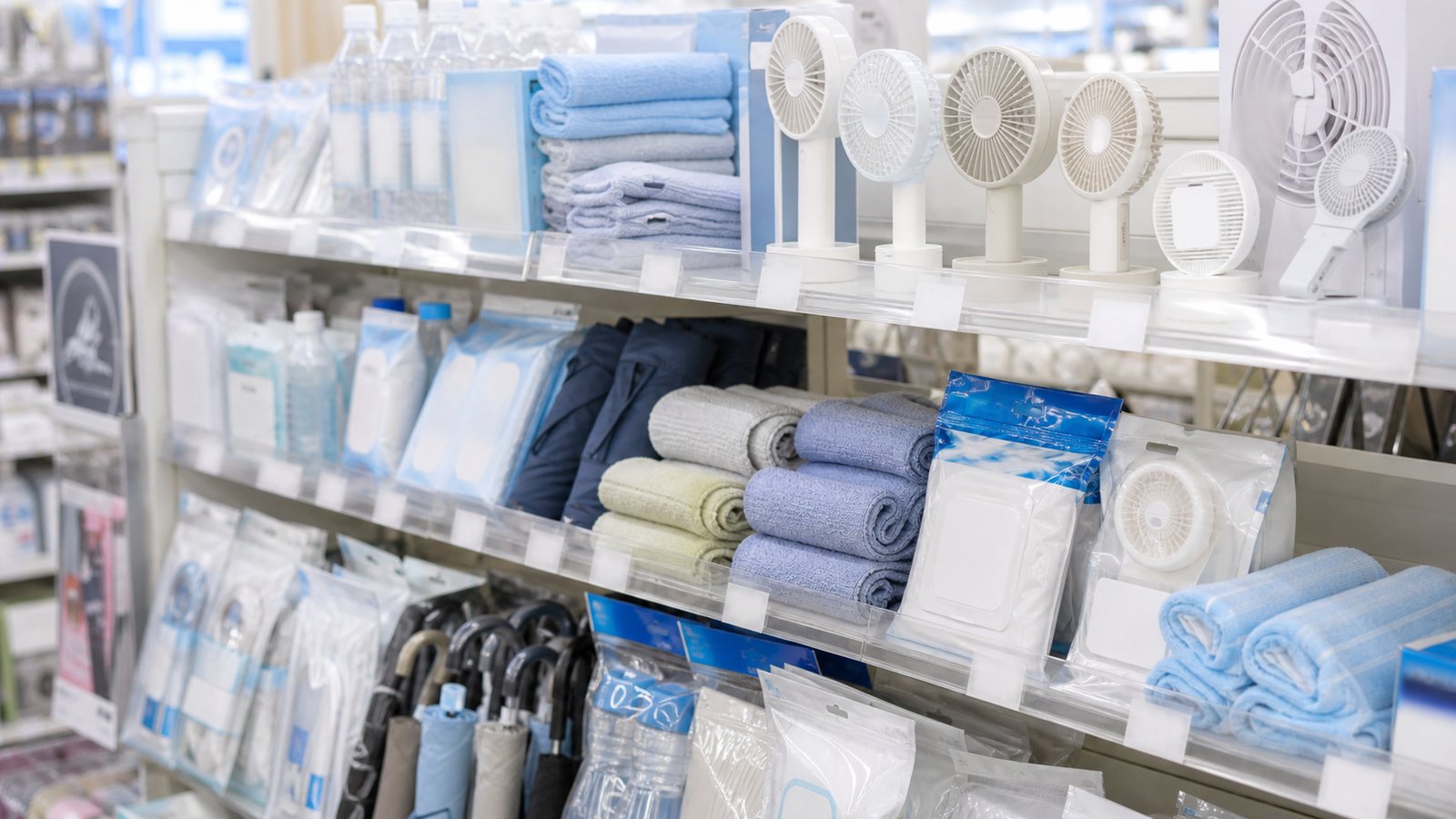
Convenience stores are the fastest option. Try them first for cold drinks, ice cups, body wipes, towels, sunscreen, and seasonal small items. Selection is limited, but the locations are convenient.
Drugstores are better for choice. Use them for body sheets, cooling sprays, sunscreen, sports drinks, oral rehydration products, deodorant items, and skin-care products. They are also the place to ask staff if you need an over-the-counter item.
100 yen shops are good for simple accessories. Look for towels, pouches, small fans, plastic bags, clips, and basic sun items. Quality varies, but they are useful for one trip.
Don Quijote and variety shops are useful when you want more options in one place. They often carry portable fans, neck coolers, towels, cooling sprays, sunscreen, and travel gadgets.
Clothing chains are useful if your outfit is the problem. If your shirt is too heavy, your cooling kit is fighting a losing battle. One light inner layer can change a full day.
Best Cooling Picks by Situation
For walking around Tokyo or Osaka:
- cooling wipes
- small towel
- portable fan
- cold drink
- sun umbrella if the route has little shade
For fireworks or summer festivals:
- cold drink before entering the area
- cooling towel
- body wipes
- portable fan
- return route saved in your phone
For a theme park or long queue:
- neck cooling ring
- portable fan
- UV umbrella or hat
- electrolyte drink
- planned indoor breaks
For train transfers with luggage:
- towel
- cold drink
- body wipes
- luggage storage if you are early
If your suitcase is making the heat worse, read Tokyo Luggage Storage 2026 before dragging it through a hot afternoon.
Plan Your Place to Return To
Cooling goods are useful, but the strongest Plan B is knowing where you can stop.
Before you leave for a hot day, save these in your phone:
- your hotel, Airbnb, minpaku, or apartment location
- the nearest station to your stay
- the last train or realistic taxi option
- your check-in code, key-box instruction, or front-desk information
- one indoor rest stop near your route
This is the “go back before the day breaks” plan. It matters because summer travel problems often happen after several small decisions: one more shrine, one more shop, one more train transfer, one more queue.
If you are staying in an Airbnb or minpaku, read Tokyo Airbnb Starter Guide before your first hot day. If you are still figuring out check-in, read Japan Check-In Guide. If you arrive late and tired, Tokyo Late-Night Arrival 2026 can help you avoid wandering around while overheated or exhausted.
Japan also has designated cooling shelters in some areas. The Ministry of the Environment lists information on cooling shelters, though local availability and English support vary. For travelers, the easier practical version is: know one air-conditioned place near your route before you need it.
What Not to Rely On
Do not rely on a fan alone. A fan can help comfort, but if the air is very hot and humid, you still need shade, rest, and fluid.
Do not rely on convenience stores being exactly where you need them. They are common in cities, but parks, shrine areas, waterfront events, and suburban routes may have fewer shops than expected.
Do not rely on “I can handle heat” from your home country. Humid heat with walking, stairs, bags, and crowds can feel different.
Do not push through serious symptoms to keep a reservation. A missed restaurant is annoying. A medical problem is worse.
Do not use cooling spray or strong-scented wipes in a way that affects people around you. Japan’s public spaces can be close, quiet, and crowded.
Heat Safety Notes for Tourists
The Ministry of the Environment’s heat illness site explains that heat illness is affected by environment, body condition, and behavior. For travelers, the behavior part is where you have the most control.
Use this simple rule:
- slow down before you feel bad
- go indoors before you feel trapped
- drink before you feel desperate
- return to your stay before the day becomes a problem
If someone is faint, confused, unable to respond normally, or seems seriously ill, ask nearby staff for help and call emergency services if needed. In Japan, 119 is the emergency number for ambulance and fire. JNTO also operates the Japan Visitor Hotline, listed on its safe-travel medical guide, for foreign visitors who need support in emergencies such as illness or disaster.
Related Reading
- Japan Pharmacy & Drugstore Guide
- Japanese Konbini Guide
- Japan Vending Machines 2026
- Japan Summer Fireworks 2026
- Tokyo Airbnb Starter Guide
- Japan Check-In Guide
FAQ
Can I buy cooling wipes at Japanese convenience stores?
Often, yes, especially in summer. Convenience stores may sell small packs of body wipes or facial sheets. Drugstores are a better stop when you want more choice.
Where should I buy cooling items first?
If you need something right away, start with a convenience store. If you want more choices, go to a drugstore. For fans, neck coolers, and gadget-style items, try Don Quijote, electronics shops, or variety stores.
Are portable fans normal in Japan?
Yes. Portable fans are common in summer. Use them politely in crowded areas, and avoid pointing strong airflow into another person’s face.
Is a sun umbrella normal in Japan?
Yes. Sun umbrellas are common in summer. A folding UV umbrella is useful for walking routes, but close it in packed crowds or narrow indoor spaces.
What should I buy for summer fireworks?
Bring a cold drink, towel, body wipes, portable fan, and a clear plan for your return route. Fireworks areas can be crowded, and buying supplies near the venue may take longer than expected.
Should I buy an electrolyte drink?
It can be useful if you are sweating heavily or worried about hydration. If you feel seriously unwell, stop your plans, move to a cooler place, and seek help instead of trying to fix the problem with one drink.
Are cooling rings worth buying?
They can be useful for hands-free comfort, especially for outdoor queues and family travel. Their cooling effect fades, so check how the product needs to be re-cooled.
Can I use cooling spray on a train?
It is better not to. Use sprays outdoors or in a private space where they will not bother people nearby.
What is the cheapest cooling kit?
A cold drink, a small towel, and a pack of body wipes is a low-cost useful set. Add a portable fan or sun umbrella if your day includes long outdoor time.
What should I do if I feel too hot to continue?
Stop the route, go indoors, drink, and rest. If you are staying nearby, return to your hotel or Airbnb. If symptoms feel serious or confusing, ask staff or a nearby person for help and use official emergency guidance.
Sources Checked
- Ministry of the Environment: Heat Illness Prevention Information
- Ministry of the Environment: Heat illness prevention and countermeasures
- Ministry of the Environment: Cooling shelters
- JNTO: Guide for when you are feeling ill
- GATSBY: Body Paper
About the Author
Basabasa is a former sergeant major in the Japan Ground Self-Defense Force who writes Real Japan Guide for first-time foreign visitors. He focuses on practical Japan travel frictions: how to order, pay, move, ask, queue, and avoid small mistakes that can make a good trip feel harder than it needs to be.
Comments