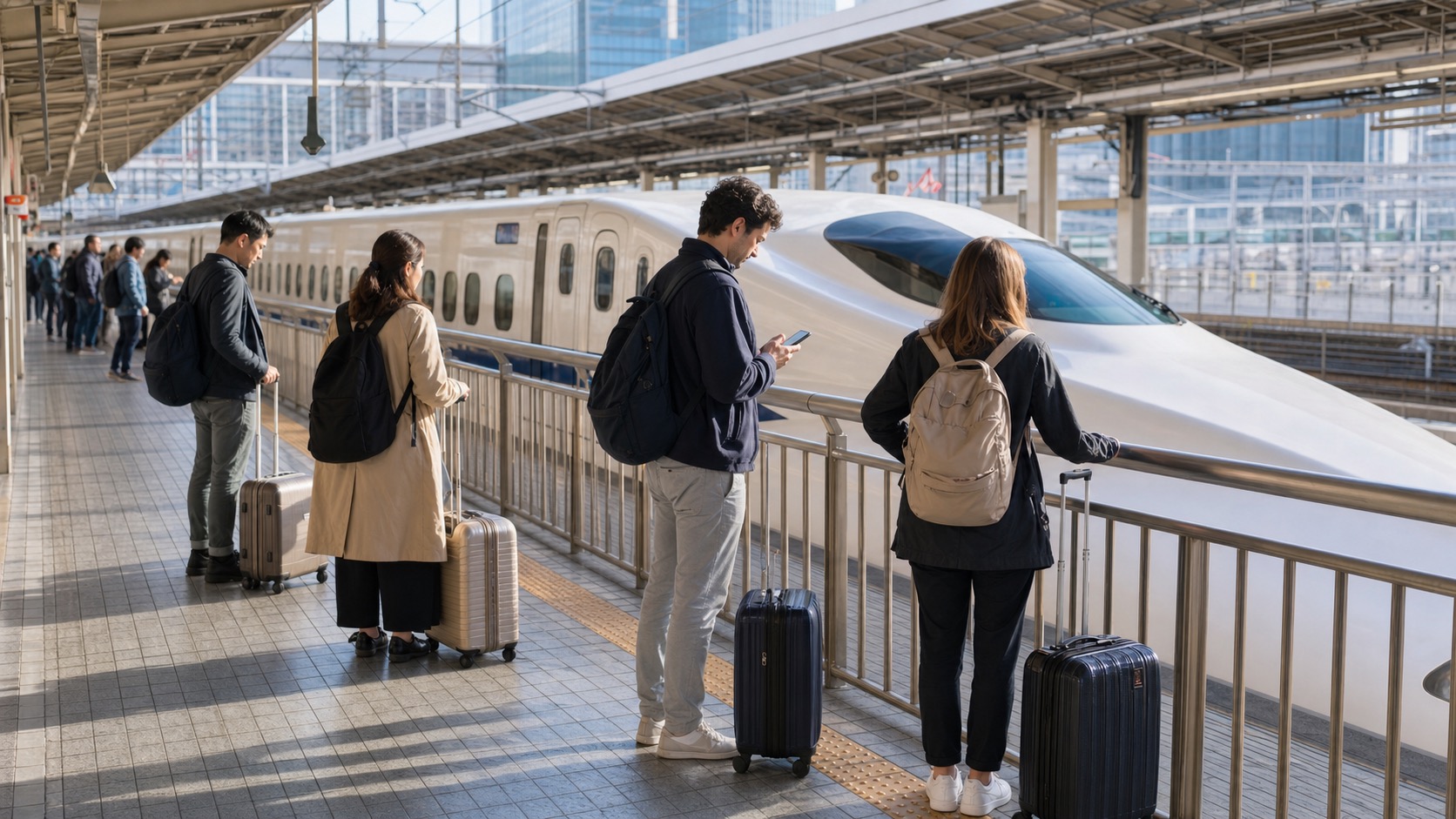
Japan has an unusually useful five-day break in September 2026. For international visitors, the important point is not only that popular places may feel busier. The transport rules change before the public-holiday block even begins.
The calendar break runs from Saturday, September 19, through Wednesday, September 23. However, JR Central and JR West will operate every Nozomi between Tokyo and Hakata with reserved seats only from Friday, September 18, through Wednesday, September 23.
That one-day difference can affect a Tokyo-to-Kyoto, Osaka, Hiroshima, or Hakata itinerary. This guide turns the dates into a simple decision: reserve early, shift the long-distance move, or stay local and travel after the peak window.
- Quick Answer
- Silver Week 2026 Dates: What Is Actually a Holiday?
- The Train Rule That Matters Most
- When Should You Book?
- Which Days and Trains Will Be Busiest?
- The Reserve, Shift, or Stay-Local Test
- Plan B Matrix for Common Problems
- A Practical 30-Day Checklist
- Should You Avoid Japan During Silver Week?
- The Bottom Line
- Frequently Asked Questions
- What are the dates of Silver Week in Japan in 2026?
- Why is September 22, 2026, a holiday in Japan?
- When is Nozomi reserved-seat only for Silver Week 2026?
- Can I use a non-reserved seat during the Silver Week Nozomi period?
- How early can I book a Shinkansen for Silver Week 2026?
- Is a one-year SmartEX booking fully confirmed immediately?
- Which day of Silver Week 2026 will be the most crowded?
- What is the best Plan B if my preferred Nozomi is full?
- Official Sources
Quick Answer
- The practical Silver Week break is Saturday, September 19, to Wednesday, September 23, 2026.
- The official holiday sequence is Respect for the Aged Day on Monday, September 21; a statutory holiday on Tuesday, September 22; and Autumnal Equinox Day on Wednesday, September 23.
- All Nozomi trains between Tokyo and Hakata will be reserved-seat only from Friday, September 18, through Wednesday, September 23.
- Hikari, Kodama, Mizuho, Sakura, and Tsubame will continue to have their usual non-reserved seating during this period, according to JR Central.
- SmartEX accepts a limited number of bookings from one year before travel. Regular reserved-seat sales also open at 10:00 a.m. JST one month before departure.
- If your ideal Nozomi is full, do not build the day around waiting at the platform. Check a different time or date, reserve another eligible train, or move the intercity journey outside September 18–23.
Last checked: July 18, 2026. Exact train-by-train demand and disruption information can change, so confirm your booking and operator notices before travel.
Silver Week 2026 Dates: What Is Actually a Holiday?
“Silver Week” is a popular label, not the name of one single national holiday. In 2026, the long break happens because the weekend connects to three consecutive public holidays or statutory holidays.
| Date | Day | What it means |
|---|---|---|
| September 18 | Friday | Not a national holiday, but the Nozomi all-reserved period begins |
| September 19 | Saturday | Weekend; practical start of the five-day break |
| September 20 | Sunday | Weekend |
| September 21 | Monday | Respect for the Aged Day |
| September 22 | Tuesday | Statutory holiday under Article 3, Paragraph 3 of the Holiday Act |
| September 23 | Wednesday | Autumnal Equinox Day |
| September 24 | Thursday | Normal weekday; useful first date for a post-holiday shift |
The Cabinet Office’s official 2026 holiday calendar lists September 21, 22, and 23 as holidays. September 22 becomes a holiday because it sits between two national holidays. The same page explains that a non-holiday whose previous and following days are both national holidays becomes a holiday under the law.
For trip planning, think in two overlapping windows:
- The leisure break: September 19–23.
- The Nozomi reserved-seat window: September 18–23.
This is why arriving in Tokyo on Friday, September 18, and immediately continuing to Kyoto is not an ordinary September transfer. The special Nozomi rule is already active.
The Train Rule That Matters Most
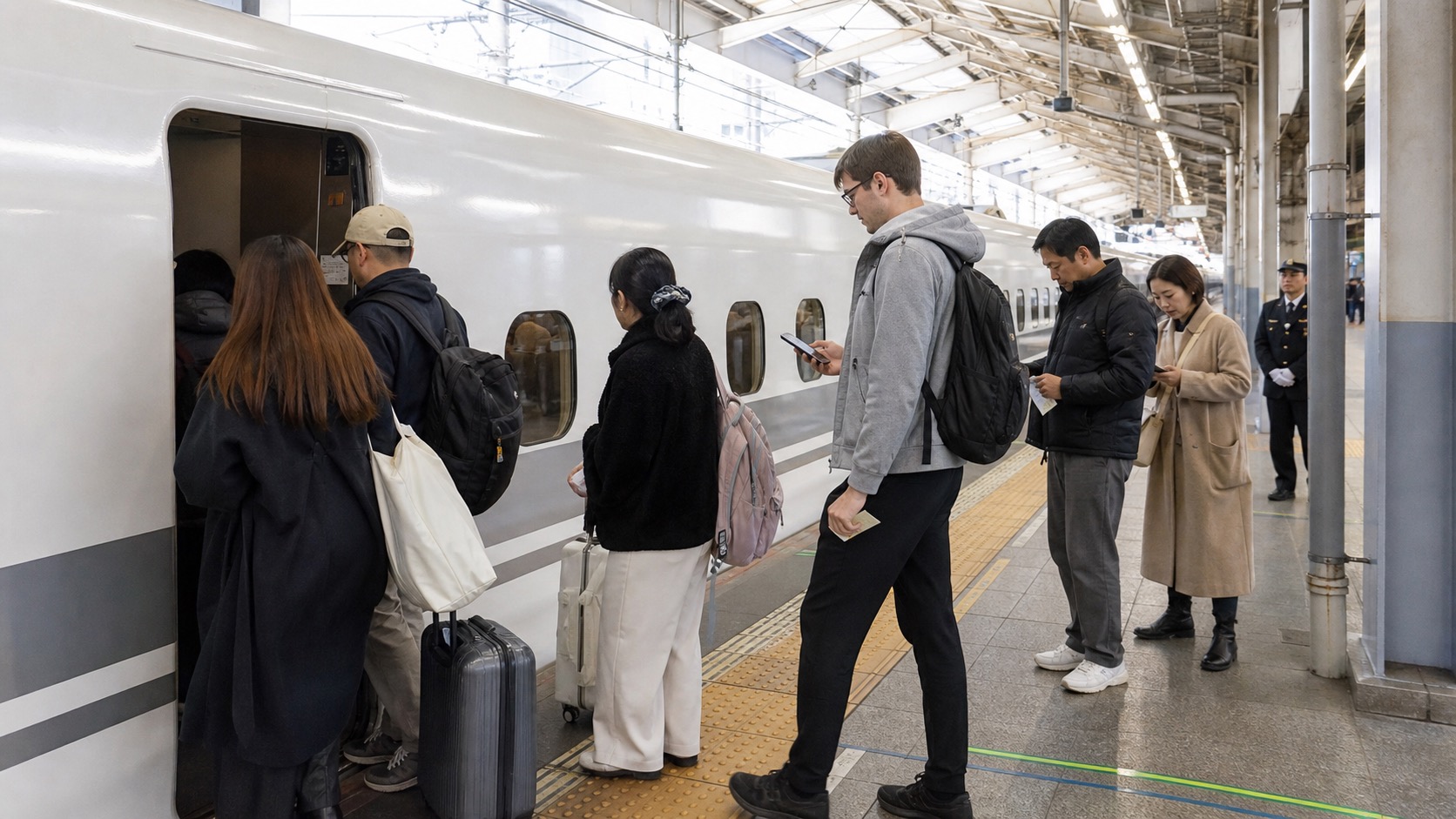
JR Central’s official peak-period Nozomi page lists September 18–23, 2026, as the Silver Week all-reserved period. Every Nozomi operating between Tokyo and Hakata is covered.
During the period, cars that normally offer non-reserved seating on Nozomi are converted to reserved seating. A traveler without a seat reservation should not expect to board a Nozomi and then find an ordinary non-reserved seat.
The rule does not mean every Shinkansen is reserved-seat only. JR Central states that Hikari, Kodama, Mizuho, Sakura, and Tsubame will continue to offer their normal non-reserved seating. That can be a fallback, but it is not a promise of an empty car. A reserved seat is still the calmer choice when the journey anchors a hotel check-in, timed attraction, dinner reservation, or flight connection.
Routes most likely to affect international visitors
- Tokyo or Shinagawa to Kyoto
- Tokyo or Shinagawa to Shin-Osaka
- Tokyo to Nagoya
- Kyoto or Shin-Osaka to Hiroshima
- Hiroshima to Hakata
- Any same-train Nozomi journey between Tokyo and Hakata
If your itinerary uses Tohoku, Hokkaido, Joetsu, Hokuriku, Yamagata, or Akita Shinkansen services, the Nozomi rule itself does not apply. Check the operator and train serving your actual route; Japan does not have one universal reservation rule for every Shinkansen line.
When Should You Book?

There are two booking clocks, which is why advice online can look contradictory.
SmartEX one-year advance booking
The official SmartEX reception-times page accepts eligible reservations from 5:30 a.m. JST one year before boarding until four minutes before the timetable departure time. Only a limited number of seats are available in the early window, and some products and seat types are excluded.
If you book more than one month ahead, the exact train and seat are not yet final. SmartEX says to confirm the train number, departure and arrival times, and seat number after 2:00 p.m. one month before travel. It also says that, in principle, seats for the requested number of passengers are secured when the advance request is completed.
Regular reserved-seat sales
JR Central states that regular reserved-seat limited-express tickets go on sale at 10:00 a.m. JST one month before departure. More inventory can become available at that point even if the limited early allocation did not show your preferred option.
For Silver Week 2026, your practical reminders are:
| Travel date | One-month sales date at 10:00 a.m. JST |
|---|---|
| September 18 | August 18 |
| September 19 | August 19 |
| September 20 | August 20 |
| September 21 | August 21 |
| September 22 | August 22 |
| September 23 | August 23 |
If you already know your intercity route, open SmartEX and check the eligible advance inventory. If you make a booking more than a month early, add a second calendar reminder for the one-month confirmation date. Do not leave the exact train number and seat unchecked in an old email.
For step-by-step help with overseas cards, use How to Book Shinkansen Online from Overseas. For route and train basics, use the Shinkansen Complete Guide.
Which Days and Trains Will Be Busiest?
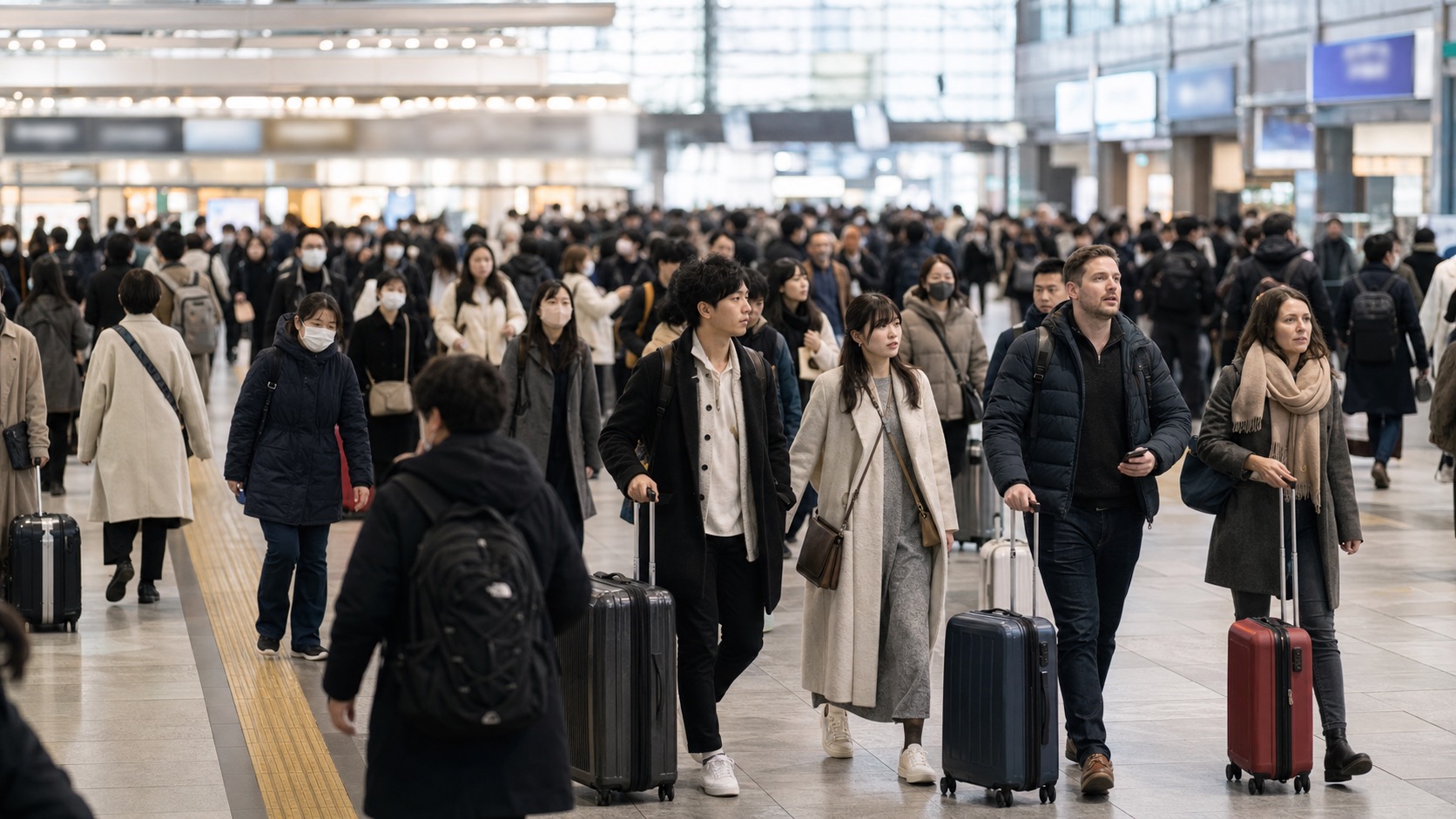
The safe answer in July is narrower than many travel blogs suggest: the whole September 18–23 Nozomi window is important, but exact train-by-train demand should be checked live.
JR has already designated the period for all-reserved Nozomi operation because use concentrates during peak holiday periods. However, that does not let us responsibly promise that one specific hour will be the worst for your route. Inventory changes as people book, cancel, and alter plans.
Use these signals instead of a generic crowd prediction:
- SmartEX shows no seats together for your group.
- Only very early or late services remain.
- Your hotel price rises sharply or your preferred room type disappears.
- A timed attraction, restaurant, or luggage service has no suitable slot.
- The journey requires several crowded station transfers with large bags.
The goal is not to “beat Japan’s crowds” everywhere. It is to remove the one failure that can break the next part of the trip. For most first-time visitors, that failure is an unreserved intercity move tied to a fixed hotel night.
The Reserve, Shift, or Stay-Local Test

Choose one of three actions for every long-distance move during September 18–23.
1. Reserve
Reserve now when all of these are true:
- The hotel dates are fixed.
- The journey is long-distance.
- You are traveling with children, older relatives, or several people who need seats together.
- You have large luggage or a timed booking after arrival.
- Changing the date would create a second hotel or flight problem.
Once booked, save the confirmation and check the final train and seat details at the one-month point. SmartEX allows eligible changes and refunds before ticket pickup or gate entry, up to the reserved train’s departure time, subject to product rules and fees. Do not interpret “changeable” as “free under every fare.” Read the conditions attached to your ticket.
2. Shift
Shift the intercity move when your itinerary is still flexible. Useful options include:
- Travel before Friday, September 18.
- Stay one more night and travel on Thursday, September 24.
- Move at a different time with confirmed availability.
- Use Hikari or Kodama with a reserved seat if the extra travel time works.
JR Central itself advises travelers to consider a different date during expected crowd periods. A shift is not a defeat; it can protect an entire sightseeing day from station queues and uncertainty.
3. Stay local
Stay in one city or region when the long-distance move adds little value. A Tokyo-based Silver Week plan could group neighborhoods by area rather than cross the city repeatedly. An Osaka or Kyoto stay can do the same.
The stay-local option is especially strong if you have not yet reserved the next hotel. It reduces the number of systems that can fail at once: train, luggage, check-in, attraction, and dinner.
Plan B Matrix for Common Problems

| Problem | First move | Plan B | Avoid |
|---|---|---|---|
| Preferred Nozomi is full | Search different times and dates | Reserve Hikari or Kodama; shift outside Sep 18–23 | Going to the platform expecting a normal Nozomi non-reserved car |
| Seats together are unavailable | Search nearby departures | Split across nearby reserved rows or choose another train | Waiting until the travel day with a large group |
| Foreign card fails online | Check 3D Secure and issuer approval | Try an eligible backup card or follow the station-booking steps | Repeating many failed payments without contacting the issuer |
| Large bags make transfers hard | Reduce transfers and reserve the right seat type | Send luggage ahead with takkyubin | Dragging bags through several peak-hour transfers |
| Weather changes the travel day | Check the operator and official alerts | Move earlier, delay, or stay another night | Relying only on a generic weather icon |
| Arrival becomes late | Recheck last local connection | Use a direct taxi or approved late-night route | Assuming urban trains run all night |
For baggage, see How to Send Luggage in Japan. For weather disruption, save Japan Rain & Typhoon Plan 2026. If you may arrive after trains finish, use Tokyo Last Train & Taxi Plan.
A Practical 30-Day Checklist
As soon as your route is fixed
- Mark every intercity trip between September 18 and 23.
- Identify the operator and train, not only the departure and arrival cities.
- Check SmartEX advance availability for Tokaido, Sanyo, and Kyushu routes.
- Decide whether the move belongs in reserve, shift, or stay local.
One month before each journey
- Check the final train number, times, and seat assignment for an early SmartEX booking.
- Search the regular inventory released at 10:00 a.m. JST if you still need a seat.
- Confirm the hotel cancellation deadline.
- Reserve oversized-baggage seating when required rather than treating the space as first come, first served.
- Put the confirmation, hotel address, and backup route in one offline note.
The day before
- Recheck the train operator’s official service information.
- Confirm the departure station; Tokyo and Shin-Osaka are not interchangeable with every city-center station.
- Allow time to reach the Shinkansen gate without a last-minute sprint.
- Verify each traveler’s ticket, QR ticket, IC-card link, or paper-ticket pickup method.
- Check rain, wind, and typhoon information if relevant.
On the day
Arrive with a confirmed train and a simple boarding method. If the service is disrupted, follow the operator’s instructions before buying a duplicate ticket or changing hotels. Keep the next reservation’s contact details available.
Should You Avoid Japan During Silver Week?

No. Silver Week does not make Japan unusable, and it does not mean every neighborhood, museum, restaurant, or local train will be equally crowded.
The better question is whether your itinerary contains an avoidable high-friction move. A first visit can still work well if you:
- Reserve the intercity leg.
- Avoid stacking a Shinkansen arrival, timed attraction, and non-refundable dinner too tightly.
- Keep luggage light or send it ahead.
- Group local plans by area.
- Give one important meal or attraction a backup.
If a restaurant plan fails in Tokyo, use Tokyo Restaurant Plan B. If a key booking is available only on a different day, shift the itinerary rather than protecting the original sequence at all costs.
The Bottom Line
Silver Week 2026 creates a five-day leisure break from September 19 to 23, but the transport decision starts one day earlier. Nozomi trains between Tokyo and Hakata become reserved-seat only from September 18 to 23.
Choose your action now:
- Reserve: keep the fixed route and secure the seat.
- Shift: move the intercity journey before September 18 or after September 23.
- Stay local: remove the long-distance move and build a lower-friction city plan.
Start with the official SmartEX booking page. If you need help with a foreign card, open the overseas Shinkansen booking guide.
Frequently Asked Questions
What are the dates of Silver Week in Japan in 2026?
The practical five-day break is Saturday, September 19, through Wednesday, September 23, 2026. The national-holiday sequence itself runs from Monday, September 21, through Wednesday, September 23.
Why is September 22, 2026, a holiday in Japan?
It is a statutory holiday because it falls between Respect for the Aged Day on September 21 and Autumnal Equinox Day on September 23. Article 3, Paragraph 3 of Japan’s Holiday Act makes a non-holiday between two national holidays a holiday.
When is Nozomi reserved-seat only for Silver Week 2026?
All Nozomi trains between Tokyo and Hakata are reserved-seat only from Friday, September 18, through Wednesday, September 23, 2026.
Can I use a non-reserved seat during the Silver Week Nozomi period?
Nozomi does not offer its normal non-reserved seating during the September 18–23 period. Hikari, Kodama, Mizuho, Sakura, and Tsubame continue to offer their usual non-reserved seating, but actual seat availability still depends on the train.
How early can I book a Shinkansen for Silver Week 2026?
SmartEX accepts eligible reservations from one year before travel, with limited early inventory and exclusions. Regular reserved-seat sales open at 10:00 a.m. JST one month before departure.
Is a one-year SmartEX booking fully confirmed immediately?
Seats for the requested number of travelers are generally secured when the request is completed, but the exact train, times, and seat are not final more than one month ahead. SmartEX says to confirm those details after 2:00 p.m. one month before travel.
Which day of Silver Week 2026 will be the most crowded?
Treat the full September 18–23 transport window as high priority, then check live seat inventory and operator notices for your route. Do not rely on a generic claim about one universally busiest train or hour.
What is the best Plan B if my preferred Nozomi is full?
Check another time or date first. Then consider a reserved Hikari or Kodama, travel before September 18 or after September 23, or remove the intercity move and stay local.

Comments