Japan’s luggage-delivery services can move a suitcase from one staffed hotel to another, from an airport to a hotel, or from your accommodation to an airport counter. The service is often called takkyubin or takuhaibin. Yamato Transport’s brand name is TA-Q-BIN.
The important question is not simply whether delivery exists. You need to know whether the next accommodation accepts luggage, when the suitcase must arrive, what must stay in your day bag, and what you will do if same-day delivery is unavailable.
- Quick Answer: Should You Send, Store or Carry Your Luggage?
- Send, Store or Carry? A 30-Second Decision Table
- What Is Takkyubin?
- How to Send Luggage From One Hotel to Another
- Airport to Hotel: When Same-Day Delivery Works
- Hotel to Airport: Send Earlier Than You Think
- Shinkansen: Send the Bag or Reserve Space?
- Premium Same-Day Option: LUGGAGE EXPRESS
- Can You Send Luggage to an Airbnb or Hostel?
- What You Should Not Put in a Delivered Suitcase
- Common Mistakes and How to Avoid Them
- Mistake 1: Assuming the delivery date cannot change
- Mistake 2: Sending to a hotel that will not accept the bag
- Mistake 3: Using the wrong hotel branch
- Mistake 4: Packing the passport, medication or battery pack
- Mistake 5: Assuming the nearest convenience store accepts the suitcase
- Mistake 6: Missing a same-day cutoff by a few minutes
- Plan B: What to Do When Delivery Is Not Available
- Before You Hand Over the Bag
- Frequently Asked Questions
- How much does luggage delivery cost in Japan?
- How long does takkyubin take?
- Can I send luggage from one hotel to another?
- Can I send luggage to an Airbnb?
- Can a convenience store send my suitcase?
- Can I send luggage from Narita Airport to Tokyo on the same day?
- Should I send my suitcase before taking the Shinkansen?
- What should stay in my day bag?
- Official Sources
Quick Answer: Should You Send, Store or Carry Your Luggage?
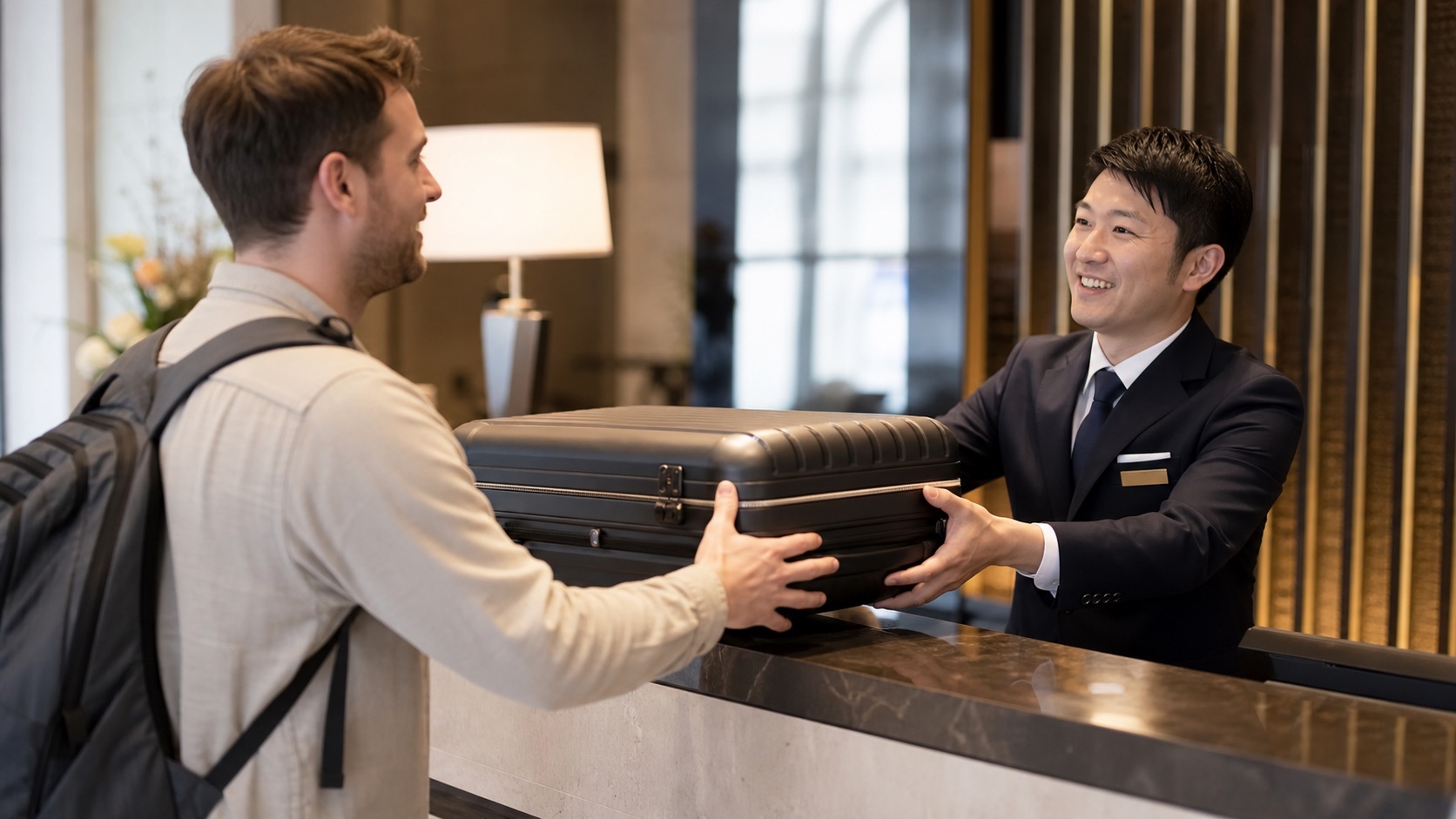
Use regular luggage delivery when you are changing cities, can send the suitcase one or two days early, and your next hotel has a staffed front desk that agrees to receive it. Carry one overnight bag with medication, documents, chargers, and clothes because Yamato says normal TA-Q-BIN arrives the next day or in two days, depending on the route.
Use same-day delivery after the exact counter, cutoff time, delivery area, and receiving hotel are confirmed. Same-day service is not a nationwide promise. It is a location-specific option.
Use storage instead when you need the suitcase again later the same day in the same city. Carry it yourself when you cannot confirm reception at the destination, are staying in an unmanned property, or need everything immediately after arrival.
Prices, limits, counter details and railway rules in this guide were checked on July 12, 2026. Recheck the operator’s official page before sending a bag because rates, counters, cutoffs and eligible hotels can change.
Send, Store or Carry? A 30-Second Decision Table
| Your situation | Better choice | Why | Main risk |
|---|---|---|---|
| Hotel in Tokyo to staffed hotel in Kyoto, with one night of essentials in a day bag | Regular luggage delivery | Lower price than premium same-day service and no suitcase on the train | Bag may arrive the next day or later |
| Airport arrival before a confirmed same-day cutoff | Same-day airport-to-hotel delivery | You can start sightseeing without visiting the hotel first | Limited counters, areas and cutoffs |
| Checkout at 10:00, evening train, and you need the suitcase at the station | Luggage storage | You keep same-day access to the bag | Lockers may be full or too small |
| Unmanned Airbnb or vacation rental | Carry it, or send to a Yamato sales office for pickup | Unstaffed properties may not accept delivery | Collection requires ID and travel time |
| Tokaido-Sanyo-Kyushu Shinkansen with a bag over 160 cm total dimensions | Reserve oversized-baggage space or send the bag | A reservation is required for oversized baggage on the covered Shinkansen routes | Limited seats and a ¥1,000 fee if you board without the required reservation |
| Same-day Tokyo-to-Kyoto transfer and price matters less than speed | Check LUGGAGE EXPRESS eligibility | Select hotels can receive the bag on the same day | High fee and limited participating accommodations |
If your problem is keeping a bag for several hours rather than moving it to another city, use the Tokyo Luggage Storage Guide instead.
What Is Takkyubin?
Takkyubin is a door-to-door parcel-delivery service commonly used for suitcases and other travel luggage in Japan. Yamato Transport operates TA-Q-BIN, while Sagawa Express and Japan Post provide alternative domestic delivery services.
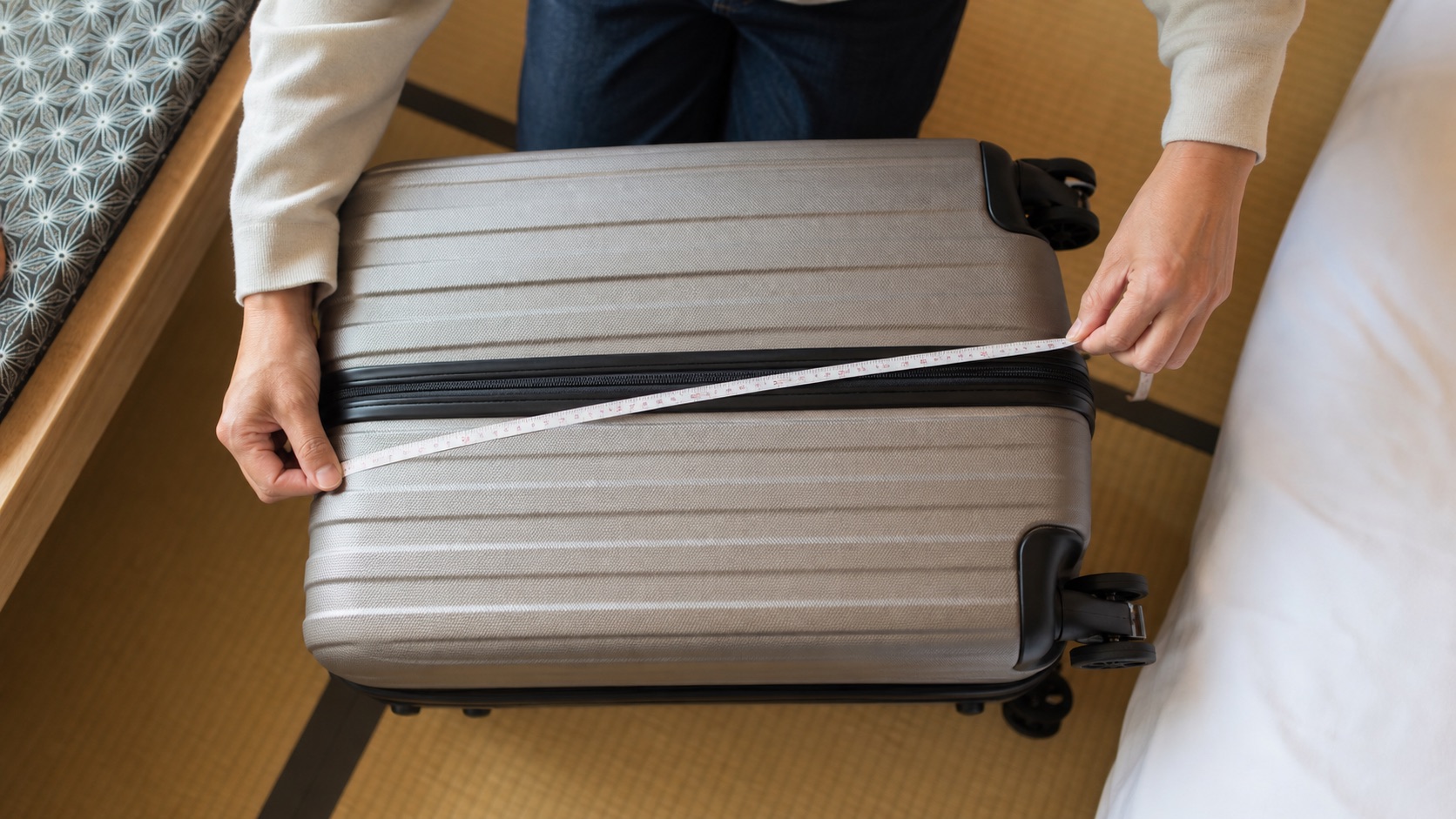
Yamato’s standard TA-Q-BIN accepts parcels up to 200 cm in total length, width and height and up to 30 kg. The price category is based on whichever is higher: the measured size or the weight bracket. Japan Post’s standard Yu-Pack accepts parcels up to 170 cm and 25 kg, with a separate weighted service for parcels over 25 kg and up to 30 kg.
The operators do not provide one universal tourist price. The fee depends on the origin, destination, dimensions, weight and service. For a practical benchmark, Yamato’s July 2026 rate table lists the following tax-inclusive base rates:
| Example Yamato route | Size 140, up to 20 kg | Size 160, up to 25 kg |
|---|---|---|
| Kanto to Kanto | ¥2,190 | ¥2,510 |
| Kanto to Kansai | ¥2,310 | ¥2,630 |
| Kanto to Kyushu | ¥2,710 | ¥3,030 |
| Kanto to Okinawa | ¥4,030 | ¥4,680 |
These are reference rates from Yamato’s regional table, not a quotation for your suitcase. Drop-off discounts, counter fees, special services and route conditions can change the amount. Measure the bag and use the operator’s current calculator before deciding.
Official rate and size references:
- Yamato TA-Q-BIN rates and sizes
- Yamato regional rate table
- Japan Post Yu-Pack limits
- Sagawa Hands-Free Travel
How to Send Luggage From One Hotel to Another
Step 1: Ask both hotels before packing
Ask the current hotel whether its front desk can arrange Yamato, Sagawa or another delivery service. Ask the next hotel whether it will receive and hold a suitcase for a registered guest.
Yamato’s English FAQ says hotel-to-hotel delivery is possible when the sending hotel works with Yamato and the receiving accommodation has a front desk that can accept the bag. It also advises confirming both points with the accommodations in advance.
Do not rely on a hotel brand name alone. Reception arrangements can differ by property. Send the reservation name exactly as it appears on the booking and include the check-in date where the hotel requests it.
Step 2: Separate what must stay with you
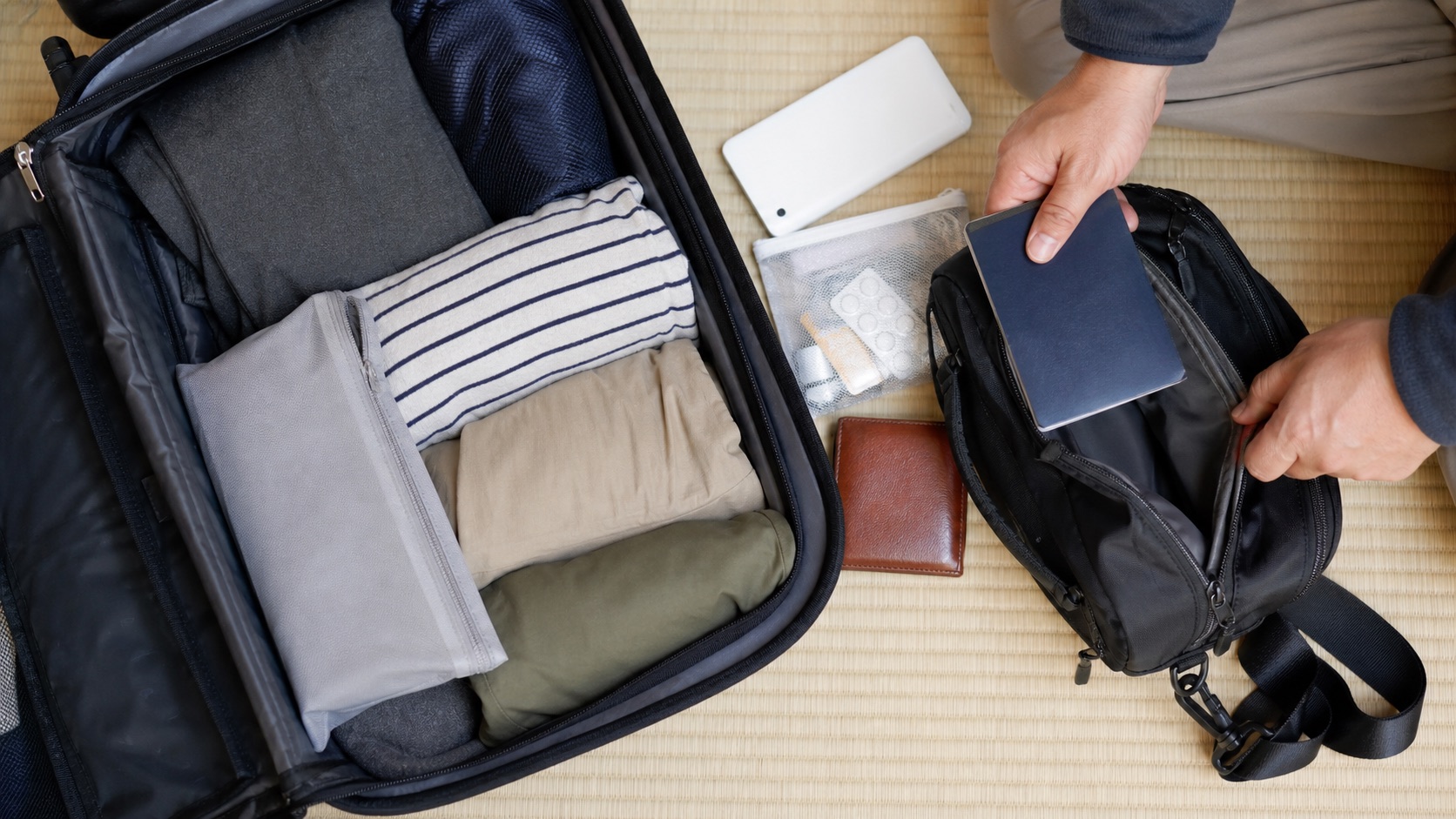
Keep these items in your day bag:
- Passport and other identity documents
- Cash, credit cards and bank cards
- Medication and essential medical supplies
- Phone, power bank and charging cables
- Hotel confirmation and delivery receipt
- One change of clothes
- Items needed before the promised delivery date
Yamato lists cash, payment cards, passports and parcels valued above ¥300,000 among items that cannot be sent by standard TA-Q-BIN. Air routes also have additional restrictions involving aerosols, perfume, lighters and lithium batteries. Keeping documents, money, medication and electronics with you is the simplest travel rule.
Step 3: Leave time for delivery
Yamato states that normal TA-Q-BIN commonly arrives the next day or in two days. Its hotel guidance is more conservative: when sending to a hotel or ryokan, send before the cutoff at least two days before check-in; some longer routes may need three days. Its hotel-to-hotel FAQ also says to plan arrival at least one day before the stay.
Use the date confirmed by the counter, not a general estimate from a blog. Weather, traffic, remote islands and air-transport restrictions can add time.
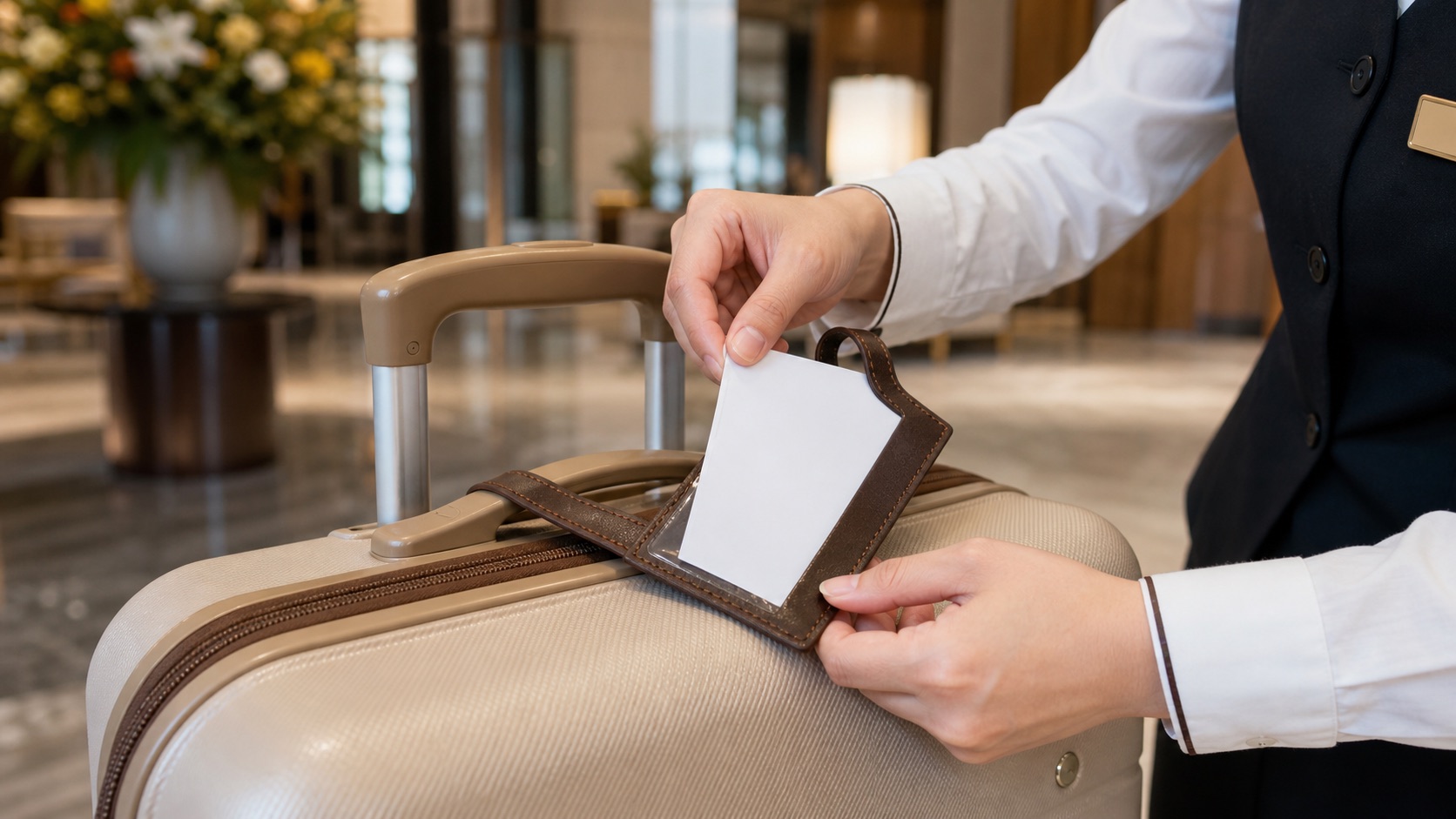
Step 4: Complete the waybill carefully
The counter will provide a shipping label, called a waybill. Prepare these details:
- Destination hotel’s full name and address
- Destination postal code and phone number
- Guest name matching the reservation
- Check-in date
- Your contact details in Japan, when available
- Contents description, such as clothes and personal effects
- Requested delivery date if permitted
Yamato says advance reservations are not available for the standard application at hotel, airport and tourist-facility counters. You complete the waybill when applying. Some counters have a smartphone-based waybill tool.
Step 5: Pay and keep the receipt
Payment options vary by the sending location. Ask the hotel or counter how payment is handled before completing the waybill. Keep the tracking number until the receiving hotel hands you the suitcase.
Step 6: Confirm the destination before leaving
Check the hotel name, address, reservation name and requested date on the receipt. One wrong branch name can send the bag to a different property in the same city.
Airport to Hotel: When Same-Day Delivery Works
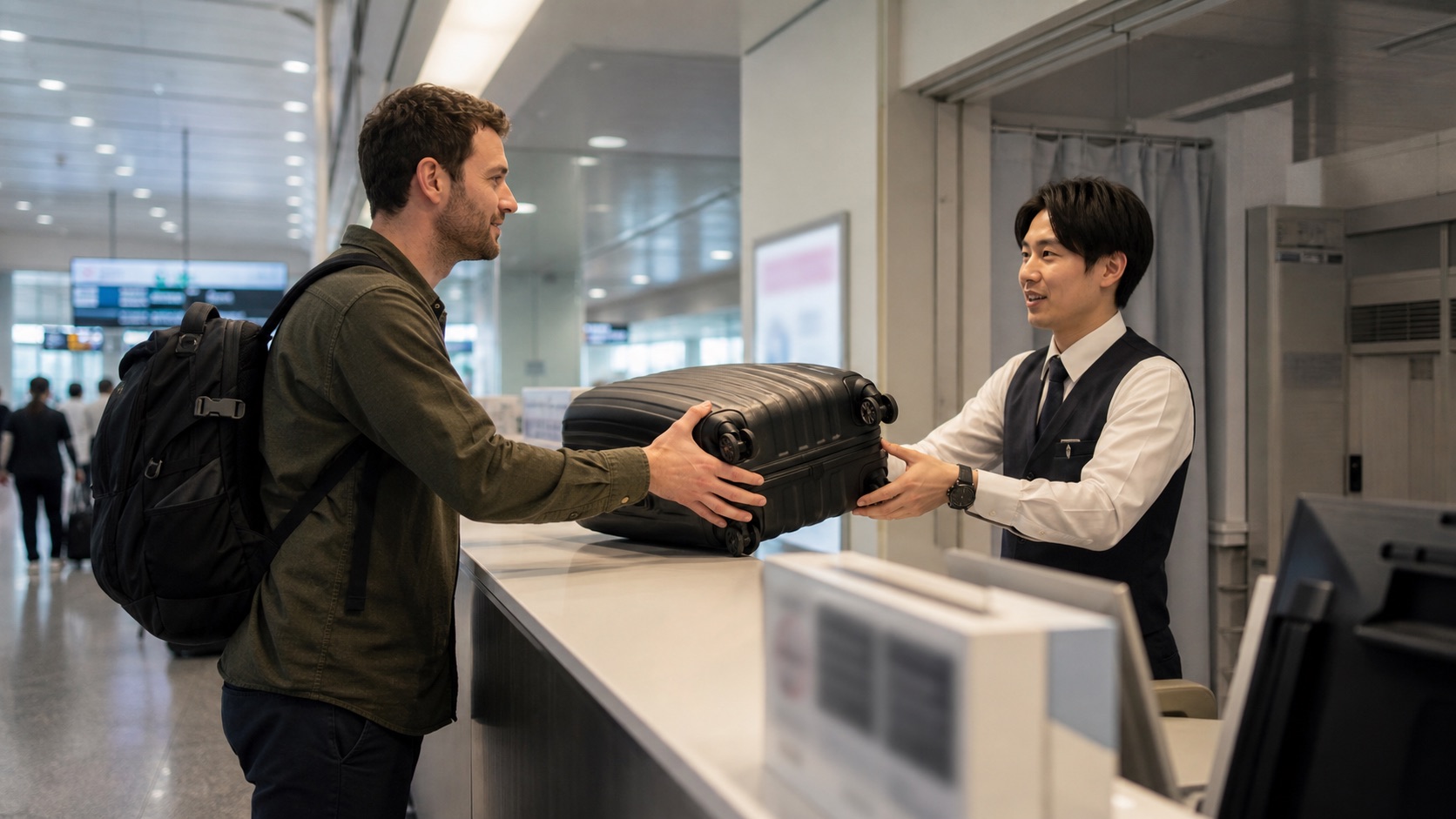
Haneda and Narita airports have luggage-delivery counters, but counter availability does not make same-day delivery universal.
Yamato’s same-day FAQ lists four conditions:
- The airport counter offers same-day delivery.
- You arrive before that counter’s cutoff.
- The destination is inside that counter’s service area.
- The accommodation can accept the delivery.
For Narita, Yamato’s current English FAQ lists a 10:30 a.m. cutoff at Terminals 1 and 2 and 9:50 a.m. at Terminal 3 for same-day delivery to eligible Tokyo-area destinations. It also states that Narita charges a ¥660 counter usage fee from June 1, 2025. Weather, traffic and a one-night hotel stay can affect acceptance.
At Haneda, the airport’s official service page lists Yamato and Sagawa counters in the terminal arrival areas. Hours differ by terminal and operator. A late-night landing may leave you outside the tourist counter’s same-day window even when another delivery desk is still open.
Use the Tokyo Airport Transfer Guide to choose your train, bus or taxi after leaving the bag.
Plan B: if same-day delivery is unavailable, decide whether you can accept next-day delivery. If not, take the suitcase with you or store it at the airport while you complete a short nearby task. Do not send essential medication or check-in documents away from you.
Official airport references:
- Haneda Airport home-delivery counters
- Narita Airport baggage and delivery services
- Yamato same-day airport delivery conditions
Hotel to Airport: Send Earlier Than You Think
Airport delivery is not the same as sending a bag to an ordinary city address. Yamato advises sending before the route-specific cutoff so the bag reaches the airport counter one day before the flight.
Its example for a February 4 departure from Haneda says a bag sent from Tokyo should be handed over by the February 2 cutoff. A bag sent from Hokkaido may need to be sent by February 1. The actual deadline depends on your origin, airport and flight date.
Before paying, confirm:
- Correct airport and terminal
- Airline and flight number if requested
- Departure date
- Airport counter where the bag will be collected
- Counter opening hours
- Latest pickup time before airline check-in closes
- Identification or receipt needed for collection
Do not schedule collection so tightly that one train delay makes you miss airline check-in. Collect the suitcase before entering the security and immigration route required for your flight.
Shinkansen: Send the Bag or Reserve Space?
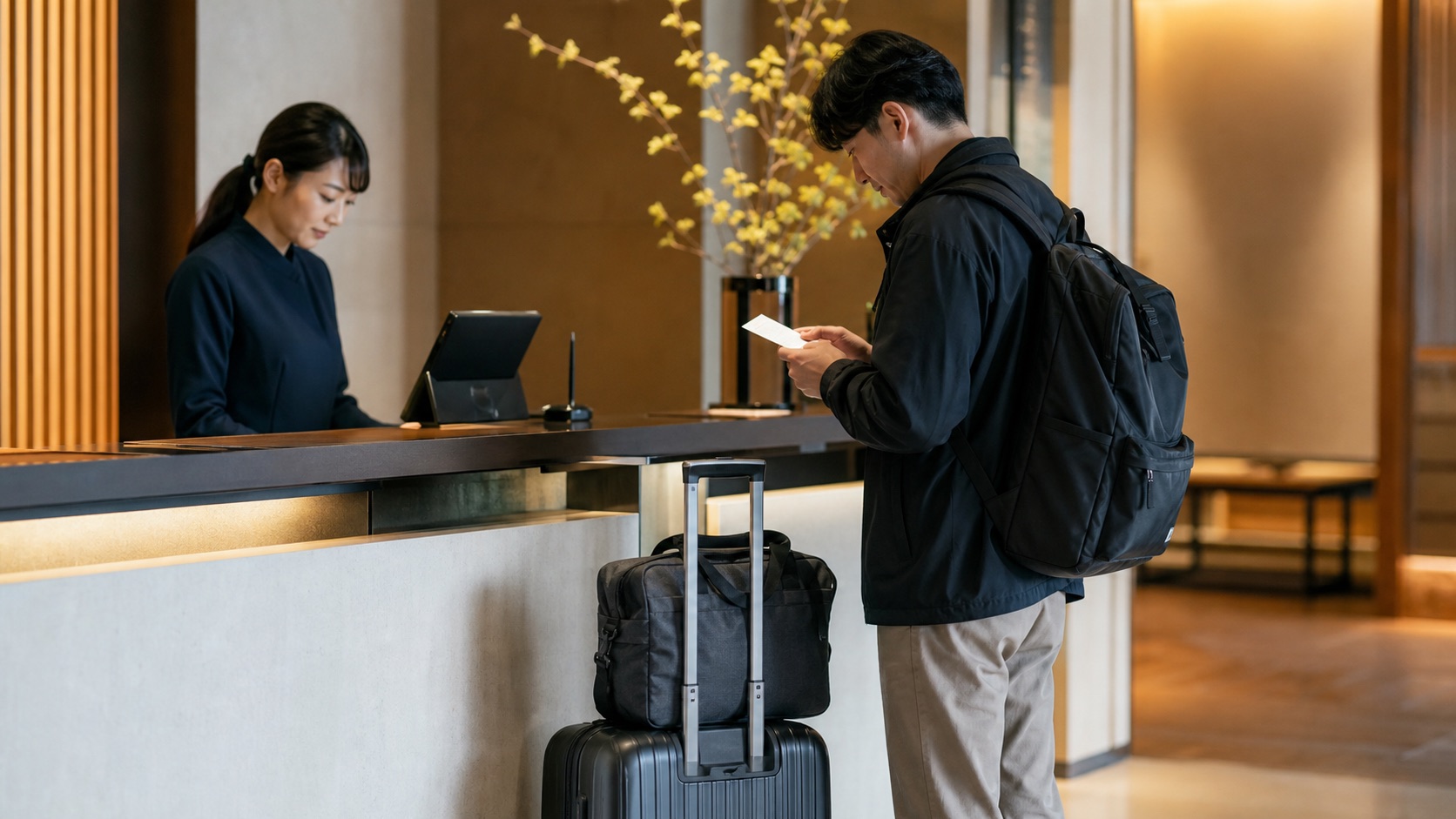
On the Tokaido-Sanyo-Kyushu Shinkansen, baggage with total dimensions of 161 to 250 cm requires a reserved seat with an oversized-baggage area. The reservation does not add a baggage-space charge to the reserved-seat fare. Bringing oversized baggage without the required reservation can result in a ¥1,000 baggage fee, and staff will direct you to an available storage location.
Bags with total dimensions of 160 cm or less do not require the oversized-baggage reservation, but a heavy suitcase can still be difficult to lift. JR Central says the overhead rack is about 42 cm deep and that a bag with total dimensions up to 160 cm can generally fit; a bag around 120 cm can generally fit near the feet, depending on the passenger and seat.
Choose based on the real friction:
- Carry it: one manageable suitcase, direct station access and a confirmed storage plan on the train.
- Reserve oversized space: the bag is over 160 cm, or you need the designated area behind the relevant seats.
- Send it: several transfers, stairs, crowded local trains, children, limited mobility, or sightseeing between checkout and check-in.
Read the Shinkansen Booking Guide before selecting the train.
Premium Same-Day Option: LUGGAGE EXPRESS
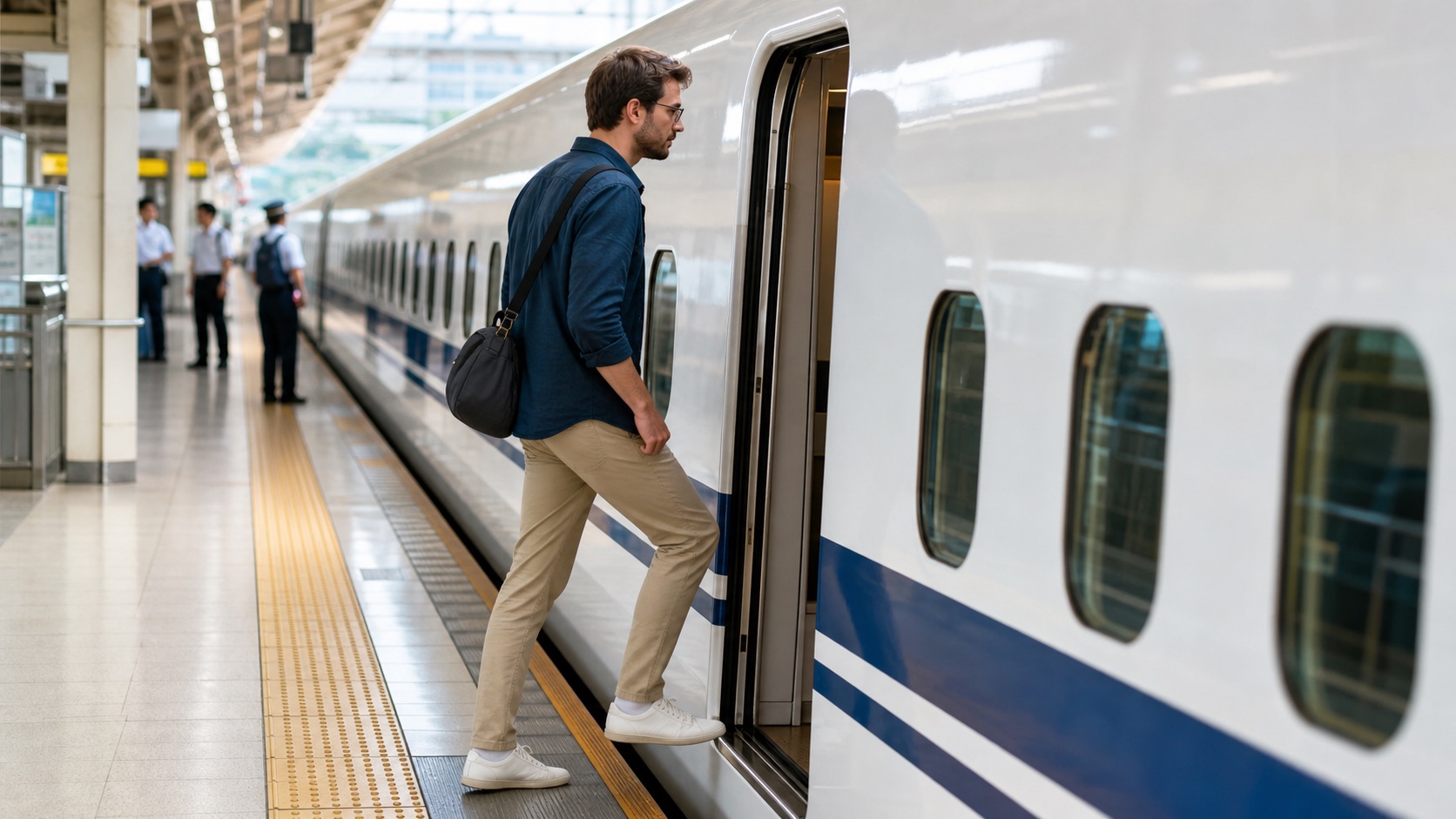
JR Central and JTB launched LUGGAGE EXPRESS on November 1, 2025 for same-day baggage delivery between select accommodations in Tokyo and Kyoto City.
The launch terms state that luggage deposited by 9:00 a.m. can be delivered by 9:00 p.m. under the Regular plan or 6:00 p.m. under the Express plan. The announced hotel-service prices were ¥13,200 per item for Regular and ¥16,500 per item for Express, tax included. Tokyo Station and Kyoto Station counters are also mentioned, with separate details on the service site.
This is a premium time-saving option, not a replacement for ordinary TA-Q-BIN. The Yamato examples above are ¥2,310 for Size 140 and ¥2,630 for Size 160 from Kanto to Kansai, but those regular services do not promise same-day hotel arrival. LUGGAGE EXPRESS costs more because it uses a time-specific same-day corridor and participating facilities.
Check current hotels, prices and booking rules on the official LUGGAGE EXPRESS site before choosing it.
Can You Send Luggage to an Airbnb or Hostel?
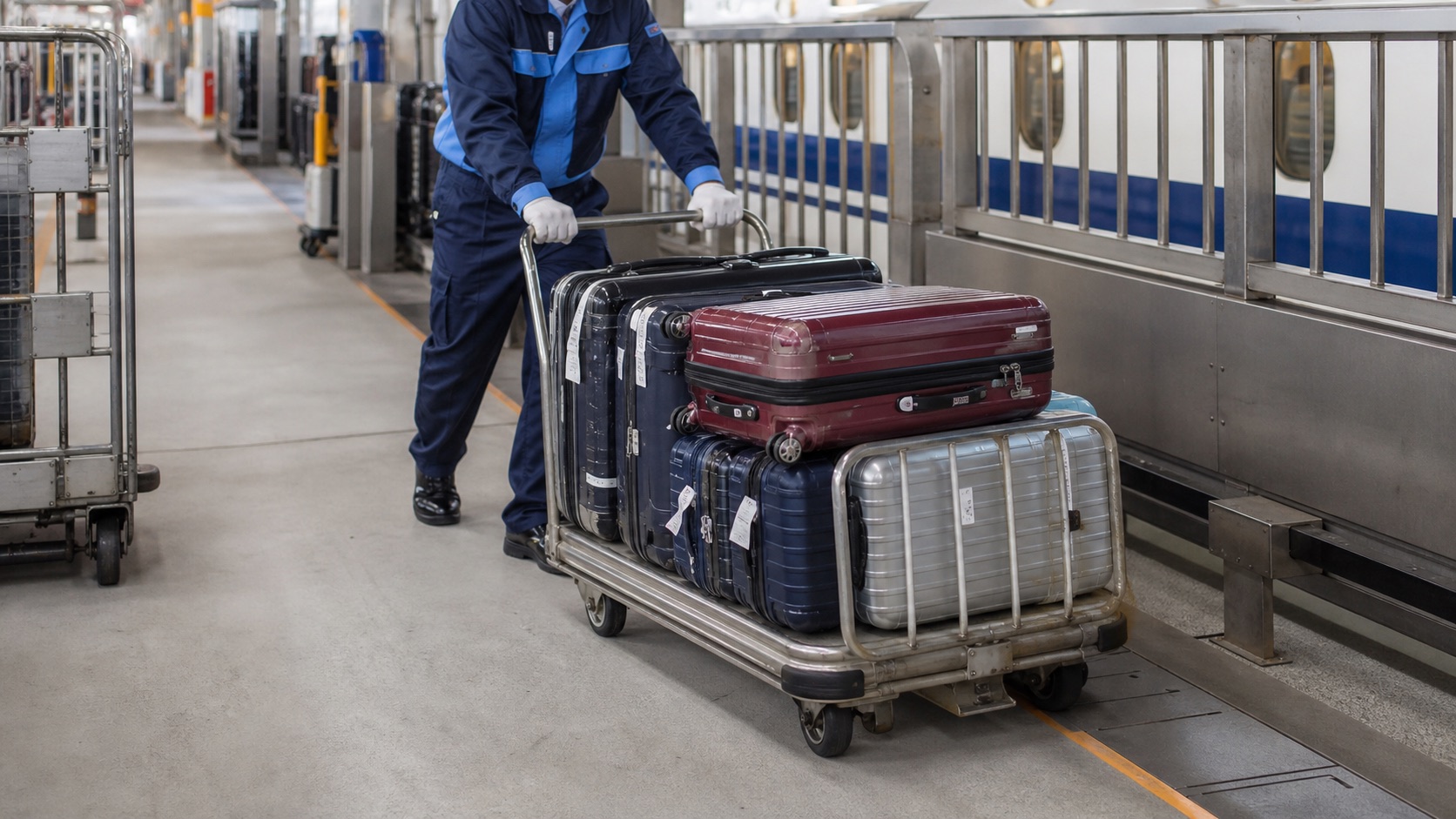
An Airbnb, vacation rental or hostel with no continuously staffed reception is the highest-risk destination.
Yamato’s official notice says pickup and delivery are unavailable when an Airbnb-like accommodation has no reception-desk staff. It advises travelers leaving such a property to take the bag to a Yamato sales office or participating convenience store. For collection, the parcel can be addressed to a Yamato sales office rather than to the unmanned property.
Yamato’s participating convenience-store list includes 7-Eleven, FamilyMart, NewDays, Daily Yamazaki and Poplar. Service and parcel acceptance vary by branch, and some stores cannot accept parcels larger than Size 180. Convenience stores are drop-off locations; they are not destination pickup counters.
If your lodging has a host or manager, obtain written confirmation before sending. Confirm:
- Whether someone will be present at the delivery time
- The exact address and room or building details
- The reservation name to place on the waybill
- What happens if the first delivery attempt fails
If no staffed recipient is available, choose a sales-office pickup or carry the suitcase. The Japan Check-In Guide explains why hotel, Airbnb and minpaku arrival procedures differ.
What You Should Not Put in a Delivered Suitcase
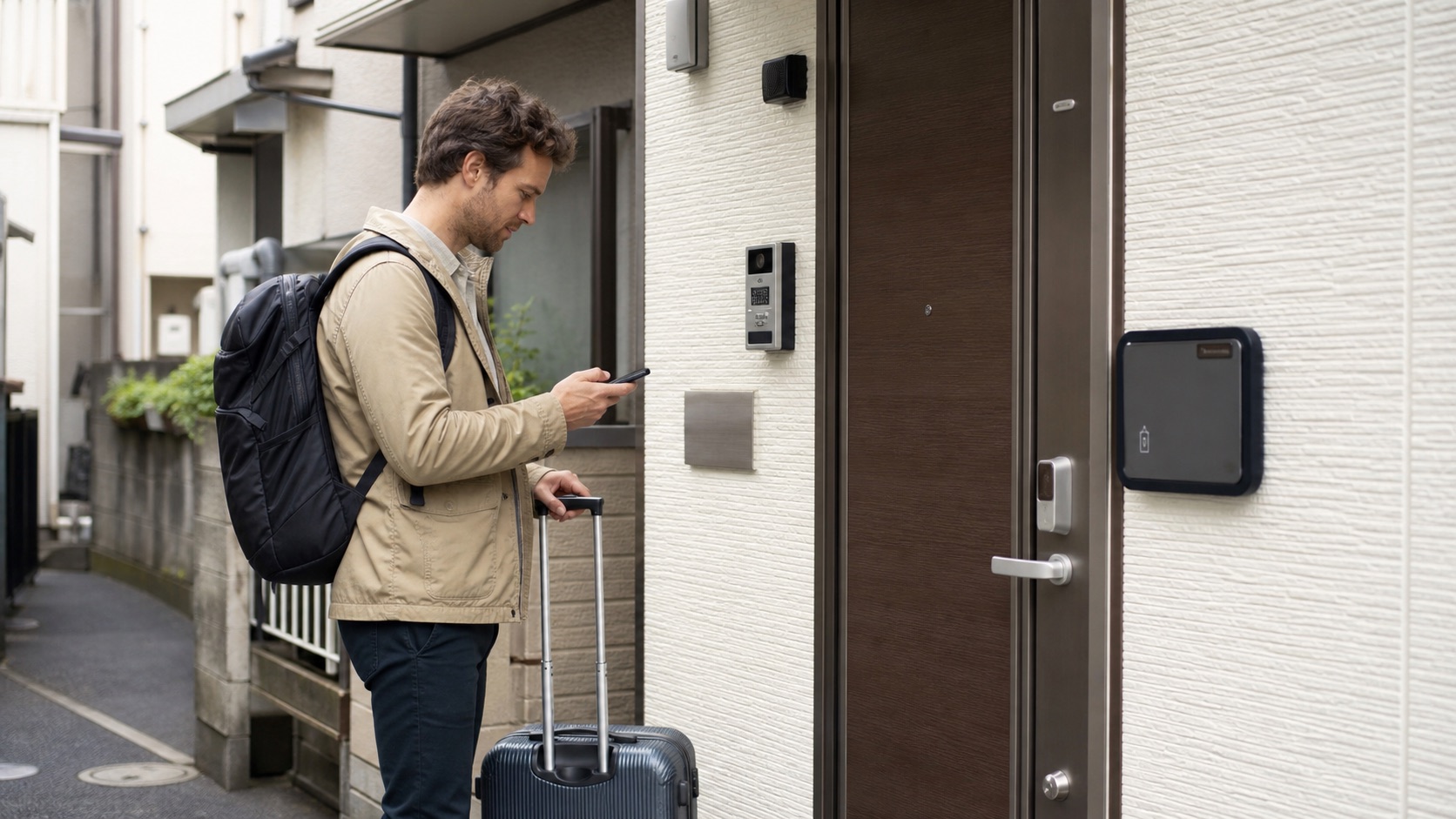
Keep irreplaceable and time-sensitive items with you. Yamato’s standard prohibited-items list includes:
- Cash, checks and securities
- Credit cards and bank cards
- Passports and other documents that are difficult to replace
- Items worth more than ¥300,000 in one parcel
- Dangerous, flammable or explosive materials
- Parcels over Size 200
Routes involving aircraft can impose additional restrictions. Yamato specifically warns about aerosols, perfume and other liquids, lighters, and lithium batteries on air routes. The operator may move a parcel by surface transport or delay it when air carriage is not permitted.
Do not assume that an item accepted on an international flight is automatically acceptable inside a courier shipment. Airlines and delivery companies apply different transport rules.
Common Mistakes and How to Avoid Them
Mistake 1: Assuming the delivery date cannot change
Normal TA-Q-BIN often arrives the next day or in two days, but weather, traffic, distance, islands and restricted air cargo can change the date. Pack for one night without the suitcase.
Mistake 2: Sending to a hotel that will not accept the bag
Confirm reception before shipping. A booking confirmation does not automatically mean the front desk accepts unaccompanied luggage.
Mistake 3: Using the wrong hotel branch
Japanese hotel chains may have several properties near the same station. Copy the full address and phone number from the booking confirmation.
Mistake 4: Packing the passport, medication or battery pack
Keep essential and prohibited items in your day bag. Reopening a suitcase at an airport or station counter may be difficult because the counter has limited space.
Mistake 5: Assuming the nearest convenience store accepts the suitcase
Check the courier logo and ask staff. Store chains, individual branches, parcel size and service type affect acceptance.
Mistake 6: Missing a same-day cutoff by a few minutes
Same-day counters follow their published cutoff and service area. Arriving while the counter is open does not mean the same-day truck is still accepting bags.
Plan B: What to Do When Delivery Is Not Available
Use this fallback order:
- Ask for regular next-day delivery. Carry one overnight bag and confirm the destination date.
- Reserve oversized-baggage space on the Shinkansen. This solves the train problem when you can physically manage the suitcase.
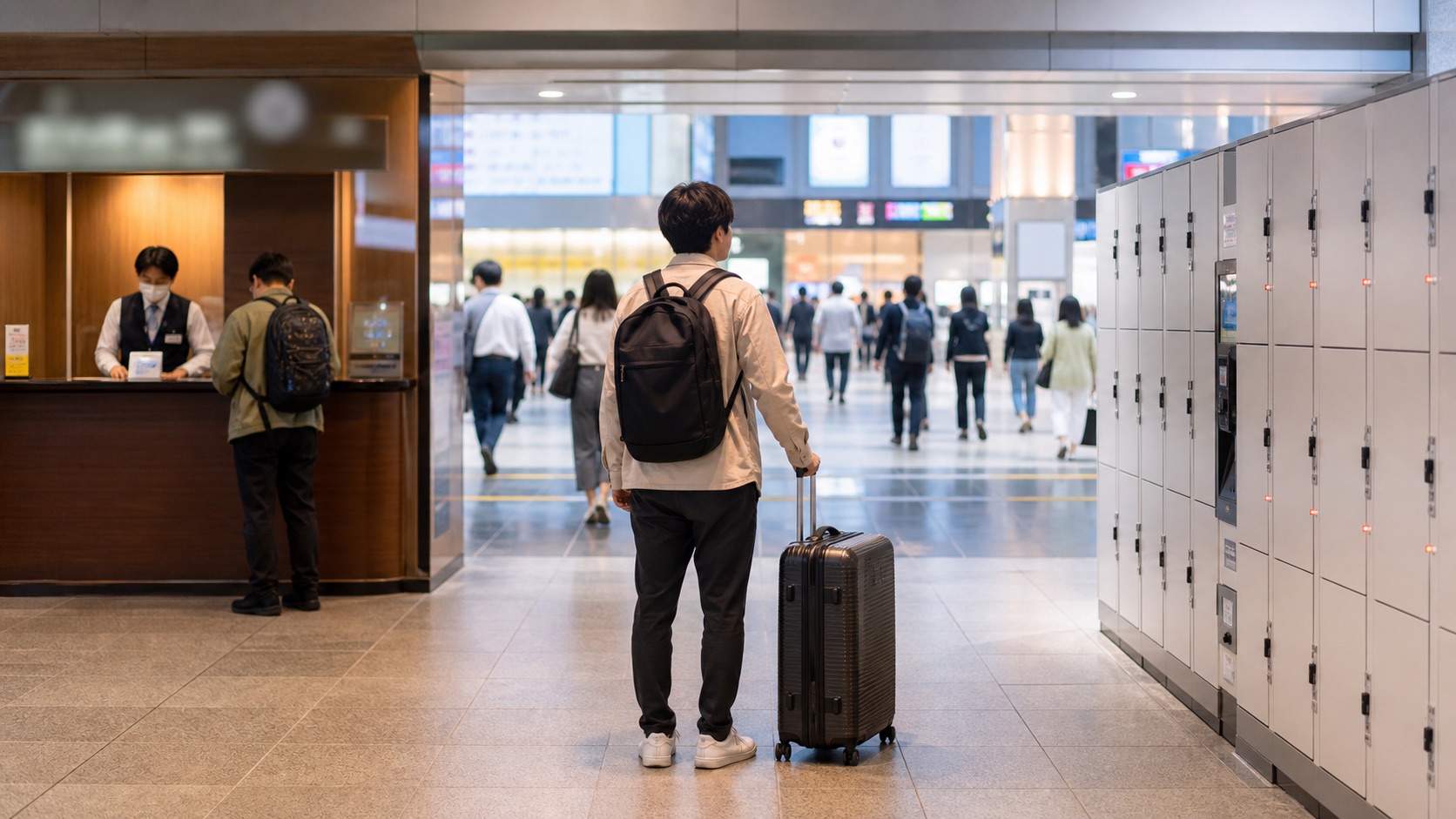
- Use staffed luggage storage. Choose this when you need the bag again in the same city.
- Use a Yamato sales-office pickup. This can work when an unmanned property cannot receive the bag.
- Carry the bag to the next hotel. Use elevators, a direct airport bus or taxi for the hardest segment rather than forcing the entire route through stairs.
If you arrive after trains and delivery counters have closed, use the Tokyo Late-Night Arrival Guide.
Before You Hand Over the Bag
Run this final check at the counter:
- Destination confirmed by the receiving hotel
- Guest name matches the reservation
- Check-in date written where requested
- Delivery date confirmed by staff
- Passport, cash, cards and medication removed
- Power bank and restricted items removed
- One-night kit kept with you
- Tracking receipt photographed and stored
- Plan B chosen in case of delay
The best luggage plan is not the one that removes the suitcase fastest. It is the one that keeps your trip functioning if the suitcase arrives later than expected.
Frequently Asked Questions
How much does luggage delivery cost in Japan?
The price depends on the operator, route, dimensions, weight and service. Yamato’s July 2026 table lists Size 140 at ¥2,190 within Kanto and ¥2,310 from Kanto to Kansai. Size 160 is ¥2,510 and ¥2,630 respectively. Check the current calculator for your exact route.
How long does takkyubin take?
Yamato says normal TA-Q-BIN commonly takes the next day or two days. Hotel guidance may require sending two or three days before check-in. Confirm the counter’s promised date and carry overnight essentials.
Can I send luggage from one hotel to another?
Yes, when the sending hotel can arrange the service and the receiving hotel has a front desk that agrees to accept the suitcase. Confirm both hotels before shipping.
Can I send luggage to an Airbnb?
Delivery may be unavailable when the property has no staffed reception. Ask the host first. A Yamato sales-office pickup or carrying the suitcase is safer when nobody can receive it.
Can a convenience store send my suitcase?
Participating branches of 7-Eleven, FamilyMart, NewDays, Daily Yamazaki and Poplar can accept standard TA-Q-BIN, but services, payments and size limits vary. Some stores cannot accept parcels larger than Size 180.
Can I send luggage from Narita Airport to Tokyo on the same day?
Yamato offers same-day delivery under specific cutoff, destination and reception conditions. Its current FAQ lists 10:30 a.m. at Narita Terminals 1 and 2 and 9:50 a.m. at Terminal 3, plus a ¥660 counter fee. Recheck on arrival.
Should I send my suitcase before taking the Shinkansen?
Send it when transfers, stairs or sightseeing make the bag a burden. If you carry baggage over 160 cm total dimensions on the Tokaido-Sanyo-Kyushu Shinkansen, reserve a seat with an oversized-baggage area.
What should stay in my day bag?
Keep your passport, money, cards, medication, phone, power bank, chargers, delivery receipt and one change of clothes with you.
Official Sources
- Yamato: How to send a domestic TA-Q-BIN parcel
- Yamato: Hotel-to-hotel luggage FAQ
- Yamato: Hotels and ryokans FAQ
- Yamato: Airbnb and unstaffed lodging notice
- Yamato: Dangerous and prohibited items
- Japan Post: Yu-Pack
- Sagawa: Hands-Free Travel FAQ
- JR Central: Shinkansen oversized-baggage rules
- JR Central and JTB: LUGGAGE EXPRESS launch
- Haneda Airport: Home delivery counters
- Narita Airport: Baggage and delivery services

Comments