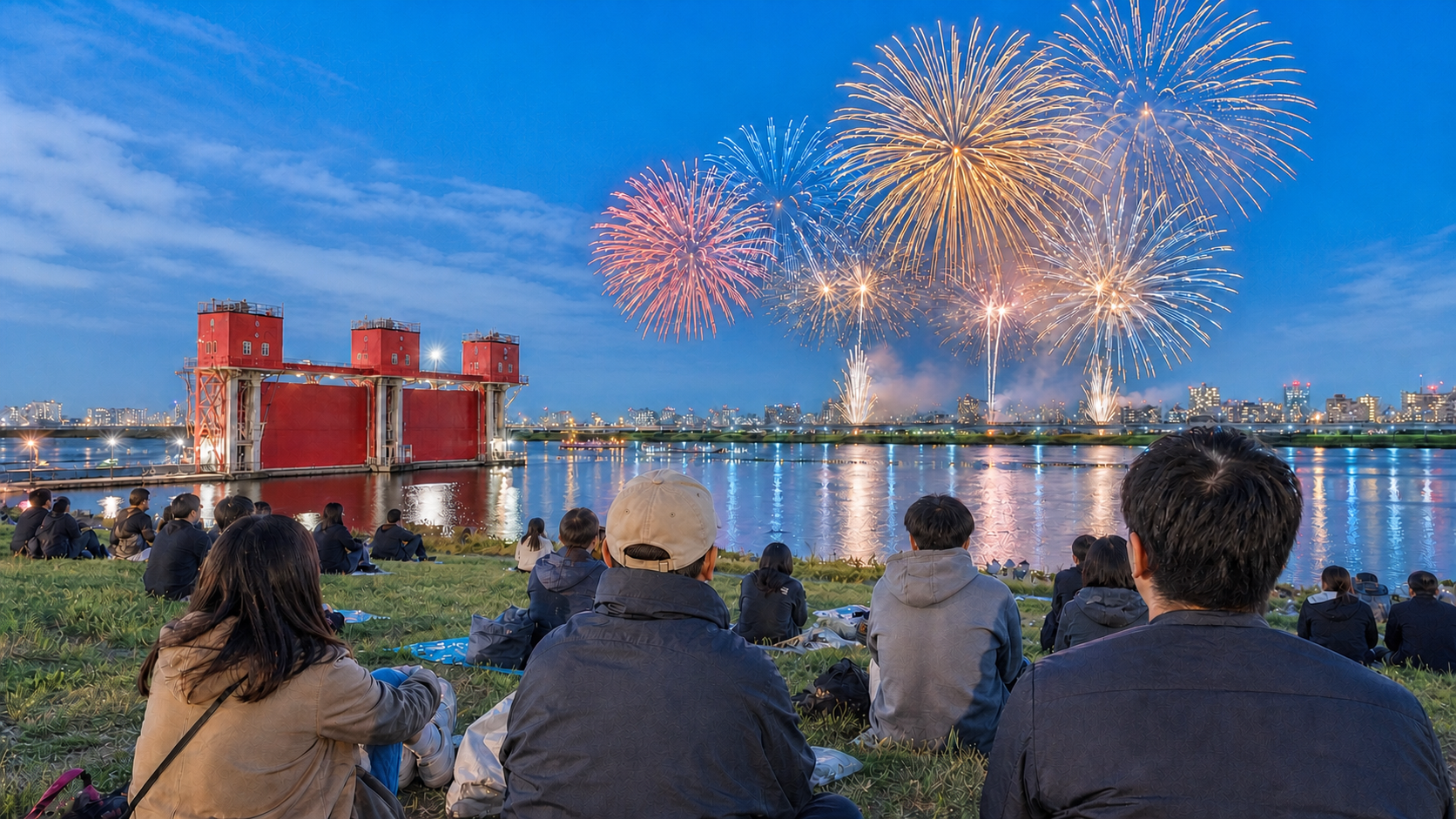
Kita City Fireworks is an autumn fireworks show on the Arakawa River, but choosing to attend is one of several decisions. The event has two viewing sides in different prefectures: Akabane in Tokyo and Kawaguchi in Saitama. Both have free and paid areas, and your ticket determines the bank, entry gate and route you should use.
The 2026 event is scheduled for Saturday, September 26, around the Iwabuchi floodgates. The show starts at 18:30. The organizer expects about 10,000 fireworks and a drone show. Rain alone does not cancel the event, but severe rain, strong wind, lightning or another safety issue can. There is no postponement date.
This guide helps you choose a riverbank, avoid buying the wrong ticket, arrive before access controls tighten and leave without relying on a last-minute map search.
- Quick answer: which plan should you choose?
- Date, time and what is confirmed for 2026
- Akabane or Kawaguchi: decide before choosing a train
- Ticket choices without the Japanese-name confusion
- Free viewing is possible, but it is not a reservation
- Which station should you use?
- A realistic arrival timeline
- Plan the exit before the first firework
- Rain, cancellation and ticket refunds
- Rules that prevent common failures
- Plan B: what if your first plan fails?
- Kita City Fireworks 2026 FAQ
Quick answer: which plan should you choose?
Choose the bank first, then the seat, then the train.
- Pick Akabane if you want the Tokyo side, the widest choice of ticket types or food stalls in both paid and free areas.
- Pick Kawaguchi if a simpler paid-seat list, lower-priced chair or pair seats, or a view across the river fits you better. The organizer says music is planned near Kawaguchi’s paid seats, but not in its free area.
- Use a paid seat if you want a defined place and do not want to compete for a free-area position. The lowest listed paid option on both banks was the ¥3,300 fan zone when checked on August 1.
- Use a free area when you can arrive early and accept possible entry restrictions. Free areas open at 15:00; paid areas open at 16:00.
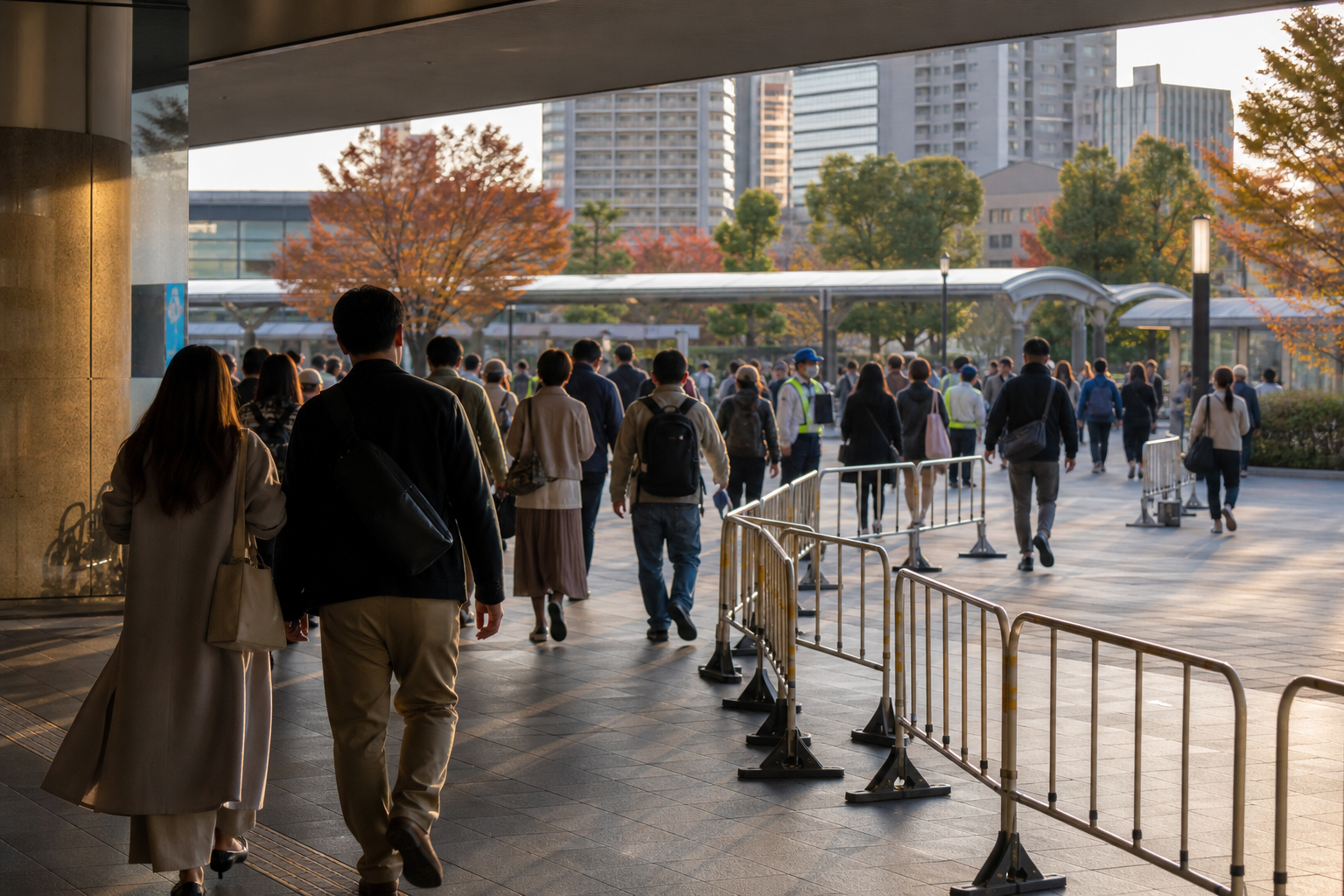
- Reach the riverbank by 17:30 at the latest. The organizer warns that the trip from the station to the riverbank may take 30 to 60 minutes during event congestion.
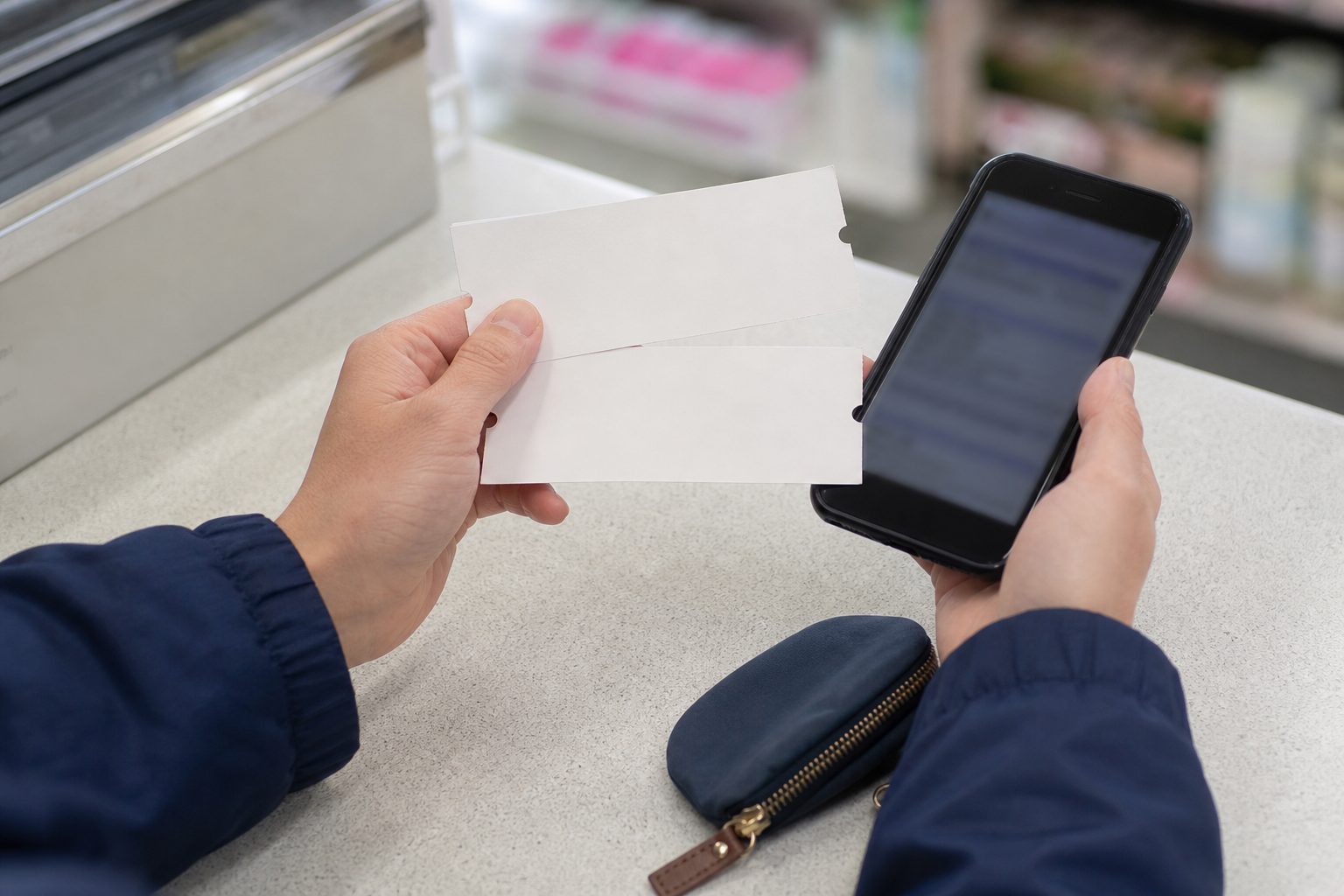
- Keep the required paper ticket with you, and save the bank, gate and return station offline. A phone photo is a backup reference and is not an entry ticket. Mobile service may be difficult at the venue.
- Expect a controlled exit after the show. Do not book a tight Shinkansen, airport transfer or restaurant reservation afterward.
| Your priority | Practical choice | What to confirm before paying | Main fallback |
|---|---|---|---|
| Lowest-priced defined area | ¥3,300 fan zone on either bank, if still available | Bank name, no-chair rules and required mat size | Free area or official Ticket Pia resale |
| A chair for one person | Kawaguchi chair seat was ¥6,600; Akabane Red Floodgate chair was ¥8,800 | Live stock and the correct event page | Another chair category or skip the crowded free area |
| A pair | Kawaguchi pair seat was ¥6,600 per person; Akabane Red Floodgate pair was ¥8,800 per person | Prices are per person and sold in two-ticket units | Two individual chair seats if available |
| A group of four | Compare the four-ticket sheets and garden-chair products | Price per person, minimum purchase unit and chair restrictions | Fan zone or free area; do not split a required ticket unit |
| Wheelchair user | Use the organizer’s dedicated Akabane Blue Floodgate process | It is not a normal Ticket Pia purchase | The organizer identifies Shimo Yurinoki Park for wheelchair users without the paid ticket |
| No ticket | Choose one official free area and arrive before it fills | 2026 access map and entry-control updates | Leave rather than forcing entry after restrictions begin |
Ticket inventory can change at any time. Open the live Akabane Ticket Pia page or Kawaguchi Ticket Pia page immediately before purchase.
Information checked August 1, 2026. Ticket stock, access controls, performance details and weather decisions may change.
Date, time and what is confirmed for 2026
The official organizer homepage and Kita City confirm the event date and location.
| Item | 2026 information |
|---|---|
| Date | Saturday, September 26, 2026 |
| Main area | Arakawa riverbed around the Iwabuchi floodgates |
| Free-area opening | 15:00 |
| Paid-area opening | 16:00 |
| Start | 18:30 |
| Planned scale | About 10,000 fireworks, maximum 5-go shell, plus a planned drone show |
| Weather | Held in rain; canceled for severe weather or another safety reason; no postponement |
| Site closing | 21:00 on the organizer’s ticket overview |
There is one timing difference worth knowing. The organizer’s 2026 Q&A says the planned finish is 19:30, while the ticket overview lists closing remarks at 19:40 and warns of exit controls. Do not build your return plan around either exact minute. Treat 19:30 onward as the start of a controlled departure period, not as the moment you will reach a station.
The event calls itself Kita City Fireworks, but the Kawaguchi viewing side is across the river in Saitama Prefecture. A valid ticket for one bank is not a general pass for both banks.
Akabane or Kawaguchi: decide before choosing a train
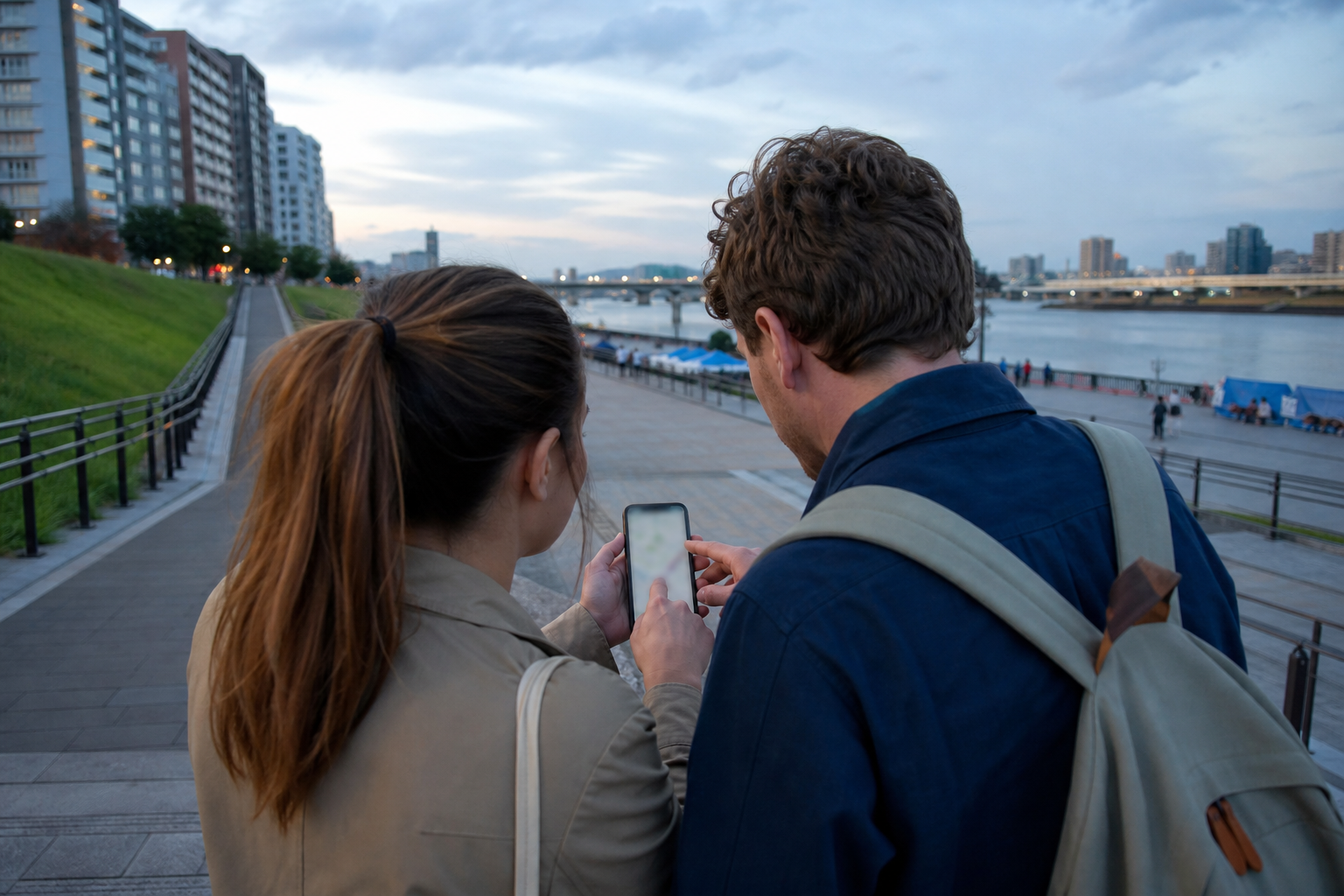
The organizer explicitly warns visitors not to confuse the two venues. That warning matters because the ticket names are in Japanese, the banks have different gates, and the detailed 2026 access page was still marked “in preparation” on August 1.
| Decision point | Akabane side | Kawaguchi side |
|---|---|---|
| Prefecture | Tokyo | Saitama |
| Free area | Opens at 15:00 | Opens at 15:00 |
| Paid area | Blue Floodgate, Red Floodgate and Akabane Fan Zone products | Premium, pair, chair, fan zone and photographer products |
| Food | Planned in the Blue, Red and free areas | Planned in the paid area only |
| Music | Check the final area program | Planned near paid seats; not planned in the free area |
| Entry rule already published | Blue/Red ticket holders use Shintoshimo Bridge; fan zone uses Iwabuchi Bridge | Follow the final Kawaguchi access map for your ticket |
| Useful starting station | Akabane-iwabuchi on the Namboku Line is the closest named subway reference; JR Akabane is another approach | Kawaguchi-motogo was the official visitor route in 2025; confirm the 2026 map before travel |
| Best fit | More ticket formats and a fuller food-stall plan | Simpler seat comparison and lower listed pair/chair prices |
“Best side” depends on the ticket and evening you want. Akabane is not automatically better because it is in Tokyo. Kawaguchi is not automatically quieter because it is across the river. Both sides have free areas, both can restrict entry, and both feed into a controlled exit.
Ticket choices without the Japanese-name confusion
Nationwide Ticket Pia sales began on July 24 and are scheduled to run until 16:00 on the event day, unless the allocated inventory sells out first. Some premium and photographer products had already sold out when checked on August 1, while other products remained available.
The prices below are a decision sample, not a promise of stock.
| Bank and product | Listed price | Purchase unit | Status checked Aug 1 |
|---|---|---|---|
| Akabane Fan Zone | ¥3,300 per person | Up to eight | On sale |
| Akabane Red Floodgate Slope Area | ¥4,400 per person | Four tickets | On sale |
| Akabane Red Floodgate Group Sheet 4A | ¥7,700 per person | Four tickets | On sale |
| Akabane Red Floodgate Chair | ¥8,800 per person | Individual selection | On sale |
| Akabane Red Floodgate Pair | ¥8,800 per person | Two tickets | On sale |
| Akabane Blue Floodgate Pair | ¥15,400 per person | Two tickets | On sale |
| Kawaguchi Fan Zone | ¥3,300 per person | Up to eight | On sale |
| Kawaguchi Pair | ¥6,600 per person | Two tickets | On sale |
| Kawaguchi Chair | ¥6,600 per person | Individual selection | On sale |
| Kawaguchi Premium Sheet | ¥7,700 per person | Four tickets | On sale |
| Kawaguchi Premium Garden Chair | ¥11,000 per person | Four tickets | On sale |
| Kawaguchi Premium Pair | ¥15,400 per person | Two tickets | On sale |
Read the small line below the price. Ticket Pia displays several prices per person while requiring two or four tickets in one purchase. A ¥7,700 four-person product therefore is not a ¥7,700 total group purchase.
The fan zone does not include a leisure sheet. The organizer allows a visitor-supplied sheet up to 60 cm by 60 cm per person, and place selection starts after the paid area opens at 16:00. Chairs are not allowed in sheet-seat areas. If sitting on the ground is difficult, choose a product that explicitly includes a chair.
Free viewing is possible, but it is not a reservation
The organizer confirms free areas on both the Akabane and Kawaguchi sides. They open at 15:00. This makes a no-ticket visit possible, but it does not guarantee admission or a clear view.
The 2026 Q&A says the free area was subject to entry restrictions last year and warns visitors to arrive early. If restrictions are activated, follow police and event staff. Do not try to enter through a paid gate, a closed riverside path or the Shingashi River tennis-ground area, which the organizer says will be restricted.
Free-area differences also matter:
- Akabane plans food stalls in its free area as well as its Blue and Red paid zones.
- Kawaguchi plans food stalls in its paid viewing area; the organizer’s Q&A does not list stalls for its free area.
- Kawaguchi plans event music near the paid seats, not in its free area.
If the atmosphere, food and synchronized music are part of your reason for going, the cheapest paid zone may solve your problem better than a free spot.
Which station should you use?
Do not let a map app choose the bank after you arrive. Save the bank printed on your ticket first.
Akabane side
Akabane-iwabuchi Station is on the Tokyo Metro Namboku Line. Event-day crowd routes can override an ordinary station-exit plan, so follow the final event map and staff signs rather than relying on a normal-day exit lookup.
JR Akabane is another approach. The event’s general warning is more useful than a normal walking-time estimate: allow 30 to 60 minutes from the station to the riverbank under event conditions.
Kawaguchi side
Kawaguchi-motogo on the Saitama Railway Line was the published route for the Kawaguchi venue in 2025. Because the organizer’s 2026 access page was not yet complete on August 1, confirm the current station, route and gate before departure rather than copying last year’s shuttle or walking instructions.
Whichever side you use, do not plan to cross the river at the last minute. The ticket type changes the access method, and event restrictions may close ordinary paths.
A realistic arrival timeline
Use the organizer’s times as a minimum planning framework.
| Time | Paid-seat plan | Free-area plan |
|---|---|---|
| 14:00–14:30 | Reach your bank’s station if you want food and a low-stress walk | Reach the station before the free area opens |
| 15:00 | Continue to the correct paid entrance; do not block the free-area queue | Free areas open; entry may slow as the area fills |
| 16:00 | Paid and sponsor areas open | Stay inside the permitted free area; do not move into paid zones |
| 17:30 | Be at the riverbank no later than this organizer recommendation | Same; later arrival increases the entry-restriction risk |
| 18:30 | Show starts | Show starts |
| 19:30–19:40 | Show ending period; controlled exit may begin | Expect the same crowd-control instructions |
| Up to 21:00 | Venue closes after staged departures | Venue closes after staged departures |
This timeline is deliberately conservative. It does not promise that a station-to-seat walk takes one hour, or that gates will open without delay.
Plan the exit before the first firework
The organizer says exit controls will be used by area. That means the route you want may not be available at the moment you stand up.
Before the show:
- Carry the required paper ticket. Photograph its bank and gate details for reference, and screenshot the final official access map; the photo does not replace the paper ticket.
- Write down the bank, zone, gate and planned station in one note.
- Agree on a meeting point inside your zone before mobile service becomes difficult.
- Give each person their own ticket if your group may enter separately.
- Avoid a fixed post-show appointment.
After the show:
- Stay within the announced route and follow police and staff.
- Do not push toward a bridge or closed path because it looks shorter in a map app.
- If you are not in a hurry, wait for the first departure wave to clear in a permitted area.
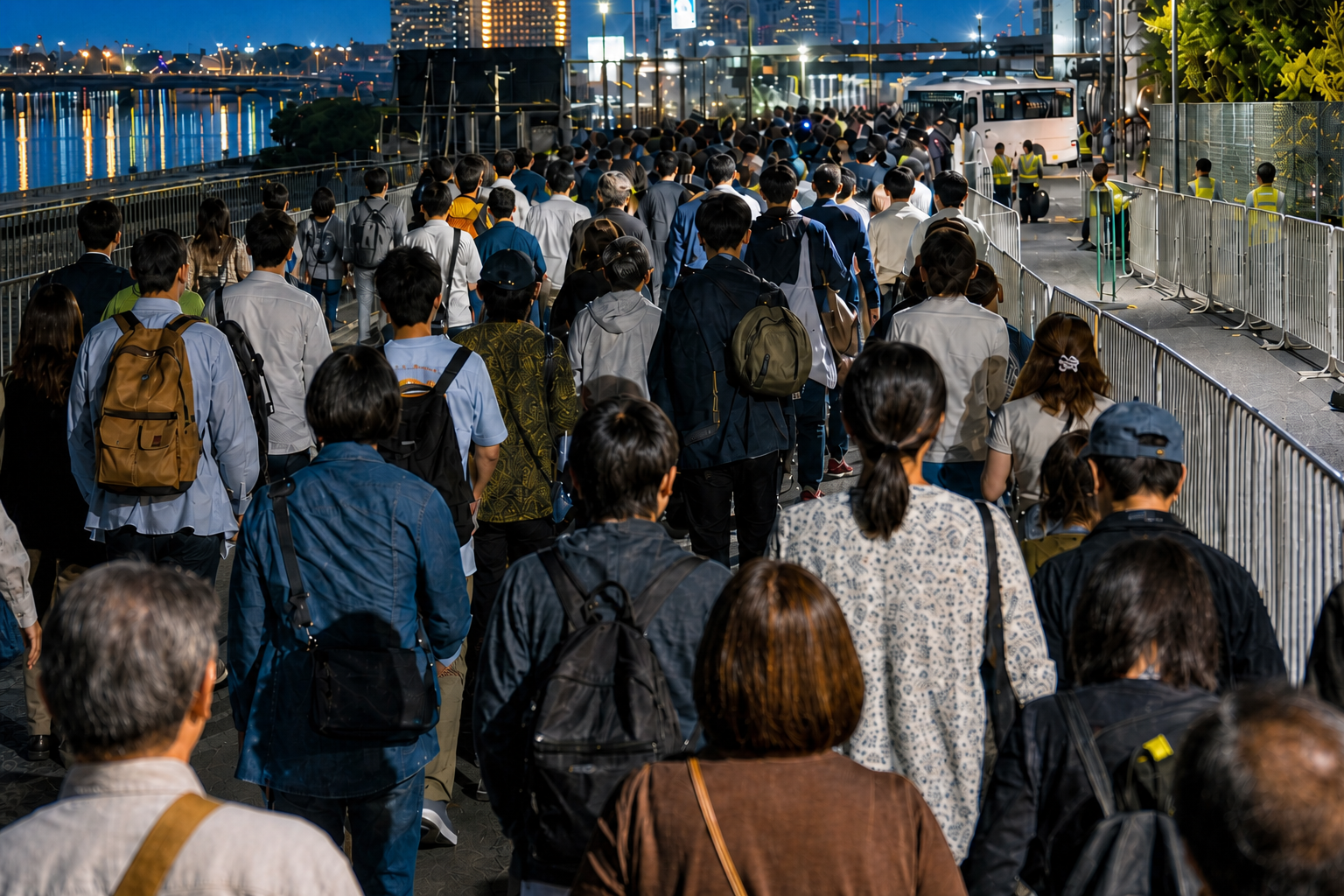
- If you must make a long-distance connection, leave enough margin to miss one or more intended trains.
The core program is scheduled for about one hour; the travel operation around it can take several hours.
Rain, cancellation and ticket refunds
The show proceeds in ordinary rain. It may be canceled for heavy rain, strong wind, lightning, an earthquake or another safety reason. The organizer says there is no postponement.
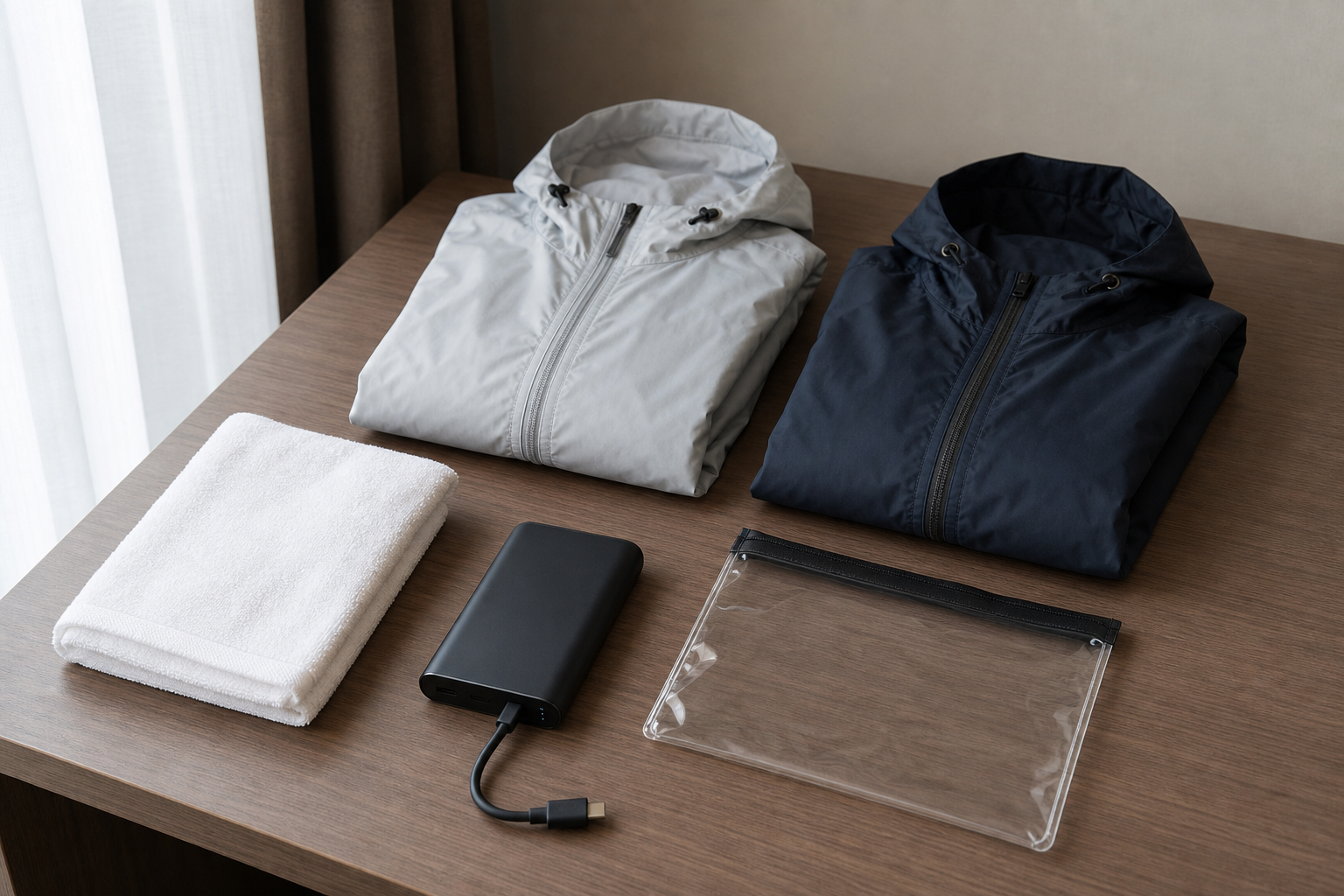
Umbrellas cannot be used during the fireworks because they block views and create a safety problem in the crowd. Bring a raincoat rather than relying on an umbrella at your seat.
For tickets:
- A visitor-requested cancellation is not allowed after purchase. Use Ticket Pia’s official resale service if the ticket is eligible.
- If the organizer cancels for severe weather or an organizer-side reason, it says paid-ticket refunds will be handled.
- Ticket Pia buyers should follow Ticket Pia’s published refund process.
- Keep the complete ticket set for a pair or group purchase. The organizer says it cannot process a partial refund for a required set.
- Sponsor-seat contributions are not covered by the paid-ticket refund statement.
Check the official Q&A and official social accounts on the day. If the event is canceled, do not travel to the riverbank. Use an indoor alternative such as the RJG Tokyo Museums for Rainy Days guide.
Rules that prevent common failures
- No re-entry: once you leave, you cannot return to the venue.
- No pets: pets are prohibited throughout the venue, including the dog-run area.
- No smoking: the entire venue is smoke-free, including electronic cigarettes.
- No tripods outside photographer seats: ordinary visitors cannot use a tripod.
- No drones or radio-controlled aircraft: the ban applies around and above the venue.
- Bring rubbish out: use designated separated bins when they are provided.
- Print or collect paper tickets early: the organizer warns that nearby convenience stores will be crowded on the day.
- Children: a ticket is required from first grade; a preschool child may sit on an adult’s lap without a separate ticket.
- Strollers: there is no storage point; fold and keep the stroller within your own seat space.
For broader crowd, food and train preparation, use the RJG Japan Festival Survival Guide. For choosing a different fireworks event, start with Japan Summer Fireworks 2026.
Plan B: what if your first plan fails?
| Failure | Safer next action |
|---|---|
| Your preferred seat sells out | Check another product on the same bank, the other bank only if its route works, or Ticket Pia’s official resale service |
| You cannot sit on the ground | Do not buy a fan zone or sheet product; choose a named chair product or skip the crowded free area |
| The free area reaches entry control | Follow staff and leave the access route; do not force entry or use a closed path |
| The 2026 access map is still incomplete when you must decide | Delay purchase or choose a ticket whose bank and entry instructions you can verify |
| Severe weather cancels the show | Do not travel to the river; follow the refund notice and switch to an indoor Tokyo plan |
| Your group becomes separated | Use the pre-saved meeting point and individual tickets; do not depend on a live message connection |
| You have a tight train or flight connection | Skip the finale or skip the event; a controlled exit cannot guarantee your intended train |
Kita City Fireworks 2026 FAQ
Is Kita City Fireworks 2026 confirmed?
Yes. Kita City and the organizer list Saturday, September 26, 2026, at the Arakawa riverbed around the Iwabuchi floodgates. Severe weather or another safety issue can still cancel it.
Is Kita City Fireworks good for overseas visitors?
It can be, especially for travelers in Tokyo in late September who want an autumn riverside show. The central difficulty is choosing the correct bank, ticket and return route before arrival.
Do I need a ticket?
No. The organizer confirms free areas on both the Akabane and Kawaguchi sides. A paid ticket gives you a defined zone or seat but must match the correct bank.
Should I choose Akabane or Kawaguchi?
Choose Akabane for the Tokyo-side route and broader ticket and food-stall plan. Compare Kawaguchi when its pair, chair or fan-zone product and Saitama-side route fit your group better. Neither side avoids event crowds.
Which station should I use?
For Akabane, Akabane-iwabuchi on the Namboku Line is a practical subway reference, with JR Akabane as another approach. For Kawaguchi, confirm the final 2026 organizer map; Kawaguchi-motogo was the published route in 2025.
What time should I arrive?
Free areas open at 15:00 and paid areas at 16:00. The organizer recommends reaching the riverbank no later than 17:30 and says the station-to-riverbank trip may take 30 to 60 minutes in the crowd.
What happens if it rains?
Ordinary rain does not cancel the show. Severe rain, wind, lightning or another safety issue can cancel it, with no postponement. Use a raincoat because umbrellas are prohibited during the fireworks.
Can I cancel or refund my ticket?
A buyer-requested cancellation is not allowed. Use the official Ticket Pia resale service when eligible. The organizer says it will handle paid-ticket refunds if severe weather or an organizer-side reason cancels the event; follow the published process and keep the ticket.
Comments