Last checked: August 19, 2026. Driver-license rules, designated translators and rental-company document policies can change. Recheck the linked official pages before paying and again before pickup.
- Quick Answer
- Choose Your Legal Route Before You Book
- Route 1: The 1949 Geneva Convention IDP
- Route 2: Original License Plus an Authorized Japanese Translation
- The One-Year Rule Is an Earlier-Deadline Test
- Rental Pickup Document Checklist
- What to Do if the Counter Refuses Your Documents
- Plan B: Continue the Trip Without Driving
- Frequently Asked Questions
- Can I drive in Japan with my domestic driver's license alone?
- Which international driving permit is valid in Japan?
- Is a digital IDP or phone photo accepted?
- Which licenses can use the Japanese-translation route?
- Who may issue the Japanese translation?
- Is the IDP automatically valid for one year after I arrive?
- What if I entered through an automated immigration gate?
- What should I do if the rental counter refuses my documents?
- Official Sources
Quick Answer
To drive in Japan as a visitor, you generally need one of three legal routes:
- a valid Japanese driver's license;
- an original paper International Driving Permit issued under the 1949 Geneva Convention by an authorized agency in a qualifying country or region; or
- if your license was issued in Switzerland, Germany, France, Belgium, Monaco or Taiwan, your valid original license plus an authorized Japanese translation.
For the IDP and translation routes, carry your passport. Japan's usable period is capped by both the document's own validity and one year after your landing date, whichever ends first. Before paying for a rental, ask the operator to confirm the exact original documents it will require from every driver.
Do not rely on a phone image, PDF, unofficial online “international license,” or a permit issued under the 1968 Vienna Convention. The National Police Agency says Japan accepts the prescribed 1949 Geneva Convention IDP route, not merely any document called an international permit.
Choose Your Legal Route Before You Book
Start with the country or region that issued your domestic license. Nationality and country of residence are not the deciding fields.
| Your situation | What to prepare | Do not proceed if… |
|---|---|---|
| You hold a valid Japanese license | The original Japanese license and the rental company's pickup documents | The license is expired or does not cover the vehicle class |
| Your issuing country/region uses the 1949 Geneva route accepted by Japan | Original paper 1949 Geneva IDP from an authorized issuer, passport, and any supporting document your operator requires | The permit is Vienna/Paris/Washington format, digital, unofficial, materially wrong in format, expired or missing the correct vehicle-category stamp |
| Your original license is from Switzerland, Germany, France, Belgium, Monaco or Taiwan | Original domestic license, authorized Japanese translation, passport | The translation is self-made or from an ordinary private translator, an original is missing, or the license/eligibility period has expired |
| You cannot confirm either foreign-license route | Do not drive | A rental reservation or payment does not create legal eligibility |
The NPA route chart gives the United States, Italy, the United Kingdom, Canada, South Korea, Thailand, the Philippines and Hong Kong as examples of places using the Geneva route. It also shows China, Vietnam, Brazil and Indonesia as examples of non-party places. These are examples, not a permanent complete list. Treaty participation, actual permit format and issuing authority all matter, so check the current NPA information and the authority in the place that issued your license.

Route 1: The 1949 Geneva Convention IDP
The name “international driving permit” is not enough. The NPA's test has several parts:
- the permit is issued under the Convention on Road Traffic signed at Geneva on September 19, 1949;
- the issuer is an authorized agency in a qualifying country or region;
- the document materially follows the treaty's booklet format;
- you carry the original paper permit, not a digital image;
- your permitted vehicle category is clearly stamped or otherwise marked; and
- the permit remains within its validity period.
The NPA's general Q&A describes the treaty format as a paper booklet approximately 148 × 105 mm. It also warns that a blank, illegible or incorrectly marked vehicle-category field may leave you unable to drive the intended vehicle. A stamp for a larger-looking category does not automatically grant a smaller category: drive only the class actually marked.
Several rental companies state that they will refuse a rental when the document does not qualify. Toyota, for example, rejects permits based on the Paris, Washington or Vienna conventions, permits in a materially different format, and documents from unauthorized online sellers.
What to do before departure
- Ask the official licensing or motoring authority in the place that issued your domestic license whether it issues the 1949 Geneva Convention IDP for Japan.
- Check the treaty name printed on the permit.
- Check the issue date, expiry, photo, personal details and vehicle category.
- Keep the original paper permit in your travel-document folder.
- Send the rental company the document type and issuing authority—not sensitive document copies unless its secure process specifically requests them—and ask for written confirmation of the pickup set.
Carry your domestic license as a practical backup even where the operator's public checklist highlights the IDP and passport. The counter may need to confirm identity, categories or operator-specific requirements.
Route 2: Original License Plus an Authorized Japanese Translation
This route is limited to licenses issued in:
- Switzerland
- Germany
- France
- Belgium
- Monaco
- Taiwan
You need all three parts at pickup:
- the valid original domestic license;
- a Japanese translation prepared by an entity authorized under Japanese rules; and
- your passport.
The NPA lists the issuing authority or relevant consular office as one route to an authorized translation. It also recognizes designated organizations. JAF provides translations for the six listed jurisdictions, while the NPA currently names additional jurisdiction-specific or designated bodies. Because that designated list can change, use the NPA page and the chosen rental company's current checklist instead of assuming any translator is acceptable.
A certified translator in your home country is not automatically authorized for this driving route. A self-translation is not enough.
JAF's current process is online and accessible from within Japan. JAF says the valid output must be the original paper translation printed through its designated process; a PDF or home print is not valid. That makes “I will fix it at the counter” a risky plan. Allow time after arrival or use another authorized route that you have confirmed in advance.

The One-Year Rule Is an Earlier-Deadline Test
“Valid for one year” can be misleading because more than one clock applies.
For an IDP or qualifying foreign-license route, the NPA states that you may drive for no more than one year after landing in Japan and never beyond the underlying permit or license's valid period. For an IDP, the permit itself is valid for one year from its issue date. Your actual last usable day in Japan is therefore the earliest applicable deadline.
Example: if your IDP expires four months after you land, you do not receive twelve months in Japan. The permit's earlier expiry controls.
For people recorded in Japan's Basic Resident Register who left after departure confirmation or under a re-entry-permission route, the NPA says a return less than three months later may not count as a new landing date for this purpose. Long-term residents should use the NPA diagram and ask the relevant prefectural driver-license center about their exact dates.
Keep evidence of your landing date
Rental staff may need to verify when you entered Japan. Toyota instructs customers using automated immigration gates to obtain a landing permission seal or carry the accepted alternative proof it names. If you plan to rent, ask immigration staff about a passport entry stamp and keep your passport available at pickup. Cruise visitors should check the operator's required landing document before leaving the port.
Rental Pickup Document Checklist
Put the originals for every intended driver in one folder.
If using the IDP route
- original paper 1949 Geneva Convention IDP;
- passport and usable landing-date evidence;
- domestic driver's license as a practical supporting original;
- booking confirmation and the operator's written document reply; and
- the payment method required by the reservation.
If using the translation route
- original license from Switzerland, Germany, France, Belgium, Monaco or Taiwan;
- original authorized Japanese translation;
- passport and usable landing-date evidence;
- booking confirmation and the operator's written document reply; and
- the payment method required by the reservation.
Toyota says all additional drivers must present a valid license for Japan and a passport. Do not assume that a companion may drive because the lead renter's documents passed.
Before paying, ask the exact pickup branch:
- Which license route will you record for each driver?
- Do you accept this issuing authority or translation provider?
- What proof of landing date do you require after automated-gate entry?
- Which vehicle category must be marked for the reserved car?
- What happens to the reservation if the counter cannot verify the documents?
Save the reply with the booking. It is useful evidence of the operator's stated process, but it is not a substitute for a legally valid original document.

What to Do if the Counter Refuses Your Documents
Do not drive away and do not borrow another person's documents. Ask the staff to identify the exact mismatch:
- wrong treaty or permit format;
- unauthorized issuer or translator;
- missing original paper document;
- expired permit, license or Japanese driving period;
- missing landing-date evidence; or
- vehicle category not covered.
Then contact the official issuer or the rental company's support desk. A different car class may help only when your valid document covers that class and the operator agrees. It cannot repair an invalid treaty format, expired permit or unauthorized translation.
Ask the rental company to apply the reservation's published cancellation or change terms. Do not assume that a rejected pickup guarantees a refund.
Plan B: Continue the Trip Without Driving
If the document route is uncertain before pickup, treat the rental as unavailable until confirmed. A safe Plan B is better than driving without valid eligibility.
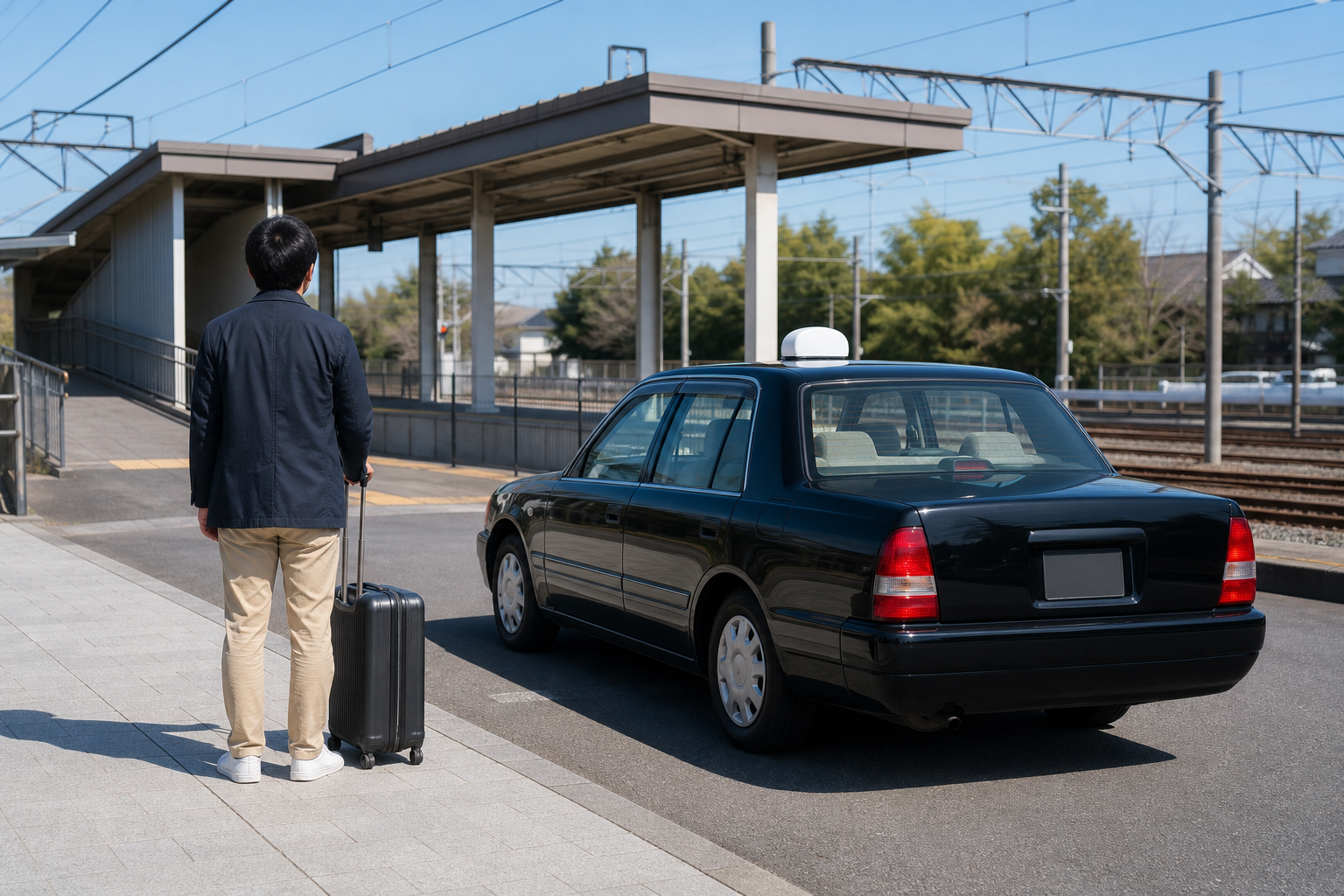
- Move the next destination into Google Maps and compare rail, highway bus and taxi routes.
- Use the Japan Transport 2026 hub to identify the correct rail guide.
- For Tokyo-area legs, use the Tokyo Trains Guide and an IC card instead of improvising a car journey.
- Use the Google Maps in Japan guide to save the route, platform and station exit.
- For a rural destination, ask the accommodation or attraction for its official shuttle, nearest station, bus reservation method or local taxi number.
Rebuild only the affected leg. You may still be able to keep the rest of the itinerary and resolve the rental or cancellation separately.
Frequently Asked Questions
Can I drive in Japan with my domestic driver's license alone?
For a short-term foreign visitor, a domestic license alone is not sufficient. The NPA's translated-license route applies to licenses issued in Switzerland, Germany, France, Belgium, Monaco or Taiwan when accompanied by an authorized Japanese translation and passport. Other eligible visitors use a qualifying original 1949 Geneva Convention IDP route.
Which international driving permit is valid in Japan?
Japan recognizes an original paper IDP issued under the 1949 Geneva Convention by an authorized agency in a qualifying country or region, in the prescribed format and with the correct vehicle category marked. A document's title alone does not prove eligibility.
Is a digital IDP or phone photo accepted?
No. The NPA says you must carry the original paper international driving permit. A phone image, app display or PDF does not replace it.
Which licenses can use the Japanese-translation route?
As of the NPA's April 1, 2026 guidance, the route covers licenses issued in Switzerland, Germany, France, Belgium, Monaco and Taiwan. You must carry the original license, an authorized Japanese translation and your passport.
Who may issue the Japanese translation?
The issuing authority or relevant consular office may qualify, as may organizations designated or recognized under Japanese rules, including JAF for the covered jurisdictions. The approved list can change, so check the current NPA page and your rental operator rather than using an ordinary private or self-translation.
Is the IDP automatically valid for one year after I arrive?
No. You may drive only until the earliest applicable deadline: no more than one year after landing in Japan and no later than the IDP or foreign license's own expiry. An IDP's own validity is one year from issue.
What if I entered through an automated immigration gate?
Your rental company may need proof of the landing date. Toyota advises travelers to obtain a landing permission seal or carry the alternative proof it accepts. Ask immigration staff about a passport stamp and confirm the exact evidence with your rental operator.
What should I do if the rental counter refuses my documents?
Do not drive. Ask for the exact reason, contact the official issuer or rental support, and use rail, bus or taxi for the affected leg. A different vehicle class helps only if your otherwise valid document covers it. Cancellation and refund rights depend on the booking terms.
Official Sources
- National Police Agency: For Holders of Foreign Driver's Licenses
- National Police Agency: Q&A on international driving permits
- National Police Agency: Current foreign-license guidance
- JAF: Driving in Japan with a foreign license
- JAF: How to apply for a translation
- Toyota Rent a Car: Driver's-license requirements
- Nippon Rent-A-Car: Pickup document guide


Comments