Last checked: August 14, 2026
Event dates: October 11–13, 2026
Main lantern procession: October 12, from around 6:00 p.m. until late
Nearest station: Ikegami Station on the Tokyu Ikegami Line
Friction lane: Plan B
See Ikegami Oeshiki in Tokyo on October 11–13, 2026. Pick the right arrival time, avoid the biggest crowd traps, and keep a rain and exit Plan B.
- Quick Answer
- What Is Ikegami Oeshiki?
- Which Day Should You Choose?
- Choose Your Arrival and Viewing Strategy
- How to Get There Without Depending on a Bus
- Stairs, Accessibility and the Temple-Side Bottleneck
- Crowd and Religious Etiquette
- Rain, Service Changes and Plan B
- Build Your Exit Before You Enter
- Final Checklist
- Frequently Asked Questions
Quick Answer
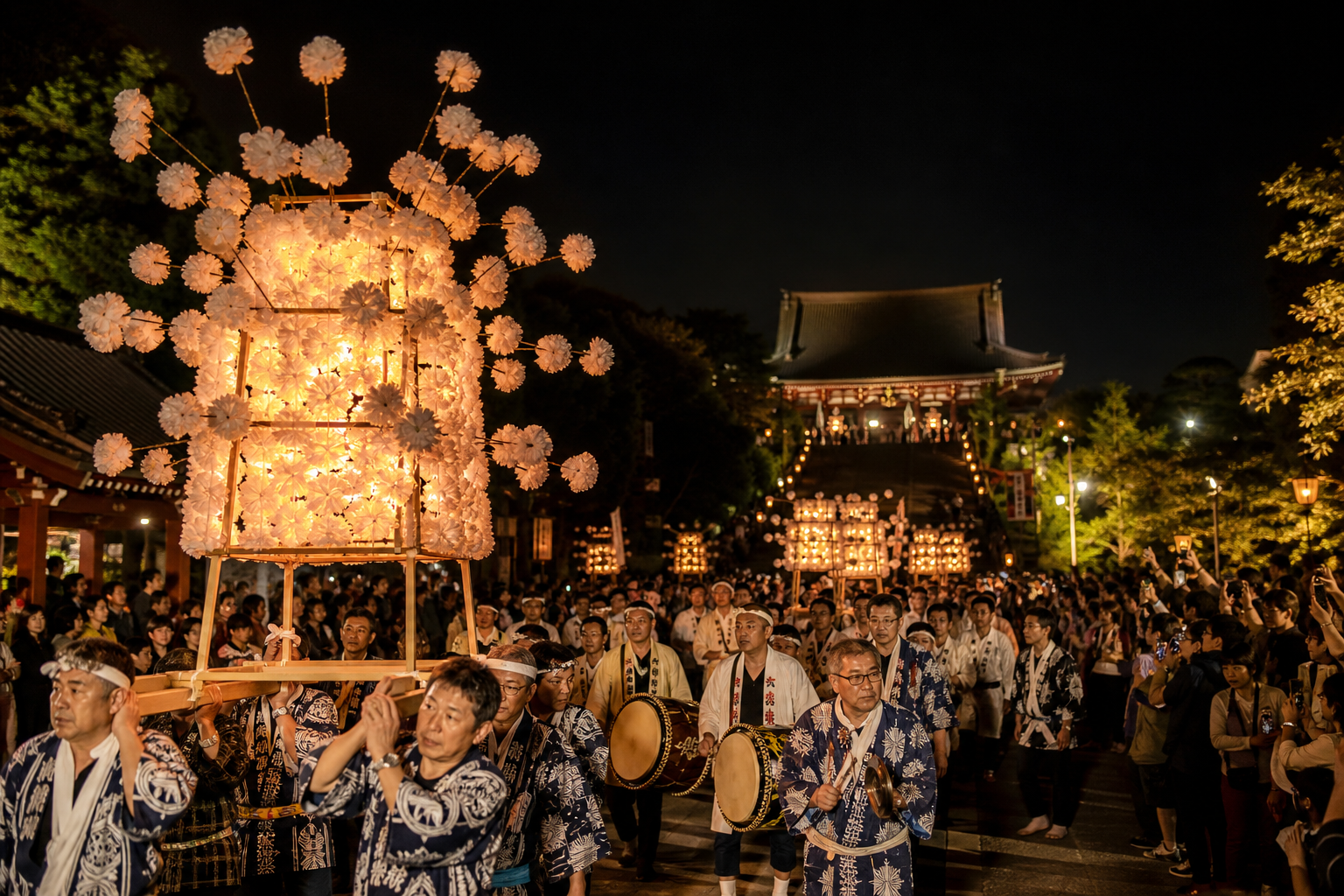
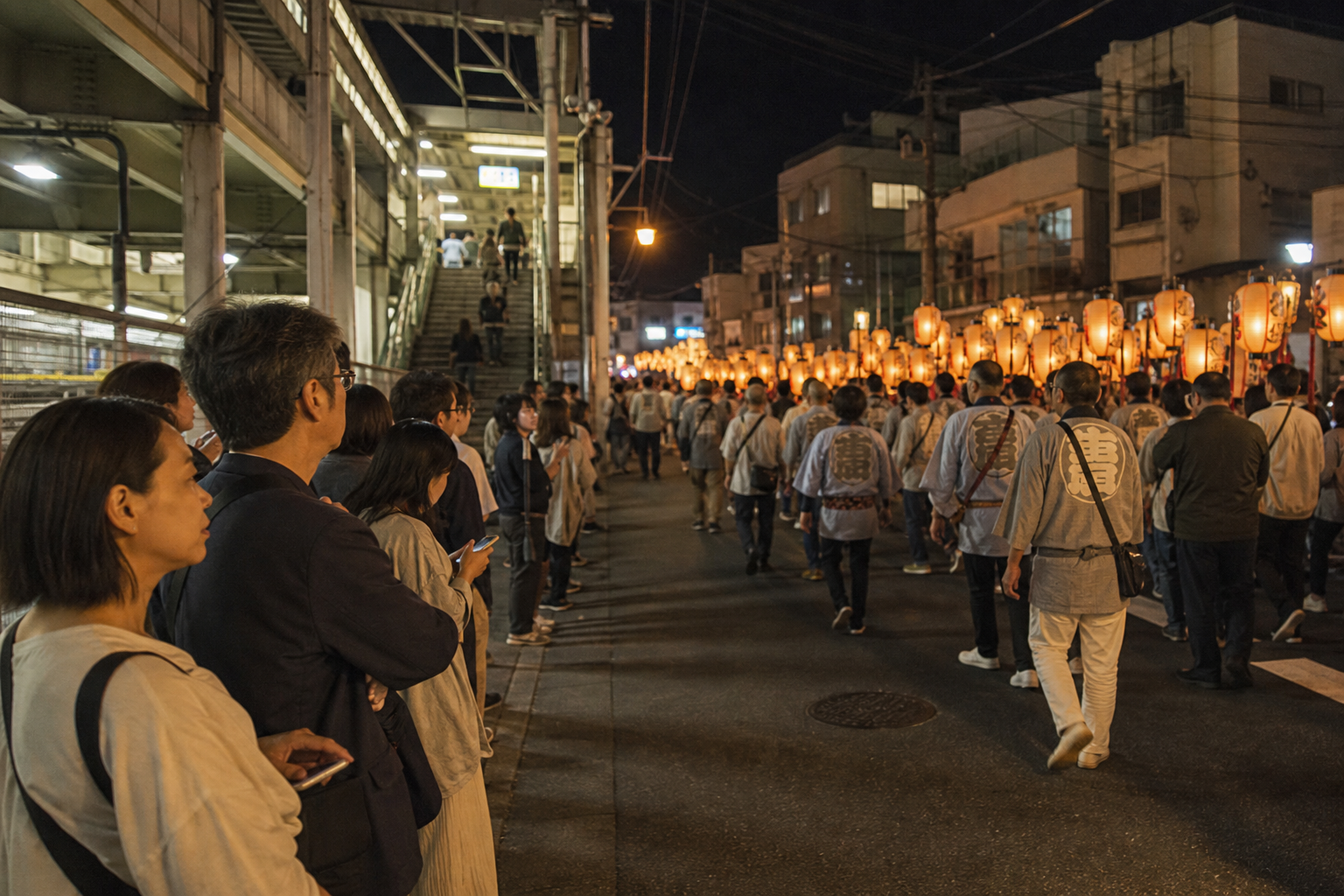
Ikegami Honmonji’s Oeshiki runs every year from October 11 to 13, but the spectacle most visitors mean is the mando lantern procession on October 12. The temple’s annual schedule says the procession starts at about 6:00 p.m., follows a route of roughly 2 km and continues late into the night. Official sources describe about 3,000 participants and crowds of around 300,000.
For the simplest plan, use the Tokyu Ikegami Line to Ikegami Station, walk toward the procession route and decide your priority before entering the crowd:
- Stay closer to the station side if an easier exit matters most.
- Continue toward the temple side if atmosphere matters more and you accept a slower return.
- Visit on October 11 or 13 if you want the religious setting without the main lantern procession.
Do not build the evening around a bus, taxi or car. Road restrictions and bus changes are normal for this event. As of August 14, the detailed 2026 traffic notice and Tokyu special timetable had not yet been published, so check the temple, Ota City and Tokyu again before travel.
What Is Ikegami Oeshiki?
Oeshiki is a Buddhist memorial observance marking the death of Nichiren, the founder of Nichiren Buddhism. Ikegami Honmonji is closely connected with the final days of his life, so its ceremony became one of the largest Oeshiki observances in Japan.
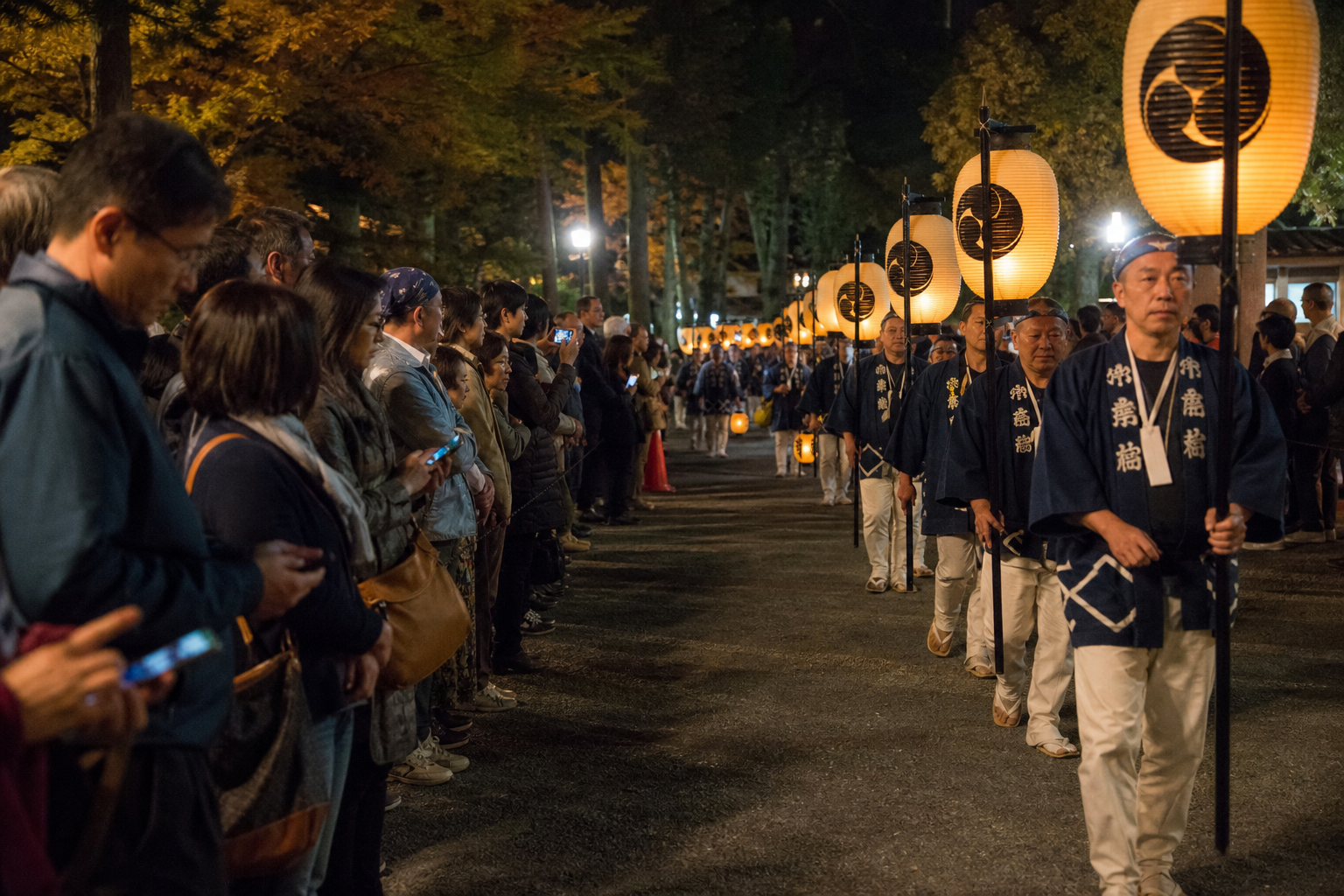
The famous night scene is not simply a decorative street festival. Groups carry tall mando lantern structures decorated with artificial cherry blossoms while drums, flutes and chanting fill the route. The procession moves from the Ikegami Tokumochi Hall area toward Ikegami Honmonji.
Visitors are welcome, but treat the event as an active religious observance. Make room for procession groups, follow staff directions and avoid blocking worshippers or performers for a photograph.
Which Day Should You Choose?
The right day depends on whether you want the lantern procession or a calmer visit.
| Date | What to expect | Best for | Main trade-off |
|---|---|---|---|
| October 11 | Opening-day services and a quieter temple visit | Travelers who value the religious setting over the night spectacle | No main mando procession |
| October 12 | Main evening services and the large lantern procession from around 6:00 p.m. | First-time visitors who want the signature scene | The largest crowds and the slowest exit |
| October 13 | Final memorial observance and a quieter daytime atmosphere | Travelers who cannot manage the October 12 crowd | No main evening procession |
October 12, 2026 is also Sports Day, a Japanese national holiday. That fact does not prove a particular crowd level, but it is another reason not to assume a normal Monday commute or a quiet evening.
Choose Your Arrival and Viewing Strategy
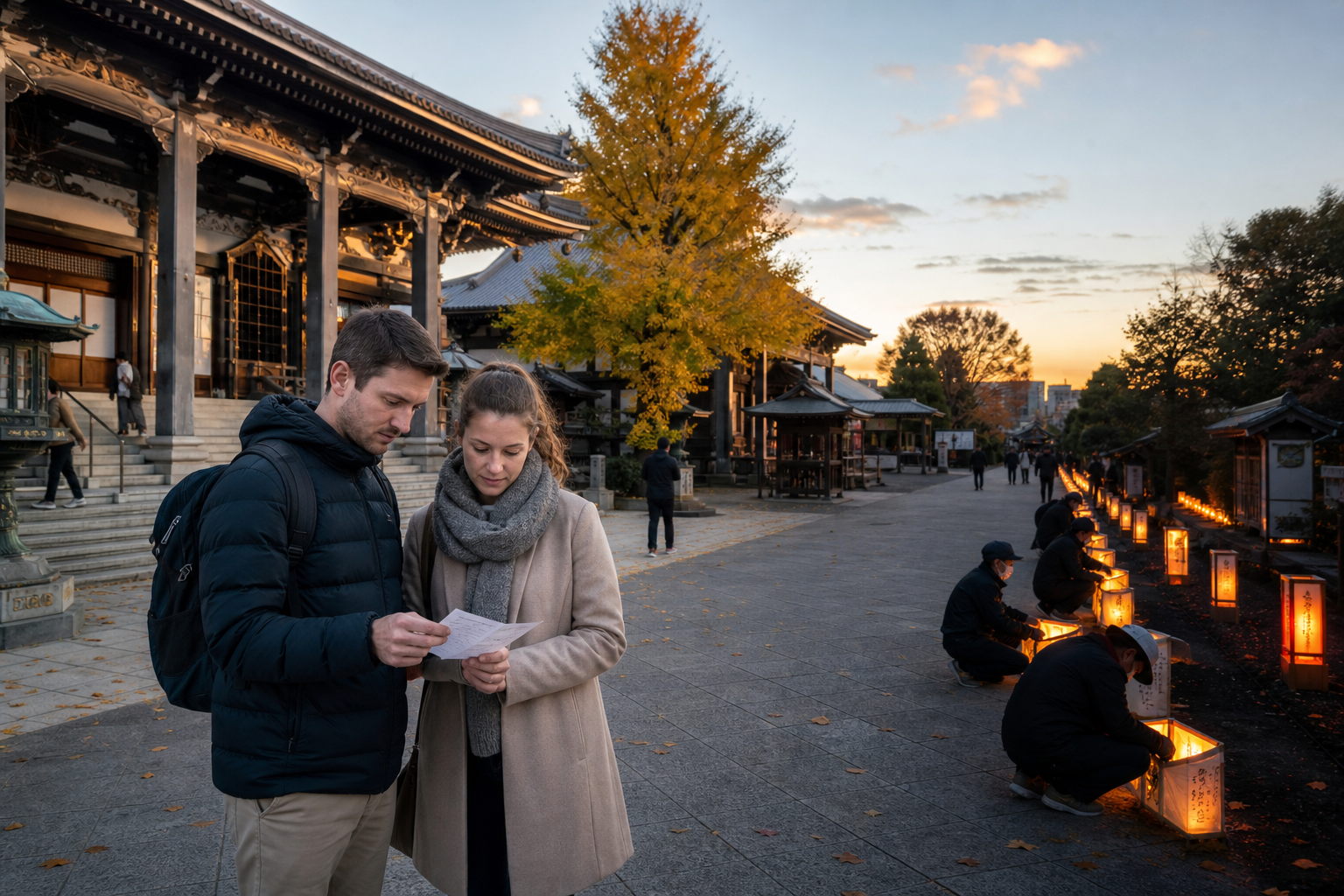
There is no single “best spot” for everyone. Use this decision table before leaving your hotel.
| Your priority | Practical choice | Crowd exposure | Exit difficulty |
|---|---|---|---|
| Easiest possible return | Stay on the station side of the route and leave before the final wave of spectators | Very high, but you remain closer to rail | Lowest of the October 12 options |
| Strongest procession atmosphere | Move gradually toward the temple approach | Extremely high near the climax | High; expect slow walking and pauses |
| Limited mobility or crowd tolerance | Skip the densest night period; choose October 11 or 13, or keep to the station-side edge | Lower | Lower |
| Weather or service disruption | Wait for the official same-day update before committing; keep a daylight temple visit as backup | Variable | Variable |
These are RJG planning judgments, not official crowd forecasts. Follow the barriers and staff instructions in place on the day.
Set two checkpoints in advance:
- An arrival checkpoint: when you will stop moving deeper into the route.
- An exit checkpoint: the latest time you will turn back toward rail, even if the procession continues.
That small decision prevents the common failure mode of following the atmosphere toward the temple, then discovering that everyone is trying to leave through the same narrow approaches.
How to Get There Without Depending on a Bus
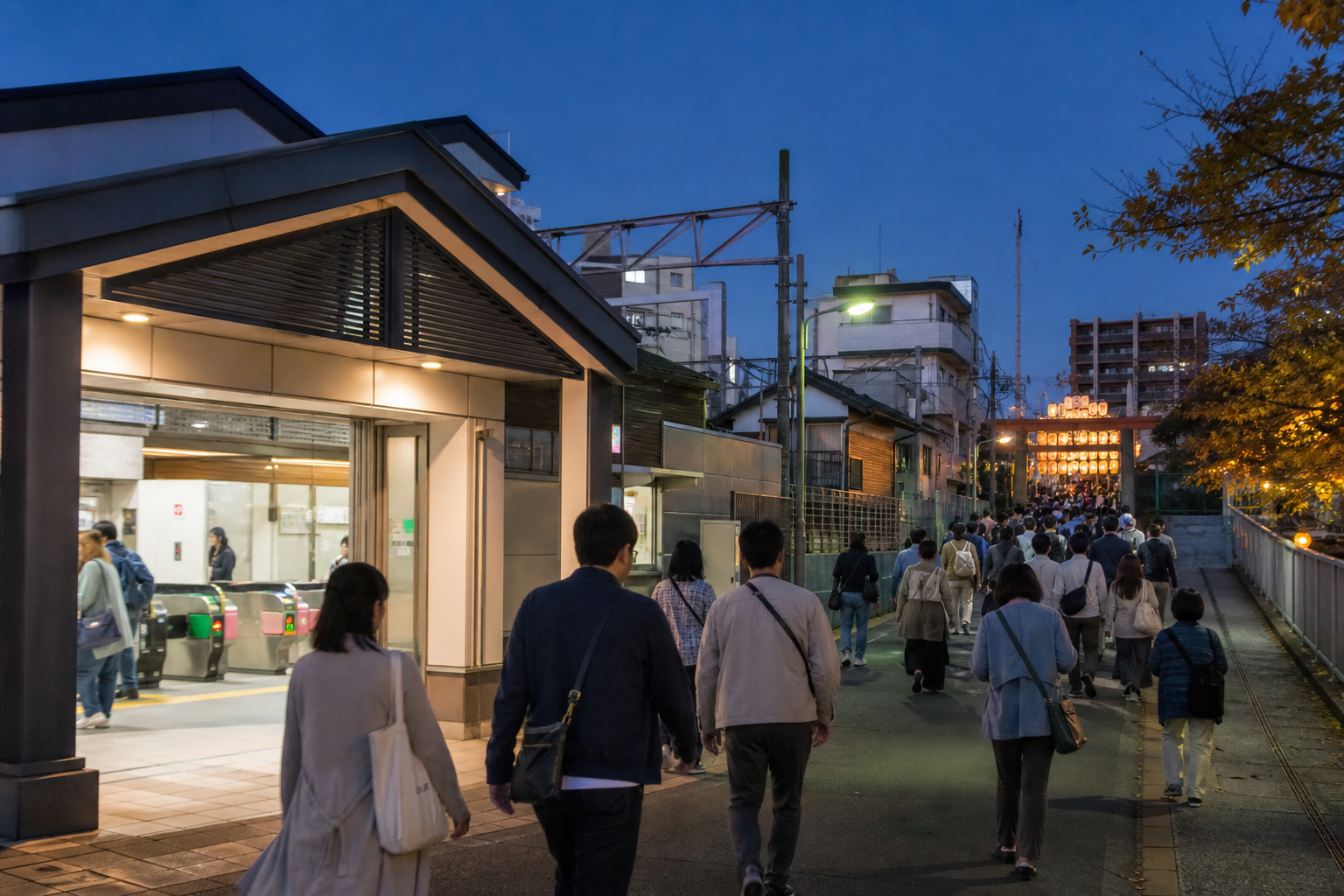
The temple lists three normal public-transport approaches:
- Ikegami Station: about 10 minutes on foot.
- Nishi-magome Station: about 12 minutes on foot.
- Bus from Omori Station: normally about 20 minutes to Honmonji-mae, followed by a 5-minute walk.
For October 12, Ikegami Station is the default choice for most visitors. Tokyu’s official guidance notes that buses may be suspended or turned back for Oeshiki, while Ota City describes a recurring road closure on Ikegami-dori near the station.
Nishi-magome can be a useful rail-only fallback for travelers already on the Toei Asakusa Line. However, do not treat it as a secret crowd-free entrance: it still leads to the same major event, and the walk and gradients may be less convenient after dark.
Avoid driving. The temple’s recent Oeshiki information says roads around both the temple and Ikegami Station are regulated during the event, and visitor vehicles are not eligible for event access permits.
Stairs, Accessibility and the Temple-Side Bottleneck
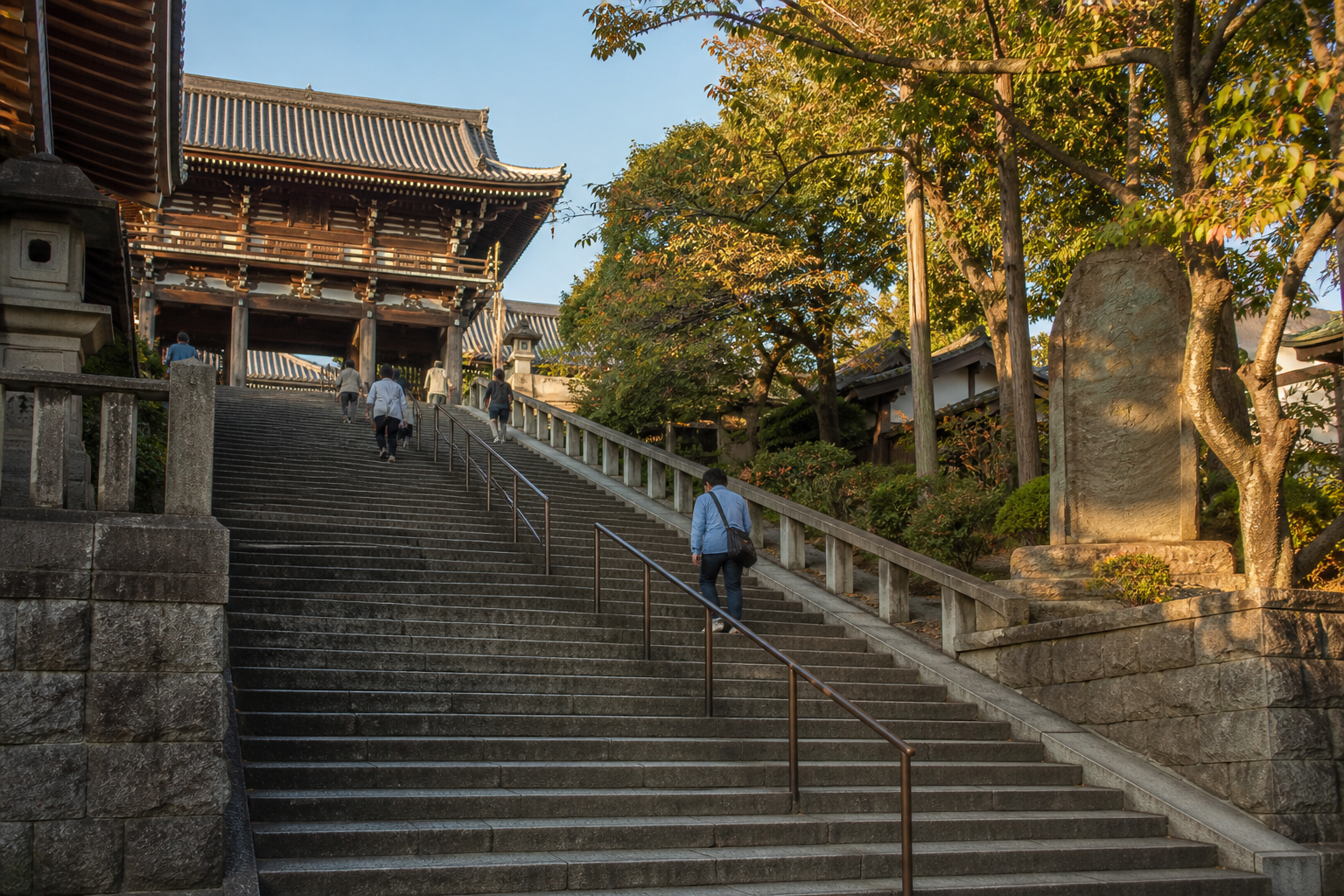
The principal approach includes the temple’s stone stairs, called Shikyonan-zaka. The temple normally points visitors who cannot manage the stairs toward an elevator at Ikegami Hall, but its published normal hours are 8:30 a.m. to 5:00 p.m.
That means you should not assume an evening elevator route is available for the October 12 procession. Travelers using wheelchairs, walking aids or strollers should contact the temple before travel and keep a station-side viewing plan that does not depend on reaching the upper grounds at night.
If you are traveling with children, agree on a meeting point before entering the dense area. Mobile service can slow in a large crowd, and “meet at the temple” is too vague.
Crowd and Religious Etiquette
Use the same rule you would use at a working place of worship: observe without becoming an obstacle.
- Do not step into the procession route for a photograph.
- Keep phone screens and cameras out of other people’s faces.
- Ask before taking a close portrait of an individual participant.
- Follow temporary one-way routes, barriers and staff instructions.
- Keep food and bulky luggage away from the densest route.
- Do not expect every temple area to function as a public viewing platform.
Large suitcases are especially impractical here. Leave luggage at your accommodation or use a locker before transferring to the Ikegami Line. For rail basics, read the Tokyo Trains guide.
Rain, Service Changes and Plan B
As of August 14, the temple had not posted a detailed 2026 rain or cancellation policy. Do not copy a rule from an unofficial event calendar and assume it applies.
Use this three-step Plan B:
- Before leaving: check the temple’s official news and Oeshiki pages, Ota City notices and Tokyu service information.
- If the night procession changes: switch to a daylight temple visit on October 11 or 13 rather than waiting in uncertain weather.
- If travel disruption is wider than Ikegami: use the Japan rain and typhoon Plan B and choose an indoor Tokyo plan.
A livestream has been offered in a recent edition, but a 2026 stream was not confirmed when this guide was checked. Treat it as an option only if the temple publishes a dated 2026 link.
Build Your Exit Before You Enter
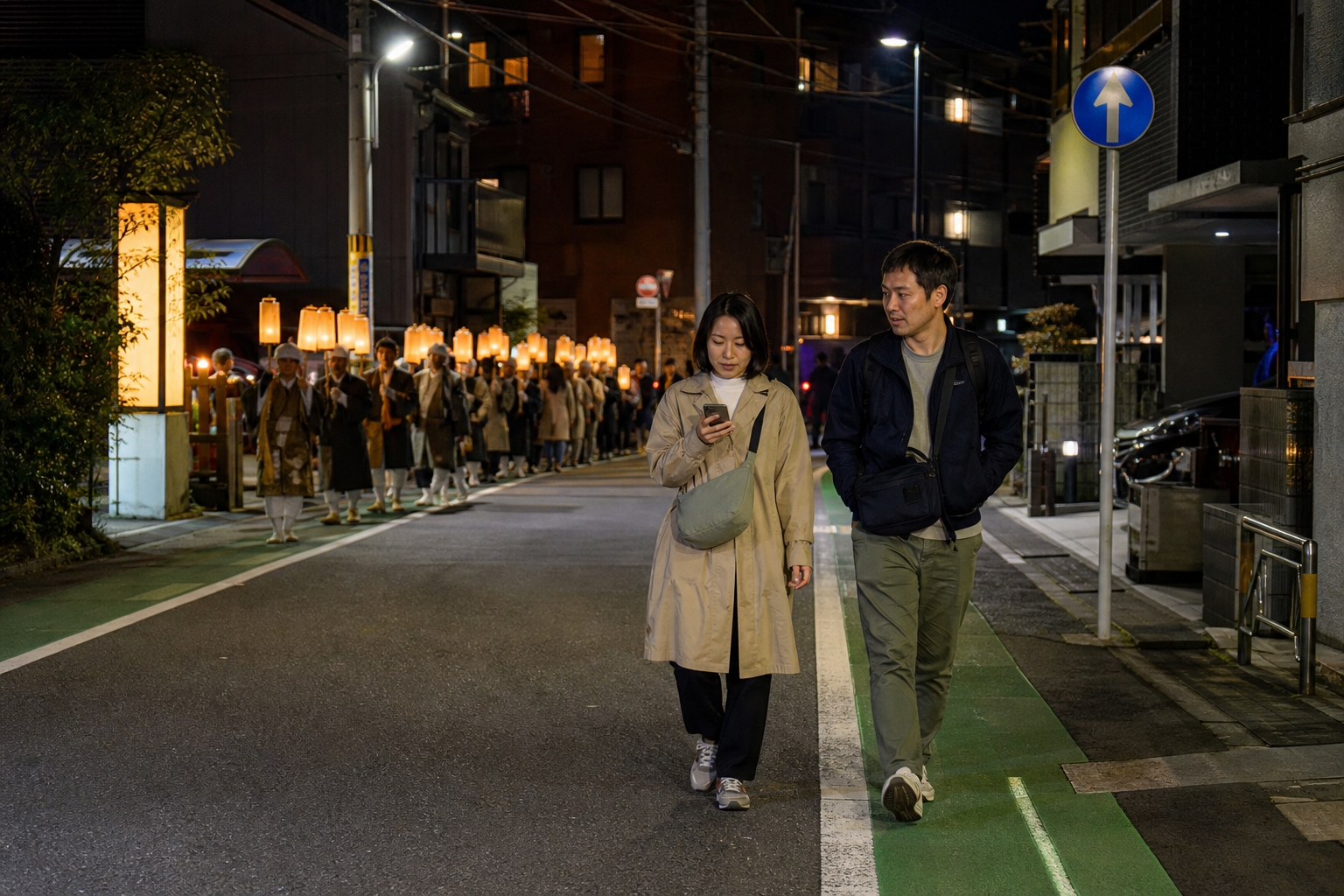
The event continues late, but you do not have to stay until the end. Check your actual route in a live transit app on the day and save a screenshot of the final connection that still leaves a safety buffer.
Do not publish or rely on a fixed “last train” time months in advance. Timetables, special services and connections can change. Tokyu added substantial extra service for the 2025 event, but that is only precedent; the 2026 operating plan must come from a 2026 Tokyu notice.
If you miss your planned rail connection, use the decision steps in Tokyo Last Train & Taxi Plan. For other festival choices, see the Tokyo Matsuri Guide.
Final Checklist
Before October 12:
- Choose station-side, temple-side or a quieter-day visit.
- Save Ikegami Station and one rail-only fallback.
- Recheck the official 2026 traffic notice and Tokyu timetable.
- Set an exit checkpoint before entering the crowd.
- Leave luggage at your hotel or in a locker.
- Confirm an accessibility route directly if stairs are a problem.
- Keep October 11 or 13 as your Plan B.
Frequently Asked Questions
When is Ikegami Oeshiki 2026?
The official annual schedule lists October 11–13. The main mando lantern procession is on October 12 from around 6:00 p.m. and continues late.
Which day has the lantern parade?
October 12 is the main procession night. October 11 and 13 are better choices for a quieter visit but do not offer the same large evening procession.
Do I need a ticket to watch the procession?
The official event information checked for this guide does not list a general viewing ticket for the street procession. Separate temple activities, offerings or reserved arrangements may have their own conditions, so check the dated 2026 notice.
Which station should tourists use?
Ikegami Station on the Tokyu Ikegami Line is the standard approach, about 10 minutes on foot. Nishi-magome Station is a rail-only alternative, about 12 minutes on foot under normal conditions.
Can I take a bus from Omori Station?
That is a normal access route, but Tokyu warns that buses commonly suspend or turn back during Oeshiki. Use rail on October 12 unless a current official notice says otherwise.
Is the temple accessible without climbing the stone stairs?
The temple normally directs visitors to an elevator at Ikegami Hall, published as operating from 8:30 a.m. to 5:00 p.m. Do not assume it is available during the evening procession; confirm directly and keep a station-side plan.
What happens if it rains?
The detailed 2026 rain policy was not published when this article was checked. Reopen the official temple and transport notices before travel, and use October 11 or 13 as a daylight Plan B if the night plan becomes unsuitable.
How late should I stay?
There is no universal answer. Check your live route and last safe connection on the day, then set an exit time with a buffer. Staying until the event ends is not required.
Comments