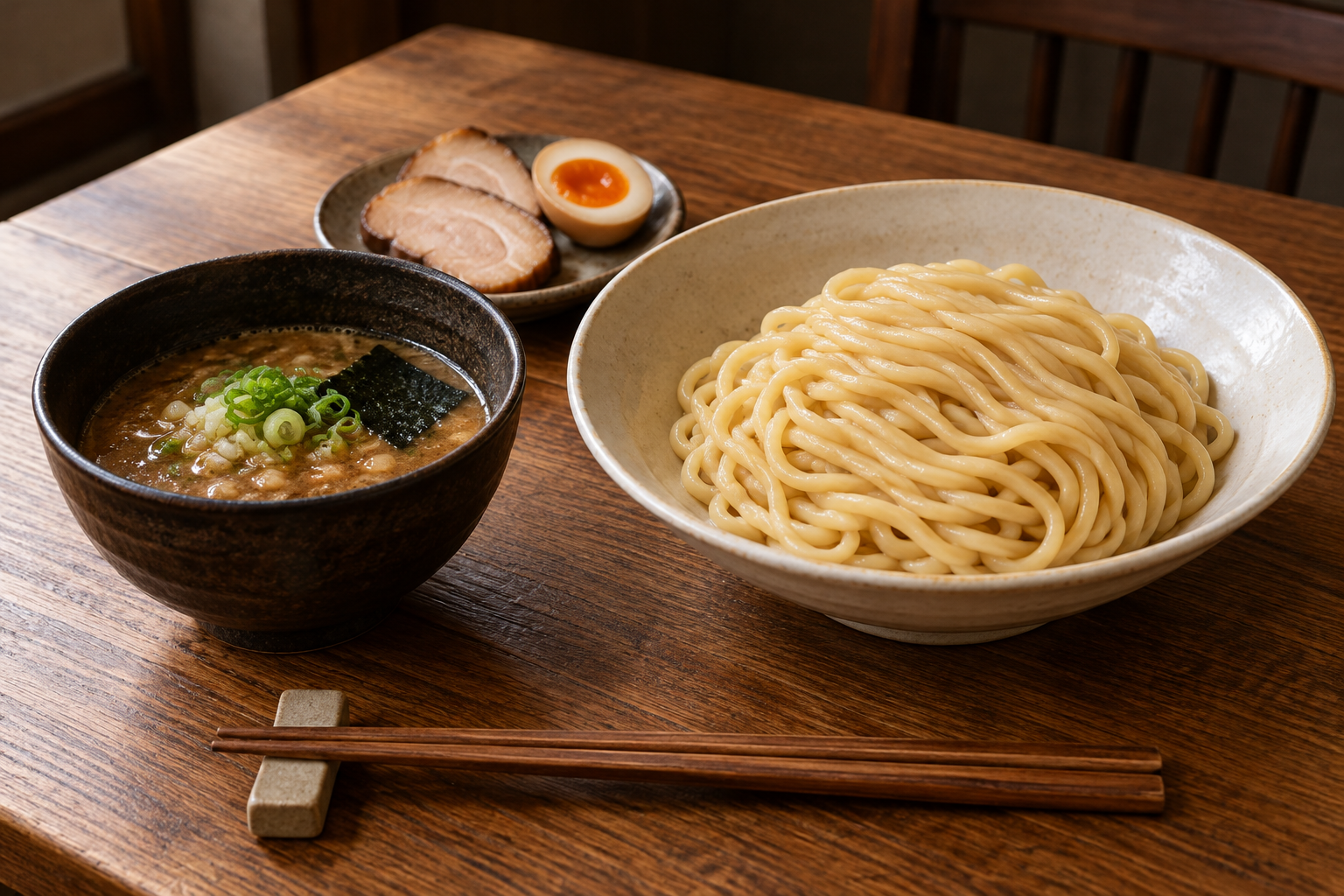
Featured image: AI-generated tsukemen illustration; not a photograph of a named restaurant or its food.
Tsukemen (つけ麺) comes with noodles and dipping broth in separate bowls. Pick up a small bite of noodles, dip it into the broth and eat. After the noodles, ask about soup-wari, lighter stock added to the remaining broth. Before ordering, check the noodle portion, whether the weight is before boiling, and any charge for a larger size.
Official information checked October 31, 2026. This is a researched ordering guide, not a tasting report. Prices are named-branch examples. All images are AI-generated concepts; they do not show the named shops, their menus or exact portion weights.
- Choose dipping noodles or a bowl of ramen
- Read the portion before choosing the largest size
- Separate size charges from topping charges
- Ask about atsumori if you prefer warm noodles
- Buy the right item, then follow the queue instructions
- Dip a bite at a time
- Use soup-wari after the noodles
- Check the broth as well as the toppings
- Match the restaurant to your day
- Frequently asked questions
- What is the difference between tsukemen and ramen?
- Should I pour the soup over the noodles?
- Does 200g mean the cooked serving?
- Is a large portion always the same price?
- What does atsumori mean?
- Is soup-wari a soup refill?
- Can I reheat the broth myself?
- Is tsukemen vegetarian if I remove the pork?
- Are the Tokyo Station prices valid at every branch?
- Official sources
Choose dipping noodles or a bowl of ramen
At a menu offering both, look for つけめん / つけ麺 for dipping noodles and らーめん / ラーメン for noodles served in soup. The separate bowl is part of the tsukemen meal. Keep the bowls separate while eating rather than pouring everything together.
Taishoken USA’s own eating guide starts with tasting plain noodles, then dipping them, enjoying toppings and finishing with soup-wari. It specifically tells diners not to pour the broth. This supports a useful first-bowl sequence, rather than a claim that every shop uses the same recipe.
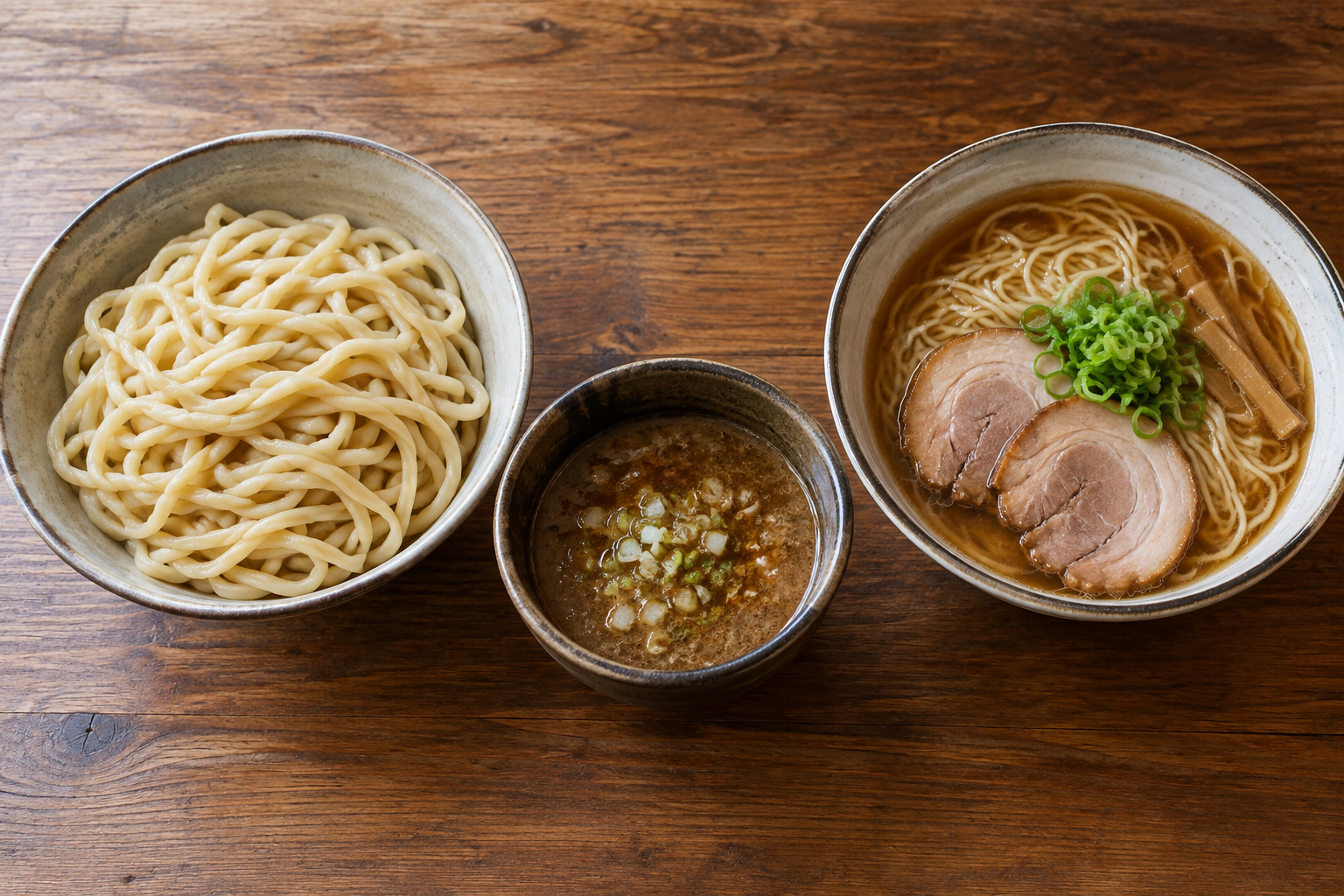
Decide which experience you want before paying. If you want noodles already sitting in hot soup, choose ramen. If you want to try dipping noodles, select tsukemen and follow that shop’s serving instructions. A familiar photograph is useful for identifying the format, but does not establish the ingredients.
Read the portion before choosing the largest size
The words 並盛 (namimori), 大盛 (ōmori) and 特盛 (tokumori) mean regular, large and extra-large. They do not establish a standard number of grams across Japan. Read the quantity and price attached to the dish you are actually buying.
The current Fuunji menu linked by Tokyo Ramen Yokocho is unusually clear: its noodle quantities are before boiling / 茹で前. The ordinary tsukemen choices are:
| Fuunji, Tokyo Ramen Yokocho | Noodles before boiling | Listed price |
|---|---|---|
| Regular / 並盛 | 200g | ¥1,050 |
| Large / 大盛 | 300g | ¥1,150 |
| Extra-large / 特盛 | 400g | ¥1,250 |
The linked English menu also labels the quantities “before boiling.” These figures are not the weight of the finished meal. Do not compare them directly with another menu’s cooked weight. If the basis is unclear, ask before using the number to judge your appetite.
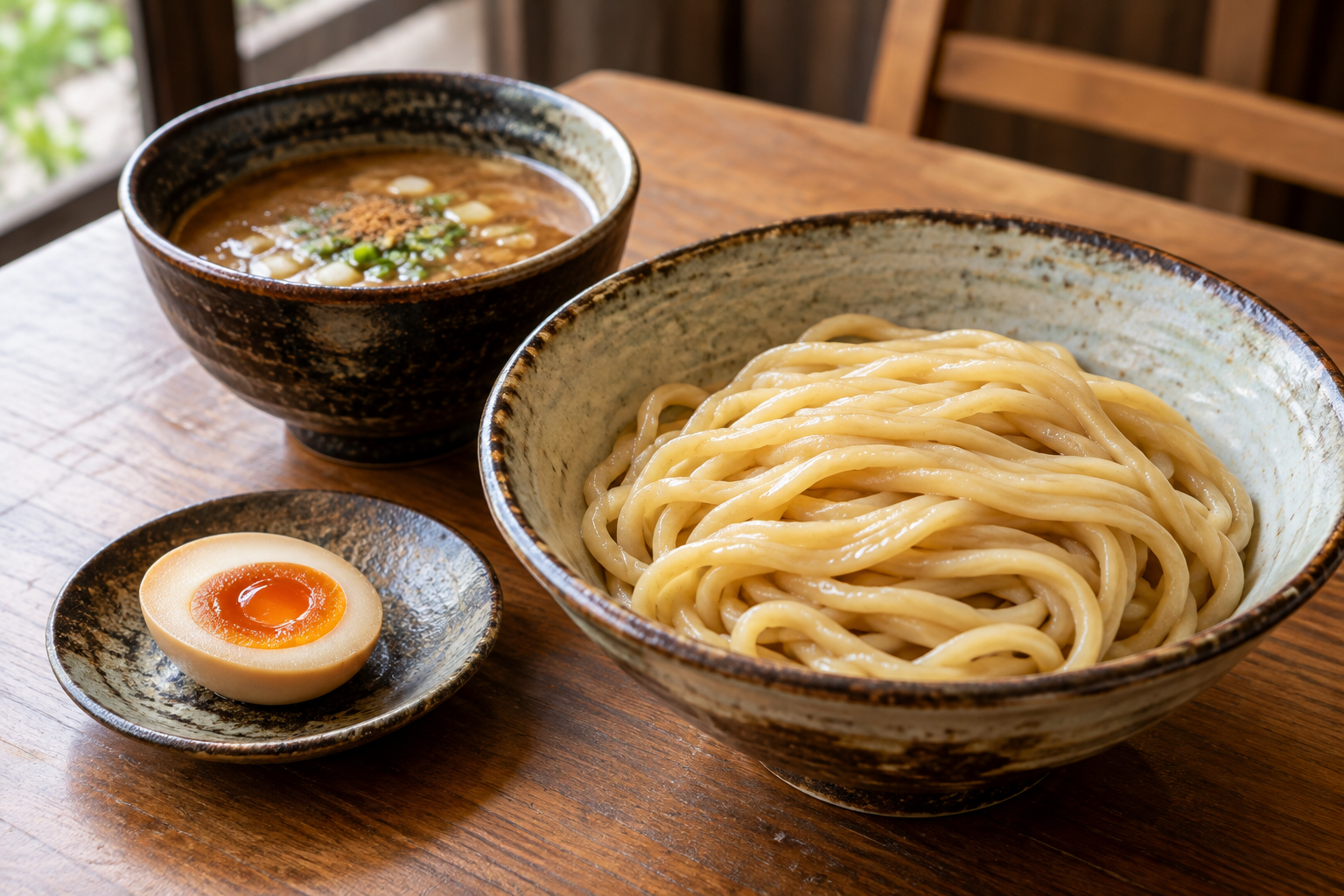
Our suggestion for a first visit is to choose a regular portion, or ask whether a smaller one is available. A low extra charge does not make a large serving the right choice when you have another meal planned. Decide the noodle amount first, then consider toppings.
Separate size charges from topping charges
The same Fuunji branch menu lists a seasoned egg at ¥150. An ordinary regular tsukemen plus that egg therefore totals ¥1,200: ¥1,050 + ¥150. This is a calculation from the menu, not a set offer or a photographed purchase. Its deluxe regular tsukemen is a separate ¥1,300 item.
For a different pricing model, Mita Seimenjo’s current brand page describes small, regular, medium and large portions at the same price. That does not make larger portions free at every tsukemen restaurant. Check your branch’s eligible dish, portion options and current price.
Build your order from one named bowl, one chosen size and any deliberate extras. If a photograph shows an egg or several meat slices, check whether you selected the deluxe version or the base dish. The price of the largest pictured bowl may not match the button beside it.
Ask about atsumori if you prefer warm noodles
Atsumori / あつもり refers to warm noodles. The restaurant-equipment supplier Tenpos’s ramen glossary describes cooked noodles being rinsed cold and then passed through hot water again. The word concerns the noodles, rather than adding more broth.
Ask あつもりはできますか? / Atsumori wa dekimasu ka? (“Can you serve the noodles warm?”) before the order is prepared. Availability is a shop question. If warm noodles are essential and unavailable, decide whether the shop’s ramen would suit you better. Do not order a different dish accidentally because the temperature vocabulary is unfamiliar.
For a first tsukemen, our suggestion is to try the shop’s usual preparation unless you have a clear preference. Ask whether the broth is served hot if that matters too; the noodle temperature alone does not describe the whole meal.
Buy the right item, then follow the queue instructions
At the entrance, identify whether staff want you to join a line, buy a ticket or sit first. Do not walk past a queue to reach an empty stool. If a machine is part of the process, confirm the dish name, size, extras and payment method before completing one purchase.
A button’s position is not proof of what it sells. Point to つけ麺 and the displayed price if you need help. Keep the printed ticket and receipt, then follow the handoff instruction. Our restaurant ticket-machine guide covers the different checkout and pickup systems.
Payment can be branch-specific. For example, the official Rokurinsha Tokyo Ramen Street listing names cash and transport IC electronic money. It does not list credit cards. Read that as a rule for this location, and check your own restaurant’s current payment display.
Dip a bite at a time
Once the bowls arrive, start with a manageable bite. TETSU’s official instructions suggest tasting plain noodles, then dipping about two-thirds of a bite into the soup. That depth is the chain’s recommendation, not a measurement you need to reproduce exactly.
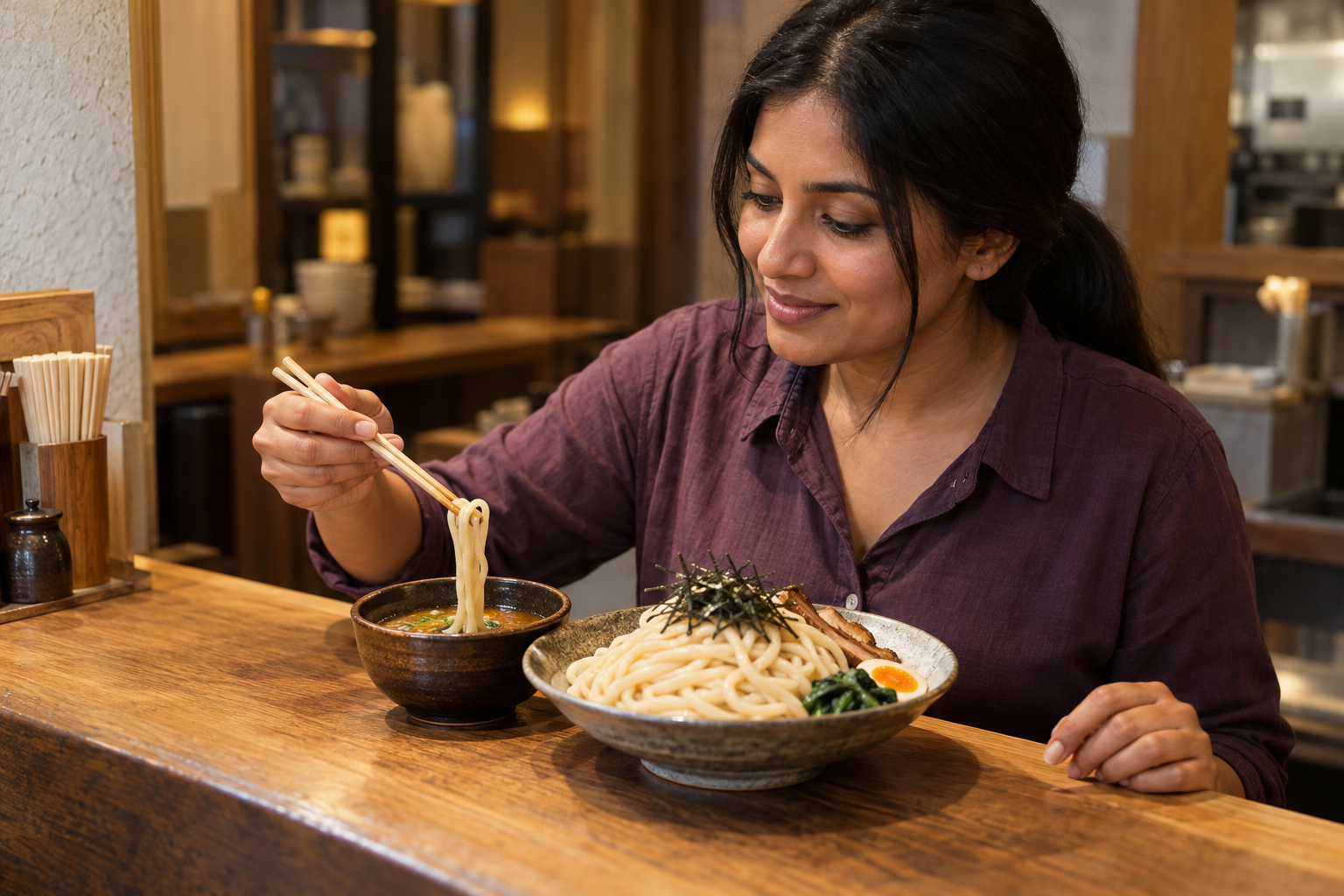
Our practical suggestion is to begin with a few strands so you can lift and eat them comfortably. Keep the rest in their bowl. Taste before adding a condiment, and ask what an unfamiliar container holds. You can adjust the next bite without changing the whole bowl at once.
Take a photograph if you want one, then put the phone away where it cannot fall into the meal. Keep both bowls on a stable surface and leave room for the spoon. A crowded counter is easier to manage when bags and loose belongings are out of the eating space.
Use soup-wari after the noodles
Soup-wari / スープ割り means thinning the remaining dipping broth with additional stock. Mita Seimenjo describes its special wari soup as a way to mellow the flavour. TETSU’s instructions place this step after the noodles and identify the pot on its table as bonito stock.
Ask スープ割りをお願いします。 / Sūpu-wari o onegaishimasu. (“Soup-wari, please.”) If a pot is provided, confirm that it is the right one. Our suggestion is to add a little, taste, then adjust. Do not assume an unlabelled jug is stock.
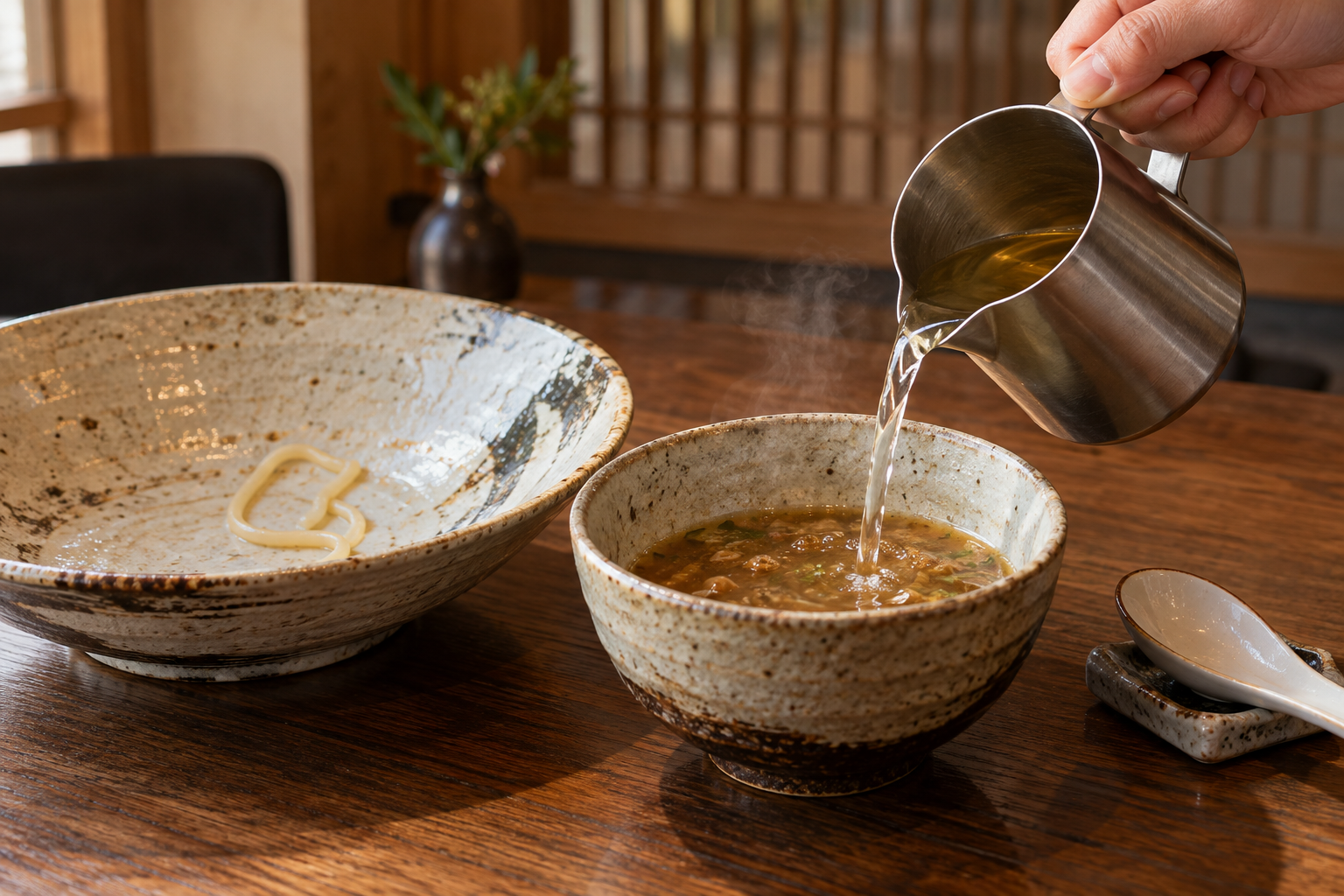
This is different from requesting more undiluted dipping broth or another portion of noodles. If you run short during the meal, ask staff what they can provide and whether it costs extra. The word soup-wari does not establish a free refill.
If the broth has cooled, ask about that shop’s reheating option. TETSU advertises a very hot “yaki-ishi” stone service; it is a specific restaurant method. Follow staff directions and do not touch the stone. Its availability elsewhere has not been established here.
Check the broth as well as the toppings
Mita’s standard menu describes its regular tsukemen as pork-bone and seafood broth. A bowl without a visible pork slice therefore does not establish a meat-free meal. Its menu also warns that products and offerings differ by location.
Mita’s linked allergy information warns of shared equipment and possible ingredient contact. The file accessible at this check labels itself November 2026. Use the current information for your actual dish and discuss any necessary restriction before ordering; a translated name or removed topping is insufficient. For broader checks, see our food-allergy guide and halal ramen guide.
Match the restaurant to your day
Near Tokyo Station, distinguish Tokyo Ramen Street, where Rokurinsha’s official listing places it on First Avenue’s B1 floor, from Tokyo Ramen Yokocho in Yaechika, where the Fuunji price example above applies. Save the correct facility map rather than searching only for “Tokyo ramen.”
The Yokocho facility page links multilingual menus and its map. Fuunji’s branch page says its Yokocho shop does not take reservations and may close when soup sells out. Rokurinsha warns that its queue may stop accepting diners before last order. Neither is a guaranteed quick stop before a train.
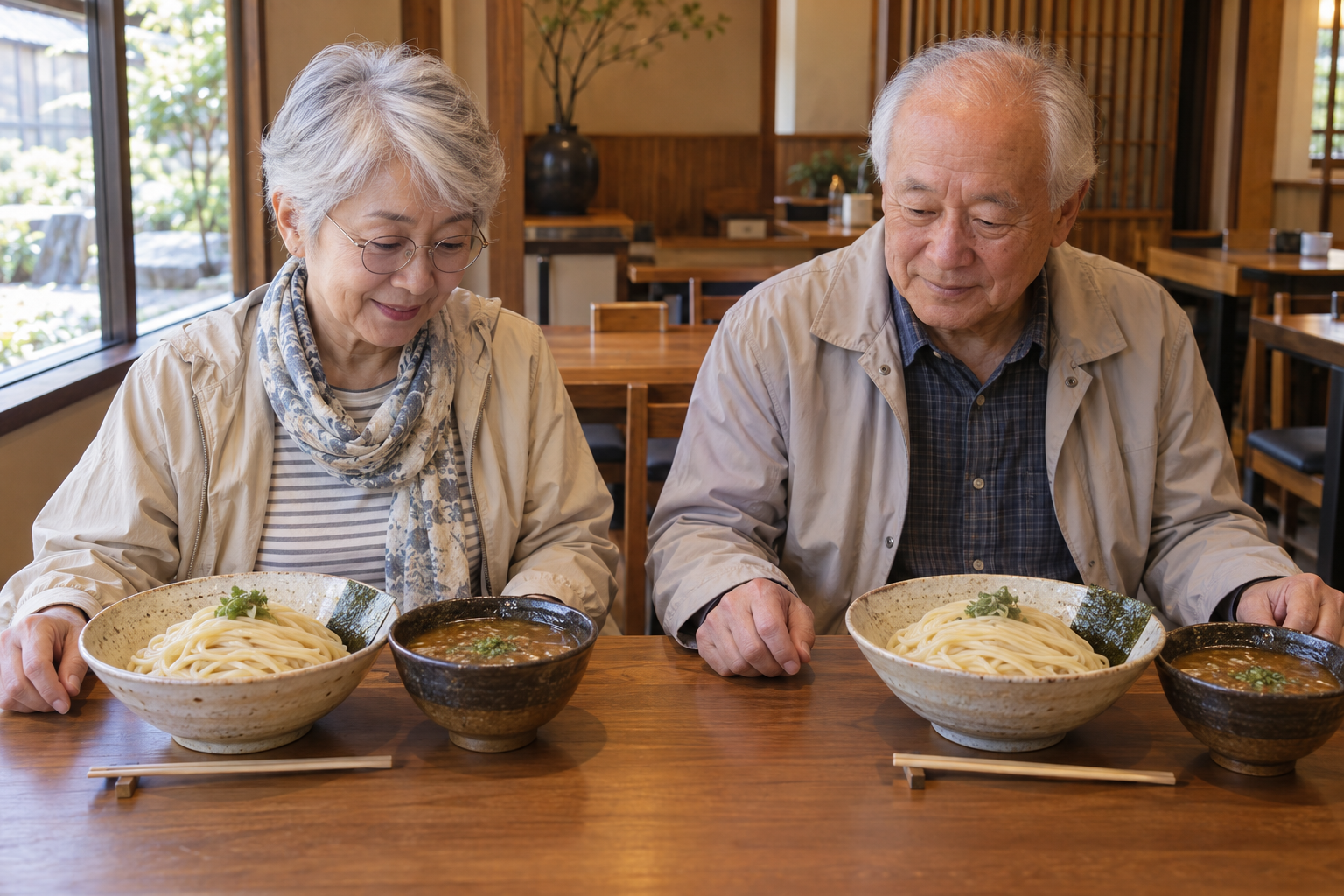
Our recommendation is to choose a meal near your existing route and leave a usable alternative if the line is too long. Check the queue before committing, keep a time limit tied to your next journey, and switch plans before you become rushed. Our Tokyo restaurant Plan B offers a broader fallback.
Frequently asked questions
What is the difference between tsukemen and ramen?
Tsukemen has separate noodles and dipping broth; ramen is served with noodles in soup. Choose the format you want before paying.
Should I pour the soup over the noodles?
Keep the bowls separate and dip small bites. Taishoken’s eating guide specifically advises against pouring the broth.
Does 200g mean the cooked serving?
Check the menu. Fuunji Tokyo Ramen Yokocho explicitly lists its 200g regular size before boiling.
Is a large portion always the same price?
No. The cited Fuunji menu charges more; Mita advertises same-price sizes. Confirm your dish and branch.
What does atsumori mean?
Warm noodles. Ask whether your shop offers it before preparation.
Is soup-wari a soup refill?
It is stock added to dilute the remaining dipping broth. Ask separately about extra dipping broth or noodles.
Can I reheat the broth myself?
Ask staff about the available service and follow their directions. Do not improvise with the restaurant’s equipment.
Is tsukemen vegetarian if I remove the pork?
That does not establish the broth’s ingredients. Check the exact dish, stock and preparation before ordering.
Are the Tokyo Station prices valid at every branch?
No. The table is for Fuunji Tokyo Ramen Yokocho. Check the current menu at your chosen location.
Official sources
Checked October 31, 2026. Recheck the branch menu and staff instructions on your visit.
- TETSU: eating steps, soup-wari and reheating
- Taishoken USA: the dipping-noodle sequence
- Mita Seimenjo: size pricing and wari soup; menu; allergy information
- Tokyo Ramen Yokocho: map and branch menus; Fuunji Japanese menu; English menu
- Tenpos: atsumori definition
- First Avenue Tokyo Station: Rokurinsha; Fuunji: branches and availability conditions
Comments