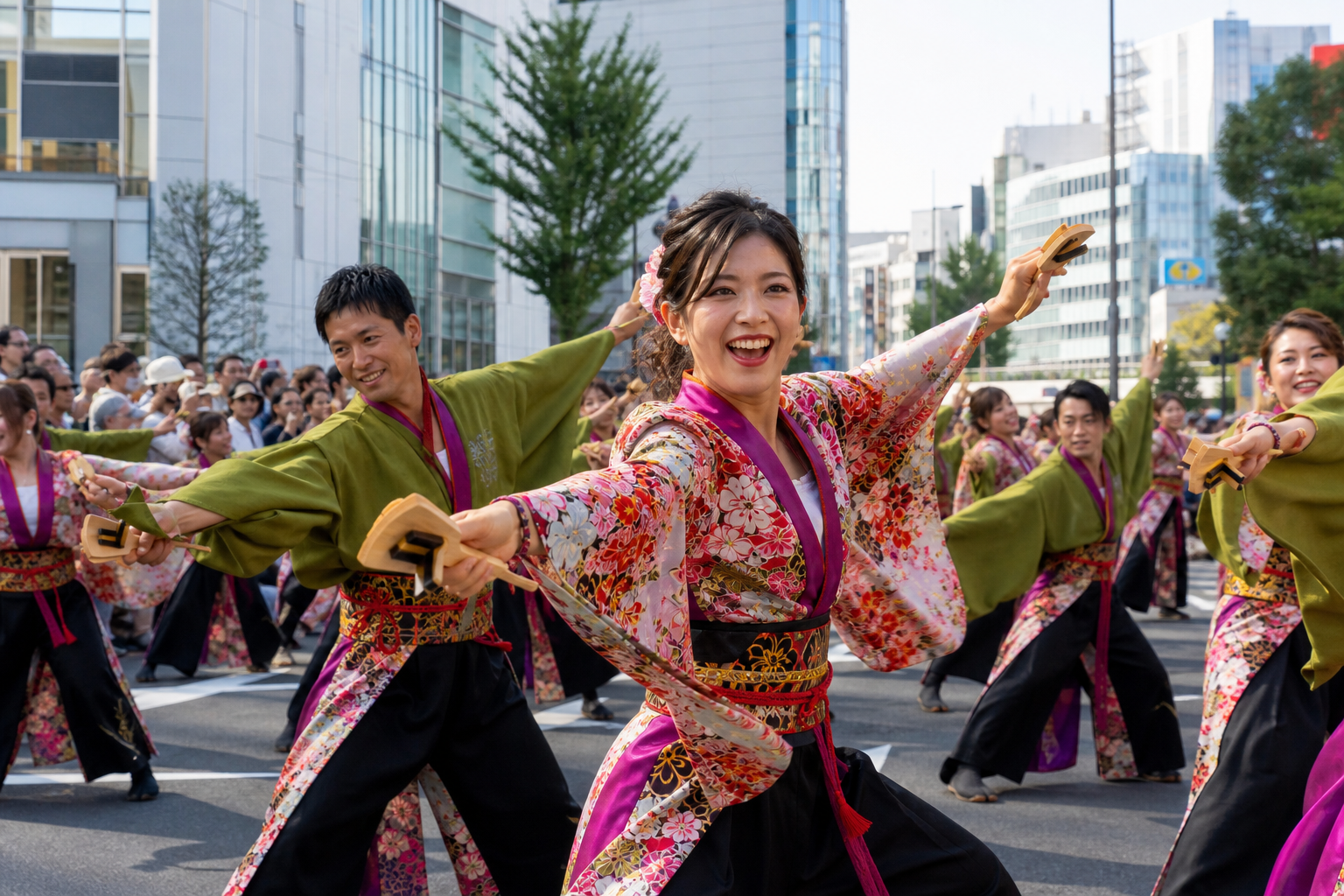
Tokyo Yosakoi returns to the Ikebukuro area on Saturday, October 10, and Sunday, October 11, 2026. It is not one performance in one arena. Dancers rotate through street and stage venues around Ikebukuro, with additional stages at Otsuka and Sugamo.
That layout creates the real problem for a first-time visitor: where should you stand, and how do you leave without getting trapped in the busiest part of Ikebukuro?
This guide turns the official venue list into a simple spectator plan. It does not pretend that the still-unpublished 2026 performance timetable is already known.
Last checked: August 14, 2026. The organizer has confirmed the dates, venues, and participating teams. The Oct. 10, Oct. 11, and team-by-team performance schedules are still marked “preparing.” Recheck the official Tokyo Yosakoi website shortly before you go.
- Quick answer: the simplest Tokyo Yosakoi plan
- What is Tokyo Yosakoi?
- Which venue should you choose?
- Saturday or Sunday: which day should you choose?
- How to get to the central venues
- The RJG five-step crowd plan
- Photography rules for ordinary spectators
- What to wear and carry in October
- Rain, cancellation, and Plan B
- After the festival: getting home without the last-train panic
- Final decision: where should a first-time visitor go?
- Frequently asked questions
Quick answer: the simplest Tokyo Yosakoi plan
If this is your first Tokyo Yosakoi, use this plan:
- Go to Ikebukuro Station, not Otsuka or Sugamo, unless a specific team or quieter stage is your priority.
- Choose one main viewing area before entering the crowd.
- Use Ikebukuro West Exit Park if you prefer a fixed stage and do not want to follow a moving parade.
- Use the Ikebukuro West Exit Station Plaza or Azalea Street if you want the strongest contest atmosphere and accept heavier crowds.
- Save a second venue as your Plan B, but do not attempt to cover every venue.
- Set a personal departure checkpoint—for example, “leave the viewing area before dinner”—then check your live train route before walking back into Ikebukuro Station.
GO TOKYO lists the event as free to view, but final 2026 times and operating details remain subject to the organizer’s updates. You do not need to register as a performing team merely to watch from the public spectator area.
What is Tokyo Yosakoi?
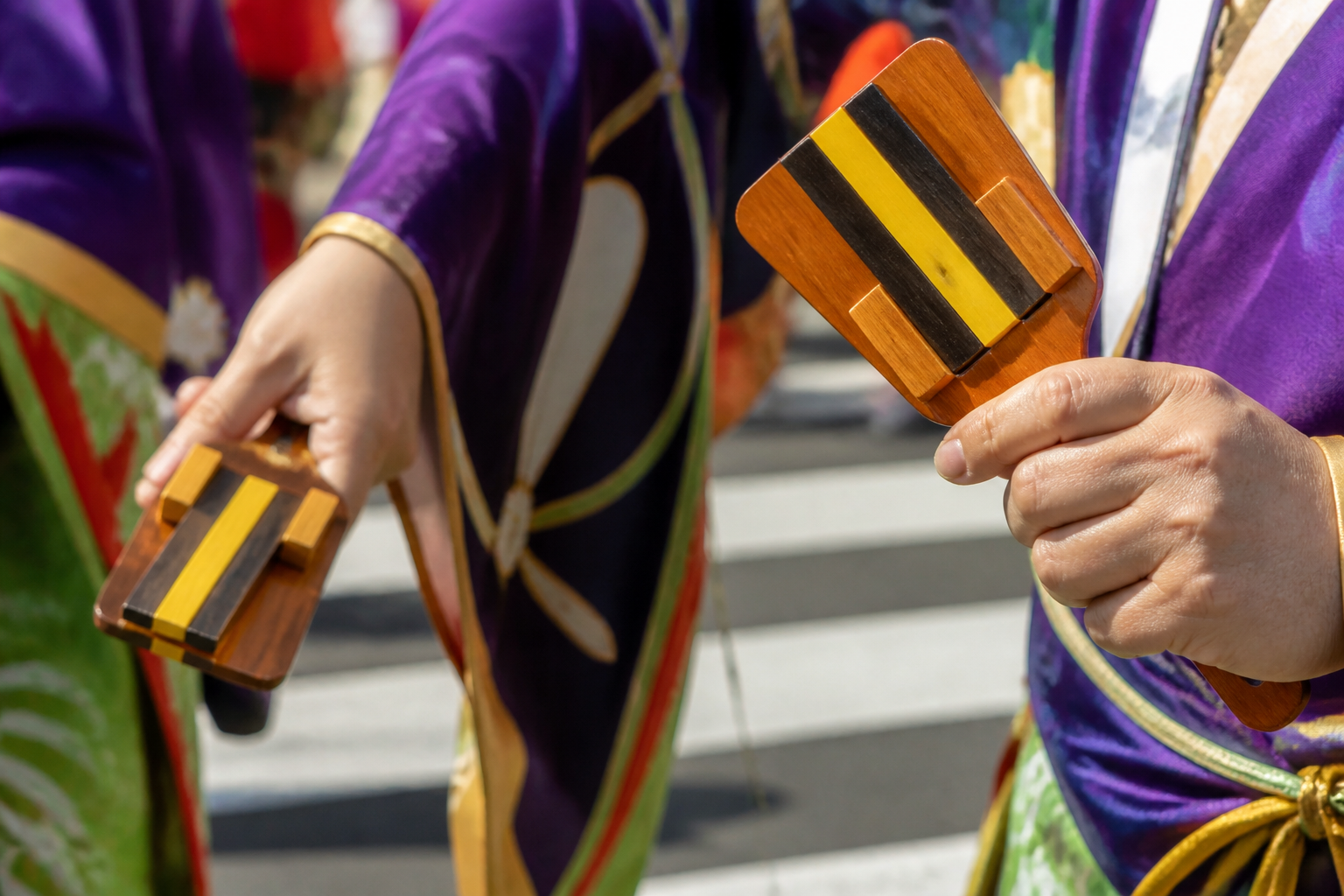
Tokyo Yosakoi is the dance finale of the wider Fukuro Matsuri in Toshima City. Yosakoi teams combine synchronized movement, colorful costumes, music, flags, and naruko wooden clappers. The official 2026 rules require performers to use naruko during at least part of their routine.
The organizer’s 2026 recruitment guide planned capacity for up to 70 teams on Saturday’s pre-festival program and 110 teams on Sunday’s main festival. The confirmed team page includes groups from Tokyo and other parts of Japan, with some appearing on both days and others only on Sunday.
GO TOKYO describes the established event scale as around 5,000 dancers in 110 teams. Treat that as an explanation of the festival’s usual size, not a final 2026 attendance forecast.
Which venue should you choose?
The official organizer’s central Ikebukuro map focuses on five street and park venues. Its 2026 team guide also lists three additional stages: the new Tobu Department Store 8F Sky Deck, Otsuka North Exit’s ironowa hiro ba, and Sugamo North Exit.
The “best for” advice below is an RJG recommendation based on each venue’s official format, not an organizer ranking.
| Venue | Official format | Best for | Main trade-off |
|---|---|---|---|
| Ikebukuro West Exit Station Plaza | Moving street performance; main judging venue | First-time visitors who want the central contest atmosphere | Likely to attract the largest concentration of spectators |
| Ikebukuro West Exit Park | Fixed stage | Visitors who want to stay in one place and see complete stage routines | Sightlines depend heavily on where you arrive and stand |
| Mizuki Street | Moving street performance, approximately 100 meters | Watching formations develop along a longer route | More walking and fewer obvious fixed viewing points |
| Azalea Street | Moving street performance; second judging venue | Visitors who want competitive performances away from the main plaza | Still a judging venue, so do not assume it will be quiet |
| Four Shopping Streets | Moving street performance, approximately 100 meters | A neighborhood-street atmosphere | The route name covers several shopping-street sections; use the final map, not the name alone |
The three alternative stages
The 2026 organizer guide lists three stage-format alternatives outside the central five:
- Tobu Department Store 8F Sky Deck: a new stage for 2026. Capacity and spectator entry details were not yet published when this guide was checked.
- ironowa hiro ba at Otsuka Station North Exit: useful if the final timetable gives your preferred team an Otsuka appearance or you want to avoid starting in central Ikebukuro.
- Sugamo Station North Exit: another station-front stage that can work as a deliberate alternative to Ikebukuro.
Do not travel to Otsuka or Sugamo just because central Ikebukuro looks busy on a map. Wait for the official performance schedule and confirm that there is something you want to see there.
Saturday or Sunday: which day should you choose?
The organizer identifies Saturday, October 10 as the pre-festival day and Sunday, October 11 as the main festival and contest day.
Choose Saturday if:
- you are satisfied with a smaller planned team pool;
- a favorite team is confirmed for both days;
- you want a simpler introduction before Sunday’s main contest.
Choose Sunday if:
- you want the largest planned field of teams;
- you want to see contest performances at the two judging venues;
- you are comfortable with more movement and potentially heavier crowds.
This does not mean that Saturday will be quiet or that every venue operates for the same hours. Use the final 2026 organizer timetable for those details.
How to get to the central venues
Ikebukuro Station is served by JR lines, Tokyo Metro, the Tobu Tojo Line, and the Seibu Ikebukuro Line. The central festival venues are concentrated on the west side of the station.
A practical navigation rule is not to memorize a numbered exit months in advance. Station passages and temporary event controls can change how people are directed. Instead:
- Follow permanent signs for West Exit or Ikebukuro West Gate Park.
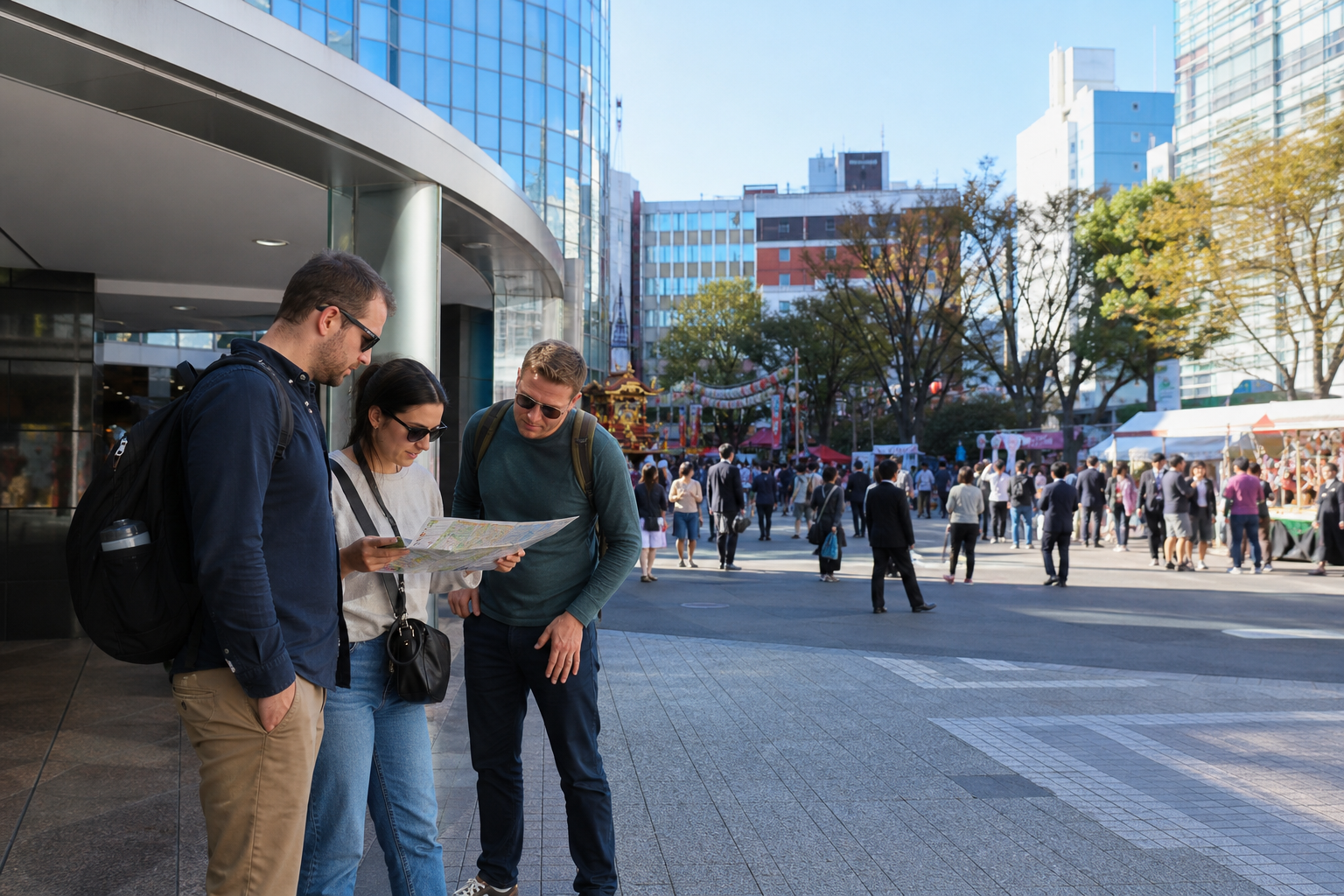
- Once outside, stop away from the exit flow before checking the final official venue map.
- If staff or temporary signs redirect pedestrians, follow them even when your map app suggests a shorter path.
- Do not use the station plaza as a meeting point. Choose a named landmark away from the densest exit.
If you are unfamiliar with the area, review the Ikebukuro Quick Guide before event day. For rail basics, see the Tokyo Trains Guide.
Otsuka and Sugamo
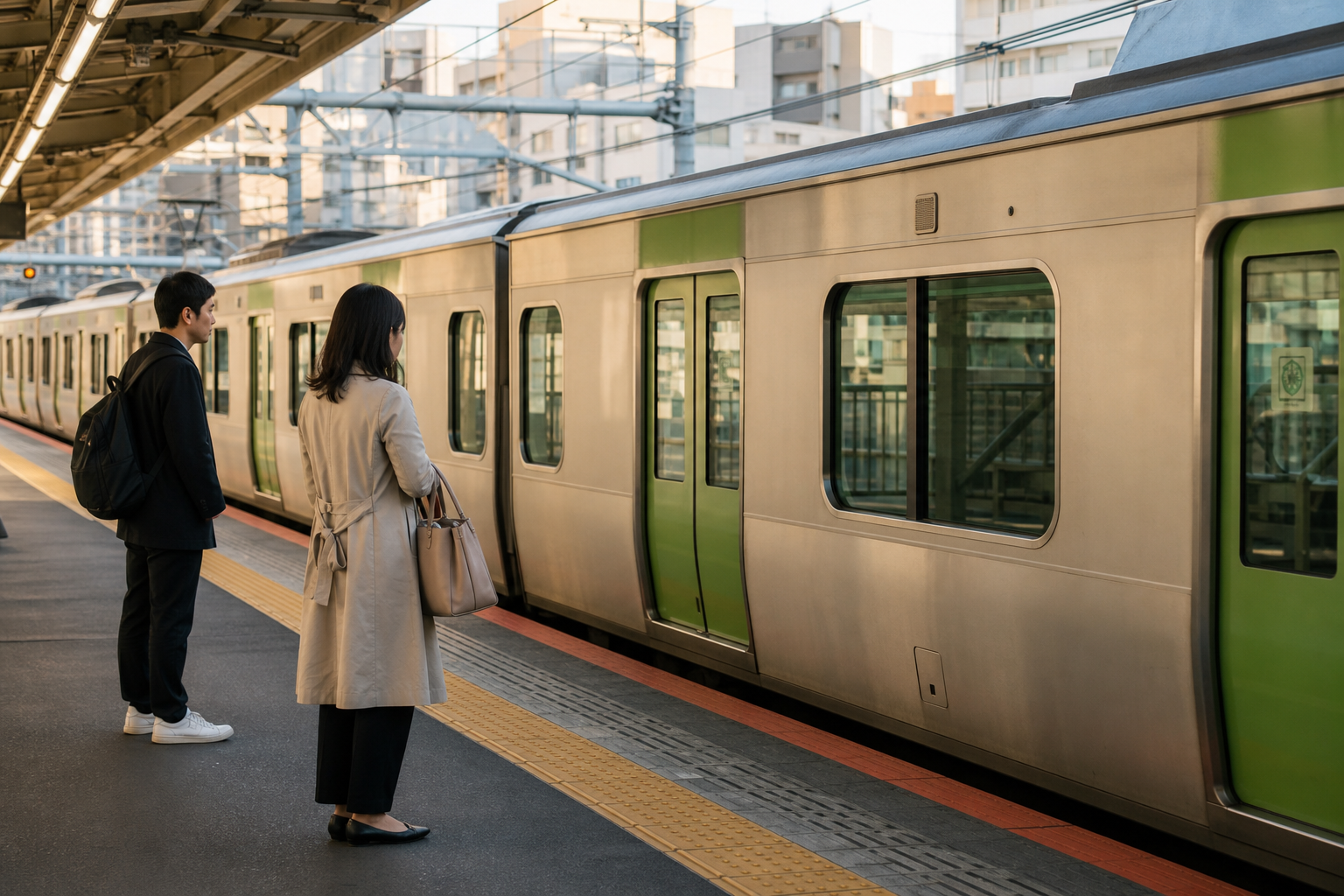
Otsuka and Sugamo are separate JR Yamanote Line stations from Ikebukuro. Their festival stages are positioned near the north exits, according to the organizer’s 2026 venue list. Use the station named for the stage rather than walking there from Ikebukuro.
The RJG five-step crowd plan
1. Pick one performance style
Choose a stage if you want a fixed focal point. Choose a moving street venue if you want to see the dancers’ formations travel through the course.
Trying to switch constantly between the two usually means spending more time navigating than watching.
2. Save one backup venue
Your backup should solve a specific failure:
- Main plaza too crowded → try a non-judging stage or street venue shown on the final timetable.
- Rain makes waiting uncomfortable → pause indoors in a normal public commercial space where permitted, then reassess; do not block entrances.
- Your chosen team has moved → use the official team-by-team schedule, not an unofficial social post.
- Children or companions are tired → stop chasing performances and switch to a fixed meeting point.
3. Stand without creating a second crowd
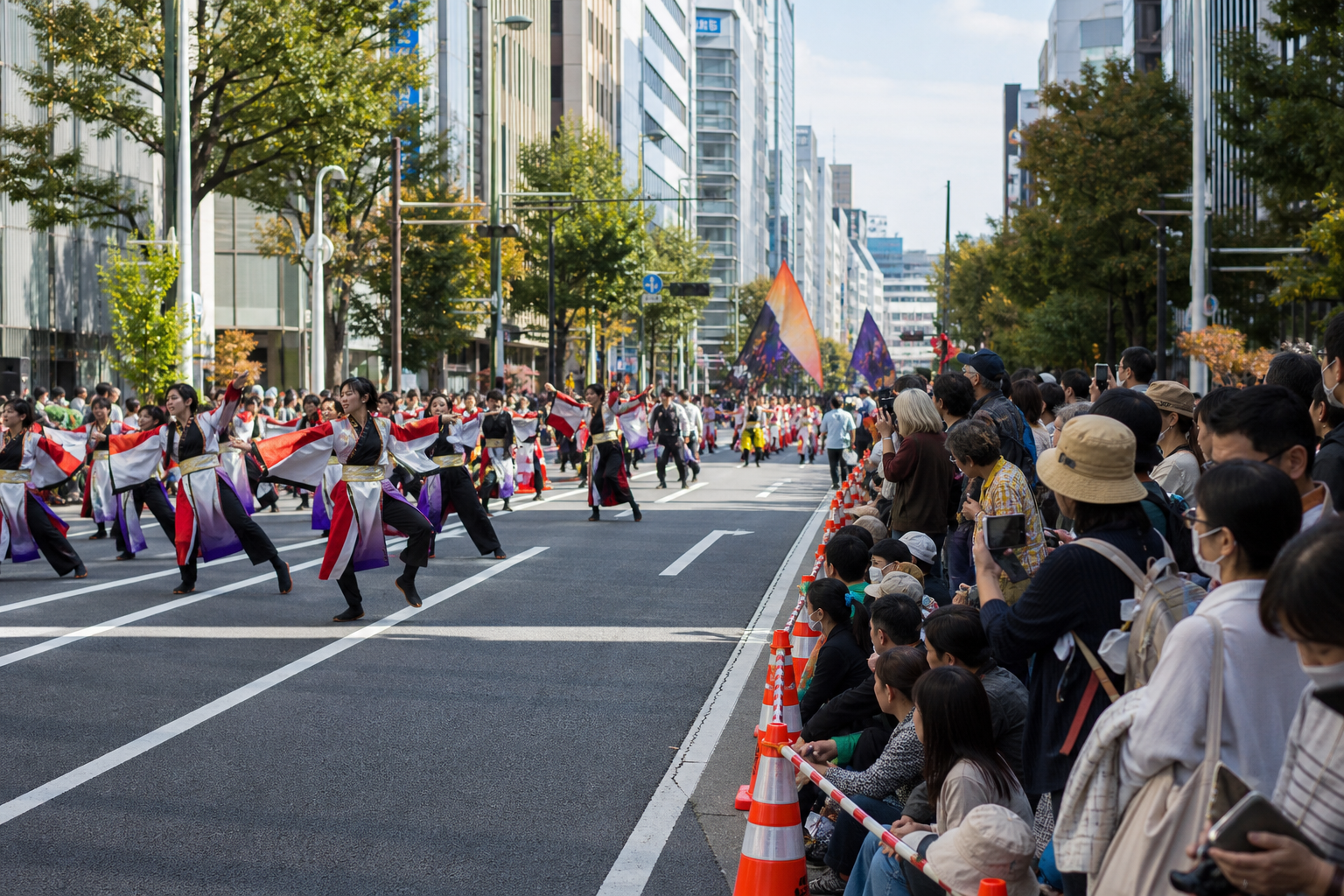
The official team rules say spectators may photograph from the spectator area, but they should not occupy a place for a long time. The same rules prohibit spreading blue sheets to claim space around the venues.
Keep bags close to your body, leave pedestrian lanes open, and move away after the performance if others are waiting for a view. A long lens, tripod, stool, or large luggage item can become a problem even if photography itself is allowed.
4. Decide when to leave before you arrive
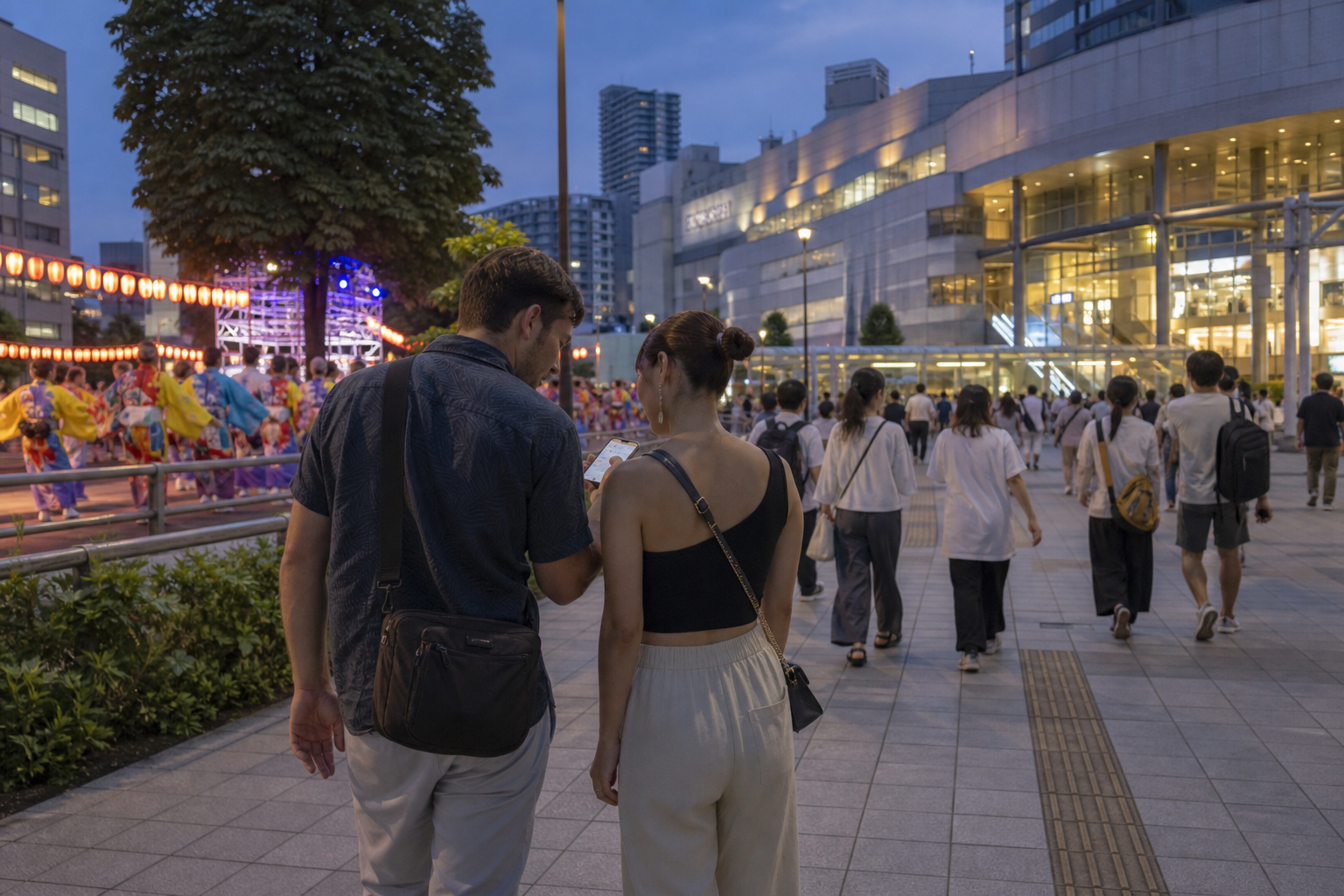
Ikebukuro Station is busiest when a large audience moves at once. Set a checkpoint based on your own itinerary, not an unconfirmed finish time. Before departure:
- check your live route;
- confirm the correct rail operator;
- take a screenshot of your transfer;
- message your companions before entering the station;
- walk to a less crowded entrance if event staff recommend it.
5. Do not carry sightseeing luggage
A festival route is a poor place for a suitcase. Store or forward large bags before the event. Small bags are easier to manage in station passages and around street-performance routes.
For broader preparation, use the Japan Festival Survival Guide.
Photography rules for ordinary spectators
The 2026 organizer guide states that photography from the spectator area is allowed. It also asks visitors not to hold a place for a long time. Special permits mentioned in the guide apply to team photographers entering the performance area, not ordinary spectators staying in the public viewing zone.
Use these practical limits:
- stay behind barriers and staff lines;
- do not enter the performance course for a clearer shot;
- avoid blocking a child’s view with equipment;
- do not spread a sheet or create a private photo position;
- ask before taking an identifiable close portrait off the performance route;
- check signs for any venue-specific restrictions added later.
The official rules are the minimum. Courtesy matters in a public street festival surrounded by shops, residents, commuters, and people who are not attending the event.
What to wear and carry in October
Tokyo in October can move between warm afternoons and cooler evenings. Check the short-range forecast close to the event rather than relying on a long-range prediction.
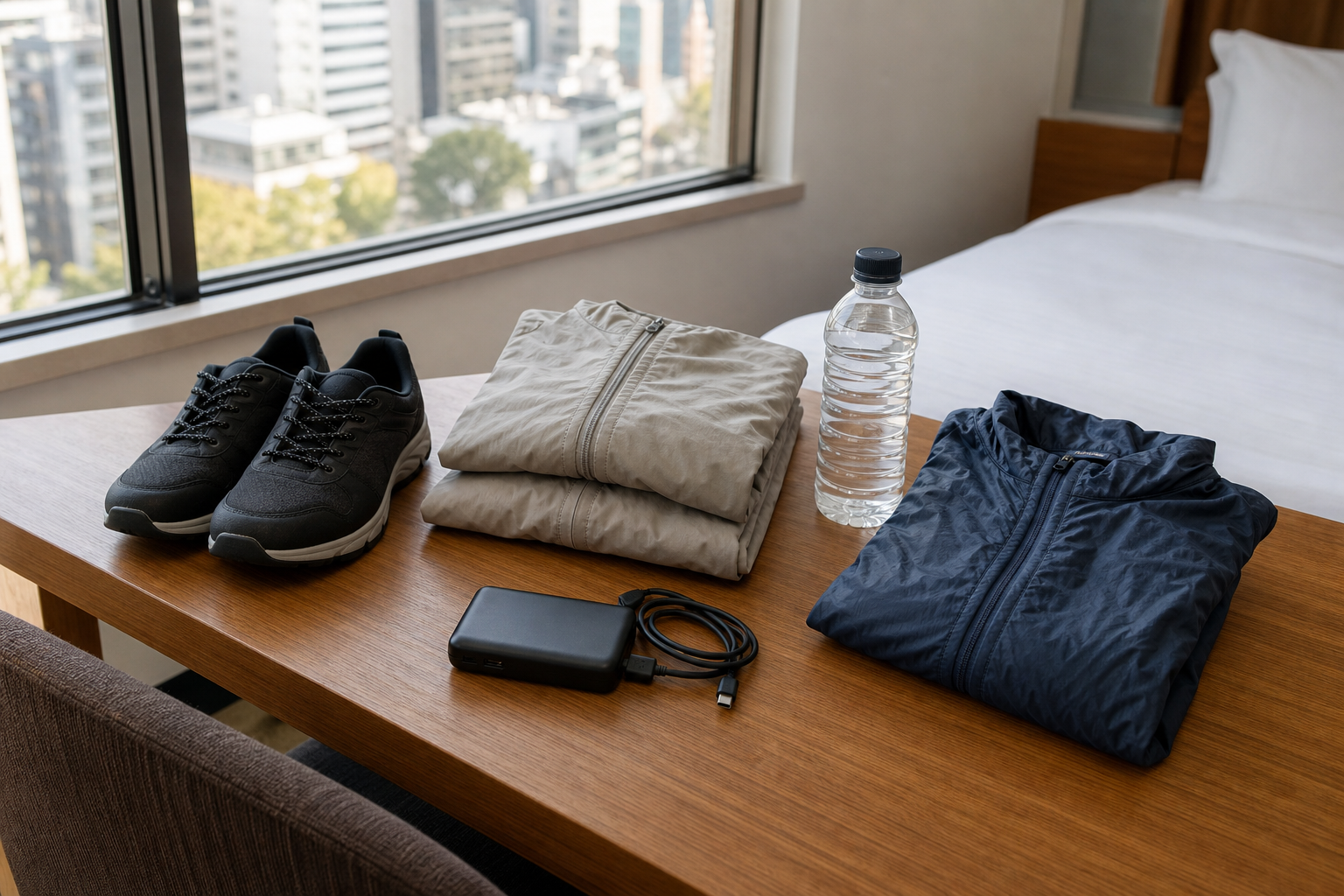
Bring:
- comfortable closed shoes;
- a light layer you can pack away;
- a compact rain layer if rain is possible;
- water in a small bottle;
- a charged phone and compact power bank;
- only a small bag.
Do not assume every venue has a public water station. The organizer’s FAQ mentions water stations at the Ikebukuro West Exit Station Plaza and West Exit Park, but that information is written for participating teams and should not be treated as a promise of free public drinking water.
For a wider packing and weather plan, see Tokyo in October 2026.
Rain, cancellation, and Plan B
As of August 14, the organizer had not published a spectator-facing 2026 rain or cancellation policy on the main event page. Do not assume the festival continues unchanged in heavy rain, a typhoon, or another safety disruption.
Use this decision sequence:
- Check the official website on the morning of your visit.
- Check the organizer’s official social account for same-day notices.
- Confirm rail status before leaving your hotel.
- If the event is operating but your chosen venue is uncomfortable, switch to another officially operating stage only after checking its schedule.
- If safety instructions advise people to leave, leave. Do not wait nearby for an unofficial restart.
Your easiest non-festival Plan B is to continue with an Ikebukuro indoor itinerary rather than crossing Tokyo in bad weather. The Ikebukuro Quick Guide provides the local orientation needed to make that switch.
After the festival: getting home without the last-train panic
The final performance times were not published when this article was checked, so no last-train promise belongs in a responsible guide.
Before you leave your accommodation that morning:
- save the route back to your actual station, not simply “Tokyo Station”;
- note whether JR, Tokyo Metro, Tobu, or Seibu operates your first train;
- decide the latest time you are willing to enter Ikebukuro Station;
- keep enough battery to recalculate after delays;
- if you plan to eat afterward, choose an area before joining a restaurant queue.
If your evening may run late, read Tokyo Last Train & Taxi Plan before the event.
Final decision: where should a first-time visitor go?
For most first-time visitors, the best default is:
- Ikebukuro West Exit Park for a fixed-stage experience; or
- the main station plaza for the strongest central atmosphere, if you accept the crowd.
Choose Azalea Street if the final schedule places a team you want there. Choose Otsuka, Sugamo, or the new Tobu Sky Deck only when the official timetable gives you a clear reason.
The measurable action is simple: choose one venue, save the final official map, and set your return-route checkpoint before entering the crowd.
You can also compare the event with other seasonal options in the Tokyo Matsuri Guide 2026.
Frequently asked questions
When is Tokyo Yosakoi 2026?
It is scheduled for Saturday, October 10, and Sunday, October 11, 2026. The organizer calls Saturday the pre-festival and Sunday the main festival.
Is Tokyo Yosakoi free to watch?
GO TOKYO lists the event as free to view. Check the organizer before visiting because final 2026 operating details can still change.
Where is Tokyo Yosakoi held?
The main venues are on the west side of Ikebukuro Station. The official 2026 team guide also lists stages at Otsuka Station North Exit, Sugamo Station North Exit, and the new Tobu Department Store 8F Sky Deck.
Which venue is best for a first-time visitor?
Ikebukuro West Exit Park is the simplest fixed-stage choice. The station plaza offers the strongest central contest atmosphere but is likely to be busier.
Is Saturday or Sunday better?
Saturday has a planned field of up to 70 teams. Sunday is the main contest day with up to 110 teams planned. Choose only after the final timetable shows the teams and venues you want.
Can spectators take photos?
The official 2026 team guide says photography from spectator areas is allowed, but long occupation of a viewing place is discouraged. Follow barriers, staff instructions, and any later venue-specific notices.
What happens if it rains?
A final 2026 spectator rain policy was not published when this guide was checked. Check the official website and official social updates on the day, and switch to an indoor Ikebukuro Plan B if conditions are uncomfortable or unsafe.
Do I need to visit every venue?
No. Pick one main venue and one backup. Trying to cover every location can turn the visit into a navigation exercise instead of a festival experience.
Comments