- Quick Answer
- What Is the Azabu-Juban Noryo Matsuri?
- 2026 Date, Venue, and What Is Still Unconfirmed
- Should You Go?
- Food: What You Can Expect and What You Cannot Confirm Yet
- Payment Plan: Cash Plus a Backup
- How to Get to the Festival
- Crowd Plan: Arrive by Relative Time, Not an Unconfirmed Clock
- What to Bring
- Heat Plan
- Trash, Eating, and Neighborhood Manners
- Visiting with Children or a Mixed-Age Group
- Rain and Official Update Plan
- Plan B: What to Do If It Is Too Crowded
- A First-Timer Itinerary
- Common Mistakes
- FAQ
Quick Answer
The Azabu-Juban Noryo Matsuri is scheduled for Saturday, August 22 and Sunday, August 23, 2026. The organizer, the Azabu-Juban Shopping District, has confirmed the two dates. Minato City also lists the festival across the Azabu-Juban shopping streets, with local food stalls, regional specialties, and stage events planned.
As of July 10, 2026, the organizer has not yet published the complete 2026 guide map, opening hours, stall list, traffic restrictions, or weather policy. Do not copy last year's schedule into this year's plan. Check the official festival page again during the week of your visit.
This is a good festival for travelers who want local food, a lively shopping-street atmosphere, and a summer evening that feels more neighborhood-based than a ticketed fireworks event. It is a poor fit if you need wide open space, clearly designated seating, a quiet dinner, or a fixed route through the crowd.
The practical plan is:
- Travel by train and leave luggage at your accommodation or a locker elsewhere.
- Arrive before the busiest evening period rather than entering at the apparent peak.
- Carry cash plus one backup payment method because the 2026 organizer has not announced a common payment system across participating stalls.
- Choose a meeting point outside the central festival streets.
- Check the heat alert and official festival update before leaving.
- Leave while you still have enough energy to handle a crowded station.
Official information checked on July 10, 2026:
- 2026 festival announcement — Azabu-Juban Shopping District
- Minato City shopping-street event list
- Azabu-Juban Station exit map — Tokyo Metro
What Is the Azabu-Juban Noryo Matsuri?
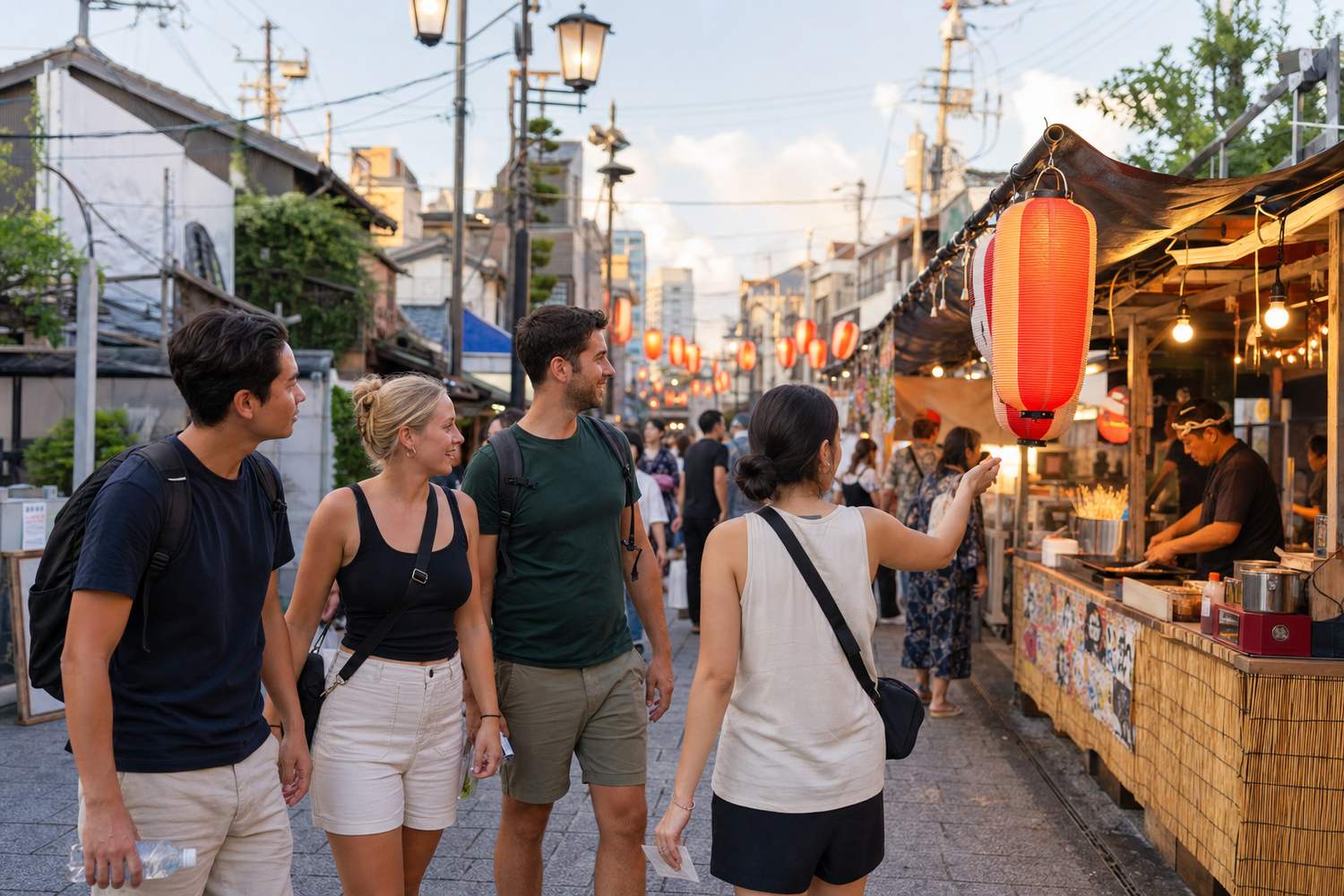
The Azabu-Juban Noryo Matsuri is the major summer festival of the Azabu-Juban Shopping District in Minato City, Tokyo. It uses the shopping streets themselves as the event area. This matters because the experience is not centered on one shrine courtyard, one fireworks field, or one ticket gate. Food, people, performances, and movement spread through an active neighborhood.
The organizer describes three priorities for the 2026 festival: follow the rules and aim for safety, reduce waste through an ECO & CLEAN approach, and create an event children can enjoy. Minato City's 2026 event listing says the program is expected to include food stalls run by shopping-district members, an area for regional products called Oraga Kuni Jiman, and stage events at Patio Juban.
That combination gives the festival its character. You may find food from established neighborhood businesses near regional dishes and temporary festival items. A stage performance may be happening while another street is focused on queues and food. The festival is therefore better treated as a neighborhood circuit than as a checklist of one famous attraction.
For crowd, food, train, and etiquette preparation that applies across events, use Japan Festival Survival Guide 2026.

2026 Date, Venue, and What Is Still Unconfirmed
Here is the verified position as of July 10.
Item: Dates
2026 status: Confirmed: August 22 and 23
What it means for your plan: You can reserve the weekend in your itinerary
Item: Location
2026 status: Confirmed: Across Azabu-Juban's shopping streets
What it means for your plan: Use Azabu-Juban Station and prepare for crowds at street level
Item: Local shopping-district stalls
2026 status: Listed by Minato City
What it means for your plan: Food from member businesses is part of the planned event
Item: Regional products area
2026 status: Listed by Minato City
What it means for your plan: Regional food and products are expected through Oraga Kuni Jiman
Item: Patio Juban stage
2026 status: Listed by Minato City
What it means for your plan: Performances are planned, but the detailed timetable is not yet published
Item: Opening and closing hours
2026 status: Not yet published on the 2026 organizer page
What it means for your plan: Check again before choosing an arrival time
Item: 2026 stall map
2026 status: Not yet published
What it means for your plan: Do not build a route around last year's stall positions
Item: Pedestrian controls
2026 status: Awaiting 2026 details
What it means for your plan: Travel by train and follow current event directions
Item: Weather or cancellation policy
2026 status: Not yet published
What it means for your plan: Check the organizer's latest update on the day
Item: Universal payment system
2026 status: Not announced
What it means for your plan: Expect payment methods to vary by business or stall
The distinction between confirmed and unconfirmed information is important. The official 2025 guide can help you understand the general scale and style of the festival, but it cannot confirm a 2026 opening time, vendor, price, stage act, entrance route, or trash-station position.
The organizer's official 2025 festival report says that year's event started at 15:00, had about 300 stalls, and attracted about 300,000 people over two days. These are historical 2025 facts, not promises for 2026. They show why crowd planning matters, but your final plan should be based on the 2026 map when it is released.
Should You Go?
Use this decision table before adding the festival to your Tokyo itinerary.
Your priority: Local food and regional specialties
Recommendation: Go
Reason: Food is one of the core planned components
Your priority: A lively Tokyo neighborhood festival
Recommendation: Go
Reason: The shopping streets form the event space
Your priority: A summer evening near Roppongi and central Tokyo
Recommendation: Go
Reason: Azabu-Juban is connected by the Namboku and Oedo subway lines
Your priority: Guaranteed seating
Recommendation: Choose another plan
Reason: No 2026 seating system has been announced
Your priority: A quiet restaurant dinner
Recommendation: Book outside the festival area or choose another night
Reason: Large queues and street crowds can disrupt a normal dinner plan
Your priority: A stroller-friendly route through every street
Recommendation: Keep the visit short and stay near the edge
Reason: Dense pedestrian flow may make movement difficult
Your priority: A detailed stage schedule now
Recommendation: Wait for the official map
Reason: The 2026 timetable is not yet published
Your priority: A visit with large luggage
Recommendation: Store it first
Reason: Narrow, crowded streets and station movement are a poor match for suitcases
Your priority: A low-heat activity
Recommendation: Choose an indoor Plan B
Reason: This is an outdoor August event
The festival works well when you give it one clear mission. That might be trying two local foods, seeing one stage segment, wearing yukata for an hour, or experiencing the evening atmosphere. Trying to cover the full stall area can turn a fun visit into a slow walk through queues.
Food: What You Can Expect and What You Cannot Confirm Yet
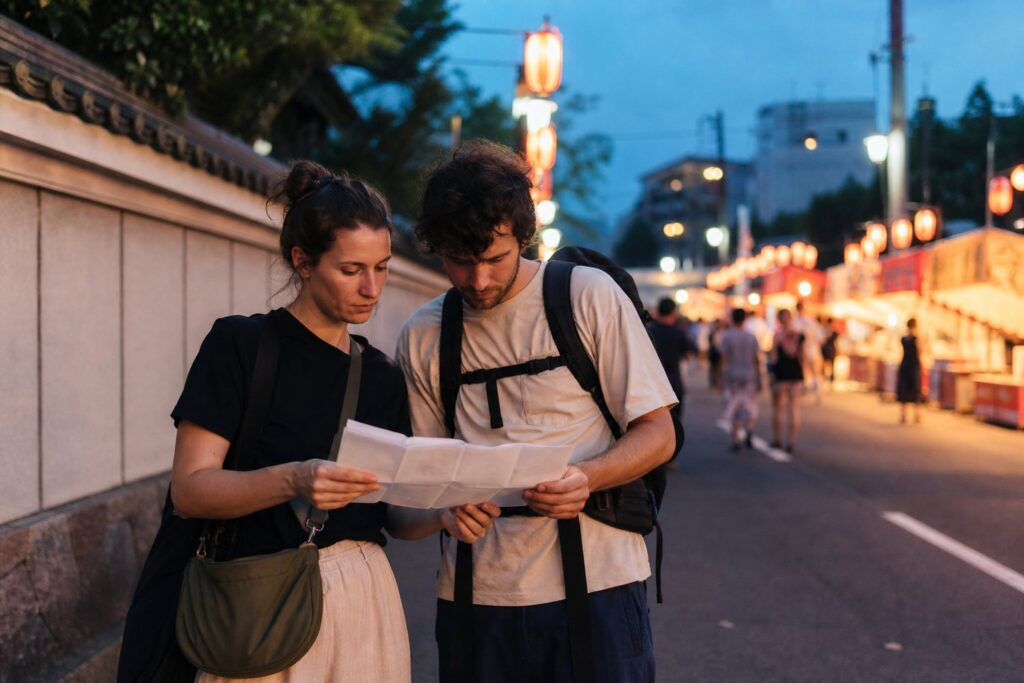
Food is the strongest reason for many travelers to visit. Minato City's event listing separates the food component into shopping-district member stalls and the Oraga Kuni Jiman regional-products area. The organizer's 2025 report described local favorites alongside products and dishes from different parts of Japan.
That makes this festival different from a temporary row of generic festival stands. Some stalls may be connected to businesses that operate in Azabu-Juban during the rest of the year. Others may represent regional ingredients or specialties. The useful travel question is not "What is the most famous stall?" but "Which two or three things can I try without spending the entire evening in one line?"
Use this food strategy:
- Walk one short section before buying anything.
- Note the longest queues and return if the item matters to you.
- Choose one local-business item and one regional item.
- Share portions if your group wants variety.
- Step away from the moving crowd before eating.
- Stop buying food before your hands and bag become difficult to manage.
Wait for the 2026 guide before relying on an unofficial "must-eat" list. Vendor participation, menu items, prices, allergens, and payment methods can change. Even a returning business may sell a different festival menu.
If you have a food allergy, vegetarian requirement, halal requirement, or another dietary restriction, do not assume a dish is safe because it looks simple. Ask about ingredients and shared cooking equipment. Festival service is fast, noisy, and crowded, so a restaurant outside the busiest zone may be a better choice for a complex dietary request.
Payment Plan: Cash Plus a Backup
The 2026 organizer has not announced one payment method across the festival. Payment may vary between member businesses, regional booths, and temporary sales points.
A practical visitor setup is:
- Carry small yen notes and coins.
- Carry one card or mobile payment method as a backup.
- Keep your transit IC card charged and separate from food money.
- Ask or look for the accepted-payment sign before ordering.
- Do not assume a long queue means card payment is available.
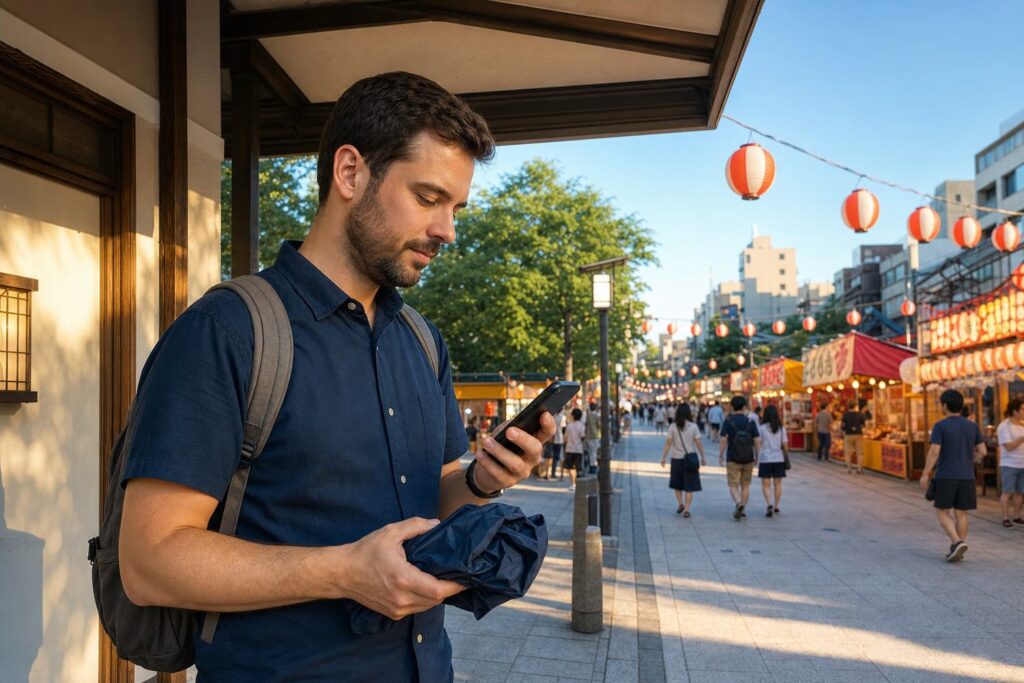
- Avoid opening a large wallet in the densest part of the street.
This is preparation advice, not a statement that the festival is cash-based. Some businesses may accept cards, QR payments, or IC payment, while others may not. The decision belongs to each seller unless the 2026 organizer later announces a common system.
If you need to withdraw cash, do it before entering the densest streets. An ATM that appears close on a map may still require a slow walk through pedestrian congestion.
How to Get to the Festival
Azabu-Juban Station is served by the Tokyo Metro Namboku Line, station N04, and the Toei Oedo Line, station E22. The two systems connect at Azabu-Juban.
Tokyo Metro's official exit guide lists Exit 4 for the Azabu-Juban Shopping District. On a normal day, that is the clearest exit for the shopping street. On the festival weekend, crowd controls or temporary directions may change the best exit. Follow station announcements, police, and event staff rather than forcing your way toward Exit 4.
Arrival route: Tokyo Metro Namboku Line
Useful when: You are coming from Meguro, central Tokyo, or the north side of the Namboku Line
Arrival route: Toei Oedo Line
Useful when: You are coming from Shinjuku, Roppongi, Daimon, or another Oedo Line area
Arrival route: Walk from Roppongi
Useful when: You are comfortable walking and want a flexible Plan B, but check heat and crowd conditions
Arrival route: Taxi
Useful when: Use only to reach an outer meeting point; do not assume the car can enter festival streets
Arrival route: Private car
Useful when: Not recommended for a short-stay visitor; 2026 traffic restrictions are not yet published
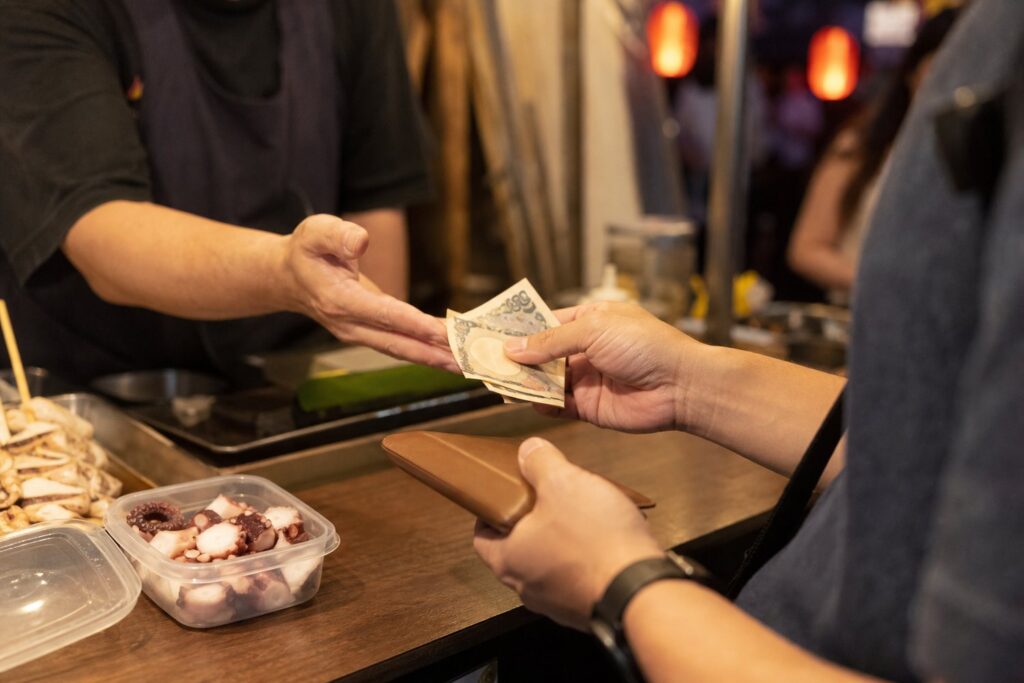
Prepare the return route before you arrive. Save your accommodation address and a second subway route. If you are using a physical IC card, charge it earlier in the day. If you are meeting friends, choose a place outside the event core, such as a station one stop away or a clearly named building that is not inside the food-stall streets.
Crowd Plan: Arrive by Relative Time, Not an Unconfirmed Clock
Because the 2026 opening hours are not yet published, this guide does not tell you to arrive at a specific clock time. Use the official opening time once released and plan relative to it.
Your goal: First choice of food with shorter early queues
Arrival strategy: Arrive 30 to 60 minutes before the published opening time and wait outside the busiest central street
Your goal: Lively atmosphere without staying to the end
Arrival strategy: Enter after opening, complete one short circuit, then leave before the apparent evening peak
Your goal: Stage performance
Arrival strategy: Use the 2026 timetable and arrive at Patio Juban early enough to find a safe standing position
Your goal: Family visit
Arrival strategy: Choose an earlier, shorter window and leave before children become tired
Your goal: Photography
Arrival strategy: Arrive while there is still daylight and avoid blocking the pedestrian flow
Your goal: Meeting friends
Arrival strategy: Meet outside the festival area before entering together
The 2025 organizer report said approximately 300,000 people attended over two days and described streets crowded enough to make movement difficult. That is the strongest reason to build an exit plan rather than improvising at the end.
Do not use "in front of the station" as your meeting point. A station has multiple exits, phone signals can feel unreliable when everyone is messaging, and staff may create one-way pedestrian flows. Pick a named place outside the core and share a map pin before you travel.
If your group becomes separated, do not stop in the middle of a moving street. Each person should walk to the pre-agreed meeting point.

What to Bring
Pack for a crowded August street festival, not a normal evening restaurant visit.
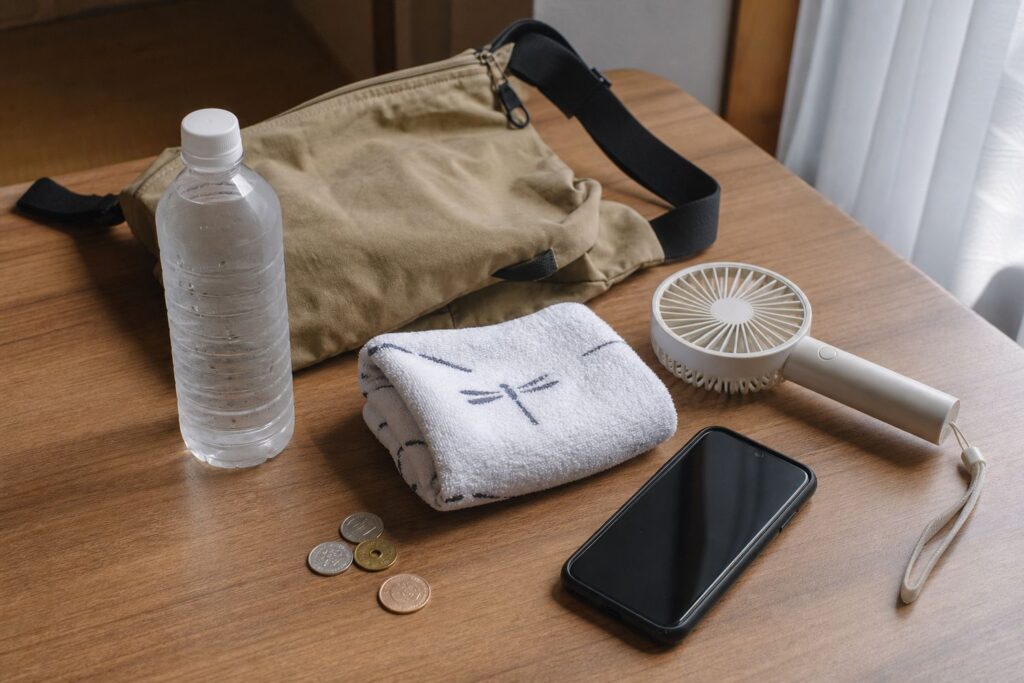
Item: Small crossbody bag
Why it helps: Keeps both hands available for food and movement
Item: Water
Why it helps: Reduces the need to search for a drink after entering a queue
Item: Small towel
Why it helps: Useful for sweat and hand cleanup
Item: Portable fan
Why it helps: Helps during slow movement or waiting
Item: Cash in small denominations
Why it helps: Gives you a backup where electronic payment is not available
Item: Charged IC card
Why it helps: Speeds up the subway part of the trip
Item: Phone battery
Why it helps: Important for your return route and meeting point
Item: Compact rain item
Why it helps: Useful if the forecast is uncertain, but avoid a large umbrella in a dense crowd
Item: Empty small bag
Why it helps: Useful for personal waste until you find the correct disposal point
Leave large luggage, shopping bags, tripods, and hard-sided coolers elsewhere. A suitcase that rolls easily through an airport can become a barrier in a narrow street.
Yukata can fit the atmosphere, but comfort matters more than the photo. If this is your first time wearing yukata, practice walking and using the restroom before the event. Wear footwear you can manage for longer than expected.
Heat Plan
The festival takes place outdoors in late August. Check the Ministry of the Environment's Heat Illness Prevention Information on the day. The official English service explains the WBGT heat-stress index and displays heat alerts.
Minato City's 2026 heatstroke-prevention information also says the city has designated Cooling Shelters and other cool-down locations through October 21. Check the current Minato City list before your visit; do not assume a particular facility will be open or convenient during the festival.
Use this simple heat decision:
- If you feel normal: drink regularly and keep the visit focused.
- If you become unusually tired, dizzy, nauseated, confused, or unable to cool down: leave the crowd and seek help.
- If a heat alert is active: shorten the visit and choose more indoor time.
- If someone in your group is already unwell: skip the festival rather than testing their limit.
Do not postpone drinking water. A queue that looks short can stop moving. Drink before you enter the densest area and take breaks before you feel desperate for one.
Use the official heat-alert page above as the day-of source for current conditions.
Trash, Eating, and Neighborhood Manners
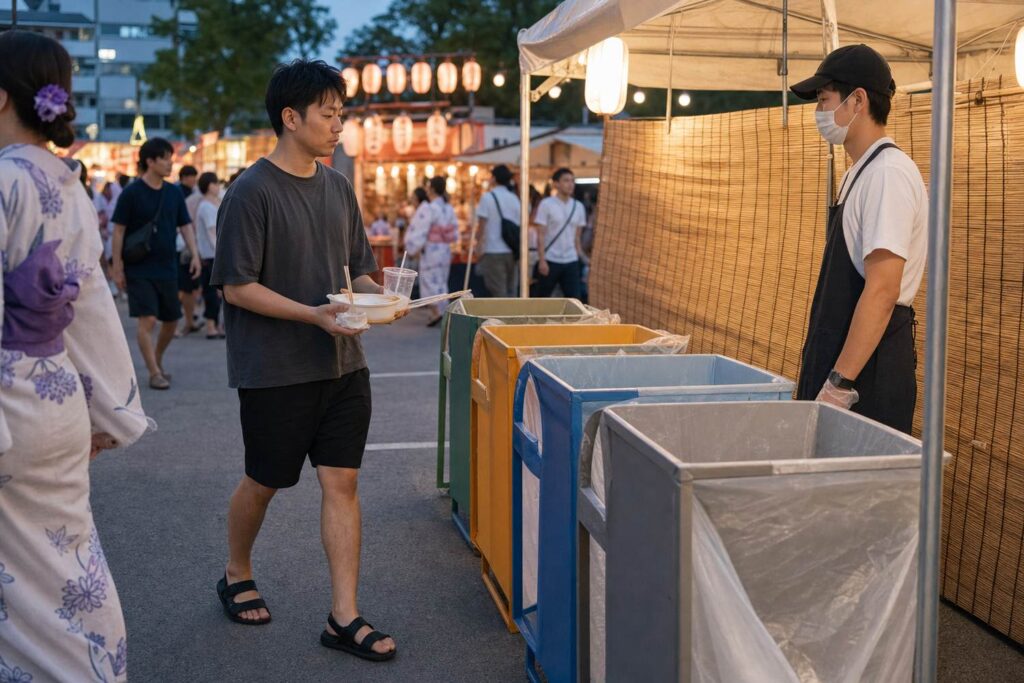
The organizer names ECO & CLEAN and waste reduction as festival priorities. Its 2025 guide asked visitors to reduce waste, sort it, and use designated collection points. A separate organizer report describes overnight cleaning and a final check the next morning.
The 2026 trash-station locations have not yet been published. Follow the new map when it appears and use the designated disposal system on the day.
Good behavior:
- Finish eating away from busy pedestrian routes.
- Separate waste according to the signs.
- Keep waste with you until you find the correct collection point.
- Respect entrances to homes and operating businesses.
- Keep voices lower after leaving the official event streets.
- Ask before taking a close portrait of a child, staff member, or vendor.
- Follow one-way crowd instructions even if your map suggests a shorter route.
Avoid:
- Leaving cups or skewers on a wall, planter, bicycle, or storefront.
- Sitting in a private entrance or blocking an emergency route.
- Stopping suddenly in the middle of the crowd for a video.
- Holding a phone above other people's faces for a long recording.
- Treating the surrounding residential streets as an extension of the party.
Azabu-Juban is still a neighborhood when the festival ends. The easiest test is: would this action make it harder for a resident, shop worker, child, or emergency responder to move?
Visiting with Children or a Mixed-Age Group
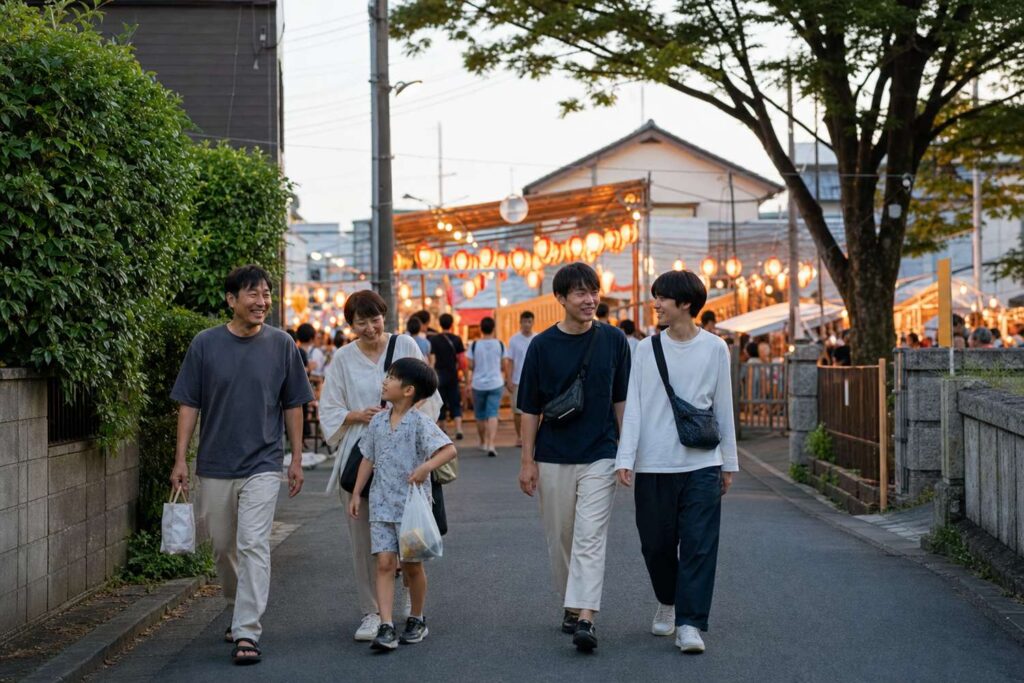
The organizer explicitly identifies children as part of the festival's purpose, but street conditions and crowd levels can still differ across the event.
Use a shorter visit with one food goal and one entertainment goal. Write a phone number on a card for younger children. Photograph what each child is wearing before entering. Agree on a meeting point and do not rely solely on a child remembering your accommodation name.
If you use a stroller, stay near the outer parts of the event and be prepared to turn back. Do not force the stroller through a queue or a one-way crowd. A baby carrier may be easier for movement, but heat exposure then becomes more important.
Older relatives may enjoy an early visit but struggle when the street becomes packed. Give them permission to leave without making the group feel the plan failed. A successful festival visit can be 45 minutes.
Rain and Official Update Plan
As of July 10, the organizer has not published the 2026 rain, cancellation, or postponement policy. Do not assume the event will proceed, move indoors, or be postponed based on a previous year.
Check in this order:
- Official 2026 festival page.
- Azabu-Juban Shopping District's current news or official social account linked from its site.
- Minato City event information.
- Tokyo Metro and Toei service information for your route.
- The weather forecast and heat alert.
If the forecast is unstable, a compact raincoat is easier than a large umbrella in a dense street. If heavy rain, lightning, strong wind, or an organizer cancellation is announced, switch plans rather than traveling to check in person.
Plan B: What to Do If It Is Too Crowded
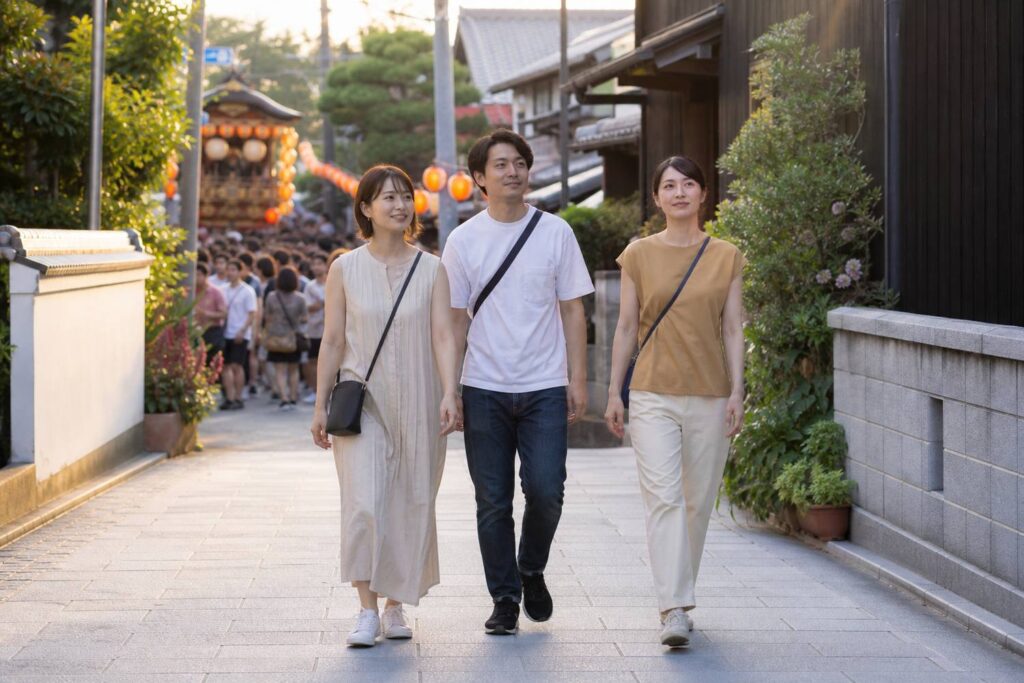
You do not need to stay because you already traveled there. Use one of these exits:
Plan B 1: Leave after one food purchase
Try one item, absorb the atmosphere, and leave before the group becomes tired. This is often the strongest choice for first-time visitors.
Plan B 2: Walk when the route is open and the weather is manageable
Roppongi is nearby, but do not treat the walk as automatically calm. Check official crowd directions and heat conditions before walking.
Plan B 3: Eat away from the festival core
If food queues become the whole experience, take the subway to another area. For options that do not require a hard-to-get reservation, see Tokyo Restaurant Plan B 2026.
Plan B 4: Return to your accommodation
Travelers staying in a hotel, Airbnb, or another short-stay property should save the return route before entering. A quick return is valuable when clothes are wet, children are tired, or the heat has reduced everyone's patience.
Plan B 5: Visit on the other day
Because the festival is scheduled for two days, the second date can be a fallback if your itinerary permits. Check official updates before assuming the same timetable and vendor availability on both days.
The goal is not to prove you can tolerate the crowd. The goal is to have one good Tokyo memory and finish the evening safely.
A First-Timer Itinerary
Use this after the organizer publishes the 2026 opening time.
Relative time: 60-90 minutes before opening
Plan: Eat a light snack, use a restroom, charge your IC card, and meet your group outside the festival core
Relative time: 30 minutes before opening
Plan: Approach the shopping-street edge and check official signs
Relative time: Opening to +45 minutes
Plan: Walk one short circuit and identify two food choices
Relative time: +45 to +90 minutes
Plan: Buy and eat without trying to cover the full map
Relative time: +90 to +120 minutes
Plan: See one stage or regional-products area if movement is comfortable
Relative time: Before the apparent peak
Plan: Leave by your saved route or switch to Plan B
Do not copy the 2025 opening time into this table. The relative plan remains useful even if the 2026 organizer chooses different hours.
Common Mistakes
Mistake: Treating the 2025 map as the 2026 map
Better choice: Wait for the current official guide
Mistake: Arriving with a suitcase
Better choice: Store luggage before going
Mistake: Meeting directly in front of the station
Better choice: Meet outside the festival core
Mistake: Joining the first long food line
Better choice: Walk a short section before choosing
Mistake: Assuming every stall accepts cards
Better choice: Carry cash and a backup method
Mistake: Wearing new sandals for hours
Better choice: Choose footwear you have already tested
Mistake: Waiting until you feel sick to rest
Better choice: Take an early break and check the heat alert
Mistake: Dropping trash beside a full bin
Better choice: Keep it until you find the correct collection point
Mistake: Following Google Maps against staff direction
Better choice: Follow current official crowd controls
Mistake: Staying because the visit took effort
Better choice: Leave while the memory is still enjoyable
FAQ
Q: When is the Azabu-Juban Noryo Matsuri 2026?
A: The official organizer has confirmed Saturday, August 22 and Sunday, August 23, 2026.
Q: What time does the 2026 festival start?
A: As of July 10, 2026, the organizer has not published the complete 2026 opening hours. Check the official festival page before traveling.
Q: Where is the festival held?
A: Minato City lists the venue as the Azabu-Juban shopping-street area. The event is spread through the neighborhood rather than contained inside one ticketed venue.
Q: What is the nearest station?
A: Azabu-Juban Station serves the area on the Tokyo Metro Namboku Line and Toei Oedo Line. Tokyo Metro's normal exit guide lists Exit 4 for the shopping district, but temporary festival directions may change pedestrian flow.
Q: Is the festival free?
A: The 2026 organizer page does not list an admission ticket. Visitors should still budget for food, drinks, transportation, and other purchases.
Q: Will there be food stalls?
A: Yes. Minato City's 2026 listing says shopping-district member stalls and the Oraga Kuni Jiman regional-products area are planned. The detailed 2026 vendor list is not yet published.
Q: Do the stalls accept credit cards?
A: A festival-wide payment system has not been announced. Payment methods may vary, so carry cash plus one backup option and check before ordering.
Q: Is it suitable for children?
A: The organizer includes children in its stated festival priorities. Families should still choose a short, earlier visit, agree on a meeting point, and avoid forcing a stroller through dense streets.
Q: What happens if it rains?
A: The 2026 rain and cancellation policy has not yet been published. Check the organizer's official update on the day and switch plans if cancellation or dangerous weather is announced.
Q: What is the clearest Plan B?
A: Leave after one food purchase, move to a less crowded neighborhood, eat outside the event core, or return to your accommodation. Do not stay merely because you already traveled there.
Comments