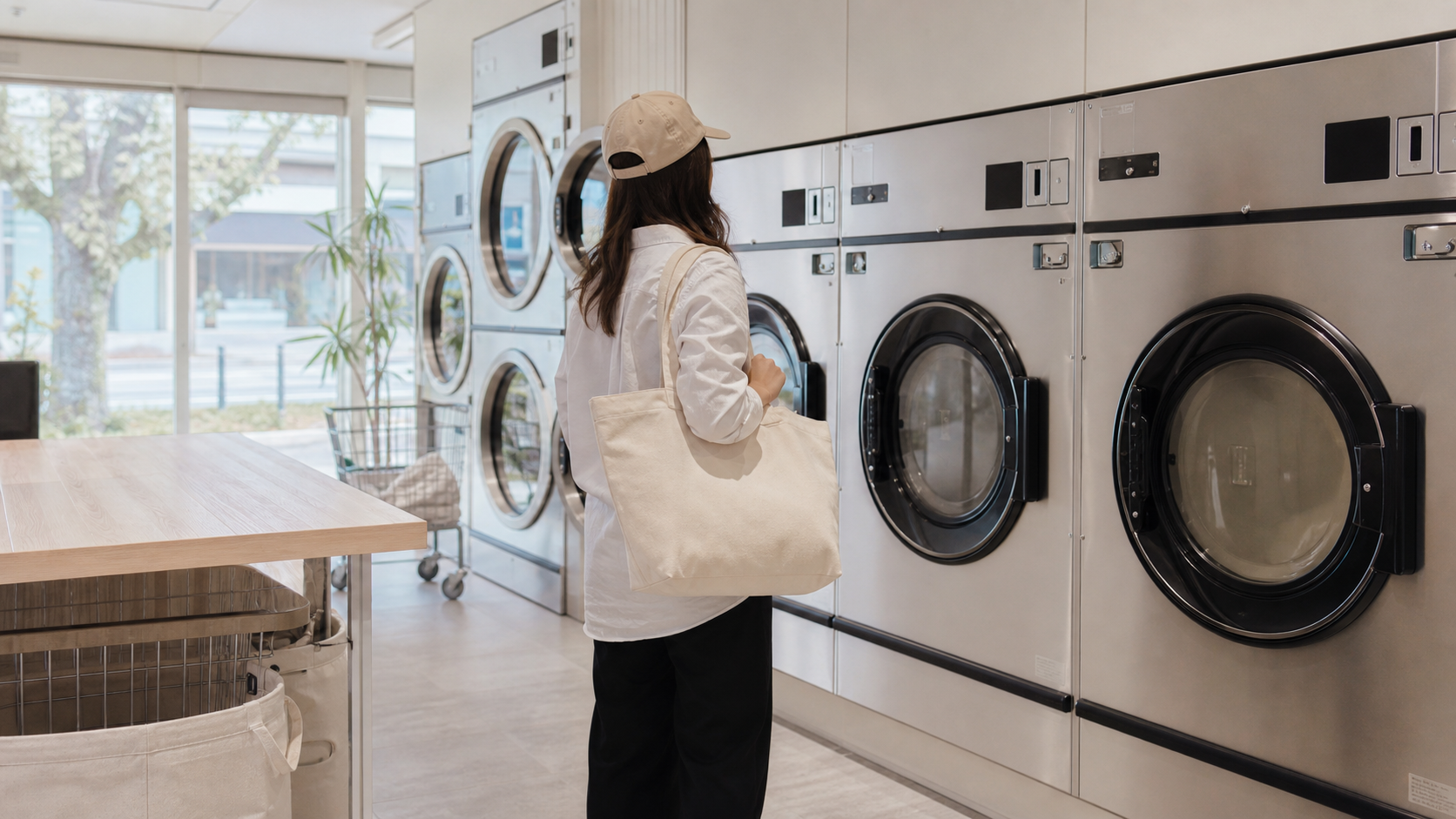
Doing laundry in Japan becomes easier once you know which machine you are facing. The difficult part is not the wash itself. It is deciding whether your hotel's small machine is enough, whether detergent is added automatically, how you will pay, and how much drying time your clothes actually need.
This guide gives you a practical sequence for both hotel laundry rooms and street laundromats. It also includes a recovery plan for the most common failure: the cycle ends, but your clothes are still damp.
- Quick answer: how to use coin laundry in Japan
- Hotel laundry or street laundromat?
- What to bring before you go
- How to use a Japanese coin laundry
- Detergent, coins and cashless payment
- How long washing and drying take
- What to do when clothes are still damp
- Items you should not wash or dry
- Laundry etiquette and security
- Plan B when machines are full or broken
- FAQ
- Do Japanese coin laundries provide detergent?
- How much does coin laundry cost in Japan?
- How long does a wash take?
- Can I pay by credit card or phone?
- Can I leave while the machine runs?
- What should I do if my clothes are still damp?
- Can I wash shoes, bedding or a suitcase in a coin laundry?
- Is hotel laundry better than a street laundromat?
- Your next action
Quick answer: how to use coin laundry in Japan
Use this order:
- Check each item's care label, empty the pockets, and separate anything delicate or unsuitable for tumble drying.
- Decide between the hotel machine and a street laundromat. A nearby laundromat is often the better choice for a large load, a stronger dryer, or a bulky item.
- Read the instructions on the exact machine before loading it. Confirm capacity, price, accepted payment, and whether detergent is dispensed automatically.
- Load loosely enough for clothes to move. Do not force a large load into a small drum.
- Choose the program, pay using a method the machine accepts, and keep the displayed machine number in mind.
- Return before the cycle finishes. Remove your laundry promptly so the next person can use the machine.
- Dry in shorter rounds when you are uncertain about heat. Separate heavy towels and jeans from quick-drying shirts.
- If clothes remain damp, reduce the load, shake out tangled items, move heavy pieces to a separate dryer, and check the care labels again before buying more drying time.
| Your situation | Best first choice | Why | Plan B |
|---|---|---|---|
| One small everyday load | Hotel laundry room | Closest and easiest to monitor | Use a nearby laundromat if the dryer is weak or occupied |
| Several days of clothes for two or more people | Street laundromat | Larger drums and multiple machines may finish the job faster | Split the load or return at a quieter time |
| Towels, jeans, hoodies, or other heavy items | Street laundromat with a separate dryer | Heavy items usually need more drum space and drying time | Dry heavy and light items separately |
| Delicate, decorated, wool, leather, or no-tumble-dry item | Do not guess | Heat and tumbling can damage the item | Ask your hotel about a laundry service or air-dry if the care label allows it |
| You have no coins | Machine or laundromat with a confirmed cashless option | Payment methods vary by property and operator | Use a nearby coin machine or get change before loading |
Information checked August 1, 2026. Machine controls, detergent systems, prices, times, payment methods and house rules vary. Read the instructions on the exact machine before paying.
Hotel laundry or street laundromat?
Choose by load and risk, rather than distance alone.
Use the hotel laundry room when convenience matters most
A hotel machine is useful when you have one modest load and can return easily. It avoids carrying clothes outside and makes it easier to check the cycle between other tasks. The tradeoff is that a hotel may have a small number of compact machines. A combined washer-dryer may also take longer or leave dense items damper than expected.
Before you start, check whether the hotel machine:
- washes, dries, or combines both functions;
- locks during the cycle;
- requires a room key, PIN, coin, card, or app;
- dispenses detergent automatically;
- displays remaining time; and
- has a hotel-specific rule for abandoned laundry.
Ask the front desk if any point is unclear. Do not assume one hotel's system applies at the next hotel.
Use a street laundromat when capacity matters most
A Japanese street laundromat may be marked coin laundry or コインランドリー. It can be the stronger option for a large load, several travelers' clothes, or separate washing and drying. Some operators provide large-capacity washer-dryers, drum cleaning, live machine availability, completion notifications, or cashless payment. Those features are operator-specific, so confirm them for the location you plan to visit.
A map listing is the first check, not the final one. Before carrying a heavy bag there, look for recent opening information and, when available, the operator's own store page. Save a second location nearby in case the suitable machines are occupied.
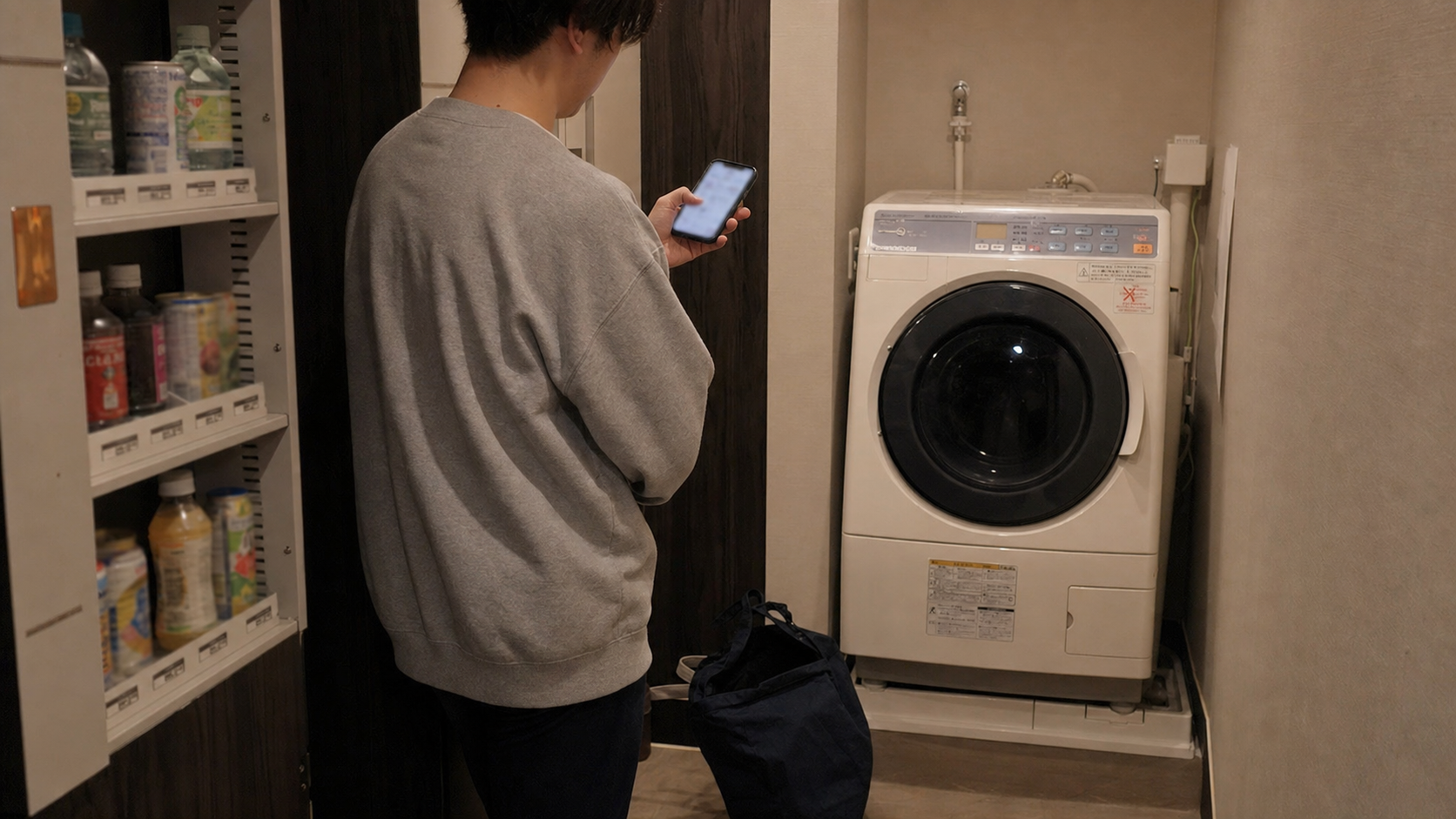
What to bring before you go
Bring what solves a confirmed need:
- laundry in a closed tote or bag;
- small coins if the machine accepts them;
- a phone for translation, maps, timers, or an operator app;
- your room key if the hotel laundry room is controlled; and
- detergent when the machine or property says you must add it.
Many modern laundromat machines dispense detergent automatically, but that is not universal. Adding your own detergent to an automatic-dispensing machine can create too much foam or produce a poor wash. Read the instruction panel first.
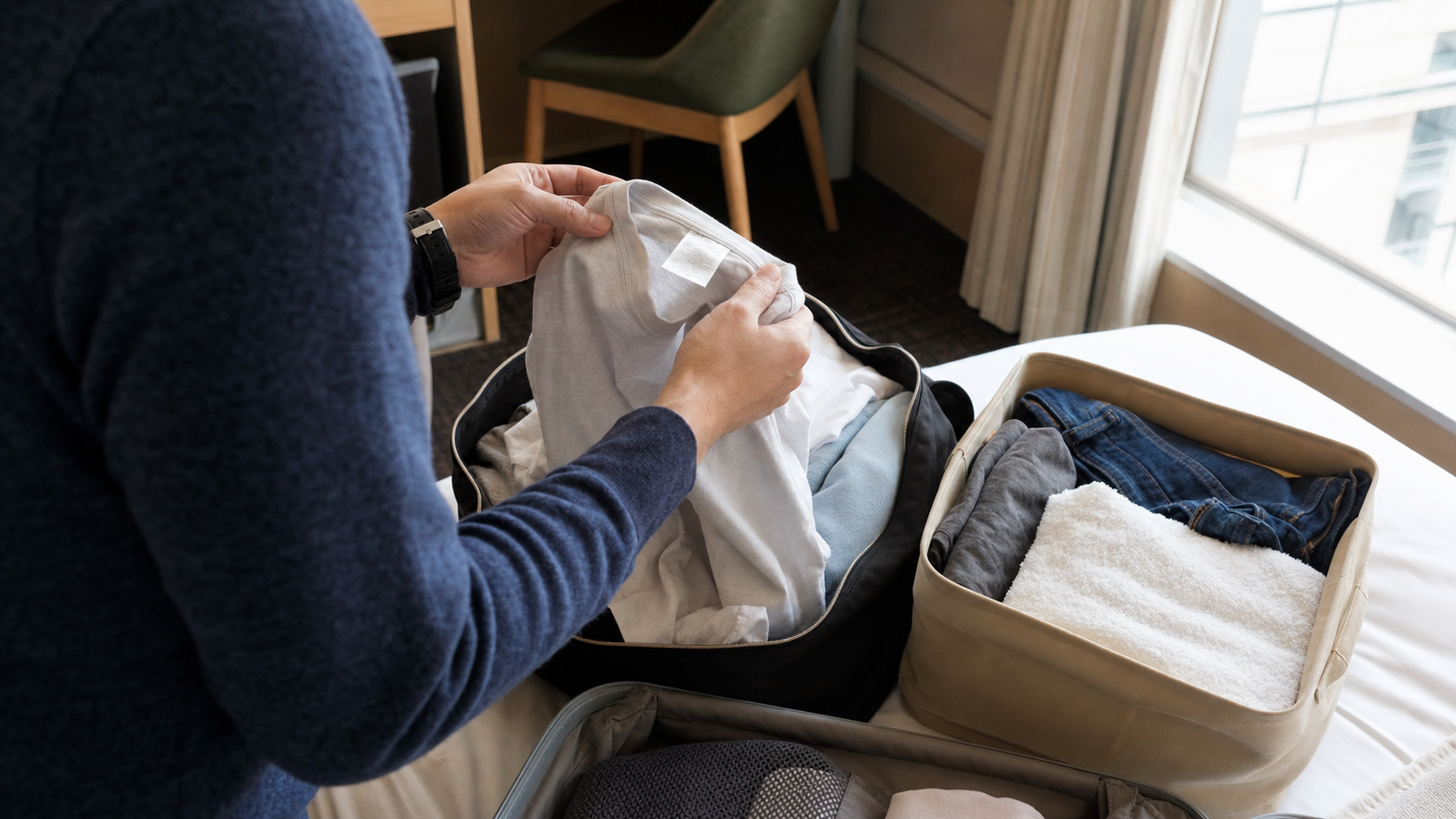
Do a 60-second preflight before leaving your room:
- Empty pockets completely.
- Close zippers and fasten hooks when the care instructions permit.
- Put small items in a laundry net if appropriate.
- Separate pale and dark items when color transfer is a concern.
- Separate heavy towels and denim from light, quick-drying clothing.
- Check the wash and tumble-dry symbols on any uncertain item.
Japan's Consumer Affairs Agency explains the current Japanese care-label system under JIS L 0001:2024. For tumble drying, a square containing a circle is the relevant symbol. Two dots permit a higher maximum exhaust-air temperature of 80°C, one dot indicates a lower maximum of 60°C, and a crossed-out tumble-dry symbol means not to tumble dry. The symbol on your garment matters more than a general travel tip.
How to use a Japanese coin laundry
The button order differs by machine, but the decision sequence is stable.
Step 1: identify the machine type and capacity
Confirm whether it is a washer, dryer, or washer-dryer. Check the capacity in kilograms and use a larger drum or split the load if clothes would be tightly packed. WASHHOUSE's current operating guide, from one Japanese laundromat operator, warns that overloading reduces drying performance. Treat that as sound operating guidance, while following the limits printed on your exact machine.
Step 2: inspect the drum
Look inside before loading. Check that no item from the previous customer remains and that the drum is visibly usable. Some washer-dryers offer a drum-cleaning step before loading, but the availability and procedure vary by machine.
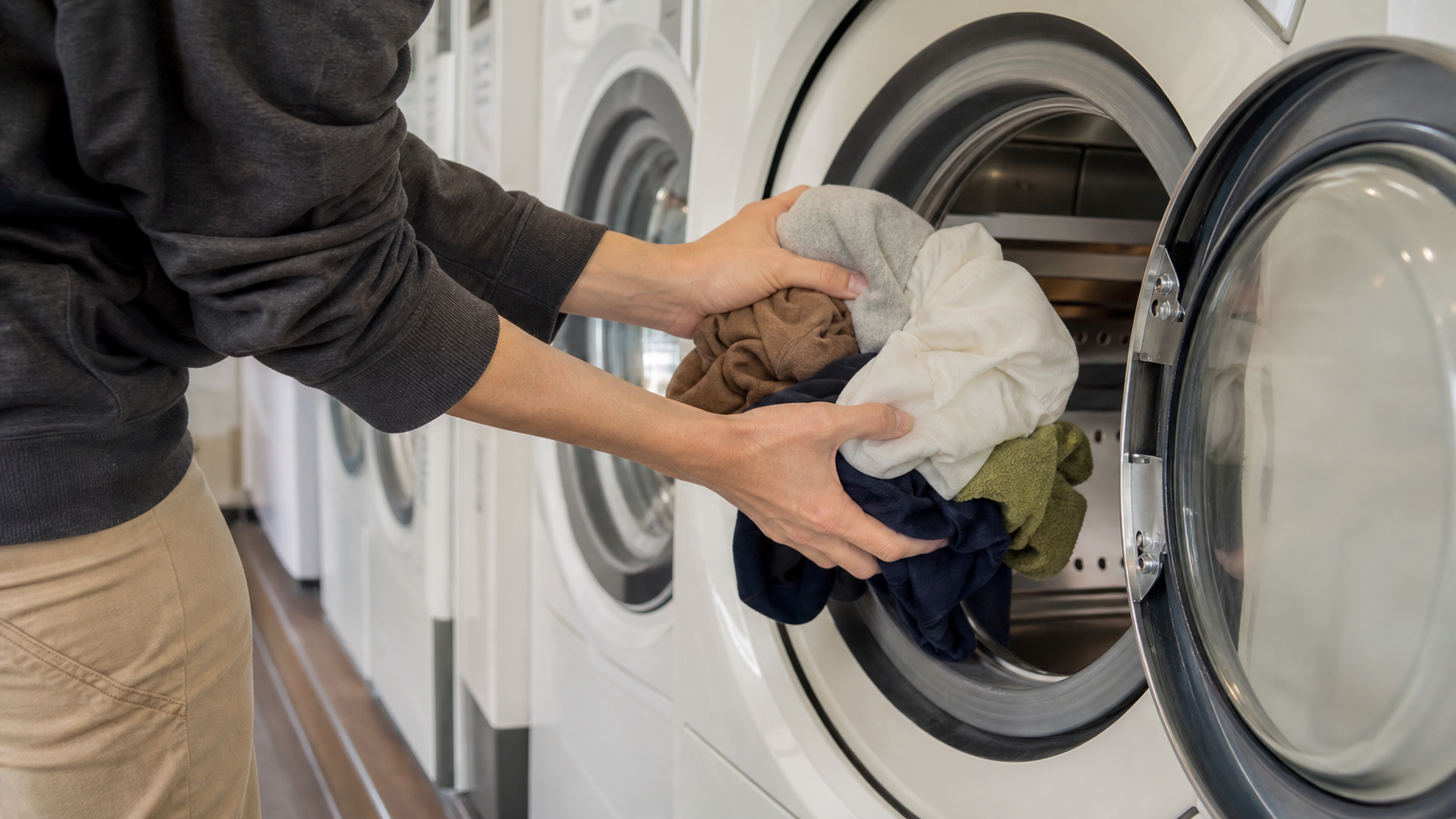
Step 3: load the laundry
Place the laundry in the drum without forcing it. Make sure nothing is trapped in the door. If you are washing a bulky item, use a machine whose instructions explicitly allow that item and whose capacity is sufficient.
Step 4: check detergent instructions
Look for a statement that detergent and softener are automatically added. If the machine requires detergent, use the indicated compartment and amount. Do not pour detergent into an unconfirmed opening.
Step 5: choose the program
Select washing, drying, or the combined course that fits the load. Translation tools can help with unfamiliar controls, but the machine's safety symbols, capacity and prohibited-item notices still govern the choice.
Step 6: confirm payment before committing
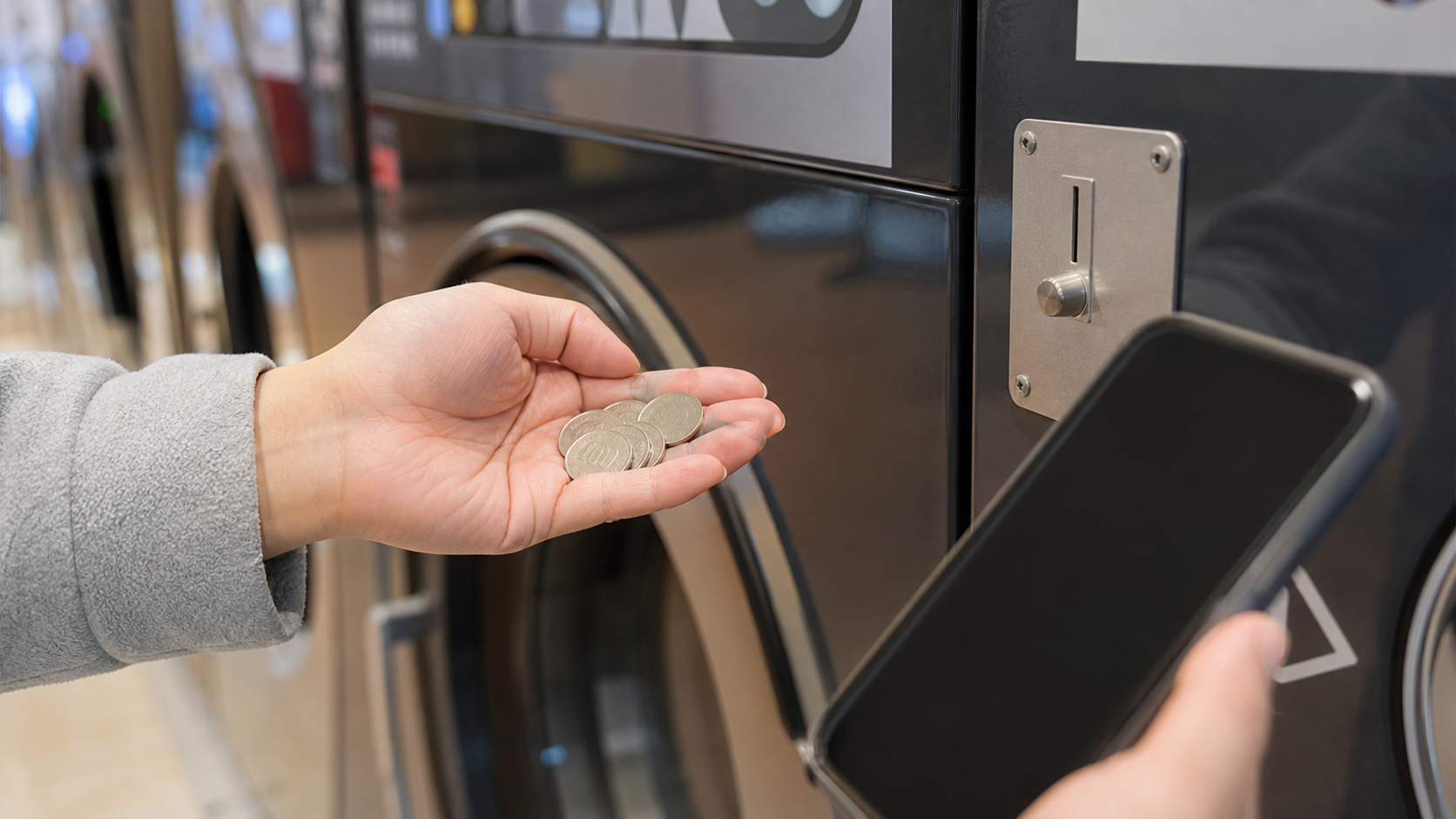
Check the displayed total and the payment method before inserting money. Some machines accept specified coins; some locations have a change machine; some operators provide cashless payment through an app or another system. Do not assume that a phone or credit card will work simply because the laundromat looks modern.
Step 7: start the cycle and save the finish time
Confirm that the machine has started. Note its number and displayed remaining time, then set a phone timer a few minutes early. Stay nearby when the property requires it, and do not depend on a notification unless you have confirmed that it is active for that machine.
Step 8: remove everything promptly
Check the drum, door seal and any lint area the user is expected to inspect. Take your items and leave the machine ready for the next person. WASHHOUSE asks customers not to remove another person's laundry and tells users to remove their own washing promptly; individual laundromats and hotels may have their own rules for unattended loads.
Detergent, coins and cashless payment
Payment and detergent rules differ among Japanese laundromats.
| What you need to know | Where to check | Safe action |
|---|---|---|
| Is detergent automatic? | Instruction panel, store notice, hotel guide | Add nothing until the machine explicitly tells you to |
| Which coins work? | Price display and coin slot | Prepare the exact accepted denominations |
| Is there a change machine? | Inside the laundromat or operator page | Confirm before loading; it may not accept every banknote |
| Is cashless payment available? | Exact machine, official store page, or operator app | Set up only the required official method; keep a cash backup |
| Is the displayed amount the full cycle? | Program and price panel | Check whether extra drying time requires another payment |
For a quick guide to Japanese banknotes and coins, review the denominations before you need to make change. If you use a laundromat app, download it from the official store listing reached from the operator's website, not from a QR code or link you cannot verify.
WASHHOUSE's current app is one example of an operator-specific system: it advertises cashless payment, machine availability, reservations and completion notifications for participating WASHHOUSE locations. Other Japanese laundromats may use a different system or not support those functions.
How long washing and drying take
Use the time on the machine in front of you. The result can change with load size, fabric, program, dryer power and remaining moisture.
As a concrete operator example, WASHHOUSE's current price and time table lists washer programs of about 30 to 46 minutes, depending on machine size and course. It lists dryer pricing in time blocks and says large items should start with at least 30 minutes of drying. Its posted prices and time per 100 yen vary by washer or dryer size and by store. These are examples for that operator, not nationwide prices or guarantees for your load.
Build a buffer into your plan:
- return several minutes before the displayed end time;
- do not begin a load just before checkout, a last train, or a timed reservation;
- allow an additional drying round for towels, denim and thick seams; and
- let heat-sensitive items air-dry when their labels do not support tumble drying.
If you need to navigate to a laundromat, use the decision steps in the Google Maps guide for Japan and verify the exact entrance and recent opening information.
What to do when clothes are still damp
Do not immediately buy a long second cycle for the same packed load. Use this recovery flow:
- Check the care labels again. Remove anything that should not receive more tumble heat.
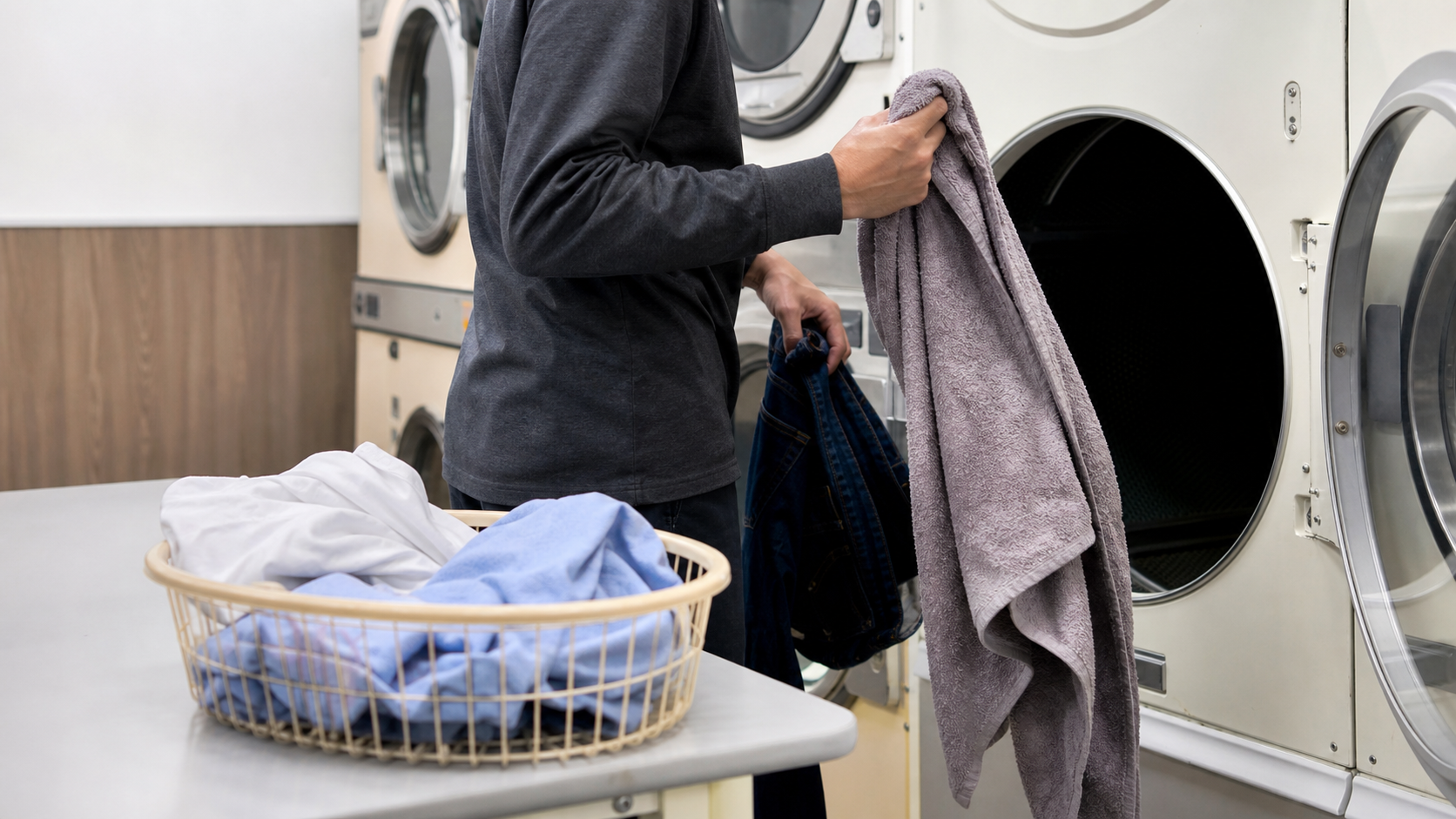
- Open and separate the load. Shake out twisted shirts, socks trapped inside other items, and folded waistbands.
- Split heavy from light. Put towels, jeans and hoodies in a separate compatible dryer from thin shirts and underwear.
- Reduce the drum load. Clothes need room to tumble and release moisture.
- Choose a short additional round. WASHHOUSE tells users they can add coins for more drying time when laundry is not dry enough. On another operator's machine, follow that machine's procedure.
- Recheck before packing. Thick seams, pockets, waistbands and towel centers can remain damp after the surface feels dry.
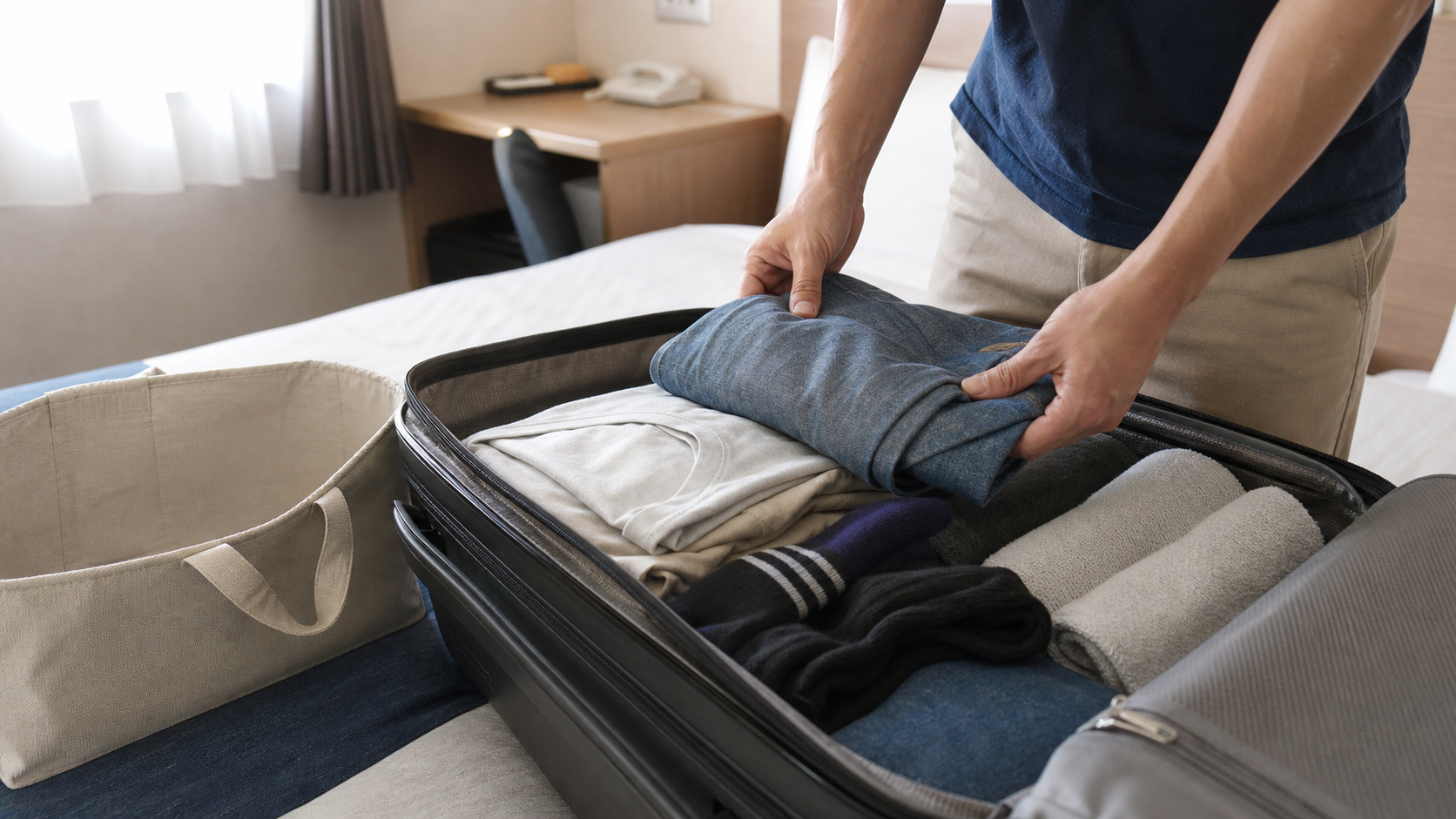
Packing damp laundry into a closed suitcase can create a new problem. If there is not enough safe dryer time, hang compatible items where your accommodation permits, use a hotel's paid laundry service, or rearrange the next morning rather than sealing moisture into the bag.
Items you should not wash or dry
Do not decide from appearance alone. Read the garment's care label and the machine's prohibited-item notice.
Common reasons to stop and find another method include:
- a crossed-out tumble-dry symbol;
- wool, leather, decorated, beaded or embroidered items that may be damaged by tumbling or heat;
- rubber-backed or rubber-lined items that the machine or operator prohibits;
- items contaminated with flammable substances;
- heavily soiled or hygiene-sensitive items prohibited by the laundromat; and
- any bulky bedding, mat or cover not explicitly allowed for that machine.
WASHHOUSE, for example, says wool, leather, beadwork and embroidery are unsuitable for its dryers, and it warns against rubber materials, strings and metal fittings that may damage the dryer. It also has chain-specific restrictions on items such as pet products and diapers. Use those as examples of why the local rule matters, not as a substitute for reading the notice at a different laundromat.
When an item is expensive, sentimental or difficult to replace during the trip, the cautious choice is to ask the hotel about a professional laundry or dry-cleaning option.
Laundry etiquette and security
A shared laundry room works better when people return on time.
- Set a timer and collect your load promptly.
- Do not stop another person's machine.
- Do not handle another customer's clothes unless the property's explicit procedure requires staff involvement.
- Keep the floor, folding table and machine top clear.
- Check the drum carefully so socks and small items do not remain behind.
- Follow any no-food, no-smoking, closing-time or security rule posted at the property.
WASHHOUSE states that customers use its facilities at their own risk, tells users to remove laundry promptly and notes a risk of lost or stolen items. A hotel or another chain may use locks, room-key access, cameras or staff procedures, but those controls do not replace your own timer and prompt pickup.
Plan B when machines are full or broken
Do not let laundry become a fixed appointment that disrupts the rest of the trip.
If the machines are occupied
Check whether the operator has live availability, wait nearby without blocking the room, return at a quieter time, or use the second laundromat you saved. Do not leave an unstarted bag in front of a machine to claim it.
If a machine takes payment but does not start
Do not keep paying repeatedly. Photograph or write down the machine number, time, amount and any error code without capturing another customer's personal information. Use the contact method posted for that property. A hotel front desk can handle its own laundry room; the contact number posted by a chain should be used for that chain's equipment.
If the dryer is weak
Split the load and move suitable heavy items to a larger dryer if the instructions allow it. Add time in short rounds, not one blind long cycle. If checkout is approaching, ask the hotel about a paid service, luggage timing, or an allowed place to air-dry.
If you cannot confirm the item's care requirements
Wait. Delaying a wash avoids risking damage while the care requirement is unknown. Use a pharmacy or drugstore for a small emergency clothing-care item if appropriate, or buy a basic replacement. The Japan pharmacy and drugstore guide explains how to verify products instead of relying on packaging alone.
FAQ
Do Japanese coin laundries provide detergent?
Some modern machines dispense detergent automatically, while others require a separate step. Read the instructions on the exact machine before adding anything. If the panel or hotel guide does not answer the question, ask staff or use the posted operator contact.
How much does coin laundry cost in Japan?
There is no nationwide price. Cost depends on the operator, location, machine size and course. WASHHOUSE currently lists washer examples from roughly 300 to 1,000 yen and dryer time from 100 yen per 6 to 10 minutes depending on size and store. Treat these as one operator's examples and check the machine you will use.
How long does a wash take?
Use the machine's display. WASHHOUSE's posted washer examples run from about 30 to 46 minutes depending on size and course, while drying varies with the load and selected time. Leave extra time for heavy clothes and an additional drying round.
Can I pay by credit card or phone?
Sometimes. Some operators offer app-based or other cashless payment, while other machines accept specified coins. Confirm the exact machine and keep a practical backup payment method.
Can I leave while the machine runs?
Follow the property's rules, set a timer and return before the cycle ends. Laundry may be left at your risk, and another customer needs the machine when your cycle finishes.
What should I do if my clothes are still damp?
Check the care labels, untangle the load, separate heavy pieces, reduce the amount in the drum and add a short drying round according to the machine's instructions. Do not keep heating an item whose label prohibits tumble drying.
Can I wash shoes, bedding or a suitcase in a coin laundry?
Use a location and machine that explicitly permit the exact item. Do not put shoes, bedding, mats, bags or bulky covers into an ordinary machine based on size alone.
Is hotel laundry better than a street laundromat?
Hotel laundry can be better for convenience and a small load. A street laundromat can be better for capacity, separate dryers and several travelers' clothes. Choose based on the actual load, machine instructions, time and backup options.
Your next action
Before carrying your laundry downstairs or across the neighborhood, open the hotel guide, a nearby laundromat map, or the operator's official store page. Confirm four things: machine type, detergent, payment and opening status. Save one nearby backup. That two-minute check prevents most laundry detours.
If you are staying in a rental rather than a hotel, also review the Tokyo Airbnb starter guide for accommodation-specific checks.

Comments