- Quick Answer
- Pharmacy vs Drugstore vs Konbini: Know the Difference First
- Major Drugstore Chains in Japan
- What You Can Actually Buy at a Japanese Drugstore
- Buying Baby Supplies: Diapers, Formula, and Baby Food
- Personal Care, Cosmetics, Sanitary, and Travel Essentials
- Tax-Free Shopping at Japanese Drugstores
- 24-Hour and Late-Night Drugstores
- Paying at the Register: English Support, Cash, and Cashless
- When You Should See a Doctor Instead
- FAQ
- Can I buy prescription medicine at a Japanese drugstore?
- Can I bring my home-country prescription medicine into Japan?
- Do drugstores sell baby formula and diapers?
- Are Japanese drugstores cheaper than konbini?
- Do drugstores offer tax-free shopping?
- What is the minimum spend for tax-free?
- Are drugstores open 24 hours?
- Can I pay with a foreign credit card or IC card?
- Will the staff speak English?
- Where do I go if I actually feel sick?
- Related Reading
Quick Answer
In Japan, drugstores (ドラッグストア / doraggu sutoa) are the default place for tourists to buy daily essentials, cosmetics, baby supplies, sanitary products, and a wide range of over-the-counter products. They are very different from a strict “pharmacy” (薬局 / yakkyoku), which mainly fills doctors’ prescriptions. Convenience stores (konbini) carry a tiny selection of basic items but are not a real substitute. Japanese drugstores do of course sell over-the-counter medicine — but in this guide, we focus on everything else (cosmetics, baby and sanitary supplies, snacks, tax-free shopping, late-night options, payment) rather than recommending specific medicines. If you actually feel unwell, the right move is to see a doctor.
Pharmacy vs Drugstore vs Konbini: Know the Difference First
Travelers often use the words “pharmacy” and “drugstore” interchangeably, but in Japan they are not the same thing.
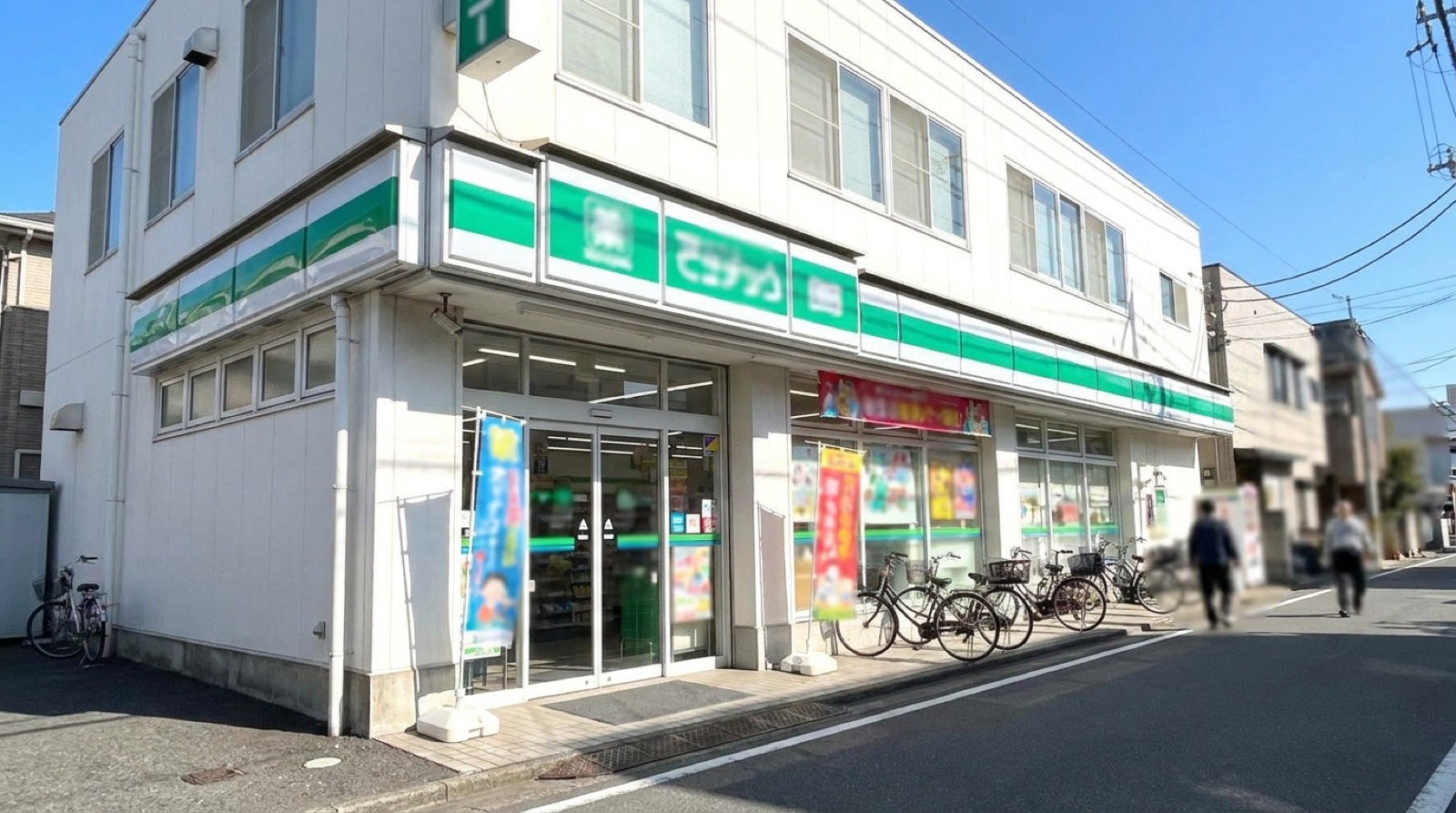
A pharmacy (薬局 / yakkyoku) is a small clinical-style shop, often attached to or near a hospital or clinic, where licensed pharmacists fill prescriptions written by a Japanese doctor. You will not casually browse cosmetics here. Without a Japanese prescription, there is little reason to step into a yakkyoku as a tourist.
A drugstore (ドラッグストア / doraggu sutoa) is the bright, multi-aisle chain store you actually want. It sells over-the-counter products, cosmetics, skincare, sanitary items, baby goods, daily essentials, snacks, drinks, and increasingly fresh and frozen food. Most also have a small in-store yakkyoku counter for prescriptions, but the bulk of the floor is open self-service shopping.
A konbini (convenience store) — 7-Eleven, Lawson, FamilyMart, Ministop — does carry a very small emergency selection: toothbrushes, razors, basic toiletries, sanitary pads, plasters/band-aids, masks, and similar items. They are useful in the middle of the night, but the variety, sizes, and prices are noticeably worse than at a real drugstore. For anything beyond a quick fix, walk to a drugstore instead.
Major Drugstore Chains in Japan
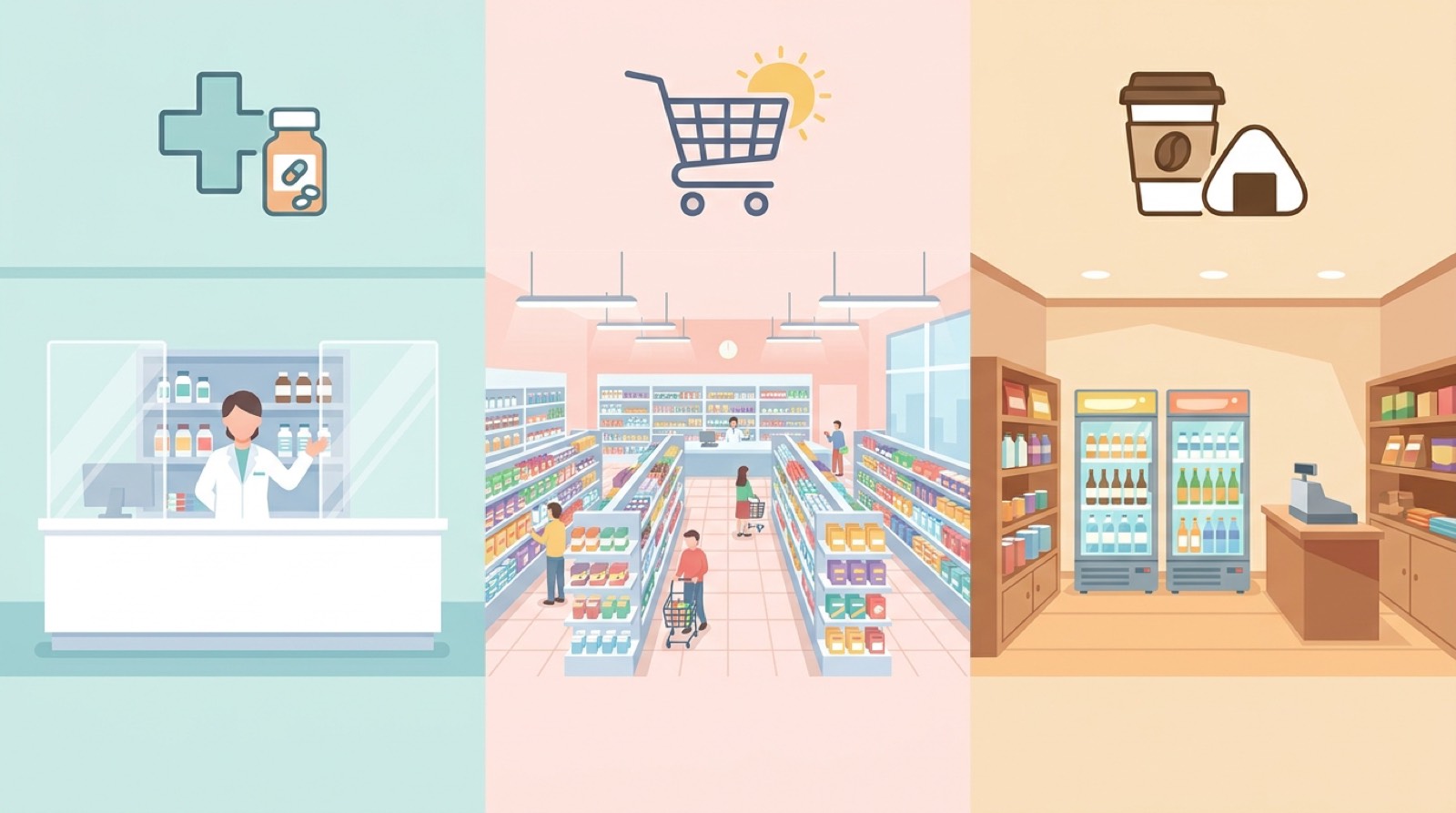
Japan has thousands of drugstores under several big chains, and the industry has been consolidating fast. As a tourist, you do not need to memorize all of them — knowing the four or five most visible names is enough to recognize them on the street and on Google Maps.
Welcia and Tsuruha (the AEON drugstore group) completed a business integration under the AEON Group in late 2025, creating Japan’s largest drugstore alliance with a combined network of more than 5,500 stores nationwide. In practice you will still see separate “Welcia” and “Tsuruha” signs on the street; the integration is a corporate-level change rather than a re-branding. Welcia is especially common in residential neighborhoods and is well known for having many late-night and 24-hour branches. Tsuruha has strong coverage in Hokkaido and Tohoku, with branches across Tokyo, Osaka, and most other large cities.
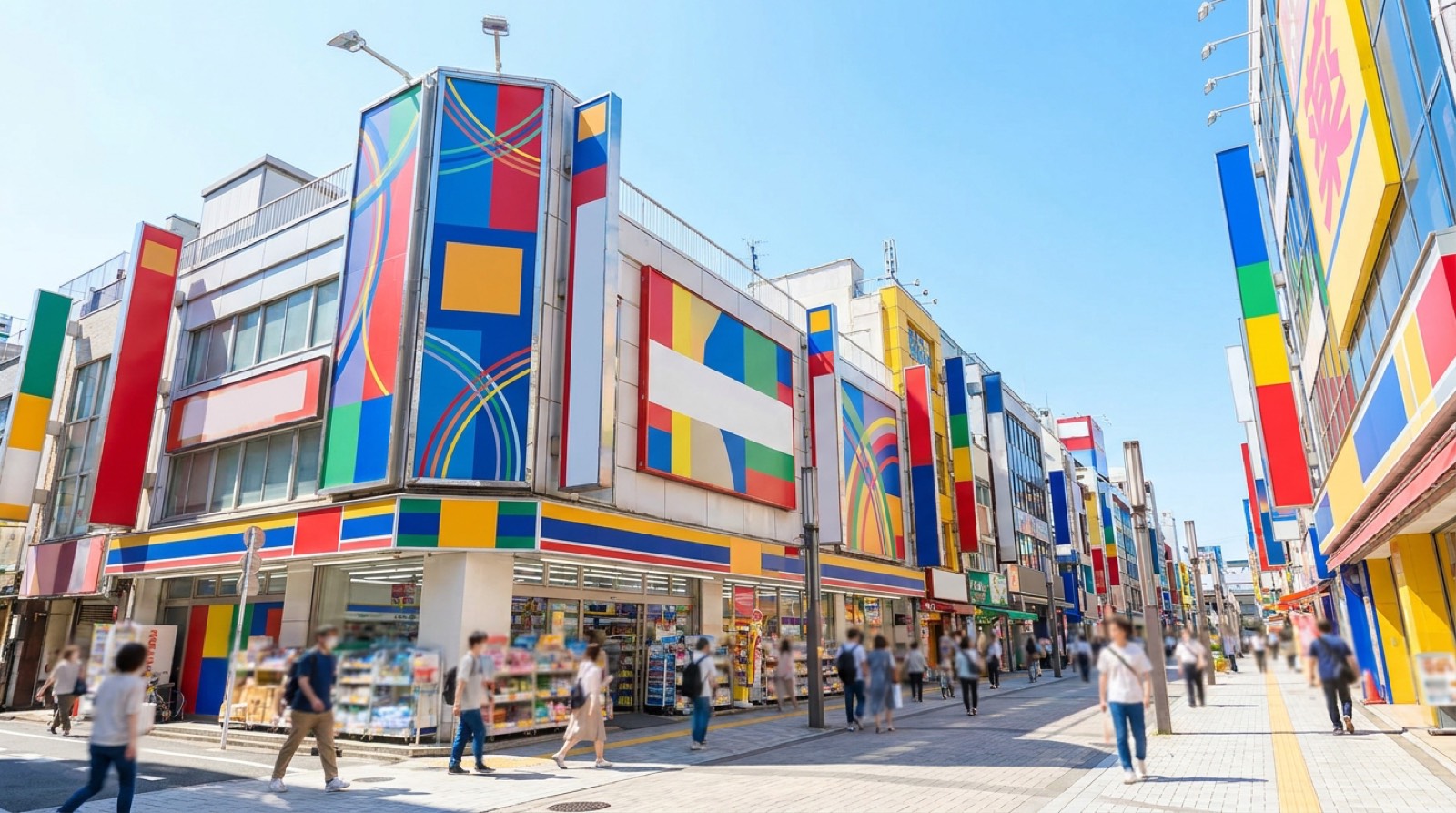
Matsumoto Kiyoshi / Cocokara Fine (Matsukiyo Cocokara & Co.) is the second-largest group following the 2021 merger, operating roughly 3,500 stores nationwide as of 2025–2026 reporting. The yellow-and-black Matsumoto Kiyoshi stores are easy to spot near major train stations and in tourist hubs such as Shibuya, Shinjuku, Ginza, Asakusa, Kyoto, and Osaka. Cocokara Fine stores are similar in feel, and many central locations have multilingual signage and dedicated tax-free counters.
Sugi Pharmacy (スギ薬局) operates roughly 2,200 stores nationwide, with a particularly strong presence in central Japan and the Kansai region.
Cosmos Pharmaceutical (コスモス薬品) has expanded aggressively to over 1,600 stores. It is especially strong in Kyushu and western Japan, with a focus on lower everyday prices and large suburban-format stores.
Sundrug operates close to 1,600 stores nationwide, known for sharper, more discount-style pricing on everyday products such as detergent, paper goods, and snacks.
In addition to the chains above, you will sometimes see other names like Daikoku Drug, Kokumin, and Kirindo. They all follow roughly the same model.
What You Can Actually Buy at a Japanese Drugstore
For travelers, the value of a Japanese drugstore is its sheer breadth. A single store typically carries:
- Cosmetics and skincare from drugstore brands (Biore, Hada Labo, Senka, Curel, Minon) and well-priced selections of higher-end domestic brands
- Sunscreens, makeup, hair care, and styling products
- Personal care: deodorant, toothpaste, mouthwash, razors, shaving foam, hand soap, body wash
- Sanitary and feminine hygiene products
- Baby essentials: diapers, wipes, baby shampoo, formula, baby food, bottles, pacifiers
- Travel essentials: small umbrellas, pocket tissues, hand warmers (kairo), eye drops, eye masks, foot pads
- Masks, hand sanitizer, plasters, gauze, basic first-aid items
- A small but real grocery section: rice, instant noodles, snacks, soft drinks, alcohol, frozen items, and household goods
That last point surprises many tourists. In big-format drugstores like Welcia, Mega Don Quijote, and many Sundrug branches, prices on snacks and drinks are often lower than at a konbini. If you have time and a drugstore is within walking distance of your accommodation, that is usually the cheapest place to stock your room.
Buying Baby Supplies: Diapers, Formula, and Baby Food
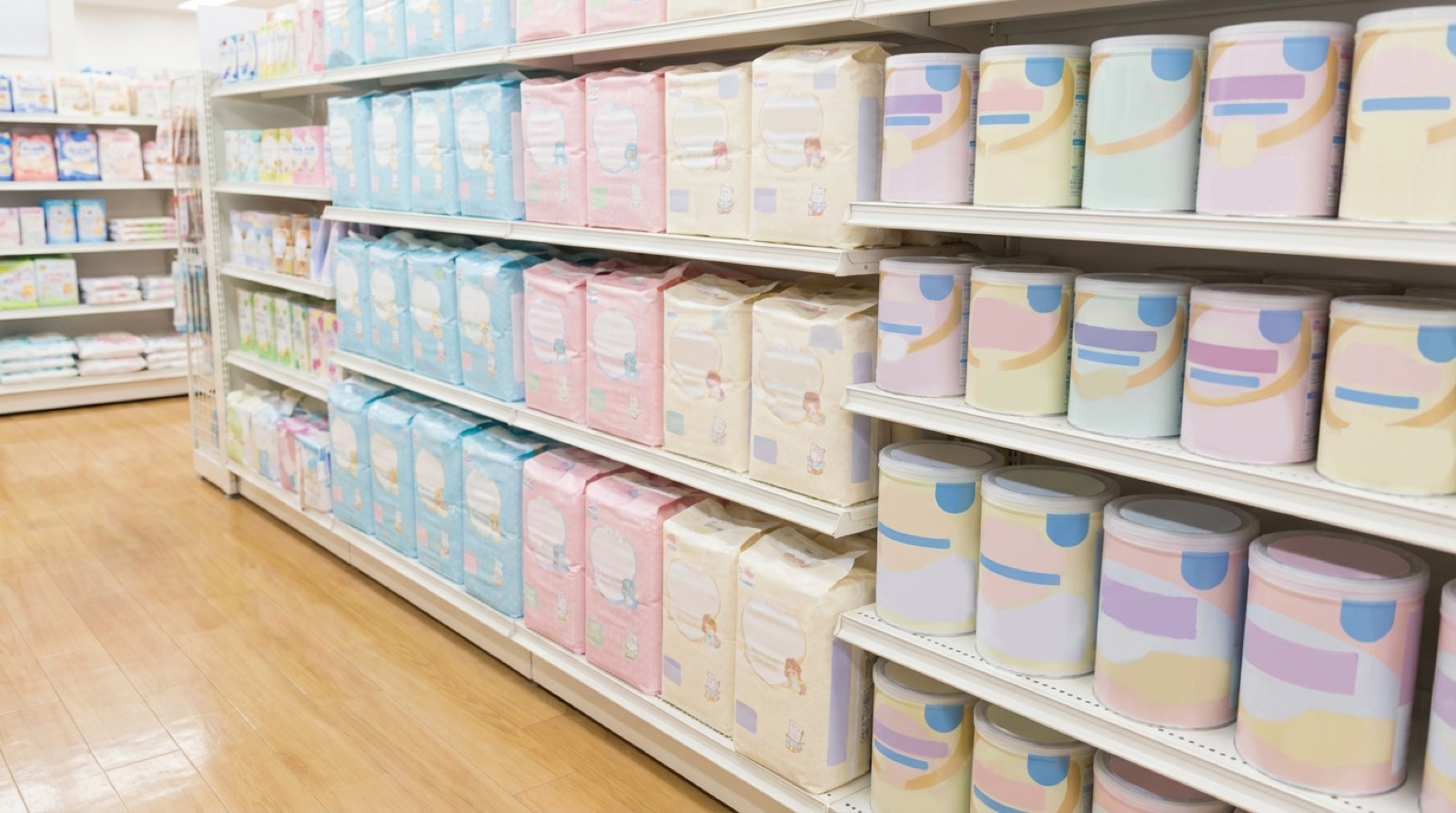
Diapers, formula, and basic baby supplies are one of the most reliable categories at Japanese drugstores. You do not need to find a specialty store if you are only stopping for a day or two.
For everyday items, almost any major drugstore — Matsumoto Kiyoshi, Welcia, Sundrug, Tsuruha, Sugi — will carry the dominant Japanese diaper brands such as Merries, Moony, Pampers, GooN, and Genki. Sizes are labeled by weight in kilograms, with categories such as Newborn (NB), S, M, L, Big, and Big More. Counts per pack vary, and the same brand often offers both tape-style and pant-style options. Designs are mostly aimed at babies and toddlers; adult and youth incontinence products are sold in a separate area.
Formula is sold in standard cans and increasingly in liquid ready-to-feed cartons or bottles, which is a relatively new category in Japan and very travel-friendly. Common brands include Meiji, Glico Icreo, Morinaga, and Wakodo. Specialty formula for milk allergies or premature babies is also available but with a narrower selection in tourist areas.
Baby food in pouches, jars, and trays is widely available, sorted by suggested age group on the front of the package. Bottles, sterilizing tablets, brushes, baby wipes, and bath products are all on the same shelves.
For a bigger selection, especially clothing, gear, and bulkier items, Japan has dedicated baby chains: Akachan Honpo, Nishimatsuya, and Babies R Us. They are usually located inside larger shopping malls or in residential / suburban areas, not in the densest tourist districts. Mega Don Quijote is another reliable backup for diapers and basic supplies, especially late at night.
A practical note: business districts such as Marunouchi or Shimbashi may have far less baby stock than a residential area only one or two stops away. If you are running low and a search shows nothing nearby, try a station closer to housing rather than office buildings.
This guide does not offer advice on which formula, food, or product is right for your child. Anything related to nutrition or health for babies and small children should be discussed with a doctor or a pediatrician, not chosen from a travel guide.
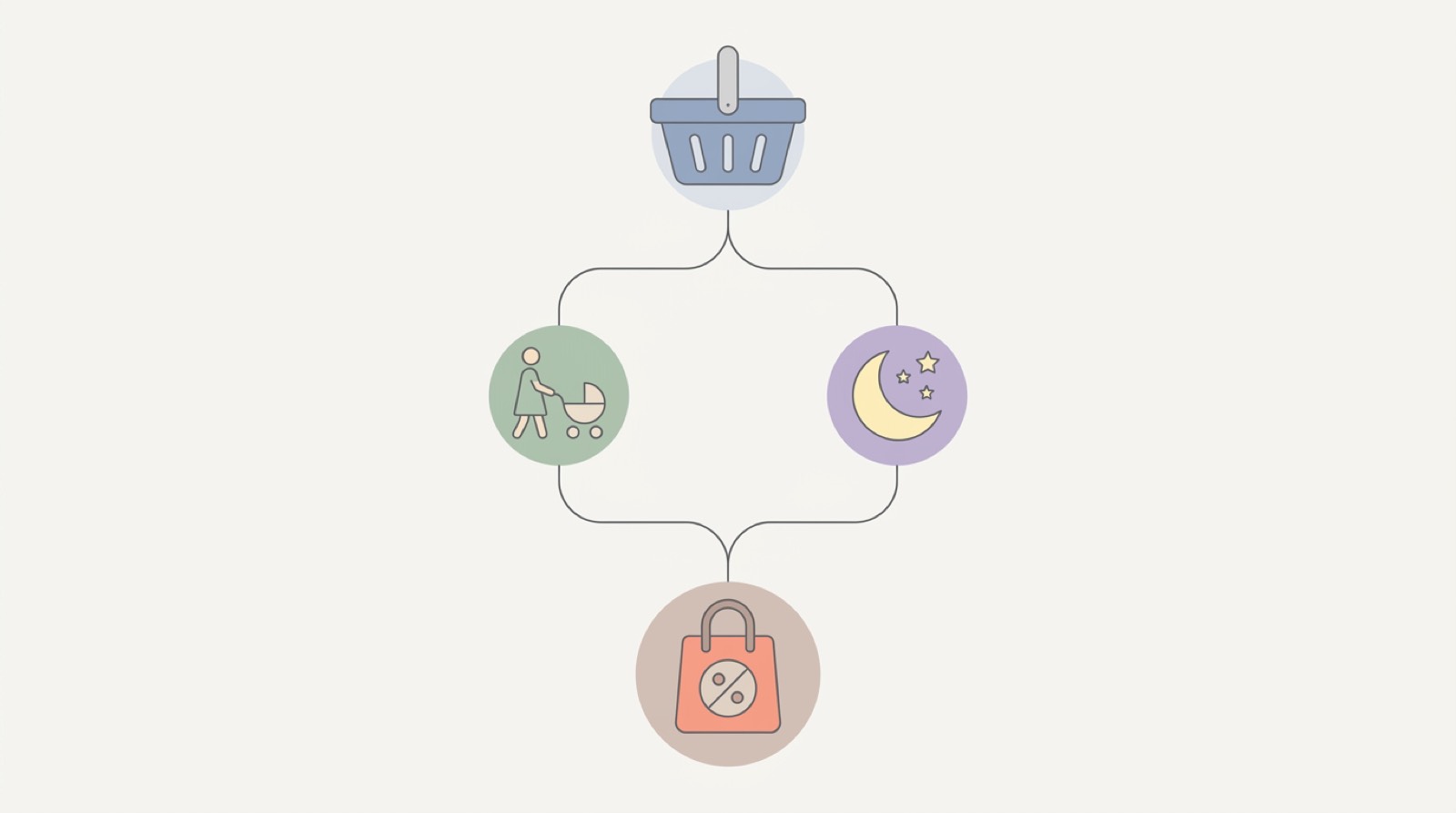
Personal Care, Cosmetics, Sanitary, and Travel Essentials
For most tourists, a Japanese drugstore is a low-stress place to restock a forgotten toothbrush, buy a stick of deodorant, replace a broken umbrella, or pick up sunscreen for the day.
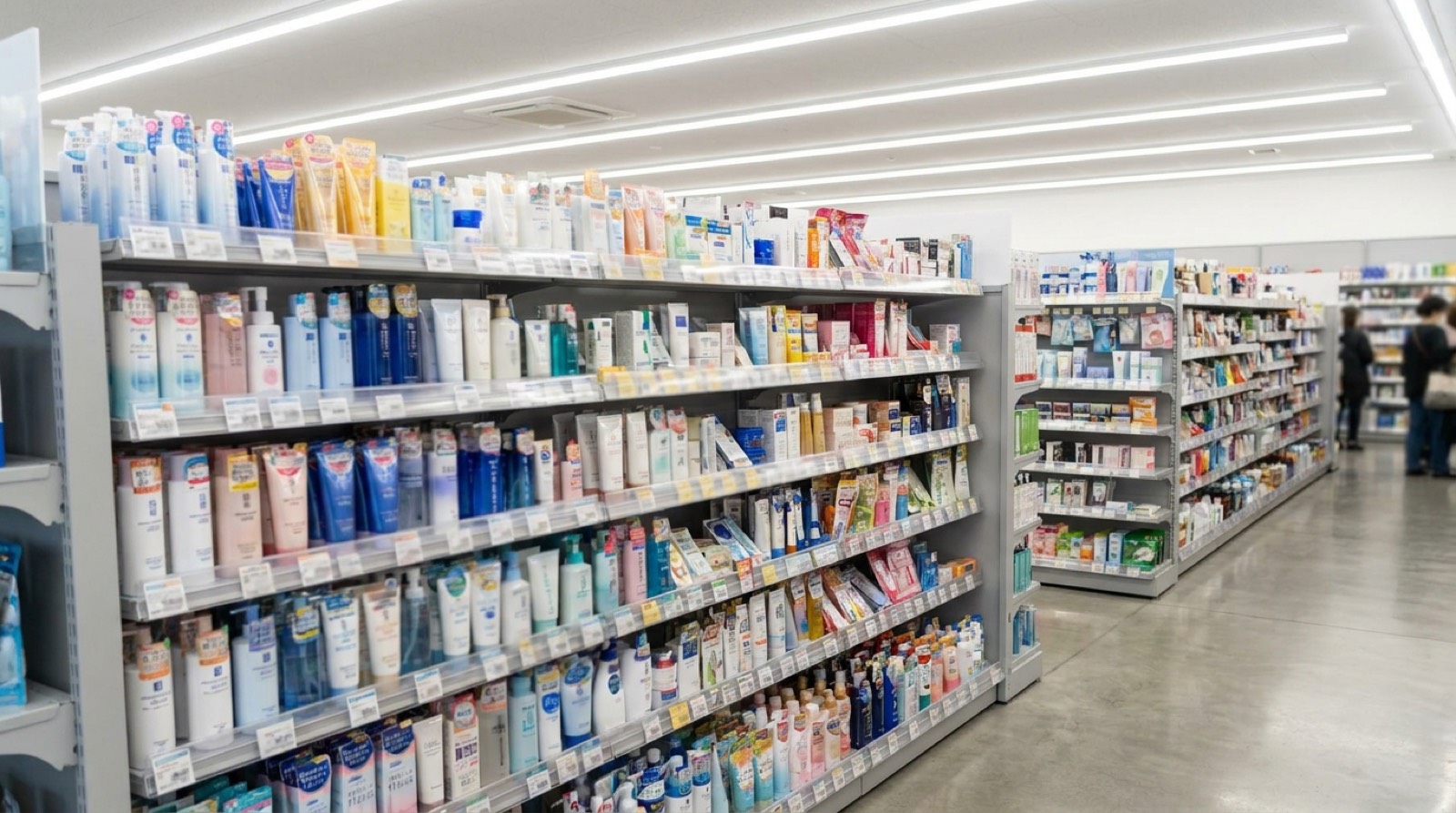
Cosmetics and skincare in Japanese drugstores are famously well-priced compared to department stores. Drugstore brands such as Biore, Hada Labo, Senka, Curel, Minon, Cezanne, Canmake, and Kate are sold openly on the shelves. Testers are sometimes available, though many products are now individually wrapped or behind a small clear lid.
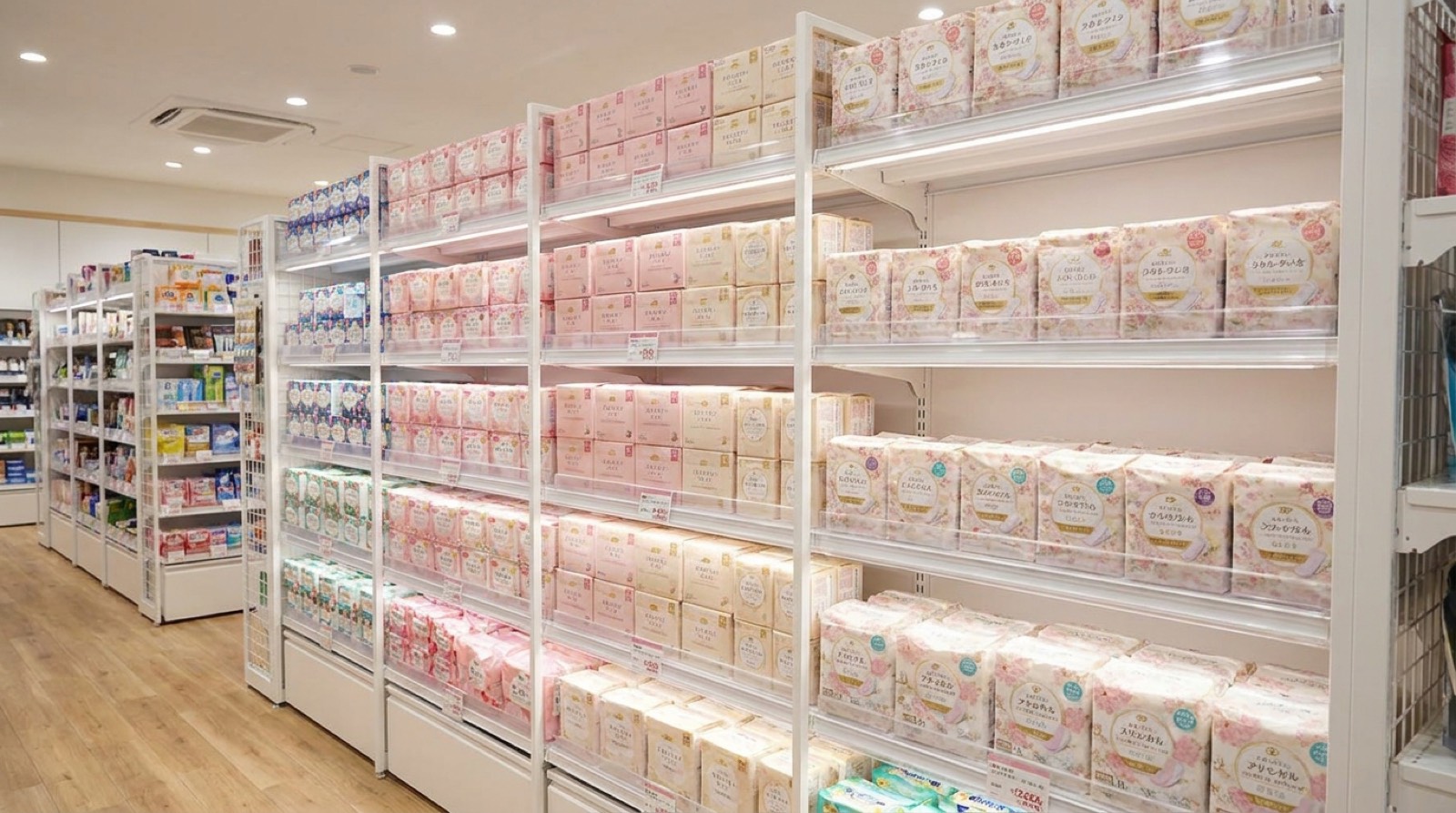
Sanitary pads and tampons are sold at every drugstore and most konbini, in a clearly marked aisle with brands such as Sofy, Laurier, Elis, and Center-in. Pad sizes are described in centimeters and by absorbency level rather than the “Regular / Super / Super Plus” wording common in the US. Tampons are available but are a smaller category in Japan than pads. Menstrual cups and period underwear are increasingly carried by larger urban stores. (Note: the brand “Whisper,” familiar to many international shoppers, is in Japan currently sold only as adult urinary incontinence pads, not as menstrual products — do not pick it up by mistake.)
Travel essentials include disposable hand warmers (kairo), pocket tissues, foldable umbrellas, eye masks, neck-cooling towels in summer, mosquito-repellent sheets, and various cooling-or-warming patches. None of these is medicine, but they make daily travel more comfortable.
Drugstores are also a reasonable place to pick up small inexpensive snacks and bottled drinks, often more cheaply than at a konbini, especially for multi-pack chocolates, biscuits, jelly drinks, and bottled tea.
Tax-Free Shopping at Japanese Drugstores
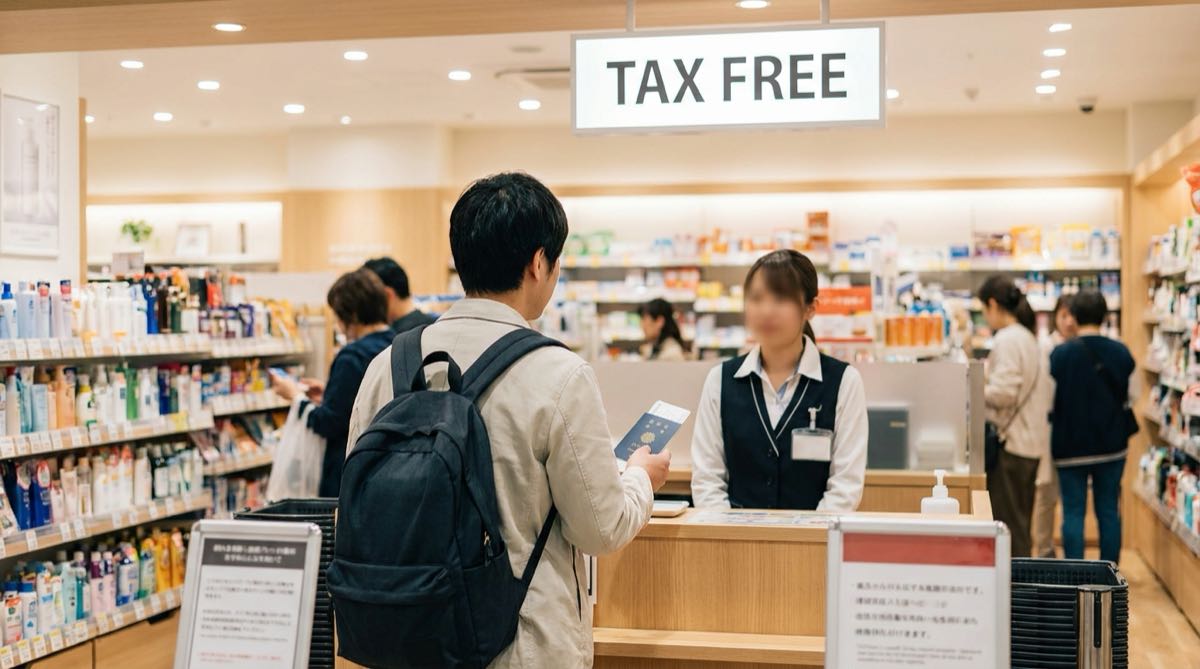
Most large drugstores in tourist areas display “Tax-Free” or “免税 (menzei)” signs at the entrance. Japan operates a tax-refund system for short-term visitors, and drugstores are one of the categories where it is most useful, because cosmetics and personal care add up quickly.
Through October 31, 2026 (current system):
– Minimum purchase per store, per day: 5,000 yen (excluding tax) or more
– “Consumables” (cosmetics, food, drinks, medicine, toiletries) and “general goods” (clothes, electronics, accessories) are calculated separately, with the consumables category capped at 500,000 yen
– Consumables are sealed in a special bag at checkout that you must keep closed until you leave Japan
– Tax exemption is applied at the register, so you pay the tax-free price on the spot
From November 1, 2026 (new system):
– The “pay first, refund later” model takes effect
– You pay the full tax-included price at the register, then claim the consumption tax refund at the airport on departure after clearing customs
– The distinction between consumables and general goods is removed, so all items purchased at the same store on the same day combine toward the 5,000-yen threshold
– The sealed-packaging requirement for consumables is abolished
– The 500,000-yen cap on consumables is also removed
In both systems, you must show your physical passport with a valid entry stamp at the register or designated tax-free counter, and you must be a non-resident visitor. Photocopies, phone screenshots, and PDF scans are not accepted. A practical warning if you used Japan’s automated immigration e-gates on arrival: those gates do not stamp your passport by default, so before you leave the immigration area, ask the attendant for a paper entry sticker (or a manual stamp). Without that physical proof of entry, drugstores cannot legally process tax-free shopping for you.
The 5,000-yen minimum is measured per store, per day — you cannot combine receipts from two different drugstores down the street. Larger department stores and shopping malls sometimes have a centralized tax-free counter that lets you combine receipts from multiple tenants within the same building on the same day; ask at the information desk if you are shopping inside a major mall.
Tax-free goods are meant for personal use and for taking out of Japan. Since April 1, 2025, you can no longer mail tax-free purchases home yourself via international postal parcels — that exception was abolished. However, if the drugstore itself runs an authorized direct-shipping (“chokusou”) service from the register to your overseas home address, that route still keeps the tax-free status; the key restriction is that the shipping must be handled by the store, not by you walking into a post office afterward.
When in doubt, look for a “Tax-Free” sticker on the door or ask at the register; not every individual branch participates, even within the same chain.
24-Hour and Late-Night Drugstores
If you arrive on a late flight, run out of something at midnight, or just keep odd hours, Japan does have late-night and 24-hour options, but the coverage is thinner than people expect.
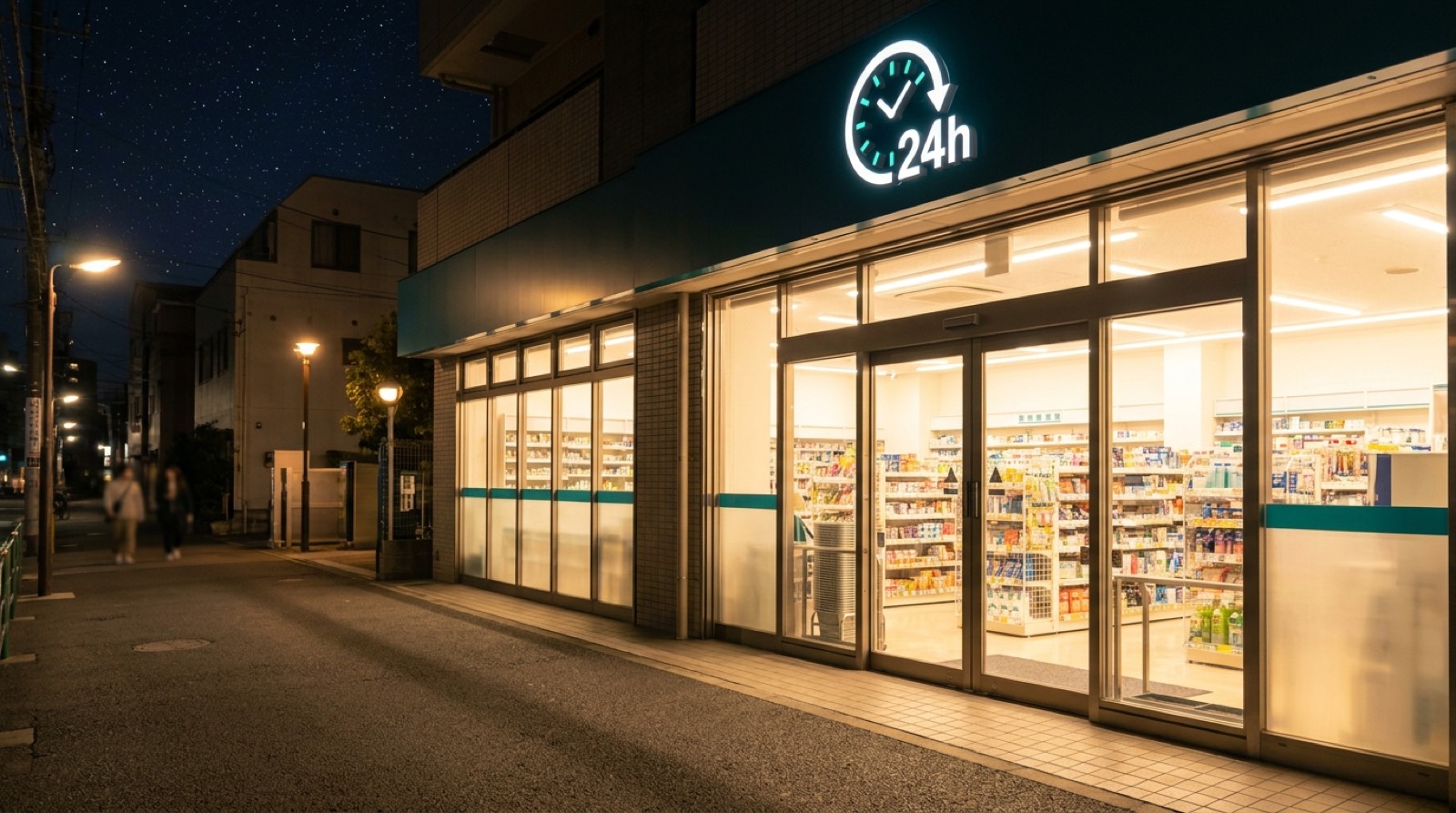
In central Tokyo, Don Quijote (Donki) is the most reliable late-night option. Stores such as Don Quijote Shinjuku Kabukicho run 24 hours, and the MEGA Don Quijote Shibuya shopping floors are also open around the clock. Donki carries diapers, formula, snacks, drinks, basic medicine, cosmetics, and travel essentials under a single roof, and is heavily geared toward foreign visitors.
Among traditional drugstore chains, Welcia has the largest number of 24-hour branches, especially in residential neighborhoods. Selected Matsumoto Kiyoshi and Tsuruha locations also stay open later than usual.
That said, hours vary heavily by branch even within the same chain, and many “late” stores still close at 22:00, 23:00, or midnight rather than running all night. The safest approach is to check Google Maps for the specific store you are heading to before you walk over, especially in suburban or non-tourist areas.
Paying at the Register: English Support, Cash, and Cashless
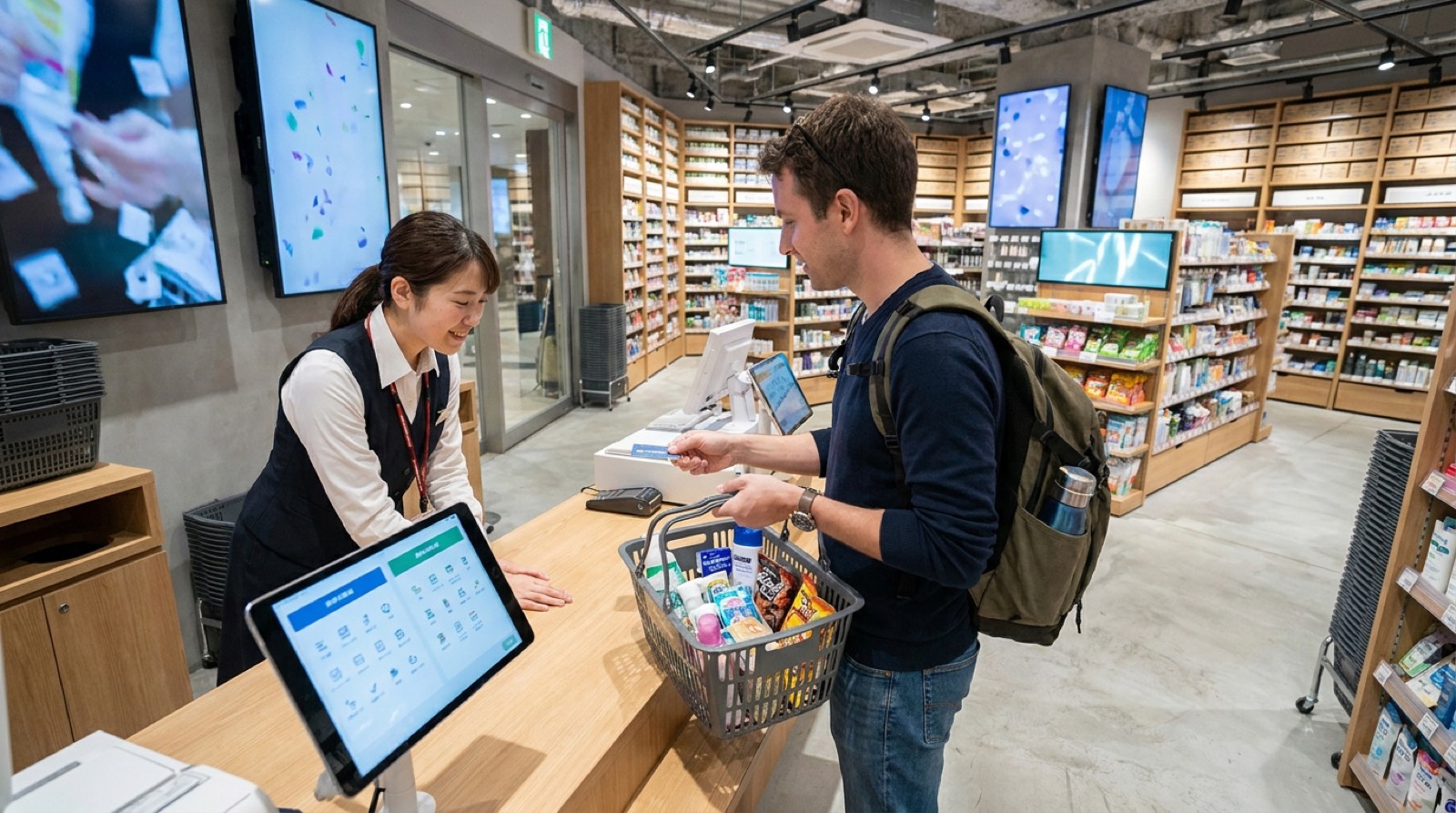
Japanese drugstores are self-browse rather than self-service in the strict sense — you pick up a basket at the entrance and explore the aisles freely, but most stores are well staffed, with employees stocking shelves, restocking products, and assisting at the register. If you cannot find something or want to confirm a product category, you can usually flag down a member of staff. Lines at the register move quickly, and the cashier will normally not engage in conversation beyond the basics.
English support is variable. In central Tokyo, Osaka, Kyoto, and other major tourist hubs, many flagship branches of Matsumoto Kiyoshi, Welcia, and Sundrug have at least some English signage, multilingual product tags on popular items, and bilingual or translation-app support at the register. In residential neighborhoods, expect mostly Japanese; pointing, basic numbers, and a translation app on your phone will get you through. Don Quijote stores in tourist areas operate an iPad-based 24/7 multilingual video chat (English, Chinese, Korean, Thai), which is genuinely useful when you cannot find an item.
Payment methods are wide. Most drugstores accept cash, major credit cards (Visa, Mastercard, JCB, AMEX), IC cards (Suica, Pasmo, ICOCA, etc.), and various QR-code apps. Tap-to-pay using IC cards or contactless credit cards is now standard at the front register. If you are unsure whether your card or app is accepted, look for the small sticker panel by the register before you start scanning items.
Bags and packaging are charged in nearly every store. Plastic bags are usually 3 to 10 yen depending on size, and you can decline a bag at the register if you have your own. For tax-free purchases under the current system, the cashier will pack consumables in a separate sealed bag and hand it to you with a receipt; under the new 2026 system, the sealed-bag step disappears.
When You Should See a Doctor Instead
A drugstore is not the right place to diagnose or treat anything beyond very minor everyday discomfort. Japanese pharmacy staff in a drugstore are not in a position to evaluate your symptoms in English, and tourist visitors do not always know which Japanese active ingredients correspond to what they take at home.
If you are running a fever, have severe pain, are pregnant, are caring for a sick child, have a chronic condition, or simply feel that something is more than ordinary, the right call is to see a doctor — not to self-medicate from a Japanese drugstore shelf. Many Japanese cities have clinics that accept walk-in foreign patients, and there are dedicated multilingual medical hotlines. Travel insurance is strongly recommended; some clinics will ask for full payment upfront and a separate receipt for your home insurer.
In an emergency, dial 119 for an ambulance and 110 for the police. Both numbers are toll-free and operate nationwide. Tourist information centers and your accommodation host can also help direct you to the nearest clinic that handles foreign patients.
FAQ
Can I buy prescription medicine at a Japanese drugstore?
No. Prescription medicines (処方薬 / shohōyaku) require a prescription from a Japanese doctor and are filled at a yakkyoku (pharmacy) counter, often the small counter inside or next to a drugstore. The wider self-service floor of a drugstore is for over-the-counter products only.
Can I bring my home-country prescription medicine into Japan?
Some prescription medicines are restricted in Japan even when they are normal at home. For longer trips or stronger drugs, travelers should check the Yunyu Kakunin-sho (輸入確認書 — Import Confirmation Certificate) procedure with the Japanese Ministry of Health, Labour and Welfare before flying. This certificate replaced the older Yakkan Shoumei name around 2020 and is now handled through an online application portal. Asking a Japanese drugstore to refill a foreign prescription is not realistic.
Do drugstores sell baby formula and diapers?
Yes. Major chains like Matsumoto Kiyoshi, Welcia, Sundrug, Tsuruha, and Sugi Pharmacy stock common Japanese diaper brands (Merries, Moony, Pampers, GooN, Genki) and major formula brands (Meiji, Icreo, Morinaga, Wakodo). For larger selections of clothing and gear, visit dedicated baby stores such as Akachan Honpo, Nishimatsuya, or Babies R Us.
Are Japanese drugstores cheaper than konbini?
Usually, yes — for the same item or product type, drugstores are typically cheaper than convenience stores, especially for snacks, bottled drinks, daily essentials, and toiletries. Konbini are convenient and open all night, but they are not a price competitor.
Do drugstores offer tax-free shopping?
Many major branches in tourist areas do, but not all. Look for a Tax-Free sign at the entrance and bring your physical passport. If you used automated e-gates on arrival, ask immigration for a paper entry sticker so the store has proof of your entry. From November 1, 2026, Japan switches to a pay-first, refund-at-the-airport model, with the consumables/general-goods distinction removed.
What is the minimum spend for tax-free?
5,000 yen (excluding tax) at the same store, on the same day. Under the current system this is calculated separately for consumables and general goods; from November 1, 2026, items combine into a single total.
Are drugstores open 24 hours?
Some are. Don Quijote (especially Shinjuku Kabukicho and MEGA Don Quijote Shibuya) and selected Welcia branches in central and residential districts run 24 hours, but coverage is uneven and many late branches still close before midnight. Check Google Maps for the specific store before going late at night.
Can I pay with a foreign credit card or IC card?
Yes, in most cases. Major drugstores accept Visa, Mastercard, JCB, and AMEX credit cards, contactless cards, and Japanese IC cards (Suica, Pasmo, ICOCA, etc.). Tourist-friendly Welcome Suica works the same way; standard Suica and Pasmo cards (sales of which resumed in late 2024 after the chip shortage) are also fine. Note that the older PASMO PASSPORT tourist card was permanently discontinued in June 2024 and is no longer issued — choose Welcome Suica or a regular Suica/Pasmo instead.
Will the staff speak English?
In central tourist areas, often partially. In residential or suburban areas, expect mostly Japanese. Translation apps on your phone work very well for product names and quantities. Don Quijote tourist branches offer 24/7 multilingual video chat at iPad stations.
Where do I go if I actually feel sick?
See a doctor. A drugstore is not designed to diagnose illness in a foreign language. Many Japanese cities have walk-in clinics that accept tourists, and travel insurance is strongly recommended. For emergencies, call 119 for an ambulance.
Related Reading
- Japanese Konbini Guide: What You Can Actually Do at a Convenience Store in Japan (2026)
- Suica, Welcome Suica, and Japan’s IC Cards: A Traveler’s Guide (2026)
- Japanese Yen Banknotes and Coins: A Tourist’s Guide (2026)
- How to Navigate Japan with Google Maps: From Train Routes to Restaurant Reviews (2026 Tourist Guide)
- What to Expect (and Not Expect) as a Muslim Guest at a Japanese Airbnb
Last updated: 2026-04-30. Information about tax-free rules and store hours is current at the time of writing; the 2026-11-01 tax refund system change is confirmed by Japan’s National Tax Agency.

Comments