- Quick answer
- What Japanese room labels tell you—and what they do not
- How to use square metres without false precision
- Semi-double vs double vs twin: official examples
- Which room works for your travel situation?
- When an OTA and the hotel page seem to disagree
- The five-field booking-fit grid
- Plan B when the specifications are unclear
- What to do if the room is wrong after booking
- Frequently asked questions
- Is a semi-double room in Japan suitable for two adults?
- Does a twin room guarantee more space than a double room?
- What does “Hollywood twin” mean in Japan?
- Does maximum occupancy mean everyone gets a normal bed?
- How much room area do I need for two large suitcases?
- Should I trust the OTA or the hotel’s official page?
- What is a unit bath in a Japanese hotel?
- What should I ask the hotel before booking?
- Before you pay
Quick answer
Do not choose a Japanese hotel room from the words single, semi-double, double, or twin alone. Before paying, check five things on the hotel’s official room page:
- the exact bed width;
- the room’s floor area in square metres;
- the number of fixed beds and maximum occupancy;
- the bathroom layout; and
- whether the hotel describes luggage space or storage.
A “semi-double” is not one fixed national room size. A room sold as a “twin” indicates two beds, but it does not guarantee a larger room, wider beds, or enough floor space for two open suitcases. The exact hotel and room plan control the answer.
This guide helps you read the specification before booking. It does not rank hotels, and the named rooms below are examples—not endorsements or paid placements.
What Japanese room labels tell you—and what they do not
Japan’s tourism vocabulary includes Western-style, Japanese-style and Japanese-Western rooms, as well as single, twin, double, semi-double, triple and dormitory room types. The terminology is useful, but it is the first layer of a booking decision.
A room label gives you a clue about the intended sleeping arrangement:
| Label | What it usually suggests | What you still need to verify |
|---|---|---|
| Single | One room intended mainly for one guest | Bed width, room area, whether two guests are permitted |
| Semi-double | One bed marketed between a narrow single setup and a larger double setup | Exact width, maximum occupancy, access from one or both sides |
| Double | One bed for one or two guests | Exact width, wall clearance, room area |
| Twin | Two separate beds | Width of each bed, aisle space, luggage space |
| Hollywood twin | Two beds placed directly beside each other | Whether the beds can be separated, room area, child policy |
| Triple or fourth | Space for three or four guests | Whether every bed is fixed, or whether a sofa/extra bed is used |
The Tokyo Metropolitan Government’s multilingual accommodation terminology treats these as distinct room labels, but it does not assign one universal width or floor area to each label. That is why the specification matters more than the name.
A semi-double can be wider than you expect—or not
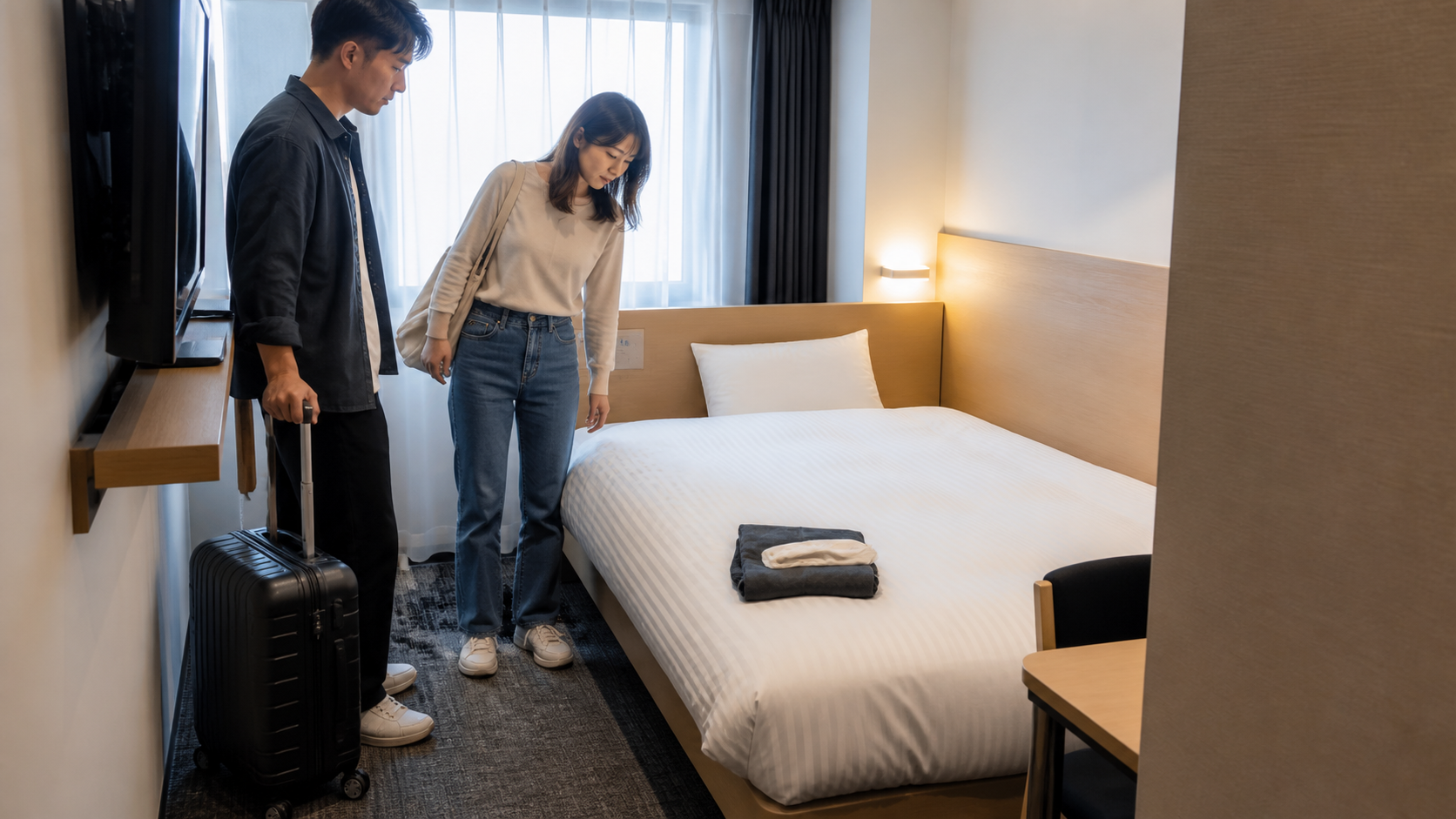
Official hotel examples vary. At Sotetsu Fresa Inn Tokyo Roppongi, the semi-double room is listed at 10.6 m² with a 120 cm bed. At KOKO HOTEL Shinjuku Yotsuya, the semi-double room is 15 m² with a 140 cm bed.
These examples show why “semi-double” should trigger a specification check, not an assumption.
How to use square metres without false precision
Room area helps, but it does not tell the whole story. Two rooms with similar floor areas can feel very different because of:
- the position of the bed;
- a desk or fixed chair;
- a narrow entrance corridor;
- the bathroom footprint;
- a structural column;
- a sofa or extra bed; and
- space under the bed or a dedicated luggage rack.
Do not treat a particular number of square metres as a guarantee that a suitcase will fit. Instead, use room area as a screening tool, then inspect the floor plan, official photographs and luggage wording.
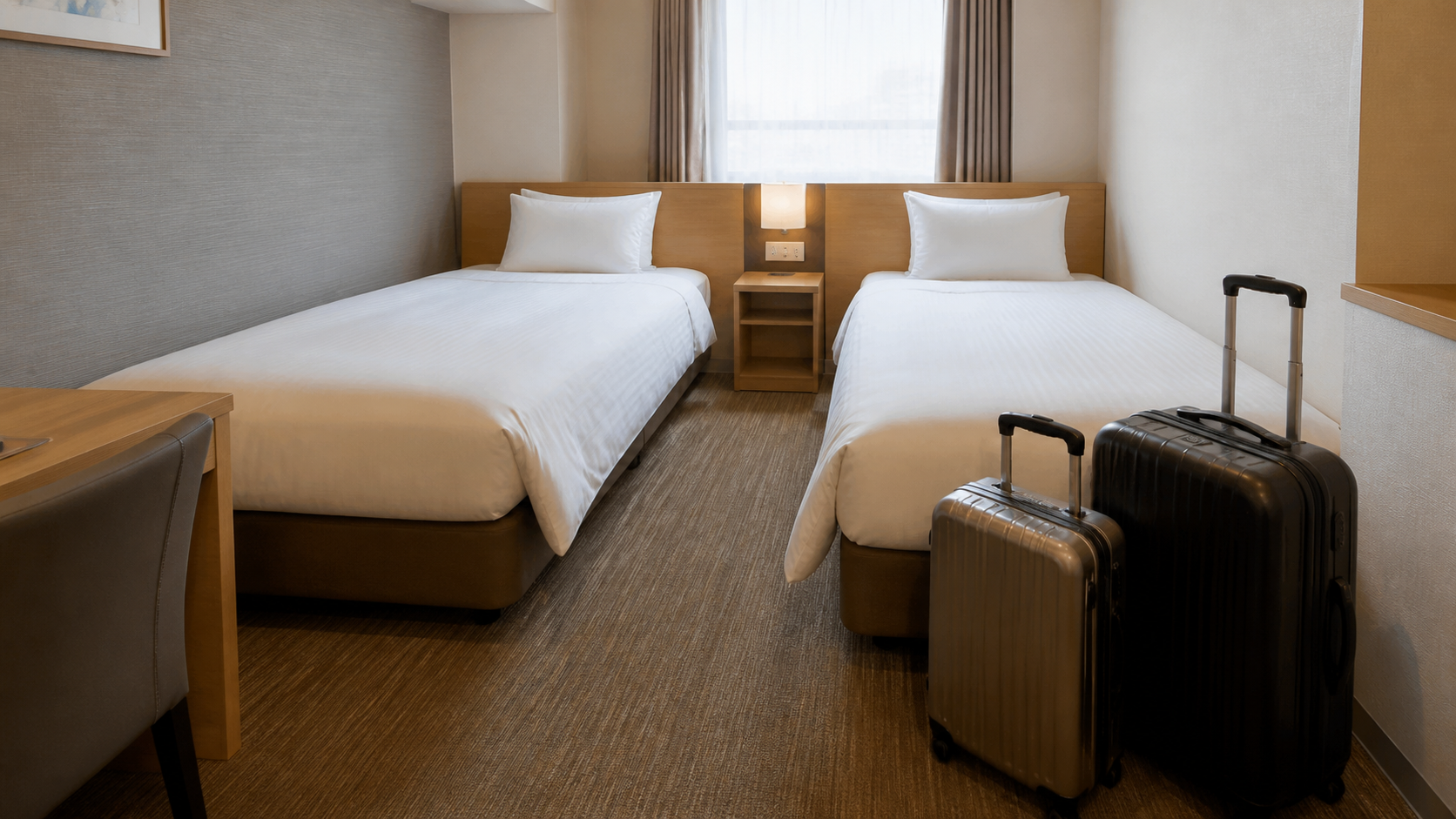
For example, an official Toyoko Inn Yodoyabashi Station South press sheet lists both a 12 m² single room with a 140 cm bed and a 12 m² “wide-space single” with a 110 cm bed and more room for opening a suitcase. The floor area is the same; the usable layout is not.
A practical two-step check
- Use m² to eliminate rooms that look obviously unsuitable for your party and baggage.
- Use the official room photographs and written specifications to decide whether the remaining layout works.
If the official page does not show enough information, ask the hotel before the free-cancellation deadline.
Semi-double vs double vs twin: official examples
The following examples were checked on August 8, 2026. They are included to show variation in labels and specifications. They are not rankings, recommendations or endorsements.
| Official hotel example | Room label | Published area | Published bed specification | What the example teaches |
|---|---|---|---|---|
| Sotetsu Fresa Inn Tokyo Roppongi | Semi-double | 10.6 m² | 120 cm × 1 | A semi-double can be compact |
| KOKO HOTEL Shinjuku Yotsuya | Semi-double | 15 m² | 140 cm × 1 | The same label can mean a wider bed and more floor area |
| Shimbashi Atagoyama Tokyu REI Hotel | Standard double | 14–15.7 m² | 140 cm × 1 | “Double” does not automatically mean a very wide bed |
| Toyoko Inn Yodoyabashi Station South | Twin | 15 m² | 110 cm × 2 | A twin can fit two beds into a moderate floor area |
| Izu-Imaihama Tokyu Hotel | Standard Hollywood twin | 31.4–34.7 m² | 120 cm × 2, side by side | “Hollywood twin” describes bed placement; check whether separation matters to you |
The table also shows why couples may value a twin differently. It offers separate sleeping surfaces, but each bed may be narrower than the bed in a double room. Conversely, a double room may leave more open floor area because it contains one bed.
Which room works for your travel situation?
For couples
Choose a double when sharing one bed is comfortable and the official width works for both travelers. Choose a twin when separate beds matter more than having one wider sleeping surface.
For a semi-double, check more carefully. A 120 cm bed and a 140 cm bed may both appear under that label at different hotels. Also look at whether the bed is against a wall. If one traveler must climb over the other to get out, the room may be less practical than its area suggests.
For friends
A twin is normally the clearest starting point because it indicates two beds. Still, verify that both are fixed beds. If the booking platform says “twin/double,” the final arrangement may depend on availability unless the rate plan guarantees one type.
For families
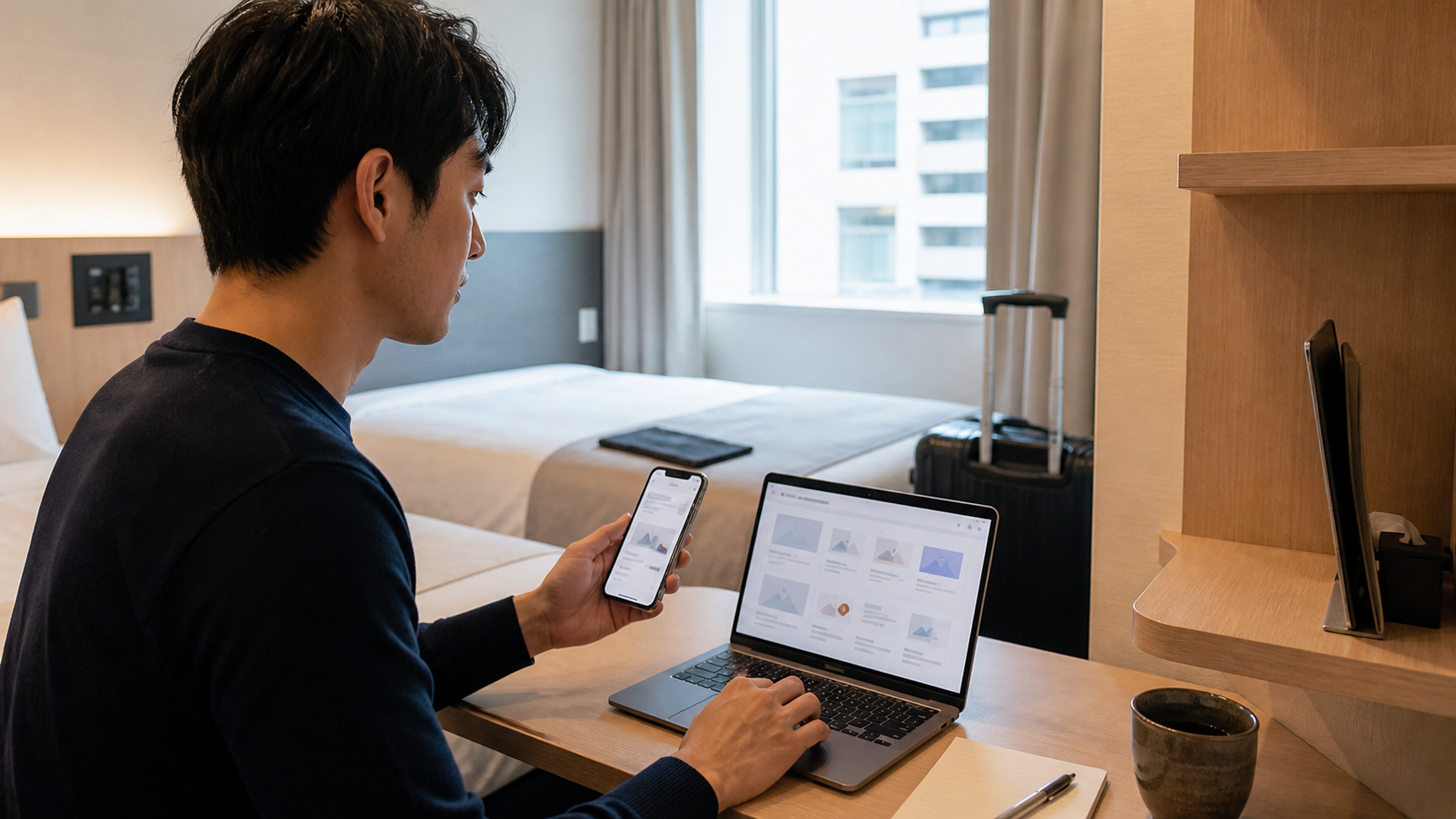
Maximum occupancy is not the same as the number of normal fixed beds. A room for three or four guests may use a sofa bed or an extra bed, or may apply a bed-sharing rule for a child.
At Haneda Excel Hotel Tokyu, the official room list distinguishes a triple with three regular beds and a fourth room with four regular beds. That is useful wording. If a hotel does not make the bed arrangement equally clear, ask before booking.
For tall or broad-shouldered travelers
Do not rely on “double” as proof of comfort. Check both width and, when published, length. Many hotel pages publish width but omit length. If bed length is important, contact the hotel directly rather than inferring it from the label.
For travelers with large luggage
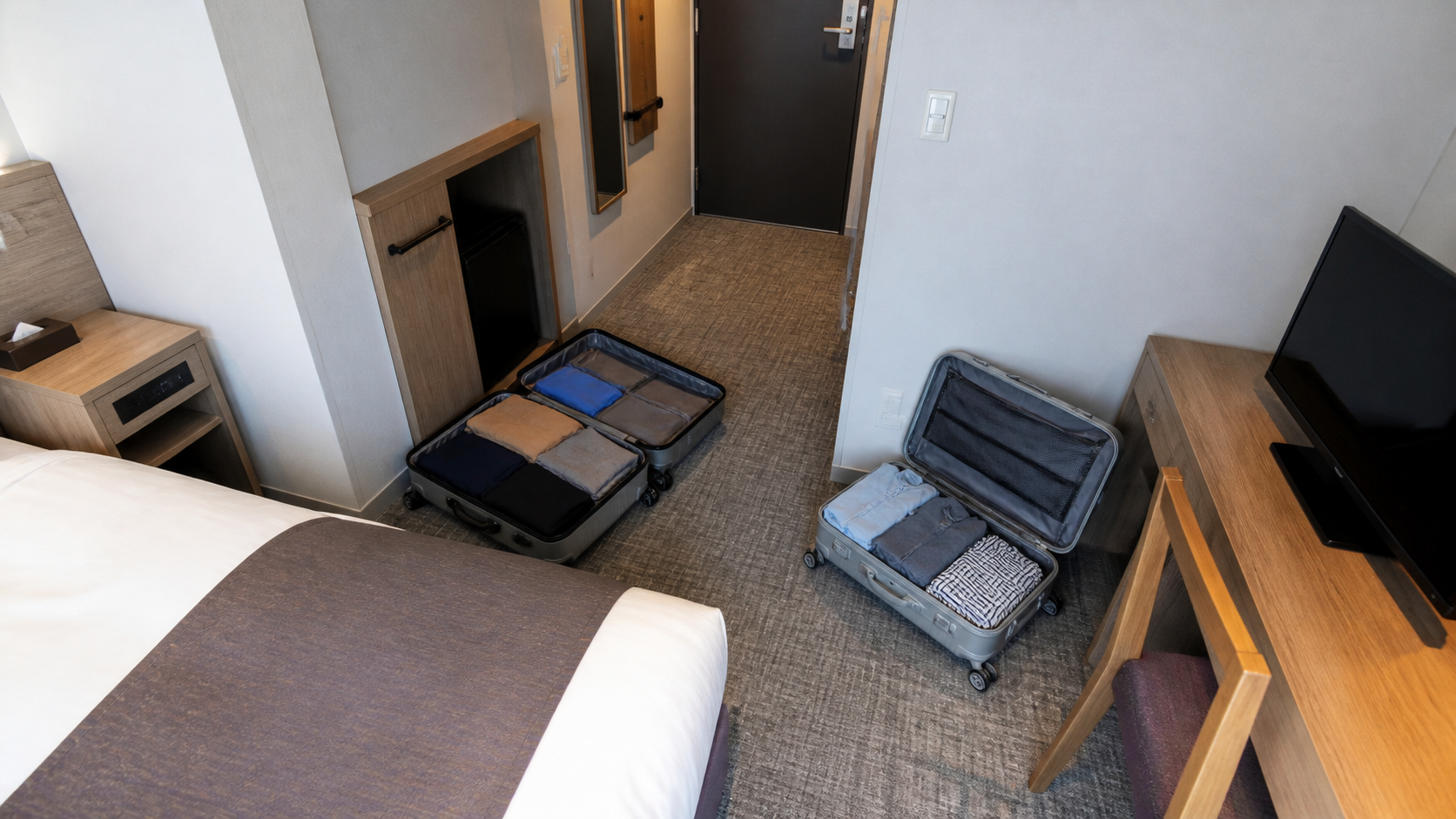
Look for explicit clues such as “storage,” “luggage rack,” “under-bed storage,” or a statement that large suitcases can be opened. KOKO HOTEL Shinjuku Yotsuya says its 32 m² executive twin has plenty of storage and enough space for large suitcases. That is stronger booking evidence than a generic room label.
If you will send baggage between cities, our Japan luggage delivery guide can reduce the amount you need to open in the room. If you need temporary storage in Tokyo, see our Tokyo luggage storage guide.
When an OTA and the hotel page seem to disagree
Booking platforms are useful for comparing availability and cancellation terms, but their room labels may be shortened, translated or grouped. Cross-check physical details on the hotel’s official room page.
Before paying, compare these items across both pages:
- exact room name;
- smoking or non-smoking status;
- bed count and width;
- room area;
- maximum occupancy;
- bathroom type;
- breakfast inclusion;
- cancellation deadline; and
- whether the room is assigned at check-in.
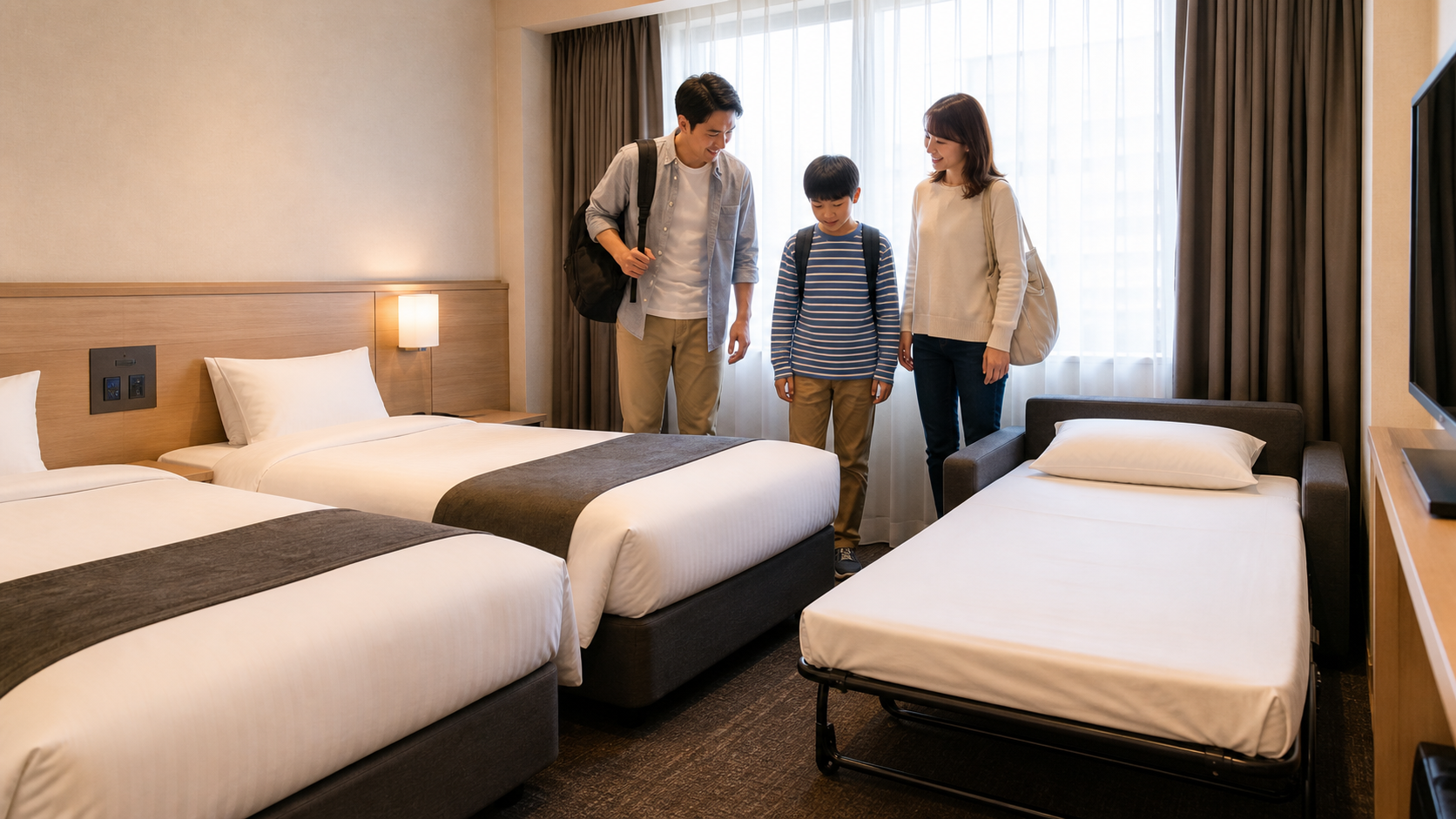
Save a screenshot of the room name and key specifications shown when you book. Also keep the confirmation email. If the OTA uses a broad label such as “double or twin,” do not assume you can choose later unless the booking conditions say so.
For the arrival process itself, read our Japanese accommodation check-in guide. If you are still choosing a base, the Tokyo area map explains how different districts fit different trips.
The five-field booking-fit grid
This is the evidence check we recommend for a shortlisted room.
| Field | Copy from the official page | Your decision question |
|---|---|---|
| Bed | Width × number of fixed beds | Can everyone sleep in the arrangement shown? |
| Area | Exact m² or published range | Is the room still plausible after the beds and furniture are considered? |
| Guests | Maximum occupancy and child rule | Does the rate cover every guest, and how many actual beds are provided? |
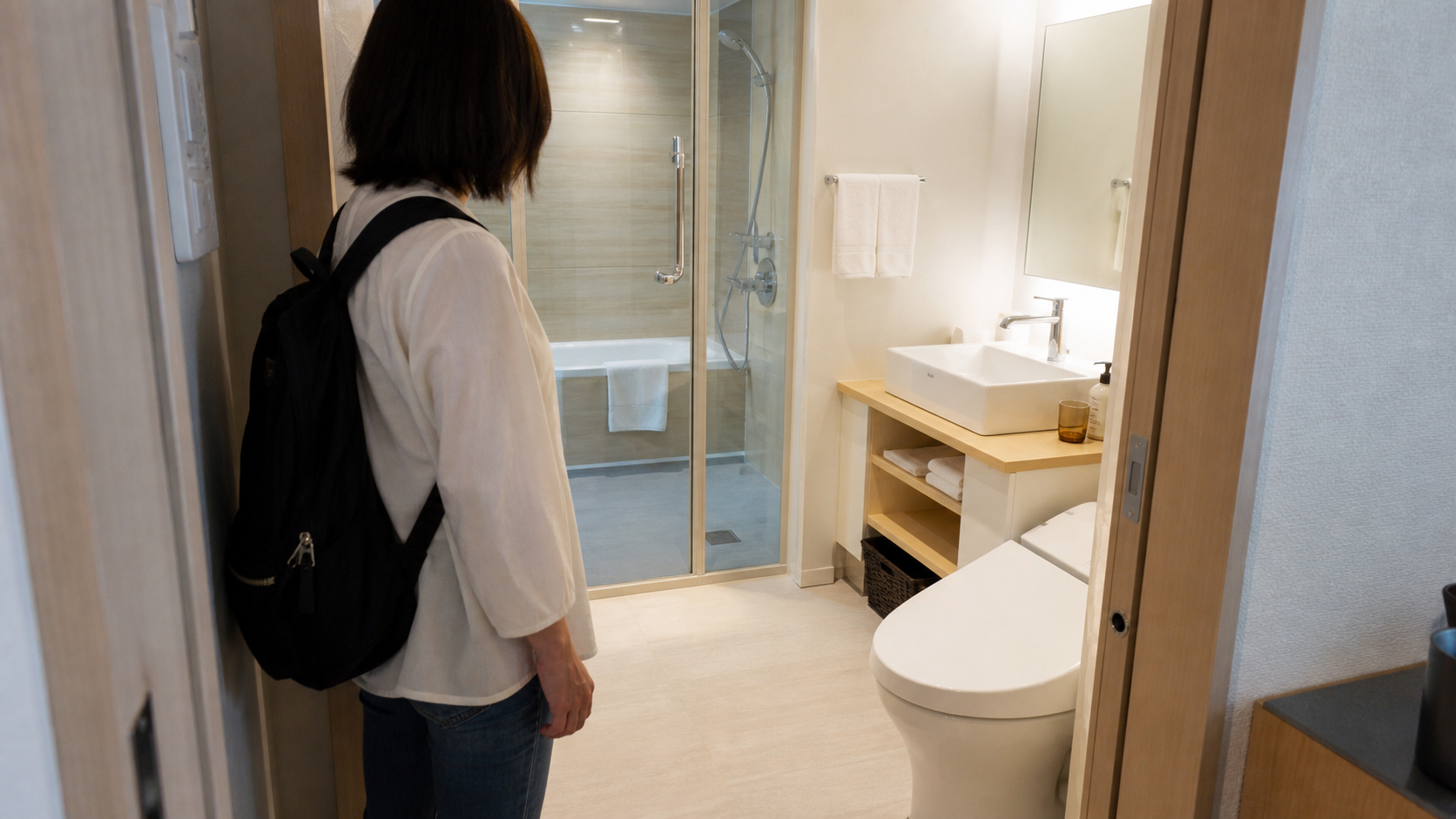
| Bathroom | Unit bath, shower booth, separate toilet/bath, shared bath | Does the layout match your privacy and accessibility needs? |
| Luggage | Rack, under-bed storage, closet, or explicit suitcase wording | Can your bags be stored or opened without blocking the entrance? |
If one of these fields is missing, mark it “unknown.” Do not silently replace an unknown with an assumption.
Copy-paste question for the hotel
Hello. I am considering booking the [exact room name] for [number] guests. Could you confirm the exact bed width, room area, number of fixed beds, maximum occupancy, bathroom layout, and whether two large suitcases can be opened without blocking the entrance? Thank you.
Use the exact room and rate-plan name from the booking page. A hotel may have several rooms called “twin,” so a generic question can produce a generic answer.
Plan B when the specifications are unclear
If the hotel cannot confirm the details before you must decide:
- choose a refundable or flexible-cancellation plan;
- select a room whose official page publishes the five fields you need;
- reduce room-space pressure with luggage delivery or temporary storage; or
- when considering a larger category, check that the layout—not just the price or label—actually improves.
For longer stays, access to laundry can matter as much as floor area. Our Japan coin laundry guide explains the basic process.
What to do if the room is wrong after booking
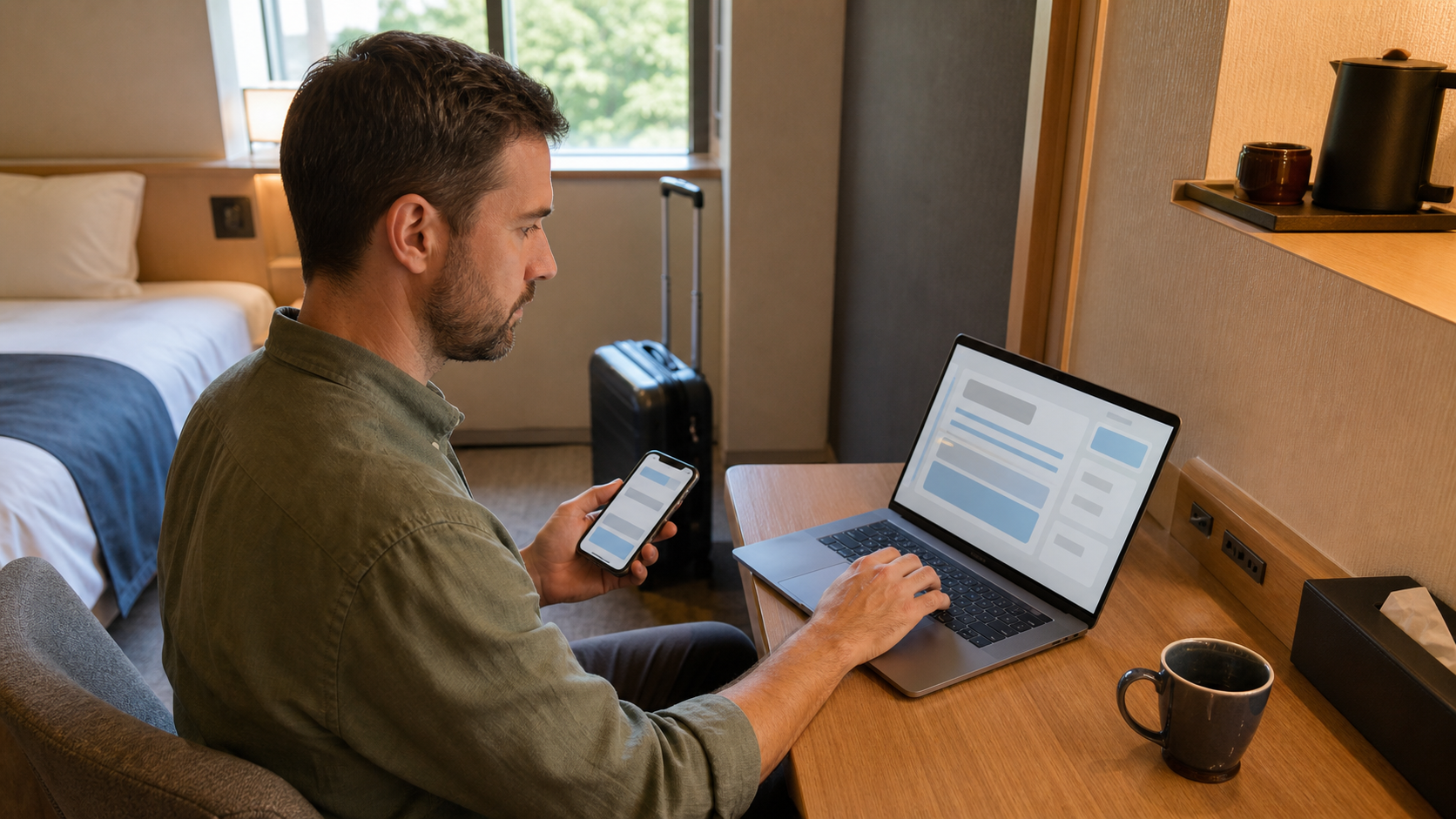
Contact the hotel or booking platform as soon as you notice the mismatch. Use the confirmation email and your saved screenshot to describe the exact difference—for example, “the confirmation states two fixed beds, but the assigned room has one bed.”
Keep the request factual and specific. Ask what alternatives are available and whether changing rooms affects the rate. Availability, contract terms and the cause of the mismatch will determine what the hotel or platform can offer, so do not assume that an upgrade or refund is automatic.
If you discover the problem after arrival, speak to reception before using the room extensively. A prompt, precise question gives staff a clearer chance to check the reservation and available inventory.
Frequently asked questions
Is a semi-double room in Japan suitable for two adults?
It may be, but the label alone is not enough. Check the exact bed width, whether the rate permits two adults, access around the bed and luggage space. Official examples in this guide range from 120 cm to 140 cm beds.
Does a twin room guarantee more space than a double room?
No. A twin room indicates two beds, but room area and layout vary by hotel. Compare the published m², bed widths and official photographs.
What does “Hollywood twin” mean in Japan?
It generally describes two twin beds placed directly beside each other. The Izu-Imaihama Tokyu Hotel example uses two 120 cm beds lined up. Confirm whether a particular hotel can separate them if that matters to you.
Does maximum occupancy mean everyone gets a normal bed?
No. A higher occupancy may involve a sofa bed, extra bed or child bed-sharing rule. Verify the number and type of fixed beds before paying.
How much room area do I need for two large suitcases?
There is no reliable universal cutoff because furniture and layout change the usable floor space. Look for an official floor plan, room photographs or explicit suitcase and storage wording, and ask the hotel if necessary.
Should I trust the OTA or the hotel’s official page?
Use the OTA for the contract you are buying, including price and cancellation terms, and use the official hotel page to cross-check physical room details. If the two disagree, obtain clarification in writing before the cancellation deadline.
What is a unit bath in a Japanese hotel?
In hotel usage, it commonly means a compact prefabricated bathroom in which the bath or shower, toilet and basin share one enclosed space. Check the room page because some hotels instead offer a shower booth or separate bath and toilet.
What should I ask the hotel before booking?
Ask for the exact bed width, room area, number of fixed beds, maximum occupancy, bathroom layout and whether your luggage can be opened without blocking the entrance. Include the exact room and rate-plan name.
Before you pay
Open the official room page and complete the five-field grid. That single check is more reliable than choosing from a translated room label alone.
Room specifications and booking conditions can change. The named examples in this draft were checked on August 8, 2026. Recheck the hotel’s current official page before making a reservation.

Comments