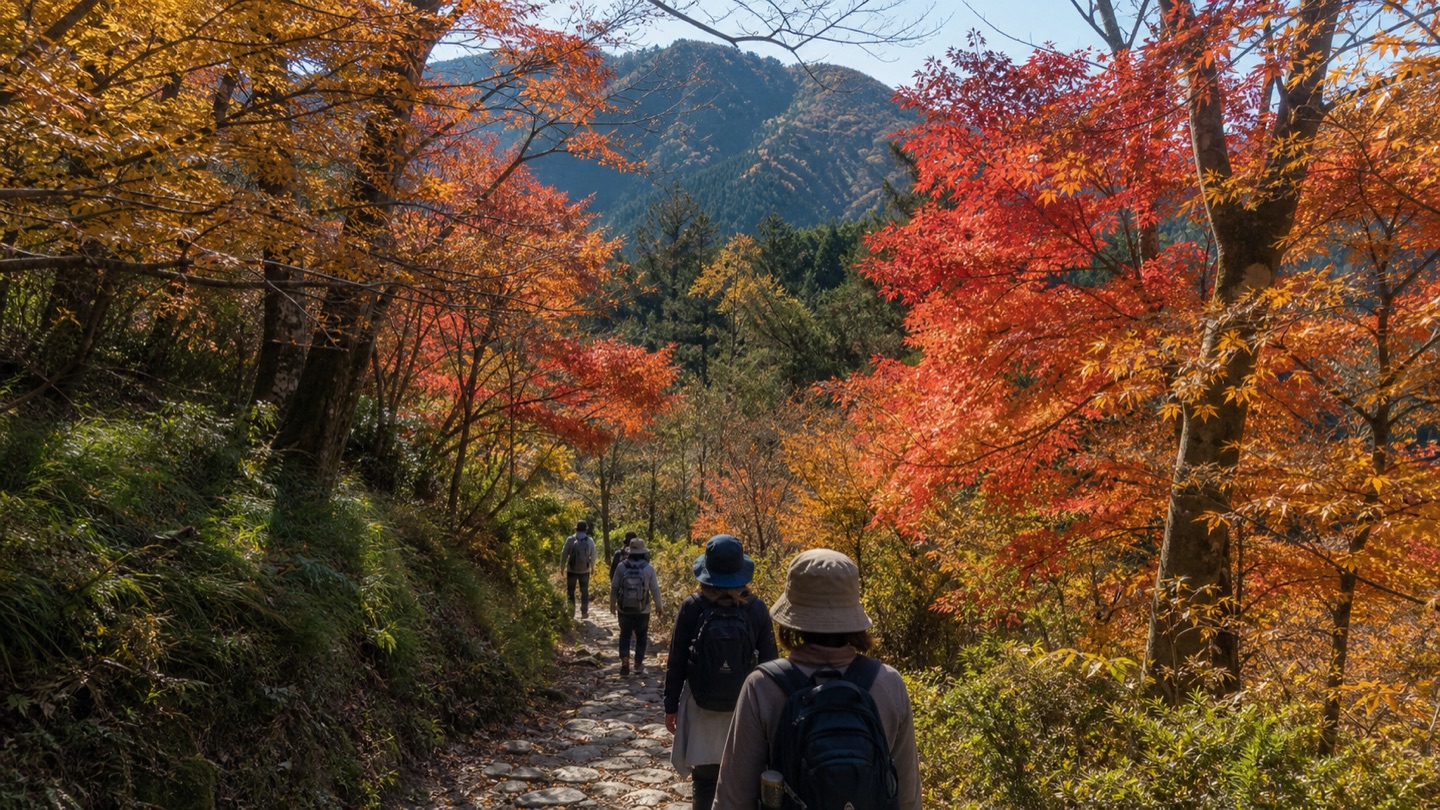
Mt. Takao is one of Tokyo’s easiest mountain day trips, but autumn changes the decision. The train is simple; the crowds, foliage timing, cable-car queues, and early sunset are what make the day work—or unravel.
For a first visit in fall 2026, use the Keio Line from Shinjuku to Takaosanguchi, arrive early, and treat the cable car as a useful option rather than the whole plan. The official Tokyo tourism guide gives early to late November as the general autumn-color window, but that does not fix the peak for a particular day. Check live foliage and transport updates shortly before you go.
This guide gives you three workable day-trip models, a clear cable car versus chairlift versus walking choice, and a Plan B for rain, late color, closures, or a morning that starts too late.
- Quick answer: the low-friction Mt. Takao autumn plan
- When will Mt. Takao’s autumn leaves peak in 2026?
- Getting from Shinjuku to Mt. Takao
- Cable car, chairlift, or walking: which should you choose?
- Which trail is easiest for a first visit?
- How to avoid the worst autumn crowds
- Three day-trip plans
- Plan B: rain, late color, closures, or a late start
- Food, toilets, clothing, and the station-side onsen
- What to check on the morning of your trip
- FAQ
- Is Mt. Takao worth visiting for autumn leaves in 2026?
- What is the best month for Mt. Takao autumn leaves?
- How early should I reach Mt. Takao in autumn?
- Can I use Suica or PASMO for the Mt. Takao cable car?
- Is the Mt. Takao cable car included in the train fare?
- Is Mt. Takao easy for beginners?
- Can I visit Mt. Takao when it rains?
- Can visitors with tattoos use the onsen at Takaosanguchi?
- Sources and update note
Quick answer: the low-friction Mt. Takao autumn plan
If you want the simplest first-timer plan, do this:
- Take the Keio Line from Shinjuku to Takaosanguchi.
- Aim to reach Takaosanguchi around 8:00 on a weekday.
- Walk about five minutes to Kiyotaki Station.
- Take the cable car uphill if the queue is reasonable.
- Follow Trail 1 through Yakuoin Temple to the summit.
- Eat before the busiest lunch period or carry a compact snack.
- Walk down Trail 1 if your knees and the weather are good; otherwise use the cable car.
- Keep the station-side onsen as an optional finish, not a required part of the schedule.
This is not the quietest possible route. It is the route with the clearest transport, the most services, and the fewest navigation decisions for a visitor who does not know the mountain.
One action now: choose one of the three plans in this article and save the four same-day check links near the end.
When will Mt. Takao’s autumn leaves peak in 2026?
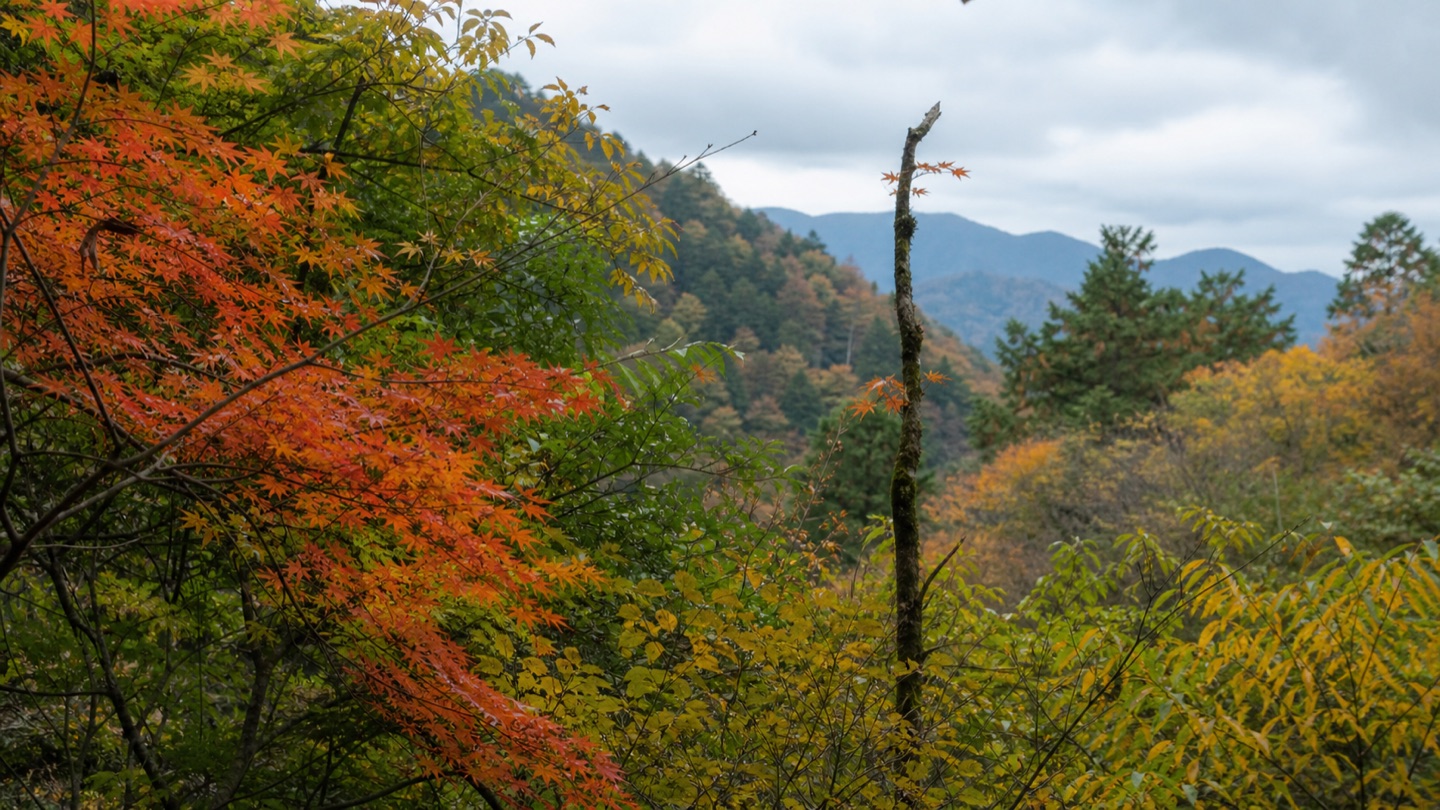
The official GO TOKYO page describes Mt. Takao’s autumn colors as appearing from early to late November. A separate official event page previously described the broader viewing period as extending toward early December, but the exact peak shifts with weather and elevation.
As of July 19, 2026, the official 2026 Mt. Takao Autumn Leaves Festival schedule had not been published on the GO TOKYO event page. The page available in search was for the past 2025 event. Do not build a 2026 itinerary around copied 2025 dates.
For planning, use this sequence:
- Several weeks before: choose a flexible weekday if possible.
- Three to seven days before: check recent official photos or nature updates.
- The evening before: confirm rain, wind, cable-car notices, and trail closures.
- The morning of the trip: decide whether you are following the full plan or Plan B.
Mt. Takao can also turn earlier than low-elevation gardens in central Tokyo. If your Tokyo dates are fixed, read our broader Tokyo Autumn Leaves 2026 guide and compare mountain and city options instead of assuming the locations peak together.
Getting from Shinjuku to Mt. Takao
The simplest route: Keio Line to Takaosanguchi
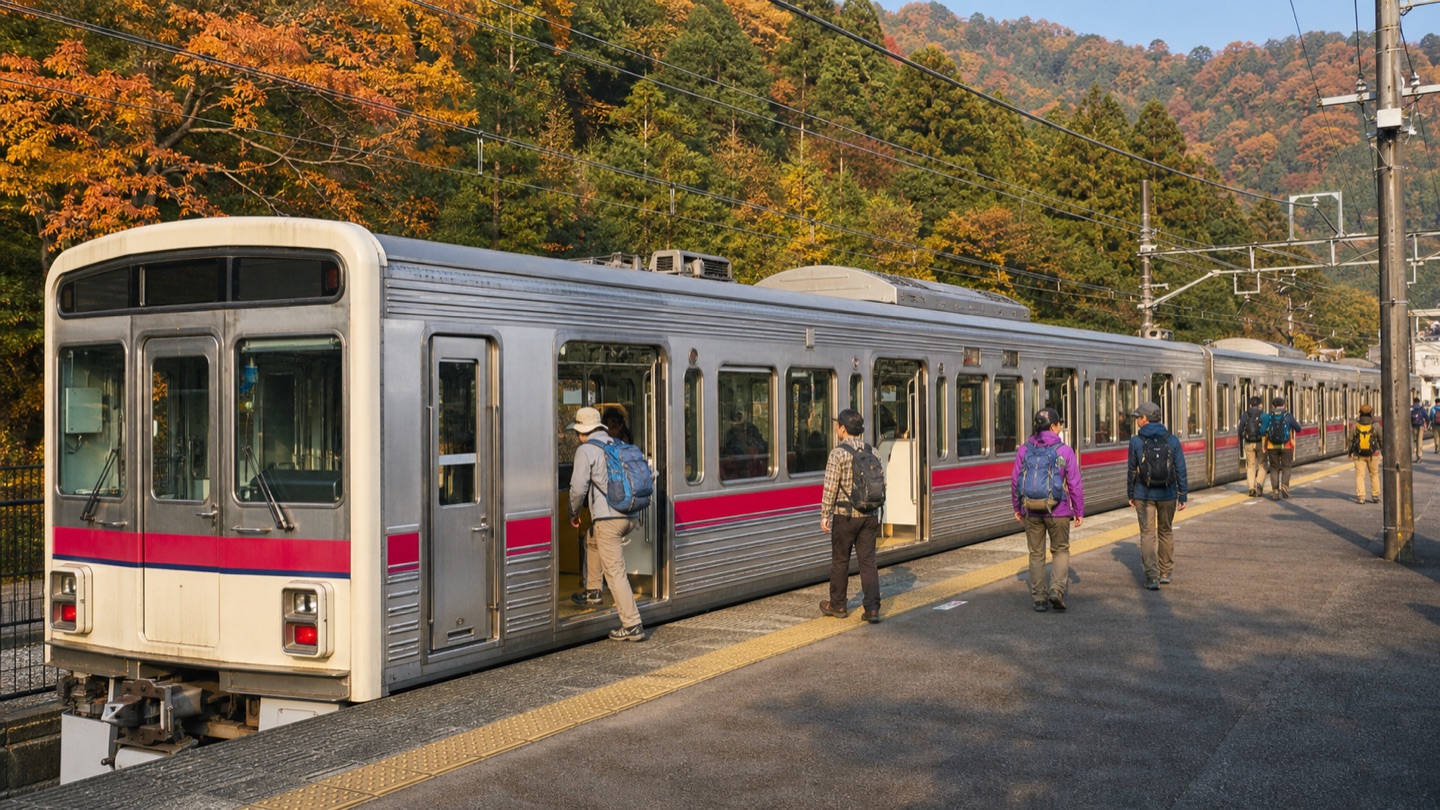
Takaosanguchi is the station you want. It sits at the foot of the mountain, near the cable-car approach and the station-side hot spring.
The official GO TOKYO guide puts the rail journey from Shinjuku at about 50 minutes. Train patterns vary, so use a live route search on the day. The key is to set the destination as Takaosanguchi, not Takao Station.
If Japanese rail transfers feel unfamiliar, use our Tokyo Trains Guide 2026 before the trip. Our Google Maps navigation guide explains how to read platforms, departure times, and transfer instructions without treating one suggested route as permanent.
Ordinary Keio services do not require a seat reservation. Tap in with a supported IC card or buy a ticket. If you are unsure how stored-value cards work, see the Suica, PASMO and ICOCA guide.
The weekend reserved-seat option
Keio also advertises the Mt. TAKAO reserved-seat train on selected weekends and holidays. The official page lists the fastest Shinjuku-to-Takaosanguchi journey at 45 minutes and a reserved-seat fee of ¥410 in addition to the normal fare.
This can reduce uncertainty about finding a seat, but it is not a substitute for checking the live operating date and timetable. If the service does not fit your morning, take the next practical ordinary train rather than losing an hour to an idealized itinerary.
Is the Takao discount ticket useful?
Keio’s Takao Discount Ticket combines the Keio/Inokashira rail journey with cable-car or chairlift travel. The operator states that it is 22% cheaper than buying the included normal tickets separately. Versions with round-trip or one-way mountain transport are available through eligible station ticket machines and the TAMa-GO e-ticket service.
It becomes useful after you decide how you will climb and descend. If you might walk both ways, a bundled round trip can create pressure to use transport you no longer need. Also note that Keio’s weekday hot-spring combination ticket is not sold in November.
Cable car, chairlift, or walking: which should you choose?
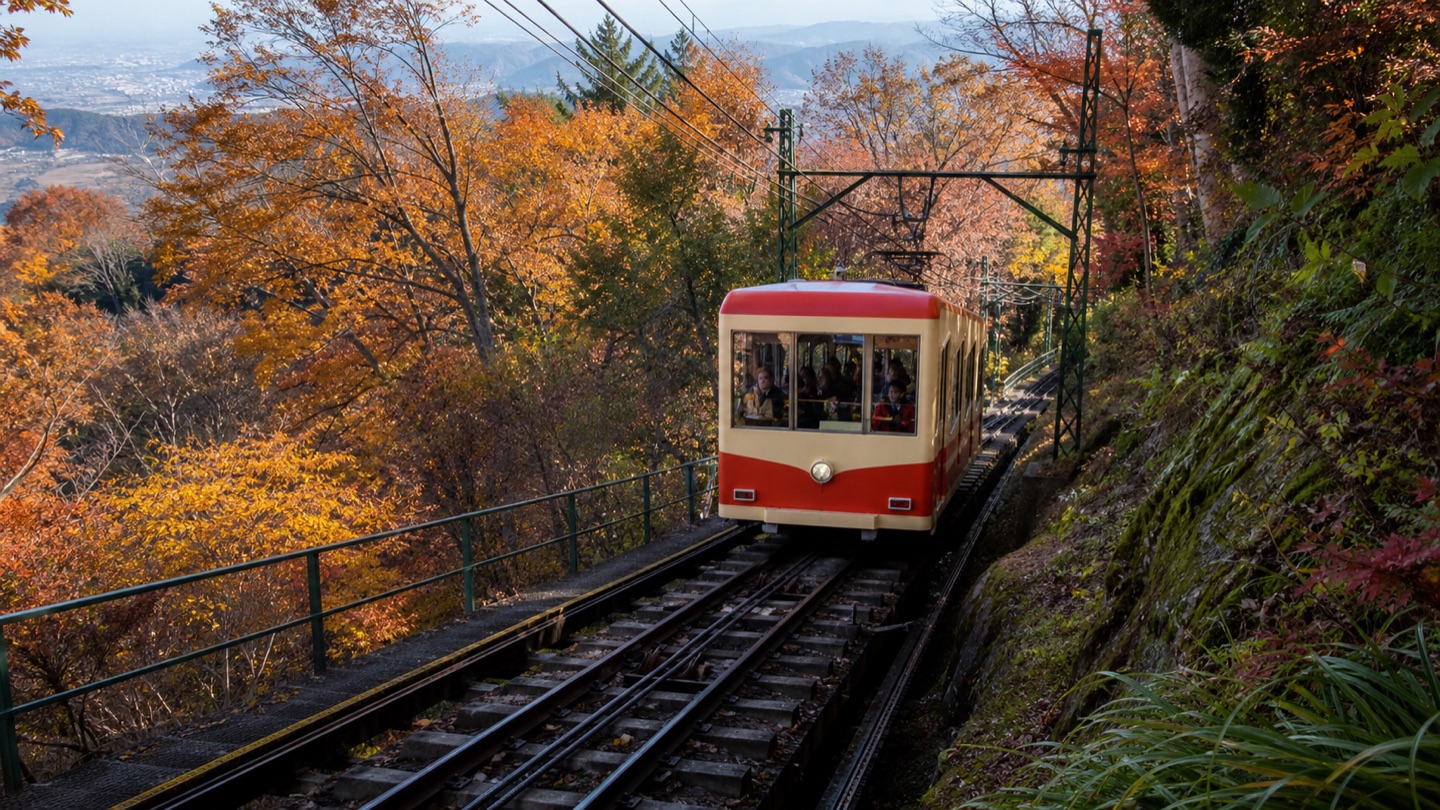
These three choices start near the same lower-mountain area, but they solve different problems.
| Choice | Approximate ride/walk | Good for | Main limitation |
|---|---|---|---|
| Cable car | 6-minute ride | First visits, reducing the steep lower climb, mixed-ability groups | Autumn queues can erase part of the time saved |
| Chairlift | 12-minute ride | Open-air experience in suitable weather | Open two-person seats; shorter operating day; not suitable for every traveler |
| Walk from the foot | About 100 minutes uphill on Trail 1 | Travelers who came primarily to hike | Steep paved sections, more effort, and less margin before sunset |
The cable car normally runs at 15-minute intervals, with extra service possible when crowds are heavy. For September through November, the official timetable lists the first departure at 8:00 and the last departure at 17:45 on weekdays or 18:00 on weekends and holidays. The operator can change service for weather, inspections, or other conditions.
The chairlift normally operates from 9:00 to 16:30 from May through November and takes about 12 minutes. Its open seats are part of the appeal, but they also make wind, rain, height sensitivity, small children, mobility needs, and loose belongings more important considerations.
Current cable-car and chairlift fares are the same: adults ¥490 one way or ¥980 round trip; children ¥250 one way or ¥500 round trip. Cash, major transit IC cards, contactless cards, and the operator’s QR ticket option are supported, although the purchase flow differs by payment method.
The first-timer default
Take the cable car uphill, then follow Trail 1 through Yakuoin to the summit. Decide how to descend after you see the weather, your energy, and the return queue.
The cable car does not reach the summit. It brings you to the upper station area at roughly 472 meters; Mt. Takao’s summit is 599 meters. There is still a substantial walk with slopes and steps.
When walking from the bottom makes sense
Walk up when hiking is a central purpose of the day and the group accepts the effort. Trail 1 is 3.8 kilometers and the official trail map estimates about 100 minutes uphill. It is paved, but “paved” does not mean flat. The lower section can feel steep, and the route still includes stairs.
The payoff is independence from the uphill cable-car queue. The cost is less spare time for the summit, temple, lunch, photos, and an unhurried descent.
Which trail is easiest for a first visit?
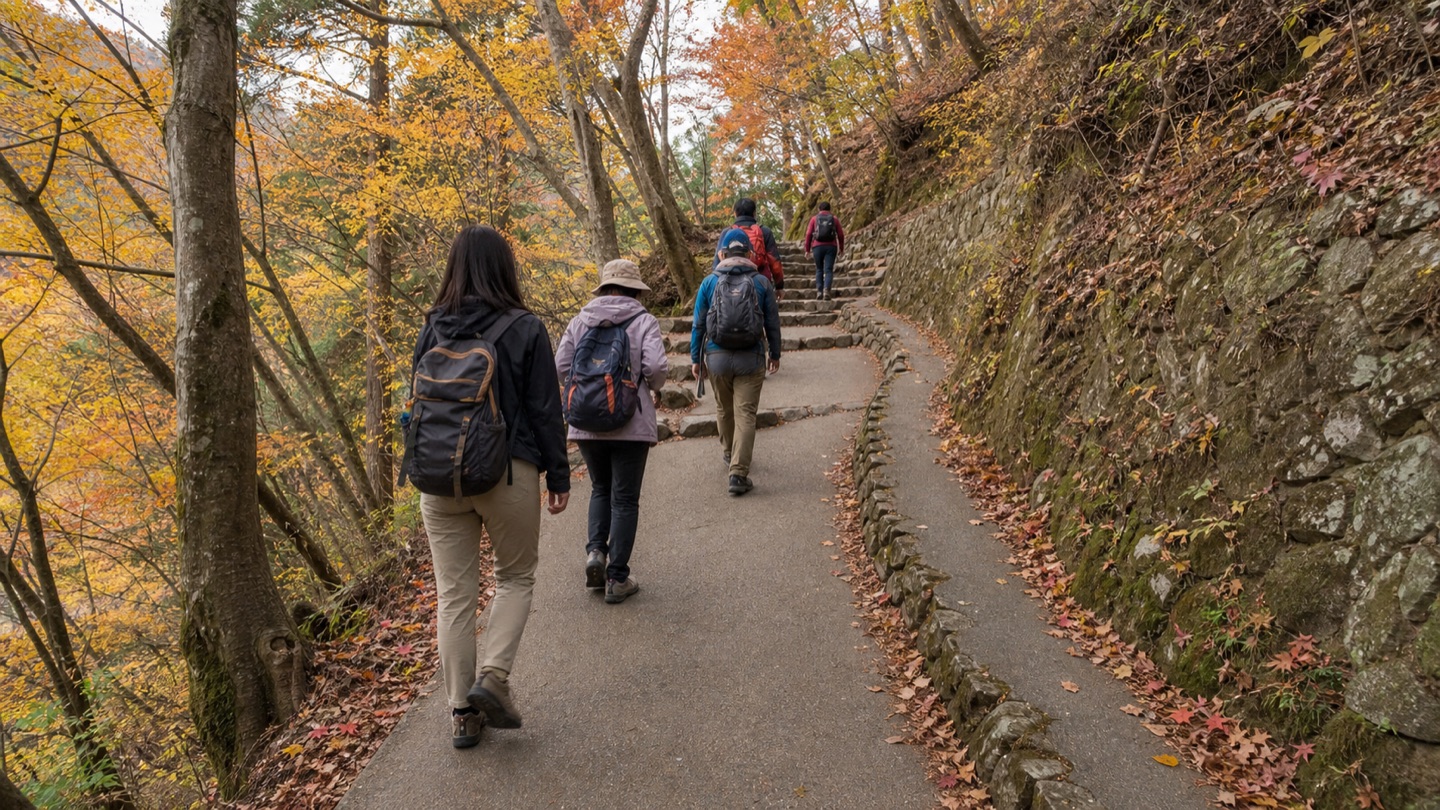
For a first-time international visitor seeking the clearest route, Trail 1 is a practical default. It is the mountain’s principal approach, passes Yakuoin Temple, and has more documented toilet locations than the side trails.
The official course page lists Trail 1 at 3.8 kilometers with five toilet locations. By comparison, Trail 4 is listed at 1.5 kilometers with no toilets on the trail, Trail 6 at 3.3 kilometers with toilets near Kiyotaki and the summit, and the Inariyama course at 3.1 kilometers with no toilets.
Trail 4 is attractive for broadleaf forest and its suspension bridge, but narrow or slippery sections can slow two-way traffic. Trail 6 follows a more natural stream-side environment, and Inariyama is a more hiking-oriented ridge route. Both require more confidence in trail conditions than the standard first-timer plan.
The Takao Visitor Center warns that no hiking course is completely free of stairs and that the mountain trails have no lighting. Side trails may also receive temporary controls or closures. Check the live notice page before choosing a route that depends on them.
Yakuoin is part of the route, not a theme-park stop
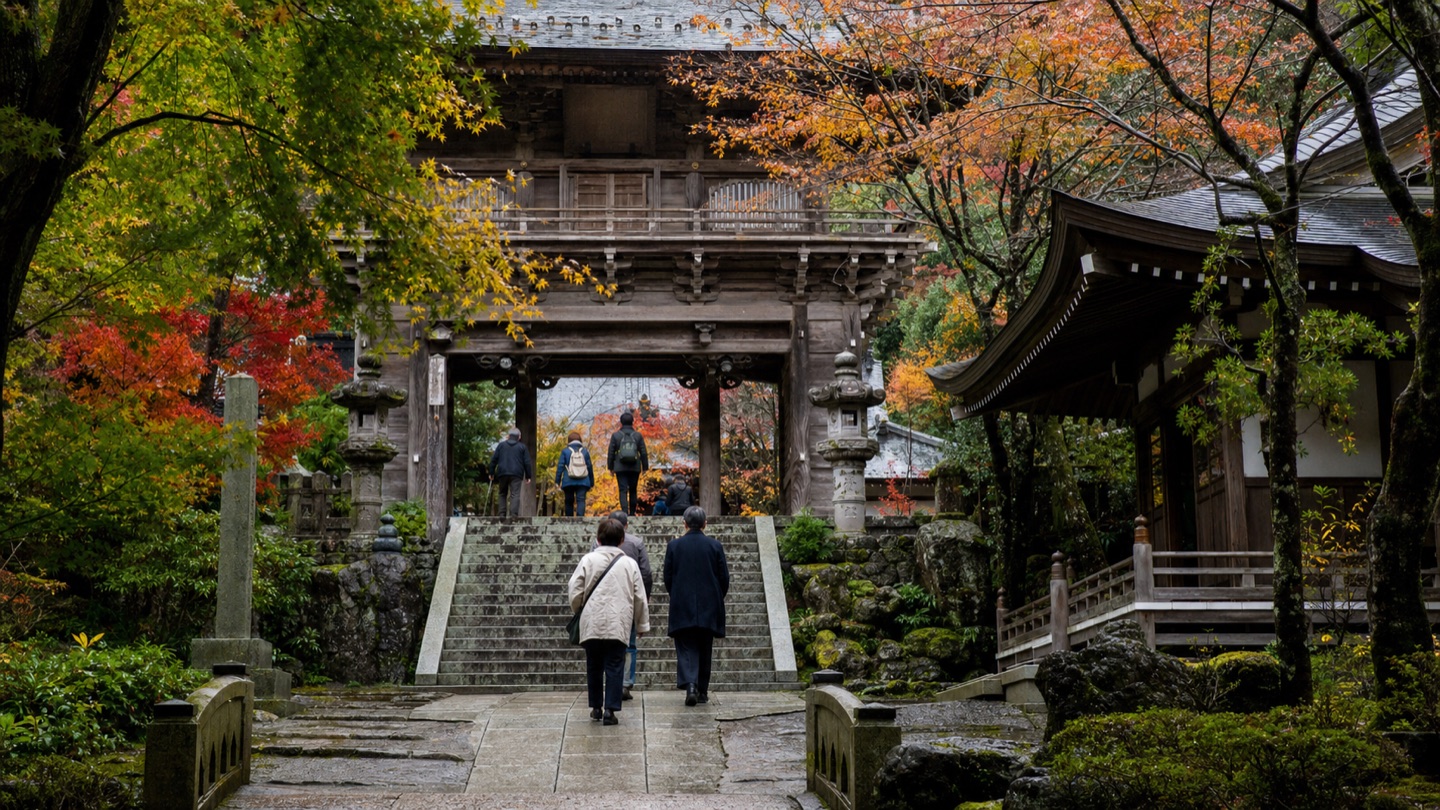
Trail 1 passes Yakuoin, a Buddhist temple founded in 744 and closely connected with Shugendo mountain practice. Keep voices moderate, follow signs, and do not block stairs or worship areas for photos. A crowd may make the approach feel like a sightseeing street, but it remains an active religious site.
Allow time for the temple area rather than treating the summit as the entire destination. In autumn, stopping here also spreads your day across more than one viewpoint.
How to avoid the worst autumn crowds
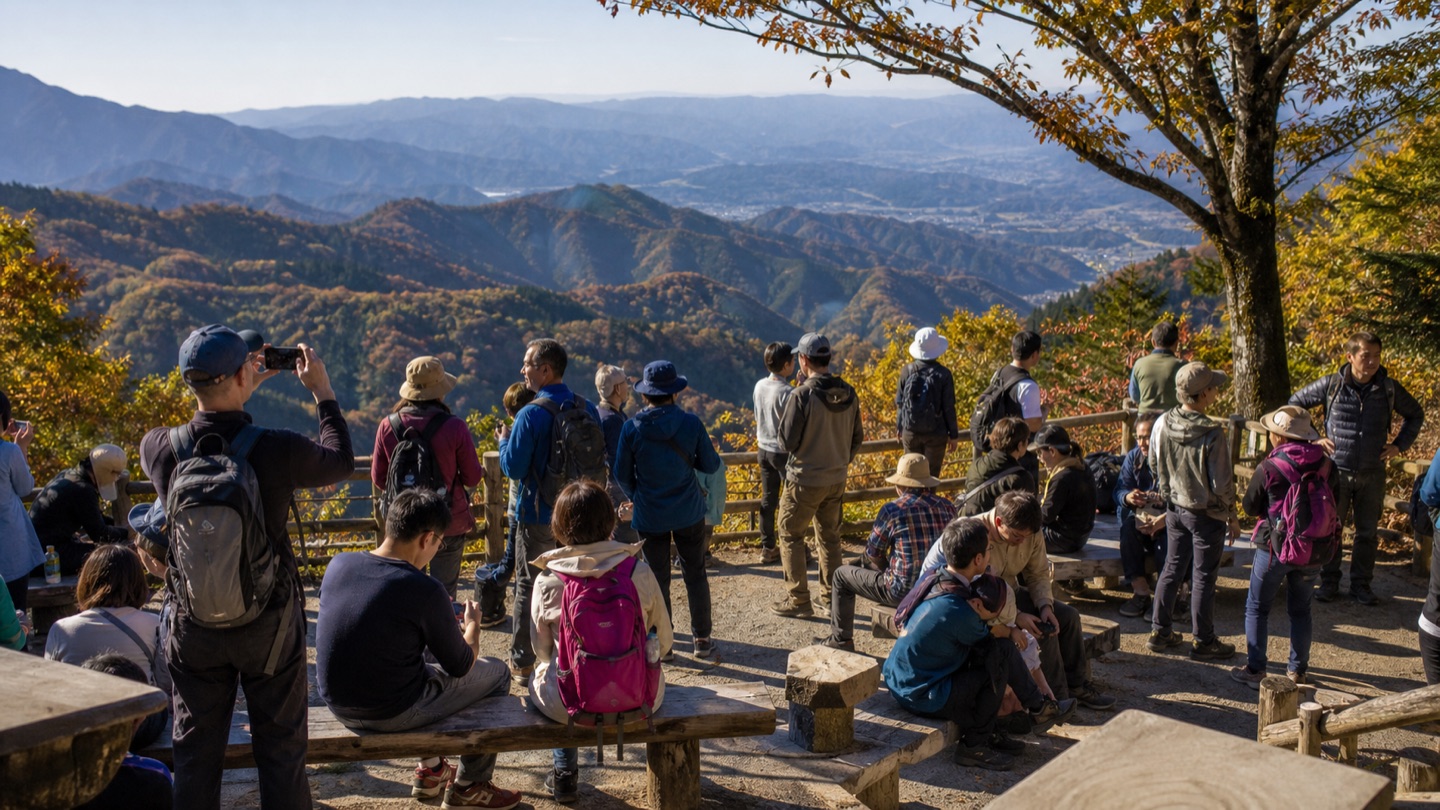
You will not make a famous Tokyo mountain empty in peak foliage season. The realistic goal is to remove the most avoidable friction.
1. Choose a weekday
GO TOKYO specifically recommends a weekday visit in fall because the mountain is crowded. This is the single most useful calendar decision.
2. Reach the mountain near the start of transport service
An 8:00 arrival at Takaosanguchi gives you options. You can join an early cable-car queue, walk immediately, or wait briefly without putting the summit and descent against sunset.
3. Spread popular stops across the day
If you reach a food area just before the normal lunch rush, eat then. If the summit is packed, take the essential view and move back toward a quieter stopping point. The day is not improved by standing in a dense summit queue for one identical photo.
4. Make the descent decision early
Check the line and your energy before you are exhausted. A long downhill walk can be hard on knees; a long cable-car queue can consume daylight. Neither choice is automatically faster.
5. Carry a small buffer
Bring water and a compact snack even if you plan to buy lunch. Autumn business hours, sold-out items, and queues are not emergencies if you are not hungry and rushed.
Three day-trip plans
Plan 1: Early start, fullest first visit
Use this if: foliage is good, weather is stable, and your group can walk for several hours.
- Arrive at Takaosanguchi around 8:00.
- Walk to Kiyotaki Station and take the cable car uphill.
- Continue on Trail 1 through Yakuoin.
- Reach the summit before the busiest lunch period.
- Eat early or on the way back.
- Walk down Trail 1, or take the cable car if fatigue or weather changes.
- Use the onsen if the group still has time and it fits the schedule.
This plan gives the most margin. It is also the easiest to shorten without turning the day into a failure.
Plan 2: Balanced day with less climbing
Use this if: you want scenery and the temple but do not want to walk from the foot.
- Arrive by 8:30–9:00 on a weekday.
- Take the cable car uphill.
- Follow Trail 1 to Yakuoin.
- Continue to the summit when the group is comfortable and the time margin remains healthy.
- Return by cable car or chairlift, depending on operation and suitability.
- Eat near the mountain or Takaosanguchi Station.
The important permission in this plan is to turn around before the summit. The temple, forest, upper-station views, and autumn atmosphere already make a coherent trip.
Plan 3: Low-walking autumn taste
Use this if: someone has limited stamina, you start late, or the summit is not the priority.
- Take the cable car uphill.
- Stay around the upper station and the manageable part of Trail 1.
- Stop before steep or tiring sections create a difficult return.
- Descend well before the final service.
- Finish with food near the station or another accessible stop.
This is not a step-free summit plan. Even above the cable car, there are inclines and stairs. For wheelchair planning, the Tokyo accessible-tourism guide notes that manual-wheelchair users may need caregiver support beyond the upper station. Contact the operator in advance if assistance or equipment details will determine whether the trip is possible.
Plan B: rain, late color, closures, or a late start
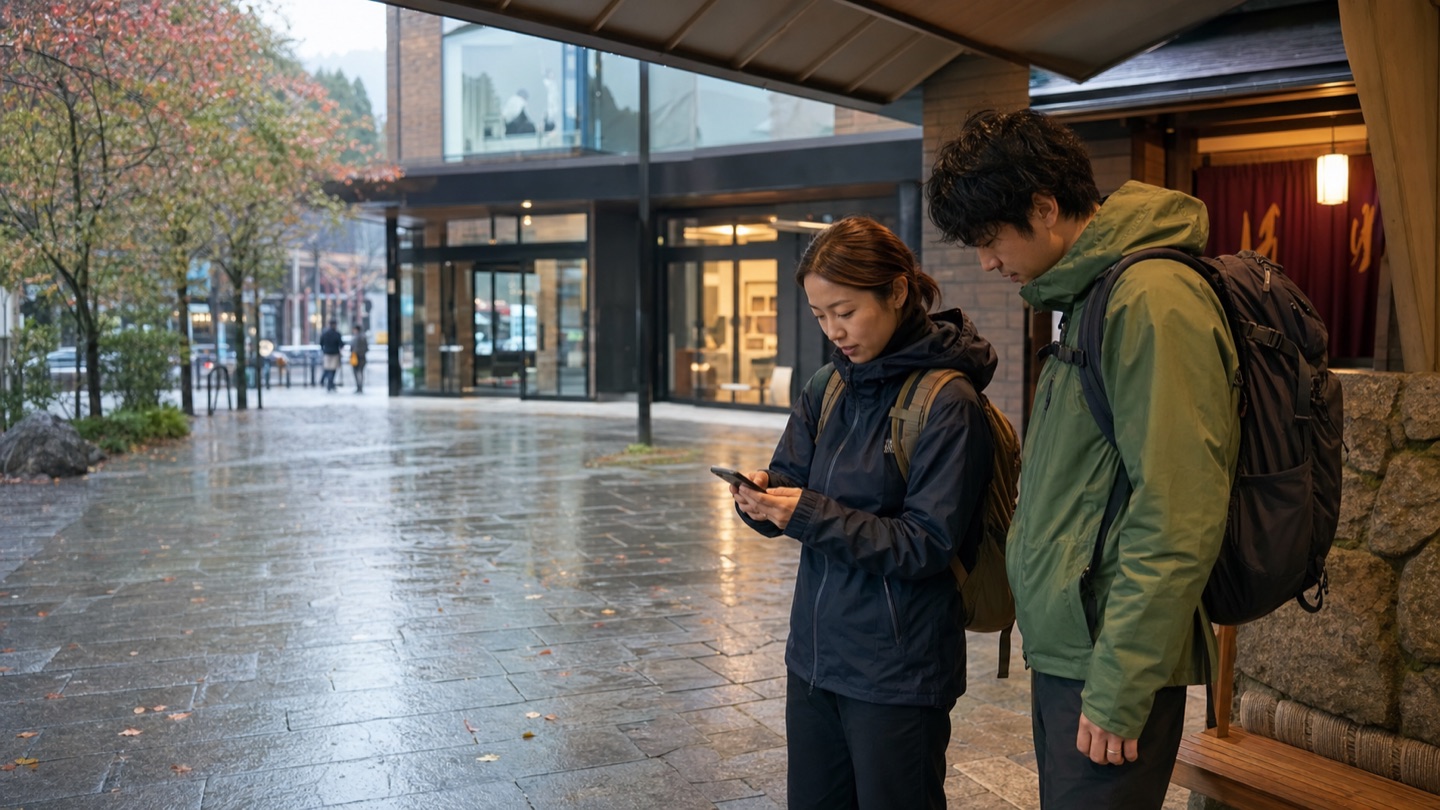
A good Plan B changes the objective before the day becomes a sequence of compromises.
If steady rain is forecast
Do not choose a side trail just because the forest looks atmospheric in photos. Trail surfaces can become slippery, visibility can shrink, and an open chairlift may not operate as expected. Use Trail 1 when the current advice, footwear, and group ability make it reasonable—or move the mountain to another day.
For wider transport and weather decisions, use our Japan Rain and Typhoon Plan 2026.
If the foliage is early or late
Compare recent official images rather than relying on forecast articles published weeks earlier. If Mt. Takao is still mostly green, choose the day for hiking and temple atmosphere, then use the Tokyo Autumn Leaves 2026 guide to place a lower-elevation garden later in your trip.
If the mountain is already past peak, look for city locations with a later pattern. The value of a flexible Tokyo base is that one missed foliage stage does not cancel the whole season.
If the cable car or lift is suspended
Decide whether the group genuinely wants a full walk from the foot. Do not turn a transport closure into an unplanned hike because you already rode the train out.
If the answer is no, keep the outing local and short, eat near Takaosanguchi, or return to central Tokyo for a city foliage stop. The train journey is a sunk cost, not a reason to ignore the group’s limits.
If you arrive after lunch
Do not race sunset for the summit. Use the cable car if operating, enjoy a shorter upper-mountain visit, and start down with a generous time buffer. The visitor center states plainly that mountain trails do not have lighting.
Food, toilets, clothing, and the station-side onsen
Food
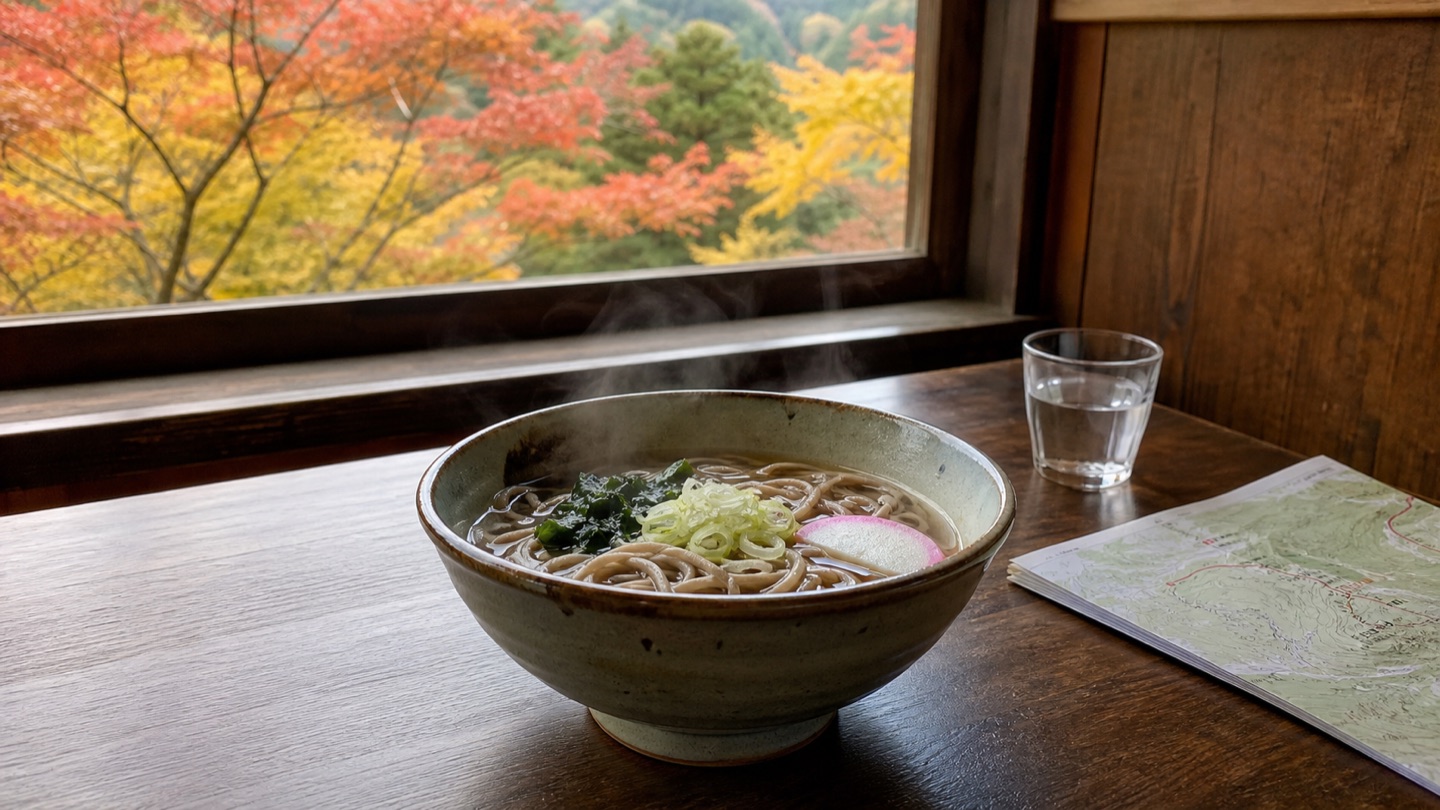
Mt. Takao is known for soba and has food around the approach, upper-station zone, temple route, and summit area. Autumn queues and sold-out items are possible. Carry water and a small snack, and treat a specific restaurant as a preference rather than a dependency.
Toilets
Trail 1 is the service-supported option, but toilets can still have lines. Use facilities before you urgently need them, especially before entering a side trail. Do not assume the numbered trails have comparable toilet access.
Shoes and clothing
Wear shoes with grip. Trail 1 may be paved, but leaves, moisture, steep grades, and stairs change how it feels. Bring layers: the summit and shaded forest can feel cooler than central Tokyo. A compact rain shell is more useful than an umbrella on a narrow or crowded trail.
Check sunset time and carry a small light if your schedule has any chance of extending late. A phone flashlight is not a complete mountain plan because battery and signal can fail.
Keio Takaosan Onsen Gokurakuyu
The hot spring is adjacent to Takaosanguchi Station and can be a convenient finish. The official site currently lists opening hours of 8:00–22:30, with last entry at 21:45. Adult admission is ¥1,100 on weekdays and ¥1,300 on weekends, public holidays, and designated peak periods; the operator includes the autumn foliage season among periods when peak pricing may apply.
The facility refuses entry to people with tattoos, including covered or sealed tattoos. Check this before making the onsen the emotional reward at the end of the hike. Public baths are used without swimwear, and phones or cameras are not permitted in the bathing area. For the broader routine, read our Japan onsen etiquette guide.
Opening hours and rules can change temporarily, so confirm the official page on the day.
What to check on the morning of your trip
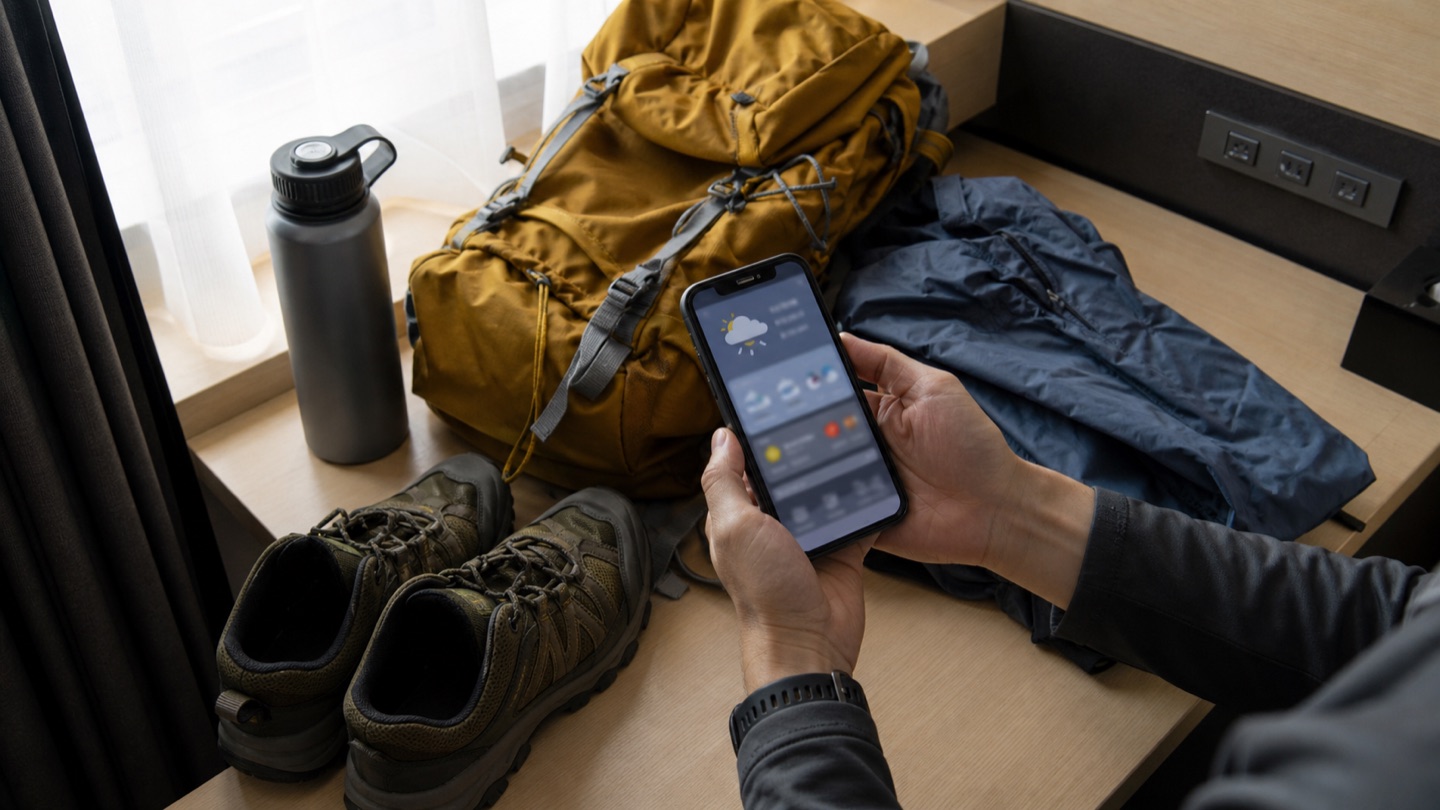
Open these pages before leaving your accommodation:
- Weather and rain: use a current forecast for Hachioji or Mt. Takao, not central Tokyo alone.
- Cable car and chairlift: check the Takao Tozan Railway official site for service notices.
- Trail controls: check the Takao Visitor Center course and closure page.
- Train route: check a live route result to Takaosanguchi and, if relevant, the Mt. TAKAO reserved-seat service.
- Foliage evidence: look for recent dated official photos or nature updates rather than relying on a seasonal average.
Then make one decision: full summit plan, shortened upper-mountain plan, or city Plan B. Deciding at the hotel is easier than negotiating it in a crowded station.
FAQ
Is Mt. Takao worth visiting for autumn leaves in 2026?
Yes, if you want a mountain day trip with forest, temple culture, and fall color within easy rail reach of central Tokyo. The date still matters: check current foliage evidence because the general early-to-late November window does not guarantee peak color on your visit.
What is the best month for Mt. Takao autumn leaves?
November is the practical planning month. GO TOKYO gives early to late November as the general viewing window, while conditions can extend or shift. Verify the current year close to your date.
How early should I reach Mt. Takao in autumn?
Around 8:00 at Takaosanguchi is a useful target for a weekday first visit. It gives you room to handle queues, take a shorter route, or change the descent without approaching sunset.
Can I use Suica or PASMO for the Mt. Takao cable car?
The cable-car operator lists major transit IC cards, including PASMO and Suica, among accepted payment methods. The purchase or gate process depends on the payment type, so follow the signs and staff instructions.
Is the Mt. Takao cable car included in the train fare?
Not with an ordinary rail fare. Keio sells a separate Takao Discount Ticket that combines eligible rail travel with cable-car or chairlift travel. Choose the version after deciding whether you want one-way or round-trip mountain transport.
Is Mt. Takao easy for beginners?
Trail 1 is beginner-friendly in navigation and services, but it still has steep grades and stairs. The cable car reduces the lower climb but does not reach the 599-meter summit.
Can I visit Mt. Takao when it rains?
Light rain does not automatically close the mountain, but wet leaves, steep paving, natural trails, wind, and transport changes can alter the risk. Check official notices and use the shortened plan or a city Plan B when conditions do not fit your group.
Can visitors with tattoos use the onsen at Takaosanguchi?
No. Keio Takaosan Onsen Gokurakuyu states that tattooed visitors are refused entry, including tattoos covered with seals or similar coverings.
Sources and update note
Operational details were checked on July 19, 2026 against GO TOKYO, Takao Tozan Railway, Keio Railway, the Takao Visitor Center, the Tokyo Metropolitan Government nature-park guide, and Keio Takaosan Onsen Gokurakuyu.
The 2026 foliage peak and festival schedule were not treated as fixed because the official 2026 event announcement was not available at the time of checking. Transport, trails, prices, and facility rules can change. Recheck the official pages before travel.
Comments