- Quick Answer
- Which Tokyo Luggage Option Should You Choose?
- Option 1: Ask Your Hotel First
- Option 2: Use a Station Coin Locker
- Option 3: Reserve a Locker or Storage Space
- Option 4: Forward the Suitcase
- Haneda Airport: Store It or Send It?
- Plan B When Every Large Locker Is Full
- Common Mistakes to Avoid
- Frequently Asked Questions
- Your Next Useful Guide
Quick Answer
For luggage storage in Tokyo, use your hotel first if it is on your route. If not, choose a station coin locker for a few hours, a reservable storage service when large lockers may be full, or luggage forwarding when you do not need the bag again that day.
At major JR stations, a useful 2026 planning range is about ¥500 for a small locker, ¥700–¥800 for medium, and ¥900–¥1,000 for large. Exact prices, access hours, size and availability vary by locker bank. Some reservable lockers also add ¥100–¥200 for medium or large sizes during busy periods.
Best default: ask your hotel → check a reservable locker or storage space → stop searching after one failed locker bank and use Plan B.
Last checked: July 11, 2026.
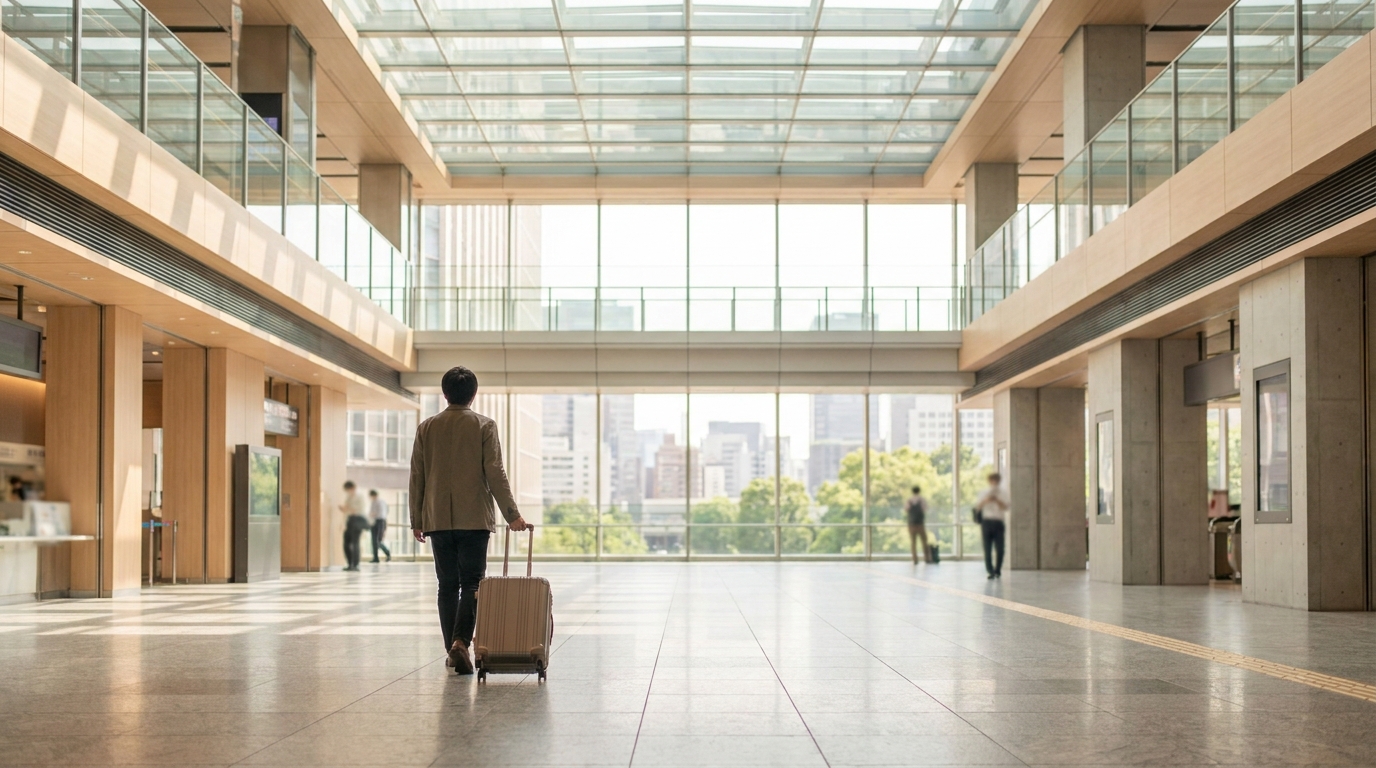
Which Tokyo Luggage Option Should You Choose?
| Your situation | Best first choice | Plan B |
|---|---|---|
| Before hotel check-in or after checkout | Ask your hotel | Reservable storage near the next station |
| One small bag for a few hours | Station coin locker | Staffed counter or ecbo Cloak |
| Large suitcase at a busy station | Reserved Multi-Ecube or storage shop | Hotel or staffed baggage counter |
| Moving to another hotel or city | Luggage forwarding | One-night storage plus next-day delivery |
| Airport arrival with a full sightseeing day | Airport delivery counter | Airport locker or city storage reservation |
Option 1: Ask Your Hotel First
Many hotels will hold luggage for registered guests before check-in or after checkout. It is often the simplest option because you do not need to find the same locker again later. Policies vary, so confirm directly with your property—especially for very early drop-off, overnight storage, or delivery from an airport.
Vacation rentals and unattended accommodations are different. Do not send a suitcase to an Airbnb or minpaku unless the host has explicitly agreed that someone can receive it.
Option 2: Use a Station Coin Locker
Coin lockers work best when you know your return station and need the bag again the same day. Tokyo Station, Shinjuku, Shibuya, Ueno and other large terminals have many locker banks, but the obvious locations near major gates can fill first.
JR East’s Tokyo Station information confirms coin lockers on site, and its station map shows their locations. JR East’s current Tokyo Station guide gives these planning prices:
- SS: about ¥300
- Small: about ¥500
- Medium: about ¥700–¥800
- Large: about ¥900–¥1,000
These are not a universal Tokyo tariff. Check the price displayed on the exact locker before paying. Access may also end when the station area or building closes.
Open the official JR East Tokyo Station map · Check JR East’s current locker guide and prices
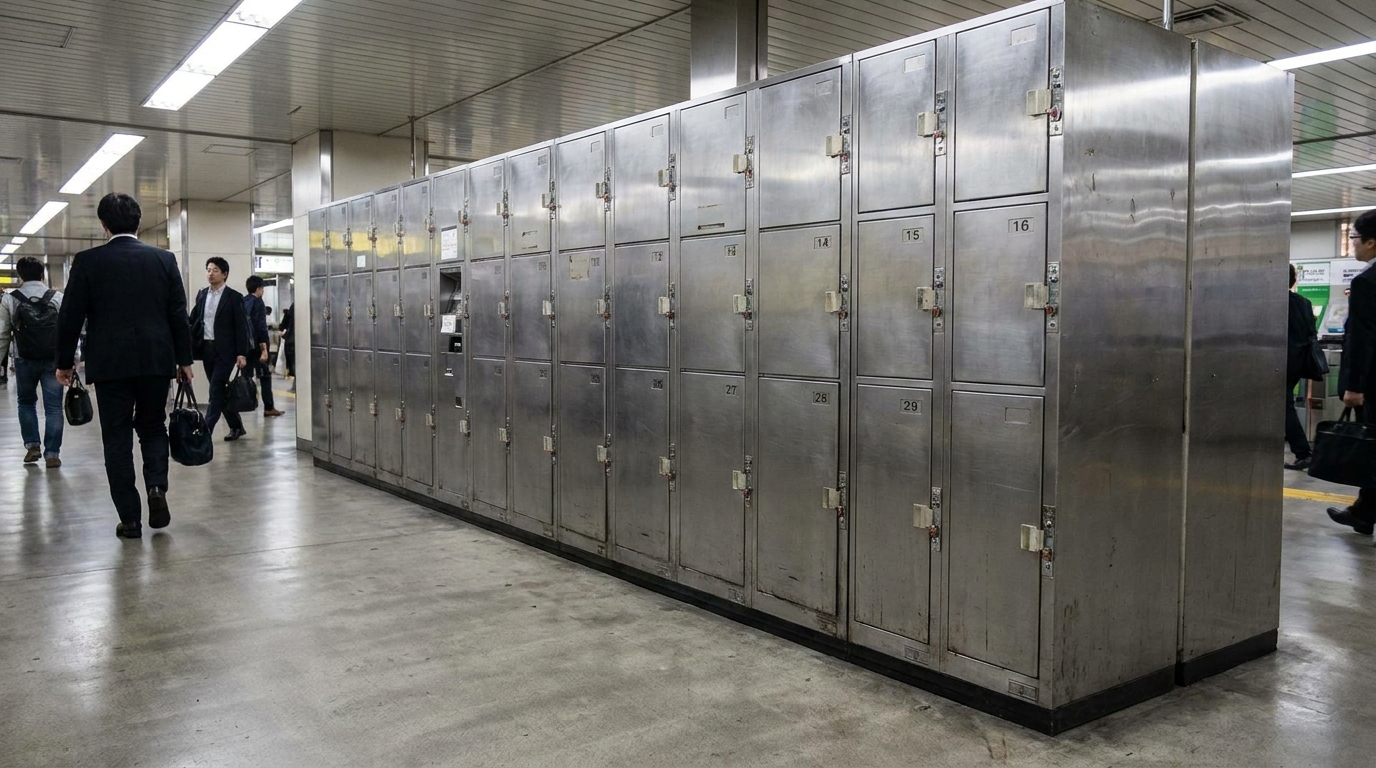
Before you close the locker
- Photograph the locker number and the nearest gate or landmark.
- Check whether the locker is inside or outside the ticket gates.
- Confirm the fee-reset time and maximum storage period shown on the machine.
- Keep your passport, medicine, valuables and anything needed that day with you.
- Set a pickup reminder before your final train or airport transfer.
Option 3: Reserve a Locker or Storage Space
If you have a large suitcase, arrive on a weekend or holiday, or cannot afford to waste time searching, reserve before you travel.
Multi-Ecube
JR East’s Multi-Ecube network allows eligible lockers to be searched and reserved online. At Tokyo Station, JR East says reservations can be made up to one month ahead and availability can be checked in real time. Availability, supported sizes and peak pricing depend on the location.
ecbo Cloak
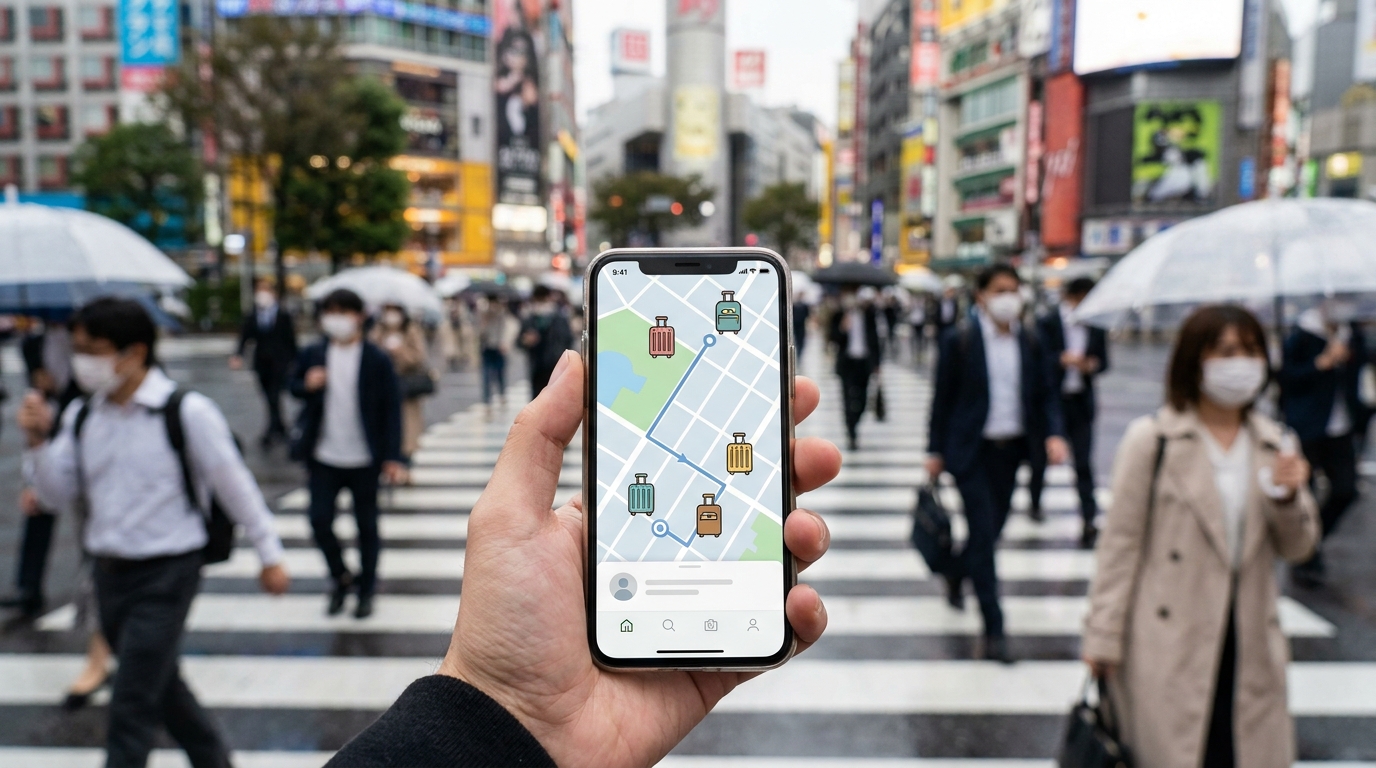
ecbo Cloak lists storage spaces in shops and other staffed locations. You select a place, time and bag size before paying. Opening hours, accepted items and the displayed fee belong to the individual location, so read the listing rather than assuming every space is open 24 hours.
Search ecbo Cloak locations in Tokyo
Option 4: Forward the Suitcase
Forwarding is often better than storage when you are changing hotels, traveling to another city, or starting sightseeing immediately after landing. Yamato’s official Hands-Free Travel service includes delivery and temporary storage through participating counters.
Delivery is not always same-day. Cutoff times, destinations, bag limits and prices depend on the counter and route. Keep one night’s essentials with you and confirm when the next property can receive the bag.
Check Yamato Hands-Free Travel
Haneda Airport: Store It or Send It?
Haneda Airport’s official guidance lists baggage storage, coin lockers and home-delivery counters in the terminals. Counter hours differ by terminal and operator. If your hotel is eligible and the day’s cutoff has not passed, delivery can remove the need to cross Tokyo with a suitcase. Otherwise, use airport storage or reserve a city option near your first destination.
See Haneda’s official luggage FAQ · Check current delivery counters and hours
Plan B When Every Large Locker Is Full
- Stop after one locker bank. Do not drag a suitcase across a giant station checking every corridor.
- Check Multi-Ecube or ecbo Cloak on your phone. Search around the station where you will finish the day, not only where you are standing now.
- Ask your hotel. A short detour may be faster than another locker search.
- Use a staffed counter. Station and airport counters handle bags that do not fit standard lockers, subject to their rules.
- Forward the bag. Choose this when you do not need it until the next hotel or airport.
Common Mistakes to Avoid
- Choosing an inside-gate locker: you may need another valid ticket to return.
- Assuming “per day” means 24 hours: some services reset by calendar day or a stated cutoff.
- Leaving travel essentials inside: keep passports, medication, chargers and onward tickets with you.
- Sending to an unattended rental: confirm that a person can receive the delivery.
- Trusting an old price screenshot: use the amount shown on the current operator page or machine.
Frequently Asked Questions
How much are coin lockers in Tokyo in 2026?
At major JR stations, plan on roughly ¥500 for small, ¥700–¥800 for medium and ¥900–¥1,000 for large. Some lockers are cheaper, while location, model and peak pricing can make others more expensive.
Can I leave luggage at a Tokyo hotel before check-in?
Many hotels allow it for registered guests, but it is a property policy rather than a universal rule. Confirm with the hotel, especially for overnight storage or very early arrival.
Can I store luggage overnight in a coin locker?
Some lockers allow multi-day use, but the fee-reset time and maximum period vary. Read the terms displayed on that locker. For several nights, a staffed storage service is usually easier to manage.
What should I do when large lockers are full?
Check a reservable Multi-Ecube or ecbo Cloak space, ask your hotel, use a staffed baggage counter, or forward the bag. Do not spend an hour walking between locker banks.
Can I send luggage from Haneda Airport to my hotel?
Haneda lists home-delivery counters in each terminal, but same-day eligibility, cutoff times and destinations vary by counter. Check the airport’s current counter list and confirm that your hotel can receive the bag.
Your Next Useful Guide
Using lockers or a hotel around Shinagawa? Open the Shinagawa Quick Guide to choose Takanawa or Konan before you leave the gate and avoid carrying bags across the station twice.
Arriving after public transport slows down? Read where to wait in Tokyo until the first train. For the airport-to-city decision, use the Narita and Haneda transfer guide. Before sightseeing on the west side, open the Tokyo Station & Marunouchi Quick Guide for exit choice, walking order and a bag-free Plan B.

Comments