- Quick Answer
- Why Sumida River Fireworks Is Different
- 2026 Date, Times and Weather Rule
- First Venue or Second Venue: Which Should You Choose?
- No Reserved Seat? Understand the No-Seat Rule
- Bridge Directions After 18:00
- Arrival-Time Decision Plan
- Train Plan: More Trains Does Not Mean Empty Stations
- Food, Toilets, Heat and What to Bring
- How to Leave Without Fighting the First Wave
- Rain and Cancellation Plan
- Plan B: Watch Without Entering the Crowd
- 30-Second Checklist
- FAQ
- When is the Sumida River Fireworks Festival in 2026?
- Is there a backup date if the festival is cancelled?
- Can I sit somewhere without a supporter-seat ticket?
- Can I reserve a place in advance?
- Which venue is better for tourists?
- Which stations serve the First Venue?
- Which stations serve the Second Venue?
- Do the bridges stay open normally?
- Are extra trains running?
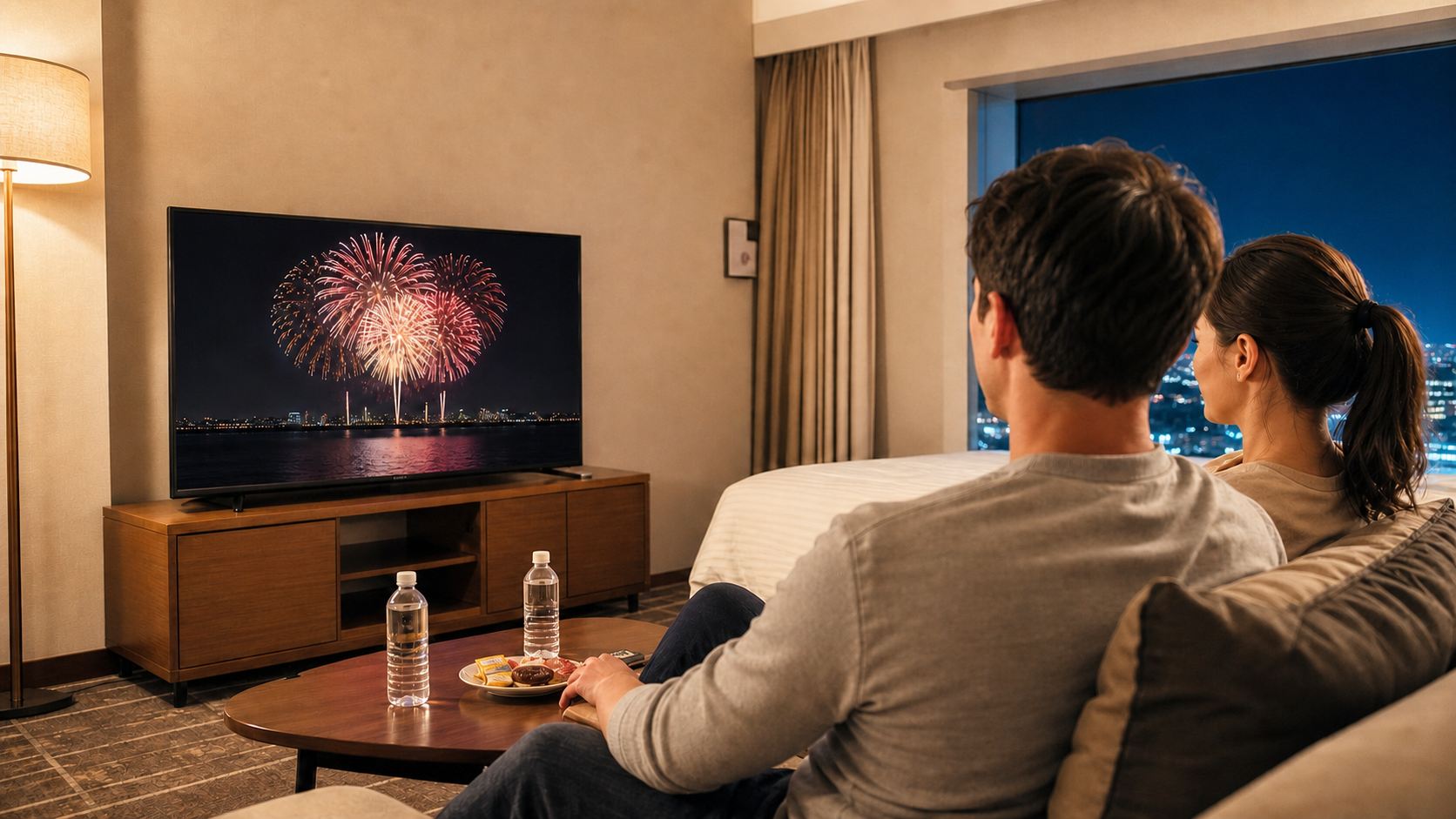
- Can I watch the fireworks online or on television?
- What to Do Next
Quick Answer
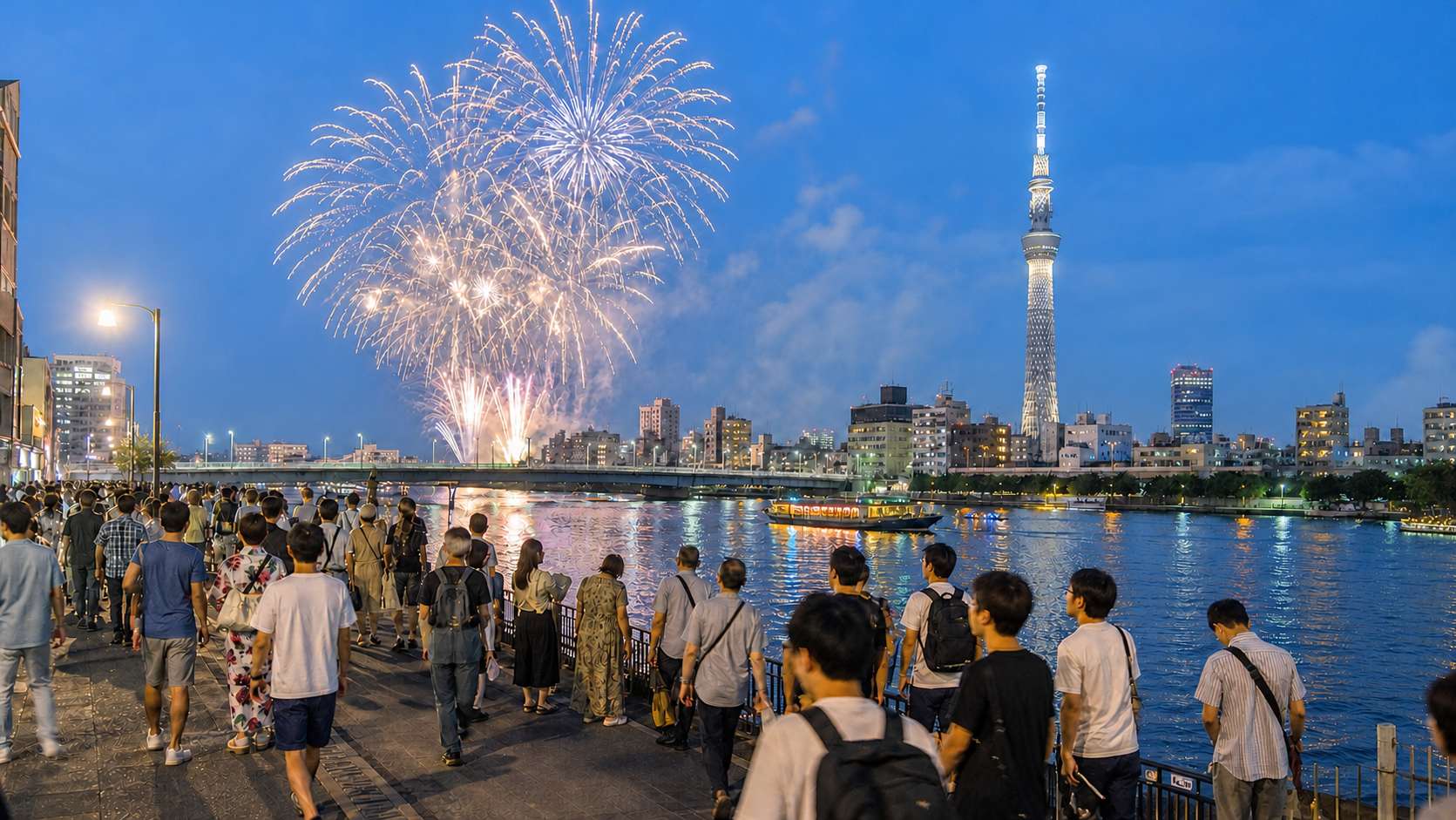
The Sumida River Fireworks Festival is scheduled for Saturday, July 25, 2026. The First Venue runs from 19:00 to 20:30, while the Second Venue starts at 19:30 and ends at 20:30. The organizer lists about 20,000 fireworks across the two launch areas. Light rain does not automatically cancel the event, but severe weather can cancel it, with no backup date. The official decision is generally made at 8:00 on the event morning.
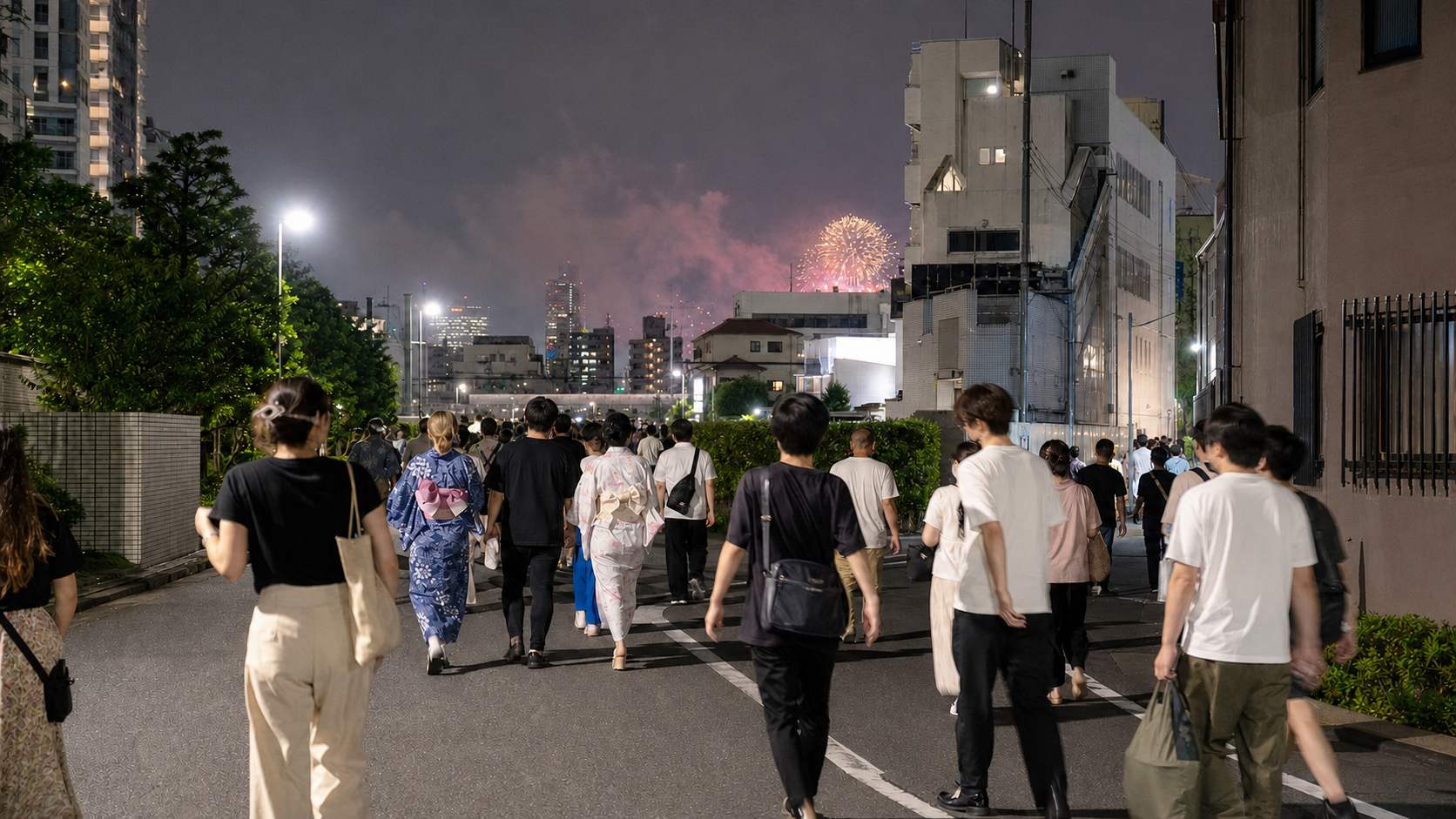
The detail that changes your entire plan is the seating rule. Official reserved supporter seats are sold out, and the organizer says there is no other designated place where visitors can sit. This is not a riverbank picnic festival. Visitors without supporter seats watch while moving across bridges and surrounding roads under one-way pedestrian controls.
Choose your side of the river and your return station before 18:00. Do not bring a chair, picnic sheet, suitcase, bicycle, or plan to hold a roadside spot. Eat, use the toilet, fill your water bottle, and charge your IC card before entering the densest area. If you dislike slow-moving crowds, watch the official TV Tokyo broadcast or use another Plan B instead of forcing your way toward Asakusa.
Official information checked on July 11, 2026:
- Sumida River Fireworks official website: https://www.sumidagawa-hanabi.com/
- Official viewing rules: https://www.sumidagawa-hanabi.com/manner/index.html
- Official FAQ: https://www.sumidagawa-hanabi.com/faq/index.html
- Taito City 2026 event page: https://www.city.taito.lg.jp/event/kanko/hanabitaikai.html
- Taito City July 2026 traffic notice: https://www.city.taito.lg.jp/kusei/sanka/koho/koho/reiwa8/080705.files/taito26_0705_2.pdf
Why Sumida River Fireworks Is Different
Sumida River Fireworks carries the tradition of the old Ryogoku river-opening fireworks, whose recorded history goes back to 1733. Today the event uses two launch areas along the Sumida River and draws an exceptionally large crowd into the Asakusa, Mukojima, Kuramae and Ryogoku sides of the river.
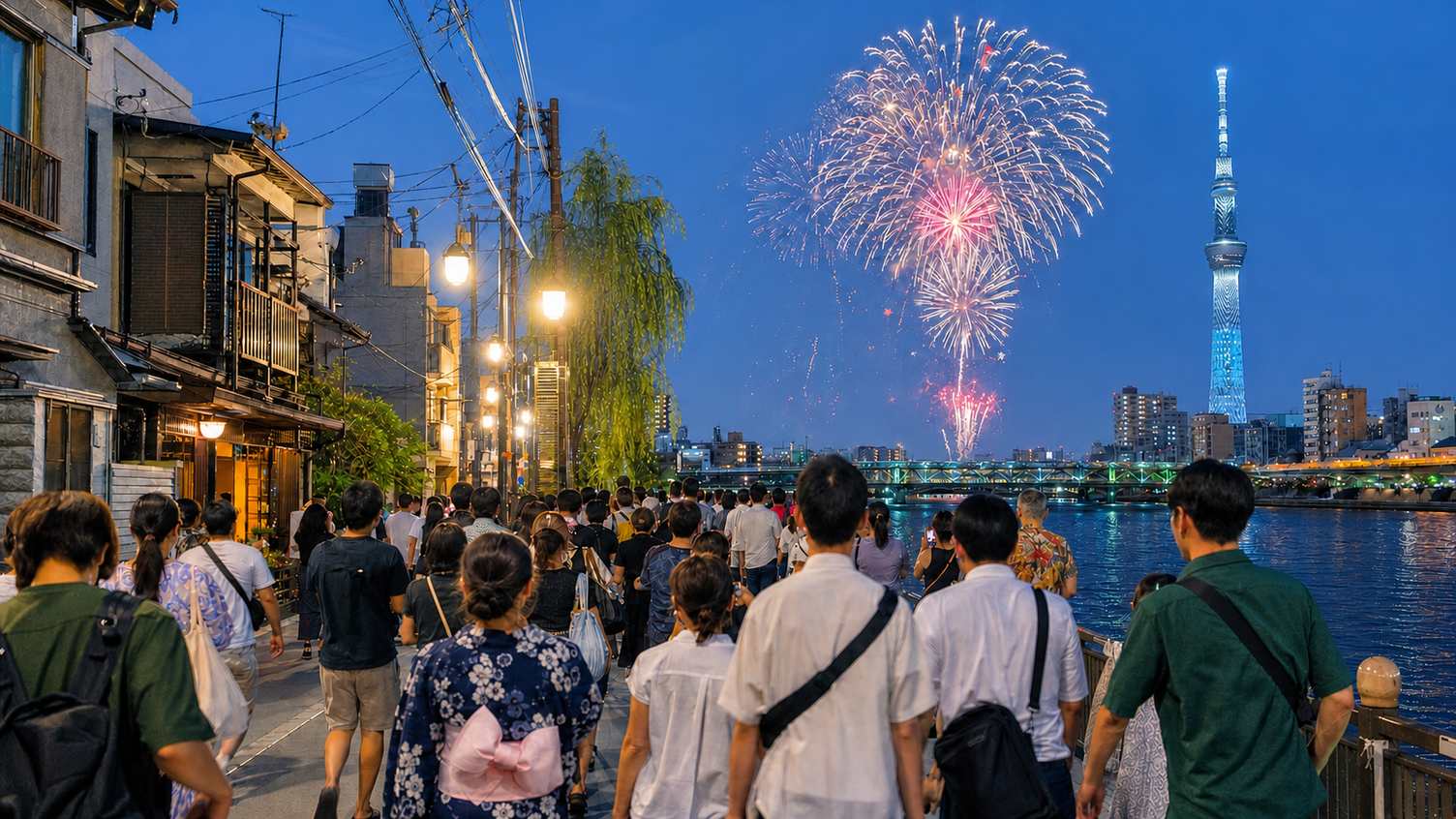
The urban setting creates the appeal and the difficulty. There is no broad open riverbank where visitors can spread a sheet and wait. The official FAQ explains that visitors view the fireworks while walking on bridges and nearby roads. The official viewing page also says pedestrians are placed under one-way controls and must follow police and staff directions.
That means a normal sightseeing mindset can fail. The nearest point on a map may be closed, a bridge may allow walking in a single permitted direction, and a park that looks ideal online may contain a restricted area. A successful night depends less on finding a secret viewpoint and more on choosing a venue side, arriving before the strongest controls, and accepting that you may see the fireworks while moving.
2026 Date, Times and Weather Rule
The confirmed 2026 schedule is:
| Item | 2026 official detail |
|---|---|
| Date | Saturday, July 25, 2026 |
| First Venue | 19:00-20:30 |
| Second Venue | 19:30-20:30 |
| Total fireworks | About 20,000 across both venues |
| Weather rule | Light rain can continue; severe weather can cancel |
| Backup date | None |
| Event decision | Generally at 8:00 on the event day |
The First Venue begins 30 minutes earlier and includes the official fireworks competition. The Second Venue has a shorter one-hour program. Both finish at 20:30, so the return crowd builds across the wider area at almost the same time.
Do not treat an old blog post as the final weather source. On July 25, check the official event website and official X account in the morning. If the festival is cancelled, the organizer does not schedule it for the following day.
First Venue or Second Venue: Which Should You Choose?
The two venues are not two ticketed stadiums. They are separate launch zones along the river, surrounded by different stations, bridges and pedestrian flows.
| Choice | First Venue | Second Venue |
|---|---|---|
| Launch area | Between downstream of Sakura Bridge and upstream of Kototoi Bridge | Between downstream of Komagata Bridge and upstream of Umaya Bridge |
| Fireworks window | 19:00-20:30 | 19:30-20:30 |
| Main feature | Longer program and fireworks competition | Later start and access from the Kuramae, Ryogoku and Asakusabashi side |
| Official station group | Asakusa, Oshiage, Tokyo Skytree and Hikifune | Asakusa, Kuramae, Ryogoku and Asakusabashi |
| Better fit | Visitors who prioritize the competition and classic northern Sumida setting | Visitors whose hotel or return route is south of Asakusa or toward Ryogoku |
Choose by transport, not by a promise of a clear view. Buildings, trees, safety fencing and crowd routing can affect what you see from street level. The official site does not promise a clear view from each road in the surrounding area.
If you are staying in Asakusa, Ueno or along the Ginza Line, either venue may look convenient, but Asakusa Station will be heavily used. If you are returning through the Toei Asakusa or Oedo lines, the Second Venue side may fit your route better. If you are staying east of the river, the First Venue station group includes Oshiage, Tokyo Skytree and Hikifune, which may reduce the need to cross the river after 18:00.
No Reserved Seat? Understand the No-Seat Rule
As of July 11, the official website says the supporter-seat sale has ended. It also says there is no place outside those supporter areas where visitors can sit to watch.
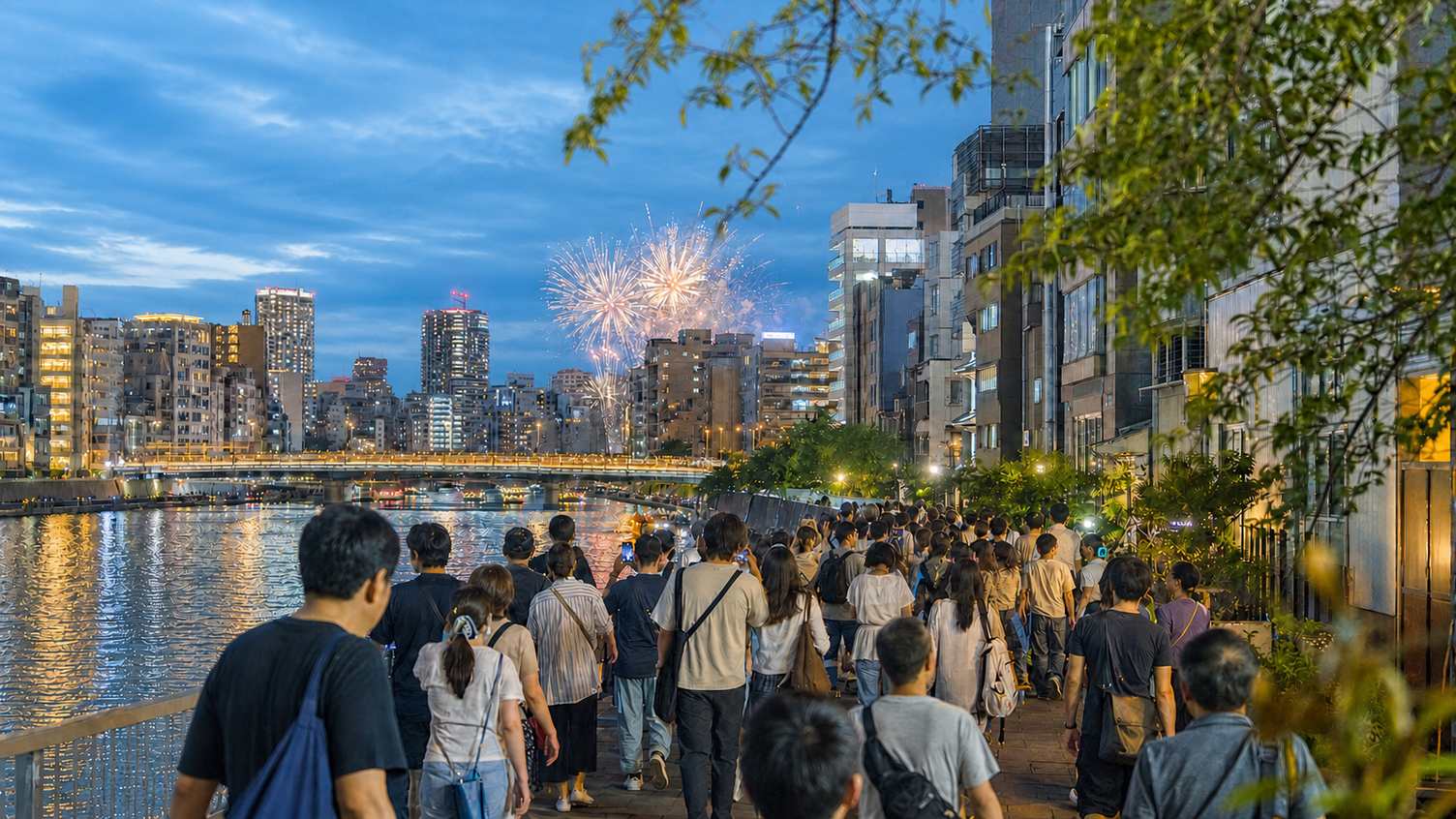
The 2026 Taito City notice is more specific: sitting on the road and placing sheets or chairs on the road are prohibited. Inside the traffic-control area, visitors can watch while walking. The organizer also prohibits advance place marking with tape, chalk or spray, and staff can remove items judged to be place-holding.
Do not plan to:
- Spread a picnic sheet on a road or park path.
- Place folding chairs in the pedestrian flow.
- Mark a location in advance.
- Enter a private apartment, rooftop or property without permission.
- Climb a safety fence or enter a fenced area.
- Stand on a roof, embankment or another unsafe place.
- Block a shop entrance while waiting for your group.
The correct expectation is a moving-view experience. You may stop briefly where staff allow, but you should be ready to keep walking. If a police officer or event worker redirects you, follow that instruction even when your map app suggests another route.
This also makes the event a difficult choice for visitors who cannot stand or walk for extended periods. A reserved accessible plan arranged in advance, a hotel viewing package, or the television broadcast may be safer than arriving without a seat and hoping the crowd will make room.
Bridge Directions After 18:00
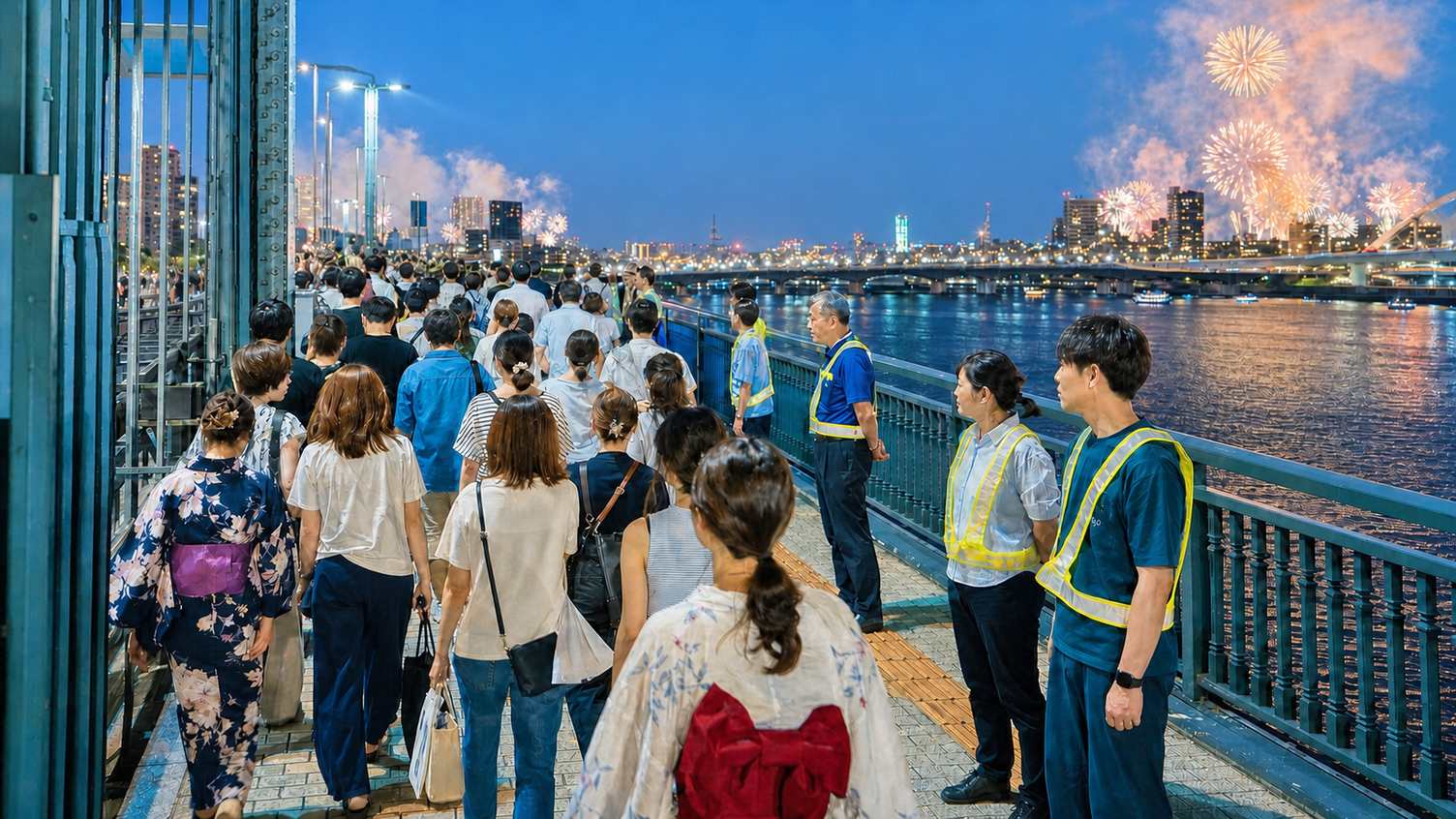
From about 18:00 to 21:30, several bridges are restricted to pedestrians traveling in one direction. The latest Taito City notice lists these directions:
| Bridge | Pedestrian direction during the main restriction |
|---|---|
| Kototoi Bridge | Sumida side to Taito side |
| Komagata Bridge | Sumida side to Taito side |
| Kuramae Bridge | Sumida side to Taito side |
| Azuma Bridge | Taito side to Sumida side |
| Umaya Bridge | Taito side to Sumida side |
Vehicle traffic is prohibited on these bridges during the 18:00-21:30 restriction. Police can change the flow for safety, so the direction on the day takes priority over this table.
This is why you should not leave the river side undecided. If your hotel is west of the river but your chosen viewing flow takes you east, you may not be able to return over the bridge you expected. Save two routes before you arrive: one that stays on your original side and one that uses a farther official station.
Road restrictions across the wider blue zone are scheduled from 18:00 to around 21:30, with some areas continuing until around 22:00. Sakura Bridge and several riverside areas have earlier or longer entry restrictions. Do not drive, use a taxi drop-off near the river, or assume a bus can follow its normal route.
Arrival-Time Decision Plan
The organizer does not publish a single recommended arrival time for everyone. Use this RJG planning table as a practical interpretation of the official closures and crowd controls:
| Arrival time | What it means |
|---|---|
| Before 15:00 | Time to eat, use the toilet and understand your river side before the strongest flow begins. This does not give you permission to reserve a place. |
| 15:00-16:30 | A workable window for choosing your walking route and moving away from the station entrance. Some park restrictions are already active. |
| 16:30-18:00 | Crowds and local restrictions build. Several parking, bicycle and bus changes begin. Cross the river before 18:00 if your plan depends on it. |
| After 18:00 | Main road and bridge controls are active. Expect one-way walking and staff-directed routes. |
| After 19:00 | Go only if you accept a moving view and a slow exit. Do not push toward a specific bridge or “secret spot.” |
Taito City separately advises people using the Sumida Park area north of Kototoi Bridge to move south of the bridge and toward Edo-dori by around 16:00 because of closures and expected crowding. Treat that as a warning against using the park as a last-minute fallback.
Train Plan: More Trains Does Not Mean Empty Stations
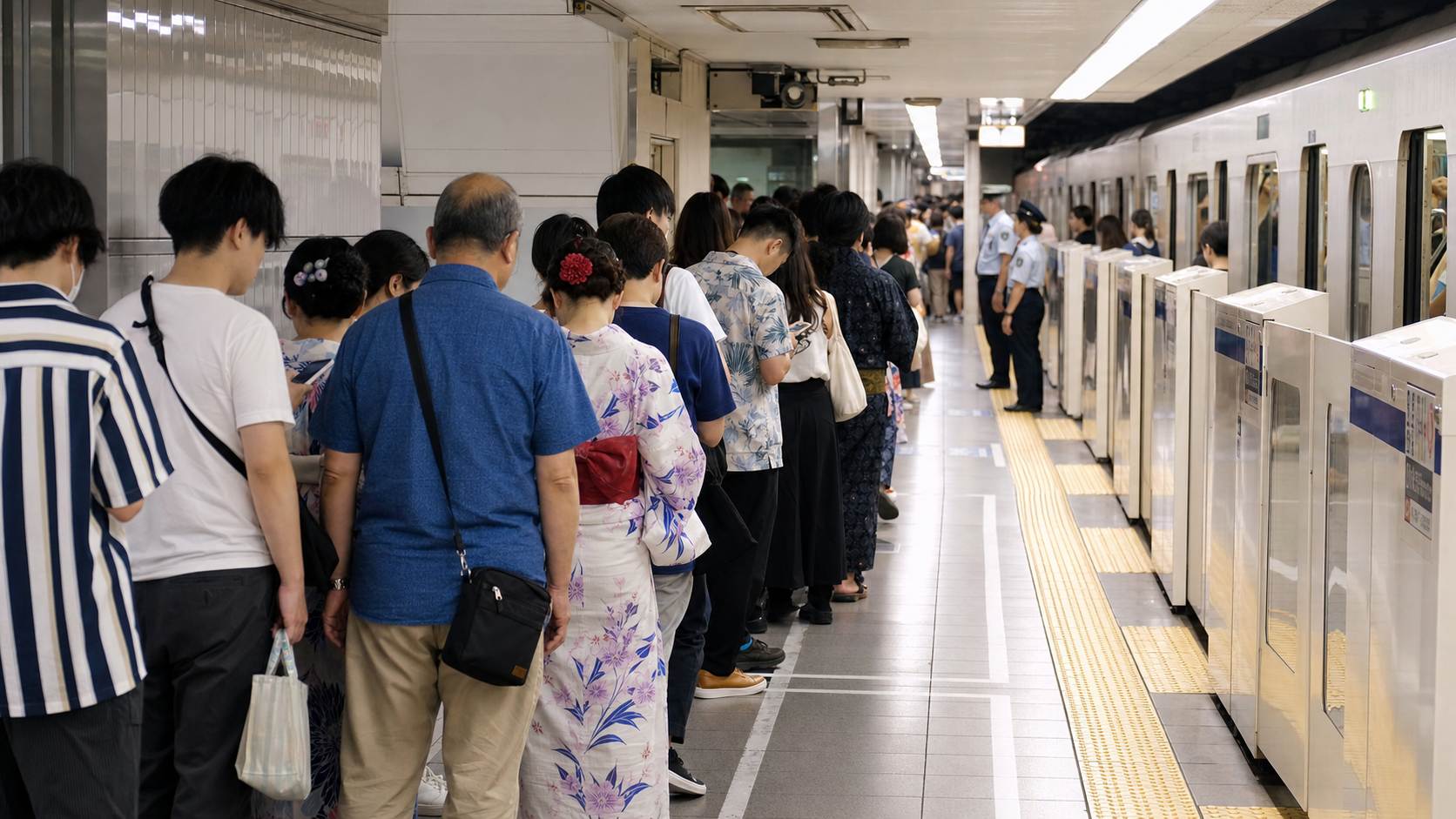
Tokyo Metro is adding 96 Ginza Line trains for the festival day. The company says Asakusa-bound trains will run at intervals of roughly two to three minutes from around 14:00 until the fireworks start, with 44 additional Asakusa-bound trains. From around 19:00 to 22:00, Shibuya-bound trains are also planned at intervals of roughly two to three minutes, with 52 additional trains.
Toei Subway is also adding service on the Asakusa Line. Its July 10 notice lists eight additional trains and seven airport-access services changed to stop at each Asakusa Line station between Sengakuji and Oshiage. The Oedo Line is scheduled to use its normal Saturday and holiday timetable.
These additions increase capacity, but they do not remove platform controls or queues. Use the station that fits your side of the river:
- First Venue: Asakusa, Oshiage, Tokyo Skytree or Hikifune.
- Second Venue: Asakusa, Kuramae, Ryogoku or Asakusabashi.
Practical train steps:
- Charge your Suica, PASMO or other IC card before entering the event area.
- Save your hotel route and a fallback station screenshot.
- Do not agree to meet “at Asakusa Station.” Choose a line, exit and time.
- If you become separated, meet outside the densest river zone.
- After the show, follow station-entry controls instead of changing lines repeatedly inside the crowd.
For general train use, see Tokyo Trains 2026. If you are worried about missing your final connection, keep Tokyo Last Train & Taxi Plan 2026 open before the event.
Food, Toilets, Heat and What to Bring
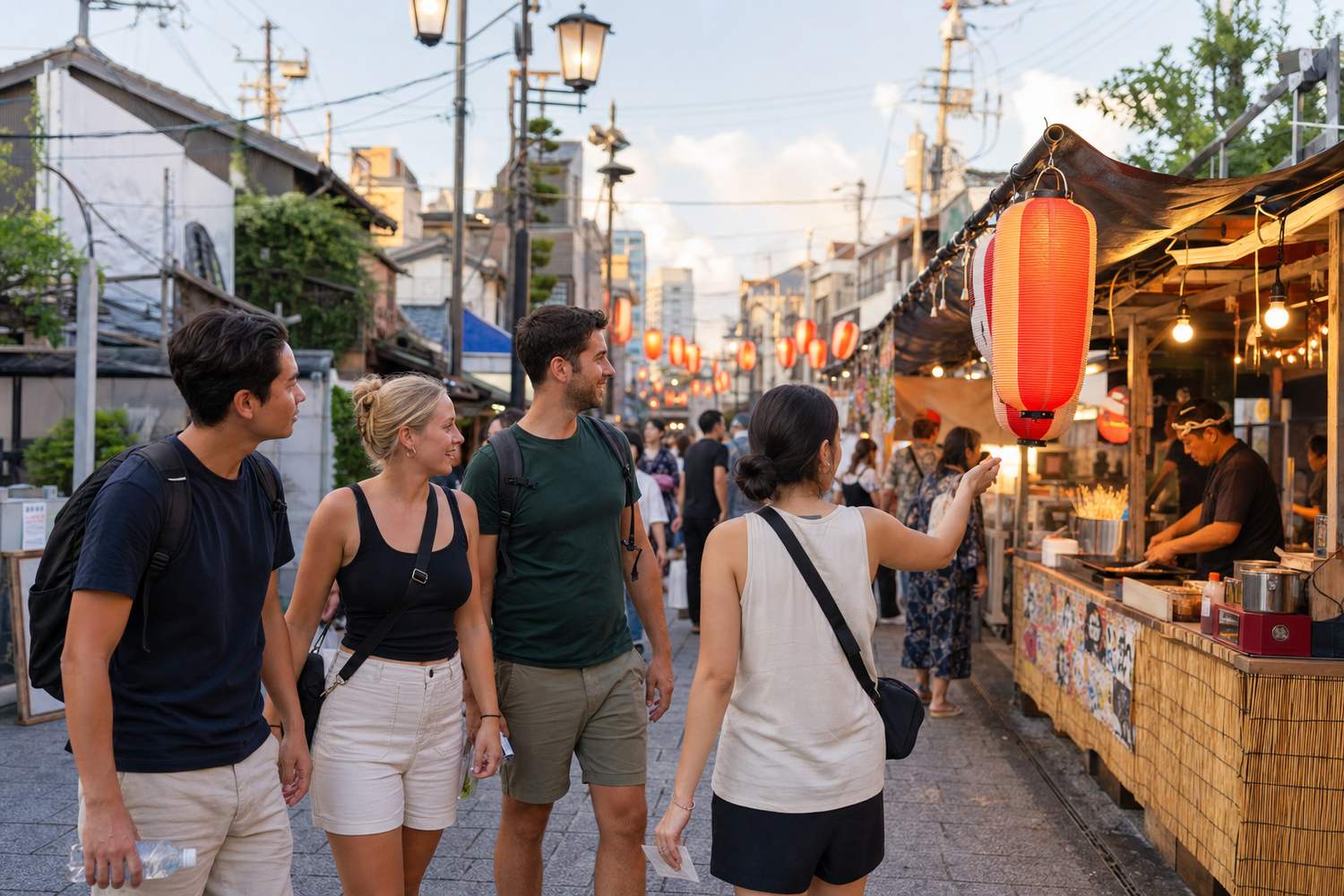
Do not rely on a row of organizer-approved street stalls near the viewing route. The official viewing rules say selling food, drinks or goods on nearby public roads and inside parks is not permitted by the organizer. Existing shops and restaurants may operate, but queues and stock can change.
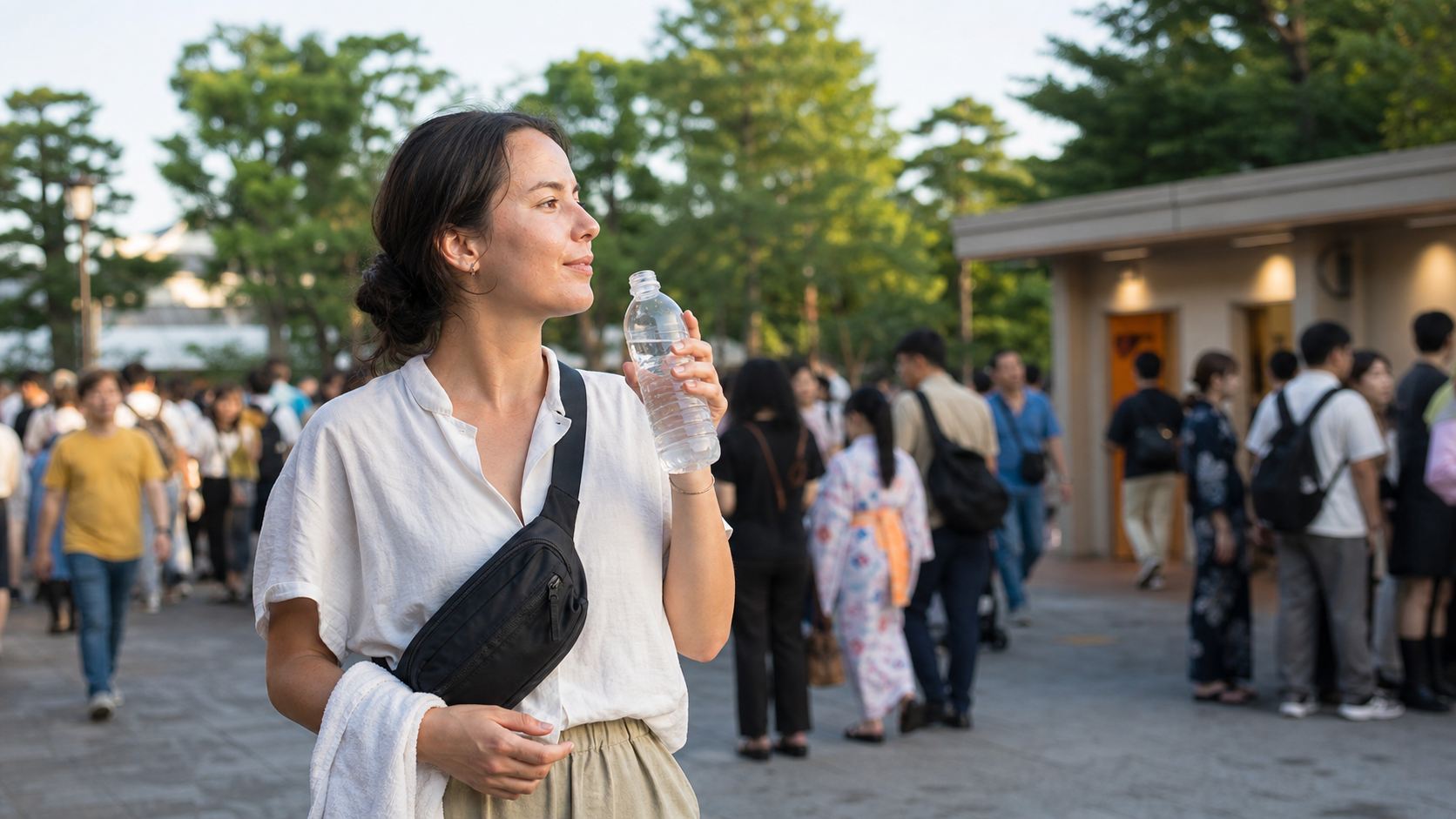
Eat before entering the densest zone. Buy water early. Use a station or public toilet before joining the river flow. The official site warns that public and temporary toilets become extremely crowded.
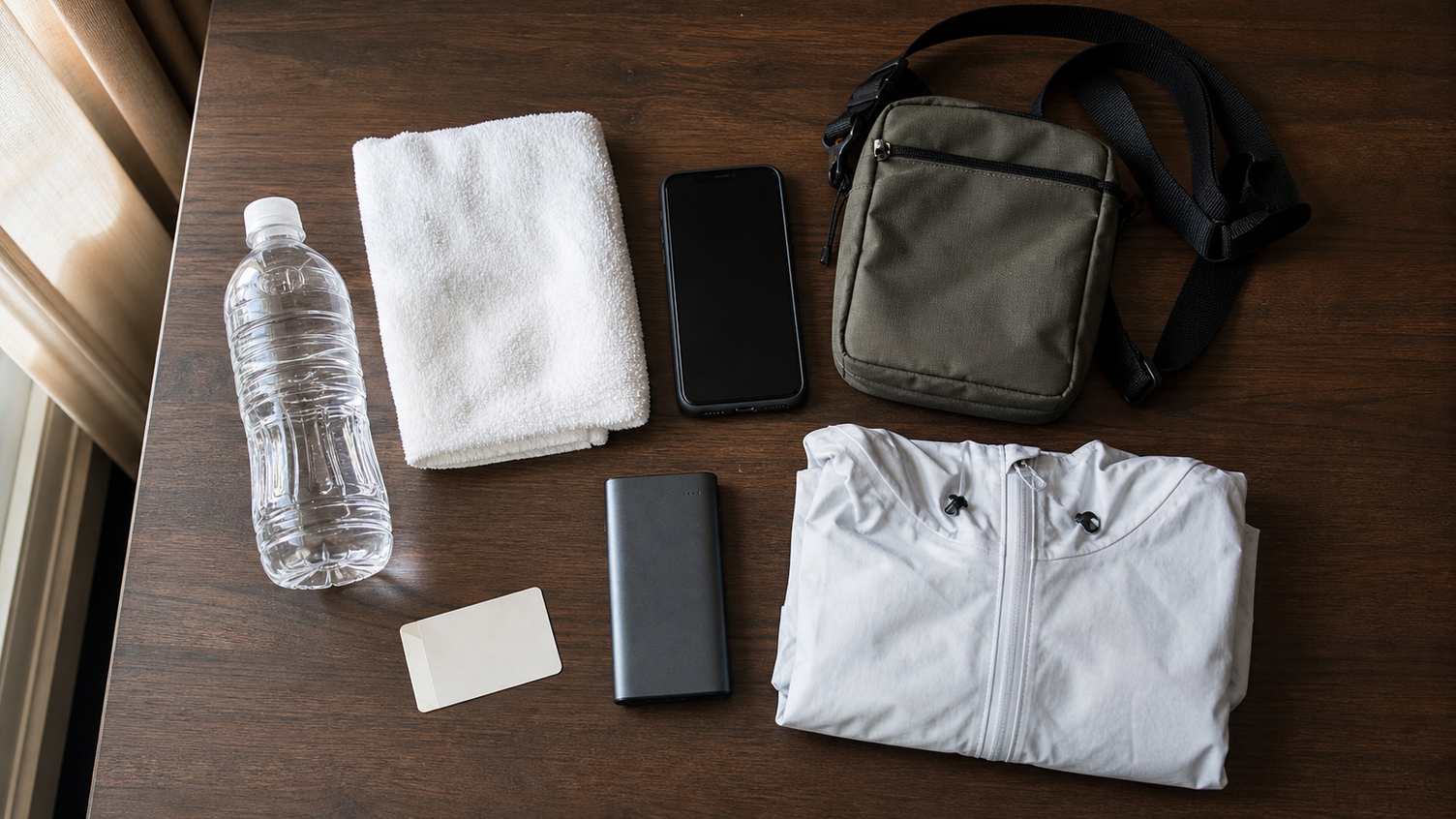
Bring:
- A small crossbody bag or compact backpack.
- Water or another non-alcoholic drink.
- A small towel.
- A charged phone and battery pack.
- A charged transit IC card.
- A lightweight raincoat.
- A plastic bag for your trash and wet items.
- Glasses or another simple eye-protection option if ash concerns you.
Avoid:
- Suitcases and large shopping bags.
- Folding chairs and picnic sheets.
- Drones.
- Selfie sticks in dense crowds.
- Smoking outside designated areas.
- Open shoes that are difficult to walk in for a long time.
The organizer warns that firework debris can fall near the launch area and recommends protection such as a towel or glasses. It also asks visitors to watch for heat illness, drink water, replace salt and rest appropriately. If you feel unwell, ask a guard or staff member for the nearest first-aid point.
For broader hot-weather planning, use Japan Heat Survival Guide 2026 and Stay Cool in Japan.
How to Leave Without Fighting the First Wave
Both venues finish at 20:30. The official site warns that the area becomes extremely crowded after the fireworks and suggests shifting your return time.
Choose one of three strategies before the show:
Leave before the finale
This reduces your viewing time but may help if you have a firm last-train connection, airport transfer or childcare deadline. Do not leave your decision until 20:29.
Wait away from the immediate river flow
If you can stay later, follow staff directions when moving and wait for the first wave to pass. Do not sit on roads, apartment steps or private property. A restaurant reservation well after the show can work if the restaurant is outside the restricted flow and confirms it will be open.
Use a farther station on your side
Do not automatically return to Asakusa. Depending on your venue side and staff directions, Oshiage, Tokyo Skytree, Hikifune, Kuramae, Ryogoku or Asakusabashi may fit your route. A farther walk should not be assumed to be faster, but it can avoid crossing the river against a one-way bridge flow.
Expect buses and taxis near the river to be unreliable during road controls. Taito community bus stops and several Toei bus routes are suspended, shortened or divided for parts of the evening. Rail and walking should be your default plan.
Rain and Cancellation Plan
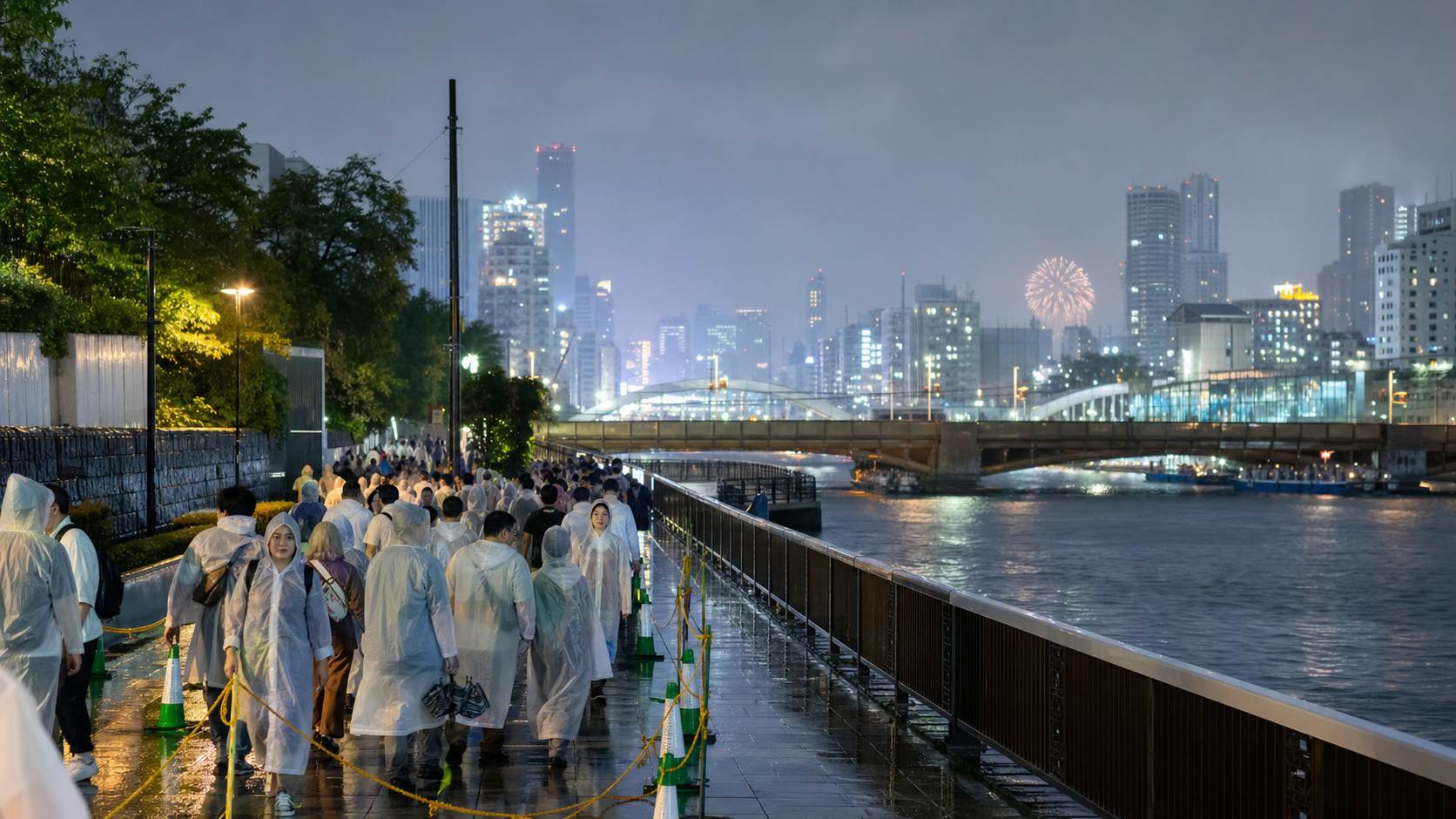
The official FAQ says the festival can continue in light rain. Severe weather such as a typhoon can cancel it, and there is no postponement date. The official implementation outline says the event decision is generally made at 8:00 on July 25.
Use this sequence:
- Check the official website at breakfast.
- Check the official event status again after 8:00.
- If the event proceeds, bring a raincoat instead of relying on a large umbrella in the crowd.
- Check train notices because severe weather can affect both the event and your return route.
- If cancelled, do not travel to Asakusa merely to verify it in person.
For a broader weather decision flow, see Japan Rain & Typhoon Plan 2026.
Plan B: Watch Without Entering the Crowd
TV Tokyo has announced a live broadcast from 18:30 to 20:55 on July 25, 2026. The broadcaster also lists real-time streaming on TVer and a separate online stream planned from 18:50. Availability can vary by service and region, so open the broadcaster’s current page before relying on it.
This is the strongest Plan B for:
- Families with young children.
- Travelers with limited mobility.
- Anyone arriving after 19:00.
- Visitors carrying luggage.
- People who do not want to stand and walk for much of the event.
- Anyone whose return depends on a tight train or flight schedule.
Watching from your accommodation is not the same as seeing fireworks over the Sumida River. It is still better than becoming trapped in a one-way crowd with no place to sit.
If you want another in-person festival, compare dates in Japan Summer Fireworks 2026 and prepare with Japan Festival Survival Guide 2026.
30-Second Checklist
Before leaving your accommodation:
- Confirm the event status on the official website.
- Choose First Venue or Second Venue.
- Choose the river side you will stay on after 18:00.
- Save two return stations.
- Charge your IC card and phone.
- Eat and use the toilet early.
- Carry water, a towel and a raincoat.
- Leave chairs, sheets, drones and luggage behind.
- Accept that you may watch while walking.
- Use the television broadcast if the crowd plan no longer feels safe.
FAQ
When is the Sumida River Fireworks Festival in 2026?
It is scheduled for Saturday, July 25, 2026. The First Venue runs from 19:00 to 20:30, and the Second Venue runs from 19:30 to 20:30.
Is there a backup date if the festival is cancelled?
No. The official FAQ says light rain may continue, but severe weather can cancel the festival and there is no postponement date.
Can I sit somewhere without a supporter-seat ticket?
Do not plan on it. The official site says supporter seats are sold out and there is no other designated place to sit. Sitting on roads or placing chairs and sheets on roads is prohibited.
Can I reserve a place in advance?
No. The organizer prohibits place marking and advance place-holding on roads and in parks. Items judged to be reserving space can be removed.
Which venue is better for tourists?
Choose by transport. The First Venue starts earlier and includes the fireworks competition. The Second Venue may suit visitors returning through Kuramae, Ryogoku or Asakusabashi. Neither venue guarantees an unobstructed street-level view.
Which stations serve the First Venue?
The official venue page lists Asakusa, Oshiage, Tokyo Skytree and Hikifune for the First Venue.
Which stations serve the Second Venue?
The official venue page lists Asakusa, Kuramae, Ryogoku and Asakusabashi for the Second Venue.
Do the bridges stay open normally?
No. Several bridges are restricted to one-way pedestrian traffic from around 18:00 to 21:30. Follow police and staff because the flow can change for safety.
Are extra trains running?
Yes. Tokyo Metro announced 96 additional Ginza Line trains, and Toei Subway announced additional Asakusa Line services. Stations can still use crowd controls and entry queues.
Can I watch the fireworks online or on television?
TV Tokyo has announced a live broadcast from 18:30 to 20:55, with real-time streaming on TVer and a separate online stream also planned. Check the broadcaster’s current page for availability.
What to Do Next
Open the official road-restriction map and decide which river side matches your hotel. If you are going to the First Venue, compare Asakusa with Oshiage, Tokyo Skytree and Hikifune. If you are going to the Second Venue, compare Asakusa with Kuramae, Ryogoku and Asakusabashi.
Then make a hard decision about the no-seat format. If standing, walking and one-way crowd movement sound manageable, arrive early with a light bag and a clear exit plan. If they do not, use the official broadcast as Plan B and keep the evening enjoyable.
The goal is not to win a secret viewpoint. It is to see one of Tokyo’s most famous fireworks events without losing control of your route home.
Comments