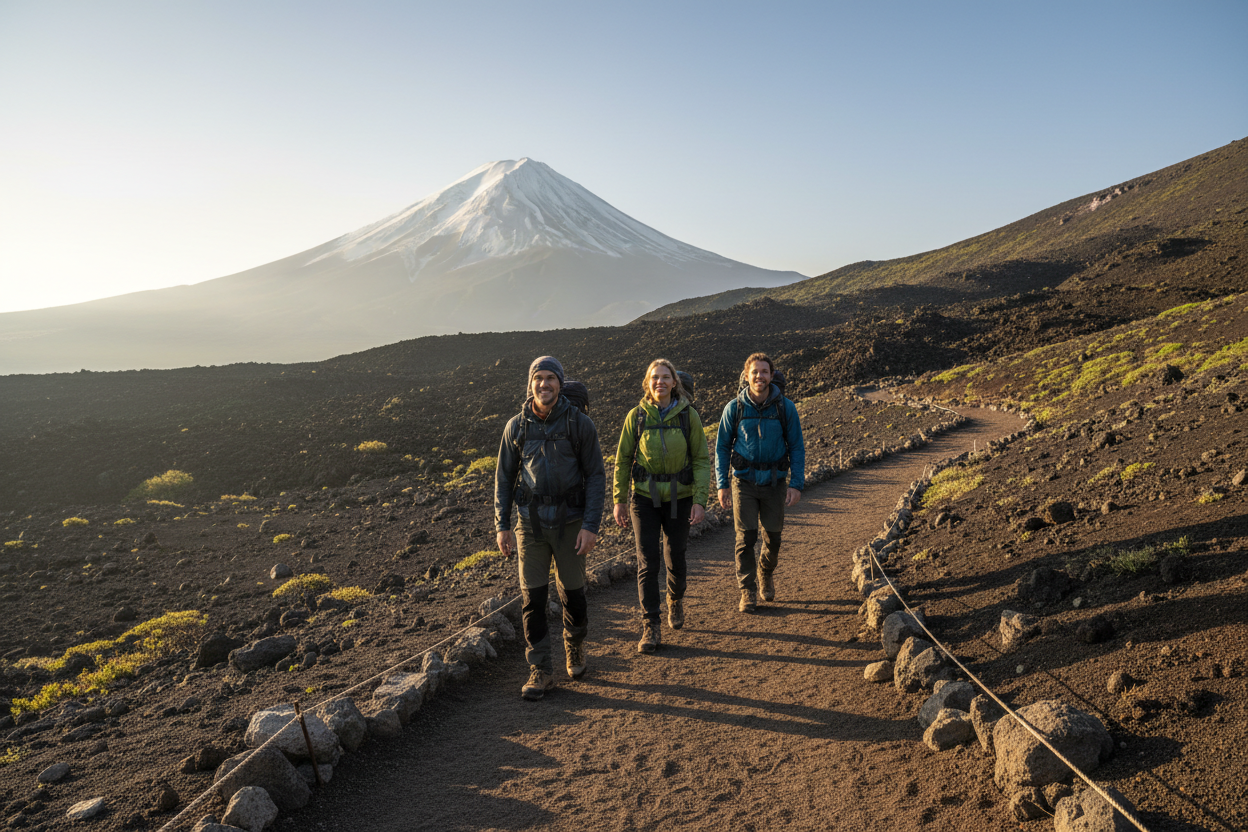
Climbing Mount Fuji in 2026 requires more than choosing a day with a clear forecast. You must select one of four trailheads, complete the correct entry procedure, pay the ¥4,000 Hiking Fee, carry proper mountain equipment and—if your plan enters during restricted night hours—hold a mountain-hut reservation.
These are separate decisions. Paying the Hiking Fee does not book a hut. Registering an entry date does not reserve a bus. A mountain-hut bed does not guarantee that weather, altitude or your condition will permit a summit attempt.
This guide turns the official rules into one planning sequence, then gives you a Plan B that still makes the trip worthwhile when the summit is the wrong decision.
- Quick Answer
- The Three Things You Must Not Confuse
- 2026 Season and Entry Rules
- Choose One of the Four Trails
- Day Climb or Mountain Hut?
- Equipment and Weather: The Go/No-Go Check
- Access, Last Buses and the Descent Clock
- Rules That Protect the Mountain and Other Climbers
- Plan B: When the Summit Is the Wrong Plan
- Night-Before Checklist
- Last Checked and Official Sources
- Frequently Asked Questions
- Do I need a reservation to climb Mount Fuji in 2026?
- Is the ¥4,000 Hiking Fee the same as a mountain-hut payment?
- Can I climb Mount Fuji without staying in a mountain hut?
- Can I start climbing Mount Fuji after 2 PM?
- Which Mount Fuji trail is best for a first-time climber?
- Can I climb Mount Fuji outside the official season?
- What should I do if the weather is bad?
- Can I visit the 5th Station without climbing to the summit?
Quick Answer
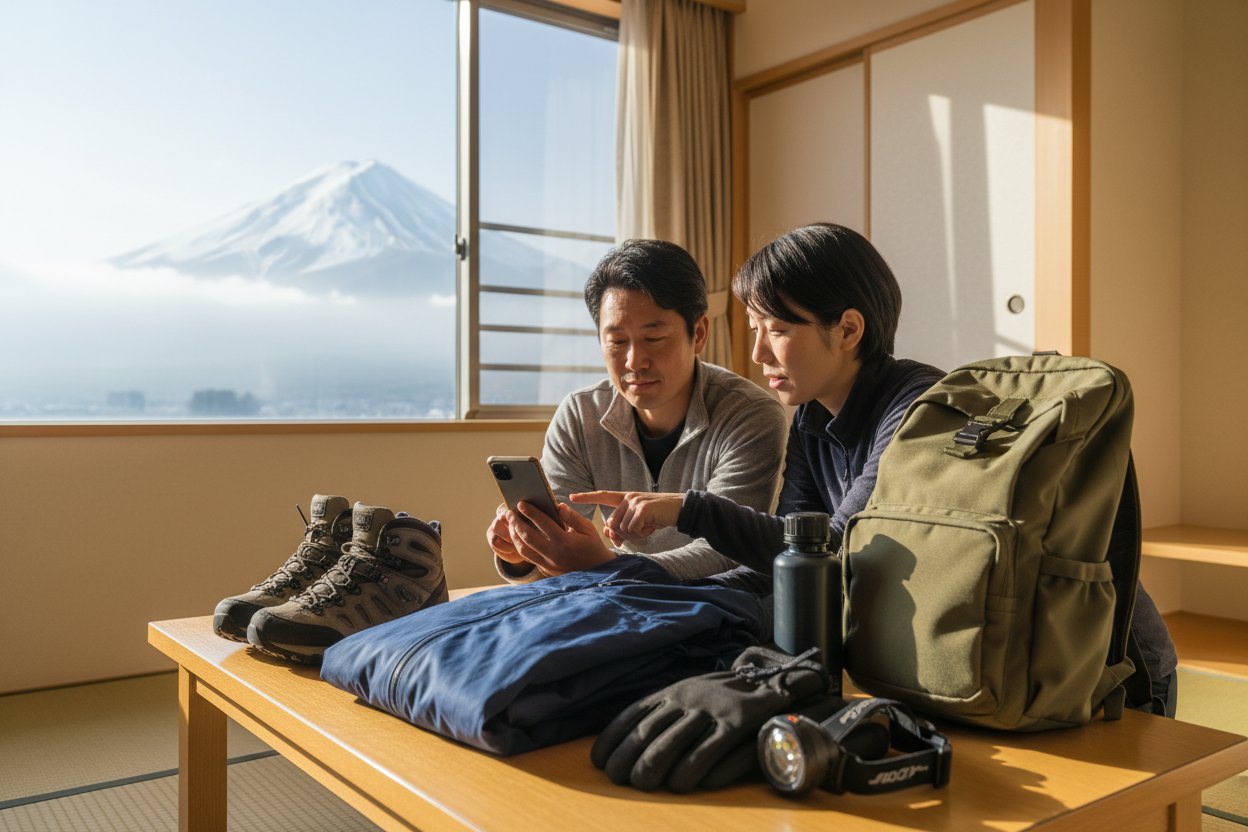
- 2026 climbing season: Yoshida and Subashiri are scheduled to open July 1. Fujinomiya and Gotemba are scheduled to open July 10. The scheduled closing date for the four routes is September 10, but snow, weather or trail conditions can delay an opening or cause a temporary closure.
- Hiking Fee: ¥4,000 per person, per entry, for each of the four routes. This is separate from transport and mountain-hut accommodation.
- Restricted entry hours: 14:00 to 03:00 the following day. Mountain-hut guests are the exception, subject to their hut’s check-in time and the route’s verification procedure.
- Yoshida daily cap: 4,000 climbers per day, excluding mountain-hut guests. Its gate can close when the cap is reached.
- Shizuoka routes: Fujinomiya, Gotemba and Subashiri use e-learning, registration and a paid entry permit. Shizuoka states that it has no daily climber cap.
- Mountain-hut booking: separate from the entry registration. The Shizuoka FUJI NAVI app does not reserve huts.
- Essential gear: official guidance lists hiking boots, separate jacket-and-pants rainwear, cold-weather clothing, a headlamp and spare battery, water, food, cash, a map and a way to carry your rubbish out.
- First decision: choose the trail and date before paying, because access, opening date, walking time, hut availability and entry procedure depend on that choice.
Last checked: July 24, 2026. Open the Official Website for Mt. Fuji Climbing before paying, again the day before travel and once more before leaving for the trailhead.
The Three Things You Must Not Confuse
Many failed plans begin with one confirmation screen being mistaken for the whole booking.
1. Mountain entry registration and Hiking Fee
This is the route-side procedure that records your intended trail and entry date and collects the ¥4,000 fee. The exact interface differs between the Yoshida Trail in Yamanashi and the three Shizuoka trails.
2. Mountain-hut reservation
This is a separate booking made with a hut. It pays for your accommodation under that hut’s terms. If your route plan enters between 14:00 and 03:00, the official restrictions require a valid mountain-hut stay. Each hut also has its own check-in deadline; “I have a bed tonight” does not make a late arrival acceptable.
3. Transport to and from the 5th Station
Buses, parking and private-car restrictions have their own capacity and schedules. The Shizuoka notice specifically warns climbers to watch the last buses down and notes that nighttime taxi availability is limited. Build the return journey before deciding your turnaround time.
Your booking checklist should therefore show three separate confirmations:
- entry registration and Hiking Fee;
- mountain hut, if used;
- outbound and return transport.
If one line is missing, the trip is not fully planned.
2026 Season and Entry Rules
The official 2026 opening schedule is not identical across the mountain.
| Trail | Prefecture | Scheduled 2026 opening | Scheduled closing | Entry system |
|---|---|---|---|---|
| Yoshida | Yamanashi | July 1 | September 10 | Yoshida registration/fee system; 4,000-person daily cap excluding hut guests |
| Subashiri | Shizuoka | July 1 at 09:00 | September 10 at 17:00 | Shizuoka FUJI NAVI permit or applicable on-site procedure |
| Fujinomiya | Shizuoka | July 10 at 09:00 | September 10 at 17:00 | Shizuoka FUJI NAVI permit or applicable on-site procedure |
| Gotemba | Shizuoka | July 10 at 09:00 | September 10 at 17:00 | Shizuoka FUJI NAVI permit or applicable on-site procedure |
The published dates are not a weather guarantee. Check the live trail status if you plan for opening week, after heavy rain, or near the end of the season.
Yoshida Trail procedure
For 2026, Yamanashi lists a ¥4,000 fee, gate closure from 14:00 to 03:00 and a daily maximum of 4,000 climbers, excluding mountain-hut guests. Advance booking is recommended; official guidance also states that a procedure can be completed on the day, subject to the live gate and capacity situation.
At the 5th Station, staff check for winter clothing, separate top-and-bottom rainwear and footwear appropriate for climbing. Arriving without the required equipment can stop the climb before it starts.
Shizuoka Trail procedure
Fujinomiya, Gotemba and Subashiri require:
- e-learning about Mt. Fuji’s rules and manners;
- climbing-date and route registration;
- payment of the ¥4,000 Hiking Fee;
- an entry permit presented at the trailhead.
The official route is the Shizuoka FUJI NAVI app. It produces a QR entry permit after the procedure. The app does not reserve a mountain hut.
Shizuoka says people without smartphones can complete the procedure at the 5th Station, but the on-site process includes learning, paperwork and payment and takes approximately 30 minutes before any peak-season queue. Treat that as an accessibility fallback, not a reason to postpone preparation.
Shizuoka permits changes or cancellation through its system under stated deadlines, but those rules are route- and status-specific. Do not assume the Yoshida refund rule is the same. Read the current conditions on the page used for your payment before confirming it.
Choose One of the Four Trails
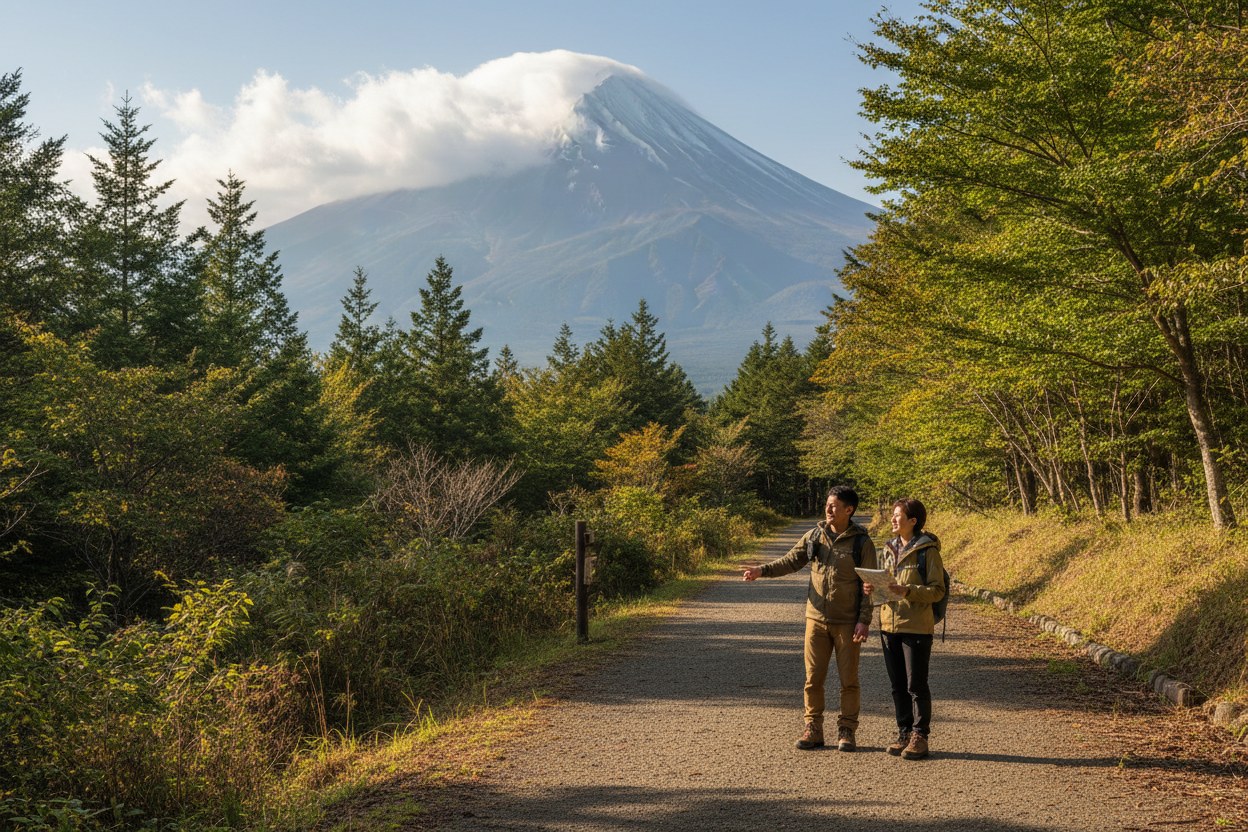
The four routes begin at different elevations and use different access points. The official times below exclude rests and are approximate; they are comparison figures, not a personal schedule.
| Trail | Trailhead elevation | Ascent | Descent | Decision point |
|---|---|---|---|---|
| Yoshida | 2,305 m | 6.8 km / about 6 hr | 7.0 km / about 4 hr | Separate descent trail; daily cap; route can become crowded |
| Fujinomiya | 2,400 m | 4.3 km / about 5 hr | 4.3 km / about 3 hr | Shortest distance, but steep; ascent and descent share the same path |
| Gotemba | 1,440 m | 10.5 km / about 9 hr | 8.4 km / about 4 hr | Longest route; fewer huts; major elevation gain |
| Subashiri | 2,000 m | 6.9 km / about 7 hr | 6.2 km / about 4 hr | Forest lower down; joins Yoshida near the upper mountain |
Yoshida: more structure does not remove the mountain
Yoshida starts from the Fuji Subaru Line 5th Station and uses separate ascent and descent routes for much of the climb. Its facilities and popularity can make it feel like the default international route, but the official 5th Station estimate is still roughly ten hours of walking before breaks for an ascent and descent.
The Fuji Subaru Line is closed to private vehicles from July 4 to September 10 in 2026. If driving, plan the designated parking and shuttle transfer rather than routing directly to the 5th Station.
Fujinomiya: shortest is not the same as easiest
Fujinomiya starts at the highest trailhead and has the shortest published distance. The official route guide also describes it as steep and rocky, with the same narrow path used in both directions. A shorter map line does not reduce altitude exposure, the need for breaks or the strain of a steep descent.
Gotemba: a long, lightly supported commitment
Gotemba starts far lower than the other three and has the longest published ascent. The official guide describes fewer mountain huts and a long volcanic-gravel descent. Choose it after matching the route length, water and food plan, hut spacing, transport and personal experience—not because a quieter-looking route appears easier.
Subashiri: remember the upper-route merge
Subashiri begins in a forest zone, then moves onto volcanic terrain and joins Yoshida around the upper 8th Station. On descent, a junction separates the routes again. Learn the route color and check signs deliberately; following the people ahead is not navigation.
There is no universal “best beginner trail.” Choose the trail that matches your access, available time, hut, equipment, experience and ability to turn back.
Day Climb or Mountain Hut?
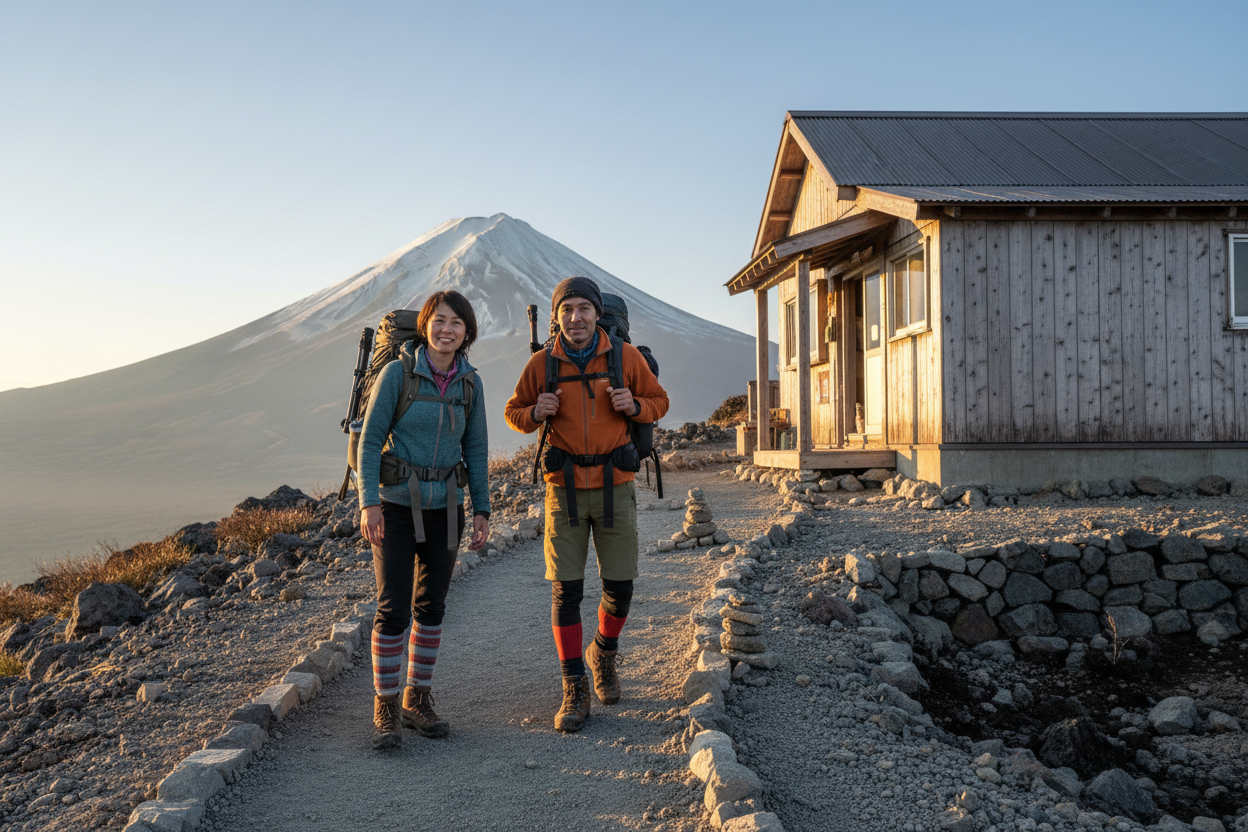
A mountain hut is not a hotel and a no-hut itinerary is not automatically a shortcut.
If you use a mountain hut
- Book the hut directly; entry registration does not hold a bed.
- Confirm the hut’s location, check-in deadline, meal option, payment method and cancellation rule.
- Leave enough time to reach it before check-in without rushing.
- Do not plan to arrive during restricted hours merely because hut guests can pass the entry rule.
- Expect shared, simple mountain accommodation rather than private hotel space.
If you do not use a mountain hut
You must enter outside the 14:00–03:00 restricted period and comply with the route’s gate, capacity and permit rules. Then test the entire day:
- trailhead arrival time;
- official walking estimate plus breaks and slower high-altitude movement;
- turnaround point;
- descent before darkness or with a headlamp if delays occur;
- last bus or other confirmed return transport.
“The gate will let me enter” is not the same as “I have enough time to summit and descend.” If your pace, weather or physical condition consumes the buffer, turn back.
Avoid an overnight push without sleep, commonly called bullet climbing. It compresses rest, altitude adjustment and decision time into the part of the climb when cold, darkness and fatigue can compound one another.
Equipment and Weather: The Go/No-Go Check
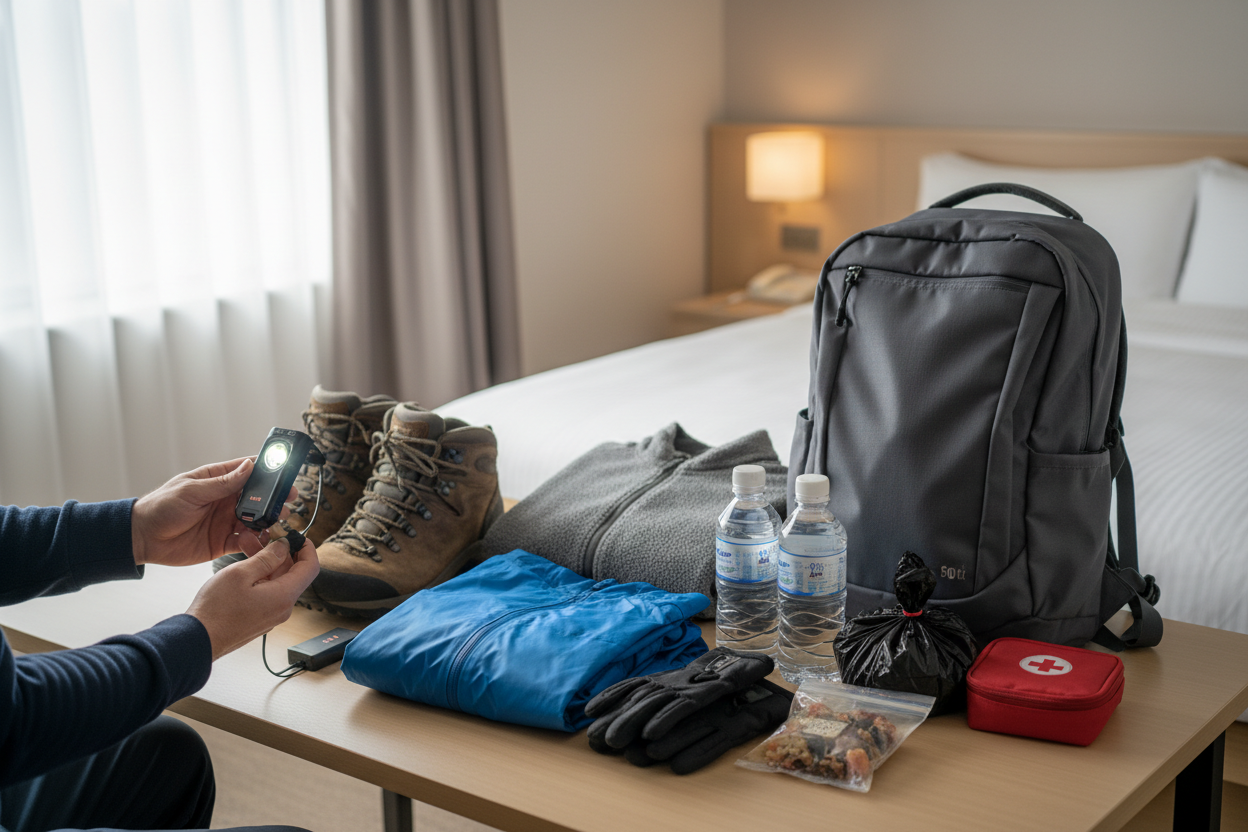
Mount Fuji is 3,776 metres high. The official guide warns that summit temperatures can approach 0°C before sunrise even in summer and that wind, rain and thunderstorms can change conditions quickly.
The official essential list includes:
- stiff-soled hiking boots;
- rain jacket and rain pants—not an umbrella as the primary protection;
- fleece or down layer, gloves and other cold-weather clothing;
- headlamp and spare battery;
- hands-free hiking backpack;
- drinking water and high-calorie food;
- cash, including coins for toilets;
- hat, sunglasses and sunscreen;
- map, climbing plan and basic first-aid supplies;
- a bag for carrying your rubbish back down.
Check the condition of your boots, especially the soles, before leaving home. Test the headlamp rather than trusting that an old battery still works. Keep rainwear and warm layers accessible instead of buried under the whole pack.
Stop before the mountain makes the decision for you
Cancel or turn back when the live trail is closed, officials direct you to stop, required equipment is missing, thunder or severe weather threatens, your condition is deteriorating, or the remaining time no longer protects the descent and transport plan.
Altitude symptoms can worsen even when the summit looks close. This article cannot assess your medical fitness. If you have a health condition, seek appropriate professional advice before the climb; on the mountain, follow official and emergency instructions.
Japan’s lowland summer can also drain energy before the climb begins. Use the Japan Heat Survival Guide 2026 for the travel days around Mt. Fuji, while remembering that the summit requires cold- and wind-ready equipment.
Access, Last Buses and the Descent Clock
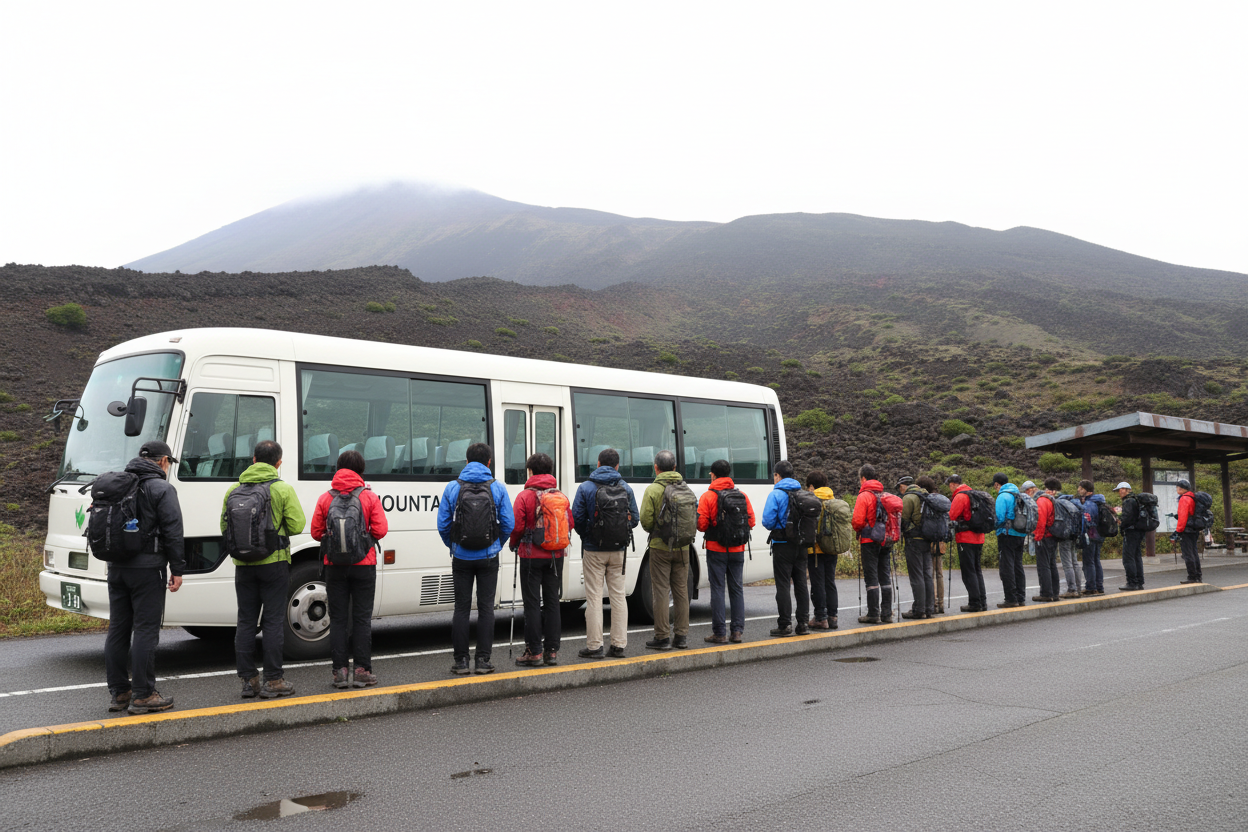
Do not book “Mount Fuji” transport before choosing the trail. The four 5th Stations are not interchangeable.
- Yoshida: Fuji Subaru Line 5th Station, commonly reached from the Fuji Five Lakes side. Private-car restrictions apply during most of the 2026 season.
- Fujinomiya: Fujinomiya Trail 5th Station, with bus approaches listed from stations including Mishima, Shin-Fuji, Fuji and Fujinomiya. Private-car restrictions require a parking-and-shuttle transfer during the controlled period.
- Gotemba: Gotemba Trail New 5th Station, with a climbing bus from Gotemba Station. The official trail page says this route does not use the same summer private-car restriction.
- Subashiri: Subashiri Trail 5th Station, with bus approaches listed from Gotemba and Shin-Matsuda. Private cars transfer to the designated shuttle system during the controlled period.
Use the official trail page to reach the current operator timetable. Search results and old travel blogs can retain a bus that no longer matches your date.
Set two alarms in the itinerary:
- turnaround time, based on the slower descent and weather buffer;
- leave-the-5th-Station time, based on the last confirmed transport.
Do not solve a late descent by assuming a taxi will be waiting. For general rail, bus and IC-card decisions before reaching the mountain region, see Japan Transport 2026.
Rules That Protect the Mountain and Other Climbers
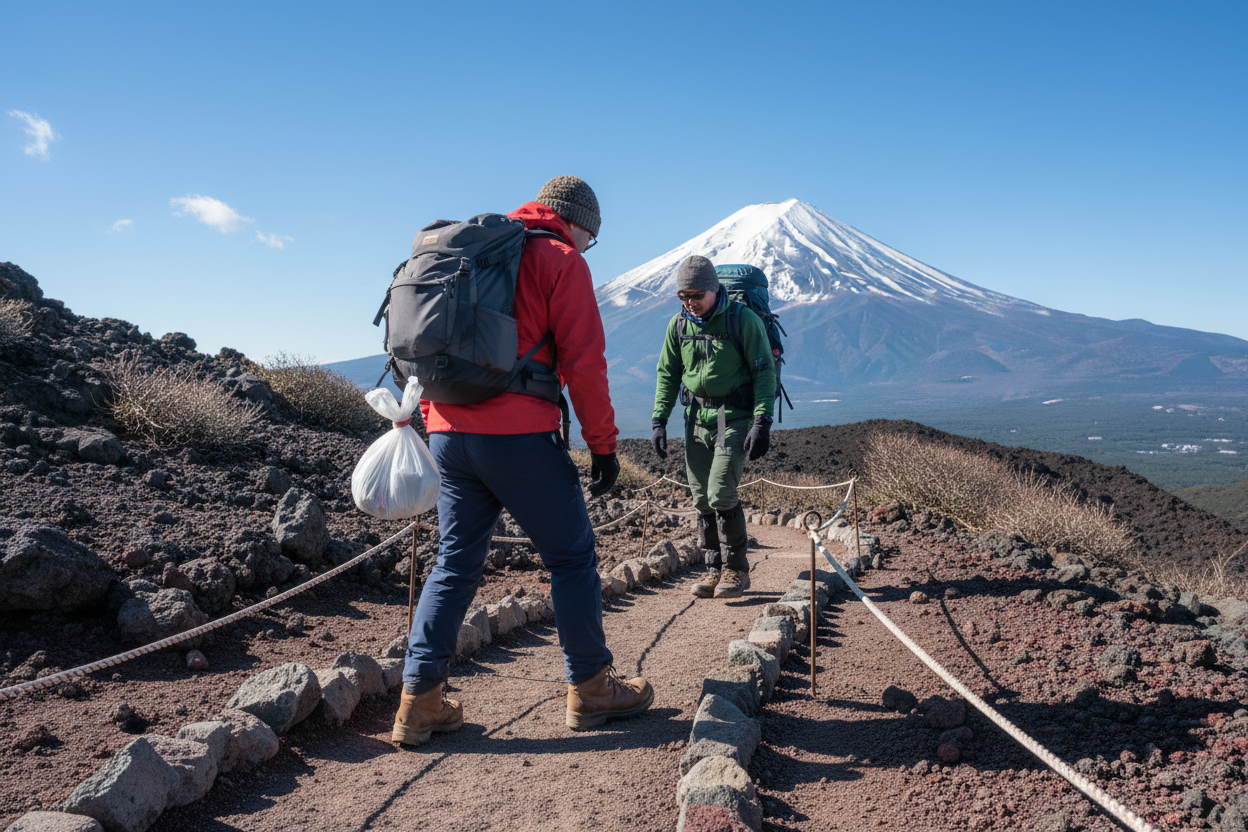
The area above the 5th Station is a National Park Special Protection Area. Follow the official rules:
- stay on the designated trail;
- do not pick plants, collect rocks or damage natural features;
- do not pitch a tent or light a fire;
- carry rubbish back down;
- do not graffiti signs, buildings or rocks;
- do not bring pets onto the climbing trail;
- give priority to people moving uphill where the route is shared;
- follow staff instructions and do not force past a closed gate.
Do not treat a walking stick burned or stamped at huts as permission to mark the mountain. Souvenirs leave with you; the mountain stays as you found it.
Plan B: When the Summit Is the Wrong Plan
A good Mt. Fuji itinerary does not require a summit to avoid feeling wasted.
| Problem | First decision | Plan B |
|---|---|---|
| Trail is closed or severe weather is forecast | Do not travel to force a summit attempt | Move to a lower-altitude sightseeing day and keep the climbing day flexible |
| Required equipment is missing | Do not pass the 5th Station unprepared | Rent or buy the correct gear before another date; use a non-summit activity today |
| Hut is unavailable | Do not invent an overnight climb | Choose another route/date only after rebuilding entry, access and turnaround details |
| Yoshida cap or gate blocks entry | Follow staff direction | Use the 5th Station area without crossing the controlled point; do not switch trails blindly |
| You are slower than planned | Protect the descent and last bus | Turn back at the preset time, even without the summit |
| You feel unwell | Stop ascending | Descend carefully, alert your group and follow official or emergency guidance |
| Clouds hide Mt. Fuji | Separate climbing safety from sightseeing disappointment | Use the Tokyo to Mt. Fuji 2026 guide for lower-altitude alternatives |
On the Yoshida side, Fujiyoshida City identifies the Ochudo Trail at the 5th Station as a short nature walk for people who are not climbing to the summit; it does not require the mountain entrance fee or reservation. Check weather, access and the trail’s live status before using it.
If rain or a typhoon changes the wider trip, rebuild transport and lodging with the Japan Rain & Typhoon Plan 2026 rather than trying to preserve the original itinerary unchanged.
Night-Before Checklist
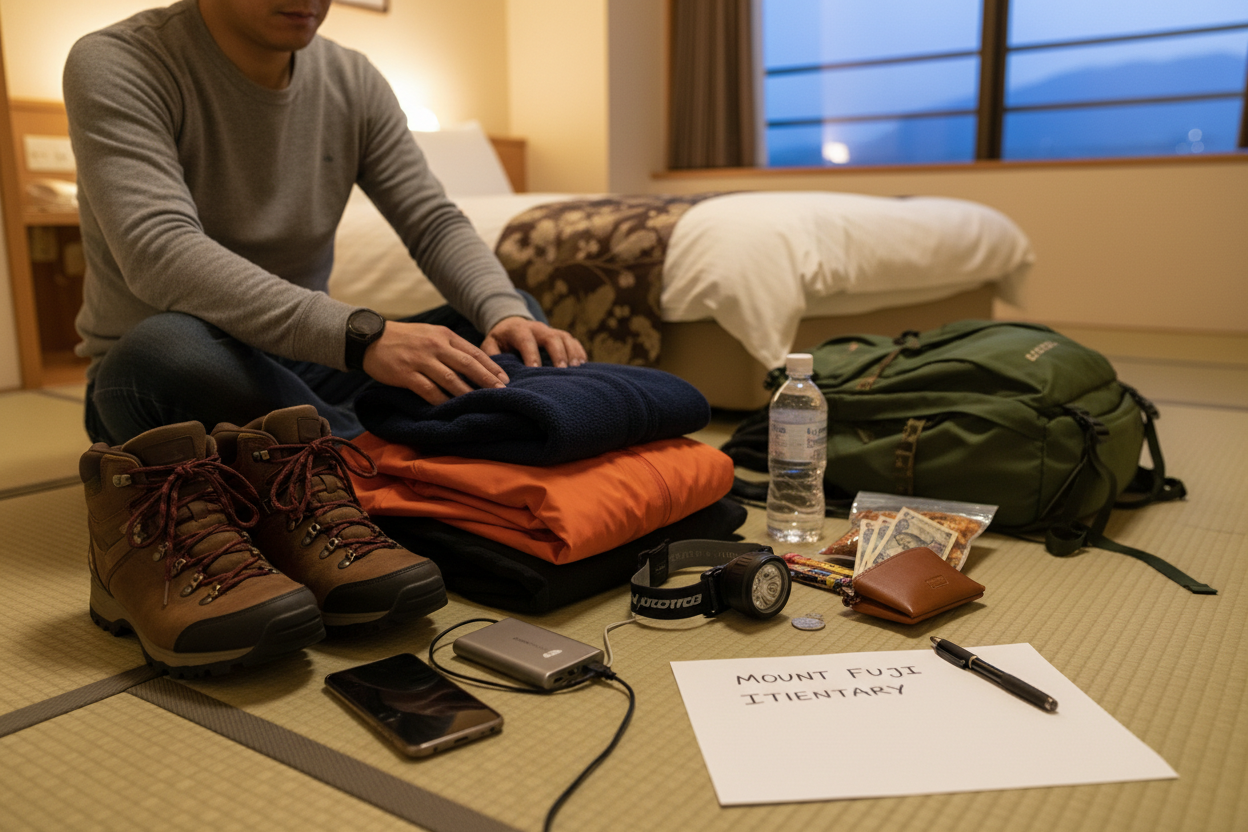
- Open the official Mt. Fuji site and confirm the chosen trail is open.
- Recheck mountain weather, warnings and live transport.
- Confirm the entry permit or reservation and ¥4,000 payment status.
- Confirm the mountain hut separately, including check-in time.
- Confirm the bus, shuttle or parking plan in both directions.
- Save the correct trail map and remember its route color.
- Test boots, headlamp, phone and power bank.
- Pack rainwear, warm clothing, water, food, cash and rubbish bags.
- Share the route, hut and expected return time with someone not on the climb.
- Write down a turnaround time and Plan B.
Your measurable next action is: open the official trail and entry information, choose one route and date, complete that route’s entry procedure and payment, and reserve a mountain hut separately if your plan includes a stay.
Last Checked and Official Sources
This guide was checked on July 24, 2026 against:
- 2026 Yoshida Trail restrictions;
- 2026 Shizuoka climbing restrictions and FUJI NAVI procedure;
- official preparation, gear, weather and rules guide;
- official four-trail comparison;
- official Mt. Fuji climbing FAQ;
- Fujiyoshida City’s 2026 Yoshida access guide.
Opening dates, closures, weather, entry systems, hut availability and transport can change. Recheck the official pages before paying and immediately before travel.
Frequently Asked Questions
Do I need a reservation to climb Mount Fuji in 2026?
Complete the entry registration for your chosen trail before travel. Yoshida recommends advance booking and lists a same-day procedure, subject to its gate and daily cap. Shizuoka directs hikers to obtain a FUJI NAVI permit; an on-site procedure is available for people without smartphones but takes time. A mountain-hut reservation is separate.
Is the ¥4,000 Hiking Fee the same as a mountain-hut payment?
No. The ¥4,000 Hiking Fee is charged per person, per entry, for each of the four routes. It does not reserve or pay for a mountain-hut bed, and it does not include transport to the 5th Station.
Can I climb Mount Fuji without staying in a mountain hut?
A hut is not compulsory when entry occurs outside the restricted hours, but a no-hut plan must still fit the gate, permit, weather, walking, turnaround and return-transport limits. An open gate does not prove that a same-day summit plan is suitable.
Can I start climbing Mount Fuji after 2 PM?
Entry is restricted from 14:00 to 03:00 the following day. Mountain-hut guests are the stated exception, subject to verification and the hut’s own check-in time. A hut booking should not be used to justify a rushed or late arrival.
Which Mount Fuji trail is best for a first-time climber?
There is no universally best route. Yoshida has a separate daily cap and a long published walking day; Fujinomiya is shortest but steep; Gotemba is longest with fewer huts; Subashiri joins Yoshida high on the mountain. Choose by access, time, hut, equipment, experience and turnaround plan.
Can I climb Mount Fuji outside the official season?
Do not use a summer-climbing guide to plan an off-season ascent. Official trail pages say huts, toilets and maintenance services close, conditions become severe and the normal rescue setup is unavailable. Follow the current official closure guidance.
What should I do if the weather is bad?
Do not force the summit. Check official weather and trail notices, cancel before travel when appropriate, or turn back when conditions worsen. Keep a lower-altitude activity and a flexible travel day as Plan B.
Can I visit the 5th Station without climbing to the summit?
Yes, subject to transport and weather. On the Yoshida side, Fujiyoshida City lists the Ochudo Trail as a short 5th Station nature walk that does not require the mountain entrance fee or reservation. Do not cross into the controlled climbing area without completing the applicable procedure.
Comments