Featured image: AI-generated autumn avenue illustration; not a photograph of Hachioji, the actual festival or current foliage.
Quick answer: Hachioji Ginkgo Festival runs on November 21–22, 2026. Entry is free; the optional wooden checkpoint pass costs ¥700. Use Takao or Nishi-Hachioji Station and choose a manageable part of the festival. Checkpoints close at 3:30 p.m., before the festival ends. Takao and Takaosanguchi are different stations.
A golden avenue, community stalls and an optional souvenir walk make this a useful November day out. The first decision is how much walking you want. You can enjoy a few venues without treating the entire festival area as a route you must complete.
Last checked: October 14, 2026. This is a researched guide; no firsthand visit is claimed. All six images are AI-generated conceptual illustrations, not records of the actual event, station exits, stalls, passes or leaf conditions.
- Choose your date and the scale of your visit
- Free entry and the ¥700 pass are separate
- Arrive at Takao or Nishi-Hachioji
- Use the venue letters to keep the walk manageable
- Choose a few checkpoints or plan for all twelve
- Check leaf conditions without treating the date as a forecast
- Prepare for a comfortable day and an easy change of plan
- Frequently asked questions
- When is Hachioji Ginkgo Festival 2026?
- Do I need an admission ticket?
- Which station should I use?
- Is Takao the same as Takaosanguchi?
- Must I walk the whole avenue?
- When do the checkpoints close?
- Is the ¥1,500 commemorative set the standard pass?
- Can I park at the festival?
- Are golden leaves guaranteed on the festival dates?
- Official sources
Choose your date and the scale of your visit
The organizer’s 2026 event page confirms the two festival days. These are daytime hours, so an evening arrival will not leave you a normal festival visit.
| Date | Festival hours | Checkpoint hours |
|---|---|---|
| Saturday, November 21 | 9:00 a.m.–4:30 p.m. | 9:00 a.m.–3:30 p.m. |
| Sunday, November 22 | 9:00 a.m.–4:00 p.m. | 9:00 a.m.–3:30 p.m. |
The festival introduction describes approximately 770 ginkgo trees along roughly four kilometers of Koshu-kaido between Oiwake and the entrance to Takao Station. That describes the avenue, not a compulsory walk. The checkpoint course continues to the Kobotoke checkpoint ruins, so do not assume completing all checkpoints is the same as strolling one four-kilometer avenue.
For a first visit, pick either a short festival outing or a checkpoint-focused day. A short outing suits someone interested in stalls and a few photographs. A longer walking day suits someone who wants to collect marks and is willing to build the day around the course. Decide before choosing your arrival station.
If you have a fixed dinner booking in central Tokyo, work backward from it. Include time to reach the return station and handle an unfamiliar transfer. Avoid making the end of the festival your departure deadline if your next booking leaves no room for a slower walk.
Free entry and the ¥700 pass are separate

GO TOKYO’s current listing gives free admission and a ¥700 price for the optional tsuko tegata, a wooden pass used for the checkpoint activity. You do not need to buy it just to browse the festival. Transport, food and other purchases are separate.
For two people buying one standard pass each, the pass total is ¥1,400. If neither participates, that cost is ¥0. These are simple calculations from the published price, not a total outing budget. Decide whether you want the activity before buying a souvenir with a purpose you do not plan to use.
The official checkpoint page also lists a ¥1,500 commemorative set, limited to 100 sets, with sales scheduled from October 22. It is a different product. Ask for the standard pass if that is what you want, and confirm the price before paying.
Carry a modest cash backup for discretionary purchases, but do not interpret that recommendation as confirmation that every vendor is cash-only. Payment methods and individual food prices have not been verified stall by stall. Set your own spending allowance and keep enough available for the trip back.
Arrive at Takao or Nishi-Hachioji
GO TOKYO names Nishi-Hachioji on the JR Chuo Line and Takao on the JR Chuo and Keio Takao lines as festival approaches. Use the actual venue you want as your onward destination. A search for “Hachioji” alone is too broad to settle where you should leave the train.
| Your priority | Suggested starting choice | Save before leaving |
|---|---|---|
| A shorter outing around the Ryonan venues | Takao; check north-side access and the onward route | Ryonan Icho Kaikan / 陵南いちょう会館 and the official venue map |
| The avenue around Nishi-Hachioji | Nishi-Hachioji | Your chosen first checkpoint or venue, plus the return station |
| Mountain hiking | Plan separately for Takaosanguchi | The mountain route, its conditions and a realistic finish time |
The station choices in this table are planning recommendations. They are not a promised shortest route for every hotel or a complete accessible-route assessment. Compare the whole journey with your travel date and departure time entered, including any transfer, rather than copying a bare train-duration estimate.
Keio’s Takao-area guide distinguishes Takao from Takaosanguchi, the mountain gateway. For the festival’s central venues, keep Takao’s name in your saved plan. A train heading toward Takaosanguchi is not a reason to remain aboard past the stop you actually need. Check the service’s stopping pattern.
At arrival, confirm the exit and onward route before leaving the station area. Show staff your saved destination if unsure. Keep the Japanese venue name available; it can be more useful than a loosely translated festival label.
Use the venue letters to keep the walk manageable
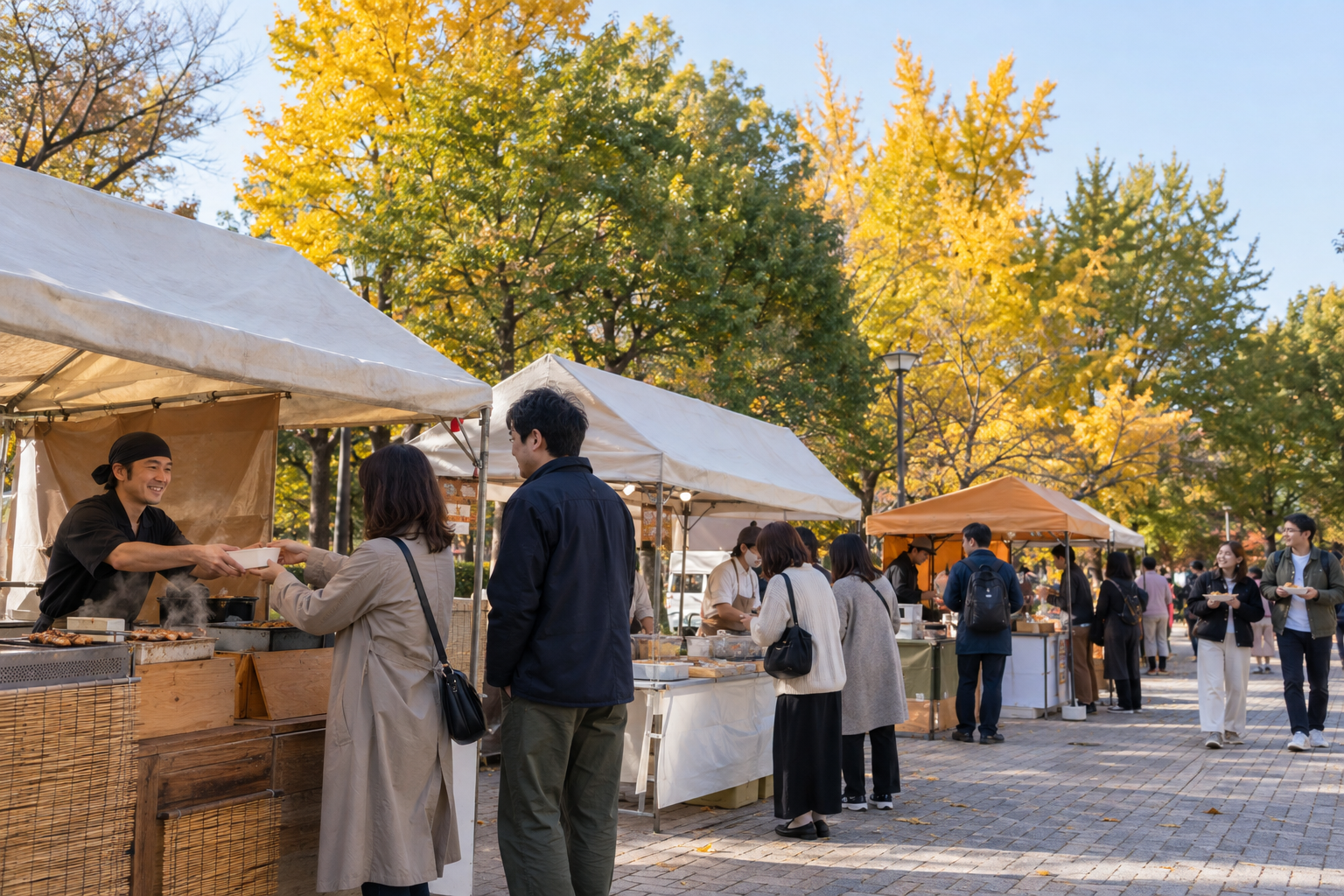
The official Ryonan-area map labels B at Ryonan Icho Kaikan, C at the main Ryonan Park grounds, D at the park annex and E along the riverside. B-sando marks the committee headquarters area. Save the original map rather than using these illustrations as directions.
Here is a suggested three-hour outing, not an organizer-led tour or a forecast of queues:
- First half-hour: arrive, orient yourself and locate the information area. Check the current program and choose one or two venues.
- Next hour: browse your chosen stalls or activity. Stop for food if something suits your group; you do not need to visit every lettered site.
- Next hour: add a short avenue walk or another nearby venue, leaving space for a rest.
- Final half-hour: regroup, check belongings and start toward your chosen return station.
This is a time budget, not a fixed-distance route. Shorten it if paths feel congested or your group is tired. The festival can be the main outing even if you only see a small portion. If a particular performance is your priority, use the latest program to build around that time instead.
Stay on sidewalks and use marked crossings. Temporary restrictions apply to designated sections; they do not turn the whole avenue into a pedestrian plaza. Follow on-site staff instructions, and never step into a traffic lane to recreate a golden-tree photograph.
Choose a few checkpoints or plan for all twelve
The official checkpoint activity lets pass holders collect burned marks at twelve locations. Five or more marks qualify for the prize draw after validation at the daikansho at the B-area entrance. Collecting all twelve qualifies for a perfect-completion prize at the specified receiving points. Check current instructions before setting out.
For a casual visit, ask which nearby checkpoints fit your remaining time. There is no need to force a full-course target into an afternoon already committed to food and performances. Starting late and trying to hurry between unfamiliar crossings is a poor trade for one more mark.
For all twelve, start in the morning, identify both ends of the course and leave a return plan from your finish. Bring the current checkpoint list, not just the central venue map. Allow time for breaks and the marking process. We have not timed the complete course, so this guide does not promise a completion duration.
Do not use 4:00 p.m. as the checkpoint deadline: the checkpoints finish at 3:30 p.m. on both days. The later festival closing time does not extend that activity. If completion matters, leave margin before its own cutoff and ask staff where to validate or receive a prize.
Check leaf conditions without treating the date as a forecast
The organizer’s ginkgo update page is the place to look for dated foliage information. The entries visible at this check are dated September 22. They do not establish the condition of the avenue on either November festival day.
Look at the date of the newest update and the location it describes. One photograph from one section cannot establish that every tree has turned yellow. Festival dates are confirmed plans; the amount of gold in a future photograph remains uncertain.
If the leaves are less colorful than you hoped, decide whether the community event still interests you. Keep the visit for stalls and a short walk, or choose another outing with separately checked conditions. The Tokyo autumn-leaves guide helps compare types of destination; check its sources for newer local updates.
Prepare for a comfortable day and an easy change of plan
The organizer’s FAQ says there is no event parking and asks visitors to use public transport. It also warns of Route 20 congestion. Do not build the day around finding an event car park after arrival.
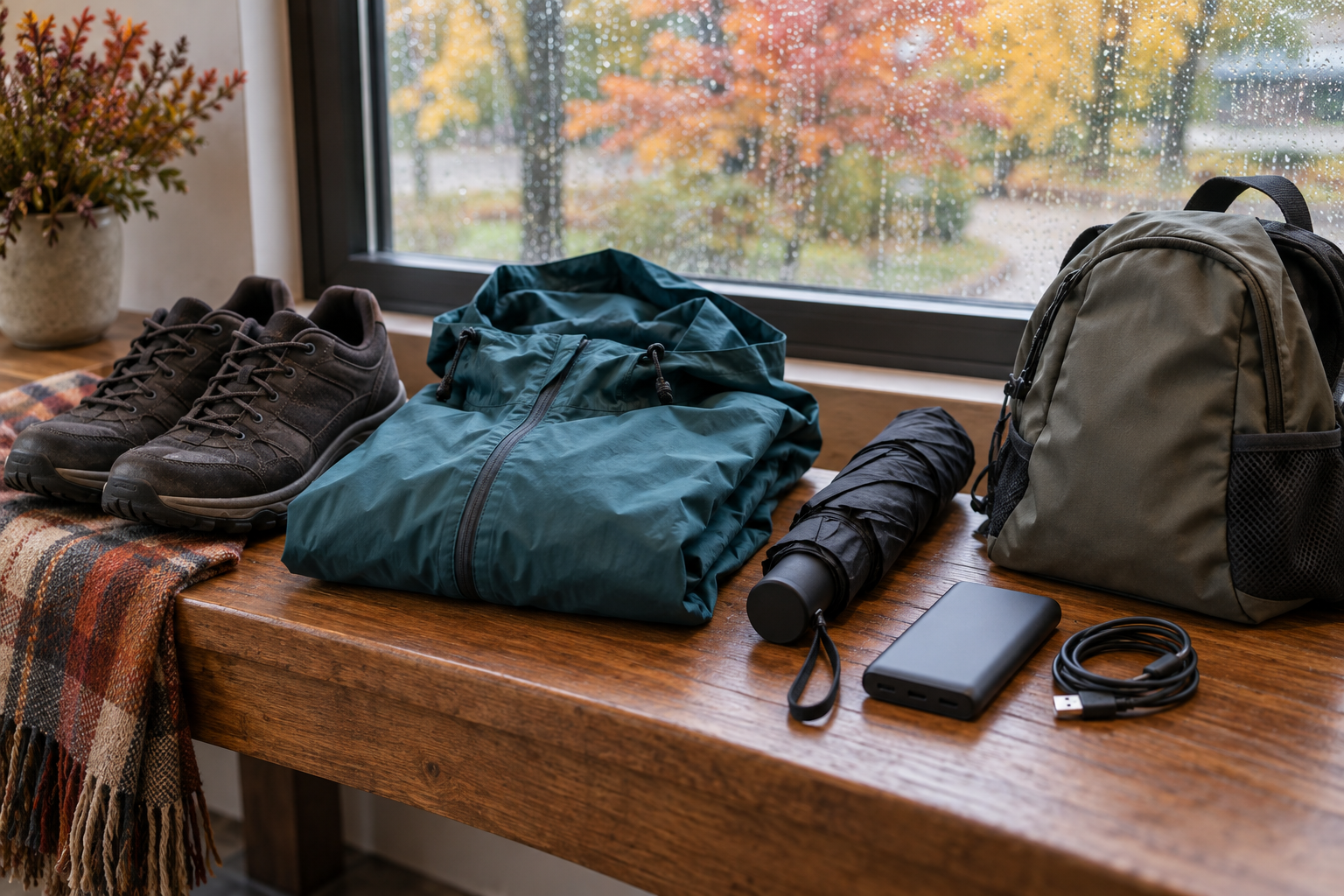
Wear comfortable shoes and an adjustable layer, and check a local forecast near your visit. Use a small bag that leaves your hands free. Save the station names, map and a meeting point before you begin; a phone used for navigation and photographs also needs enough charge for the return.
For a stroller or wheelchair, confirm a suitable route and rest stops directly with the organizer. Baby rest facilities are planned in the FAQ, but that wording does not confirm every location or service is already available. The map is not a guarantee that every path or river crossing suits your needs.
Check the latest announcements before traveling if the weather looks poor. We have not confirmed a blanket rain-or-cancellation rule for every activity. A changed program, uncomfortable conditions and a cancelled festival are different situations. For an alternative, choose something close to your accommodation whose opening you can verify.
Combining the festival with a mountain hike can make the day too tight. If hiking is the priority, use the separate Mt. Takao guide and reduce the festival to an optional stop. For other dates, the November Tokyo guide offers a broader planning starting point.
Frequently asked questions
When is Hachioji Ginkgo Festival 2026?
November 21–22. Saturday ends at 4:30 p.m.; Sunday at 4:00 p.m. Both start at 9:00 a.m.
Do I need an admission ticket?
Entry is free. The optional ¥700 wooden pass is for the checkpoint activity, not general admission.
Which station should I use?
Takao or Nishi-Hachioji, depending on your starting venue. Save that venue and check the onward walk before boarding.
Is Takao the same as Takaosanguchi?
No. They are different stations. Keep the festival approach and mountain-hiking approach separate.
Must I walk the whole avenue?
No. Choose a few venues for a shorter visit. The twelve-checkpoint course reaches beyond the avenue’s stated endpoints.
When do the checkpoints close?
At 3:30 p.m. both days. The festival’s later closing does not extend the marking activity.
Is the ¥1,500 commemorative set the standard pass?
No. The limited set is a separate product. Confirm what you are buying and whether it remains available.
Can I park at the festival?
The official FAQ says there is no event parking. Use public transport and check your return route.
Are golden leaves guaranteed on the festival dates?
No. Check dated local updates close to your visit. Our generated images do not report current foliage.
Before leaving, settle your date, starting venue, optional pass and return station. Then let the walk fit your group’s energy and the conditions you actually find.
Official sources
- Festival committee: 2026 event information
- Festival committee: avenue and festival introduction
- Festival committee: checkpoint activity and passes
- Festival committee: transport and facilities FAQ
- Festival committee: dated ginkgo updates
- GO TOKYO: event listing and standard pass price
- Keio: Takao-area transport
- Festival committee: Ryonan-area venue map (PDF)
Comments