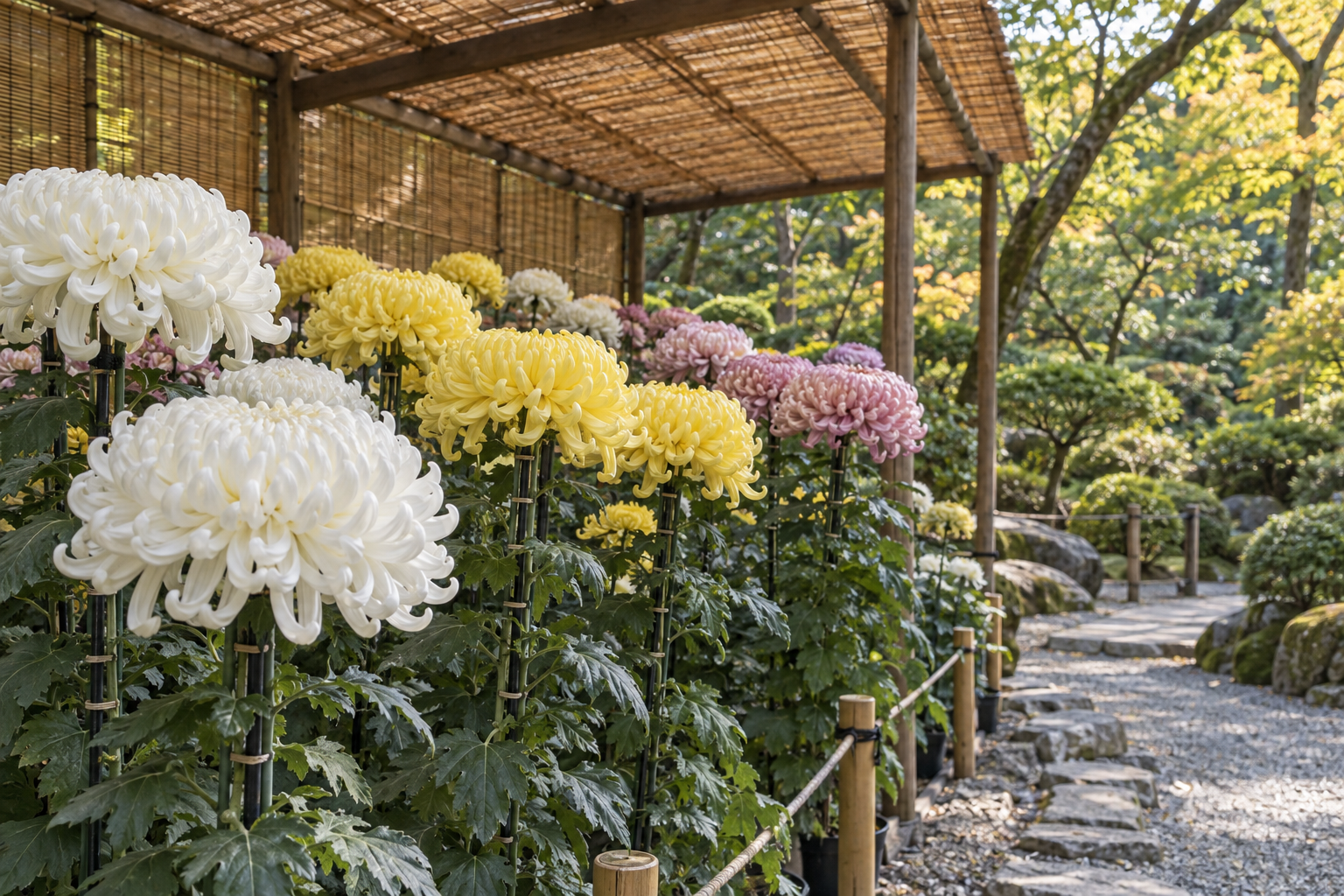
Featured image: AI-generated chrysanthemum illustration; not a photograph of Shinjuku Gyoen or its actual 2026 exhibition.
Quick answer: Shinjuku Gyoen’s Chrysanthemum Exhibition runs November 1–15, 2026 in the Japanese Traditional Garden. It opens daily, including Mondays, from 9:00 a.m. to 4:30 p.m.; last entry is 4:00 p.m. Ordinary garden admission applies: ¥500 for adults, ¥250 for seniors aged 65+ and eligible students, and free for junior-high pupils and younger. Pick a park gate, then follow the exhibition route inside.
If you are visiting Tokyo in early November, this gives your garden outing a clear purpose even when autumn leaves have not reached the color you hoped for. The interest is in carefully trained flowers: their shape, the way they are displayed, and the contrast between individual blooms and a whole bed.
- Choose the exhibition dates, rather than a promised foliage peak
- Pay for garden entry, and prepare the right ticket
- Match your station to a named park gate
- Look for the way the flowers were trained
- Make a manageable morning plan
- Plan for gravel, rain and a comfortable exit
- If your date or the weather does not fit
- Frequently asked questions
- Is Shinjuku Gyoen open on Mondays during the exhibition?
- Do I need a separate chrysanthemum ticket?
- Can I enter at 4:00 p.m. and stay until evening?
- Which gate is closest to Shinjuku-gyoemmae Station?
- Does “central entrance” mean Shinjuku Gate?
- Will the garden have peak autumn leaves throughout November 1–15?
- Can I use a transportation IC card for entry?
- Is the entire exhibition route easy for wheelchairs?
- Is the free explanatory display inside the paid garden?
- Official sources
Choose the exhibition dates, rather than a promised foliage peak
| Planning question | Confirmed arrangement |
|---|---|
| When? | Sunday, November 1–Sunday, November 15, 2026 |
| Where inside the park? | Japanese Traditional Garden |
| Are Mondays open? | Yes, throughout the exhibition |
| Opening and final entry | 9:00 a.m.–4:30 p.m.; enter by 4:00 p.m. |
| Separate exhibition ticket? | Ordinary garden admission; no separate exhibition fee is listed |
The official November calendar specifically includes Monday November 2 and Monday November 9. It lists Monday November 16 as closed, after the exhibition ends. A general reminder that the park closes on Mondays is therefore not enough: check the actual date you plan to visit.
These are exhibition dates, not a guarantee that every flower or maple will be at its best together. Check the organizer’s recent updates near your visit. If autumn color is your priority, use our Tokyo autumn-leaves guide to compare locations, then verify current conditions.
Give this visit a daytime slot. Arriving just before 4:00 p.m. leaves only a short interval before the garden closes at 4:30 p.m. A morning or early-afternoon visit allows you to enjoy the displays without treating every photograph as a race against the gate.
Pay for garden entry, and prepare the right ticket

The garden admission page sets out ordinary rates and the official e-ticket link. Choose your category carefully rather than copying an age band from a different attraction.
| Visitor category | Garden admission |
|---|---|
| Adult | ¥500 |
| Age 65 and over | ¥250 |
| Student, high school and above | ¥250 |
| Junior high school and younger | Free |
For two adults, admission totals ¥1,000. Two adults and one junior-high-school child also total ¥1,000. These are calculations from the published categories; transport, food and optional purchases are separate. Carry suitable age or student evidence if you expect to use a reduced category, and ask staff if your eligibility is unclear.
You can follow the official admission page to the ASOVIEW e-ticket service. The instructions say to display the ticket on your device and scan its QR code at entry. Transportation IC-card payment is also accepted at entry gates. Check the current purchase conditions and prepare your chosen payment method before traveling.
We have not completed an e-ticket checkout or tested overseas cards. A published purchase link does not prove that every card or device will work. If payment is uncertain, check whether an order was created before trying again. Keep enough phone charge to retrieve the ticket and navigate home.
The Ministry also offers free admission for holders of specified disability certificates issued in Japan, with one caregiver. Do not assume a foreign document qualifies; confirm directly before relying on that exemption.
Match your station to a named park gate
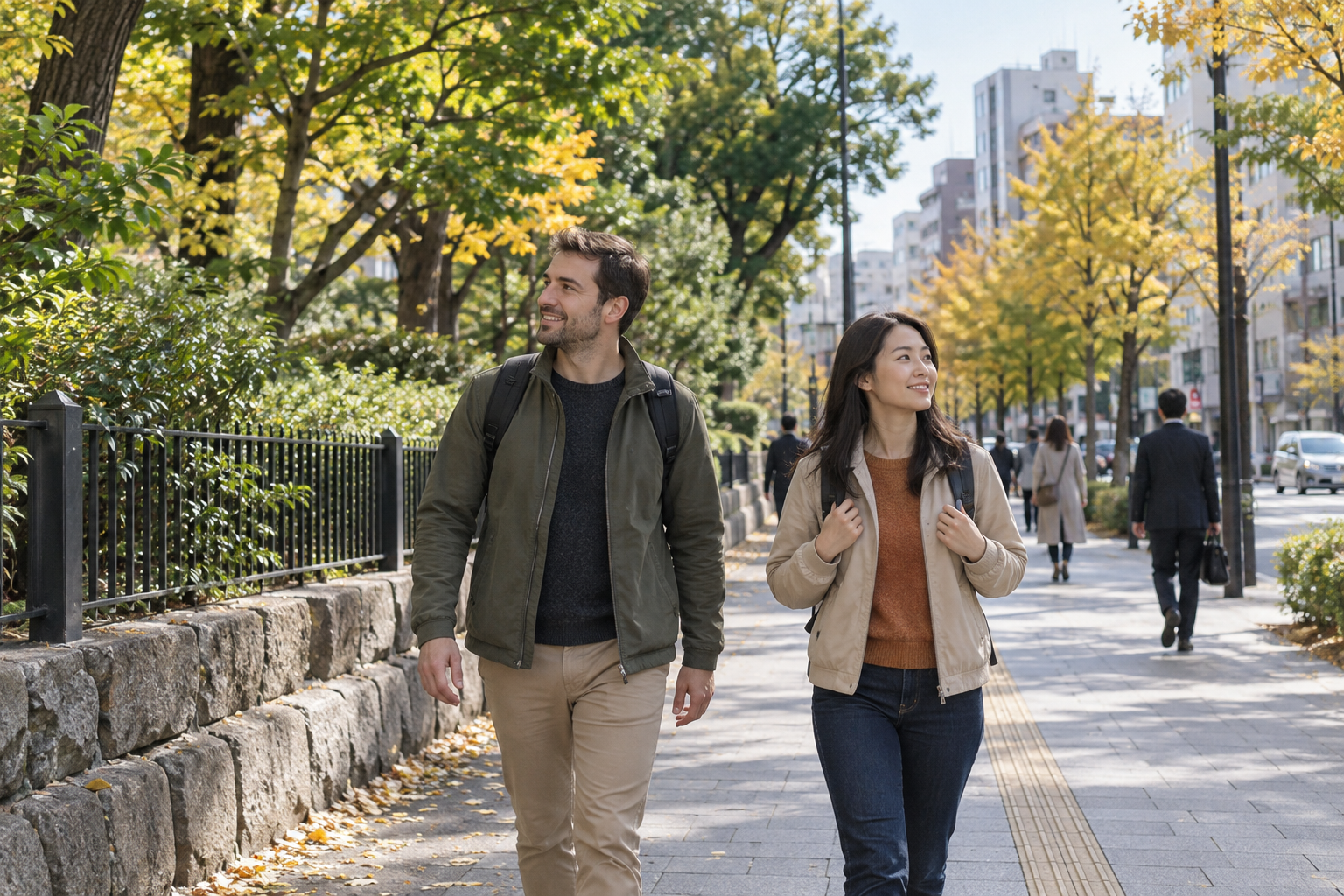
There are three public gates. The garden’s own access table is more useful than a route to an unspecified pin labeled “Shinjuku Gyoen.” Save both the station and the gate.
| Park gate | Useful rail approach | Official approximate walk |
|---|---|---|
| Shinjuku Gate | Shinjuku Station, South Exit | 10 minutes |
| Shinjuku Gate | Shinjuku-gyoemmae, Marunouchi Line, Exit 1 | 5 minutes |
| Okido Gate | Shinjuku-gyoemmae, Marunouchi Line, Exit 2 | 5 minutes |
| Sendagaya Gate | JR Sendagaya Station | 5 minutes |
| Sendagaya Gate | Kokuritsu-kyogijo, Oedo Line, Exit A5 | 5 minutes |
These times cover the station-to-gate walk, not finding the platform exit, buying admission or reaching the flower beds. Shinjuku Station is a large interchange, so allow additional time if you are unfamiliar with it. Use the approach that suits your accommodation and the rest of your day.
Shinjuku Gate is a useful choice if you want the free explanatory display at the Information Center outside that entrance. Sendagaya can suit a route approaching from the south. The exhibition itself is farther inside: entering a park gate does not mean you have arrived at its starting point.
The English exhibition pamphlet asks visitors to start at the Japanese Traditional Garden’s central entrance. Use its map and on-site signs to find this inner entrance; it is different from the three park gates above. Follow current staff instructions if a path has changed.
Look for the way the flowers were trained
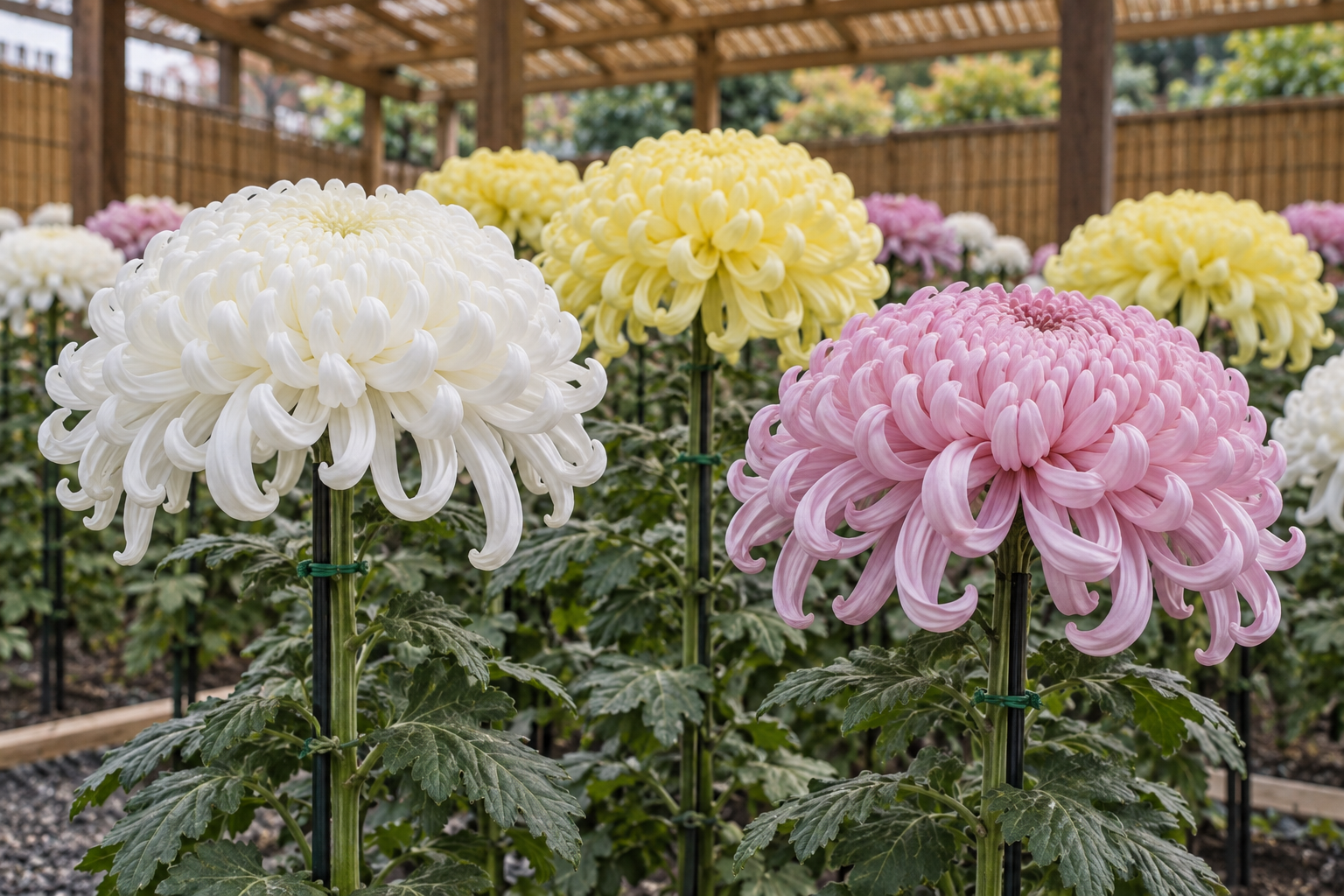
The National Gardens Association’s exhibition guide describes seven display types. Some use large rounded blooms; others emphasize tubular petals, changing petal forms or stems shaped into a cascade. Comparing two very different beds can be more rewarding than trying to photograph every flower.
- Kengai: branches are trained into a cascading form, inspired by flowers growing from a cliff.
- Ise, Choji and Saga: compare three classical chrysanthemum types and their different flower shapes.
- Ozukuri: one plant is trained over more than a year into a dome carrying hundreds of blooms.
- Edo-giku: look for petals whose form and color change as flowers open.
- Ichimonji and Kudamono: contrast a broad single layer of petals with petals shaped like tubes.
- Higo-giku: notice the gaps between petals and the restrained presentation of the bed.
- Ogiku: large rounded flowers form a repeated arrangement across the display.
The official English pamphlet explains the horticultural techniques and shows the intended viewing route. It makes clear that the impressive Ozukuri dome grows from a single plant, rather than being a basket of separately cut flowers. At each bed, first look at the whole shape, then at an individual bloom and the supporting structure.
Temporary shelters called uwaya are part of the presentation. Take a wider view that includes the shelter, flowers and garden surroundings, then move closer from the public path for detail. Do not reach into beds or cross a planted boundary to obtain a cleaner angle.
Make a manageable morning plan
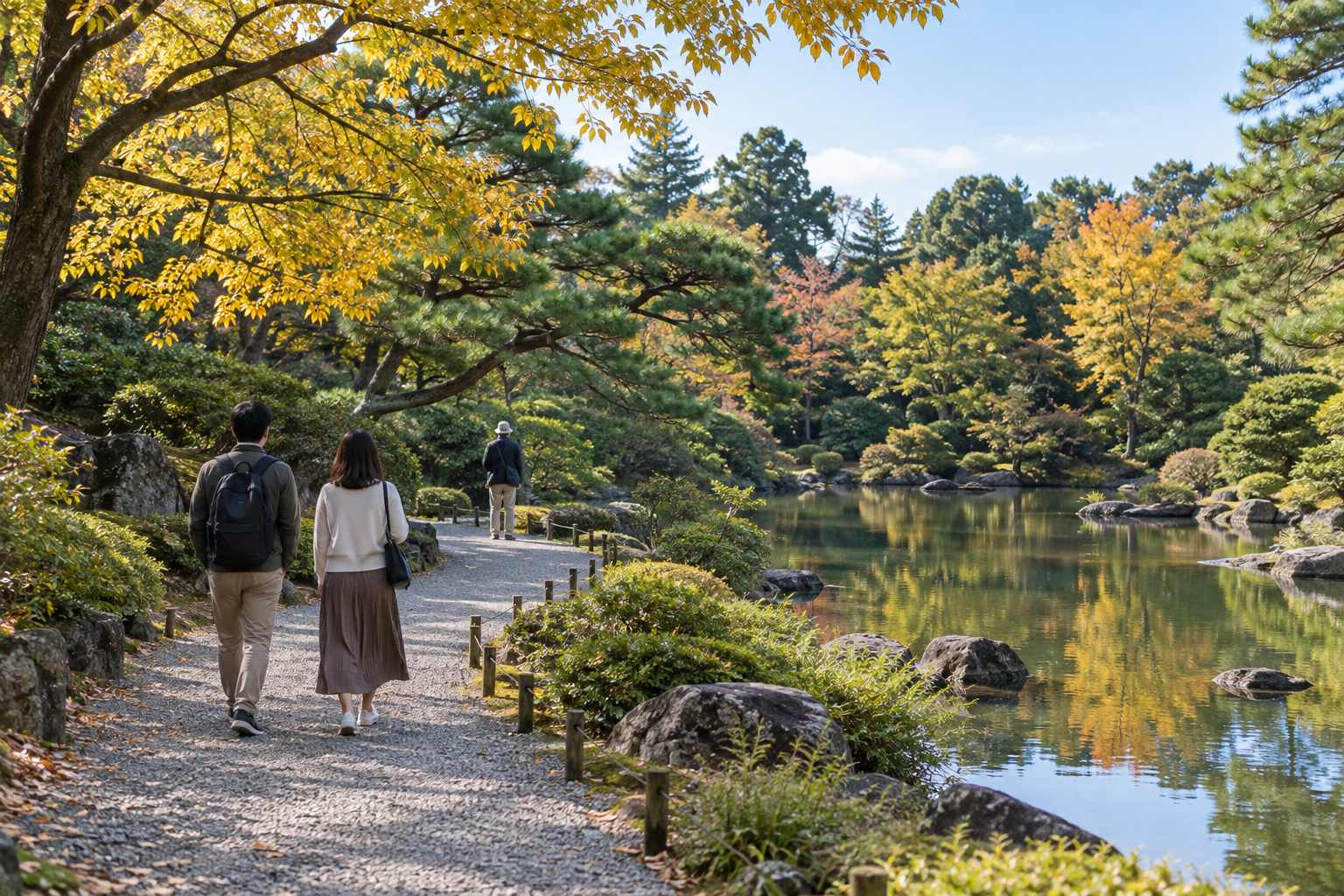
Here is a suggested visit, not an official guided tour or a prediction of queue lengths. Allow roughly one-and-a-half to two hours if you want the main displays and a brief rest; adjust this to your walking pace.
- Around 9:00 a.m.: reach your chosen gate, prepare admission and pick up or open the garden map.
- After entry: find the Japanese Traditional Garden’s central entrance using the exhibition pamphlet.
- During the first hour: follow the display route, pausing at the flower forms that interest you. Let other visitors pass while you take photographs.
- Before leaving: take a short rest, check your return gate and decide whether you have energy for another part of the garden.
- After the garden: keep lunch flexible rather than making a tight booking that requires rushing past the final displays.
If you only have an hour, make the exhibition your priority and shorten the wider garden walk. If you want a longer visit, download the official garden map before arrival and add one area that interests you. Completing every path is optional.
A November 2 or 9 visit can make use of the special Monday opening. That does not promise a quiet park, but it gives you another weekday choice. Check the current calendar for other activities that may affect the atmosphere on your date.
Plan for gravel, rain and a comfortable exit

The official universal-design guide notes gravel paving in the Japanese Traditional Garden and provides a map of slopes, steps and other barriers. A short station walk does not establish an easy route for every wheelchair or stroller. Review the appropriate accessible approach and ask staff about a suitable exhibition route.
The garden lists free wheelchair loans at its three gates and Service Center, plus accessible toilets with diaper-changing tables. Availability at a particular moment is not guaranteed by that listing. For a group with limited walking stamina, decide where to rest and which gate to leave through before anyone becomes exhausted.
Bring comfortable footwear, an adjustable layer and a compact rain cover. Check the forecast and the garden’s latest notices on the morning of travel. Shelters protect the displays, but do not turn the whole garden visit into an indoor activity. If conditions are uncomfortable, shorten the outing or choose another day within the exhibition period.
The garden rules prohibit alcohol, smoking, drones and entry into protected planting areas. Pets are not allowed, apart from permitted assistance dogs. Restrictions also apply to professional equipment, portraits and commercial filming; check the relevant photography rules before planning a shoot.
For a simple visitor photograph, keep the path clear, avoid touching flowers and take turns at busy viewpoints. Bring a small bag that leaves your hands free. Put large luggage elsewhere first; our Tokyo luggage-storage guide compares practical options.
If your date or the weather does not fit
If you arrive after November 15, do not plan around the chrysanthemum exhibition still being there. Check the current garden calendar and the organizer’s updates for what is actually available. November 16 is listed as closed; a train journey to the gate will not fix that.
During the exhibition, the Ministry identifies a free explanatory display in the Information Center’s first-floor Art Gallery outside Shinjuku Gate. It can help you understand the flowers, but it is a separate display from the garden beds and does not provide admission to them. Check its current opening arrangements if you plan a dedicated visit.
For a fully indoor alternative, use our Tokyo rainy-day museum guide and verify that venue’s opening day. For the rest of your stay, our Tokyo in November guide helps connect clothing, daytime plans and evenings. Each alternative needs its own date check.
Frequently asked questions
Is Shinjuku Gyoen open on Mondays during the exhibition?
Yes. November 1–15, 2026 is a daily-opening period, including November 2 and 9. The official calendar lists November 16 as closed.
Do I need a separate chrysanthemum ticket?
The event announcement lists ordinary garden admission and no separate exhibition surcharge. Choose the correct garden-entry category.
Can I enter at 4:00 p.m. and stay until evening?
Last entry is 4:00 p.m., and the garden closes at 4:30 p.m. This exhibition is a daytime visit. Aim earlier for a comfortable circuit.
Which gate is closest to Shinjuku-gyoemmae Station?
The official access page lists about five minutes from Exit 1 to Shinjuku Gate and about five minutes from Exit 2 to Okido Gate. For step-free travel, check the separate accessible-route guidance.
Does “central entrance” mean Shinjuku Gate?
No. In the exhibition pamphlet it means the Japanese Traditional Garden’s inner central entrance. First enter through one of the three public park gates.
Will the garden have peak autumn leaves throughout November 1–15?
That is not established by the exhibition dates. Check current foliage reports separately; the flowers give the outing a different seasonal focus.
Can I use a transportation IC card for entry?
Yes, the official admission page says it is accepted at the entry gates. Prepare a suitable balance or another payment method before arrival.
Is the entire exhibition route easy for wheelchairs?
Do not assume so. The official guide notes gravel and maps barriers. Ask staff about the current route, facilities and loan availability.
Is the free explanatory display inside the paid garden?
No. The Information Center’s Art Gallery is outside Shinjuku Gate. Its free display is separate from the chrysanthemum beds inside the garden.
Before leaving, confirm your date, named gate, admission method and return route. Once inside, use the exhibition pamphlet and give yourself time to notice how the flowers were grown.
Official sources
- 2026 Chrysanthemum Exhibition announcement
- 2026 exhibition overview and flower forms
- November 2026 official garden calendar
- Garden admission and e-ticket instructions
- Station-to-gate access
- Garden rules
- Universal design and wheelchair services
- Garden map download page
- English chrysanthemum exhibition pamphlet
- Chrysanthemum Flower Beds Exhibition 2026

Comments