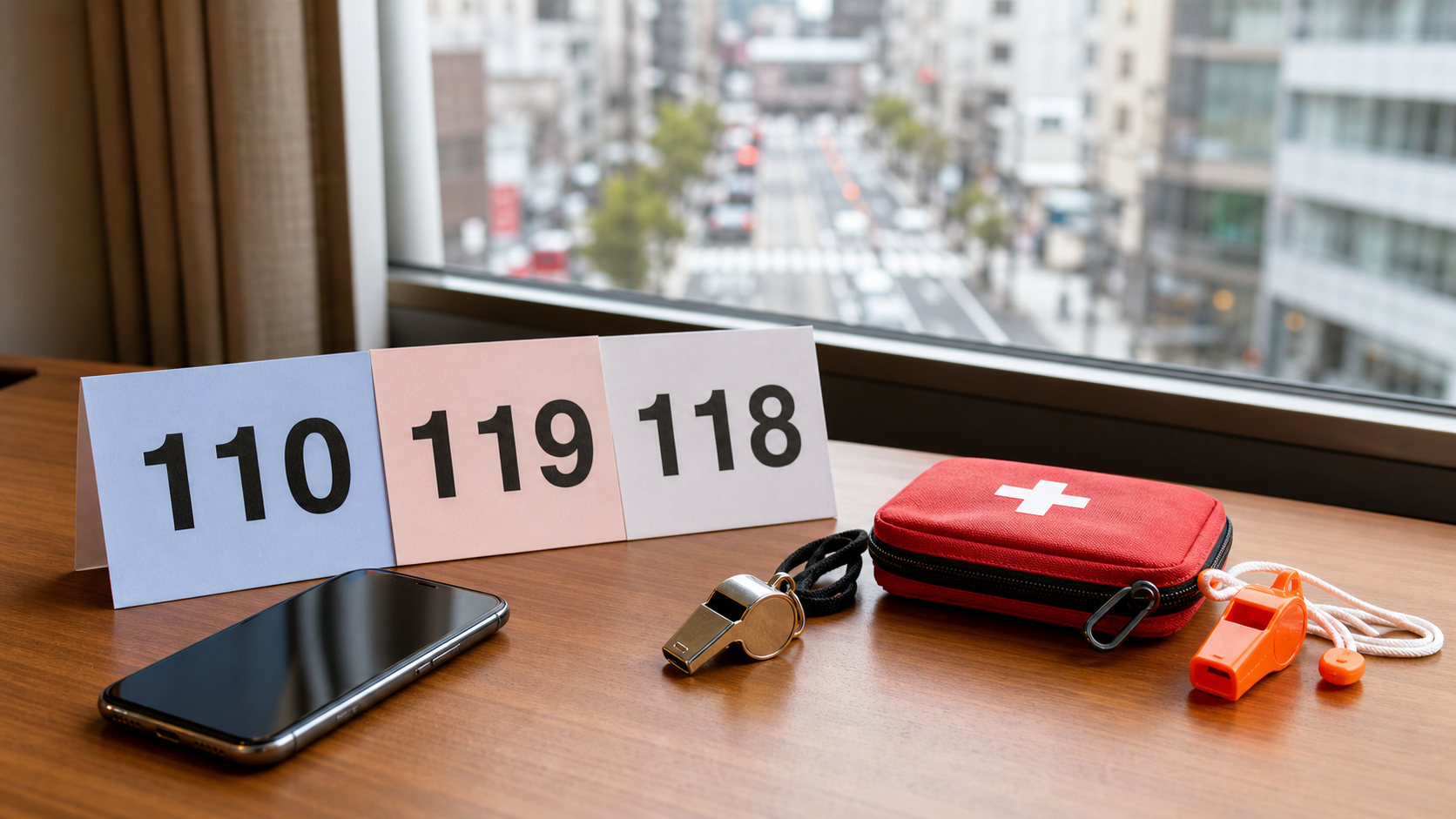
AI-generated conceptual photo. It is not a record of a real emergency or field test.
- Quick Answer
- Which Number Should You Call?
- Call 110 for Police Emergencies
- Call 119 for Fire or Ambulance
- Call 118 for Incidents and Accidents at Sea
- Use the JNTO Visitor Hotline for Multilingual Tourist Help
- Communication Plan B: Do Not Depend on One Phone
- Save This 30-Second Emergency Card
- Frequently Asked Questions
- What is the police emergency number in Japan?
- What is the ambulance number in Japan?
- What is 118 used for in Japan?
- What is #9110?
- Can I call Japan's emergency services in English?
- What should I tell a 119 dispatcher?
- What if my phone cannot call 119?
- Is the JNTO Visitor Hotline an emergency number?
- Should I use 110 for a lost item?
- What should I save before traveling?
- Official Sources
Quick Answer
In Japan, call 110 for an urgent crime or traffic accident, 119 for fire or ambulance, and 118 for an incident or accident at sea. Use #9110 for a non-emergency police consultation. For multilingual tourist assistance, the Japan National Tourism Organization (JNTO) runs the Japan Visitor Hotline: 050-3816-2787 in Japan or +81-50-3816-2787 from overseas, 24 hours a day, 365 days a year, in English, Chinese and Korean.
Do not delay the call because your Japanese is limited. State the service you need, your location, what happened, how many people need help, and a callback number. English support varies by location and service, so keep your hotel address in Japanese and an offline emergency card. If your phone cannot connect, ask hotel, station, shop or nearby staff to place the correct call.
Immediate danger? Move to a safer nearby position if you can do so without creating another risk, then call the correct emergency number. This guide helps with routing and communication; it does not replace instructions from emergency services.
Which Number Should You Call?
| Situation | Number | What it reaches | Do not use it for |
|---|---|---|---|
| Crime in progress, immediate threat, serious traffic accident | 110 | Police | General advice or a lost item with no immediate danger |
| Fire, serious illness or injury requiring an ambulance | 119 | Fire and ambulance dispatch | Medical information or finding a clinic when no emergency response is needed |
| Incident or accident at sea | 118 | Japan Coast Guard | An ordinary land-based police or medical emergency |
| Police concern that is not urgent | #9110 | The police consultation service for the prefecture from which you call | A crime or threat requiring an immediate response |
| Accident, illness, disaster help or general tourist assistance | 050-3816-2787 | JNTO Japan Visitor Hotline | A substitute for police, ambulance, fire or Coast Guard dispatch |
This distinction matters. JNTO can help a visitor find the right next step, but an emergency requiring police, fire, ambulance or maritime rescue should go to the relevant emergency service.
Call 110 for Police Emergencies
Use 110 when a crime, accident or immediate danger requires the police. Examples include violence in progress, a break-in, a serious threat, or a traffic accident that needs police attendance.
For a routine concern, use #9110 or contact a police station instead. The National Police Agency describes #9110 as a nationwide consultation number that connects callers to the police consultation desk for the area from which they call. Reception arrangements and hours can differ by prefecture; after-hours handling may be a duty officer or recorded guidance.
Tokyo Metropolitan Police says its 110 service can respond in English, but this article does not treat that as a nationwide English guarantee. If communication is difficult, give the location first and ask a nearby staff member to help.
If your problem is a lost bag, wallet or passport with no immediate danger, start with the relevant operator or a police box rather than 110. Use RJG's Tokyo lost property guide for that process.
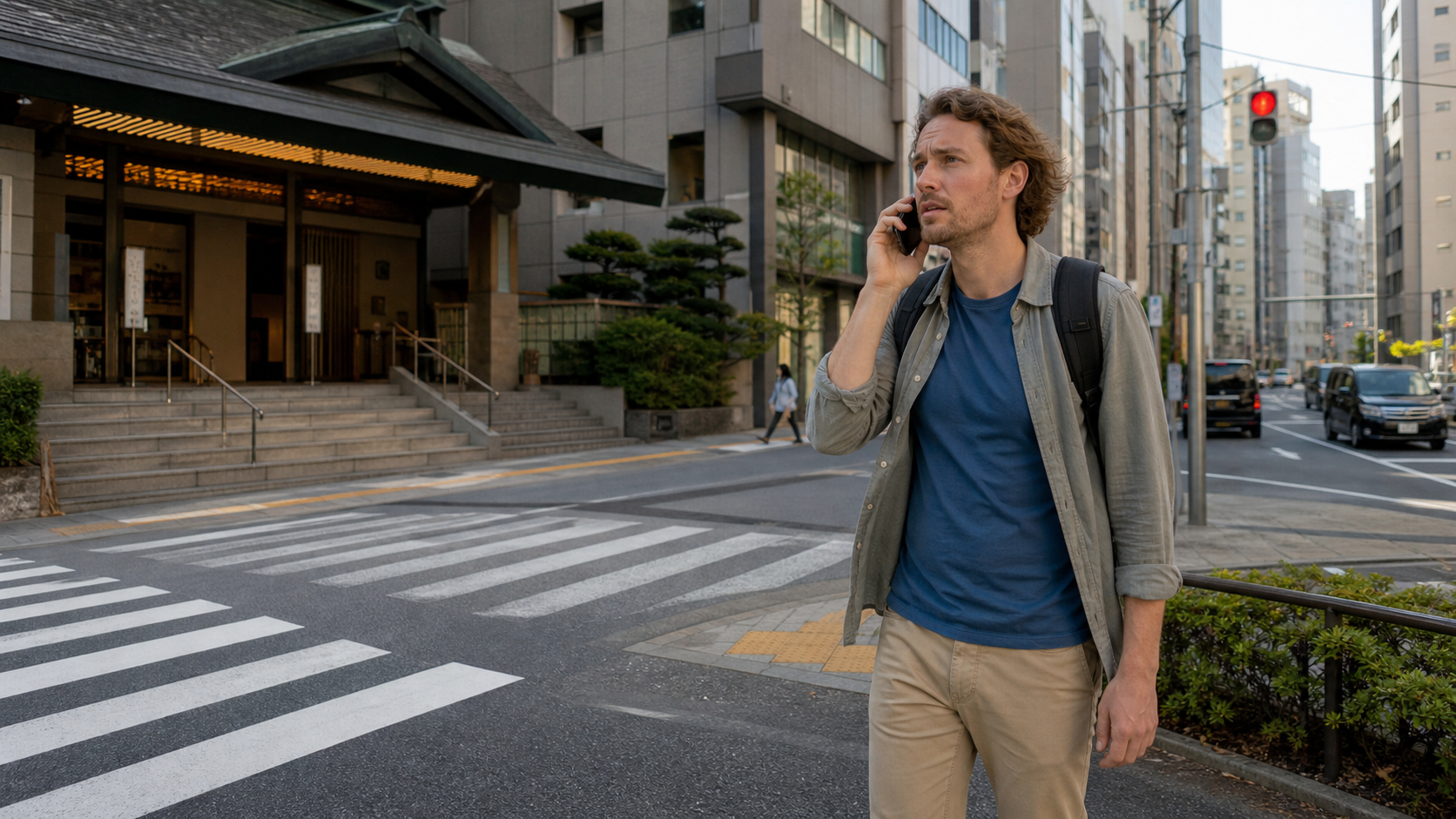
AI-generated conceptual photo. Use a real address or landmark when calling.
Call 119 for Fire or Ambulance
Use 119 for a fire or a medical emergency requiring an ambulance. According to the Fire and Disaster Management Agency (FDMA), the dispatcher will ask whether it is a fire or medical emergency and will collect the information needed for a response.
For an ambulance call, be ready to give:
- Medical emergency — or say that there is a fire.
- Location — begin with the city, ward or town and the address if you know it.
- Nearby landmark — a large building, station exit, intersection, hotel or store if the address is uncertain.
- What happened — include the person's condition, consciousness and breathing if known.
- Age, your name and callback number — an approximate age is useful if the exact age is unknown.
FDMA says a high-priority ambulance may be dispatched before the questioning is complete. Answer slowly and follow the dispatcher's instructions.
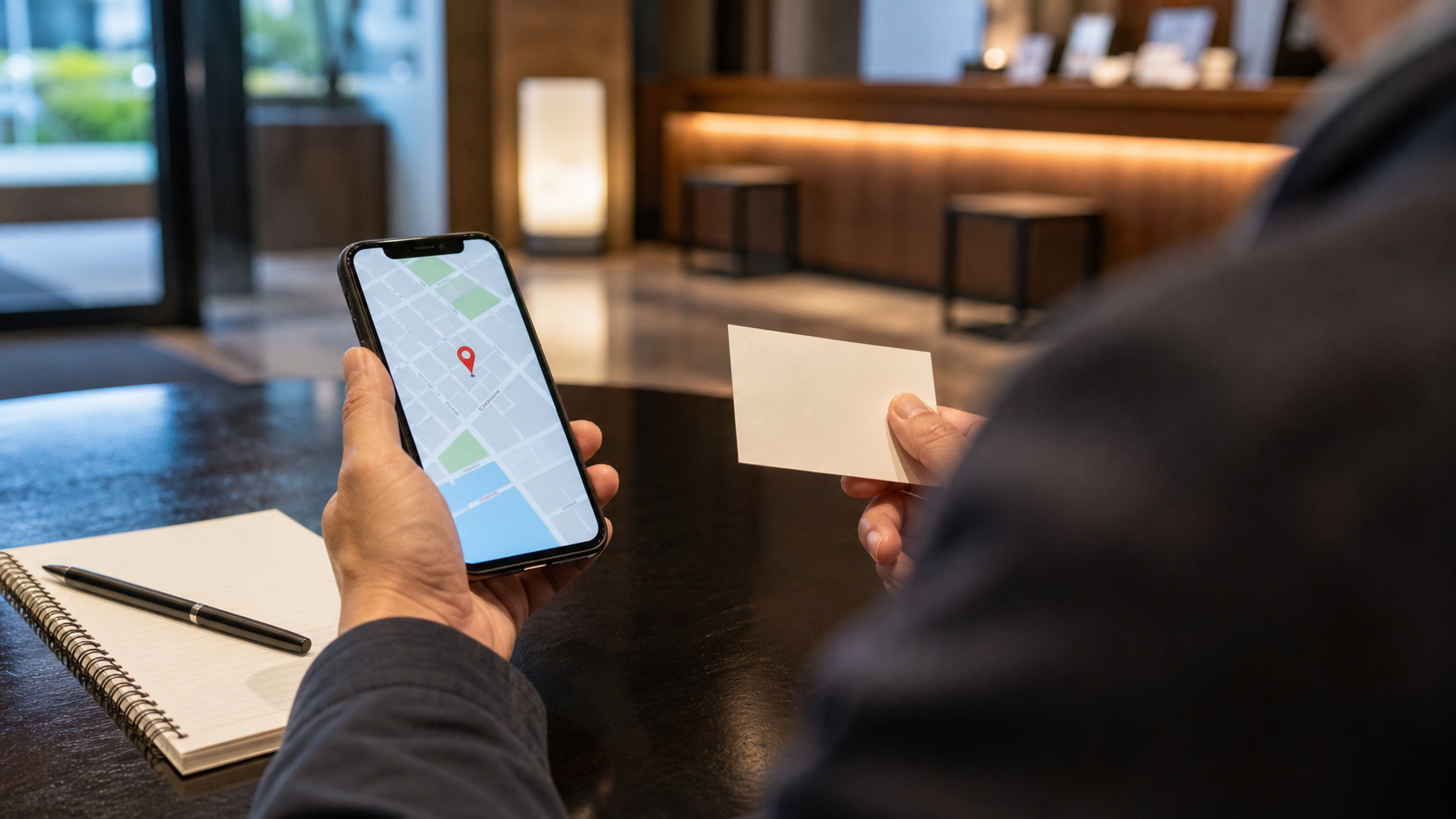
AI-generated conceptual photo. A saved address is useful, but the map shown is not a real location.
A short call script
Use plain words. You do not need a complete explanation before you state the emergency and location.
Ambulance, please. Medical emergency.
We are at [hotel or place name], near [station exit or landmark].
One adult has collapsed. They are [conscious / not responding].
My name is [name]. My phone number is [number].
Useful Japanese words:
- Ambulance, please: Kyūkyūsha onegaishimasu (救急車お願いします)
- Fire: Kaji desu (火事です)
- Police, please: Keisatsu onegaishimasu (警察お願いします)
- The address is: Jūsho wa … desu (住所は…です)
- I do not speak Japanese: Nihongo ga hanasemasen (日本語が話せません)
Romanization is a backup. A written hotel address, map pin and nearby helper may communicate the location more reliably.
Call 118 for Incidents and Accidents at Sea
Use 118 for an incident or accident at sea. The Japan Coast Guard lists maritime accidents, people in danger, oil discharge, suspicious vessels and information about maritime crimes among the reasons to call.
For boat trips, coastal fishing, kayaking or other marine activities, keep your phone protected and know your departure point, operator, route and current location. Japan Coast Guard guidance recommends keeping a means of communication in a waterproof pack and using 118 for a maritime emergency.
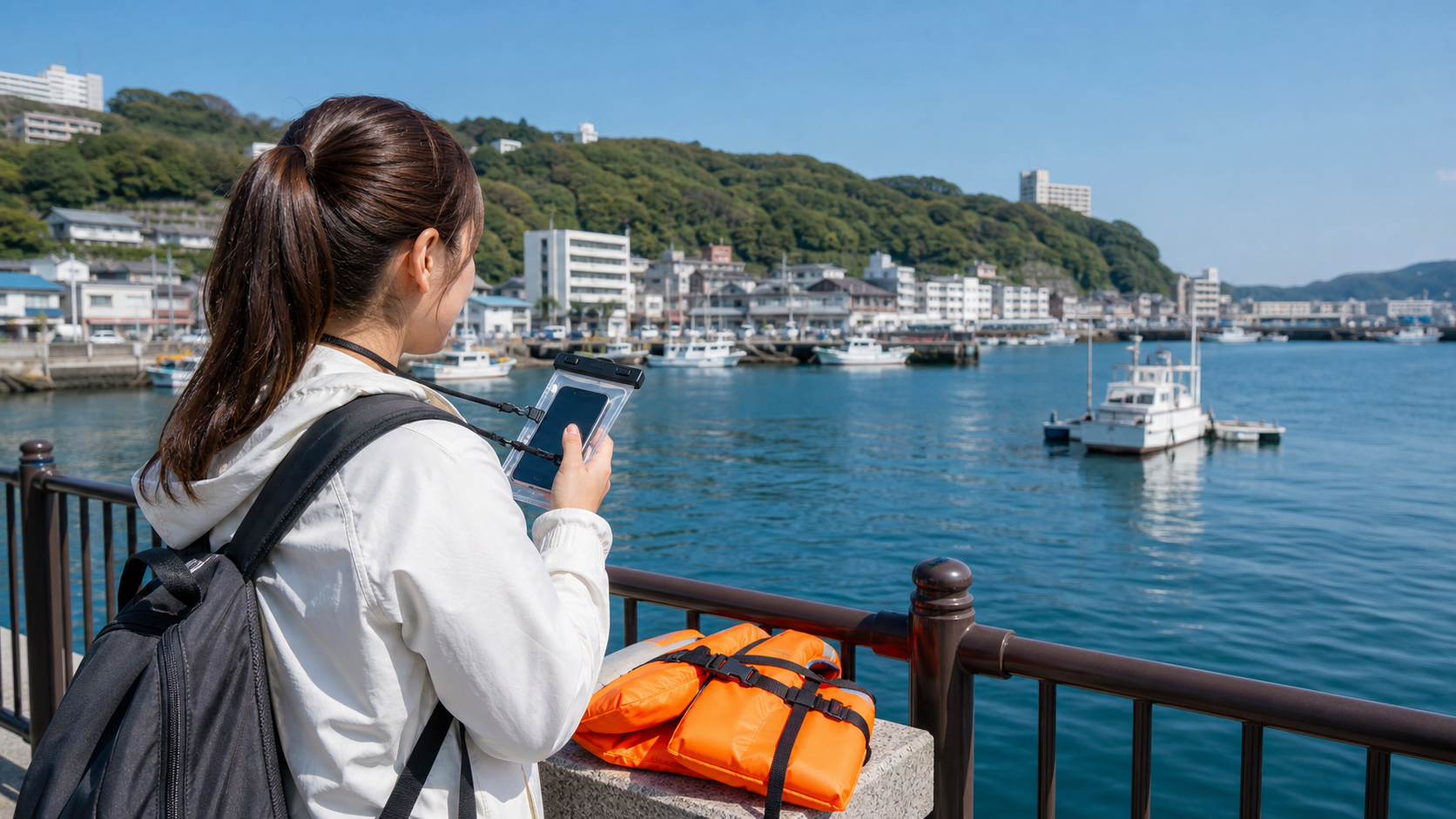
AI-generated conceptual preparedness photo. No real rescue or Coast Guard operation is shown.
Use the JNTO Visitor Hotline for Multilingual Tourist Help
The official Japan Visitor Hotline is useful when a foreign visitor needs help with an accident, illness, natural disaster or general tourist information but still needs assistance identifying the next step.
- In Japan: 050-3816-2787
- From overseas: +81-50-3816-2787
- Hours: 24 hours a day, 365 days a year
- Languages: English, Chinese and Korean
It is a support and information line, not an emergency dispatch replacement. If there is an immediate police, fire, ambulance or maritime emergency, use 110, 119 or 118 first.
Communication Plan B: Do Not Depend on One Phone
English assistance and phone behavior can vary. Your travel setup may also fail because of a flat battery, weak reception, a damaged device or a plan that does not provide the calling method you expected.
Use this two-layer Plan B before trouble occurs:
Layer 1: Save the facts offline
Keep a screenshot or paper note with:
- 110 — police emergency
- 119 — fire or ambulance
- 118 — emergency at sea
- #9110 — non-emergency police consultation
- JNTO — 050-3816-2787
- your accommodation name, Japanese address and phone number
- your travel insurer's assistance number and policy reference
- important medicine, allergy and emergency-contact information you choose to carry
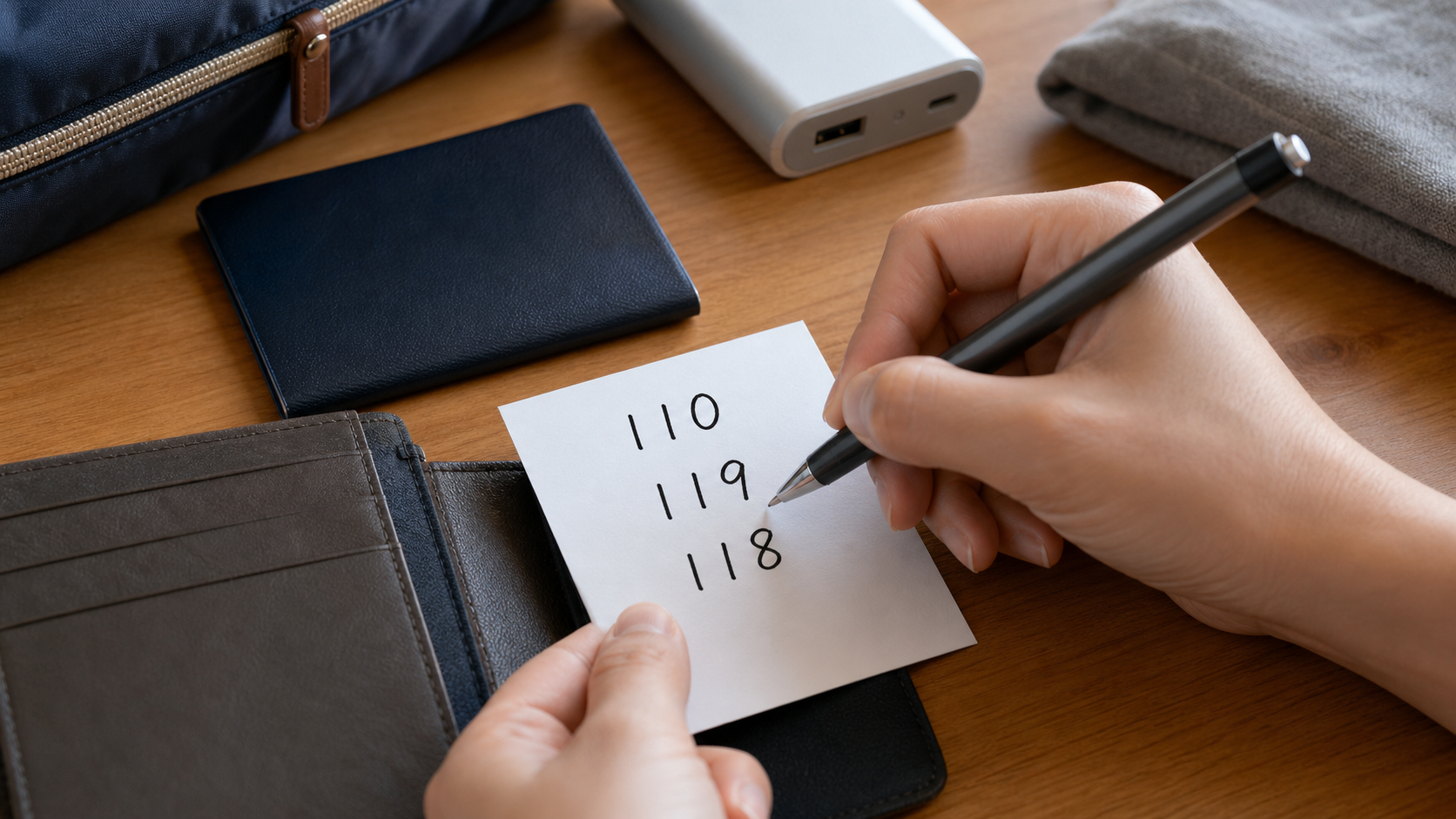
AI-generated conceptual photo. Create your own card with current personal details.
Layer 2: Know who can place the call
If your phone cannot connect or you cannot communicate clearly, ask:
- hotel or accommodation staff
- staffed railway or airport counters
- a police box (koban) or police station
- shop, attraction or restaurant staff
- another nearby person
For 119 specifically, FDMA advises using a public phone, asking nearby people or a shop to call, or going directly to a fire station when a mobile or IP phone cannot connect.
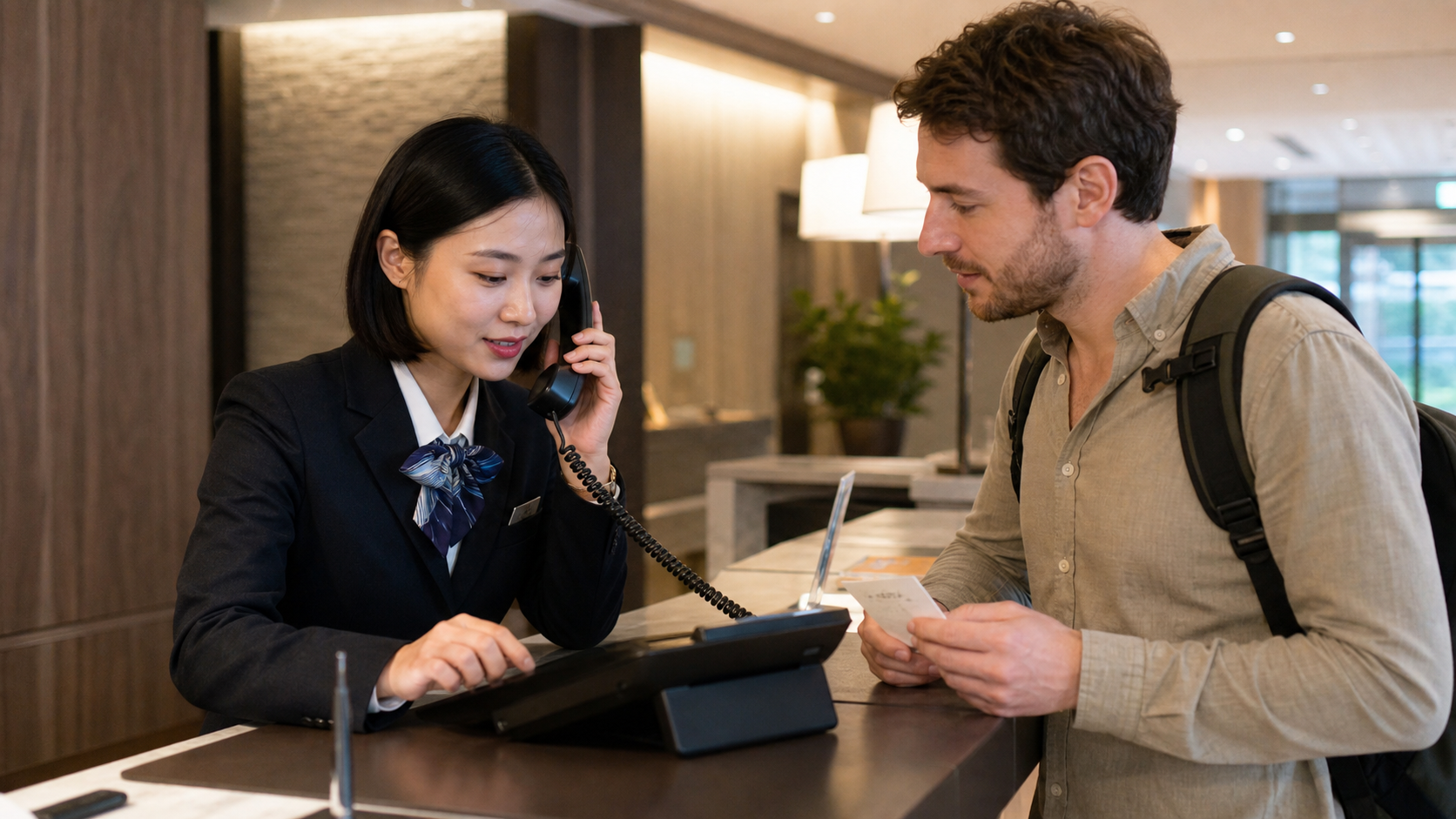
AI-generated conceptual photo. Staff availability and language ability vary.
If battery failure is the risk, prepare with RJG's phone charging and offline Plan B guide. If the issue is minor medicine or daily essentials rather than an emergency, use the Japan pharmacy and drugstore guide.
Save This 30-Second Emergency Card
Copy this into an offline note and add your accommodation details:
JAPAN EMERGENCY
110 Police emergency
119 Fire / ambulance
118 Emergency at sea
#9110 Non-emergency police consultation
JNTO 050-3816-2787

My accommodation:
Japanese address:
Nearest station / landmark:
My callback number:
Emergency contact / insurer:
Do not make a test call to an emergency number. Confirm your phone plan's voice-call and emergency-call behavior with the provider before departure, and keep the staff-assisted Plan B.
Frequently Asked Questions
What is the police emergency number in Japan?
Call 110 for an urgent crime, accident or immediate threat requiring police response.
What is the ambulance number in Japan?
Call 119 for an ambulance. The same number also reaches the fire service.
What is 118 used for in Japan?
Call 118 for incidents and accidents at sea. It connects to the Japan Coast Guard.
What is #9110?
#9110 is the nationwide police consultation number for matters that do not require an immediate emergency response. Local hours and handling can vary.
Can I call Japan's emergency services in English?
English support exists in some services and locations, but do not assume a nationwide guarantee. State your location first, use short words, show a saved Japanese address, and ask nearby staff to assist if needed.
What should I tell a 119 dispatcher?
Say whether it is a fire or medical emergency, then give the location or nearest landmark, what happened, the person's age and condition if known, and your name and callback number.
What if my phone cannot call 119?
FDMA advises using a public phone, asking a nearby person or shop to call, or going directly to a fire station. Keep your hotel address saved offline.
Is the JNTO Visitor Hotline an emergency number?
It is a 24-hour multilingual tourist support and information line, not a replacement for police, fire, ambulance or Coast Guard dispatch.
Should I use 110 for a lost item?
Not for an ordinary lost item with no immediate danger. Contact the transport operator, venue or nearest police box and follow the lost-property process.
What should I save before traveling?
Save 110, 119, 118, #9110, the JNTO hotline, your accommodation's Japanese address, a nearby landmark, your callback number and your insurer's assistance details in an offline note or paper card.
Official Sources
Last checked: August 18, 2026 JST.
- Fire and Disaster Management Agency: How to call 119
- FDMA: Guide for Ambulance Services (English PDF)
- National Police Agency: emergency 110 and consultation #9110
- National Police Agency: police consultation #9110
- Tokyo Metropolitan Police: information for foreign tourists
- Japan Coast Guard: 118 and NET118 (English PDF)
- JNTO: Japan Visitor Hotline
Comments