Tokyo has enough indoor museums to rescue a wet day, but the wrong choice can still waste it. Several major museums close on Monday, Miraikan normally closes on Tuesday, and some holiday Mondays shift the closure to the next weekday. A museum can also be open while one gallery, simulator or special exhibition is unavailable.
Image note: The visuals in this guide are AI-generated editorial images, not documentary photographs taken inside the museums.
This guide compares six science, history, fire-service and transport museums in Tokyo. It does not include art museums, immersive art spaces or teamLab; those belong in a separate art-focused guide.
The fastest way to choose is by the experience you want, the day of the week and how many hours you can give it. Check the linked official calendar before leaving your hotel, especially on a Monday, the day after a national holiday or during a renovation period.
- 30-second answer: which Tokyo museum should you choose?
- Three checks to make before you leave
- 1. National Museum of Nature and Science: the broadest science choice
- 2. Miraikan: future science, with a major 2026 closure
- 3. Edo-Tokyo Museum: the large Tokyo-history choice
- 4. Tokyo Metro Museum: trains without a full-day commitment
- 5. Fire Museum: the free, short indoor option
- 6. Fukagawa Edo Museum: a life-size Edo neighborhood
- Half-day routes that still work in rain
- Monday and Tuesday closure traps
- Frequently asked questions
- What is the best science museum in Tokyo for a first visit?
- Which Tokyo museum is best for Edo history?
- Are Tokyo museums open on Monday?
- Which museum is free?
- Do I need to reserve museum tickets in advance?
- Which museum has the strongest English support?
- Can I visit two museums in one rainy day?
- Does this guide include art museums or teamLab?
- Choose one museum, then verify the date
- Official sources and last checked
30-second answer: which Tokyo museum should you choose?
| If you want… | Choose | Adult permanent admission | Usual closed day | RJG planning time |
|---|---|---|---|---|
| The broadest science and natural-history collection | National Museum of Nature and Science | ¥630 | Monday | 2.5–4 hours |
| Future technology, Earth and interactive science | Miraikan | ¥630 | Tuesday | 2.5–4 hours |
| A large overview of Edo and modern Tokyo | Edo-Tokyo Museum | ¥800 | Monday | 2.5–4 hours |
| Trains, subway engineering and simulators | Tokyo Metro Museum | ¥220 | Monday | 1.5–2.5 hours |
| A short, free stop about firefighting | Fire Museum | Free | Monday | 1–1.5 hours |
| A life-size Edo neighborhood atmosphere | Fukagawa Edo Museum | ¥400 | Second and fourth Monday | 1–1.5 hours |
Important 2026 date: Miraikan says it will close for refurbishment from October 1, 2026 through April 22, 2027. For visits in that period, choose another museum even if an old itinerary says Miraikan is open.
The visit times above are RJG planning estimates, not official duration guarantees. Add time for a special exhibition, Dome Theater screening, simulator queue, meal or a slower family pace.
Three checks to make before you leave
1. Check the actual calendar instead of relying on the usual closed day
Monday creates the widest overlap of scheduled closures in this six-museum list. The National Museum of Nature and Science, Edo-Tokyo Museum, Tokyo Metro Museum and Fire Museum normally close on Monday. Holiday rules can move that closure to Tuesday or another following weekday. Fukagawa Edo Museum closes on the second and fourth Mondays, while Miraikan normally closes on Tuesday.
Open the museum’s current calendar on the morning of your visit. Temporary maintenance, exhibition changes and weather-related restrictions can override the weekly pattern.
2. Separate permanent admission from special tickets
The prices in this guide cover permanent exhibitions. A special exhibition may use a different ticket, price, entrance or time slot. At Miraikan, the Dome Theater has reserved seating; the museum says same-day seats may be available when space remains. At the National Museum of Nature and Science, the permanent collection and special exhibitions also use different admission arrangements.
If your day depends on one named exhibition or screening, confirm that specific page before buying transport tickets.
3. Check the final walk in the rain
“Near the station” can still mean a wet transfer. The Fire Museum connects directly to the area of Yotsuya-sanchome Station Exit 2, the Tokyo Metro Museum sits beneath the elevated tracks at Kasai Station, and Edo-Tokyo Museum is one minute from Toei Oedo Line Ryogoku Station exits A3/A4. Miraikan involves a four- or five-minute outdoor walk from the nearest Yurikamome stations, while the National Museum of Nature and Science is about five minutes from JR Ueno Station’s Park Exit.
Save the correct station exit before going underground. The Tokyo trains guide explains the difference between JR, Tokyo Metro, Toei and other operators.
1. National Museum of Nature and Science: the broadest science choice
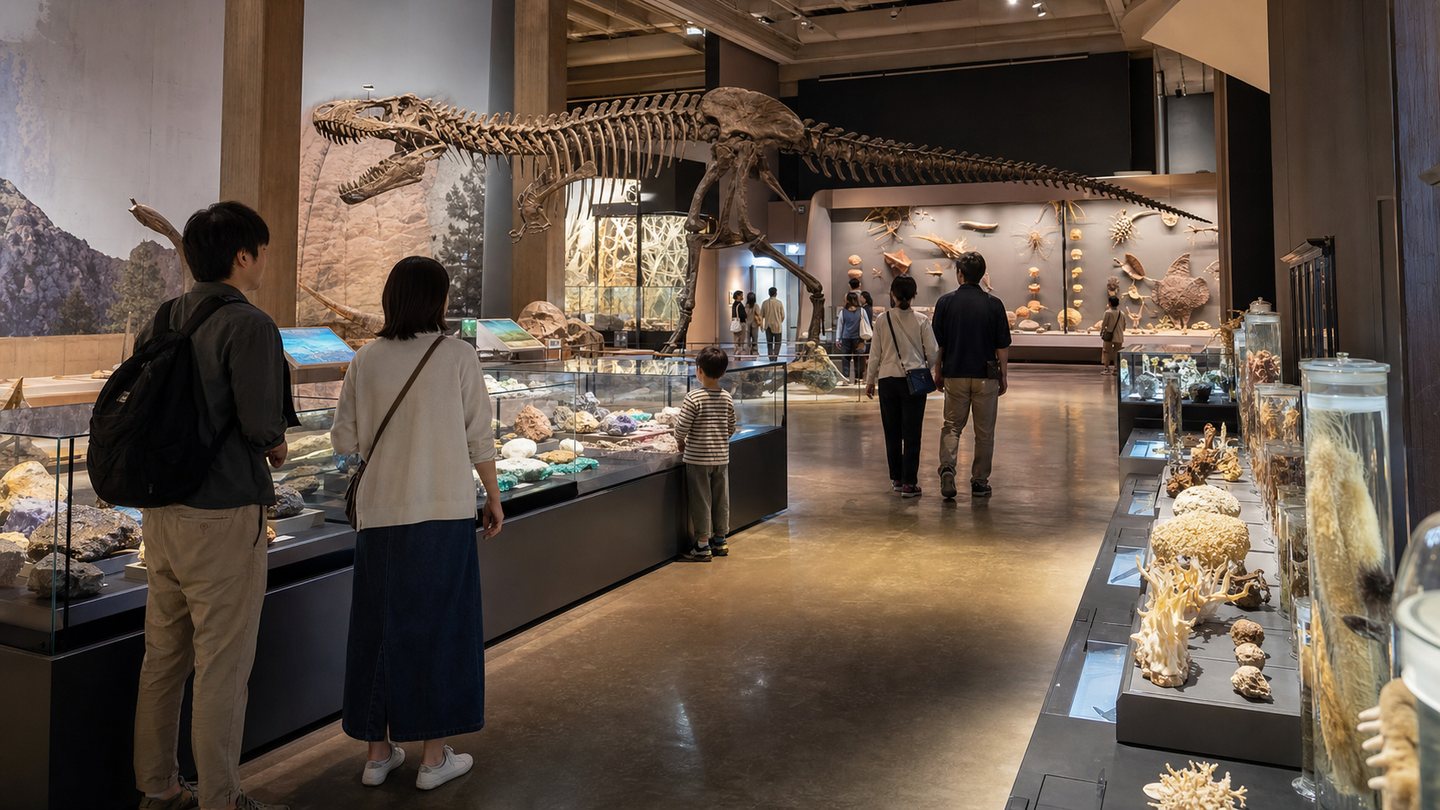
The National Museum of Nature and Science, often shortened to Kahaku, is the broadest general science choice in this six-museum comparison when a rainy day opens up unexpectedly. Its Ueno museum is split between the Japan Gallery and Global Gallery, covering the natural history of Japan, biodiversity, evolution, science and technology.
This is not a small “one dinosaur and leave” stop. The number of floors and subjects makes it easy to spend half a day. Families, science-minded adults and mixed-interest groups can separate briefly and still find a useful section.
Official basics checked July 23, 2026:
- Hours: 9:00–17:00; admission ends 30 minutes before closing.
- Usual closure: Monday. If Monday is a national holiday, the museum opens Monday and closes the following Tuesday.
- Permanent admission: ¥630 for general and university visitors; high-school age and younger are listed as free. The official page also lists age-based free-admission conditions and ID requirements.
- Access: about five minutes from JR Ueno Station, Park Exit; about ten minutes from Tokyo Metro Ueno or Keisei Ueno.
- Tickets: advance permanent-exhibition e-tickets are available, and the counter accepts several cards, IC cards and QR payment methods.
English support is comparatively strong. The museum provides English floor guides and a free smartphone-based KAHAKU HANDY GUIDE in Japanese, English, Chinese and Korean through its internal guide Wi-Fi. A paid permanent-exhibition audio guide is also listed in four languages.
2026 limitation: the museum says part of Global Gallery 2F is temporarily closed, and Global Gallery B3F will close for renovation from September 8, 2026. That does not mean the entire museum is closed, but it matters if a specific section is your reason for going.
Choose Kahaku when you want one museum to carry most of a day. Avoid trying to combine it with two more large attractions simply because they look close on a map.
Check Kahaku hours, closures and tickets.
2. Miraikan: future science, with a major 2026 closure
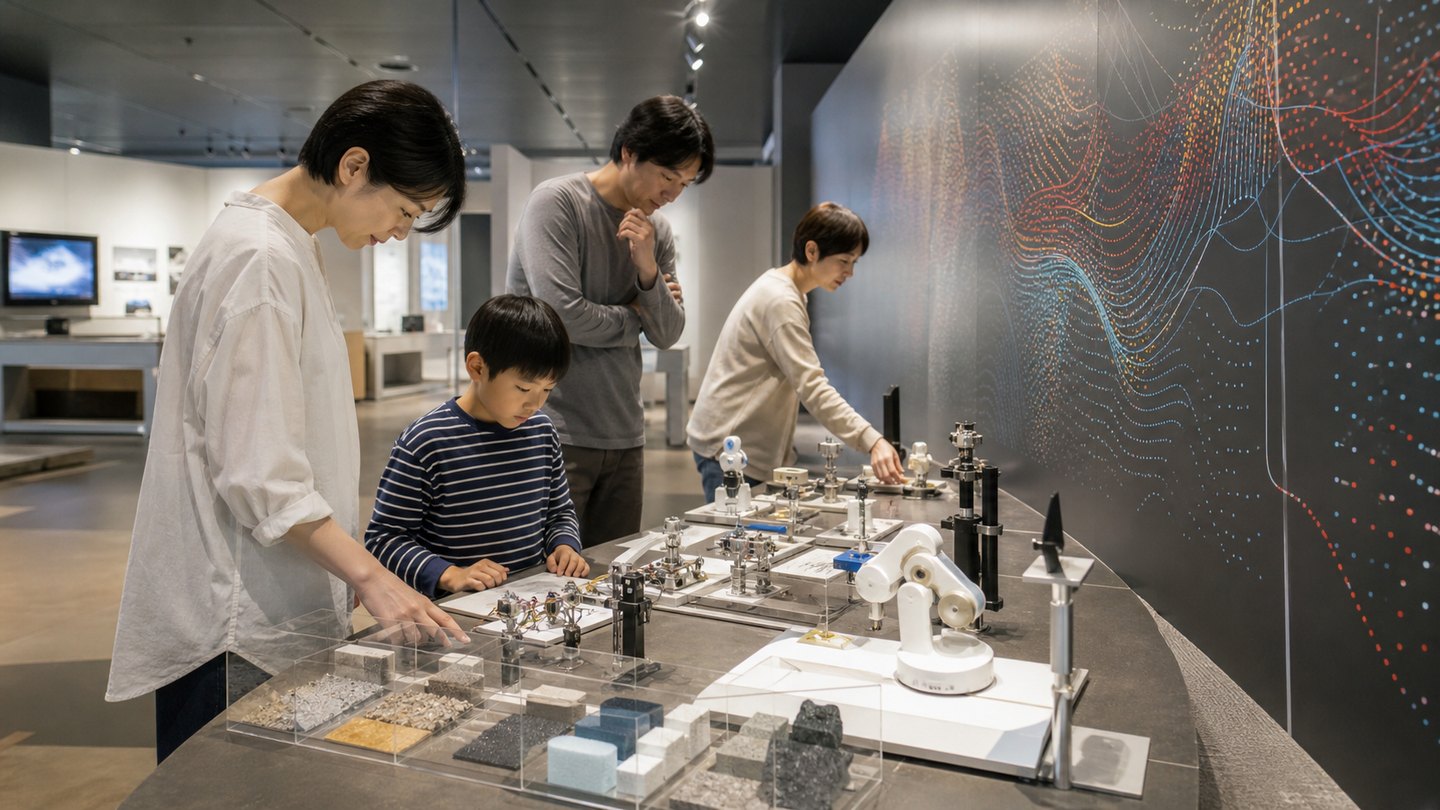
Miraikan—the National Museum of Emerging Science and Innovation—is the future-facing option. Its permanent exhibitions are organized around exploring frontiers, creating the future and understanding Earth. It works well for visitors who prefer robotics, space, computing, global systems and interactive explanations to specimen-heavy natural history.
Official basics checked July 23, 2026:
- Hours: 10:00–17:00; ticket sales end at 16:30.
- Usual closure: Tuesday, except when Tuesday is a national holiday; additional seasonal openings and maintenance closures are possible.
- Refurbishment closure: October 1, 2026–April 22, 2027.
- Permanent admission: ¥630 for adults, ¥210 for visitors age 18 and under, and free for preschool children. The official page lists free permanent admission for visitors age 18 and under on Saturdays.
- Access: five minutes from Tokyo International Cruise Terminal Station or four minutes from Telecom Center Station on the Yurikamome; about 15 minutes from Tokyo Teleport Station on the Rinkai Line.
- Tickets: permanent-exhibition and Dome Theater tickets can be bought online from one week before the visit; same-day permanent tickets are also sold at the outside booth.
The permanent exhibition has Japanese and English labels. The official accessibility page also lists English subtitles for permanent-exhibition movies, an English floor guide and English Dome Theater audio guidance.
The ticket distinction matters here. A standard permanent ticket does not automatically secure each timed experience. The Dome Theater uses reserved seats, and some exhibits or children’s areas require numbered tickets. If the Dome Theater is central to your plan, reserve rather than treating it as a walk-in extra.
Choose Miraikan for a dedicated Odaiba science day before September 30, 2026. From October 1 onward, remove it from the day’s options entirely until the announced reopening date has passed and the official site confirms operations.
Check Miraikan hours, closure dates and tickets.
3. Edo-Tokyo Museum: the large Tokyo-history choice
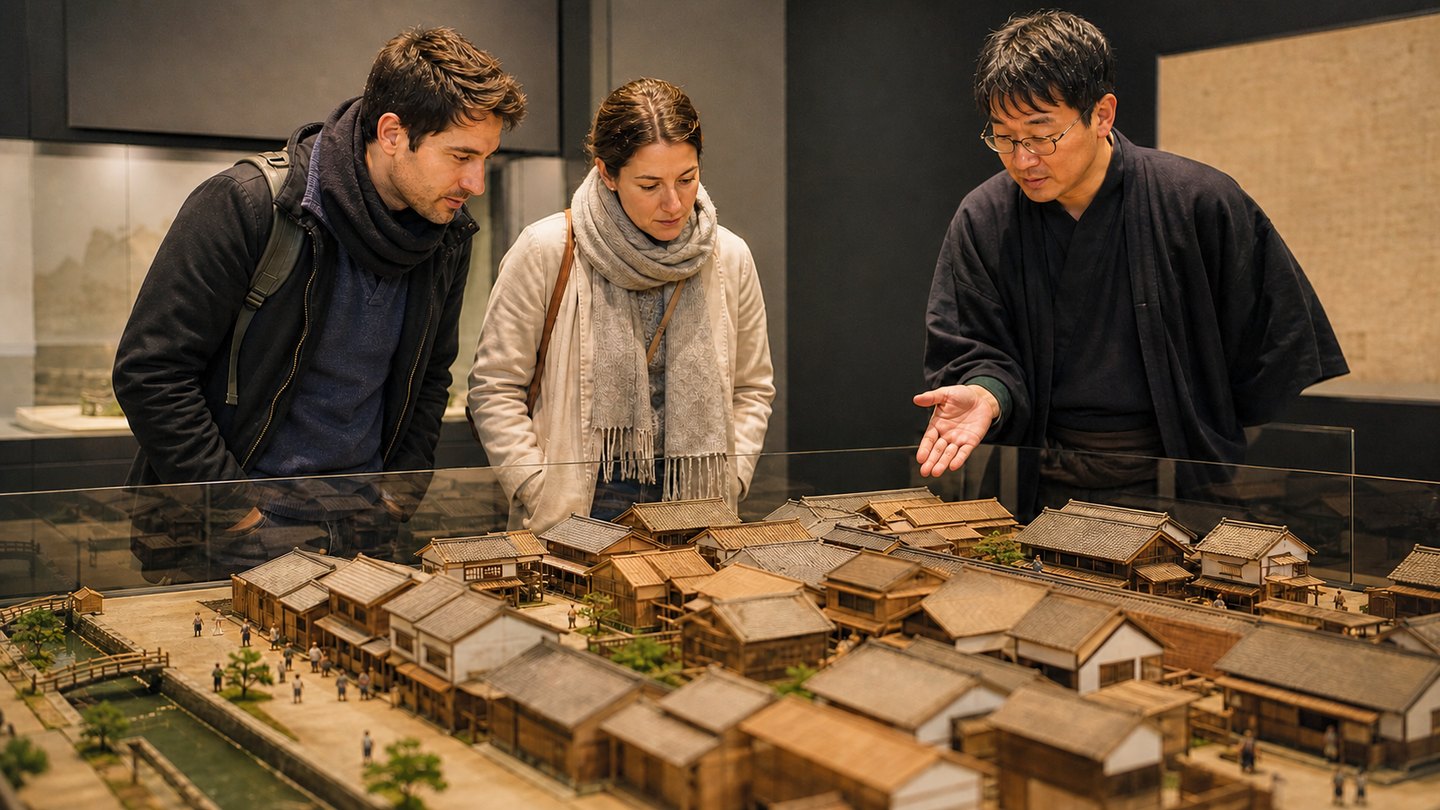
The Edo-Tokyo Museum reopened on March 31, 2026 after a four-year closure and major renovation. Its permanent exhibition is the large-format choice for understanding how Edo developed into modern Tokyo. The official permanent-exhibition material divides the story into Edo and Tokyo zones and uses reconstructed spaces, models, objects and city-history narratives.
This is the museum to choose when the group asks, “How did Tokyo become Tokyo?” It is broader than Fukagawa Edo Museum and requires more time. Fukagawa is stronger for the atmosphere of one reproduced neighborhood; Edo-Tokyo is stronger for a city-scale historical sequence.
Official basics checked July 23, 2026:
- Hours: 9:30–17:30; Saturday until 19:30; last admission 30 minutes before closing.
- Usual closure: Monday; when Monday is a national holiday, the following weekday is closed. Year-end and New Year closures also apply.
- Permanent admission: ¥800 adults, ¥400 age 65 and over, ¥480 university students, ¥300 high-school students, and free for junior-high age or younger.
- Access: one minute from Toei Oedo Line Ryogoku Station exits A3/A4; three minutes from the west exit of JR Ryogoku Station.
- Tickets: online tickets and same-day first-floor counter sales are available. The official page says purchased tickets cannot be refunded or moved to another date.
The museum operates an English website and lists a permanent-exhibition audio guide, multilingual communication support and accessibility tools. The amount of English attached to individual small objects can vary, so use the audio or guide resources if interpretation matters to your visit.
Choose Edo-Tokyo when you want one substantial history museum or when you plan a history-focused two-stop day with Fukagawa Edo Museum. Do not rely on memories of the pre-renovation museum layout; use the reopened museum’s current floor and exhibition pages.
Check Edo-Tokyo Museum hours and calendar and permanent ticket options.
4. Tokyo Metro Museum: trains without a full-day commitment
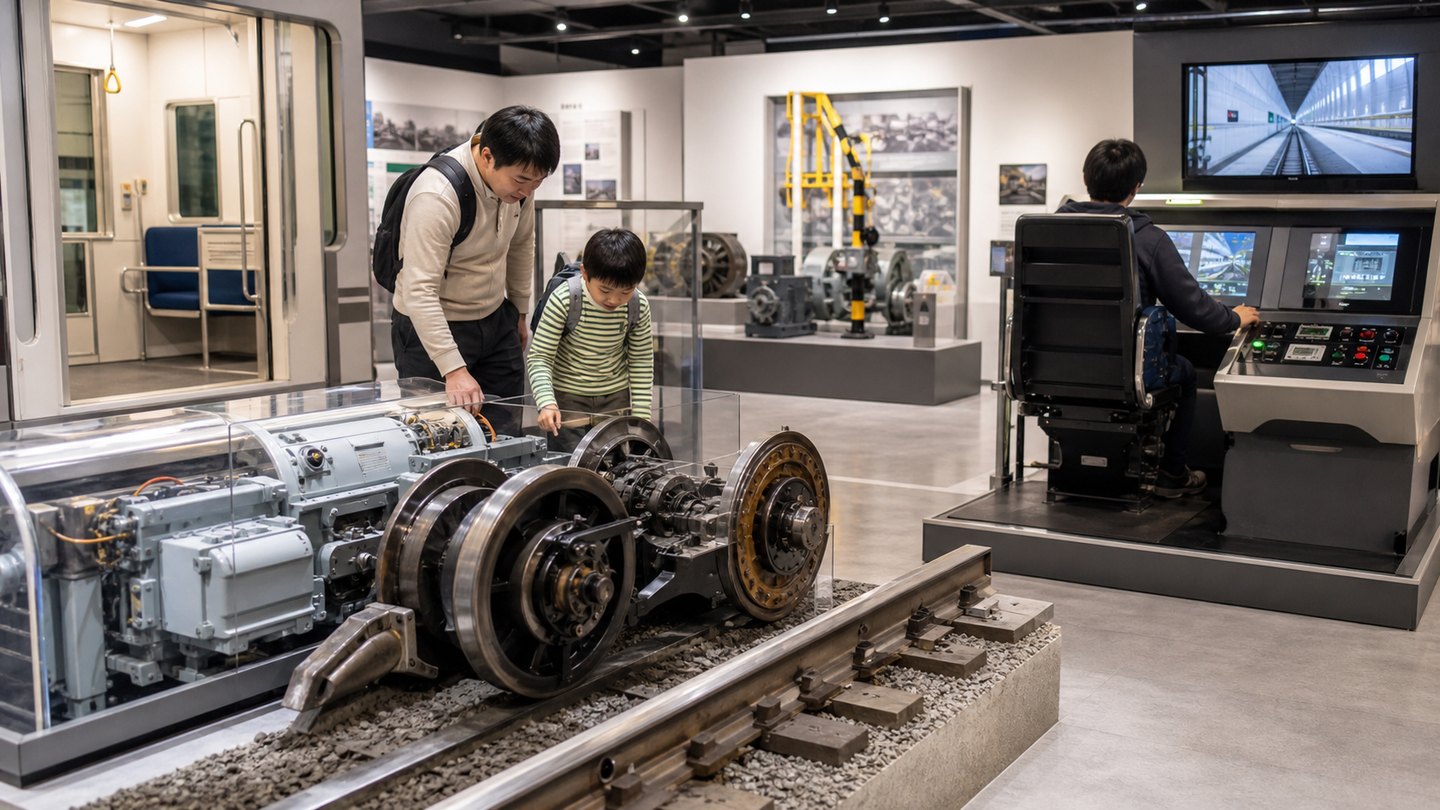
The Tokyo Metro Museum—often called Chikahaku—is a compact transport museum beneath the elevated tracks at Kasai Station. Its seven themed areas cover subway history, construction, safety, passenger service, train mechanisms, subway systems in Japan and abroad, and a play area. The official English site says more than 600 materials are displayed, along with real subway artifacts, model layouts, video displays and a hands-on simulator.
This is the most focused choice in the list. A visitor who loves transit may stay longer, but a general traveler can understand the museum without sacrificing the entire day.
Official basics checked July 23, 2026:
- Hours: 10:00–17:00; last admission 16:30.
- Usual closure: Monday; if Monday is a holiday or substitute holiday, the next day. The Japanese official page specifies the New Year closure as December 30–January 3.
- Admission: ¥220 adult; ¥100 for children age four through junior-high school.
- Access: directly by Kasai Station on the Tokyo Metro Tozai Line. Express trains do not stop at Kasai.
- English support: the museum has an English website with exhibit summaries, access and visitor information.
Simulator availability and queues can change. Treat a simulator as a possible highlight, not an assured private session. The museum FAQ also says food cannot be eaten inside, though drinks are allowed in the designated rest area.
Choose the Metro Museum for a train-focused half day, families who want a more manageable museum, or a wet day when central Tokyo’s large museums feel too demanding. Confirm that your Tozai Line train stops at Kasai before boarding.
Check the Tokyo Metro Museum calendar, hours and admission.
5. Fire Museum: the free, short indoor option
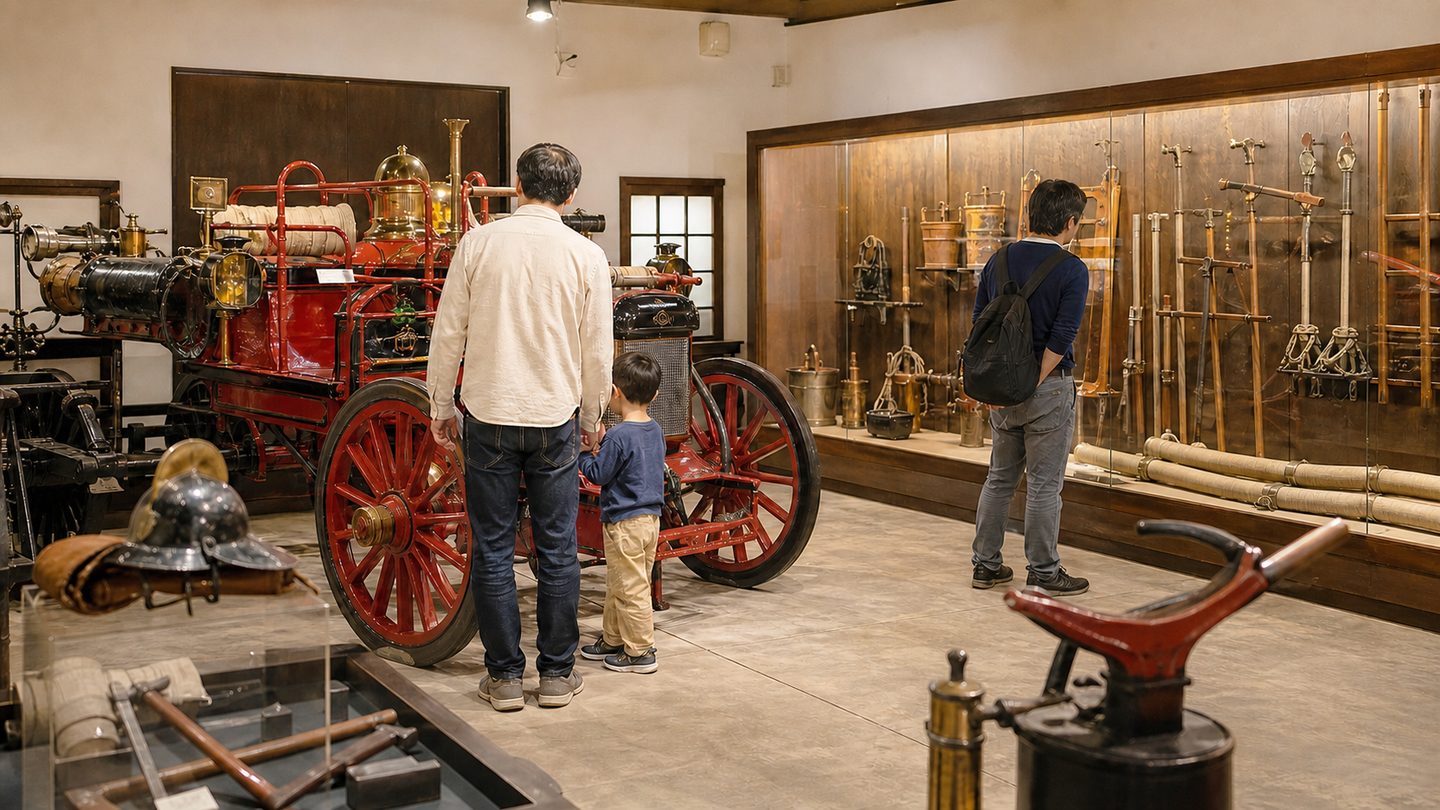
The Fire Museum in Yotsuya traces firefighting in Tokyo from Edo-period fire brigades to modern vehicles and equipment. The Tokyo Fire Department’s current museum page describes a collection of more than 12,000 items, including historical records, firefighting tools and fire engines. The floors include Edo firefighting, changes in fire service, a special-exhibition room, a library and a tenth-floor disaster-prevention lounge.
It is useful when you have 60–90 minutes, when a family needs a low-cost stop, or when heavy rain makes a long outdoor transfer unattractive.
Official basics checked July 23, 2026:
- Hours: 9:30–17:00; last admission 16:30.
- Usual closure: Monday. If Monday is a national holiday, the next weekday closes; the official page lists special Monday-opening exceptions for three disaster-prevention dates. Year-end closure is December 29–January 3.
- Admission: free.
- Access: at Tokyo Metro Marunouchi Line Yotsuya-sanchome Station Exit 2; about seven minutes from Toei Shinjuku Line Akebonobashi Station.
- Reservation: individuals do not need a reservation for a normal self-guided visit. Groups and library users follow separate reservation rules.
The Tokyo Fire Department’s foreign-resident information says English-speaking guides are available and lists multilingual audio guidance, but the museum’s current main page says its audio-guide loan service is suspended. Plan on a self-guided visit and treat any staff-led or device-based language service as something to confirm on the day.
Rain also affects one famous display: the official page says access to the outdoor fifth-floor helicopter closes during rain, snow, thunder, strong wind, heat alerts or other unsafe conditions. The indoor museum can still be worthwhile, but do not promise a child that the outdoor helicopter will be open on a wet day.
Check current Fire Museum hours and restrictions.
6. Fukagawa Edo Museum: a life-size Edo neighborhood
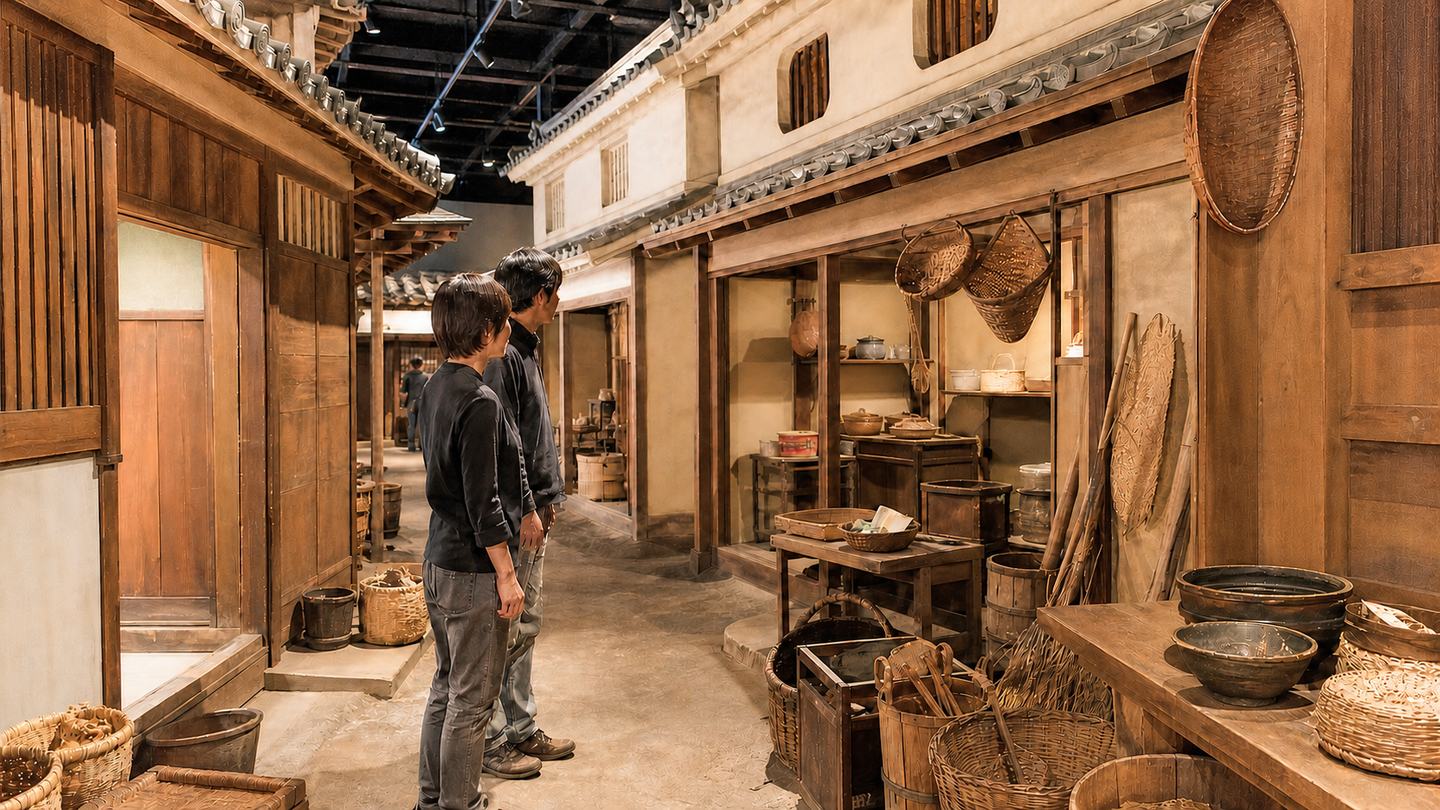
Fukagawa Edo Museum is smaller than the Edo-Tokyo Museum but more concentrated. Its permanent exhibition recreates the streets of Fukagawa-Saga Town in the late Edo period at full scale. Sound and lighting represent the passage of a day, and visitors can enter reproduced shops and row houses and encounter household objects at close range.
Choose it for atmosphere, scale and a short visit rather than a comprehensive history timeline. It also pairs naturally with Edo-Tokyo Museum because both sit on the Toei Oedo Line side of eastern Tokyo.
Official basics checked July 23, 2026:
- Exhibition hours: 9:30–17:00; last admission 16:30.
- Closure: second and fourth Monday, except when that Monday is a national holiday; December 29–January 3, with a special opening of the exhibition area listed for January 2 and 3; temporary closures may occur.
- Admission: ¥400 adult; ¥50 for elementary, junior-high and high-school age visitors.
- Access: three minutes from Kiyosumi-shirakawa Station Exit A3 on the Toei Oedo or Tokyo Metro Hanzomon Line.
- English support: the official site provides an English permanent-exhibition PDF. It also publishes guides in Chinese, Korean, German, French and Spanish.
Because the standard Monday closures are the second and fourth Monday, Fukagawa can sometimes work on a first, third or fifth Monday when several larger museums are closed. “Sometimes” is the key word: check the dated calendar before traveling.
Check Fukagawa Edo Museum hours and closure rules and current admission.
Half-day routes that still work in rain
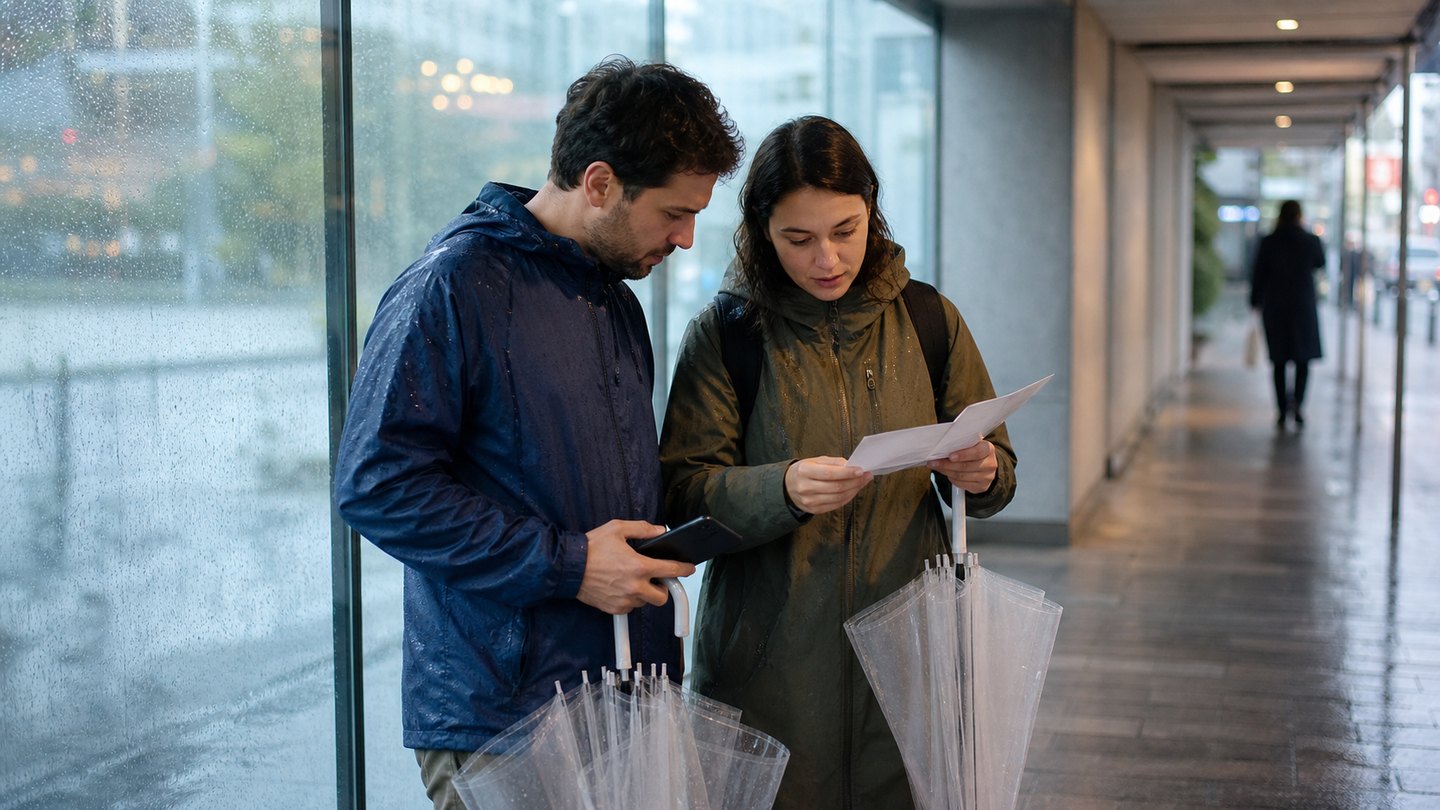
Route A: one large museum, no rushing
Choose Kahaku, Miraikan or Edo-Tokyo Museum and let it fill the half day. This is the lowest-complexity plan when rain is heavy, children move slowly or the group has different interests. Pair it with a meal or cafe whose opening hours you have checked.
Route B: Edo-Tokyo Museum plus Fukagawa Edo Museum
Start at Edo-Tokyo Museum in Ryogoku, then use the Toei Oedo Line toward Kiyosumi-shirakawa for Fukagawa Edo Museum. This route compares a broad city history with one full-scale neighborhood reconstruction.
It works when both museums are open and you start early enough. If you spend three or four hours at Edo-Tokyo, treat Fukagawa as optional rather than racing its 16:30 last-admission time.
Route C: a short specialist stop
Choose the Fire Museum or Tokyo Metro Museum when the museum is one part of the day. These are easier to fit around a late start, but they are in different parts of Tokyo and should not be paired merely because both are short.
Route D: Odaiba science day before October 2026
Use Miraikan as the anchor and keep the rest of the schedule in Odaiba. From October 1, 2026 through April 22, 2027, this route is unavailable under the announced refurbishment closure.
Monday and Tuesday closure traps
If it is Monday
Before October 2026, Miraikan is normally the clearest major-museum option because its usual closed day is Tuesday. Fukagawa Edo Museum may also open on the first, third or fifth Monday. National holidays and special maintenance can change both patterns, so the dated calendar decides.
If it is Tuesday
Miraikan normally closes, but Kahaku, Edo-Tokyo Museum, Tokyo Metro Museum and Fire Museum are normally open. The exception is a shifted closure after a Monday national holiday or another announced closure.
If your chosen museum is unexpectedly closed
Do not immediately cross Tokyo to a second museum from memory. Open the second museum’s official calendar first, then check its last-admission time and route. If the journey consumes most of the remaining opening window, switch to a smaller confirmed-open option or move the museum day.
For severe rain, wind or transport disruption, use the Japan rain and typhoon Plan B before treating an indoor attraction as permission to travel. An open museum does not make the journey safe.
Frequently asked questions
What is the best science museum in Tokyo for a first visit?
Choose the National Museum of Nature and Science for the broadest natural-history and science collection. Choose Miraikan for future technology and interactive science, but note its announced October 1, 2026–April 22, 2027 refurbishment closure.
Which Tokyo museum is best for Edo history?
Choose Edo-Tokyo Museum for a broad history of the city from Edo into modern Tokyo. Choose Fukagawa Edo Museum for a smaller, full-scale reconstruction of one late-Edo neighborhood.
Are Tokyo museums open on Monday?
Many are not. Kahaku, Edo-Tokyo Museum, Tokyo Metro Museum and Fire Museum normally close Monday. Miraikan normally closes Tuesday, while Fukagawa Edo Museum normally closes on the second and fourth Monday. Holiday and temporary closures can shift the pattern.
Which museum is free?
The Fire Museum has free admission. Other museums in this guide have low permanent-exhibition fees, with age-based free or discounted admission at several venues.
Do I need to reserve museum tickets in advance?
A normal permanent-exhibition visit is often available with a same-day ticket, but a special exhibition, group visit, Dome Theater screening or limited-capacity exhibit may use separate booking or numbered tickets. Check the specific official page for the experience you want.
Which museum has the strongest English support?
Kahaku and Miraikan publish extensive English visitor information and multilingual or English exhibition support. Edo-Tokyo Museum also operates a multilingual official site and lists audio and communication support. The smaller museums provide varying English web pages, PDFs or staff support.
Can I visit two museums in one rainy day?
Yes, but pair by geography and size. Edo-Tokyo Museum plus Fukagawa Edo Museum is the clearest history pairing. Two large museums can create a rushed day, especially when the first has a special exhibition.
Does this guide include art museums or teamLab?
No. It covers science, history, fire-service and transport museums. Art museums and immersive art spaces will be handled in a separate guide so the decision criteria do not become mixed.
Choose one museum, then verify the date
Use the table at the top to choose one primary museum. Then click its official opening calendar or ticket page and confirm these four items:
- your exact date is open;
- the exhibition or screening you want is operating;
- the last-admission time fits your route;
- your ticket type is the permanent, special or timed ticket you intended to buy.
If you are still choosing where to base your day, compare neighborhoods and station geography in the Tokyo area map.
Official sources and last checked
- National Museum of Nature and Science: admission and hours
- Miraikan: hours, tickets and refurbishment closure
- Edo-Tokyo Museum: hours and tickets
- Tokyo Metro Museum: visitor guide
- Tokyo Fire Department: Fire Museum
- Fukagawa Edo Museum: overview and hours
Last checked: July 23, 2026. Hours, prices, closure days, gallery access and language services can change. Visit-time ranges are RJG planning estimates, not museum guarantees.
Comments