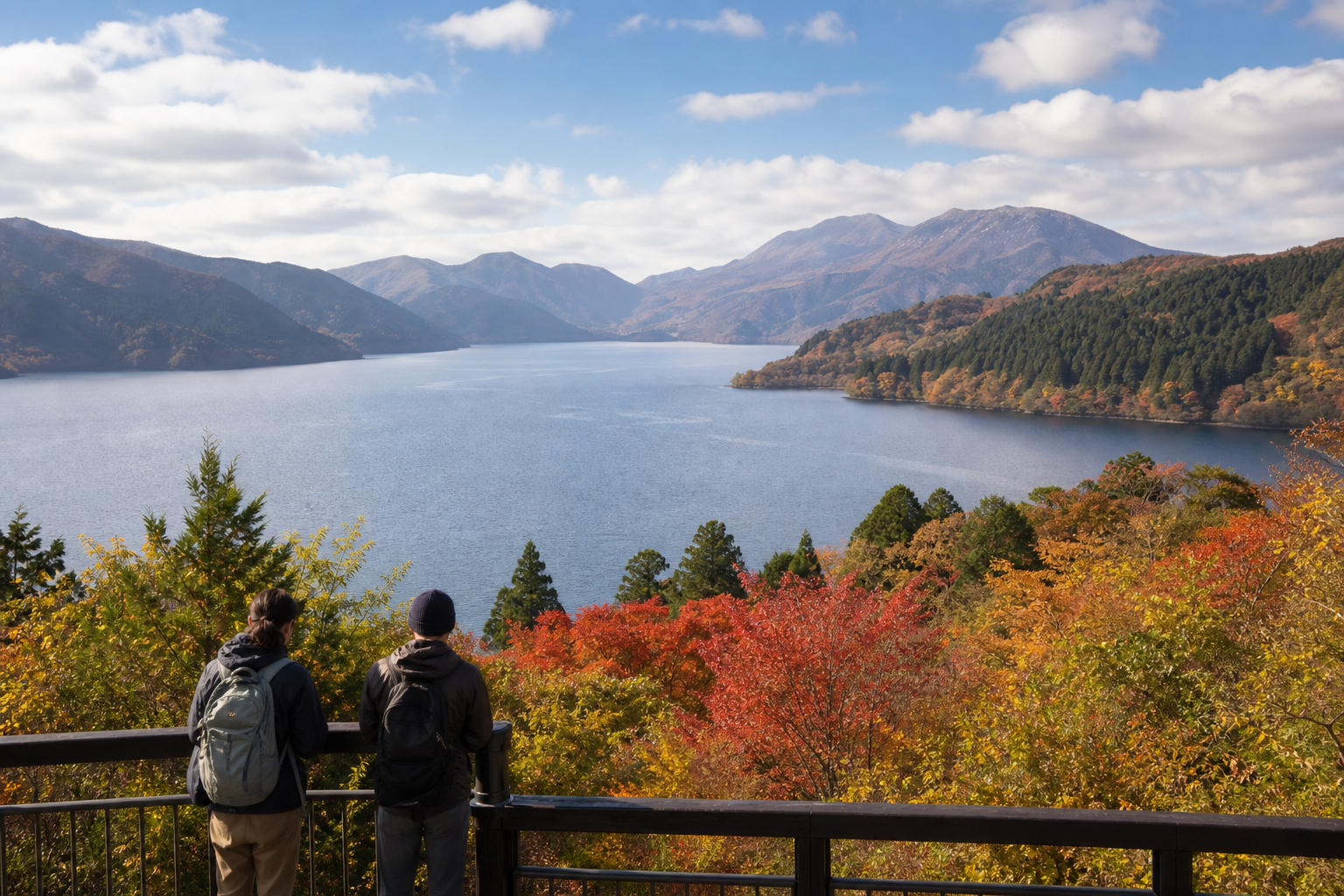
Hakone does not have one reliable “peak day.” The area rises from Hakone-Yumoto through Gora and Sounzan to Owakudani, then drops toward Togendai and Lake Ashi. Color can appear at different times along that route. Weather can also interrupt the ropeway or sightseeing cruise that makes the famous loop work.
That creates a practical problem for a traveler based in Tokyo: Should you start with the mountain railway, start with Lake Ashi, or abandon the full loop?
This guide makes that decision before it lists photo spots. It uses the official autumn window, current transport coverage, crowd warnings, and a return-time rule. It does not present a fixed 2026 foliage forecast because the Japan Weather Association normally releases autumn forecasts from September through November.
- Quick answer: the low-friction Hakone autumn plan
- When will Hakone’s autumn leaves peak in 2026?
- How to reach Hakone from Tokyo
- Which direction should you travel around Hakone?
- Where to see autumn color without overloading the day
- Hakone autumn crowd plan
- Should you buy the Hakone Freepass?
- Three workable autumn itineraries
- Plan B for wind, fog, rain, weak color, or a late start
- Your 72-hour, 24-hour, and same-morning checklist
- FAQ
- When are autumn leaves best in Hakone in 2026?
- Is Hakone a realistic day trip from Tokyo in autumn?
- Which direction is best for the Hakone Loop?
- Does the Hakone Freepass include the Romancecar?
- Is the Hakone Freepass worth it for one day?
- Does public transport avoid autumn crowds in Hakone?
- What happens if Hakone Ropeway is closed?
- Can I see Mt. Fuji from Hakone in autumn?
- Sources and update note
Quick answer: the low-friction Hakone autumn plan
For a first plan, use late October through November as Hakone’s broad foliage season. Hakone Ropeway’s official guidance says color begins around late October at Owakudani and can be seen along the line until around mid-November. JNTO describes Hakone color from October through November. These are planning ranges, not a guarantee for your date.
Choose the route from your entry point and current operations:
- Entering from Shinjuku through Hakone-Yumoto: use the clockwise-style route—Hakone-Yumoto, Gora, Sounzan, Owakudani, Togendai, Lake Ashi—when the listed services are operating.
- Entering from Mishima or prioritizing Lake Ashi: start at Hakonemachi-ko or Motohakone-ko, cross the lake toward Togendai, then travel through Owakudani and Gora toward Hakone-Yumoto.
- If the ropeway or cruise is suspended: do not force a circular itinerary. Choose one side of Hakone and return by bus or rail.
- On November weekends and holidays: expect the area to be busy. Hakone’s official crowd page identifies November as the autumn-leaf period when many visitors arrive.
- For a Tokyo day trip: set a decision time for beginning the return. Do not let a paid pass or a famous final stop push you into a fragile evening connection.
One action now: choose Hakone-Yumoto first, Lake Ashi first, or a partial-area Plan B. Then save the official Hakone real-time status page and recheck it 24 hours before travel.
When will Hakone’s autumn leaves peak in 2026?
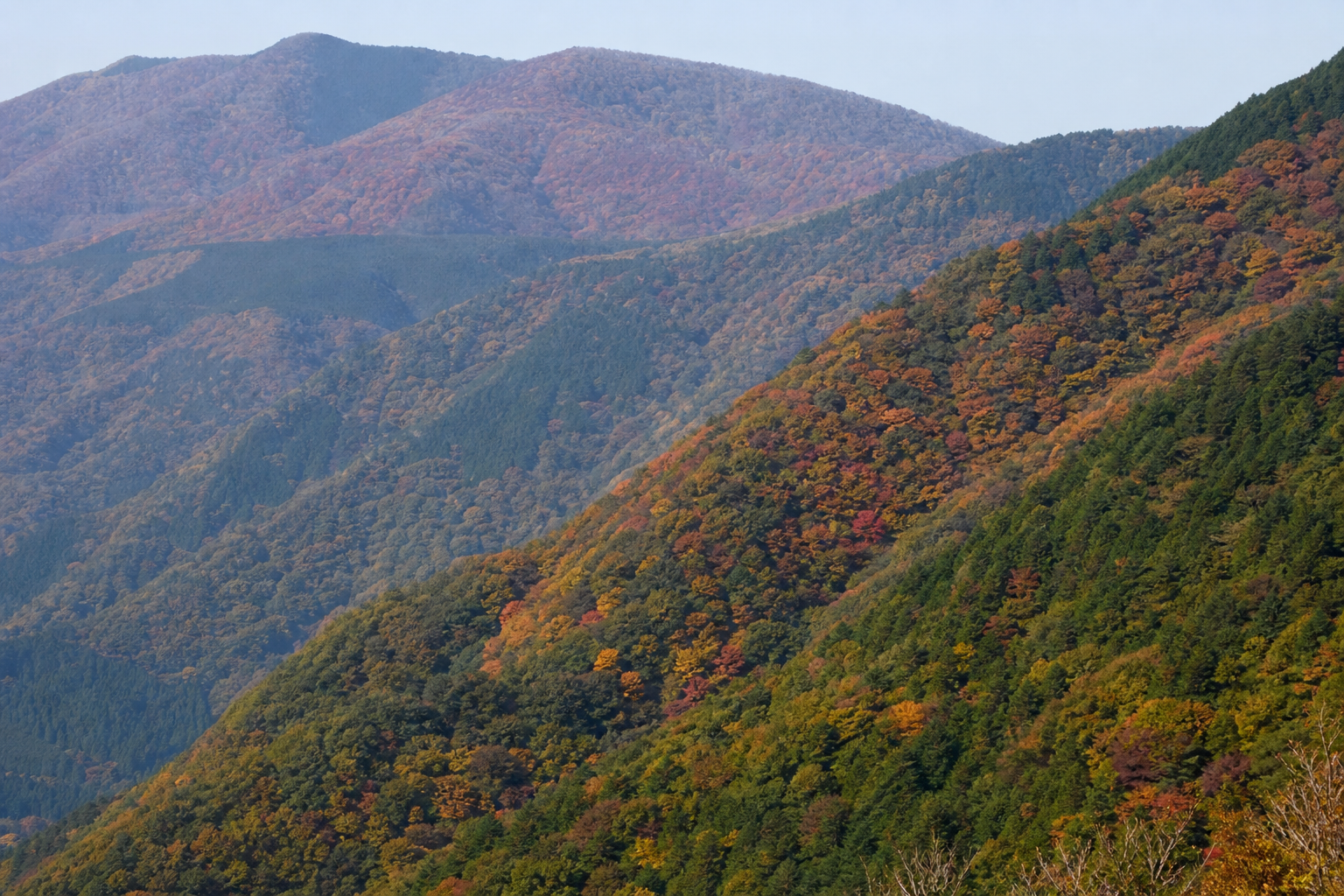
An exact 2026 peak date was not available when this guide was checked on August 5, 2026. Do not build a non-refundable itinerary around a date copied from a previous year.
Use the official planning ranges instead:
| Area or experience | Official planning signal | How to use it |
|---|---|---|
| Owakudani and the ropeway line | Late October to around mid-November | Earlier high-area candidate; verify weather and operations |
| Gora, Hakone Museum of Art and Hakone Tozan Railway | Listed by JNTO among Hakone’s major foliage experiences | Useful middle-Hakone zone; check dated local updates |
| Lake Ashi | JNTO includes it among the main Hakone foliage places | Scenic loop component, but boat and mountain visibility depend on weather |
| Hakone as a whole | October through November in JNTO guidance | Broad booking window, not one uniform peak |
| National forecast | JWA normally issues autumn forecasts September–November | Check again once the 2026 forecast is published |
The right response to uncertain color is not to add more stops. Save one higher option and one lower or indoor option, then choose after checking current dated conditions.
If your dates are flexible, compare Hakone with the Tokyo Autumn Leaves 2026 guide, Mt. Takao Autumn Leaves 2026, Nikko Autumn Leaves 2026, and the Kawaguchiko Autumn Leaves Festival guide. Their elevations, transport risks, and likely timing differ.
How to reach Hakone from Tokyo
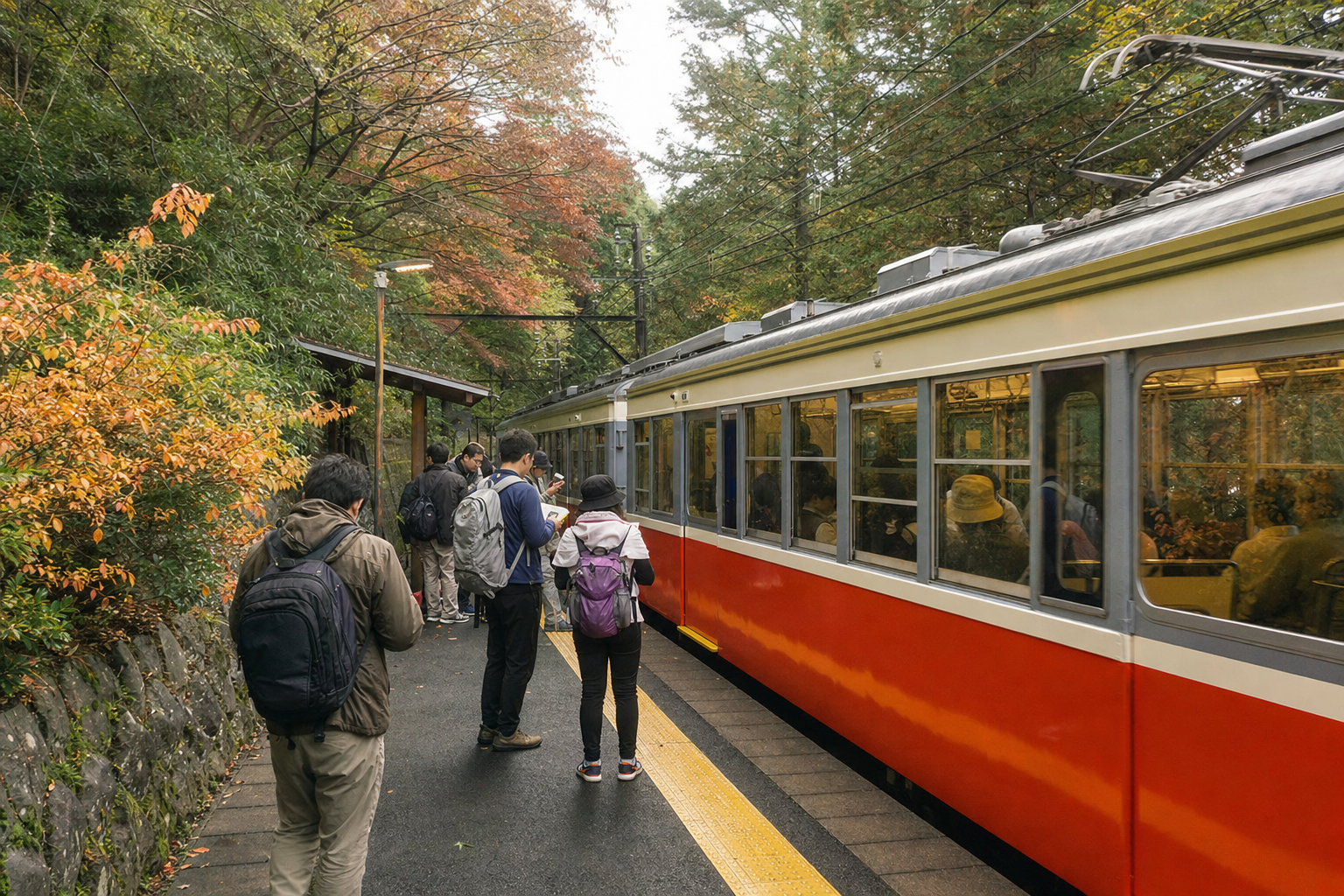
Hakone-Yumoto is the usual gateway from Tokyo. Odawara is the transfer point for travelers using JR or the Tokaido Shinkansen.
| Tokyo-side route | Best fit | Ticket issue | Main trade-off |
|---|---|---|---|
| Odakyu Romancecar from Shinjuku | Staying in west or central Tokyo; wanting a direct reserved train to Hakone-Yumoto | Limited-express ticket is extra even when using the Hakone Freepass | Simple and direct, but reserve the train you need |
| Regular Odakyu services via Odawara | Budget matters more than a direct limited express | Base fare can be included in the Shinjuku version of the Freepass | More time and possible transfers |
| Tokaido Shinkansen from Tokyo or Shinagawa to Odawara | Staying near Tokyo Station; arriving from Kyoto or Osaka; holding a suitable JR ticket | Hakone-area transport is separate | Fast access to Odawara, but no direct train to Hakone-Yumoto |
| Tokaido Line to Odawara | Avoiding a Shinkansen surcharge | Separate local Hakone transport or Odawara Freepass | Slower than Shinkansen but straightforward |
Odakyu’s e-Romancecar system allows travelers to search, reserve, and purchase a specific train. A smartphone purchase-completion screen can be used for boarding under the operator’s instructions. Do not rely on a bookmark: the operator says to reopen the screen from “Reservation Confirmation.” Keep the registered phone number and email address accessible.
If your Japan itinerary also includes Kyoto, Osaka, or other cities, use the Japan Travel Times From Tokyo guide to compare realistic hotel-to-hotel time rather than train time alone.
Which direction should you travel around Hakone?
The “Hakone Loop” is a chain of different transport modes, not one assured circular service. A normal clockwise-style trip from Hakone-Yumoto uses the mountain railway to Gora, cable car to Sounzan, ropeway through Owakudani to Togendai, sightseeing cruise across Lake Ashi, and a bus back toward Hakone-Yumoto or Odawara.
Use this decision table before departure:
| Your situation | Start direction | Reason | Failure point to watch |
|---|---|---|---|
| Shinjuku or Hakone-Yumoto entry; all services normal | Hakone-Yumoto → Gora → Owakudani → Lake Ashi | Natural sequence from the main gateway | Cable-car and ropeway queues can accumulate |
| Mishima entry or Lake Ashi is the priority | Lake Ashi → Togendai → Owakudani → Gora | Avoids crossing the whole area before the main objective | Cruise or ropeway suspension can break the chain |
| Strong wind, poor visibility, or ropeway warning | One side only | Keeps the day usable without depending on the aerial section | Do not treat a bus replacement as automatic |
| Late arrival at Odawara or Hakone-Yumoto | Gora area or Lake Ashi area, not both | Protects daylight and the Tokyo return | A full loop may close behind you as services end |
| Overnight in Hakone | Put the most weather-sensitive section first on the clearer day | More flexibility than a Tokyo day trip | Confirm luggage transfer and hotel access separately |
Direction alone does not guarantee fewer crowds. It prevents a different failure: reaching the wrong side of the area late, after the last practical connection for your plan.
Where to see autumn color without overloading the day
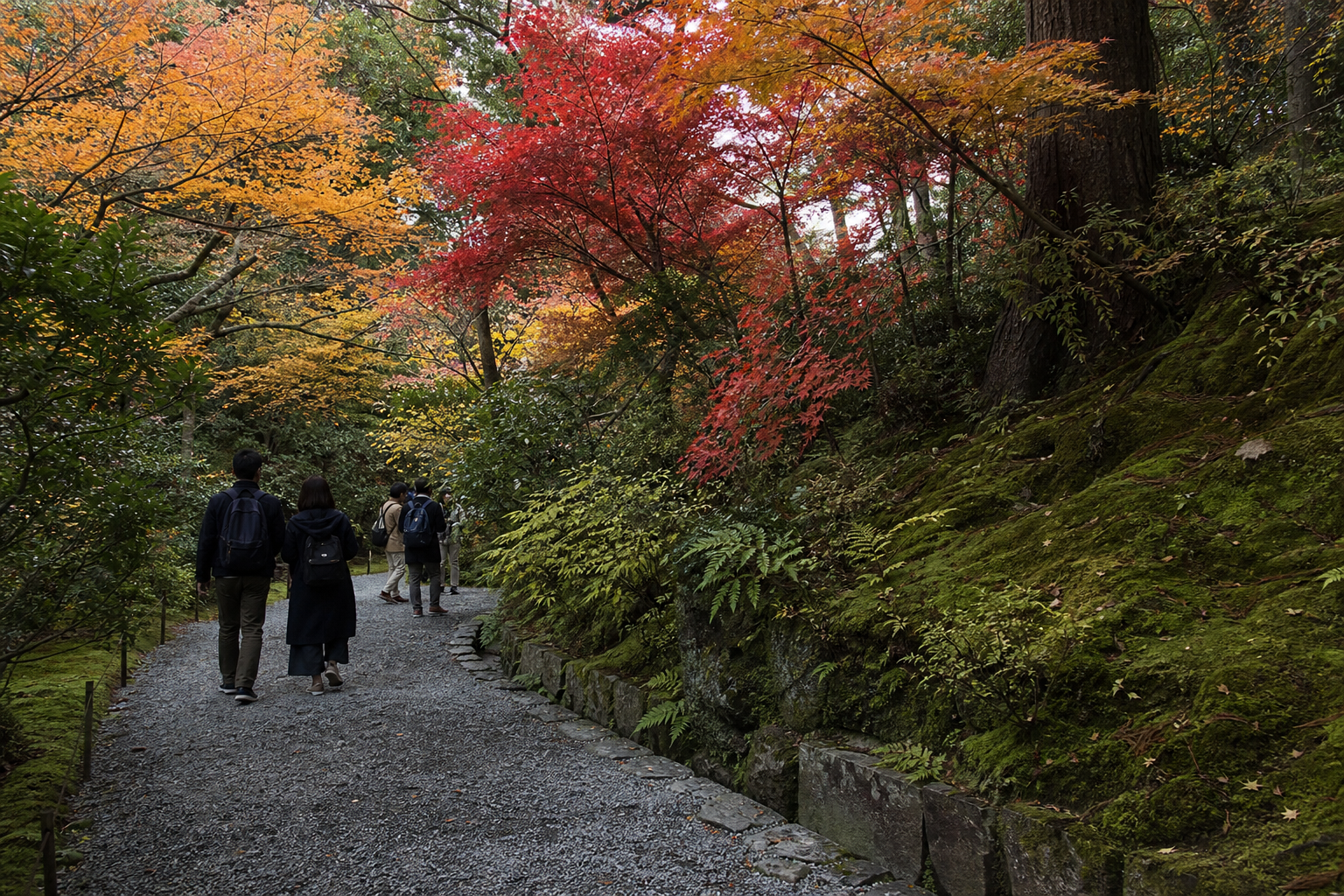
JNTO lists Gora Park, Hakone Museum of Art, Lake Ashi, Choanji, and the Hakone Tozan Railway among Hakone’s principal foliage experiences. Choose one primary zone and let the transport between zones provide the rest of the scenery.
Gora and the mountain railway
Choose Gora when you want a railway-and-garden day with less dependence on the cruise. The Hakone Tozan Railway climbs from Hakone-Yumoto through mountain stations to Gora. Gora also connects to the cable car for Sounzan.
This is the easier side to retain if high winds make the ropeway uncertain. It is not fully weather-proof: outdoor paths can be slippery, and rail or bus operations can still change.
Owakudani and the ropeway
Choose Owakudani for volcanic scenery, aerial views, and a connection between Sounzan and Togendai. The official ropeway page lists February–November boarding hours as 9:00–17:00, but adverse weather, mechanical trouble, and maintenance can suspend service.
The operator says the ropeway’s autumn color begins around late October and continues along the line until around mid-November. It also advises a light outer layer because windy autumn days can feel cold.
Lake Ashi
Choose Lake Ashi when the cruise, shoreline, and possible Mt. Fuji view matter more than visiting the inland attractions. The cruise links Togendai with Hakonemachi-ko and Motohakone-ko. Treat the boat as a transport segment with a timetable, not as a continuously available shuttle.
Sengokuhara and Choanji
Choose the Sengokuhara side for a different landscape and a bus-based plan. JNTO includes Choanji among Hakone’s foliage places, while Hakone’s seasonal guidance also highlights pampas grass in the wider area during autumn. This side does not fit neatly into a typical first-time loop, so add it when it is the day’s priority.
Hakone autumn crowd plan
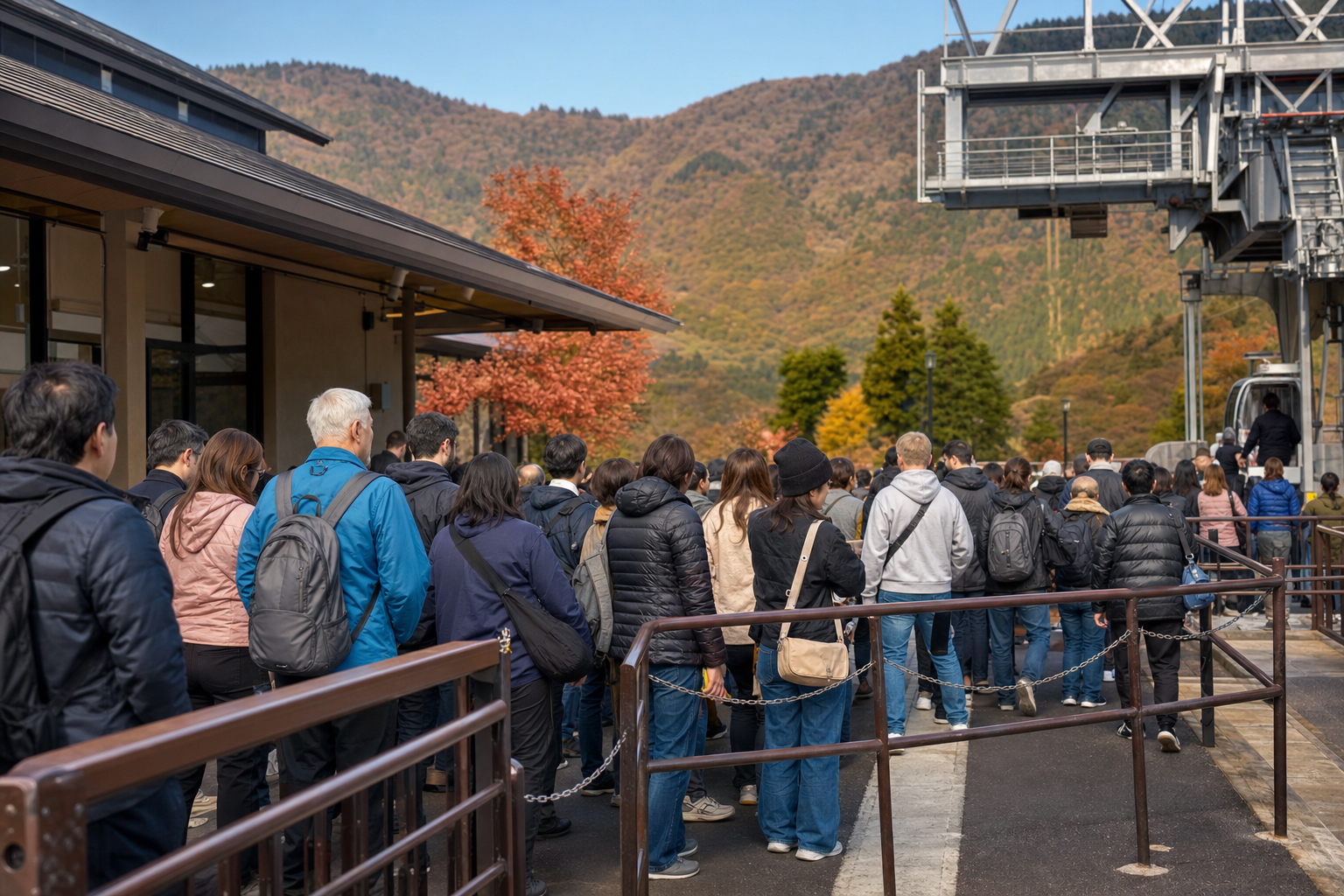
Hakone’s official crowd page marks November as a busy autumn-leaf period. The ropeway operator separately warns that Owakudani parking can become congested on clear days during the foliage season and recommends using other stations and the ropeway rather than waiting for the Owakudani car park.
Public transport avoids the parking search. It does not guarantee no queue. Mountain railway cars, cable cars, ropeway platforms, buses, and cruise departures can each concentrate travelers.
Use six controls:
- Travel on a weekday when possible. This reduces, but does not remove, autumn demand.
- Reserve the Tokyo–Hakone train you care about. Romancecar seats are tied to a specific train.
- Start the weather-sensitive section early. Ropeway and lake views have more value before a delay consumes the day.
- Choose one paid or indoor attraction, not a chain of them. Admission queues and closing times can quietly destroy the loop.
- Set a return decision time. Begin returning even if the pass would allow one more ride.
- Check live operations as well as Google Maps. A route planner may retain a theoretical connection after service changes.
If you drive, follow official parking and traffic guidance. Do not plan around getting into the small Owakudani car park during a clear autumn weekend.
Should you buy the Hakone Freepass?
The Hakone Freepass is strongest when you actually use several included transport modes. It covers unlimited rides on designated Hakone Tozan trains, cable car, ropeway, sightseeing cruise, buses, and other listed services during its validity. The Shinjuku version also includes one Odakyu round trip between the departure station and Odawara.
Prices shown on the official page for travel from October 1, 2025 onward were still current when checked on August 5, 2026:
| Starting point | 2-day adult | 3-day adult | Important note |
|---|---|---|---|
| Shinjuku | ¥7,100 | ¥7,500 | Romancecar limited-express fee is extra |
| Odawara | ¥6,000 | ¥6,400 | Tokyo–Odawara travel is not included |
Buy the pass when the covered rides match your route, especially for a full loop or an overnight. Compare individual fares when you will visit one side, when a major covered service is suspended, or when another ticket already covers the Tokyo–Odawara segment.
Do not buy a pass because a blog calls it “must-have.” The pass can remain convenient even when the arithmetic is close, but it does not guarantee boarding priority, clear weather, or a completed loop. The official terms also warn that services can be suspended and that refund conditions depend on how the pass was used.
Three workable autumn itineraries
Plan 1: Full loop from Hakone-Yumoto
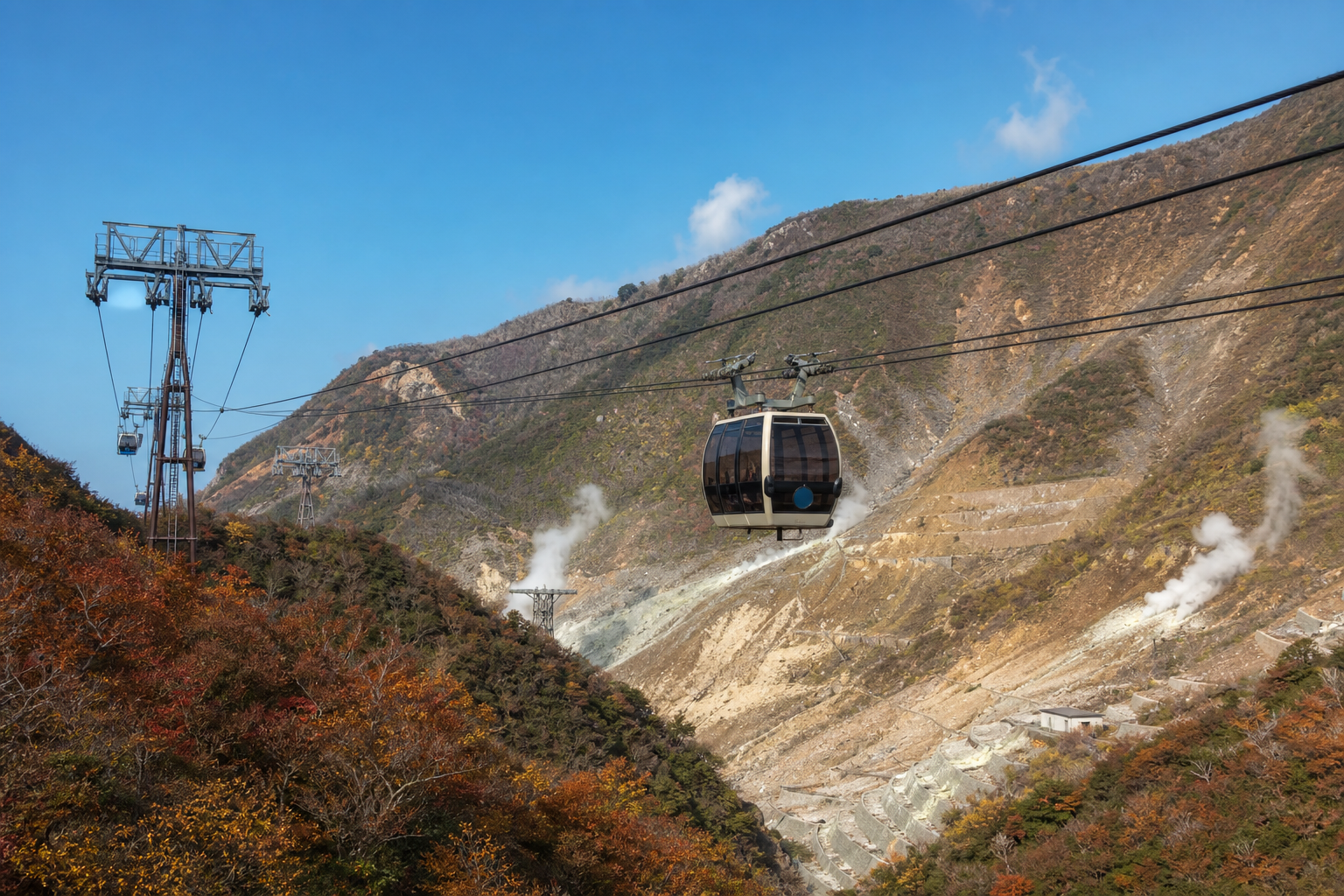
Use this if: the major loop services are operating, you reach Hakone-Yumoto in the morning, and the full transport experience matters.
- Travel from Hakone-Yumoto to Gora on the mountain railway.
- Continue by cable car to Sounzan.
- Ride the ropeway to Owakudani, then continue toward Togendai.
- Cross Lake Ashi to Hakonemachi-ko or Motohakone-ko.
- Return by bus toward Hakone-Yumoto or Odawara.
- Skip a secondary attraction if the chain is running late.
The ropeway operator lists short physical transfers at Sounzan and Togendai, but queues and waiting for the next cruise are separate from walking time.
Plan 2: Lake Ashi first
Use this if: you enter from Mishima, Lake Ashi is the primary objective, or you want to protect the lake segment before moving toward Tokyo.
- Reach Hakonemachi-ko or Motohakone-ko.
- Confirm the cruise before committing to the crossing.
- Travel to Togendai, then use the ropeway through Owakudani to Sounzan.
- Descend through Gora and Hakone-Yumoto.
- If the cruise or ropeway is unavailable, stay on the Lake Ashi side and return by bus.
This direction is not automatically quieter. It simply aligns the transport chain with a lake-first objective and an exit toward Odawara.
Plan 3: Partial-area Plan B
Use this if: you arrive late, the weather is poor, or one link in the loop is suspended.
- Choose Gora plus one nearby attraction, or Lake Ashi plus one shoreline area.
- Use the same route in and out when that is more reliable.
- Keep food, an onsen, or one indoor attraction as the day’s second objective.
- Recheck the return bus or train before entering the final attraction.
A coherent half-loop is better than spending the afternoon waiting for a replacement connection that was not assured.
Plan B for wind, fog, rain, weak color, or a late start
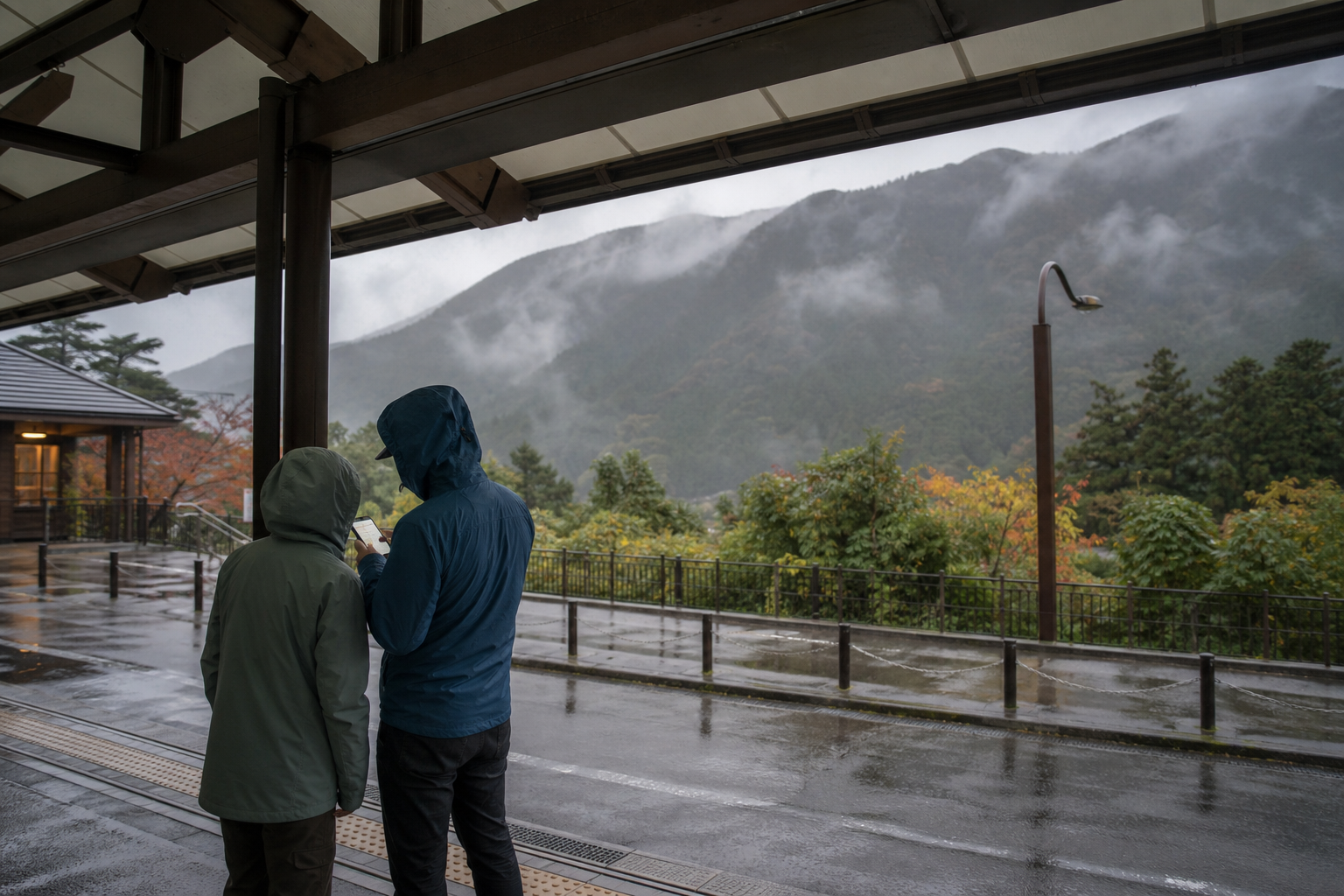
If the ropeway is suspended
Do not assume the full loop still works. Check the official status page for any announced alternative, then select either the Gora side or the Lake Ashi side. Use a bus after confirming its current route and timetable.
If Mt. Fuji is hidden
Hakone is still usable. Shift the objective to the mountain railway, volcanic landscape, lake crossing, garden, museum, food, or onsen. A clear Fuji photograph is not part of the ticket contract.
If the leaves are early or late
Use the current color where it exists, not the place with the most famous old photograph. Move between higher and lower zones when the transport cost and time remain reasonable. Otherwise choose a non-foliage Hakone day or another destination.
If steady rain or strong wind is forecast
Shorten the outdoor chain and avoid building the day around the ropeway. Choose one indoor attraction with official opening information and keep the return simple. Mountain conditions can feel colder than Tokyo, so carry a warm layer and rain protection.
If you reach Hakone-Yumoto after midday
Do not start a complete loop without checking the remaining segments. Choose Gora or Lake Ashi, then return the same way or by one confirmed alternate route.
If crowds have already delayed the chain
Remove one stop immediately. Protect the transport that returns you to Odawara, Hakone-Yumoto, Mishima, or your hotel. A pass is not a reason to use each covered ride.
Your 72-hour, 24-hour, and same-morning checklist
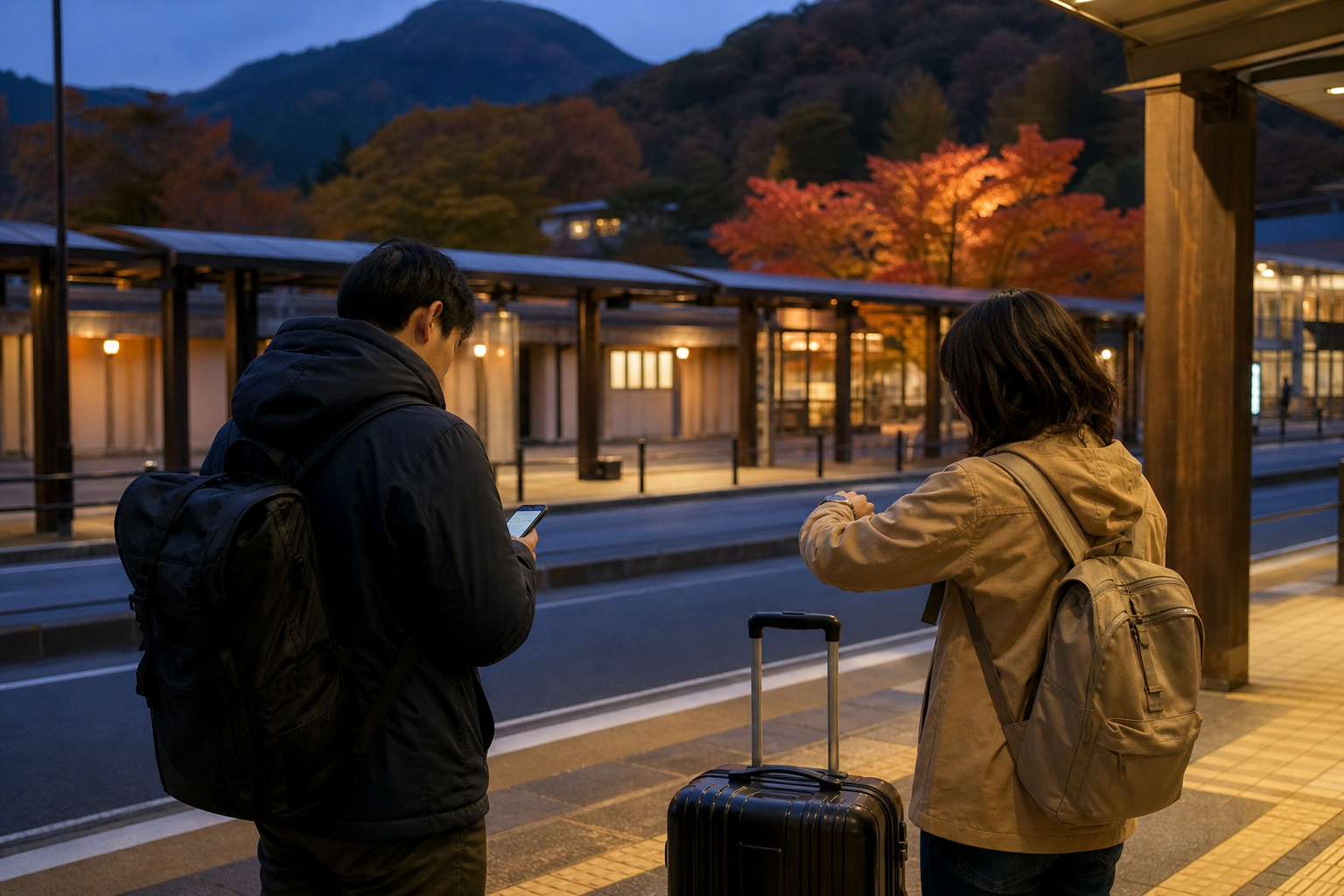
Seventy-two hours before
- Check whether a 2026 autumn forecast or dated foliage update has been published.
- Check Hakone and Owakudani weather, not Tokyo weather alone.
- Confirm your Tokyo–Hakone train and return reservation.
- Choose Hakone-Yumoto first, Lake Ashi first, or a partial-area plan.
- Save one indoor or lower-dependence Plan B.
Twenty-four hours before
- Open the official Hakone site and check real-time operations.
- Open the official crowd forecast.
- Confirm ropeway, cruise, railway, cable-car, and bus notices.
- Check the current timetable for your date.
- Set the time when your group will begin returning.
The same morning
- Recheck service status and weather before leaving the hotel.
- Confirm the exact train, station, car, and reserved seat.
- Carry a charged phone, warm layer, rain protection, water, and a small snack.
- Tell the group which stop will be removed first if the route slips.
- Do not follow a saved map after official operations change.
The measurable action is simple: choose the direction, save the official status pages, and confirm the return route 24 hours before departure.
FAQ
When are autumn leaves best in Hakone in 2026?
There is no confirmed single peak for Hakone as a whole. Official guidance describes October through November broadly, while Hakone Ropeway says color along its higher route starts around late October and continues until around mid-November. Check dated 2026 updates near your trip.
Is Hakone a realistic day trip from Tokyo in autumn?
Yes, when you start early and choose one route direction. A full loop becomes fragile after a late arrival, during heavy crowds, or when the ropeway or cruise is disrupted.
Which direction is best for the Hakone Loop?
Start from Hakone-Yumoto through Gora and Owakudani when entering from Shinjuku and the listed services are normal. Start with Lake Ashi when entering from Mishima or when the lake is the primary objective. Direction is a planning choice, not a crowd guarantee.
Does the Hakone Freepass include the Romancecar?
The Shinjuku version includes the Odakyu base-fare round trip to Odawara, but the Romancecar limited-express fee and reserved-seat ticket are extra.
Is the Hakone Freepass worth it for one day?
It can be convenient for a full loop because many transport modes are included, even though the pass remains valid for two or three days. Compare individual fares for a partial-area trip or when a major covered service is suspended.
Does public transport avoid autumn crowds in Hakone?
It avoids parking, but it does not remove queues or road congestion. Buses, mountain trains, cable cars, ropeways, and cruise departures can each become busy.
What happens if Hakone Ropeway is closed?
Check the official status page for the current notice. Do not assume the circular route remains possible. Choose the Gora side or Lake Ashi side and use a confirmed return route.
Can I see Mt. Fuji from Hakone in autumn?
It is possible on a clear day from parts of the ropeway and Lake Ashi area, but clouds may hide it. Keep a plan that remains worthwhile when Fuji is hidden.
Sources and update note
Operational facts were checked on August 5, 2026 against the official Hakone Ropeway page, Hakone Freepass details, Hakone crowd forecast, official Hakone transport and real-time status portal, Hakone Sightseeing Cruise page, Hakone Tozan Railway and Cable Car page, Odakyu e-Romancecar guide, JNTO’s Hakone Autumn Leaves page, and the Japan Weather Association autumn forecast service.
Exact 2026 foliage peaks are not treated as fixed. Weather, color, fares, timetables, operating hours, maintenance, and service status can change. Recheck the linked official pages before travel.
Comments