- Quick Answer
- What the January numbers mean—and what they do not
- Time-of-day clothing and day-plan decision table
- A compact packing list for central Tokyo
- Plan outdoor time around the short day
- Snow, wind, and short-day Plan B
- January 2027 calendar checkpoints
- The 24-hour check before an outdoor day
- Official sources used
- FAQ
- Is Tokyo cold in January?
- Do I need a heavy winter coat in Tokyo?
- How should I dress for warm trains and shops?
- Does it snow in Tokyo in January?
- Do I need an umbrella in January?
- What time does it get dark in Tokyo in January 2027?
- Are shops and attractions closed in early January?
- Will Coming of Age Day affect my trip?
- What is a practical snow, wind, or short-day Plan B?
Quick Answer
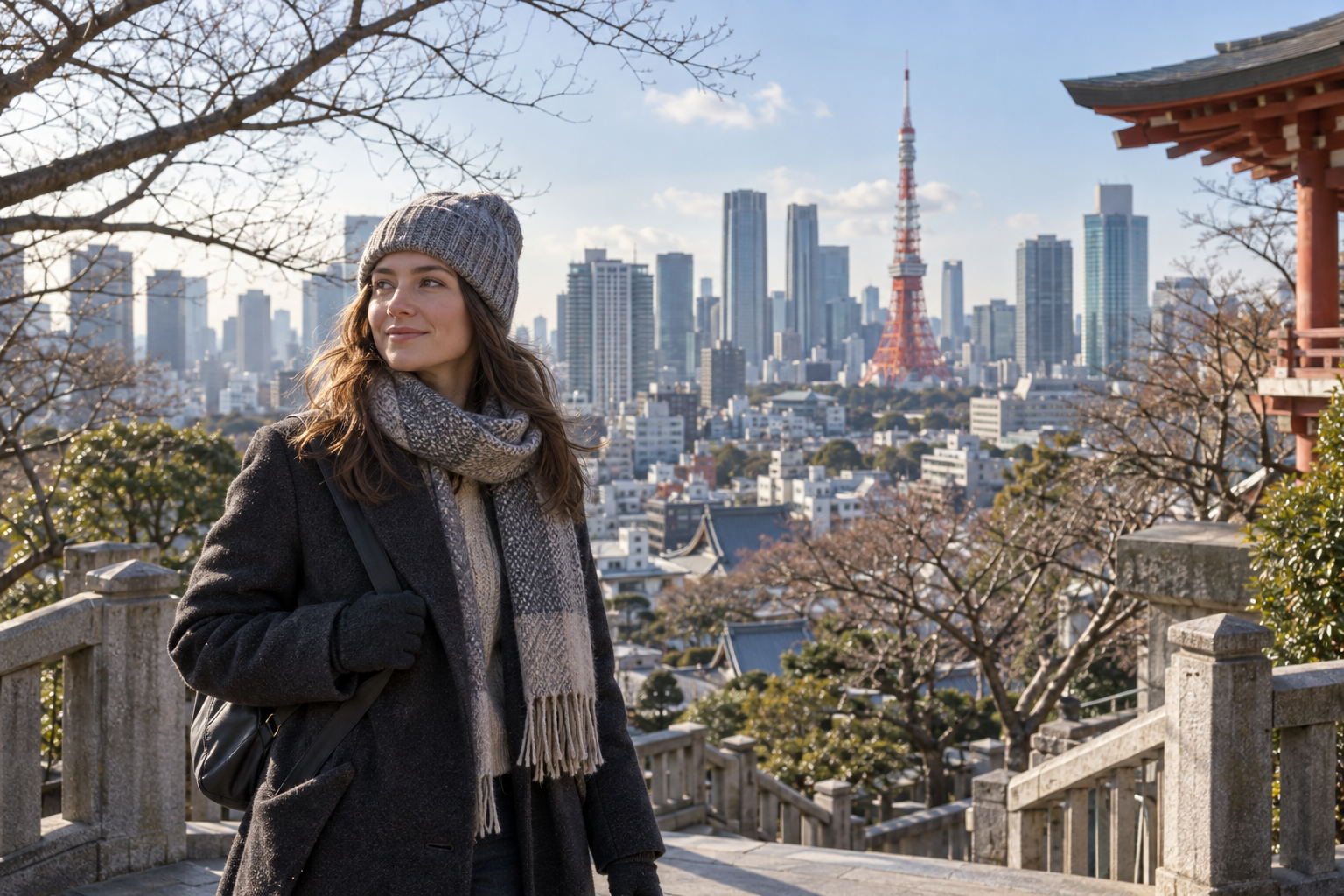
Tokyo in January is cold outdoors but often warm on trains and inside shops. For broad planning, the Japan Meteorological Agency's 1991–2020 normals for Tokyo are 5.4°C (41.7°F) mean, 9.8°C (49.6°F) daily maximum, 1.2°C (34.2°F) daily minimum, and 59.7 mm (2.35 in) precipitation. These are 30-year averages, not a forecast for your dates.
Pack removable layers: a breathable base, a sweater or fleece, and a wind-resistant coat. Keep gloves and a scarf accessible for outdoor waits, but use a day bag that can hold one removed layer indoors. Put the main outdoor sight between late morning and mid-afternoon, because sunset is 16:38 on January 1 and 17:07 on January 31, 2027 in Tokyo. Save a same-area indoor option before you leave the hotel.
If your trip includes the New Year period, use the Japan New Year 2026–2027 closures and trains guide. This article focuses on ordinary January weather, clothing, daylight, and disruption planning rather than repeating changing holiday schedules.
AI-generated editorial illustration; not field evidence.
What the January numbers mean—and what they do not
| Information | Use it for | Do not use it for |
|---|---|---|
| JMA 1991–2020 climate normals | Broad packing and itinerary shape | Predicting the weather on your dates |
| GO TOKYO's January page | Current destination guidance and past-year context | Treating its 2025 data as a 2027 forecast |
| NAOJ 2027 sunrise and sunset | Placing outdoor and view-dependent activities | Promising clear skies or usable light between buildings |
| Live JMA forecast and operator status | Final day-by-day decisions | Planning months ahead as if nothing will change |
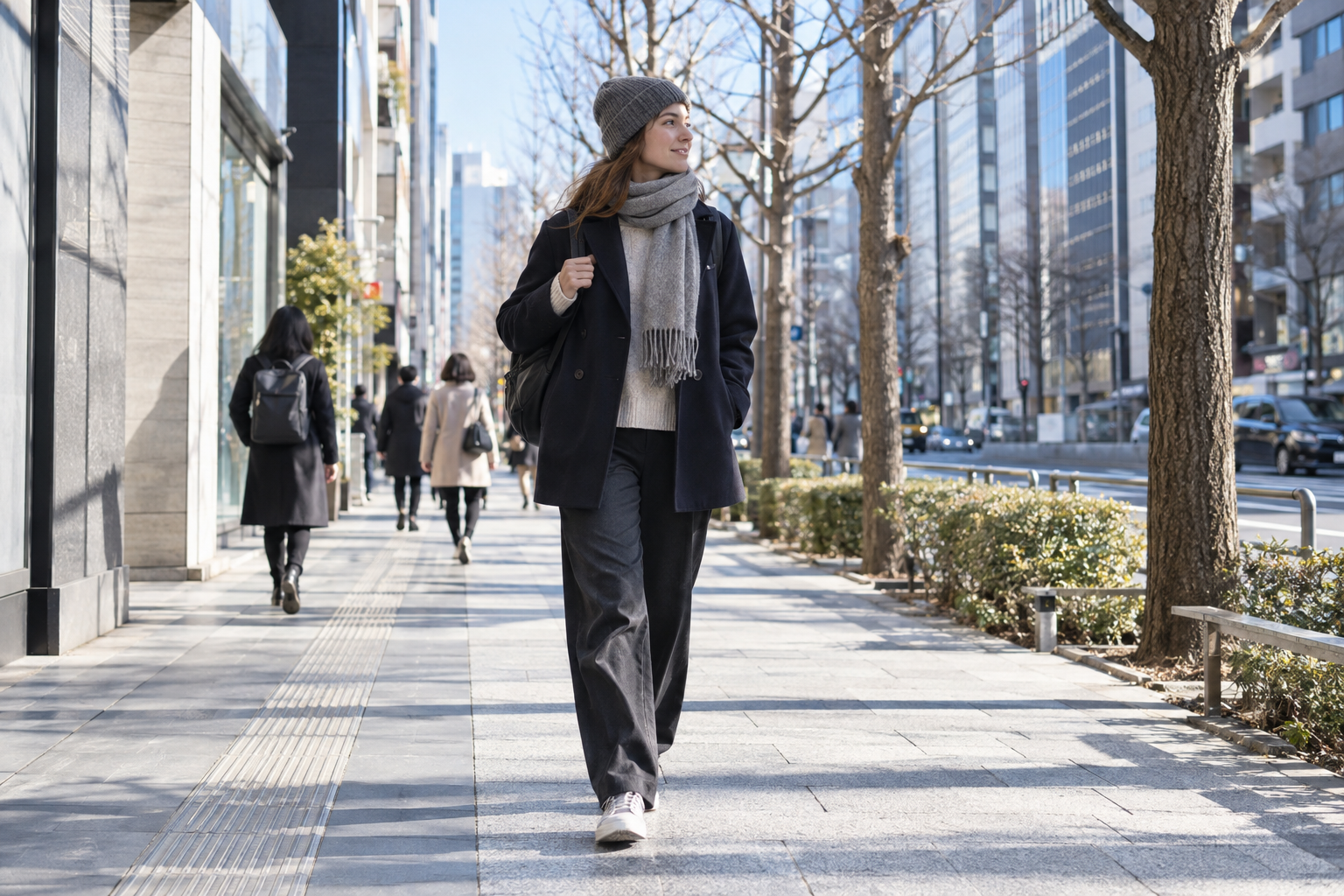
The monthly mean is not the temperature you will feel all day. A sunny walk, a shaded queue, a station platform, and a heated train can require different clothing within one hour. The most useful packing choice is not the heaviest possible coat; it is a warm outer layer plus pieces you can remove without unpacking your suitcase.
Time-of-day clothing and day-plan decision table
| Time or situation | Clothing decision | Best use of the time | Backup trigger |
|---|---|---|---|
| Before 09:00 | Base layer, sweater or fleece, coat; add gloves and scarf for a long walk or wait | Breakfast nearby, transfer to the day's main area | Start indoors if wind, ice, or a warning makes the first transfer difficult |
| 09:00–11:00 | Keep the full layer set; open the coat while walking if needed | Travel to an outdoor sight and begin before larger afternoon crowds | Switch the order if rain or snow is still clearing |
| 11:00–15:30 | Use removable layers; keep the outer layer available for shade and stops | Main garden, neighborhood walk, outdoor market, or observation approach | Move the outdoor block to the clearest and calmest forecast window |
| After 16:00 | Put the warm layer back on before a long outdoor stop | Indoor museum, shopping, meal, bathhouse, or illuminated city view | Avoid a long exposed queue if clothing is damp or wind increases |
| Heated train or shop | Remove hat, scarf, or coat before you overheat | Use the transfer as a warm-up and regrouping point | Carry one layer in a bag instead of tying everything around your waist |
| Long platform, queue, or waterfront stop | Add gloves, scarf, and wind protection before you feel cold | Keep the stop purposeful and time-limited | Leave for the indoor backup if the wait becomes longer than planned |
This table is the article's core decision tool. Adjust it for your cold tolerance, the live forecast, and whether you will be walking or standing still. A coat that is comfortable during a slow outdoor wait may feel excessive in a packed train.
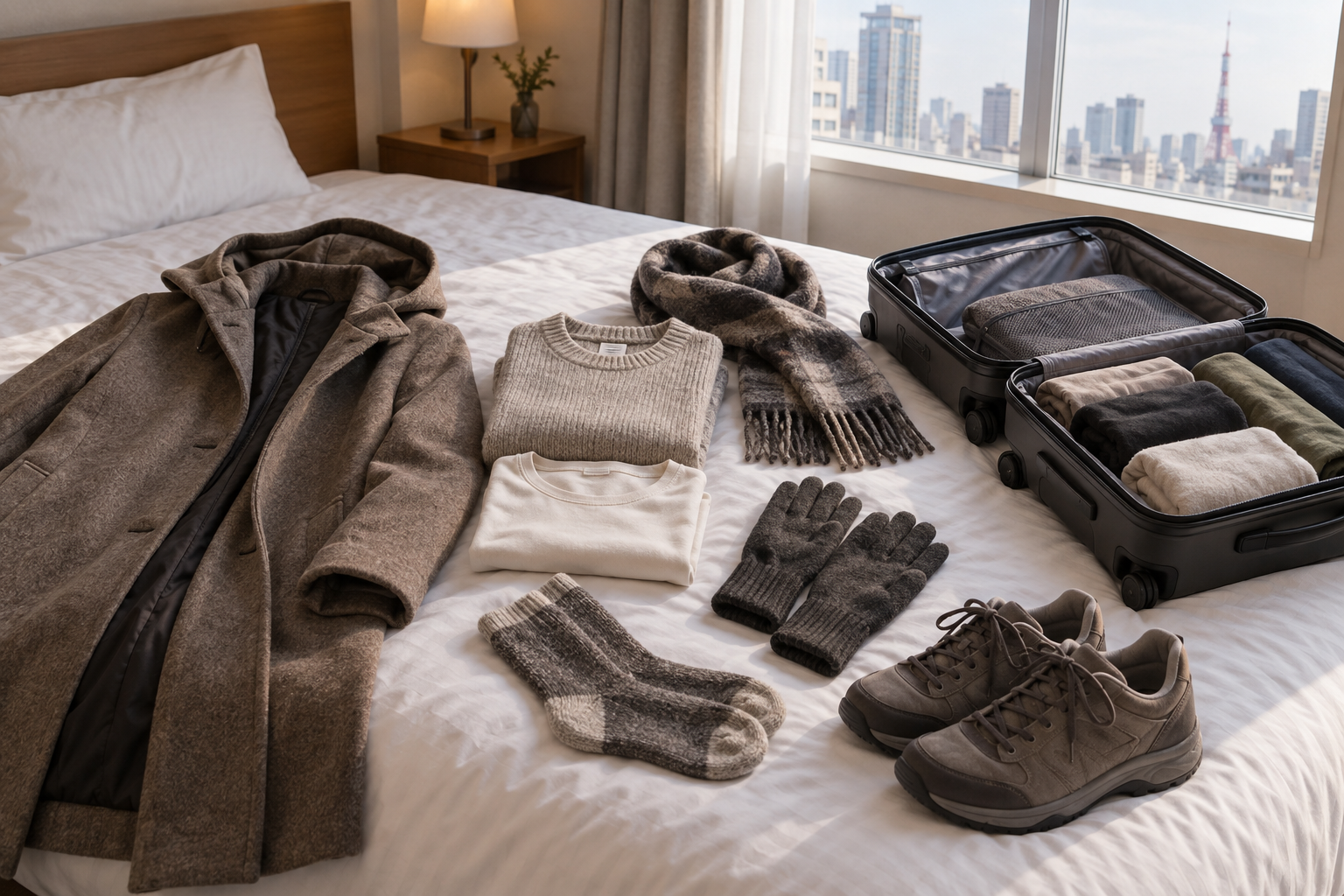
AI-generated editorial illustration; not field evidence.
A compact packing list for central Tokyo
- Breathable base tops that can be repeated
- One sweater or light fleece
- One warm, wind-resistant coat; light down or a wool coat can work
- Gloves, scarf, and a warm hat
- Comfortable closed shoes with useful grip
- Socks that stay comfortable during long walking days
- Foldable umbrella or compact rain shell
- Small day bag with room for one removed layer
- Optional disposable heat packs for cold-sensitive travelers
Avoid building the list around fashion labels such as “heavy” or “light” alone. Ask what you will do. A traveler moving between stations, museums, and restaurants needs easier temperature adjustment than someone spending two hours at an exposed garden or observation queue. Western Tokyo, Mt. Takao, and trips beyond the city center may also need a separate forecast and warmer choices.
AI-generated editorial illustration; not field evidence.
Plan outdoor time around the short day
The National Astronomical Observatory of Japan lists Tokyo sunrise at 06:50 and sunset at 16:38 on January 1, 2027. By January 31, sunrise is 06:42 and sunset is 17:07. That is about 9 hours 48 minutes between sunrise and sunset at the start of the month and about 10 hours 25 minutes at the end.
Put the activity that depends most on daylight—such as a garden, skyline walk, neighborhood photography, or outdoor architecture—between late morning and mid-afternoon. Use early evening for a meal, museum with verified hours, covered shopping route, bathhouse, or an indoor observation option. “Six hours of sunshine” on a climate page is not the same as six hours between sunrise and sunset.
A practical one-day pattern is:
- Enter the target neighborhood by 10:00.
- Complete the most weather-sensitive outdoor activity first.
- Take lunch indoors and decide whether the second outdoor block still makes sense.
- Move to the preselected indoor option by 15:30–16:00 if light, wind, or fatigue is deteriorating.
- Keep the evening geographically compact instead of crossing Tokyo for a weak backup.
Use the Tokyo Area Guides to choose a compact district. Then confirm the actual venue's official opening day, admission method, and last entry.
AI-generated editorial illustration; not field evidence.
Snow, wind, and short-day Plan B
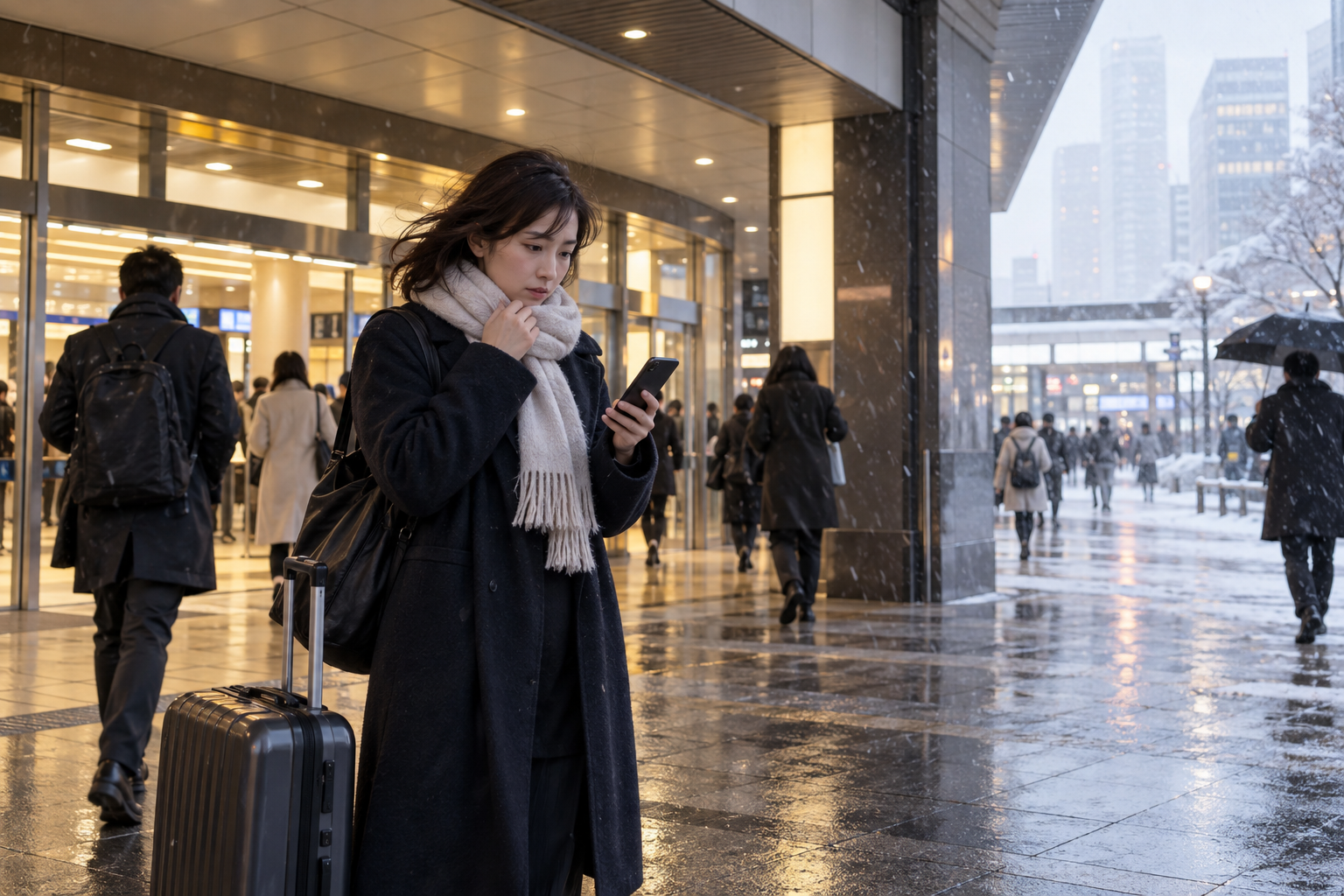
Snow is possible in Tokyo in January, but GO TOKYO says it is not common and rarely settles. That does not mean it can be ignored. Even a limited event can affect exposed walking routes, stairs, buses, above-ground rail sections, or your return from a day trip.
If snow is forecast
Check the live JMA forecast and warnings, then check the official status page for every operator you plan to use. Do not rely on a route-planning app alone. Replace a distant outdoor day with a compact indoor route near your accommodation or on one simple rail corridor. Wear shoes with useful grip and allow extra time, especially where slush may refreeze.
If you plan to drive beyond central Tokyo, use the Japan rental-car winter tires and snow-driving guide before committing to the trip. Central Tokyo weather is not a safe proxy for a mountain or inland destination.
If strong wind is forecast
Move observation decks, waterfront walks, bridges, and long outdoor queues out of the exposed period. Check whether the attraction itself is operating and whether your rail operator has announced changes. An indoor Plan B should be close enough that the transfer does not create a second wind-exposure problem.
If the day becomes too short
Do not rush between two weak outdoor stops. Keep the one that matters most and move the second to another day. Replace it with an indoor activity whose hours you have verified. Sunset time is predictable; late trains, queues, and fatigue are not.
AI-generated editorial illustration; not field evidence.
January 2027 calendar checkpoints
Japan's Cabinet Office lists two national holidays in January 2027:
- January 1: New Year's Day
- January 11: Coming of Age Day
January 1 belongs to the separate New Year planning problem, including changing business hours and transport arrangements. Follow the dedicated RJG New Year guide rather than assuming normal operations.
January 11 is a Monday and creates a three-day weekend for many domestic travelers. Treat it as a checkpoint, not proof that every attraction will be crowded or closed. If a timed attraction is important, inspect its official calendar and reservation inventory. Keep a nearby option that does not depend on the same ticket or opening schedule.
For travelers arriving in late December, the Tokyo December 2026 guide covers the adjacent month's weather and planning decisions.
The 24-hour check before an outdoor day

AI-generated editorial illustration; not field evidence.
- Open the JMA forecast for Tokyo and look at temperature, wind, precipitation, and warnings.
- Check the official status page for the train, subway, or bus operator you will actually use.
- Confirm the outdoor venue's opening notice and last entry.
- Put the main outdoor block in the best daylight and weather window.
- Save one indoor alternative in the same area or on the same rail corridor.
- Pack gloves, scarf, umbrella, and one removable layer where you can reach them.
- If conditions are poor, shorten or move the outdoor plan instead of forcing the original sequence.
The goal is not to predict January perfectly. It is to make one decision easy: when the weather or daylight changes, you already know which block moves and where you go instead.
Official sources used
- JMA climate normals for 1991–2020
- GO TOKYO January guide
- GO TOKYO weather and geography
- GO TOKYO winter guide
- NAOJ 2027 sunrise and sunset in Tokyo
- Cabinet Office 2027 national holidays
- JMA forecast services
FAQ
Is Tokyo cold in January?
Yes. JMA's 1991–2020 January normals for Tokyo are 5.4°C mean, 9.8°C daily maximum, and 1.2°C daily minimum. Your dates may be warmer, colder, wetter, or windier, so use these only for broad planning.
Do I need a heavy winter coat in Tokyo?
A warm wind-resistant coat, sweater or fleece, and base layer suit many central-Tokyo itineraries. People who feel cold easily or expect long outdoor waits may want warmer insulation. Check a separate forecast for western Tokyo or a mountain day trip.
How should I dress for warm trains and shops?
Use layers you can remove quickly. Open or remove the coat, scarf, and hat before you overheat, and carry a day bag with room for one layer. Put them back on before reaching an outdoor platform or queue.
Does it snow in Tokyo in January?
Snow is possible but not common in central Tokyo, and it rarely settles according to GO TOKYO. Check the live JMA forecast and each transport operator's status instead of assuming either normal service or disruption.
Do I need an umbrella in January?
January is relatively dry by Tokyo standards, but the JMA precipitation normal is 59.7 mm, not zero. A foldable umbrella or compact rain shell is a low-bulk backup.
What time does it get dark in Tokyo in January 2027?
NAOJ lists sunset at 16:38 on January 1 and 17:07 on January 31. Put your most daylight-dependent outdoor activity before late afternoon and keep an indoor evening option.
Are shops and attractions closed in early January?
Some operations change during the New Year period, but schedules vary by business and date. Use the dedicated RJG New Year closures guide and verify each venue's official notice.
Will Coming of Age Day affect my trip?
Coming of Age Day is January 11, 2027. It is a national holiday and a Monday, but that does not prove universal closure or crowding. Check the exact venue and reservation calendar.
What is a practical snow, wind, or short-day Plan B?
Choose an indoor option in the same district or on the same simple rail corridor, verify its hours and admission rules, and keep the outdoor block movable. Delay nonessential travel when official warnings or operator notices show disruption.
Last checked: September 27, 2026 JST. Climate normals are not a forecast. Sunrise and sunset do not guarantee clear skies. Recheck weather, warnings, transport status, venue operations, and reservations before travel. Field evidence status: not applicable; no firsthand visit or observation is claimed.
Comments