The 51st Edogawa Fireworks Festival is scheduled for Saturday, August 1, 2026, from 7:15 p.m. to 8:20 p.m. at the Edogawa riverbank near Shinozaki Park. About 14,000 fireworks are planned. The difficult part is not finding the event. It is choosing a viewing plan that still lets you get home after tens of thousands of people start leaving together.
Last checked: July 12, 2026. Event operations, ticket availability, transport controls, and weather decisions can change. Recheck the official Edogawa Fireworks website on the day you travel.
- Quick Answer: The Low-Stress Plan
- 2026 Date, Time, Venue, and Cancellation Basics
- Choose Your Viewing Plan Before You Travel
- Which Station Should You Use?
- A Practical Arrival Timeline
- Food, Drinks, Toilets, and What to Bring
- Crowd Controls That Change How You Move
- The Most Important Decision: How Will You Get Home?
- Rain, Wind, Lightning, and Cancellation Plan B
- Viewing Rules and Common Mistakes
- Frequently Asked Questions
- When is the Edogawa Fireworks Festival in 2026?
- Is the Edogawa Fireworks Festival free?
- What is the nearest station?
- Which station is better after the fireworks?
- Can I go by taxi?
- Are there food stalls at the venue?
- Are there toilets?
- Will the fireworks continue in rain?
- Can I use an Ichikawa fireworks ticket on the Edogawa side?
- What should I do if the event is canceled?
- Official Sources
Quick Answer: The Low-Stress Plan
For most first-time international visitors, the practical plan is:
- Use public transport. Do not arrive by car or bicycle.
- If you have no paid-seat ticket, choose a free viewing area away from the central paid and sponsor zones.
- Arrive before the 5:30 p.m. internal movement restrictions. An arrival around 3:30–4:30 p.m. gives you more time, but it does not guarantee a close viewing place.
- Bring food and water before entering the riverbank area. On-site food stalls are not a reliable meal option here.
- Do not assume Shinozaki Station will be the fastest route home. Keisei Edogawa Station or Mizue Station may involve a longer walk but can reduce station-entry pressure.
- Screenshot your route and meeting point because mobile service may become difficult around the venue.
- If severe weather threatens the event, check the official site before leaving your accommodation and keep an indoor Tokyo Plan B ready.
2026 Date, Time, Venue, and Cancellation Basics
| Item | 2026 official information |
|---|---|
| Date | Saturday, August 1, 2026 |
| Fireworks | 7:15 p.m.–8:20 p.m. |
| Venue | Edogawa riverbank, near Shinozaki Park |
| Planned display | About 14,000 fireworks |
| Regular rain | The event may proceed |
| Severe conditions | The organizer may cancel for warnings, strong wind, lightning risk, dangerous heat, or other unsafe conditions |
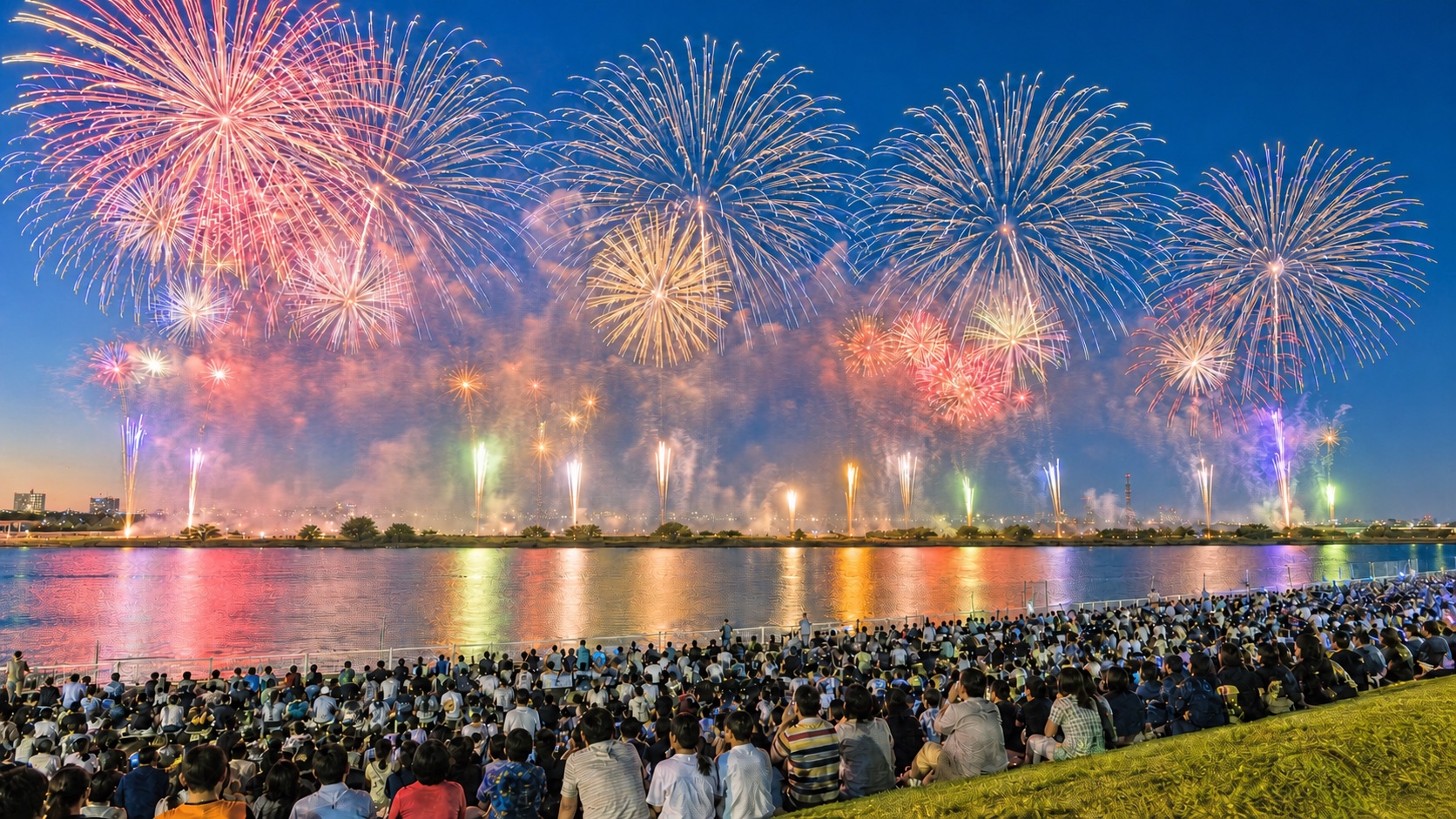
The program begins with Edogawa’s well-known opening sequence of 1,000 fireworks in five seconds. Seven themed sections are scheduled through the 8:20 p.m. finale.
Do not confuse the Edogawa-side event with the Ichikawa-side event. They watch the same fireworks from opposite sides of the river, but their paid and sponsor tickets are separate. An Ichikawa paid ticket does not admit you to the Edogawa paid area, and the reverse also applies.
Choose Your Viewing Plan Before You Travel
Option A: You already have an Edogawa paid-seat ticket
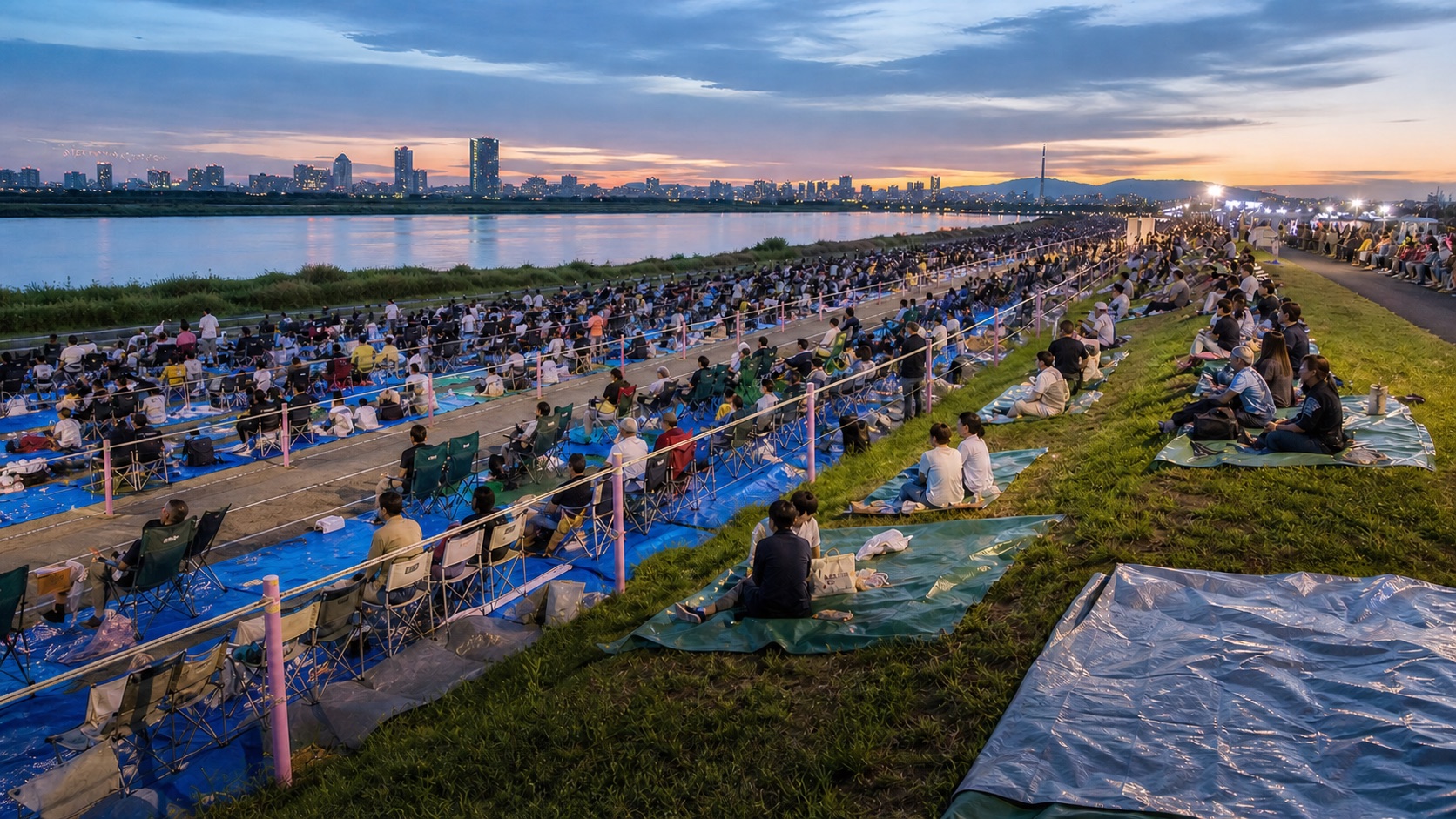
Use the entrance and seat instructions attached to your ticket. Paid seats cover several chair and blue-sheet configurations. Prices and remaining inventory differ by area. Official general sales run through July 28 unless tickets sell out earlier; check the official sales and resale pages rather than assuming a seat will remain available.
After July 6, the official page says new purchases are available as electronic tickets. The ticket must be prepared on a compatible phone through the designated service. Download the ticket before you enter the most congested area, where mobile connections may become unreliable.
Official ticket rules say buyer-requested changes, cancellations, and refunds are not available. If the entire event is canceled because of severe weather, the organizer provides a ticket refund; if fireworks begin and the program ends early, the official page says there is no refund.
Option B: You will use a free viewing area
Free viewing remains available outside the sponsor and paid zones. The official venue guide warns that free areas near the center can become difficult to secure from the morning. From about 5:30 p.m., stairs 3–11 and the riverbank road between them are restricted for people without the relevant ticket.
For a visitor who does not want to reserve a place for much of the day, a more realistic compromise is to accept a position farther from the center. The official guide directs free viewers toward spaces away from the busiest central section, where the walk to an exit may also be simpler. Follow staff directions because access patterns can change as density increases.
Option C: You need wheelchair-accessible free viewing
The organizer provides non-reservable wheelchair viewing areas near stairways 2 and 15. A visitor using this space should attend with an assistant; the official limit is two assistants per wheelchair user. Space is limited, and availability is not assured.
Which Station Should You Use?
| Station | Line | Official walking estimate | Trade-off |
|---|---|---|---|
| Shinozaki | Toei Shinjuku Line | About 15 minutes | Shortest walk, highest crowd pressure |
| Koiwa | JR Sobu Line | About 25 minutes | Useful for JR travelers, but still heavily crowded |
| Edogawa | Keisei Main Line | About 25 minutes | Longer walk, officially suggested as an alternative |
| Mizue | Toei Shinjuku Line | About 45 minutes | Longest walk, but officially suggested to avoid the busiest stations |
Going to the event
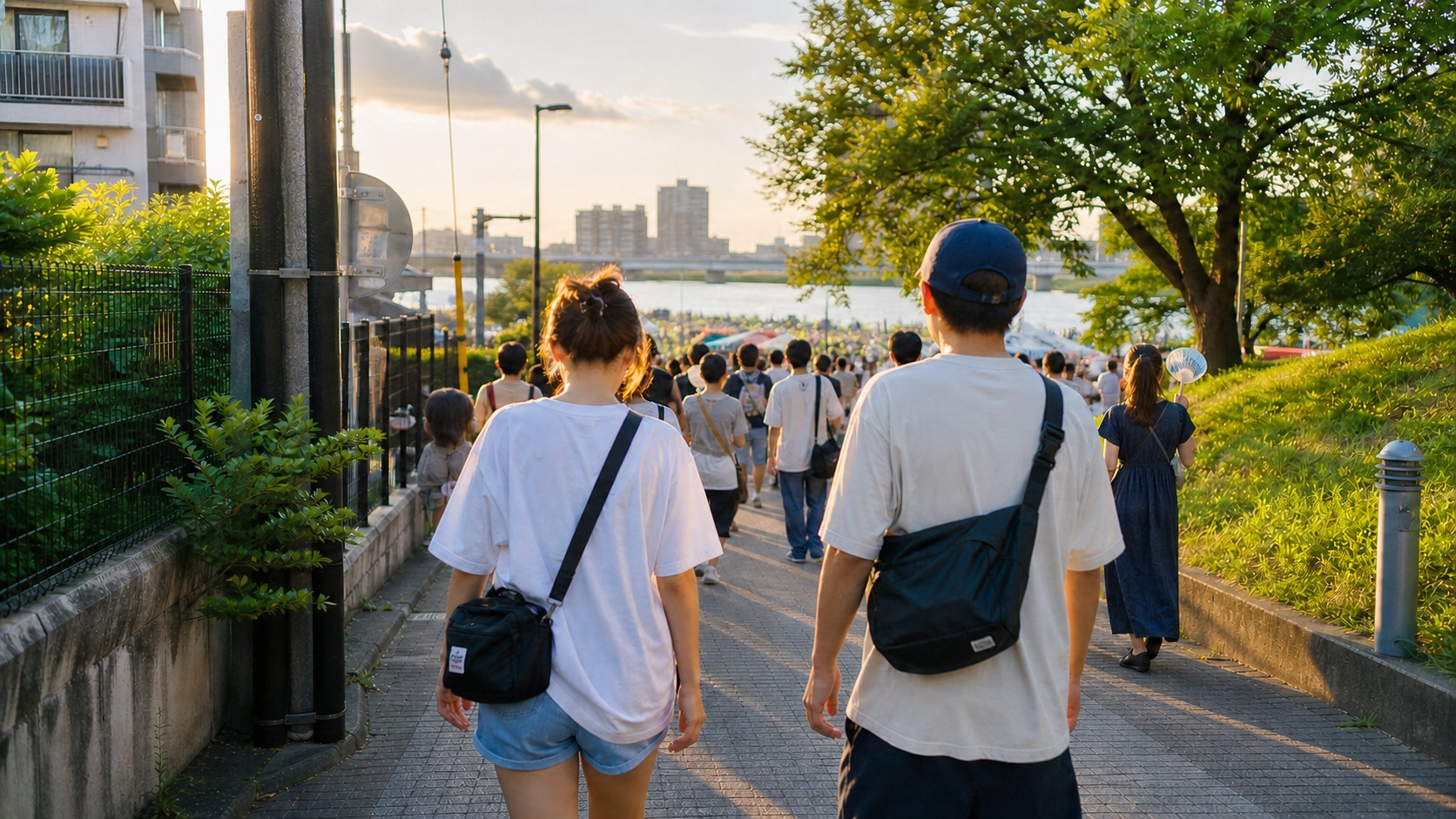
Shinozaki is the nearest station. Follow the event flags from the station, and do not use station entrances as a meeting point. The official site asks groups to meet at the north-exit plaza instead of blocking the station or entrance area.
Koiwa and Keisei Edogawa are both about a 25-minute walk. The route from Keisei Edogawa does not have the same event flags, so follow police and event staff. Mizue is about 45 minutes on foot and is mainly useful when you value a less concentrated station over a short walk.
Buses can be slower than walking
Several Keisei Bus routes serve the area, but stops and routes change during traffic controls. The official access page warns that buses can be delayed or too full to board. It also lists no special bus from Shinozaki toward Ichinoe or Kasai after the event. Charge your IC card before boarding, but keep a walking-and-train backup.
A Practical Arrival Timeline
The following is an RJG planning model, not an official entry requirement.
Before 3:30 p.m.
This gives you time to buy food, water, and any forgotten supplies before approaching the venue. If you are using a free area and want more choice, earlier is better, but the official guide notes that central free spaces can already be hard to find in the morning.
3:30–4:30 p.m.
This is the practical arrival window for visitors who accept a less central position. Shinozaki-area road controls begin around 4:30 p.m., and broader vehicle controls begin around 5:00 p.m.
Around 5:30 p.m.
Internal crowd controls start. People without central-zone tickets can no longer use stairs 3–11 to enter the central section, and north-south movement on the cycling road is restricted. If you arrive after this point, expect detours and follow staff instructions rather than forcing a route shown in Google Maps.
7:15–8:20 p.m.
The fireworks program runs for about 65 minutes. Use the toilet before the opening sequence because queues become longer near showtime.
After 8:20 p.m.
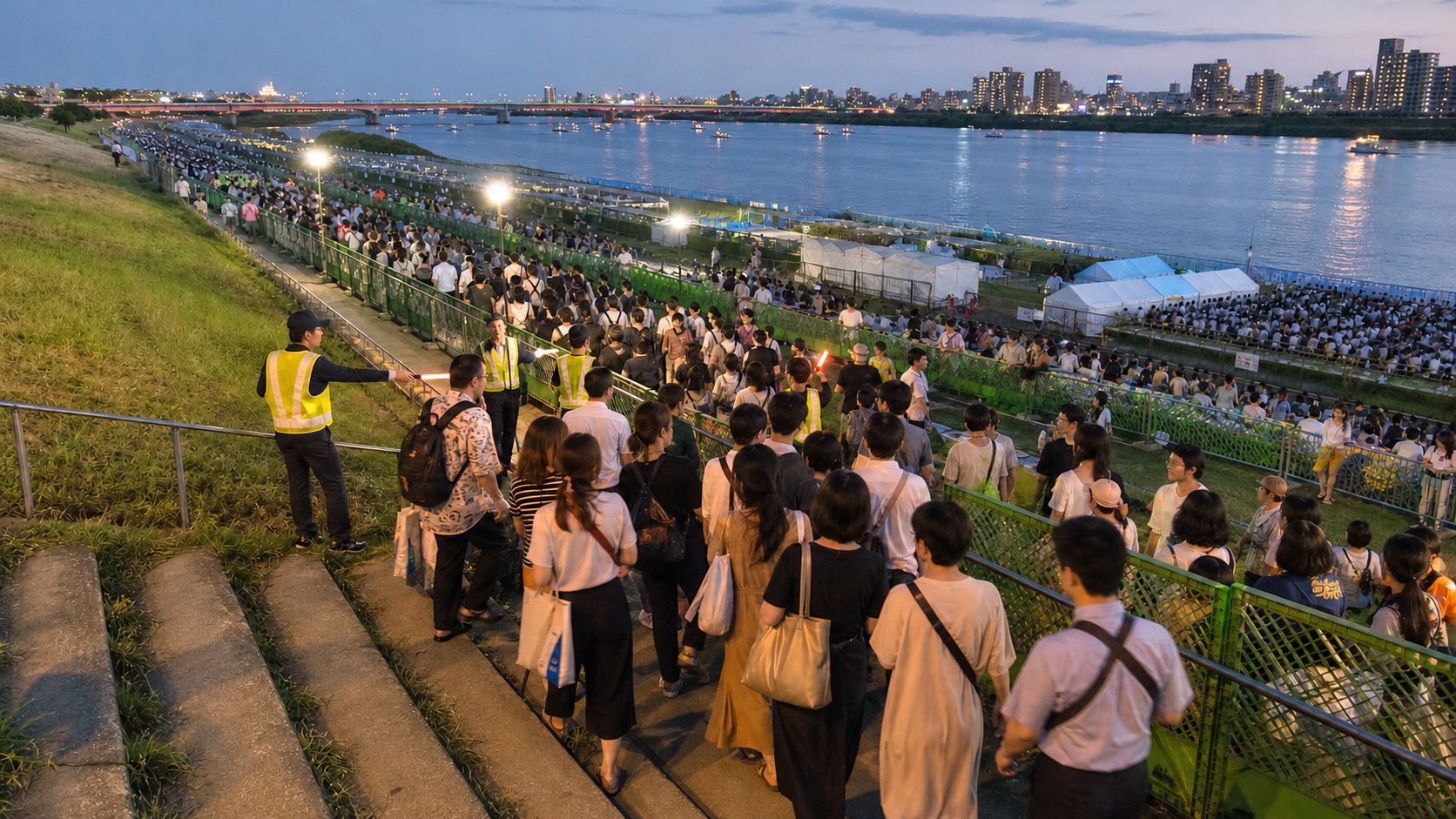
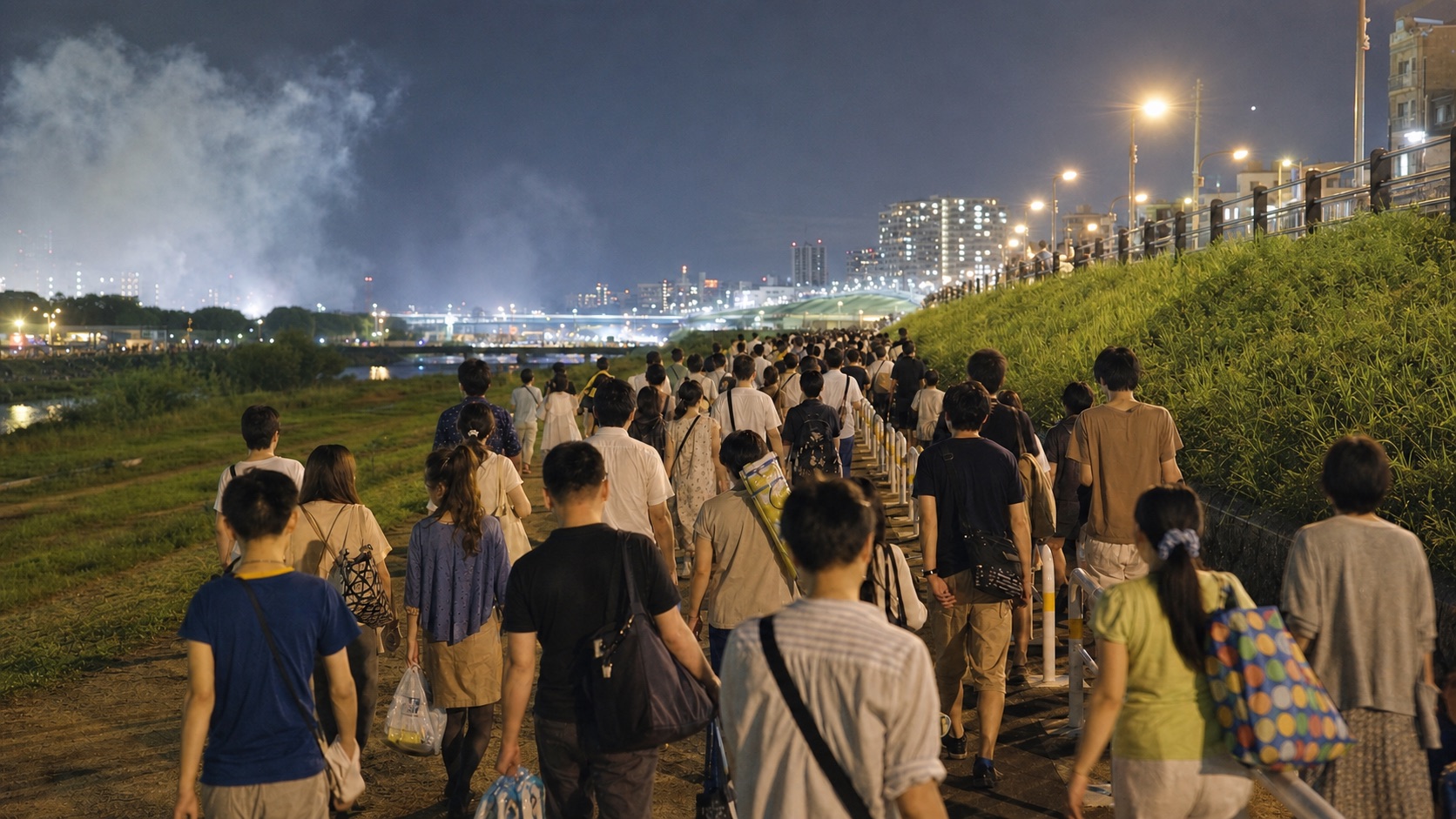
Do not rush immediately toward the nearest staircase. The organizer warns that stairs and surrounding stations become extremely congested. If your schedule allows, wait in your viewing area until the first exit wave begins to ease, while following instructions from event staff.
Food, Drinks, Toilets, and What to Bring
Bring your meal before entering
The official FAQ says the venue sells non-alcoholic drinks from 4:00 p.m. to 6:30 p.m. and does not operate general food stalls inside the venue. Another official traffic page uses a later drink-sales cutoff, but the FAQ and access pages were updated more recently. The safer plan is to treat 6:30 p.m. as the latest listed time and buy both food and water before arrival.
Alcohol is not sold inside the venue. Do not build your dinner plan around finding festival food after you reach the riverbank.
Toilets exist, but queues can be long
Temporary toilets are installed on the riverbank. The organizer warns that toilet waits can be substantial across the venue. Some paid areas have dedicated toilets near stairways 5 and 9, but they also become crowded before and during the display.
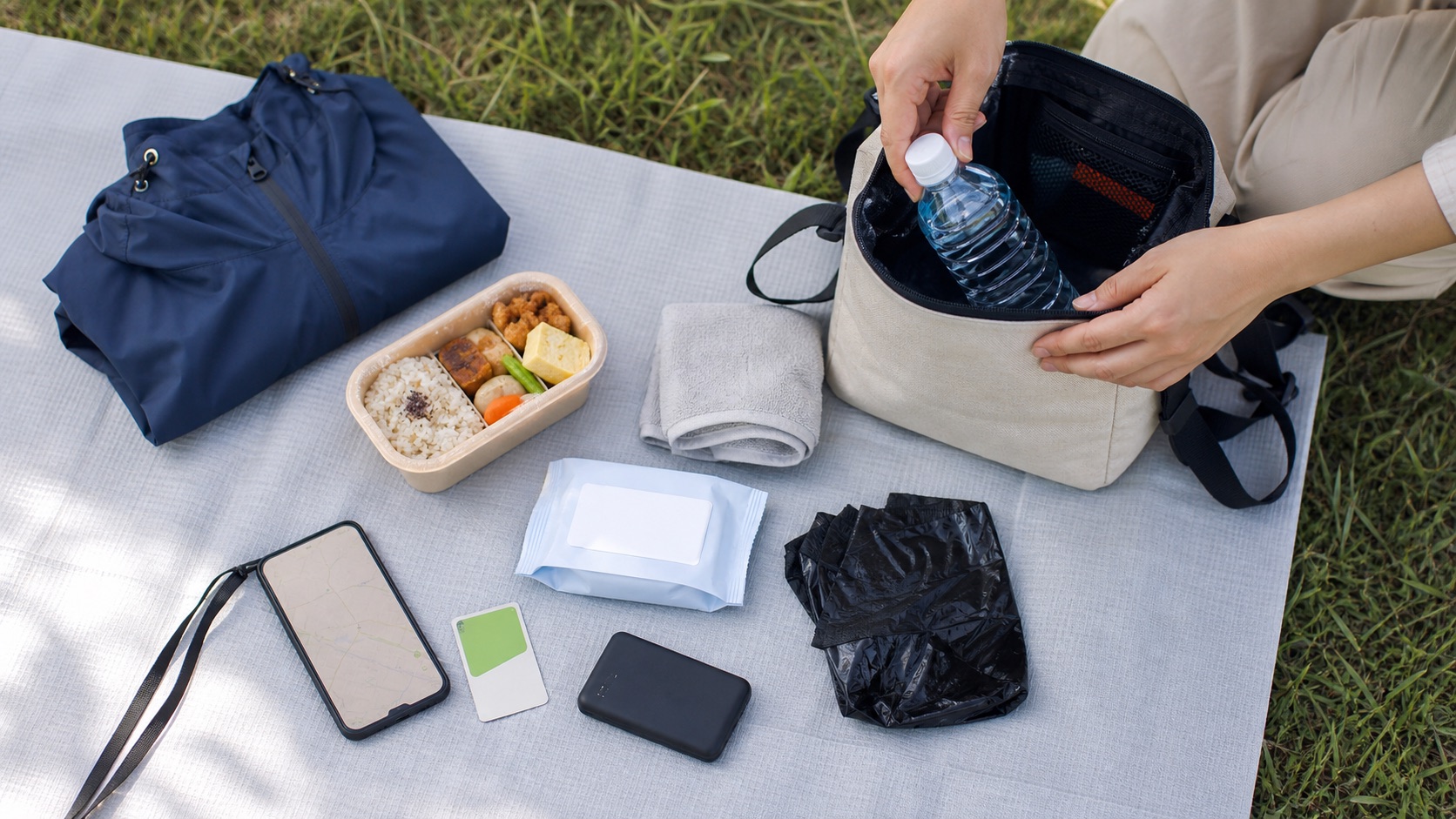
Suggested packing list
- Water and a meal or snacks
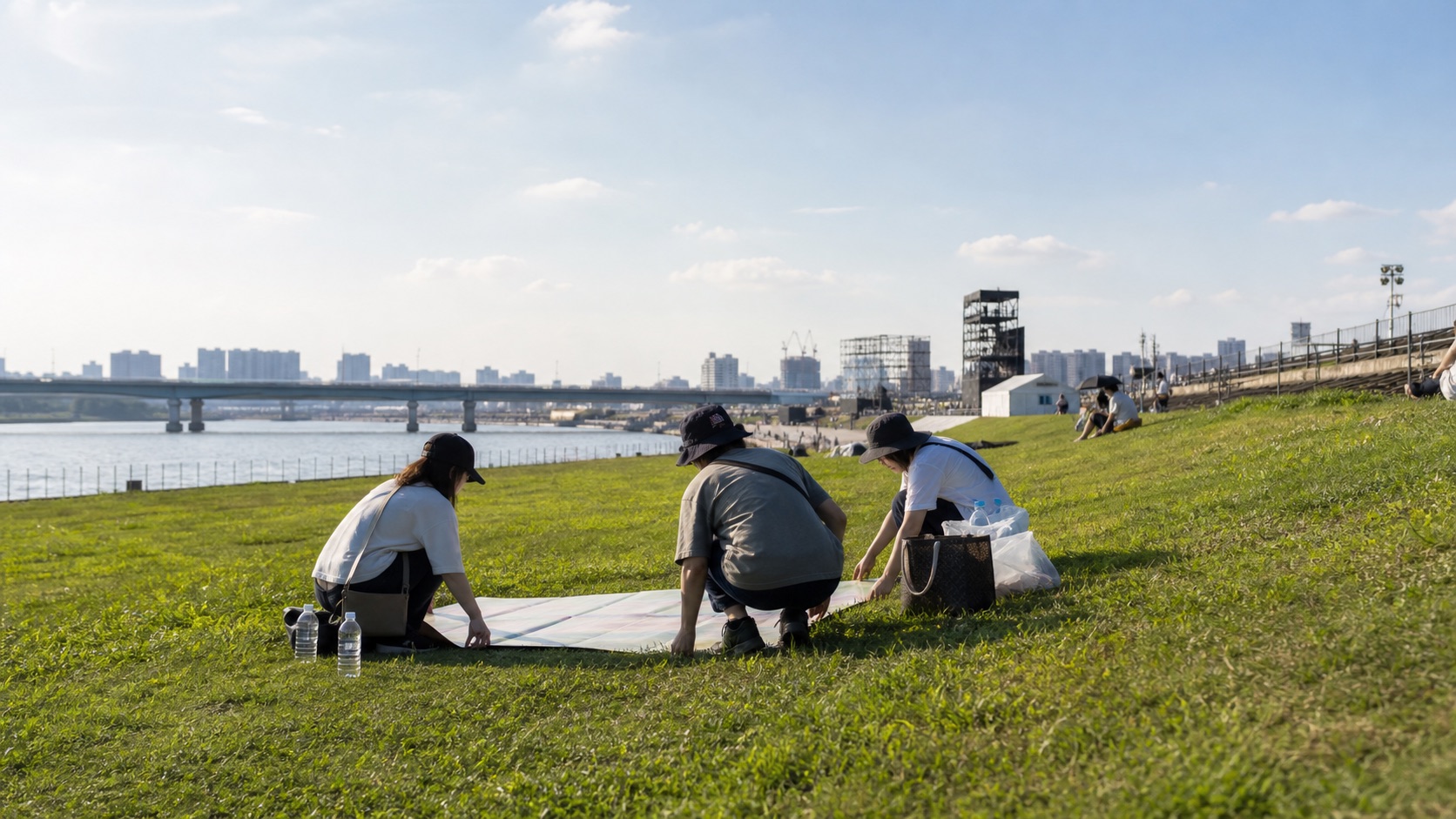
- A compact picnic sheet for a free viewing area
- A small towel and hand wipes
- A charged phone and compact power bank
- A screenshot of the venue map, return route, and meeting point
- An IC card charged before entering the area
- A light rain jacket instead of a large umbrella in a dense crowd
- A trash bag for anything you carry in
Crowd Controls That Change How You Move
Road restrictions run approximately 5:00–10:00 p.m. around the venue. Around Shinozaki Station, controls are scheduled from about 4:30–10:30 p.m. Cars, motorcycles, and bicycles cannot enter controlled zones; the organizer also asks visitors not to come by bicycle.
Inside the venue, central movement restrictions begin around 5:30 p.m. Stairs 3 and 11 may be used in the exit direction from the riverbank, while stairs 4–10 are unavailable to people without the appropriate central-zone ticket. The riverbank road between stairs 3 and 11 also closes to through movement.
This means a map route that looks short in the afternoon may not remain available in the evening. Choose your viewing section with your intended exit direction in mind.
The Most Important Decision: How Will You Get Home?
Shinozaki Station is closest, but the official site says past queues have taken as long as two hours just to enter the station. Its west entrance is scheduled to close from about 8:00–11:00 p.m.; returning passengers should use the south entrance.
Return Plan 1: Walk to Keisei Edogawa Station
This is an official alternative to the most congested stations. It is about a 25-minute walk under normal conditions. Confirm the direction before mobile service becomes unreliable and follow the event’s outbound routing.
Return Plan 2: Walk to Mizue Station
The walk is about 45 minutes, but it keeps you on the Toei Shinjuku Line while avoiding the concentration at Shinozaki. This can be useful for travelers returning toward central Tokyo who are comfortable with a longer walk.
Return Plan 3: Use Koiwa, but expect crowds
Koiwa connects to the JR Sobu Line and may be convenient for your accommodation. However, the official guide also identifies it as highly congested. Do not treat it as an automatically quiet alternative.
Return Plan 4: Wait before leaving
If you have no fixed connection, allowing the first departure wave to pass may reduce the pressure at stairways. Remain where staff permit, keep routes clear, and do not assume waiting will produce an empty station.
Before the event, also read the Tokyo Last Train and Taxi Plan. Taxis cannot enter the controlled zone, and road congestion makes them a weak primary plan near the venue.
Rain, Wind, Lightning, and Cancellation Plan B
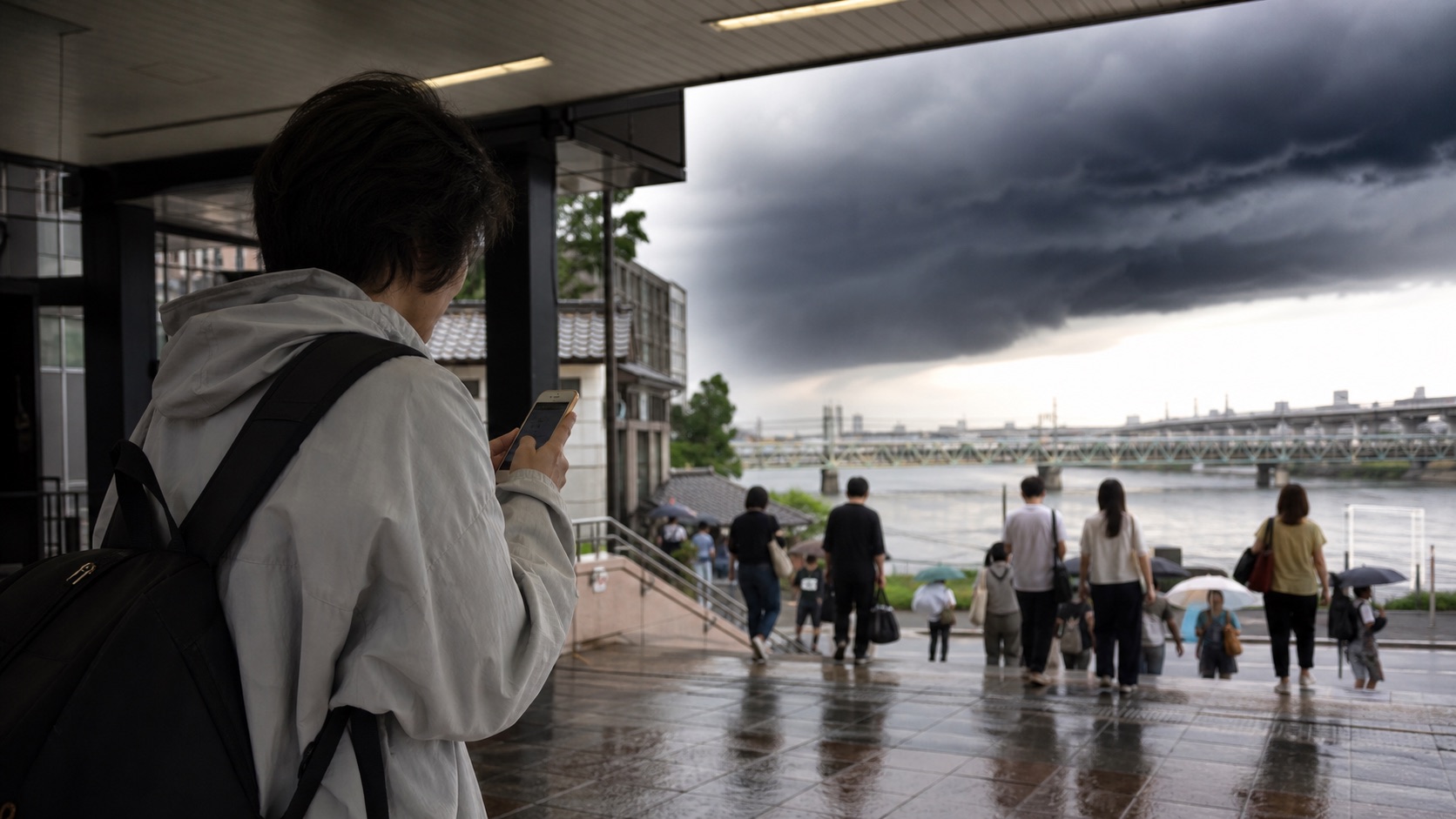
Normal rain does not automatically cancel the festival. The organizer may cancel after consultation with relevant authorities when conditions become unsafe. Published criteria include:
- Heavy-rain, flood, storm, or fire warnings
- Wind of 7 meters per second or more continuing for about 10 minutes
- A risk of lightning at the launch site
- Dangerous conditions when advisories rather than warnings are active
- A special heatstroke alert, which is different from the standard heatstroke alert
- Other unsafe conditions at the site
Do not decide from the weather app alone. Check the official event website before traveling and again in the late afternoon.
If the event is canceled before it begins
Paid-ticket holders should follow the official refund instructions. The organizer does not compensate travel or accommodation costs. Free-area visitors have no ticket procedure, so the practical response is to switch to an indoor plan before approaching the congested district.
Use the Japan Rain and Typhoon Plan to check alerts and transport disruption. A simple Plan B is to stay on the Tokyo side of your route and choose an indoor attraction or meal near a major station rather than traveling to Shinozaki to inspect conditions in person.
If the program starts and ends early
The paid-seat page states that there is no ticket refund after the event has begun and then ends early. Follow staff instructions and begin your return plan without waiting for a restart announcement unless the organizer explicitly provides one.
Viewing Rules and Common Mistakes
- Do not reserve a free space before 5:00 p.m. on the day before the event. Items judged to be early place-holding may be removed.
- Keep the free-space footprint near the official guideline of roughly one square meter per person.
- Do not use stakes, ropes, or spray that can damage the riverbank.
- Do not stand or sit on roads, cycling routes, or restricted passages.
- Do not enter sponsor or paid areas without the correct Edogawa-side ticket.
- Do not use station entrances as meeting places.
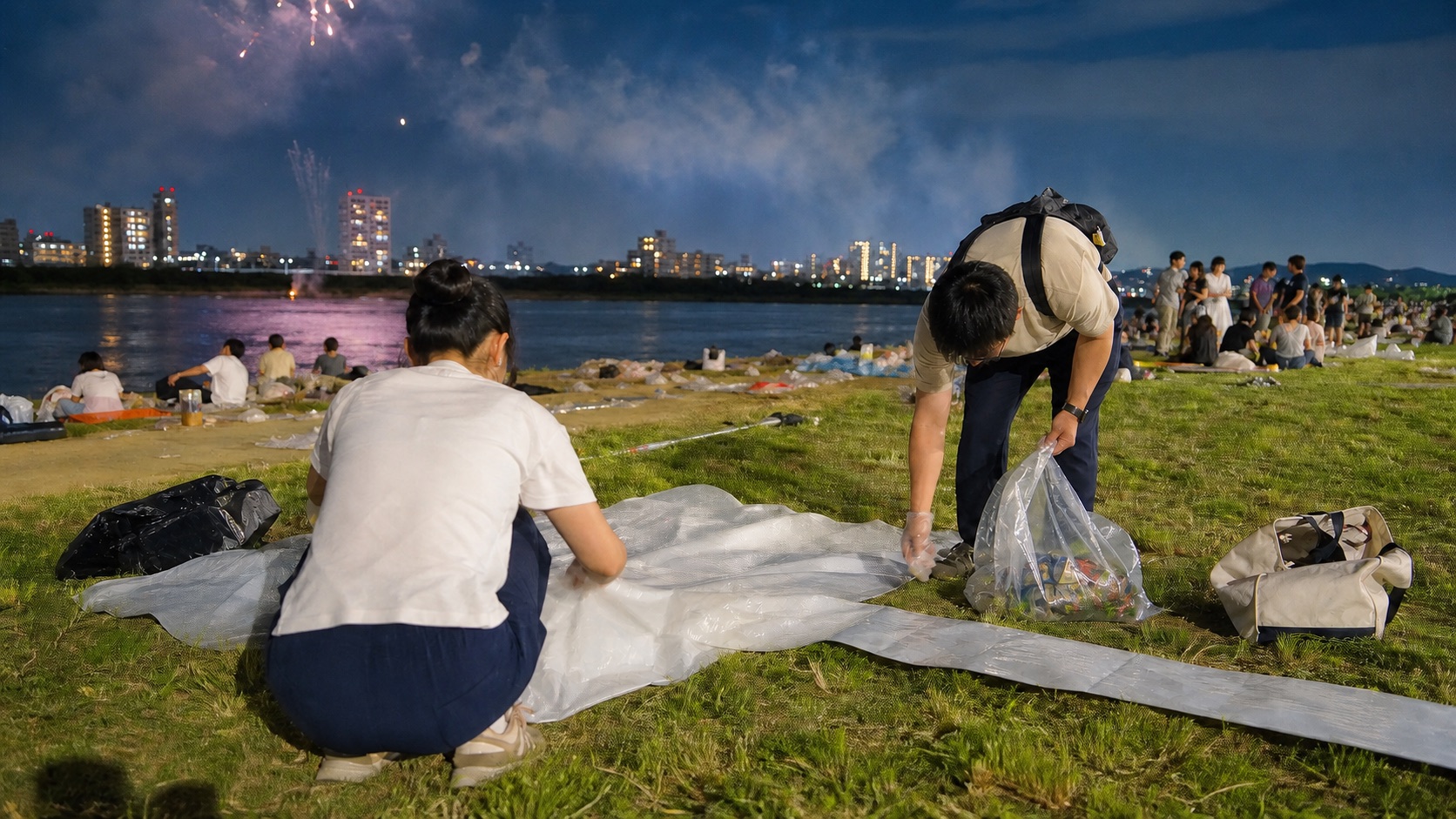
- Take your belongings and rubbish when you leave, and use the designated waste points where directed.
- Follow police and event staff even when their route differs from your phone’s navigation.
For broader festival etiquette and crowd preparation, see the Japan Festival Survival Guide. For other 2026 displays, use the Japan Summer Fireworks Guide.
Frequently Asked Questions
When is the Edogawa Fireworks Festival in 2026?
It is scheduled for Saturday, August 1, 2026. Fireworks are planned from 7:15 p.m. to 8:20 p.m.
Is the Edogawa Fireworks Festival free?
There are free viewing areas outside the sponsor and paid zones. Paid seats require the correct Edogawa-side ticket. Official general sales run through July 28 unless tickets sell out earlier.
What is the nearest station?
Shinozaki Station on the Toei Shinjuku Line is about a 15-minute walk, but it has the highest crowd pressure. Koiwa and Keisei Edogawa are about 25 minutes away, while Mizue is about 45 minutes away.
Which station is better after the fireworks?
Crowd levels vary by station and time. The organizer recommends considering Keisei Edogawa or Mizue to avoid the strongest concentration at Shinozaki and Koiwa.
Can I go by taxi?
Taxi access may be possible before traffic controls and heavy congestion. After restrictions begin, taxis cannot enter the controlled zone. Do not use a taxi as your primary arrival or departure plan.
Are there food stalls at the venue?
The official FAQ says there are no general food stalls inside the venue. Non-alcoholic drink sales are scheduled from 4:00 p.m. to 6:30 p.m., so bring food and water before arrival.
Are there toilets?
Yes. Temporary toilets are installed, but the organizer warns of long waits. Use them early rather than immediately before the fireworks.
Will the fireworks continue in rain?
Regular rain does not automatically mean cancellation. Severe warnings, strong wind, lightning risk, dangerous heat, or unsafe site conditions can lead to cancellation.
Can I use an Ichikawa fireworks ticket on the Edogawa side?
No. The two sides have separate paid and sponsor ticket systems even though they watch the same fireworks.
What should I do if the event is canceled?
Check the official notice before traveling. Paid-ticket holders should follow the official refund instructions, while visitors should switch to an indoor Tokyo Plan B instead of going to the riverbank to verify conditions.
Official Sources
- Edogawa City: 2026 event announcement
- Event highlights and schedule
- Official transport access
- Venue guide and crowd controls
- Internal venue movement restrictions
- Road traffic restrictions
- Viewing guide, rules, and cancellation criteria
- General event FAQ
- Paid-seat information
- Instructions for ticket holders
Comments