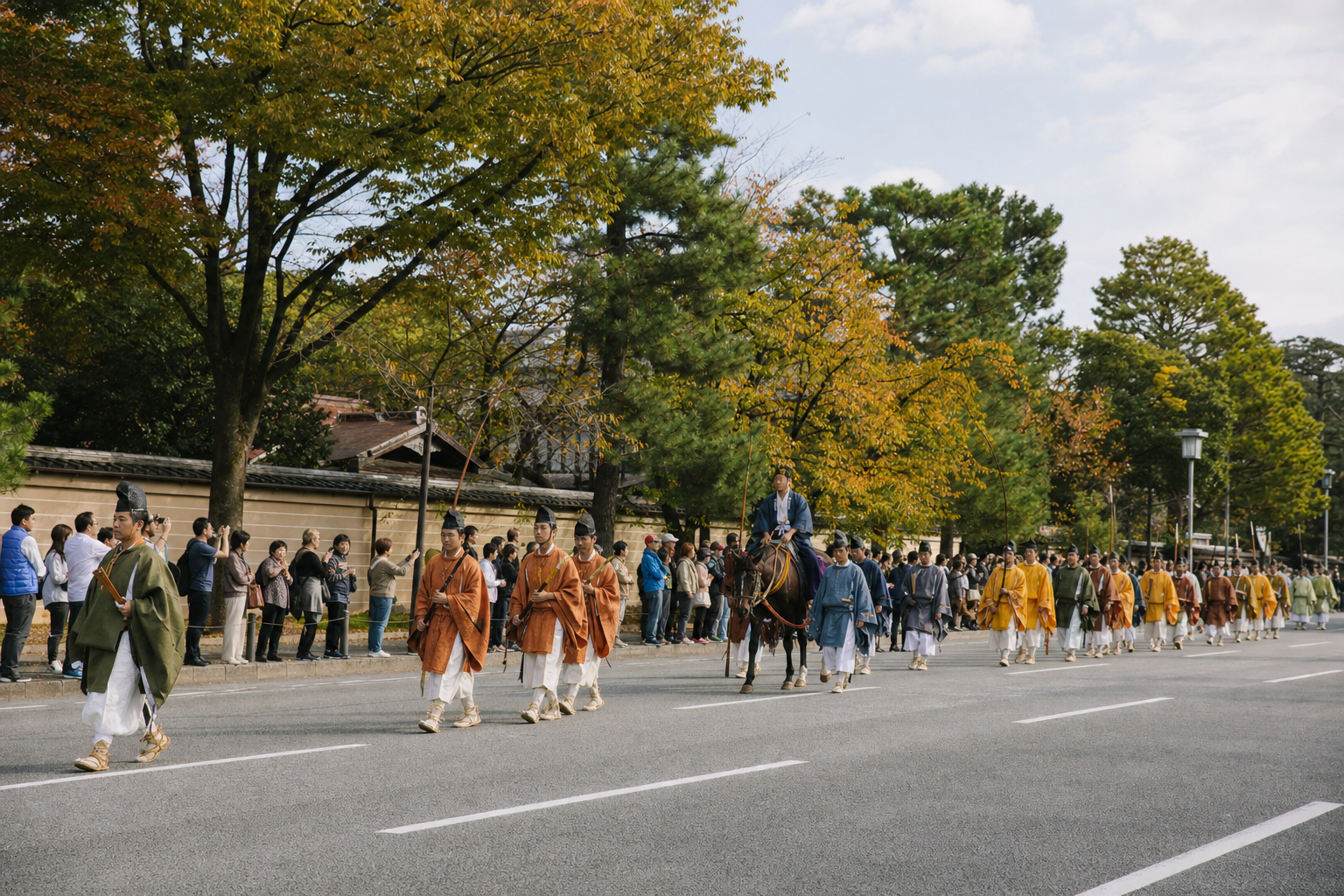
Kyoto's Jidai Matsuri procession is scheduled for Thursday, October 22, 2026. It leaves the Kyoto Imperial Palace area at about noon and reaches Heian Jingu Shrine at about 14:30. Watching from the street can be free, but a paid seat removes the need to search for an allowed viewing position and gives you a reserved place along the route.
The 2026 paid seats cost JPY 5,000 to JPY 15,500 per person. The limited advance lottery has ended. Regular sales are scheduled to open at 10:00 on September 8, 2026, Japan time through the official Kyoto sightseeing page. The official individual-sales page is currently in Japanese and does not confirm universal support for foreign cards, overseas phone numbers or ticket-delivery methods. Check the live purchase flow before relying on it.
This guide helps you make one decision before the festival: choose a paid zone, choose one free route segment, or keep the day flexible if rain or a sold-out ticket changes the plan.
- Quick answer: do you need a paid seat?
- Jidai Matsuri 2026 date, route and timing
- Which paid viewing area should you choose?
- How to buy 2026 Jidai Matsuri tickets
- How to watch for free without chasing the procession
- Crowd and transport plan
- Rain, sold-out and fatigue Plan B
- Photography, umbrellas and visitor rules
- Save this checklist
- Frequently asked questions
- Official sources
Quick answer: do you need a paid seat?
Choose a paid seat if sitting, a fixed view and a lower-stress arrival matter more than price. Choose one free public route segment if your budget is more important and you can accept standing, a partially blocked view, police barriers and changing crowd controls.
For most first-time overseas visitors, the practical choices are:
- Kyoto Gyoen at about 12:00: earliest viewing; best if you want the afternoon free afterward.
- Oike-dori at about 13:20: central location; compare this first if simple subway access matters.
- Jingumichi at about 14:20: final approach to Heian Jingu; choose the Outenmon special seat when bilingual commentary and the shrine arrival are worth the premium.
- Free-route Plan B: choose one point between Karasuma Oike and Sanjo rather than trying to chase the procession.
- Rain Plan B: check the official decision at about 07:00. Rain or severe weather on October 22 moves the procession to October 23; unsuitable weather on both days cancels it.
| Decision | Best fit | Main trade-off |
|---|---|---|
| General paid seat, second row or later | You want a reserved place at the lowest listed price | JPY 5,000 plus ticket-service fees |
| General paid seat, front row | You value an unobstructed first row | JPY 7,500; the exact seat cannot be chosen |
| Kyoto Gyoen learning seat | Japanese commentary is useful to you | JPY 8,500-10,500; commentary is Japanese |
| Outenmon special seat | You want the Heian Jingu arrival with Japanese/English commentary | JPY 13,500-15,500; latest and most expensive option |
| Free route viewing | You can stand and adapt to staff instructions | No reserved space or fixed sightline |
Information was checked on August 5, 2026. Ticket availability, traffic controls and any special crowd measures can change before October 22.
Jidai Matsuri 2026 date, route and timing
Jidai Matsuri began in 1895 and presents Kyoto's history in reverse chronological order, from the Meiji Restoration back toward the Heian period. The modern visitor problem is simpler: the front of the procession moves for roughly two and a half hours, while the full procession takes about two hours to pass one viewing point. You should watch from one location, not build a walking race against the parade.
| Official route point | Scheduled front-arrival time |
|---|---|
| Kyoto Imperial Palace, Kenreimon | 12:00 |
| Sakaimachi Gate | 12:15 |
| Karasuma Marutamachi | 12:30 |
| Karasuma Oike | 12:50 |
| Kawaramachi Oike | 13:20 |
| Kawaramachi Sanjo | 13:30 |
| Sanjo Ohashi | 13:40 |
| Sanjo Jingumichi | 14:10 |
| Heian Jingu Shrine | 14:30 |
These are scheduled times for the front of the procession. Later groups pass progressively after the front. Once it reaches your point, allow about two hours if you intend to see the entire sequence.
The route and times are published on Kyoto's official Jidai Matsuri page. Recheck them near October 22 because a disaster, traffic restriction or other operational change can alter the schedule.
Which paid viewing area should you choose?
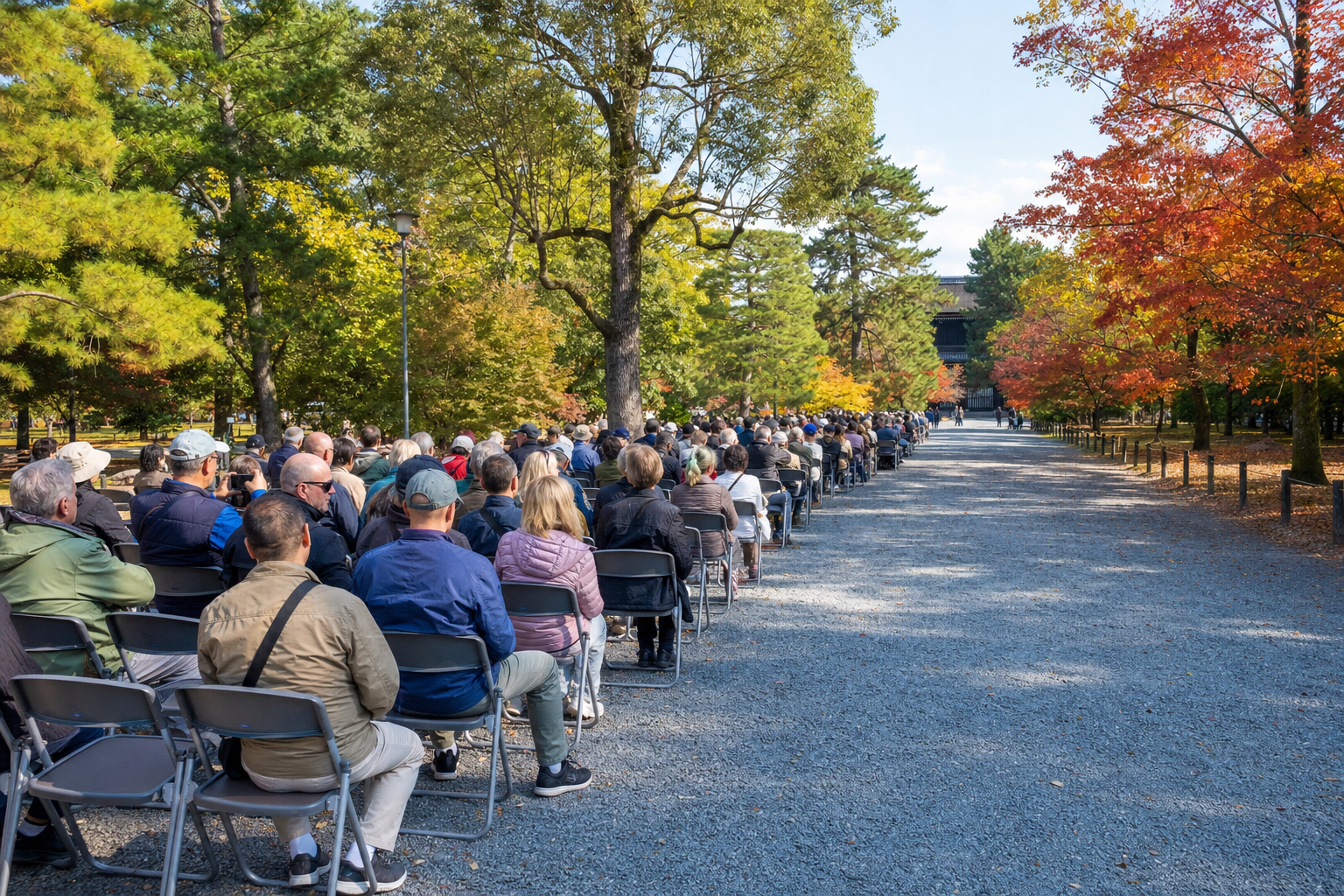
The three areas use the same JPY 5,000 general-seat price from the second row onward and JPY 7,500 price for the front row. Their real difference is the time, setting, commentary option and what you want to do before or after the procession.
| Area | Front arrival | 2026 individual seat options | Choose it when | Plan after viewing |
|---|---|---|---|---|
| Kyoto Gyoen | About 12:00 | General JPY 5,000/7,500; Japanese learning seat JPY 8,500/10,500 | You want the earliest start or Japanese commentary | Leave the palace area after the procession and keep the evening flexible |
| Oike-dori | About 13:20 | General JPY 5,000/7,500 | Central-city access and a mid-route view matter most | Use the subway or walk after staff reopen the route |
| Jingumichi | About 14:20 | General JPY 5,000/7,500; Outenmon special JPY 13,500/15,500 | You want the Heian Jingu approach or bilingual commentary | Expect a later finish and avoid a tight dinner or train reservation |
Kyoto Gyoen: earliest and most flexible afterward
The procession starts in the Kyoto Imperial Palace area. This is the first of the paid zones, with the front expected at about noon. It also offers a Japanese-language learning-seat option.
The official FAQ warns that parts of Kyoto Gyoen have gravel, which can make wheelchair movement difficult. It says wheelchair viewing is possible in each paid area, but visitors who need consideration should speak with reception staff on the day; the exact arrangement depends on space and ground conditions.
Oike-dori: the simplest central-city compromise
Oike-dori sits in the middle of the route. It does not have a commentary upgrade in the 2026 individual price table, but it offers the same general front-row and later-row prices as the other locations.
This is the first area to compare if you want a central location and do not need the palace departure or shrine arrival. Use the exact seat-map link from the official sales page before choosing a subway exit because the installed blocks and pedestrian controls determine the useful approach.
Jingumichi: the finale and bilingual premium
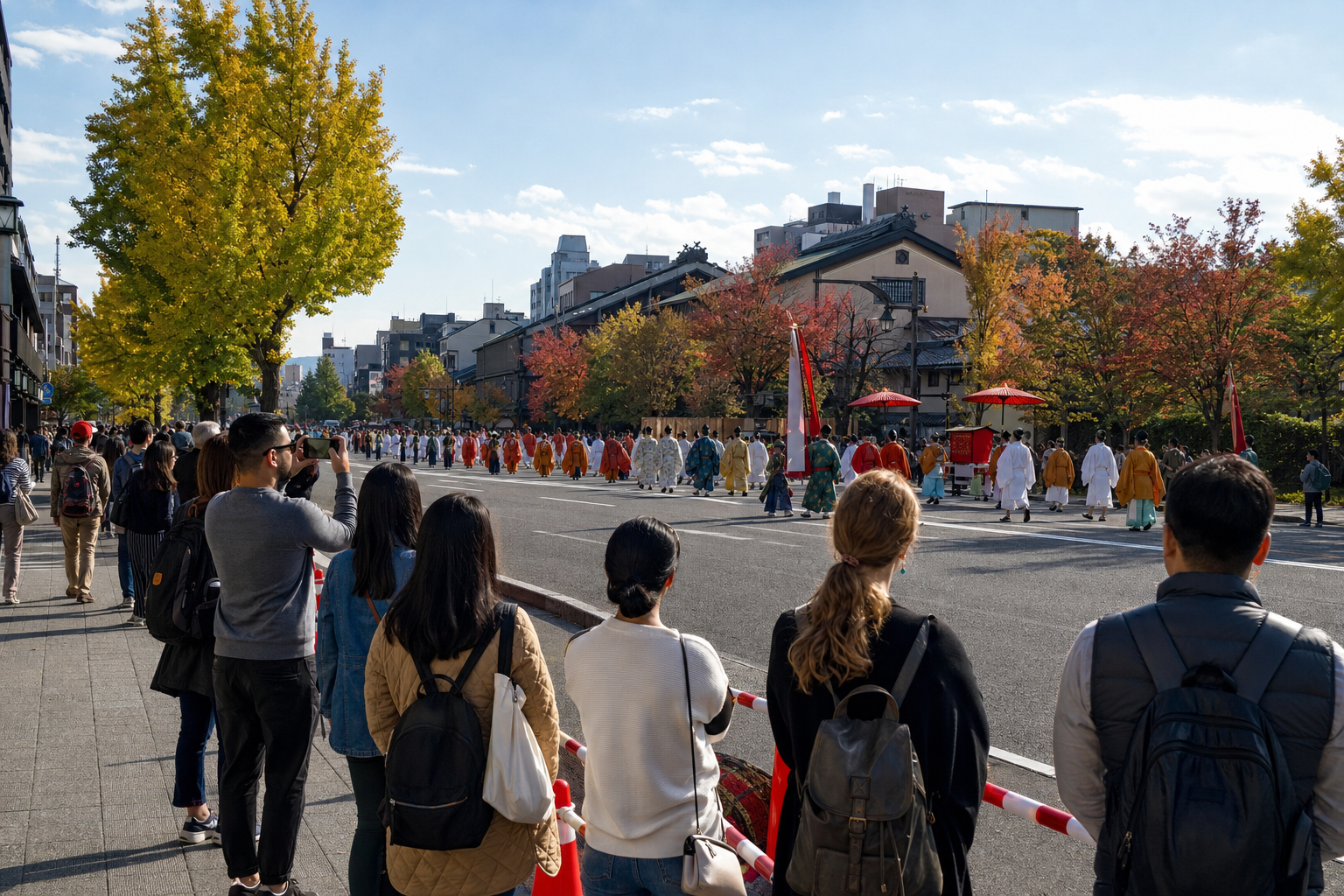
The final paid area is on the approach to Heian Jingu. The Outenmon special seats add live commentary in Japanese and English. The audio plays through a web browser on your own internet-connected phone or tablet. Bring your own earphones and enough battery; no app download or personal registration is required according to the 2026 sales page.
Paying for the premium seat makes sense when the commentary and final shrine setting are your priority. It is not automatically better for a traveler who primarily wants a clear look at the costumes.
How to buy 2026 Jidai Matsuri tickets
The limited advance lottery ran from July 10 to July 17 and has closed. Regular individual sales are scheduled to begin at 10:00 on Tuesday, September 8, 2026.
Use this sequence:
- Open the official 2026 paid-seat page, not a search advertisement or resale listing.
- Confirm that the regular-sales button is live and that your chosen area and seat type are available.
- Read the Ticket PIA payment, identity, delivery and issue method shown in the live checkout.
- Check the final total. Ticket-service and issue fees can be added to the listed seat price.
- Save the confirmation and follow the stated ticket-issue method. Do not assume a screenshot alone is admission proof.
The official page currently describes internet sales and Seven-Eleven counter sales. It does not confirm universal support for foreign-issued cards or overseas accounts. If the purchase flow cannot accept your details, do not invent a Japanese phone number or move to an unverified reseller.
If online purchase does not work
Keep the free-route plan below. You can also ask the official Kyoto Tourist Information Center about current authorized options after arrival, but same-day paid-seat inventory may be unavailable. The article will be rechecked after regular sales open so that any official English purchase route can be added if one appears.
How to watch for free without chasing the procession
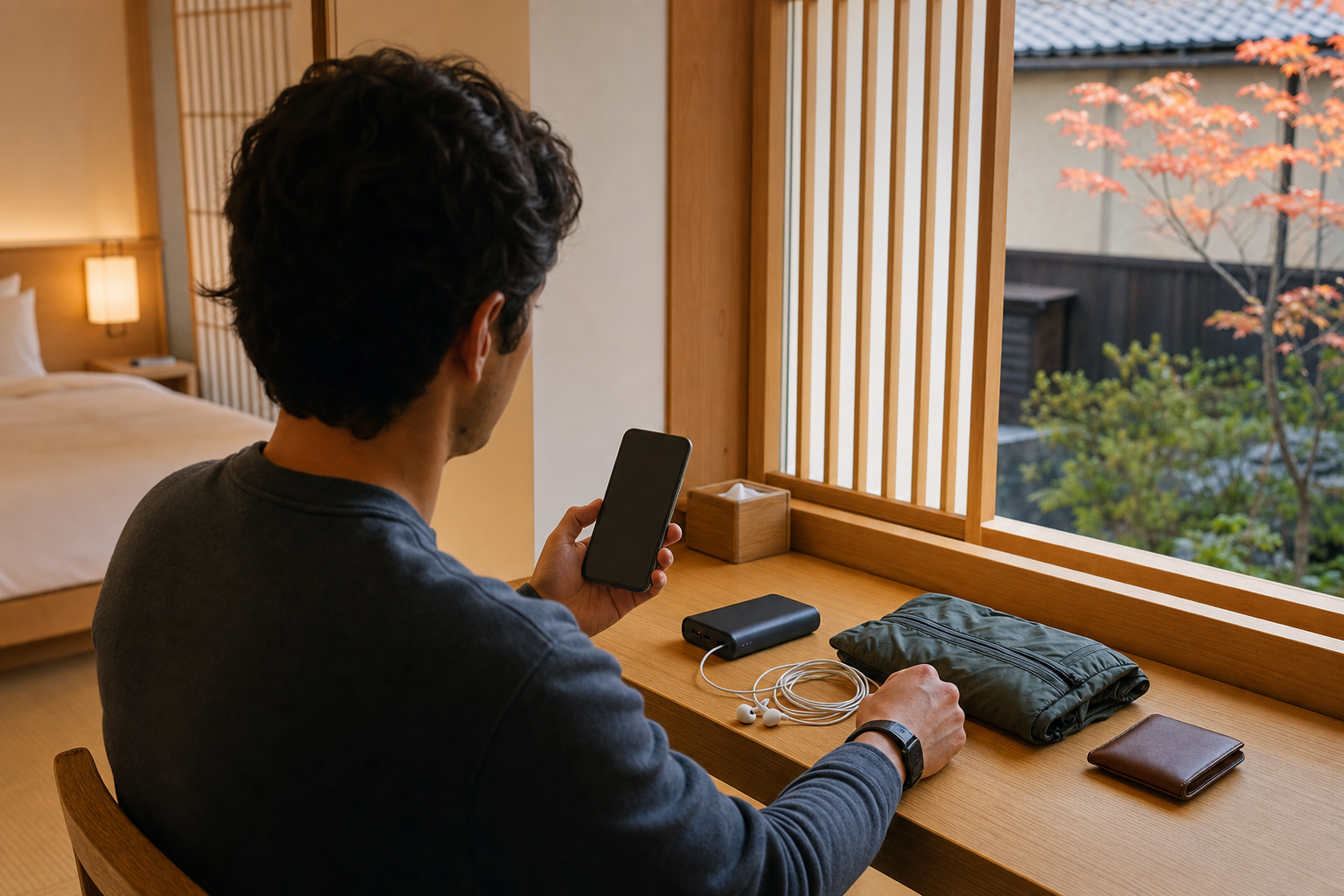
The official route page describes paid seats as a convenient viewing method, not a mandatory admission ticket for the festival. That supports a free public-route option, but it does not create a right to stand anywhere. Police barriers, private property, emergency access and staff instructions control the usable space on the day.
Use this one-stop method:
- Pick one route point before leaving your accommodation.
- Save the nearest two rail or subway stations, not just one bus stop.
- Arrive early enough to follow staff directions without blocking a road, doorway or crossing.
- Accept that a free sightline may be partial. Do not step into the street or raise equipment over other viewers.
- After the final groups pass, wait for pedestrian controls to ease before moving to your next reservation.
Karasuma Oike, Kawaramachi Oike and the Sanjo area are practical points to compare because they sit on the published route and connect to rail or subway options. This is an RJG planning framework, not a promise that a particular corner will remain open for free viewing in 2026.
Do not walk beside the procession from Kyoto Gyoen to Heian Jingu. The front moves faster than a crowded sidewalk, crossings may close, and you can lose both your view and your next transport connection.
Crowd and transport plan
Kyoto's official travel guidance recommends using trains and subways together with buses to reduce exposure to road congestion. That advice is especially useful on a procession route that crosses major central streets.
Before the procession
- Travel without a suitcase. Leave large luggage at your accommodation, a staffed counter or a suitable locker before entering the route area.
- Save your paid-zone entrance or free-viewing point as a map pin.
- Compare a rail or subway route with any bus suggestion. A short-looking bus ride can become unreliable when streets are restricted.
- Paid-seat users should enter at least 30 minutes before the scheduled arrival of the front. The official FAQ warns that a late arrival may not reach the seat through the crowd, and that does not create a refund right.
After the procession
- Do not schedule a tightly timed restaurant, Shinkansen or attraction immediately after the published pass time.
- Follow police and staff instructions even if your map suggests a shorter crossing.
- If your nearest station entrance is congested or temporarily controlled, use the second station you saved rather than forcing one exit.
- Check the Kyoto Travel Congestion Forecast and current transport notices on the day. Forecasts improve closer to the date and can change with weather.
For the wider autumn transport problem, use the Kyoto Autumn 2026 crowd guide. If you are arriving from Tokyo, confirm your intercity plan with the Tokyo to Kyoto Shinkansen guide. Large luggage is easier to remove from the day with the Japan luggage forwarding guide.
Rain, sold-out and fatigue Plan B
Rain on October 22
The official rule is postponement, not an automatic rain-or-shine parade. If rain or severe weather prevents the procession on October 22, it moves to October 23. Your paid seat remains valid for the 23rd, and postponement alone does not produce a refund.
Check the official Jidai Matsuri page or Heian Jingu information from about 07:00. Do not decide from a generic weather icon the night before.
Bad weather on both days
If the procession cannot run on October 23 either, it is canceled. The official FAQ says paid-seat refunds are then announced, but ticket-issue and delivery-related fees are not necessarily refundable. Follow the instructions for the place where you bought the ticket.
Use the Japan Rain and Typhoon Plan if weather also affects trains or walking safety. Keep an indoor Kyoto activity that does not require crossing the procession route as your fallback.
Paid seats are sold out
Use one free route segment. Do not pay an unverified seller merely to preserve the original plan. A partial but lawful view is a better outcome than a questionable ticket or a day spent moving between blocked intersections.
You cannot stand for a long period
Do not depend on free viewing. Choose a paid seat if suitable inventory remains, or treat the festival as optional and use an accessible indoor Plan B. The official organizer can consider wheelchair placement at reception, but the exact arrangement depends on space and ground conditions.
Photography, umbrellas and visitor rules
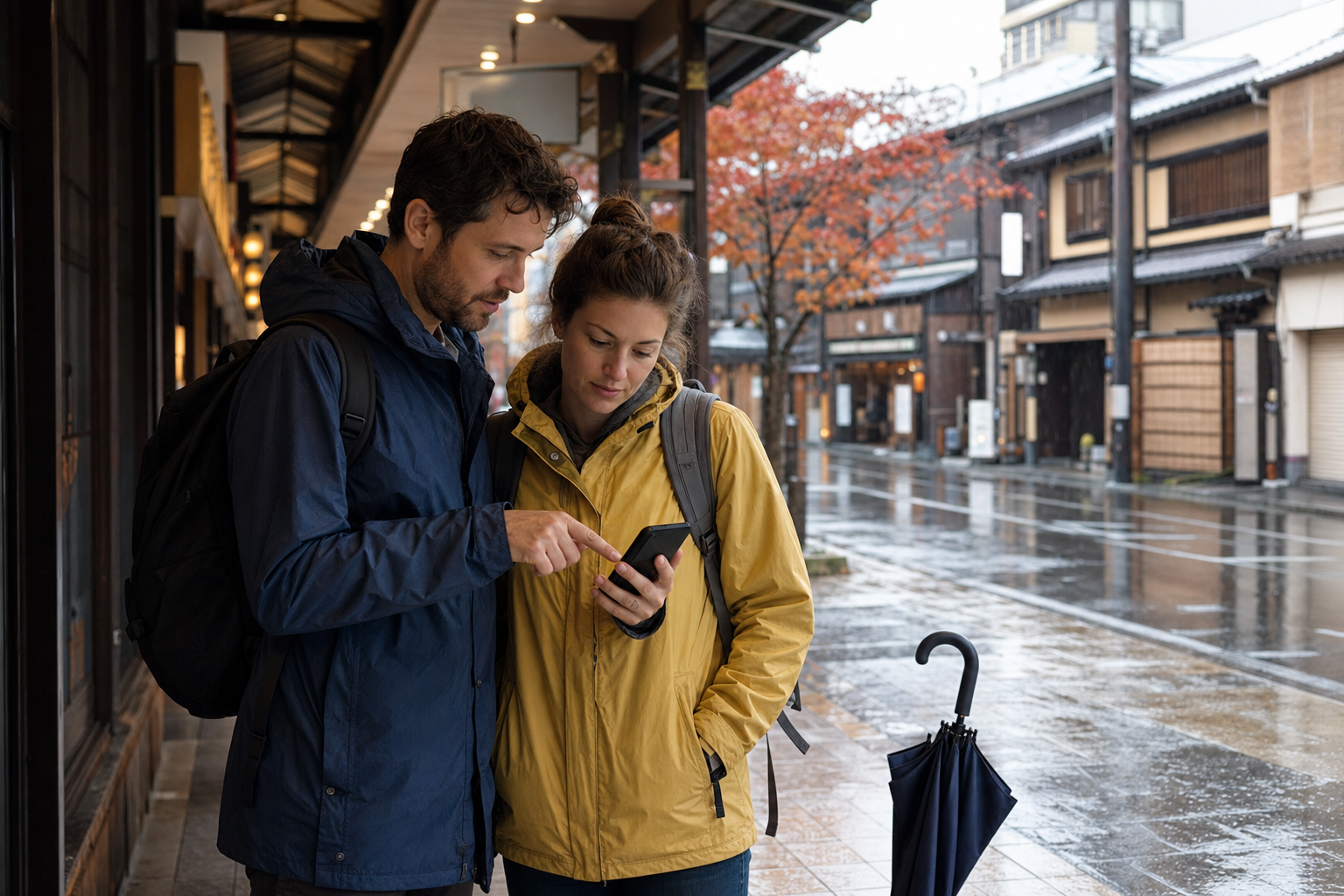
Paid-seat rules prohibit umbrellas, parasols and tripods because they block views. Bring a raincoat instead. Flash photography and pets are prohibited because horses and cattle take part in the procession and may be startled.
Use these rules even from a free viewing area as a minimum courtesy:
- Do not enter the road for a photo.
- Do not block a crossing, doorway, shop or emergency path.
- Keep tripods and raised phones out of other viewers' sightlines.
- Do not use flash near the procession animals.
- Follow police and festival staff directions immediately.
- Carry out your own rubbish and smoke in designated areas.
The festival is a religious and civic procession, not a costumed street show arranged for individual photo sessions. A clear view does not justify interfering with participants, residents or other visitors.
Save this checklist
Before September 8:
- Choose Kyoto Gyoen, Oike-dori, Jingumichi or one free route point.
- Set a September 8, 10:00 JST reminder if you want a paid seat.
- Decide whether Japanese or bilingual commentary has real value for you.
- Save the official sales page and avoid resale links.
Before October 22:
- Save the official route and your entrance or viewing point.
- Save two rail or subway options.
- Remove large luggage from the event plan.
- Pack a raincoat, phone, power bank and earphones if your seat includes commentary.
- Keep October 23 flexible if the festival is important to your trip.
On the day:
- Check the official go, postponement or cancellation notice at about 07:00.
- Recheck traffic controls and public transport.
- Reach a paid seat at least 30 minutes before the front is due.
- Follow staff directions and do not chase the procession.
Frequently asked questions
Is Jidai Matsuri free to watch?
You can watch from an allowed public area along the procession route without buying a paid seat. Free-viewing space and sightlines vary, and police barriers or crowd controls can change where you may stand. Paid seats provide an assigned place and official guide materials.
Do I need a paid viewing seat?
No, but a paid seat is the practical choice if you need to sit, want a fixed viewing location or cannot spend time searching for an allowed street position. Free viewing works best when you accept standing and a partial sightline.
Which paid seating area should I choose?
Choose Kyoto Gyoen for the earliest start, Oike-dori for a central mid-route location, or Jingumichi for the final approach to Heian Jingu. The Outenmon special seats at Jingumichi include Japanese and English commentary.
When do 2026 Jidai Matsuri tickets go on sale?
Regular individual sales are scheduled to begin at 10:00 JST on September 8, 2026. The limited July lottery has ended. Use the official Kyoto sightseeing page to reach the authorized purchase flow.
Can foreign visitors buy Jidai Matsuri tickets online?
The official page provides an online Ticket PIA route, but it does not confirm universal support for foreign-issued cards, overseas phone numbers or delivery methods. Check the live September 8 purchase conditions and keep a free-viewing Plan B.
What time should I arrive?
Paid-seat visitors should enter at least 30 minutes before the front is scheduled to reach their area. Free viewers should arrive early enough to accept the position and route instructions available on the day; the organizer does not publish a fixed free-viewing arrival time.
What happens if it rains?
Rain or severe weather on October 22 postpones the procession to October 23. If it cannot run on October 23 either, it is canceled. Check the official decision from about 07:00 on the relevant morning.
Can I use an umbrella, tripod or flash?
Not in the paid viewing areas. Umbrellas, parasols and tripods are prohibited, and flash photography and pets are banned because animals take part in the procession. Bring a raincoat and keep equipment from blocking other viewers.
Comments