- Quick Answer
- Why Japan Sorts Trash Like This — The Cultural Background
- You Are Not Expected to Do It All
- The Five Main Streams (Quick Reference, Not a Test)
- Seven Habits That Genuinely Help (General Examples)
- 1. Sort what you can — when in doubt, leave it for the host
- 2. In Tokyo’s 23 wards, any clear or translucent bag works
- 3. Take bags out in the morning, not the night before
- 4. PET bottles take 30 seconds — and it’s noticed
- 5. Drain wet food waste before sealing the bag
- 6. Cardboard is a resource (and the way it’s bundled varies)
- 7. Large items can’t be left at the regular spot
- A Note on Tokyo Wards
- What a 1–3 Night Stay Actually Looks Like
- Common Misunderstandings (Soft Version)
- Why It Matters
- FAQ
- Internal Links
- Did this guide solve your problem?
Quick Answer
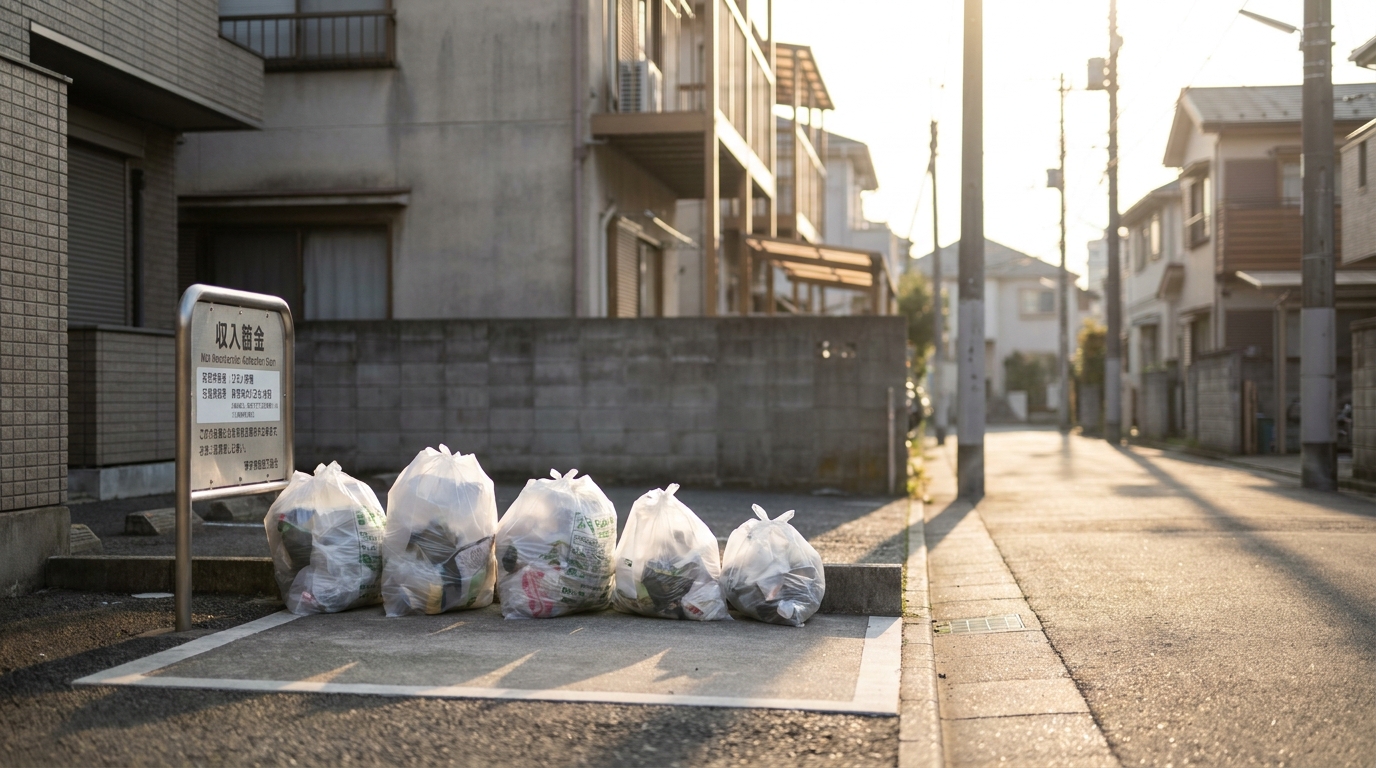
Japan’s trash sorting can look intimidating from the outside — five or six categories, different days for different things, and a chart on every accommodation wall. The good news: you are not expected to get it perfect. Hosts, building managers, and the local community share most of the work. Your part is small but real: understand roughly how it works, and follow the host’s posted chart as best as you can.
This guide explains why Japanese sorting looks the way it does, what the basic streams are, and the handful of habits that genuinely help — without trying to make a logistics expert out of you in three nights.
Why Japan Sorts Trash Like This — The Cultural Background
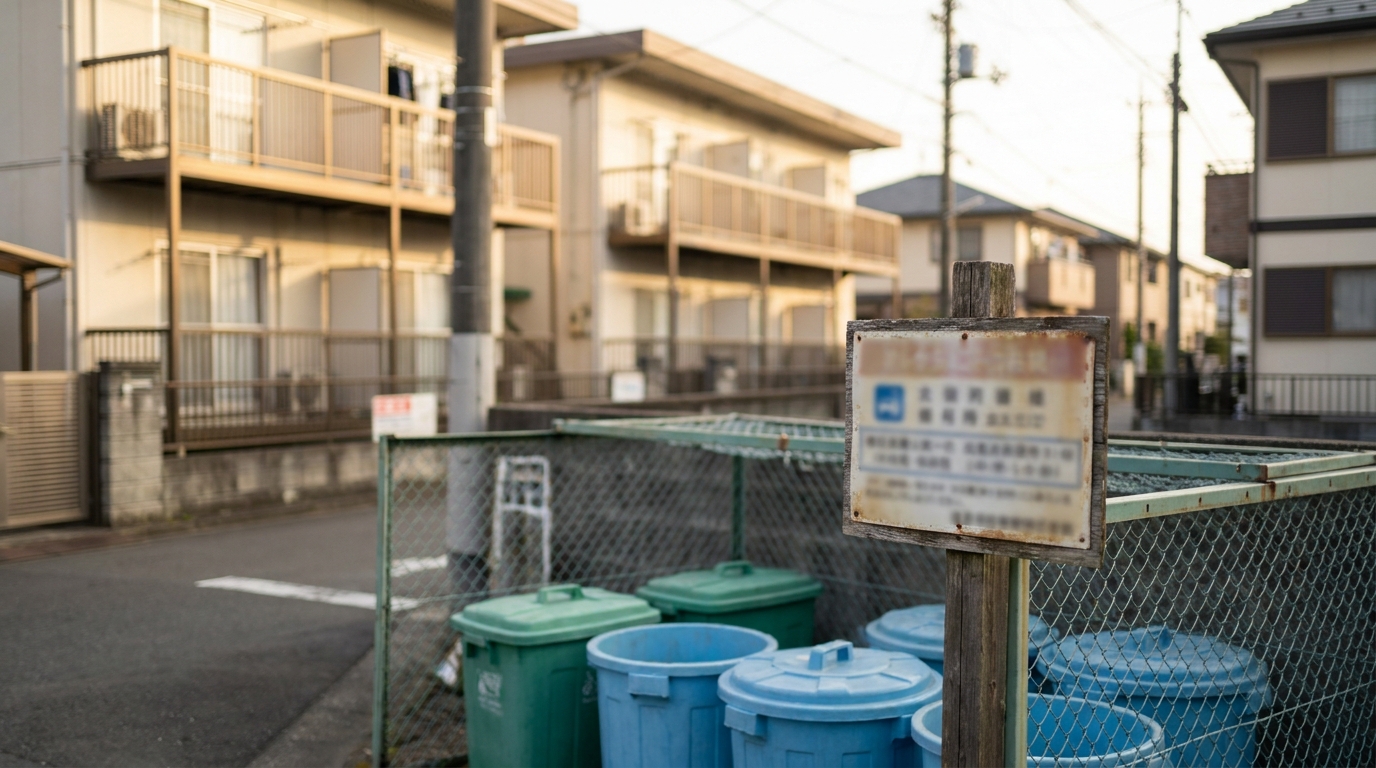
Travelers sometimes wonder if Japan is just being fussy. It isn’t. The system is a long, layered response to real problems — and it’s a big part of why streets look the way they do.
Limited land, limited landfill. Japan is small, mountainous, and densely populated. Burying everything was never realistic. From the 1970s onward, cities rebuilt their waste systems around incineration plus aggressive recycling, and the categories you see today are downstream of that.
Community-run collection points, not house-by-house bins. In most neighborhoods, a single sidewalk spot is shared by a whole block. Nobody owns it. The local residents’ association (chōnaikai) maintains it together, and the city collects from it. This only works if everyone — residents, accommodations, guests — keeps it tidy. The cleanliness you notice on quiet residential streets is not magic; it’s the product of small daily acts repeated by thousands of people.
Sorting is part of the social contract. Each ward (and most cities outside Tokyo) writes its own rules and prints its own calendar. That isn’t bureaucracy for its own sake — it reflects what each ward’s incinerator and recycling facility can actually handle. A bag in the wrong stream costs the system real money downstream.
For a short-stay guest, the takeaway is not “I have to memorize all of this.” It’s: the chart on your accommodation wall is the visible part of a much larger, mostly invisible community system, and a small effort to read it is appreciated.
You Are Not Expected to Do It All
This is the part hosts wish more guests knew.
- Your host or building manager routinely re-sorts and re-bags, especially around check-out. They know the local quirks better than you do, and they prefer you make a reasonable attempt and leave it inside the unit.
- The community does not expect tourists to follow ward rules to the letter. What gets noticed is the obvious stuff — bags out at midnight, an unsealed bag of food waste, a sodai-gomi-sized item left at the regular collection point.
- The right baseline is simple: separate what you can, leave anything you’re unsure about with the host, and never put bags out the night before.
Hosts running short-term rentals are aware they take on most of the sorting work for guests, and that’s part of the role. What they ask in return is a reasonable effort and that you don’t create problems with the neighbors.
The Five Main Streams (Quick Reference, Not a Test)
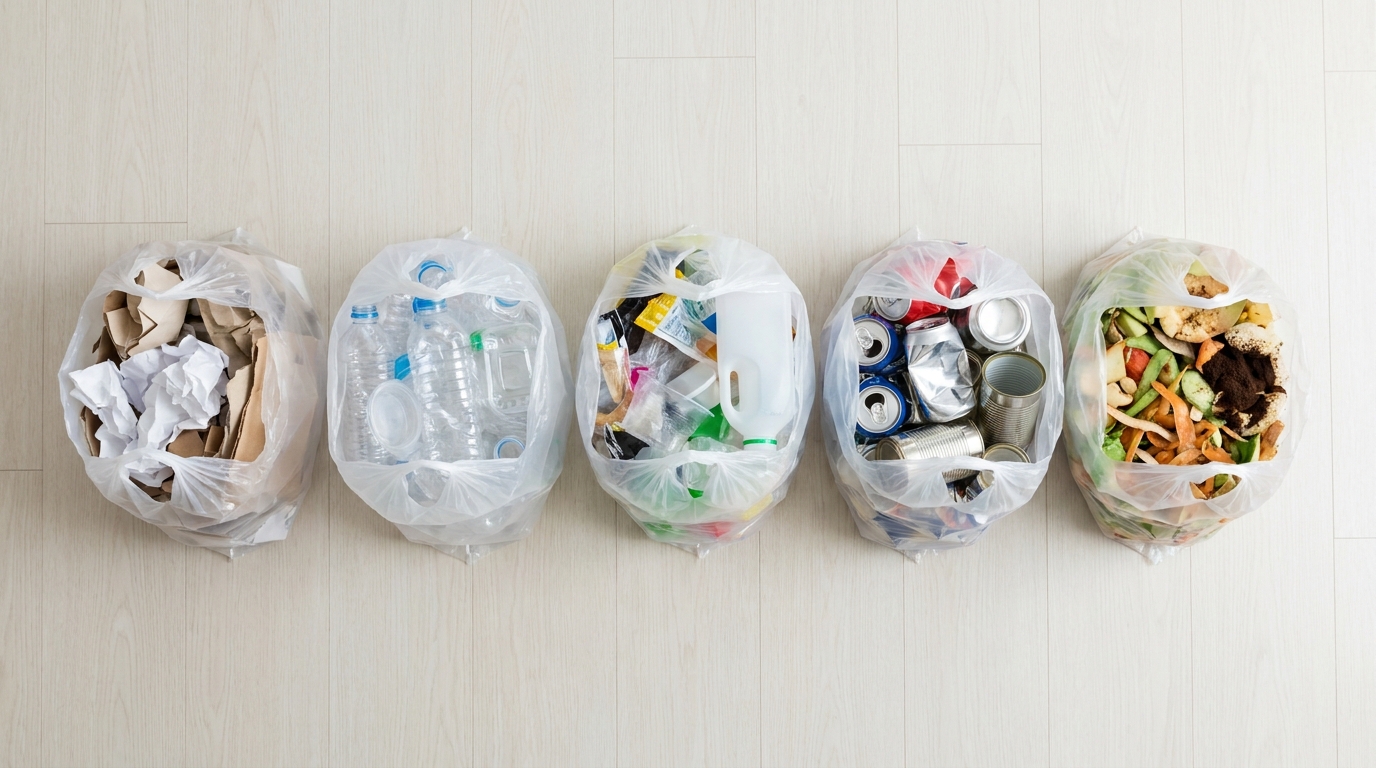
Wards label things slightly differently, but most of Tokyo follows roughly this split:
| Stream | Japanese | Examples |
|---|---|---|
| Burnable | 燃やすごみ / 可燃ごみ | Food scraps, paper tissues, small wood items, leather, rubber |
| Non-burnable | 燃やさないごみ / 不燃ごみ | Metal, ceramics, small electronics, light bulbs, glass that isn’t a bottle |
| Plastic | プラスチック | Items with the プラ mark, plus most plastic household items (varies by ward) |
| PET bottles | ペットボトル | Drink bottles with the PET mark — caps and labels removed, rinsed |
| Cans, glass bottles, paper | 缶・びん・古紙 | Drink cans, glass bottles, newspapers, magazines, cardboard |
Burnable is collected about twice a week. Resources (PET, plastic, cans/bottles, paper) are usually once a week. Non-burnable is once or twice a month in most wards.
You won’t be quizzed on the categories. Knowing they exist is enough to read your host’s chart.
Seven Habits That Genuinely Help (General Examples)
These are not rules — and they are not what your host necessarily expects of you. They are examples of what local households commonly do, included so you know roughly what’s going on around you.
Your host’s posted chart is always the source of truth. Some hosts handle most of these steps themselves and only ask one or two things of guests. Others ask for more. The chart on the wall reflects what your specific host has decided makes sense for their building and their ward — that’s the one to follow.
The list below is a general reference, not a checklist for guests.
1. Sort what you can — when in doubt, leave it for the host
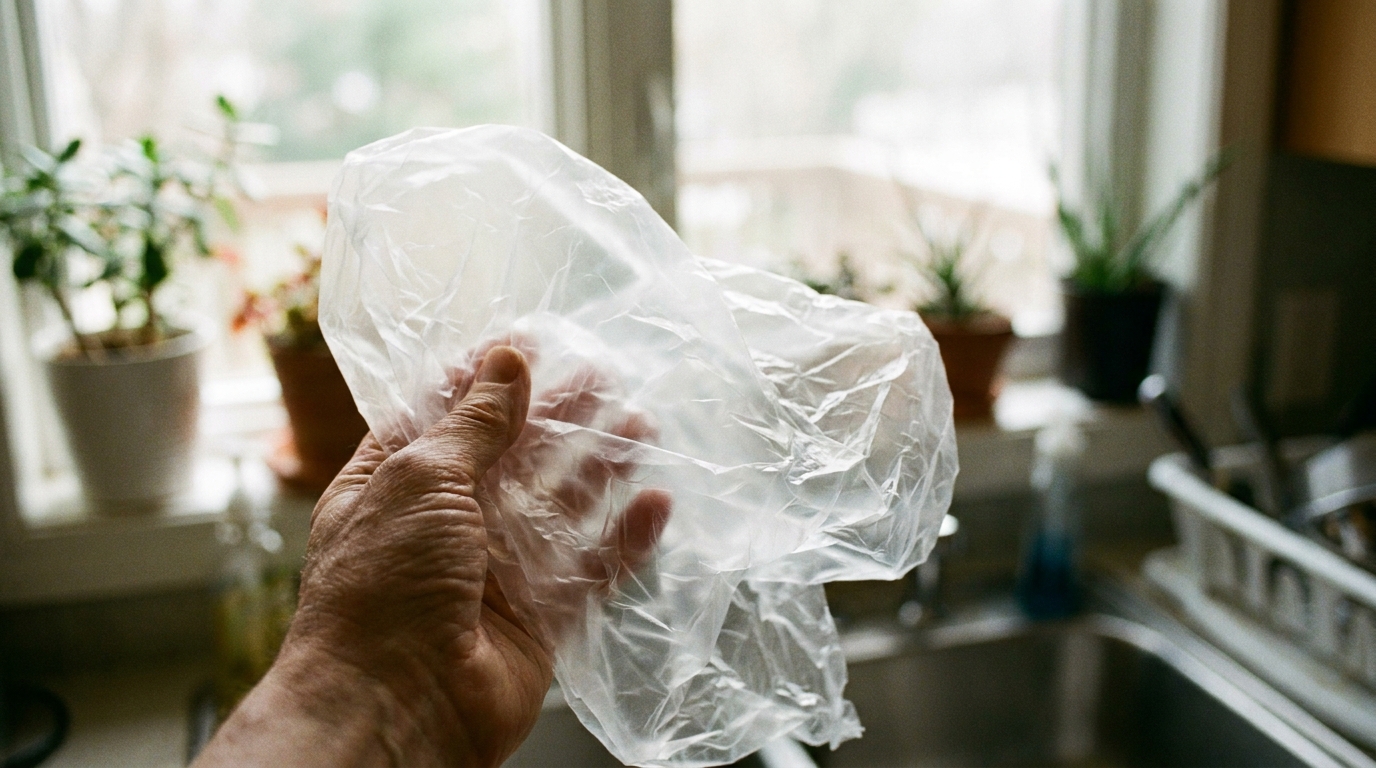
Before bagging, ask roughly “is this burnable, plastic, PET, or a can/bottle/paper?” If you can’t tell, set it aside. Hosts would rather sort a small mixed pile than re-open a tied bag.
PET bottles, cans, and paper always go to the resource side, never burnable — that’s the one general principle worth remembering.
2. In Tokyo’s 23 wards, any clear or translucent bag works
Travelers often arrive expecting every Japanese city to sell municipal-issue garbage bags. Tokyo’s 23 wards don’t require them — any clear or semi-transparent bag is accepted. The same is true in Osaka and Yokohama. Kyoto is the main exception among large cities and uses a paid designated-bag system.
If your host has supplied bags or has a specific bag in the apartment, use those. They’ve already worked out what fits the building.
3. Take bags out in the morning, not the night before
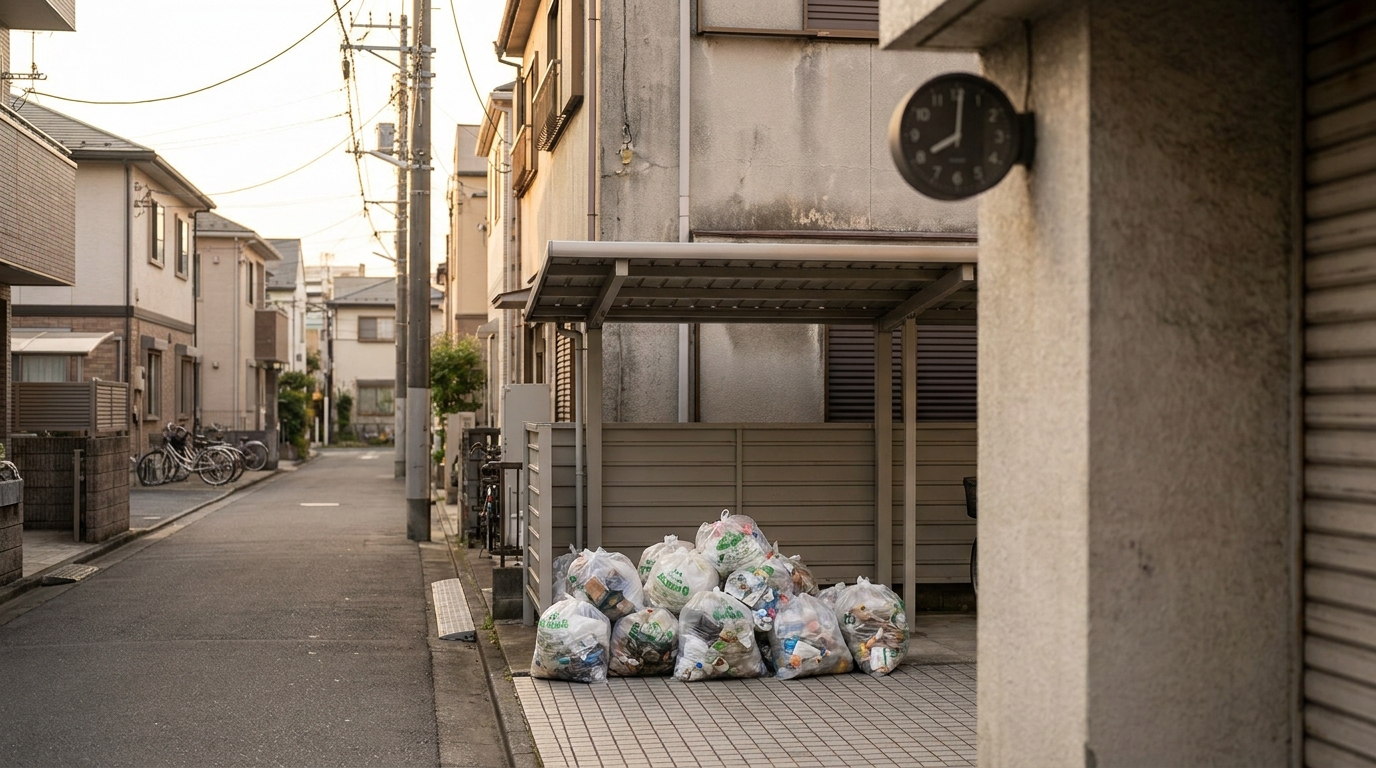
Most wards collect by around 8 AM, with bags placed at the collection point that morning. Some neighborhoods (such as parts of Shibuya’s entertainment districts) ask for bags out earlier, around 7:30 AM. Exact timing varies — the host’s chart will say what your block expects.
The reason this matters: bags left overnight get torn open by crows and cats within hours, and the smell stays for days. If you’re checking out before the morning collection window, leave bags inside the unit rather than at the collection point. The host will put them out on the next collection day. This is the single most-appreciated thing a short-stay guest can do.
4. PET bottles take 30 seconds — and it’s noticed
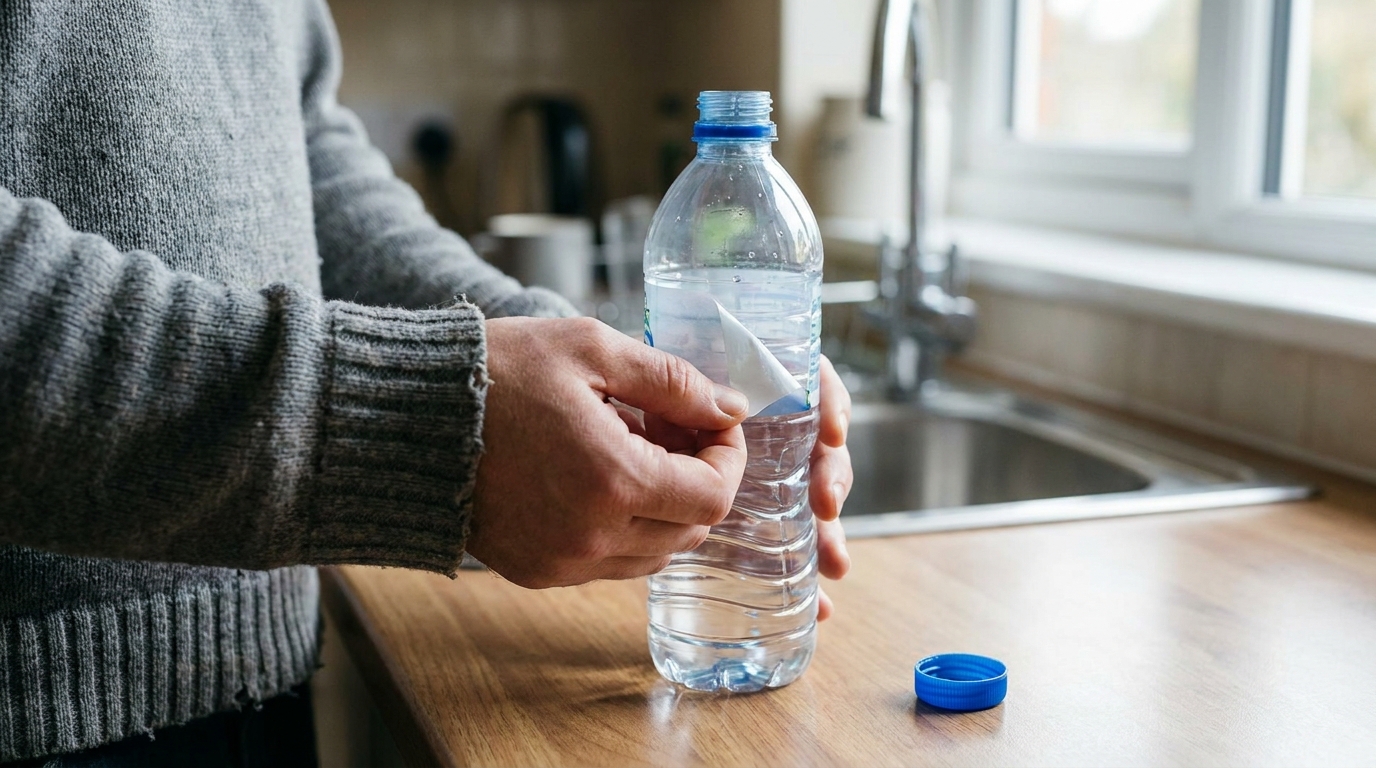
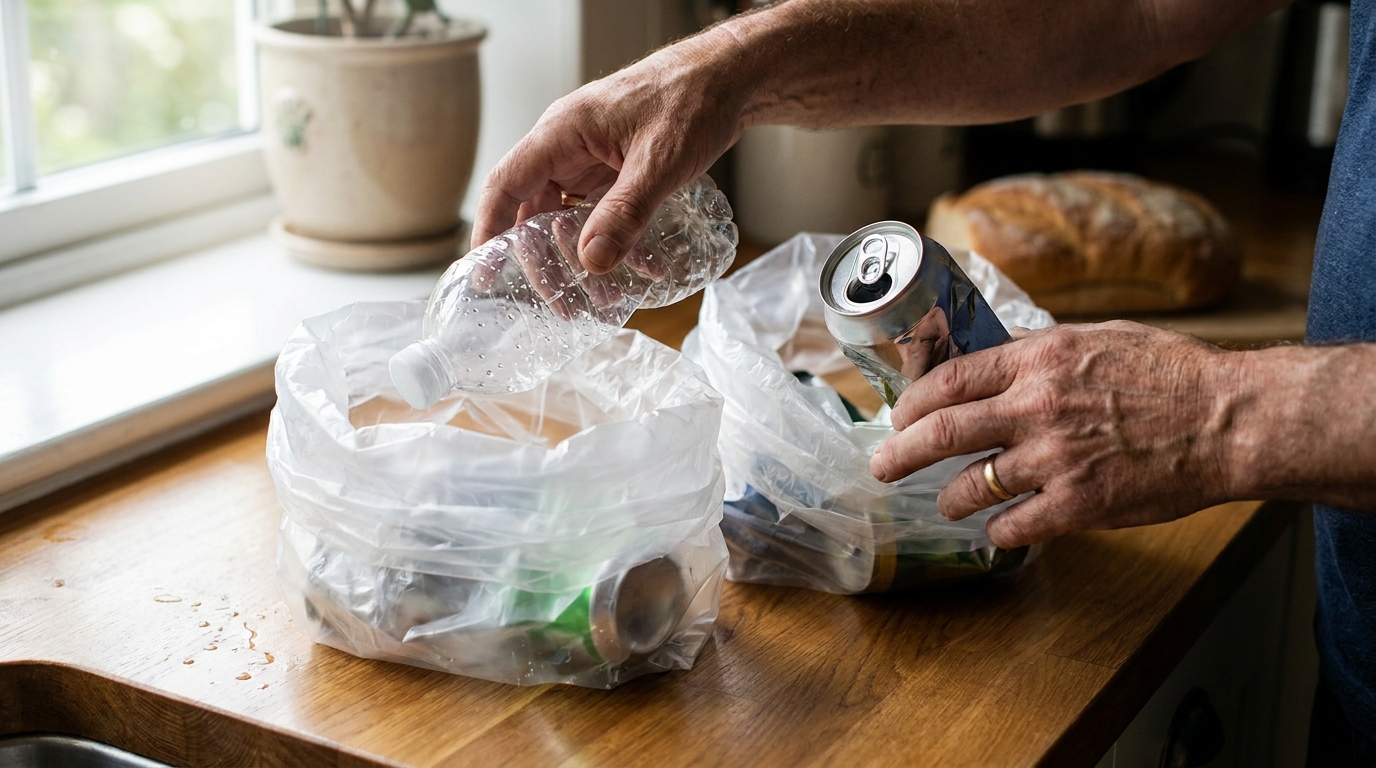
PET bottles are recycled into new bottles and clothing, and the process needs them clean. The general pattern in Japanese households:
- Cap off (it’s plastic, not PET — goes with the plastic stream)
- Label off (same reason)
- Rinse with a quick splash of water
- In some areas residents crush them; in others they don’t
How much of this your host actually expects from guests varies — some prefer to handle the rinsing and cap removal themselves, others appreciate it being done. The host’s chart says what to do at your accommodation. Even just emptying and rinsing is a noticeable help.
5. Drain wet food waste before sealing the bag
Food scraps go to burnable, but water makes the bag heavy and rip-prone, and it leaks at the collection point. A few seconds at the sink, or a paper towel around very wet items, is what residents commonly do — especially in summer. As with the others, this is a general practice, not necessarily something your host expects of guests in detail.
6. Cardboard is a resource (and the way it’s bundled varies)
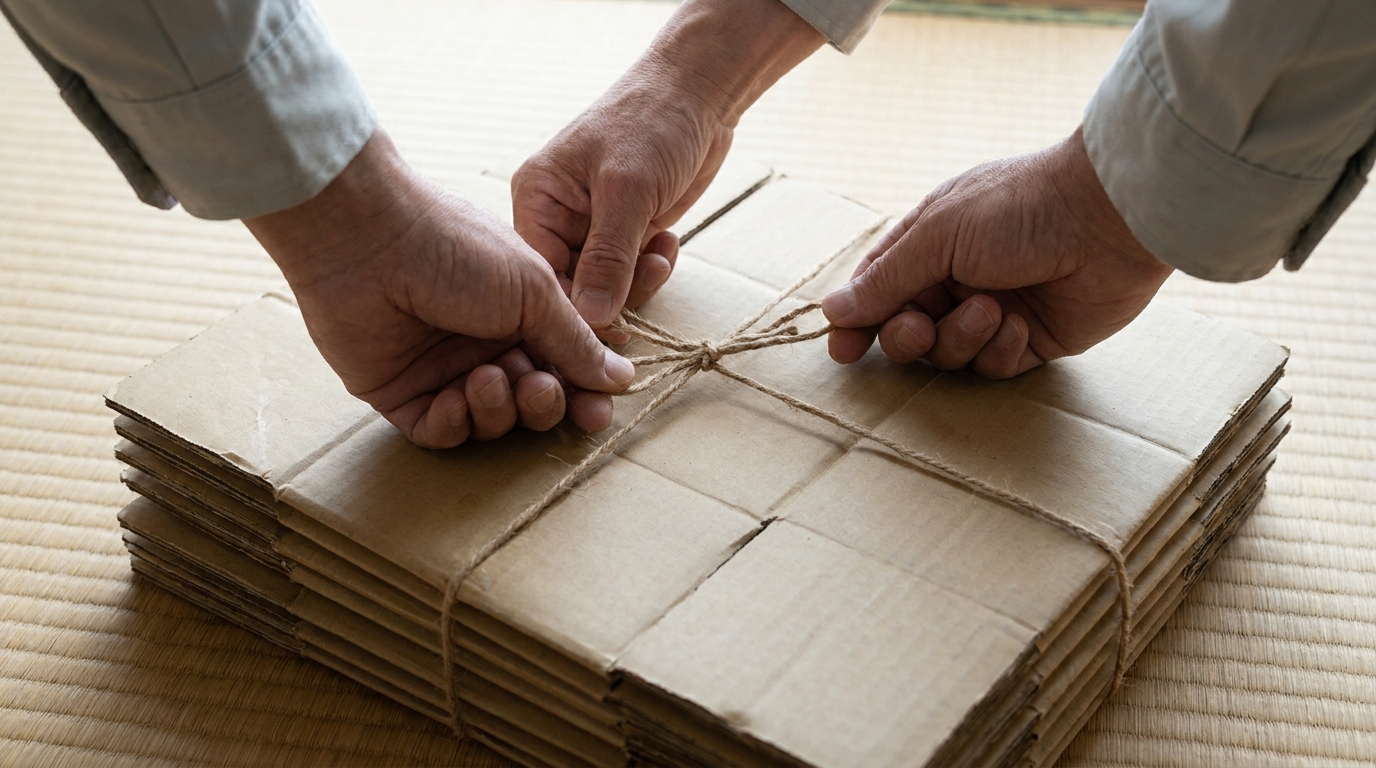
Cardboard isn’t burnable, even though it burns. It’s collected separately on the resource day in most wards. How it’s bundled varies a lot by accommodation — some hosts ask guests to flatten boxes only, some don’t ask anything at all and handle it themselves, and only some specifically ask for the traditional twine cross.
The flatten-and-tie image is what you’ll often see at residential collection points, but it’s a household practice, not a universal guest task. What matters is what your specific host has posted. If there’s no instruction, leaving boxes flattened next to your other trash inside the unit is more than enough.
7. Large items can’t be left at the regular spot
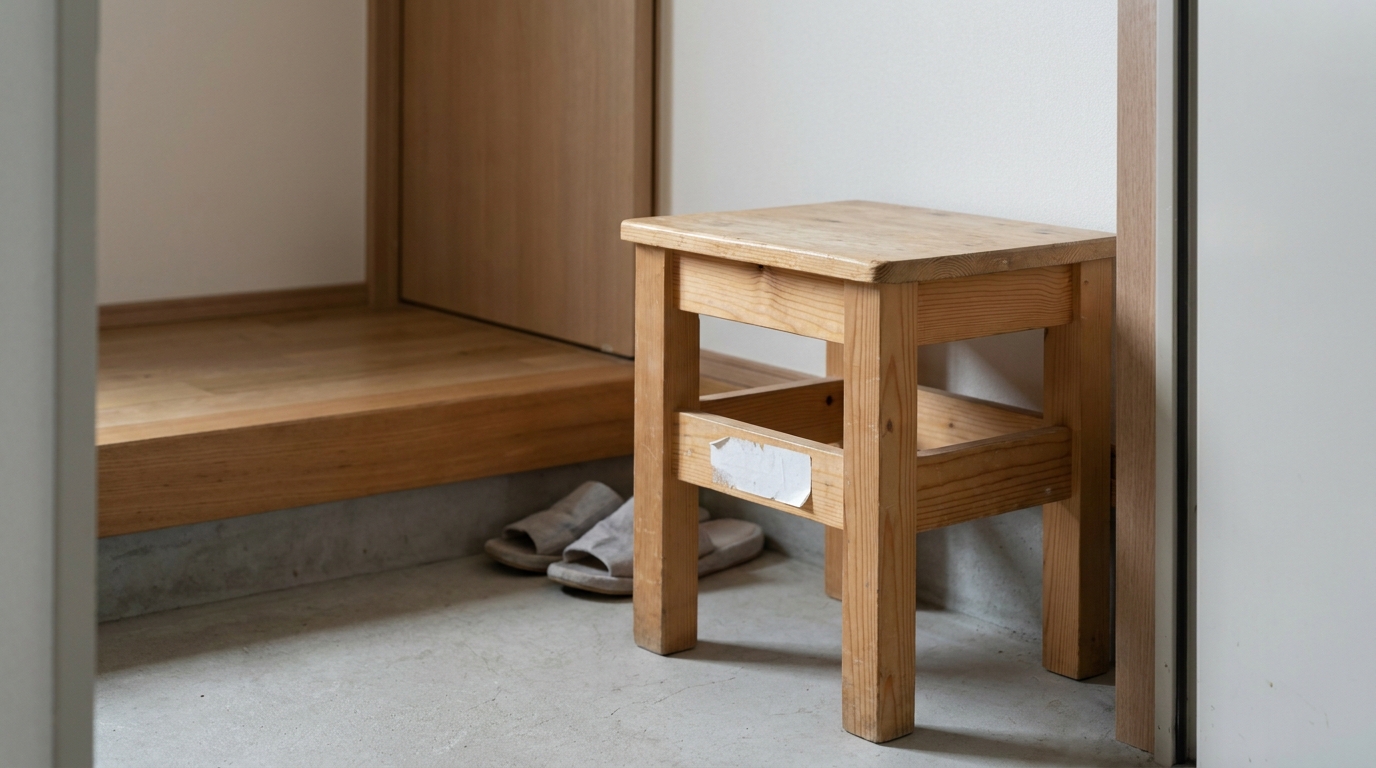
Anything that won’t fit in a normal bag — typically 30 cm or larger on a side in most of Tokyo — is 粗大ごみ (sodai gomi), oversized garbage. Furniture, suitcases too large for a normal bag, mattresses, and most household appliances fall here.
For a short-stay guest, the right move is almost always: don’t leave these at the collection point — talk to the host first. They handle the reservation and fee on their end, and they know what their building accepts.
A separate set of items — air conditioners, TVs, refrigerators/freezers, washing machines, and clothes dryers — fall under Japan’s Home Appliance Recycling Law and can’t be put out as sodai gomi at all. PCs are handled under yet another law (the PC Recycling System) and are collected by the manufacturer. None of this is something you’d normally encounter in a short stay, but it’s worth knowing why some things won’t be in the chart.
A Note on Tokyo Wards
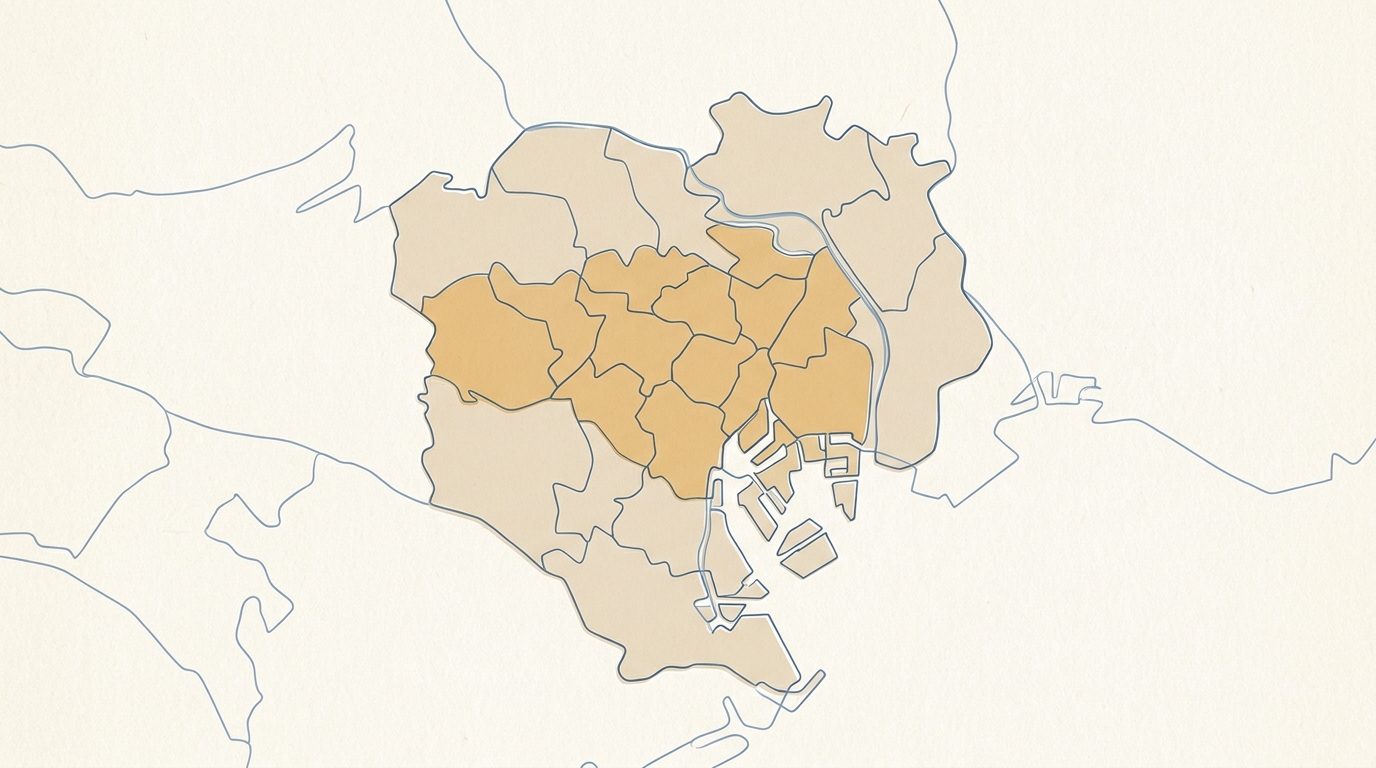
Each of Tokyo’s 23 wards writes its own collection calendar. The frequency is broadly similar — burnable twice a week, resources once a week, non-burnable once or twice a month — but the specific day depends on the address. A few patterns are worth knowing:
- Shinjuku runs collection even on most national holidays (excluding Sundays and the New Year period).
- Shibuya has earlier morning timing (around 7:30 AM) in designated entertainment districts.
- Taito introduced ward-wide product-plastic collection in April 2025; it’s now on the same day as resources.
- Sumida combines resources (paper, glass, cans, PET, plastic) onto a single shared collection day.
- Koto publishes a multi-language calendar (English available as PDF), which is useful if your host hasn’t supplied one.
If you’re in a different ward, search “[ward name in English] garbage calendar” — every ward in Tokyo publishes one.
What a 1–3 Night Stay Actually Looks Like
For very short stays, three things tend to apply:
- Your stay may not overlap with a collection day at all. That’s fine. Bag your trash, sort it as best you can, and leave it inside the unit when you check out. The host clears it on the next collection day — that’s part of the job.
- Convenience-store and station bins are for what you bought there, not for accommodation trash. Many chains have removed bins entirely after misuse.
- PET bottles are the one easy habit worth keeping from day one. Empty, label off, cap off, rinsed. They’re often 60-70% of a traveler’s daily volume, and that’s the bag the host genuinely doesn’t have to redo.
Common Misunderstandings (Soft Version)
- Bags out late at night. This is the one thing that creates real neighbor complaints. Wait until the morning, or leave bags inside the unit.
- PET bottles with caps still on, full of liquid. A 30-second rinse changes the host’s check-out routine completely.
- Sodai-gomi-sized items at the regular spot. Always go through the host first, regardless of what the local chart says about size cutoffs.
- Assuming Tokyo rules apply nationwide. Outside Tokyo’s 23 wards (and Osaka and Yokohama), designated bags are common.
- Following a generic online guide instead of the host’s chart. This guide included. Every accommodation has its own specifics — the host’s posted chart is the one that matters.
None of these are “wrong” in a moral sense. They’re just the small things that turn a five-minute check-out into a thirty-minute one for someone else.
Why It Matters
Japanese cities feel orderly and clean for reasons that are mostly invisible to a visitor. The shared collection point on the corner, the elderly neighbor who notices when something’s off, the host who quietly re-bags after check-out — they’re all part of a system that depends on small, consistent contributions from many people.
A short-stay guest can’t fully participate in that system, and isn’t expected to. Reading the chart, trying your best, and not leaving obvious problems behind is the realistic version of what helps.
Hosts and the neighborhoods around them are happy to do their share. A guest who understands why and meets them halfway is genuinely appreciated — and that’s most of what we wanted to say.
FAQ
Q1. Do I need to buy a special garbage bag in Tokyo?
No, not in Tokyo’s 23 wards. Any clear or translucent plastic bag is accepted. The same is true in Osaka and Yokohama. Kyoto, by contrast, uses a paid designated-bag system, and many smaller cities do as well.
Q2. What time should I take my garbage out?
Most wards collect by around 8 AM on the correct day, with bags placed at the collection point that morning. A few areas ask for bags out earlier, around 7:30 AM. Your host’s chart will have the specific timing for your address. The general principle: morning, not the night before.
Q3. Do PET bottle caps count as PET?
No. The cap is plastic, not PET, and goes with the plastic stream. The bottle (label off, rinsed) goes with PET.
Q4. What happens if I sort wrong?
The collection crew may leave the bag with a note. There’s no fine for a short-stay guest — the host or building manager handles the re-sort. The thing that creates real friction is bags left out the night before, or unsealed wet bags. Those are what generate neighbor complaints.
Q5. What do I do with a damaged item, like a broken suitcase?
If it fits in a normal bag, sort it as non-burnable (metal parts) plus burnable (cloth and rubber). If it’s too large, talk to the host before leaving it anywhere — they handle the oversized-garbage process on their end.
Q6. Are TVs, refrigerators, and air conditioners oversized garbage?
No. They fall under Japan’s Home Appliance Recycling Law, which routes them through retailers or licensed recyclers — not through the regular oversized-garbage stream. PCs are also separate (handled directly by the manufacturer). As a short-stay guest, you almost certainly won’t be discarding any of these — talk to the host if it ever comes up.
Q7. Can I throw things into station and convenience store bins?
Use them for items you’ve just bought there. They’re not designed for accommodation trash, and many chains have removed bins entirely after misuse.
Q8. Does the schedule change during New Year?
Yes. Most wards run as normal through about December 30, then pause collection from around December 31 to January 3. The host’s chart will have the exact dates. If you’re checking out during this window, leave bags inside the unit.
Q9. Are there separate rules for Airbnb listings versus hotels?
Hotels handle their own waste internally — you only deal with the in-room bins. Short-term rentals follow the building’s and ward’s regular collection rules, which is why hosts post a sorting chart. Following that chart is the most direct way to help.
Q10. What if my accommodation didn’t leave any sorting instructions?
Keep what trash you generate in clear or translucent bags, separate the obvious things if you can (PET bottles in one, cans in another, the rest together), and leave them inside the unit at check-out. The host will route them on the next collection day. No instructions usually means the host prefers to handle the sorting themselves — don’t worry about getting it perfect.
Internal Links
- How to Check In to Your Japanese Accommodation
- Japanese Konbini Guide: 12 Services You Can Actually Use
- How to Open a Key Box at Your Airbnb in Japan


Comments