Tokyo Restaurant Plan B 2026: Eat Without a Reservation
- Quick Answer
- Why Tokyo Dinner Plans Break
- First, Diagnose the Problem
- The Tokyo Restaurant Plan B Flow
- Plan B 1: Station Buildings and Department-Store Restaurant Floors
- Plan B 2: Famiresu for a Real Seat
- Plan B 3: Fast Counter Meals
- Plan B 4: Depachika, Food Halls, Station Bento, and Konbini
- Plan B 5: Use Booking Apps for Tomorrow
- Special Cases
- What Not to Do
- Recommended RJG Route After This Article
- FAQ
- Can I eat in Tokyo without a restaurant reservation?
- What should I do if a Tokyo restaurant is fully booked?
- Are department-store restaurants good for tourists?
- Is it rude to walk into a Tokyo restaurant without booking?
- What is a good late-night food backup in Tokyo?
- Are Tokyo restaurants okay with luggage?
- Should I use TableCheck, Tabelog, Pocket Concierge, or Google Maps?
- What if I have food allergies or dietary restrictions?
- Is konbini dinner a bad idea in Japan?
Quick Answer
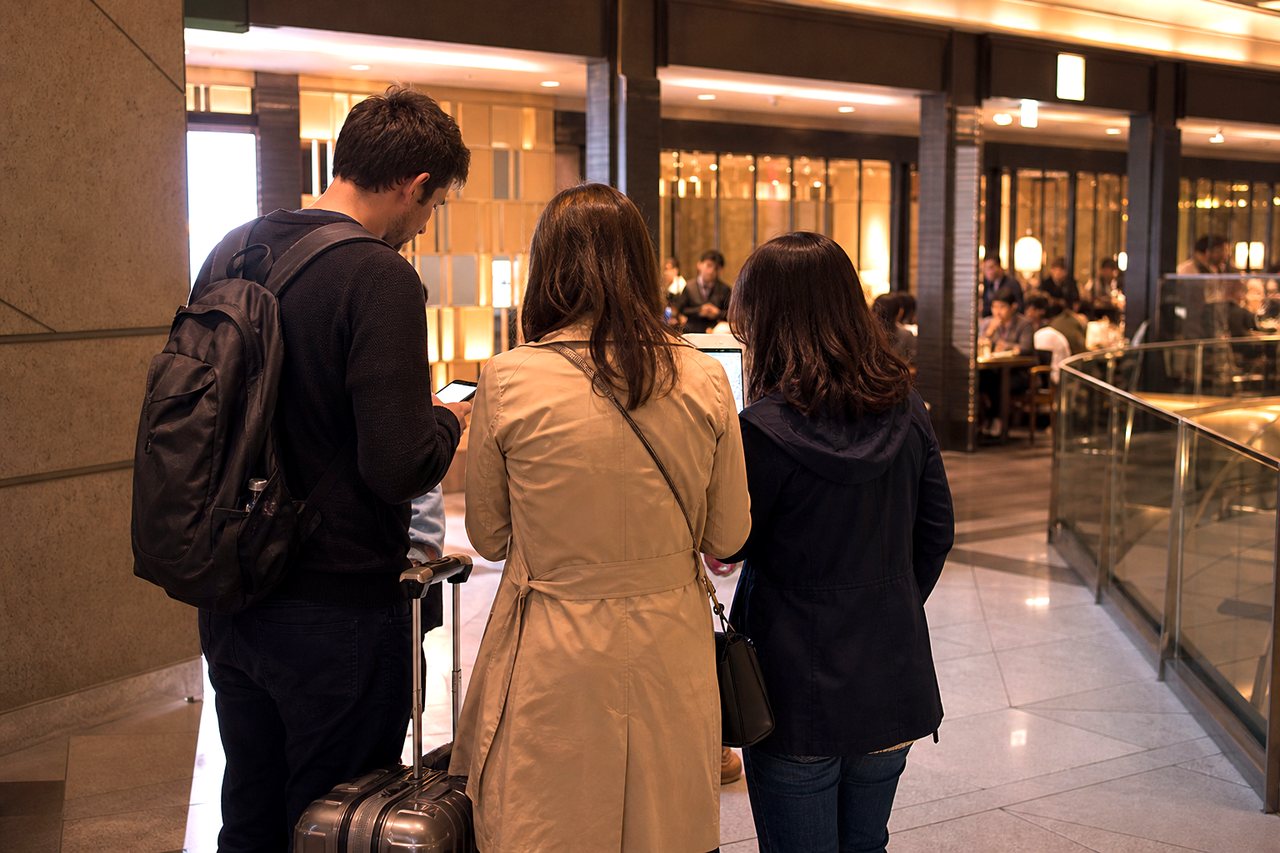
If you cannot book the Tokyo restaurant you wanted, do not spend the whole night refreshing reservation apps. First decide what failed: fully booked, a booking page in Japanese, unclear card guarantee, long queue, dietary uncertainty, luggage, rain, or late-night timing. Then switch to the right food backup.
For tonight, strong Plan B choices are:
- A station building or department-store restaurant floor near where you already are.
- A famiresu if you need a seated meal, a table, children-friendly space, or time to regroup.
- A counter meal such as soba, udon, curry, ramen, gyudon, or conveyor sushi if you can eat quickly.
- A depachika, food hall, station bento, or konbini meal if restaurants are closing or your group is tired.
- A booking app or hotel concierge for tomorrow, not as a last-minute miracle tonight.
If the booking page asks for a card guarantee, deposit, prepayment, or cancellation fee that you do not understand, pause before confirming. It is better to choose a flexible meal than to create a card-hold or no-show problem while hungry.
Last checked: July 9, 2026.
Why Tokyo Dinner Plans Break
Tokyo has two food systems running side by side.
One system is reservation-based: omakase sushi, kaiseki, popular yakiniku, private rooms, hotel restaurants, seasonal courses, and restaurants that prepare ingredients around confirmed guests. Those places may use TableCheck, Tabelog, Pocket Concierge, OMAKASE, phone booking, hotel concierge routes, or their own member systems.
The other system is flexible: ramen counters, soba and udon shops, curry chains, gyudon shops, conveyor sushi, famiresu, food halls, depachika, station buildings, konbini, and casual places where turnover is fast.
Travelers get stuck when they treat one system like the other. A tiny counter restaurant may not be able to accept walk-ins. A casual noodle counter may work without a booking. A famous place on social media may have a queue that is longer than your energy level. A booking screen may look simple until it asks for a card and a cancellation policy.
This guide is not a list of famous restaurants. It is a recovery plan for the moment when your first dinner idea fails.
Useful next guides:
- For booking properly, read TableCheck vs Tabelog: Book Tokyo Restaurants in 2026.
- For card holds and cancellation rules, read TableCheck Card Holds, Refunds & Cancellation Fees.
- For an easy sit-down backup, read Famiresu in Japan.
- For allergies or dietary restrictions, read Japan Food Allergy Guide 2026.
First, Diagnose the Problem
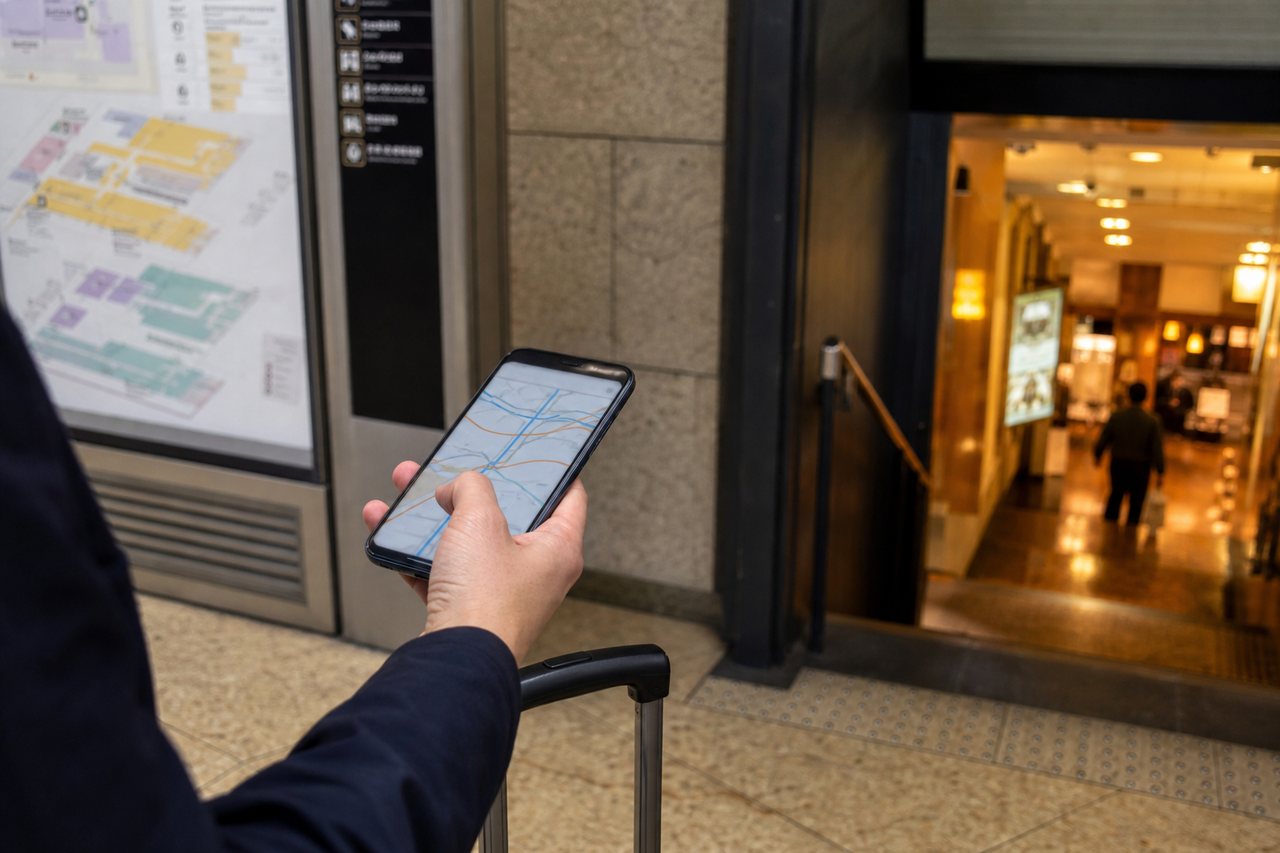
Before choosing a backup, name the real problem.
| What happened | Better Plan B |
|---|---|
| The restaurant is fully booked | Switch to station buildings, food halls, famiresu, or counter meals |
| The booking flow is Japanese-only | Use an English-friendly platform tomorrow, or ask hotel staff |
| The card guarantee is unclear | Do not confirm while guessing; choose a flexible meal |
| The queue is too long | Pick a nearby fast-turnover format |
| You have large luggage | Store bags first, then eat |
| You have children or tired family | Famiresu, department stores, station buildings, hotel-area restaurants |
| You have allergies or strict dietary needs | Use allergy-focused planning and safer packaged-food backups |
| It is after 9 PM | Check last order, not just “open” status |
| It is raining or a festival crowd is moving | Stay near a station or your lodging area |
| You may miss the last train | Eat near your station, or solve transport first |
Do not let the group debate cuisine before solving the constraint. A hungry group with luggage and rain does not need the exact restaurant it imagined. It needs a realistic dinner with low failure risk.
The Tokyo Restaurant Plan B Flow
Use this order:
- Can you still eat near your current station?
- Can your group sit down comfortably with its bags?
- Does anyone have a dietary or allergy constraint?
- Is the restaurant still taking last orders?
- Can you pay if your foreign card fails?
- Is this worth a strict booking, or should you save the reservation attempt for tomorrow?
If the answer to any question feels uncertain, move down to a lower-risk option.
Fastest Low-Stress Choices
- One or two adults, no dietary issue: counter meal, conveyor sushi, curry, soba, udon, gyudon.
- Family, older parents, tired group: famiresu or department-store restaurant floor.
- Luggage-heavy: store bags first, then use station-building restaurants.
- Late night: check famiresu, hotel-area restaurants, konbini, and your last-train plan.
- Allergy or halal concern: do not improvise at a tiny shop. Use prepared backups and restaurants with clearer information.
Plan B 1: Station Buildings and Department-Store Restaurant Floors
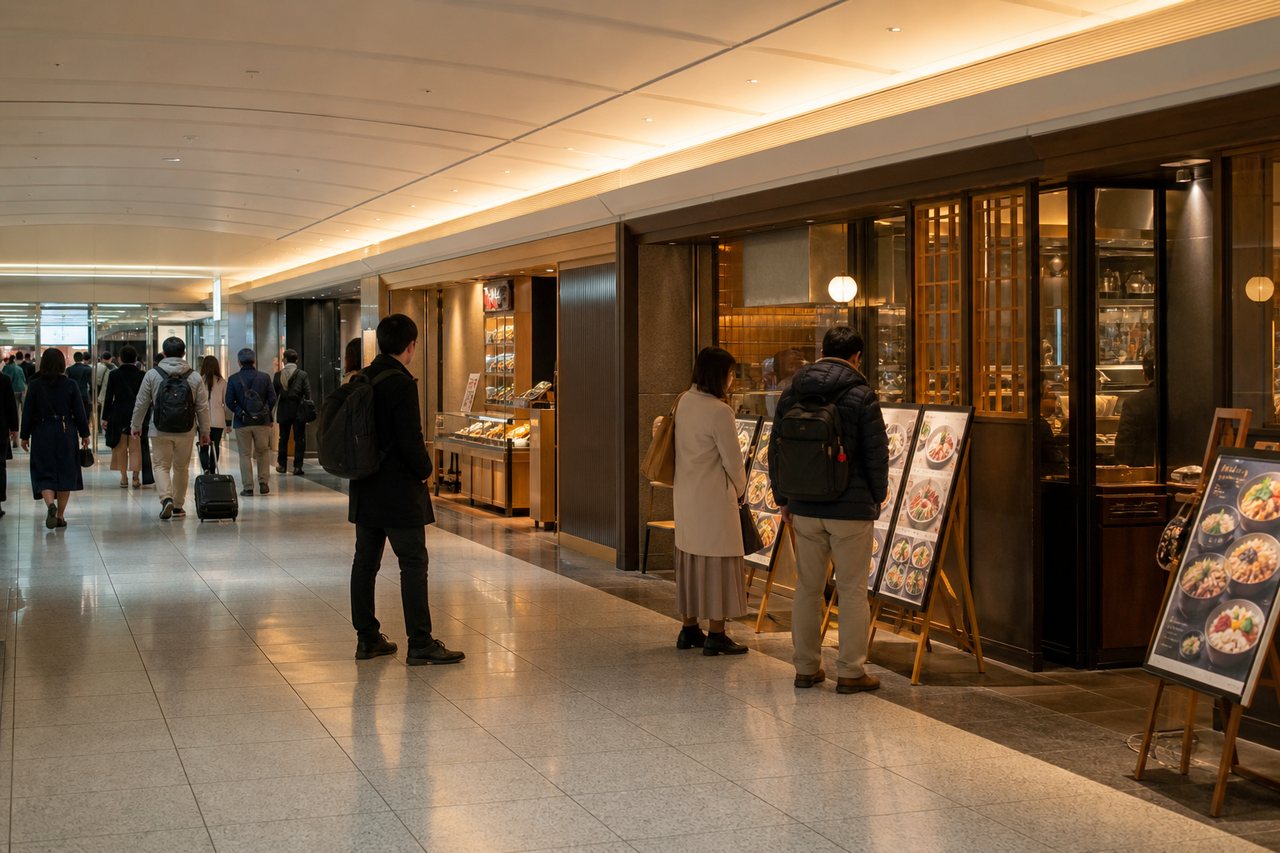
Station buildings and department stores are useful because they concentrate many food options in one place. If one restaurant is full, you may be able to check the next one without walking across town.
Good areas to think about:
- Tokyo Station
- Shinjuku
- Shibuya
- Ginza
- Ueno
- Ikebukuro
- Shinagawa
Tokyo Station’s official GRANSTA page, for example, lists both ready-to-eat food and restaurant areas. Its basic hours show bento, prepared food, and sweets from 8:00-22:00 on weekdays and Saturdays, 8:00-21:00 on Sundays and holidays, and restaurants from 10:00-22:00 on weekdays and Saturdays, 10:00-21:00 on Sundays and holidays, with store exceptions.
That does not mean each restaurant will seat you until closing. Last order can be earlier. Some shops differ. Special holidays can change hours. The practical lesson is simple: station buildings are strong Plan B zones, but you still check the floor or store page before walking too far.
Why this works:
- Many choices in one building.
- Easier fallback if one line is too long.
- Better for groups than tiny street restaurants.
- Often connected to trains, shopping, lockers, toilets, and taxis.
- Good during rain, heat, or festival crowd movement.
What to watch:
- Last order may be earlier than the building closing time.
- Popular floors can be crowded at 12:00-13:30 and 18:00-20:00.
- Some restaurants still use reservation lists.
- Large luggage can still be a problem in narrow aisles.
Use this route when the group is tired and does not want another transportation mission.
Plan B 2: Famiresu for a Real Seat
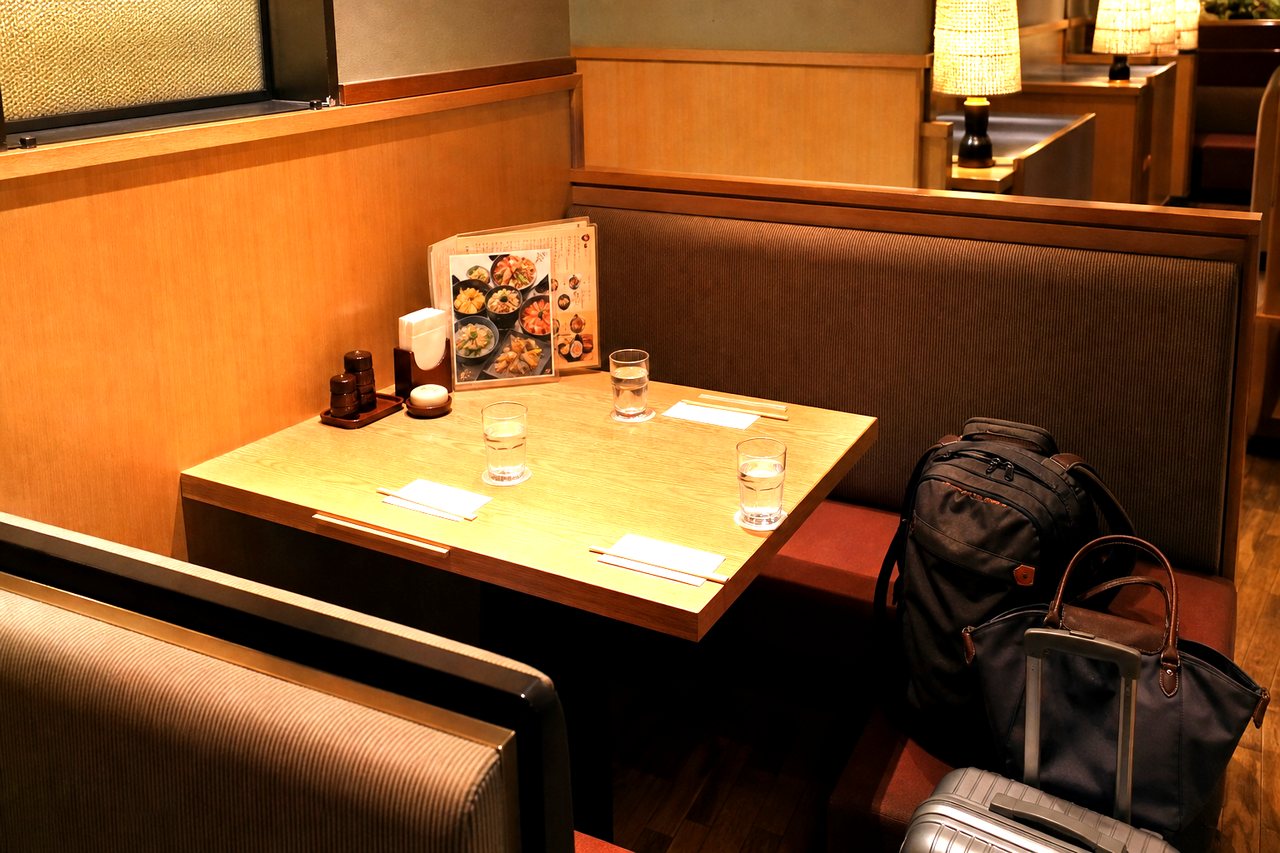
A famiresu is not the meal you plan your Tokyo trip around. It is the meal that rescues your evening when the group needs seats, menus with photos, a restroom, air-conditioning, and enough table space to breathe.
Use a famiresu when:
- You have children.
- You have older family members.
- You need a table, not a counter.
- You want a low-stress meal after a failed booking.
- You need to wait between checkout and check-in.
- You are near your hotel and do not want another train ride.
Recognizable chains include Gusto, Jonathan’s, Denny’s, Royal Host, Saizeriya, Joyfull, and Coco’s. Menus, hours, prices, and payment methods vary by branch, so use official store pages when a specific detail matters.
Denny’s official menu page is a good example of why timing matters: it lists morning service from opening to 11:00, weekday lunch from 10:00 to 17:00, and notes that some branches have different products, prices, or service details. It also states that orders after 22:00 and before 5:00 add a 10% late-night charge to food.
Saizeriya’s official menu library includes an English grand menu and a “How to order” guide, which makes it useful for travelers who want a budget sit-down meal without decoding a small local restaurant.
Famiresu are also useful for groups. Skylark, the group behind Gusto and Jonathan’s, even operates an inbound group reservation page for travel agencies. That does not mean an individual tourist can walk in with eight people and get seats immediately, but it shows why family restaurants are built for larger meal logistics in a way that many small restaurants are not.
For a full breakdown, use the Famiresu in Japan guide.
Plan B 3: Fast Counter Meals
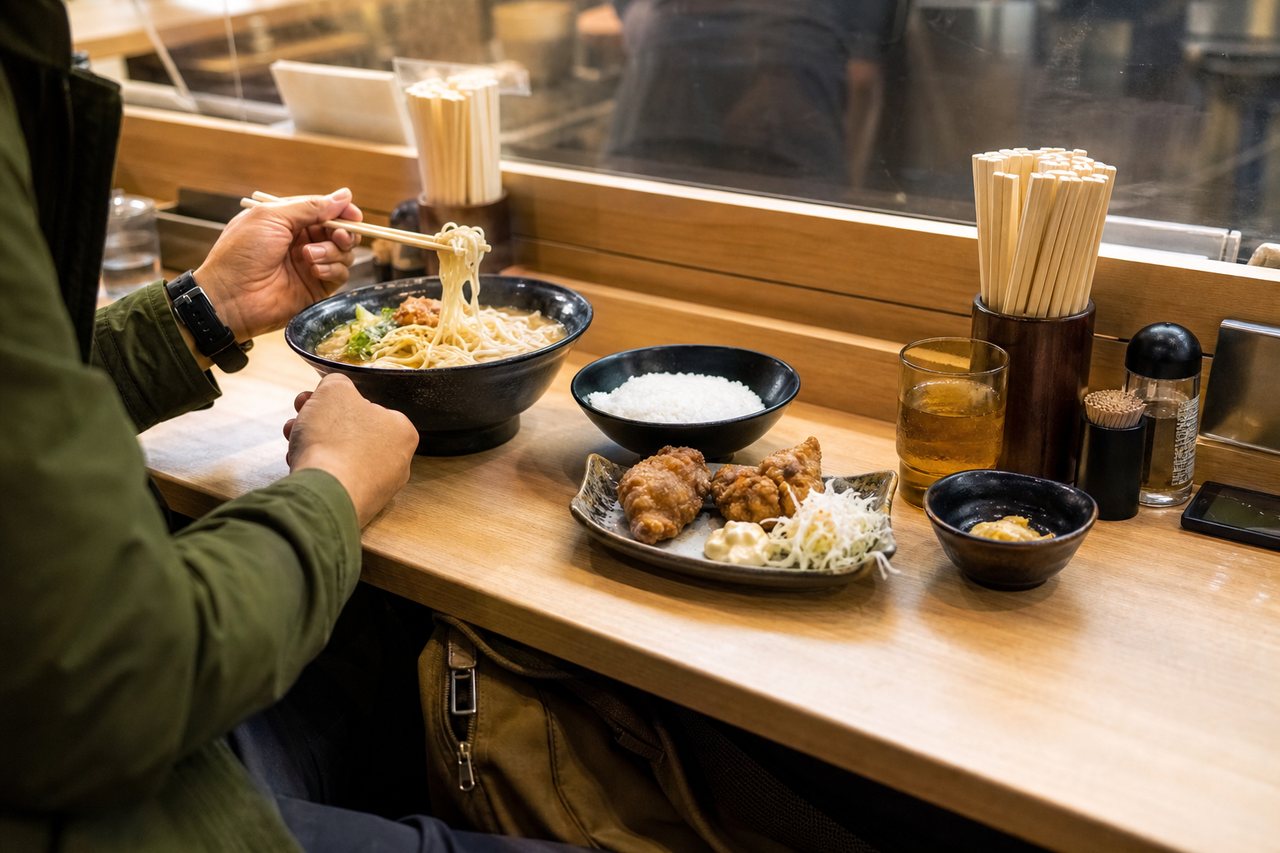
If you do not need a long dinner, fast counter food can be the cleanest solution.
Good formats:
- Soba
- Udon
- Ramen
- Curry rice
- Gyudon
- Conveyor sushi
- Teishoku set meals
These formats work because turnover is faster and solo or two-person seating is normal. The trade-off is space. A tiny counter is not a good match for large suitcases, strollers, or a group that wants to sit together for an hour.
Use this rule:
| Situation | Counter meal fit |
|---|---|
| One or two travelers, small bags | Good |
| Hungry now, no need to talk long | Good |
| Group of four or more | Mixed |
| Large suitcases | Poor |
| Food allergy or halal concern | Needs caution |
| Need a slow sit-down meal | Poor |
Useful RJG routes:
- Tokyo Soba Guide 2026
- Tokyo Udon 2026
- Japanese Curry Rice Guide
- Tokyo Sushi Guide 2026
- Tokyo Yakiniku 2026
For halal ramen or dietary questions, do not assume a normal ramen shop can adapt. Start with Halal Ramen in Tokyo 2026 and the allergy guide.
Plan B 4: Depachika, Food Halls, Station Bento, and Konbini
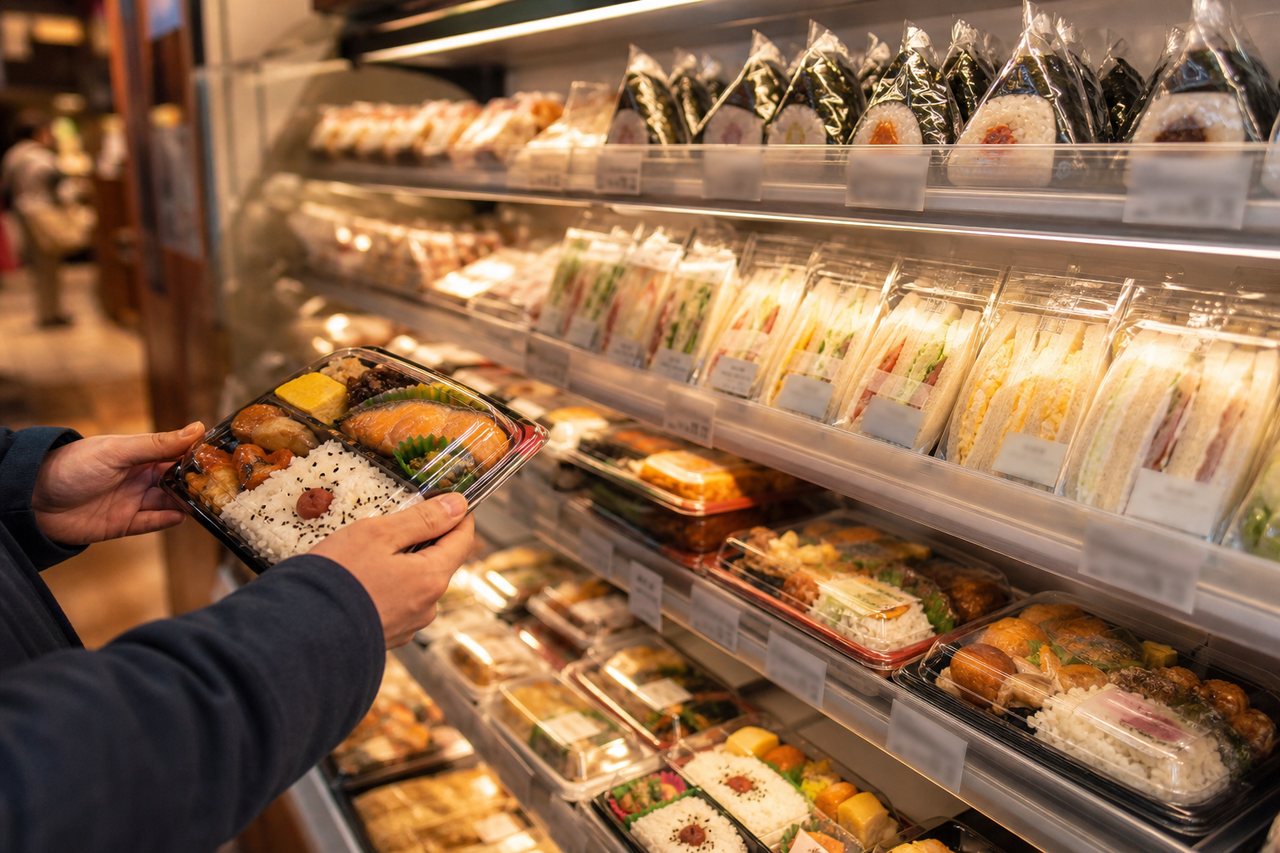
Some nights do not need a restaurant. They need food that does not fail.
Use this route when:
- Restaurants are closing.
- Your group is too tired to queue.
- You have a rain problem.
- You need food near a train.
- Children need something simple.
- You want to eat at your hotel or lodging.
Tokyo Station and major department stores can be strong for bento, prepared food, sweets, and takeaway. GRANSTA Tokyo’s official page shows how station food can include bento, prepared dishes, sweets, and restaurant options inside or around the station. This is especially useful before a train ride or after a long sightseeing day.
Konbini are the emergency floor of Japan travel. 7-Eleven Japan’s English tourist page lists rice balls, egg salad sandwiches, smoothies, fried chicken, in-store payment, tax-free information, Seven Bank ATMs, and FAQ items such as cutlery, heating food, and eat-in areas. FamilyMart’s English tourist page lists rice balls, bento boxes, sushi, sandwiches, soba/udon/noodles, salads, hot snacks, desserts, ATMs, credit cards, and store search.
Konbini are not a restaurant replacement for a whole trip, but they are excellent when the alternative is making a bad booking, waiting in a tired queue, or arriving at a restaurant after last order.
Practical konbini rules:
- Ask staff to heat bento if needed.
- Ask for chopsticks, spoon, or fork.
- Do not assume your store has an eat-in area.
- If you use an eat-in area, avoid a long stay and follow the store’s trash rules.
- For allergies, read labels and do not rely on appearance.
For convenience-store basics, see 7-Eleven, FamilyMart, or Lawson? A Tourist’s Guide to Japan.
Plan B 5: Use Booking Apps for Tomorrow
TableCheck, Tabelog, Pocket Concierge, OMAKASE, and hotel concierge routes are useful. They are just not the right tool for each hungry moment.
Use them when:
- You want a specific restaurant.
- You are booking tomorrow or later.
- You can read the cancellation policy.
- Your group size is stable.
- You understand whether the booking involves a card guarantee, deposit, prepayment, or fee.
Do not use a strict card-guarantee booking as a panic button while standing outside another full restaurant. TableCheck’s own terms say diners are treated as agreeing to participating merchant cancellation policies when making reservations through the platform, and cancellation or no-show can make the diner subject to the merchant’s cancellation charges. In plain travel terms: read the restaurant’s rule before you confirm.
If the card wording worries you, read TableCheck Card Holds, Refunds & Cancellation Fees first. If you want the broader booking map, read TableCheck vs Tabelog.
For tonight, your goal is dinner. For tomorrow, your goal can be a better reservation.
Special Cases
If You Have Food Allergies
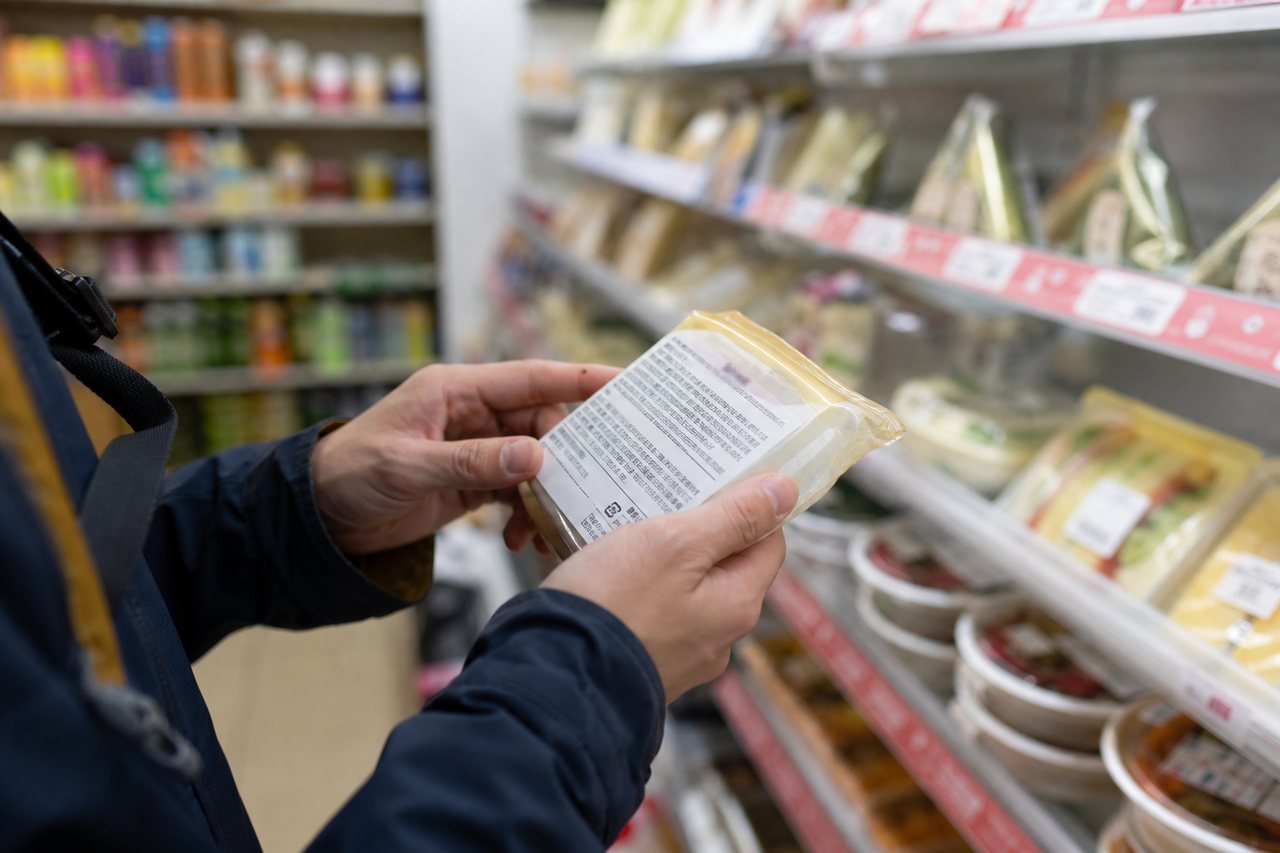
Do not improvise at a tiny restaurant if your allergy can become serious.
Japan’s Consumer Affairs Agency publishes official allergen-labeling information for packaged foods. As of the April 2026 material, cashew nut has been added to the mandatory specified-ingredient list, and the page explains that packaged processed foods must label specified ingredients from a safety-prevention perspective.
Restaurant menus are different from packaged-food labels. A restaurant may not be able to confirm soup base, sauce, shared oil, shared utensils, prepared ingredients, or trace-contact risk quickly in English.
Better Plan B:
- Use packaged food with labels you can check.
- Use restaurants with clearer allergen information.
- Carry a Japanese allergy card.
- Step away if staff cannot confirm.
- Avoid strict set-course bookings unless allergy handling is confirmed before booking.
Use the Japan Food Allergy Guide 2026 before choosing a restaurant.
If You Are Vegetarian, Vegan, or Muslim
Japan is improving, but hidden ingredients still matter. JNTO’s vegetarian and vegan guide warns travelers to pay attention to ingredients such as fish-based stock, and its Muslim travelers page is a useful starting point for halal-aware trip planning.
Better Plan B:
- Do not rely on a dish looking plant-based.
- Ask about dashi, sauce, and broth.
- Use restaurants that clearly explain vegetarian, vegan, halal, or Muslim-friendly handling.
- Keep a packaged-food backup when a restaurant cannot confirm.
If You Have Large Luggage
Restaurants are not luggage storage. One small carry-on may be fine in a spacious booth. Two large suitcases in a narrow counter shop can block staff and other diners.
Better Plan B:
- Use station lockers or luggage storage first.
- Choose a station building or department store after storing bags.
- Avoid tiny counters with suitcases.
- If your group has many bags, solve the luggage problem before choosing the food.
Use Tokyo Luggage Storage 2026 if this is your real blocker.
If It Is Raining or a Festival Crowd Is Moving
When rain, fireworks, festivals, or station crowding are part of the problem, reduce movement. Do not chase a famous restaurant across the city.
Better Plan B:
- Eat near your current station.
- Use indoor station buildings.
- Use food halls, bento, or konbini.
- Check your train route before dinner if it is late.
Useful routes:
If It Is Late at Night
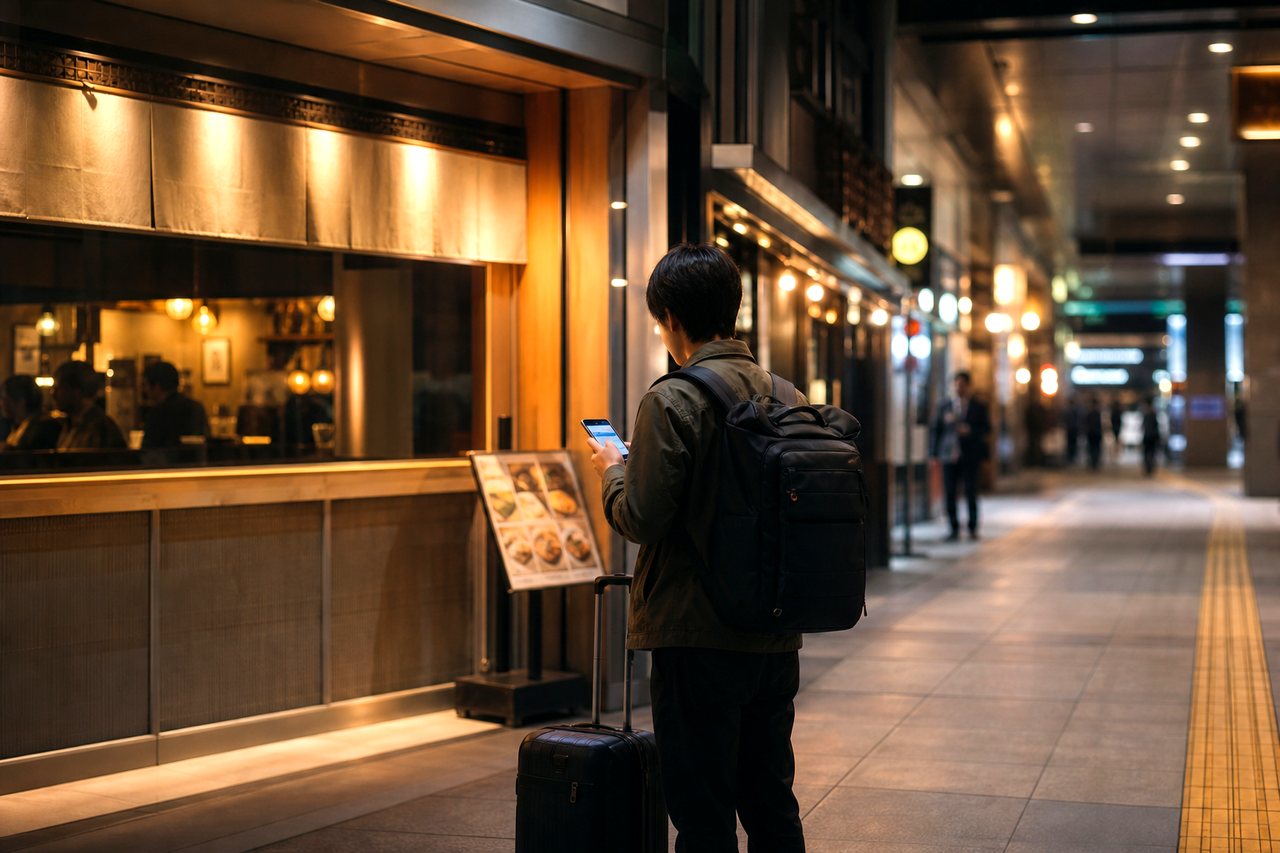
Do not trust the word “open” by itself. Check last order, floor hours, and whether the branch accepts diners near closing.
If you are hungry after 21:00:
- Check nearby station-building restaurants and their last orders.
- Check famiresu branches near your hotel area.
- Consider a simple counter meal.
- Use konbini or prepared food if restaurants are closing.
- Protect your last train or taxi plan before searching far away.
If you arrived very late, read Arrived in Tokyo at 2 AM? Where to Wait Until First Train.
What Not to Do
Do not wait in a famous queue if your group is already exhausted. A popular meal is not worth turning the night into a bad memory.
Do not confirm a card-guarantee booking if you do not understand the cancellation fee, no-show rule, or payment type.
Do not assume a restaurant can handle allergies, halal, vegetarian, or vegan requests on the spot.
Do not walk across Tokyo with luggage for a restaurant that may still say no.
Do not rely on one app. Use official restaurant pages, station-building pages, hotel staff, and simpler food formats.
Do not forget the mission: you are trying to eat tonight, not prove that the first plan was the best possible one.
Recommended RJG Route After This Article
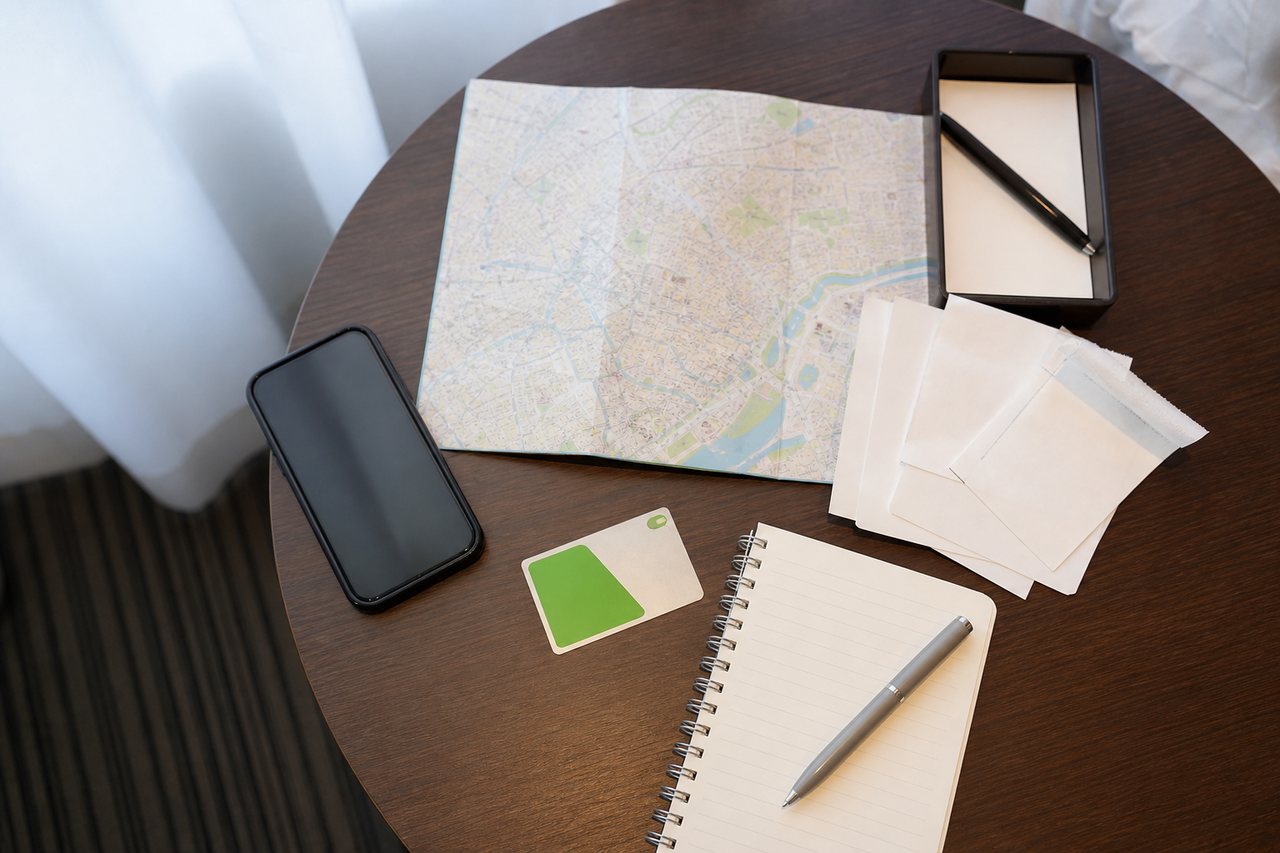
Use the next guide based on your actual problem:
| Your problem now | Next useful RJG guide |
|---|---|
| You want to book properly tomorrow | TableCheck vs Tabelog |
| You are worried about card holds or cancellation fees | TableCheck Card Holds, Refunds & Cancellation Fees |
| You need a seated fallback with children or a tired group | Famiresu in Japan |
| You need a quick Japanese meal | Tokyo Soba / Tokyo Udon / Japanese Curry |
| You have allergies or diet constraints | Japan Food Allergy Guide |
| You have luggage | Tokyo Luggage Storage |
| It is late, raining, or crowded | Last Train & Taxi Plan / Rain & Typhoon Plan |
FAQ
Can I eat in Tokyo without a restaurant reservation?
Yes. Many casual food formats work without advance booking, including counter meals, famiresu, station-building restaurants, food halls, depachika, conveyor sushi, curry, soba, udon, and konbini. For famous restaurants, fine dining, private rooms, and course meals, booking ahead is safer.
What should I do if a Tokyo restaurant is fully booked?
Do not keep refreshing the same restaurant if you need dinner tonight. Move to a lower-risk food format near your current station: station building, department-store restaurant floor, famiresu, counter meal, food hall, or konbini. Use booking apps for tomorrow.
Are department-store restaurants good for tourists?
They can be useful because many restaurants are grouped in one building, with trains, toilets, shopping, and taxis often nearby. Check current floor hours and last order because each shop can differ.
Is it rude to walk into a Tokyo restaurant without booking?
No, if the restaurant accepts walk-ins. It becomes a problem when the restaurant is reservation-based, tiny, preparing course meals, or already full. Ask politely and accept “fully booked” without arguing.
What is a good late-night food backup in Tokyo?
Check nearby famiresu, station-area counter meals, hotel-area restaurants, and konbini. Do not rely on old advice that famiresu are open overnight by default. Branch hours and late-night charges can vary.
Are Tokyo restaurants okay with luggage?
Small bags are often manageable. Large suitcases can be a problem, especially at counters and small restaurants. Store luggage before dinner if bags would block aisles, staff movement, or nearby seats.
Should I use TableCheck, Tabelog, Pocket Concierge, or Google Maps?
Use Google Maps and Tabelog for discovery, TableCheck when a restaurant uses it as a booking route, Pocket Concierge for high-end reservations, and hotel staff when a restaurant needs Japanese phone support. For tonight, do not let app research replace eating.
What if I have food allergies or dietary restrictions?
Use safer, clearer options. Read packaged-food labels, carry a Japanese allergy card, avoid guessing from appearance, and step away when staff cannot confirm ingredients. For serious allergies, read the food allergy guide before choosing a restaurant.
Is konbini dinner a bad idea in Japan?
No. It is not a special dinner, but it can be a smart Plan B when restaurants are closing, the group is tired, it is raining, or a strict booking would create more risk than value.
Comments