Last checked: August 25, 2026 (JST). Restaurant branches, hours, menus, prices, payment, certification scope and facilities can change; open the exact official page again before leaving.
- Quick Answer
- Choose by Failure Risk First
- Before You Leave: Six Checks
- Current Official Evidence at a Glance
- Route 1: Shinjukutei — Choose the Branch, Then the Bowl
- Route 2: Ayam-Ya — Best Fit for a Ueno–Asakusa Day
- Route 3: Honolu Ebisu — Use It When Ebisu Is Already in Your Day
- How to Verify a Halal Claim Without Guessing
- Ordering, Payment, Allergy and Queue Rules
- Plan B: Stay on Your Route
- Your One Next Action
- FAQ
- Official Sources Checked
Quick Answer
Choose halal ramen by route and verification burden, not by a fixed “best shop” list. Shinjukutei now publishes multiple Tokyo branches, Ayam-Ya fits a Ueno–Asakusa day, and Honolu Ebisu fits an Ebisu–Shibuya-side day. First confirm the exact branch, current halal scope, opening hours, price and payment. If one essential answer is missing, keep the bowl optional and use the Plan B below.
- Fastest route: open the operator’s current store list and choose a branch already near your day.
- Lowest verified budget anchor: Taito City’s map lists Ayam-Ya dishes around JPY 1,180–1,380 before tax; confirm the final total.
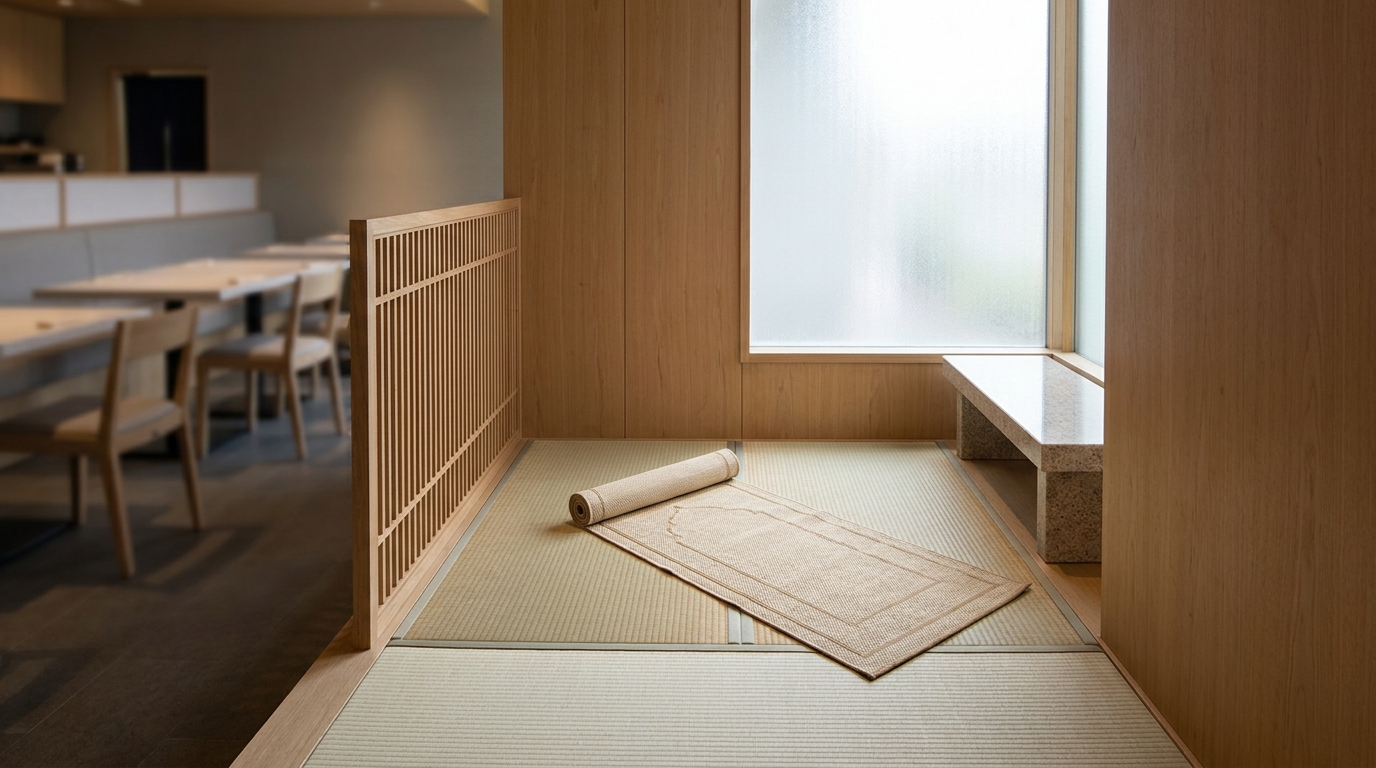
- Prayer-space need: Shinjukutei currently states that every location has a wudu area and prayer space; confirm other businesses directly.
Choose by Failure Risk First
| Your situation | Use this route | Stop if |
|---|---|---|
| You want a branch near Shinjuku, Shibuya, Ikebukuro, Ueno Park, Ginza, Asakusa or Yotsuya | Open Shinjukutei’s current store list and choose the exact branch | The branch page, current menu or required facility cannot be confirmed |
| You are sightseeing around Ueno, Asakusa or Shin-Okachimachi | Check Ayam-Ya against Taito City’s current Dietary Diversity Map | The opening period, current shop notice or certification answer does not fit |
| You are already near Ebisu | Use Honolu Ebisu only after checking the current shop page and your required halal scope | You need a price, payment or facility answer that the page does not supply |
| You have a strict certificate, utensil or no-alcohol-on-premises requirement | Contact the exact restaurant before travel | Staff cannot confirm your exact standard |
| The first shop fails | Keep your sightseeing route and switch meal type or self-cater | You would spend an hour crossing Tokyo for another uncertain option |
Before You Leave: Six Checks
- Resolve the exact branch: a chain-wide name is not an address.
- Read the current halal statement: note whether it covers ingredients, menu items, kitchen equipment, the premises and alcohol.
- Check today’s hours: split lunch/dinner service and temporary closures matter.
- Check money: use only a current tax-inclusive menu; payment methods remain unknown unless the exact branch publishes them.
- Ask about facilities: prayer space, wudu, seating, stairs, allergies and cross-contact are separate questions.
- Save a Plan B: one verified alternative on the same route is better than another city-wide list.
Current Official Evidence at a Glance
| Business | Officially supported now | Still confirm |
|---|---|---|
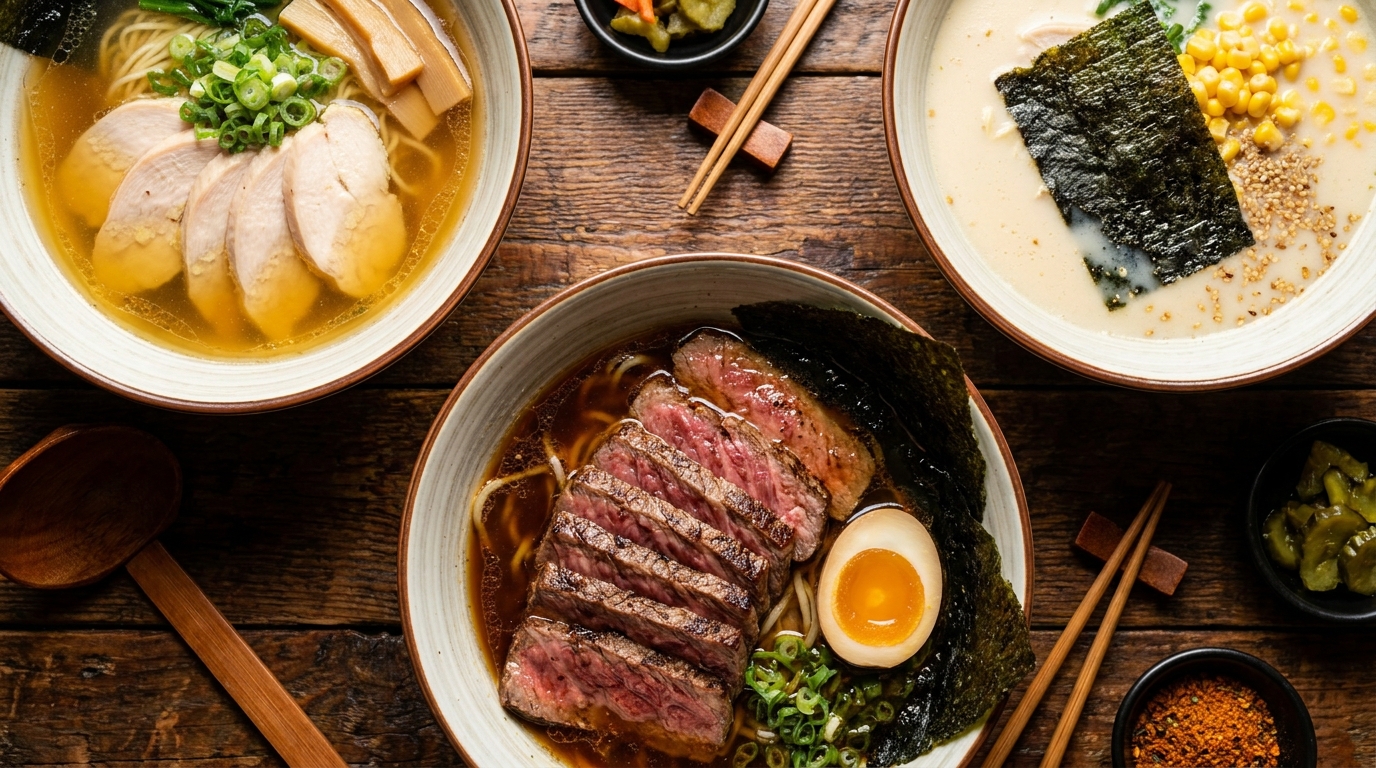
| Shinjukutei | The official site and policy collectively list several Tokyo branches, normally 12:00–21:00, state no pork or alcohol in ramen, describe halal-certified ingredients and kitchen equipment, and say prayer/wudu space is available at all locations | Exact branch notice, live menu, tax-inclusive total, payment and certificate details needed for your standard |
| Ayam-Ya Shin-Okachimachi | Taito City’s current map lists 3-10-3 Motoasakusa, lunch 11:30–15:00, dinner 17:00–22:00, and sample dishes at JPY 1,180–1,380 before tax | Final total, current shop notice, certificate scope/expiry, payment, prayer space and cross-contact |
| Honolu Ebisu | The official shop page lists 1-23-1 Ebisuminami and 11:30–15:00 / 17:00–21:30 | Current halal certificate/scope, menu price, payment, prayer space and accessibility |
Unknown stays unknown. A business’s own policy is primary evidence for its claim, but it is not a substitute for the certificate or a direct answer when your practice requires a particular scope.
Route 1: Shinjukutei — Choose the Branch, Then the Bowl
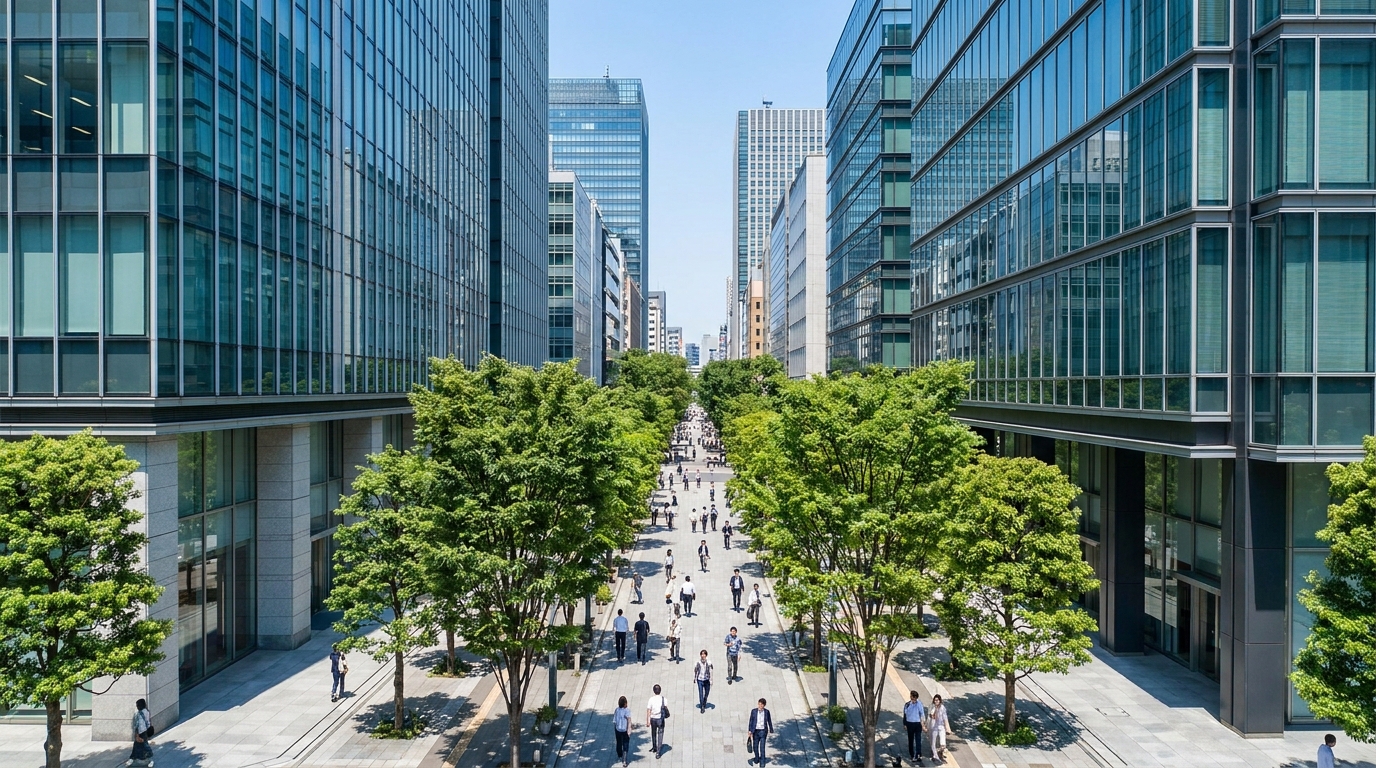
The official store list now shows Tokyo locations beyond the Shinjuku shop used in the previous version of this guide. Current listed Tokyo options include Shinjuku, Shibuya, Ikebukuro, Ueno Park, Ginza, Asakusa and Yotsuya. This changes the decision: first choose the branch that is already on your route.
- Before leaving: open the official store list, then open the exact branch and save its map.
- On arrival: confirm the tax-inclusive menu and payment before committing to a premium wagyu order.
- Halal check: the operator’s current policy describes halal-certified ingredients and kitchen equipment and says all locations have prayer and wudu facilities.
- Abort rule: leave or choose another meal when the exact branch notice or required certificate detail cannot be confirmed.
Route 2: Ayam-Ya — Best Fit for a Ueno–Asakusa Day
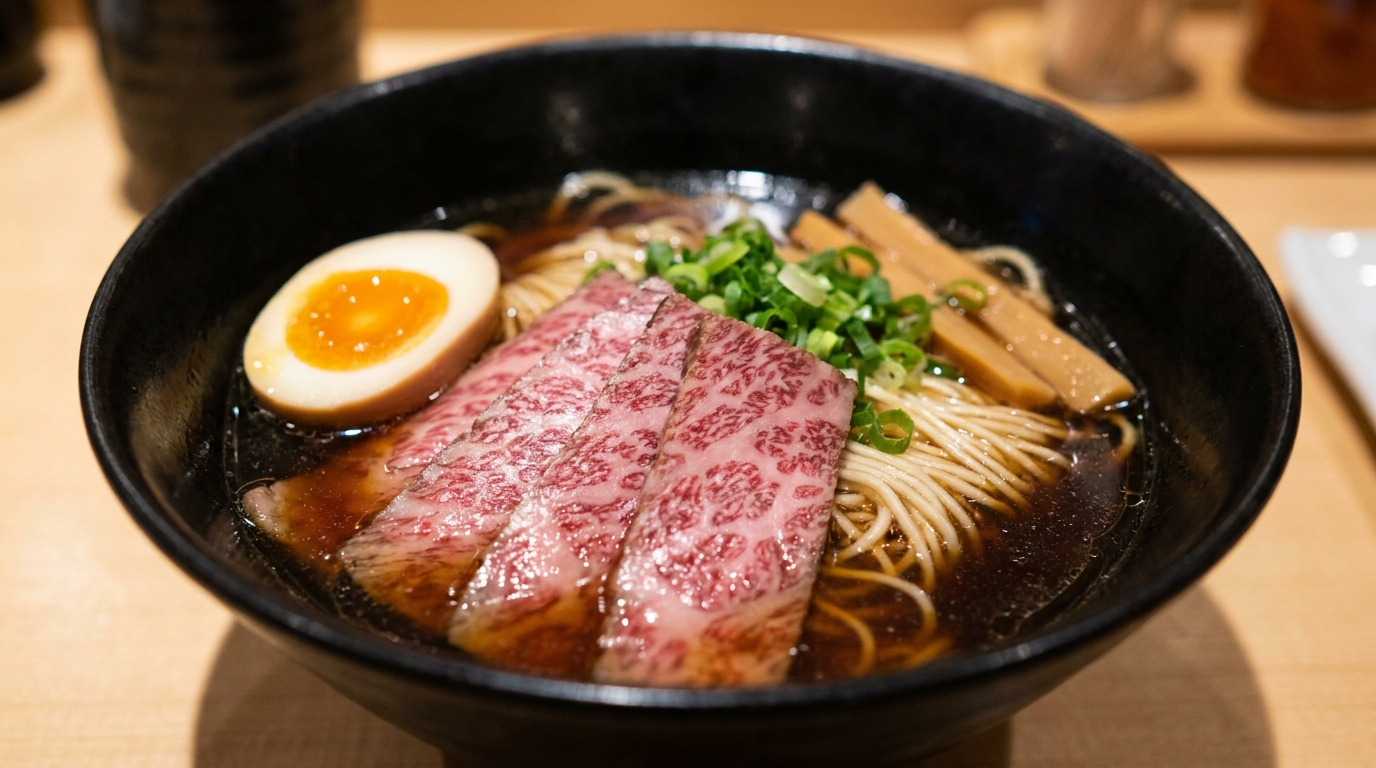
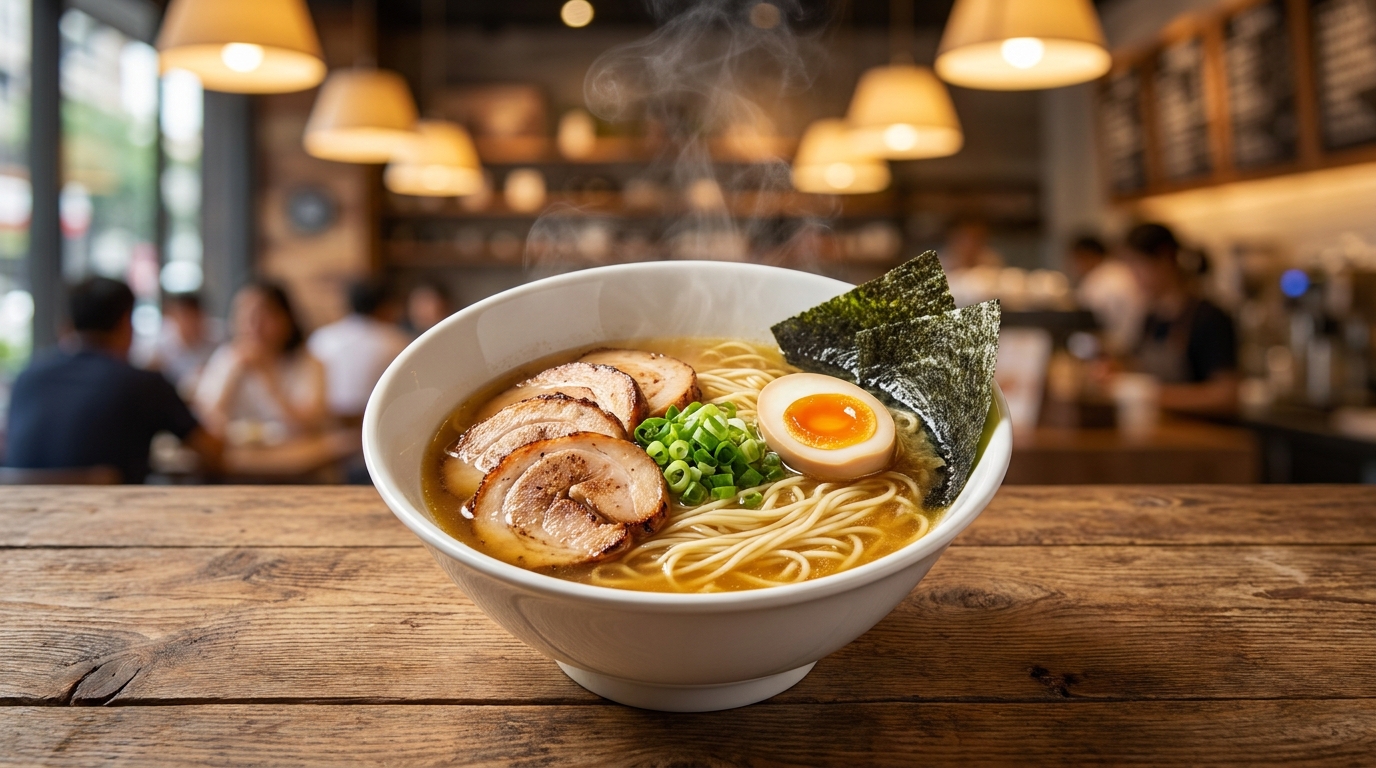
Taito City’s official Dietary Diversity Map lists Ayam-Ya Shin-Okachimachi at 3-10-3 Motoasakusa. It publishes lunch 11:30–15:00, dinner 17:00–22:00 and before-tax sample prices: Spicy Chicken Soba JPY 1,280, Chicken Over JPY 1,180, and Jakarta-style mixed noodles at JPY 1,180 for lunch or JPY 1,380 for dinner. Confirm the final total.
- Before leaving: open the Taito City map and recheck a current shop notice.
- On arrival: ask which bowl is available, the final total and how to pay.
- Dietary check: follow Taito City’s own instruction to ask staff about the halal or Muslim-friendly menu when ordering.
- Abort rule: do not rely on the old Okachimachi address or on an old third-party price list.
Route 3: Honolu Ebisu — Use It When Ebisu Is Already in Your Day
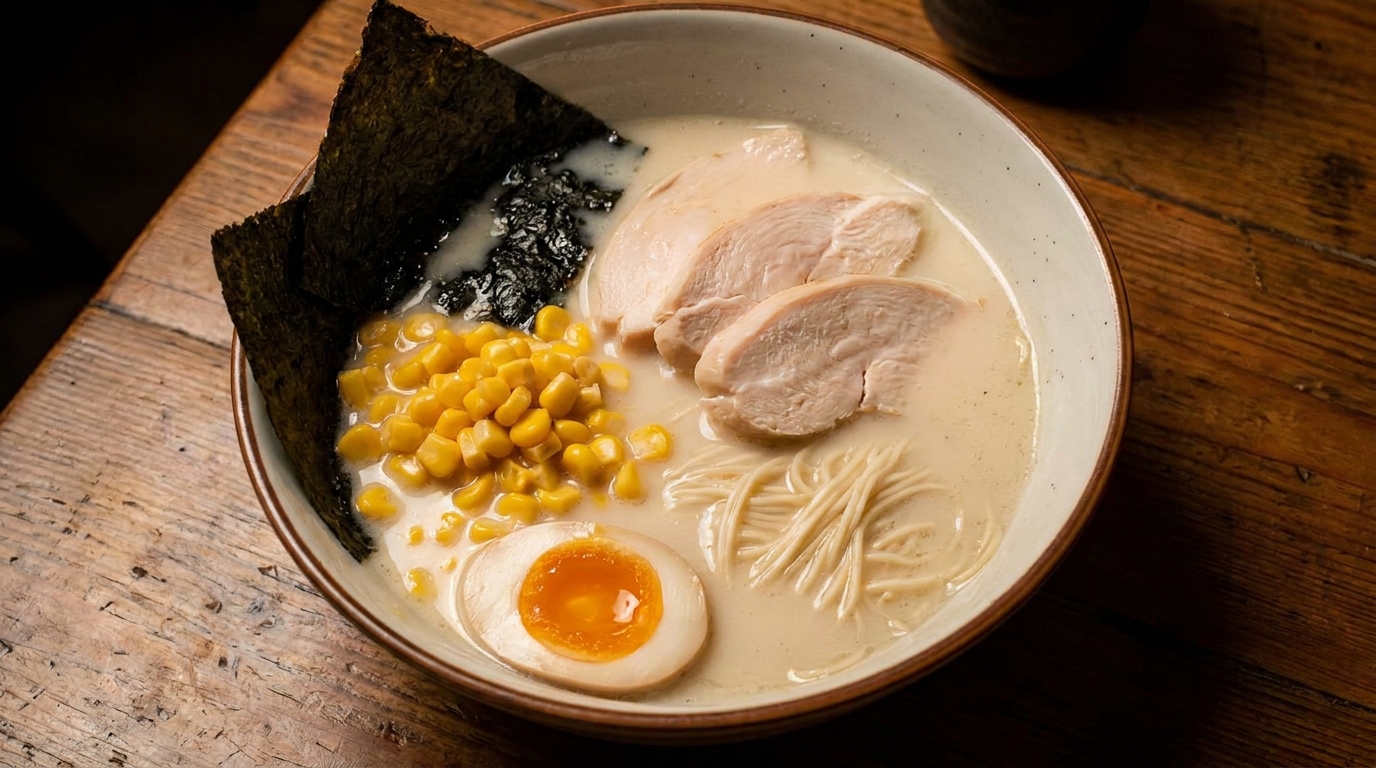
Honolu’s official Ebisu page currently confirms the business name “Halal Ramen Honolu,” the address at 1-23-1 Ebisuminami, and split hours of 11:30–15:00 and 17:00–21:30. The accessible shop page did not provide a complete current menu price, payment list, prayer-space answer or certificate scope during this check.
- Before leaving: open the official Ebisu page and contact the shop if your standard requires more than its current public text confirms.
- On arrival: confirm the current ramen, toppings, price and payment before ordering.
- Abort rule: do not travel across Tokyo for Honolu when an essential halal, facility or payment answer remains unresolved.
- Plan B: no primary-source-verified Ebisu fallback was frozen in this check. If Shibuya is already your next stop, use Shinjukutei’s official store list to verify its Shibuya branch; otherwise skip ramen and keep the Ebisu route.
How to Verify a Halal Claim Without Guessing
- Start with the restaurant or municipal primary source, not a roundup.
- Identify the exact branch and date.
- Ask what the statement covers: selected dishes, all menu items, ingredients, utensils, kitchen or full premises.
- Ask whether alcohol is used in food and whether alcohol is sold on the premises if that distinction matters to you.
- Ask for the certifying body and current certificate when certification is essential.
- Decide based on your own standard; “Muslim-friendly,” pork-free, vegan and halal are not interchangeable.

Ordering, Payment, Allergy and Queue Rules
- Ordering: ask what broth, meat, sauce and toppings are included in the exact bowl.
- Payment: do not assume cashless. Carry a backup and confirm before ordering.
- Allergy: halal status does not answer egg, wheat, soy, sesame, dairy or cross-contact questions. Use the RJG food allergy guide and ask about the exact dish.
- Queue: set an abort time before arriving. A long queue should not cause a missed train or timed attraction.
- Prayer: verify when you can use the facility and whether wudu, privacy and access fit your needs.
Plan B: Stay on Your Route
| Failed stop | Concrete next action |
|---|---|
| One Shinjukutei branch | Use the same official store list to verify another branch only when it is already on today’s route; otherwise skip ramen. |
| Ayam-Ya | Use Taito City’s same map to identify another listing whose category matches your standard, then confirm it directly; otherwise keep the Ueno–Asakusa plan without ramen. |
| Honolu Ebisu | No Ebisu-specific fallback was verified today. Check Shinjukutei Shibuya only when Shibuya is already next; otherwise keep the Ebisu route and choose a meal you can verify. |
If ramen fails, solve the meal rather than preserving the word “ramen.” Buy clearly labelled ingredients from a halal grocer and cook only where your accommodation permits it. Standard convenience-store food should not be treated as halal from appearance alone.
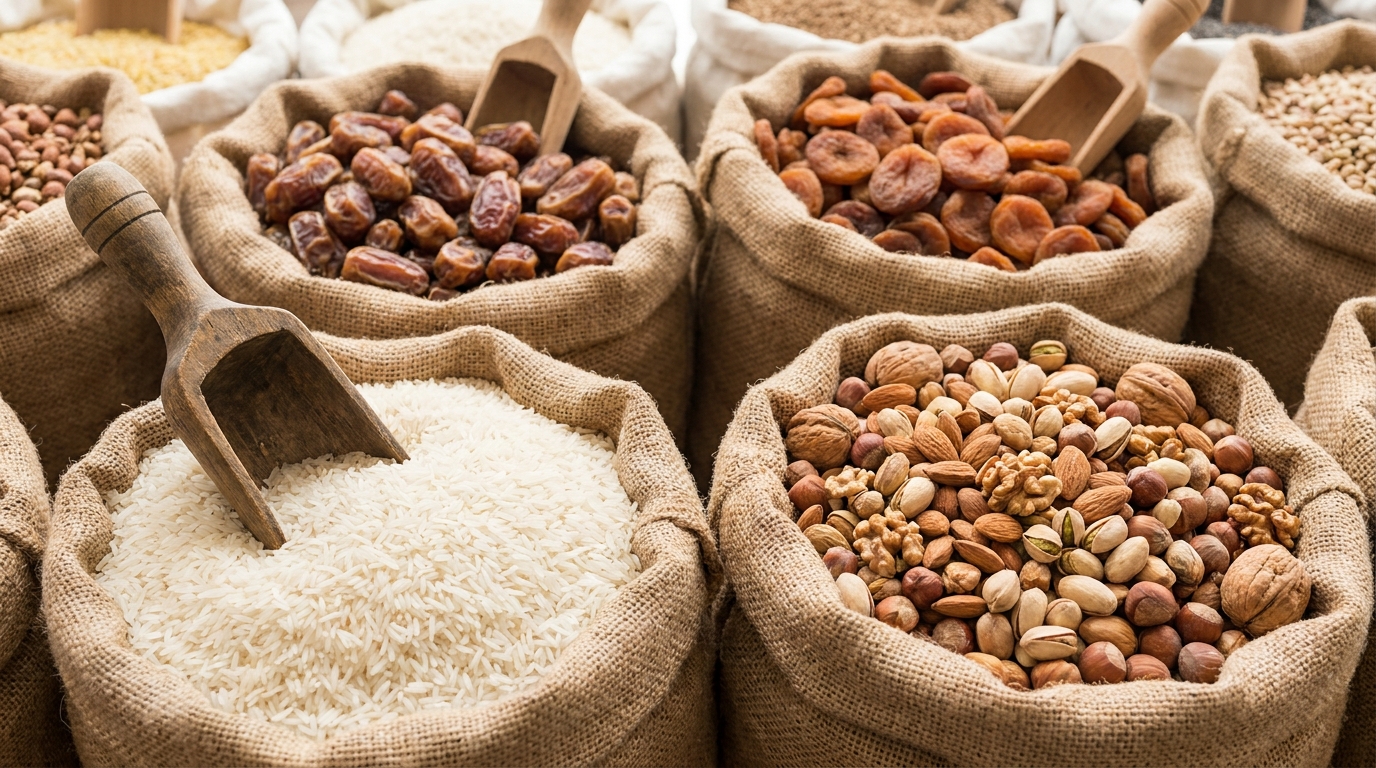
For self-catering and accommodation expectations, use the RJG Muslim guest stay guide. If you buy packaged food, read the current label and do not infer halal status from “vegan,” “plant-based” or pork-free wording.
Your One Next Action
Open the official page for the one branch already closest to your itinerary, then save its current store page, map and one same-area Plan B. If you cannot confirm your non-negotiable halal, price, payment or facility requirement, keep the stop optional.
FAQ
Which halal ramen stop should I choose in Tokyo?
Choose by route first. Use a current Shinjukutei branch when one is already near your sightseeing area, Ayam-Ya for a Ueno or Asakusa day, and Honolu Ebisu for an Ebisu or Shibuya-side day. Recheck the exact branch before leaving.
Does halal ramen in Tokyo always mean the whole restaurant is certified?
No single label proves the same scope everywhere. Check the operator's current policy, certifying body, covered menu or premises, kitchen and utensil rules, and alcohol policy. Ask directly when any part is unclear.
How much should I budget for halal ramen?
Taito City's current map lists Ayam-Ya examples at JPY 1,180 to JPY 1,380 before tax. Confirm the final total. Current tax-inclusive prices were not confirmed from accessible official pages for every Shinjukutei and Honolu option, so open the live menu before travelling.
Can I assume card or contactless payment?
No. A complete current payment list was not confirmed for all three businesses. Carry a payment backup and ask the exact branch before ordering if cash or card acceptance matters.
Do halal ramen shops have prayer space?
Shinjukutei's current policy says all its locations have a wudu area and prayer space. Do not extend that statement to Ayam-Ya or Honolu; ask those exact shops before relying on a facility.
What should I do if the shop is closed, full or unclear?
Do not cross Tokyo to chase another uncertain bowl. Keep the original sightseeing route, use a verified halal restaurant of another cuisine, or buy clearly labelled ingredients from a halal grocer and prepare a simple meal where cooking is permitted.
Official Sources Checked
- Shinjukutei official store list and halal policy: current branches, published hours, operator halal statements, prayer/wudu statement.
- Taito City Dietary Diversity Map: Ayam-Ya address, hours, sample menu prices and traveler instruction.
- Honolu official Ebisu page: current address and business hours.