- Quick Answer
- Choose in 60 Seconds
- The Four Types
- Budget Without False Precision
- Booking, Cancellation, and Payment
- Ordering and Language
- If the Restaurant Is Full: Use a Preset Plan B
- Allergies, Dietary Restrictions, and Pregnancy
- Etiquette That Prevents Real Problems
- Your Next Action
- Frequently Asked Questions
- How much should I budget for sushi in Tokyo?
- Do I need a reservation for sushi in Tokyo?
- Can I pay with Suica or PASMO at sushi restaurants?
- Are English menus available?
- What should I do if the restaurant is full?
- Can sushi restaurants accommodate food allergies?
- Is tipping expected at sushi restaurants in Tokyo?
- Can I take photos at a sushi counter?
- Sources and Check Date
Quick Answer
Tokyo sushi is easier to choose when you separate it into four traveler-facing options:
- Reserved omakase or Edomae counter: a planned, chef-led meal.
- Casual counter or standing sushi: chef-made sushi with less ceremony.
- Conveyor-belt sushi: the lowest-friction choice for price visibility and ordering.
- Tourist-friendly sushi: not a separate cooking style, but an access profile that may overlap with any of the first three.
The ¥1,000 and ¥50,000 figures in the title are rough trip-planning endpoints, not universal menu prices. Your safest move is to choose a format first, then verify the exact menu, reservation terms, payment methods, and dietary support on the chosen restaurant or branch page.
Choose in 60 Seconds
| Your priority | Start with | Check before going | Plan B |
|---|---|---|---|
| Low friction and visible prices | Conveyor-belt sushi | Branch menu, queue system, accepted payment | Save a second branch or chain nearby |
| Chef-made sushi without a formal course | Casual counter or standing sushi | Queue rules, last order, cash/card | Switch when the wait reaches your preset limit |
| A special meal | Reserved omakase | Course price, prepayment or card hold, cancellation policy, dietary rules | Keep a refundable or walk-in dinner option |
| English support or easy access | A tourist-friendly venue | What “English-friendly” actually includes | Save screenshots of the menu and address |
Do not choose by a list price alone. A booking may involve prepayment, a card authorization hold, a cancellation fee, tax, or a service charge. These are separate questions.
The Four Types
Type 1: Reserved Edomae or Omakase
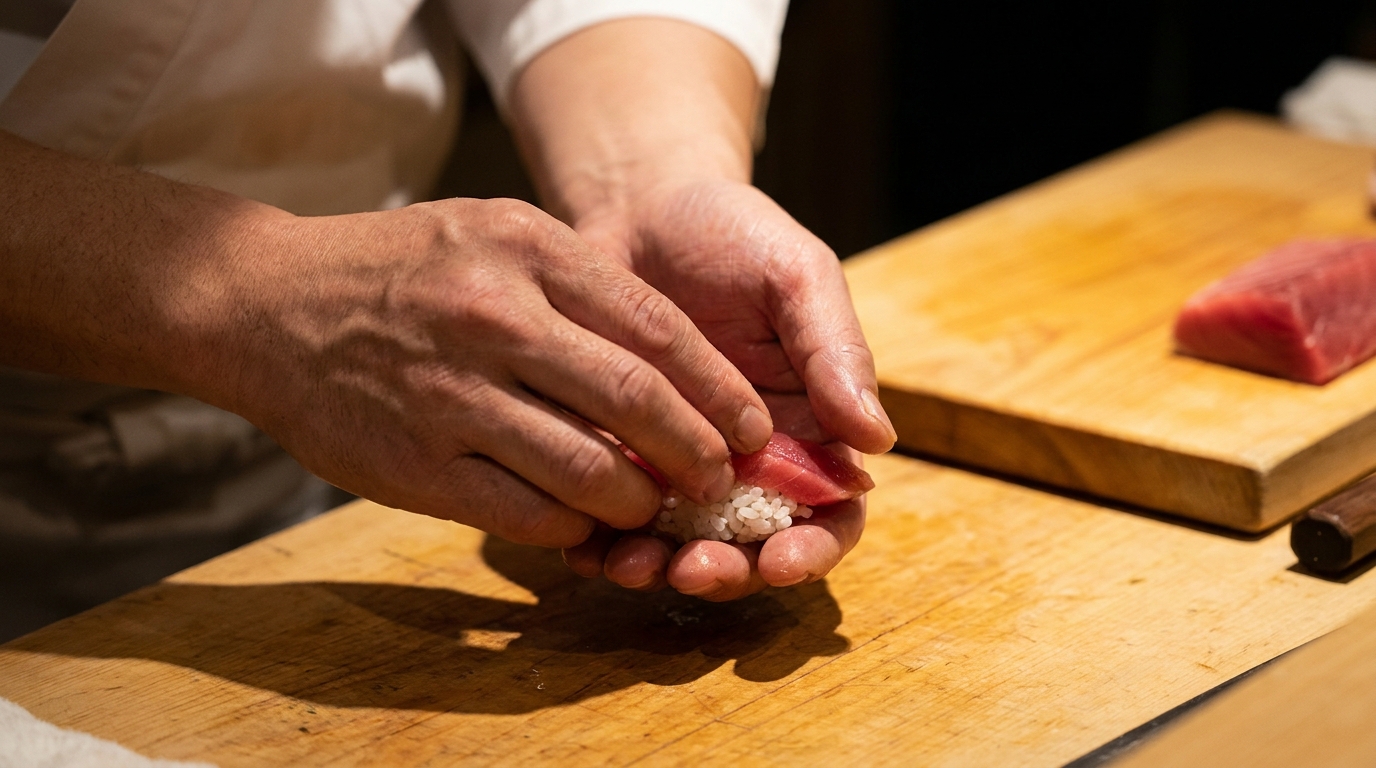
Choose this when the meal itself is part of the trip.
Omakase means the chef determines the sequence. Some restaurants offer a fixed course; others allow extra pieces after the course. Counter size, meal length, child policy, photography, perfume rules, and dietary flexibility vary by restaurant.
Before booking, confirm:
- the current course price and what it includes;
- whether payment is made now, held on a card, or settled at the restaurant;
- the cancellation deadline and fee;
- arrival time and late-arrival policy;
- whether the restaurant can handle each allergy or restriction in your party;
- whether photos are allowed.
Pocket Concierge, TableCheck, and OMAKASE provide English booking paths for participating restaurants. They do not create one common policy. Read the individual restaurant page before confirming. On TableCheck, entering a card can mean prepayment, an authorization hold, TableCheck Pay, or another restaurant-specific arrangement.
Three RJG first-hand omakase examples
These are examples of different high-end counter experiences, not a “best sushi” ranking:
- Sushi Kensuke in Azabu-Juban — a dashi-led seasonal omakase.
- Zoroku Yuzan in Roppongi — a reservation-led Edomae counter.
- Karin near Ryogoku Station — sushi and kappo in a quieter counter setting.
The linked reports contain RJG’s first-hand experience. This parent guide does not claim that the same evidence applies to other restaurants.
Type 2: Casual Counter or Standing Sushi
Choose this when you want sushi made in front of you without building the day around a long course.
This category includes standing counters, neighborhood shops, casual chains, and restaurants serving set menus or piece-by-piece orders. The practical trade-off can be less booking friction but more queue uncertainty.
Check:
- whether you order a set, individual pieces, or both;
- whether the displayed price is per piece, per pair, or per plate;
- whether the shop uses a ticket machine;
- last-order time as well as closing time;
- the accepted payment shown for that exact location.
Do not assume that a casual shop requires cash, accepts cards, supports English, or takes walk-ins. If no official page exists, prepare the restaurant name and address in Japanese and carry a second payment method.
Type 3: Conveyor-Belt Sushi
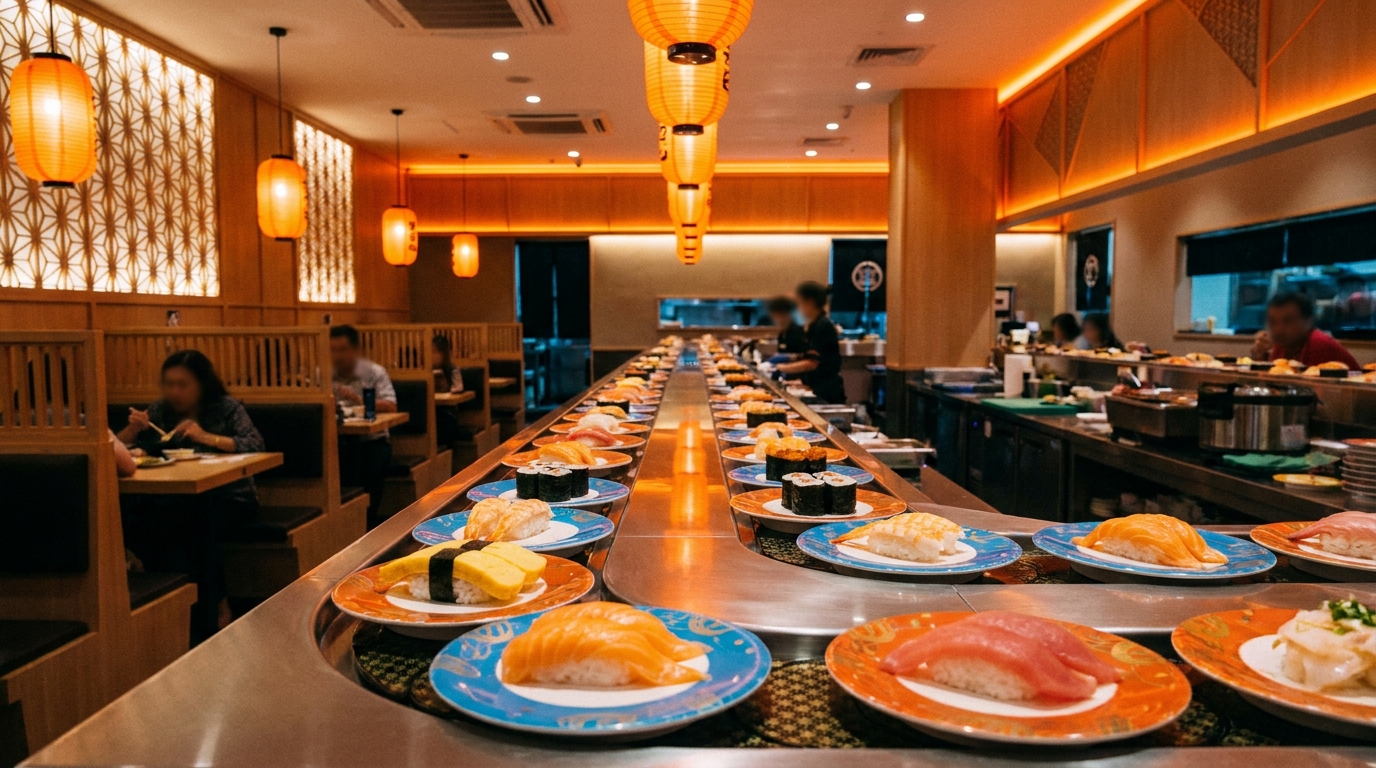
Choose this when you want the clearest ordering process, flexible quantity, or a family-friendly fallback.
At many large chains, you check in, receive a queue number, order on a tablet, and pay at a machine or register. The exact process differs by brand and branch. A chain app may reserve a queue position or time band rather than guarantee a seat at that minute.
As a current example, Sushiro’s English site advertises multilingual touch panels, credit cards and QR payments, and sushi from ¥120 per plate. Its official menu also says that products and prices vary by store. Sushiro states that it does not accept electronic money, so “Suica works at conveyor-belt sushi” is not a safe general rule.
Use the chosen branch page on the day you visit:
- check its current menu and price tier;
- check how the queue system works;
- check whether the branch accepts your card, QR app, or cash;
- save another branch or brand nearby.
Type 4: Tourist-Friendly Sushi
“Tourist-friendly” describes access, not sushi technique. It may mean an English menu, online booking, a central location, staff accustomed to international visitors, or clearly written rules. A venue can be tourist-friendly and still be an omakase counter, casual shop, or conveyor-belt restaurant.
Verify what the label covers. An English booking screen does not guarantee an English-speaking chef. An English menu does not guarantee allergy accommodation. A central location does not guarantee walk-in seating.
Use this as a filter across Types 1–3, not as proof that the entire meal will be friction-free.
Budget Without False Precision
Tokyo does not have one reliable citywide price band for each sushi format. Use a budget ceiling and verify the chosen venue.
- Set the total per-person ceiling. Include drinks, tax, service charge, booking fees, and transport.
- Open the current official menu or booking page. A search-result snippet or old blog may show an outdated price.
- Check the unit. A price can refer to one piece, two pieces, one plate, one set, or a full course.
- For omakase, check payment timing. Prepayment and card authorization are different.
- Keep emergency cash or a second card. Do not rely on IC-card acceptance unless the exact branch says it accepts electronic money.
If you are trying to stay near ¥1,000, verify the plate prices and decide your plate limit before ordering. If you are considering a ¥10,000–¥50,000 course, treat the restaurant’s current booking page as the price authority.
Booking, Cancellation, and Payment
The most expensive error is not ordering the wrong fish. It is missing a strict reservation or discovering that the booking is non-refundable.
Before you press “confirm,” capture:
- date, time, party size, and restaurant address;
- course price and included items;
- prepayment, authorization hold, or pay-at-restaurant status;
- cancellation and no-show fees;
- dietary messages and the restaurant’s written response;
- a contact method you can use while in Japan.
Take a screenshot of the confirmation and cancellation terms. If the restaurant asks you to reconfirm, do it by the stated deadline. If you cannot go, cancel through the original booking channel instead of simply not appearing.
For more detail, use RJG’s Tokyo restaurant reservation guide and Pocket Concierge guide.
Ordering and Language
At a tablet-based chain, change the language first and confirm whether an order is one piece, two pieces, or one plate.
At a counter, these phrases cover the basic decision:
- Omakase de onegaishimasu. — I’ll have the chef’s selection.
- Kono setto wa nan-kan desu ka? — How many pieces are in this set?
- Wasabi nuki de onegaishimasu. — No wasabi, please.
- Kore wa nan desu ka? — What is this?
- Okaikei onegaishimasu. — The bill, please.
Translation apps help with ordinary menu questions. They are not a safe substitute for a written allergy discussion.
If the Restaurant Is Full: Use a Preset Plan B
Do this before leaving the hotel:
- Save two venues in the same area and price range.
- Decide your maximum wait, such as 30 or 45 minutes.
- Check last order at both venues.
- If the first wait exceeds your limit, switch immediately.
- If dietary information is unclear, do not “try and see.” Choose the venue that can answer.
A department-store food hall, supermarket sushi counter, or conveyor-belt chain can be a practical fallback. It is not a substitute for a missed prepaid reservation, so cancel within the stated rules whenever possible.
Allergies, Dietary Restrictions, and Pregnancy
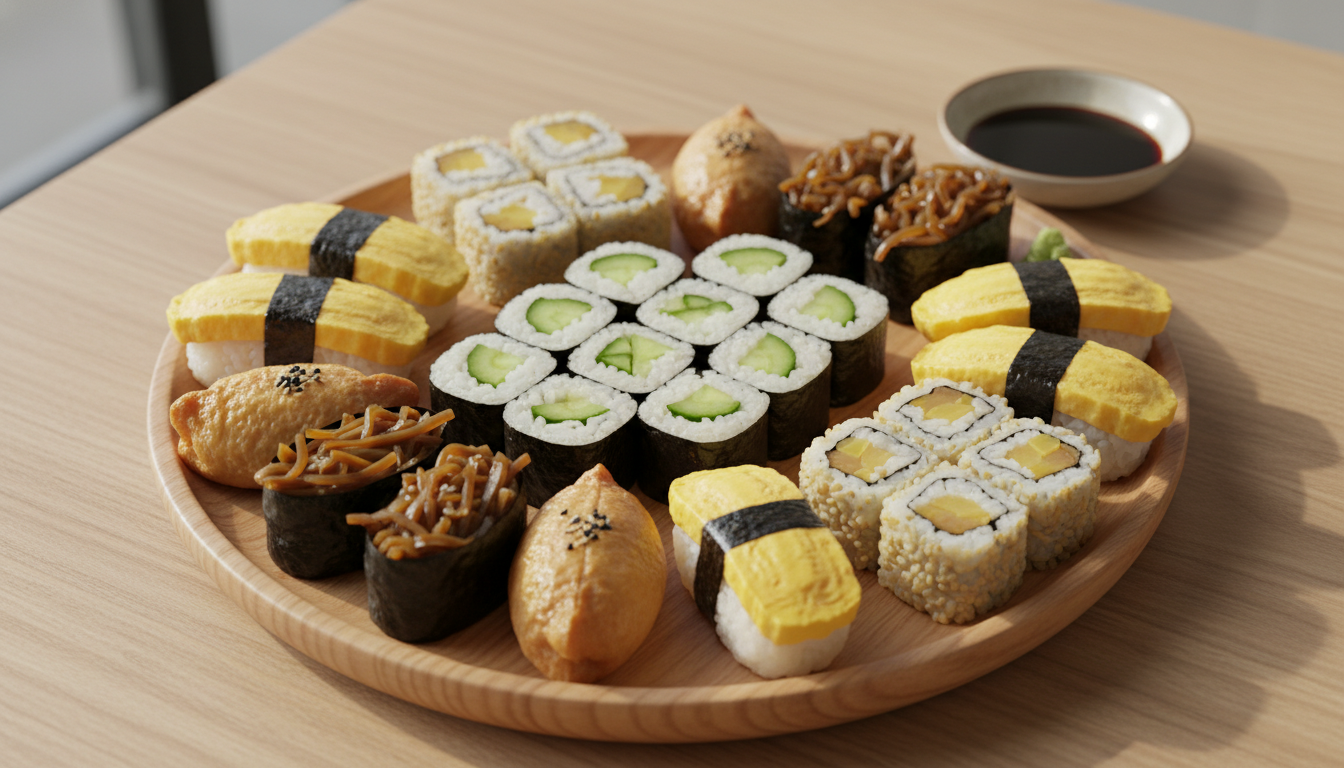
Restaurant food in Japan is not covered by the same mandatory allergen-labeling system as packaged food. The Consumer Affairs Agency warns that restaurants may face cross-contact and information limits.
If a reaction could be serious:
- contact the restaurant before booking;
- list each relevant allergen in writing, including soy, wheat, egg, shellfish, and fish where relevant;
- ask about stocks, sauces, shared knives, boards, fryers, and cross-contact;
- keep the written answer;
- choose another restaurant if the answer is unclear.
Do not assume that tamari, sushi rice seasoning, imitation crab, miso, or a “vegetarian” roll is safe for your restriction. See RJG’s Japan food allergy guide for preparation steps.
Pregnant travelers should use guidance from a qualified medical professional. Japan’s Ministry of Health publishes fish-and-mercury guidance for pregnancy, but that does not decide whether a specific raw dish is suitable for you. Restaurant policies also vary. Ask in advance and choose cooked items or another venue if you cannot get a clear answer.
Etiquette That Prevents Real Problems
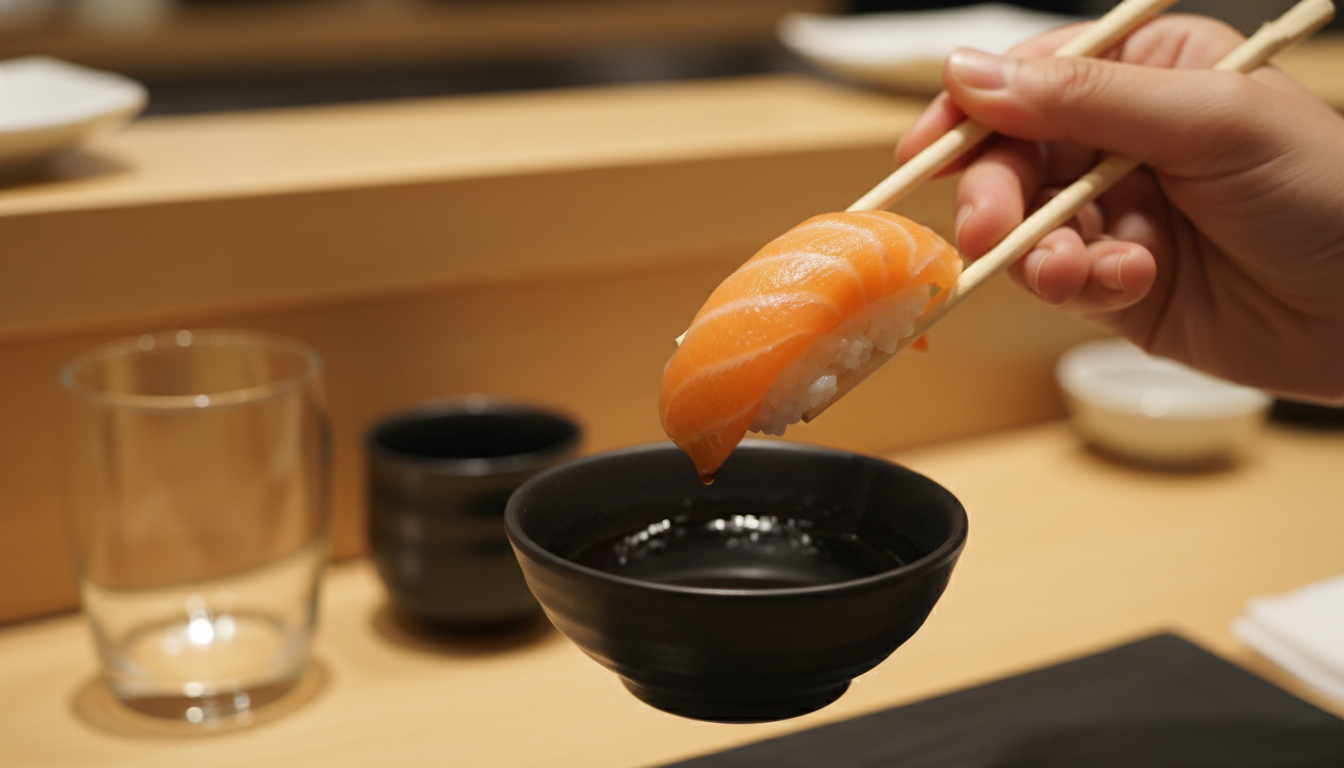
You do not need a long ritual list. Focus on the rules that affect the restaurant and other diners:
- Arrive on time for a reservation. A small counter may serve everyone in sequence.
- Check before taking photos. Policies vary by restaurant and can prohibit photography entirely.
- Avoid strong perfume or cologne. It can interfere with other diners’ experience.
- Follow the restaurant’s instructions. Eat timed pieces promptly when asked and keep bags or phones off restricted counter space.
- Do not add a tip. Tipping is not generally expected in Japanese restaurants, according to JNTO.
Hands or chopsticks can both be acceptable for nigiri, but venue-specific instructions come first.
Your Next Action
Before opening another “best sushi” list:
- Pick one of the first three formats.
- Set a total per-person budget.
- Save two venues.
- Verify today’s menu, booking terms, payment, and dietary rules on the official page.
- Decide your queue limit and Plan B.
That five-minute check prevents most avoidable sushi problems in Tokyo.
Frequently Asked Questions
How much should I budget for sushi in Tokyo?
Use the current menu of the exact restaurant or branch, not a citywide price promise. Set a total ceiling that includes drinks, tax, service charges, booking fees, and transport.
Do I need a reservation for sushi in Tokyo?
Reserved omakase can require advance booking, while casual counters and conveyor-belt restaurants may accept walk-ins or use a queue system. Check the restaurant’s official page because an app time band may not guarantee immediate seating.
Can I pay with Suica or PASMO at sushi restaurants?
Do not assume so. Electronic-money acceptance varies by brand and branch, and Sushiro currently states that it does not accept electronic money. Verify the exact location and carry a second payment method.
Are English menus available?
Some chains and tourist-oriented venues offer English tablets, menus, or booking pages, but support varies. Confirm what is available at the exact branch and keep the restaurant name and address in Japanese.
What should I do if the restaurant is full?
Save two venues in the same area, set a maximum wait before you go, and switch when the first queue exceeds it. Also check last-order times so your fallback is still serving.
Can sushi restaurants accommodate food allergies?
Some can, but restaurant allergen disclosure and cross-contact controls vary. Contact the restaurant in writing before booking and choose another venue if it cannot give a clear answer.
Is tipping expected at sushi restaurants in Tokyo?
No. Tipping is not generally expected in Japanese restaurants. Pay the stated bill and follow any service-charge terms shown by the restaurant or booking platform.
Can I take photos at a sushi counter?
Ask first and follow the restaurant’s rule. Photo policies vary from freely permitted to completely prohibited, so check posted rules or ask before taking out your camera.
Sources and Check Date
Checked July 25, 2026. Variable details must still be reconfirmed for the exact restaurant or branch.
- Sushiro official English site and store-specific menu
- Pocket Concierge: how the service works
- TableCheck: reservation process and payment methods
- Consumer Affairs Agency: food allergy information for restaurants
- Ministry of Health, Labour and Welfare: fish and mercury guidance
- JNTO: tipping in Japan and customs and etiquette

Comments