Quick Answer
Japanese curry (カレー, karē) is a thick, mild roux served over rice. Current basic examples include Sukiya curry from ¥450 for a mini or ¥550 for a regular size, CoCo Ichibanya pork curry at ¥646 for 300g of rice, and Matsuya’s Founding Beef Curry at ¥780. Prices, products, and availability vary by branch, so use the official menu links below before you go.
Last checked: July 12, 2026 (JST).
If you have eaten “curry” in India, Thailand, or the UK, the dish that arrives in Japan may surprise you. It is a very common home and restaurant meal in the country, yet it tastes almost nothing like the curries that inspired it. This guide explains what Japanese curry actually is, the everyday styles you will meet in Tokyo, where to eat each one, and how to order at CoCo Ichibanya step by step — including what vegetarian and halal travelers should check first.
What Makes Japanese Curry Different?
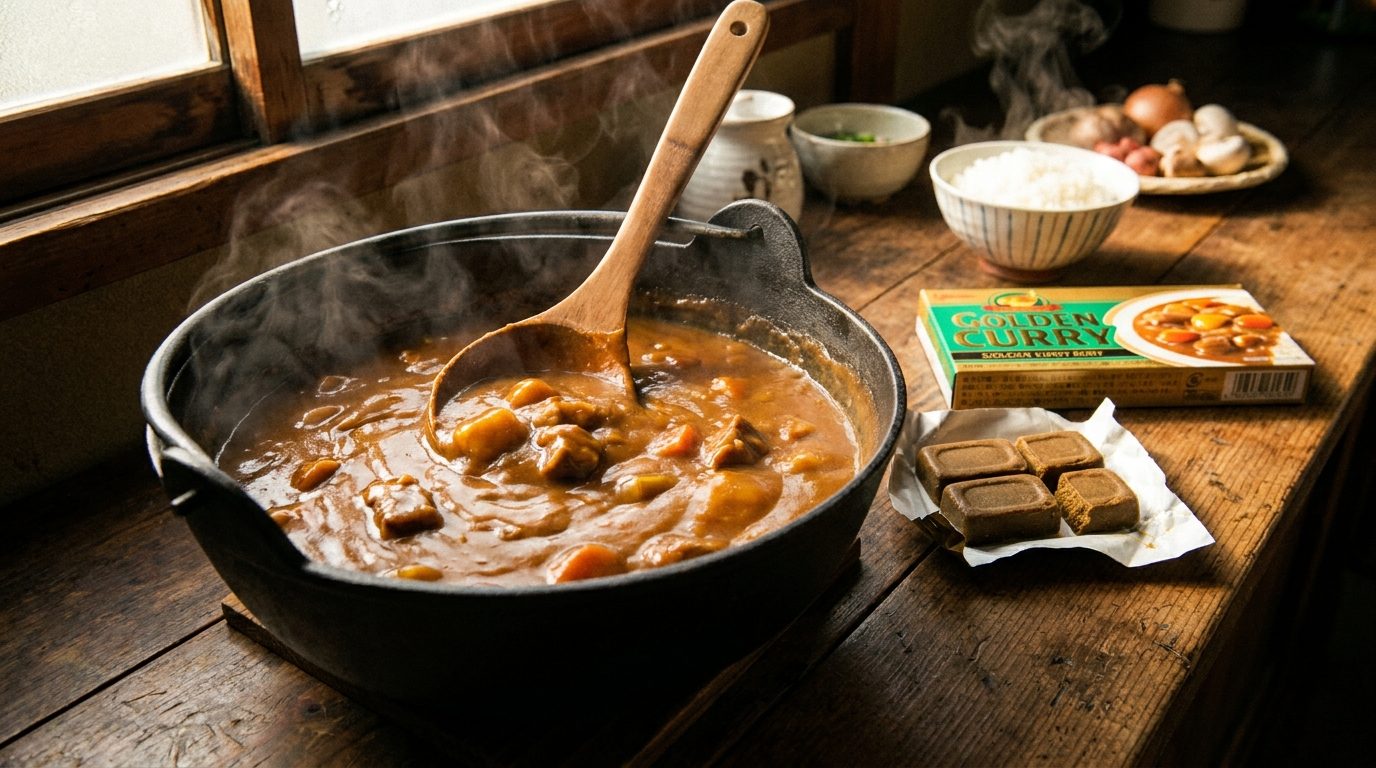
Japanese curry is defined by its roux — a paste of wheat flour cooked in fat, then blended with curry powder and seasonings. This gives the sauce a thick, almost gravy-like body that clings to rice. The flavor leans savory-sweet rather than fiery, with apple, honey, or caramelized onion often adding a rounded sweetness.
Here is how it compares to curries you may already know:
- Indian curry is generally built on fresh spices, onions, yogurt, or tomato, and is eaten with naan or basmati rice. The texture is looser and the spice profile is sharper.
- Thai curry uses coconut milk and fresh aromatics like lemongrass and galangal, giving a thinner, fragrant sauce.
- Japanese curry is thicker, sweeter, and milder, and is generally served over a plate of rice rather than alongside it.
A standard plate pairs the sauce with white rice and a protein — commonly beef, pork, chicken, or a breaded cutlet (katsu). Carrots, potatoes, and onions are the classic vegetables simmered into the sauce.
A Quick History: From the British Navy to Your Plate
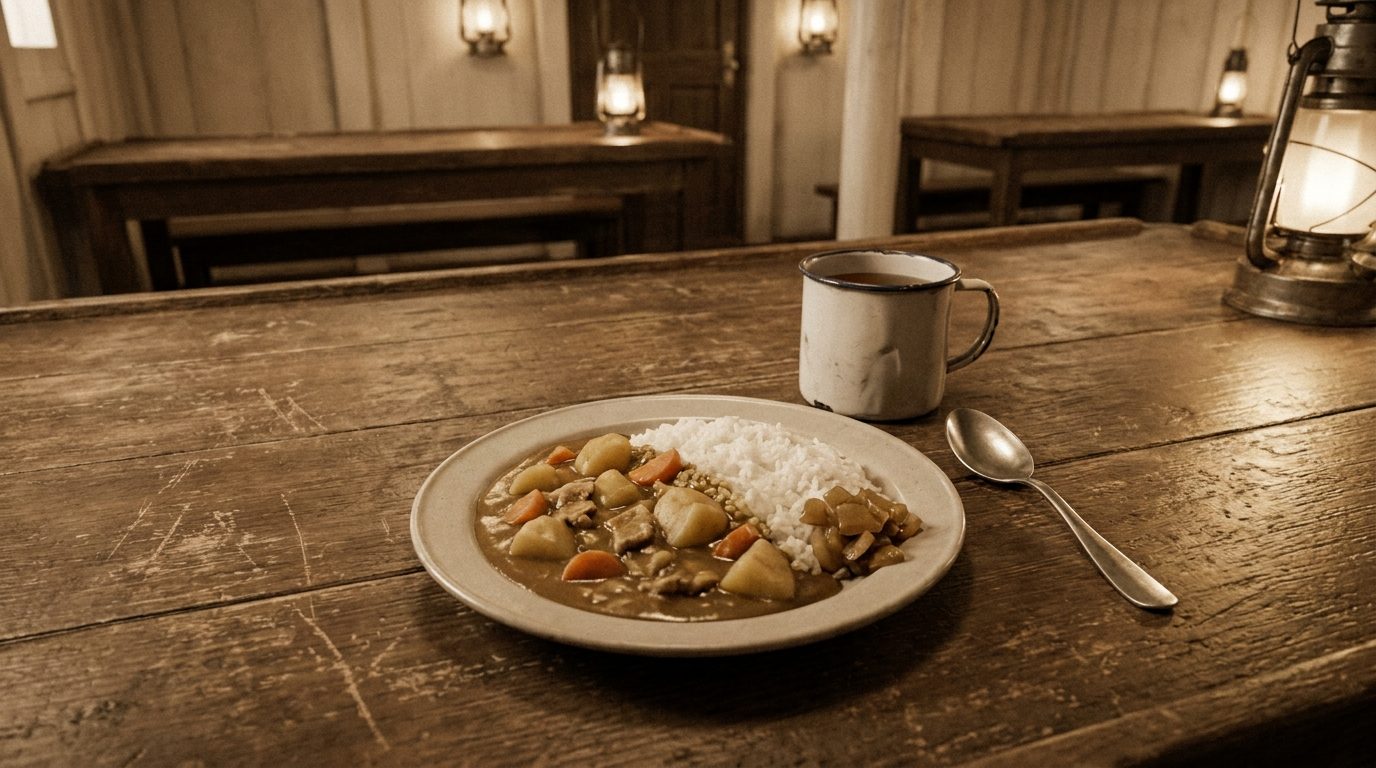
Curry did not arrive in Japan directly from India. It came via Britain during the Meiji era (1868–1912), around 1870, in the form of a Western-style stew seasoned with British curry powder. Because the British had simplified India’s many regional dishes into a single “curry powder,” what reached Japan was already an adaptation.
Japanese cooks then thickened it further with a French-style roux, producing the rich, smooth sauce eaten today. The dish spread quickly through the Imperial Japanese Navy, partly for a practical health reason: curry served over rice with vegetables and meat helped balance sailors’ diets at a time when beriberi (a vitamin-deficiency illness linked to a diet of polished white rice) was a serious problem. Naval curry traditions survive even now, and curry is widely considered one of Japan’s national comfort foods.
Types of Curry You’ll See in Tokyo
Japanese curry is not a single dish. These are the common styles a traveler will encounter.
1. Standard Curry Rice (Chain Style)
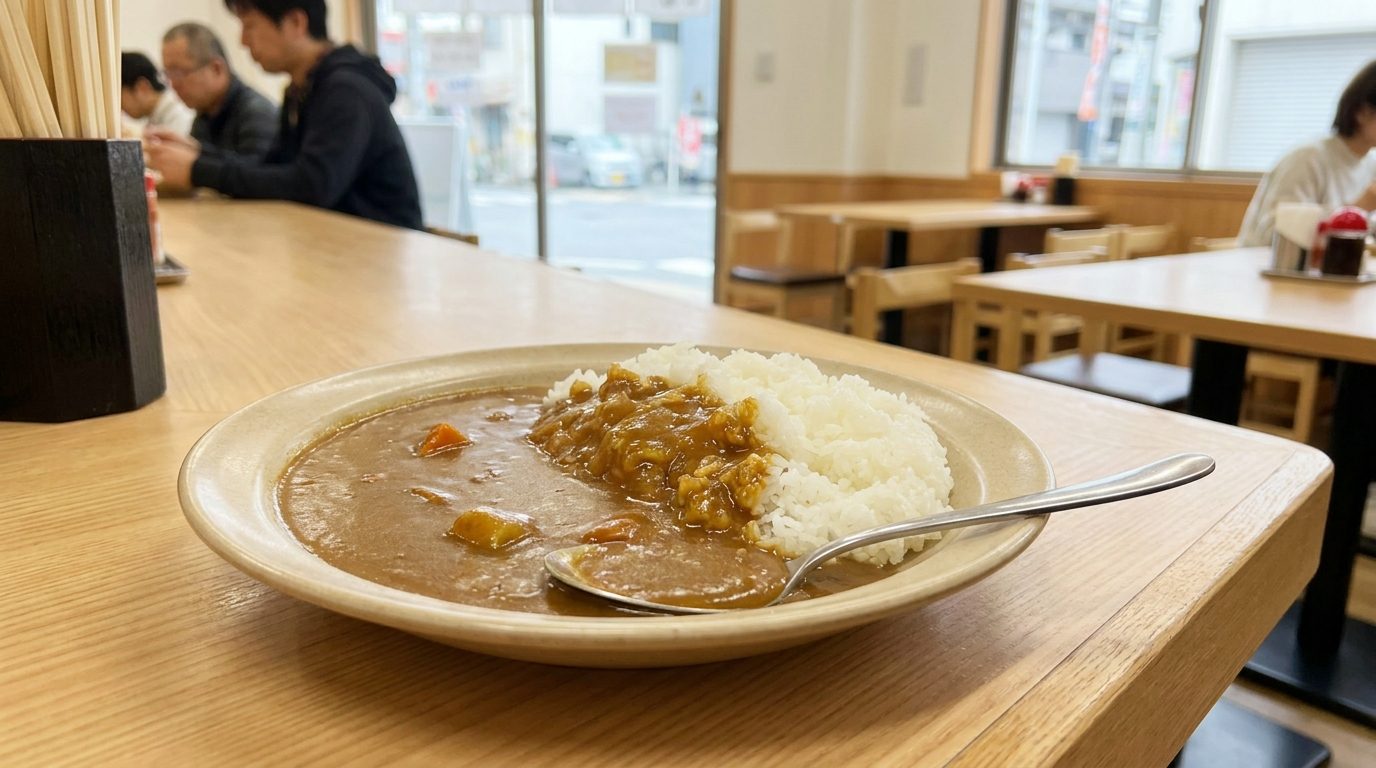
The everyday version: roux sauce over rice, often customized with toppings. This is what you get at CoCo Ichibanya and at beef-bowl chains like Sukiya and Matsuya. It is fast, cheap, and reliably mild unless you ask for more heat.
2. European-Style Curry (Ōshū Curry)
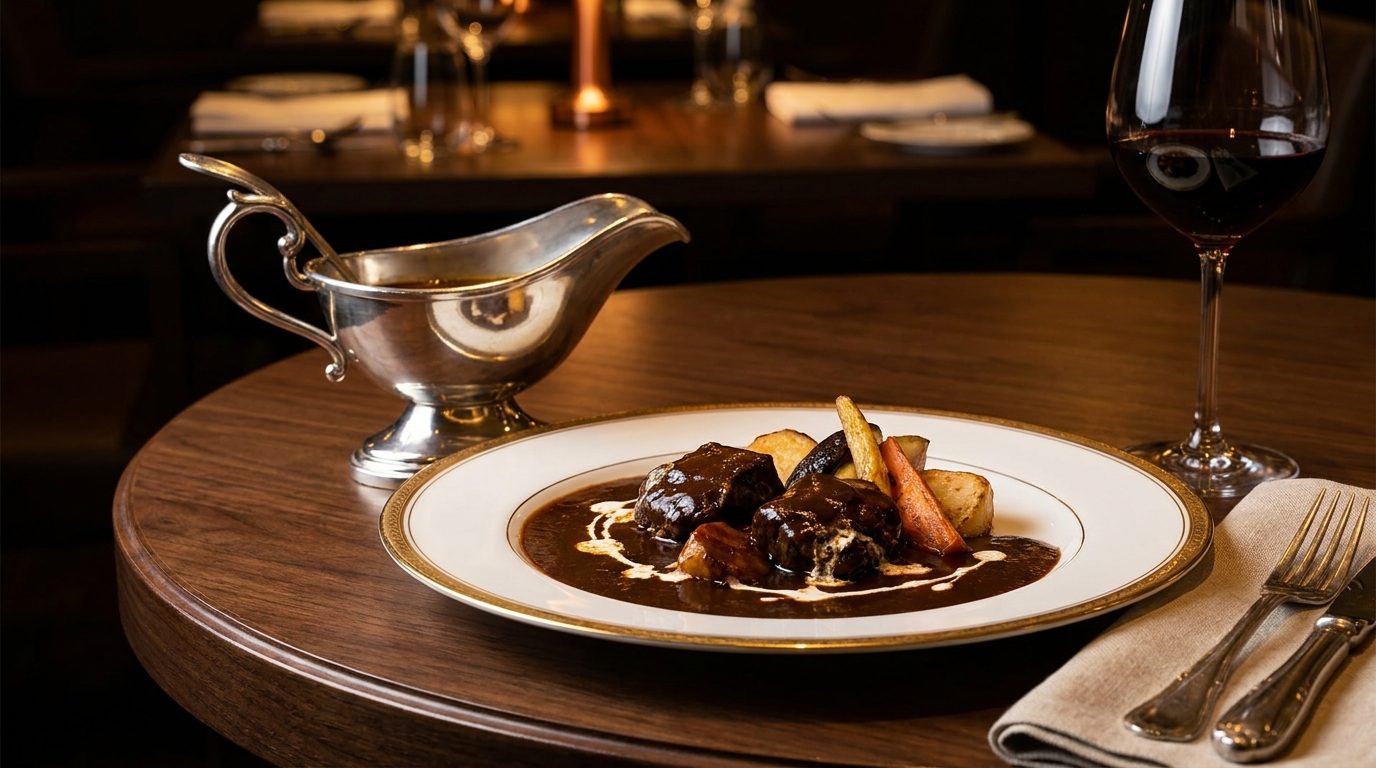
A richer, restaurant-style curry finished with demi-glace sauce and dairy for a smooth, almost creamy texture. The style was popularized by Bondy, one of Jinbocho’s pioneering European-style curry houses, known for adding demi-glace to its sauce. Expect deeper, slow-cooked flavor and a higher price than the chains.
3. Soup Curry
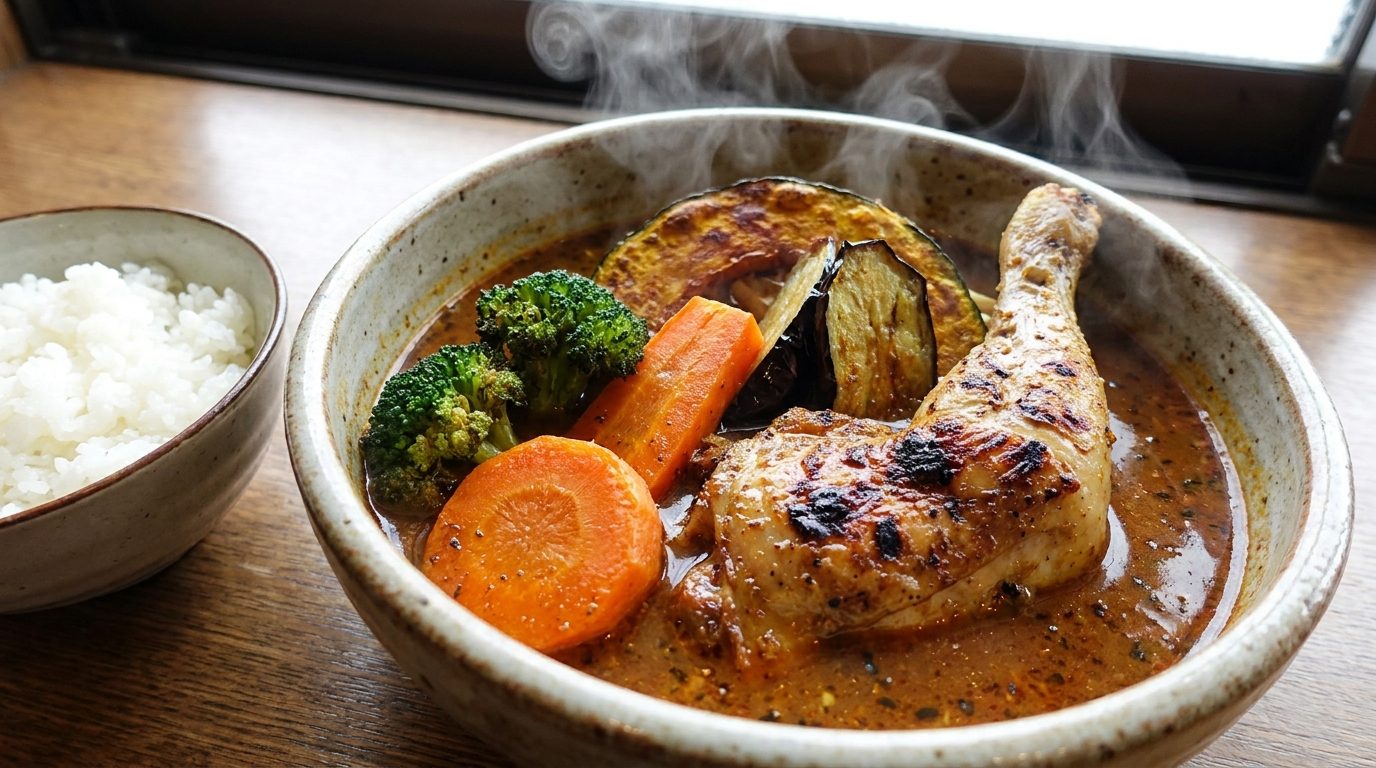
A thinner, spiced broth — not a thick sauce — served with rice on the side and large chunks of vegetables and meat. Soup curry originated in Sapporo (Hokkaido) and has spread to Tokyo through shops such as Suage and Ganesha. You spoon the rice into the soup rather than pouring sauce over it.
4. Katsu Curry
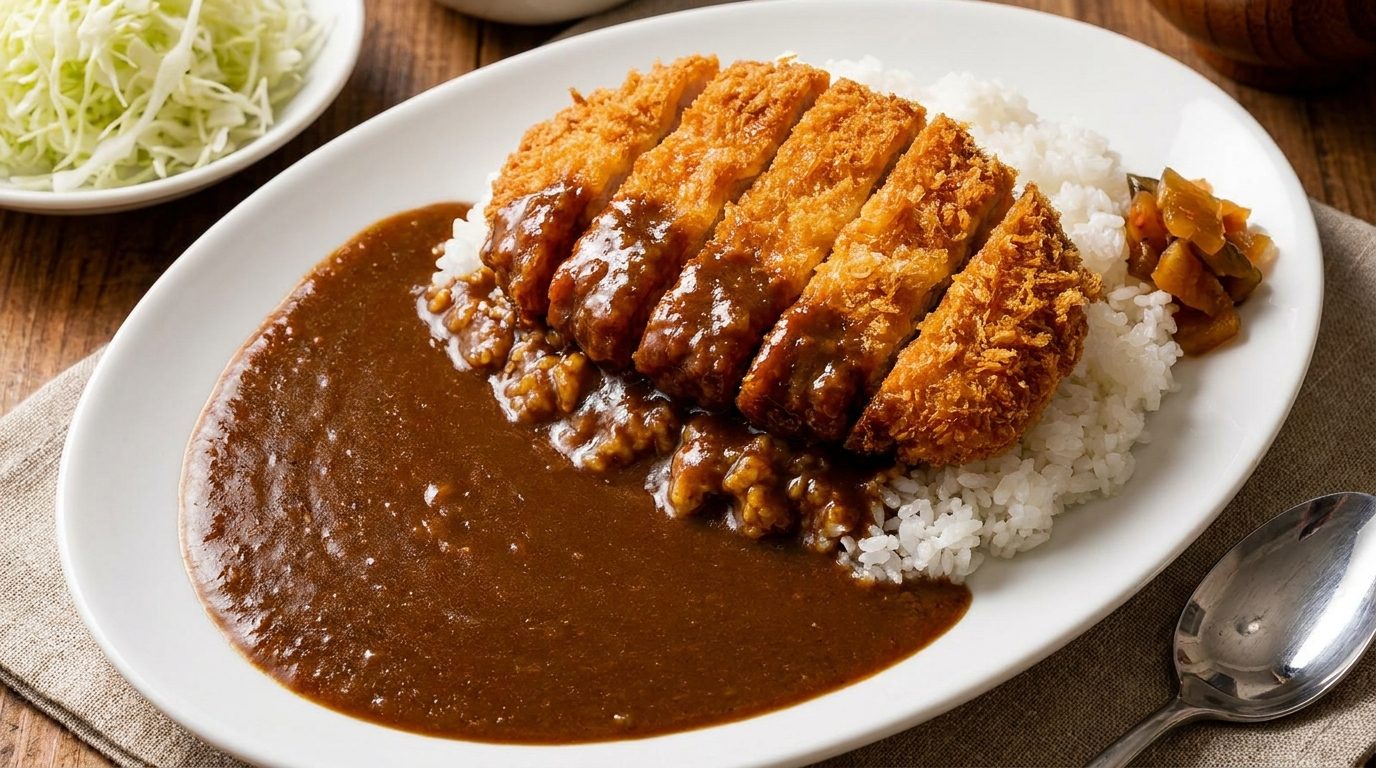
A breaded, deep-fried cutlet (commonly pork, tonkatsu) placed on top of curry rice. It is a popular order for visitors. Kitchen Nankai in Jinbocho is known for a notably dark, almost black katsu curry.
5. Curry Bread (Kare Pan)
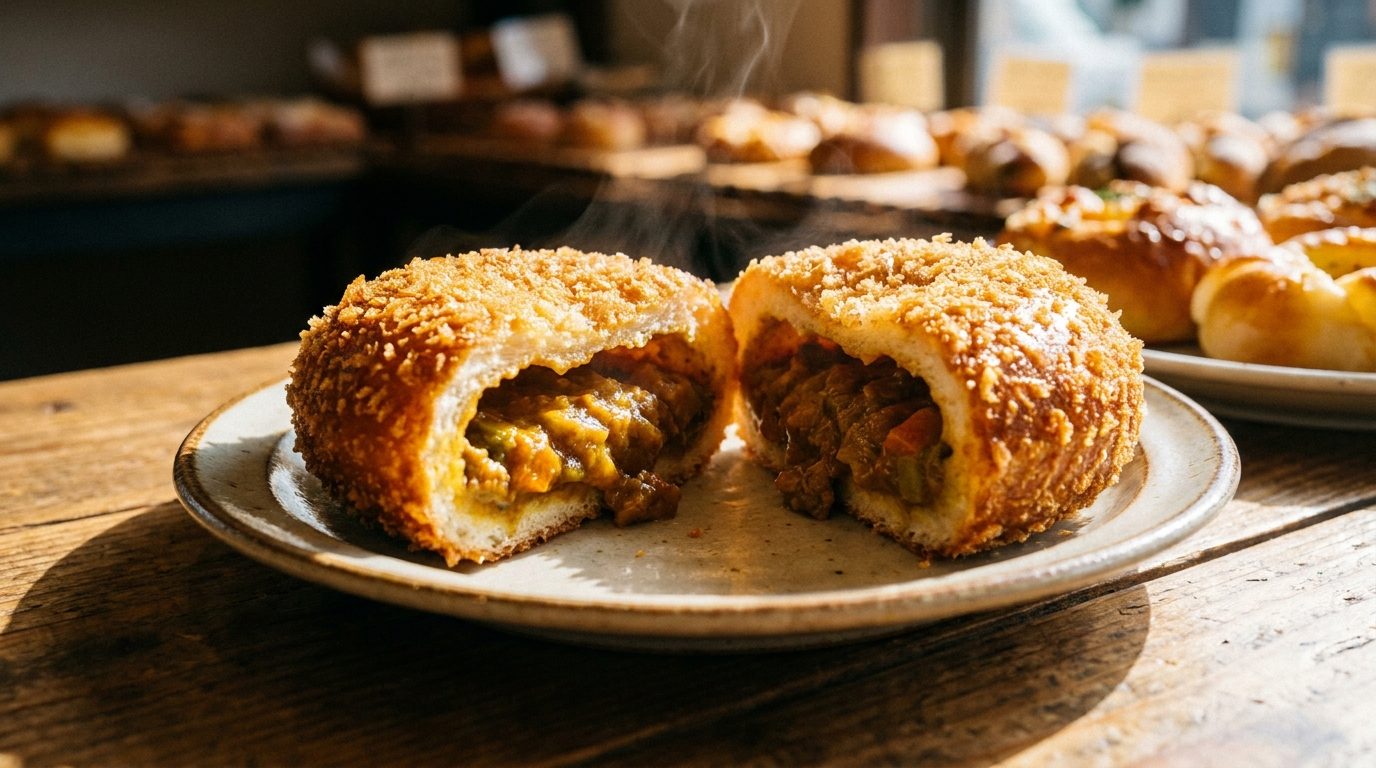
Japanese curry sealed inside bread dough, coated in panko, and deep-fried until golden. It is a snack, not a sit-down meal, and is sold at bakeries and convenience stores across the city. The original is generally credited to the Tokyo bakery Cattlea in 1927.
Where to Eat Curry in Tokyo
Budget Chains (from about ¥450; toppings cost extra)
- CoCo Ichibanya (ココイチ) — customizable rice, spice, and toppings. The official menu lists pork curry with 300g of rice at ¥646 and a 150g small pork curry at ¥556. See the official English guide.
- Sukiya & Matsuya — beef-bowl chains that also serve curry. Sukiya’s official menu lists ¥450 mini, ¥550 regular, and ¥690 large, with a 7% late-night surcharge from 22:00 to 05:00 for in-store orders. Matsuya’s current curry menu lists Founding Beef Curry at ¥780. The ¥660 listing is curry sauce alone, not a rice plate.
- Hinoya (日乃屋) — a curry-focused chain with locations across Tokyo, often a little cheaper than CoCo Ichibanya for katsu curry.
Specialty Shops (about ¥1,000–¥2,500)
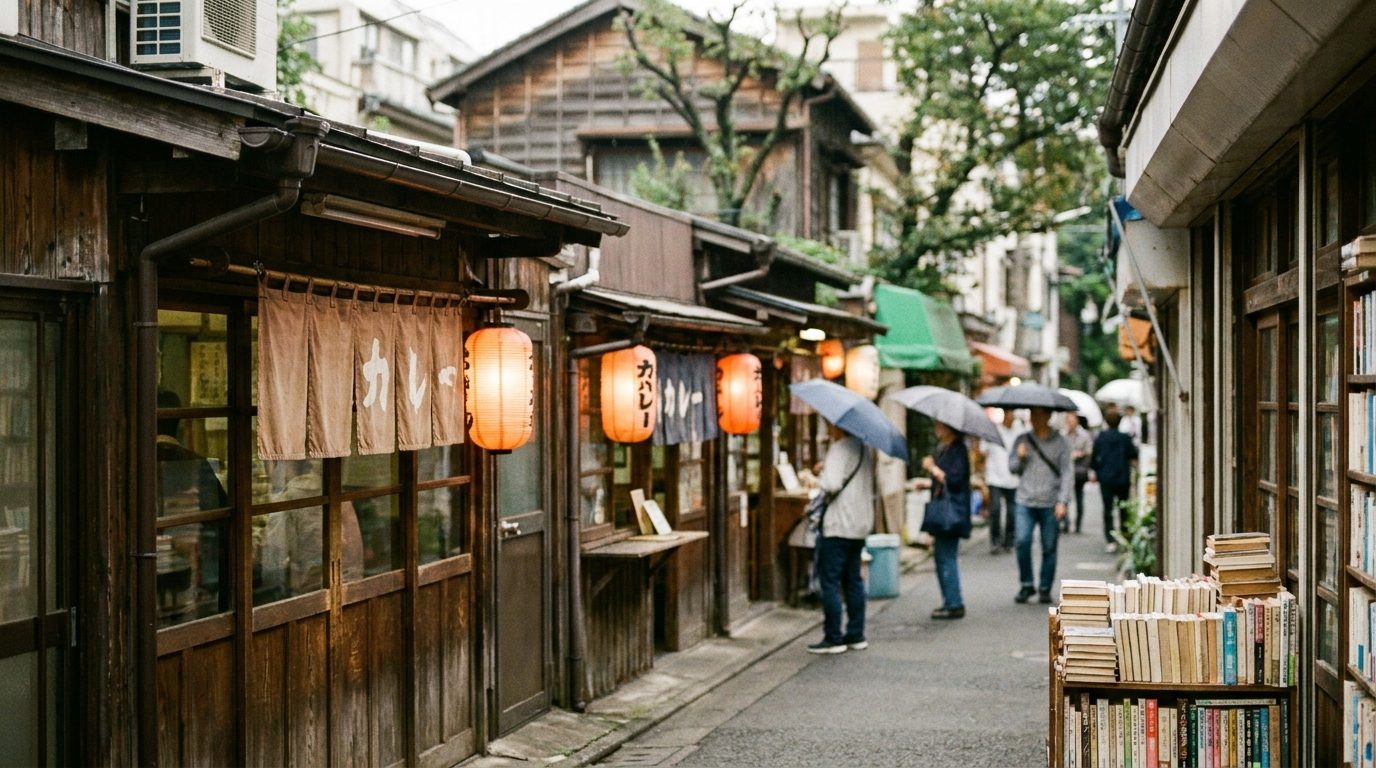
Jinbocho, the used-bookshop district, doubles as Tokyo’s best-known “curry town,” with a high concentration of curry restaurants in a small area. Names worth knowing:
- Bondy — the classic European-style curry, smooth and demi-glace-rich.
- Gavial — curry brought to the table in a small pot that you pour over rice yourself.
- Kitchen Nankai — a dark, savory katsu curry that locals queue for.
- Takeuchi — a modern spice-curry shop, among the highest-rated in the area.
Convenience Stores & Bakeries
For a quick, low-cost taste, grab a kare pan from a bakery or konbini, or a heat-and-eat retort curry from any convenience store shelf.
How to Order at CoCo Ichibanya (Step by Step)
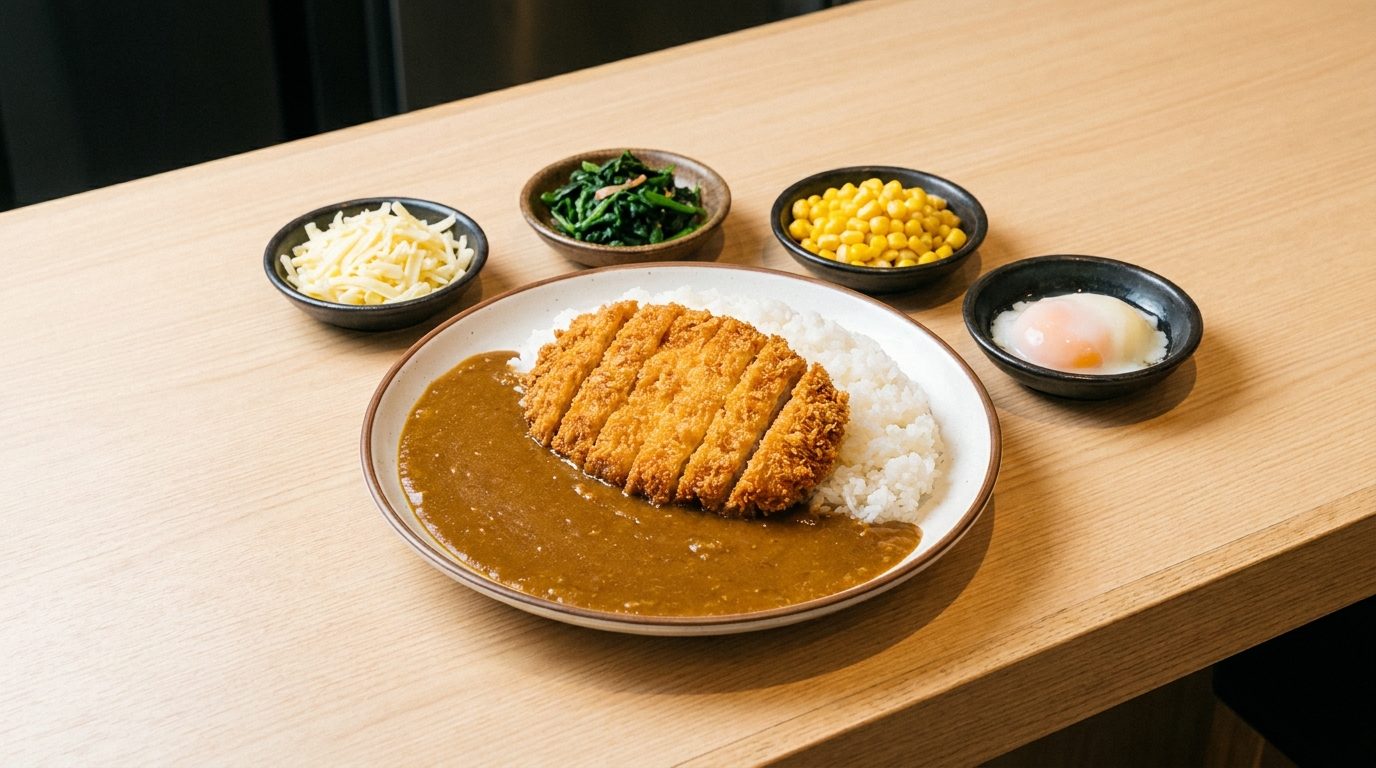
CoCo Ichibanya looks complex because almost everything is adjustable, but the official English guide reduces the order to rice amount, spice level, and optional toppings. Interface and ordering method can differ by branch, so ask staff if the local screen or menu does not match the sequence below.
- Choose your base sauce — pork, beef, or the vegetable-based sauce.
- Set the spice level — the scale runs from 0 upward, roughly to level 10 and beyond at some branches. Levels around 5 and higher are seriously hot. Prefer it milder? You can also add a sweetness level from 1 to 5.
- Pick your rice size — from about 150g up to 400g in 50g steps (and larger in 100g steps). The standard plate is around 300g; a “small” or “mini” curry uses about 150g.
- Add toppings — there are roughly 40 options, including pork cutlet (katsu), fried chicken, cheese, spinach, egg, and corn.
A tip for first-timers: start at the standard spice level. CoCo Ichibanya’s “normal” is already comfortably mild, and you can go hotter next time.
Halal, Vegetarian & Vegan Options
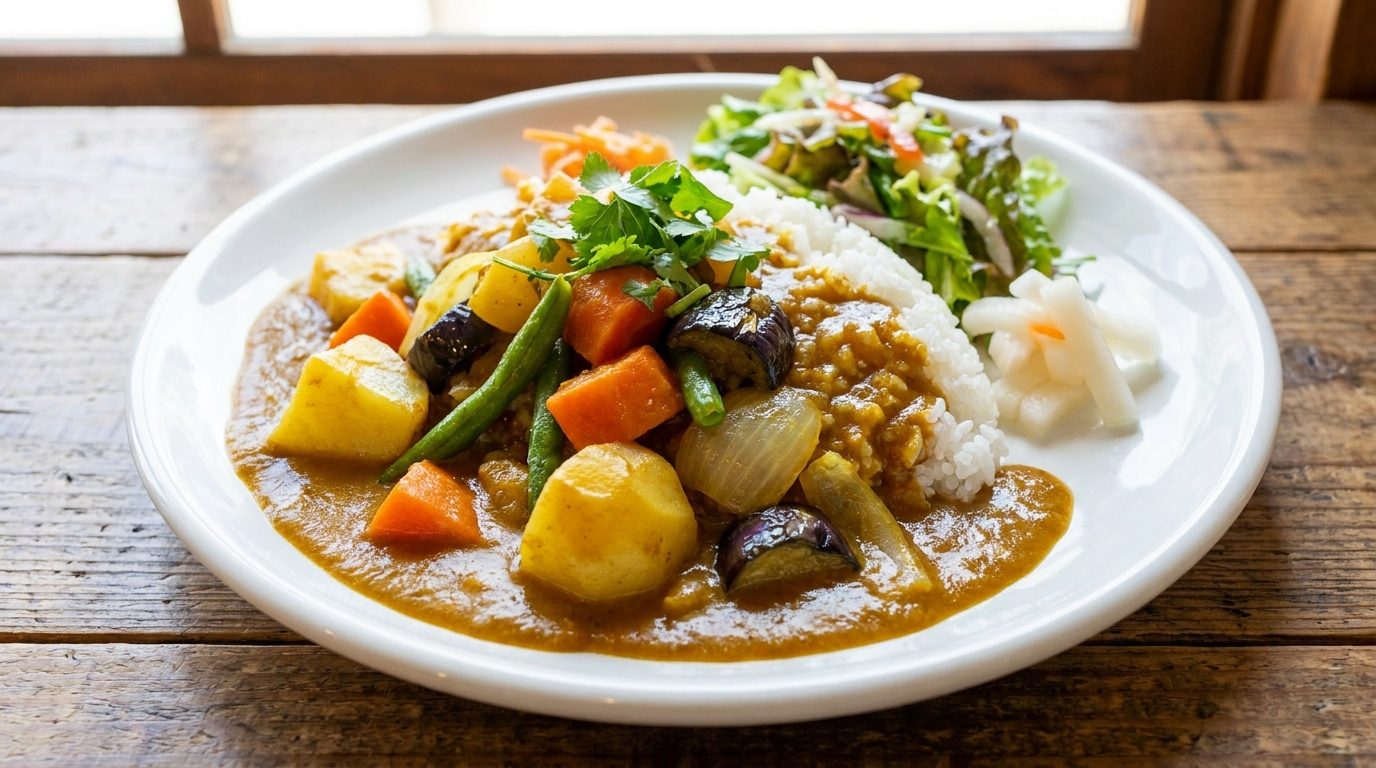
Japan’s standard curry roux often contains animal-derived ingredients, so travelers with dietary restrictions should check before ordering.
- Plant-based: CoCo Ichibanya lists a CoCoICHI Vegetarian Curry made with plant-based ingredients, but some branches do not carry it.
- Allergies and cross-contact: CoCo Ichibanya says unintended mixing can occur through factories, stores, hands, utensils, equipment, and shared fryer oil. Sukiya and Matsuya publish similar cross-contact cautions.
- Halal: plant-based does not automatically mean halal. CoCo Ichibanya does not identify the vegetarian curry as halal certified, Sukiya’s standard curry is officially described as pork curry, and Matsuya’s Founding Beef Curry contains beef, chicken, and pork ingredients.
Check the current CoCo Ichibanya allergen notice, Sukiya allergen PDF, or Matsuya product page before ordering. For dedicated options, use our halal ramen guide. Travelers with serious allergies should also read the Japan food allergy guide.
Price Guide (2026)
| Where | Typical dish | Rough price (¥) |
|---|---|---|
| Sukiya | Curry (mini → large) | ¥450–¥690 |
| Matsuya | Founding Beef Curry | ¥780 for the rice plate; ¥660 is sauce only |
| CoCo Ichibanya | Pork curry (¥646) + 1 topping | ¥700–¥1,100 |
| Hinoya | Katsu curry | around ¥900 |
| Kare pan (bakery/konbini) | 1 piece | ¥150–¥300 |
| Jinbocho specialty (Bondy etc.) | European or katsu curry | ¥1,200–¥2,500 |
| Soup curry shop | Soup curry set | ¥1,200–¥2,000 |
Prices vary by branch, toppings, rice size, and sales period. The chain examples above were checked against official menus on July 12, 2026; recheck before ordering.
FAQ
Is Japanese curry spicy?
Generally no. The default is mild and slightly sweet. At customizable chains like CoCo Ichibanya you can raise the heat well past a comfortable level for many diners, but the standard plate is gentle.
Is Japanese curry the same as Indian curry?
No. Japanese curry is roux-based, thicker, sweeter, and served over rice. Indian curry is built on fresh spices and eaten with naan or basmati rice.
Do I need a reservation to eat curry in Tokyo?
For chains and most Jinbocho shops, no. You walk in. Some popular specialty shops have queues at lunch, so arriving early helps.
How much does curry cost in Tokyo?
A chain plate runs about ¥450–¥1,200 (a CoCo Ichibanya pork curry is ¥646), while a sit-down specialty curry in Jinbocho is roughly ¥1,200–¥2,500.
What is katsu curry?
Curry rice topped with a breaded, deep-fried cutlet, commonly pork. It is a popular curry order among visitors.
Where is Tokyo’s “curry town”?
Jinbocho, the used-bookshop district, has one of the city’s highest concentrations of curry restaurants, including famous European-style shops.
Can vegetarians eat curry in Japan?
Sometimes, but not by default. CoCo Ichibanya has a vegetarian curry at selected branches; many other curries contain meat-based stock. Check before ordering.
Is CoCo Ichibanya, Sukiya, or Matsuya curry halal?
Do not assume so. CoCo Ichibanya’s plant-based curry is not presented as halal certified, Sukiya describes its standard curry as pork curry, and Matsuya’s Founding Beef Curry contains pork, chicken, and beef ingredients.
What is curry bread?
Kare pan: curry sealed in dough, breaded, and deep-fried. It is a cheap snack sold at bakeries and convenience stores.
How do I order at CoCo Ichibanya in English?
Use the English or photo menu, or switch the touch-panel to English. You choose a base sauce, spice level, rice size, and toppings.
Prices and product details were checked on July 12, 2026 and may change. Confirm on the official menu when it matters.


Comments