Tokyo Udon 2026: 4 Styles × 4 Bowls — From ¥500 Sanuki Chains to ¥3,000 Inaniwa
Quick Answer
Video preview
Watch the 36-second Maruka Udon video before you choose a Tokyo udon shop.
Tokyo udon ranges from around ¥500 cafeteria bowls at Marugame Seimen chains to ¥3,000-class hand-pulled Inaniwa courses at Sato Yosuke in Ginza. Four regional styles — Sanuki (thick, chewy), Inaniwa (silky, thin), Musashino (extra thick, dipping style), and Kanto kake (medium, soy-based broth) — are all available in Tokyo. The bowl you order matters as much as the shop: Bukkake (cold with poured soy), Zaru (cold dipping), Curry udon, and Tempura udon each suit a different appetite and season.
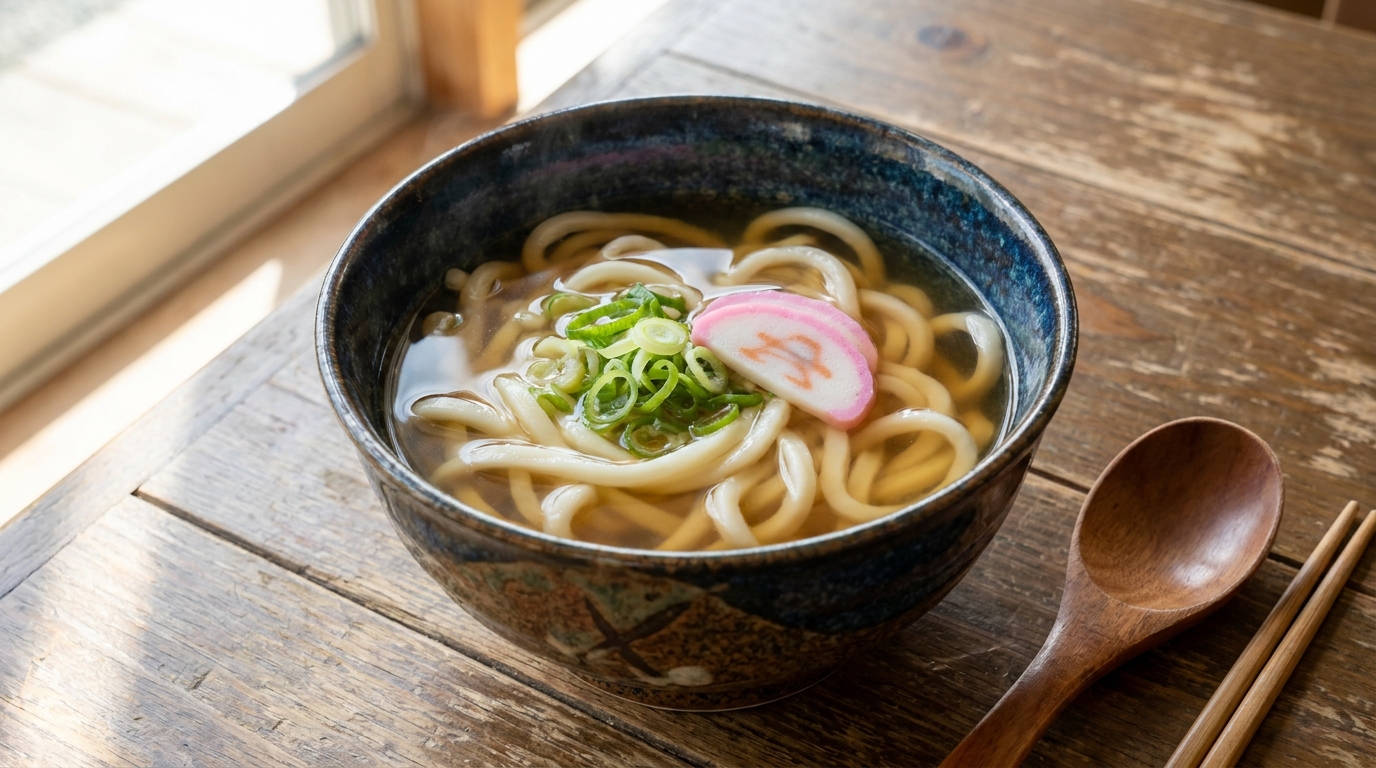
4 Regional Styles at a Glance
Many udon eaters in Tokyo never realize four distinct regional styles sit within walking distance of any major station.
| Style | Texture | Where it’s from | Typical price |
|---|---|---|---|
| Sanuki | Thick, square cross-section, very chewy | Kagawa Prefecture | ¥500–¥1,500 |
| Inaniwa | Thin, silky, hand-pulled | Akita Prefecture | ¥1,800–¥3,500 |
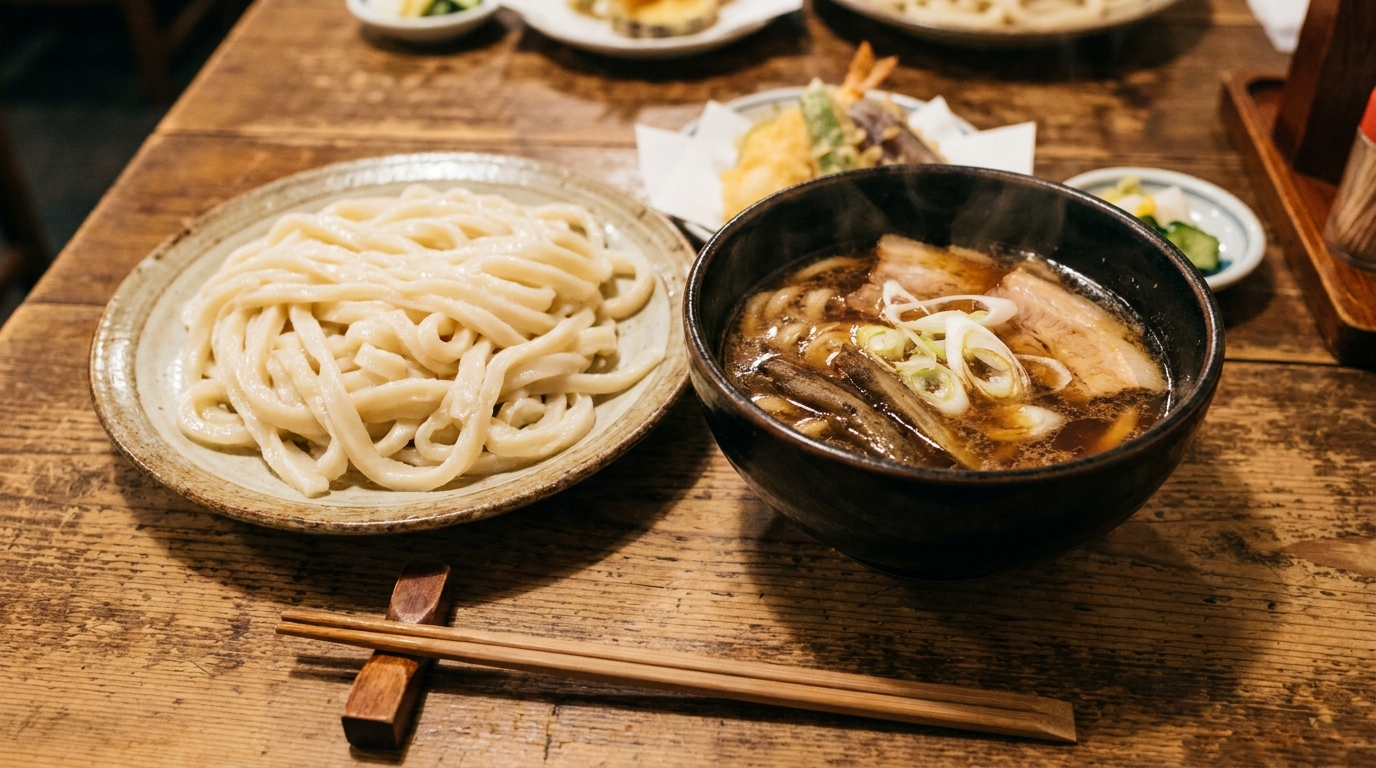
| Musashino | Extra thick, rope-like, dipping style | Western Tokyo / Saitama | ¥900–¥1,500 |
| Kanto kake | Medium, soft, dark soy broth | Eastern Tokyo / classic soba shops | ¥600–¥1,200 |
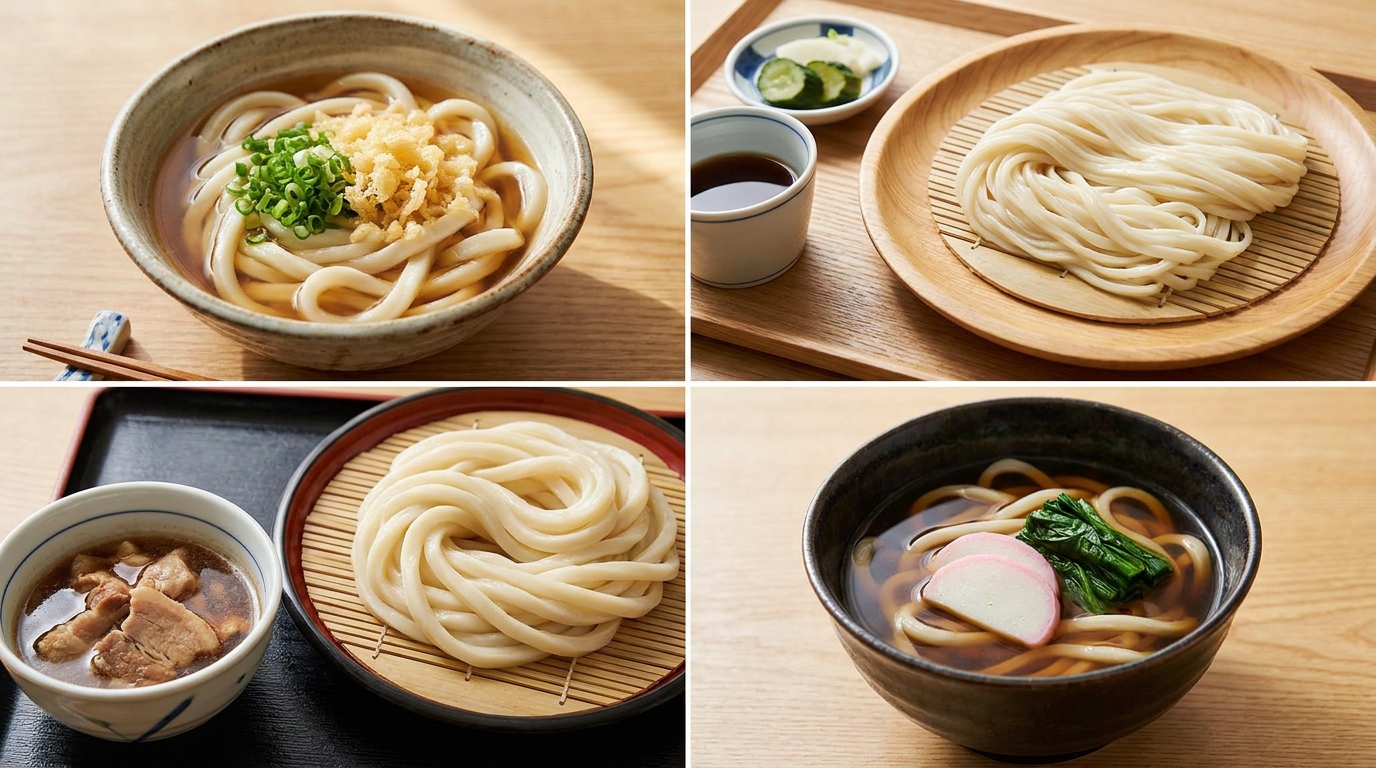
Sanuki is the default at chains like Marugame Seimen and at most “udon specialist” counter shops opened in the last twenty years. Inaniwa is the luxury cousin — silky, almost vermicelli-thin, sold by old houses from Akita that operate flagship shops in Ginza and depachika basements. Musashino is the local hero around the old Tama area of western Tokyo and across Saitama, eaten cold with a hot soy-pork dipping broth (niku-jiru). Kanto kake is the everyday bowl at neighborhood soba shops, with a darker soy broth than Kansai (Osaka) udon and a medium-soft noodle.
4 Bowls You’ll See on the Menu
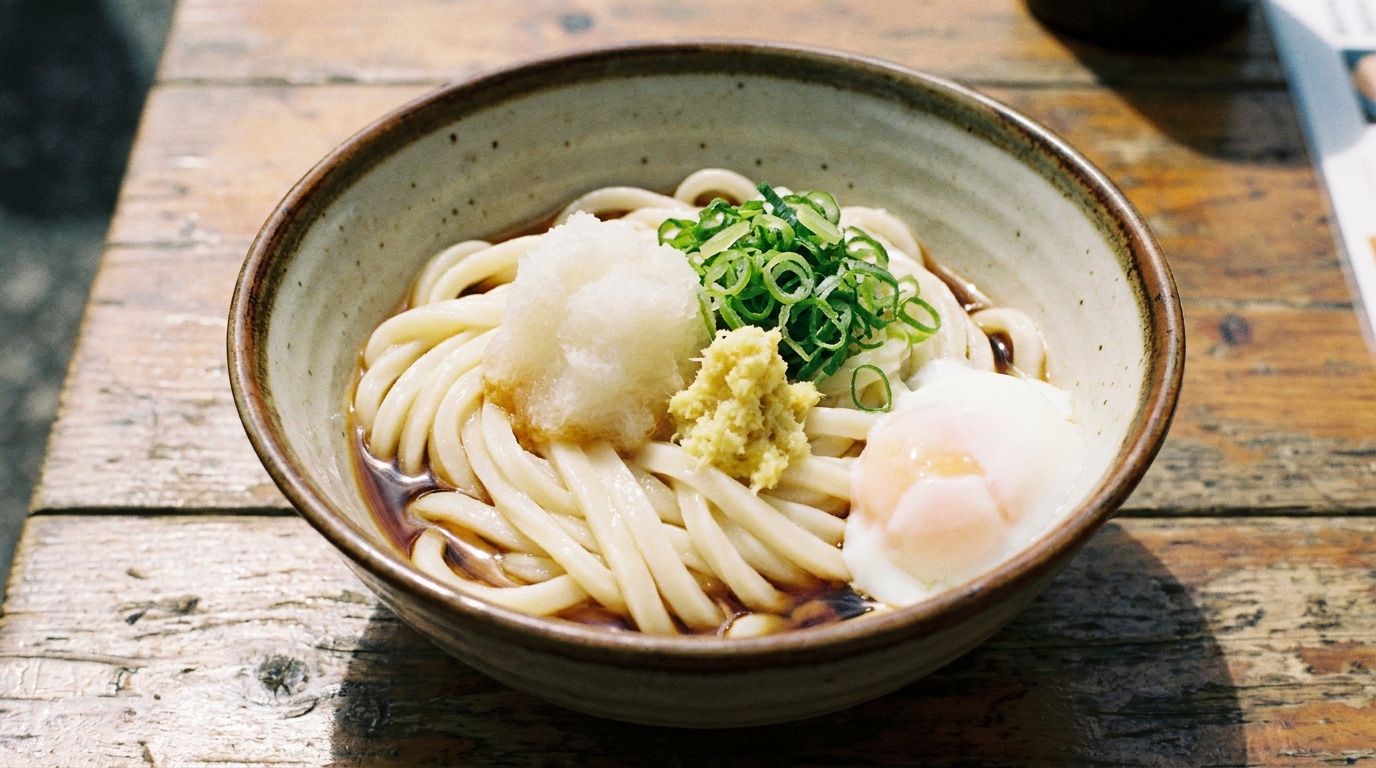
Bukkake is cold or warm udon with a small amount of strong soy-dashi poured over it (no broth pool). Toppings include grated daikon, scallion, ginger, and sometimes a soft-boiled egg. It is the easiest entry point in summer.
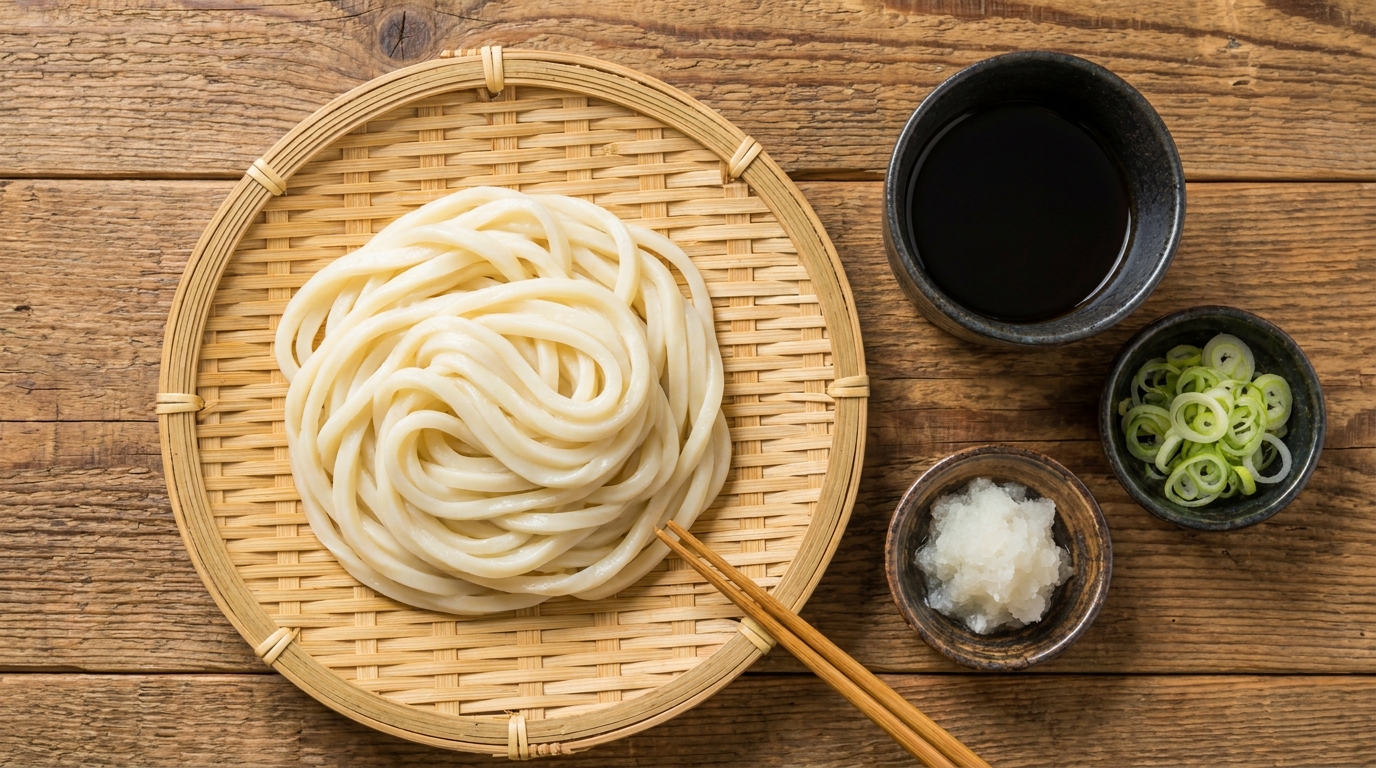
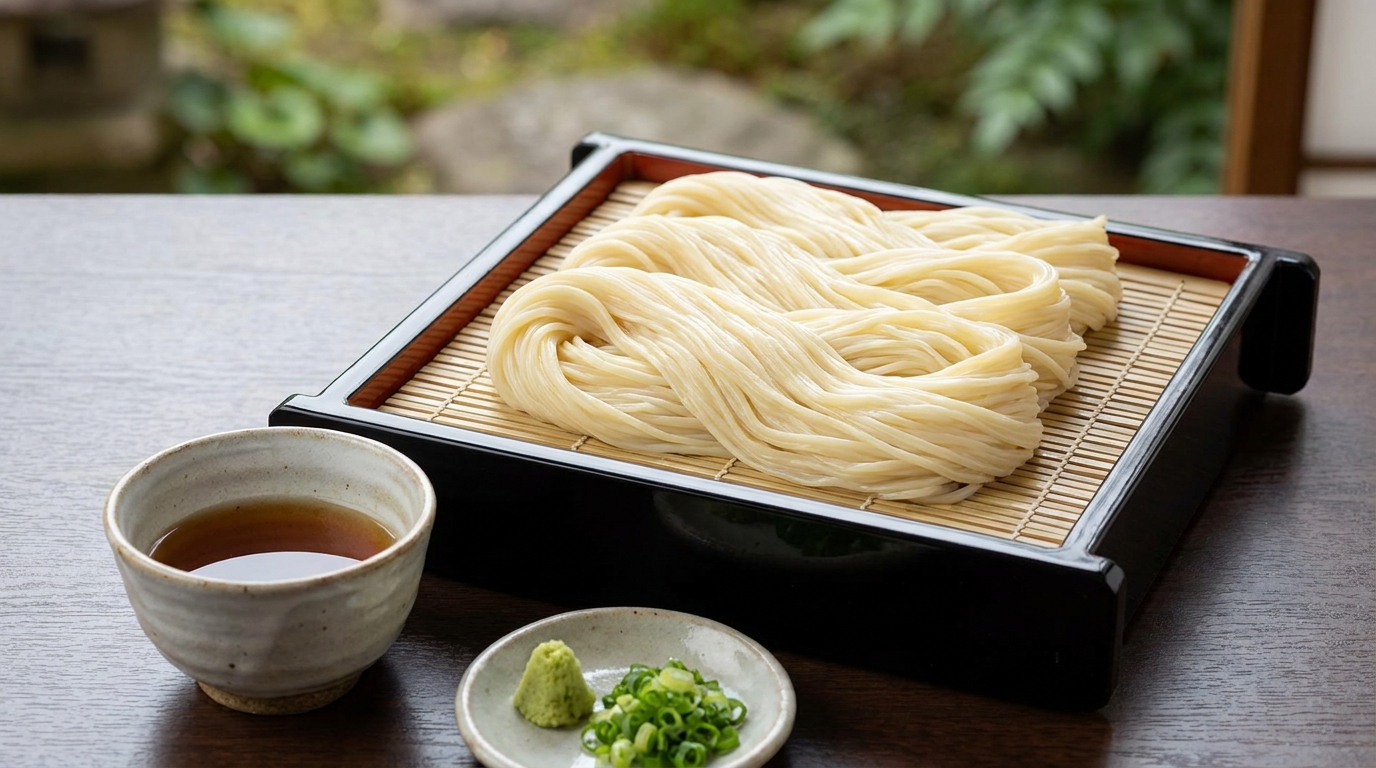
Zaru is cold udon served on a bamboo or lattice mat, with a small cup of tsuyu dipping sauce on the side. You dip each bite. It is closest to cold soba and is the most photogenic bowl.
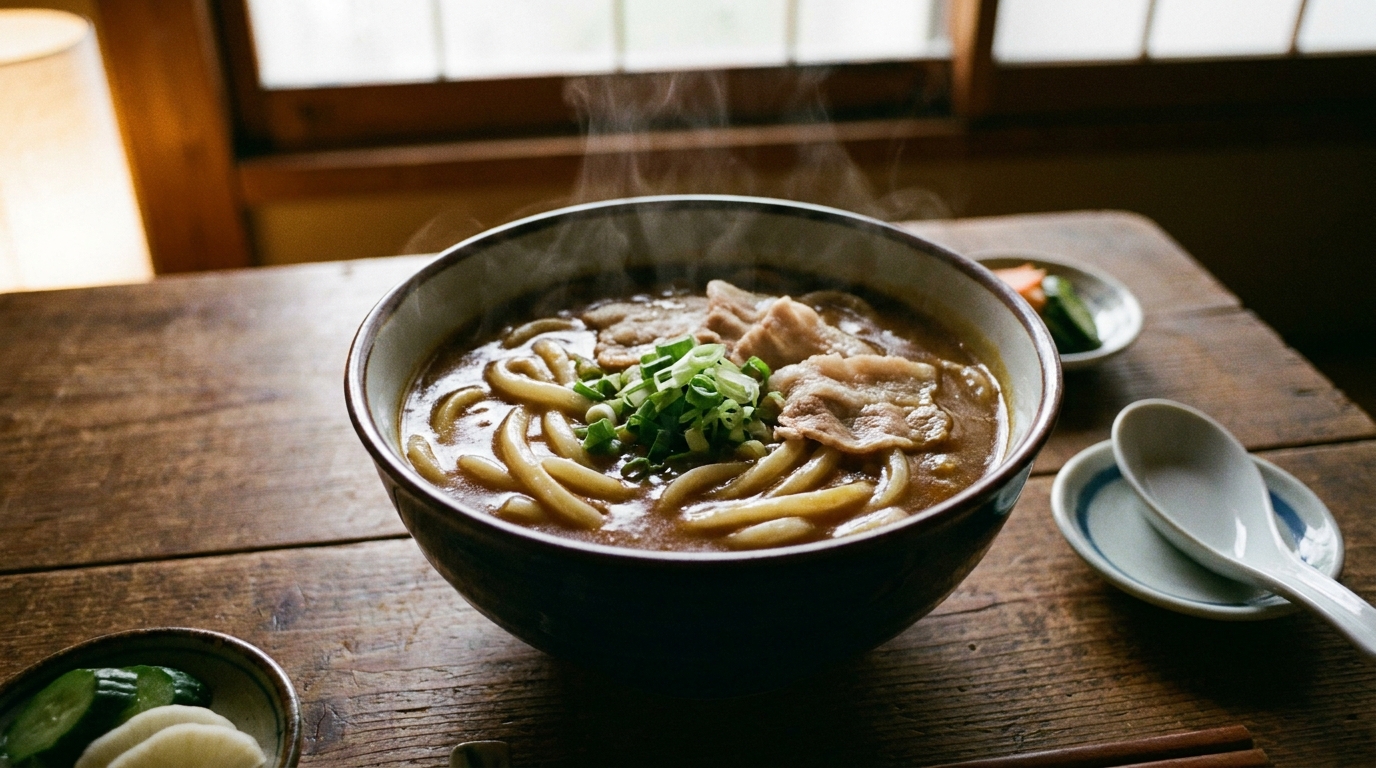
Curry udon is hot udon in a thick Japanese curry broth, often with thin slices of pork or beef. It is rich, messy, and beloved in winter. Many shops set out paper bibs at the table for a reason.
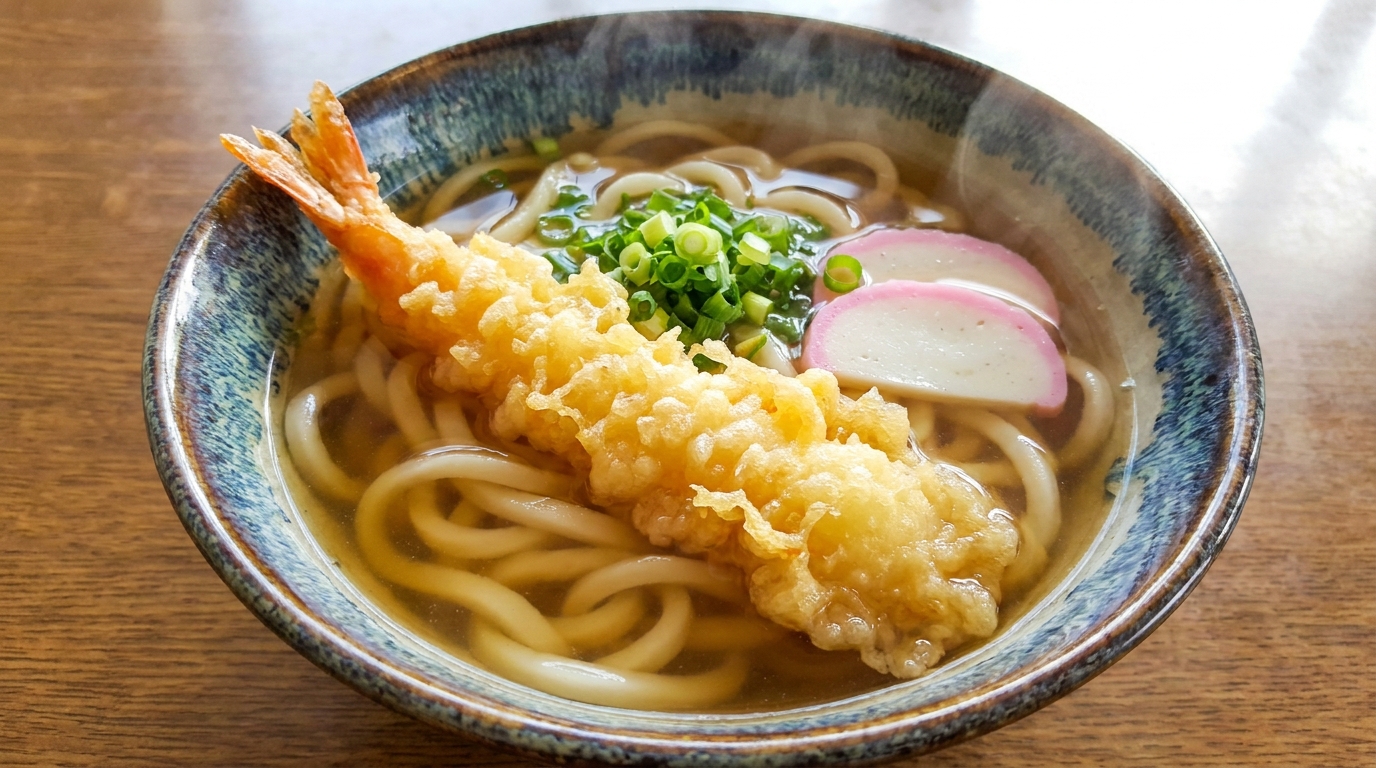
Tempura udon is hot kake udon with a piece of tempura — most often a single large shrimp — placed across the bowl. Some shops add seasonal vegetables (kakiage). Eat the tempura first while it is still crisp.
Beyond these four, two more are common enough to mention. Nabeyaki is a personal hot-pot version with egg, chicken, mushrooms, and shrimp tempura, simmered in a small clay pot — comfort food in winter. Kamaage is freshly boiled udon served in its hot cooking water with dipping sauce on the side, common at Sanuki specialist shops.
How to Slurp Without Looking Lost
A few practical notes for first-timers:
- Slurp. Loud slurping is expected at udon and soba shops. It cools the noodles, aerates the broth, and reads as a compliment to the cook. Eating silently can feel picky in this setting.
- Chopsticks, not forks. Even chain shops rarely have forks. Ask the staff if chopsticks are difficult — most counters keep a practice pair.
- Drink the broth at kake shops. At kake-style bowls it is normal to lift the bowl and drink the remaining broth. At bukkake or zaru shops you would not — there is no broth pool.
- Free refills of pickled ginger and grated daikon are common at Sanuki specialist counters. Watch for the small jars near the cashier.
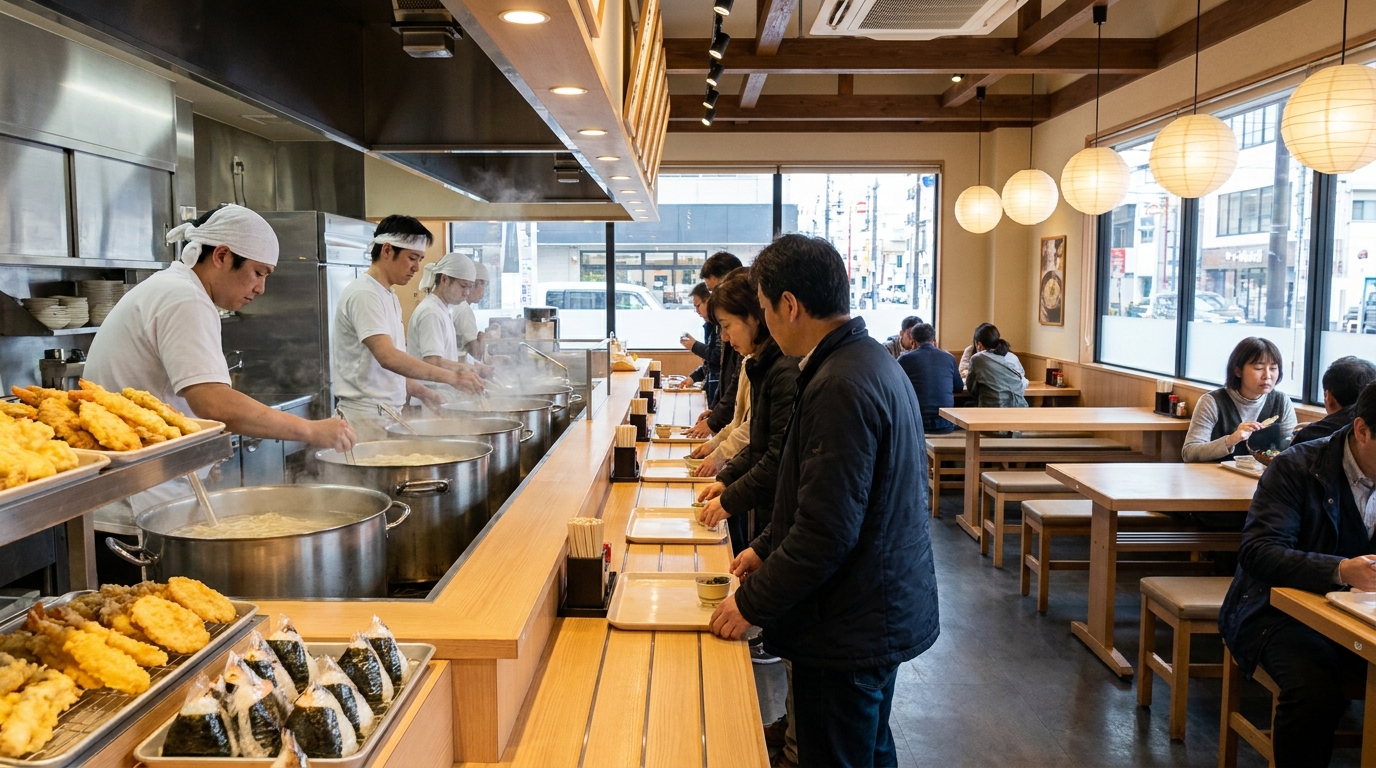
- Pay first at most Sanuki and chain shops. Order at the counter, slide your tray past tempura and rice balls, pay at the end, then find a seat.
5 Verified Udon Shops in Tokyo
These five cover four price tiers and four districts where many tourists already walk.
1. Marugame Seimen — The Reliable Chain
Marugame Seimen runs cafeteria-style Sanuki udon counters across Tokyo (Shibuya, Shinjuku, Tokyo Station Yaesu, Roppongi, Asakusa, and several depachika basements). A basic kake udon is around ¥390–¥500, and a tempura set with one or two pieces is around ¥600–¥900. You order at the counter, watch the udon being boiled to order, then slide your tray past tempura, rice balls, and side dishes before paying. English-language pictures on the counter and IC card payment are standard.
- Nearest station: most major hubs have a branch (Shibuya, Shinjuku, Tokyo, Ueno, Roppongi)
- Reservation: not accepted
- Card: yes, plus Suica/PASMO and major mobile wallets
- English menu: pictures with English captions
2. Udon Maruka (うどん 丸香) — Sanuki Specialist in Kanda
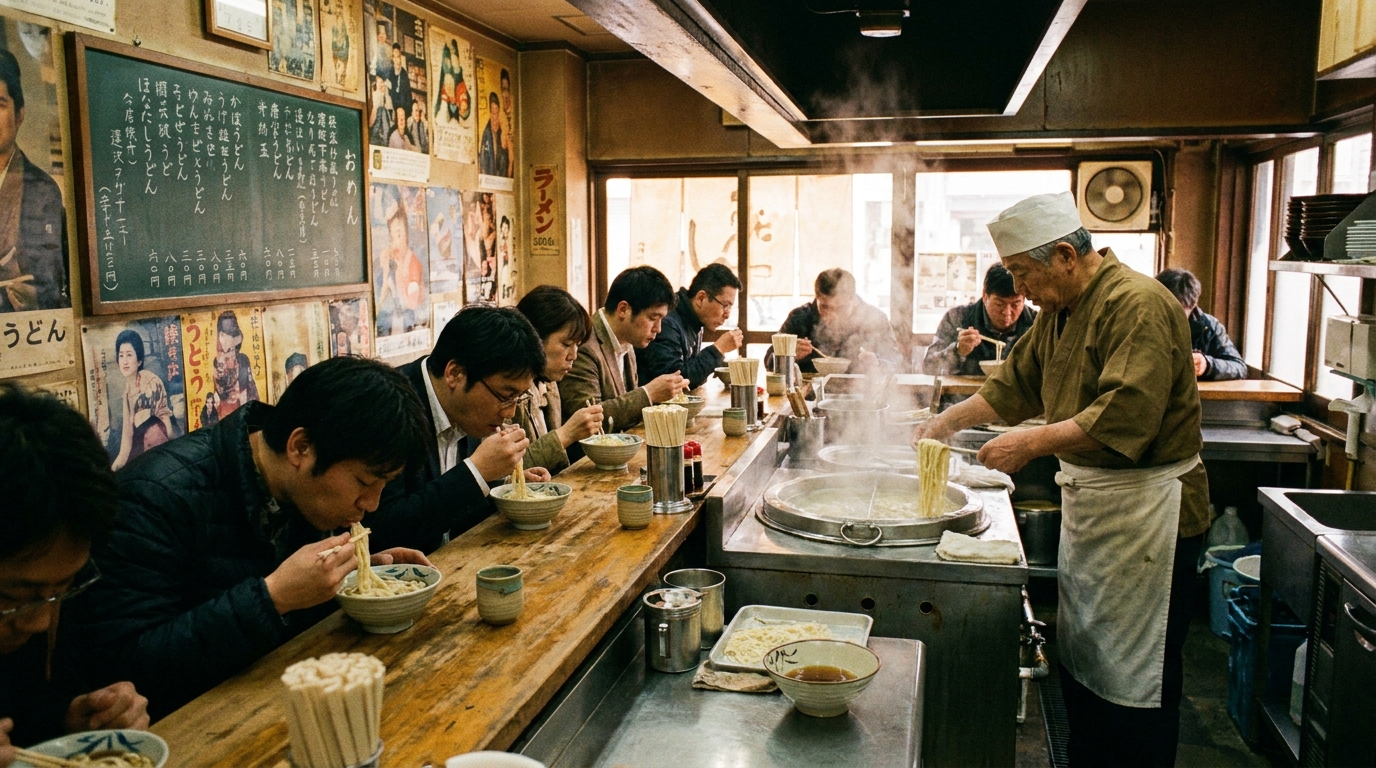
A few blocks from Jinbocho Station, Maruka was selected for Tabelog’s “Udon Hyakumeiten” (Top 100 Udon) EAST 2024. Cold kake (hiya-kake) is around ¥500, and tempura toppings such as chikuwa-ten run around ¥250. The shop is closed on Sundays and most national holidays; lunch lines move fast but build out the door at peak. Cash only; 26 counter seats; reservations not accepted.
- Nearest station: Jinbocho (Toei Mita / Hanzomon / Shinjuku lines), ~4 min walk
- Hours: Mon–Fri 11:00–16:00 and 17:00–20:30 (L.O. 19:30); Sat 11:00–15:30 (L.O. 14:30); closed Sun and holidays
- Reservation: walk-in only
- Card: cash only
- English menu: limited; staff point at the chalkboard
3. Tokyo Mentsudan (東京麺通団) — Sanuki Counter Style in Shinjuku
A few minutes from Shinjuku Station’s west exit, Tokyo Mentsudan is a cafeteria-style Sanuki specialist run by a long-time Sanuki noodle ambassador. Small bukkake is around ¥360, and most bowls and toppings keep the budget around ¥1,000–¥1,500 for lunch or dinner. Self-service: order at the counter, slide your tray past tempura and onigiri, pay at the end.
- Nearest station: Shinjuku (JR / Tokyo Metro Marunouchi / Toei Oedo), west exit, ~5 min walk
- Reservation: walk-in only
- Card: mixed; cash recommended
- English menu: limited; picture-based ordering supported
4. Sato Yosuke Ginza — The Inaniwa Institution
Founded in 1860, Sato Yosuke is the most recognized name in Inaniwa udon. The Ginza branch serves regular menu items in the ¥1,300–¥1,500 range — including ni-aji seiro (two-flavor cold udon) at ¥1,300 and yakumi tsuke-udon at ¥1,400 — while tempura sets and full courses run ¥2,000–¥3,500. Noodles are hand-pulled in Akita, dried, and shipped to Tokyo — silky, almost translucent. Reservations are accepted via the shop website or by phone, and AutoReserve offers English-language booking.
- Nearest station: Ginza (Tokyo Metro Ginza / Marunouchi / Hibiya lines) or Yurakucho (JR), ~3 min walk
- Hours: Lunch 11:30–15:00; Dinner 17:00–22:00
- Reservation: recommended for dinner, walk-in friendly at lunch
- Card: yes
- English menu: yes (course menus translated)
5. Tsurutontan Ginza — The Photogenic Big Bowl
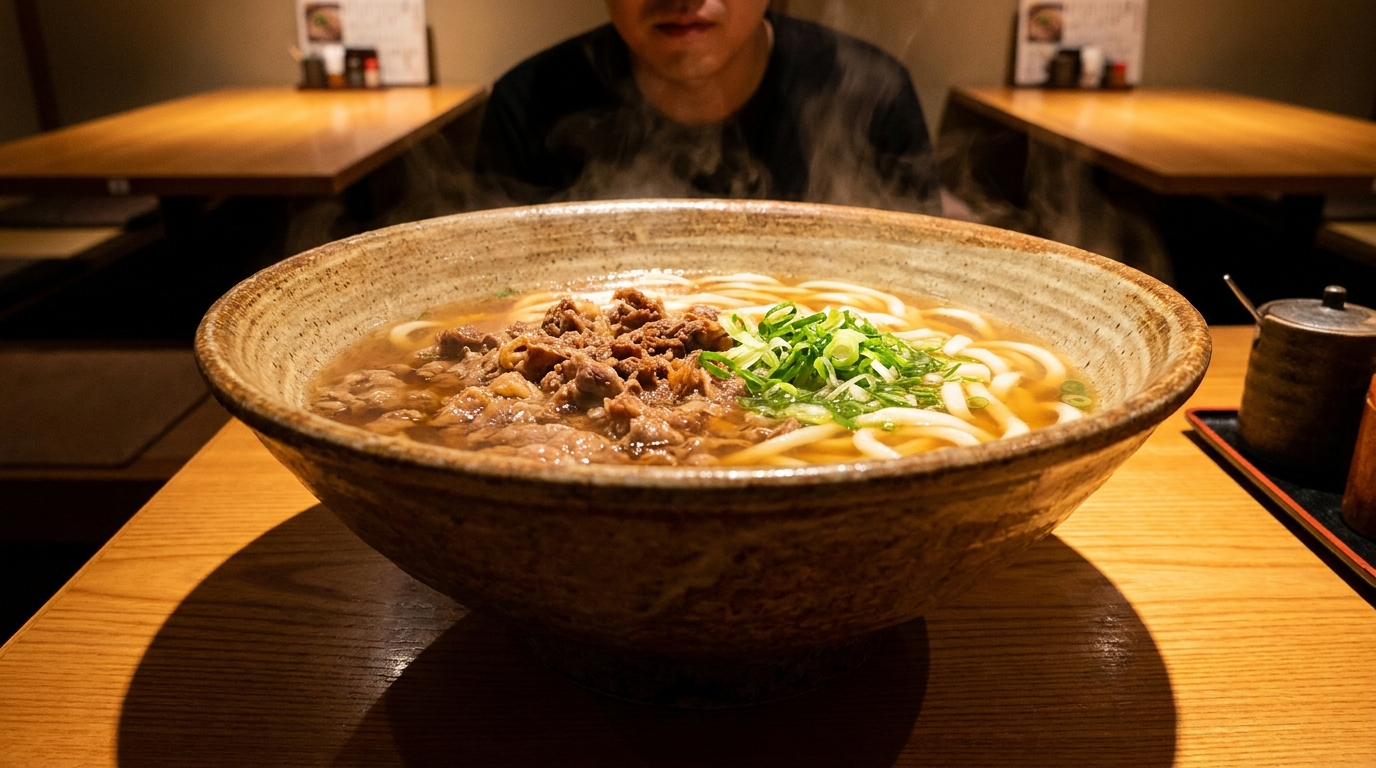
Tsurutontan, originally from Osaka, runs a flagship branch in Tokyu Plaza Ginza (10F) with the famous oversized bowls — wider than a face, designed for sharing photos. The kake udon is around ¥980, the curry udon is around ¥1,280, and seasonal specials (with crab or beef) can reach ¥2,500. Late-night hours (until ~04:00 most days) make it useful after evening activities. English menu, foreign cards, and English-language online reservations are all in place.
- Nearest station: Ginza (Tokyo Metro Ginza / Marunouchi / Hibiya, exit C2/C3), ~1 min walk; Yurakucho (JR), ~4 min walk
- Reservation: walk-in friendly, online booking available
- Card: yes
- English menu: yes
Reservations, English Menus, and Payment
Reservations. Chains and most Sanuki specialist counters are walk-in only. Sato Yosuke, Tsurutontan, and a handful of high-end Inaniwa specialists accept online or phone reservations. Hotel concierges can call most shops on your behalf — give them the shop name in Japanese script and the date range.
English menus. Chain shops have picture menus with English captions. Sanuki counter shops typically use a chalkboard with prices only — staff are accustomed to pointing. Sato Yosuke and Tsurutontan have full English menus.
Payment. Chains and depachika venues take all major cards, IC transit cards, and mobile wallets. Small Sanuki counter shops and old neighborhood soba shops are often cash-only. Withdraw cash at a 7-Eleven or Japan Post Bank ATM before walking into a counter shop.
Tipping. No tipping in Japan. Pickled ginger and grated daikon refills are free.
FAQ
Q1. What is the difference between udon and soba?
Udon is made from wheat flour — thicker noodles, white in color. Soba is made from buckwheat flour — thinner, grayish-brown. Many shops sell both, but specialist udon shops focus only on udon and tend to serve more regional styles.
Q2. Which style should I try first?
For first-time visitors, Sanuki at a Marugame Seimen counter is the easiest, cheapest, and lets you watch udon being boiled to order. Once you know the texture, try Inaniwa at Sato Yosuke for contrast — the difference between the two is striking.
Q3. What is the difference between kake, bukkake, and zaru?
Kake is hot udon submerged in a broth pool. Bukkake has only a small amount of strong sauce poured over the noodles, no pool. Zaru is cold udon served on a bamboo mat with a small cup of tsuyu sauce for dipping.
Q4. Can I get gluten-free or vegetarian udon?
Udon is wheat-based, so it is not gluten-free. Vegetarian versions are limited — most broths use bonito (fish flake) dashi. Marugame Seimen has a vegetable bowl option at some branches; ask for “katsuo nashi” (without bonito) at independent shops, but availability varies.
Q5. Is loud slurping really expected?
Yes. Quiet eating is acceptable but slurping is normal and welcome at udon and soba shops. It is not considered rude.
Q6. How do I order at a Sanuki counter shop?
Order at the counter (kake, bukkake, zaru, or curry), tell the staff hot or cold, watch them boil and assemble the bowl, then slide your tray past the tempura and oden counter. Pay at the cashier at the end and find a seat.
Q7. Are reservations needed for dinner?
Chains, Sanuki specialists, and most counter shops are walk-in only. Sato Yosuke, Tsurutontan, and a few high-end Inaniwa houses accept online or phone reservations and tend to fill up at peak hours.
Q8. How much does an udon meal cost in Tokyo?
A Marugame Seimen basic kake is around ¥390–¥500, a tempura set is ¥600–¥900. A Sanuki specialist counter bowl with one or two toppings is around ¥800–¥1,200. Regular Inaniwa menu items at Sato Yosuke Ginza are around ¥1,300–¥1,500, with tempura sets and courses ¥2,000–¥3,500. A Tsurutontan large bowl with seasonal toppings can reach ¥2,500.
Q9. Can I find udon near Tokyo Station or Shinjuku?
Tokyo Station has Marugame Seimen branches and several udon counters inside the station building. Shinjuku has Marugame Seimen counters and Tokyo Mentsudan (Sanuki cafeteria-style) within walking distance from the west exit. For dedicated Sanuki specialists, take the Toei Mita or Hanzomon Line a few stops to Jinbocho for Maruka.
Q10. What is the difference between Sanuki udon in Tokyo and at home overseas?
Sanuki udon outside Japan is often made from frozen blocks and boiled at restaurant level. In Tokyo, Sanuki specialist counters cut and boil fresh udon to order, with the boiler visible behind the counter. The texture difference is substantial — chewier, more elastic, with a slightly slick surface.
Related Reading
- Tokyo Tonkatsu Guide 2026
- Tokyo Sushi Guide 2026
- Tokyo Yakiniku 2026: Why Wagyu Should Be Your Splurge
- Tokyo Restaurant Booking 2026
- Halal Ramen in Tokyo 2026
About the Author
Basabasa is a former sergeant major in the Japan Ground Self-Defense Force who runs the gourmet account @basabasa_gourmet (12,000+ followers on Tabelog) and is a Google Local Guide Level 10. He has eaten his way through Tokyo’s udon counter scene for over a decade and writes about Japan for first-time foreign visitors.
Last updated: 2026-05-28. Prices and shop conditions verified at the time of writing. Reservation policies and payment methods change — please confirm with the venue before your visit. Images in this article are AI-generated illustrations and do not depict the actual venues described.

Comments