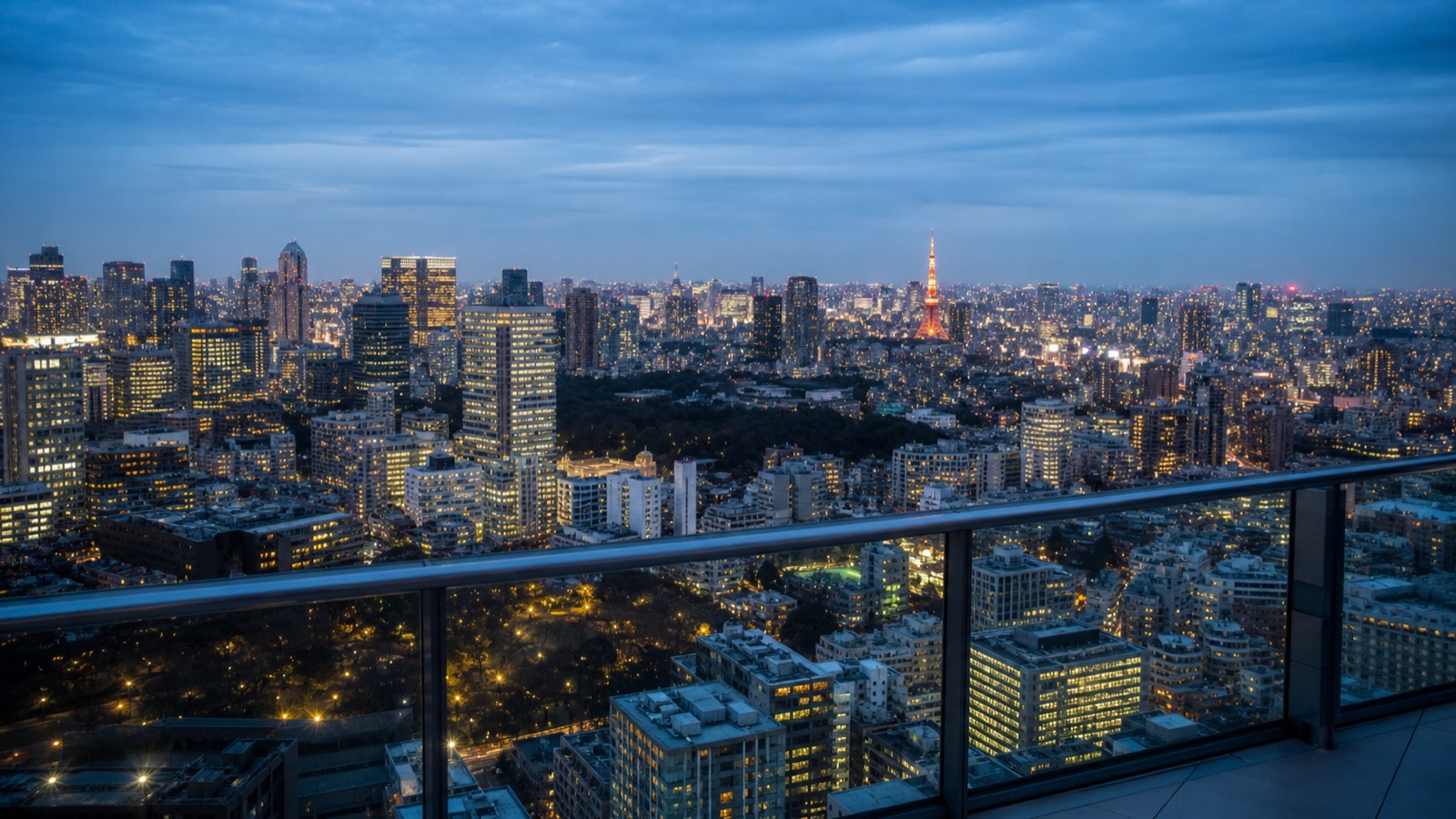
Tokyo has observation decks at very different prices, heights, and levels of booking difficulty. Paying more does not automatically give you the right experience: an open-air sunset deck, a free indoor view, and Japan’s tallest tower solve different travel needs.
- Quick Answer: Which Tokyo Observation Deck Should You Choose?
- Seven Tokyo Views Compared
- How to Choose in 30 Seconds
- 1. SHIBUYA SKY: For an Open-Air Tokyo Moment
- 2. Tokyo Metropolitan Government Building: The Free Shinjuku Choice
- 3. Tokyo Skytree: For Height and East Tokyo
- 4. Tokyo City View: The Indoor Roppongi Night View
- 5. Sunshine 60 Observatory TENBOU-PARK: The Lower-Cost Indoor Option
- 6. Tokyo Tower: When the Landmark Is the Experience
- 7. Yebisu Garden Place Sky Lounge: A Free Evening Add-On
- Sunset Booking Strategy
- Free vs Paid: What Are You Actually Paying For?
- Photography, Bags, and Visibility
- Simple Tokyo View Itineraries
- What to Do If the Weather Turns Bad
- Frequently Asked Questions
- Which Tokyo observation deck is easiest without a reservation?
- Which observation deck is the highest?
- Is SHIBUYA SKY a good choice on a rainy day?
- Which deck gives a good view of Tokyo Tower?
- Can I see Mount Fuji from Tokyo observation decks?
- Should I book a sunset ticket?
- Are tripods allowed?
- Which option is suitable for a rainy day with children?
- Final Recommendation
- Official Links
Quick Answer: Which Tokyo Observation Deck Should You Choose?
Choose SHIBUYA SKY if you want an open-air rooftop and the Shibuya Crossing view. Choose Tokyo Skytree if height is your priority. Choose the Tokyo Metropolitan Government Building if you want a broad city view for free and can accept a possible queue. Choose Tokyo City View if you want an indoor night view with Tokyo Tower in the foreground.
For a lower-cost indoor option, use Sunshine 60 Observatory TENBOU-PARK. Choose Tokyo Tower when visiting the landmark itself matters as much as the view. Use the Yebisu Garden Place Sky Lounge for a free, casual stop that pairs easily with dinner.
If clouds hide the skyline, paying for height may not improve the view. Keep a free or indoor backup and check the facility’s official page before leaving your hotel.
Prices and operating details below were checked on July 11, 2026. Facilities use dynamic schedules, event closures, and date-based prices, so confirm the official site before visiting.
Seven Tokyo Views Compared
Observation deck: SHIBUYA SKY / Adult price checked: Online ¥2,700 before 15:00; ¥3,400 from 15:00 / Reservation: Strongly recommended / Indoor / outdoor: Indoor + open-air roof / Choose it for: Shibuya, sunset, rooftop photos / Main risk: Roof restrictions or closure in bad weather
Observation deck: Tokyo Metropolitan Government Building / Adult price checked: Free / Reservation: Not accepted / Indoor / outdoor: Indoor / Choose it for: Free wide view and Shinjuku / Main risk: Queue, scheduled closures
Observation deck: Tokyo Skytree / Adult price checked: From ¥1,800 for 350 m; from ¥3,000 for 350 m + 450 m online / Reservation: Recommended / Indoor / outdoor: Indoor / Choose it for: Maximum height and east Tokyo / Main risk: Clouds can erase the advantage of height
Observation deck: Tokyo City View / Adult price checked: ¥2,200 online; ¥2,400 at counter / Reservation: Recommended / Indoor / outdoor: Indoor / Choose it for: Tokyo Tower view and Roppongi / Main risk: Events can restrict part of the viewing area
Observation deck: Sunshine 60 TENBOU-PARK / Adult price checked: ¥700-¥1,200 depending on date / Reservation: Required on some busy dates / Indoor / outdoor: Indoor / Choose it for: Low-cost, relaxed visit / Main risk: Date-based pricing and entry controls
Observation deck: Tokyo Tower / Adult price checked: ¥1,500 Main Deck; ¥3,300 online Top Deck Tour / Reservation: Recommended for Top Deck / Indoor / outdoor: Indoor / Choose it for: Visiting the Tokyo icon itself / Main risk: Top Deck may close in poor weather
Observation deck: Yebisu Garden Place Sky Lounge / Adult price checked: Free / Reservation: Not normally required / Indoor / outdoor: Indoor / Choose it for: Casual night view before or after dinner / Main risk: Temporary event closures
The table compares the simplest adult ticket that gives a meaningful view. Special packages, child prices, seasonal events, and combination tickets are not included.
How to Choose in 30 Seconds
You want one famous Tokyo photo
Pick SHIBUYA SKY. It places you directly above Shibuya and gives you an open-air setting that feels different from a conventional window-lined observatory. The trade-off is that sunset inventory is harder to secure and roof access depends on weather.
You do not want to pay
Start with the Tokyo Metropolitan Government Building. It reaches 202 meters and does not require a ticket reservation. Yebisu Garden Place is easier to treat as a short evening stop, but it is not a full observation-deck experience with a 360-degree route.
You want the highest possible view
Choose Tokyo Skytree. The Tembo Deck is at 350 meters and the Tembo Galleria reaches 450 meters. Check cloud height before paying for the upper level; on a hazy or rainy day, the city may be clearer from a lower indoor deck.
You want Tokyo Tower in the view
Choose Tokyo City View in Roppongi. Tokyo Tower is part of the skyline rather than the building you are standing inside. This is particularly useful after dark, when the tower becomes a visual anchor.
You are traveling with children or need a slower break
Consider Sunshine 60 TENBOU-PARK. The indoor park-style layout is easier to use as a rest stop than an exposed rooftop. It is also much cheaper than the major landmark decks on ordinary weekdays.
You have not checked the weather
Choose an indoor deck with other nearby activities: Tokyo City View with Roppongi Hills, Tokyo Skytree with Solamachi, Sunshine 60 with Sunshine City, or Tokyo Tower with Foot Town. An indoor deck does not ensure a clear view, but it prevents wind or rain from closing an outdoor rooftop around you.
1. SHIBUYA SKY: For an Open-Air Tokyo Moment
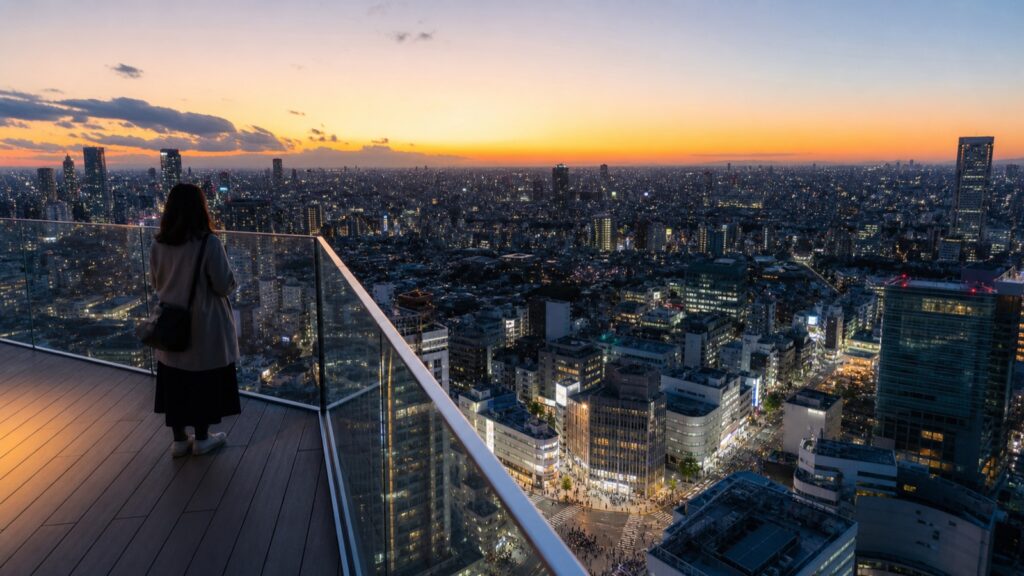
SHIBUYA SKY occupies the top of Shibuya Scramble Square, 229 meters above ground. The attraction combines an indoor gallery and transition spaces with an open-air rooftop. From the edges, visitors can look down toward Shibuya Crossing and across Tokyo.
Adult online admission is ¥2,700 for entry before 15:00 and ¥3,400 from 15:00. Counter prices, when inventory remains, are ¥3,000 and ¥3,700 respectively. The published hours are 10:00-22:30, with last admission at 21:20.
Book online if sunset is important. An online sellout also means adult tickets will not be available at the counter. Arrive with enough time for entry procedures and storage: bags and loose items are restricted on the rooftop, and the official site recommends using lockers before entering the roof area.
Choose this if: the rooftop atmosphere and Shibuya view matter more than price.
Plan B: if strong wind or rain limits the roof, use the indoor gallery but do not expect it to reproduce the open-air experience. If the weather forecast already looks poor, switch to Tokyo City View or visit the free Yebisu Garden Place Sky Lounge later in the day.
Pair this visit with the Shibuya Quick Guide.
2. Tokyo Metropolitan Government Building: The Free Shinjuku Choice
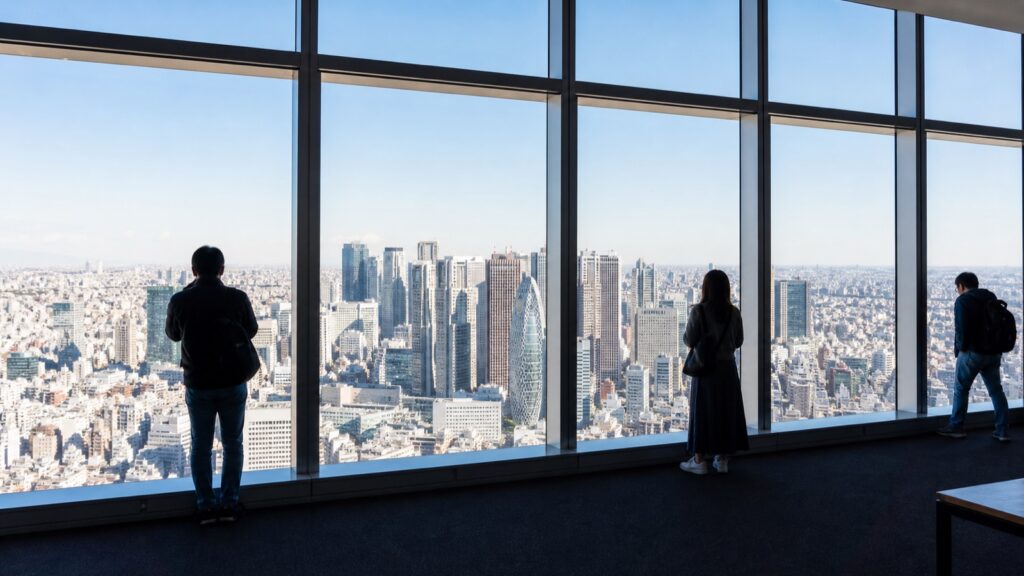
The Tokyo Metropolitan Government Building has two observatories on the 45th floor, about 202 meters above ground. Admission is free and advance reservations are not accepted.
The South Observatory is generally open 9:30-22:00, with entry closing 30 minutes before the observatory closes. It normally closes on the first and third Tuesday of each month, adjusted when those dates are holidays. The North Observatory normally operates until 17:30 and closes on the second and fourth Monday; it may remain open later when the South Observatory is closed. Building inspections and year-end holidays create additional closure dates.
The observatories can show Tokyo Skytree, central Tokyo, western Shinjuku, and Mount Fuji when visibility is good. The official information page says winter, especially December through February, offers more days with clear Fuji visibility.
There is no ticket price to lose when the sky is hazy, but there may be a wait. Tripods and similar supports are not permitted.
Choose this if: your priority is a free, substantial skyline view.
Plan B: check which tower is open before arriving. If the queue is too long, continue sightseeing in Shinjuku and return later, or use the Yebisu Garden Place Sky Lounge after sunset.
Continue with the Shinjuku Quick Guide.
3. Tokyo Skytree: For Height and East Tokyo
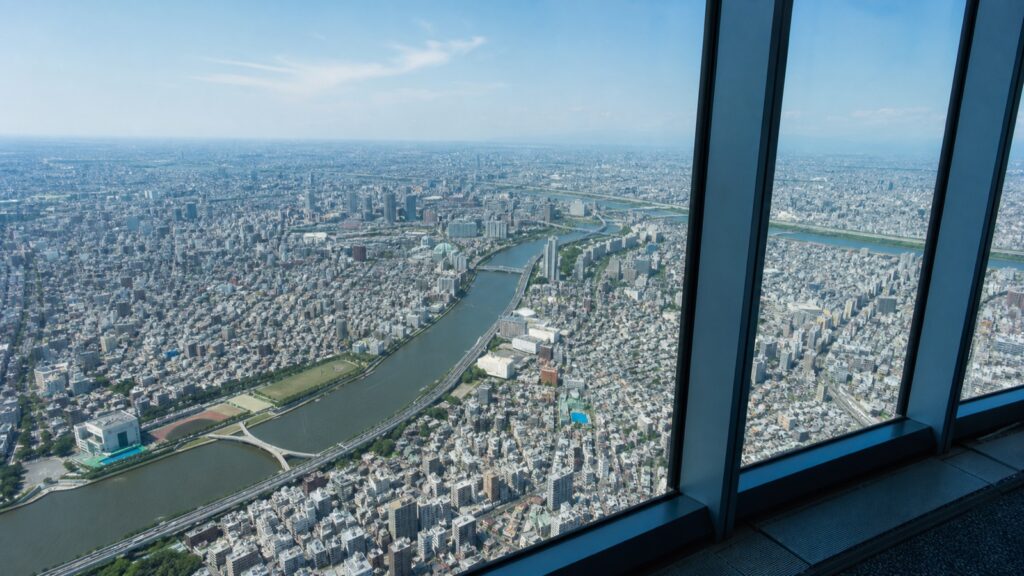
Tokyo Skytree offers two observation levels: the Tembo Deck at 350 meters and the Tembo Galleria at 450 meters. It is the clearest choice when the height itself is part of your Tokyo checklist.
Online adult tickets start at ¥1,800 for the Tembo Deck and ¥3,000 for the combined Tembo Deck and Tembo Galleria ticket. Prices vary by visit date. Buying at the fourth-floor counter or ticket machine adds a ¥500 issuance fee per ticket. The separate same-day upgrade from the Tembo Deck to the Tembo Galleria is ¥1,400 for adults, subject to entry controls.
Operating hours change by date; the official calendar states that last admission is one hour before closing. Reserved entry is useful during weekends and holidays. The facility does not provide refunds or partial discounts simply because rain, haze, or clouds reduce visibility.
Choose this if: you want the highest public observation route among these seven choices or are already visiting Asakusa and Oshiage.
Plan B: on a cloudy day, start with the 350-meter deck rather than assuming the 450-meter level will improve visibility. Combine the trip with Solamachi shops, the aquarium, or the Asakusa Quick Guide.
4. Tokyo City View: The Indoor Roppongi Night View
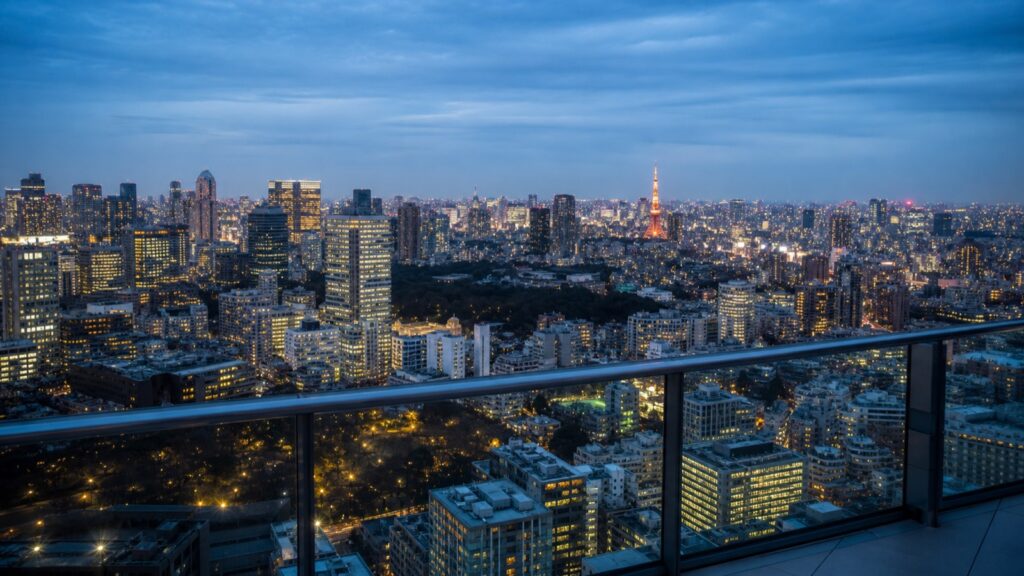
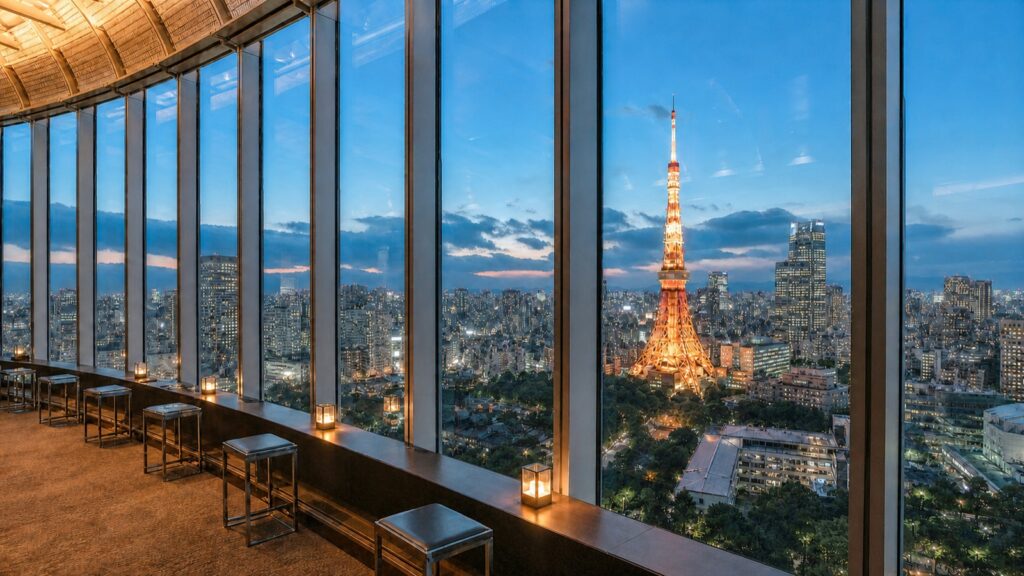
Tokyo City View is on the 52nd floor of Roppongi Hills Mori Tower, 250 meters above sea level. Its tall glass walls create an indoor panorama that includes Tokyo Tower, Tokyo Skytree, and, on clear days, Mount Fuji.
Current standard adult admission is ¥2,200 online or ¥2,400 at the counter. Published hours are 10:00-22:00, with last admission at 21:30. Exhibitions and events are part of the space, and the facility warns that sections of the view can be restricted or temporarily closed during event preparation.
Tripods and monopods have been prohibited since June 20, 2025. Check the monthly operations notice before choosing a specific viewing direction for photography.
Choose this if: you want an indoor sunset or night view with Tokyo Tower in the frame.
Plan B: if an event blocks the side you want, ask staff which viewing sections remain open before entering. Roppongi Hills, Mori Art Museum, and the surrounding area still give you alternatives without another train ride.
Use the Roppongi Quick Guide to build the rest of the visit.
5. Sunshine 60 Observatory TENBOU-PARK: The Lower-Cost Indoor Option
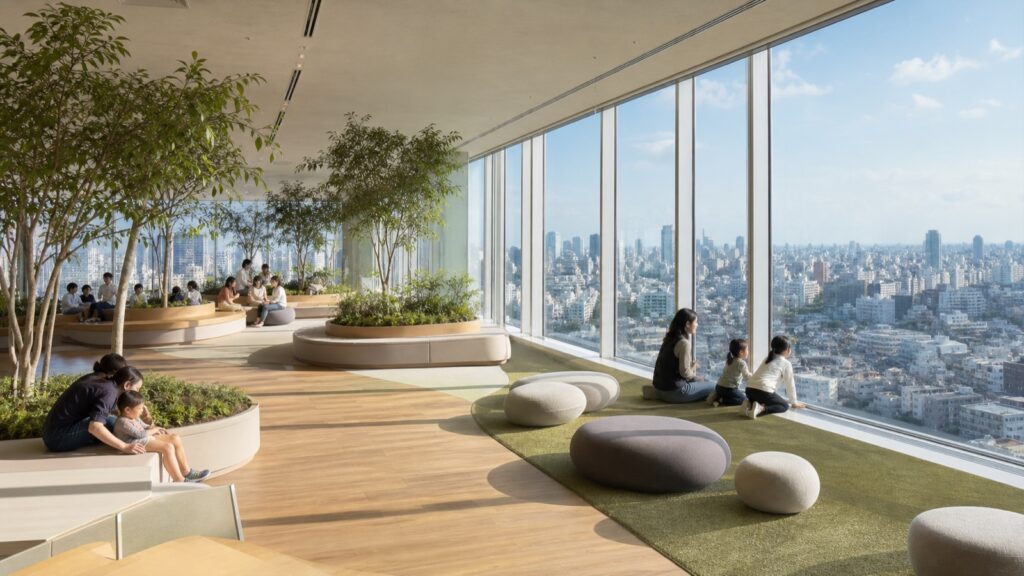
Sunshine 60 Observatory TENBOU-PARK sits on the 60th floor of Sunshine City in Ikebukuro. Its indoor park concept makes it useful for families, slower travel days, or anyone who wants to sit down instead of moving through a tightly managed photo route.
Adult admission is ¥700 on ordinary weekdays, ¥900 on weekends, holidays, and designated busy days, and ¥1,200 during peak periods. The general schedule is 11:00-21:00, with last admission at 20:30. Prices and hours can change for events.
Weekends, public holidays, and designated dates may require a date-and-time-specific web ticket or numbered entry ticket. Check the date calendar rather than relying on the basic weekday price.
Choose this if: you want a relaxed indoor view at a lower price than the landmark decks.
Plan B: if timed entry is restricted, use Sunshine City first and return at the next available time. The surrounding complex gives families more indoor options during rain or summer heat.
6. Tokyo Tower: When the Landmark Is the Experience
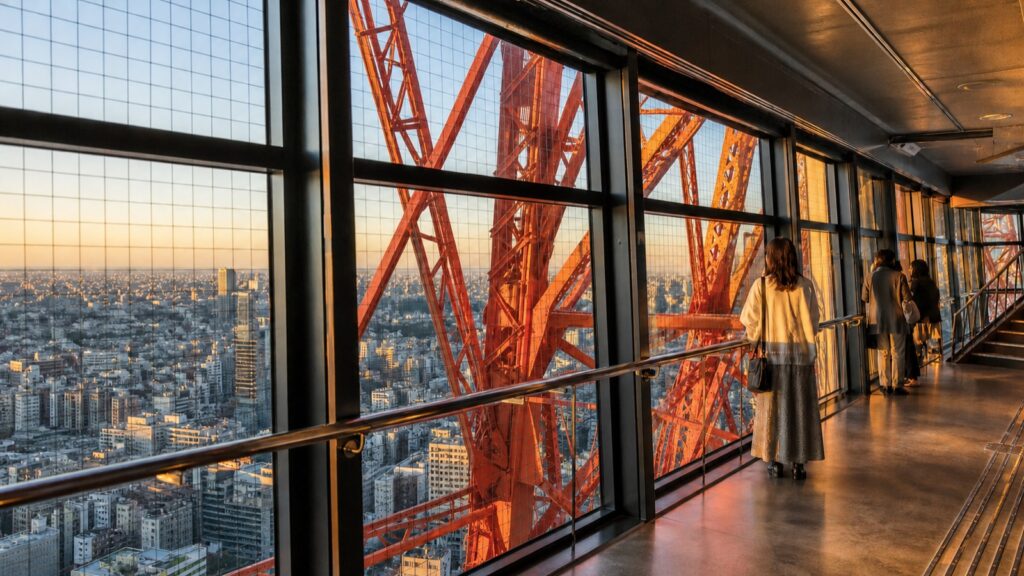
Tokyo Tower has a Main Deck at 150 meters and a Top Deck experience that reaches 250 meters. Standing inside Tokyo Tower changes the purpose of the visit: this is less about photographing the tower in the skyline and more about experiencing the landmark itself.
Adult admission to the 150-meter Main Deck is ¥1,500. It operates 9:00-23:00, with last admission at 22:30. The Top Deck Tour costs ¥3,300 for adults online or ¥3,500 at the counter. The tour operates 9:00-22:45, with the last tour published at 22:15.
The Top Deck can close because of poor weather or other operational restrictions. Visitors who mainly want Tokyo Tower in their photos should choose Tokyo City View instead.
Choose this if: Tokyo Tower itself is one of your must-visit landmarks.
Plan B: choose a Main Deck ticket if the Top Deck closes or the weather does not justify the higher price. Nearby Zojoji and Shiba Park can still provide exterior views of the tower.
7. Yebisu Garden Place Sky Lounge: A Free Evening Add-On
The Sky Lounge on the 38th floor of Yebisu Garden Place Tower is a free viewing space beside the restaurant floors. It is better treated as a short stop than a destination that requires a full sightseeing block.
The official Yebisu Garden Place editorial site states that the lounge can generally be used until 23:30. Temporary event closures occur; for example, the complex has already announced a temporary closure on August 8, 2026. Check the event calendar before relying on it as your sole evening plan.
Choose this if: you want a free night view before or after dinner in Ebisu.
Plan B: use the restaurants and public spaces in Yebisu Garden Place, or take the Yamanote Line to Shinjuku for the Tokyo Metropolitan Government Building if its South Observatory is still accepting visitors.
Sunset Booking Strategy
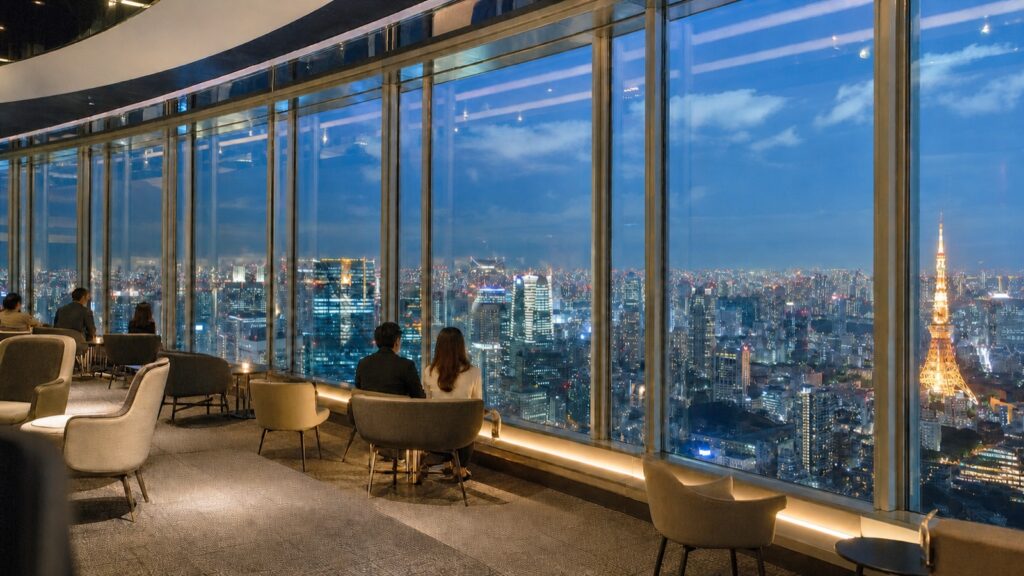
Sunset is the hardest time to improvise. For SHIBUYA SKY, Tokyo Skytree, Tokyo City View, or the Tokyo Tower Top Deck Tour, reserve first and build dinner around the ticket rather than doing the reverse.
Aim to enter roughly one hour before the published sunset time. This gives you time to clear entry procedures, find the direction you want, and watch the city move from daylight through twilight into night. Sunset inventory does not guarantee visible color: western clouds can block the sun even when it is not raining.
For a no-reservation plan, start with the Tokyo Metropolitan Government Building in late afternoon and keep Yebisu Garden Place as a later free backup. Neither option guarantees zero waiting or uninterrupted access, so confirm the same-day status.
Free vs Paid: What Are You Actually Paying For?
A paid ticket can buy height, an open-air roof, timed crowd control, interior design, or a landmark experience. It does not buy clear weather.
Choose a paid deck when a specific feature matters:
- SHIBUYA SKY for the rooftop and Shibuya setting.
- Tokyo Skytree for 350- and 450-meter height.
- Tokyo City View for the Roppongi angle and Tokyo Tower view.
- Tokyo Tower for the landmark experience.
- Sunshine 60 for an affordable indoor park-style visit.
Choose a free deck when you mainly want to see the city and can be flexible about timing. The Tokyo Metropolitan Government Building provides the more complete observation-deck experience. Yebisu Garden Place works better as a convenient add-on.
Photography, Bags, and Visibility
Do not assume tripods are allowed. The Tokyo Metropolitan Government observatories and Tokyo City View prohibit tripods and monopods. Other venues apply their own rules, especially during busy periods and special events.
At SHIBUYA SKY, loose belongings are restricted on the rooftop. Use the provided storage route and avoid planning a rooftop shoot with equipment you cannot secure.
For indoor decks, dark clothing can reduce reflections in the glass. Move away from bright screens and interior lights when possible, but do not block paths or occupy a viewing position for a long period.
Before buying an expensive same-day ticket, check:
- Cloud cover and visibility, not just the rain icon.
- The official operating notice.
- Sunset time if you want both day and night views.
- Whether your preferred side of the deck is open.
- The ticket’s cancellation and late-arrival rules.
Simple Tokyo View Itineraries
Shibuya afternoon and sunset
Walk Shibuya in the afternoon, enter SHIBUYA SKY about an hour before sunset, and eat after the timed visit. This keeps the ticket as the fixed point of the day.
Shinjuku without a ticket
Use the Shinjuku Quick Guide, check the live observatory status, then visit the Tokyo Metropolitan Government Building. If the line is long, continue the walking route and return later.
Asakusa and Tokyo Skytree
Visit Asakusa earlier in the day, then move to Oshiage for a reserved Skytree entry. The east-Tokyo location makes this pairing more efficient than crossing the city to Shibuya on the same afternoon.
Roppongi art and night view
Combine Roppongi Hills or an art museum with Tokyo City View. Check the event schedule because exhibitions can affect both ticket value and which viewing areas are available.
What to Do If the Weather Turns Bad
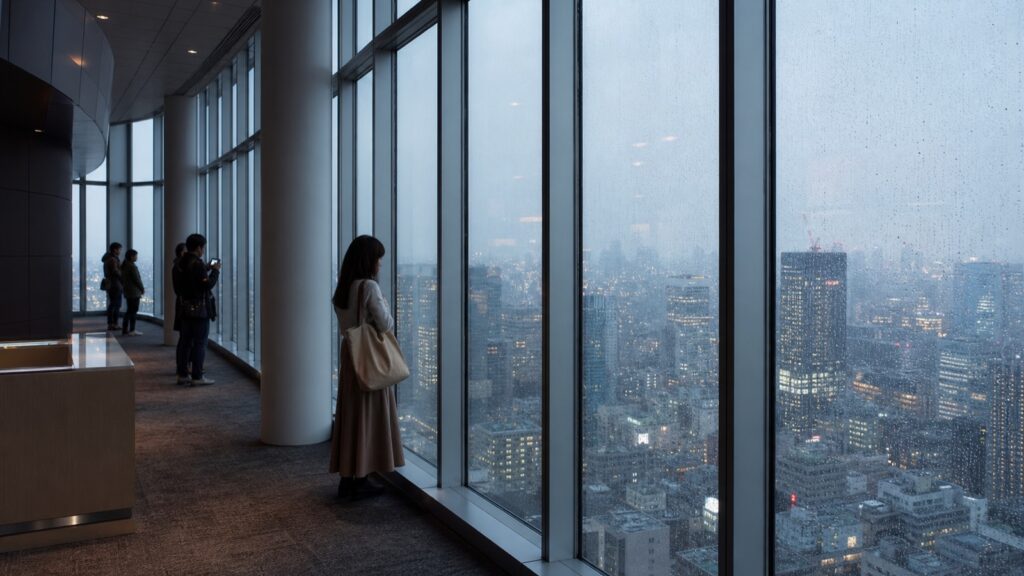
Rain does not automatically close indoor observation decks, but low clouds can make the view poor. SHIBUYA SKY may restrict the outdoor roof, while Tokyo Tower’s Top Deck may close under poor conditions. Tokyo Skytree does not refund tickets merely because visibility is reduced.
If visibility is the primary purpose of your visit, delay the paid deck and use a free option later. If the building experience matters too, an indoor deck can still work as part of a larger complex visit.
Read the Japan Rain and Typhoon Plan when severe weather may affect trains as well as observation decks.
Frequently Asked Questions
Which Tokyo observation deck is easiest without a reservation?
The Tokyo Metropolitan Government Building and Yebisu Garden Place Sky Lounge do not normally require reservations. Both can have closures, and the government observatory may have a queue.
Which observation deck is the highest?
Among these seven choices, Tokyo Skytree reaches the highest public level, with the Tembo Galleria at 450 meters.
Is SHIBUYA SKY a good choice on a rainy day?
The indoor sections can remain available, but the open-air roof may be restricted or closed because of rain or wind. Choose it in bad weather when the indoor experience still justifies the ticket for you.
Which deck gives a good view of Tokyo Tower?
Tokyo City View is the most direct choice in this comparison because Tokyo Tower appears prominently in the Roppongi skyline. Yebisu Garden Place also offers a free city view that can include the tower.
Can I see Mount Fuji from Tokyo observation decks?
It is possible from several decks when visibility is good. The Tokyo Metropolitan Government Building notes that colder, clearer winter conditions provide more opportunities, but no facility can guarantee a Fuji view.
Should I book a sunset ticket?
Yes, for the major paid decks. SHIBUYA SKY sunset slots are particularly sensitive to availability. Entering about an hour before sunset lets you see daylight, twilight, and city lights if the weather cooperates.
Are tripods allowed?
Rules differ. The Tokyo Metropolitan Government observatories and Tokyo City View prohibit tripods and monopods. Check the official photography rules for each venue before carrying equipment.
Which option is suitable for a rainy day with children?
Sunshine 60 TENBOU-PARK is a practical lower-cost indoor choice, while Tokyo Skytree and Roppongi Hills provide larger indoor complexes around their decks. Visibility may still be limited by clouds.
Final Recommendation
For a first Tokyo trip, choose one paid signature view and keep one free backup. A practical combination is SHIBUYA SKY or Tokyo City View as the reserved main event, with the Tokyo Metropolitan Government Building or Yebisu Garden Place available on another day.
Do not buy several expensive observation tickets simply to repeat the same cloudy skyline. Match the deck to the experience you actually want, check the official conditions, and keep enough flexibility to move the view to a clearer day.
Comments