- Quick Answer
- Why New Year Needs a Different Japan Itinerary
- The Date-by-Date Risk Map
- Book the Trip-Defining Train First
- Build a Closure-Proof Day
- Cash, Cards and Phone Power
- The 72-Hour Verification Checklist
- A Practical Plan B for January 1
- When to Use the Japan Visitor Hotline
- What to Confirm Again in December 2026
- Final Take
- FAQ
- Is Japan closed from December 29 to January 3?
- Is January 1, 2027 a public holiday in Japan?
- Will trains run on New Year’s Day?
- When can I reserve a Shinkansen seat?
- Should I book hotels early for New Year?
- Will restaurants and convenience stores be open?
- How much cash should I carry?
- What can I do if my planned attraction is closed?
- Official Sources
Quick Answer
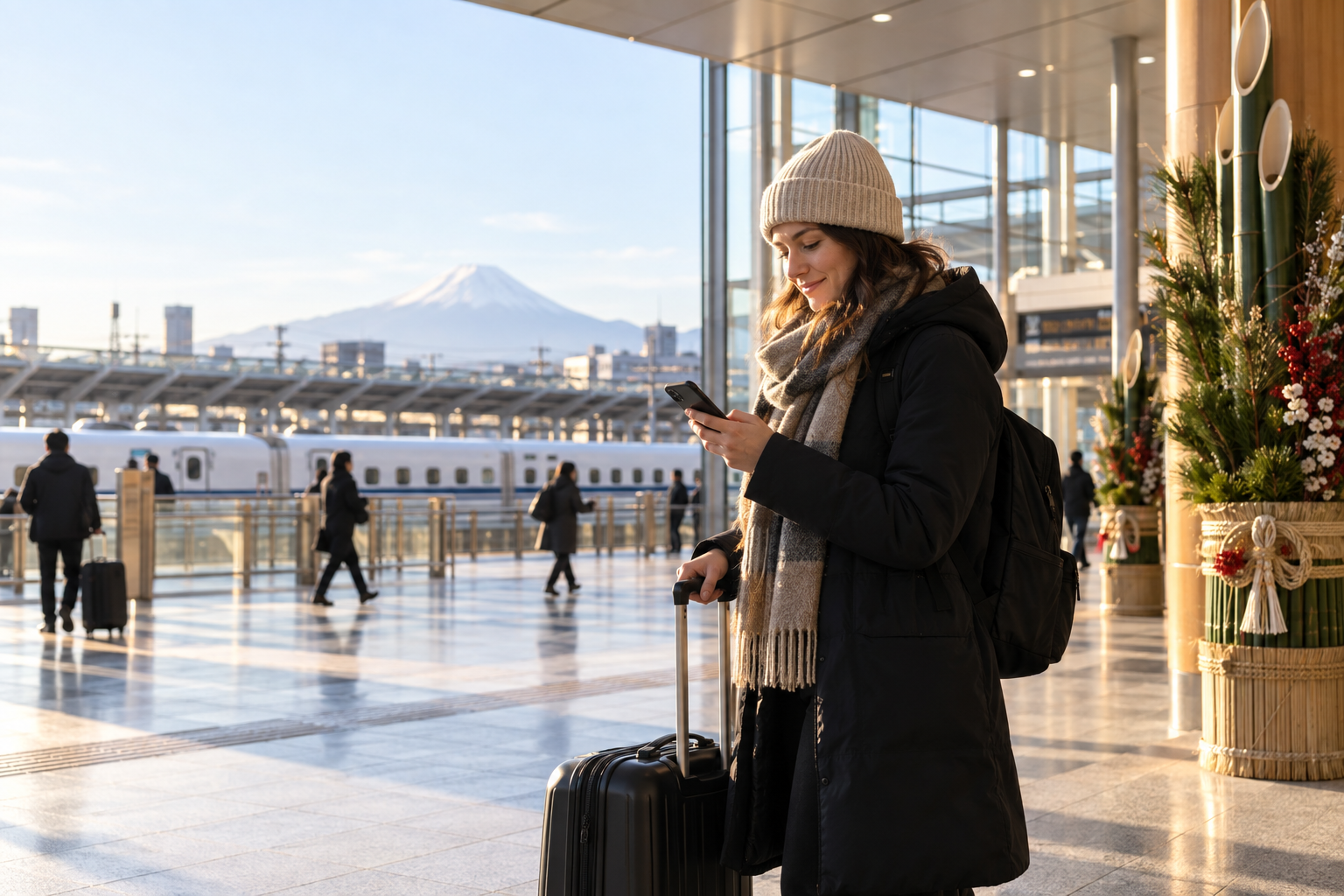
Treat December 29, 2026 through January 3, 2027 as a high-friction planning window, not as a nationwide shutdown. Japan’s official tourism organization describes December 29 to January 3 as the typical New Year holiday period, while the Cabinet Office confirms that January 1, 2027 is a national holiday. Each train operator, attraction, restaurant and shop still sets its own service.
Your safest plan is simple:
- Reserve any trip-defining intercity train through the correct railway operator when sales open.
- Check each must-do attraction, restaurant and transfer 72 hours before use.
- Save one meal option and one outdoor activity that you have separately verified.
- Carry a modest cash backup and keep the Japan Visitor Hotline: 050-3816-2787 saved.
What is not confirmed yet: as of September 18, 2026, this guide does not freeze a universal 2026–2027 holiday timetable or the opening hours of individual venues. Those details vary and can change. Use the links below to verify the exact operator or place you will use.
Why New Year Needs a Different Japan Itinerary
New Year in Japan is a family holiday and a major domestic travel period. That creates two different effects at once: some museums, independent restaurants, offices and service counters close for part of the holiday, while shrines, temples, shopping districts and transport corridors may become busy.
The mistake is to turn that into one simple rule such as “Japan closes from December 29 to January 3.” It does not. The more accurate rule is:
Normal weekday assumptions become unreliable. Verify the exact place, route and date.
JNTO warns that the New Year period is busy and expensive and that some businesses close for a few days. Its January guide also notes that hotel, plane and train options may be more limited around New Year. That is enough to justify early reservations—but not enough to invent a closure calendar for every business.
The Date-by-Date Risk Map
| Date | Planning risk | Best use of the day | What to verify |
|---|---|---|---|
| Dec 26–28 | Medium | Major sightseeing, shopping, intercity positioning | Final business day, baggage delivery, reserved train |
| Dec 29–30 | High | Flexible city day; travel only with reserved essentials | Venue hours, restaurant hours, ticket counters |
| Dec 31 | High | Daytime sightseeing plus a verified evening plan | Last entry, return train, late-night transport, crowd rules |
| Jan 1 | Very high | A verified shrine/temple visit, outdoor walk, hotel-based rest | Attraction opening, meal plan, local transport |
| Jan 2–3 | High | First-sale areas or open attractions with confirmed hours | Opening time, admission, queues, return route |
| Jan 4 onward | Falling, but variable | Resume normal itinerary carefully | Whether the exact business has reopened |
This table is a decision aid, not an opening-hours guarantee. January 1 is the confirmed national holiday. The surrounding dates are the typical Oshogatsu period described by JNTO, and each operator or business decides what it will actually do.
Book the Trip-Defining Train First
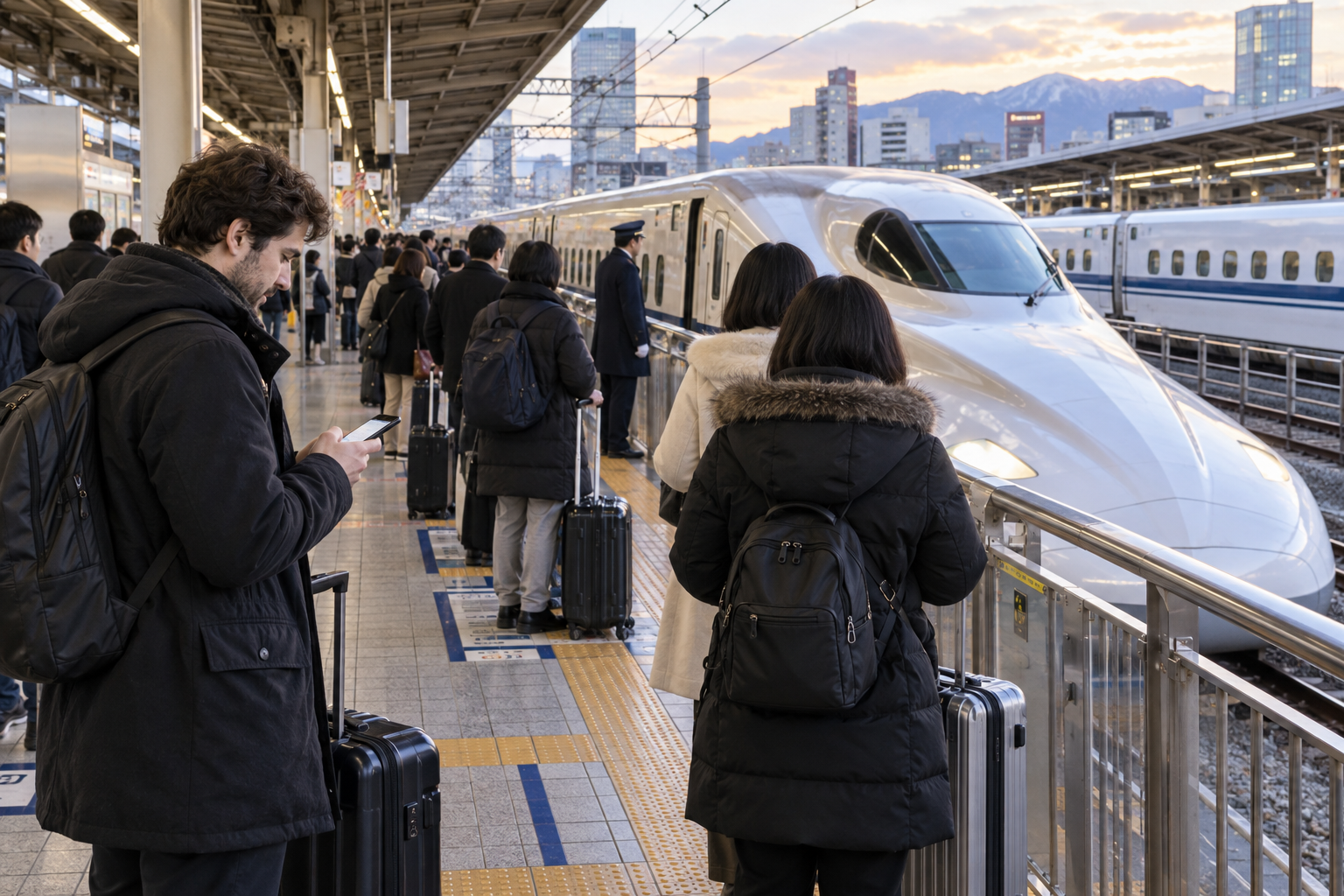
If missing one train would break your itinerary—Tokyo to Kyoto on December 30, for example—treat that train as a fixed component, not a same-day choice.
There is no single booking site for every train in Japan. Use the operator that actually controls your route:
- Tokaido, Sanyo and Kyushu Shinkansen: SmartEX currently accepts eligible reservations from 05:30 JST one year before boarding. If you book more than one month ahead, the train and seat are initially unconfirmed and are finalized about one month before travel. Hayatoku products, S Work seats, wheelchair-accessible seats and oversized-baggage seats are excluded from this one-year window, so check the exact product.
- JR East, JR Hokkaido and the Hokuriku Shinkansen routes sold by JR East: JR East says ticket sales begin at 10:00 JST one month before boarding. Its scope is not every JR route.
- Other railways, buses, ferries and flights: use that operator’s official site. Do not copy a JR rule to a non-JR service.
Three practical rules matter more than memorizing a complicated rail system:
- Identify the operator before shopping for a ticket.
- Book the journey that would be hardest to replace.
- Recheck the train number, departure station and boarding method after the operator finalizes the timetable.
If your first choice is unavailable, compare an earlier train, a later train, a different travel day, or one extra hotel night before buying a complicated connection. Do not build a chain of tight transfers from unreserved assumptions during a peak period.
For JR East online booking basics, see RJG’s Eki-net guide. For large bags, read the Japan luggage-forwarding guide before choosing a train you may struggle to board.
Build a Closure-Proof Day
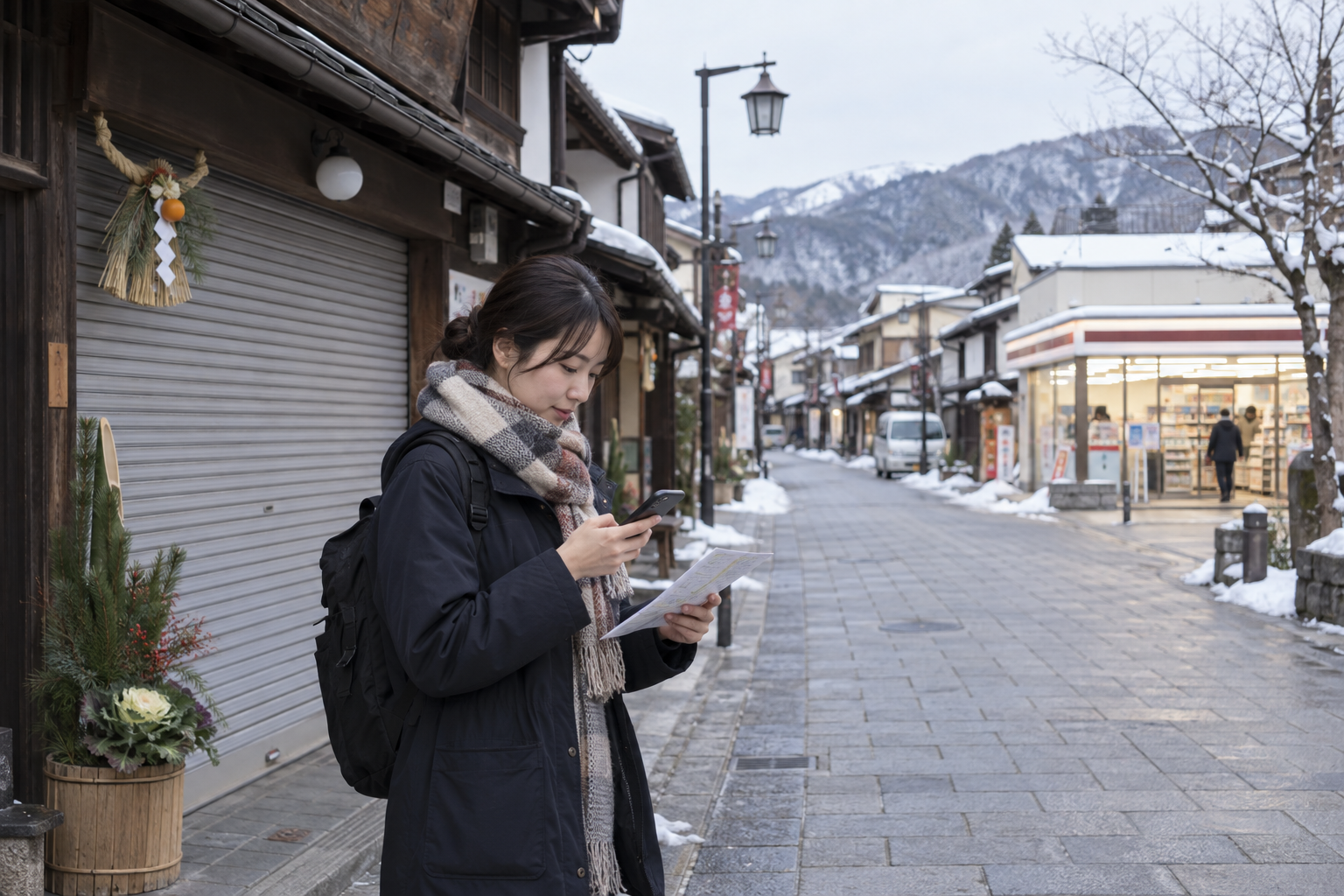
A strong holiday itinerary has one anchor, one meal plan and one fallback. It does not depend on six unverified businesses opening in sequence.
1. Choose one verified anchor
Your anchor might be a museum, observation deck, guided activity, theme park or reserved meal. Confirm it on the venue’s own website, not only on a map listing or old blog post. Look for the exact date, last admission and reservation status.
2. Add flexible outdoor time
Use a neighborhood walk, park, waterfront, public viewpoint, shrine or temple area as the flexible part of the day. An outdoor place can still have closed gates, restricted access or special crowd controls, so verify any critical entry point—but the day is less fragile than an itinerary built entirely around ticketed indoor venues.
3. Protect the meal
Do not assume that every convenience store, hotel restaurant or chain branch will keep normal hours. Instead:
- confirm the opening hours of one primary meal;
- save a second option in a different building or district;
- buy simple food earlier if both options remain uncertain;
- tell your hotel about dietary or allergy requirements before the holiday.
The goal is not a glamorous backup. It is to avoid reaching 8 p.m. with a closed restaurant, a dead phone and no acceptable food.
Cash, Cards and Phone Power
JNTO recommends carrying some cash and notes that ATM hours differ; not every ATM runs 24 hours. Around a holiday, the safest approach is to solve small payment problems before they become itinerary problems.
Before December 29:
- withdraw a reasonable amount of yen from a verified compatible ATM;
- keep at least two payment methods separately;
- top up your transport IC card if you use one;
- charge your phone and carry a small power bank;
- save critical reservations, addresses and QR codes offline.
This is a backup, not a reason to carry an excessive amount of cash. Your actual amount should reflect your trip, accommodation payment status and personal security preference.
The 72-Hour Verification Checklist
Run this check three days before every important holiday-period day:
- Transport: Is the route operating? Is the reservation still correct? Is the station entrance or ticket pickup point open?
- Attraction: Is the exact date listed as open? What is the last entry time? Is advance admission required?
- Meal: Has the exact branch published holiday hours? Do dietary needs require advance contact?
- Money: Do you have cash, a working card and enough IC-card balance?
- Phone: Are reservation numbers, maps and hotel details available offline?
- Weather: Could snow, wind or rain affect the route or outdoor fallback?
- Plan B: Can you explain the alternative in one sentence and reach it without a fragile connection?
If one answer is unknown, downgrade that item from “plan” to “option.” A plan has current evidence. An option is something you may try only after checking.
A Practical Plan B for January 1
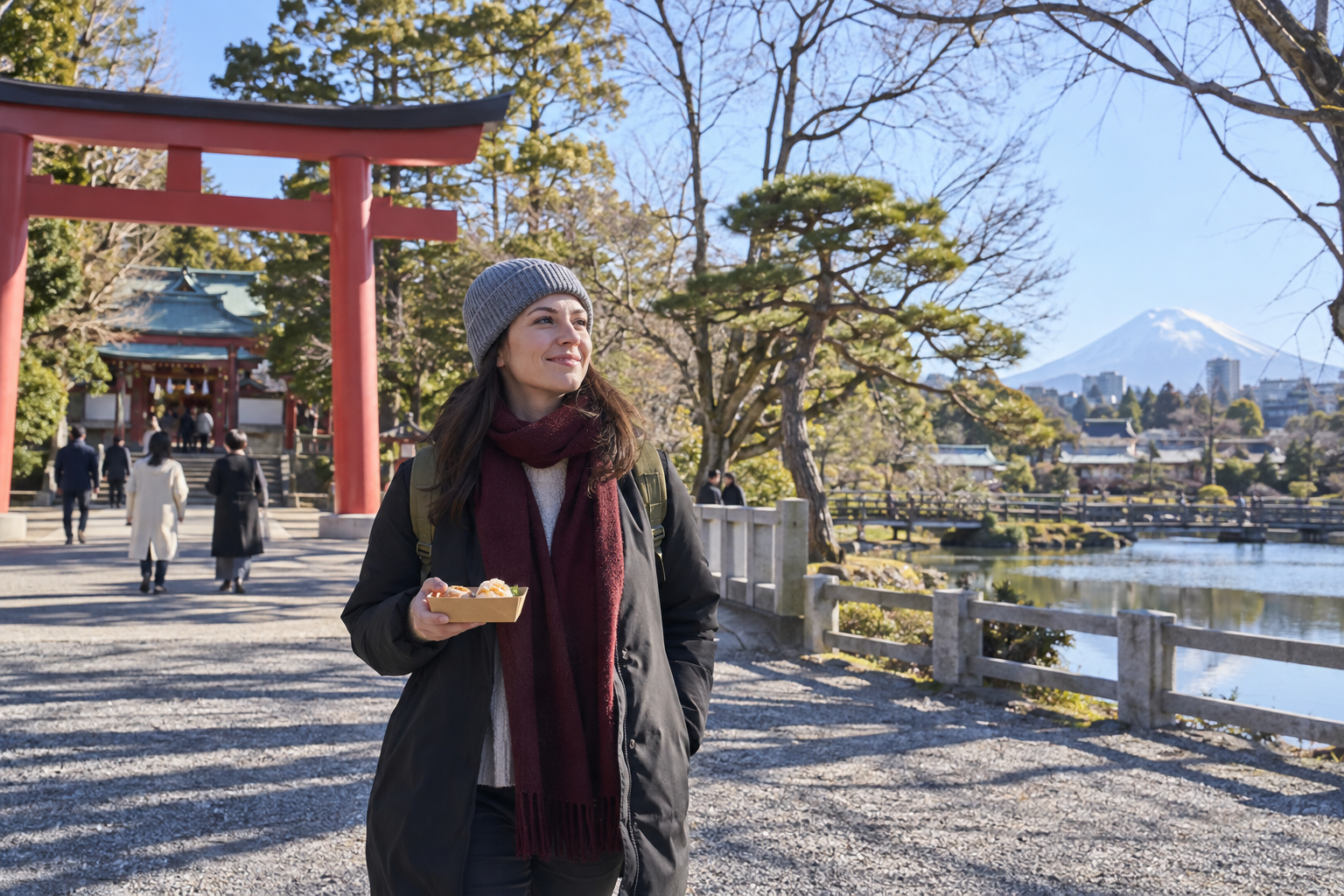
Suppose your museum and preferred lunch both turn out to be closed. A workable substitute is:
- Have breakfast at the hotel or use food bought earlier.
- Visit a neighborhood shrine or temple whose access and crowd guidance you verified.
- Take a daylight walk through a park, waterfront or historic district.
- Use your confirmed backup meal.
- Return before the last convenient transport connection rather than depending on late-night frequency.
This is intentionally simple. New Year’s Day can be culturally rewarding without forcing a full checklist of attractions. A low-dependency day also leaves room for weather, crowds and genuine rest.
When to Use the Japan Visitor Hotline
JNTO operates the Japan Visitor Hotline 24 hours a day, 365 days a year. Support is available in English, Chinese and Korean for tourist information and assistance related to accidents, illness and natural disasters.
- Inside Japan: 050-3816-2787
- From overseas: +81-50-3816-2787
Save the number before you travel. It is useful when normal information counters are unavailable. It does not replace Japan’s emergency numbers: call 110 for police emergencies and 119 for fire or ambulance emergencies.
What to Confirm Again in December 2026
This article gives you the planning structure now. Recheck these details when operators publish their current holiday notices:
- your exact rail, bus, ferry or flight timetable;
- reserved-seat availability and boarding method;
- attraction closure dates and last admission;
- hotel restaurant and breakfast service;
- baggage-delivery acceptance and cutoff dates;
- any crowd controls at major shrines, temples or countdown events;
- weather warnings and service suspensions.
Do not treat a September planning guide as a December timetable. The official operator or venue page controls the final decision.
Final Take
Japan over New Year is not a bad time to visit. It is a bad time to rely on normal hours without checking.
Mark December 29 through January 3 as your verification window. Reserve the intercity journey that could break the trip. Give every important day one verified anchor, one meal backup and one low-dependency alternative. Carry modest cash, keep your phone powered and save the JNTO hotline.
That turns “Will everything be closed?” into a manageable set of decisions—and lets the holiday feel like part of the trip rather than a problem to survive.
FAQ
Is Japan closed from December 29 to January 3?
No. JNTO describes December 29 to January 3 as the typical New Year holiday period, but there is no universal shutdown. Individual businesses and operators set their own schedules.
Is January 1, 2027 a public holiday in Japan?
Yes. The Cabinet Office lists January 1, 2027 as New Year’s Day, a national holiday.
Will trains run on New Year’s Day?
Many services may operate, but routes, frequency and special late-night service vary by operator and year. Check the official operator timetable for your exact route and date.
When can I reserve a Shinkansen seat?
SmartEX currently accepts eligible products from 05:30 JST one year before boarding, with train and seat details finalized about one month before travel. Its exclusions include Hayatoku, S Work, wheelchair-accessible and oversized-baggage seats. JR East’s cited ticket sales begin at 10:00 JST one month before boarding. Other operators and products differ.
Should I book hotels early for New Year?
Yes. JNTO warns that hotel choices can be more limited and prices higher around New Year. Book trip-defining accommodation early and check its meal service.
Will restaurants and convenience stores be open?
Some will be open and others will close or shorten hours. Do not assume a category or chain-wide rule; verify the exact branch and keep a second meal option.
How much cash should I carry?
There is no universal amount. Carry enough for your expected small purchases and a short backup period, while using normal personal-security precautions. JNTO recommends carrying some cash and notes that ATM hours vary.
What can I do if my planned attraction is closed?
Use a low-dependency day: a verified shrine or temple area, an outdoor walk, a meal whose hours you confirmed and an early return route. Keep one such day ready before the holiday starts.
Official Sources
- JNTO: Japan in December
- JNTO: Japan in January
- Cabinet Office: National Holidays for 2026 and 2027
- SmartEX: Reservation reception period and exclusions
- JR East: Ticket FAQ
- JNTO: Currency and ATM guidance
- JNTO: Japan Visitor Hotline
Last checked: September 18, 2026 (JST). All four article images are AI-generated illustrations. They do not prove a real station, shop, timetable, crowd level or opening status.

Comments