- Quick answer
- Is Hato Bus right for your Tokyo day?
- Live English guide, GPS audio or Japanese guide?
- Which Hato Bus course should you choose?
- How to book without choosing the wrong tour
- Tokyo Station and Shinjuku departure points
- Luggage, children, seating and leaving early
- Return times, weather and cancellation
- Plan B: what if the tour is sold out or too restrictive?
- Final booking checklist
- Frequently asked questions
Quick answer
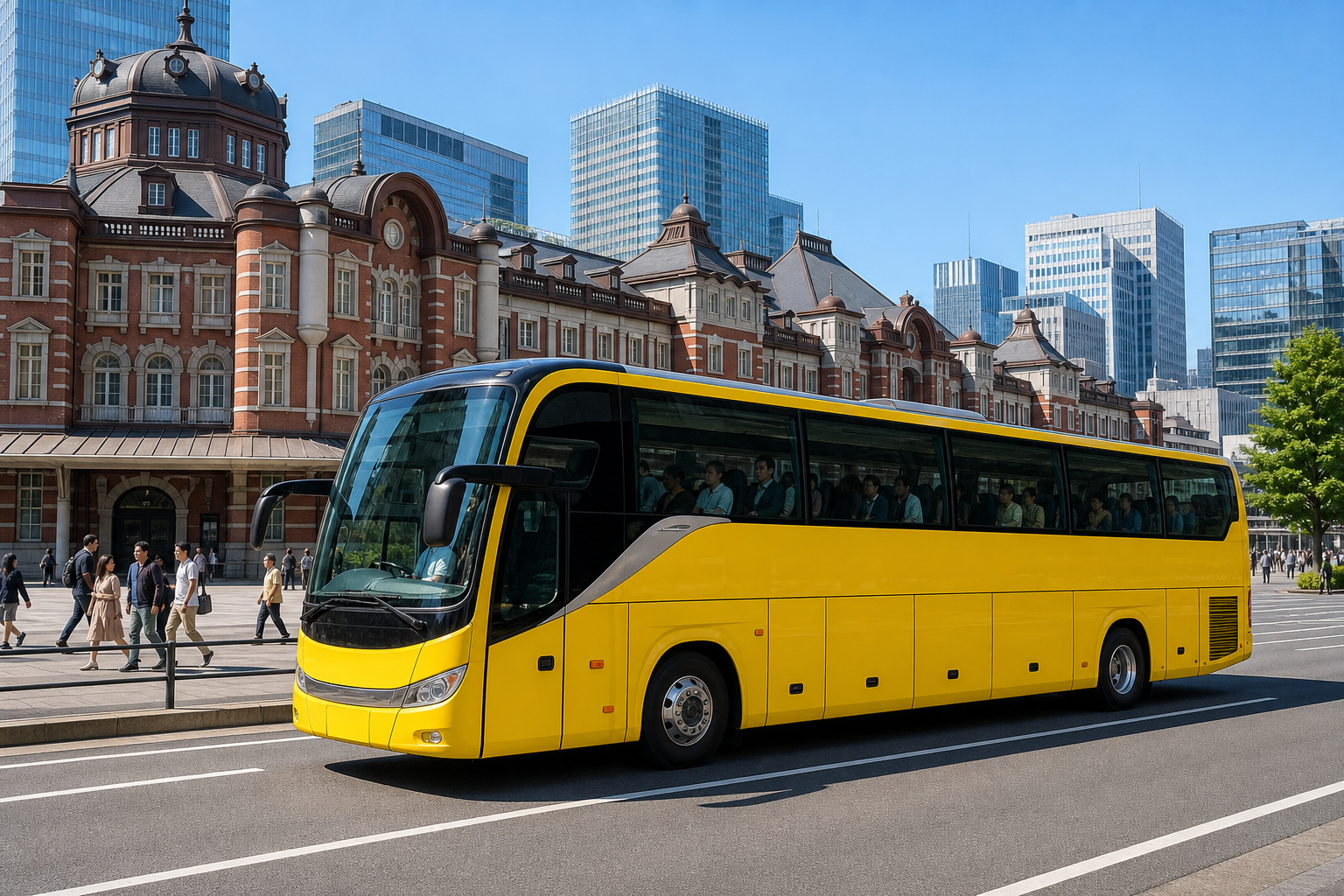
Choose Hato Bus when you want a fixed Tokyo itinerary with transport already organized. Choose an AE course when a live English-speaking guide matters. Choose an A course only after checking the language field: some use a Japanese-speaking guide plus GPS-based multilingual audio instead of live English commentary.
Hato Bus is generally not a hop-on, hop-off service. You follow the listed route, sightseeing stops and return point. If you want to leave attractions when you choose and take the next bus later, use a hop-on, hop-off service or Tokyo’s rail network instead.
Before paying, confirm four things on the exact course page:
- Course number and guide language.
- Departure point and departure time.
- Final return point and scheduled return time.
- The cancellation conditions shown for your booking.
Measurable next action: choose an English-guided or GPS tour, then book the exact course and departure point on the official Hato Bus course page.
Independent guide: Real Japan Guide is not affiliated with Hato Bus. Prices, times, routes and availability can change. Check the official booking page before payment.
Is Hato Bus right for your Tokyo day?
Hato Bus is a good fit when convenience matters more than flexibility. A half-day course can connect several major attractions without asking you to calculate every train transfer. A full-day course can also bundle admissions and a meal, depending on the itinerary.
It is a weaker fit if you want two hours at one neighborhood, plan to change the route during the day, or need to return to a different area at an exact time. Road congestion can delay the scheduled return, so do not place a non-refundable train, flight or restaurant booking immediately after the tour.
Use this decision rule:
| Your priority | Better choice |
|---|---|
| Live explanations and a fixed introduction to Tokyo | Hato Bus AE English-guided course |
| A short ride with city views | Hato Bus open-top A1301 or another exact course that matches your date |
| Asakusa and Tokyo Skytree with transport arranged | Check an A sightseeing course, then confirm whether guidance is GPS-based or live English |
| Freedom to get off and board a later bus | Sky Hop Bus or another hop-on, hop-off service |
| Maximum control over time and neighborhoods | Tokyo trains plus individual attraction tickets |

Live English guide, GPS audio or Japanese guide?
This is the most important choice on the Hato Bus website. An English-language page does not automatically mean that every course has a live English-speaking guide.
AE courses: live English guidance
The current AE301 Tokyo Morning, AE302 Tokyo Afternoon and AE308 Panoramic Tokyo pages identify the tours as English-guided. The course remarks say that explanations are in English rather than Japanese.
Choose this type when you want to hear context about the sights and ask basic questions during the tour. Check the language field and remarks again for your travel date because course codes and operating periods can change.
A courses: check the exact page
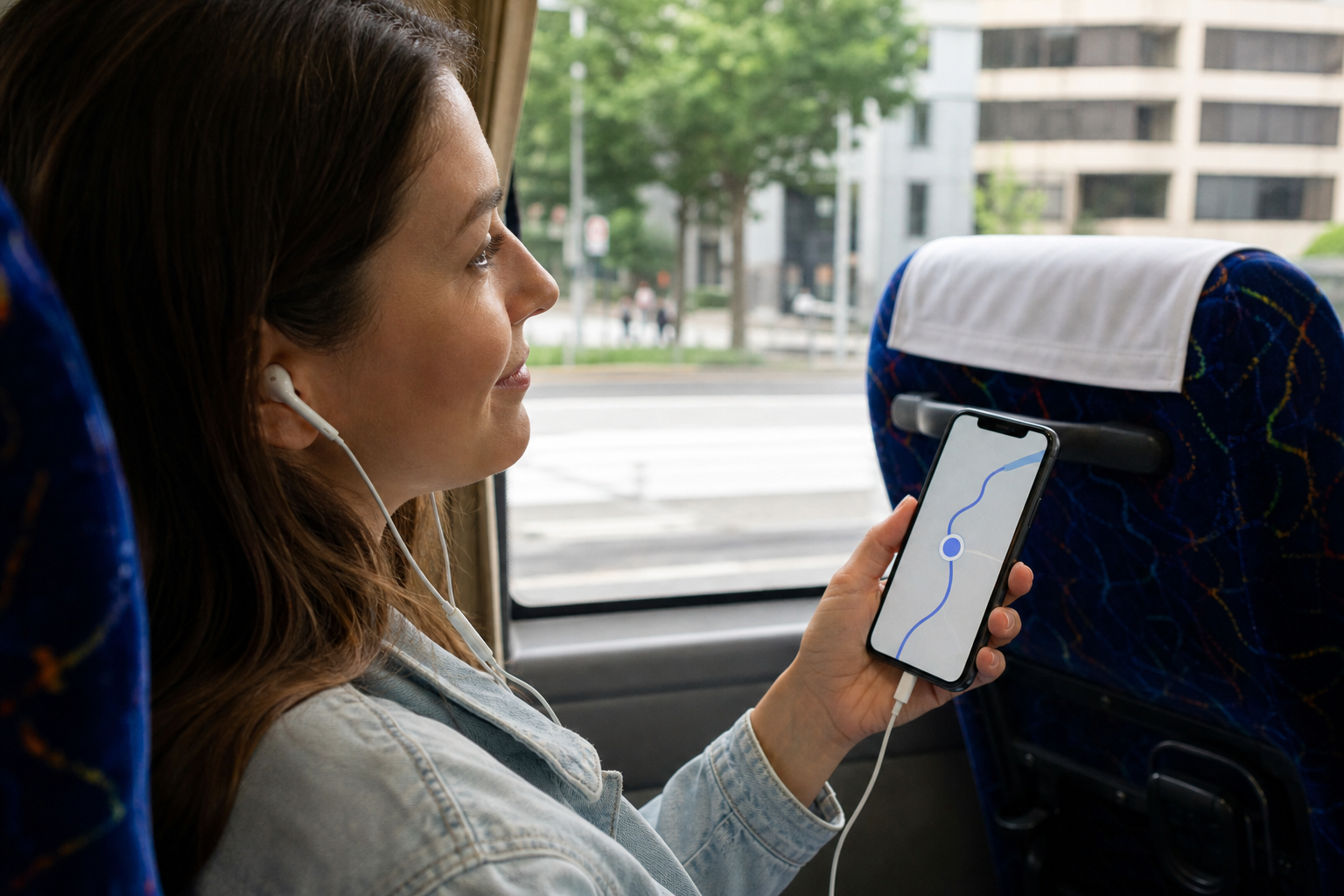
Some A courses are fixed sightseeing buses with GPS-based multilingual guidance. For example, the open-top A1301 page says the tour is conducted by a Japanese-speaking guide and offers an eight-language GPS system. The audio is automated, not simultaneous interpretation.
That distinction also affects expectations: a GPS track can explain landmarks as the bus moves, but it is not the same service as a live English guide.
Which Hato Bus course should you choose?
The following are examples listed on the official site when this guide was checked on August 12, 2026. They are a decision aid, not a promise of availability.
| Example course | Format | Listed adult price | Typical use | Important constraint |
|---|---|---|---|---|
AE301 Tokyo Morning |
Live English guide, half day | ¥6,300 | Imperial Palace area, Tokyo Tower and Asakusa before lunch | Starts at Shinjuku or Tokyo Station; ends at Tokyo Station |
AE302 Tokyo Afternoon |
Live English guide, half day | ¥6,300 | A first-day overview after a free morning | Starts and ends at Tokyo Station |
AE308 Panoramic Tokyo |
Live English guide, full day with lunch | ¥13,000 | One organized day covering several distant areas | Long day; scheduled return can be affected by traffic |
A7635 Asakusa & Tokyo Skytree |
GPS-based guidance, half day | ¥5,900 | Two famous east-Tokyo sights with transport arranged | A Shinjuku boarding may involve a transfer at Tokyo Station; return is Tokyo Station |
A1301 Tokyo Panorama Drive |
Japanese guide plus GPS audio, about one hour | ¥2,200–¥2,400 | Seeing Tokyo from an open-top double-decker bus | No sightseeing stops and no hop-on, hop-off use |
Choose a half-day course if you want one organized block and another neighborhood on your own. Choose a full-day course if reducing decisions is more important than controlling the pace. For a first visit, a live English half-day course is the simpler default because it leaves room for an independent evening.
How to book without choosing the wrong tour
- Open the official course search.
- Set your preferred date first. Do not choose from a search snippet or an old brochure.
- Open the exact course page and write down the course number.
- Confirm the guide language. Look for clear wording such as “English guiding tour” if you want a live English guide.
- Confirm every departure point, time and return point.
- Read the price, child conditions, inclusions and course-specific remarks.
- Open the cancellation information before entering payment details.
- Save the confirmation email and reservation number offline on your phone.
The official English FAQ says website reservations may be possible until one hour before departure. However, another official “Flow of departure” page still describes an earlier deadline of 16:00 on the previous day. Because the official pages are not fully aligned, do not build your plan around last-minute booking. Use the live booking calendar on the exact course page, and contact reserve@hatobus.co.jp if the deadline is unclear.
Tokyo Station and Shinjuku departure points
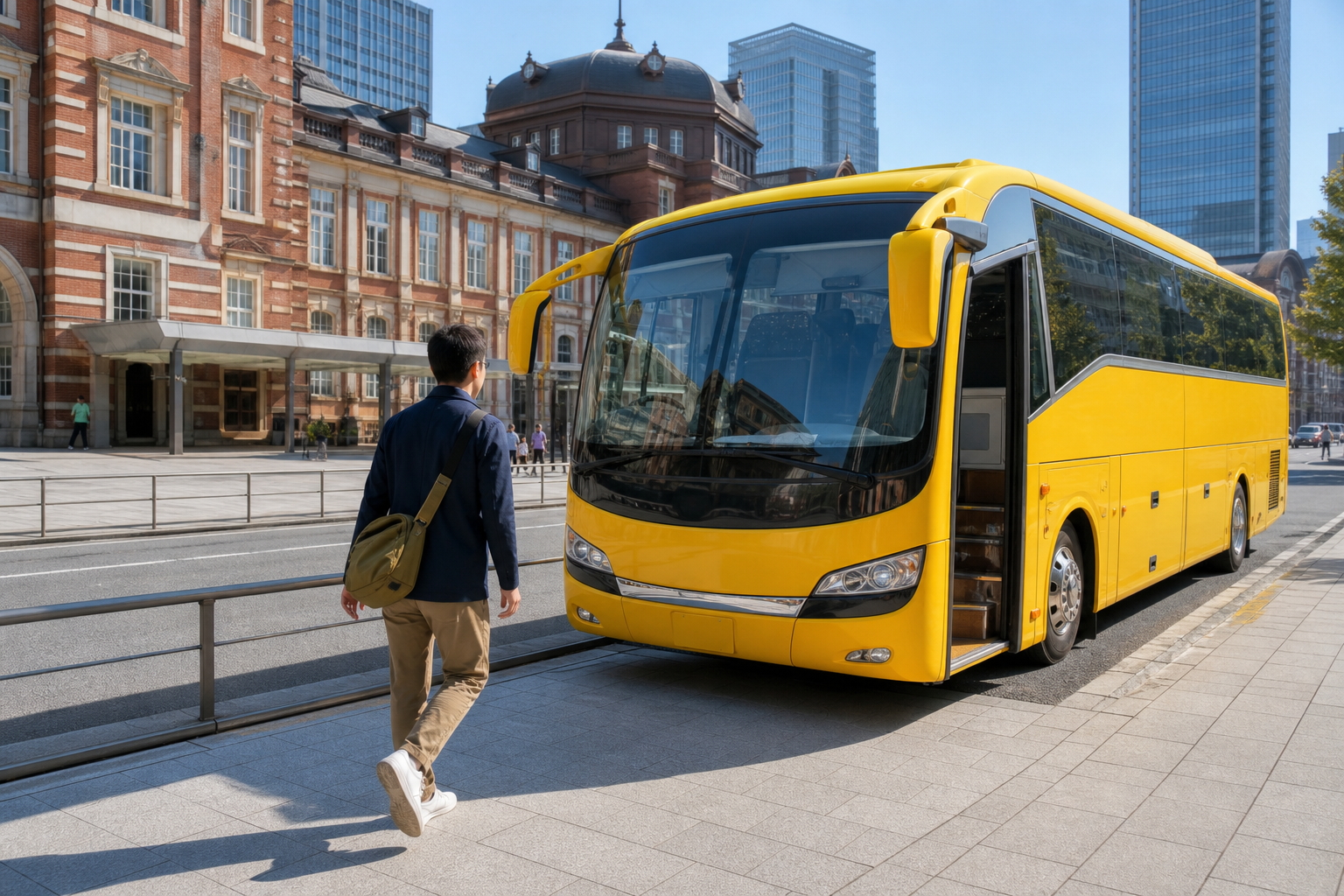
Tokyo Station is the main boarding point for many courses. The official access guide places the Hato Bus stand near the JR Tokyo Station Marunouchi South Exit. Do not go to the Yaesu highway-bus area on the opposite side of the station.
Use the Tokyo Station & Marunouchi Quick Guide to understand the station sides before the morning of your tour.
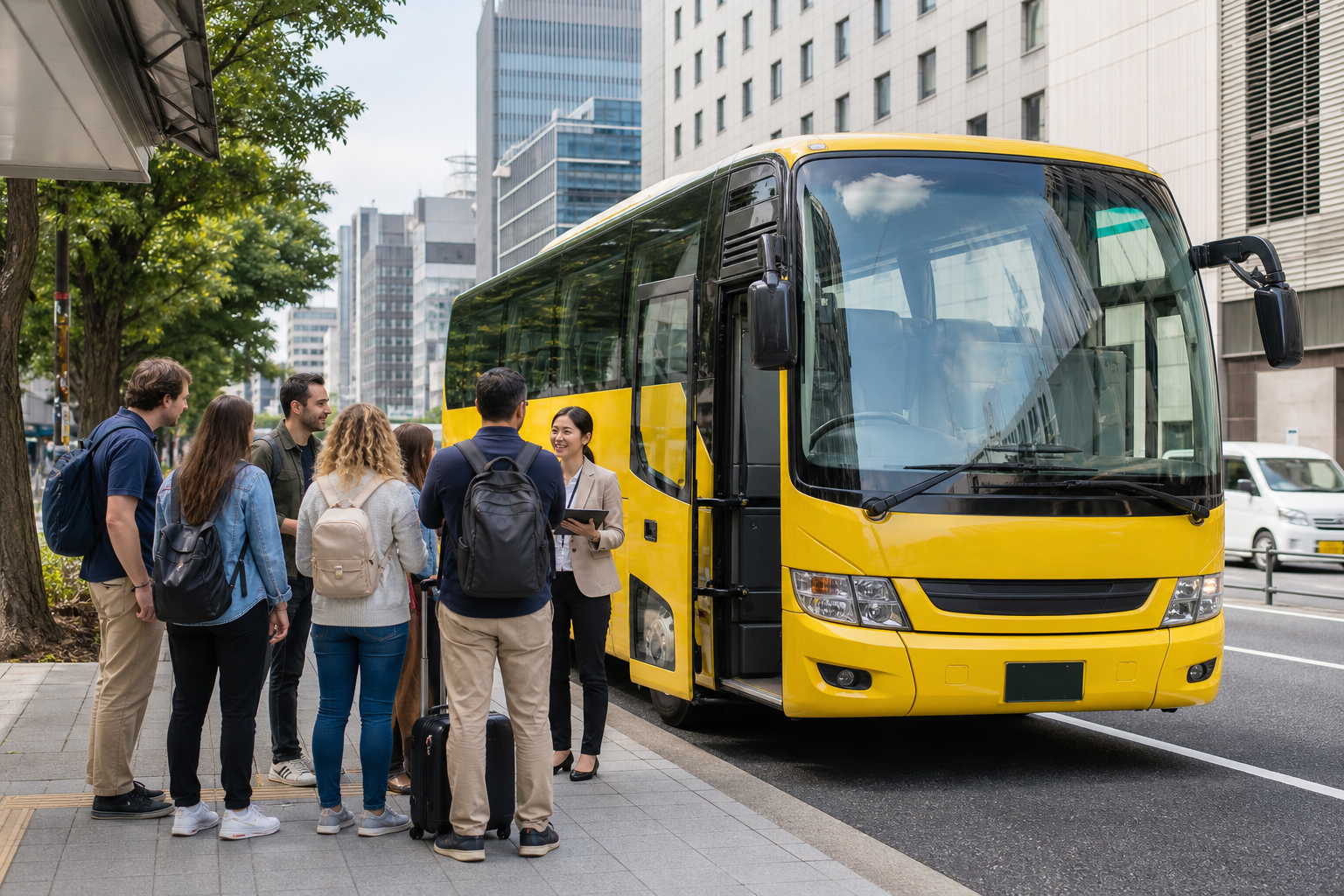
Some tours also board at Shinjuku Station East Exit. The official departure guide identifies Hato Bus stop No. 2. A Shinjuku boarding does not mean the tour returns there: current English-guided examples may finish at Tokyo Station instead.
Check the exact map, then use the Shinjuku Quick Guide if you need help orienting yourself around the station.
How early should you arrive?
Official guidance varies by payment and procedure. The general terms say unpaid passengers or travelers changing their party should reach the counter at least 20 minutes before departure, while paid passengers may be told to arrive 10 minutes early. A separate official flow page asks travelers to gather 20 minutes early.
The low-risk rule is simple: aim to be at the correct Hato Bus point 20 minutes before departure. This is RJG’s planning buffer; it does not mean late arrival will be accepted.
Luggage, children, seating and leaving early
The official FAQ says suitcases and strollers can be placed in the bus trunk. Tell the crew on the day and keep valuables with you. If you are arriving from a hotel with several bags, confirm that your specific course uses a suitable coach and avoid bringing more than you can handle after the final stop.
Children aged 0–5 can generally ride free when they do not use a seat or receive a meal, with one infant per adult. Book the child fare if you need a separate seat. Check the course page because meal and attraction arrangements differ.
Seats are assigned, but customers normally cannot request a particular seat. An odd-numbered party may have to share a row with another traveler.
You may leave some tours early only at a designated drop-off point shown in the course details. Tell the guide first. There is no refund for the unused section, and passing a location does not make it an approved drop-off point.
Return times, weather and cancellation
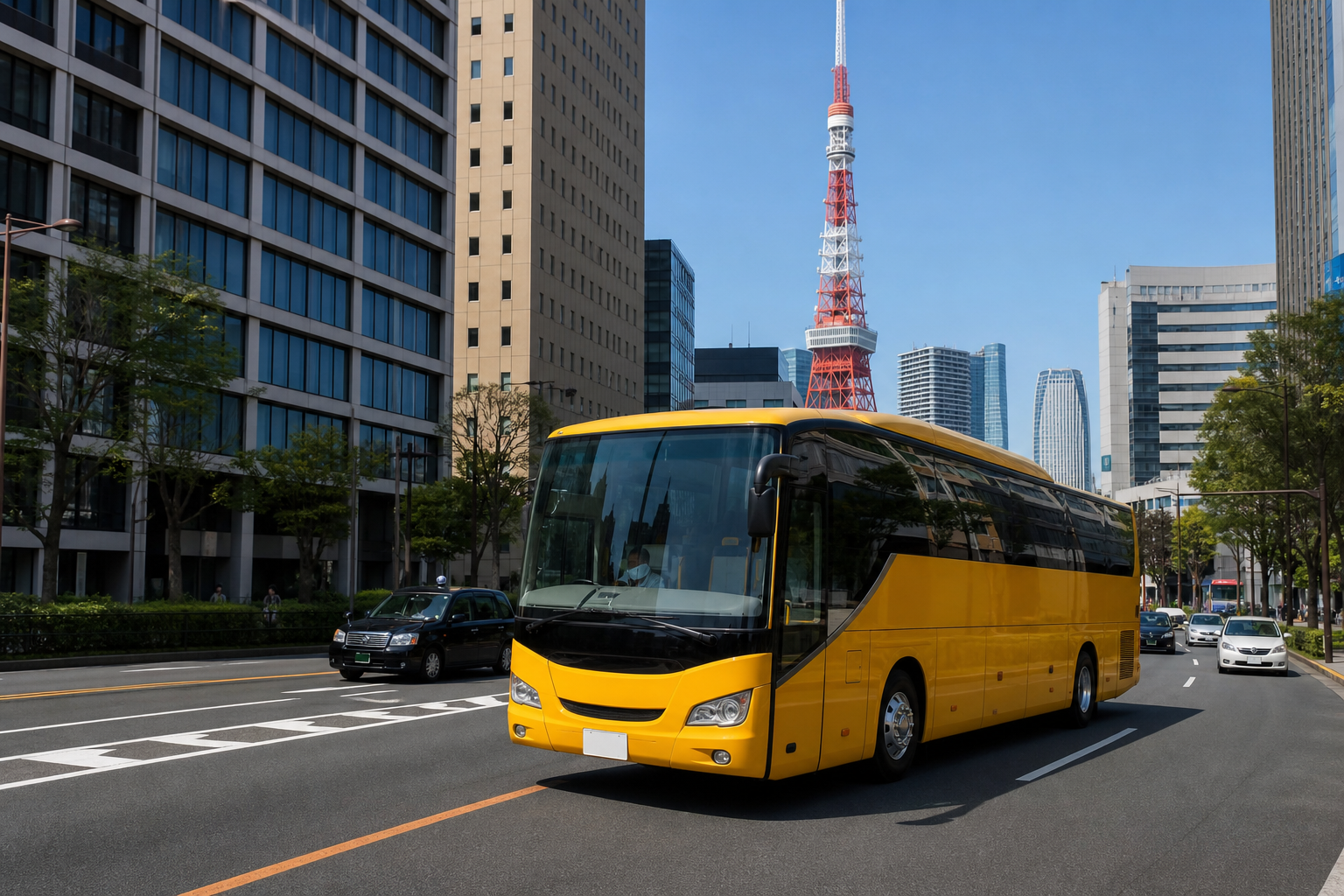
The return time is an estimate. The official FAQ and terms both warn that congestion or operating conditions can change the route or make the tour finish later. Leave a generous buffer before your next reservation.
Open-top courses may be canceled in heavy rain, strong wind or other severe weather. Other courses can operate in ordinary rain but may still be canceled during severe weather such as a typhoon. Use the booking contact details supplied in your confirmation rather than assuming all courses follow the same decision time.
Cancellation rules depend on the course category and the status of the ticket. The official payment page distinguishes regularly scheduled sightseeing courses, often beginning with A, B or C, from package tours that may begin with H, P or R. Check the cancellation date shown during your own booking. To cancel an English reservation, the current FAQ directs travelers to email reserve@hatobus.co.jp with the reservation number and booking name and wait for confirmation.
Plan B: what if the tour is sold out or too restrictive?
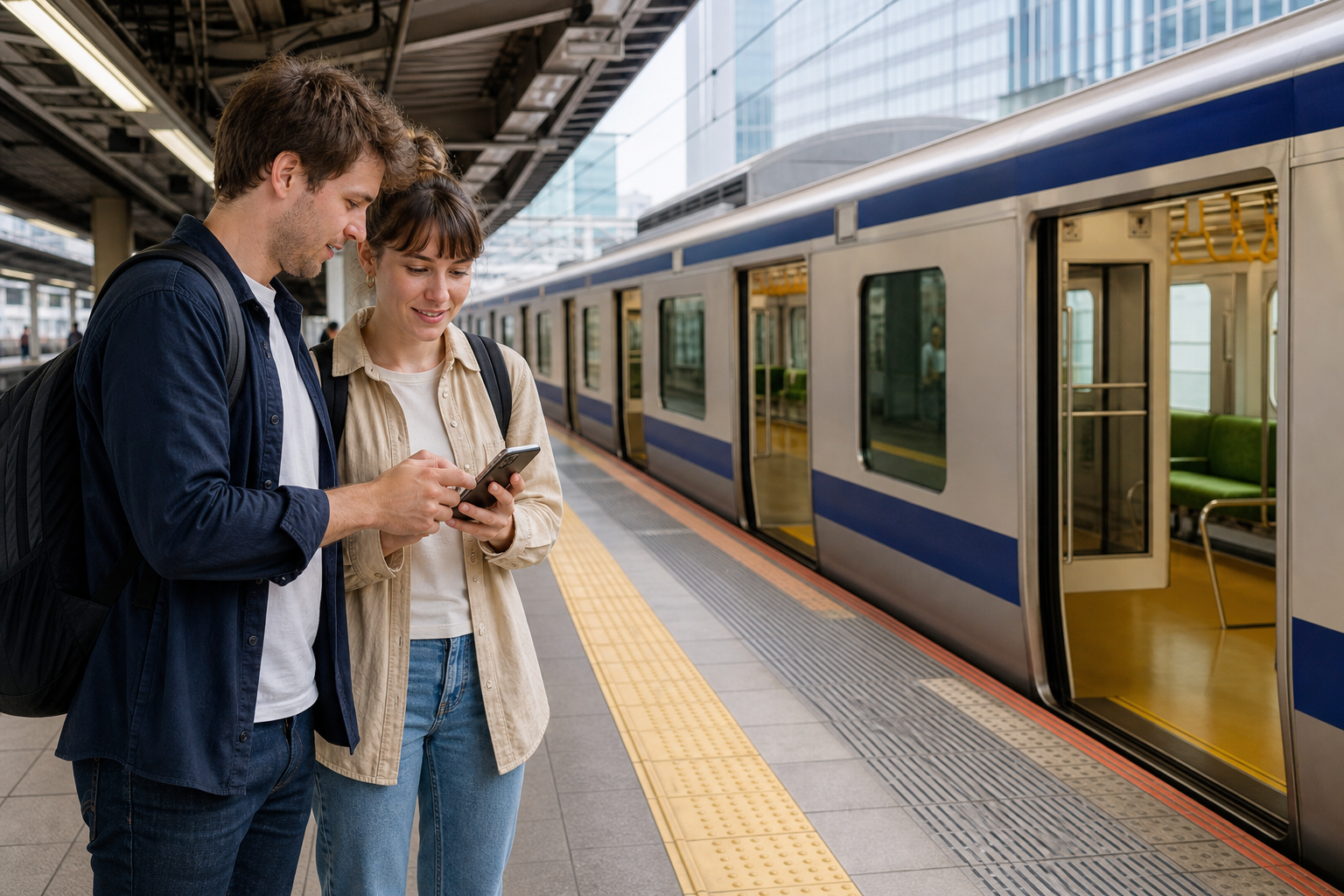
Use a Plan B that solves the reason you wanted the bus:
- You want flexible stops: use the official Sky Hop Bus, which operates as a hop-on, hop-off service, and check the current timetable.
- You mainly want Asakusa: travel independently and use the Asakusa Quick Guide.
- You want Tokyo views: compare observation decks in Tokyo Views 2026.
- Weather cancels an open-top bus: choose a covered-bus course if available, or switch to trains and indoor attractions.
- The scheduled return is too risky: use the Tokyo Area Map and Tokyo Trains 2026 to build a shorter route you control.
Final booking checklist
- [ ] My course page explicitly shows the guidance language I want.
- [ ] I understand whether the tour is fixed or hop-on, hop-off.
- [ ] I saved the course number and reservation number.
- [ ] I checked the correct departure point and final return point.
- [ ] I can arrive 20 minutes early.
- [ ] I left a delay buffer after the tour.
- [ ] I checked the cancellation terms shown for my booking.
- [ ] I have a weather or sold-out Plan B.
Last checked: August 12, 2026.
Frequently asked questions
Does every Hato Bus tour have a live English guide?
No. Current AE examples advertise live English guidance, while some A courses use a Japanese-speaking guide with GPS-based multilingual audio. Confirm the language field and remarks on the exact course page.
Is Hato Bus hop-on, hop-off?
Generally no. Hato Bus sightseeing courses follow a fixed itinerary. The A1301 open-top page explicitly says it is not a hop-on, hop-off bus. Choose Sky Hop Bus if you want to leave and reboard later.
How late can I book?
The current FAQ says website reservations may be available until one hour before departure, but another official guide gives an earlier cutoff. Treat the live calendar and booking result on your exact course page as final, and book earlier when possible.
Where do Tokyo tours depart?
Common points include Tokyo Station Marunouchi South Exit and Shinjuku Station East Exit. Some courses also list Haneda Airport Garden. The exact course page controls, and the return location may be different.
How early should I arrive?
Aim for 20 minutes before departure at the correct Hato Bus point. Some paid passengers may receive a shorter official boarding instruction, but a 20-minute buffer reduces station-navigation risk.
Can I bring a suitcase or stroller?
The official FAQ says large luggage and strollers can be loaded into the bus trunk. Tell the crew and keep valuables with you. Confirm unusual or oversized items directly before travel.
Can I choose my seat or bring an infant?
Seats are assigned, but normal seat requests are not accepted. Children aged 0–5 may ride without a separate seat or meal under the stated infant conditions; book a child fare when a seat is needed.
What should I do if weather or traffic changes the tour?
Allow extra time after the scheduled return. Check messages from Hato Bus during severe weather. If an open-top tour is canceled, switch to a covered course, hop-on, hop-off service, or a shorter rail-based route.
Comments