Can You Smoke on the Street in Tokyo? Rules, Fines, and Where Tourists Can Light Up (2026)
- Quick Answer
- Is Smoking on the Street Illegal in Tokyo?
- Tokyo’s 23 Wards: Which Districts Fine You for Street Smoking
- Where to Smoke: Designated Smoking Areas (with Map App Tips)
- Smoking at Your Hotel or Airbnb: Room Rules and Cleaning Fees
- IQOS, Heated Tobacco, and Vaping: What’s Legal, What’s Not
- Where to Buy Cigarettes: Konbini, Vending Machines, and Tobacco Shops
- What If You’re Caught Smoking? Penalty Procedure for Tourists
- Frequently Asked Questions
- Quick Reference: Designated Smoking Areas by Major Station
Quick Answer
Tokyo has no single citywide smoking rule. Each of the 23 wards sets its own ordinance, so the same cigarette can be legal in one block and a ¥2,000 fine in the next. Chiyoda and Shibuya wards collect ¥2,000 on-the-spot fines from people caught smoking outside designated areas. Shinjuku and Minato wards prohibit street smoking too, but currently use warnings and patrol guidance instead of fines. Heated tobacco (IQOS, glo, Ploom) counts as smoking under almost every ward’s rule — Chiyoda explicitly added heated tobacco to its fine list in October 2024.
The safest rule for tourists: avoid lighting up on a street, in a station plaza, or in a park unless you can see a designated smoking area sign. Most major stations have one within 200 meters of the exit, and a free app called Japan Smoking Area (App Store / Google Play, English supported) maps them.
One more thing that changed recently: taspo, the adult-ID card for cigarette vending machines, was discontinued at the end of March 2026 because the underlying 3G mobile network (FOMA) was shut down. Foreign tourists were never eligible for taspo (it required Japanese-resident ID), but now even residents have to use newer machines that read a Japanese driver’s license or My Number card. For visitors, this means cigarette vending machines are essentially off-limits — buy from konbini (convenience stores) instead, where staff confirm your age with a quick visual check rather than an ID scan.
Is Smoking on the Street Illegal in Tokyo?
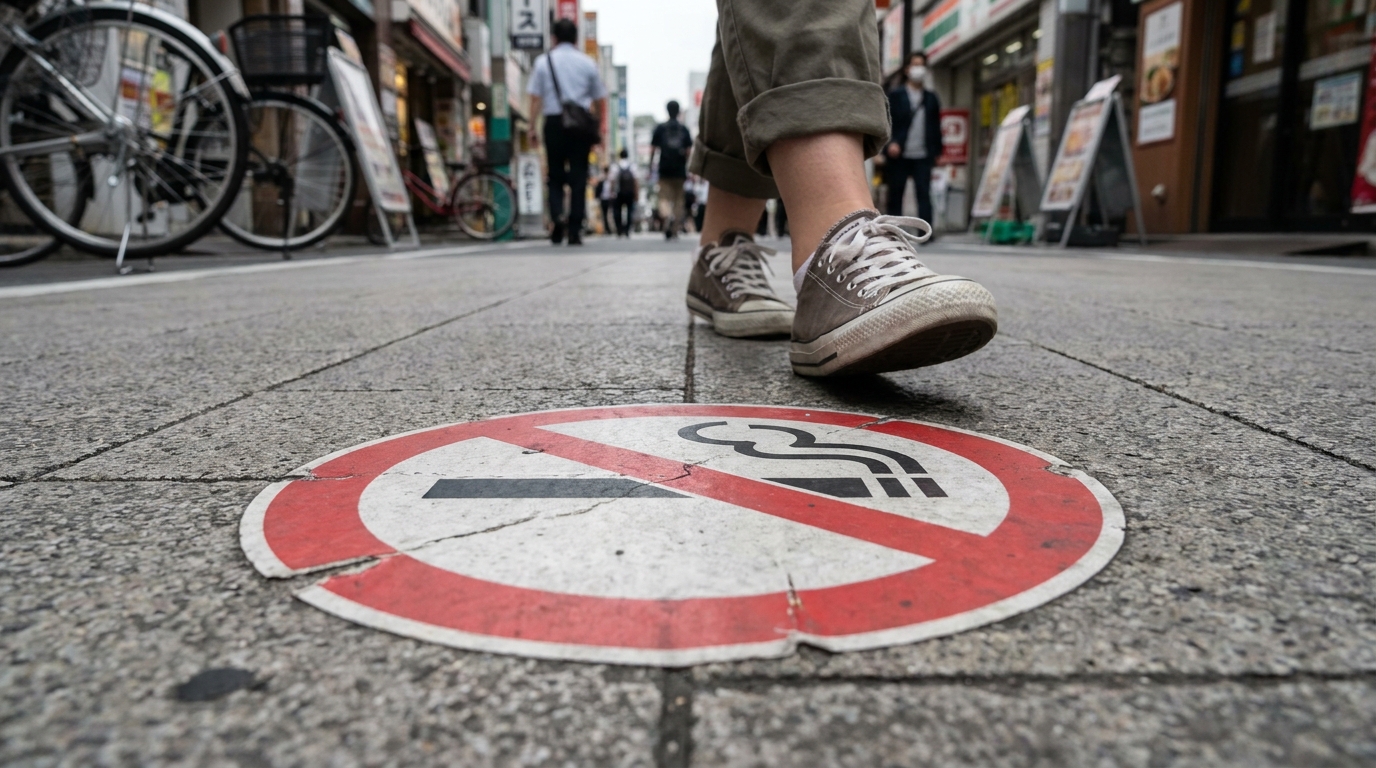
There is no national law against smoking on the street in Japan. Street smoking is regulated by ward-level ordinances (区条例 — kuh-jo-rei), and Tokyo has 23 wards, each with its own rules. The Tokyo Metropolitan Government’s passive smoking prevention ordinance and the national Health Promotion Act both cover indoor smoking; outdoor street smoking falls to each ward.
This is why advice on Tokyo street smoking is so inconsistent online. A guide that says “Tokyo bans street smoking” is correct for Chiyoda Ward. A guide that says “Tokyo fines you ¥30,000” is repeating an old or out-of-context number. The actual fine in most enforcing wards is ¥2,000 per incident, and many wards have no fine at all — only verbal warnings from uniformed patrol staff.
What every ward does agree on:
- Smoking is prohibited in public parks (rules set by the park operator, often the ward)
- Smoking is prohibited at station entrances and in station plazas
- Heated tobacco is treated the same as cigarettes in almost every ordinance updated after 2024
- Private property (your Airbnb balcony, a friend’s apartment) is outside the ordinance — but the building owner’s rules still apply, and most apartments in Tokyo are non-smoking
Tokyo’s 23 Wards: Which Districts Fine You for Street Smoking
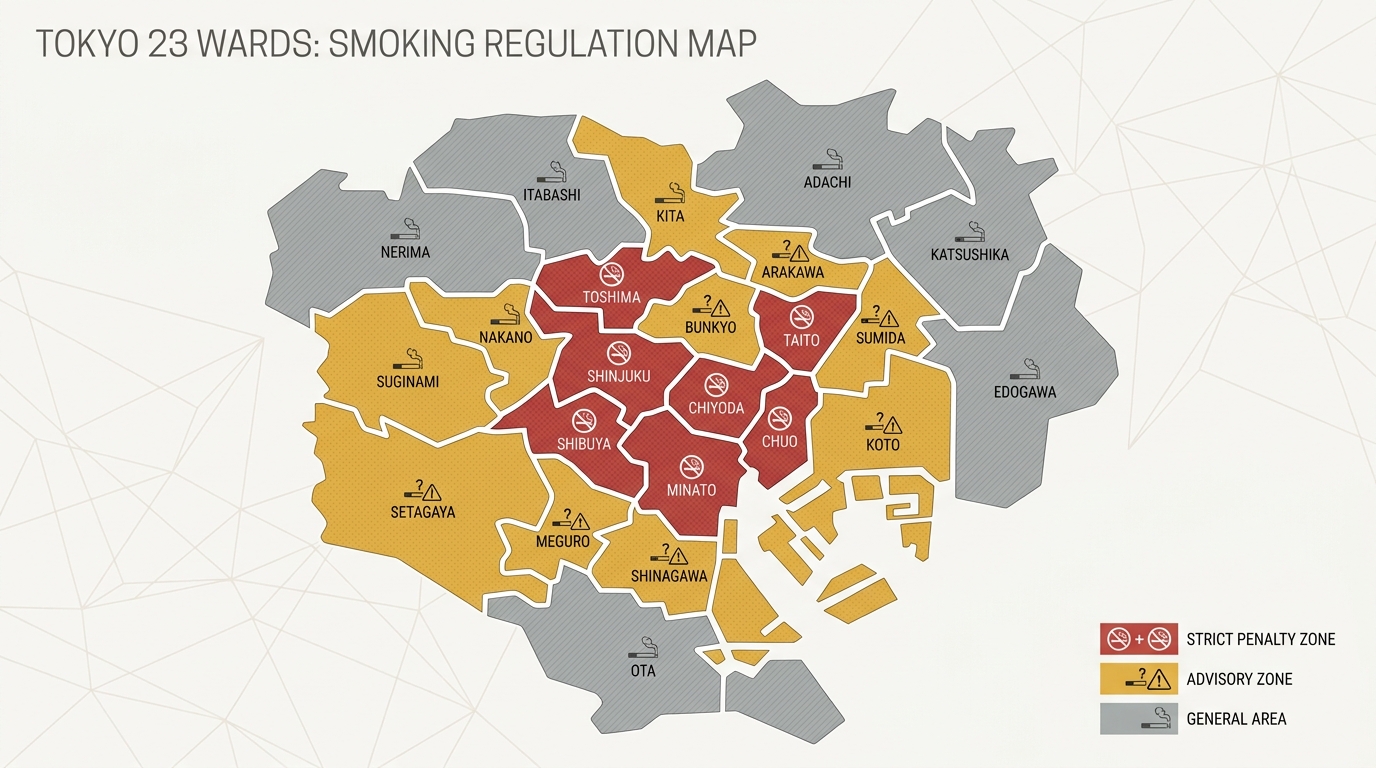
The 23 wards split roughly into three groups. The data below reflects publicly-announced fine systems as of May 2026 based on each ward’s official website.
| Ward (Romaji / 日本語) | Street Smoking Rule | On-the-Spot Fine |
|---|---|---|
| Chiyoda / 千代田区 | Ward-wide ban | ¥2,000 (cigarettes + heated tobacco since Oct 2024) |
| Chuo / 中央区 | Manners-based ban (walking + littering) | No fine — warnings only (Chuo Ward has stated it has no current plan to introduce a Chiyoda-style fine system) |
| Shibuya / 渋谷区 | Ward-wide ban (since July 2024 update) | ¥2,000 |
| Toshima / 豊島区 | Ward-wide ban (since 2011 ordinance) | No fine — guidance only (per current Toshima ordinance, enforcement is correction guidance, not a fine) |
| Shinagawa / 品川区 | Designated priority zones around Osaki, Gotanda, Oimachi, Musashi-Koyama, Aomono-Yokocho stations | ¥1,000 in designated zones |
| Minato / 港区 | Ward-wide ban | No fine — warnings only |
| Shinjuku / 新宿区 | Ward-wide ban (heated tobacco added July 2025) | No fine — warnings only (separate ¥20,000 fine exists for littering cigarette butts) |
| Setagaya / 世田谷区 | Ward-wide ban under “Setagaya Tobacco Rule” | No fine — guidance only (ward survey showed 63% of residents want a fine system, but the ward has kept the non-penalty approach) |
| Other 15 wards | Mostly designated-zone bans (priority areas around major stations) | Varies — most ¥1,000–¥2,000 or guidance only. Check the specific ward’s ordinance page before relying on a single number. |
What “ward-wide ban” actually means: smoking is prohibited everywhere in the ward except inside a designated smoking area (指定喫煙場所) or on private property where the owner allows it. A hotel room balcony in Chiyoda may be private property, but if the hotel’s house rules say non-smoking, you can still be charged a cleaning fee by the hotel.
What “designated priority zones” means: smoking is prohibited only inside specific marked districts, usually around major stations (Ikebukuro East Exit, Shinagawa Station, etc.). Outside those zones the ward typically still asks you to smoke at designated areas, but the fine doesn’t apply.
The practical takeaway for tourists: assume the entire city center is a no-street-smoking zone, regardless of which exact ward you’re in. The map of where it’s legal is too fragmented to memorize, and the fine in Chiyoda or Shibuya is bigger than the cost of a coffee.
Where to Smoke: Designated Smoking Areas (with Map App Tips)
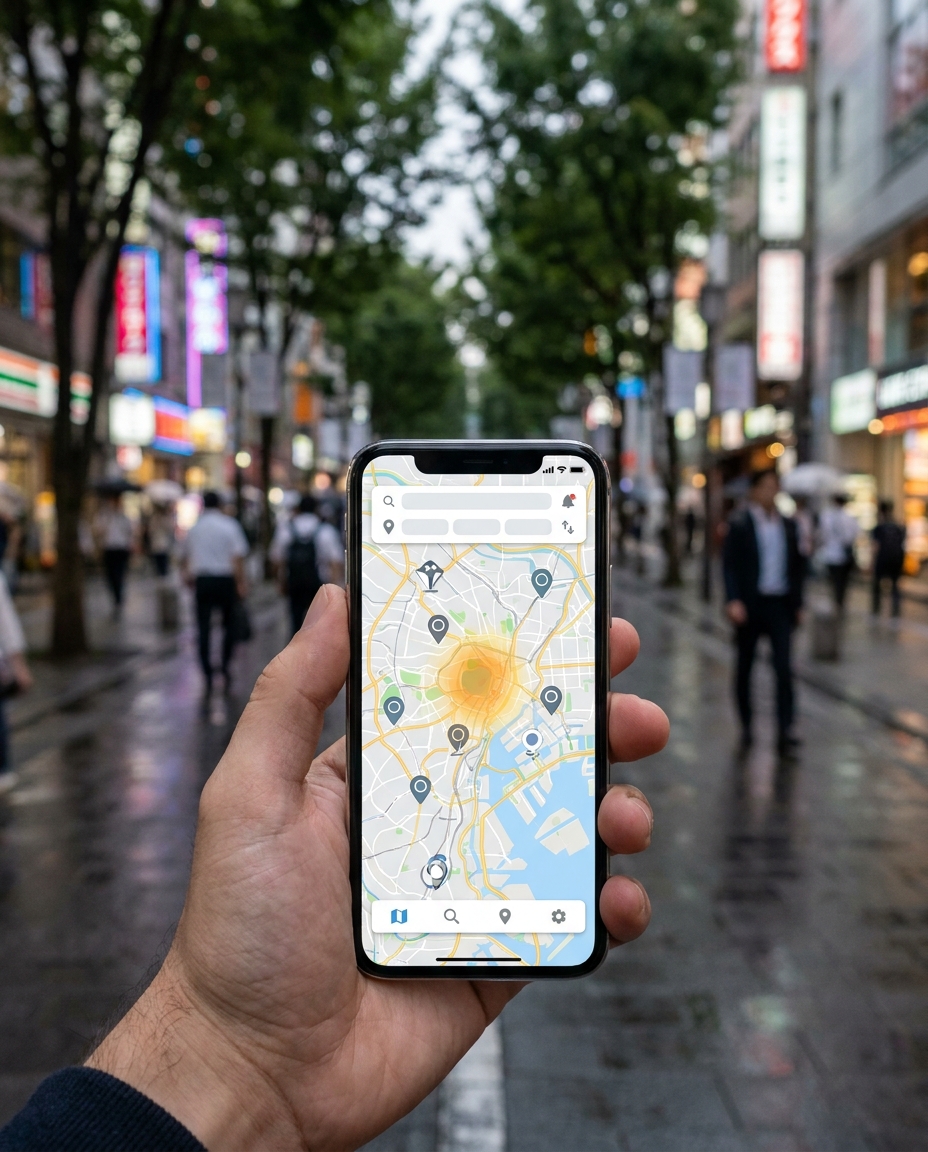
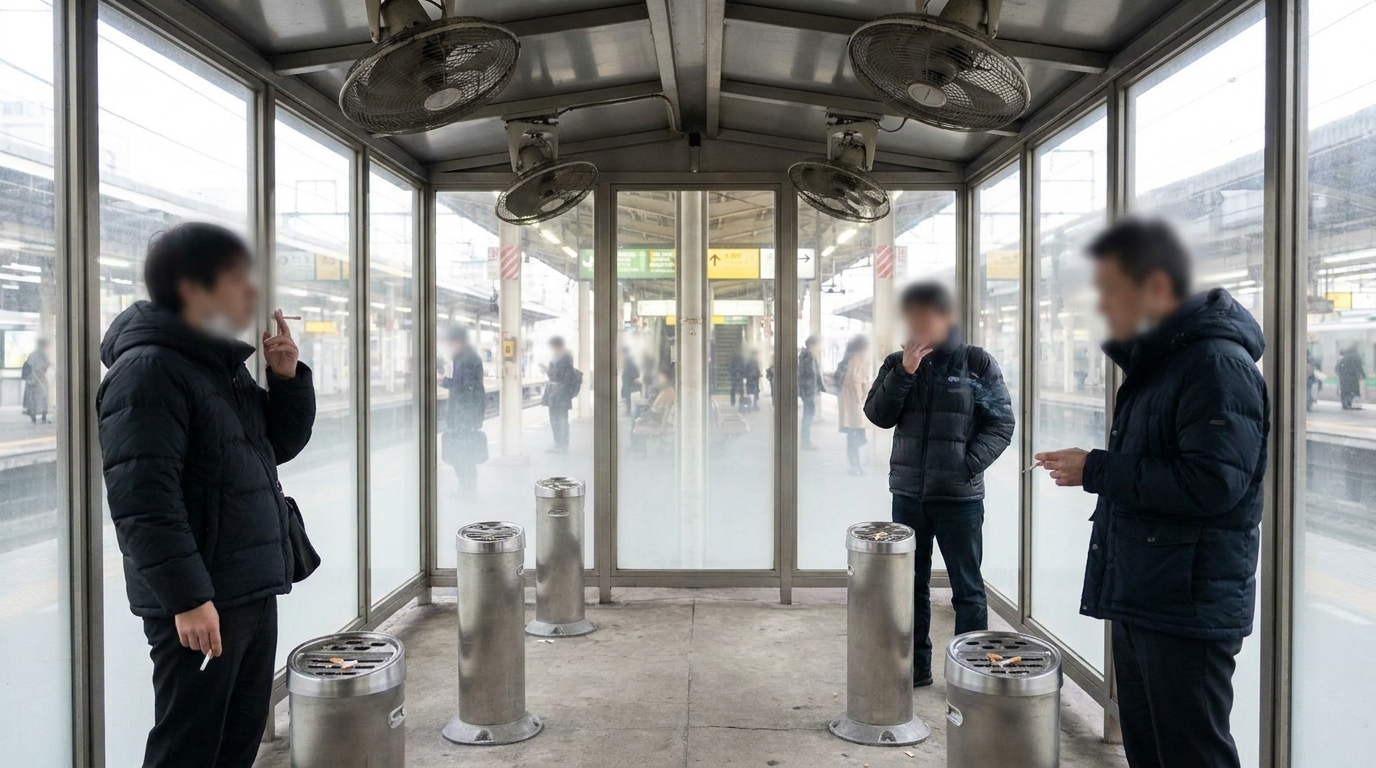
Tokyo has thousands of designated smoking areas (指定喫煙場所 — shitei kitsuen basho). They look like one of three things:
- Glass-walled smoking booths at major stations and shopping streets — fully enclosed, fan-ventilated
- Open-air ash tray stations — a fenced area with ash trays and “Smoking Area” signs
- Convenience store outdoor smoking corners — many 7-Eleven and FamilyMart stores have an ash tray outside (this is being phased out; check that signs still say smoking is OK)
The simplest way to find one:
- Japan Smoking Area app — App Store / Google Play. 12 languages including English. Uses official municipal data.
- Google Maps: search “smoking area” or “喫煙所” near your current location. Coverage is incomplete but usable in central wards. For a deeper guide to using Google Maps in Tokyo, see our Google Maps guide.
- MottoSuitai — free web service showing smoking areas within 400m of your current location
Coverage is densest around Tokyo Station, Shinjuku, Shibuya, Ikebukuro, Shinagawa, Akihabara, and Ueno. In suburban areas the gap between two designated areas can be over 1 km. Plan accordingly.
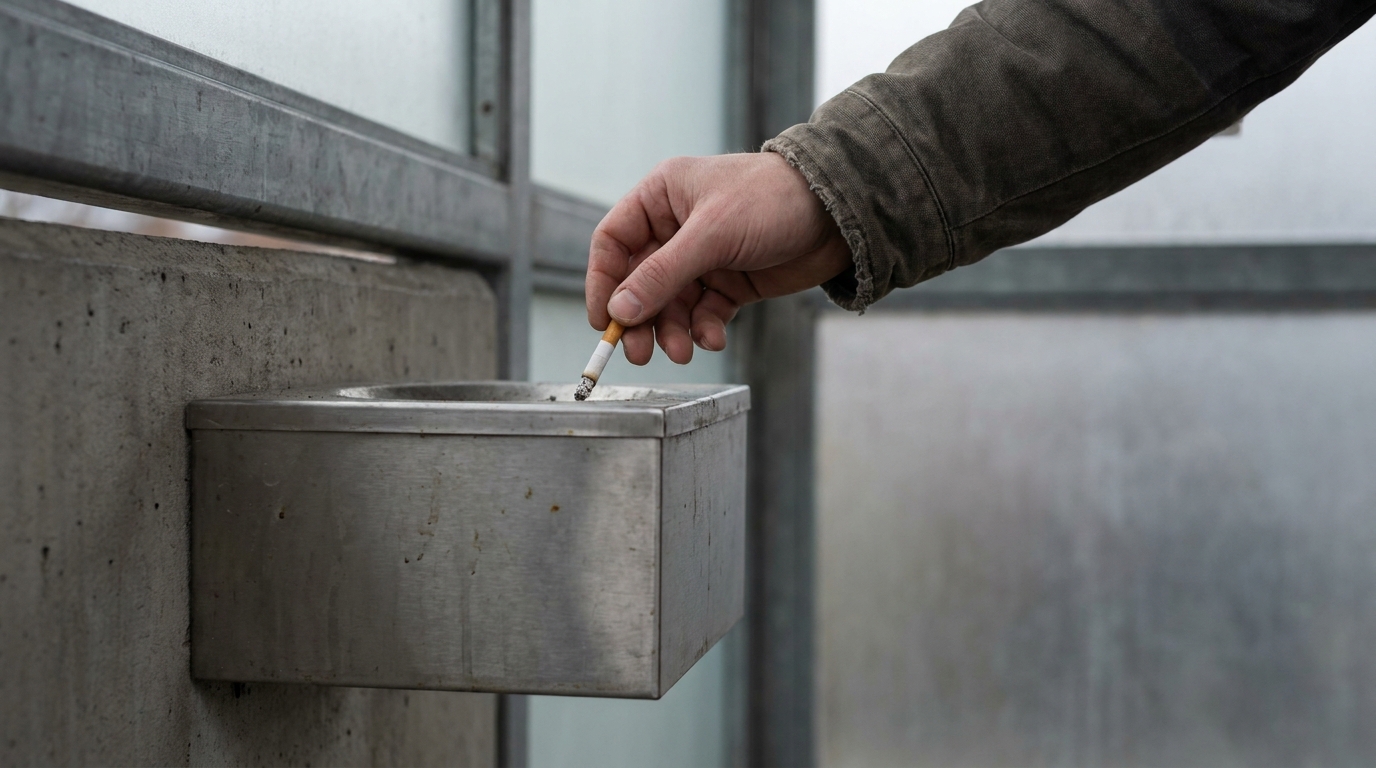
Etiquette inside a designated area:
– Use the ashtray. Throwing a butt on the ground inside a smoking area is rude and in some wards still a litter fine
– Don’t bring food in — many designated booths are smoking-only and prohibit drinks too
– Keep the visit short during rush hour — these spaces fill up fast
Smoking at Your Hotel or Airbnb: Room Rules and Cleaning Fees
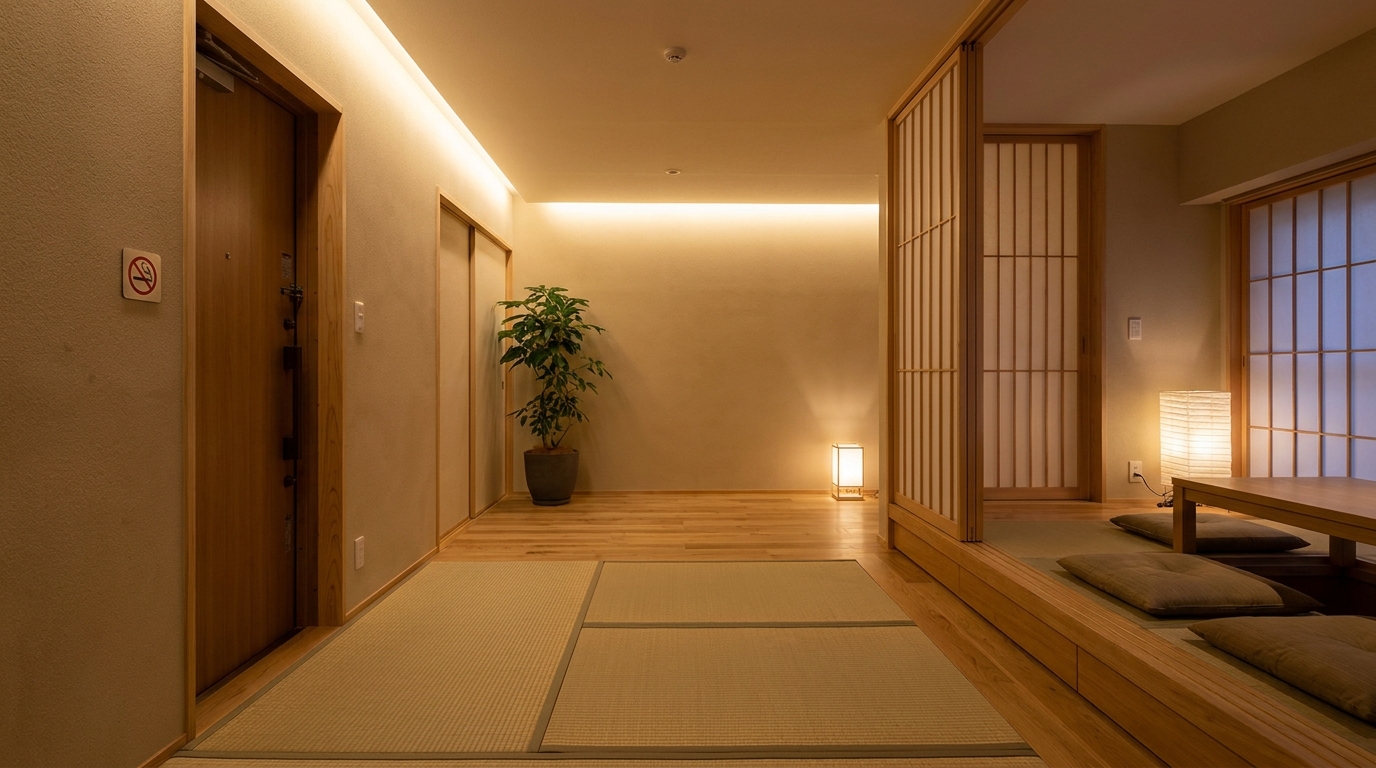
Indoor smoking in hotels, Airbnbs, and minpaku is governed by the property’s own rules, not the ward ordinance. Almost every Tokyo accommodation built or renovated after 2020 is non-smoking by default.
Hotel norms in 2026:
– Most business hotels (APA, Toyoko Inn, Daiwa Roynet, etc.): non-smoking floors only, with paid smoking rooms on request
– Luxury hotels: most smoking rooms have disappeared since the 2020 Health Promotion Act
– Capsule hotels: smoking strictly prohibited inside the pod (most have a designated smoking room)
– Ryokan (traditional inns): often have one smoking room and a separate non-smoking floor
Airbnb / minpaku norms in 2026:
– Most listings are non-smoking, including the balcony
– Hosts can charge a deep-cleaning fee for smoke smell, typically ¥10,000–¥30,000, processed through Airbnb’s Resolution Center
– Some hosts in Tokyo will report a smoking violation to Airbnb, which can affect your future bookings
– Even an opened window does not mask the smell — smoke seeps into curtains and bedding
If you need to smoke during your stay:
- Check the listing’s house rules before booking — Airbnb requires hosts to disclose smoking policy in the listing
- Use the building’s designated smoking area if there is one (some apartment buildings have a rooftop or first-floor smoking spot)
- Walk to the nearest convenience store smoking corner if there’s no in-building option
Hosts and guests have the same problem here: see our Noise Rules guide and Airbnb Starter Guide for the broader context of why Tokyo Airbnbs run strict house rules.
IQOS, Heated Tobacco, and Vaping: What’s Legal, What’s Not
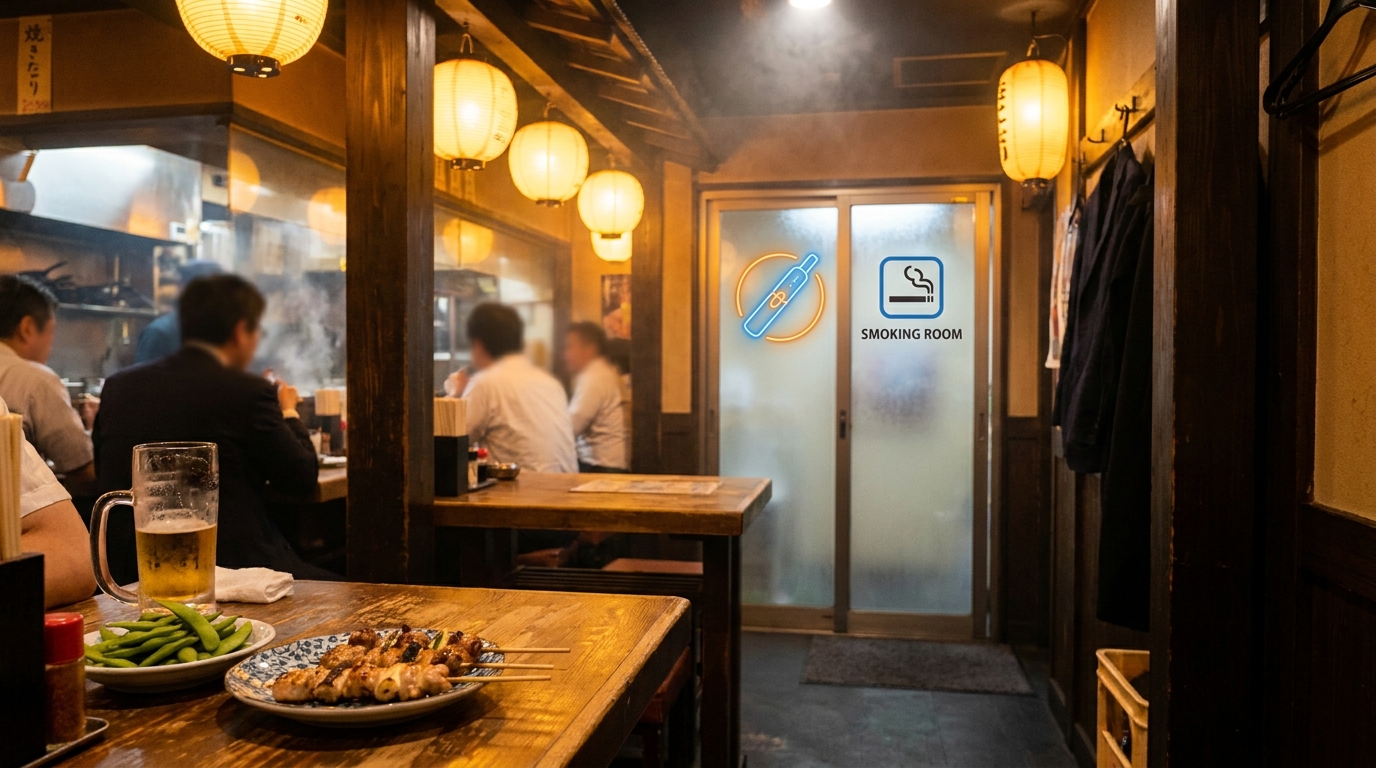
Japan is the world’s largest market for heated tobacco. IQOS (PMI), glo (BAT), and Ploom (JT) are all legal to buy and use. But they are treated as smoking under almost every Tokyo ward ordinance updated after 2024.
Heated tobacco indoors:
– Restaurants and bars with a “heated tobacco only” smoking room (加熱式たばこ専用喫煙室) — legal, and you can eat and drink inside the room
– Restaurants with a general smoking room (喫煙専用室) — heated tobacco is legal, but no eating or drinking
– Smaller restaurants under the 2020 Health Promotion Act transitional rule — may allow heated tobacco in the entire restaurant if it has the correct signage and no minors enter
Heated tobacco outdoors:
– Chiyoda Ward: same ¥2,000 fine as cigarettes (since October 2024)
– Shinjuku Ward: prohibited city-wide (since July 2025), but no fine
– Most other wards: same rule as cigarettes
Vaping (nicotine-containing e-cigarettes):
– Nicotine-containing e-liquid is regulated as a medical product under the Pharmaceutical and Medical Device Act (formerly Pharmaceutical Affairs Act) and not legally sold in Japanese stores — domestic VAPE shops sell nicotine-free liquids only
– Personal import is permitted up to 120 mL (one month’s supply) without a special permit; larger quantities require a Yakkan Shoumei import certificate filed in advance
– Smoke-restriction rules treat vaping the same as smoking in most wards and properties
Where to Buy Cigarettes: Konbini, Vending Machines, and Tobacco Shops
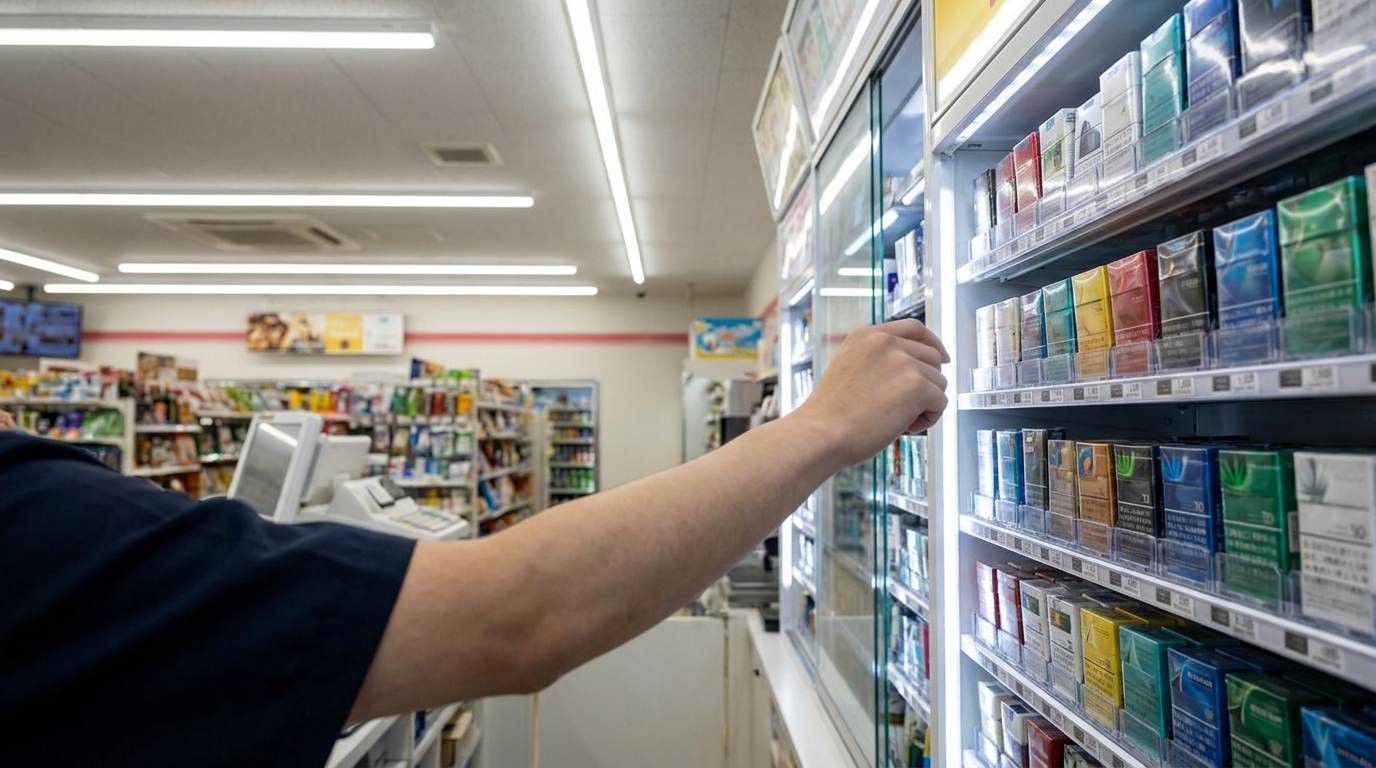
The cigarette retail map in Tokyo changed in April 2026 with the end of taspo.
Konbini (convenience stores) — easiest option for tourists:
– 7-Eleven, FamilyMart, Lawson all sell cigarettes 24/7
– Staff check that you look 20 or older — a quick glance, no ID needed if you obviously look adult
– All major Japanese brands stocked: Marlboro, Seven Stars, Mevius, Hi-Lite, Hope, Caster
– Imported brands (American Spirit, Lucky Strike) at many stores
– Heated tobacco sticks (Terea, Neo, Ploom Sticks) sold in plastic cases of 20
– See our Konbini guide for the broader convenience store playbook
Vending machines — basically closed to tourists in 2026:
– The taspo adult-ID system was discontinued at the end of March 2026 — its 3G mobile network (FOMA) went offline, killing the card system
– New vending machines use driver’s license or My Number card facial-recognition authentication
– Foreign passports do not work with these systems
– Some older machines still operate in tobacco shops with a clerk visually verifying age, but these are rare in central Tokyo
– See our Vending Machine guide for what vending machines still serve tourists
Tobacco specialty shops (たばこ屋):
– Smaller, family-run shops in older neighborhoods (Asakusa, Yanaka, Sugamo)
– Often have a wider selection of rolling tobacco and imported brands than konbini
– Some serve cigarettes alongside coffee or basic groceries
Typical 2026 prices (per pack of 20, May 2026 reference):
– Mevius: ¥580
– Seven Stars: ¥600
– Marlboro: ¥600 (scheduled to rise to ¥620 from April 2026 per JT and Philip Morris Japan announcements)
– Hi-Lite / Hope / Caster (cheaper Japanese brands): around ¥530
– Heated tobacco sticks (IQOS Terea, Ploom Evo, glo Neo): around ¥550–¥580 per pack of 20
Cigarette and heated tobacco prices in Japan are scheduled to rise step-by-step through 2029 as the tobacco tax is restructured. Verify current prices at any konbini before stocking up.
What If You’re Caught Smoking? Penalty Procedure for Tourists
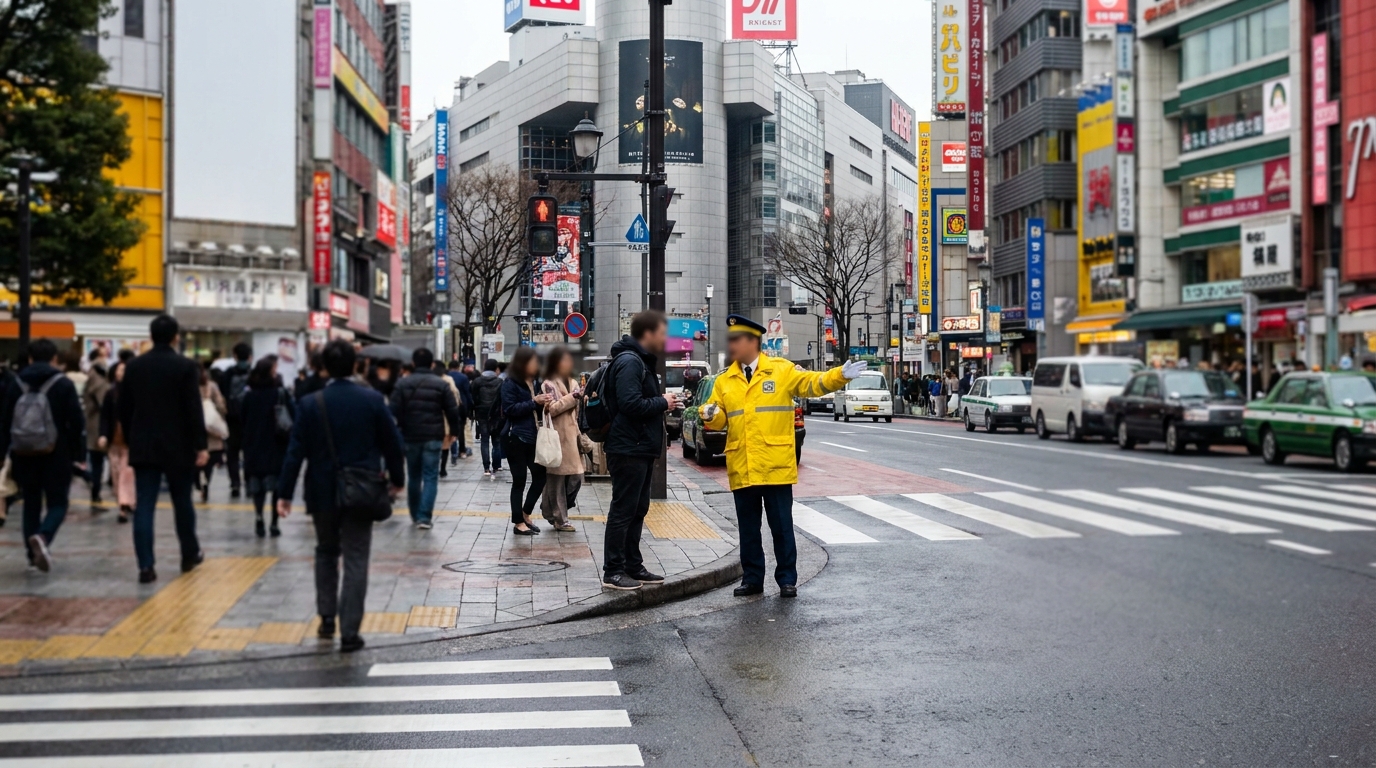
In wards with a fine system (Chiyoda and Shibuya at ¥2,000, Shinagawa at ¥1,000 in designated zones, and several other wards), the procedure usually works like this:
- A uniformed patrol officer (often a contracted enforcement staffer in a yellow jacket, not a police officer) approaches you and asks you to stop smoking
- They ask you to confirm your identity — your passport is usually enough
- They issue an on-the-spot fine notice. In wards like Chiyoda and Shibuya the amount is ¥2,000
- You pay in cash on the spot. Card payment is rarely possible.
- A receipt is issued
English ability of patrol officers varies. In Chiyoda and Shibuya — which see the most tourists — at least one officer in most patrol teams can manage basic English. In other wards you may need to use a translation app.
If you are not carrying enough cash, you may be asked to walk to a nearby convenience store ATM. Refusing to pay is technically possible — the penalty is technically a 過料 (administrative fine) and not a criminal fine, so non-payment does not create a criminal record — but it can escalate to a court order. For a short-stay tourist the practical advice is: just pay.
If the fine seems wrong (you were inside a designated area, or the officer mistook a vaping device for a cigarette), you can request a written record and dispute it later through the ward office. Most wards have a complaint form on their website.
This is not legal advice: the descriptions above are based on publicly available ward materials as of May 2026. Specific situations vary, and the only authoritative source for what happens in your case is the ward office itself.
Frequently Asked Questions
Q1. Can I smoke on a hotel room balcony in Tokyo?
The street ordinance does not reach a private hotel balcony, but the hotel’s own house rules almost always prohibit smoking on balconies in non-smoking rooms. If you do, a deep-cleaning fee of ¥10,000–¥30,000 may be added to your bill. Always check the hotel’s room information card.
Q2. Are there smoking-allowed hotels in Tokyo?
Yes — most major business hotel chains (APA, Toyoko Inn, Daiwa Roynet, Richmond Hotel) still keep a small number of smoking rooms on dedicated floors. They book out faster than non-smoking rooms during peak seasons. Filter by “smoking room” on Booking.com or Rakuten Travel.
Q3. Is vaping easier than smoking in Tokyo for a tourist?
Not really. Most ward ordinances treat vaping like smoking. Nicotine-containing e-liquid is regulated as a pharmaceutical and not sold in Japanese stores, so you need to bring your own supply. Restaurants and trains apply the same indoor rule to vaping as to cigarettes.
Q4. Can I smoke at Shibuya Crossing?
No. Shibuya Ward has a city-wide ban with a ¥2,000 fine, and Shibuya Crossing is a flagship enforcement spot. There’s a designated smoking area inside the Shibuya Station JR concourse and one near the Hachiko exit — both clearly marked.
Q5. What about smoking at parks like Yoyogi Park or Ueno Park?
Tokyo’s major parks are non-smoking, with small designated areas inside. Yoyogi Park has signs at every entrance. Ueno Park has a designated area near the main entrance from Ueno Station.
Q6. Can I smoke on a Shinkansen or train?
Tokyo metropolitan trains (JR, Tokyo Metro, Toei, private lines) are non-smoking throughout. The Tokaido Shinkansen became fully smoke-free on March 16, 2024 — the standing smoking rooms in cars 3, 10, and 15 were removed, and N700S cars converted what was originally smoking space into business booths. Smoking on a train is grounds for being asked to leave at the next station.
Q7. What if I smoke in my Airbnb room?
Most Tokyo Airbnb listings are non-smoking. Hosts can charge a deep-cleaning fee (¥10,000–¥30,000 typical) and report the violation to Airbnb, which may affect your account standing. Smoke smell on bedding and curtains is impossible to hide; hosts notice within minutes of checkout.
Q8. Are heated tobacco sticks (IQOS, glo, Ploom) cheaper or more expensive than cigarettes?
Roughly the same price (around ¥580–¥600 per pack of 20). Heated tobacco is treated under a slightly different tax structure in Japan, but the retail difference is small.
Q9. Can I bring my own cigarettes from home?
Yes, within Japan Customs duty-free limits for non-residents (per Japan Customs guidance as of 2026):
- 200 Japanese-brand cigarettes, OR
- 400 foreign-brand cigarettes, OR
- 100 cigars, OR
- 500 g of other tobacco, OR a combination not exceeding 500 g total
- Heated tobacco sticks (IQOS, Ploom, glo): up to 250 g
You must be 20 or older. Mixing the cigarette categories (Japanese + foreign) above the single-type limit triggers duty payment on the excess.
Q10. What is the absolute safest spot to smoke in central Tokyo?
Inside a designated smoking booth at a major station (Tokyo, Shinjuku, Shibuya, Ikebukuro, Shinagawa) or inside a designated smoking room at a hotel. Outside of those two categories, ordinances and house rules change too often to guarantee safety.
Quick Reference: Designated Smoking Areas by Major Station
| Station | Closest Designated Area | Notes |
|---|---|---|
| Tokyo Station | Marunouchi side near the bus terminal; Yaesu side underground concourse | Locations occasionally change — check the Japan Smoking Area app for the latest |
| Shinjuku Station | South Exit plaza booth; West Exit underground booth; New South Exit | Heated tobacco prohibited city-wide since July 2025 |
| Shibuya Station | Hachiko Exit area; Inside JR concourse | Ward-wide ¥2,000 fine outside designated areas |
| Ikebukuro Station | East Exit (Sunshine City direction); West Exit underground | Toshima Ward priority zone |
| Akihabara Station | Electric Town Exit; Showa-dori Exit | Chiyoda Ward — ¥2,000 fine outside designated areas |
| Ueno Station | Park Exit near park entrance; Shinobazu Exit | Inside Ueno Park there’s a separate area |
Sources:
– Chiyoda Ward Official: https://www.city.chiyoda.lg.jp/koho/machizukuri/sekatsu/jore/bika/
– Shibuya Ward Official: https://www.city.shibuya.tokyo.jp/kankyo/machi-seiso/kitsuen/kituenrule.html
– Shinjuku Ward Official: https://www.city.shinjuku.lg.jp/seikatsu/seikankyo03_000103.html
– Minato Ward Official: https://www.city.minato.tokyo.jp/kankyo-machi/kankyo/tobacco/index.html
– Health Promotion Act amendment (MHLW): https://jyudokitsuen.mhlw.go.jp/point/
– taspo discontinuation notice: https://www.taspo.jp/TspEndNotice.html
Disclaimer: This article describes Tokyo ward ordinances and national tobacco regulations as of May 2026. Specific rules may change without prior notice. The information is general guidance, not legal advice. For binding rules in any specific situation, consult the ward office or a qualified legal professional.
About Real Japan Guide: Practical 2026 Tokyo travel information from a Tokyo-based host who has handled over 15,000 guest-nights of Airbnb stays and reviews hundreds of local restaurants and venues on Tabelog (12,000+ followers) and Google Maps (Local Guide Lv.10). We focus on what tourists actually need on the ground, not what looks good on a brochure.

Comments