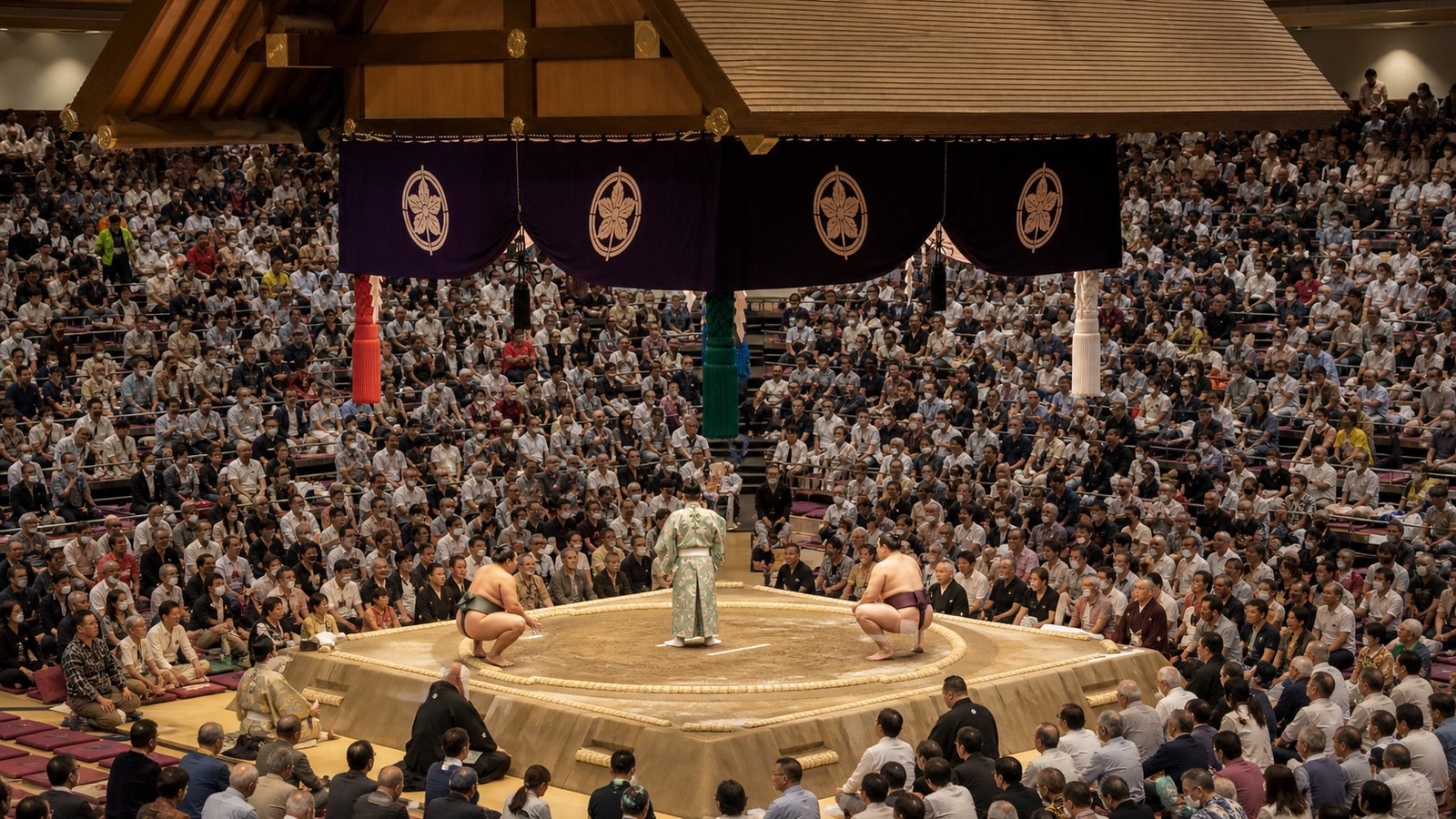
The Fukuoka Grand Sumo Tournament is not a one-evening sports event. It runs for 15 days, lower-division bouts begin well before the top division, and the seat that looks most traditional may be the least comfortable choice for your body or group.
For 2026, the official tournament dates are Sunday, November 8 through Sunday, November 22 at Fukuoka Kokusai Center. Advance ticket sales are scheduled to begin on Saturday, September 19, while the banzuke—the official ranking list—is scheduled for Monday, October 26.
That creates the central traveler decision: buying early gives you a better chance of getting a workable date and seat, but waiting for the banzuke means accepting a higher sell-out risk. The official English sales page now publishes the 2026 Fukuoka price table, sale time, ticket-collection method and opening times, so this guide turns those details into a practical booking plan.
- Quick answer: what should a first-time visitor do?
- The three dates that control your booking decision
- Which day of the 15-day tournament should you choose?
- Chair seat or masu box? Choose for your body, not the photograph
- How tourists can buy through Ticket Oosumo English
- What time should you arrive?
- Getting to Fukuoka Kokusai Center from Hakata or Tenjin
- Sold out? Use this official-channel decision tree
- Your final 2026 booking checklist
- Frequently asked questions
- When is the Fukuoka Grand Sumo Tournament in 2026?
- When do 2026 Fukuoka sumo tickets go on sale?
- Can foreign tourists buy sumo tickets online?
- Should a first-time visitor choose a chair seat or a masu box?
- Are 2026 Fukuoka seat prices confirmed?
- What time should I arrive at Fukuoka Kokusai Center?
- How do I get to Fukuoka Kokusai Center?
- What should I do if official tickets are sold out?
- Official sources and last checked
Quick answer: what should a first-time visitor do?
- Choose two acceptable tournament dates before September 19, not just one preferred day.
- For a solo traveler, couple, or anyone who dislikes floor sitting, start with chair seats.
- Consider a masu box when your group understands that it is Japanese-style floor seating and that boxes are commonly sold as a group unit.
- Use the Japan Sumo Association's official schedule and Ticket Oosumo English rather than an unverified resale listing.
- Treat first day, final day and weekends as the dates most likely to require a fast purchase. This is a planning inference, not a promise about 2026 inventory.
- If your first choice sells out, check official inventory again because returned or unpaid tickets may be released later.
- Do not go to Fukuoka Kokusai Center counting on a door sale. Prepare a separate Fukuoka day plan before travel.
- Recheck the official event page before payment and travel because availability, notices and operating details can still change.
| Your situation | Best first choice | Main tradeoff | Plan B |
|---|---|---|---|
| Solo traveler | One chair seat on a weekday | Farther from the ring than premium floor seating | Try a second weekday before changing seat category |
| Couple | Two adjacent chair seats | Adjacency is subject to the booking system and inventory | Choose a second date; do not assume a box is cheaper |
| Group of four comfortable on the floor | Masu box, if offered in the 2026 Fukuoka release | Long periods on cushions with limited personal space | Buy chair seats if anyone has knee, hip or back concerns |
| Traveler with limited mobility | Chair or designated accessible seating confirmed in the current release | Event-specific access rules require checking | Contact the official seller or organizer before purchasing |
| Fixed weekend itinerary | Buy promptly when official sales open | Higher competition is likely | Keep one weekday or non-sumo Fukuoka day as backup |
| No official inventory available | Do not move to an opaque reseller | You may miss the tournament | Recheck official returned inventory and activate your Fukuoka Plan B |
Information checked August 9, 2026. The tournament dates, 10:00 a.m. JST sale time, price table, English-service fee, ticket-collection method and opening times are published. Inventory is not yet on sale, and event notices can still change.
The three dates that control your booking decision
The Japan Sumo Association's 2026 schedule confirms these milestones:
| Milestone | Official date | What it means for you |
|---|---|---|
| Advance ticket sales begin | Saturday, September 19, 2026 | Have two dates and two acceptable seat categories ready before this day |
| Banzuke announcement | Monday, October 26, 2026 | The official rankings arrive after the ticket sale starts |
| First day | Sunday, November 8, 2026 | Opening Sunday; likely to attract strong interest |
| Day 8 | Sunday, November 15, 2026 | Middle Sunday; another likely high-demand choice |
| Final day | Sunday, November 22, 2026 | Championship conclusion; do not treat it as an easy fallback |
Buy before the banzuke if the experience matters more than one wrestler
If your goal is to experience a full tournament day, see the ceremonial entrances and watch top-division sumo, buying when official sales open is the lower-friction choice. Wrestlers can be injured, withdraw or change rank, so no ticket can guarantee a particular matchup months in advance.
Choose a date that works for your Fukuoka itinerary first. Treat the athlete lineup as important but not controllable.
Wait for the banzuke when lineup information is essential
The banzuke is scheduled for October 26, more than five weeks after advance sales begin. Waiting may help a knowledgeable fan understand the ranking picture, but it may leave fewer dates and seat types. Do not call that strategy “better”; it is a deliberate exchange of ticket availability for later information.
Why two dates are more resilient than one preferred date
Ticket Oosumo English says its sales are processed first come, first served and close when inventory sells out. Seat numbers are assigned by the system rather than chosen in a simple visual seat picker. A traveler with a single acceptable date and one category has no useful second move if that combination disappears.
Write this before the sale:
- first-choice date;
- second-choice date;
- first-choice seat category;
- second-choice seat category;
- maximum total budget, including service fees;
- the name that matches your payment card and identification.
Booking-timeline image: a traveler at a hotel desk preparing a calendar reminder and two date options beside a laptop, with a subtle sumo-ticket context but no readable interface, logo or pseudo-text.
Which day of the 15-day tournament should you choose?
The tournament operates across 15 days, but the atmosphere and ticket pressure are not identical.
First day: ceremony and opening-weekend energy
Sunday, November 8 is the opening day. It is an attractive choice if the beginning of the tournament matters to you, but it also combines opening interest with a weekend. Keep another date ready rather than assuming a premium seat will remain available.
Final day: the strongest finish and the weakest Plan B
Sunday, November 22 is the final day. The championship and special-prize picture may be decided late in the afternoon. It is also the least flexible choice: if the day sells out, there is no later day in the tournament.
Choose it because the conclusion matters to you, not because it is the last entry on the calendar.
Weekdays: the practical first-time target
The weekday dates are November 9–13 and November 16–20. They can fit travelers who have schedule flexibility and do not require the opening or final-day atmosphere. The official seller does not guarantee that any weekday will remain available, but a two-weekday strategy gives you more combinations than a weekend-exclusive plan.
Day 8: a popular-sounding compromise that is still a Sunday
Day 8 falls on Sunday, November 15. It sits at the tournament midpoint, but it is not automatically a low-demand middle date. If you choose it, use the same preparation as the opening and final Sundays.
If your itinerary can use Tokyo instead, compare RJG's Tokyo September Sumo 2026 guide; its venue and ticket dates are different, so do not transfer its details to Fukuoka.
Chair seat or masu box? Choose for your body, not the photograph
The Japan Sumo Association's English ticket guide describes two common visitor choices: masu-seki, Japanese-style box seating where you sit on the floor, and arena chair seats, similar to normal stadium seating. The official 2026 Fukuoka ticket page now gives event-specific prices and says box seats are sold by the box.
The official English page lists these tax-inclusive prices using “weekday” and “weekend/holiday” bands. Confirm the price shown for your exact date before payment.
| Seat category | Weekday | Weekend/holiday | Sold as |
|---|---|---|---|
| Chair S | ¥5,500 | ¥6,000 | One seat |
| Chair A | ¥4,500 | ¥5,000 | One seat |
| Chair B | ¥2,500 | ¥3,000 | One seat |
| Chair C | ¥2,000 | ¥2,500 | One seat |
| Box A | ¥44,000 | ¥52,000 | Four-person box |
| Box B | ¥38,000 | ¥40,000 | Four-person box |
| Box C | ¥32,000 | ¥34,000 | Four-person box |
| Special C box | ¥19,000 all days | ¥19,000 all days | Four-person box used by two guests |
| Pair seat with table | ¥19,000 all days | ¥19,000 all days | Two guests, chair seating with a table |
Ringside seats are ¥20,000 per person, and Box S is ¥52,000 on weekdays or ¥56,000 on weekends and holidays, but the official page directs both categories to Ticket Oosumo Japanese rather than the English service. The English service also displays a ¥2,000 service fee per ticket. Treat the checkout total—not a hand calculation—as final.
| Seat type | Choose it when | Think twice when |
|---|---|---|
| Chair seat | You are solo, a couple, tall, or want an ordinary seated posture | You expect a ringside view at the lowest price |
| Masu box | Your group values the traditional floor-seating experience and can remove shoes and sit compactly on cushions | Anyone has knee, hip, back or mobility limitations |
| Ringside/tamari, if offered | You understand the event-specific restrictions and want the closest experience | You need a normal chair, easy movement, or a low-risk seat |
| Accessible seating | You need a wheelchair or specific access arrangement | You have not confirmed the current event's eligibility and booking method |
The box price is not necessarily a per-person bargain
The 2026 Fukuoka page prices ordinary boxes as four-person units, while chair prices are per seat. Divide the box total by the number of people actually traveling, then compare the complete checkout total. A couple buying an ordinary four-person box can pay for unused capacity; the two-person Special C box or pair seat may be a better comparison when available.
Comfort becomes more important over a full day
Sumo develops from lower divisions in the morning toward the highest-ranked bouts later in the day. A floor position that feels atmospheric for 20 minutes can feel very different after several hours. If you are uncertain, choose the ordinary chair.
Do not use a generic venue seating chart as the sumo seat map
Fukuoka Kokusai Center publishes facility diagrams, but event organizers can change the floor layout. Wait for the Japan Sumo Association's 2026 Fukuoka ticket page before treating a block, direction or row as your actual sumo position.
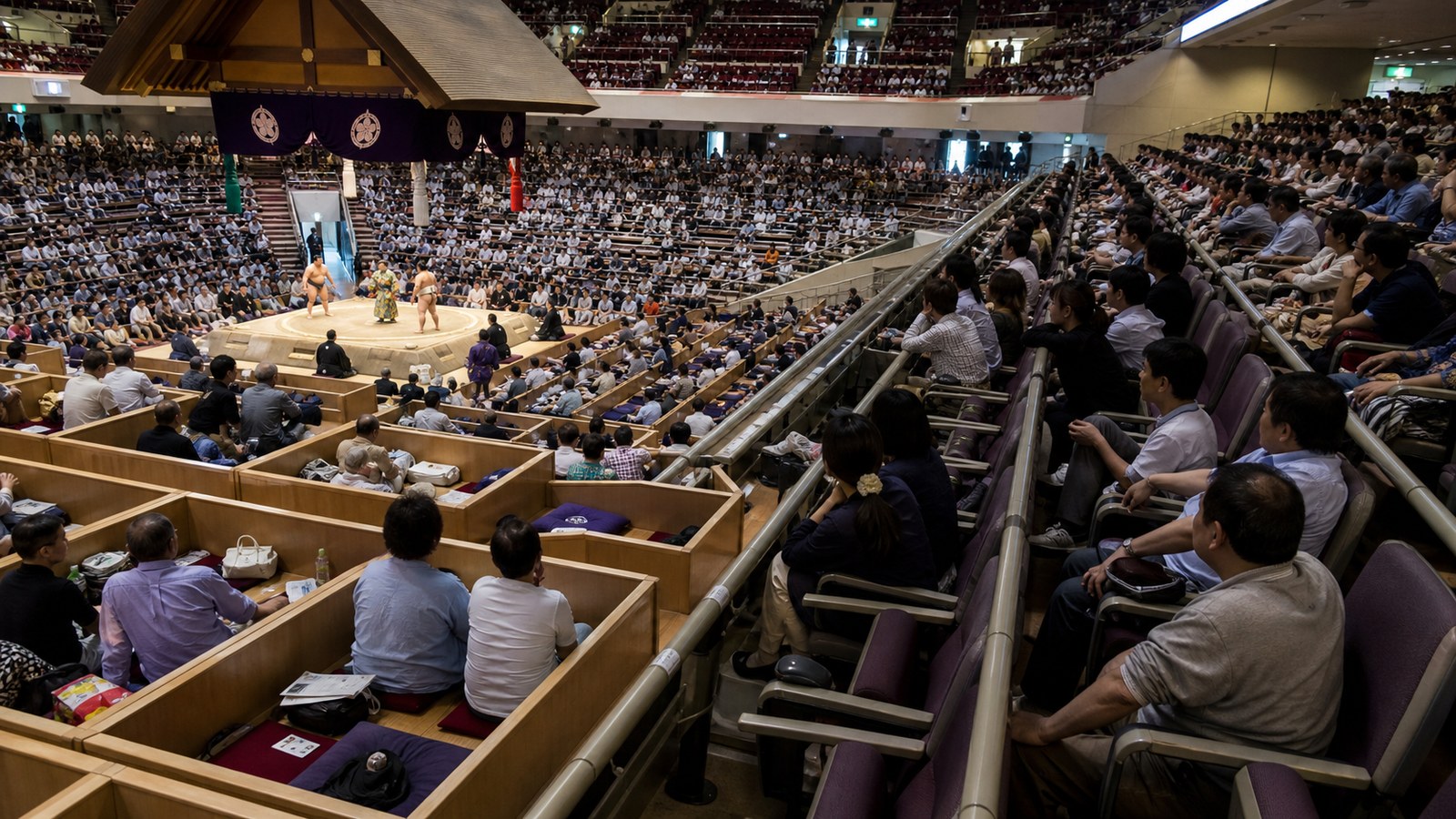
Seat-choice image: a realistic arena view showing Japanese floor box seating in the lower level and individual chair seating above, with a clear difference in posture and space, no text or real wrestler likeness.
How tourists can buy through Ticket Oosumo English
The association links Ticket Oosumo English as its official English purchase route. For the 2026 Fukuoka tournament, the event-specific English page says:
- Sales open at 10:00 a.m. Japan time on Saturday, September 19.
- Payment requires a credit card; bank transfer is not offered through the English route.
- The English service charges ¥2,000 per ticket.
- Tickets must be printed at a Seven-Eleven in Japan; follow the purchase-completion screen and email for the collection procedure.
- Your seat number becomes visible when the ticket is issued.
- Purchased tickets cannot be changed or canceled, and a lost ticket does not permit entry.
The general Ticket Oosumo help page also says orders are first come, first served, seat numbers are assigned by random draw and results may take up to 96 hours by email. Where the general help and the Fukuoka-specific page differ, follow the event-specific purchase screen and confirmation email.
A five-minute setup before sales open
- allow email from
ticket-oosumo@pia.co.jp; - use an email account you can open in Japan;
- confirm your payment card works for Japanese online purchases;
- plan when you will reach a Seven-Eleven in Japan to print the ticket;
- keep your second date and seat category on the same screen or paper;
- save the confirmation email offline, but do not treat a screenshot as the printed admission ticket.
If this is your first event-ticket purchase in Japan, read RJG's How to Buy Event Tickets in Japan as a Tourist before September 19.
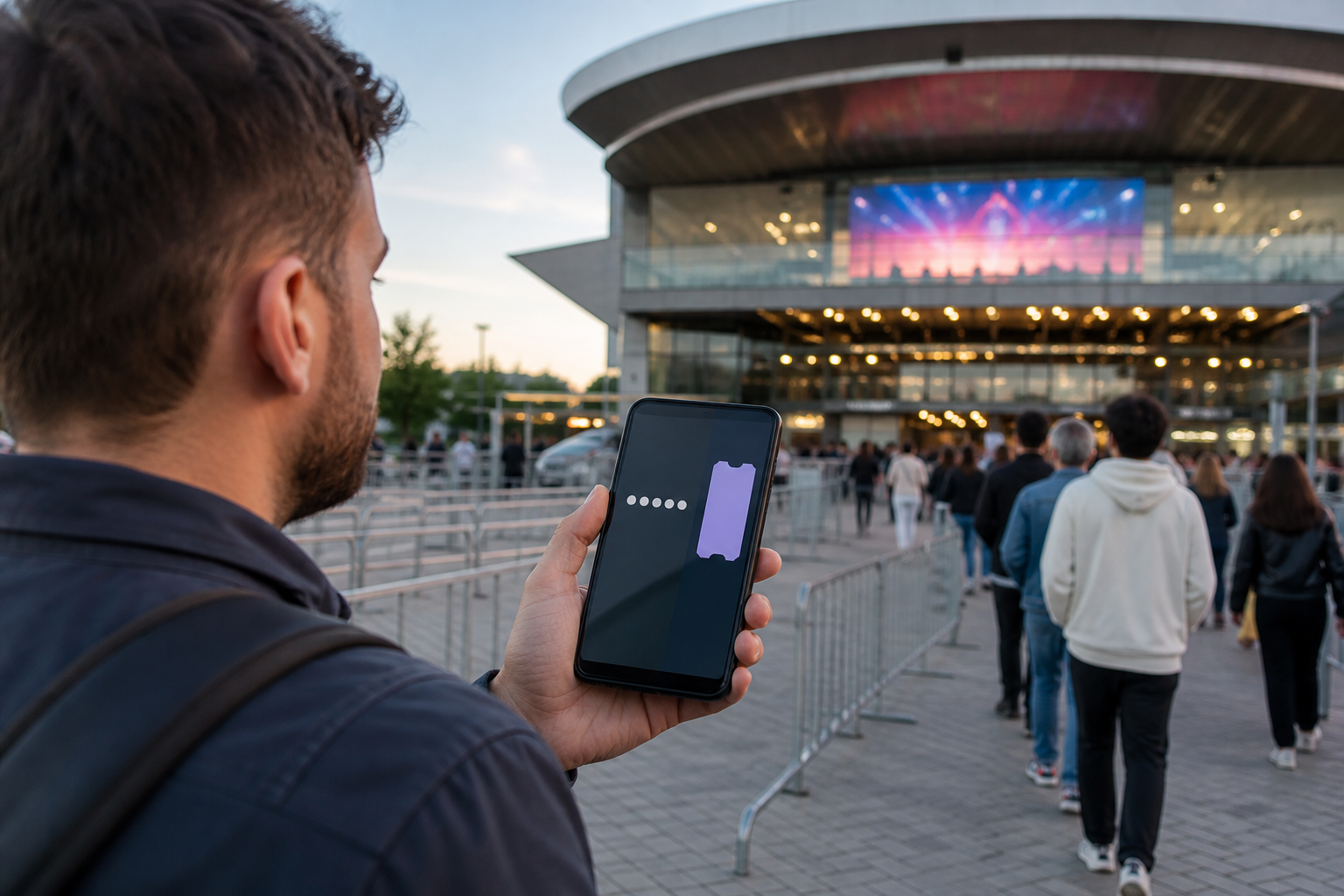
Official-route preparation image: close editorial view of a traveler holding a passport and payment card beside a laptop and email-ready phone, with screen content intentionally unreadable and no company logos.
What time should you arrive?
The official 2026 Fukuoka ticket page publishes these opening times:
- 8:45 a.m. from November 8 through November 19;
- 10:30 a.m. on Friday, November 20 and Saturday, November 21;
- 10:00 a.m. on the final day, Sunday, November 22.
The Ticket Oosumo page says matches begin in the morning and finish around 6:00 p.m., with top-division matches starting around 2:00 p.m. These are planning times rather than guarantees for one exact bout.
Use one of these three arrival styles:
| Experience you want | Planning approach | What you give up |
|---|---|---|
| Full-day sumo culture | Arrive near the opening time for your date and watch the divisions build | A long day and more floor-sitting time if you chose a box |
| Balanced first visit | Enter before early afternoon so you can settle in before the main top-division period | Some morning lower-division bouts |
| Top division only | Be seated well before the approximate 2:00 p.m. main-match period | Much of the progression that makes a tournament day distinctive |
The event-specific page also says you may leave and re-enter as often as needed during the day, provided you return by 5:00 p.m. Follow the current on-site procedure and staff instructions when exiting.
Do not schedule a tight dinner reservation after the final bouts
The last ceremony, crowd movement and bus queue can push your practical departure later than the final bout. A reservation that cannot tolerate delay creates pressure to leave through the busiest flow. Choose a flexible dinner or keep it near your accommodation.
Pack for a long indoor event
Bring the smallest practical bag, a charged phone, payment backup and any medication you normally require. Re-entry is confirmed on the 2026 ticket page, but do not import baggage, food or locker details from last year. The Japan Sumo Association page for “enjoying the venue” was still labeled as 2025 information during this check, so its food trucks, baggage service and other venue features are not claimed as 2026 facts here.
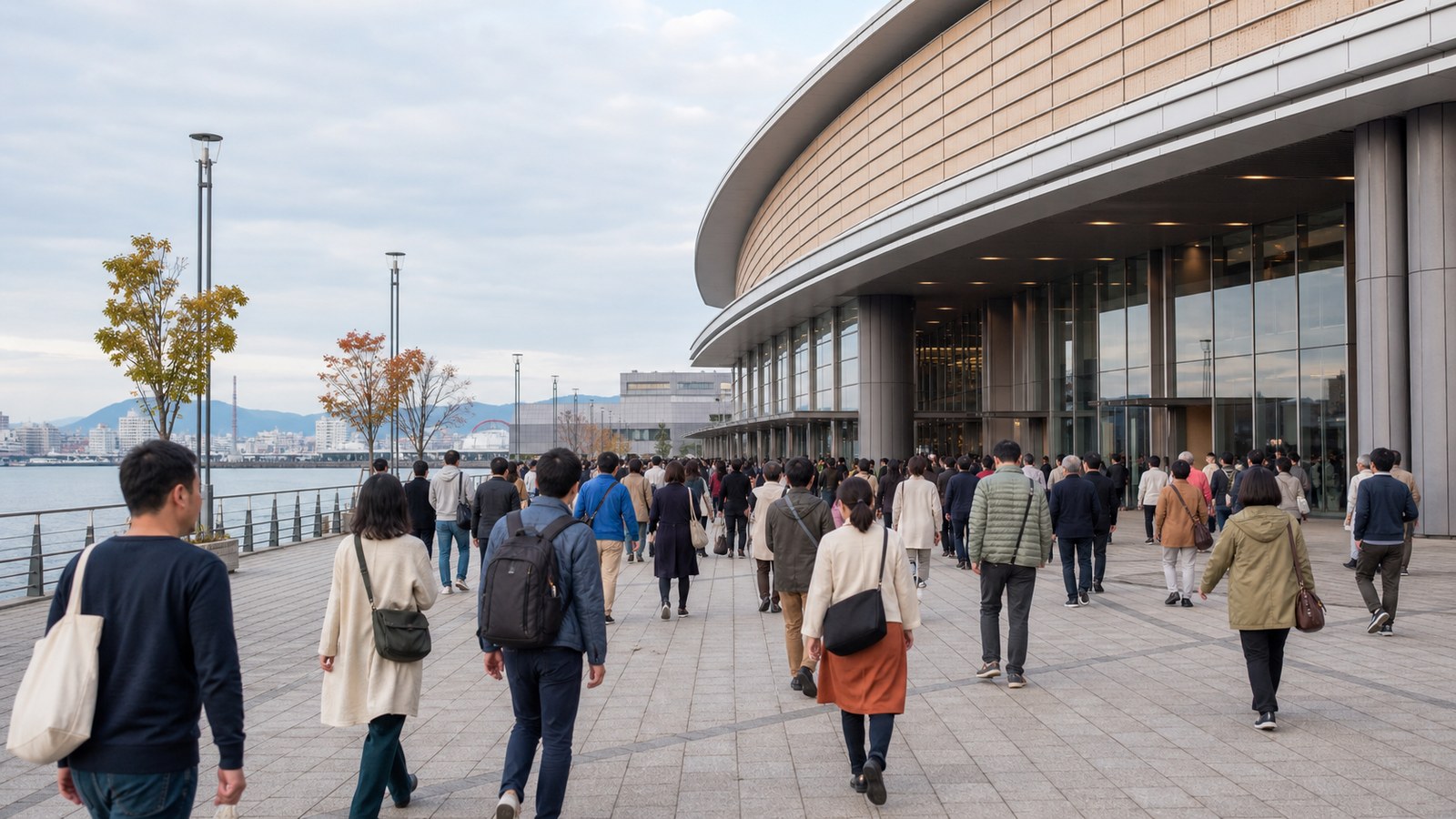
Match-day flow image: spectators arriving calmly at a modern indoor arena in daylight with compact bags and phones ready, no exact building recreation, signs, logos or identifiable faces.
Getting to Fukuoka Kokusai Center from Hakata or Tenjin
The official Fukuoka tournament access page lists Fukuoka Kokusai Center at 2-2 Chikko Honmachi, Hakata-ku and gives these Nishitetsu bus options.
From Hakata Station
Use the F stop near Fukuoka Center Building and check one of these routes:
- Route 88 toward Chuo Wharf, getting off at International Conference Center/Sun Palace;
- Route 99 toward Hakata Wharf, getting off at International Center/Sun Palace.
From Tenjin
Use Solaria Stage-mae stop 2A and check:
- Route 80 toward Chuo Wharf, getting off at International Center/Sun Palace;
- Route 90 toward Hakata Wharf, getting off at Hakata Wharf Entrance;
- Route 25 toward Kaizuka Station, getting off at Hakata Wharf Entrance or Sekijomachi.
These are route identities, not a promise of one fixed departure time. Check the live Nishitetsu timetable and service notice on the day.
Build the exit before you build the arrival
Save both Hakata and Tenjin as acceptable return directions. After the final bouts, do not join the longest queue automatically. Follow event staff and compare the current bus options from the stops that remain practical.
If your IC card is unfamiliar, RJG's Suica or PASMO in 2026 guide explains how Japan's major interoperable cards work. Confirm the fare method with Nishitetsu before boarding rather than assuming the bus door and payment sequence match Tokyo.
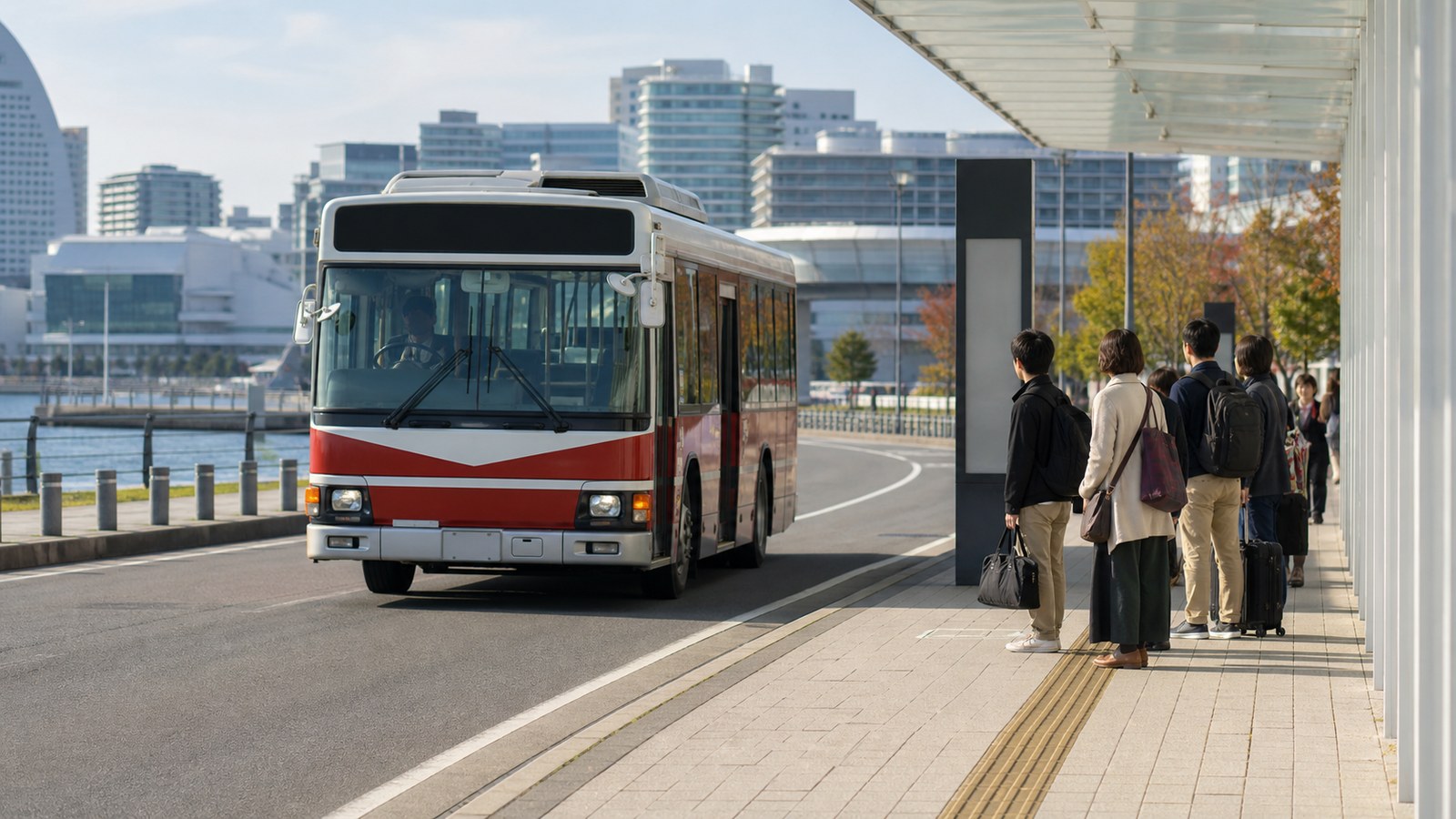
Fukuoka access image: a clean red-and-white city bus approaching a waterfront convention district while lightly equipped travelers wait in an orderly line, with no route number, logo or readable stop text.
Sold out? Use this official-channel decision tree
Ticket Oosumo English says sales close when inventory is gone, but it also notes that further sales may occur and that tickets returned because of non-payment can be released. That creates a legitimate Plan B without promising that more tickets will appear.
- Recheck the official English ticket page.
- Try your second date.
- Try your second seat category within your fixed budget.
- Recheck later for official returned inventory.
- If official inventory remains unavailable, stop. Do not let sunk travel costs push you into an opaque resale purchase.
Do not rely on a last-minute door sale
The official 2026 Fukuoka page had not announced a fixed same-day ticket allocation during this check. Traveling to the venue without a confirmed ticket can leave you outside with no match access.
Do not treat last year's outdoor area as a confirmed 2026 substitute
The live venue-entertainment page currently carries a warning that its content is for the 2025 November tournament. It describes an outdoor food area and monitor from last year, but that is not evidence that the same setup, hours or public access will return in 2026.
Prepare a real Fukuoka day instead
Your backup should work even without arena entry. Choose one compact city plan near Hakata or Tenjin, keep it cancel-free, and activate it as soon as you decide not to buy an unofficial ticket. The goal is not to imitate live sumo; it is to prevent one sold-out event from wasting a day of your trip.
If you are still building the wider itinerary, RJG's Japan Travel Times from Tokyo helps separate realistic travel days from map-distance assumptions.
Sold-out Plan B image: a traveler in central Fukuoka calmly switching from a generic ticket page to a city-day plan on a phone, with warm daylight, no disappointment theatrics and no readable screen text.
Your final 2026 booking checklist
Before September 19:
- Save the official 2026 tournament schedule.
- Choose two dates.
- Choose chair or masu seating based on comfort.
- Set a maximum total budget including fees.
- Allow the Ticket Oosumo email address.
- Confirm your card can complete a Japanese online purchase.
- Plan where you will print the ticket at a Seven-Eleven in Japan.
- Create a no-ticket Fukuoka Plan B.
After purchase:
- Follow the event-specific email and completion screen for ticket printing.
- Save the official confirmation offline and protect the printed ticket.
- Check the opening time for your exact tournament date.
- Confirm Hakata and Tenjin bus options on the travel day.
- Avoid a tight reservation immediately after the event.
- Carry a compact bag and any card or identification requested in your confirmation.
Final-plan image: an overhead travel-planning scene with two date cards, a simple seat choice, compact bag, IC card and phone beside a subtle sumo motif, blank labels and no logos.
Frequently asked questions
When is the Fukuoka Grand Sumo Tournament in 2026?
It runs from Sunday, November 8 through Sunday, November 22, 2026, at Fukuoka Kokusai Center. The official banzuke announcement is scheduled for October 26.
When do 2026 Fukuoka sumo tickets go on sale?
The Japan Sumo Association schedule lists Saturday, September 19, 2026, as the advance ticket sale date. The event-specific English page gives the opening time as 10:00 a.m. Japan time.
Can foreign tourists buy sumo tickets online?
Yes. The Japan Sumo Association links Ticket Oosumo English as its official English route. For Fukuoka 2026, it lists credit-card payment, a ¥2,000 service fee per ticket and ticket printing at a Seven-Eleven in Japan.
Should a first-time visitor choose a chair seat or a masu box?
Choose a chair seat if you are solo, a couple, tall, have mobility concerns or dislike sitting on the floor. Choose a masu box when your group understands the compact Japanese-style floor seating and the box's total price.
Are 2026 Fukuoka seat prices confirmed?
Yes. The official Fukuoka page publishes event-specific box and chair prices. Chair seats range from ¥2,000 to ¥6,000 depending on category and date band; ordinary four-person boxes range from ¥32,000 to ¥52,000 on the English-eligible categories listed, before the displayed service fee.
What time should I arrive at Fukuoka Kokusai Center?
Most tournament days open at 8:45 a.m.; November 20 and 21 open at 10:30 a.m., and November 22 opens at 10:00 a.m. The official page says main top-division matches start around 2:00 p.m., so arrive earlier if you want time to settle in.
How do I get to Fukuoka Kokusai Center?
The official access page lists Nishitetsu buses 88 and 99 from Hakata and 80, 90 and 25 from Tenjin-area stops. Check the live timetable and your exact stop before travel.
What should I do if official tickets are sold out?
Try your second date or seat category and recheck Ticket Oosumo English for officially returned inventory. If none is available, do not depend on a door sale or opaque reseller; use the Fukuoka day plan you prepared in advance.
Official sources and last checked
Primary facts were checked on August 9, 2026 against the Japan Sumo Association's Grand Tournament Schedule, 2026 Fukuoka tournament page, English ticket guide, official Fukuoka access page, Ticket Oosumo English help and the 2026 Fukuoka English sales page.
Fast-changing ticket inventory, seat prices, event times, collection rules, transport and venue services must be checked again on the official pages before purchase and travel.
Comments