
Buying a ticket for a concert, game, exhibition or festival in Japan can look easy until checkout. The event may be open to overseas visitors, yet its sales route may require a Japan-issued phone number, a domestic address, a supported credit card, an app tied to the purchase number, or ID that matches the ticket name.
Do not start by asking which Japanese ticket website is “best.” Start on the event organizer's official page, choose the route intended for your location, and run the five checks below before entering payment details.
- Quick answer: use the five-check ticket test
- Step 1: begin with the organizer, not a search result
- Step 2: check account, residence and phone requirements
- Step 3: confirm payment before committing to the route
- Step 4: understand exactly how the ticket reaches the gate
- Step 5: match the name, purchaser and ID rules
- Which purchase route should a tourist choose?
- Avoid unsafe resale routes
- Plan B when tickets are sold out or a requirement fails
- One-minute pre-purchase checklist
- Frequently asked questions
- Can tourists buy event tickets in Japan from overseas?
- Do I need a Japanese phone number to buy tickets?
- Will a foreign credit card work on Japanese ticket sites?
- Can I collect a ticket at a Japanese convenience store?
- Can I use a screenshot of an electronic ticket?
- Does the ticket name need to match my passport?
- Is it safe to buy a resold ticket in Japan?
- What should I do if the event is sold out?
Quick answer: use the five-check ticket test
Proceed after confirming each required condition in the selected sales route works for you.
| Check | What to confirm before paying | If it fails |
|---|---|---|
| 1. Purchase location | Can this route be used from your current country, or only while in Japan? | Look for an official international or non-Japanese sales link |
| 2. Account and phone | Is membership required? Must the phone number receive a call or SMS, and must it match the ticket app? | Use an official guest or overseas route if the organizer provides one |
| 3. Payment | Is your card accepted, and can it complete the seller's security check? Is in-store payment possible before the deadline? | Try another officially accepted method; do not use false registration details |
| 4. Delivery and entry | Will you receive a paper ticket, convenience-store pickup, QR code or app ticket? Can your device display it at the venue? | Choose another official delivery option before purchase, if offered |
| 5. Name and ID | Must the purchaser attend? Does the ticket name need to match a passport or other photo ID? Can companion tickets be transferred officially? | Do not buy a named ticket for an absent purchaser |
Passing the payment screen is not enough. A valid purchase can still become an unusable ticket if collection, app activation, transfer or entry ID does not work.
Information checked August 8, 2026. Ticket rules change by event, sales period and ticket type. Recheck the organizer's official ticket page immediately before purchase.
Step 1: begin with the organizer, not a search result
Search results and social posts can lead to an old sales page, a resale listing or a domestic-restricted route. Instead:
- Open the official website of the event, venue, team, museum or artist.
- Find its current Tickets, Admission or International Visitors page.
- Use the seller link published there for your sales period.
- Save the organizer page as well as the checkout page.
The same organizer may use different sellers for a lottery, general sale, international sale and official resale. Tokyo Game Show 2026, for example, announced that tickets for international public-day visitors would roll out separately. The useful fact is not one permanent seller name; it is that the current organizer page identifies the correct route.
Step 2: check account, residence and phone requirements
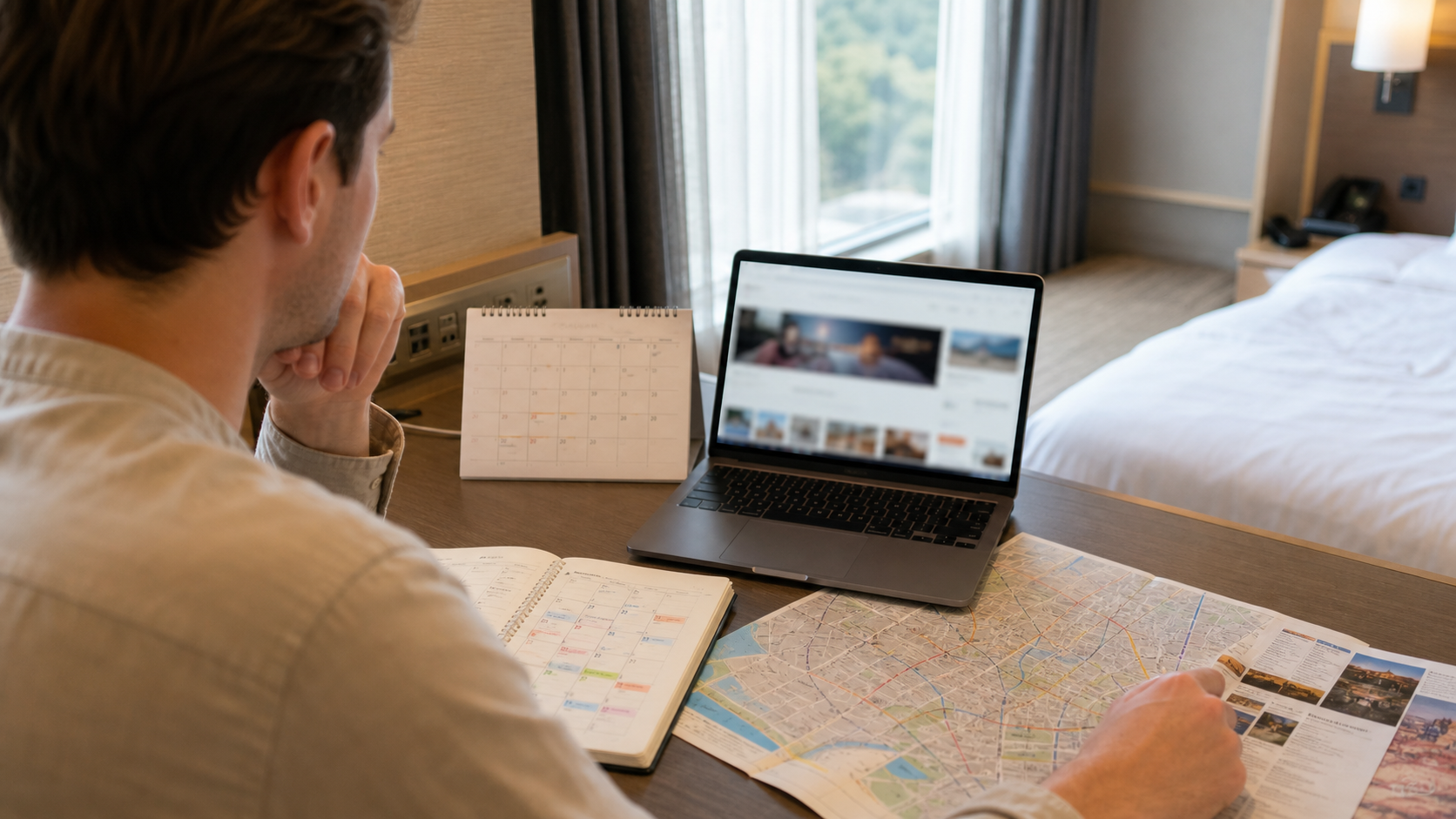
An English-language page does not by itself confirm that the route accepts purchases from overseas. Read the registration and receipt conditions before joining a queue or lottery.
Ask:
- Can a non-resident create the required account?
- Is a Japanese address required?
- Is phone verification completed by SMS, voice call or app login?
- Must the ticket app use the same phone number entered at purchase?
- Can a travel eSIM receive the required call or SMS?
Ticket PIA states that phone verification may be used for registration, purchasing, ticket receipt, resale and app login, and its guidance warns that an overseas phone number can prevent verification. AnyPASS says its app requires a SIM with a phone number and internet access; its FAQ says a ticket cannot be issued if the purchase number and the AnyPASS number differ.
Lawson Ticket's guide for non-Japanese users distinguishes routes available from overseas from services that require Japan-resident membership. Requirements vary by event, which is why the actual event page must win over a general guide.
Do not enter a fabricated address or borrow a stranger's phone number. That can break identity checks, ticket delivery, password recovery or app activation later.

Step 3: confirm payment before committing to the route
An overseas card can fail even when the card network logo appears accepted. The seller or card issuer may require a security code, 3-D Secure authentication or another fraud check. Ticket PIA's current card guidance describes security-code and 3-D Secure checks. Lawson Ticket also warns non-Japanese users that a foreign-issued card may not work.
Before the sale opens:
- enable online and overseas transactions with your card issuer;
- confirm that you can receive the issuer's authentication prompt;
- prepare a second card in your own name;
- check the full price, including ticket and system fees;
- read whether cancellation or changes are allowed; and
- if payment is at a convenience store, confirm that you can reach the named chain in Japan before the deadline.
Lawson's overseas reservation guide says in-store payment and pickup must be completed in Japan under the stated deadline. A reservation is not safely secured if you will arrive after that deadline.
Do not repeatedly submit payment when the page is uncertain. First check the order history and email so that you do not create duplicate orders.

Step 4: understand exactly how the ticket reaches the gate
Japanese event tickets may be delivered as:
- a paper ticket collected at a convenience store;
- a printable or displayed QR code;
- an electronic ticket inside a designated app;
- a ticket released shortly before the event;
- a purchaser ticket plus transferable companion tickets; or
- a voucher exchanged at the venue.
For a convenience-store ticket, record the chain, collection number, deadline and whether payment and pickup happen together. Lawson Ticket says it does not deliver tickets overseas.
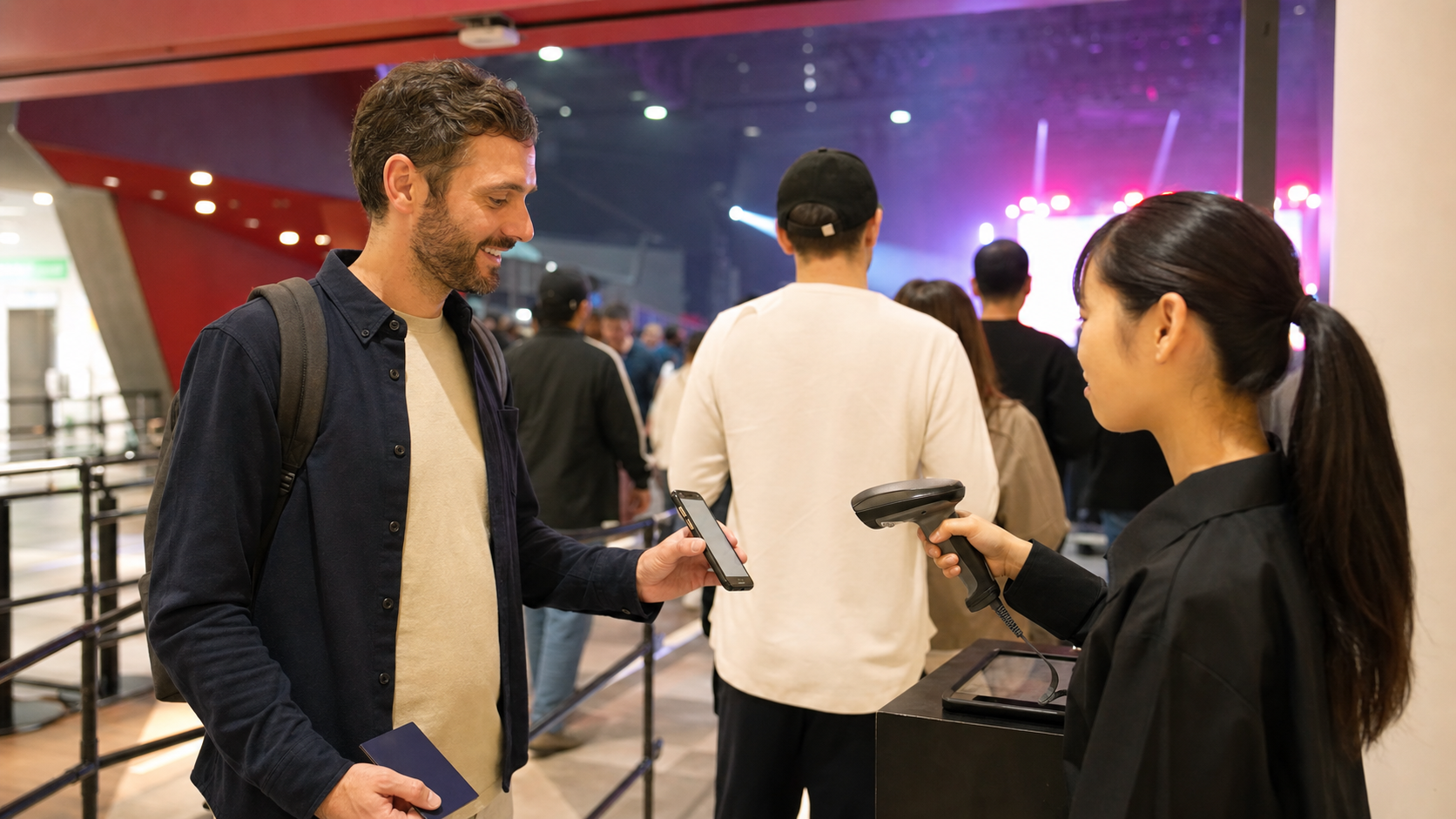
For an app ticket, install the official app early and check the device rules before changing phones. eplus says its Smart Ticket number must match the application number, screenshots are not valid for entry, and changing a phone or deleting the app after download can make the ticket unavailable. AnyPASS also links issuance to the registered purchase number.
Before event day:
- open the ticket inside the required app;
- confirm the event, date and quantity;
- complete any official companion transfer;
- charge the phone and carry a power bank;
- keep the purchase email and order number available offline; and
- bring the ID named in the event rules.
A screenshot is a backup record, not proof that the venue will accept it.
Step 5: match the name, purchaser and ID rules
Read the entry conditions as well as checkout. Some tickets are transferable; others require the named purchaser to attend with the group. Some venues may inspect passports or other photo ID.
The Ghibli Museum illustrates why this check matters. Its official overseas information uses named, date-specific admission routes, and one official territory page instructs visitors to present the voucher and passport at entry. Your event may use a different process, but the lesson is the same: use the exact rule attached to your ticket.
Before paying, confirm:
- how your name must be entered;
- whether roman letters or Japanese characters are required;
- whether the lead purchaser must attend;
- whether each guest needs a separate ticket or app account;
- which photo ID is accepted; and
- whether the seller provides an official transfer function.
Enter the name as it appears on the ID you will carry unless the seller explicitly instructs otherwise.
Which purchase route should a tourist choose?
Use the first route below that the organizer officially supports for your event.
| Route | Best when | Main risk to check |
|---|---|---|
| Organizer's international sale | You are outside Japan and the event provides a dedicated overseas path | Country eligibility, currency, pickup and ID rules |
| Seller's international or non-Japanese page | The organizer links to it for the exact event | The international catalog may be smaller than the domestic catalog |
| Domestic general sale | You are eligible for the account, phone, payment and delivery requirements | A Japanese-language page can still require domestic verification |
| Convenience-store payment or pickup | You will be in Japan before every deadline | Reservation expiry, collection number and accepted payment |
| Venue box office | The organizer confirms same-day or advance counter sales | Sold-out risk and operating hours |
| Organizer-authorized resale | The primary sale is sold out and the event names an official resale channel | Resale window, name change, app and refund conditions |
This guide does not rank sellers by commission, sponsorship or popularity. Eligibility and entry reliability come first. If RJG later works with a ticket provider, any commercial relationship must be disclosed and must not change this order.
Avoid unsafe resale routes
Japan's ticket-resale law took effect in 2019 and prohibits defined unauthorized for-profit resale of specified event tickets. Separately, organizers and sellers can invalidate tickets that breach their terms, especially named or app-linked tickets.
Use a resale route when the current organizer or authorized seller identifies it as official for that event. Do not assume that a familiar marketplace is authorized.
Before buying a resale ticket, verify:
- the organizer links to or names the resale service;
- the ticket can be transferred through the required app;
- the ticket name or purchaser status will be valid at entry;
- the price and fees are fully shown;
- the event and seat details are fixed; and
- the refund rule is written.
Do not pay for a screenshot, an account login, an unexplained QR image or a promise that ID checks will not happen.
Plan B when tickets are sold out or a requirement fails
Use this fallback ladder:
- Check the organizer again: additional inventory, later general sales and official resale can be announced after the first sale.
- Change the date or session: weekday, daytime and less central dates may use a different availability pool.
- Choose another official ticket type: standing, obstructed-view, same-day or companion tickets may have different conditions.
- Use the official international route: it may open on a different schedule from the domestic route.
- Replace the event, not the rules: choose another exhibition, game, venue tour or festival that fits your trip.

For event-specific details, continue with the Tokyo Game Show 2026 guide, Comiket 108 guide, Tokyo September sumo guide, Summer Sonic Tokyo 2026 guide, Ghibli Museum ticket Plan B or the Edogawa Fireworks Festival guide.
One-minute pre-purchase checklist
- I reached the seller from the organizer's current page.
- This route accepts buyers in my location.
- I can complete the required account and phone verification.
- My payment method and authentication work.
- I can collect or display the ticket before entry.
- My phone number will match the ticket app if required.
- The purchaser, companion-transfer and ID rules fit my group.
- I understand cancellation, refund and official resale conditions.
- I saved an official Plan B.
Frequently asked questions
Can tourists buy event tickets in Japan from overseas?
Sometimes. Use the event organizer's current international or non-Japanese ticket link when one is offered. A domestic sale may require Japan-resident membership, a supported phone number, domestic payment or collection in Japan.
Do I need a Japanese phone number to buy tickets?
Requirements vary. Some routes accept overseas buyers, while others use a Japanese phone number for account verification or app ticket issuance. Check both purchase and ticket-display requirements before paying.
Will a foreign credit card work on Japanese ticket sites?
It may, but a foreign card can still fail. The seller and card issuer may require a security code or 3-D Secure authentication. Prepare a second card and check the order history before retrying a failed-looking payment.
Can I collect a ticket at a Japanese convenience store?
Yes, when the event offers that delivery method and you can reach the specified chain before the payment or pickup deadline. Save the collection number and confirm whether payment and printing happen in one visit or separately.
Can I use a screenshot of an electronic ticket?
Do not rely on one. Some electronic-ticket systems explicitly reject screenshots and require the live ticket inside the official app. Open the app ticket before event day and keep the phone charged.
Does the ticket name need to match my passport?
It depends on the event. Named tickets may require the purchaser or guest to show matching photo ID. Enter your name according to the seller's instructions and bring the specified ID.
Is it safe to buy a resold ticket in Japan?
Use resale when the event organizer or authorized seller names the route as official. Unofficial resale can create legal, transfer, name-matching and entry risks even if payment succeeds.
What should I do if the event is sold out?
Monitor the organizer for added inventory, another sales phase or official resale. Also check another date, ticket category or comparable event. Do not solve a sold-out screen by accepting an unsafe transfer.


Comments