Quick Answer: If you miss the last train in Tokyo, do not keep chasing impossible transfers. First, confirm the last train for your exact route in JR East, Tokyo Metro, Toei, or a route app. If the train is gone, choose one of three safe Plan B routes: take a taxi for the full trip, take a short taxi to a better station or hotel area, or wait indoors until first trains start again around early morning.
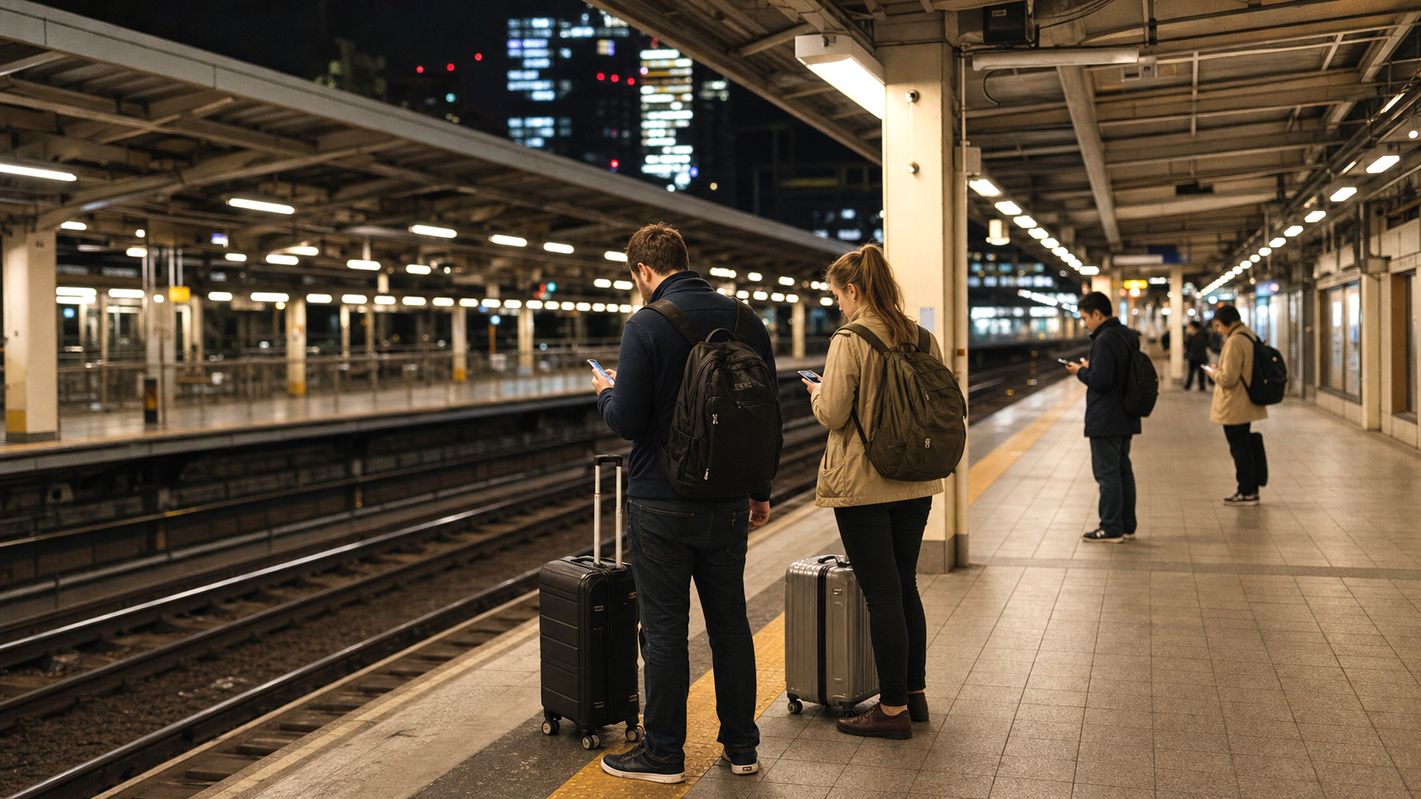
Tokyo is one of the easiest cities in the world to move around by train, until late at night changes the options. A route that felt simple before midnight can become a taxi, hotel, or morning-train decision.
This guide is for that exact moment. You are in Shinjuku, Shibuya, Ueno, Tokyo Station, Roppongi, or another central area. Your phone says the last train is gone, and you need a calm next step.
Last checked: July 8, 2026.
- First: Check Whether the Last Train Is Really Gone
- The Midnight Decision Table
- Option 1: Take a Taxi, But Know the Late-Night Math
- Option 2: Take a Short Taxi to Improve the Route
- Option 3: Wait Until First Train
- Option 4: Book a Nearby Hotel or Capsule Hotel
- What Not to Do After Midnight in Tokyo
- Area Plans: Shinjuku, Shibuya, Ueno, Tokyo Station, Roppongi
- Before a Night Out: Set Up Your Own Plan B
- How This Connects With Other RJG Guides
- FAQ
- What time is the last train in Tokyo?
- What time do first trains start in Tokyo?
- Is there a 24-hour subway in Tokyo?
- Are Tokyo taxis safe at night?
- Why is my taxi fare higher after midnight?
- Should I walk back to my hotel after the last train?
- Can I wait in a train station until morning?
- What should I do if my phone battery is dying?
- What emergency numbers should travelers know in Japan?
- What is the cheapest safe option after the last train?
- Sources Checked
First: Check Whether the Last Train Is Really Gone
Do this before spending money.
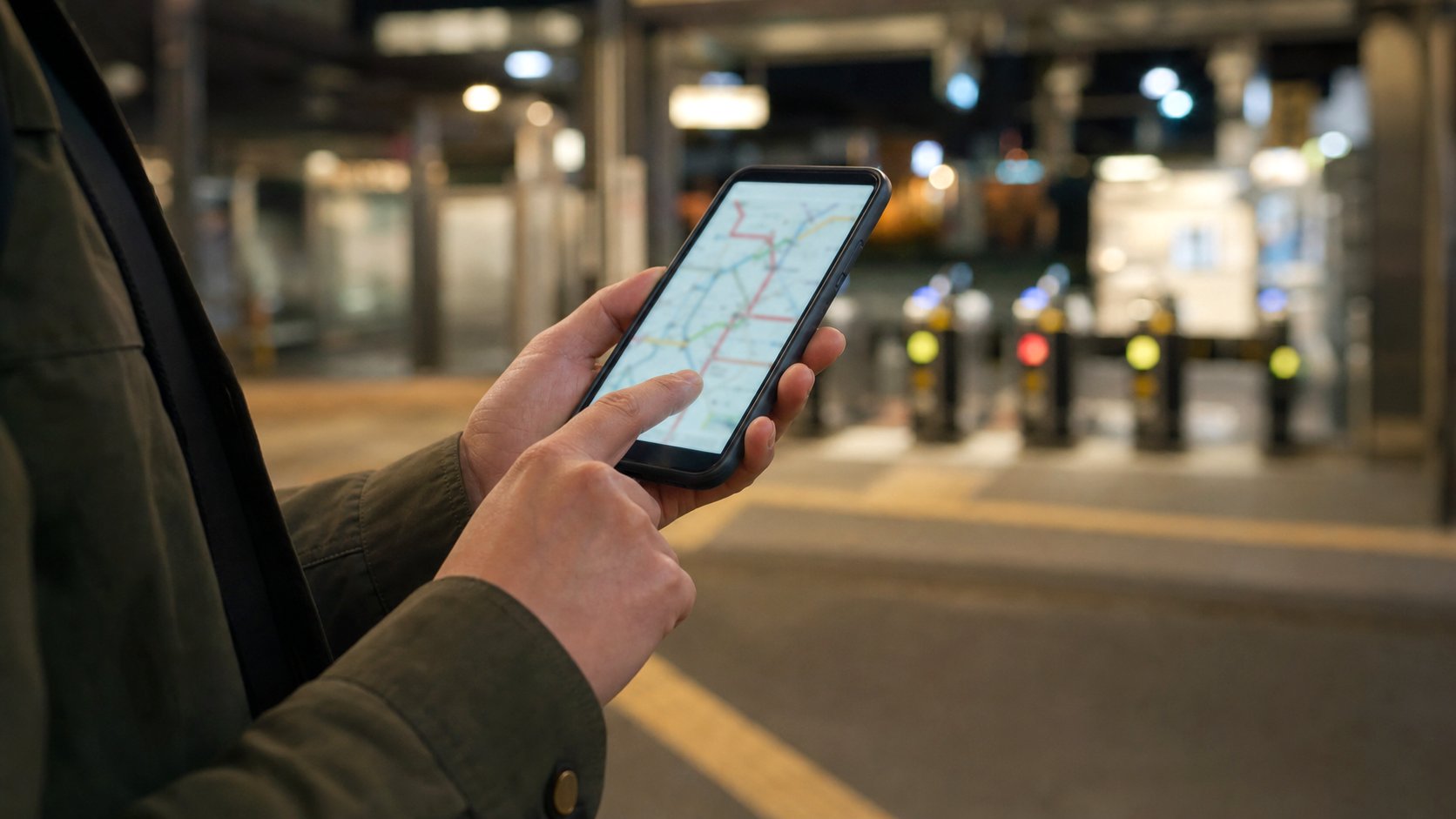
- Check Google Maps, Apple Maps, NAVITIME, or your preferred route app.
- Use the departure time as "now," not tomorrow morning.
- Check the route detail, not just the first result.
- If one segment is impossible, check whether a taxi to another station saves the route.
- If you are at a major JR station, check JR East's station timetable page. For subway routes, check Tokyo Metro or Toei station/timetable pages.
The important point is that "Tokyo trains stop around midnight" is too broad to use as a decision. The last useful train depends on the line, direction, station, weekday, holiday schedule, and whether your route needs a transfer.
For example, JR East publishes station timetables by line and direction for stations such as Shinjuku and Tokyo. Tokyo Metro also publishes station-specific timetable links by line and direction. Use those pages or a route app for the exact route on the exact night.
The Midnight Decision Table
Use this table when you are tired and your phone is giving you too many choices.
| Situation | Best Plan B | Why |
|---|---|---|
| Your hotel is within 3 to 5 km | Taxi all the way | The cost may be acceptable, especially for two or more people |
| Your hotel is far across Tokyo | Taxi to a better train/hotel area, or book nearby | A full taxi may become expensive after 10 p.m. |
| You have large luggage | Taxi, hotel, or indoor waiting place | Walking around at 1 a.m. with bags makes every option worse |
| You are alone and unsure where you are | Stay in a bright area and ask staff or police for help | Do not wander into quiet side streets just to save money |
| You have no battery or data | Go to a staffed hotel, police box, station office if open, or convenience store area | Your real problem is now communication, not transportation |
| It is raining, very hot, or you feel unwell | Taxi or hotel | Weather turns a cheap wait into a bad travel memory |
Option 1: Take a Taxi, But Know the Late-Night Math
Licensed Tokyo taxis are a normal, practical late-night option, but they are not cheap after midnight.
For standard-size cars in Tokyo's 23 wards, Musashino, and Mitaka, the Tokyo Hire-Taxi Association lists a 500 yen initial fare for up to 1.0 km, then 100 yen per additional 232 m. When the taxi is moving slowly, time-and-distance fare can also apply. From 10 p.m. to 5 a.m., a late-night and early-morning premium adds 20 percent. Expressway tolls and taxi ordering charges can also be added.
That means the same ride can feel very different depending on traffic and distance.
| Rough ride | Practical expectation |
|---|---|
| Shinjuku to Shibuya | Often a realistic taxi ride if trains are gone |
| Shinjuku to Asakusa | Possible, but the price can climb |
| Shibuya to Ueno | A real taxi decision, not a casual hop |
| Central Tokyo to outer suburbs | Consider nearby hotel or first-train wait before committing |
Use the taxi app estimate or meter as the truth for your ride. Do not rely on a blog's old fare example for an exact price.
Taxi Stand, Street Hail, or App?
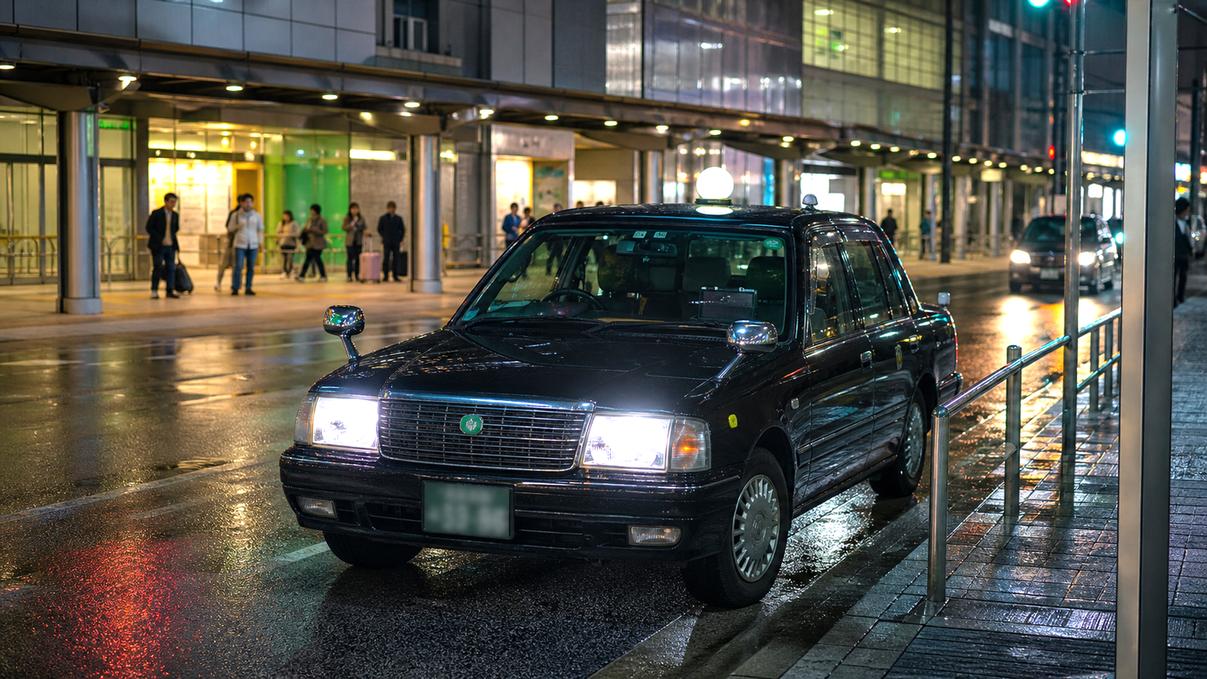
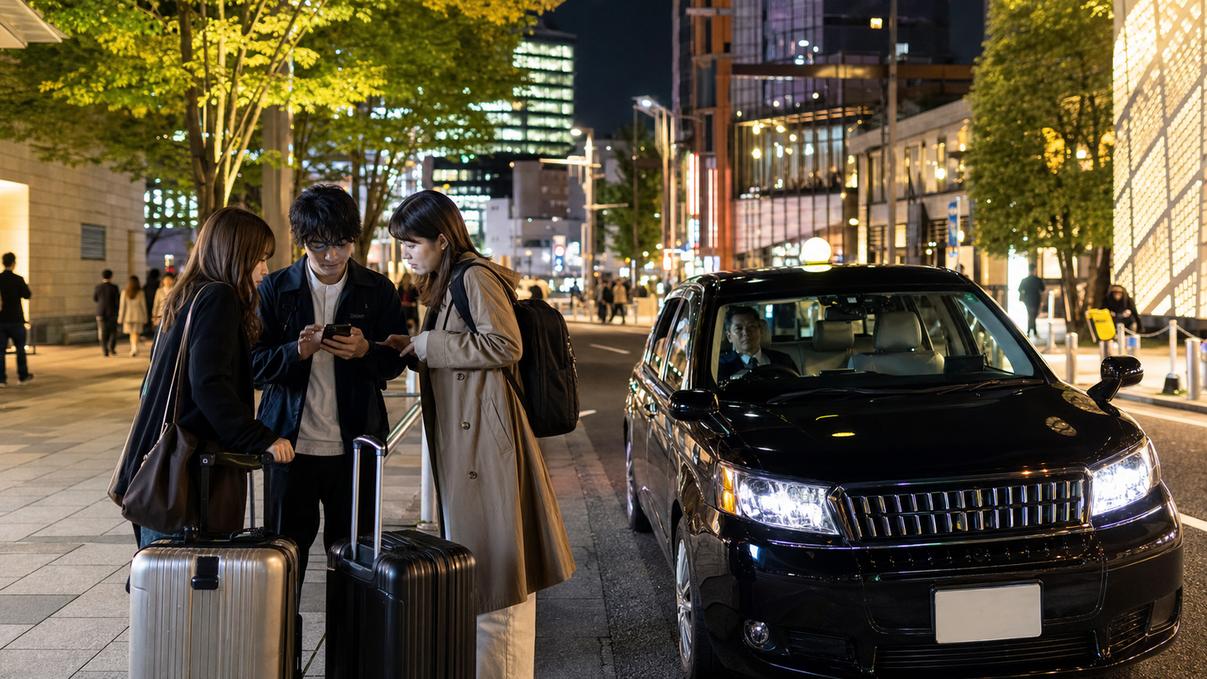
At major stations, start with the signed taxi stand before trying to hail a cab from the street. In nightlife areas, taxi demand can spike after the last train, so the first taxi stand you see may have a long line.
Use this order:
- If you are at a station, look for the taxi stand.
- If the line is too long, check a taxi app estimate.
- If you use an app, confirm whether an ordering charge applies.
- If you cannot communicate the destination, show the full hotel address in Japanese if possible.
- Keep your phone open to the map until the taxi is moving in the right direction.
You do not need to over-explain. The hotel name, address, and nearest landmark are enough.
Option 2: Take a Short Taxi to Improve the Route
This is the trick many visitors miss.
You may not need a taxi from Shinjuku to your final door. Sometimes the smarter move is a short taxi to:
- a hotel area with more available rooms,
- a larger station where first trains are easier in the morning,
- a 24-hour or late-night indoor place you have already confirmed open,
- a station closer to your accommodation so the morning train is easier.
This matters when your stay is in a residential area. A full taxi from central Tokyo to a far suburban address can become expensive. A short taxi that gets you out of a chaotic nightlife zone may solve 70 percent of the problem for much less.
Example:
- Bad plan: keep refreshing routes for a train that no longer exists.
- Better plan: taxi to a safe, bright, central area, wait indoors, then take the first train.
- Best plan for tired travelers: book a nearby hotel, sleep, and move in the morning.
Option 3: Wait Until First Train
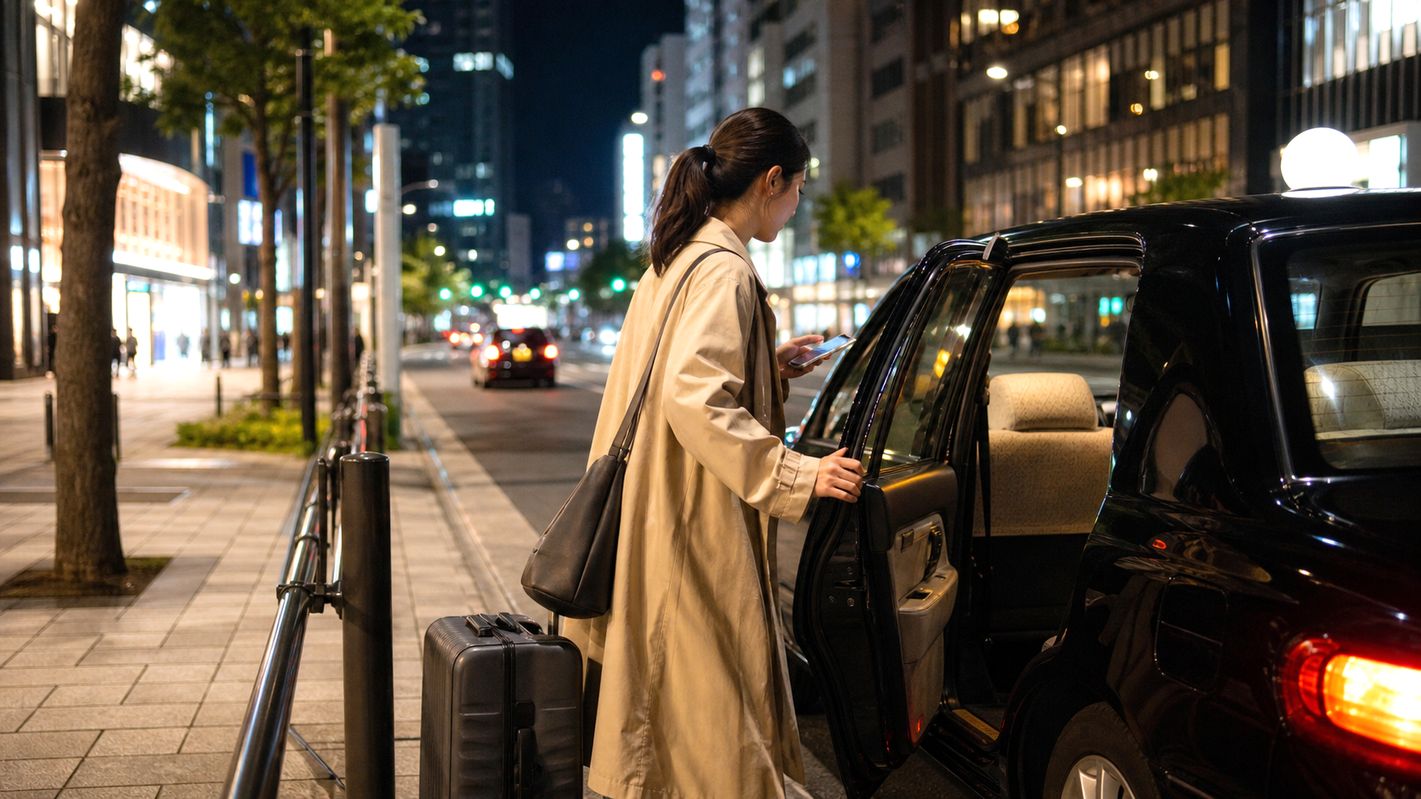
Waiting can be the cheapest option when you can do it safely and indoors.
First trains in central Tokyo often start in the early morning, but the exact time depends on the line and station. Use the official timetable or a route app for your exact first departure. Do not assume different lines restart at the same time.
Good waiting places share three traits:
- You can sit indoors.
- Staff or other customers are nearby.
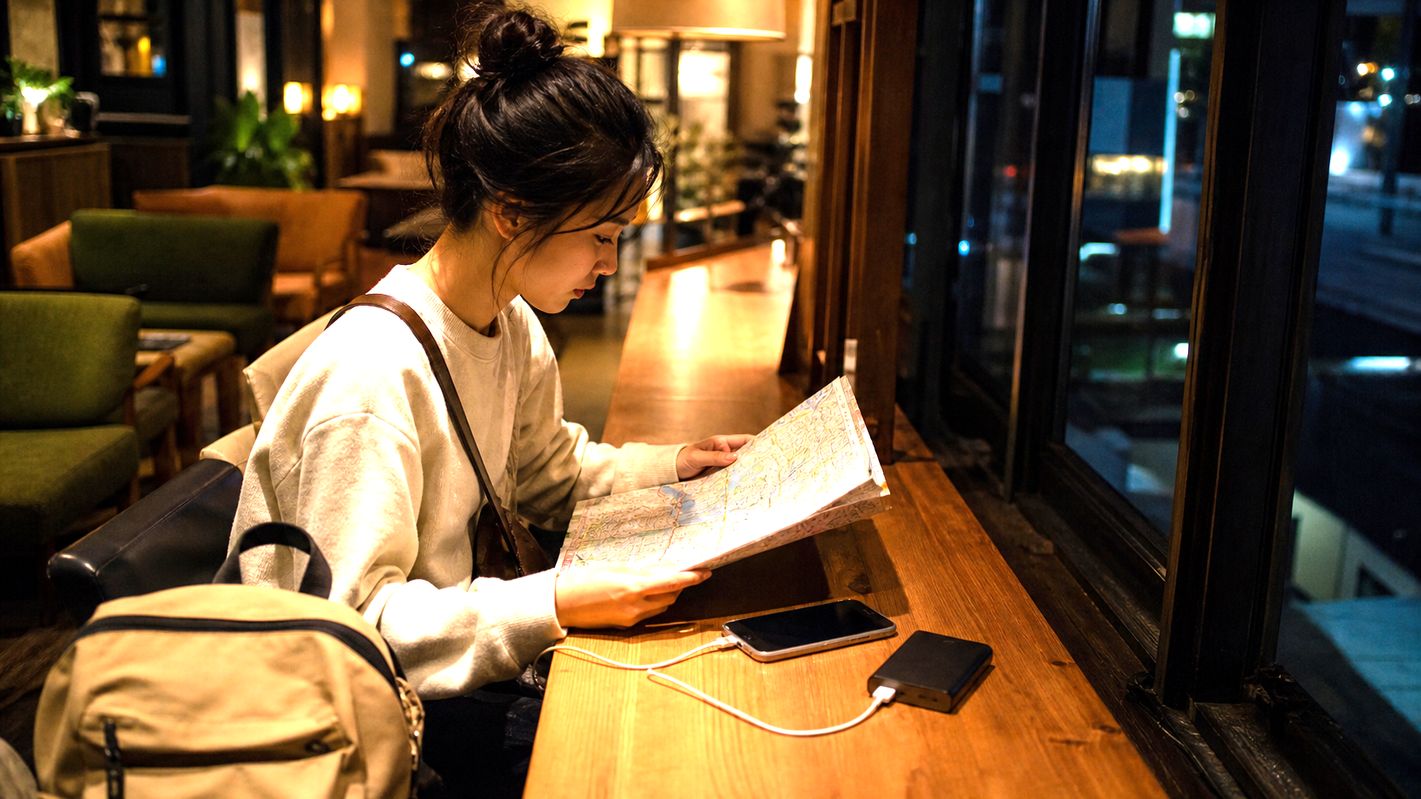
- You can charge your phone or keep enough battery for morning navigation.
Possible choices may include late-night cafes, karaoke boxes, manga/internet cafes, hotel lobbies where you are a guest, or other venues currently marked open. Availability changes by area, chain, building, weekday, and holiday, so treat map listings as a starting point and confirm before walking far.
Avoid these "cheap but bad" plans:
- sleeping outdoors,
- waiting alone in a dark park,
- wandering residential streets with luggage,
- assuming a convenience store has a toilet or seating,
- staying inside a station after it is closing.
Option 4: Book a Nearby Hotel or Capsule Hotel
If you are exhausted, carrying luggage, traveling with children, or not confident in the area, a nearby hotel can be the best value even if it feels annoying.
Before booking, check:
- check-in deadline,
- whether the front desk is staffed late,
- walking distance from your current location,
- whether the route is safe and simple,
- whether you can cancel your original night's plan if needed,
- whether the room is actually for tonight, not tomorrow night.
Capsule hotels can work for solo travelers, but they may be a poor fit for couples, families, large luggage, tattoos in bath areas, or travelers who need a private room. A standard business hotel near a major station can be simpler.
If your original accommodation is an Airbnb or private apartment, message the host before making a complicated midnight move. Do not assume a host can guide you instantly at 1 a.m., but a clear message can prevent a check-in misunderstanding the next morning.
What Not to Do After Midnight in Tokyo
Tokyo is generally safe, but "safe city" does not make each midnight choice smart.
Do not:
- walk several kilometers with luggage just because the route is technically possible,
- follow a stranger to an unofficial ride,
- get into a car that does not look like a licensed taxi or booked ride,
- ignore your battery level,
- split up from your group without a meeting point,
- assume trains will restart in "a few minutes,"
- spend your remaining cash before you know how you will get home.
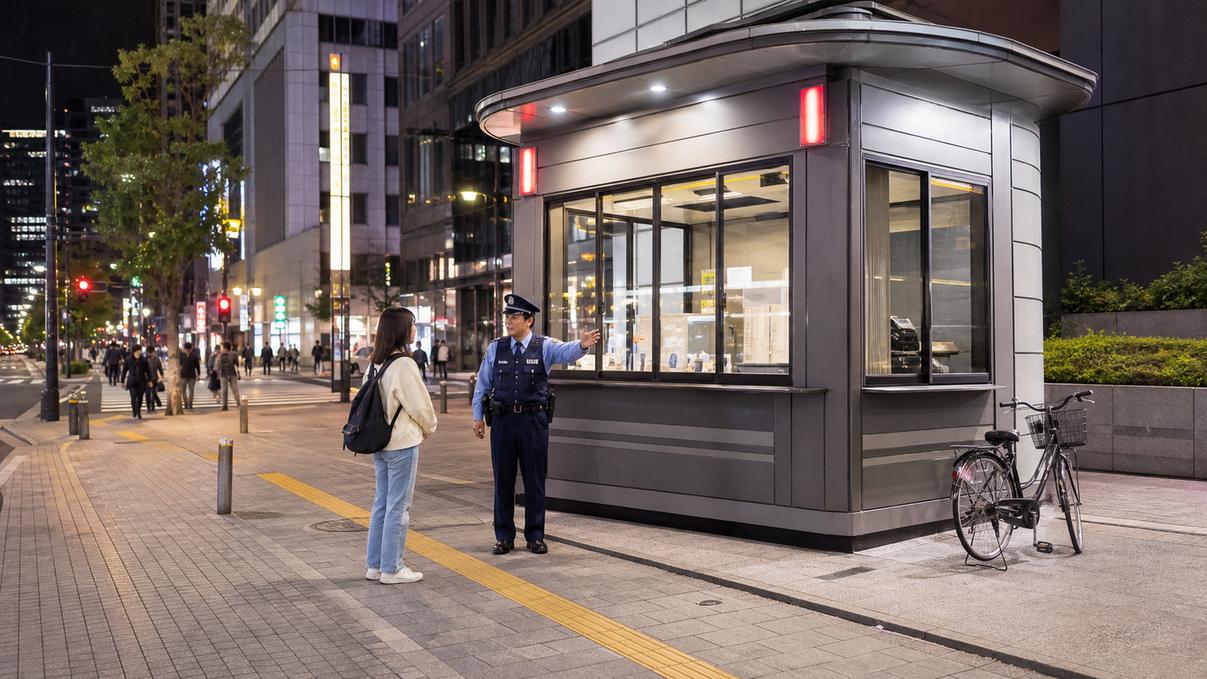
If you feel unsafe, go toward light, staff, and official help. Police emergency is 110. Fire and ambulance is 119. JNTO also operates the Japan Visitor Hotline 24 hours a day, 365 days a year in English, Chinese, and Korean.
Area Plans: Shinjuku, Shibuya, Ueno, Tokyo Station, Roppongi
These are not fixed routes. They are decision patterns.
Shinjuku
Shinjuku is one of the best places to be stranded because it has many taxis, hotels, and late-night venues. It is also one of the easiest places to make a bad decision because the station exits and nightlife areas can be confusing.
Best plan:
- Stay near bright main streets.
- Use a taxi stand or app if going directly to your hotel.
- If waiting, choose an indoor place close to the station or a hotel area.
- Avoid walking deep into unfamiliar side streets with luggage.
Useful internal guide: Tokyo Late-Night Arrival 2026.
Shibuya
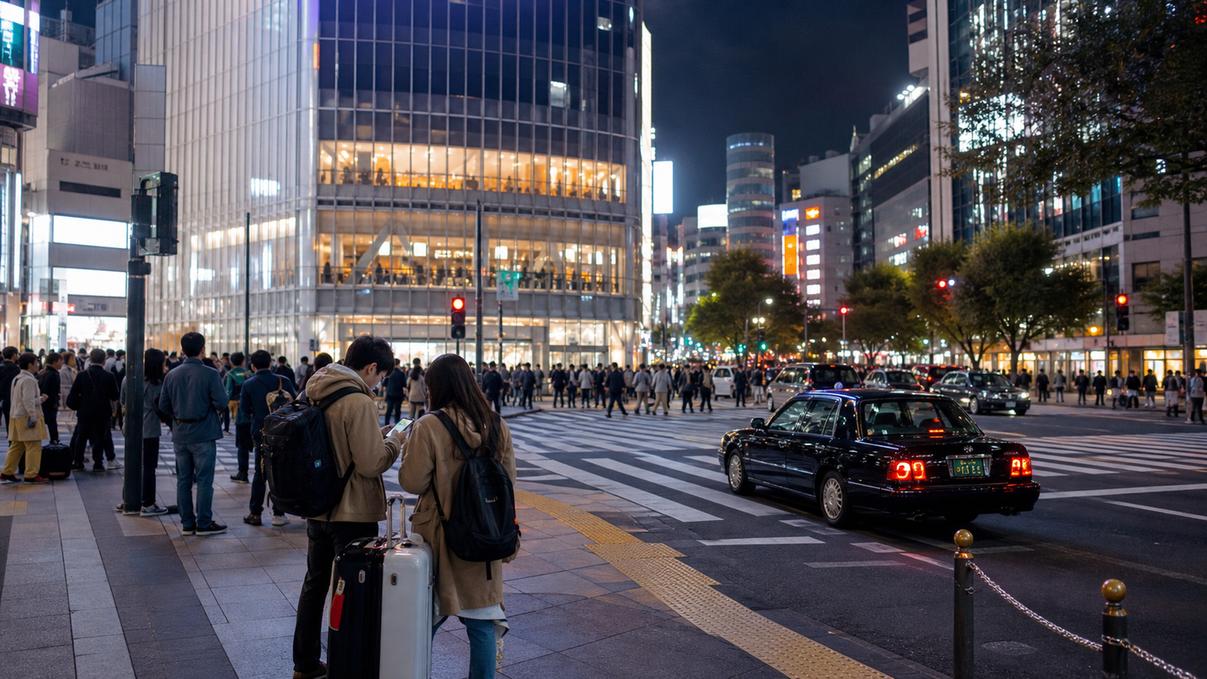
Shibuya can be crowded after the last train, especially around weekends and events. Taxi lines can move slowly.
Best plan:
- Check whether your destination is actually walkable. Many "near Shibuya" places are not fun with hills or luggage.
- If going to another central area, compare taxi versus nearby hotel.
- Keep your group together at the crossing and station area.
Ueno
Ueno is useful if your route connects to the east or north side of Tokyo, but do not assume nearby side streets stay active late at night.
Best plan:
- If your hotel is in Asakusa, Akihabara, or eastern Tokyo, a taxi may be more realistic than waiting.
- If you are continuing far outside central Tokyo, compare hotel versus first train.
- Stay around bright station-side streets rather than quiet park edges late at night.
Tokyo Station
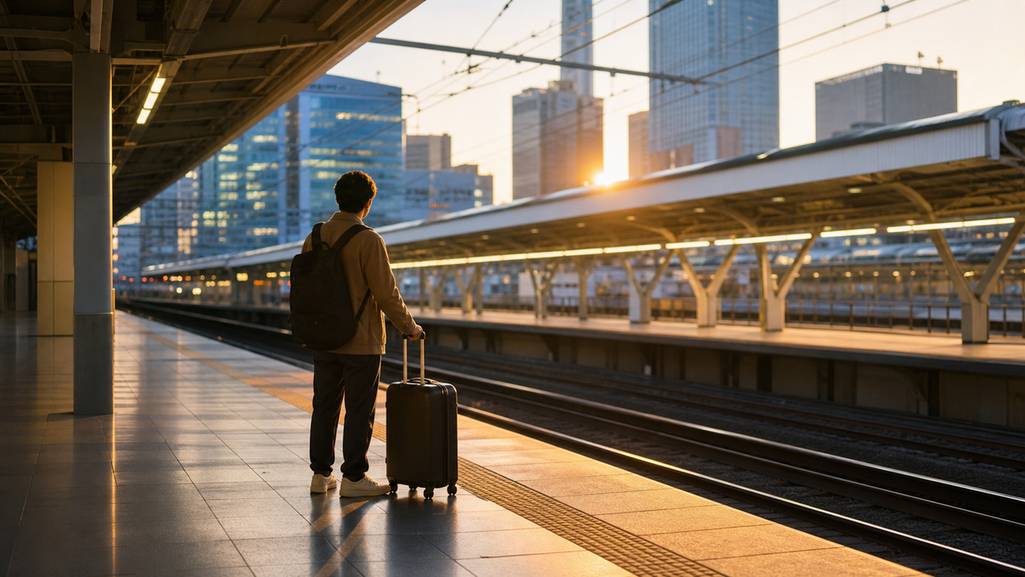
Tokyo Station is excellent in the day but can feel surprisingly closed late at night. Large station buildings, underground passages, and malls do not operate like a 24-hour shelter.
Best plan:
- Check whether your train is actually JR, subway, Shinkansen, or another operator.
- If trains are done, move to a taxi stand or book a nearby hotel.
- Do not plan to "just wait inside the station" unless you have confirmed an open area.
Useful internal guide: Shinkansen for Tourists 2026.
Roppongi
Roppongi is nightlife-heavy, so late-night taxis are normal. The risk is not the lack of taxis; it is making a tired, expensive, unclear decision.
Best plan:
- Use a licensed taxi or a known app.
- Do not accept random ride offers.
- If your accommodation is far, compare a nearby hotel with a long taxi.
- If you have been drinking, prioritize direct, simple movement.
Before a Night Out: Set Up Your Own Plan B
The best midnight plan is made before midnight.
Before going out, save:
- your accommodation name and address in Japanese,
- nearest station and exit,
- a screenshot of the last train route,
- a screenshot of the first train route,
- one nearby hotel area as backup,
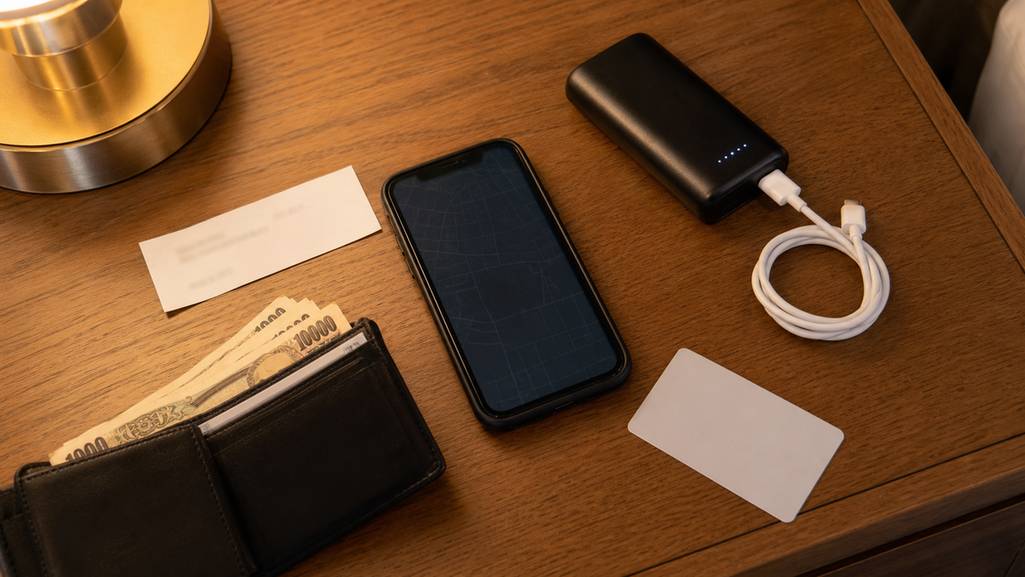
- enough cash or card access for a taxi,
- your group's meeting point if separated,
- your host or hotel contact details.
If you are staying in a quiet residential area, be extra careful. The final 1 to 2 km after the nearest station can be the hardest part of the night.
How This Connects With Other RJG Guides
Use this article as the emergency layer.
- If you are arriving after a flight, read Tokyo Late-Night Arrival 2026.
- If you are choosing train operators, read Tokyo Trains 2026.
- If your route app is confusing, read Does Google Maps Work in Japan?
- If check-in is the issue, read Japan Check-In Guide.
- If weather is making the night worse, read Japan Rain & Typhoon Plan.
- If luggage is the problem, read Tokyo Luggage Storage 2026.
FAQ
What time is the last train in Tokyo?
It depends on the line, station, direction, and day. Many useful final departures are around midnight, but you should check your exact route in a route app or the operator timetable. Do not use one generic "Tokyo last train time" for the whole trip.
What time do first trains start in Tokyo?
Many central Tokyo routes restart in the early morning, but the exact time depends on the line and station. Check the first train for your exact station before choosing to wait.
Is there a 24-hour subway in Tokyo?
No. Tokyo does not operate a normal 24-hour subway system. If your last train is gone, you are choosing between taxi, waiting, or nearby accommodation.
Are Tokyo taxis safe at night?
Licensed taxis in Tokyo are a normal late-night option. Use a station taxi stand, a recognized taxi app, or a clearly marked taxi. Avoid unofficial ride offers from strangers.
Why is my taxi fare higher after midnight?
Tokyo taxis add a late-night and early-morning premium from 10 p.m. to 5 a.m. The Tokyo Hire-Taxi Association lists this premium as a 20 percent increase. Ordering charges, tolls, and slow traffic can also affect the final cost.
Should I walk back to my hotel after the last train?
Consider walking when it is genuinely close, well-lit, simple, and you are not carrying heavy luggage. A 20-minute walk on a normal afternoon can feel very different at 1 a.m. in an unfamiliar area.
Can I wait in a train station until morning?
Do not count on it. Many station buildings, gates, malls, and underground passages close. Confirm an open indoor place instead of assuming the station will function as a waiting room.
What should I do if my phone battery is dying?
Prioritize staff and light: a hotel front desk, police box, staffed venue, or taxi stand. If you still have battery, screenshot your hotel address and route before it dies.
What emergency numbers should travelers know in Japan?
Emergency numbers in Japan are police 110 and fire or ambulance 119. JNTO lists its Japan Visitor Hotline as 050 3816 2787 from inside Japan.
What is the cheapest safe option after the last train?
If you are calm, indoors, and in a central area, waiting until first train can be cheapest. If you are far from a safe waiting place, carrying luggage, or very tired, a taxi or nearby hotel may be better value.
Sources Checked
- JR East official station timetables: Shinjuku Station and Tokyo Station.
- Tokyo Metro official station timetable pages.
- Tokyo Hire-Taxi Association rates table for standard-size taxi fares in Tokyo's 23 wards, Musashino, and Mitaka.
- JNTO Japan Visitor Hotline and emergency phone number information.
Comments