- Quick Answer
- First: Define What “Accessible” Means for You
- Airport: Separate Terminal Help from Airline Help
- Local Trains: Ask Staff and Budget Extra Time
- Shinkansen: Reserve the Correct Space, Not Just Any Seat
- Hotels: Verify the Exact Room and the Route to It
- Toilets, Attractions and Restaurants
- A Low-Stress Daily Plan
- Five-Minute Pre-Departure Check
- Final Decision Checklist
- FAQ
- Is Japan wheelchair accessible?
- Can wheelchair users take trains in Japan?
- How early should I reach a station?
- Do I need to reserve a wheelchair space on the Shinkansen?
- Are all Tokyo Metro entrances step-free?
- How do I confirm an accessible hotel room in Japan?
- Are accessible toilets easy to find?
- Can I request assistance at Haneda Airport?
- What should my Plan B be?
- Official Sources
Quick Answer
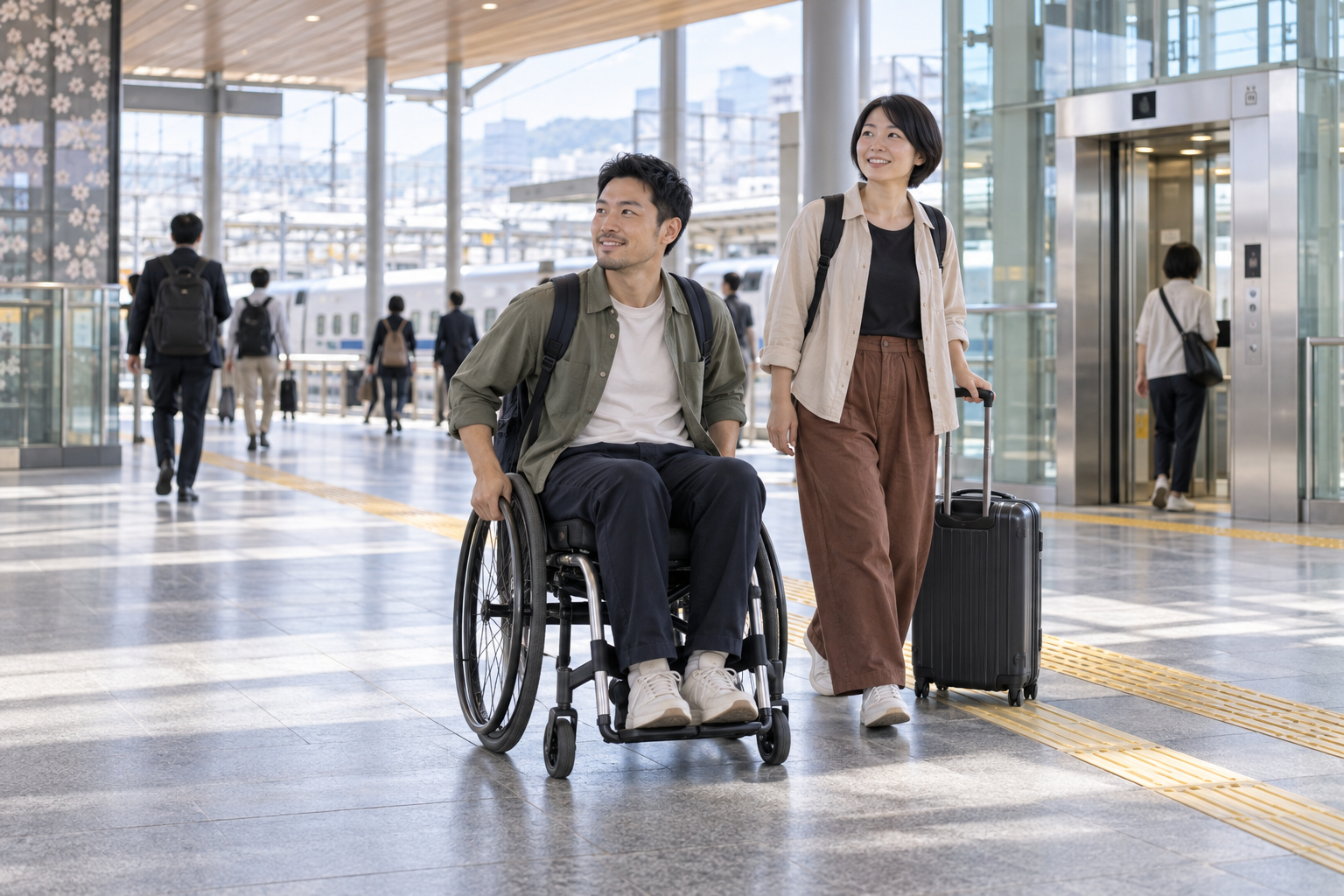
Japan can work well for wheelchair travel, especially in major cities, but “accessible” is not a single yes-or-no label. Plan the complete chain: airport help, the exact station entrance, transfers, train boarding, the reserved seat or wheelchair space, the route into your room, and an accessible toilet. Ask operators and hotels about the exact journey you will make, allow extra time, and keep a lower-dependency alternative for every day.
The safest rule is simple: verify the route, not just the venue. A museum may be step-free while the nearest station exit is not. A hotel may list an accessible room while the bathroom layout or entrance threshold does not work for your chair. One broken elevator can also change an otherwise accessible transfer.
Last checked: September 21, 2026 (JST).
First: Define What “Accessible” Means for You
Before booking, write down the measurements and help that matter. This avoids long email exchanges that still do not answer the real question.
| Check | What to record |
|---|---|
| Wheelchair | Manual or powered; width, length, height and total weight |
| Transfers | Whether you can transfer to a seat, bed, toilet or taxi |
| Steps | Maximum threshold or gap you can manage |
| Bathroom | Roll-in shower, grab bars, shower chair, turning space and door width |
| Assistance | Ramp boarding, luggage help, companion support or private care |
| Charging | Charger voltage, plug and safe overnight charging location |
Do not send only “Is it wheelchair accessible?” A useful request is specific: “My chair is 66 cm wide. Is there a step-free route from the street to this room, and what is the narrowest doorway?”
Airport: Separate Terminal Help from Airline Help
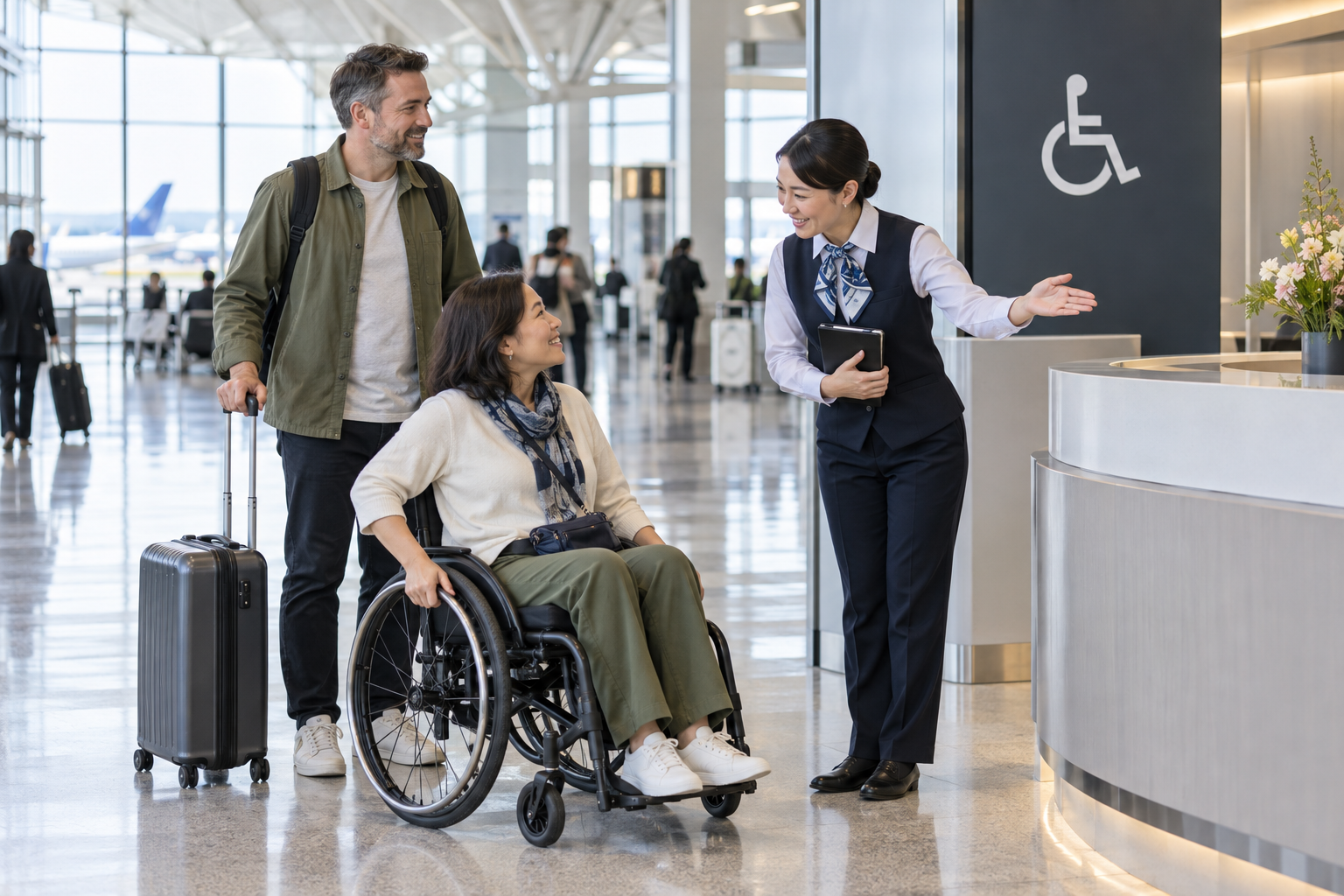
At an airport, several organizations may control different parts of the trip. The airline usually handles assistance connected to the aircraft. The airport terminal may provide help between the public arrivals or departures area and counters, stations, taxi stands or parking. The railway then controls assistance inside its station.
Haneda Airport, for example, directs passengers to information counters or concierges for terminal help and lists wheelchairs, communication tools, multipurpose toilets and other universal facilities. Its assistance FAQ also tells arriving passengers to contact the airline for help from the aircraft through baggage claim, then consult the railway for help inside the terminal station.
Before flying:
- Request airline assistance using the airline’s deadline and describe your chair accurately.
- Confirm battery type and handling if you use a powered chair.
- Save the airport’s assistance page and your airline confirmation offline.
- Decide where the handoff occurs: aircraft, baggage claim, arrivals hall, railway gate, bus stop or taxi stand.
- Keep essential medication, charger parts and repair information in your cabin allowance where rules permit.
Local Trains: Ask Staff and Budget Extra Time
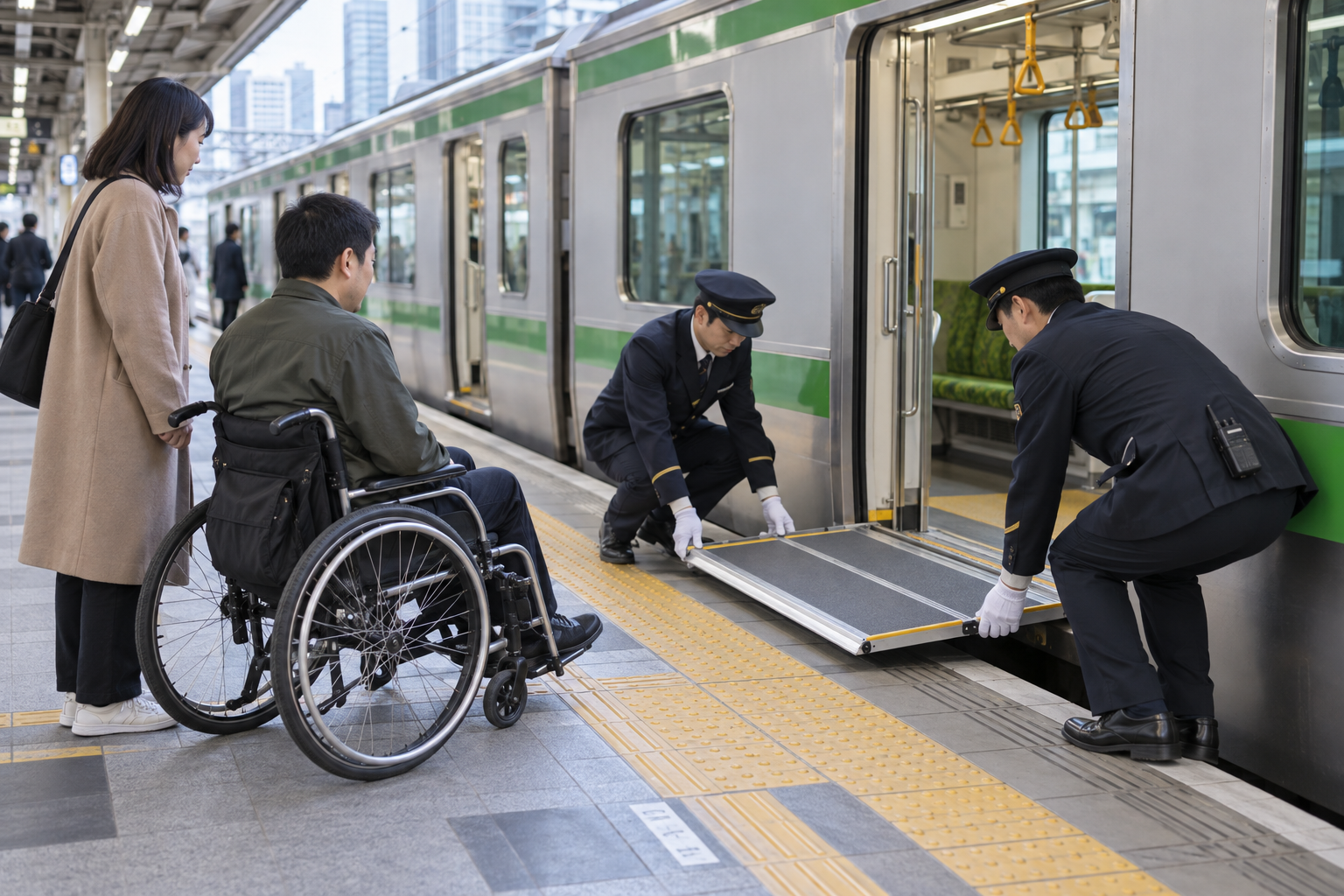
In large urban systems, station staff can often guide a wheelchair user to the platform and use a portable ramp for the gap between the platform and train. Staff may also contact the destination or transfer station so someone is ready when you arrive.
JR East asks wheelchair users to arrive with time to spare because station staff may need to coordinate guidance to the platform and boarding assistance. It gives no universal number, so allow extra time for busy stations, transfers, service disruption and staff availability.
Use this routine:
- Go to a staffed gate and show the destination, route and any transfer station.
- Confirm whether the planned exit has a working step-free route.
- Let staff choose the train after they coordinate the arrival station.
- At a transfer, follow the arranged staff route instead of leaving independently.
- Avoid the tightest connection of the day. A 5-minute map transfer may be unrealistic with elevators and staff coordination.
Check the exact station exit
Tokyo Metro’s barrier-free search distinguishes facilities such as elevators, stairlifts, accessible toilets and a “one-route” path from ground level through the gate to the platform. One route does not mean every entrance or every transfer path is step-free. Search both the origin and destination, then note the correct exit number.
If an elevator is out of service, ask staff for another exit or station. Your Plan B may be one stop earlier, a surface bus, or a short universal-design taxi ride—not forcing the original route.
Shinkansen: Reserve the Correct Space, Not Just Any Seat
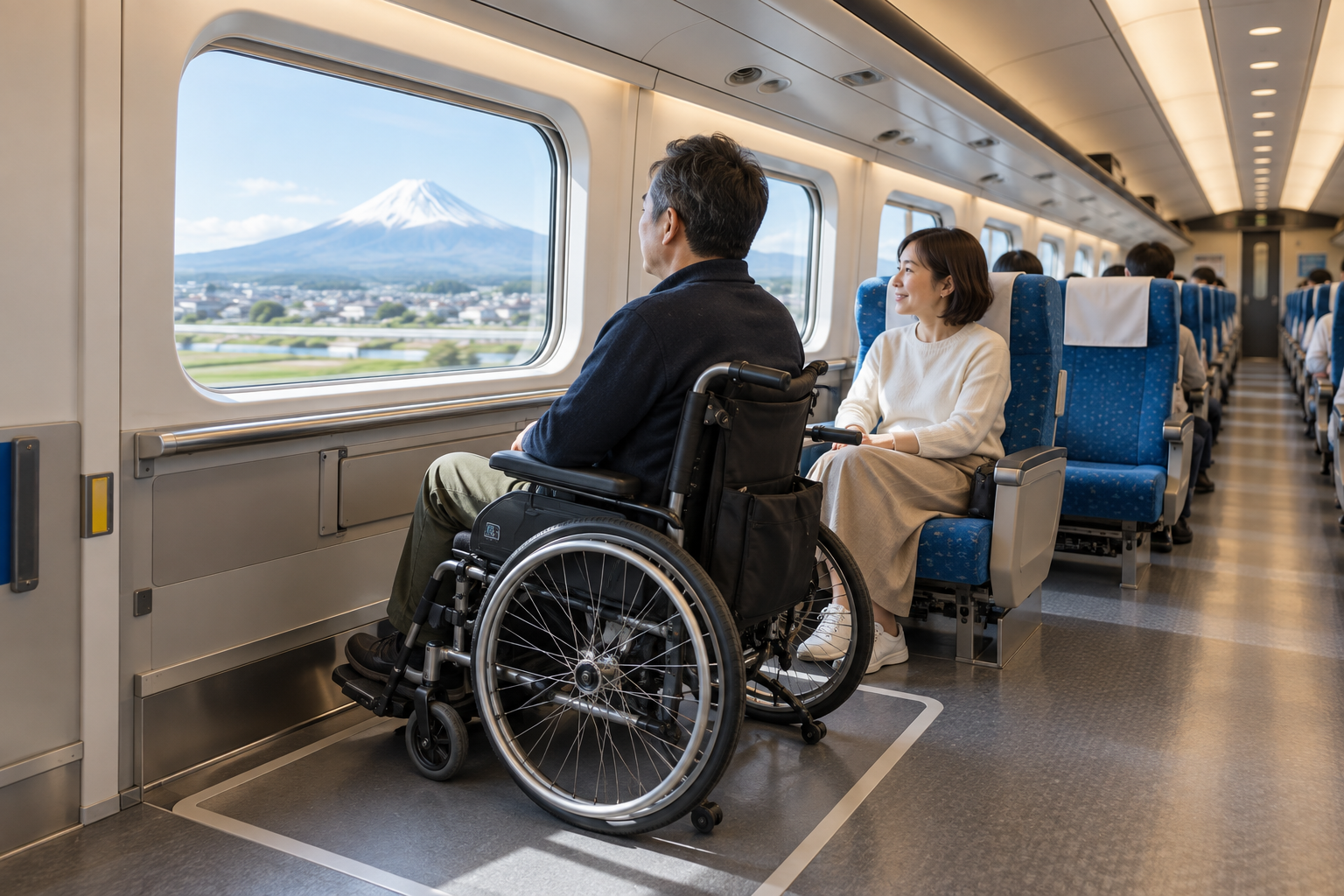
For intercity travel, check the specific operator and train. JR Central’s train-accommodation page shows wheelchair-accessible seating on Tokaido Shinkansen equipment and says a reservation is required. It also identifies a multipurpose room primarily for disabled passengers. Availability and the booking method can differ by operator and service.
When reserving, provide:
- travel date, preferred train and acceptable alternatives;
- wheelchair dimensions and whether it is powered;
- whether you will remain in the chair or transfer;
- companion count and desired nearby seating;
- oversized baggage or medical equipment;
- boarding and arrival stations, including transfers.
Do not build the itinerary around the final train of the day. If the preferred wheelchair space is unavailable, choose an earlier train, a different departure, or an overnight in the transfer city.
Hotels: Verify the Exact Room and the Route to It
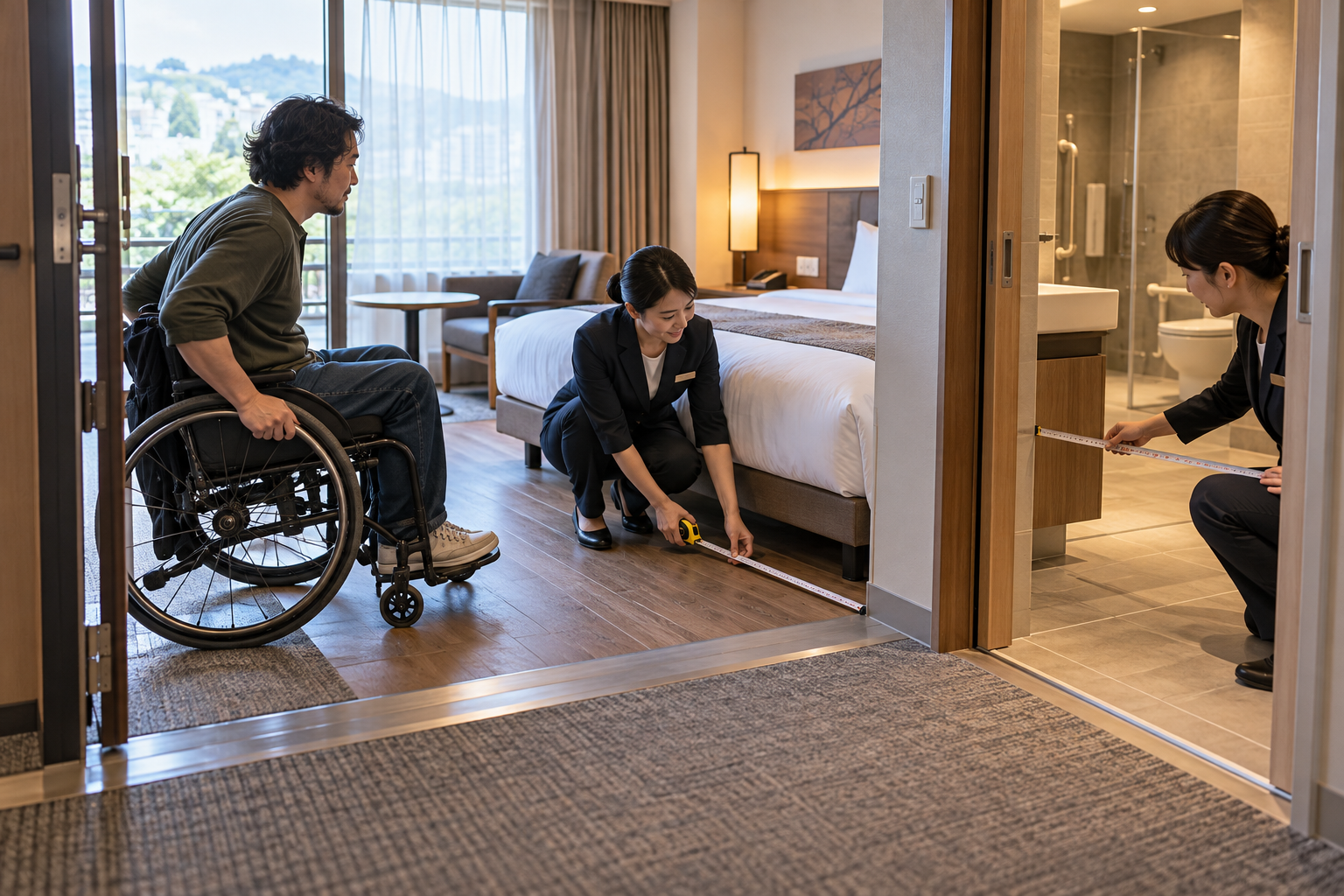
An “accessible room” label is a starting point, not the end of the check. Contact the property and ask for the exact room type in writing. If a third-party booking site answers, confirm again with the hotel itself.
Ask these questions:
- Is the route from the street or drop-off point to reception and the room step-free?
- What are the narrowest entrance, room and bathroom door widths?
- Is there space beside the bed for a transfer, and what is the bed height?
- Is the shower roll-in, and are a shower chair and fixed grab bars available?
- Can the wheelchair enter and turn in the bathroom?
- Is breakfast, the public bath or another included facility on a step-free route?
- What happens if the assigned accessible room becomes unavailable?
Save the reply and room name. At check-in, compare the actual room with what was confirmed before unpacking. If the room does not work, show the written exchange immediately and ask for the agreed room or a safe alternative.
Toilets, Attractions and Restaurants
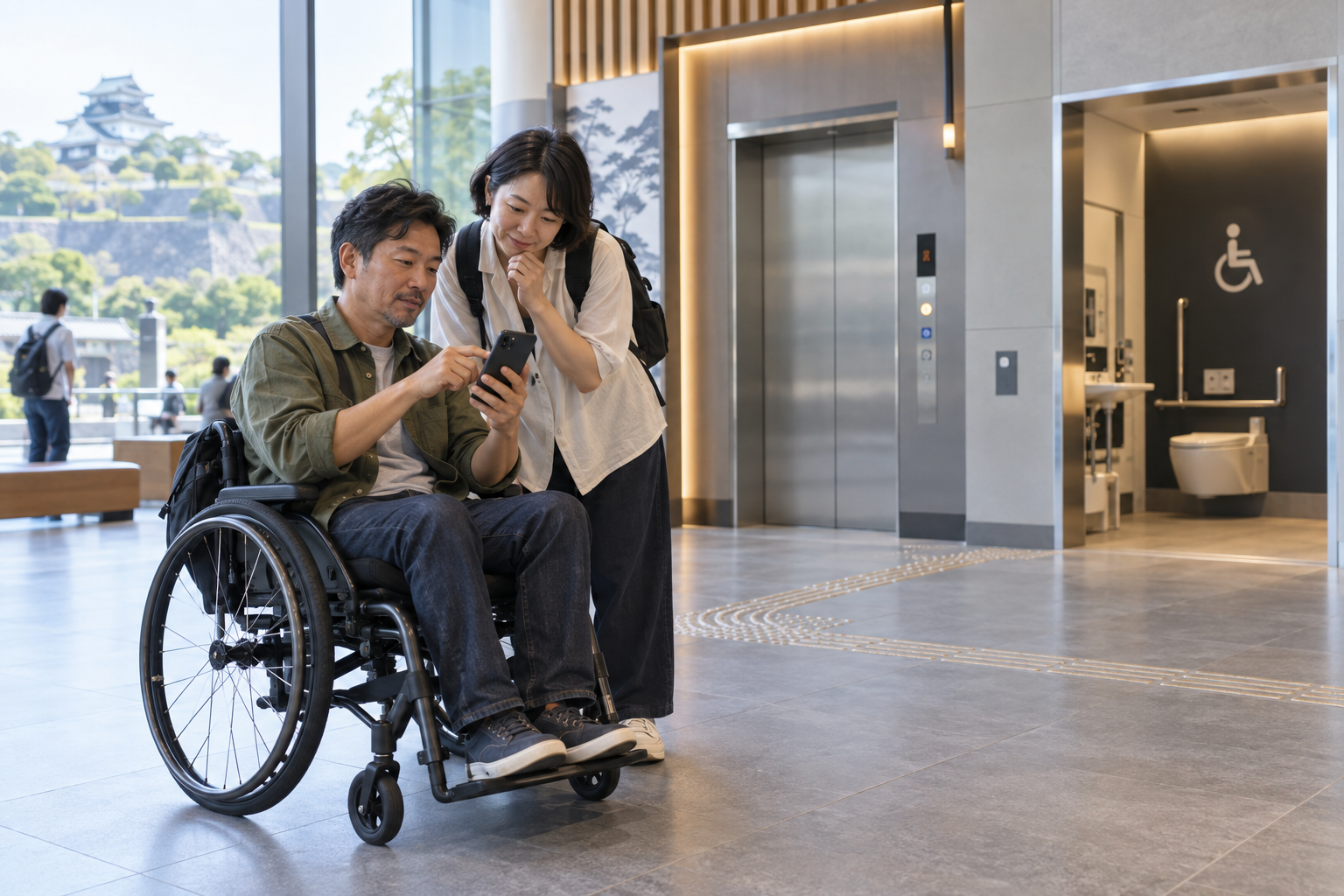
Build each sightseeing day around reliable rest stops rather than assuming the next station, café or temple has an accessible toilet. Official station tools can show multipurpose toilets, but location matters: a toilet may be inside the paid area or outside a different gate.
For every major stop, check:
- the step-free entrance and whether it is open at your visit time;
- elevator or ramp access between floors;
- accessible toilet location;
- wheelchair loan rules, if relevant;
- whether a companion ticket or advance contact is required;
- the nearest low-dependency alternative.
Restaurants are often the weakest link because a small entrance step, narrow aisle or basement location may not appear in a reservation listing. Ask about the entrance, table height and toilet separately. A restaurant without an accessible toilet may still work if a verified public facility is nearby and the timing is realistic.
A Low-Stress Daily Plan
Use three layers instead of one rigid schedule.
| Layer | Example |
|---|---|
| A: Main plan | Reserved museum with verified station exit and accessible toilet |
| B: Nearby alternative | Step-free shopping complex or city museum on the same line |
| C: Recovery option | Hotel-area café, park or rest day with minimal transfers |
Keep the morning lighter after a long flight or intercity move. Avoid rush hour where possible; GO TOKYO specifically recommends avoiding the busiest commuter periods when using a wheelchair on trains. Allow time for assistance without turning every delay into a crisis.
Five-Minute Pre-Departure Check
Before leaving the hotel each day:
- check service alerts and elevator notices for the route;
- confirm opening hours and the accessible entrance;
- screenshot the correct station exit and destination address;
- charge the phone and powered-chair equipment;
- carry the hotel contact and a simple Japanese assistance note;
- identify the Plan B stop before the first train.
A useful Japanese line is: 車いすを使っています。段差のない行き方を教えてください。 (Kurumaisu o tsukatte imasu. Dansa no nai ikikata o oshiete kudasai.) — “I use a wheelchair. Please show me a step-free way.”
Final Decision Checklist
Book only when the essential chain works:
- Airport and airline assistance boundaries are clear.
- Every critical station and exit has a checked step-free route.
- Required train assistance or wheelchair space is arranged.
- The exact hotel room and bathroom answer your measurements.
- Each long day includes known toilets and rest points.
- A lower-dependency Plan B exists.
- Confirmations and contact details are saved offline.
Japan’s strongest advantage is not that every place is accessible. It is that major operators publish useful facility information and staff assistance is often available. The trip becomes safer when you connect those pieces in advance and leave room for the route to change.
FAQ
Is Japan wheelchair accessible?
Many major transport systems, airports and attractions have barrier-free facilities, but access varies by station, exit, train, hotel room and venue. Verify the complete route for your own chair and transfer needs.
Can wheelchair users take trains in Japan?
Yes. Operators such as JR East say station staff can guide wheelchair users to the platform and assist with boarding and deboarding. Ask at a staffed gate and allow extra time.
How early should I reach a station?
JR East asks wheelchair users to arrive with time to spare because staff assistance can take time. No single lead time applies nationwide, so add a generous buffer for busy stations, transfers and disruptions.
Do I need to reserve a wheelchair space on the Shinkansen?
For some services, yes. JR Central states that its wheelchair-accessible seat requires a reservation. Confirm the method and availability with the operator for your train.
Are all Tokyo Metro entrances step-free?
No. Tokyo Metro may show at least one step-free “one-route” connection at a station, but that does not mean every entrance, exit or transfer route is step-free.
How do I confirm an accessible hotel room in Japan?
Ask the hotel directly about the exact room, doorway widths, bed transfer space, bathroom turning room, shower type, grab bars and the step-free route from the street.
Are accessible toilets easy to find?
They are common in major stations and large public facilities, but their location and opening hours vary. Check whether the toilet is inside or outside the ticket gates and keep a backup.
Can I request assistance at Haneda Airport?
Yes. Haneda lists terminal assistance, wheelchairs and universal facilities. Contact the airline for aircraft-related assistance and the railway for help inside its station.
What should my Plan B be?
Choose a nearby place with fewer transfers, a verified step-free entrance and a known accessible toilet. The best backup should reduce dependencies rather than create another complex route.
All six article images are AI-generated conceptual illustrations, not documentary evidence of a specific station, train, airport, hotel room or facility layout.
Official Sources
- JNTO: Accessible Tourism
- GO TOKYO: Tokyo Accessibility Guide
- Tokyo Metro: Search Station by Barrier-free Facility
- JR East: Frequently Asked Questions
- JR East: Wheelchair Users
- JR Central: Accommodations of Trains
- Haneda Airport: Universal Facilities
- Haneda Airport: Assistance FAQ
Facilities, operating procedures and assistance conditions can change. Recheck the operator, hotel and venue shortly before travel.

Comments