Quick Answer
Choose rosu if you want a juicier pork loin with a visible strip of fat. Choose hire if you want a leaner, softer fillet with less fat. For a first tonkatsu meal, rosu gives the clearest contrast between crisp panko, meat, and fat; hire is the safer choice when richness is not the goal. After choosing the cut, compare the set price, pork brand, portion size, refill policy, payment method, and reservation rule.
| Decision | Rosu | Hire |
|---|---|---|
| Fat | More, usually along one edge | Less |
| Texture | Juicy and rich | Lean and tender |
| Best first choice | For classic tonkatsu flavor | For travelers avoiding fatty cuts |
| Before ordering | Check grams, set contents, refill policy, and current price. | |
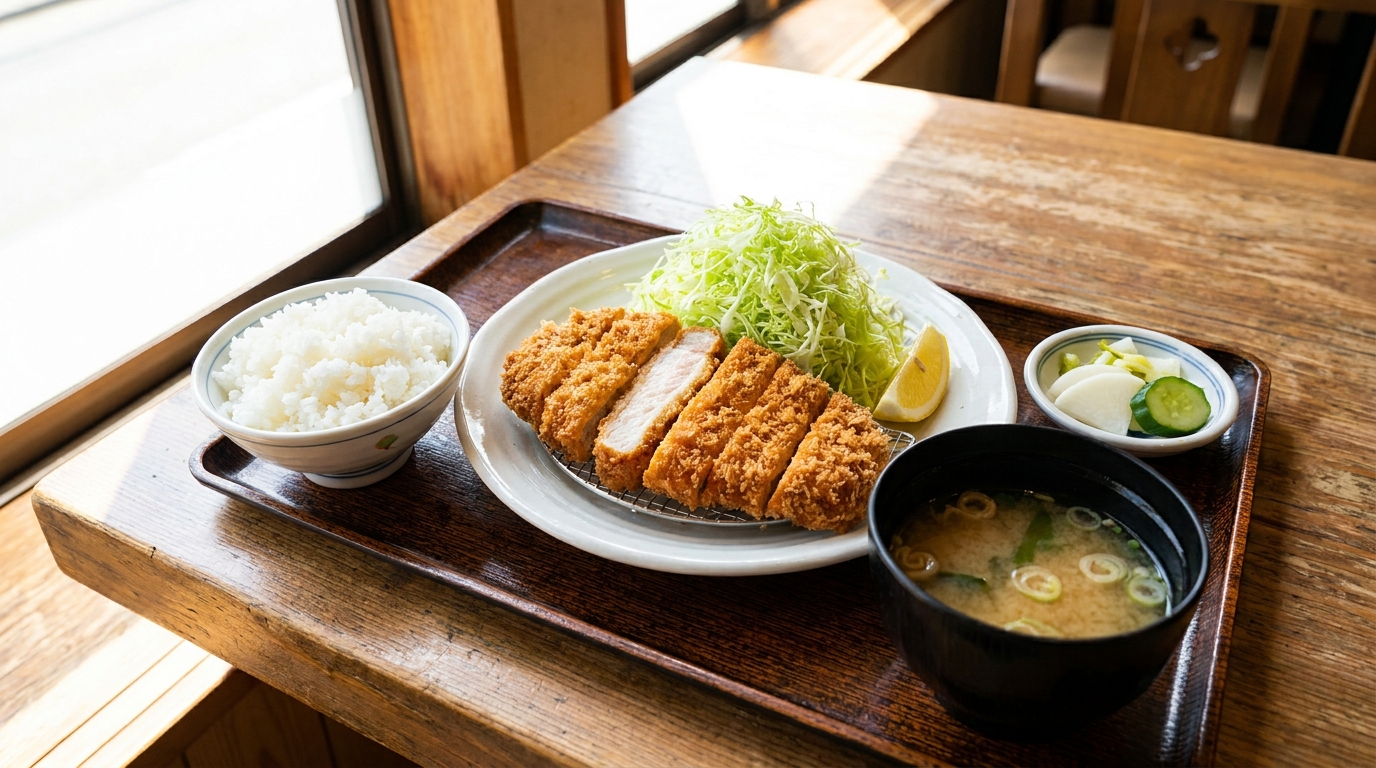
Choose your price tier after choosing the cut
Once you know whether you want rosu or hire, use these four price bands to choose the occasion. Prices are examples from the article’s May 2026 fact check, not permanent citywide rates.
| Tier | Price range | Typical shop | What you get |
|---|---|---|---|
| Lunch set | ¥1,400–¥2,000 | Tonkatsu Wako, Saboten, Maisen Lunch B | Standard loin or fillet, cabbage, rice, miso soup, pickles |
| Mid-range | ¥3,000–¥5,000 | Maisen Kurobuta course, Ponta Honke katsuretsu | Branded pork or center-loin only, polished service |
| Premium kuro-buta / Iberico | ¥5,000–¥15,000-class | Butagumi Nishi-Azabu | Kagoshima kuro-buta, Iberico, Mangalica; multiple breeds rotated |
| Katsu sando | mostly under ¥1,500 | Maisen takeaway, department-store basements | Pork cutlet sandwich on shokupan, eaten cold or warm |
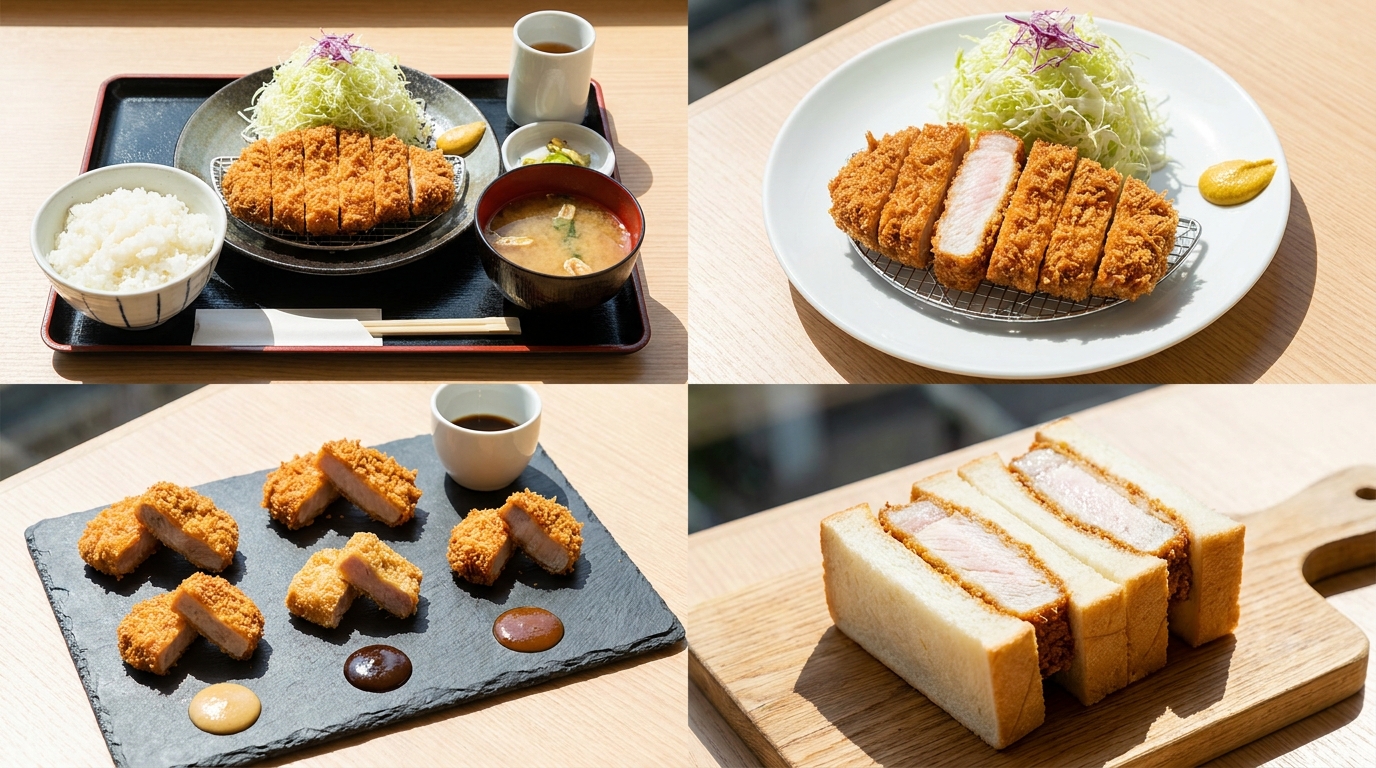
The lunch tier is where many tourists start. A chain like Tonkatsu Wako has English signage and a set around ¥1,630 with miso soup and free cabbage and rice refills. The mid tier is what many first-timers book when they want to taste why locals talk about tonkatsu at all. The premium tier is for travelers who already know they like Japanese pork and want to compare breeds. The katsu sando tier is a snack-grade option, useful between sightseeing stops.
What Makes Tonkatsu Different from a Schnitzel or Cutlet
Tonkatsu looks like a breaded pork cutlet, but four details set it apart.
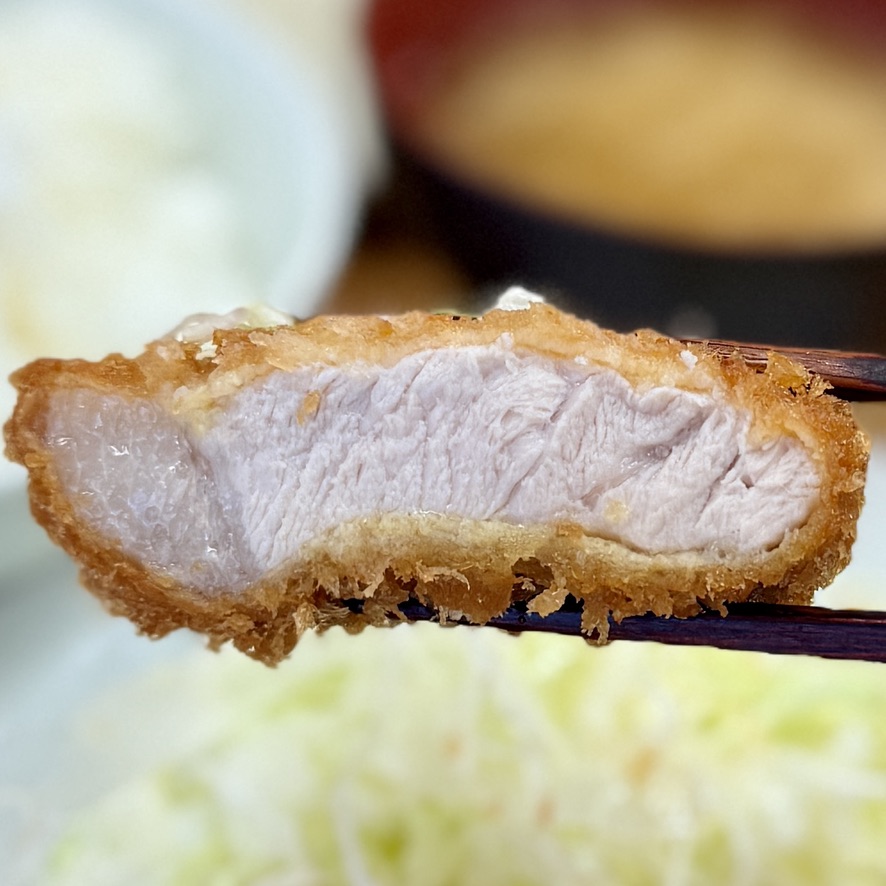
First, the breadcrumbs. Japanese panko is coarser and drier than European breadcrumbs. It absorbs less oil and shatters more, giving the surface a louder crunch.
Second, the oil and frying method. Specialist shops fry twice — once at a lower temperature to cook the meat through, then again at a higher temperature to crisp the surface. Some old-school shops use lard or a lard-vegetable blend; mid- and high-end shops often disclose their oil on the menu.
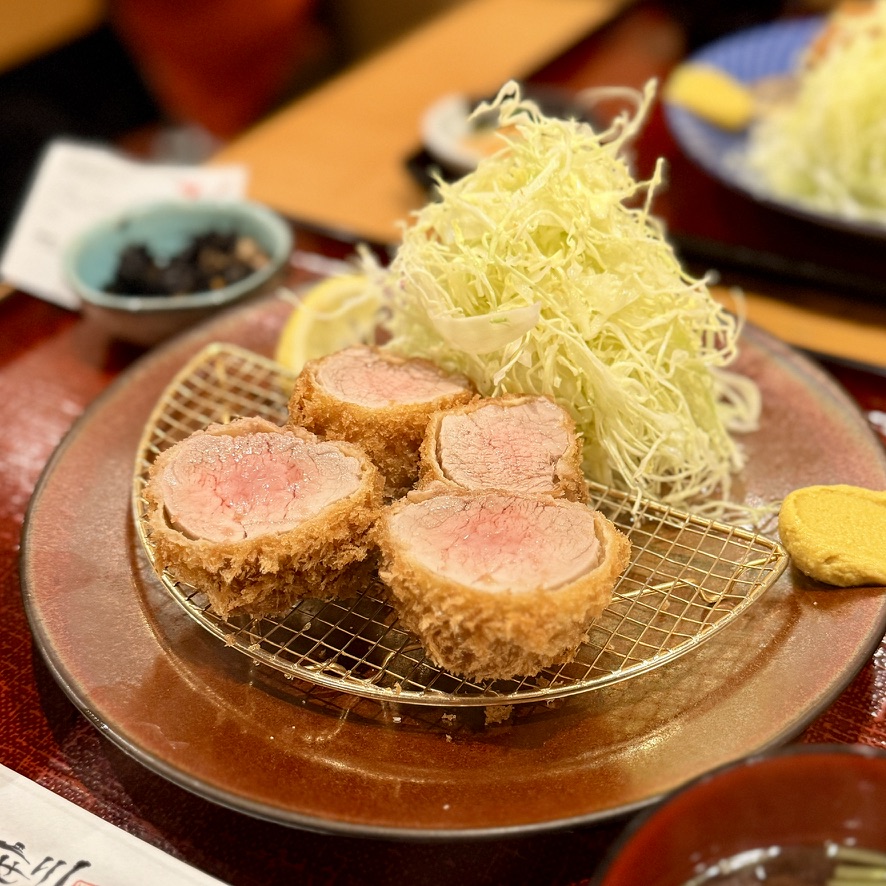
Third, the cut. Loin (rosu) is the standard fatty cut. Fillet (hire) is leaner and slightly more expensive. Specialty shops also offer rib-rose or chateaubriand-style cuts above the standard menu.
Fourth, the side dishes. A tonkatsu set commonly includes shredded cabbage, rice, and miso soup. Some restaurants offer free refills, but the eligible items and conditions vary. Check the menu before assuming that o-kawari is included.
Check the refill policy before ordering
Shredded cabbage commonly comes with tonkatsu and provides a fresh contrast to the fried cutlet. Refill policies vary by restaurant.
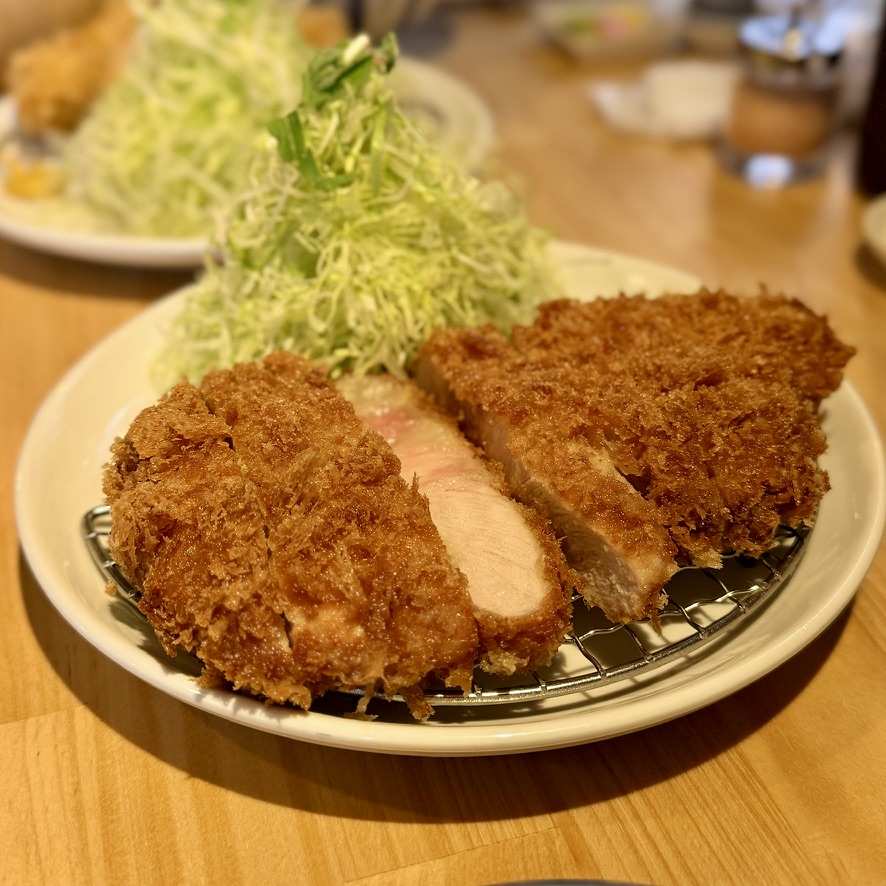
Free refills are not universal: some restaurants refill cabbage, rice, or miso soup, while others limit the item, time, or set menu. Look for refill wording or ask “okawari wa dekimasu ka?” before ordering more. Japan does not require tipping, whether refills are included or not.
What goes on the cabbage is a matter of taste. Sesame dressing (goma dare) and yuzu ponzu are common at chains. A few shops set out salt and lemon, treating the cabbage like a palate cleanser.
How to Order: Sauce, Salt, or Mustard?
Tonkatsu sauce and hot mustard (karashi) are common; salt, pepper, sesame, and specialty seasonings vary by restaurant. Start with one plain bite, then try the condiments actually provided at your table.
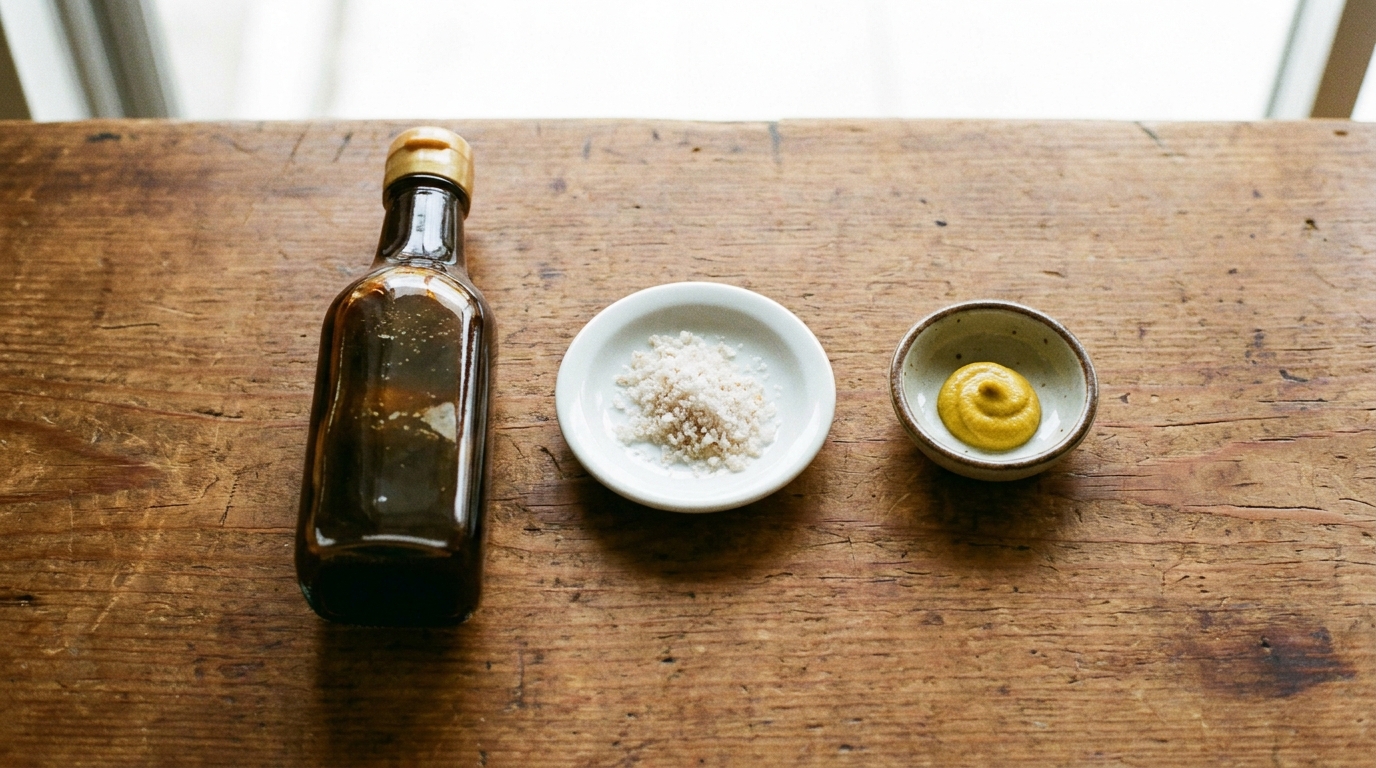
The convention chefs suggest is sauce on fattier loin cuts and salt on leaner fillet. Mustard goes on either, in small dabs at the edge. At specialty kuro-buta restaurants, the chef often instructs the table on order: first bite plain, second bite salt, then sauce.
Rice etiquette is also worth knowing. Rice arrives in a small ceramic bowl. Diners tend to alternate bites of tonkatsu and rice rather than pour sauce on the rice. Some shops set out sesame seeds in a small mortar — grind a few before pouring sauce, which adds aroma.
5 Verified Tonkatsu Shops in Tokyo
These five shops cover the four price tiers and three districts where many tourists already walk.
1. Maisen Aoyama Honten — The Mid-Range Standard
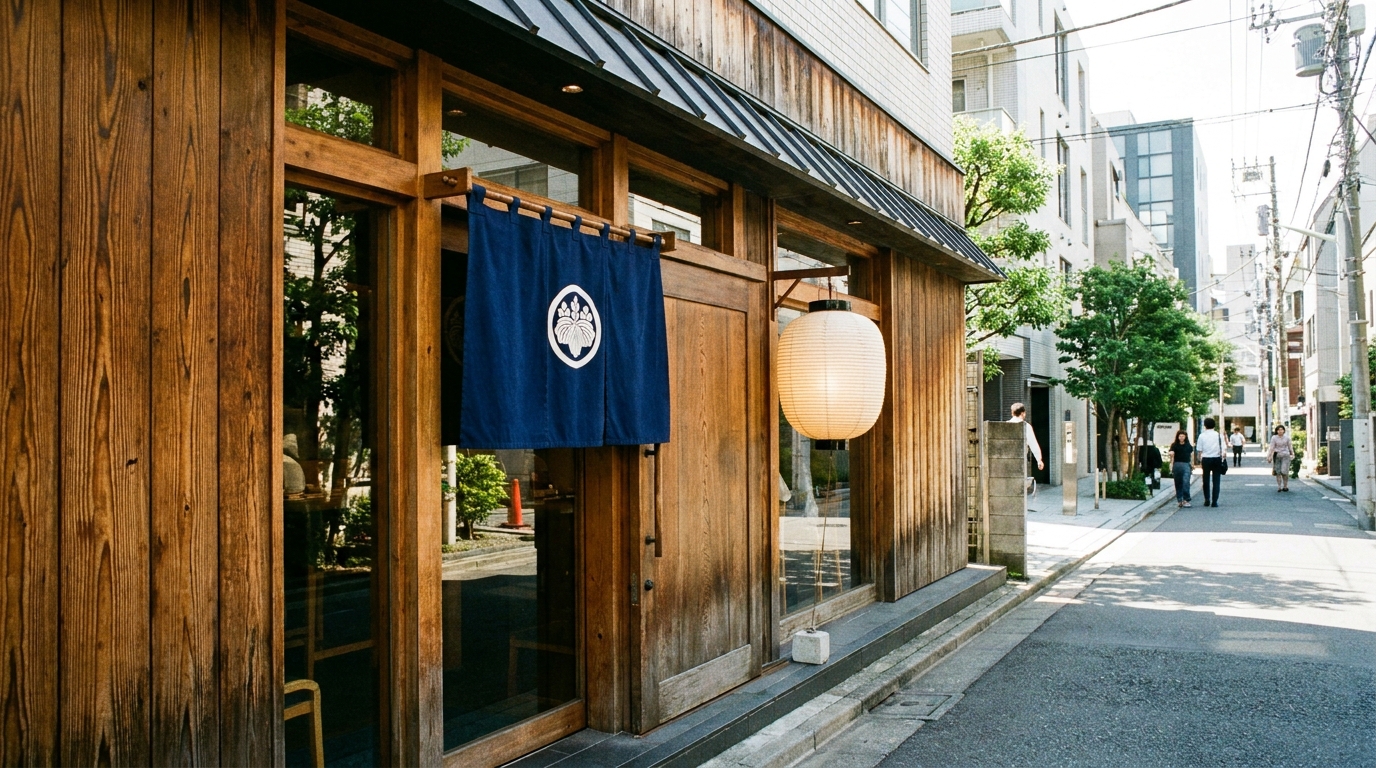
Maisen’s Aoyama flagship has been running tonkatsu since 1965 and now seats over 200 across counter and table sections. The Recommended Lunch B (rib loin, 130g) is around ¥1,400 tax-included, with free refills of rice, miso soup, and cabbage. Kurobuta hire katsu sets run around ¥3,100 and above. English menu, foreign cards, and an English-language online reservation are all in place. The take-out katsu sando counter on the corner is one of Tokyo’s most photographed pork-cutlet sandwiches.
- Nearest station: Omotesando (Tokyo Metro), ~3 min walk
- Reservation: walk-in friendly at lunch, advisable at dinner; AutoReserve online (English)
- Card: yes (major brands)
- English menu: yes
2. Butagumi Nishi-Azabu — The Breed-Tasting Spot
Butagumi has been running in a renovated three-story wooden townhouse since 2003. The menu rotates several heritage pork breeds at a time — Kagoshima Pure Kurobuta, Spanish Iberico, Hungarian Mangalica, and domestic brands from Hokkaido, Chiba, and Okinawa. The restaurant was selected for Tabelog’s “Tonkatsu Hyakumeiten” (Top 100 Tonkatsu) for 2026. Reservation windows open about 30 days ahead and dinner seats fill quickly.
- Nearest station: Nogizaka (Tokyo Metro Chiyoda Line, ~10 min walk) or Hiroo (~12 min walk)
- Reservation: required in practice — via AutoReserve, Toreta, or phone
- Card: yes
- English menu: yes (breed names and origins translated)
3. Ponta Honke Okachimachi — The Meiji-Era Classic
Founded in 1905 (Meiji 38), Ponta Honke near Okachimachi Station is one of the oldest still-operating Western-style restaurants in Tokyo and has a Michelin Guide Tokyo listing. The signature dish is the katsuretsu — a thick cutlet made from the center of the loin only, fried in lard at low temperature. The menu is a la carte; nothing comes as a set. Katsuretsu is around ¥3,850 and the famous beef-tongue stew is around ¥4,320. Cash and limited cards. Closed on Mondays.
- Nearest station: Okachimachi (JR Yamanote), ~3 min walk
- Reservation: phone reservations accepted; counter walk-in also possible
- Card: limited; bring cash
- English menu: simplified version available, ask staff
4. Tonkatsu Wako (chain) — The Reliable Lunch Pick
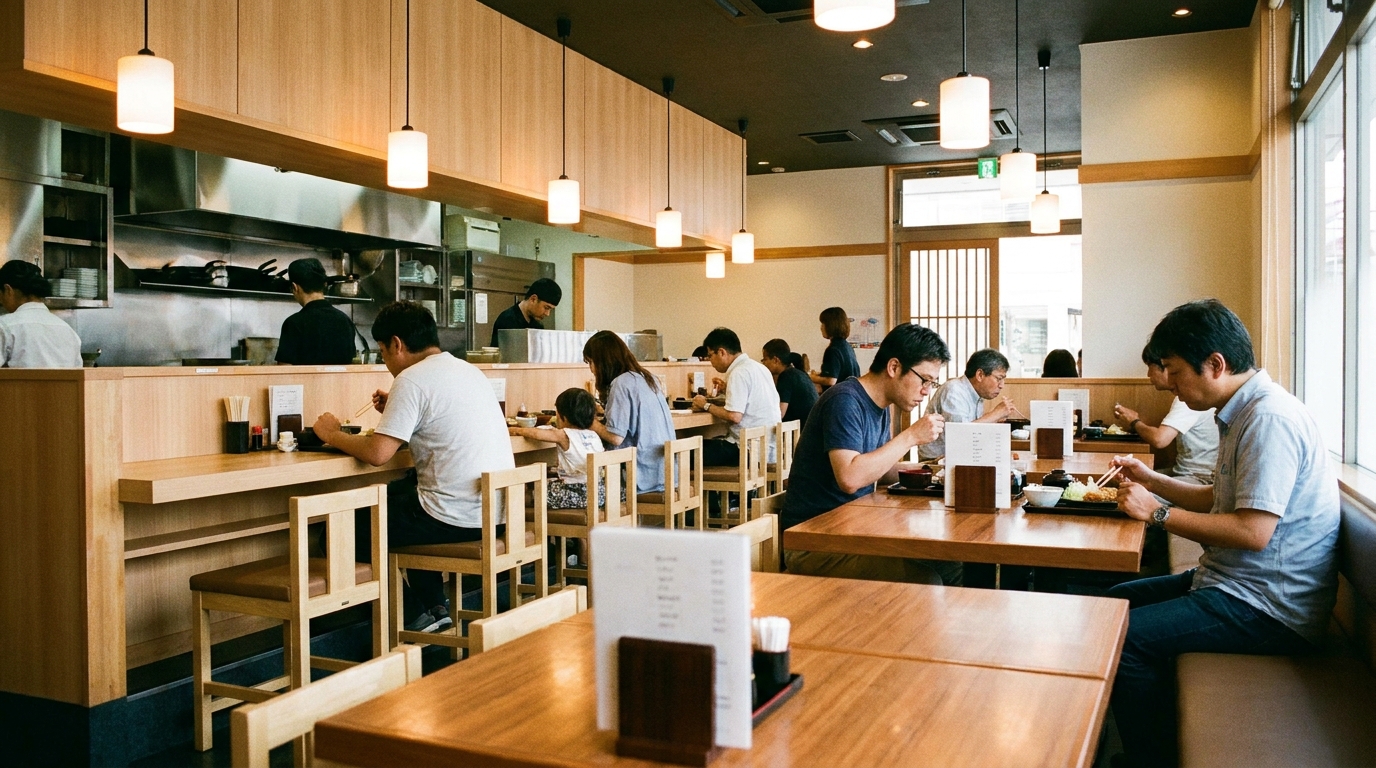
Tonkatsu Wako runs counters in major train stations and department-store basements across Tokyo (Shinjuku Isetan Kaikan, Shibuya, Tokyo Station, Haneda T3). The standard Loin Katsu set is around ¥1,630 and the Rib Loin Katsu set around ¥1,950, both with free refills of rice, miso soup, and cabbage. English-language signage and IC card payment are standard. Allergen information is published on the kids’ menu and the official site.
- Nearest station: most major Tokyo hubs have a Wako counter
- Reservation: not needed; expect 10–15 min wait at peak lunch
- Card: yes, plus Suica/PASMO and most mobile wallets
- English menu: pictures and short descriptions
5. Tonki Meguro — The Family Counter Institution
Tonki opened in 1939 and moved to its current Meguro location in 1967. The signature method is dipping each cutlet in egg and breadcrumbs three times, giving it a thin, shatteringly crisp surface. Choices are rosu or hire, set or single — sets from around ¥1,400 and individual cutlets from around ¥800, all tax-included. Cabbage, rice, and pork-miso soup refills come automatically. Lines form before opening and the counter view of the cooking line is part of the experience.
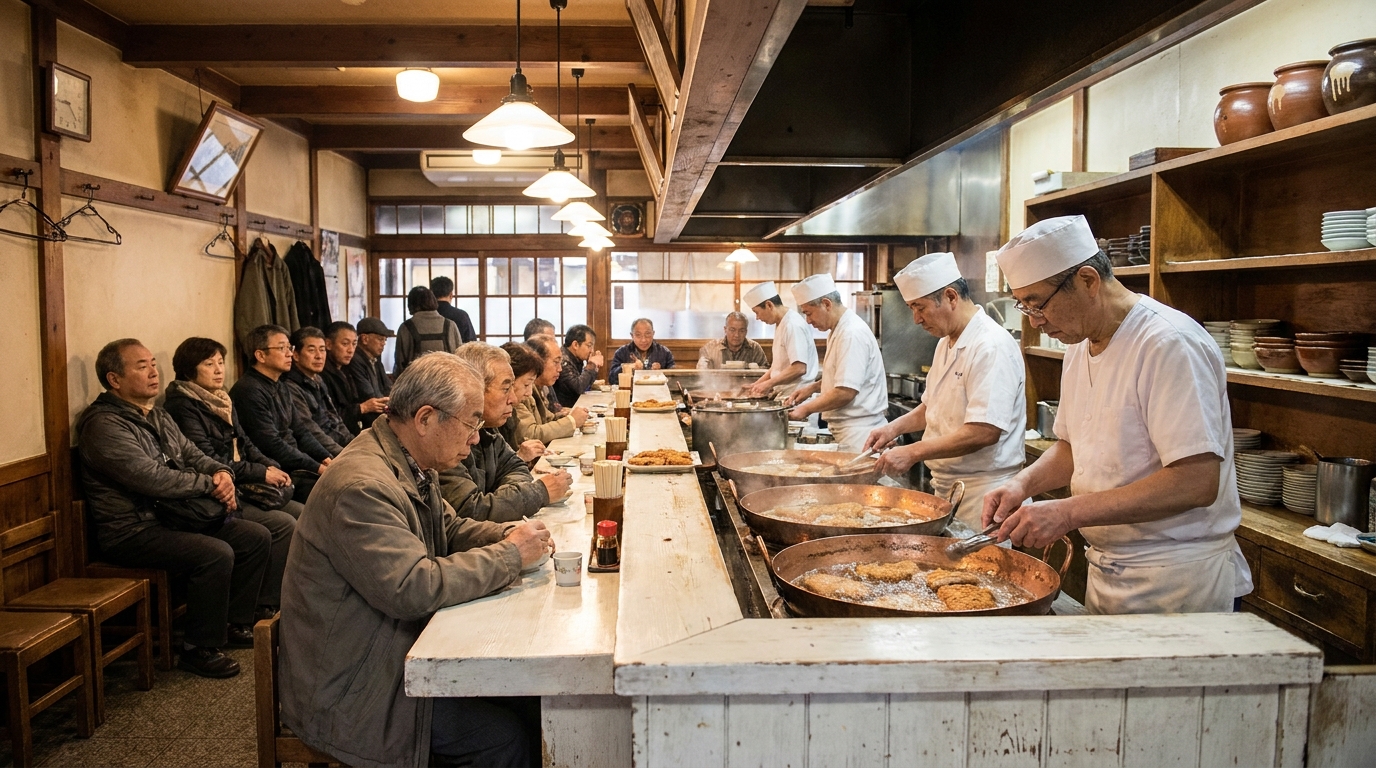
- Nearest station: Meguro (JR Yamanote / Tokyo Metro Namboku / Toei Mita), ~3 min walk
- Reservation: counter walk-in; online booking available via AutoReserve
- Card: cash preferred; check at entry
- English menu: limited; staff use a picture-based order card
Reservations, English Menus, and Payment
Three practical notes for tourists planning a tonkatsu meal.
Reservations. Chains and many lunch counters are practical for walk-ins. For specialist restaurants or weekend dinner, check the restaurant’s own booking page. A third-party listing does not guarantee that the restaurant accepts or prioritizes that reservation channel.
English menus. Chains and tourist-area shops have English menus or picture menus. Old-school counter shops like Tonki and many Pondo seats do not. Pointing at the chalk board or showing a phone photo works. Staff are used to it.
Payment. Department-store and chain locations take all major cards, IC transit cards, and most mobile wallets. Cash-only is still common at family-run counter shops and at some Pondo and Tonki seats. The ATMs at 7-Eleven and Japan Post Bank accept most foreign cards without a fee from the operator side — useful before walking into a cash-only old shop.
Tipping. No tipping in Japan. Service is included. Cabbage, rice, and miso soup refills are free.
FAQ
Q1. What is the difference between tonkatsu and katsudon?
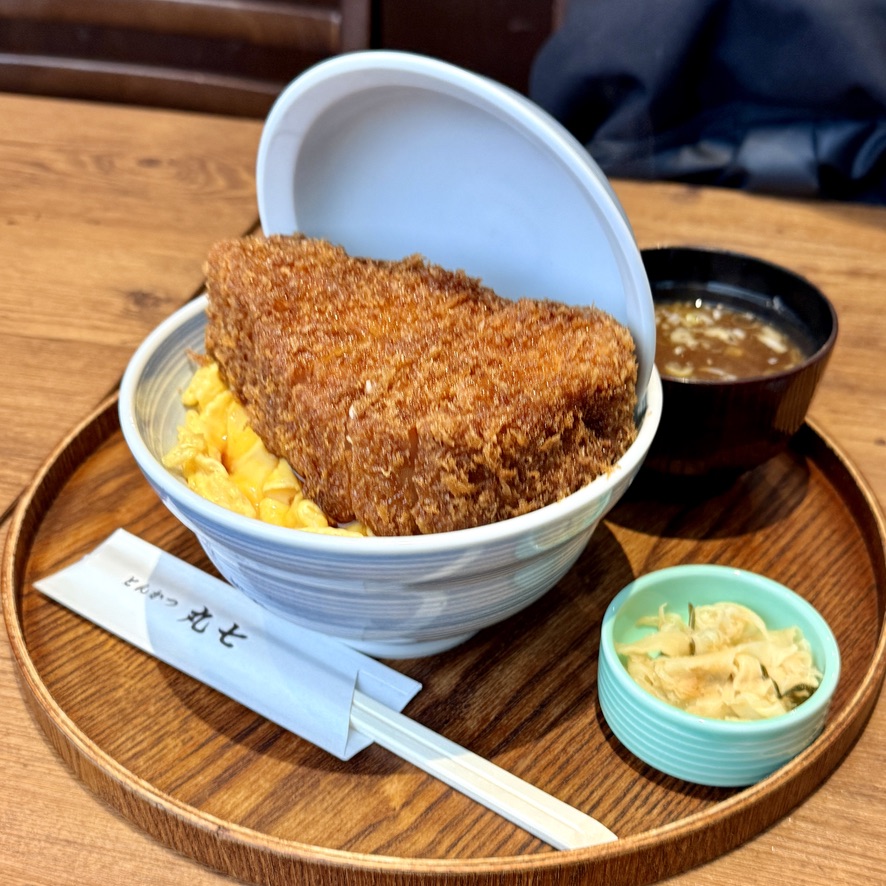
Tonkatsu is the cutlet on its own, served with cabbage and rice as a set. Katsudon is the same cutlet sliced and simmered with egg and onion in a dashi-soy broth, then poured over rice as a single bowl.
Q2. Should I order rosu (loin) or hire (fillet)?
Rosu has a fat strip along one edge, juicier and more flavorful. Hire is leaner and slightly pricier. First-timers often order rosu; travelers who avoid pork fat may prefer hire.
Q3. Why is shredded cabbage served with tonkatsu?
It gives a fresh, crisp contrast to the fried cutlet. Refill policies vary, so check the menu or ask before ordering more.
Q4. Are tonkatsu shops halal-certified?
The shops in this guide are not halal-certified. Tonkatsu is by definition a pork dish. Muslim travelers looking for similar fried-cutlet experiences can search for halal chicken-katsu shops in Shin-Okubo or Asakusa — these are listed in our Halal Ramen Tokyo guide.
Q5. Can I pay by credit card or Suica?
Chains and mid-to-premium shops accept major credit cards. Old-school counter shops are often cash-only. Suica or PASMO is accepted at most chain branches and department-store outlets. Withdraw cash at 7-Eleven or Japan Post Bank ATMs in advance for cash-only shops.
Q6. Do I need a reservation for dinner?
Walk-in is fine at chains and most lunch sets. Butagumi accepts reservations via AutoReserve, Toreta, or phone and tends to fill up days to weeks ahead for weekend dinners. Maisen Aoyama and Tonki accept walk-ins but expect a wait at peak hours; both also list online booking via AutoReserve.
Q7. What sauce should I use, and how?
Sweet brown tonkatsu sauce is standard. Salt suits leaner hire and premium kuro-buta. Hot mustard goes in a small dab at the edge of the plate, not on top of the cutlet. Many shops also set out sesame seeds to grind into the sauce.
Q8. Is the oil they fry in lard or vegetable?
Mid- and high-end shops disclose their oil. Old-school shops like Pondo use lard or a lard blend, which gives a richer surface. Chains use vegetable oil or a blended cooking oil. Travelers with dietary restrictions can ask staff directly.
Q9. How much does a tonkatsu meal cost in Tokyo?
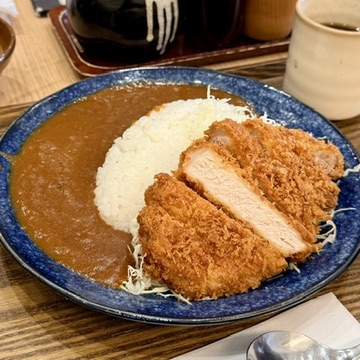
A Tonkatsu Wako loin set is around ¥1,630. A Maisen-tier mid-range set is around ¥1,400 (lunch B) to ¥3,100 (kurobuta). A Butagumi-style premium kuro-buta or Iberico course is in the ¥3,500 to ¥15,000-class range per person depending on breed and cut. Maisen take-out katsu sando varies by cut and venue; departments stores carry the standard version in the lower thousands.
Q10. Where should I go for tonkatsu near Tokyo Station or Shinjuku?
Tokyo Station has a Tonkatsu Wako counter inside the station building and Maisen sells katsu sando at several station-area depachika counters. Shinjuku has Tonkatsu Wako in Isetan Kaikan and other department stores. For a sit-down dinner, take the Yamanote Line two stops to Meguro for Tonki, or head to Aoyama for Maisen Honten.
Related Reading
- Tokyo Sushi Guide 2026
- Tokyo Yakiniku 2026: Why Wagyu Should Be Your Splurge
- Tokyo Restaurant Booking 2026
- Halal Ramen in Tokyo 2026
- Tokyo Unagi Guide 2026: Unadon, Unaju and Price Tiers
- Tokyo Airbnb Starter Guide
About the Author
Basabasa is a former sergeant major in the Japan Ground Self-Defense Force who runs the gourmet account @basabasa_gourmet (12,000+ followers on Tabelog) and is a Google Local Guide Level 10. He has eaten his way through nearly every district in central Tokyo over the past decade and writes about Japan for first-time foreign visitors.
Decision structure updated: August 4, 2026. Shop-specific prices and conditions were last fact-checked on May 28, 2026. Confirm current prices, refill policies, reservations, and payment methods with the venue before visiting. Images are illustrative unless explicitly labeled otherwise.

Comments