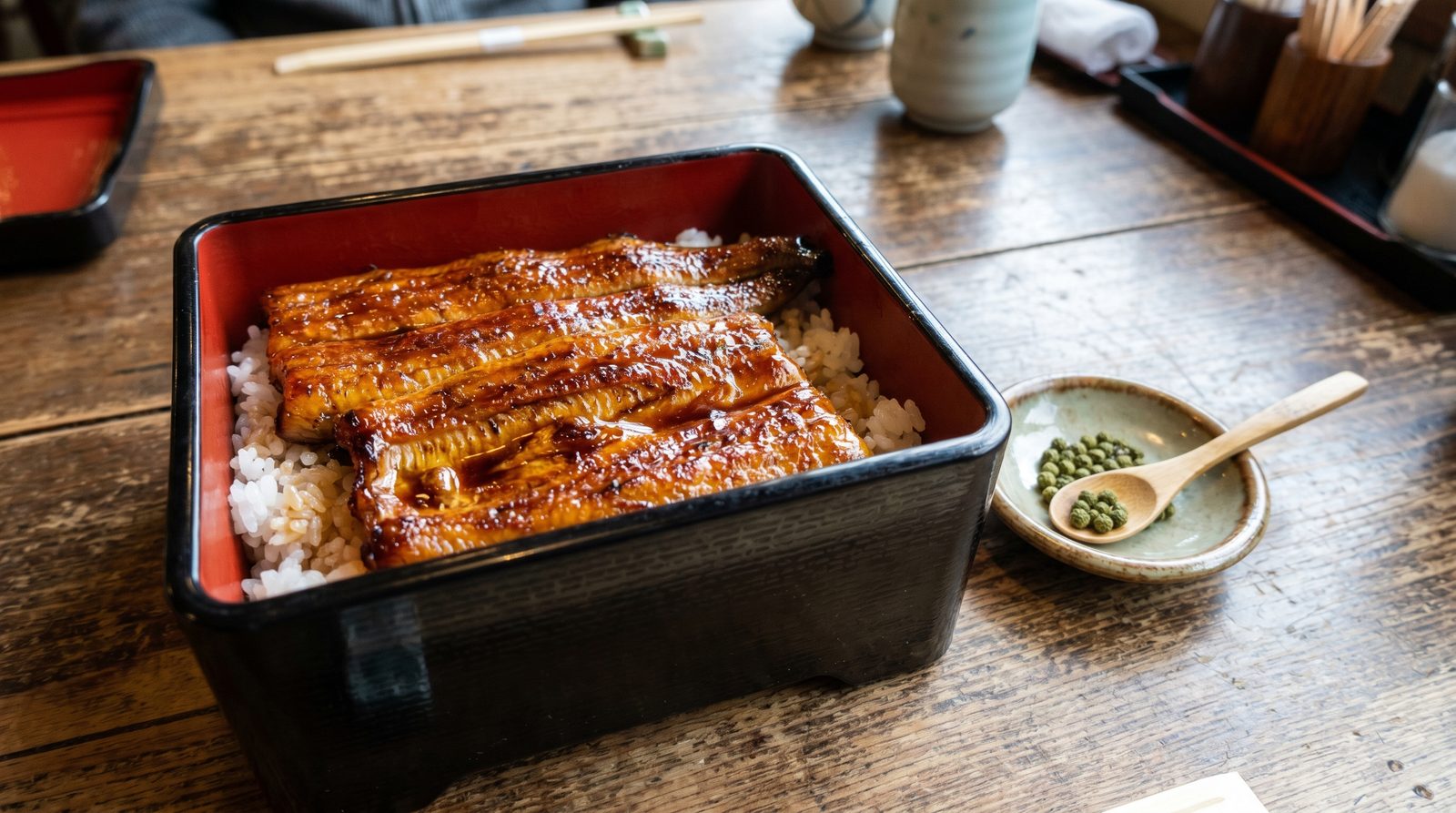
Quick Answer: Choose unadon for the simplest lower-cost first try, unaju for the classic lacquered-box presentation, and hitsumabushi when you want to eat eel three ways with condiments and broth. The container does not guarantee better eel: compare the eel amount, menu tier, set contents, and current price. If a famous shop is full, use a chain near a major station or a department-store takeaway counter.
Facts checked: July 18, 2026. Decision structure updated: August 4, 2026. Menu prices, opening hours, reservation rules, and payment methods can change. Confirm the restaurant’s current official page before making a special trip.
This guide is for the moment when a Tokyo menu says unadon, unaju, or hitsumabushi and you need to choose without guessing. It explains the real difference between the dishes, what a current price range looks like, how to order, what ingredients to check, and what to do if the shop is full.
- Choose your unagi meal in 30 seconds
- What is unagi?
- Unadon vs unaju: what is the actual difference?
- How much does unagi cost in Tokyo in 2026?
- How to order unagi without getting the wrong dish
- Ingredients, allergies, and religious dietary needs
- Tokyo style vs Osaka style
- When was Unagi Day in 2026?
- Where should a first-time visitor try unagi in Tokyo?
- Why is unagi expensive?
- Unagi vs anago
- FAQ
- Related Guides
- Official Sources Checked
- Read Next
Choose your unagi meal in 30 seconds
| Your situation | Choose | Why |
|---|---|---|
| First try, limited budget | Unadon | Eel over rice in a bowl; chains make it easy to try a smaller portion. |
| You want the classic boxed presentation | Unaju | Eel over rice in a lacquered box. Compare the eel amount and set contents rather than relying on the word “unaju.” |
| You want an eating ritual | Hitsumabushi | Chopped eel and rice eaten plain, with condiments, and with broth or tea. |
| You want to taste the eel without sweet glaze | Shirayaki | Grilled without kabayaki sauce; often eaten with wasabi, salt, or soy sauce. |
| The famous shop is full | Plan B | Use a chain near a major station or buy takeaway from a department store food floor. |
What is unagi?
Unagi (うなぎ) means freshwater eel in Japanese food. The standard restaurant preparation is kabayaki: the eel is opened, skewered, grilled, coated with tare, and grilled again. The glaze commonly combines soy sauce, sugar, mirin, and sake, although recipes differ by shop.
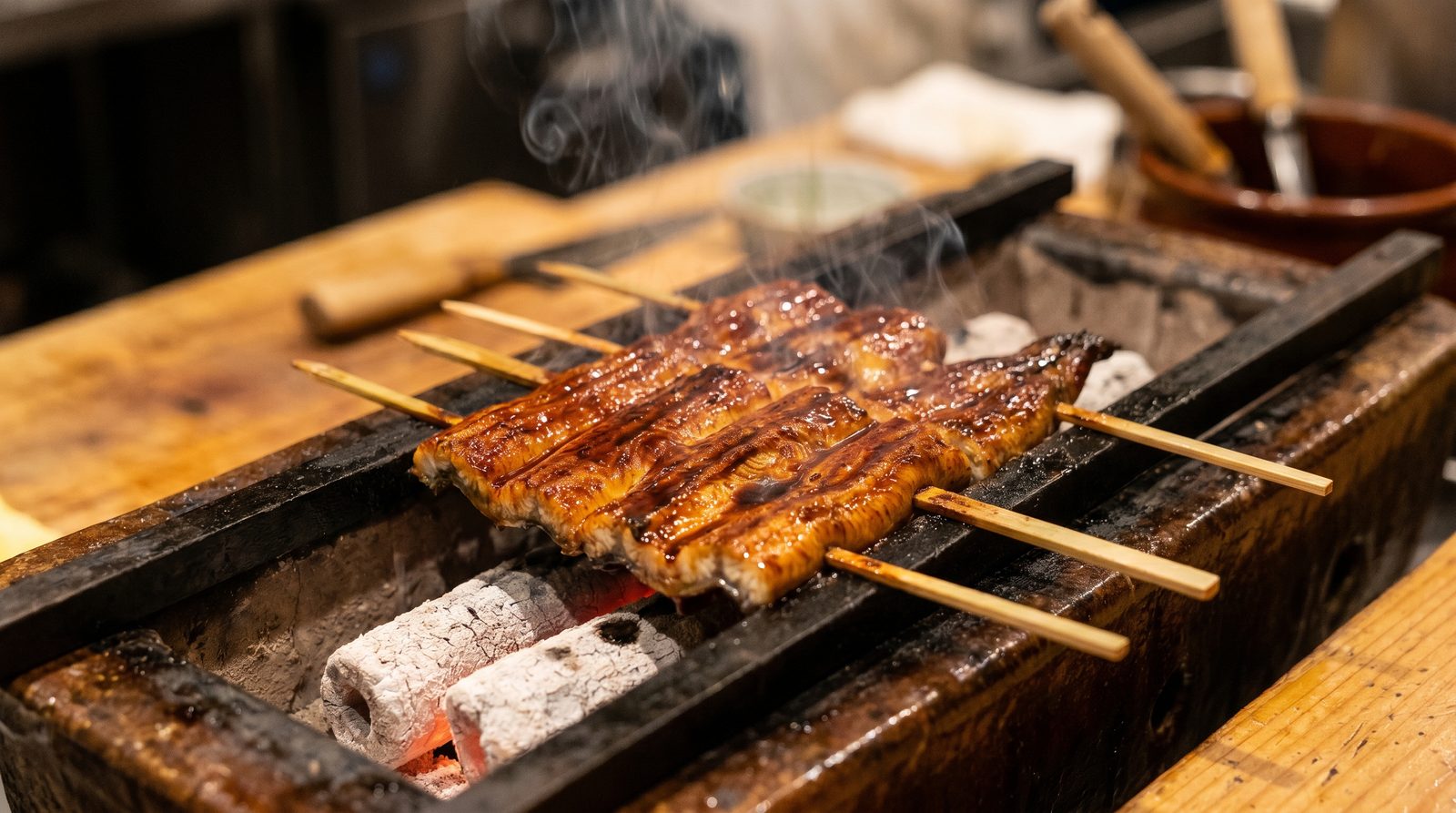
Unagi restaurant dishes are cooked, not served as raw sashimi. If a sushi menu lists “eel,” it may be anago, or saltwater conger eel, which is also normally cooked. The two are compared later in this guide.
Unadon vs unaju: what is the actual difference?
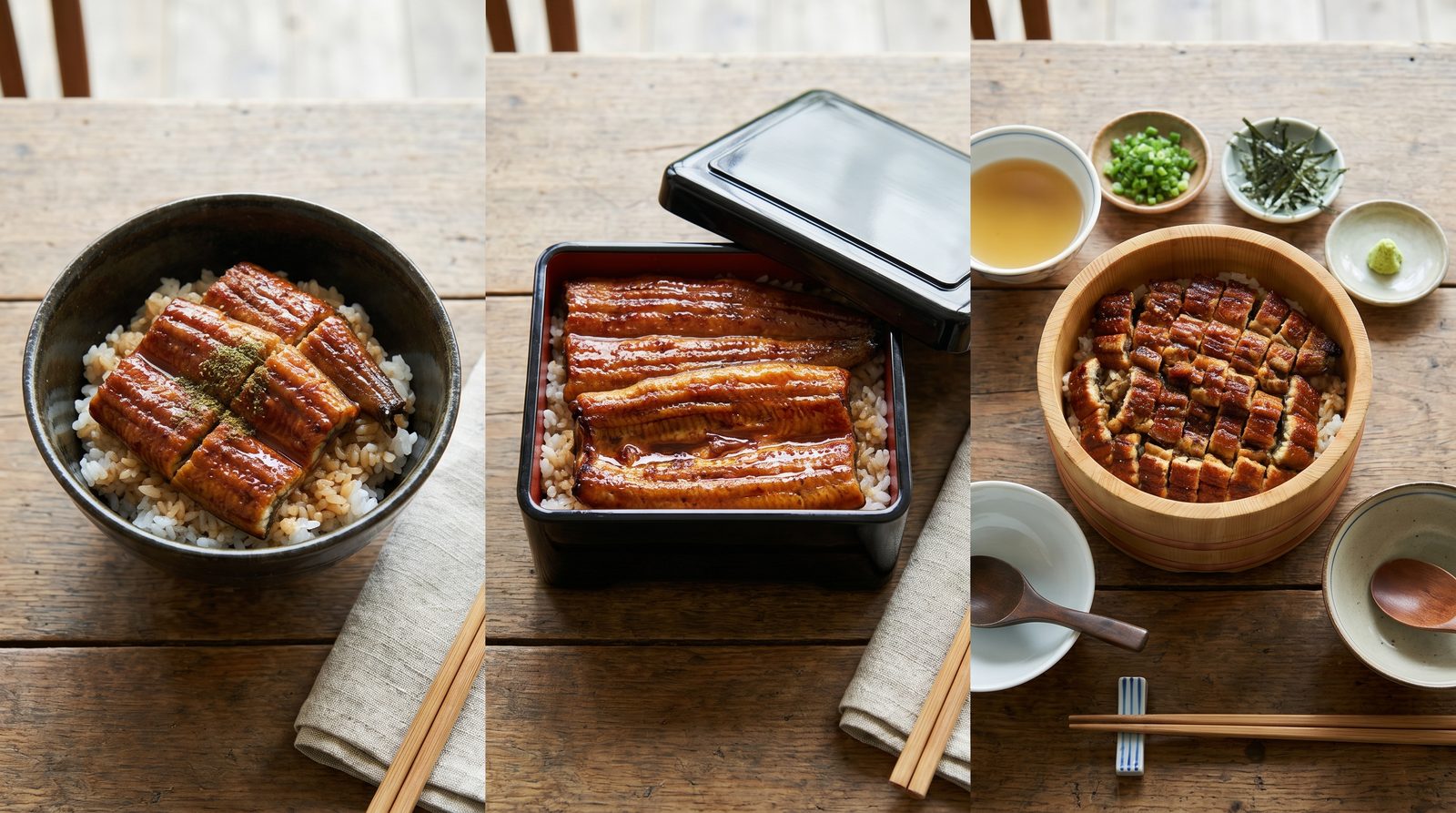
The defining difference is the container: unadon is eel over rice in a round bowl, while unaju is eel over rice in a rectangular lacquered box. There is no nationwide rule requiring unaju to use a better eel than unadon.
A restaurant may use unaju for its larger or higher-priced tiers, but another restaurant may separate menu levels by eel quantity, origin, or set contents. Read the individual menu rather than assuming the box itself guarantees a higher grade.
| Menu word | What it tells you | What you still need to check |
|---|---|---|
| Unadon (うな丼) | Served over rice in a bowl | Eel amount, soup, pickles, and price |
| Unaju (うな重) | Served over rice in a lacquered box | Eel amount, menu tier, set items, and price |
| Jo / Tokujo (上 / 特上) | A higher menu tier at that restaurant | Whether the difference is size, quantity, origin, or another factor |
| Hitsumabushi (ひつまぶし) | Chopped eel and rice with condiments and broth | Serving size and whether broth is included |
How much does unagi cost in Tokyo in 2026?
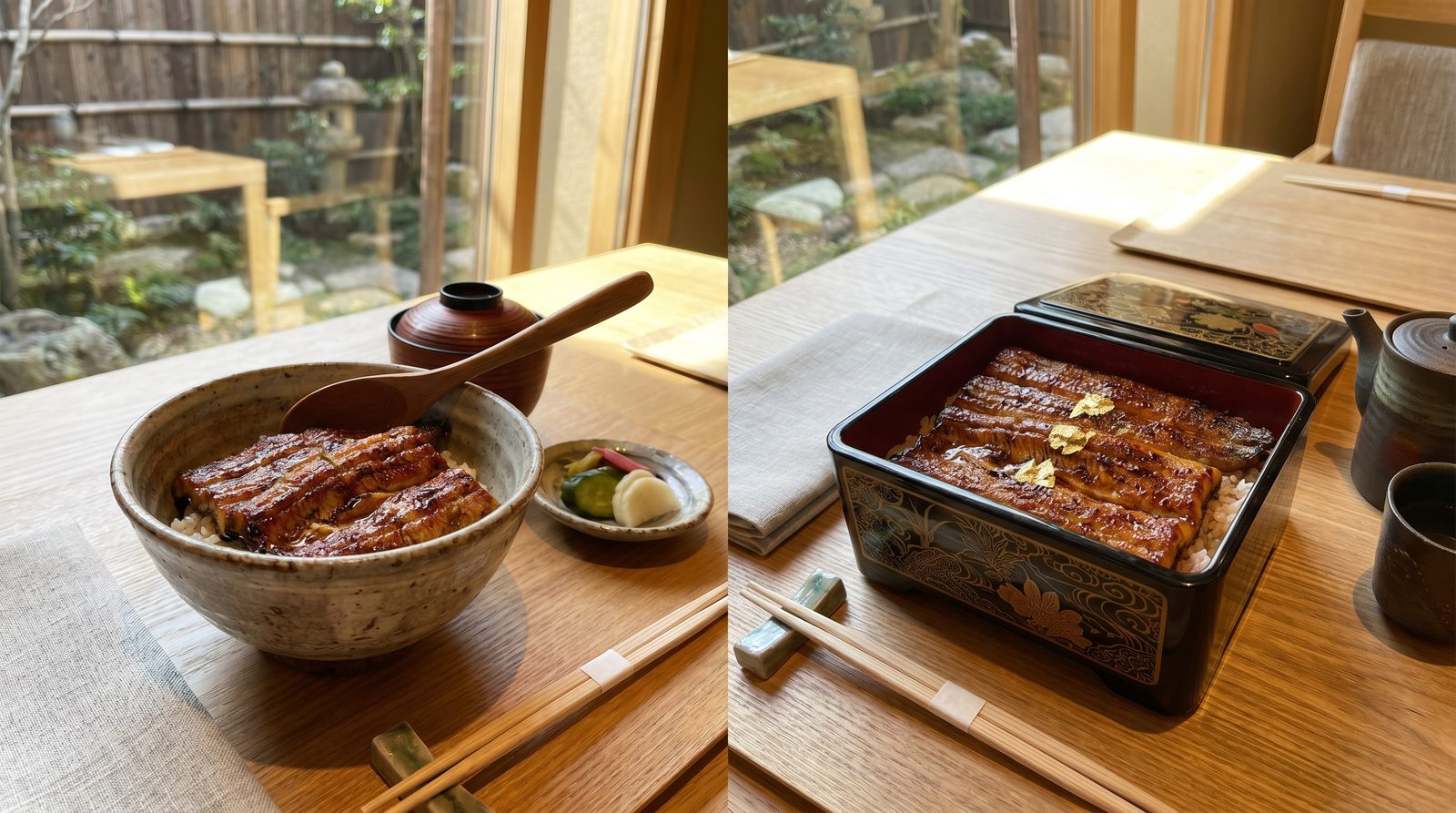
Use exact restaurant menus instead of a single citywide average. As a current low-cost reference, the official Unatoto menu checked on July 18, 2026 listed the following tax-included prices. The company notes that menu items and prices can differ by branch.
| Official menu example | Price checked July 18, 2026 | Useful for |
|---|---|---|
| Unadon | ¥640 | A small, low-cost first try |
| Unaju | ¥1,060 | A boxed serving without a specialist-shop budget |
| Unadon Double | ¥1,200 | More eel than the basic bowl |
| Hitsumabushi | ¥1,300 | Trying the three-stage eating style |
| Unaju Jo | ¥1,740 | A larger or higher menu tier at this chain |
At independent or long-established specialist restaurants, a meal can cost several thousand yen and may rise further with eel quantity, origin, side dishes, and the restaurant’s service style. If the official site does not show a current menu, confirm the price before reserving. Do not build a travel budget around an old review photo.
How to order unagi without getting the wrong dish
- Check the full menu tier. Look for the eel amount and included soup or pickles rather than relying on “unadon” or “unaju.”
- Confirm the wait if your schedule is tight. Specialist shops may prepare eel after the order. Ask before sitting down if you have a train, tour, or reservation afterward.
- Check the payment method. Do not assume a traditional shop accepts your card or mobile wallet. Carrying some yen gives you a safer fallback.
- Reserve when the restaurant supports it. Some shops accept reservations; others use a walk-in queue. Save the restaurant’s official confirmation.
- Ask before changing ingredients. Sauce, soup, and side dishes may contain ingredients not obvious from the English dish name.
| Useful phrase | Meaning |
|---|---|
| Unadon hitotsu onegaishimasu. | One unadon, please. |
| Kore wa nan-ninmae desu ka? | How many people is this portion for? |
| Dono kurai kakarimasu ka? | About how long will it take? |
| Kādo wa tsukaemasu ka? | Can I use a card? |
| Tarē nashi wa dekimasu ka? | Can it be served without the glaze? |
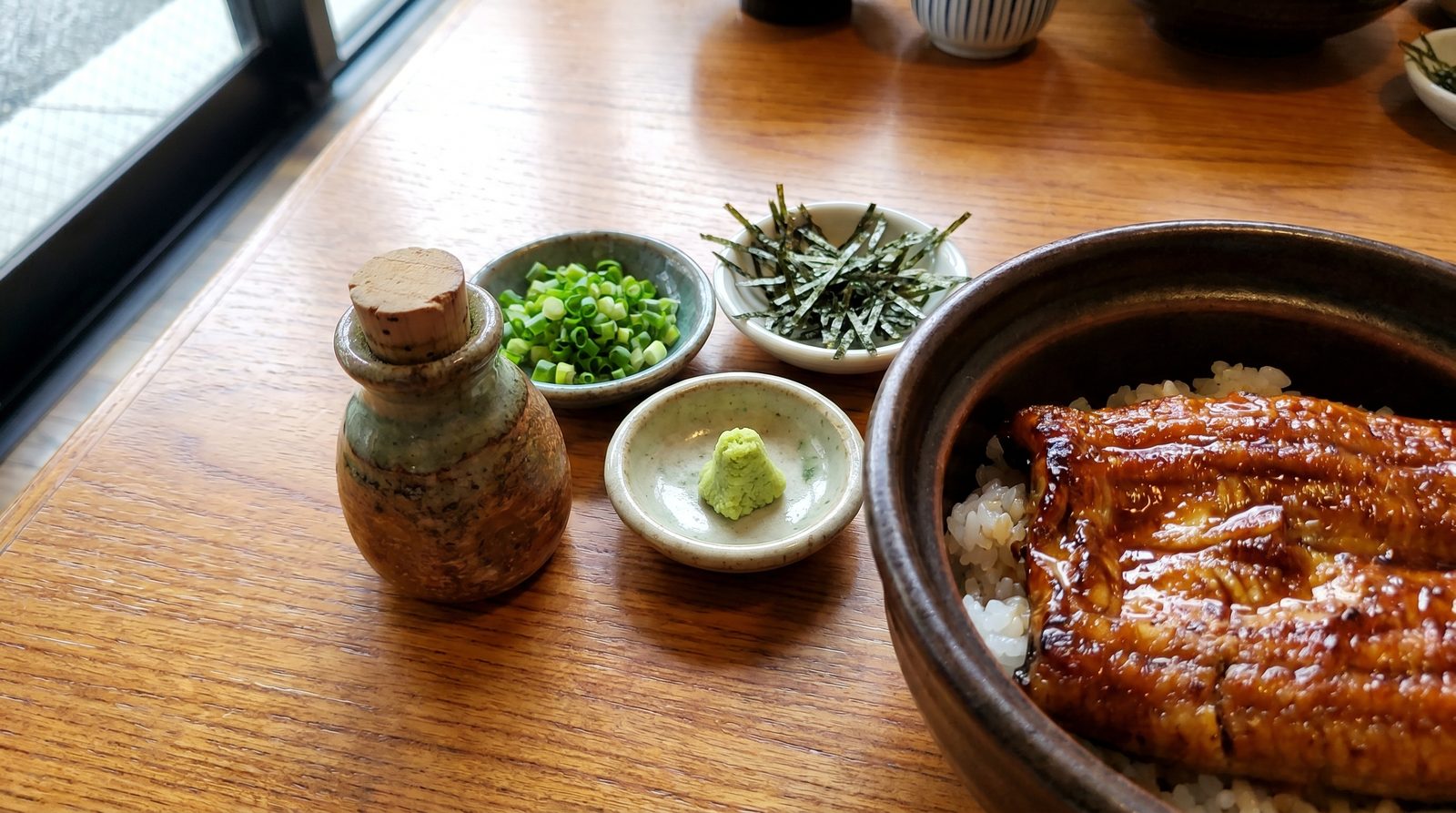
Use sansho, the citrusy Japanese pepper, lightly at first. For hitsumabushi, eat the first portion plain, the second with condiments, and the third with broth or tea. Use the remaining portion in the style you liked most.
Ingredients, allergies, and religious dietary needs
Standard unagi is fish, so it is not vegetarian or vegan. Kabayaki tare commonly uses soy sauce, mirin, and sake; soy sauce may contain wheat. Soup and side dishes can add more ingredients.
Do not assume unagi is alcohol-free, gluten-free, halal, or suitable for another religious diet unless the restaurant confirms its ingredients and preparation. Asking for “no sauce” may change the dish, but it does not confirm the grill, utensils, soup, or side dishes are suitable. When avoidance is medically or religiously strict, choose a restaurant that can answer before you order.
Tokyo style vs Osaka style
Kanto-style eel associated with Tokyo is generally opened from the back, grilled, steamed, and grilled again. Kansai-style eel is generally opened from the belly and grilled without the steaming stage. The Tokyo method tends to produce a softer texture; the Kansai method tends to keep crisper edges.
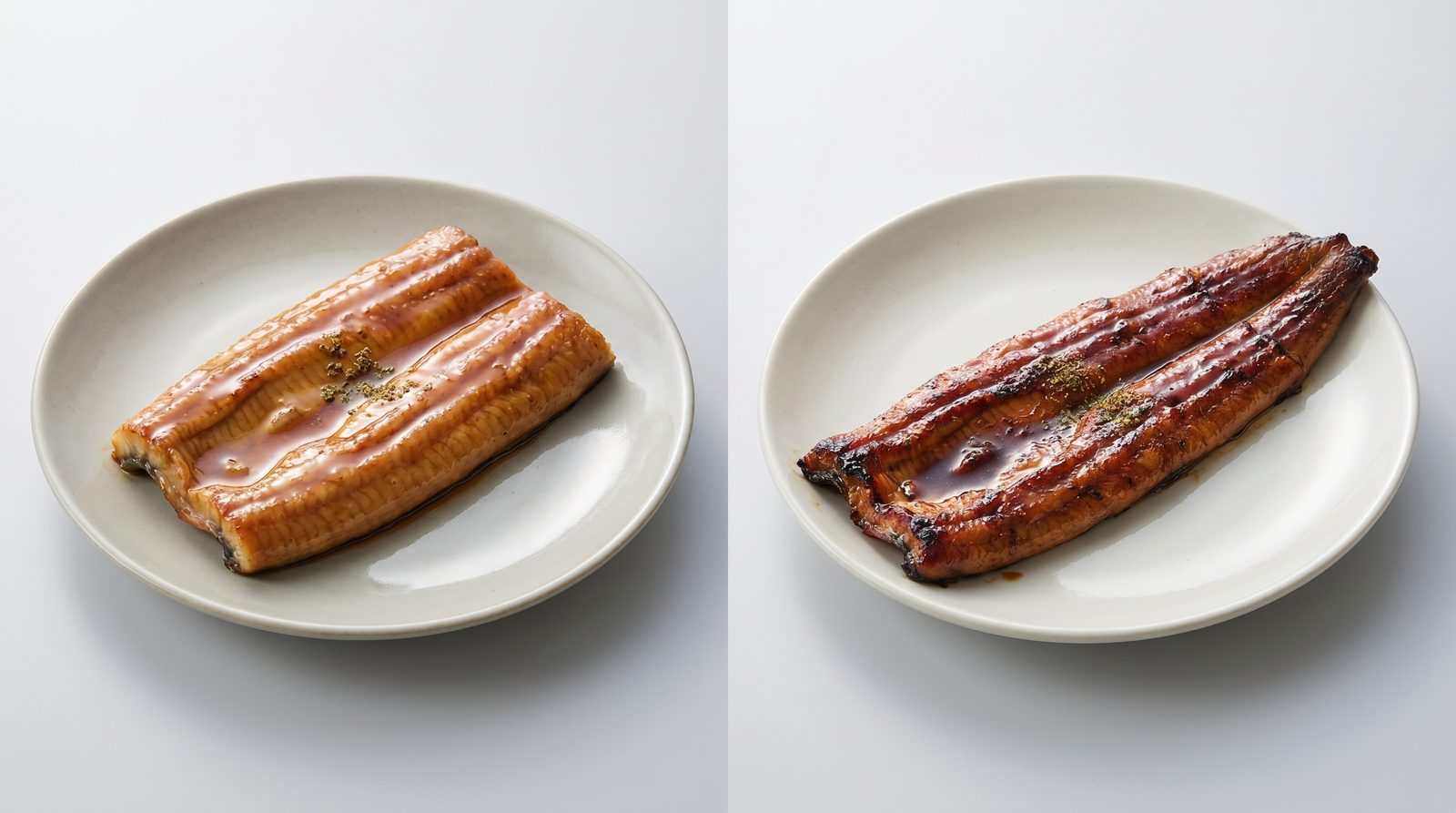
These are regional patterns, not a guarantee at a particular restaurant. Check the shop’s own cooking description if the style matters to you.
When was Unagi Day in 2026?
The 2026 summer Doyo no Ushi no Hi was Sunday, July 26. That date has passed, but unagi remains available year-round. The custom creates a demand peak; it is not a rule that eel should only be eaten on that day.
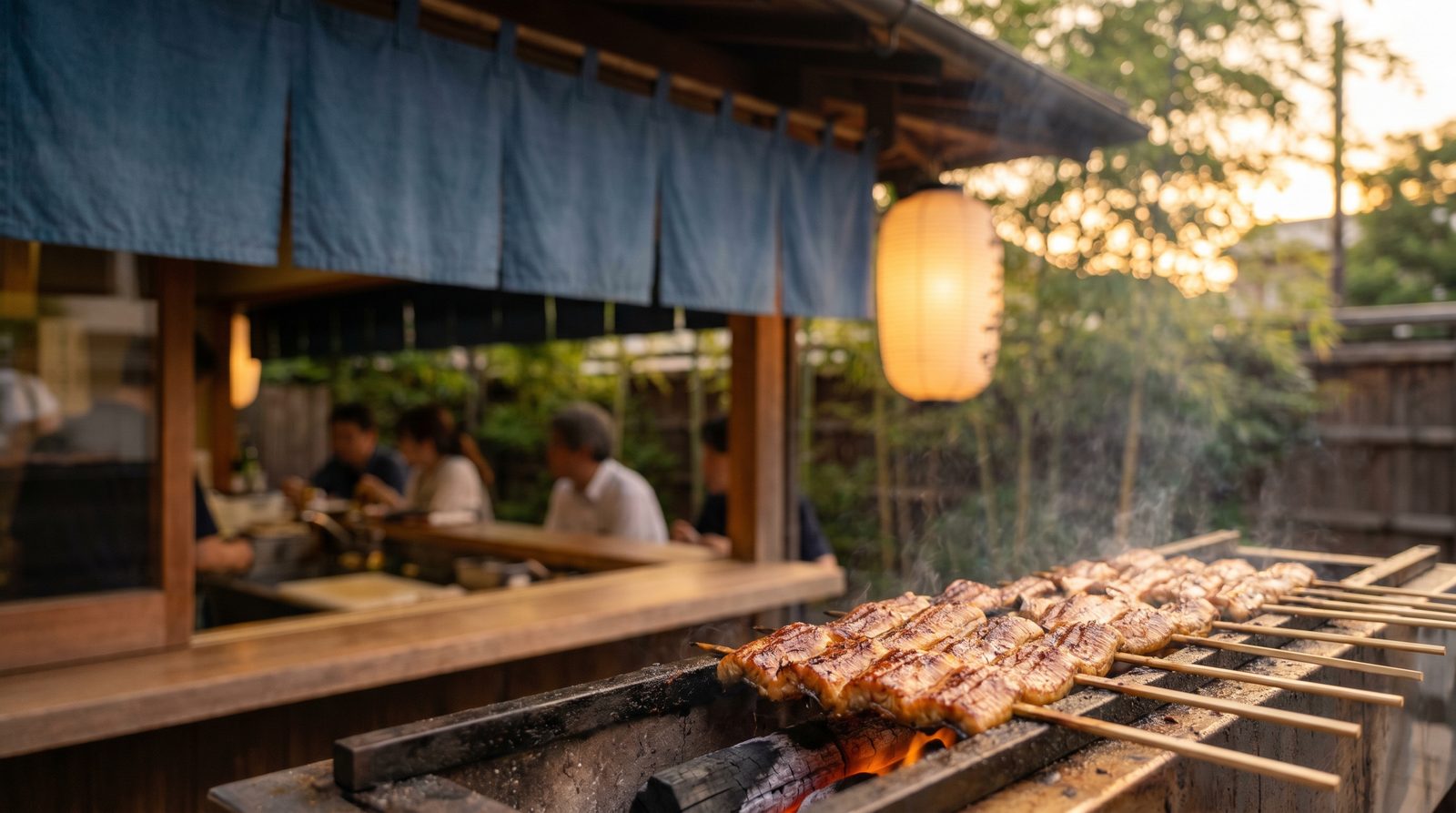
For future summer trips, check the year’s date and keep a backup restaurant because promotions and queues can increase around the seasonal event.
Where should a first-time visitor try unagi in Tokyo?
- Chain near a major station: easiest for a lower budget, a smaller first portion, or a tight schedule. Unatoto’s official store list includes branches in areas such as Shimbashi, Kanda, Akihabara, Asakusa, Ueno, Shinjuku, and Kinshicho.
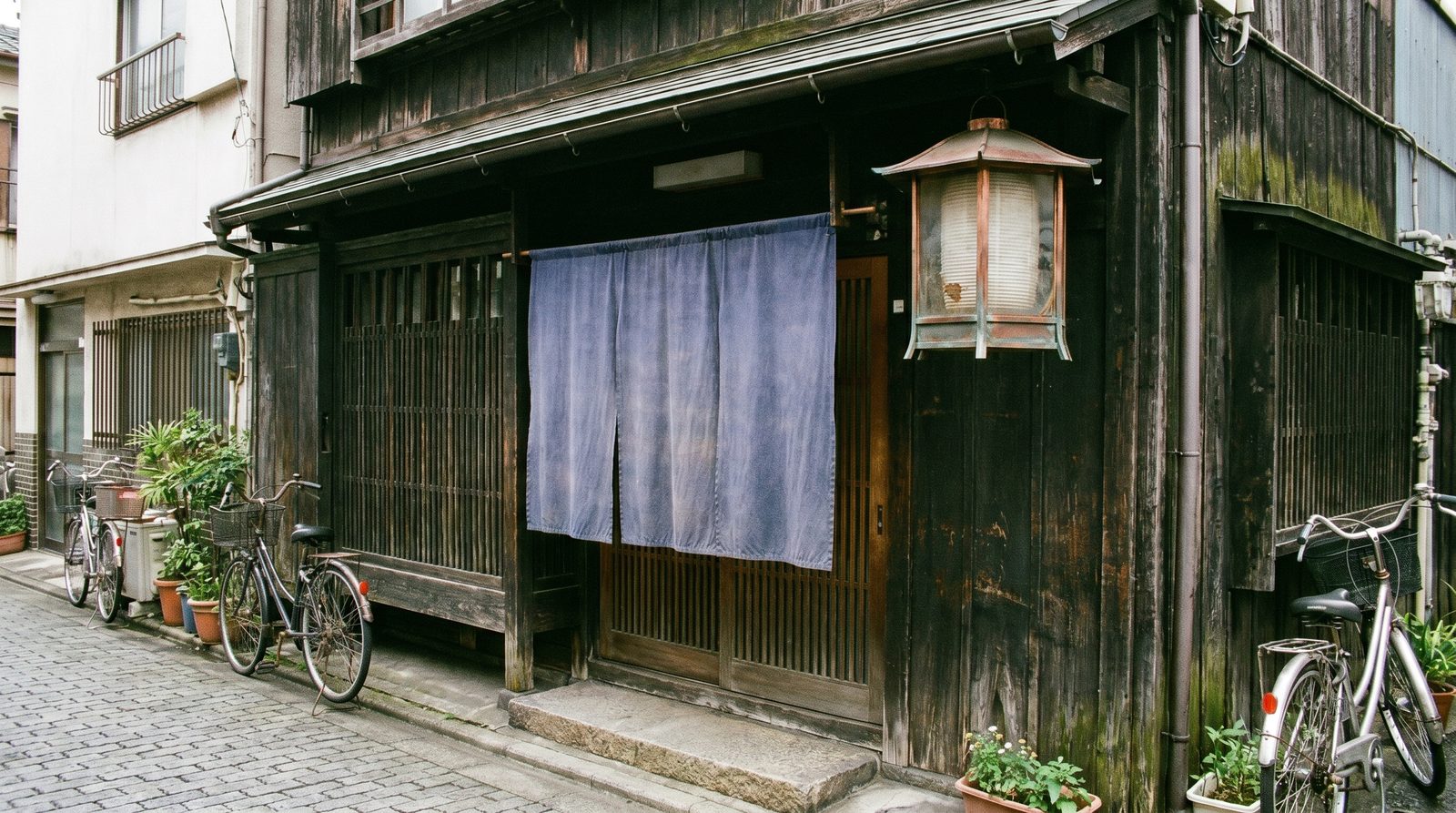
- Specialist restaurant: choose this when the restaurant experience and carefully prepared eel are central to the meal. Check price, reservation method, and waiting policy first.
- Department store food floor: useful for takeaway when the restaurant queue is too long or your group wants different foods.
Plan B if the restaurant is full
- Ask whether there is a later same-day slot or a numbered waiting list.
- Open the restaurant’s official store list and check another branch near your route.
- Switch to a casual chain for unadon rather than losing the whole meal window.
- Buy takeaway from a department store or station food floor if your accommodation has a suitable place to eat.
If a particular restaurant is essential, use the Tokyo restaurant reservation guide before building the rest of your day around it.
Why is unagi expensive?
Modern eel farming still depends largely on wild-caught juvenile eels called shirasu unagi. Japan’s Fisheries Agency is developing artificial seed production, while the Ministry of the Environment notes that Japanese eel populations have declined substantially compared with the 1960s and 1970s and that habitat change is one factor.
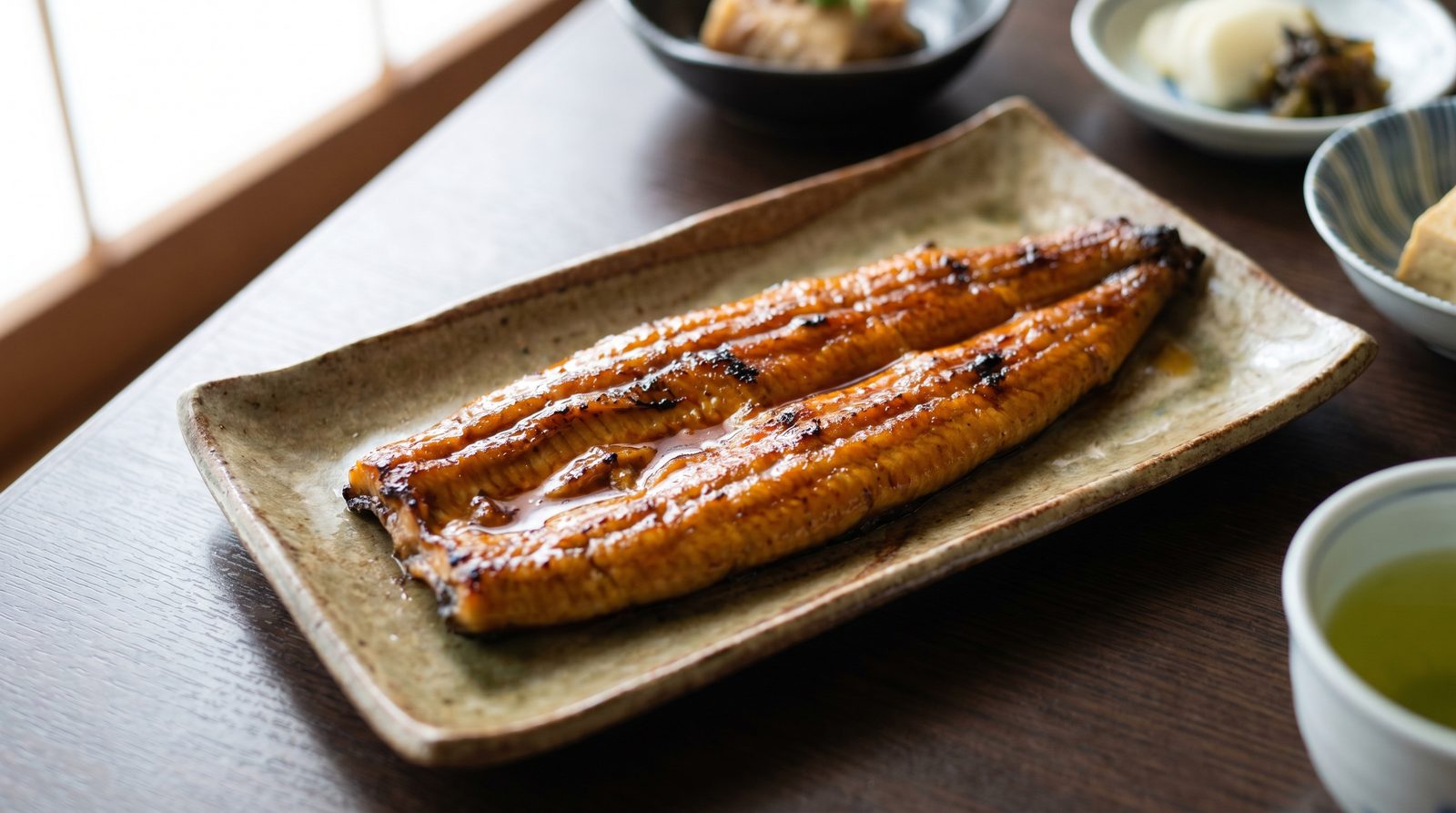
Supply constraints are one reason prices are sensitive. Restaurant price also reflects eel quantity, preparation, labor, side dishes, and service. A higher price does not represent the same menu difference across restaurants, so compare the actual menu.
Unagi vs anago
Unagi and anago are both called eel in English, but they are different foods.
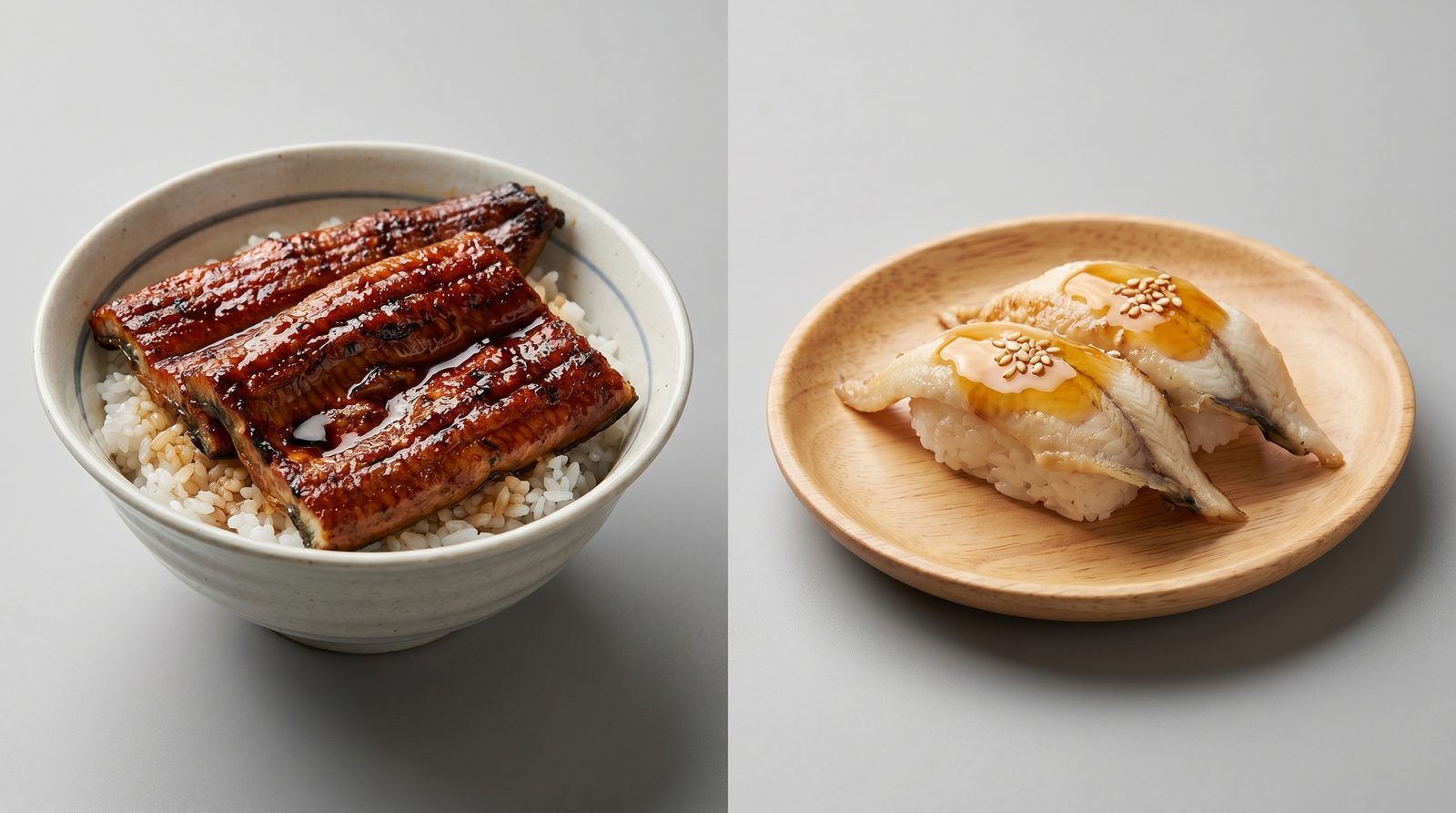
| Unagi (うなぎ) | Anago (穴子) | |
|---|---|---|
| Type | Freshwater eel | Saltwater conger eel |
| Typical taste | Rich and fatty | Lighter and softer |
| Common Tokyo dish | Kabayaki over rice | Sushi or tempura |
| Typical role | Main meal | Sushi topping or individual dish |
If you want a full eel-and-rice meal, look for unadon or unaju. If you want to compare anago with other cooked sushi toppings, continue to the Tokyo sushi guide.
FAQ
What is unagi?
Unagi is freshwater eel. In Japanese restaurants it is commonly grilled as kabayaki with a sweet-savory glaze and served over rice.
What is the difference between unadon and unaju?
Unadon is eel over rice in a bowl; unaju is eel over rice in a rectangular lacquered box. Eel quantity and grade vary by restaurant, so the container alone does not guarantee a higher grade.
How much does unagi cost in Tokyo?
As a current low-cost reference, Unatoto lists unadon at ¥640 and unaju at ¥1,060, tax included, while specialist restaurants can cost several thousand yen. Prices and menus vary by restaurant and branch.
When was Japan’s Unagi Day in 2026?
The 2026 summer Doyo no Ushi no Hi was Sunday, July 26. The date has passed, and unagi remains available year-round.
Is unagi raw?
No. Standard unagi restaurant dishes such as kabayaki, unadon, and unaju are cooked.
Does unagi sauce contain alcohol or wheat?
Kabayaki glaze commonly includes mirin, sake, and soy sauce, and soy sauce may contain wheat. Recipes differ, so ask the restaurant if you need to avoid alcohol, wheat, soy, or cross-contact.
Do I need a reservation for unagi in Tokyo?
It depends on the restaurant. Casual chains are often practical for walk-ins, while specialist restaurants may take reservations or use a queue. Check the official booking policy before visiting.
Related Guides
Official Sources Checked
- Unatoto official menu — Current tax-included menu examples and branch-price caveat
- Unatoto official store list — Tokyo branch locations
- Hamamatsu eel restaurant association — Kanto and Kansai preparation styles
- Tokyo Gas Uchikoto — 2026 Doyo no Ushi date
- Japan Fisheries Agency eel information — Resource management and artificial seed development
- Ministry of the Environment — Japanese eel habitat conservation and population context
Source check date: July 18, 2026. Treat the restaurant’s current menu, booking confirmation, and in-store notice as final.
Read Next

Comments