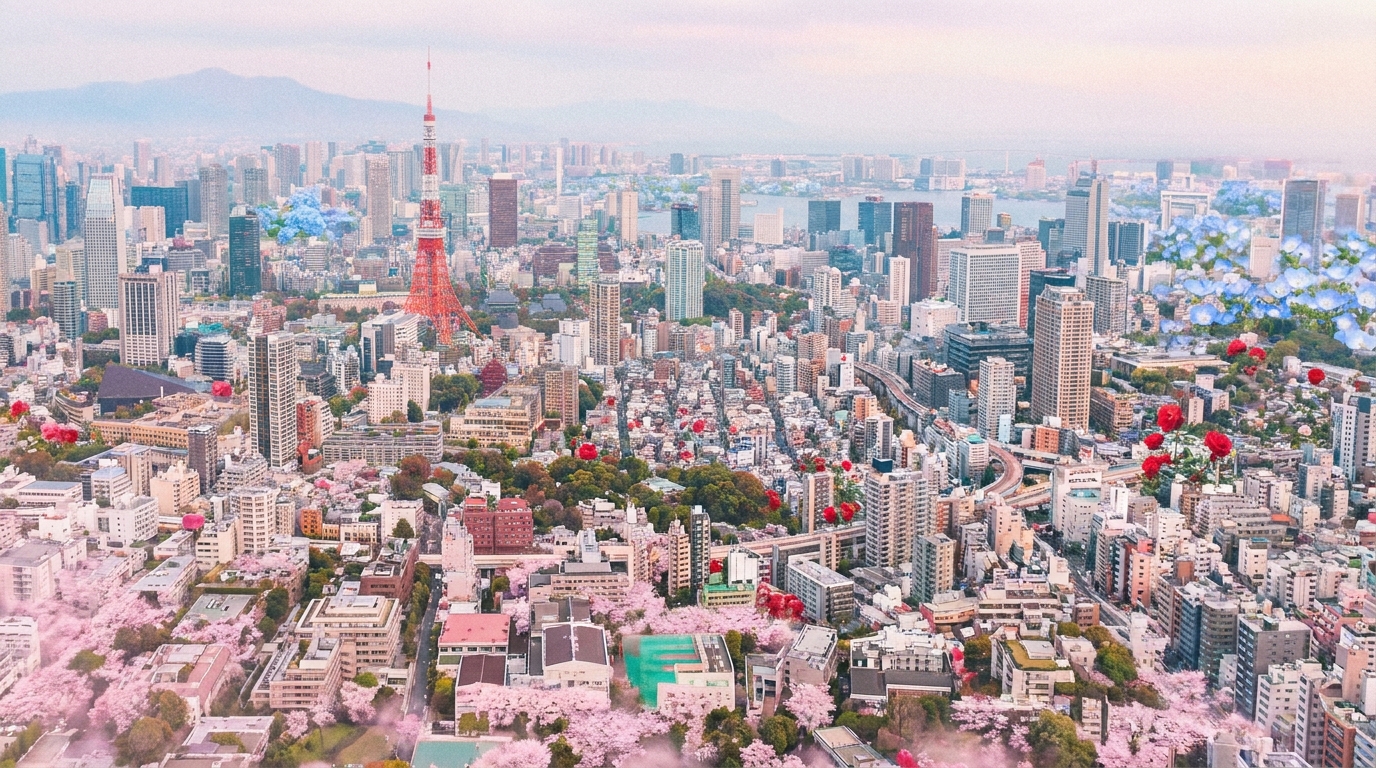
- Quick Answer
- Botanical Garden vs Japanese Garden vs Flower Park: What’s the Difference?
- Tokyo’s 5 City Spots: Year-Round Flower Calendar
- 1. Jindai Botanical Park (Chofu) — 4,800 Species Across 51.4 Hectares
- 2. Shinjuku Gyoen — Three Garden Styles in One
- 3. Hamarikyu Gardens — Edo Daimyo Garden by Tokyo Bay
- 4. Rikugien Garden (Komagome) — Weeping Cherry and Autumn Lights
- 5. Kyu-Furukawa Gardens (Komagome) — Western Mansion Meets Rose Garden
- 3 Day Trips by Train: Worth the Extra Hour
- Best Spot by Month: What’s Blooming Now?
- How to Plan a Visit: Tickets, Hours, and Photo Tips
- Frequently Asked Questions
- Which Tokyo spot has flowers blooming year-round?
- Is any of these places free?
- Do I need to reserve in advance during cherry blossom season?
- Are there English signs and audio guides?
- Can I bring a stroller or wheelchair?
- What if I have a tattoo?
- Where do I get lunch near each spot?
- Can I do two of these in one day?
- Is there a flower spot inside the Imperial Palace area?
- Related Reading
Quick Answer
Tokyo has flowers in bloom every month, but they are scattered across three different kinds of places: a working botanical garden in the western suburbs, several Edo-era daimyo gardens inside the city, and one rose-and-mansion hybrid in the north. Five spots inside Tokyo cover the full calendar — cherry in spring, rose in May and October, hydrangea in June, autumn foliage in November. Three more places within a two-hour train ride pay off twice over: Ashikaga’s wisteria tunnel, Hitachi’s blue nemophila hills, and Kamakura’s hydrangea temple. This guide walks through what blooms when, how to reach each one from a Tokyo Airbnb, and which month is worth the trip.
Botanical Garden vs Japanese Garden vs Flower Park: What’s the Difference?
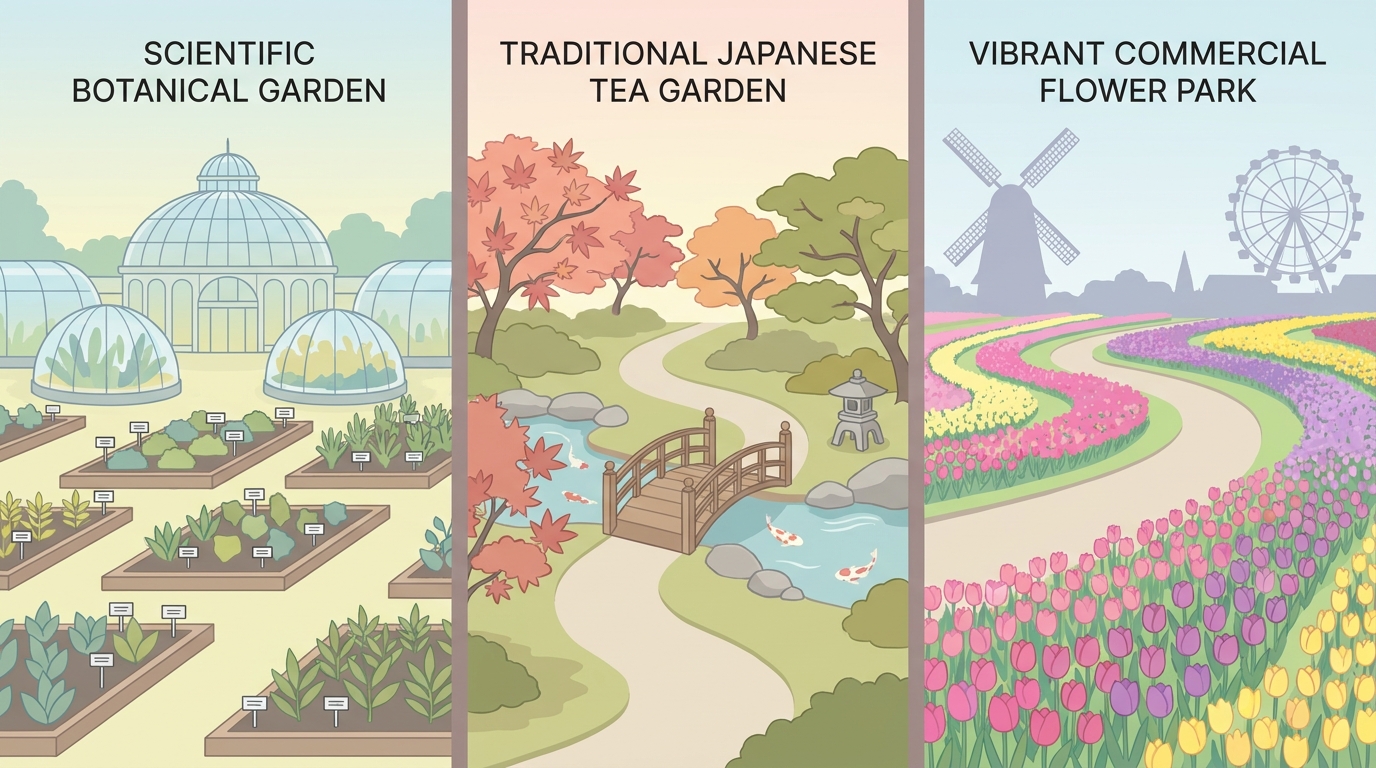
Before picking a spot, it helps to know that “flower place near Tokyo” can mean three different things, and visitors who skip the distinction often end up at the wrong one.
A botanical garden (植物園 / shokubutsuen) is built for plant variety. The signage labels each species in Latin, the layout is by family or origin, and you will see greenhouse collections of orchids and tropical plants next to outdoor beds. Jindai Botanical Park, with 4,800 species across 51.4 hectares, is the headline example in Tokyo.
A Japanese garden (庭園 / teien) is a designed landscape — most of the city gardens in this guide started life as the private estates of Edo-era samurai lords. Plants here exist to serve a view: a pond, a teahouse, a borrowed mountain. Flowers are the seasonal accent, not the inventory. Hamarikyu, Rikugien, and Kyu-Furukawa fall into this category.
A flower park (フラワーパーク / flower park) is a commercial attraction built around one or two headline flowers — wisteria at Ashikaga, nemophila at Hitachi Seaside. The experience is closer to a theme park than a museum. Tickets cost more, the photo spots are signed in English, and the bloom calendar drives the entrance fee.
This guide includes all three because each one is the right answer in a different month.
Tokyo’s 5 City Spots: Year-Round Flower Calendar
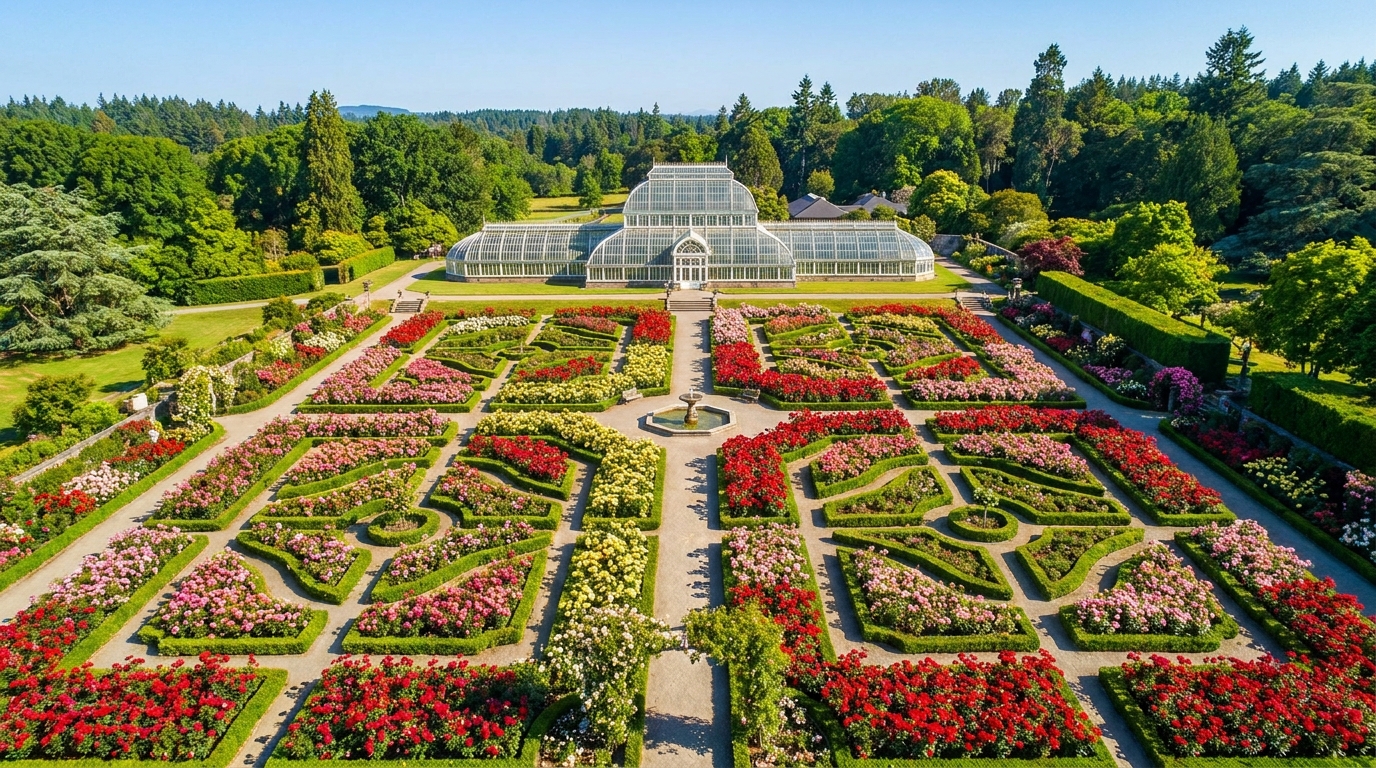
These five gardens sit inside the 23 wards or within a 35-minute train ride of central Tokyo. They are open year-round, with at least one flower in bloom in nearly every month.
1. Jindai Botanical Park (Chofu) — 4,800 Species Across 51.4 Hectares
Jindai Botanical Park (神代植物公園 / Jindai Shokubutsu Koen) covers 51.4 hectares in Chofu, in Tokyo’s western suburbs, and is run by the Tokyo Metropolitan government as the city’s only dedicated metropolitan botanical park. It holds about 4,800 species in 30 themed zones — rose garden, peony beds, plum grove, pine collection, and a large greenhouse for tropical species. The rose garden received the World Federation of Rose Societies Award of Garden Excellence in 2009 and is one of the few in Japan with both spring and autumn flowering seasons of comparable scale.
- Hours: 9:30 AM – 5:00 PM (main garden last entry 4:00 PM)
- Closed: Mondays (or the following Tuesday if Monday is a public holiday), and December 29 – January 1
- Admission: Adult ¥500, Senior 65+ ¥250, Middle school ¥200 (free for elementary school and younger; free for Tokyo residents/students at middle school level)
- Access: Keio Line to Chofu or Tsutsujigaoka Station, then bus to “Jindai Shokubutsu Koen” (about 15 minutes). From JR Mitaka or Kichijoji on the Chuo Line, also by bus.
- English: An English park map PDF is available on the official site; on-site signage is mostly Japanese with botanical names in Latin.
What blooms when at Jindai:
- Plum (ume): late January to late March
- Cherry blossom: late March to early April — about 600 trees, including a Somei Yoshino row along the entrance
- Spring rose festival: mid-May to early June, around 400 varieties and 5,200 rose plants
- Hydrangea Week (Ajisai Week): mid to late June
- Autumn rose festival: mid-October to early November
- Autumn foliage: mid-November to early December
A practical note: Jindai is paired in the same complex as Jindai-ji Temple, one of Tokyo’s oldest. If the rose garden is the goal, allow at least two hours; with the temple visit, half a day.
2. Shinjuku Gyoen — Three Garden Styles in One
Shinjuku Gyoen (新宿御苑) is the easiest first stop for any traveler staying in central Tokyo. The garden is a ten-minute walk from Shinjuku Station and combines three landscape traditions in one site: a French formal garden with symmetrical rose beds, a wide English landscape lawn, and a traditional Japanese garden with a pond and teahouse. The site is run by the national government, not the metropolitan parks office, which is why the rules and fee structure differ slightly from the other city gardens here.
- Hours: Generally 9:00 AM – 4:30 PM (last entry 4:00 PM). Extended hours March 15 – June 10 with closing at 6:00 PM (last entry 5:30 PM); extended summer hours from July to mid-August. Always confirm on the official site before you go.
- Closed: Mondays (or the following Tuesday if Monday is a public holiday). Open every day during cherry blossom season (late March – late April) and chrysanthemum season (early November).
- Admission: Adult ¥500, Senior 65+ ¥250, Student ¥250, Child (under 15) free. Advance online tickets are available through the official partner, and reservations were required during cherry blossom peak weeks in recent years.
- Access: Three gates. Shinjuku Gate is closest to JR Shinjuku Station (New South Exit, about 10 minutes on foot). Sendagaya Gate is closest to JR Sendagaya Station. Okido Gate connects to Tokyo Metro Marunouchi Line at Shinjuku-Gyoenmae.
- English: Yes — official English website, English audio guide, English signage at major points.
What blooms when at Shinjuku Gyoen:
- Plum: mid-February to early March
- Cherry blossom: late March to late April — about 65 varieties and 1,100 trees (per Ministry of the Environment data), so the season runs longer than at most spots
- Tulips: April
- Azalea and rose: late April to May
- Lotus: mid-July to early August (pond near the Japanese garden)
- Chrysanthemum Exhibition (Kikkadan-ten): November 1 – 15, an event with formal display beds traditionally tied to the imperial household
- Autumn foliage: mid-November to early December
The 2026 calendar is shaped by the garden’s 120th anniversary and the Showa 100 commemoration. A special exhibition runs through early June. Check the official site for date-specific events before you visit.
3. Hamarikyu Gardens — Edo Daimyo Garden by Tokyo Bay
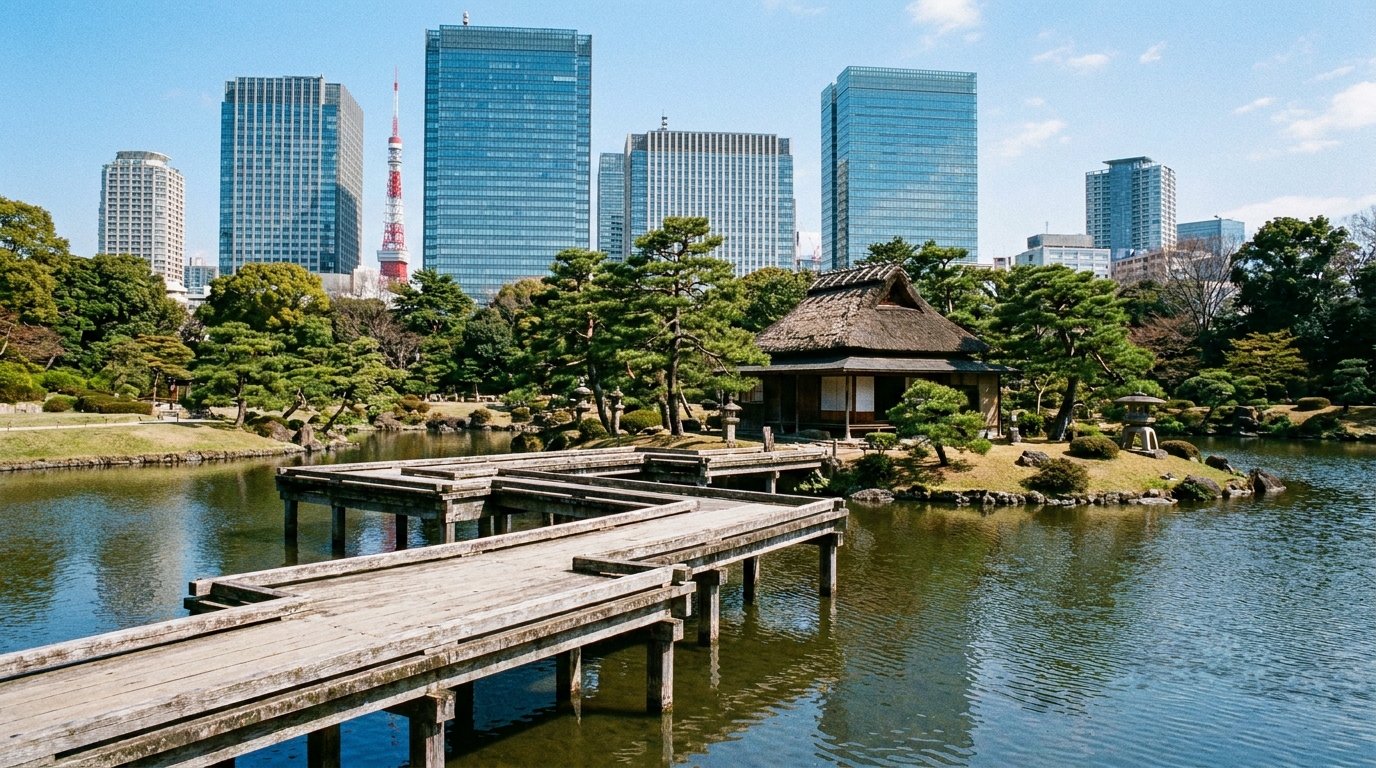
Hamarikyu (浜離宮恩賜庭園) is the only Edo-period garden in Tokyo still using seawater for its tidal pond — water flows in from Tokyo Bay through a gate, and the water level inside the pond rises and falls with the tide. (Source: Tokyo Metropolitan Park Association.) The garden sits between Shiodome’s high-rises and the bay, which means you can walk in from Shimbashi or arrive by water bus from Asakusa.
- Hours: 9:00 AM – 5:00 PM (last entry 4:30 PM)
- Closed: December 29 – January 1
- Admission: Adult ¥300, Senior 65+ ¥150, Group of 20+ ¥240/¥120. Free admission on Greenery Day (May 4) and Tokyo Citizens’ Day (October 1).
- Access: 7-minute walk from Tsukijishijo Station (Toei Oedo Line) or from Shiodome Station. About 12 minutes from JR Shimbashi Station.
- English: English information signs and pamphlets are available at the entrance.
What blooms when at Hamarikyu:
- Plum: February
- Rapeseed (nanohana): late February to mid-April — the yellow field is the spring signature of this garden
- Cherry blossom: late March to early April
- Wisteria: late April to early May
- Hydrangea and crepe myrtle: June to August
- Cosmos: mid-September to mid-October — a planted field that turns the same plot pink that was yellow in spring
Hamarikyu also has Nakajima no Ochaya, a teahouse on an island in the middle of the pond where you can drink matcha and eat a wagashi sweet for about ¥850. Worth the stop if you are short on tea-ceremony exposure.
4. Rikugien Garden (Komagome) — Weeping Cherry and Autumn Lights
Rikugien (六義園) is a strolling garden built in the early 1700s by a shogun’s adviser. The single most photographed object inside is a 70-year-old weeping cherry tree at the entrance, about 15 meters tall and 20 meters wide. For two weeks in late March and again for three weeks in late November, the garden stays open after dark with special lighting on the cherry and on the autumn maples.
- Hours: 9:00 AM – 5:00 PM (last entry 4:30 PM). Spring nighttime viewing extends to 9:00 PM (last entry 8:00 PM).
- Closed: December 29 – January 1
- Admission: Adult ¥300, Senior 65+ ¥150. Spring and autumn nighttime viewing requires a separate ticket — for spring 2026 (March 18 – 24), ¥1,000 online advance or ¥1,200 same-day.
- Access: 7-minute walk from JR Komagome Station (Yamanote Line, north gate side).
- English: English pamphlet at the entrance; major path signs are bilingual.
What blooms when at Rikugien:
- Weeping cherry (shidare-zakura): late March, peak about 5 days
- Standard cherry: early April
- Azalea: late April to early May
- Hydrangea: June
- Autumn foliage with night lighting: late November to early December (dates confirmed annually)
Both the spring and autumn night events sell out the early evening time slots. Buy online ahead of the visit window if you have one specific date.
5. Kyu-Furukawa Gardens (Komagome) — Western Mansion Meets Rose Garden
Kyu-Furukawa Teien (旧古河庭園) is one of the few Tokyo gardens that pairs a Japanese strolling garden, a Western rose garden, and a stone Western mansion on the same plot. The mansion was designed in 1917 by Josiah Conder, the British architect responsible for several Meiji-era public buildings in Tokyo. About 100 varieties and 200 rose plants are arranged on a south-facing slope below the mansion — the photo with both in frame is the classic shot.
- Hours: 9:00 AM – 5:00 PM (last entry 4:30 PM). Early opening from 8:00 AM on selected weekends during the Spring Rose Festival.
- Closed: December 29 – January 1
- Admission: Adult ¥150, Senior 65+ ¥70 (one of the cheapest in Tokyo for a garden of this scale)
- Access: 7-minute walk from JR Kami-Nakazato Station (Keihin-Tohoku Line) or 12 minutes from JR Komagome Station.
- English: Pamphlet available, signage mixed bilingual.
What blooms when at Kyu-Furukawa:
- Plum: mid-February to early March
- Spring Rose Festival: April 29 – June 30 (2026 dates), peak mid-May. Early 8:00 AM opening on May 8–10 and May 15–17
- Azalea: late April to early May
- Autumn Rose Festival: October 10 – November 7 (2026)
- Autumn foliage in the Japanese garden side: late November
A practical note for travelers: the mansion interior visit is by separate reservation and runs in time slots; it is not required to enjoy the garden, but worth booking ahead if architecture is the draw.
3 Day Trips by Train: Worth the Extra Hour
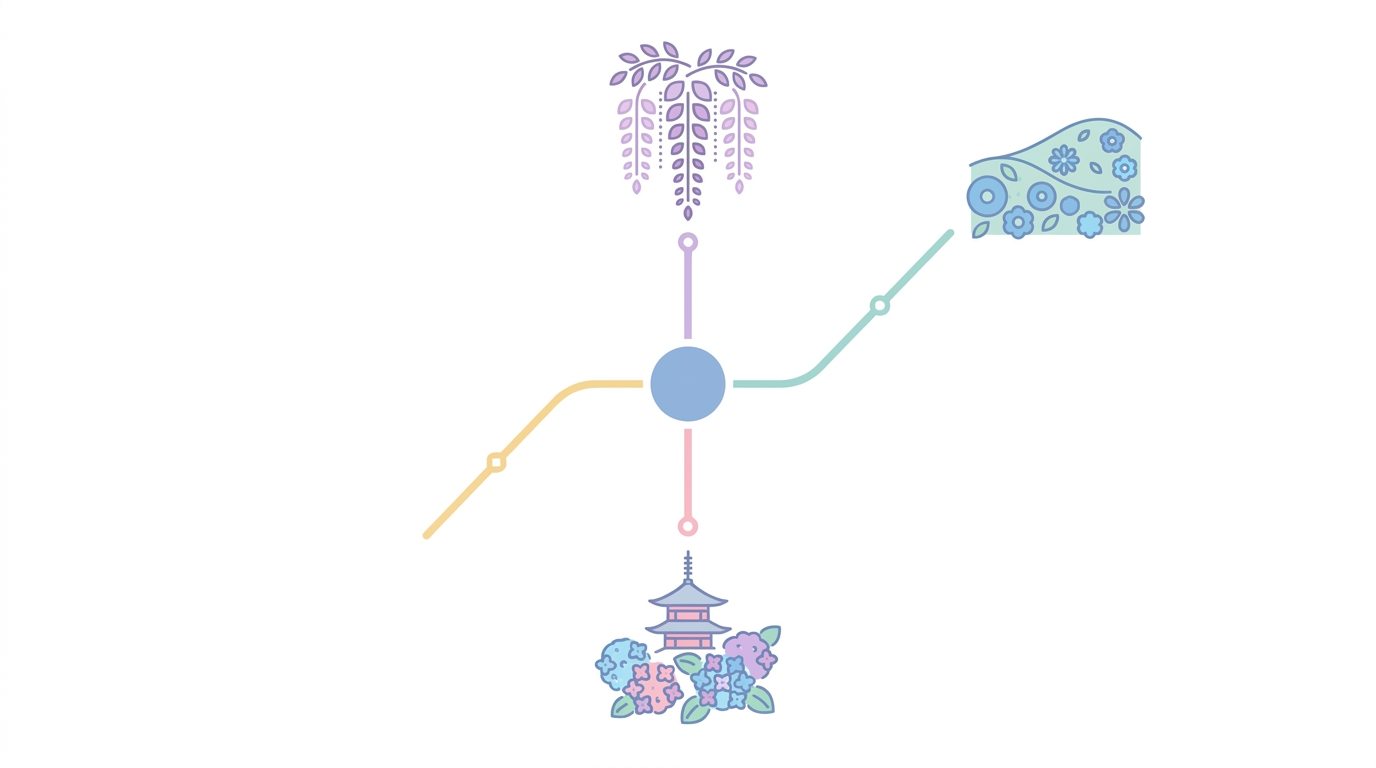
Three places outside Tokyo are worth the train ride because Tokyo does not have an equivalent inside its limits. All three sit within two hours by direct train from a central Tokyo Airbnb, and all three peak in a specific window — plan around the bloom, not the calendar.
A. Ashikaga Flower Park (Tochigi) — World’s Greatest Wisteria
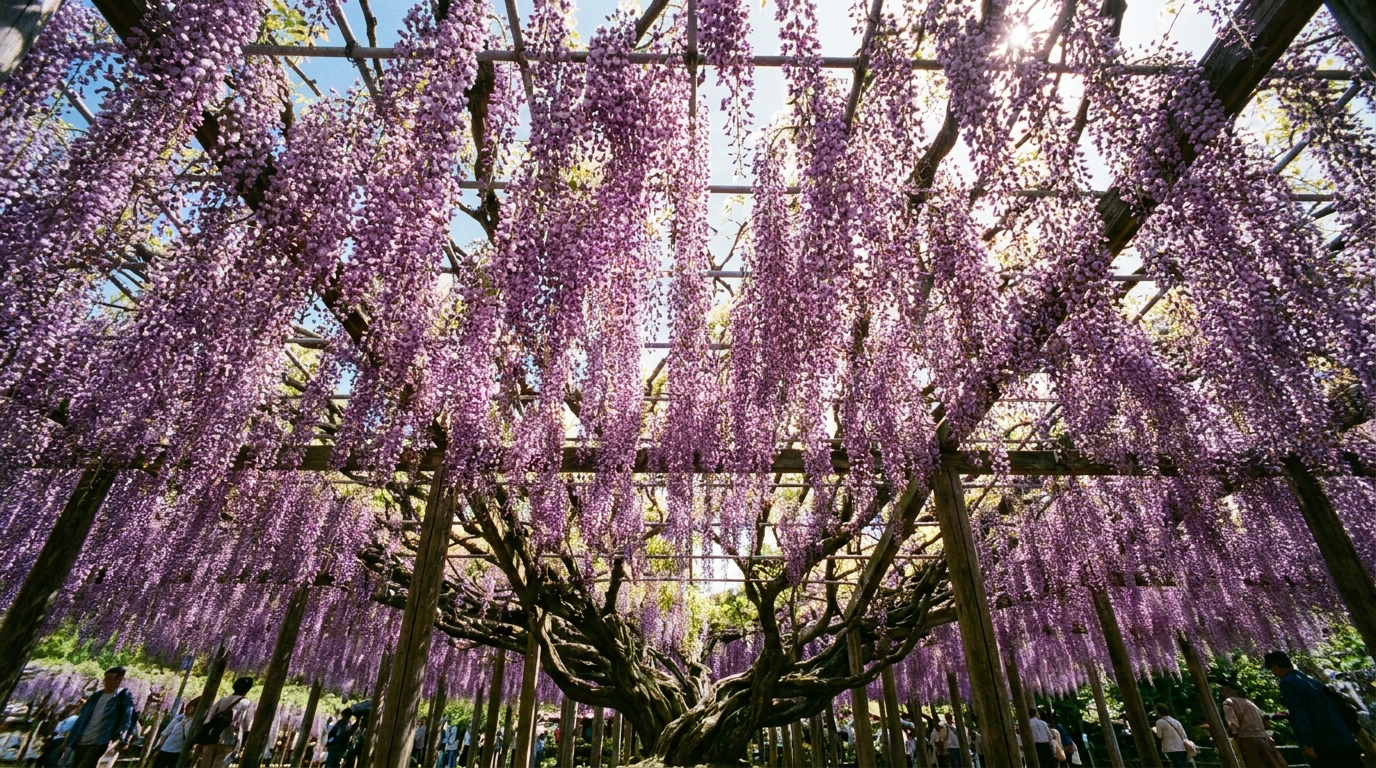
Ashikaga Flower Park (あしかがフラワーパーク) is built around an old wisteria tree — a single plant more than 160 years old, whose canopy has been trained to cover about 1,000 square meters (600 tatami mats’ worth). The park itself covers about 100,000 square meters. CNN listed Ashikaga in a “Dream Destinations” feature, which is where a share of the English-speaking visitor traffic originates. The peak is short and the dates shift slightly each year.
- Hours: Daytime 9:00 AM – 5:30 PM in the standard season; full-day 9:00 AM – 8:30 PM during peak wisteria and illumination periods. Evening-only entry 5:30 PM – 8:30 PM.
- Closed: August 31 – September 6, 2026 (annual maintenance period)
- Admission: Variable — the park uses a dynamic pricing system tied to flowering. Adult full-day in peak wisteria season around ¥1,200, evening illumination around ¥1,000. Outside peak season, prices are lower. Children (4 – elementary) about ¥600 / ¥500.
- Access: From Asakusa, take the Tobu Isesaki Line limited express to Ashikaga, then transfer to JR Ryomo Line one stop to Ashikaga Flower Park Station — total about 2 hours. A direct station was added in 2018 right at the park gate.
- English: Yes — English website, English park map, audio guide.
What blooms when at Ashikaga:
- Plum: February
- Cherry blossom: late March
- Wisteria (fuji): mid-April to mid-May — the single old tree first, then the white wisteria tunnel about a week later
- Rose: mid-May to June
- Clematis: May (was at peak as of late May 2026)
- Winter Illumination “Garden of Light”: mid-October 2026 through mid-February 2027
A practical tip: wisteria peak weekends (typically Golden Week, late April to early May) are the most crowded day-trip in this guide. Arrive at opening or come for the night illumination instead.
B. Hitachi Seaside Park (Ibaraki) — The Blue Nemophila Carpet
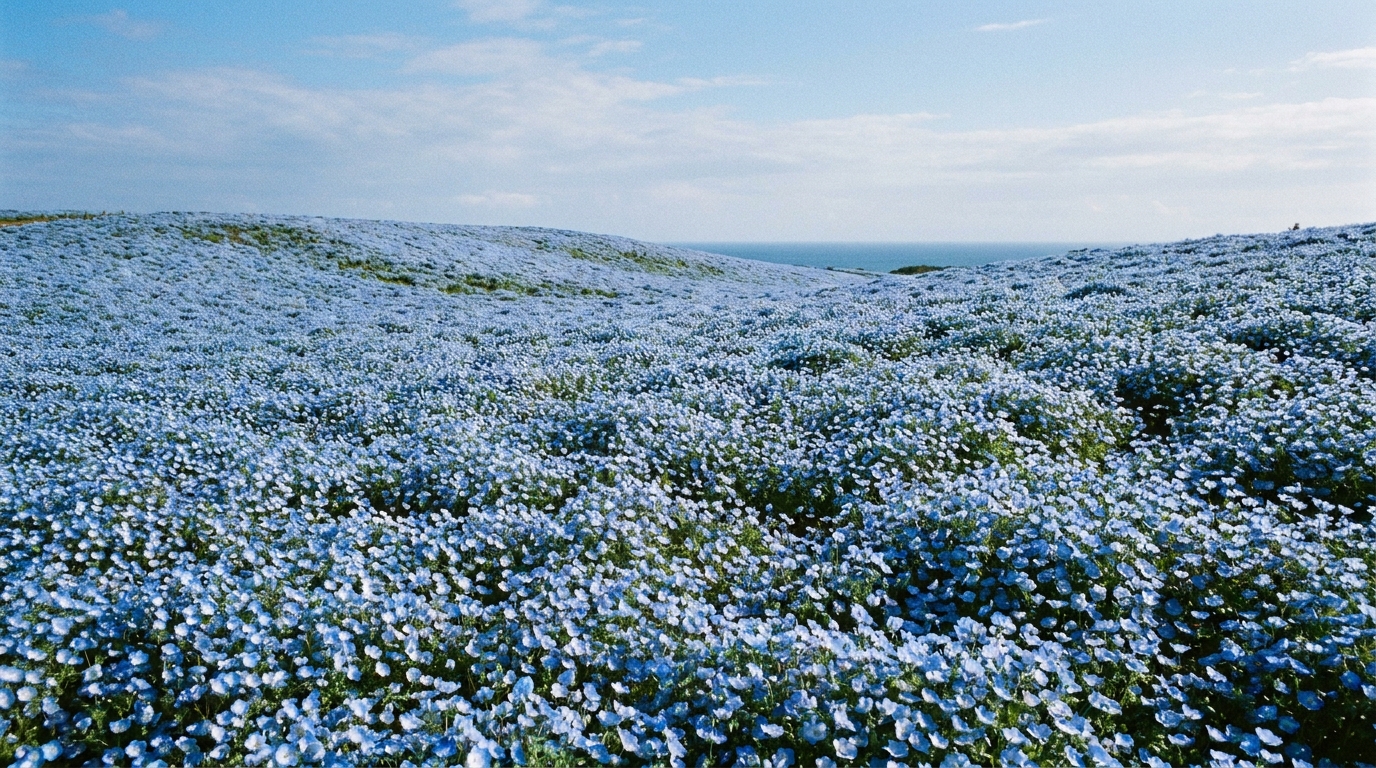
Hitachi Seaside Park (国営ひたち海浜公園) is a 237-hectare national park on the Pacific coast that is best known for one image: a 4.2-hectare hillside covered in about 5.3 million blue nemophila flowers, sea on one side, sky on the other. The hill (Miharashi-no-oka) holds the planting between mid-April and mid-May, then is replanted later in the year with kochia bushes for autumn red foliage.
- Hours: 9:30 AM – 5:00 PM (March 1 – July 19). Hours vary by season; check the official site. Special 7:00 AM early opening on April 29 (Showa Day) and May 3–5 (Golden Week holidays) in 2026.
- Closed: Tuesdays as a rule, plus the day after public holidays. The park stays open daily during Nemophila Harmony and Kochia Carnival event periods — check the calendar.
- Admission: Adult (high school and above) base ¥450 plus a peak-season surcharge of ¥350, total ¥800 during Nemophila Harmony (mid-April – mid-May). Off-peak ¥450. Children of elementary and middle school age have lower set rates.
- Access: From Ueno on the JR Joban Line, take a limited express Hitachi or Tokiwa to Katsuta Station (about 75–80 minutes). From Katsuta East Exit, bus stop 2 runs every 15 – 20 minutes to either Sea Side Park West Gate or South Gate.
- English: Yes — English website, English audio guide app, multi-language wayfinding inside the park.
What blooms when at Hitachi:
- Tulip: mid-April (Tamago no Mori Flower Garden)
- Nemophila (blue baby blue eyes): late April to mid-May, peak around late April to early May
- Rose: late May to early June, late September to October
- Sunflower: late July to early August
- Kochia green: mid-August to late September
- Kochia red: mid-October — the same hill that was blue in spring turns into about 32,000 red round bushes
- Cosmos: mid-September to late October
Nemophila peak and Kochia red are the two most photographed windows of the year. Both run for roughly two weeks; both are crowded on weekends. Try a weekday early entry if you can.
C. Meigetsu-in Temple (Kamakura) — The Hydrangea Temple
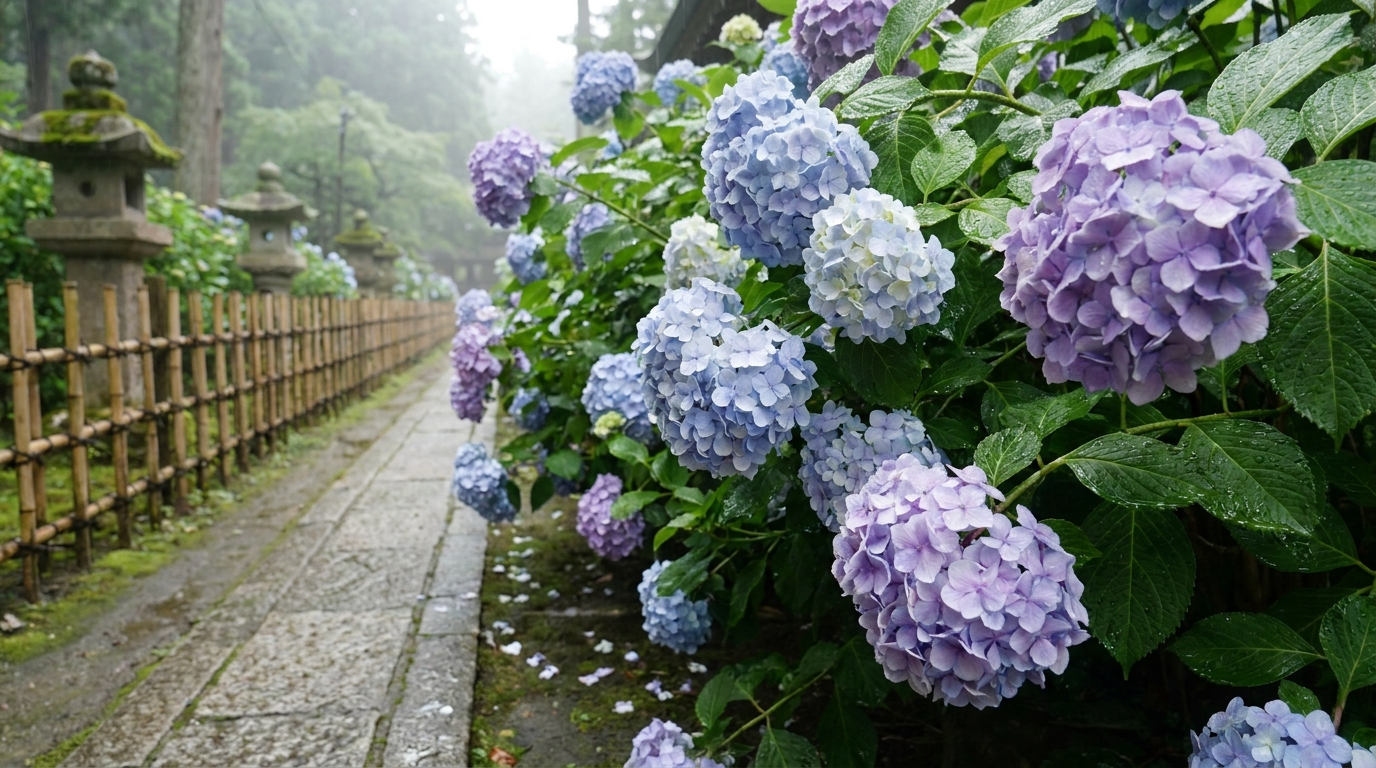
Meigetsu-in (明月院) is a small Rinzai Zen temple in Kita-Kamakura with about 2,500 hydrangea plants lining a single approach path. Most of the bushes are a single variety, Hime-ajisai, whose flowers turn a particular deep blue that has been nicknamed “Meigetsu-in Blue.” For four weeks each June the temple becomes the single most photographed spot in Kanagawa.
- Hours: June (hydrangea season): 8:30 AM – 5:00 PM (last entry 4:30 PM). Other months: 9:00 AM – 4:00 PM. Confirm on official sources before traveling.
- Closed: Open year-round during the standard season; specific closure days may apply during temple ceremonies.
- Admission: ¥500 standard; ¥600 during hydrangea season. A separate ¥500 ticket is required to enter the rear garden, which opens only when the iris (hanashobu) is in bloom in June and again in autumn for foliage.
- Access: 10-minute walk from Kita-Kamakura Station (JR Yokosuka Line), the stop before Kamakura Station. From Tokyo Station, the direct JR Yokosuka Line takes about 55 minutes.
- English: Limited — small bilingual signs at major points, no audio guide. Most temple materials are Japanese only.
What blooms when at Meigetsu-in:
- Hydrangea: early June to early July, peak mid-June
- Iris (hanashobu) inside the rear garden: mid-June
- Autumn foliage in the rear garden: mid-November to early December
Hydrangea Sunday in June is the busiest visiting day on the Kamakura calendar. The temple gates can have a 30-minute or longer line to enter. Arriving at 8:30 opening on a weekday is the simplest crowd avoidance.
Best Spot by Month: What’s Blooming Now?
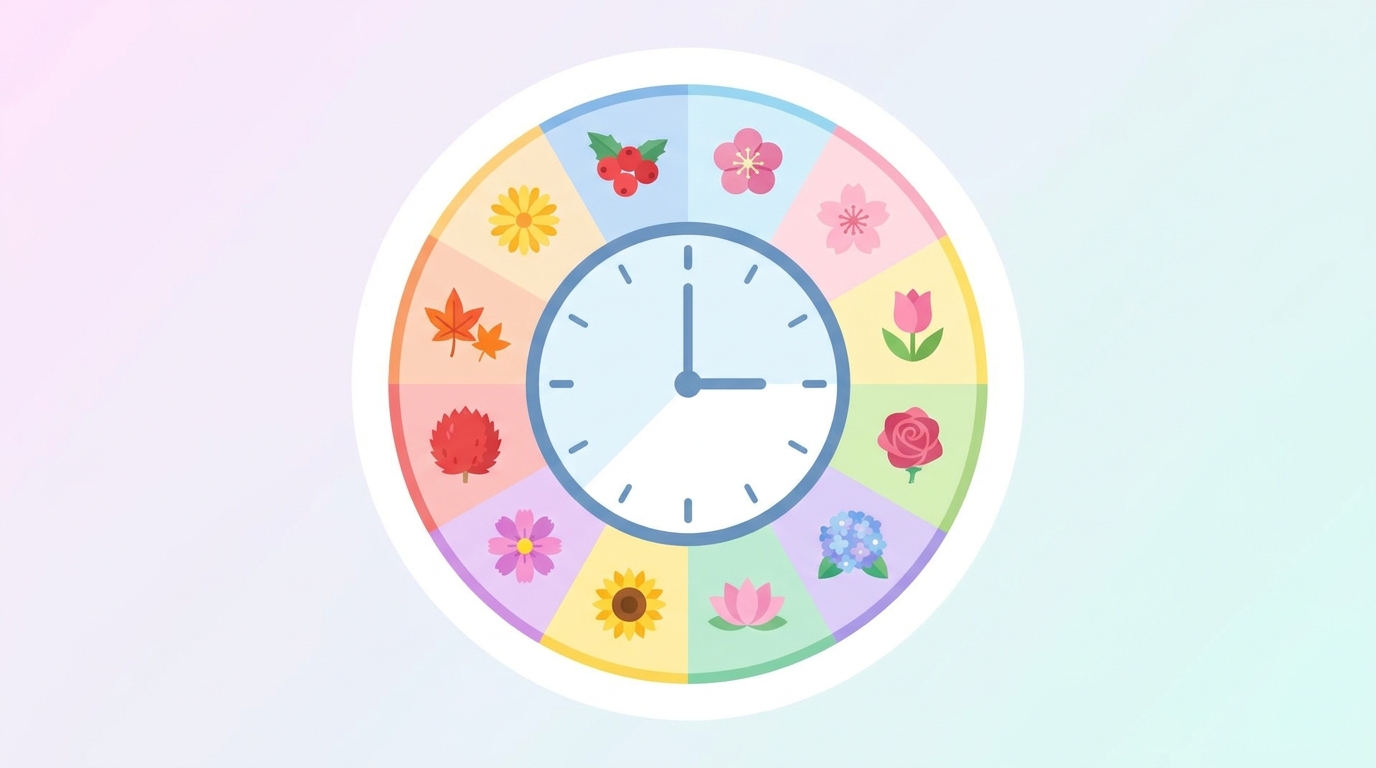
Use this calendar to pick a spot for the date you are visiting Tokyo. Bloom dates shift year-to-year by one to two weeks depending on weather.
| Month | Best Flower | Top Pick | Backup |
|---|---|---|---|
| January | Winter plum, early camellia | Jindai (plum grove) | Hamarikyu (plum) |
| February | Plum | Hamarikyu, Kyu-Furukawa | Rikugien |
| March (early) | Plum end, early cherry | Shinjuku Gyoen | Jindai |
| March (late) | Weeping cherry | Rikugien (night lights) | Shinjuku Gyoen |
| April (early) | Cherry blossom peak | Shinjuku Gyoen, Hamarikyu | Jindai |
| April (mid–late) | Wisteria, nemophila start | Ashikaga, Hitachi Seaside | Kyu-Furukawa (rose start) |
| May (early) | Wisteria peak, nemophila peak, azalea | Ashikaga, Hitachi Seaside | Rikugien |
| May (mid–late) | Spring rose peak | Jindai, Kyu-Furukawa | Shinjuku Gyoen |
| June | Hydrangea | Meigetsu-in (Kamakura) | Jindai (Ajisai Week) |
| July | Lotus | Shinjuku Gyoen | Hamarikyu (crepe myrtle) |
| August | Sunflower, crepe myrtle | Hitachi Seaside (sunflower) | Hamarikyu |
| September | Early cosmos, kochia green | Hamarikyu (cosmos) | Hitachi Seaside |
| October (early) | Cosmos peak, autumn rose start | Hamarikyu, Kyu-Furukawa | Jindai |
| October (mid–late) | Kochia red, autumn rose | Hitachi Seaside (kochia), Jindai | Kyu-Furukawa |
| November (early) | Chrysanthemum, late rose | Shinjuku Gyoen (kikkadan) | Kyu-Furukawa |
| November (late) | Autumn foliage | Rikugien (night lights), Shinjuku Gyoen | Hamarikyu |
| December | Winter illumination | Ashikaga (Garden of Light) | Rikugien (foliage end) |
How to Plan a Visit: Tickets, Hours, and Photo Tips
A few practical points apply across most of these spots.
Tickets: The metropolitan gardens (Hamarikyu, Rikugien, Kyu-Furukawa) sell same-day paper tickets at the gate; no advance booking needed except for evening illumination events. Shinjuku Gyoen accepts both same-day and advance online tickets, and advance is recommended during cherry season. Ashikaga and Hitachi Seaside both sell standard tickets at the gate; their peak weekend traffic justifies online advance booking even if not required.
Best time of day: Most flower spots are at their best photographically in the first hour after opening. The light is softer, the crowds are smaller, and the access trains are not yet packed. For the hydrangea temple and the wisteria park, the 30-minute gap between opening time and the first arriving tour bus is the difference between a 5-minute and a 45-minute wait.
Cash vs. card: All eight spots in this guide accept IC cards (Suica, PASMO) at their ticket booths or vending machines. Most also accept credit cards. Cash backup is still useful — see the Cash in Japan guide.
Getting there: For the five city spots, a Tokyo day pass or a Suica with a normal balance works. For Ashikaga, Hitachi Seaside, and Kamakura, the standard Suica covers it but the limited express surcharge to Hitachi is paid separately. The JR Pass covers the JR portion of all three day-trips. See Tokyo Trains 2026 for the day-pass options.
Rain plan: Jindai’s tropical greenhouse and Yumenoshima Tropical Plant Dome (Shin-Kiba) both work as covered alternatives in heavy rain. Shinjuku Gyoen’s greenhouse is also covered.
Photo etiquette: Tripods are prohibited at all five city gardens unless you have a press permit. Selfie sticks are restricted in narrow paths at Meigetsu-in and Rikugien night events. Drones are prohibited at all eight spots.
Restroom and food: Each spot has on-site restrooms and at least one cafe or tea pavilion. The metropolitan gardens also allow you to bring a bento and eat at marked picnic spots. Outside food is not permitted inside Ashikaga or Hitachi paid areas.
Frequently Asked Questions
Which Tokyo spot has flowers blooming year-round?
Jindai Botanical Park and Shinjuku Gyoen both have at least one outdoor flower in bloom in nearly every month, plus large greenhouses for tropical species. If you have to pick one for a winter visit, both work; Jindai is larger but harder to reach.
Is any of these places free?
Hamarikyu, Rikugien, Kyu-Furukawa, and Kyu-Shiba-Rikyu are free for everyone on Greenery Day (May 4) and Tokyo Citizens’ Day (October 1). Elementary school children and younger are always free at every metropolitan garden. Hitachi Seaside Park has occasional free days announced on its calendar.
Do I need to reserve in advance during cherry blossom season?
Shinjuku Gyoen has required advance reservation for cherry peak weeks in recent years. For Ueno Park and most metropolitan gardens, no reservation is needed. Ashikaga during wisteria Golden Week and Hitachi during nemophila peak both benefit from advance online tickets even though walk-ins are accepted.
Are there English signs and audio guides?
Shinjuku Gyoen, Hitachi Seaside, and Ashikaga Flower Park each have full English support including audio guides. The metropolitan gardens (Hamarikyu, Rikugien, Kyu-Furukawa) have English pamphlets and major bilingual signs but limited audio. Meigetsu-in has minimal English.
Can I bring a stroller or wheelchair?
All five Tokyo city spots have step-free or alternate-route access to most main paths. Jindai’s rose garden and Shinjuku Gyoen’s main lawns are wheelchair-friendly. Meigetsu-in’s stone steps to the inner approach are not. Hitachi Seaside Park rents wheelchairs and strollers free of charge at the gate.
What if I have a tattoo?
Tattoos are not restricted at any of the eight outdoor flower spots in this guide. The restriction in Japan is specific to onsen and public baths — see the Onsen Etiquette guide for that context.
Where do I get lunch near each spot?
Shinjuku Gyoen and Hamarikyu both sit next to major commercial districts (Shinjuku, Ginza/Shimbashi) with hundreds of options. Rikugien and Kyu-Furukawa are in residential Komagome, with cafes within a 10-minute walk. Jindai is paired with Jindai-ji Temple, known for soba shops. For booking ahead, see the Tokyo Restaurant Booking guide.
Can I do two of these in one day?
Inside Tokyo, yes — Rikugien and Kyu-Furukawa are both a short walk from Komagome Station and pair naturally. Hamarikyu and Shinjuku Gyoen are about 25 minutes apart on the Toei Oedo Line. Outside Tokyo, no: each day trip uses a full day round-trip.
Is there a flower spot inside the Imperial Palace area?
The East Garden of the Imperial Palace (Kokyo Higashi Gyoen) is free and open most days, with seasonal plum and cherry. It is not in this guide because the flower coverage is shallower than the five gardens above, but it pairs well with a Hamarikyu visit on the same day.
Related Reading
- Tokyo Trains 2026 — for navigating Suica vs. day pass to reach each garden
- How to Book Shinkansen Online from Overseas — only needed for day-trip spots beyond standard JR Pass
- Tokyo Temple & Shrine Hopping — pair Meigetsu-in with a Kamakura temple route
- Asakusa Quick Guide — starting point for the Ashikaga Flower Park train route
- Shinjuku Quick Guide — Shinjuku Gyoen is a 10-minute walk
- Tokyo Restaurant Booking 2026 — for booking lunch near each garden
- Tokyo Airbnb Starter Guide — for the big-picture before-and-after-check-in flow
Sources: Official websites of Jindai Botanical Park (Tokyo Metropolitan Park Association), Shinjuku Gyoen National Garden (fng.or.jp), Tokyo Metropolitan Park Association for Hamarikyu, Rikugien, and Kyu-Furukawa Gardens; Ashikaga Flower Park (ashikaga.co.jp); Hitachi Seaside Park (hitachikaihin.jp); Meigetsu-in Temple via Kamakura City Tourism Association; Tokyo Bureau of Construction park information page (kensetsu.metro.tokyo.lg.jp). Calendar dates and admission fees verified for 2026 season. Bloom dates are estimates that vary year-to-year with weather.

Comments